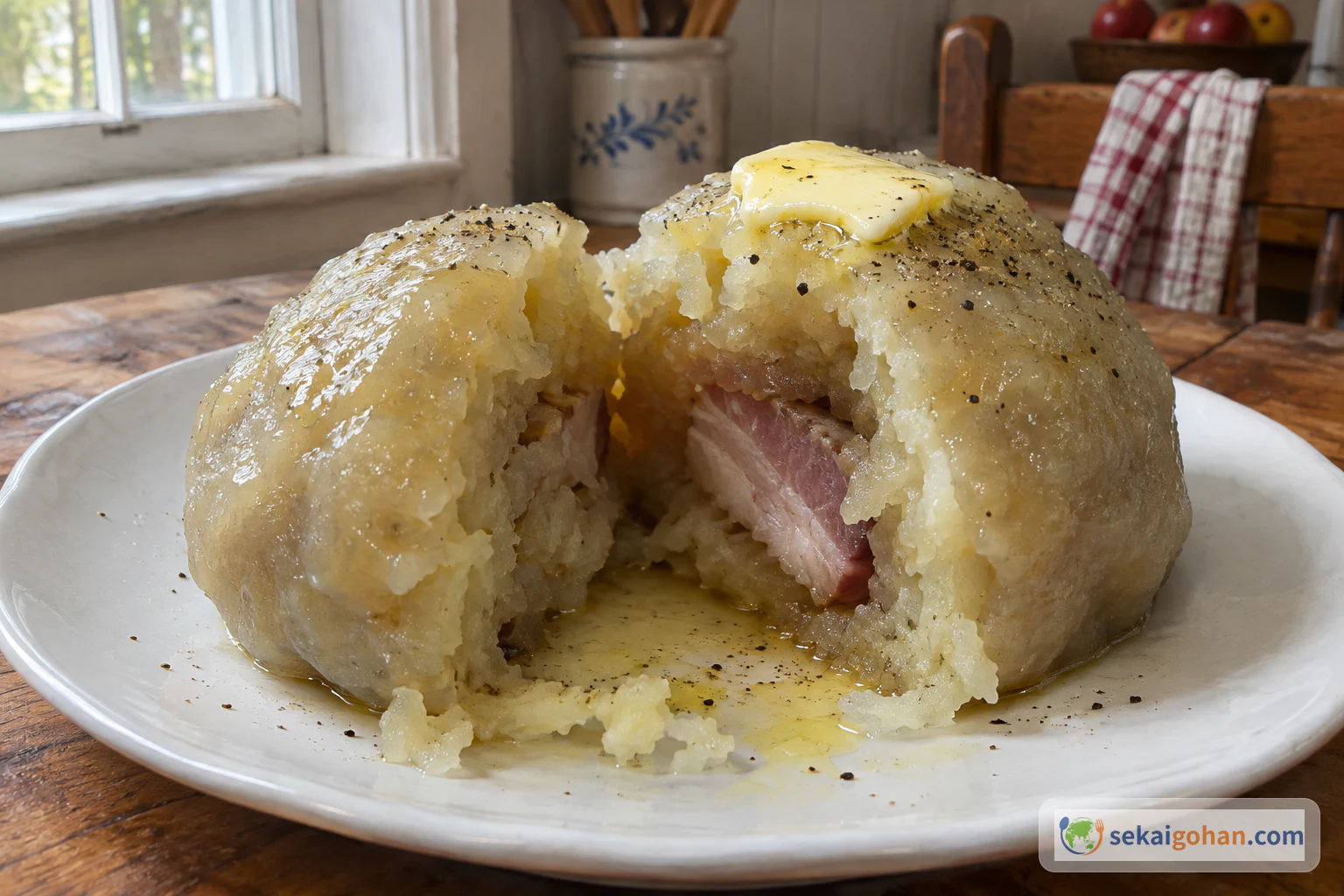
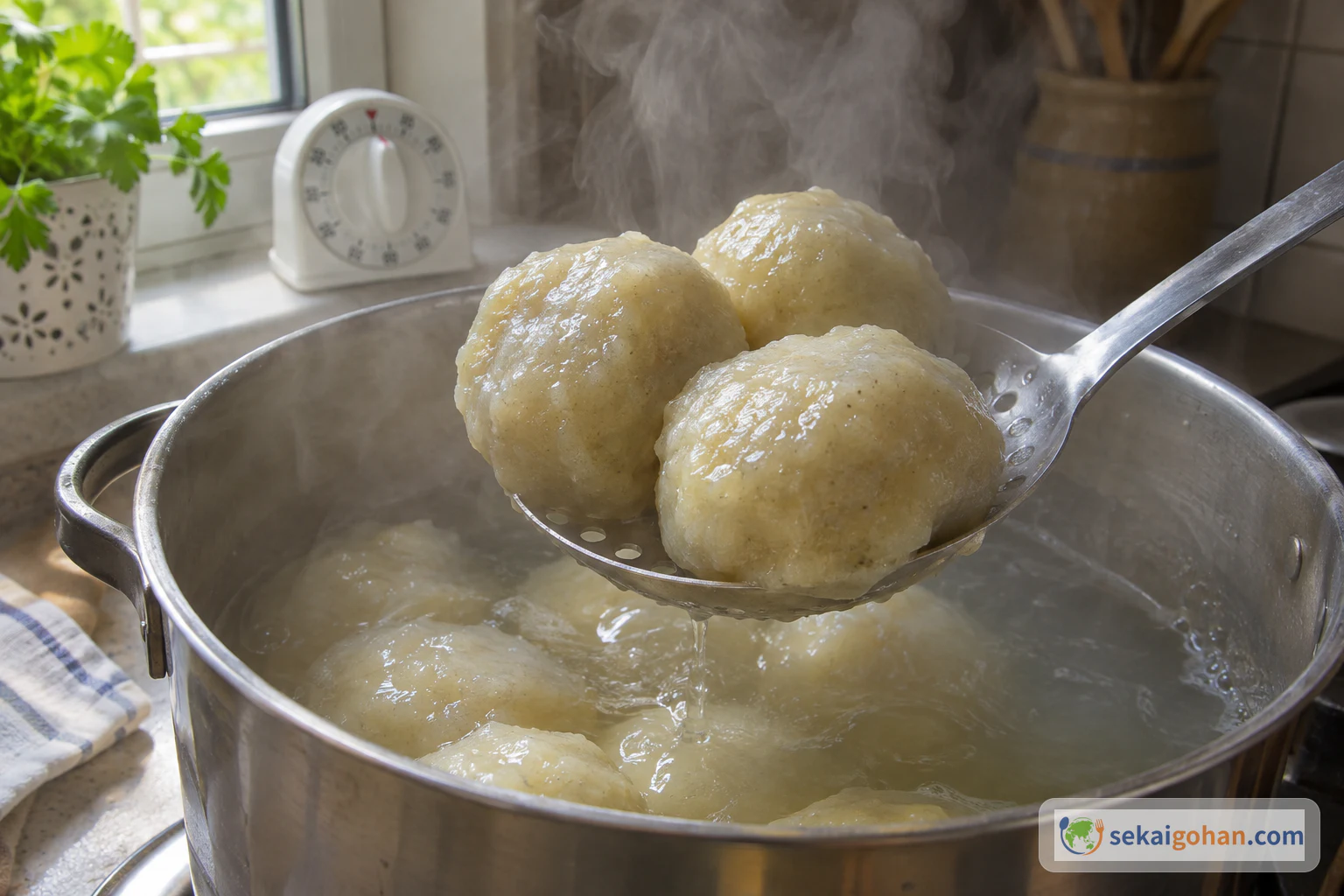
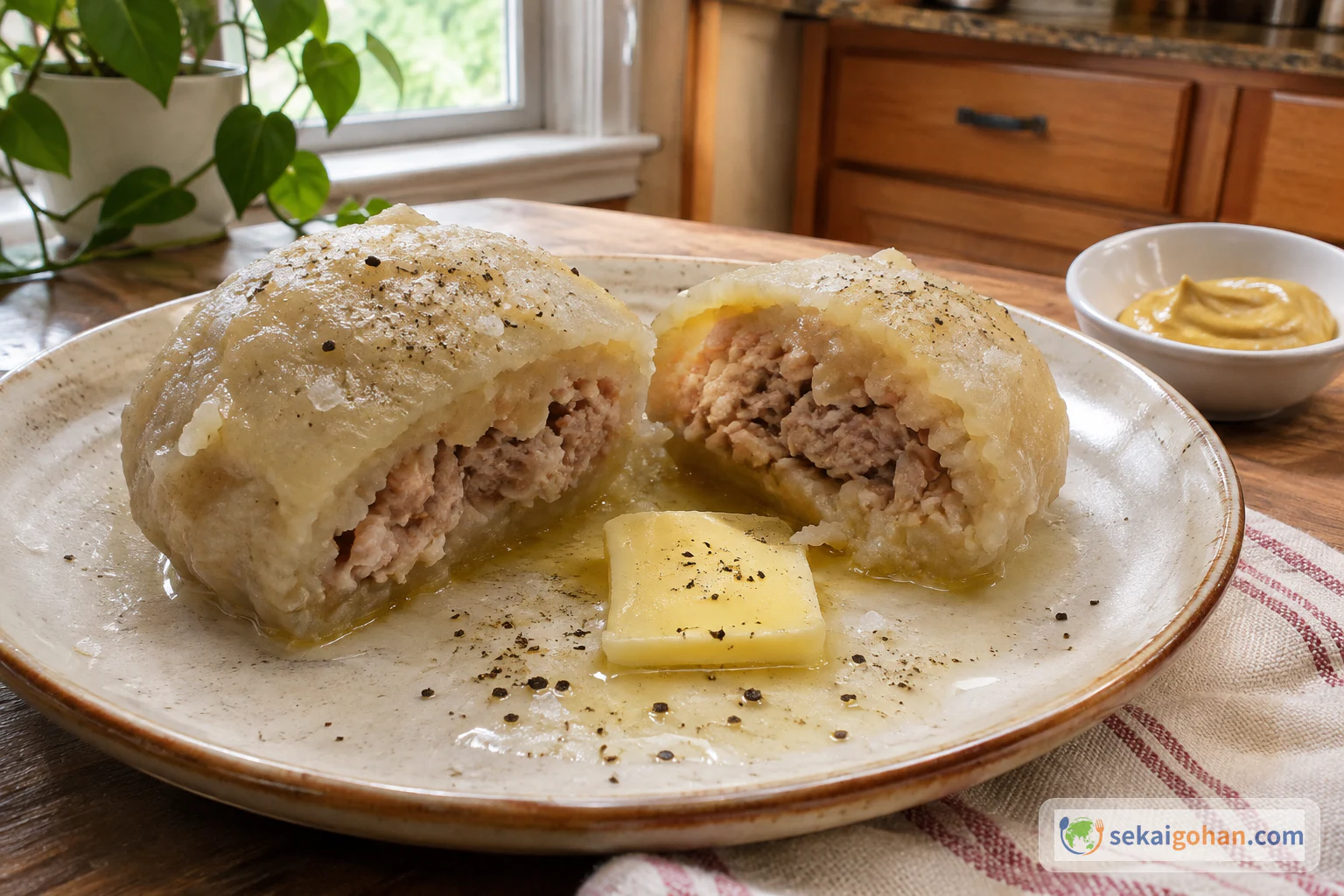
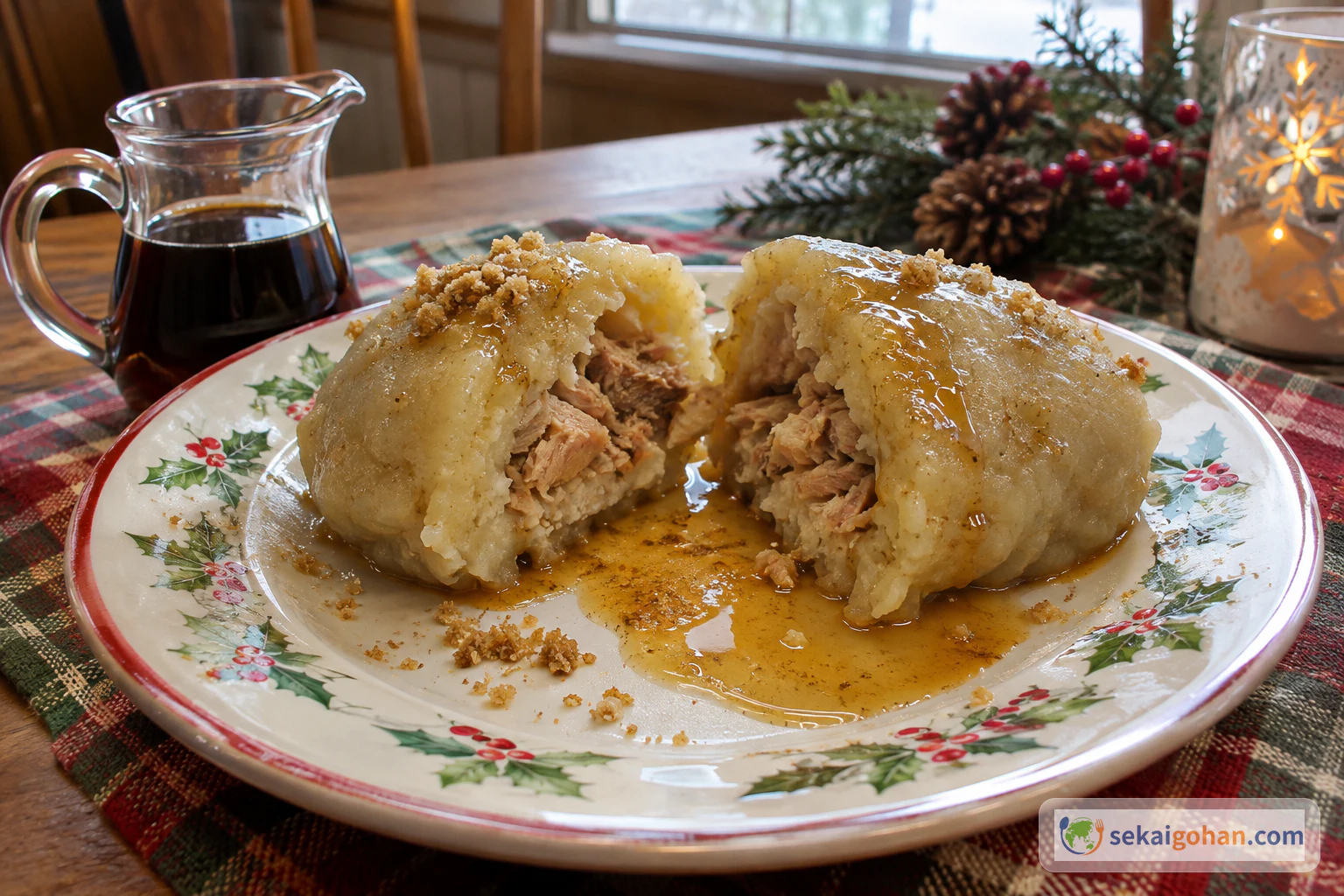
The big pot has been rolling for hours, and the kitchen smells of potato and salt pork. You lift one dumpling out with a slotted spoon. It is about the size of a large orange, grey and glossy, and it trembles on the plate. Cut it open and a nugget of pork sits in the middle, its fat soaked into the soft, sticky potato around it. This is poutine râpée, an Acadian dish from New Brunswick and eastern Canada. The potato itself tastes mild. What brings it alive is the butter, salt and pepper, or the maple syrup and molasses, that you add at the table.
Grated, Squeezed, Boiled: The Acadian Holiday Dumpling
Poutine râpée shares its name with poutine, the fries, gravy and cheese curds dish, and nothing else. This is a boiled dumpling. It is made from both grated raw potato and mashed cooked potato, wrapped around a core of seasoned pork. In New Brunswick it counts as one of the signature Acadian foods, next to dishes such as fricot on the same table.
It looks plain on the plate. The color is grey, not white, and the texture is chewy and sticky, closer to a dense dumpling than to anything you would call mashed potato. The flavor is mild, so each person finishes their own: savory with butter, salt and pepper, or sweet with sugar, maple syrup or molasses. Both ways are eaten.
A dish for the days that deserve the work
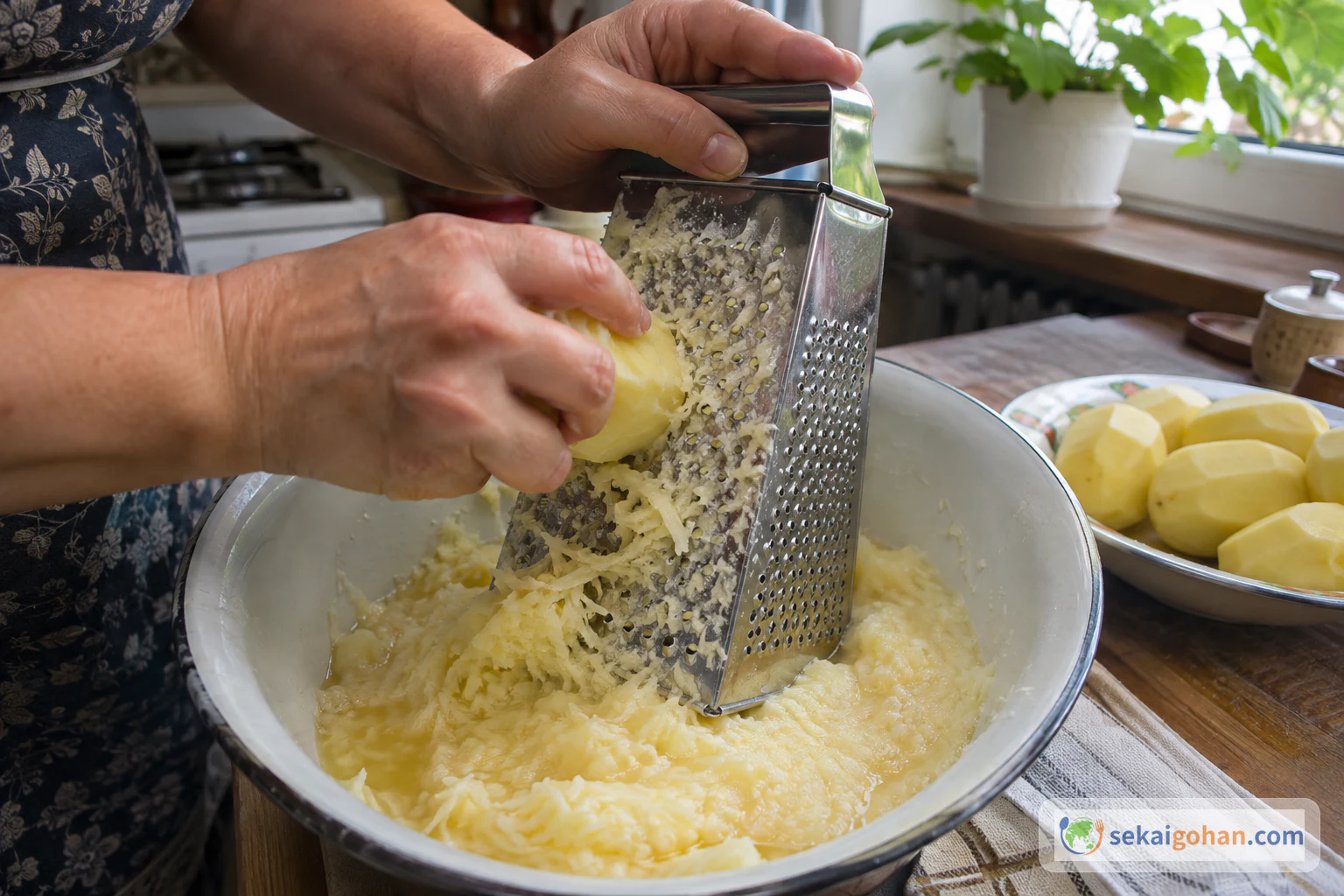
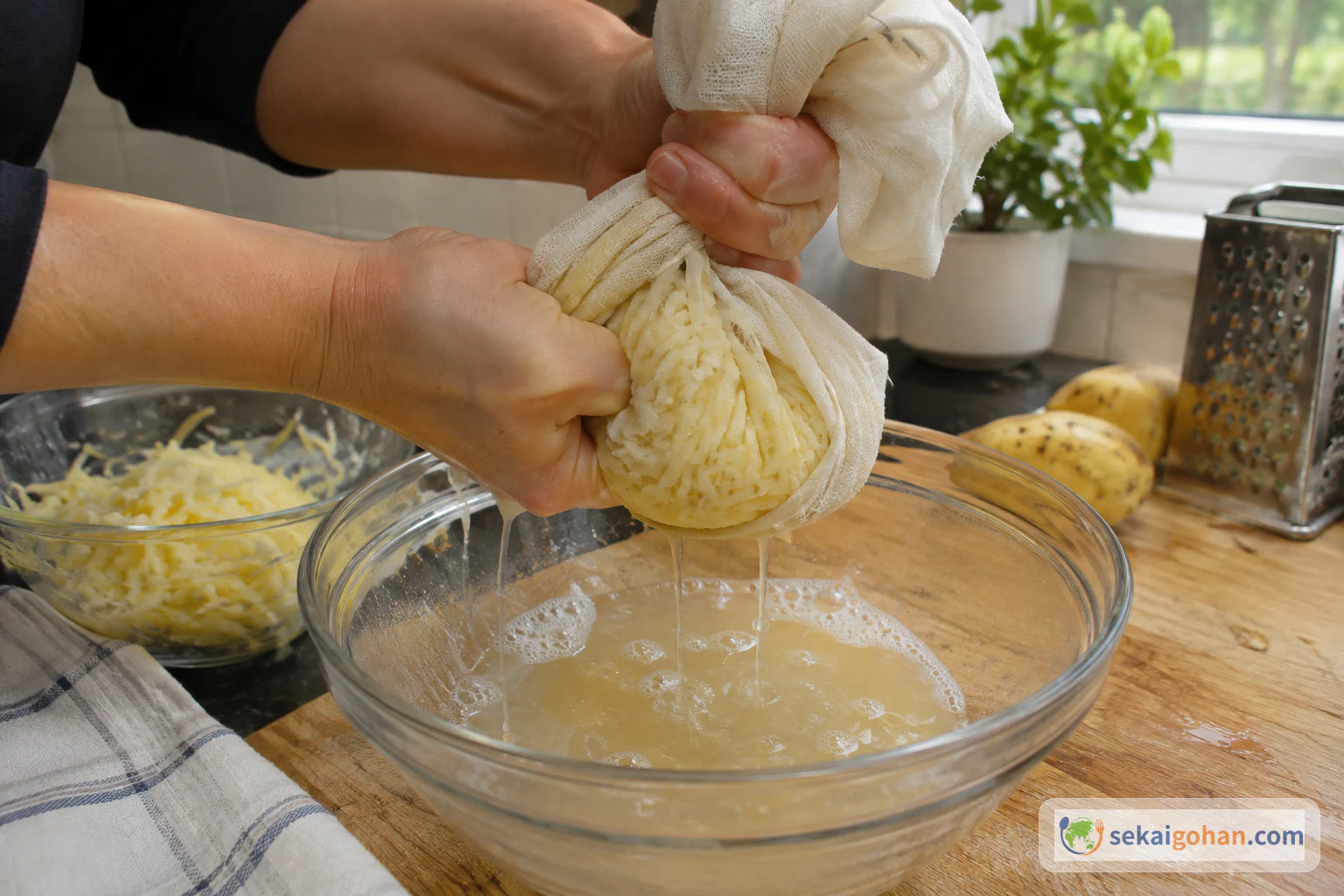
Grating ten potatoes by hand, wringing them dry in a cloth, shaping each ball and then boiling for hours is a lot of work. That is why poutine râpée belongs to holidays and special occasions, and it is a traditional part of Acadian Christmas.
Where the dumpling came from is not settled. One idea traces it to German Klöße, the potato dumplings of central Europe, but a very early arrival in the 1700s looks unlikely, and the dish may only have spread in the second half of the 1800s. Read every origin story as a possibility. For more dishes from the same country, see the Canada page.
Râpée means "grated" in French, for the raw grated potato. Poutine may come from a chain of words, from boudin to pudding to poutine.
In Nova Scotia the grated-potato tradition takes other shapes. Dumplings there can be made with no filling at all, and grated potato also goes into rappie pie, which is a separate dish. The version here is the New Brunswick one: a boiled dumpling with salt pork at its heart.
Ingredients
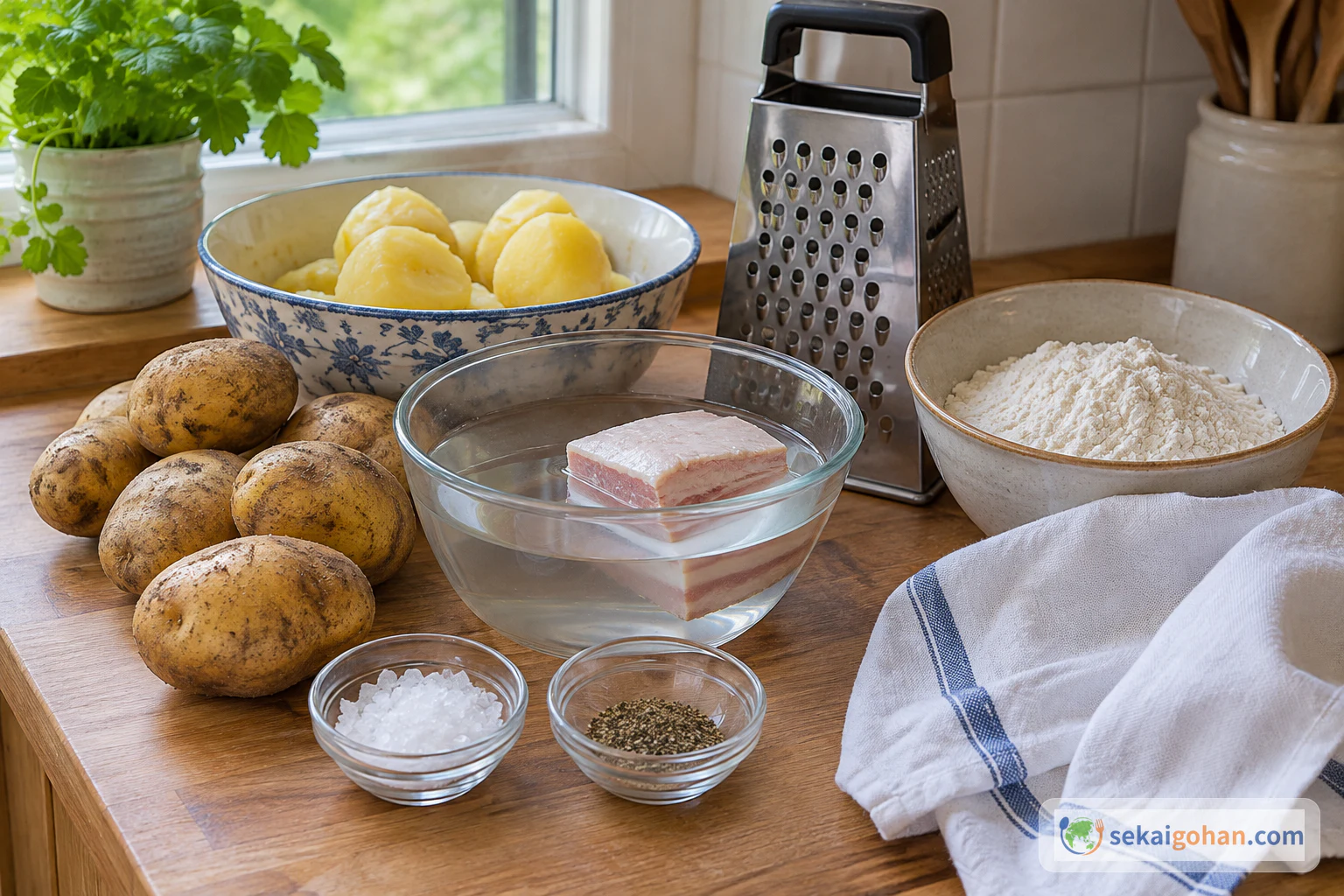
Contains wheat (the flour coating) and pork. Salt pork is raw meat: wash your hands, knife and cutting board after handling it. Raw potato is not eaten raw here; the grated potato is cooked through in the long boil.
Equipment
- A large, deep stockpot that holds all the dumplings in boiling water
- A box grater, stainless steel, fine side
- A clean cotton cloth or several layers of cheesecloth for squeezing
- A large mixing bowl and a wooden spoon
- A cutting board and a sharp knife
- A tray for the floured dumplings
- A slotted spoon
- An instant-read thermometer
Choosing and Substituting
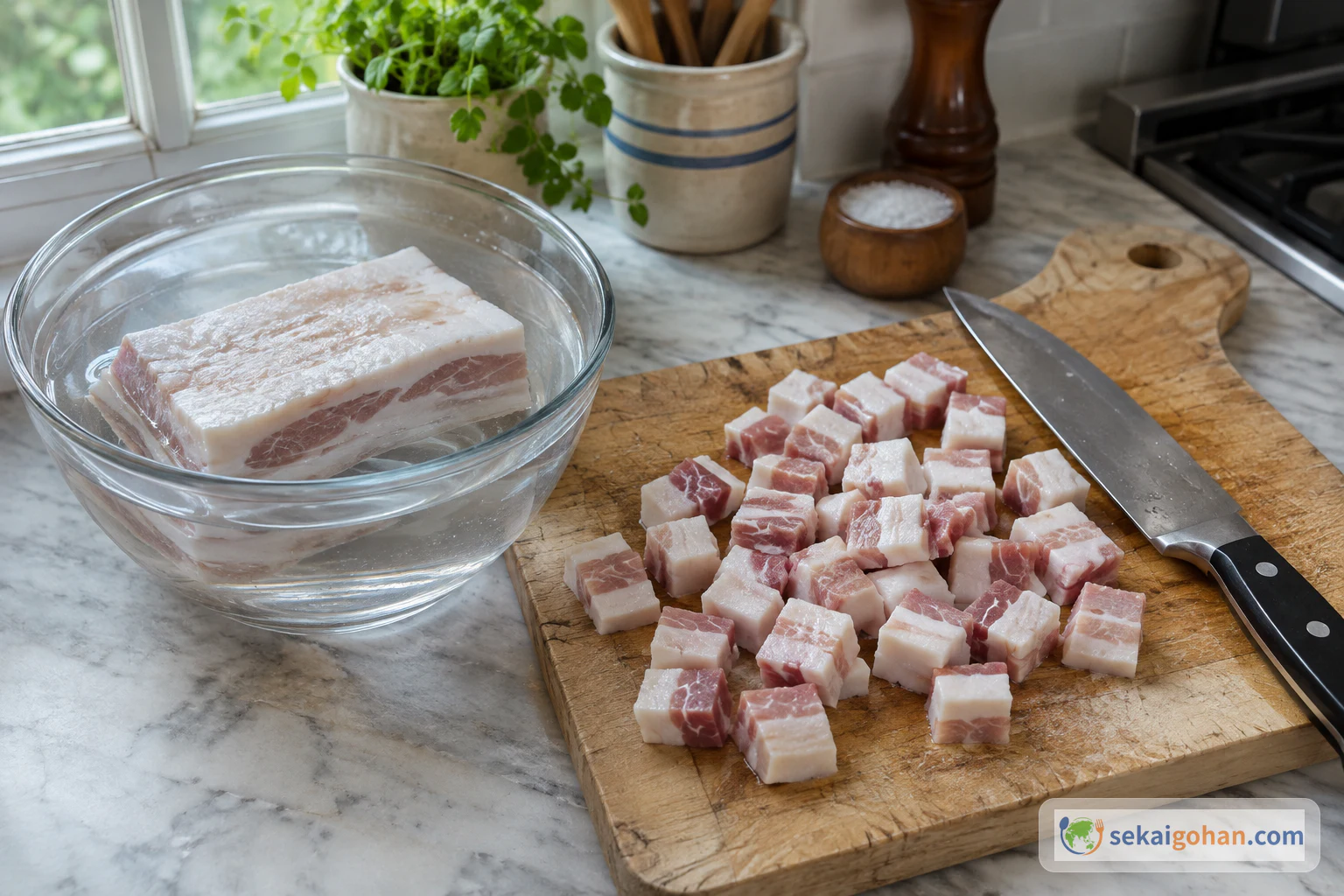
Salt pork is the one thing to hunt for. Ask for fatty salt pork at a butcher or a well-stocked supermarket; fat matters, because it melts into the potato during the long boil. Bacon can stand in, but it brings a smoky flavor the dish does not have, so it makes a different dumpling. Whichever you use, the overnight soak in cold water stays.
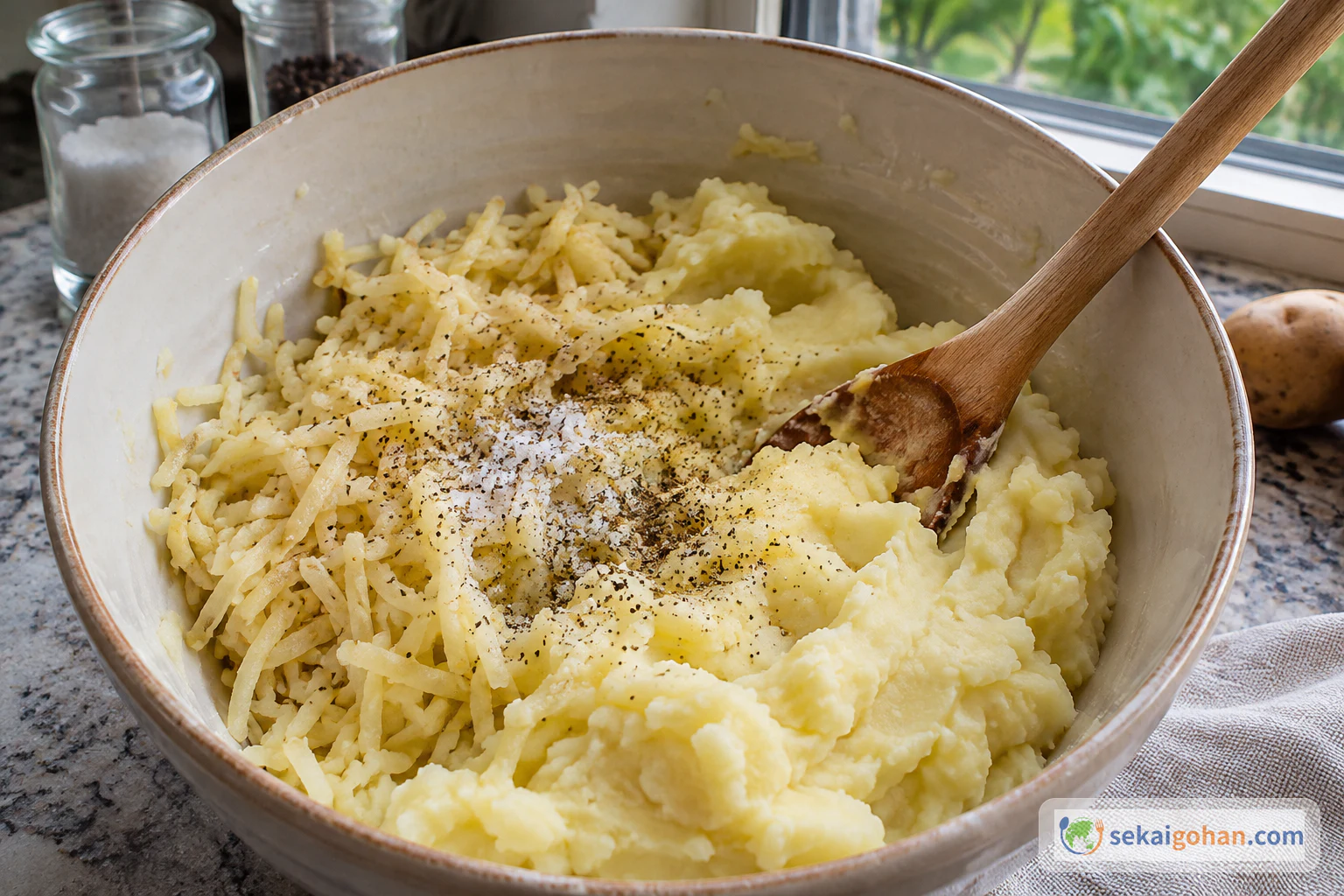
For the coating, use plain white wheat flour. Potato starch behaves differently and is not a swap here. The mashed potato stays plain, with no butter and no milk, just salt and pepper; the butter belongs at the table.
What keeps the dish tasting the way it does in New Brunswick is three things: potato squeezed hard, a salt pork core and a long boil. The toppings are where you are free. Maple syrup, brown sugar, molasses and cranberry sauce are all at home on this dumpling.
Method
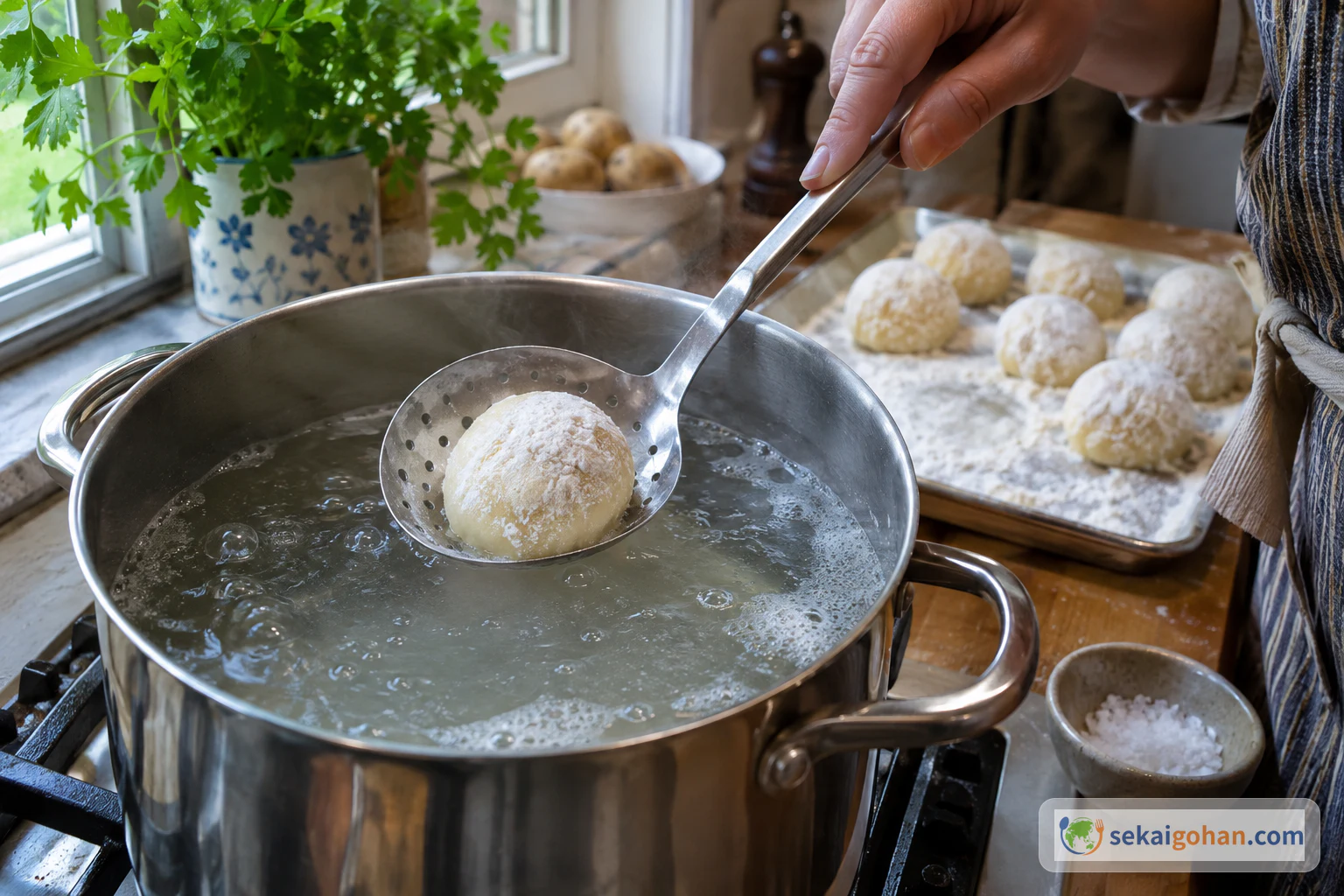
Start the salt pork soaking the night before. On the day, cook and mash the four potatoes first, so they are ready the moment the grated potato comes out of the cloth; grated potato darkens as it sits, so the grating, squeezing and shaping should move quickly. Put the big pot of salted water on to heat while you shape. After that, the pot does the work for two to three hours.
When It Goes Wrong
| What you see | Why | What to do |
|---|---|---|
| The dumplings fall apart in the pot | Too much water left in the grated potato | Next batch, squeeze the pulp in smaller amounts and wring until no drips come out |
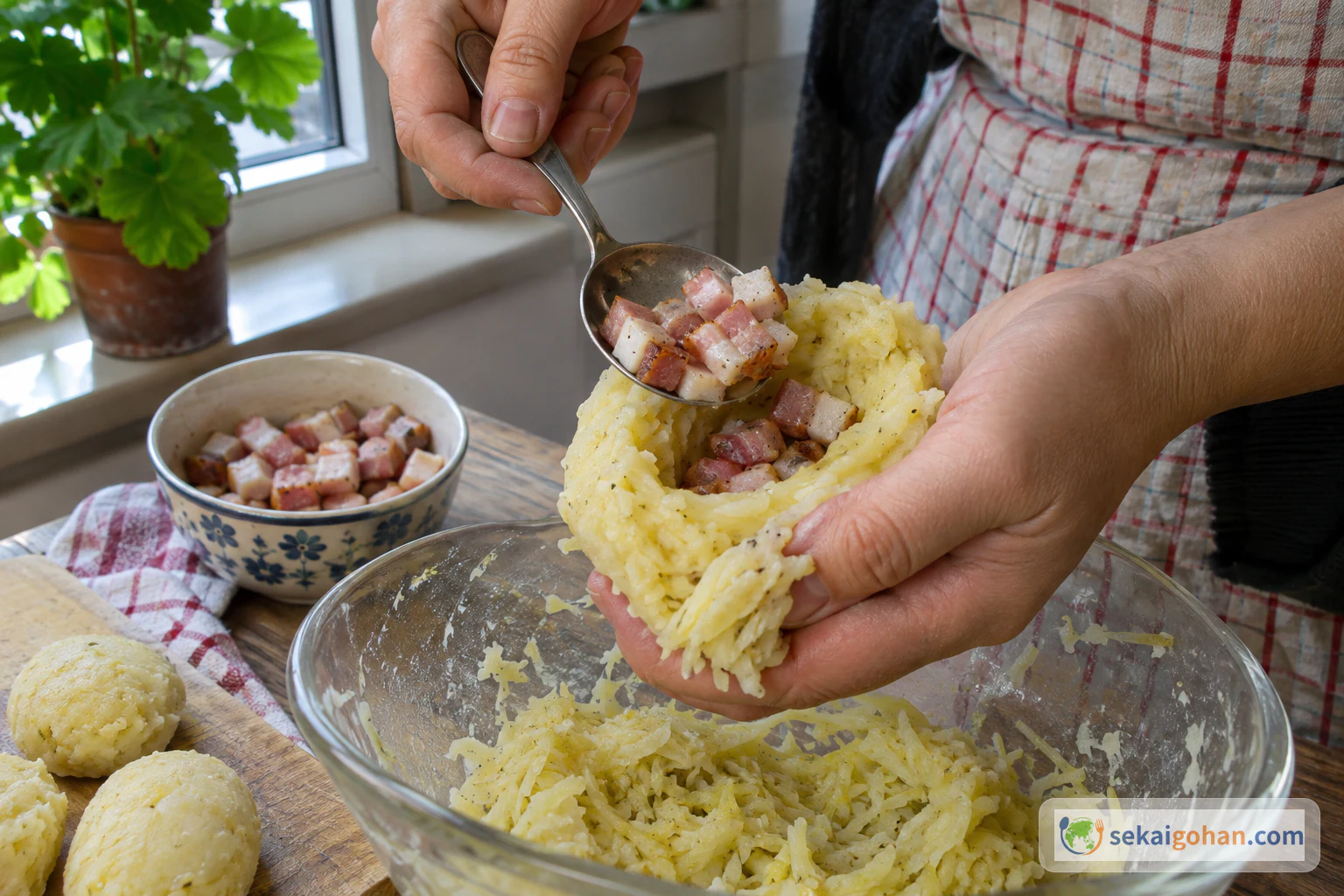
| Pork leaks out into the water | The seam was not fully closed, or the potato wall is thin | Push the hollow deeper, fill with 1 tbsp only, and roll until the seam vanishes |
| The grated potato turns dark before shaping | It sat in the air too long | Have the mash ready first and move straight from grating to squeezing to shaping |
| The dumplings look grey | This is their natural color | Nothing to fix; grey and glossy is right |
| The pork center reads below 160°F (71°C) | Not boiled long enough | Return the dumplings to the boiling water and check again |
| It tastes flat | The potato is mild by nature | Season at the table with butter, salt and pepper, or syrup |
Serving, Variations and Storage
At the table
Poutine râpée is holiday and Christmas food, set out for a crowd. Put butter, salt, pepper, mustard, maple syrup, brown sugar, molasses and cranberry sauce on the table and let everyone choose. Both the savory and the sweet way are traditional.
Variations
- Without a filling: the Nova Scotia way leaves out the pork. The dumpling becomes pure potato, and the toppings carry all the flavor.
- Cooked in a stew: instead of salted water, the dumplings can be simmered in a stew, so they take on the flavor of the broth.
- Sliced and fried: boiled poutines can be cut into slices and fried, which gives a crisp outside against the soft, sticky middle.
Storage
Poutines are best eaten the day they are boiled. Refrigerate leftovers promptly and reheat them until they are hot right through to the pork at the center.
Frequently asked questions
My potatoes are very large or very small. How do I keep the mix right?
Keep the balance close to two to two-and-a-half parts grated raw potato to one part mash. More mash makes a softer, smoother dumpling; more grated potato makes it chewier.
Can I skip the overnight soak for the salt pork?
Keep it. The soak draws salt out of the pork so the core seasons the potato instead of overpowering it. Start it the evening before you cook.
Can I add butter or milk to the mashed potatoes?
Keep the mash plain, seasoned with only salt and pepper. Its job is to bind the grated potato into a firm ball that holds up to hours of boiling. Save the butter for the table, where it melts over the hot dumpling.