Arroz a la Tumbada: Red Rice That Keeps Its Broth
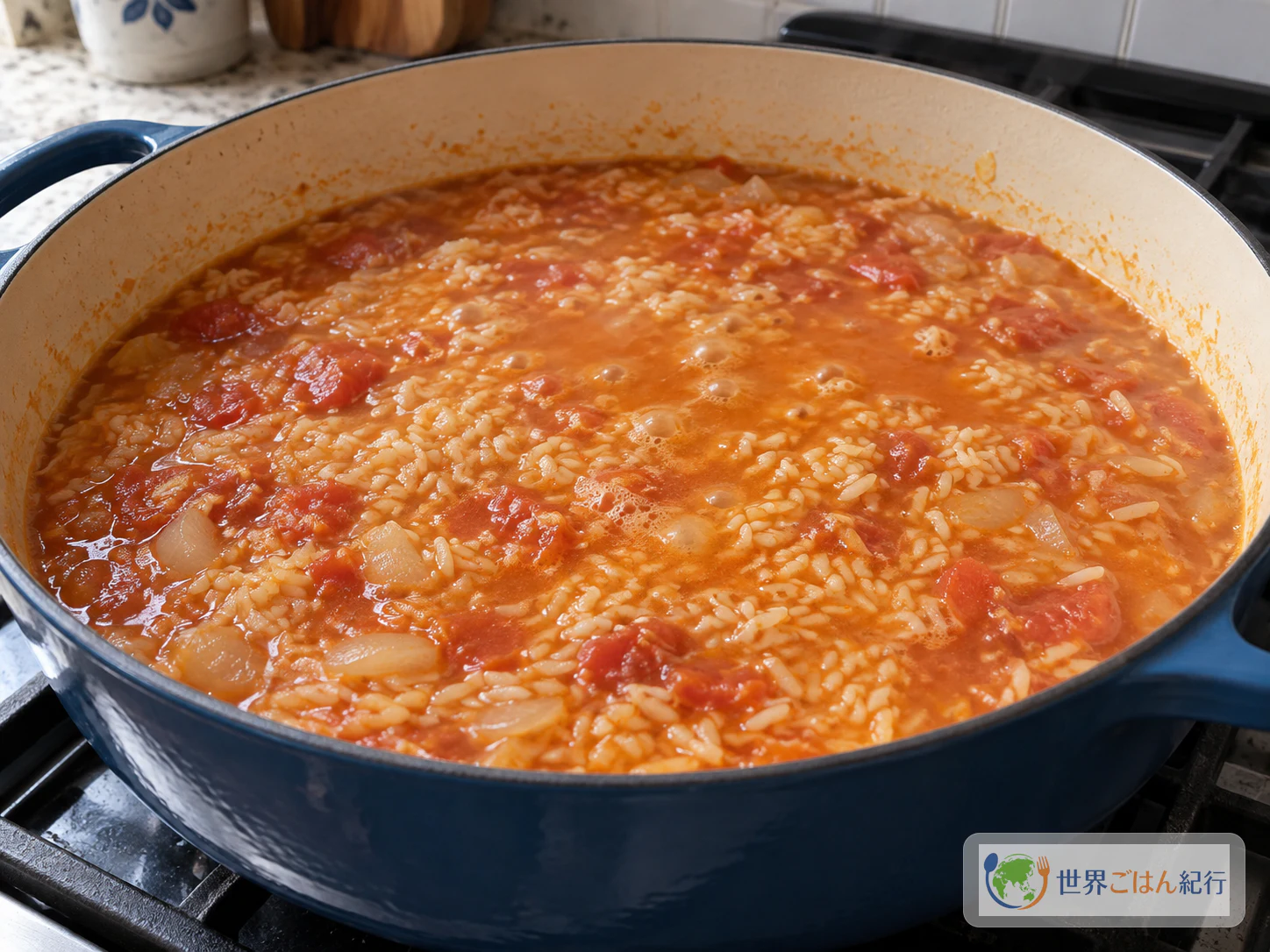
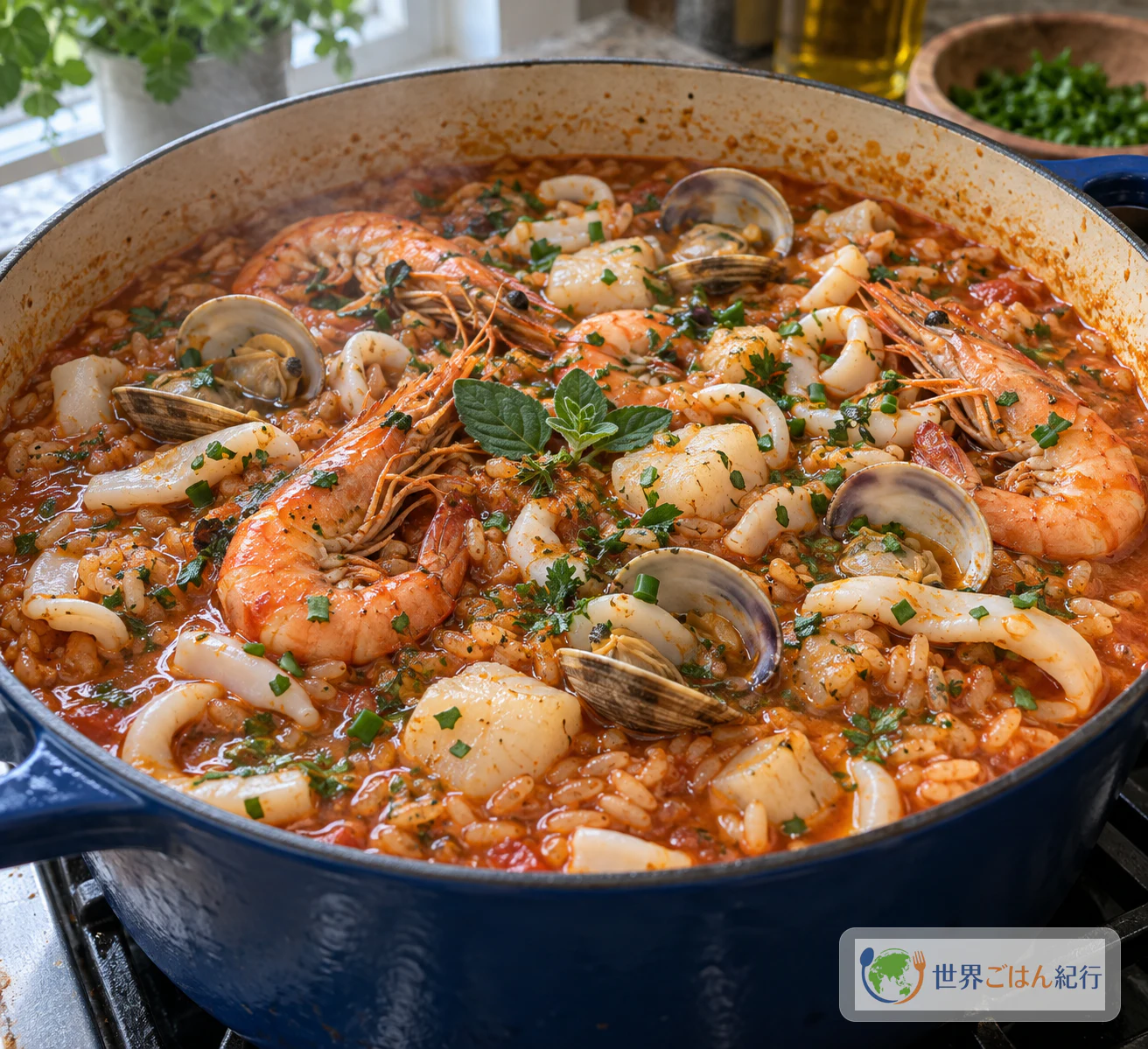
The rice is cooked through but still sits in a little red broth. It is not a dry rice. Add the seafood in stages, and add the herbs near the end so they stay green.
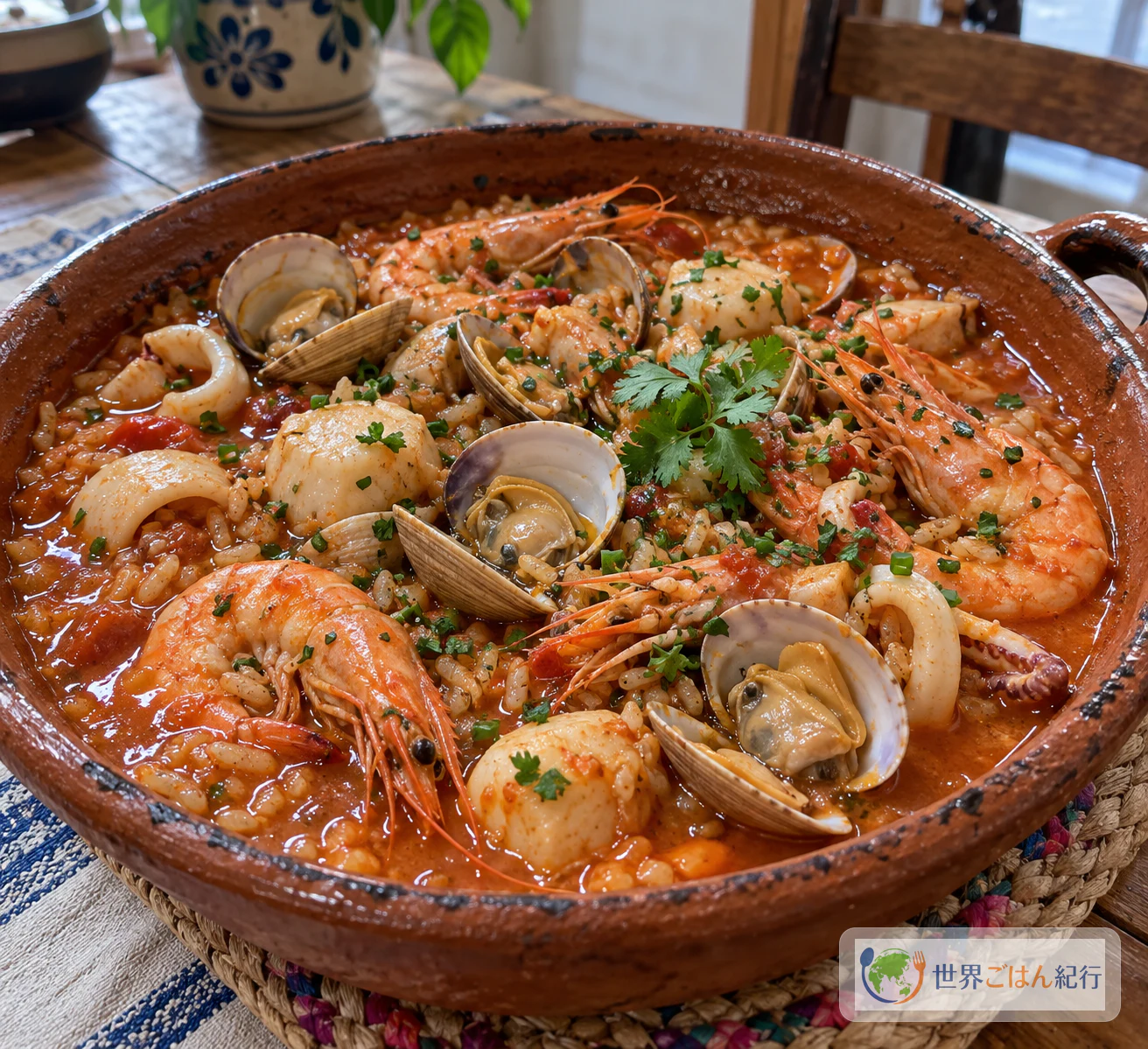
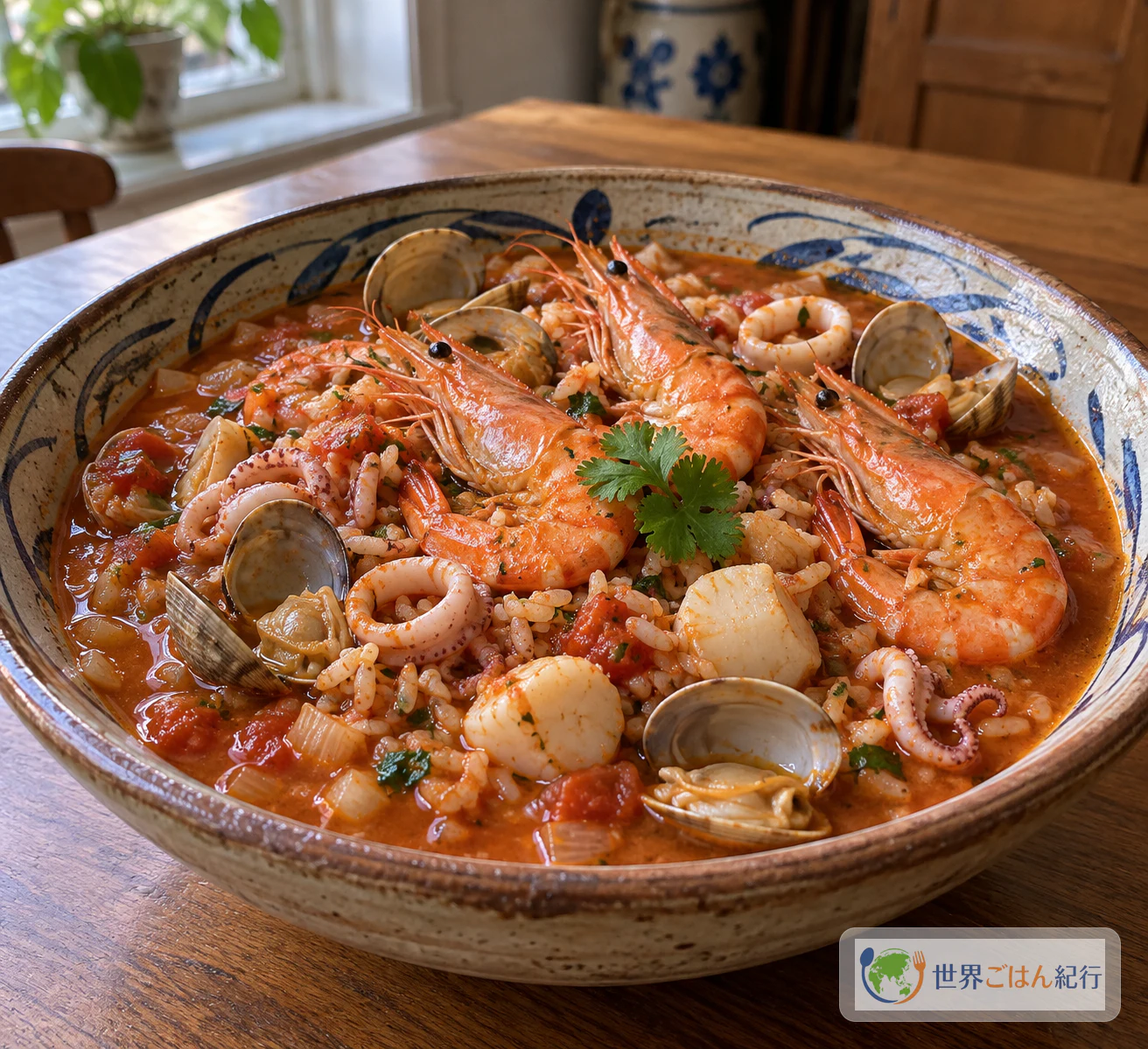
Arroz a la tumbada is served in a deep bowl. It is rice colored red with tomato, with clams, shrimp, squid and white adductor meat resting in it, and a little broth pooled around the grains. Larousse Cocina describes it as a traditional dish of the Sotavento region of Veracruz. The finished rice is fully cooked yet slightly soupy.
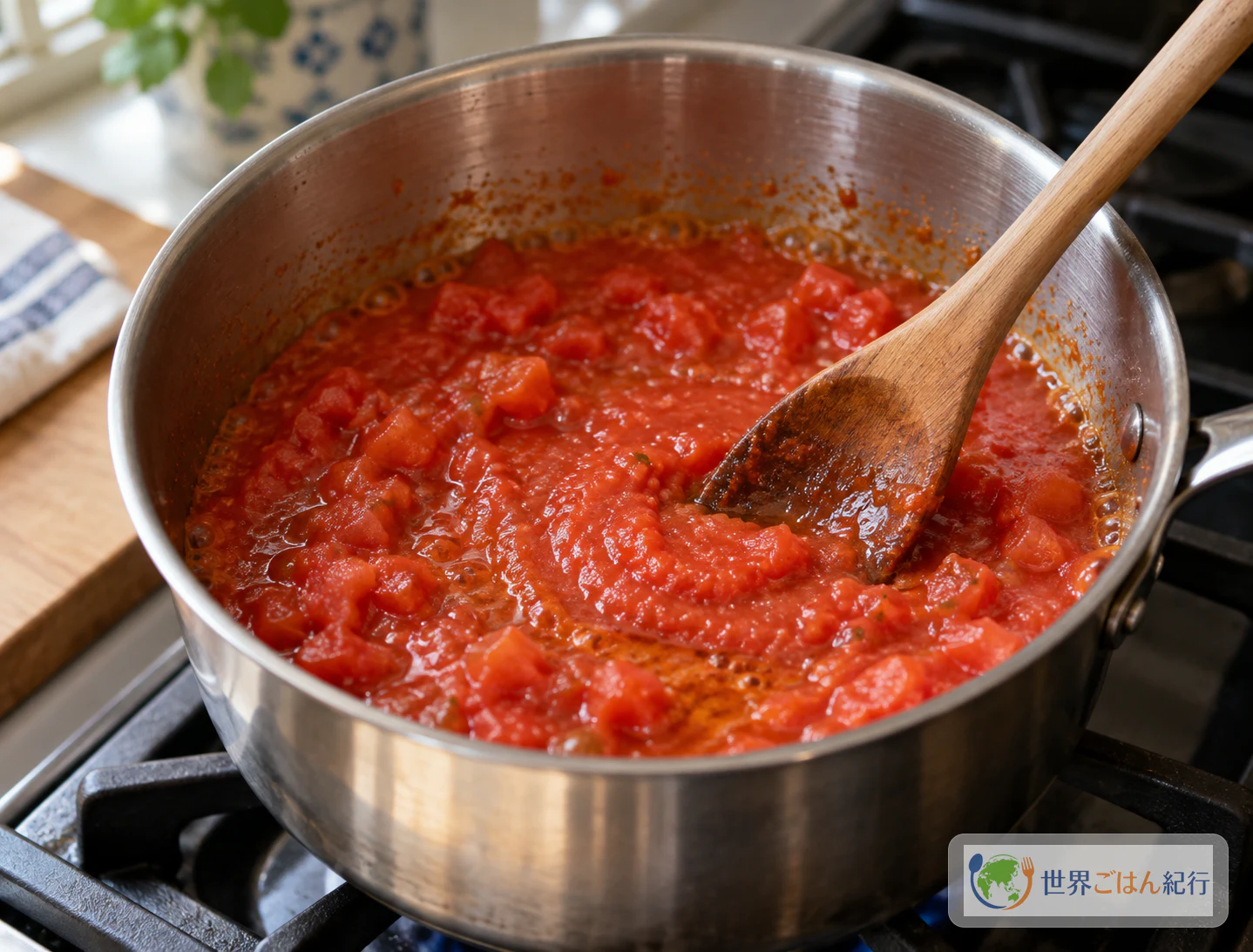
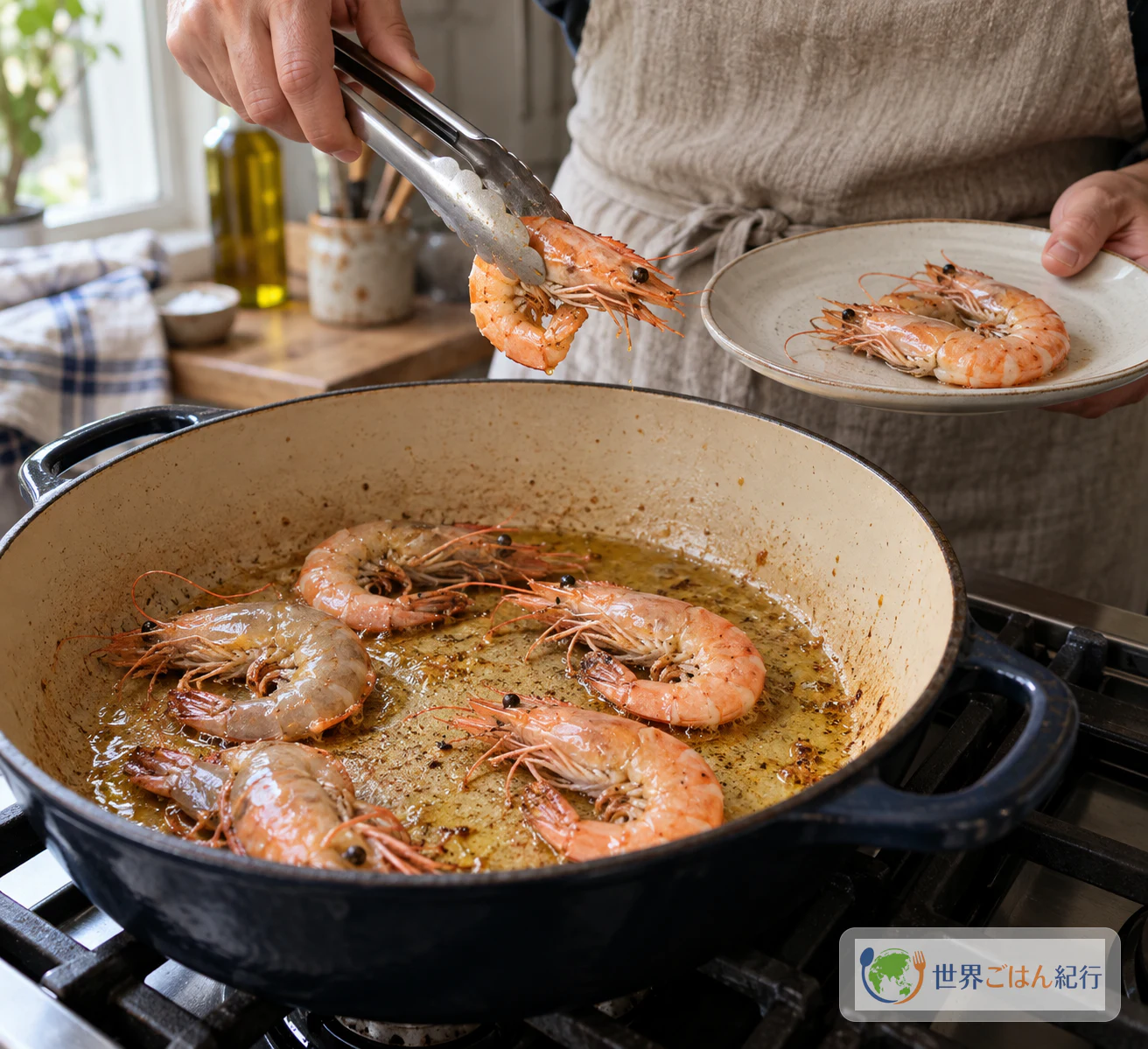
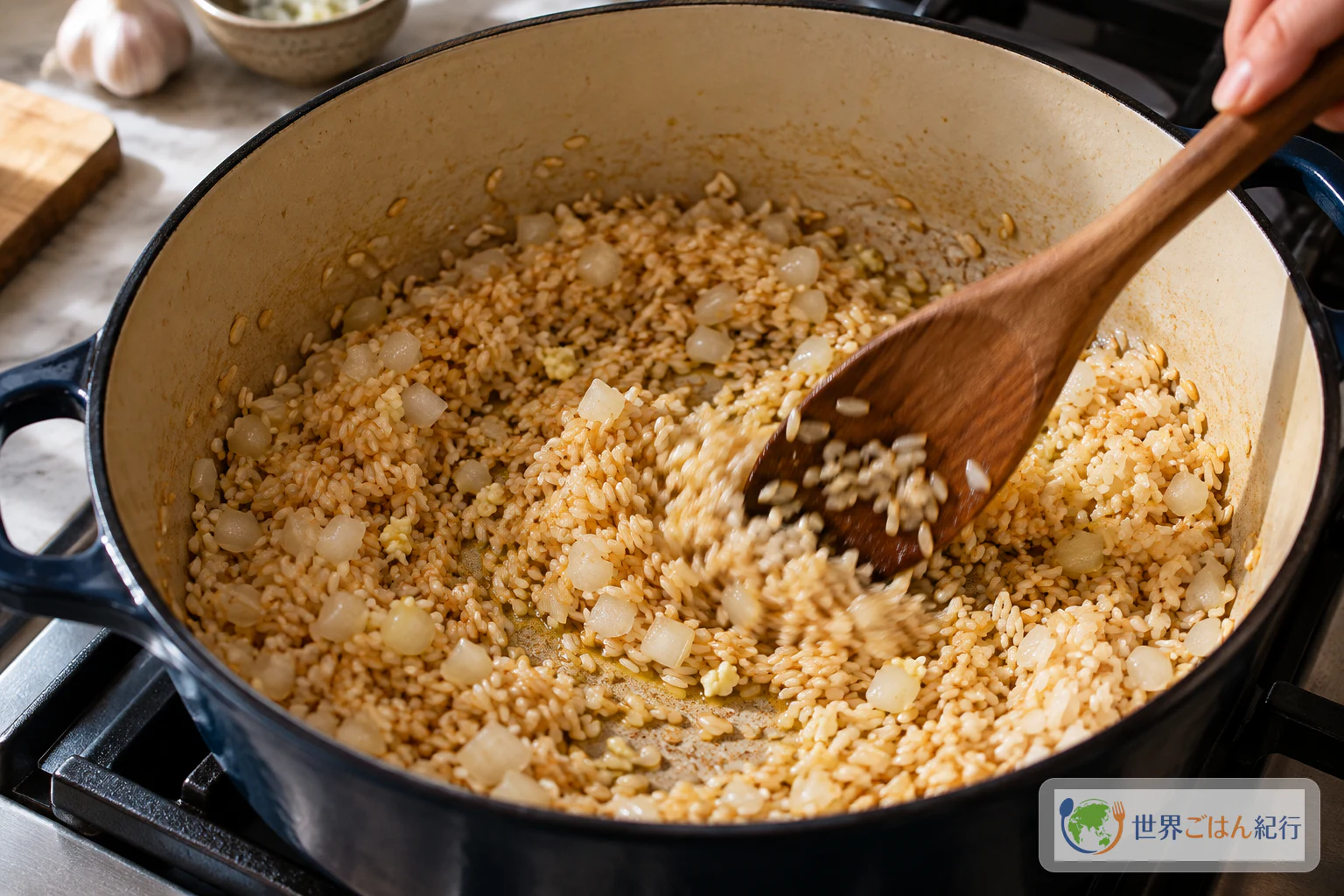
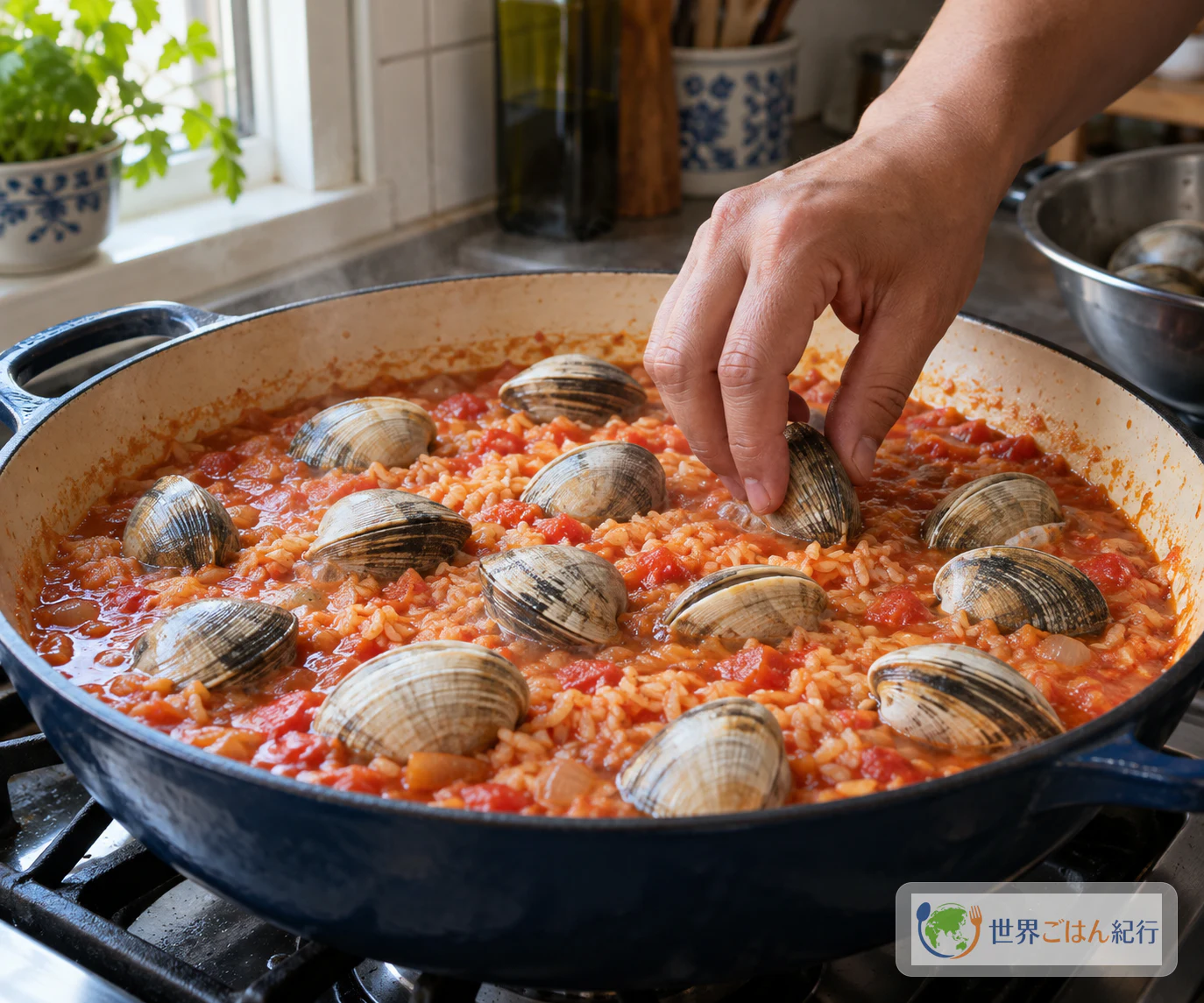
This article follows one recipe published by Larousse Cocina, from Los clásicos de la cocina mexicana. It makes six servings. The tomato is cooked in olive oil and set aside. The shrimp are seared briefly in more oil, and the rice is fried in that same oil. Then the tomato, fish stock and water go in. The clams are added halfway through the rice's cooking. The squid, the callo de hacha and the herbs are added near the end. The page lists 10 minutes of preparation and 50 minutes of cooking, and gives about 25 minutes for the rice itself. Those are the publisher's figures, not timings measured in your kitchen.
The recipe uses fish stock but no fish fillet. Other recipes with the same name add fish, crab, octopus or epazote. Those belong to other versions and are not mixed in here.
A Soupy Seafood Rice from the Sotavento, Not a Paella
The Larousse Diccionario enciclopédico de la Gastronomía Mexicana defines arroz a la tumbada as a red, soupy rice. It is made with varied seafood, tomato, oregano, garlic and epazote, and it is a specialty of the Sotavento de Veracruz. The dictionary says plainly that it should not be confused with seafood paella. A paella aims for dry, separate grains. This rice is brought to the table with its broth.
The dictionary also describes how it is eaten. It is served as a main course, often with black beans and tortillas or bread. Traditionally it comes to the table in the cazuela it was cooked in, or in deep bowls. These are serving customs from the dictionary, not ingredients in the recipe below.
Recipes bearing the name vary widely. One elGourmet version uses rice with fish stock or water and adds fish, shrimp, clams, crab, octopus, langostinos, fish roe and epazote. It is served in deep bowls with corn tostadas. A local recipe from Imagen de Veracruz also builds a soupy rice with fish stock, tomato, seafood and epazote, and adds the seafood in stages. The same article connects the dish to Alvarado and its Las Cruces de Mayo celebration. Those recipes show the range of the dish. Their amounts and steps are not used here.
The Larousse recipe in this article is one family's version. Its herbs are Yucatan oregano, oreganón, chives, parsley and cilantro, not the epazote named in the dictionary entry. For more dishes from the country, see Mexico.
Ingredients (6 Servings, One Larousse Recipe)
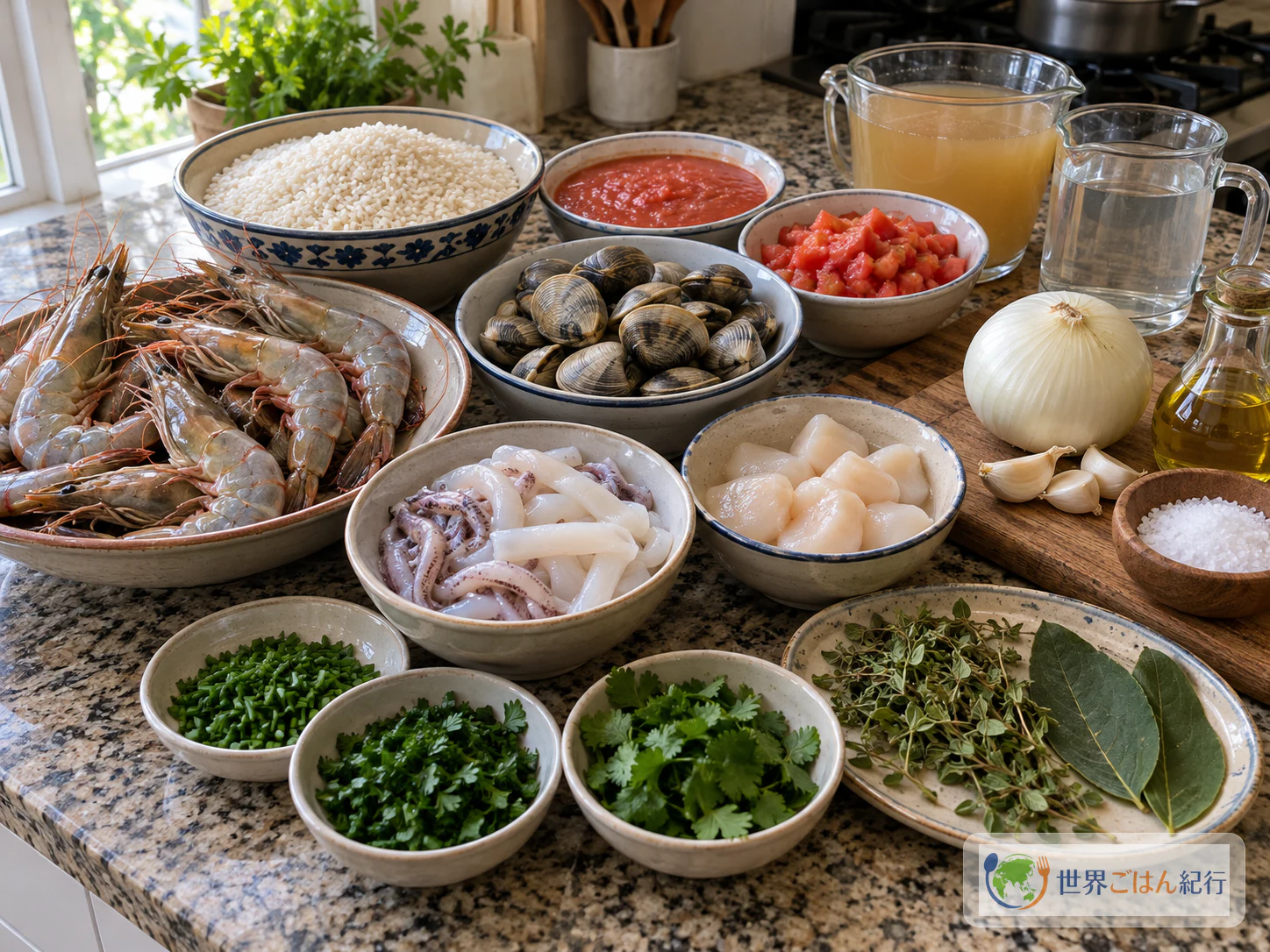
These amounts are the recipe's own and are not scaled. The source does not define its cup. This article reads 1 cup as 240 ml, 1 tbsp as 15 ml and 1 tsp as 5 ml, which is an editorial choice rather than the source's standard. Do not swap in a 180 ml Japanese rice cup or a 200 ml Japanese measuring cup. The rice is measured by volume and not converted to grams.
The recipe lists 1 tsp of salt and uses it with the rice. It also says the shrimp are fried with "a little salt" but gives no amount for it. This article does not split the teaspoon between the two or make up a second measured amount. Season the shrimp lightly and taste the broth at the end.
Equipment
- A small saucepan for cooking the tomato
- A wide, heavy pot with a lid, large enough for the rice, broth and seafood with room to spare at a boil (the source gives no pot size)
- Tongs and a plate for the seared shrimp
- A blender and strainer for the tomato
- Measuring cups and spoons
- A food thermometer, to check the seafood's center
Choosing and Substituting: What Changes the Dish
Fish stock. The recipe allows water in place of fish stock. It also allows stock in place of part or all of the water if you have enough. The source does not cover which fish to use or how much granulated stock to add. If you use a prepared stock, read its label for added ingredients and allergens.
Callo de hacha. In Mexico this is the adductor meat of pen shells. The Larousse dictionary names Atrina rigida and Pinna rugosa, and the white adductor is what is eaten. It is not another name for scallop. Scallop adductors are a different shellfish and can stand in only as a substitute. Using 200 g of scallop has not been tested as part of this recipe. Expect a different result.
Yucatan oregano and oreganón. These are two separate ingredients. Ordinary dried oregano from a supermarket is not the same as Yucatan oregano. It is not covered here which plant should replace oreganón. If you can find only one of the two herbs, the result is your own variation and no longer matches the recipe. The flavor will differ.
Parsley. This version uses 2 tbsp of chopped ordinary parsley. The recipe's alternative is 4 whole parsley ranchero leaves, which are removed before eating. Use one option or the other, not both.
Clams and other seafood. The source does not specify a clam species. It also gives no cooking times for frozen seafood, so none are given here.
Allergens. This dish contains shrimp, squid, bivalves (clams and pen-shell adductor) and fish in the stock. It is not the same as a version made with vegetable stock.
Method: Tomato First, Seafood in Stages
The rice cooks for about 25 minutes under the lid. The clams go in halfway through that time. The remaining seafood and the herbs go in near the end. The source gives no exact minutes for these additions, so watch the rice and the seafood.
When the Pot Doesn't Look Right
| What you see | What to check | What to do |
|---|---|---|
| The rice has gone dry, like a paella | The dish should finish slightly soupy | Watch for broth around the grains during the last stretch of cooking. The source gives no rescue amount, so no fixed figure is given here |
| The herbs look dull and dark | Whether they went in early | Add them near the end, as the recipe directs |
| The shrimp look done but you are unsure | The first sear does not cook them through | Make sure they went back into the pot and their centers reached 75°C for at least 1 minute |
| The clams have opened | An open shell alone is not proof of safety | Check the heat with a thermometer, and follow any "for cooking" label or local instructions |
| The salt seems off | The shrimp salt has no listed amount | Taste near the end, which is when the recipe says to adjust the salt |
| No Yucatan oregano or oreganón | These are two separate herbs | Expect a different flavor, and treat the result as your own variation |
Variations Within the Source
The recipe mentions Tabasco achiote paste (pasta de achiote tabasqueño), 1/4 tsp, as an optional addition for color from the author's family. It is not a defining ingredient of the dish in general, and this version leaves it out. To use it, dissolve it in 2 tbsp water, separate from the 4 cups of water. Fry it briefly after the rice and aromatics, then add the reserved tomato.
- Parsley ranchero. Use 4 whole leaves instead of the chopped parsley, and remove them before eating.
- All water. Replace the fish stock with water, as the recipe allows. The broth will taste less of the sea.
- A simpler version. The Larousse page mentions a simpler shrimp-and-fish version but gives no details. Recipes from other sources, with fish, crab, octopus or epazote, are separate recipes and are not combined with this one.
Leftovers
Do not leave the rice and seafood at room temperature for long. Divide leftovers into shallow containers, cool them quickly and refrigerate them. Reheat to at least 75°C as a general guide. A safe storage period for this dish has not been confirmed, so none is given here.
Frequently Asked Questions
How is this different from seafood paella?
The Larousse dictionary separates the two explicitly. Arroz a la tumbada is red with tomato and slightly soupy. It is served with its broth in deep bowls or in the cooking pot.
Can I use water instead of fish stock?
Yes. The recipe allows water in place of fish stock. It also allows stock in place of some or all of the water if you have enough.
Can I use scallops instead of callo de hacha?
Only as a substitute. Callo de hacha is pen-shell adductor meat, a different shellfish from scallop. Using the same weight of scallop has not been tested as part of this recipe.
Isn't epazote supposed to be in it?
The dictionary entry lists epazote, and several other recipes use it. This Larousse family recipe uses Yucatan oregano, oreganón, chives, parsley and cilantro instead. Adding epazote changes the recipe.
Do I have to use achiote?
No. The source calls it an optional addition for color from the author's family, and this version omits it.
How do I know the seafood is cooked?
Do not judge by the rice's cooking time. Check that the center of the shrimp, squid and adductor meat reaches 75°C for at least 1 minute. Do not treat an opened clam shell as proof of safety on its own.
Sources
- Larousse Cocina, "Arroz a la tumbada" (recipe from Los clásicos de la cocina mexicana). The six-serving recipe used here: ingredients, method, the slightly soupy finish, the publisher-listed 10 minutes preparation and 50 minutes cooking, the late herbs, the optional achiote, and water in place of fish stock. https://laroussecocina.mx/receta/arroz-a-la-tumbada/
- Larousse Cocina, "Arroz a la tumbada," Diccionario enciclopédico de la Gastronomía Mexicana. The dish as a red, soupy seafood rice of the Sotavento de Veracruz; how it differs from seafood paella; serving as a main course with black beans and tortillas or bread, in the cazuela or deep bowls. https://laroussecocina.mx/palabra/arroz-a-la-tumbada/
- elGourmet, "Arroz a la Tumbada." A different recipe, cited only to show how recipes vary in seafood and order, and for serving in deep bowls with corn tostadas. https://elgourmet.com/recetas/arroz-a-la-tumbada/pdf
- Imagen de Veracruz, "¿Cómo preparar arroz veracruzano a la tumbada? Receta e ingredientes." The dish's connection to Alvarado and the Las Cruces de Mayo celebration, and a separate home recipe used only for comparison. https://imagendeveracruz.mx/veracruz/Como-preparar-arroz-veracruzano-a-la-tumbada--Receta-e-ingredientes-20240516-0024.html
- Larousse Cocina, "Callo de hacha," El pequeño Larousse Gastronomique en español. Callo de hacha as the white adductor meat of Atrina rigida and Pinna rugosa. https://laroussecocina.mx/palabra/callo-de-hacha/
- Ministry of Health, Labour and Welfare (Japan), "Preventing food poisoning at home" (家庭での食中毒予防). General home guidance on heating to a center temperature of 75°C for at least 1 minute, avoiding cross-contamination, cooling leftovers quickly in shallow portions, and reheating to 75°C or above. https://www.mhlw.go.jp/stf/seisakunitsuite/bunya/kenkou_iryou/shokuhin/syokuchu/01_00008.html