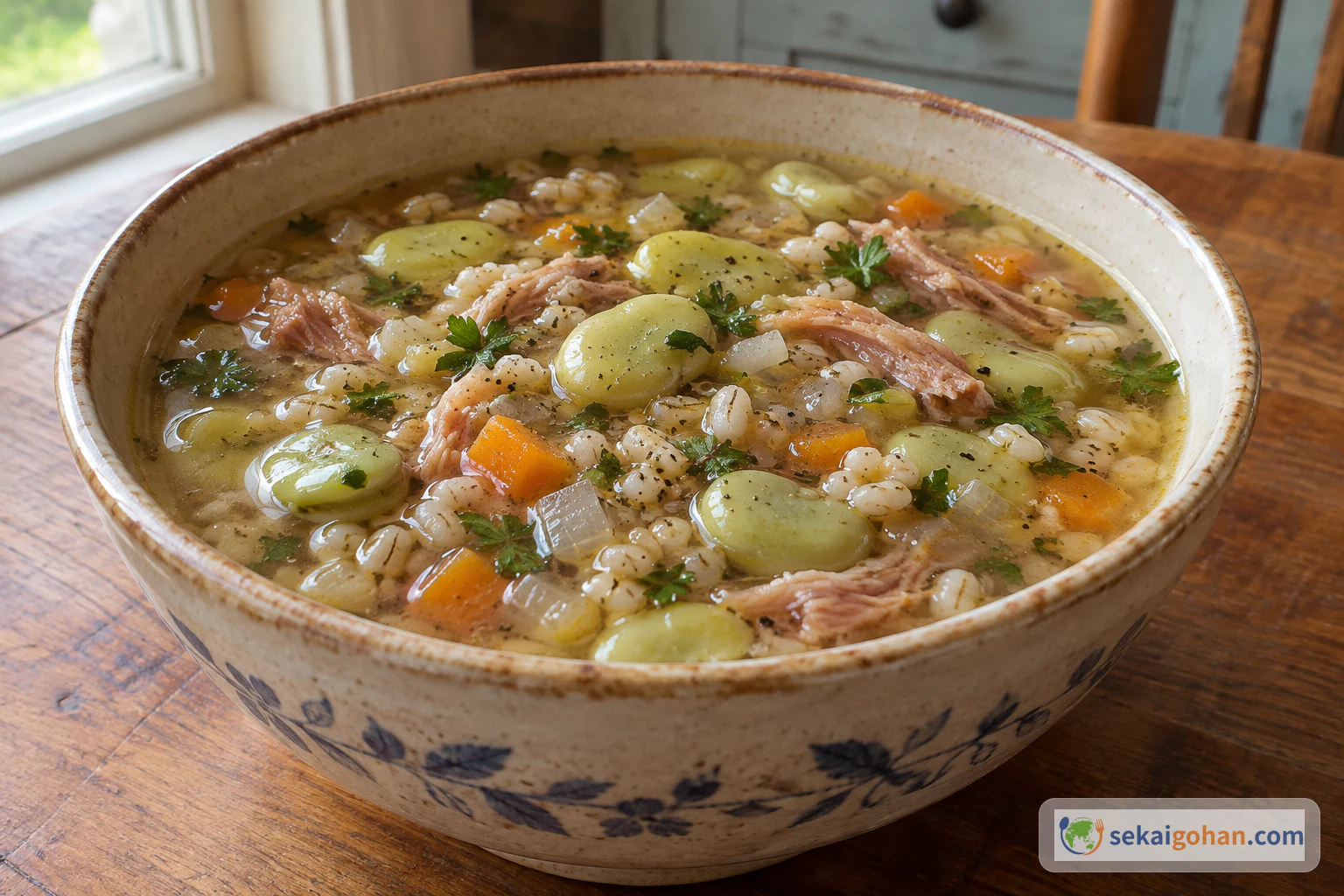
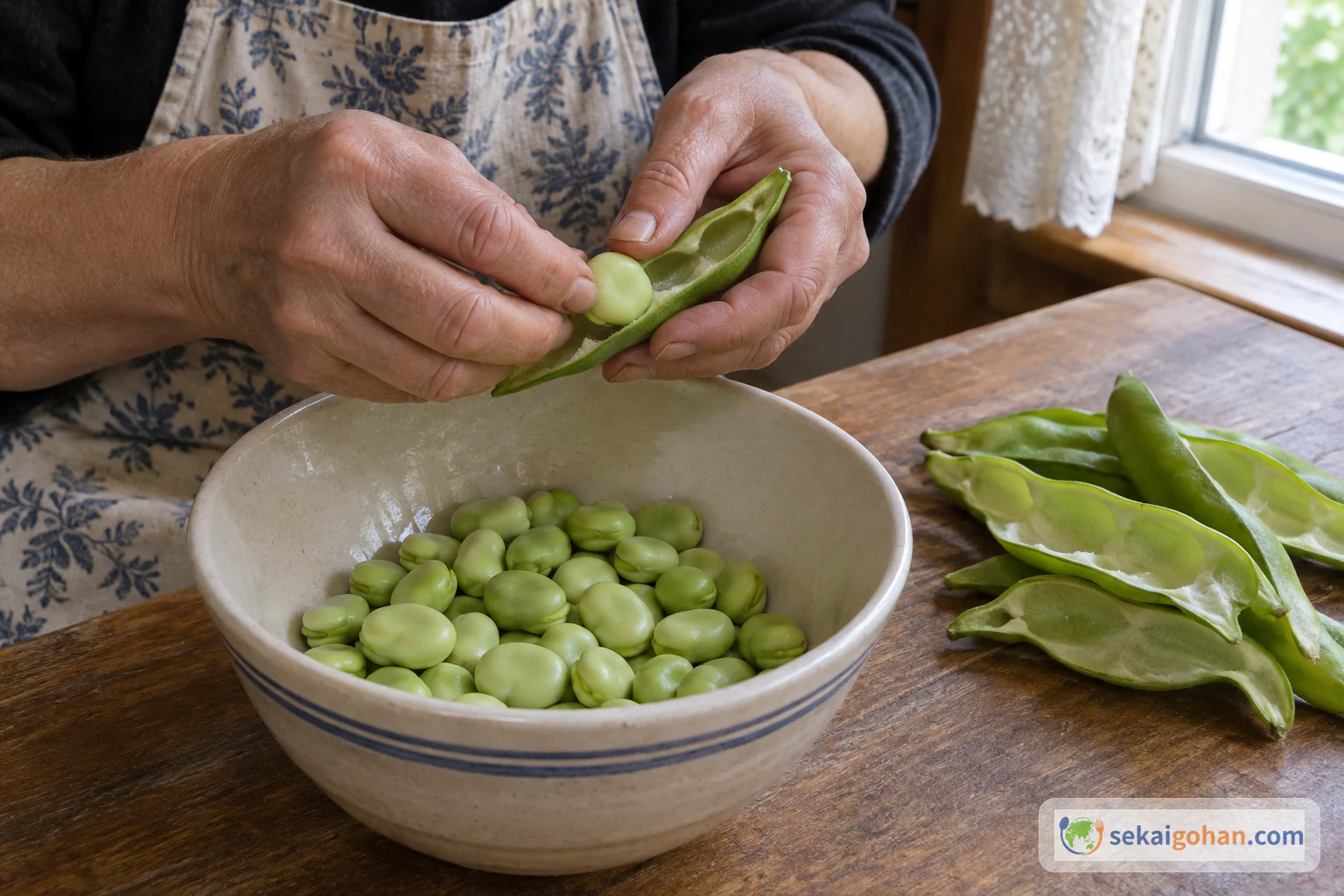
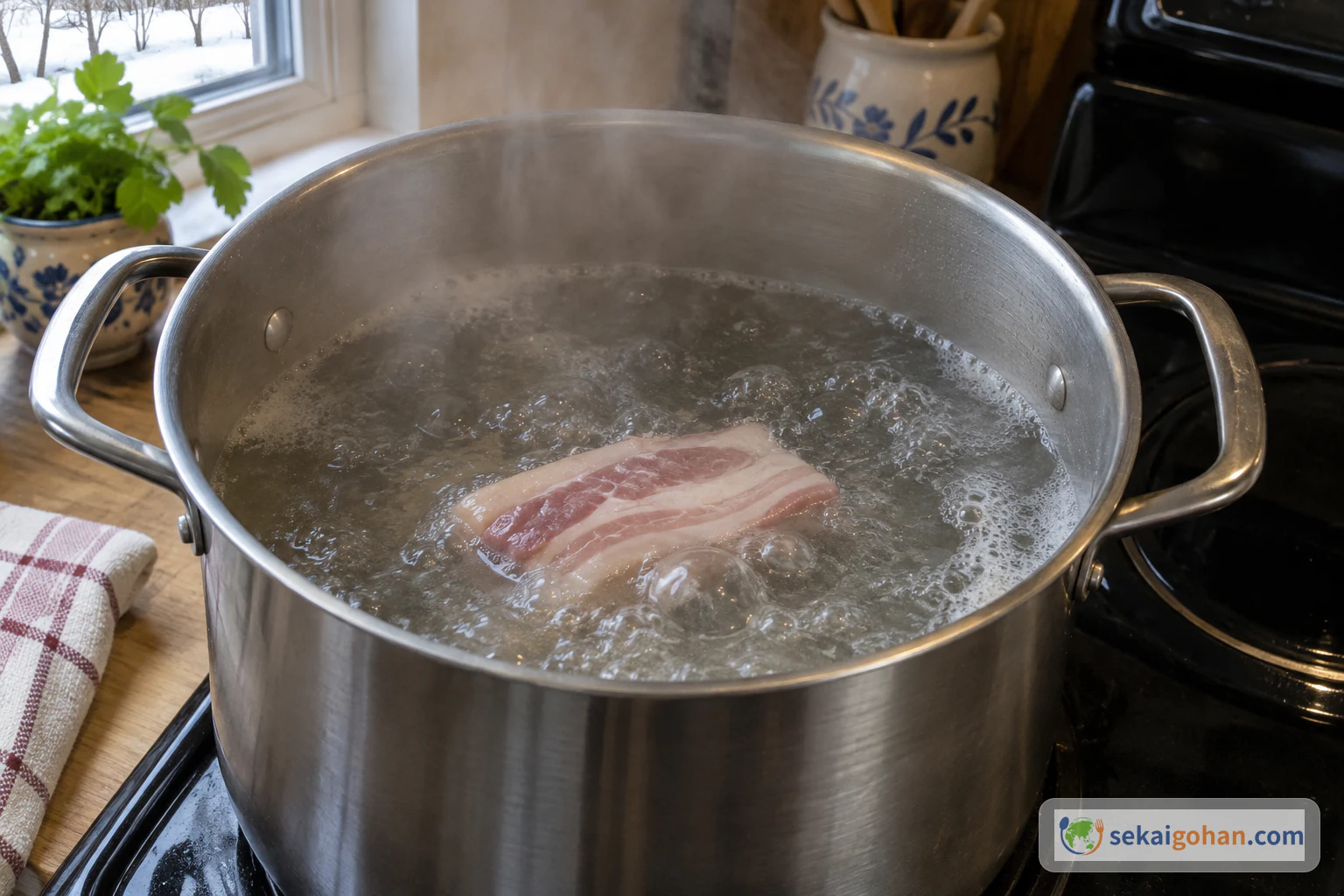
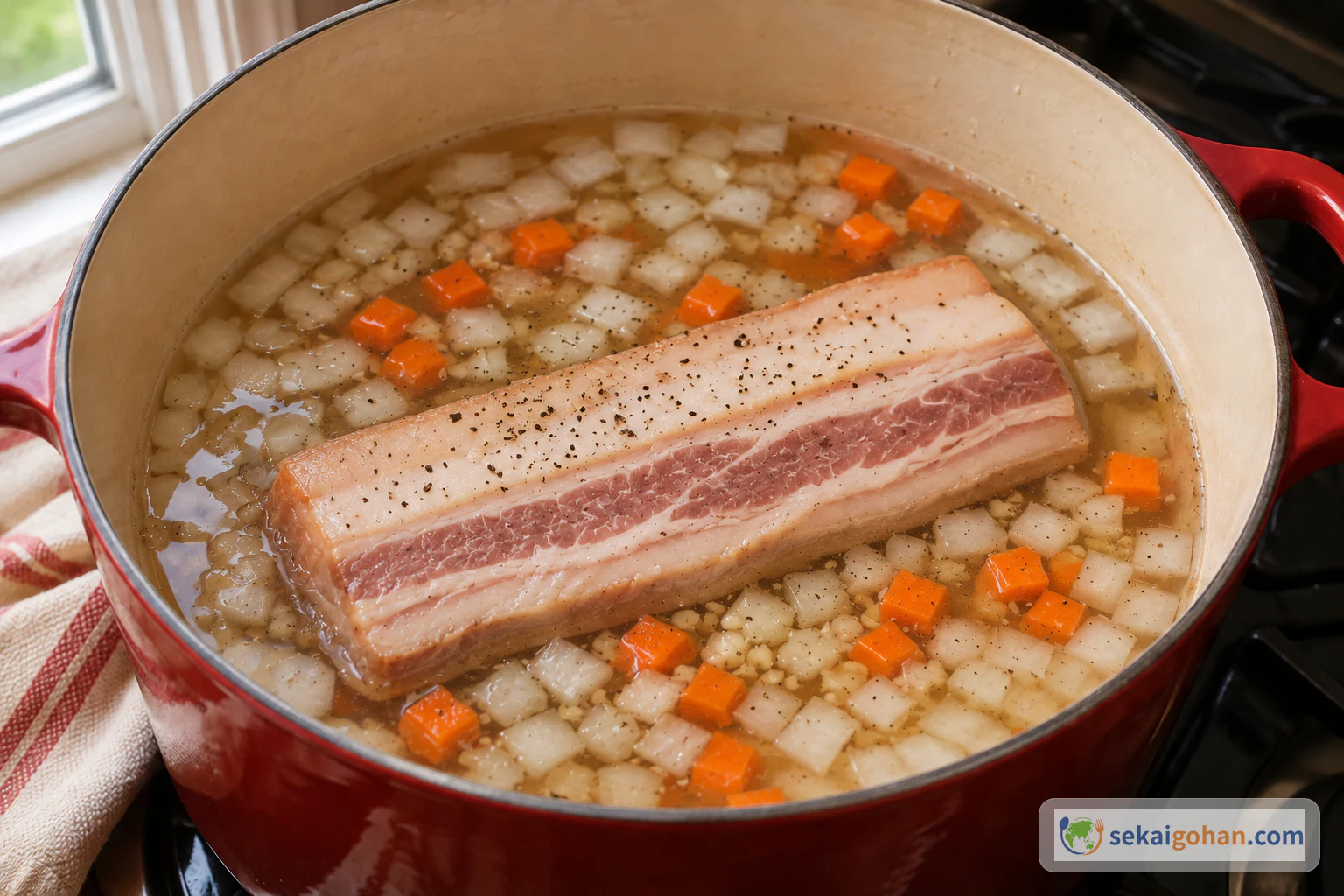
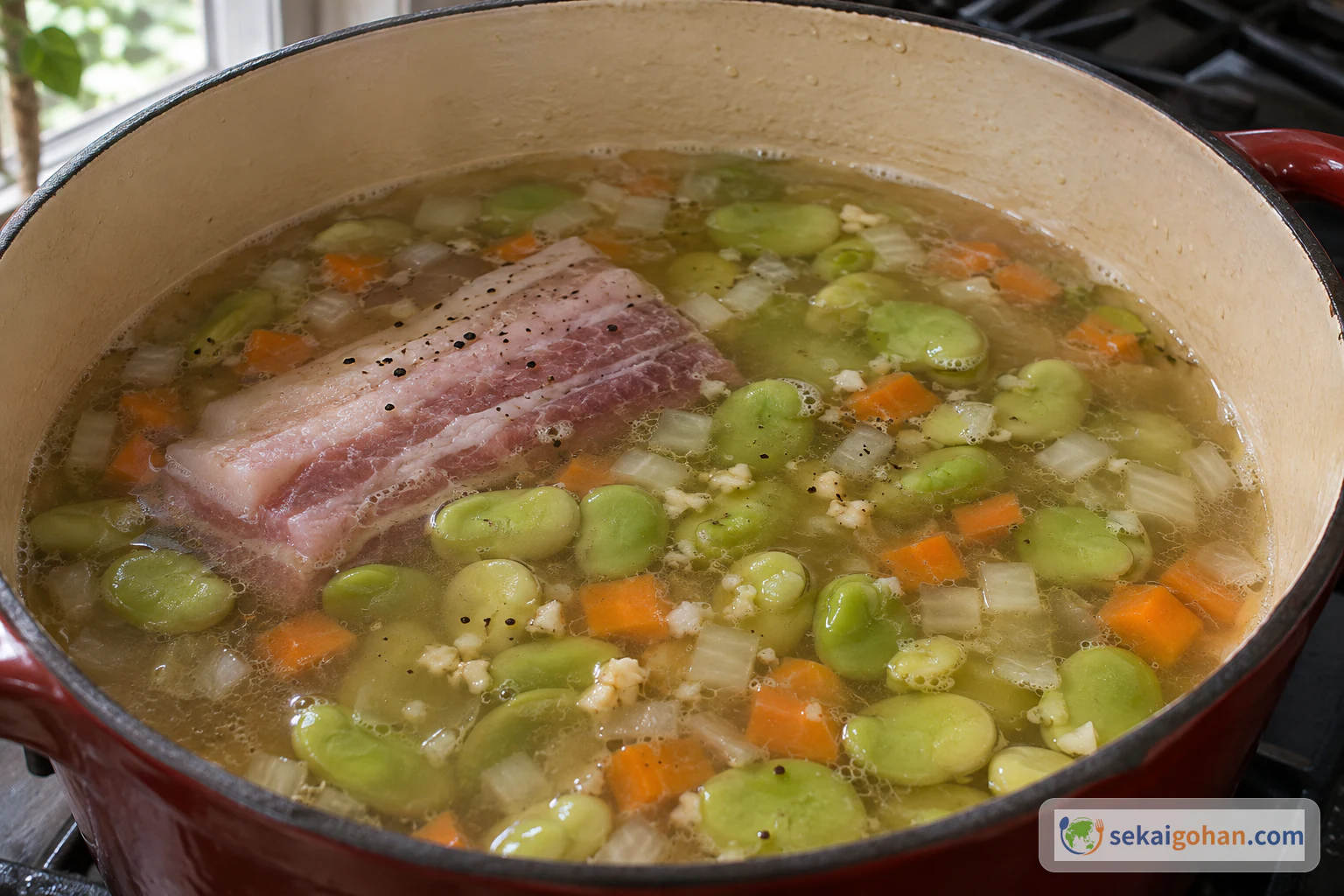
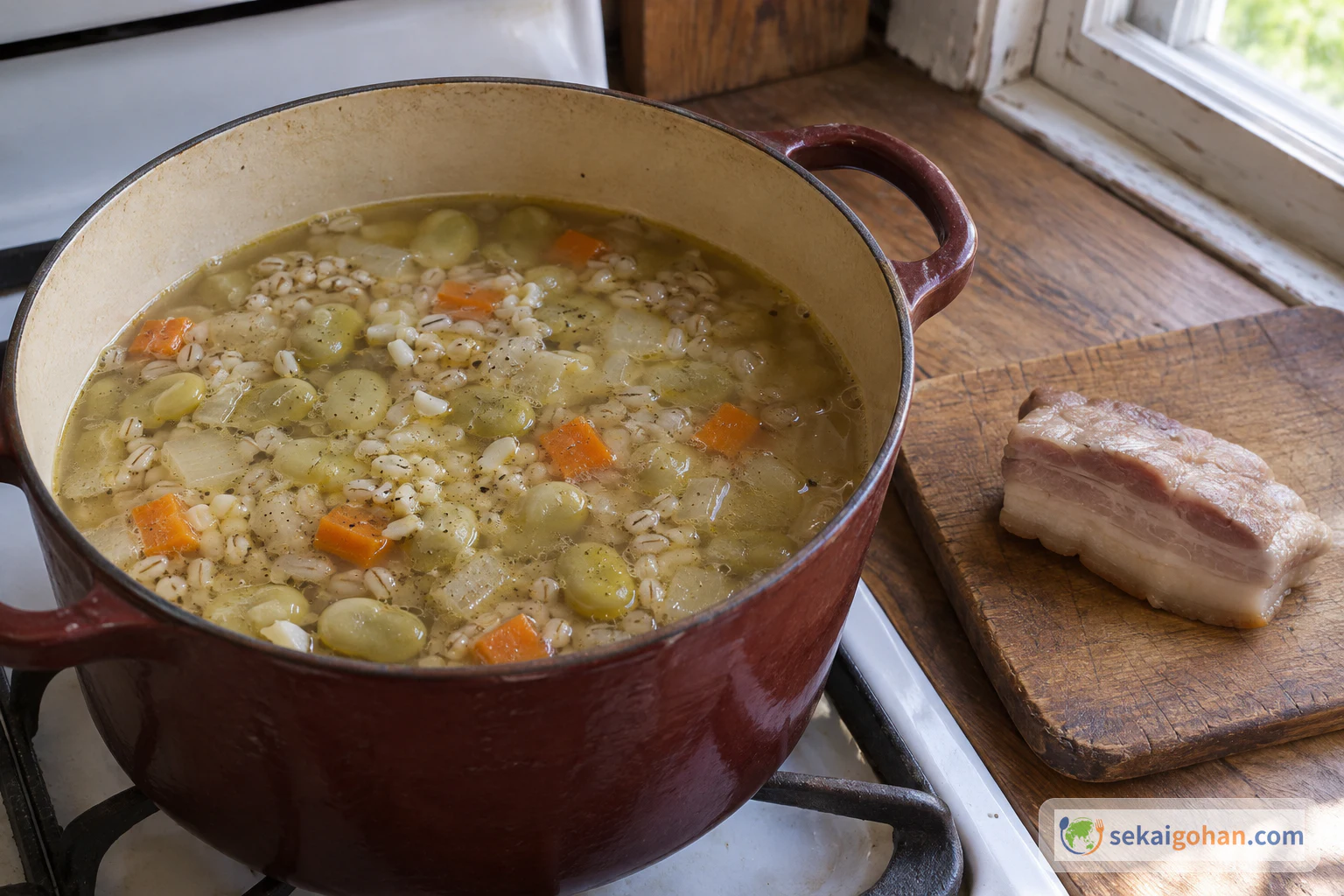
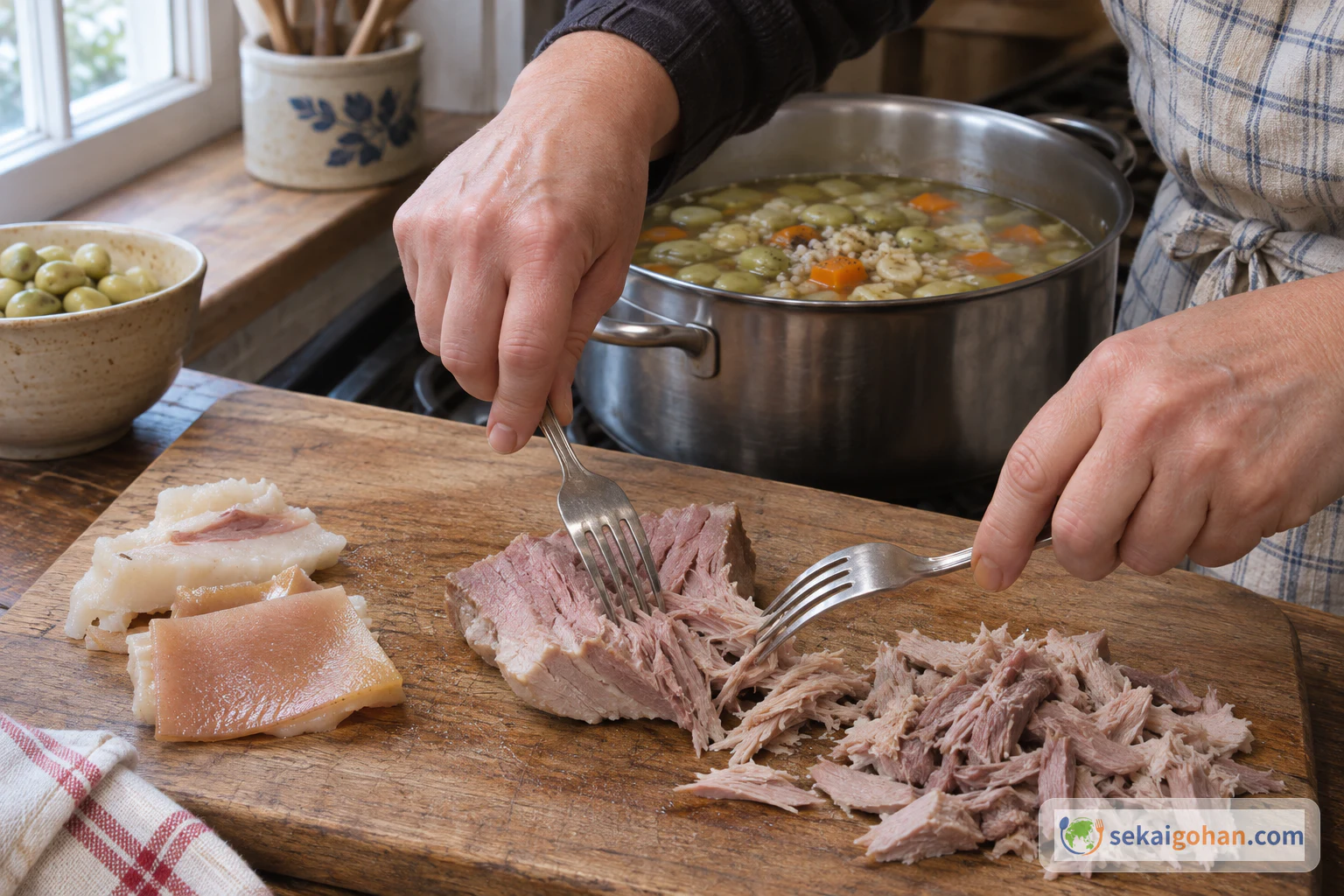
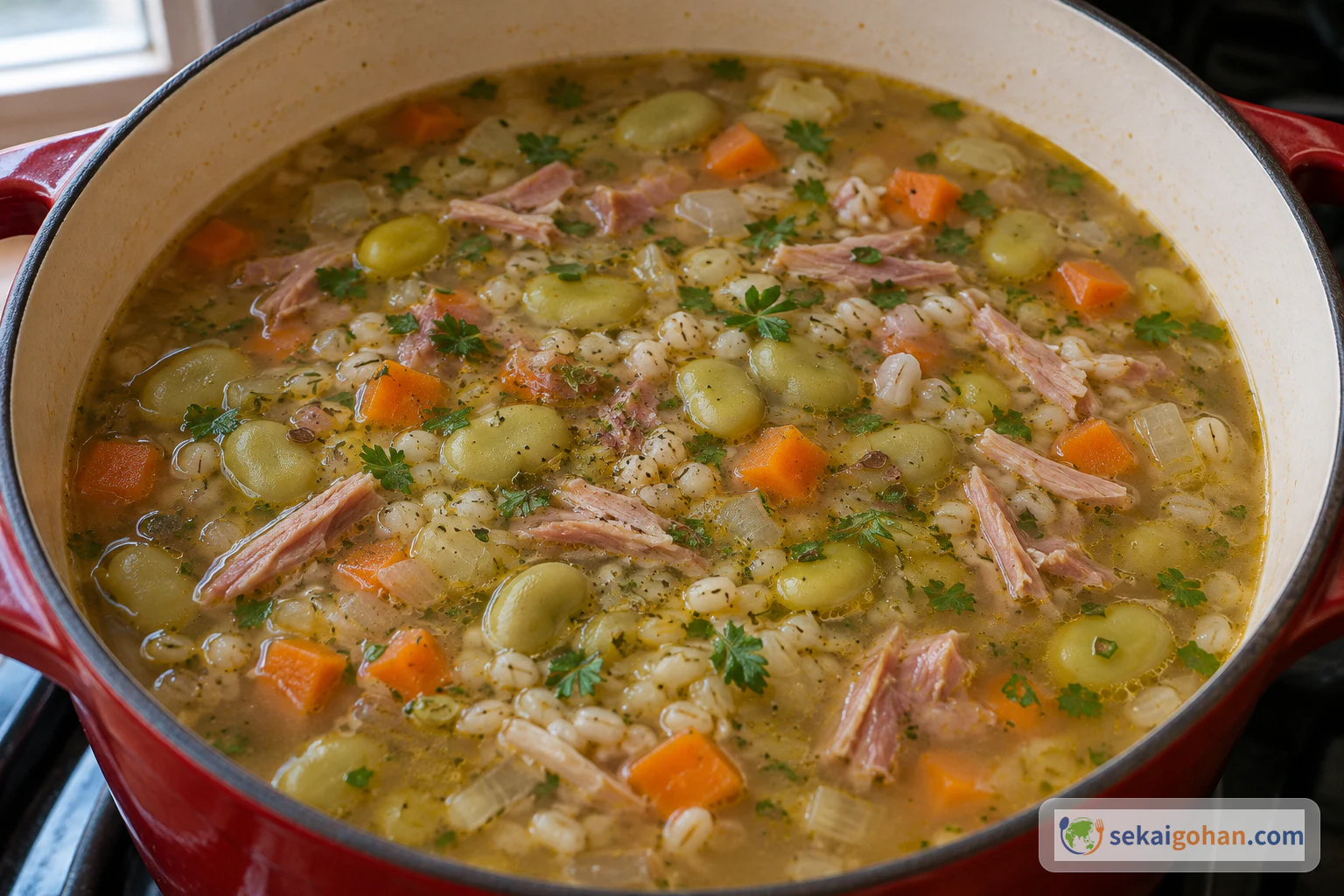
Making this soup starts at the table with the pods. You split the fat green gourgane pods with your thumb, the big beans drop into a bowl, and the empty shells pile up beside it. Then a piece of streaky salt pork goes into a pot of water. By the end of the simmer it comes out so soft that the lean meat pulls away from the fat with two forks. Soupe aux gourganes is the broad bean soup of Quebec. It is a thick pot of beans, barley, onion and carrot, and in Charlevoix and Saguenay–Lac-Saint-Jean it is a meal on its own. The salt comes from the pork, the body from the barley, and the beans give it its green, earthy center.
A Bean That Came With the First Farms
Gourganes have been grown in Quebec since the early days of New France. They were among the crops of the settlers' farms in the early seventeenth century. The bean mattered most where farming was hard. It was an important crop on the marginal farmland of Charlevoix, and from 1830 it went north with the agricultural and forestry settlement of Saguenay–Lac-Saint-Jean. Today it is not widely grown, but the soup made from it is still the emblematic food of those two regions.
In Quebec the bean is called la gourgane. Its other name is fève des marais, the broad bean. The gourgane is a Quebec line of broad bean, so soupe aux gourganes simply means "soup with gourganes."
The soup is thick enough to stand in for the main course, and every household and region makes it a little differently. The older, fuller form starts from a beef shank broth. It is cooked with salted bacon, freshly shelled beans and a few washed pods, plus barley, carrot, cabbage, tomato and vermicelli, and finished with savory and chives. The pot in this recipe is a home kitchen's version and is plainer. It uses water and a piece of salt pork in place of the beef broth, with onion, carrot, garlic, barley and a big measure of beans. It has no cabbage, tomato or noodles, so the beans carry the whole bowl. Quicker modern versions go the other way. They use pancetta or ham with celery, beef broth, bay leaf and tomato, and some allow chickpeas when there are no gourganes.
It is a different thing from the other long-cooked pots of the Canadian table. Fricot is the Acadian chicken stew with dumplings, and tourtière puts its meat in pastry. This soup is about the bean.
Ingredients
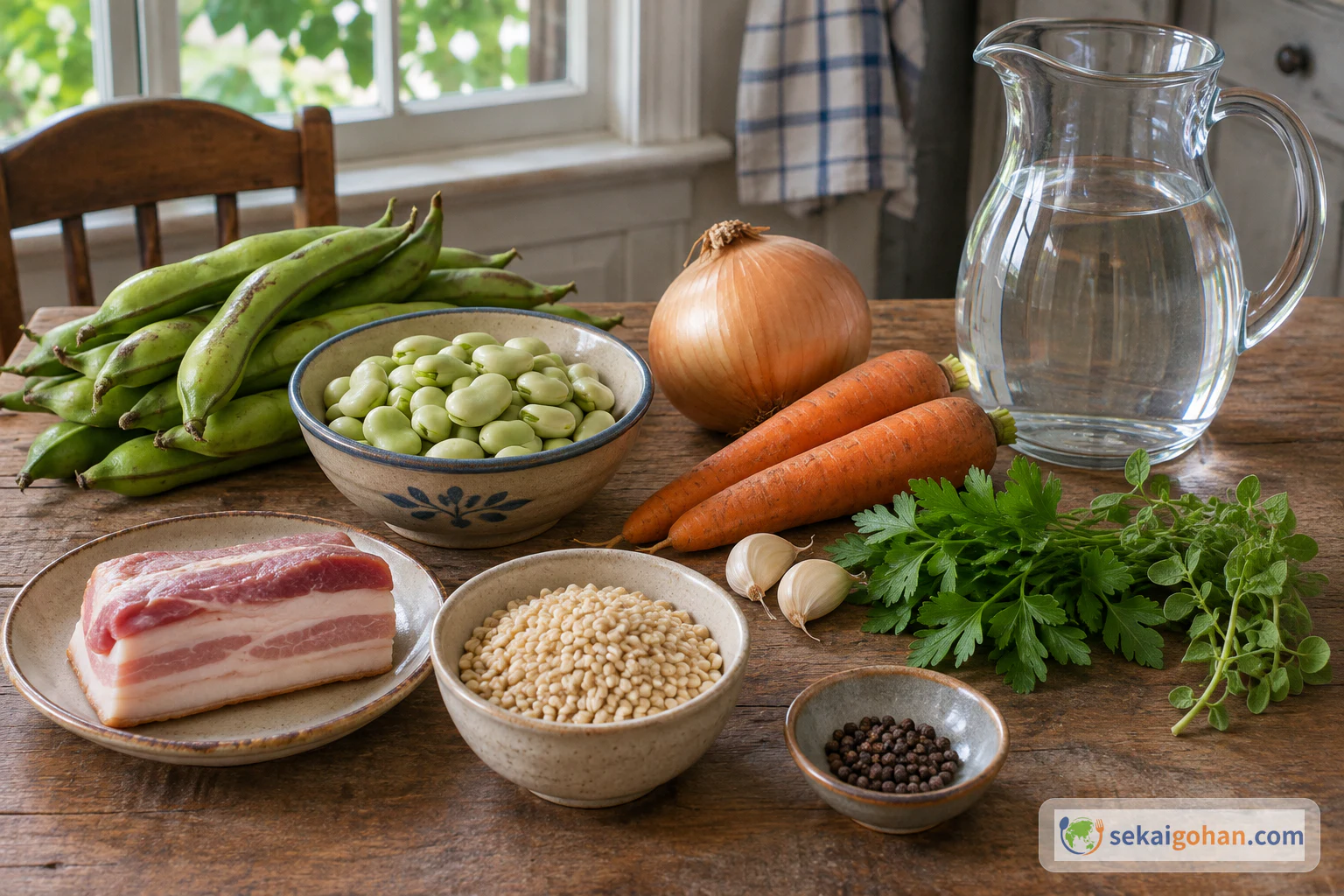
No salt goes into this pot. The salt pork brings plenty of it, so taste the finished soup before you reach for the salt shaker. To make half the amount, halve every ingredient.
This soup contains fava (broad) beans, barley and pork. If a doctor has told you to avoid fava beans, do not make this soup.
Equipment
- A large, heavy pot that holds the water with room to spare
- A large bowl for the shelled beans
- Chef's knife and cutting board
- Tongs or a slotted spoon for lifting out the pork
- Two forks for pulling the meat
- Wooden spoon and ladle
Choosing the Beans, the Pork and the Barley
Fresh gourganes in the pod are what make this soup taste like it should. Kept in their pods in the refrigerator, they last 1 to 2 weeks, so you can buy them a few days ahead and shell them on the day. Plan on about 1 lb (500 g) of pods for every 1 cup (250 ml) of shelled beans. Outside Quebec, the closest swap is fresh broad beans (fava beans) from the market. Choose firm, heavy pods with large beans inside.
For the pork, ask for salt pork with streaks of lean running through the fat, cut as one piece. The lean is the part that goes back into the soup. A slab of pancetta in one piece also works. Saltiness varies from piece to piece, which is one more reason the salt waits until the end.
Buy hulled barley, sold as orge mondé in Quebec. Pearl barley has been polished and is a different grain from the one this pot uses.
| Keep | Can change |
|---|---|
| Fresh beans shelled from the pod, in a big measure | Gourganes swapped for fresh market broad beans |
| A piece of streaky salt pork as the only salt | Salt pork swapped for slab pancetta |
| Hulled barley for body | Parsley and oregano, more or less to your taste |
Shell straight into a 2-cup measure. Then you know when to stop, and you can see how much the pods really give before any heat touches them.
Method
Shell the beans first, since that is the only slow handwork. After that the pot does most of the work in three timed stages: the pork boils alone, then the beans cook, then the barley goes in and the pork comes out. You need the cutting board again partway through, when the pork comes out to be pulled apart while the soup keeps simmering.
Taste for salt with a spoonful that has beans and barley in it, not with broth alone. The beans soak up salt, so a whole spoonful shows how the bowl will really taste.
When It Goes Wrong
| What you see | Why | What to do |
|---|---|---|
| The soup tastes too salty | The salt pork was saltier than usual, or salt was added before tasting | Add a little hot water and simmer briefly. Next time, wait until the very end to taste before salting |
| The barley is still hard in the center | Hulled barley keeps its bran and needs time | Keep simmering, stirring from the bottom, and add a splash of water if the soup gets too thick |
| A burnt layer on the bottom of the pot | Barley and beans settle and catch as the soup thickens | Pour the soup into a clean pot without scraping up the burnt layer, then lower the heat and stir from the bottom more often |
| The beans are still firm | The beans are large and need more time | Keep simmering gently until a bean crushes easily against the roof of your mouth |
| A greasy film on top | Fat from the salt pork went back into the pot | Return only the lean meat. To remove more fat, chill the soup and lift off the fat that sets on top |
Serving and Variations
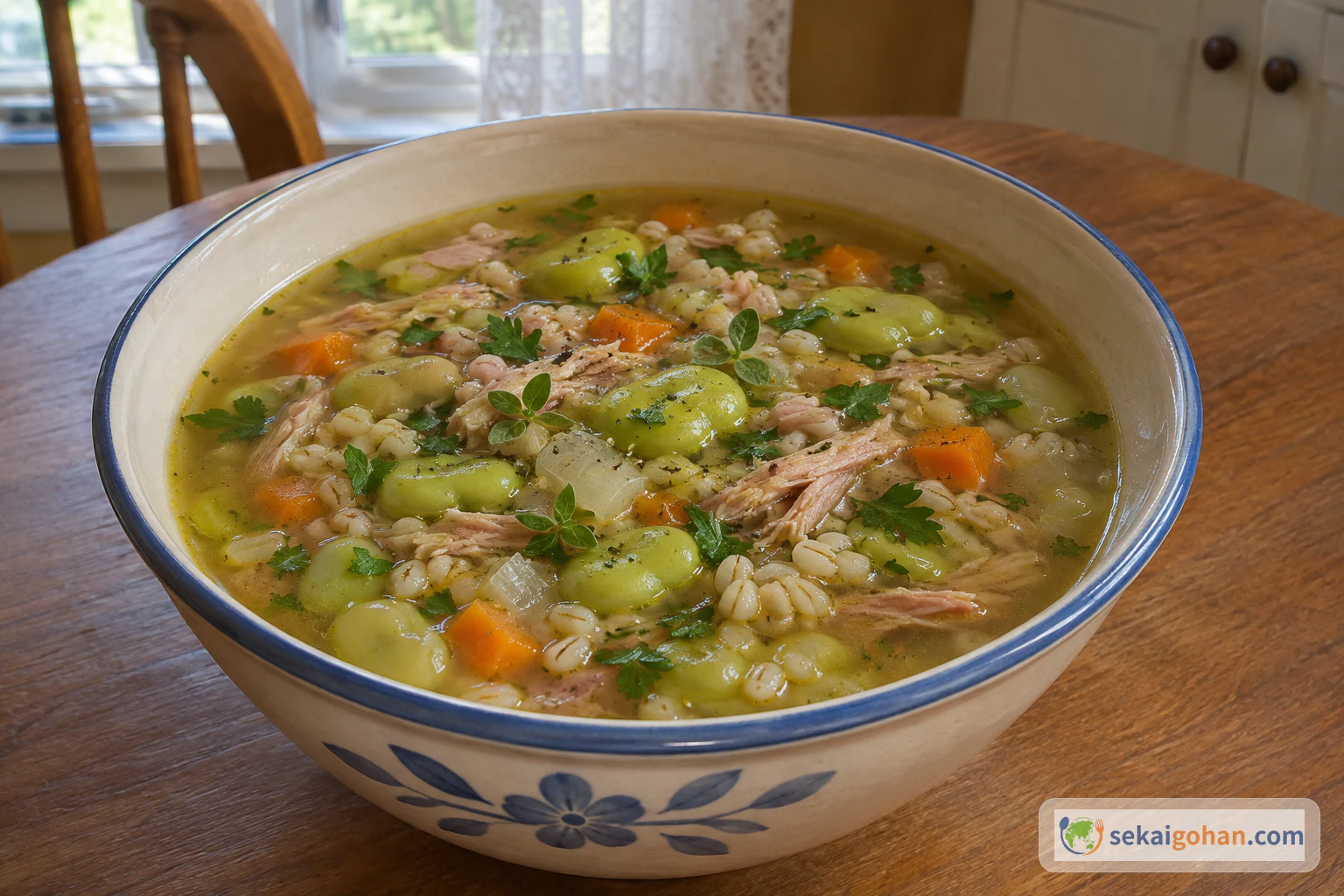
Serve soupe aux gourganes as the main course, in deep bowls, with crusty bread and butter on the table. It is heavy enough that nothing else is needed. Put the pepper grinder out so people can add more at the table.
The traditional garden pot
Simmer the beans in a beef shank broth with salted bacon instead of water and salt pork, and add a few washed pods along with the beans. Add cabbage, tomato and vermicelli, and finish with savory and chives. The soup turns meatier and more like a vegetable stew, and the noodles make it more filling still.
The quick version
Start with diced pancetta or ham, onion, garlic and celery. Add beef broth, a bay leaf, oregano, barley and tomato, and use chickpeas where there are no gourganes. Chickpeas give a firmer, nuttier bowl that no longer tastes of fresh broad beans, but you can cook it any time of year.
Young summer beans
When the beans are small and tender, cook them only lightly. Add them to the soup near the end, or toss them into a salad. They keep their bright color and fresh taste instead of melting into the broth.
Storing
Cool the soup, then refrigerate it promptly in a covered container. The fat rises and sets on the surface in the refrigerator, and you can lift it off before reheating if you want a leaner bowl. The barley keeps absorbing liquid as the soup sits, so add a little water when you reheat it, and heat it thoroughly. Keep leftovers in the refrigerator and do not put this soup up in jars at home.
Frequently Asked Questions
Do the pods go into the soup?
Not in this pot, where only the shelled beans go in. In the older, fuller form of the soup, a few washed pods go in with the beans. If you try that, wash them well and use only a few.
Can I use frozen broad beans?
This soup is made with fresh beans shelled from the pod, and they set its color and texture. If fresh pods are out of season, chickpeas in the quick version above make a good soup that is clearly a different dish.
Can I use beef broth instead of water?
Yes. Beef shank broth is how the older form of the soup begins, and it makes a deeper, meatier pot. The salt pork still brings its salt, so taste even more carefully before adding any.