Suaasat: Meat, Grain and a Quiet Pot
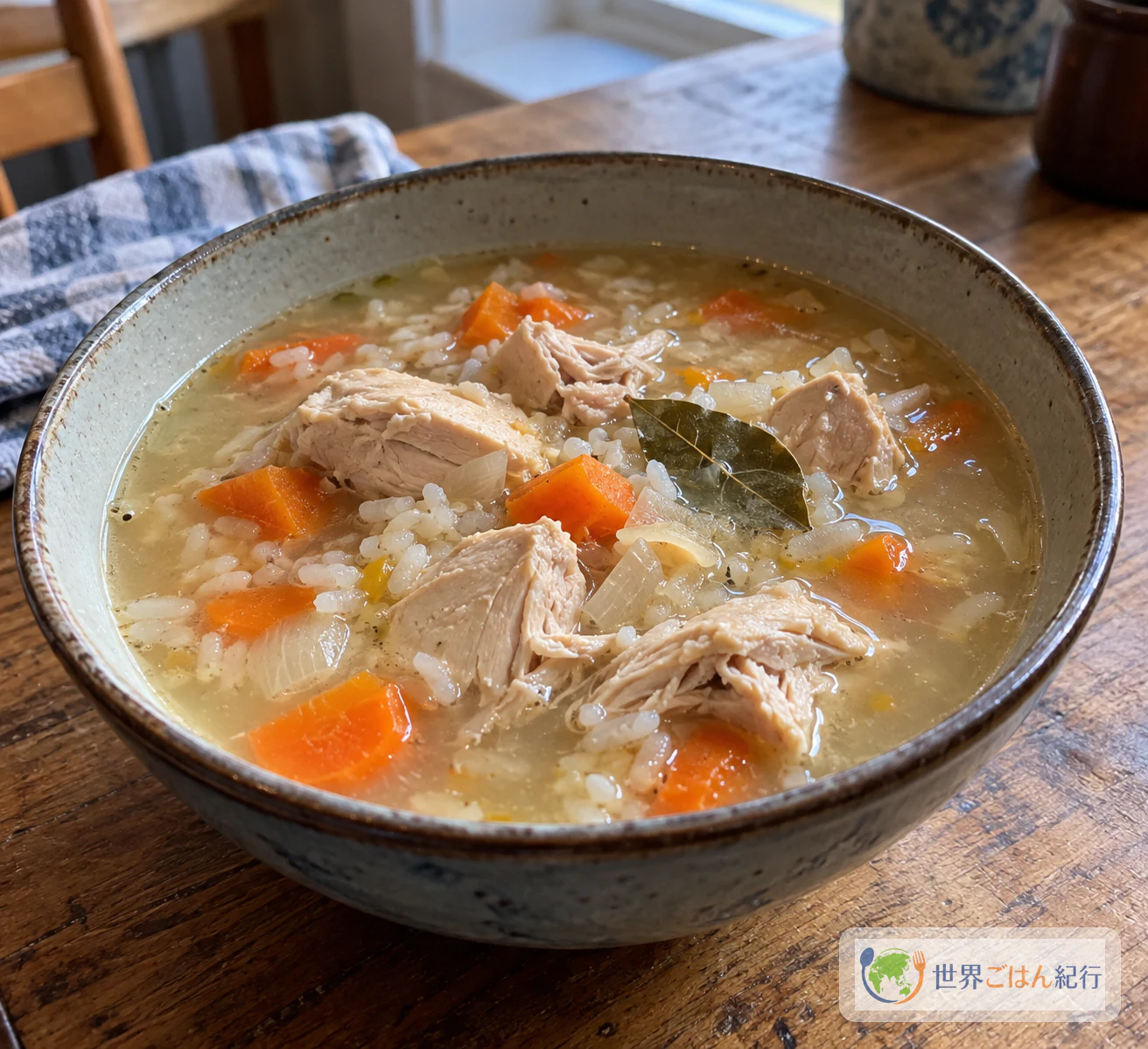
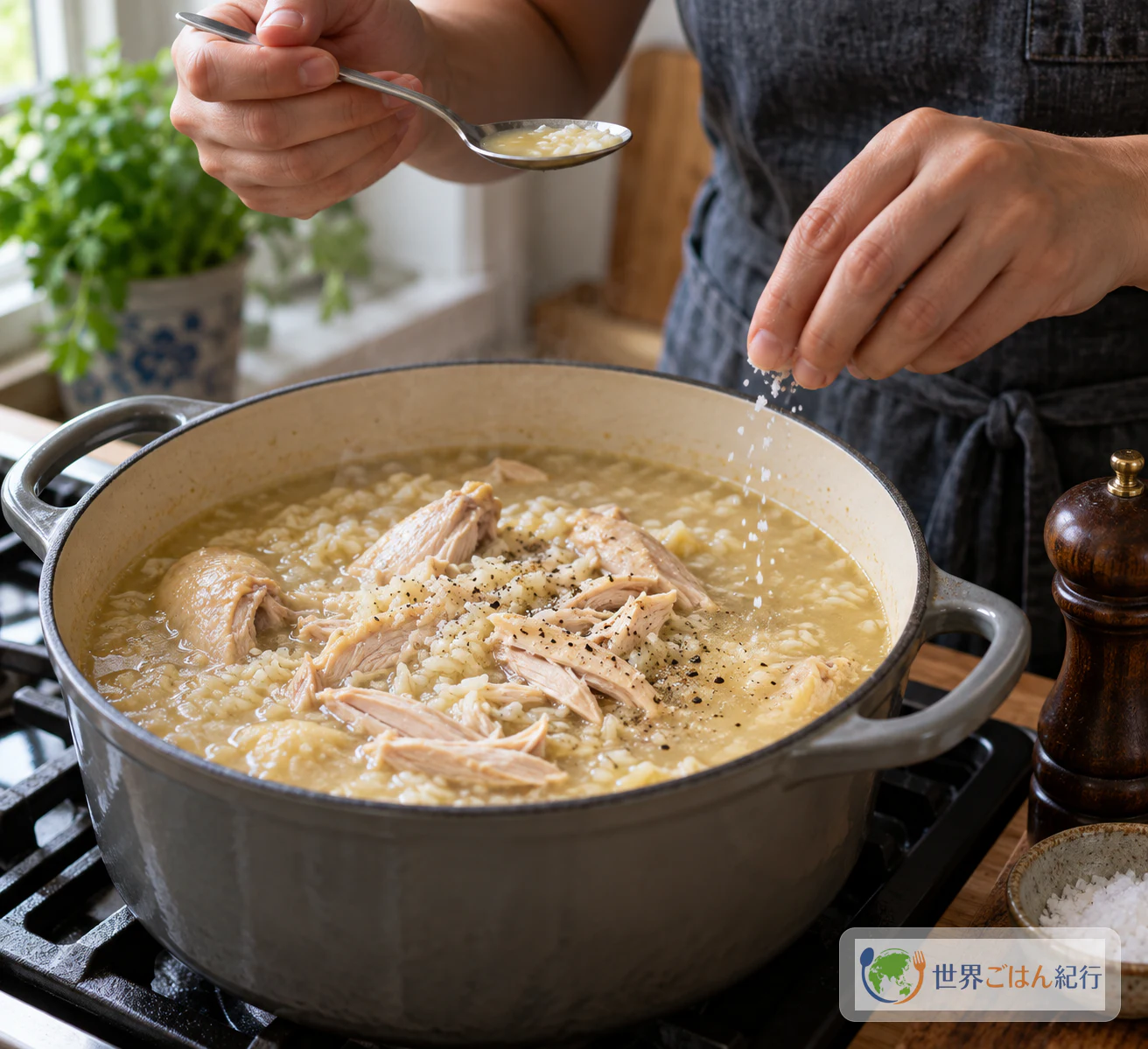
Meat simmered in water, a handful of rice that softens until it gives the broth a light body, and nothing more than salt and pepper at the end. Resist the urge to add herbs, cream or extra vegetables. The plainness is the point.
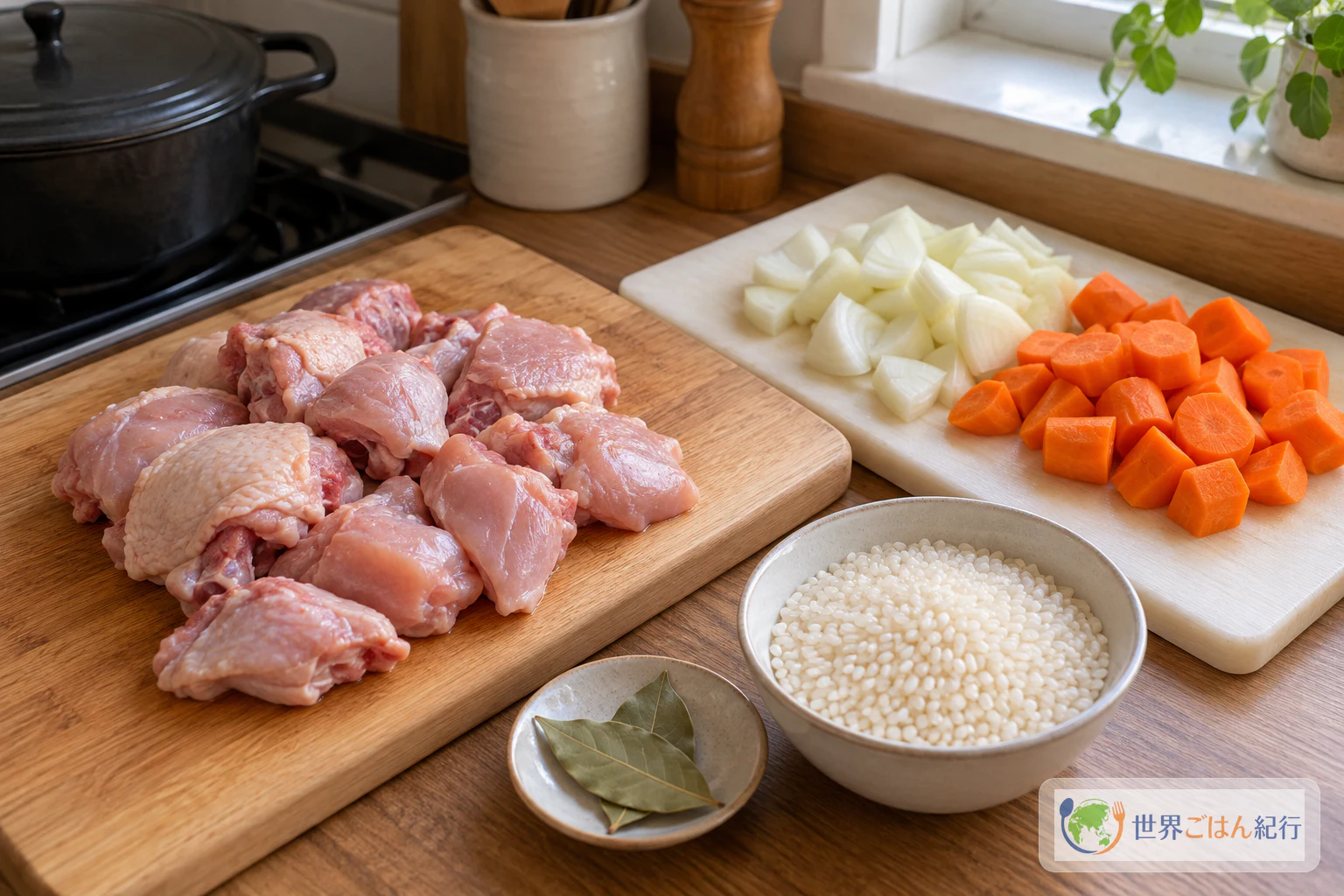
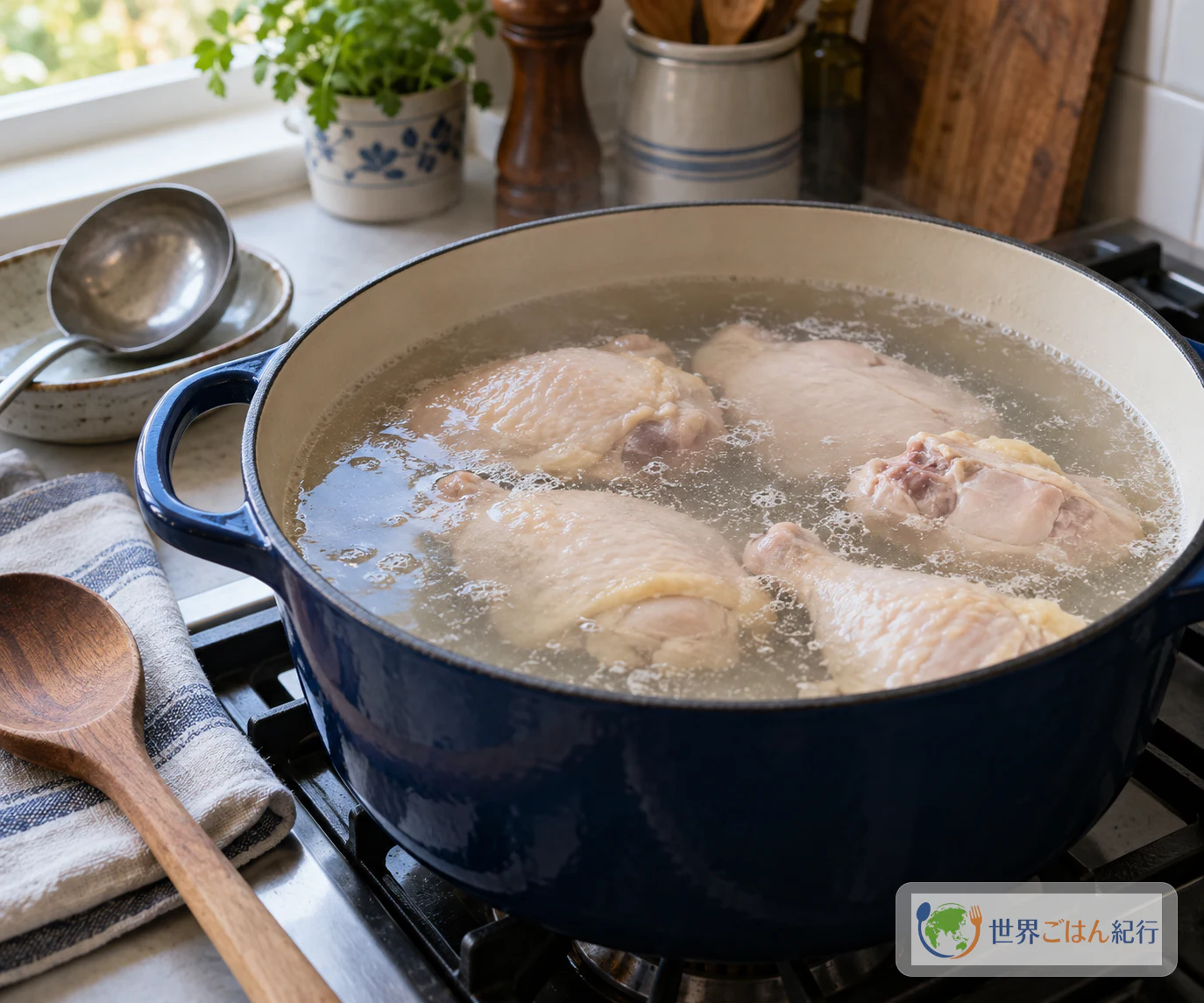
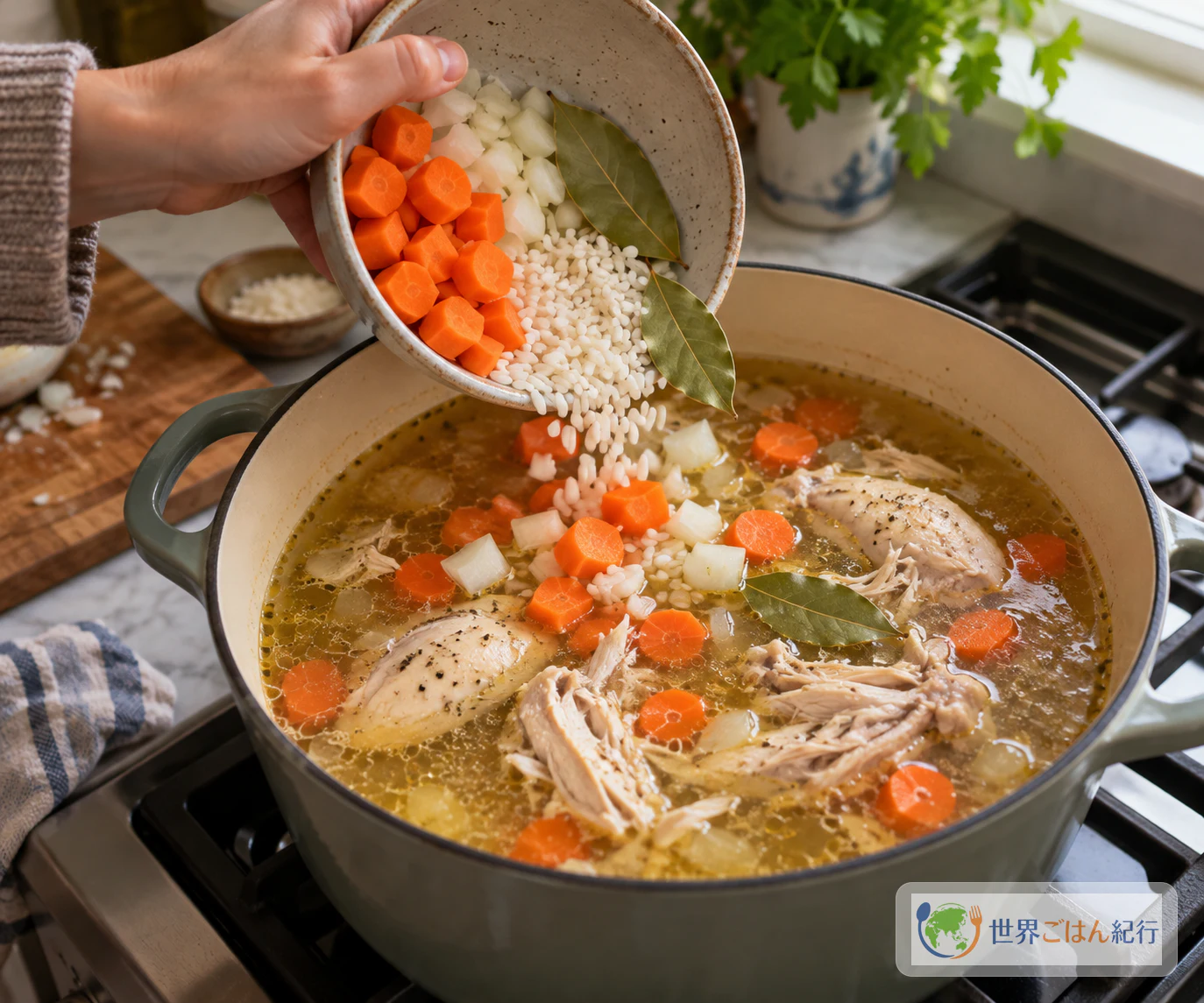
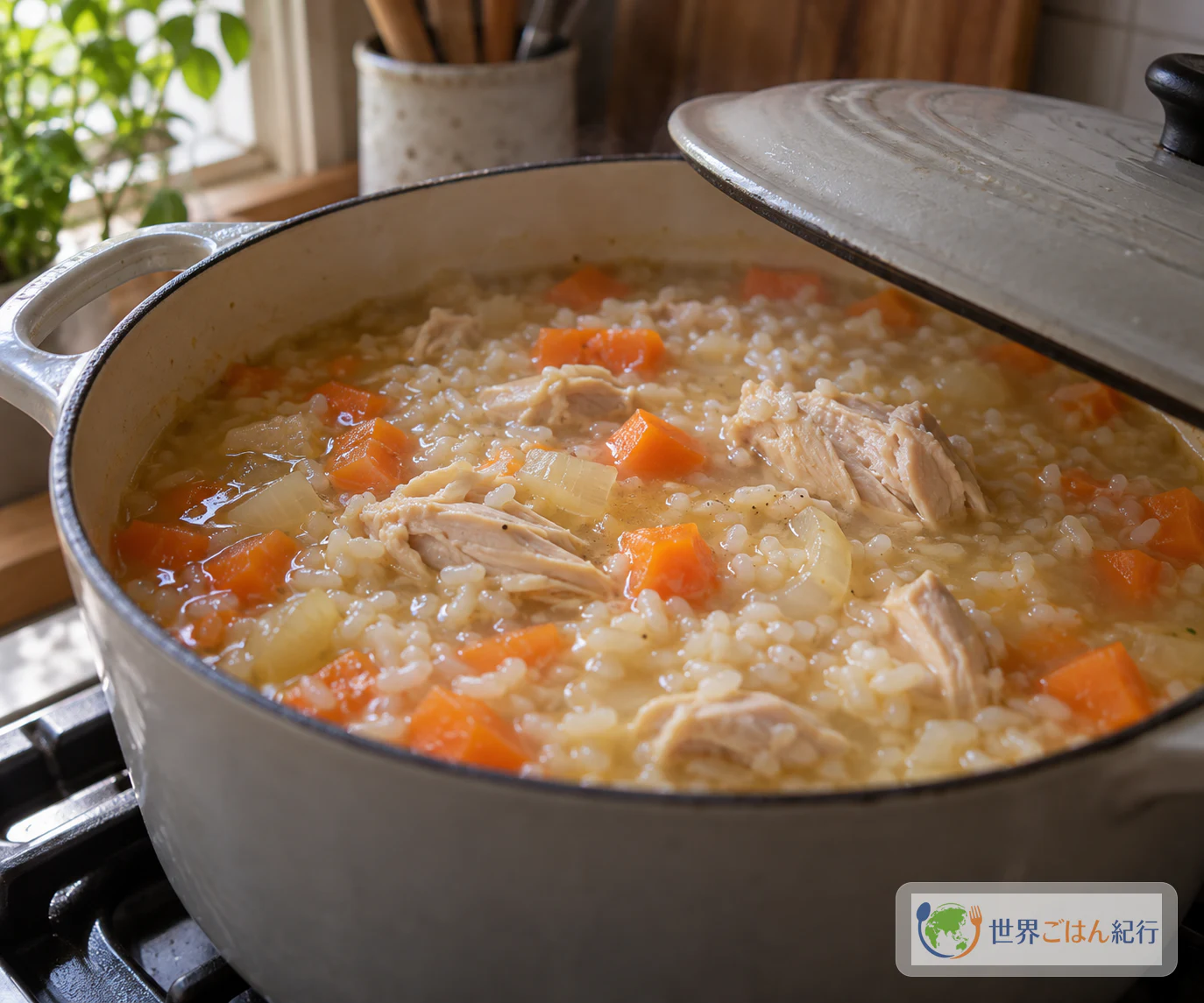
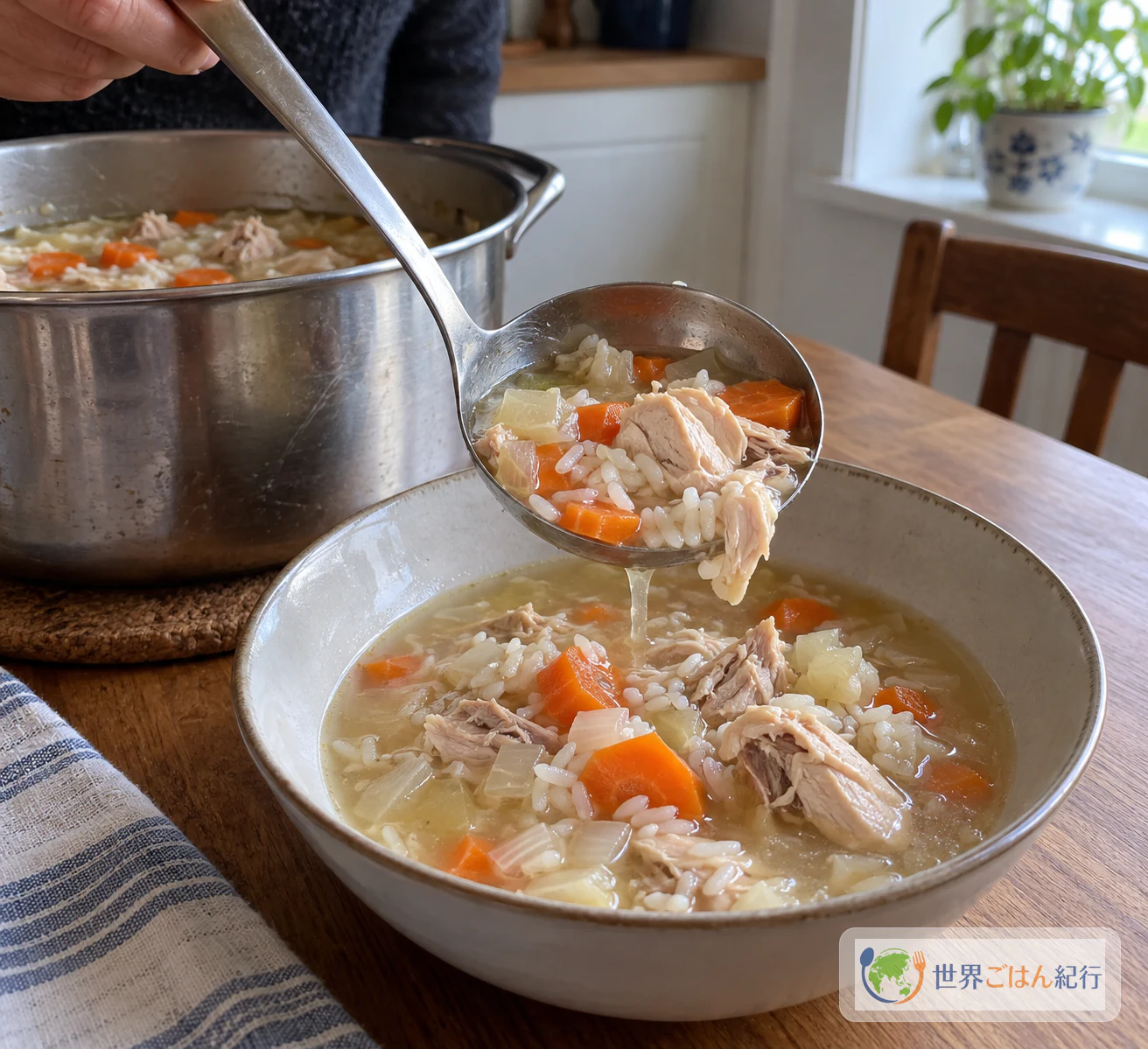
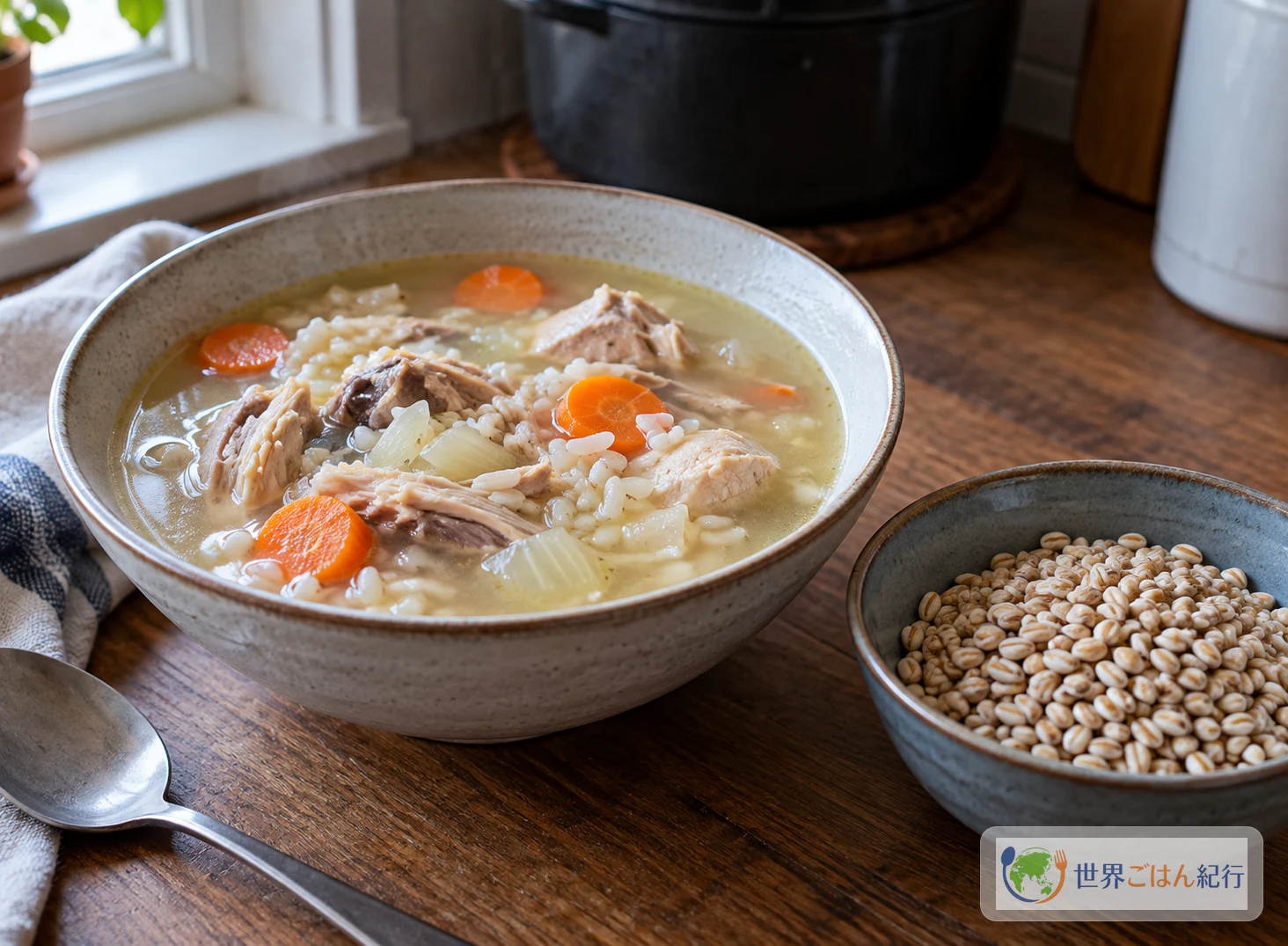
Suaasat is a soup from Greenland made by simmering meat and thickening the broth with grain. It is not a soup built from many layered flavors. Meat goes into boiling water, then onion, root vegetables, rice and bay leaves follow. Over gentle heat the rice softens and starts to break down until the broth turns slightly cloudy and lightly thickened. Salt and pepper go in only at the end. Visit Greenland introduces suaasat as the national soup, made with seal meat.
There is no single fixed recipe. The recipe this article follows, from the Danish food-history site Retromad, uses meat, onion, root vegetables and either rice or barley groats. Other descriptions add potatoes: Air Greenland describes seal meat cooked with onion, rice and potatoes, and a hotel chef's version published by Guide to Greenland also includes potatoes. Each is its own recipe, and none of them is the only correct one.
The traditional meat is seal, which most home cooks outside Greenland cannot buy. Retromad lists several alternatives, and chicken is among them. This article uses chicken as a practical home version. It is a substitution, and a chicken pot will not taste the same as seal suaasat or carry the same meaning at the table.
The dish is written both Suaasat and Suassat. Searching with both spellings brings up more recipes and descriptions.
Ingredients (4–6 servings)
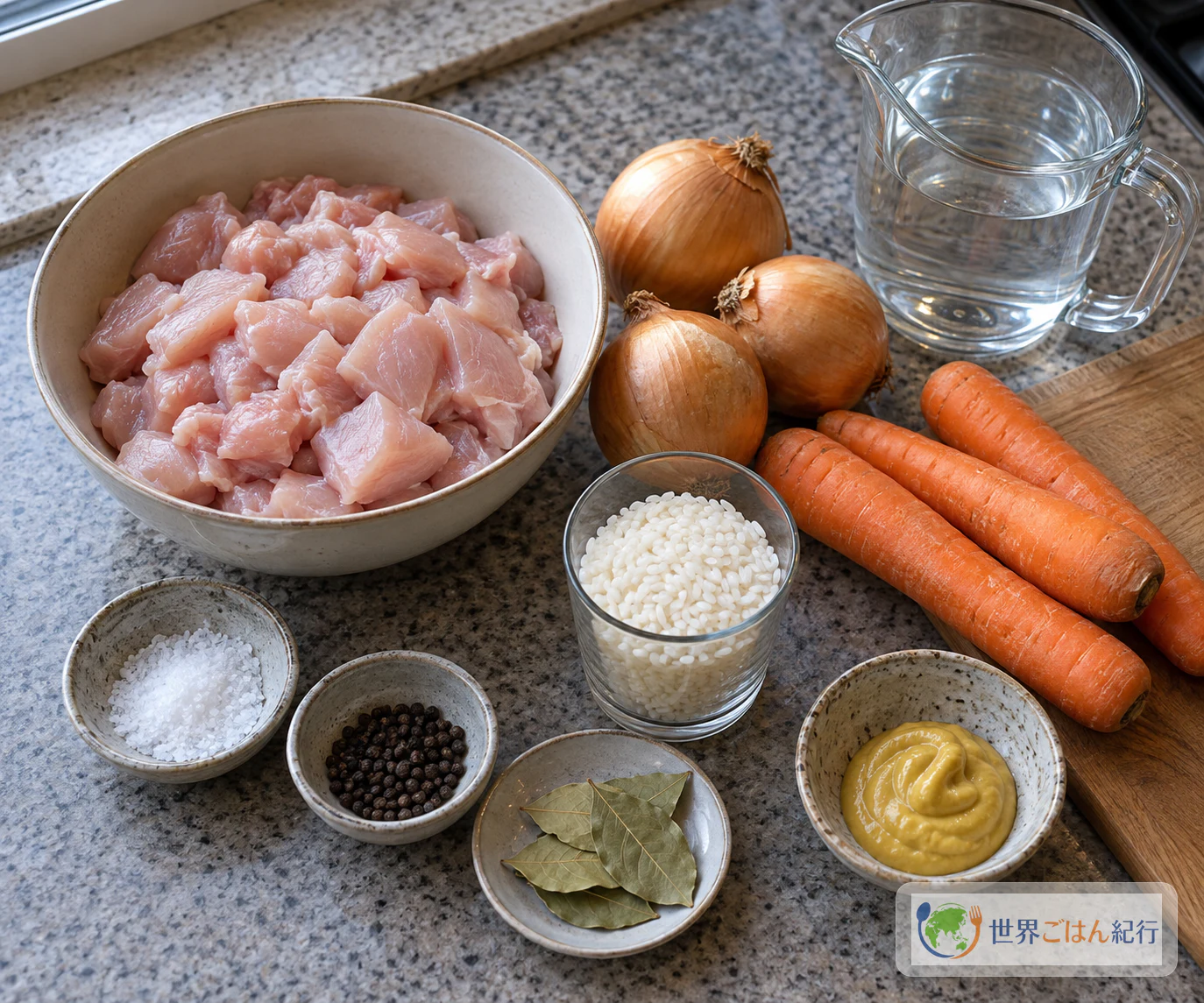
Amounts follow the Retromad recipe, which is written for 4–6 people. Where it gives a range, the range is kept as it is. The rice is given by volume (1 dl), so measure it by volume rather than weighing it.
Equipment
- A pot large enough to hold 1.5–2L of water with room to spare
- Two cutting boards and two knives: one set for raw chicken, one for vegetables
- A probe or instant-read thermometer for checking the center of the meat
- A wooden spoon for stirring from the bottom
- A ladle and deep bowls for serving
Choosing the Meat and the Grain
About the meat. Seal is the traditional meat, and chicken, reindeer, whale, seabirds and fish are other options. This article does not explain where to buy seal meat or whether it can legally be sold where you live. If you want to cook with seal or other wild game, check where it comes from and what food-safety rules apply to it locally first. If you cannot confirm that, this article does not recommend cooking with it. Wild game and seal should not be treated as if they were ordinary supermarket meat.
Chicken is the easiest choice for a home kitchen. It is lighter in aroma and has different fat from seal, so expect a gentler, more familiar broth rather than a copy of the Greenlandic original. Don't add other meats on top of the chicken. The recipe stays clearer with one meat.
About the grain. The main recipe here uses rice. Retromad gives barley groats as an alternative to the rice, not an addition. The recipe does not say anything about soaking barley or how long it takes to cook, so the rice timing in this recipe does not carry over to barley. A barley version needs separately verified preparation and cooking instructions; this article does not provide them.
About the root vegetables and potatoes. Any root vegetables work, and carrots are used here. Potatoes are left out of this version.
Do not rinse raw chicken under the tap. The CDC warns that washing raw chicken can spread germs to the sink, counters and other foods. Use separate cutting boards, knives and containers for raw meat and for vegetables, and keep raw meat juices away from anything that will not be cooked. Mustard is a common allergen in many countries; if you serve it, check the product label, including any shared-facility statements.
Method: Meat, Vegetables and Rice in One Pot
The recipe's 20–25 minutes of gentle simmering is a guide to when the rice is ready. It does not guarantee that the meat is safely cooked. Check the center of the thickest piece of chicken with a thermometer before you season and serve.
Serving: A Small Dish of Mustard on the Side
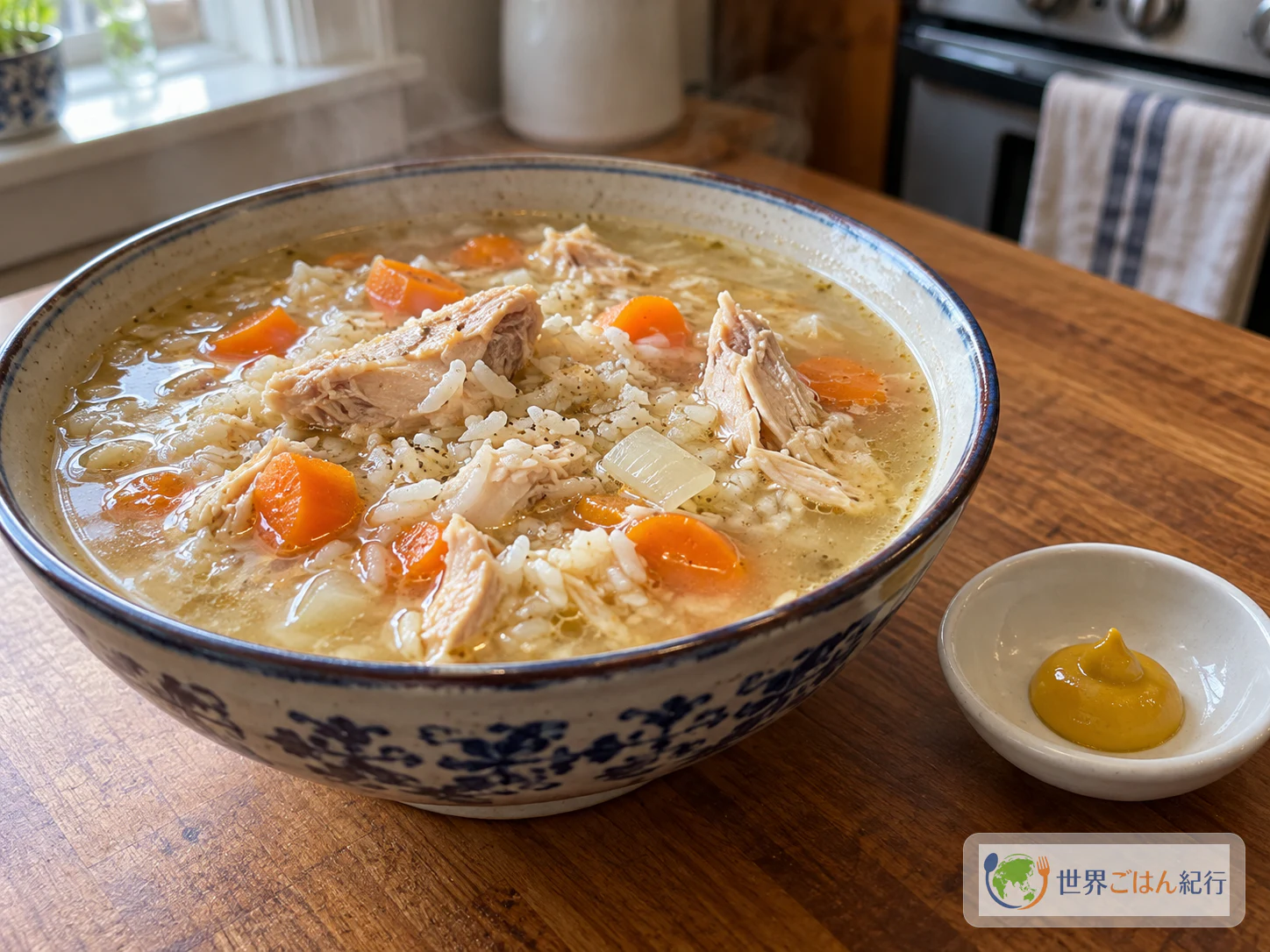
Retromad suggests serving mustard with suaasat made from seal meat. With chicken, it is an optional choice. The flavor pairing is not the same as the seal original. Keep it in a small dish on the side so the soup itself stays as plain as the recipe intends. Bread, garnishes and extra side dishes are not part of this recipe.
When the Pot Doesn't Behave
| Problem | Likely cause | What to do |
|---|---|---|
| The broth is thin | The rice hasn't softened enough yet | Keep simmering gently until the rice breaks down and the broth thickens slightly. Don't add more rice, and don't add barley on top of rice |
| Rice is sticking to the bottom | Heat too high, or the pot left unstirred | Keep the heat low and stir quietly from the bottom. Turn the heat down before a scorched smell develops |
| The chicken is tough | Different cuts and thicknesses cook differently; 20–25 minutes does not guarantee tenderness | Once the center has reached 75°C for at least 1 minute, keep simmering on low until it softens. There is no fixed extra time |
| The rice is done but the chicken hasn't reached temperature | Pieces too thick, or the heat was very low | Keep simmering and recheck the thickest piece. Don't serve on the clock alone |
| The broth tastes flat | Not enough salt | Add salt in small pinches, tasting each time, rather than adding herbs or spices |
Variations: Keep Each Version Separate
These are other ways the dish appears. They show the range, but don't mix their ingredients into the recipe above.
- Seal, the original: Retromad's first choice of meat, and the meat Visit Greenland and Air Greenland name. Cook it only if you can confirm where it comes from and that it meets local food-safety rules.
- Chicken, the home version: The recipe in this article. Lighter in aroma and fat than seal, and not the same dish in taste.
- Reindeer: Another meat Retromad lists. It is a regional ingredient, and this recipe does not assume you can find it.
- Barley instead of rice: Retromad gives barley groats as the alternative grain. Use barley in place of the rice, not with it. The recipe gives no soaking or cooking time for barley, so do not borrow the rice timing; a barley version needs separately verified instructions.
- With potatoes: Air Greenland's description and the Guide to Greenland hotel recipe both include potatoes. These are different recipes, and their potatoes are not added to this one.
Sea, Land and Sharing: Where Suaasat Sits
Visit Greenland describes Greenlandic cuisine as closely tied to what comes from the sea and the land, and to a hunting culture in which the catch is shared and guests are welcomed. Air Greenland's travel guide adds that in towns and settlements, local catches are sold at a market stall known as the board, where both individuals and restaurants buy. Suaasat belongs to that context: a soup in which the meat is the center of the pot.
The descriptions differ in their details. Retromad uses root vegetables with rice or barley. Air Greenland mentions onion, rice and potatoes. The recipe credited to Hotel Arctic chef Jeppe E. Nielsen, published by Guide to Greenland, begins by simmering seal and onion, skimming, and then adding rice and potatoes. It then goes on to restaurant techniques such as setting the soup with gellan gum and shaping it. That makes it an example of a modern restaurant interpretation rather than the everyday home pot. The meat, the grain, the vegetables and what goes on the side all shift from source to source, and it would be a mistake to say every household cooks it the same way.
Frequently Asked Questions
For this chicken-and-rice version, the two checks are: the center of the thickest piece of meat reaches 75°C for at least 1 minute, and the rice is soft enough to give the broth a light body.
What if I can't get seal meat?
Retromad lists several alternatives to seal, including chicken, reindeer, whale, seabirds and fish. This article uses chicken because it is easy to find and handle at home. It makes a good soup, but a different one from seal suaasat. Treat it as a substitution rather than the same dish.
Should I use rice or barley?
This recipe uses rice. Barley groats are the alternative Retromad gives, used instead of the rice and never together with it. The recipe does not cover soaking or cooking times for barley; a barley version needs separately verified instructions, rather than the rice timing.
Do potatoes go in?
Not in this version. Some other published versions include potatoes, but they are separate recipes, and this one sticks to onion, root vegetables and rice.
How long should it simmer?
Retromad gives 20–25 minutes over low heat, until the rice is soft and the broth lightly thickened. That is a cooking guide, not a safety guarantee. The time the chicken needs depends on the cut and the size of the pieces. Check that the center of the thickest piece reaches 75°C for at least 1 minute, and if the meat is still firm after that, give it more time on low heat.
Can I keep leftovers?
The recipe gives no storage guidance, and this article does not suggest storage times or freezing. It is written to be eaten on the day you make it.
Sources
- Retromad.dk, "Suaasat." The main recipe: 4–6 servings with 600–800g meat, 1.5–2L water, 1–2 onions, 2–3 root vegetables, 1 dl rice or barley groats, bay leaves, salt and pepper; simmering over low heat for 20–25 minutes until the rice softens and lightly thickens the broth; the list of meats, from seal to alternatives including chicken and reindeer; mustard served with the seal version. A single recipe from one site, not the only traditional form. https://retromad.dk/opskrift/suaasat/
- Visit Greenland, "Greenlandic Gastronomy: A taste of Greenland." Greenlandic cuisine's ties to the sea, the land and hunting culture; suaasat as the national soup of simmered seal meat; sharing of the catch and hospitality. https://visitgreenland.com/activities/greenlandic-gastronomy-a-taste-of-greenland/
- Air Greenland, "Gastronomy." Local food sold at the board in towns and settlements; sharing and hospitality in Greenlandic food culture; suaasat described as seal meat cooked with onion, rice and potatoes. https://airgreenland.com/discover-greenland/gastronomy/
- Guide to Greenland, "Suaasat soup: How to make the traditional Greenlandic soup." A separate restaurant recipe credited to Hotel Arctic chef Jeppe E. Nielsen, with seal, onion, round-grain rice and potatoes, and later restaurant techniques such as gellan gum and shaping. Not mixed into the main recipe. https://guidetogreenland.com/about-greenland/greenland-today/suaasat-soup-how-to-make-the-traditional-greenlandic-soup/
- Ministry of Health, Labour and Welfare (Japan), "お肉による食中毒の原因や予防方法について紹介します。" General guidance to cook meat through to the center, with the guide of 75°C at the center for at least 1 minute. https://www.mhlw.go.jp/stf/web_magazine/closeup/08.html
- CDC, "Preventing Food Poisoning." Washing raw chicken can spread germs to surroundings and other foods; keep cutting boards and containers for raw meat separate from those for produce and cooked food. https://www.cdc.gov/food-safety/prevention/index.html