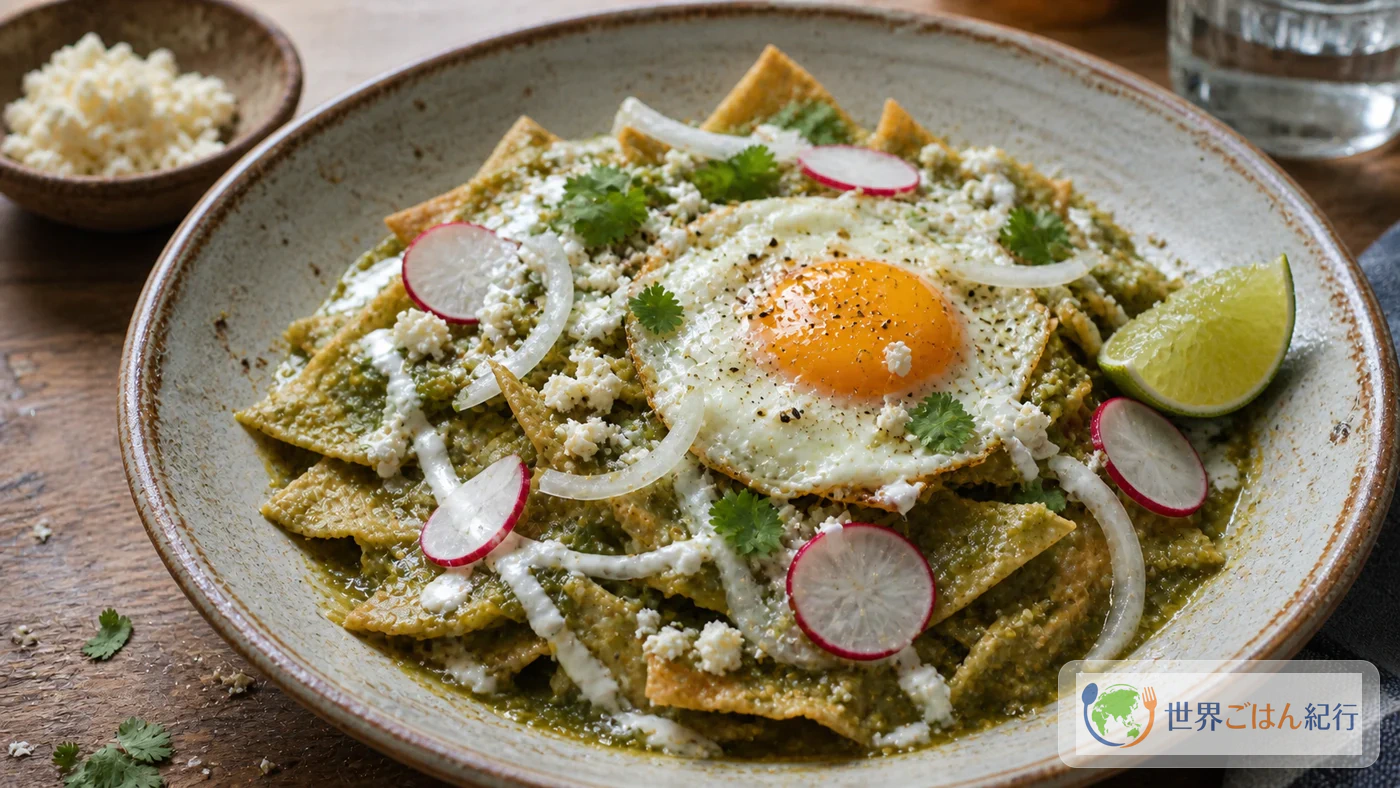
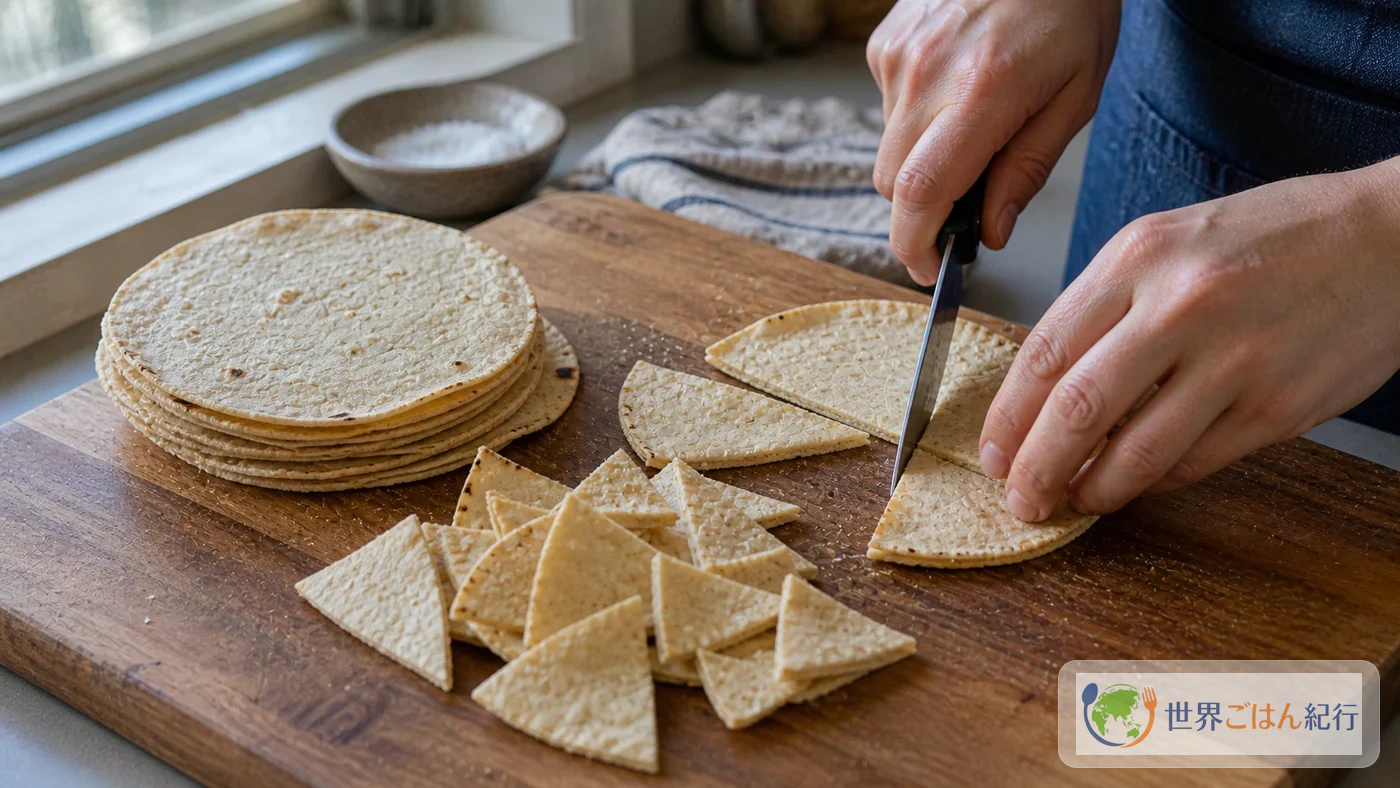
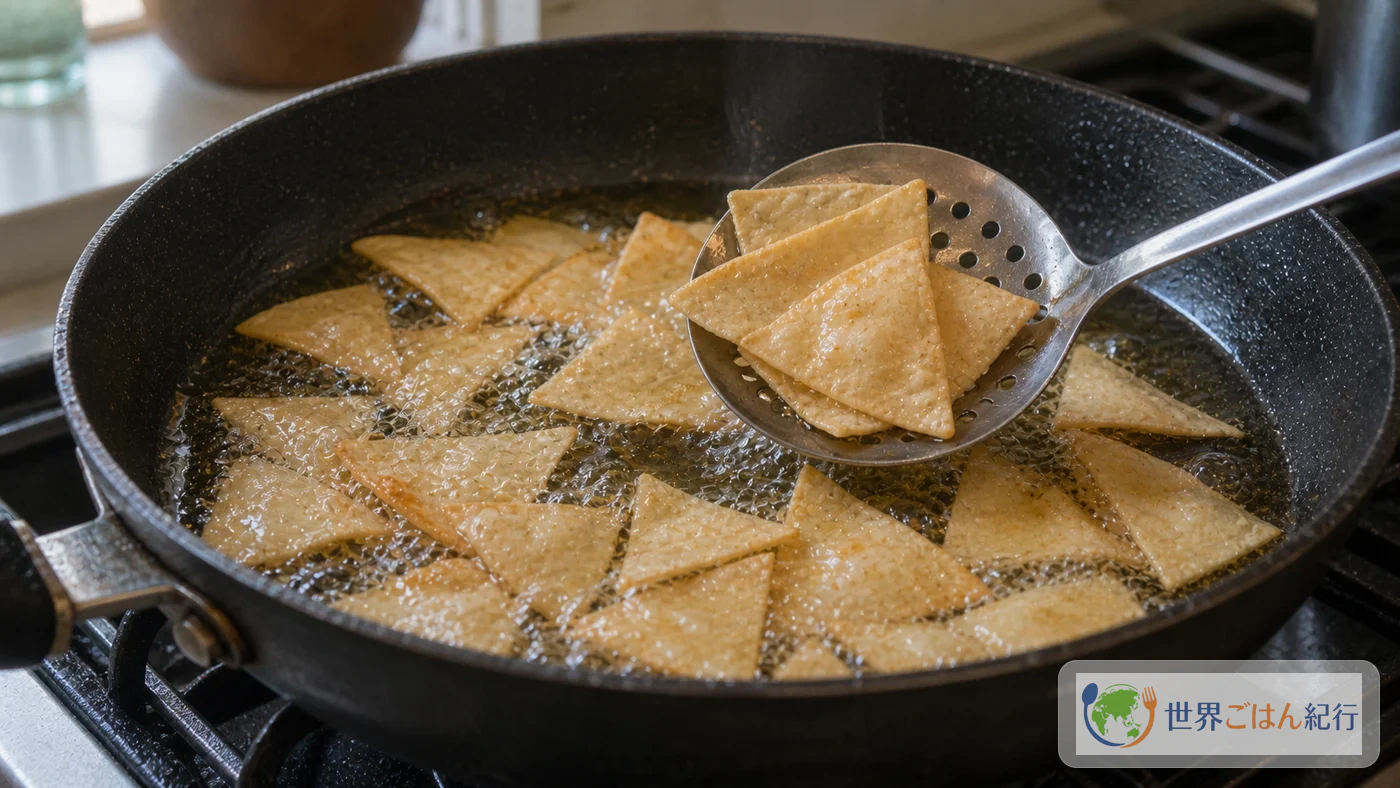
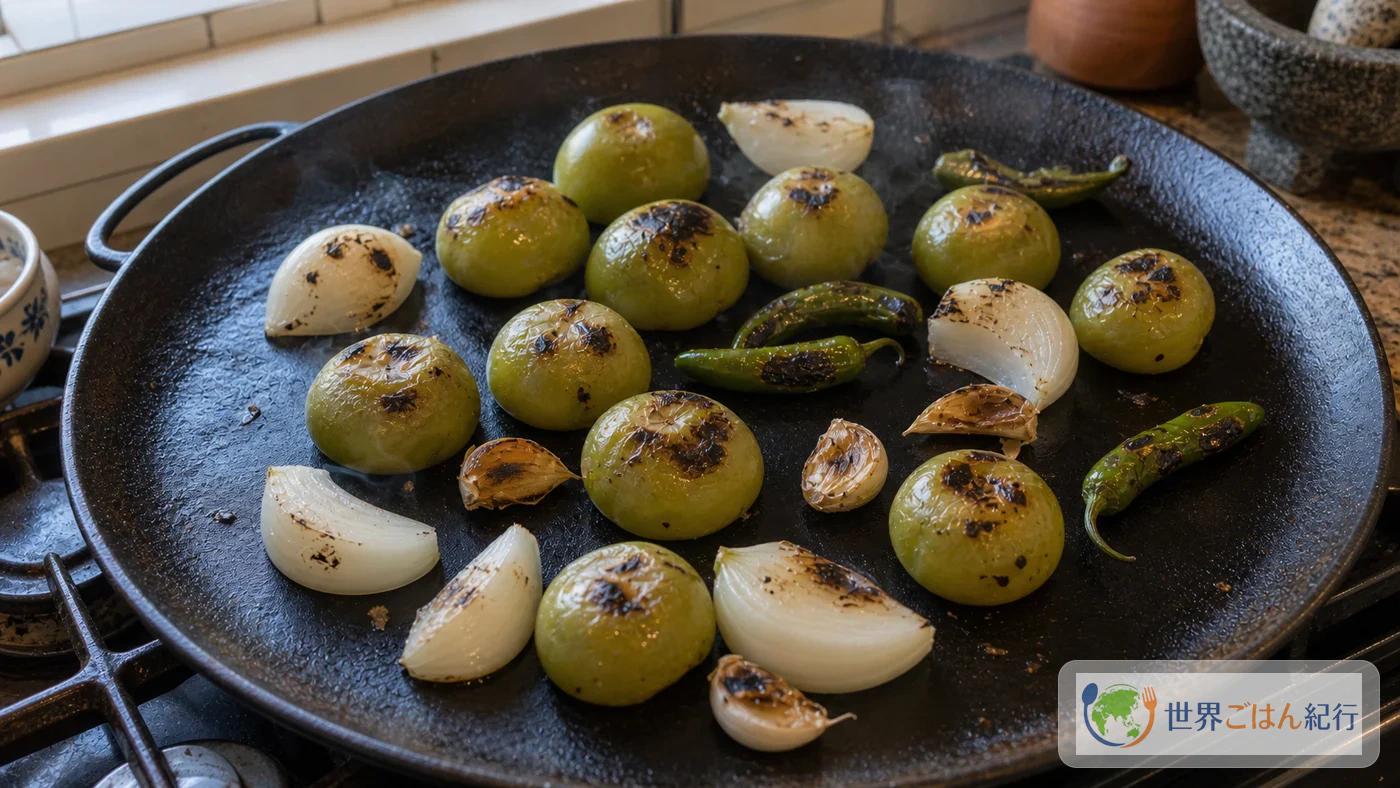

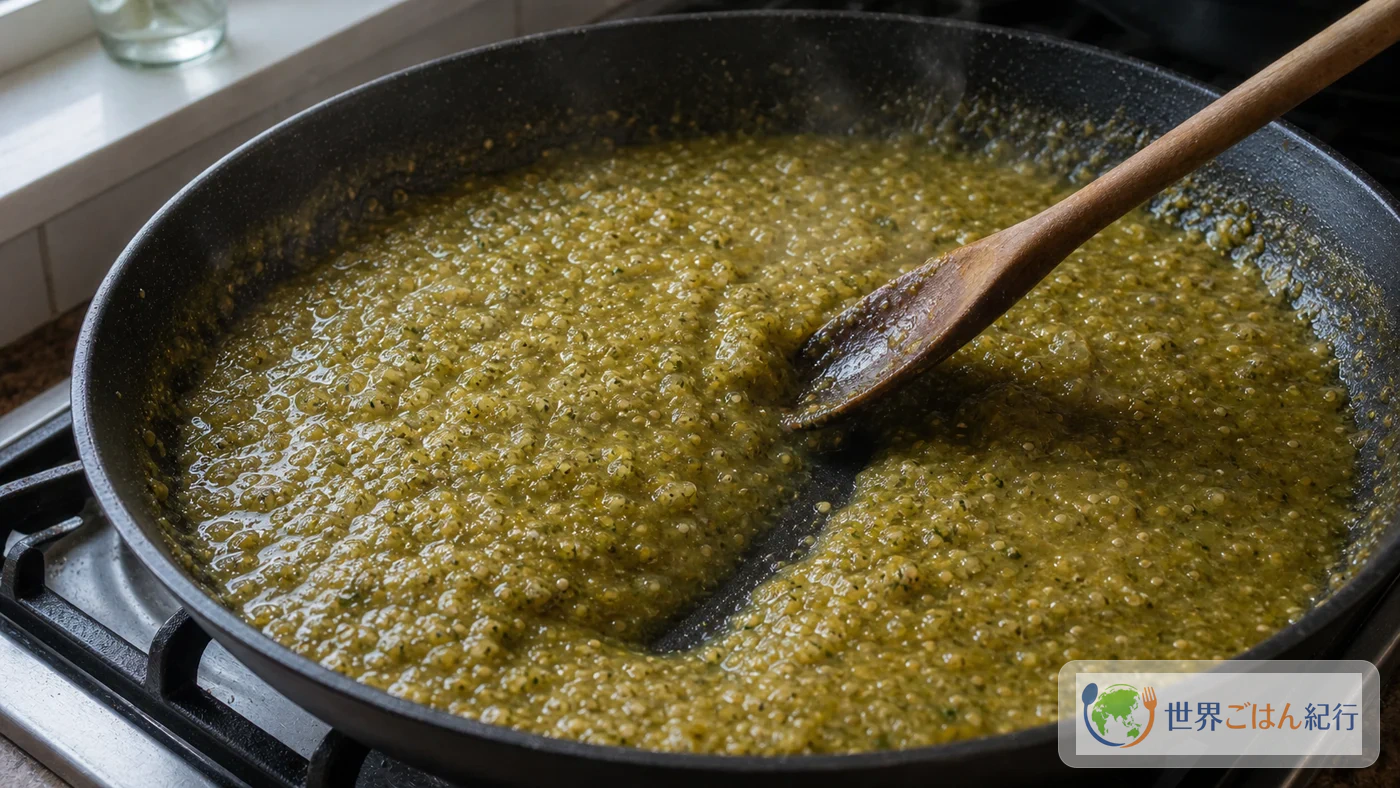
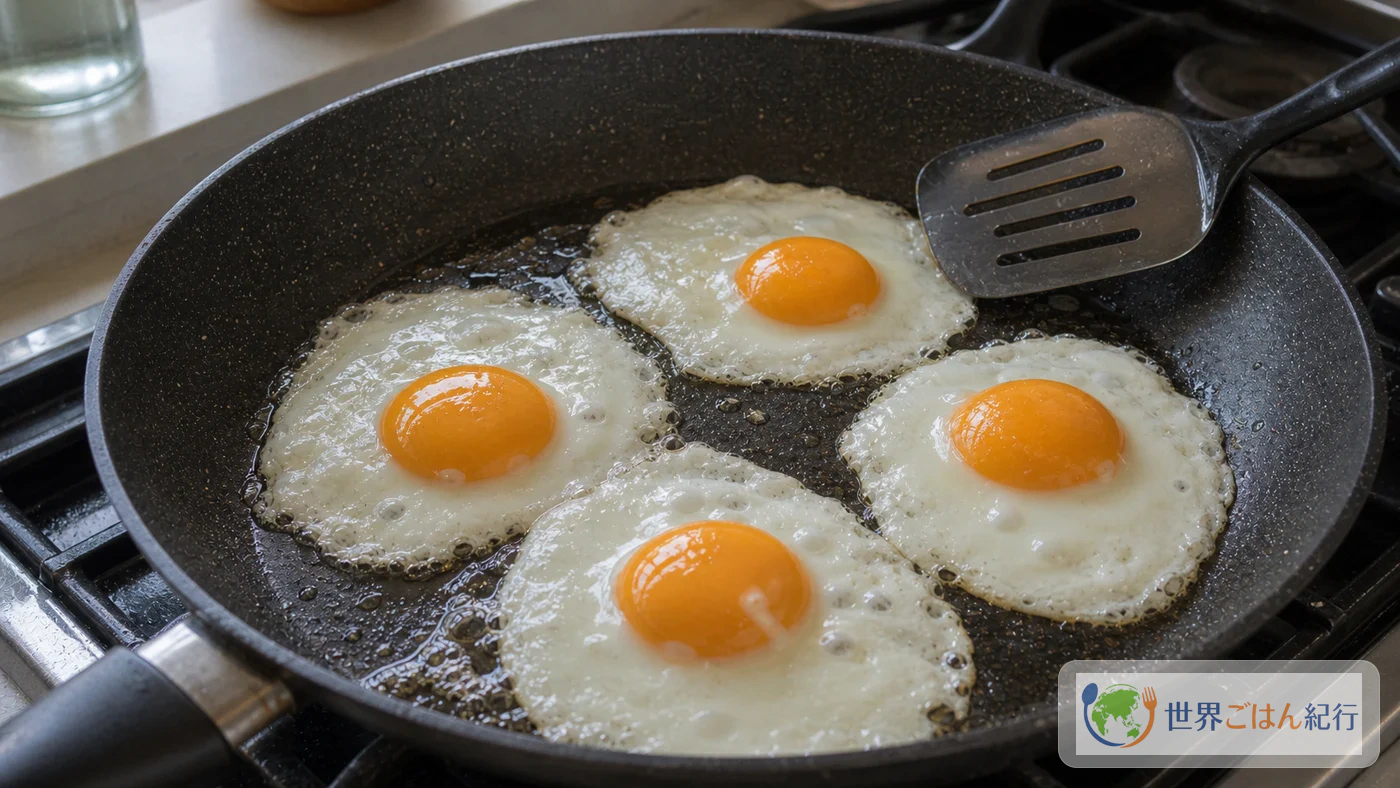

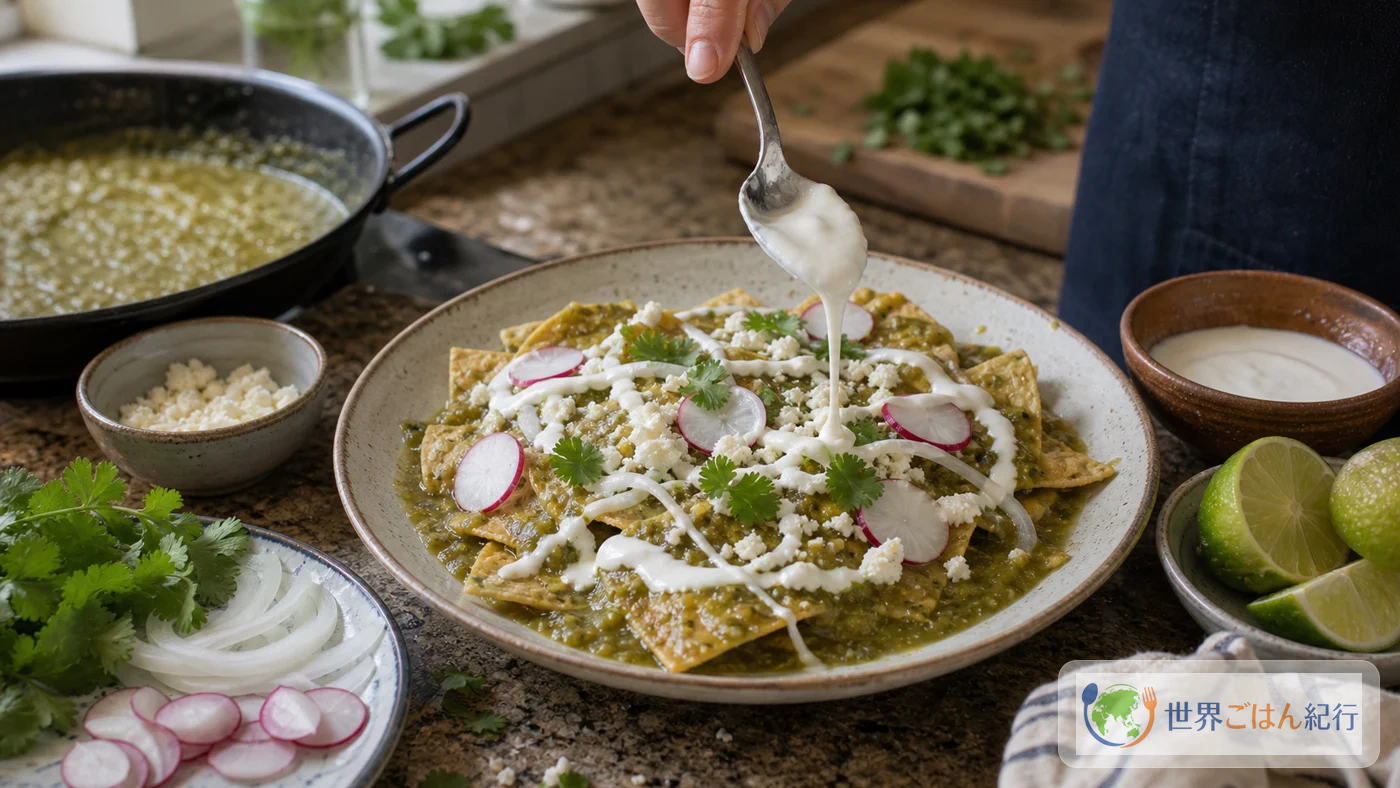
Warm a pan of salsa in the morning and the tang of green tomatoes and the aroma of charred chiles drift up. In go freshly fried corn tortillas. The crunchy triangles soften just a little in the pan, while their edges still stand up. That moment is when chilaquiles are at their best.
Chilaquiles are a Mexican breakfast and brunch dish of fried corn tortillas briefly simmered in salsa and topped with eggs, chicken, crema, cheese, onion and more. They look a bit like nachos, but they play a very different role. If nachos are "chips with toppings," chilaquiles are "tortillas woken up by salsa." Let them soak up too much sauce and they become something else; too little, and they're just chips.
If you've cooked a few Mexican dishes already, you can put leftovers to work here: tortillas from tacos al pastor (in Japanese) or tinga de pollo, the oregano you bought for pozole rojo (in Japanese), the mortar you used for mole poblano (in Japanese). You won't need to buy much. What matters is keeping the salsa from turning watery and tossing in the chips briefly at the very end.
As Larousse Cocina explains, the starting point is frying leftover tortillas and combining them with salsa. That's why tossing them together briefly just before eating, rather than simmering the chips until everything is soft, is the easiest way to get the timing of this dish right in a home kitchen.
Where chilaquiles come from, and the green and red regional styles

Chilaquiles are made by frying tortillas that have been left to dry a little since the day before and combining them with warm salsa. Larousse Cocina's culinary dictionary explains that it began as a simple dish for not wasting leftover tortillas, sometimes served with beans. Today it's eaten not only at home but also at diners and cafés that serve breakfast. The origin of the name isn't settled; one theory combines Nahuatl words such as chilli and quilitl. Rather than pinning down an etymology, it's more useful in the kitchen to remember the dish for what it is: tortillas soaked in a chile sauce.
Change the color and the toppings and occasions change too. In central Mexico, a green salsa with onion, garlic, epazote and cilantro is popular. In Mexico City, the well-known form is green salsa with cheese, crema and onion, plus eggs or shredded chicken. Guanajuato, meanwhile, has red salsa made with chiles such as guajillo, and Oaxaca has red and yellow versions using pasilla or mole. In the southeast they're sometimes served with black beans; the same name takes on a different face on the morning plate from place to place. Larousse Cocina's entry lays out the regional differences in more detail.
The Mexican educational digital resource Nueva Escuela Mexicana Digital, "Las recetas de la milpa" also presents home-style green chilaquiles made with tomatillos, green chiles, onion, garlic, cilantro, epazote, chicken and fresh cheese. Building on that combination, here we char the salsa ingredients for aroma. What matters at home isn't sourcing every topping from Mexico. It's keeping the corn aroma and the warm salsa, and not dragging out the time between tossing the chips and eating. Get that right, and even with canned tomatillos it holds together as a green breakfast.
Broadly, chilaquiles divide into green with salsa verde, red with salsa roja, and divorciados, half green and half red. Texture varies by household and restaurant too: some keep them crisp, others simmer them until soft.
| Type | Salsa base | Flavor | What to watch at home |
|---|---|---|---|
| Chilaquiles verdes | Tomatillos, green chiles, herbs | Bright and tangy, great for breakfast | Plan a substitute if you can't find tomatillos |
| Chilaquiles rojos | Tomatoes, dried chiles, garlic | Sweeter and toastier | Scorched dried chiles turn bitter |
| Divorciados | Green and red on either side | Good for comparing | Don't mix them on the plate; warm each salsa separately |
| With chicken | Shredded chicken and salsa | Easy to turn into dinner | Add cooked chicken and just warm it through at the end |
Here we make green chilaquiles verdes. The tang of tomatillos stands up well to the oil in the chips, and it helps avoid the common letdown of a salsa so heavy it's hard to eat first thing in the morning. If you'd rather go red, the substitution section later explains how to use guajillo or paprika.
Ingredients

This dish uses eggs, dairy and corn products. Some store-bought tortillas and chips contain wheat, milk or soy. Cook the eggs until the whites are set, and take care not to burn yourself when handling the salsa and frying oil. If making ahead, store the salsa and chips separately.
Canned tomatillos and Mexican oregano may not be at your local supermarket. The first time around, don't get too hung up on finding every ingredient; prioritize the tang of the salsa and the thickness of the tortillas. You only use a little oregano in the green salsa, so if you have regular oregano on hand, there's no need to buy more.
Method
For chilaquiles, finish the chips first, reduce the salsa, then combine them briefly at the end. Simmering them long in the salsa gives good flavor but a heavy texture. Even if you like soft chilaquiles, it's easier to adjust if you start by tossing them briefly and letting them sit on the plate a little.
Tools
Finish the chips and the salsa separately ahead of time; combining them once everyone has sat down is soon enough. You won't be rushing at the last minute, and the texture holds.
If you have a blender, you don't need a mortar. A mortar and pestle is handy if you like to leave a little texture in the charred ingredients, or if you regularly crush chiles and spices, but if these chilaquiles are your only reason, you can skip it. It takes up storage space, so decide where it will live before you buy one.
Common mistakes and how to fix them

Chilaquiles go wrong through moisture and timing more than seasoning. When the ingredients are right but the dish turns heavy, it's almost always because the salsa is too thin or the chips were simmered too long.
| Problem | Cause | Fix |
|---|---|---|
| Everything is soggy | Watery salsa, tossed too long | Reduce the salsa over medium heat for another 1 to 2 minutes first. Add the chips last |
| Too sour | Green tomatoes or lemon used in place of tomatillos are too sharp | Add a little more onion, and soften it with 1 tbsp water rather than a pinch of sugar |
| Bitter | Chips fried too dark, chiles scorched | Stop at pale gold. Scrape off any blackened bits on the chiles |
| Greasy | Tortillas too moist, oil too cool | Dry before frying. Keep the oil around 170°C (340°F) |
| Flat flavor | Not enough salt, too much dairy | Get the salt right in the salsa, and add crema sparingly at the end |
If you use store-bought tortilla chips, choose thick ones that aren't too salty. Thin snack chips break as soon as they touch the salsa and turn powdery at the bottom of the plate. If thin chips are all you have, reduce the salsa even further, spread the chips on the plate without tossing, and spoon the salsa lightly over the top.
Substitutes and shopping
The four ingredients that give people pause when making chilaquiles outside Mexico are tomatillos, cheese, crema and chiles. If you can get everything authentic, great, but aiming for perfection on the first try can stall you at the shopping stage. Deciding what to protect and what to swap keeps you moving in the kitchen.
First look for corn tortillas or thick corn chips, then tomatillos, and Mexican oregano last. Dairy is easy to approximate with everyday supermarket products, so settle the corn and salsa base first.
| Traditional ingredient | Substitute | What to protect |
|---|---|---|
| Tomatillos | Canned tomatillos, or 300 g green tomatoes + 150 g regular tomatoes + 2 tsp lime juice | Keep the tang and the green aroma |
| Serrano | Jalapeño, other green chiles, or shishito peppers plus a little ground red chile | A green heat. Don't rely on red chiles alone |
| Queso fresco | Cottage cheese, or feta rinsed lightly in water | Don't make it too salty |
| Crema | Sour cream, Greek yogurt, or yogurt plus a pinch of salt | Add just a little tang and creamy roundness |
| Corn tortillas | Store-bought corn tortillas, thick unsalted corn chips | Don't use only flour tortillas |
If you can't get tomatillos at all, green tomatoes alone can make the tang harsh. Mixing in a few ordinary red tomatoes and adding more charred onion takes the edge off. On the other hand, piling on cilantro makes it taste more like an herb sauce than chilaquiles, so start with 20 g.
To go red, char and blend 400 g tomatoes, 2 rehydrated guajillo chiles, 2 cloves garlic and 1/4 onion in place of the tomatillos. Without dried chiles, 2 tsp paprika plus a little ground red chile gives you a starting point for color and aroma. The smoky bitterness and fruitiness won't come through as strongly as with dried chiles, though. If you like the red version, that's the reason to look for dried chiles on your next shopping trip.
How to serve it and build a meal around it
Chilaquiles are a breakfast plate, but with more toppings they work for dinner too. For breakfast, keep it light with a runny egg and crema; for lunch, add shredded chicken; for dinner, add beans or rice to round out the table.
Chicken from tinga, radishes from pozole, onion from tacos, herbs left over from mole. Turning small leftovers back into breakfast with warm salsa and tortillas is what chilaquiles do best.
| Occasion | Serve with | Notes |
|---|---|---|
| Breakfast | Fried eggs, crema, coffee | Keep the oil light and add extra lime |
| Brunch | Shredded chicken, avocado, beans | Divide into individual plates to keep the texture |
| Dinner | Tinga de pollo, salad | Handy for using up leftover chicken |
| A Mexican food day | Pozole rojo (in Japanese), mole poblano (in Japanese) | Enjoy the links between salsa, chiles and corn |
At diners in Mexico, refried beans, sliced onion, chicken and fried eggs are classic partners. At home, beans, salad or soup keep it closer to the spirit of chilaquiles than a side of plain rice. For a starter on a hot day, try aguachile (in Japanese), served in a cold lime-and-chile sauce, for a tang and heat different from the breakfast salsa. If you really want it as the main course at dinner, make the salsa thicker and add eggs or chicken rather than piling on more chips.
Storage and making ahead
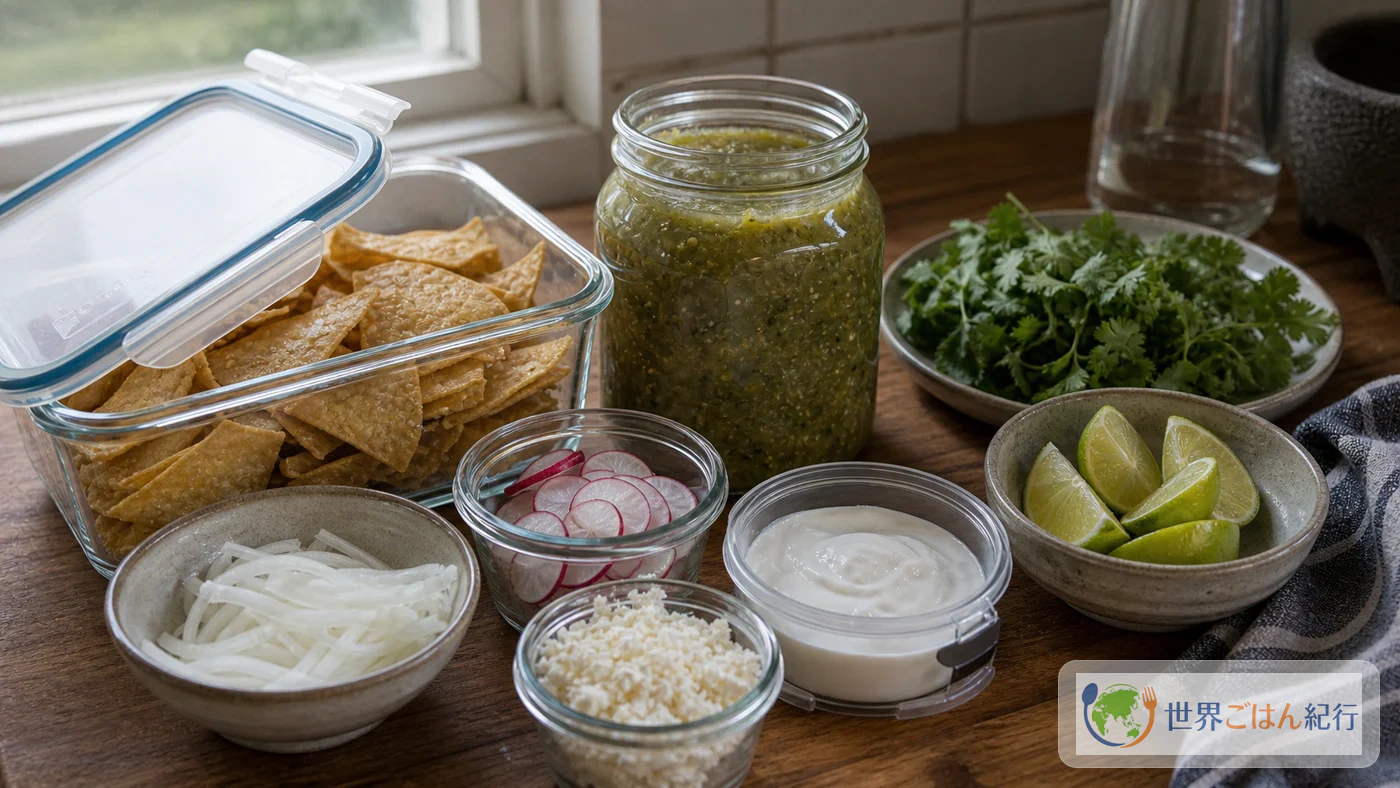
Finished chilaquiles don't keep well. Chips that have soaked up salsa fall apart over time. If you want to make ahead, store the salsa, chips and toppings separately.
| What to store | How | Keeps for |
|---|---|---|
| Salsa verde | Refrigerate in a clean container | 3 days |
| Fried chips | Cool completely and seal airtight | 2 to 3 days |
| Finished chilaquiles | Can be refrigerated, but the texture suffers | Same day |
| Toppings | Onion, radishes and cheese in separate containers | 1 to 2 days |
To serve the next day, warm the salsa over medium heat until it bubbles, adding 1 tbsp water if it's too thick. Rewarm the chips in a toaster oven for 1 to 2 minutes, then toss them briefly in the salsa at the end. Microwaving the finished dish softens everything at once, so avoid it if you want to keep some texture.
Frequently asked questions
In Mexico, too, some places keep them crisp and some households cook them until soft. Toss briefly the first time, then adjust the amount of salsa and the time to your family's taste.
Can I use store-bought tortilla chips?
Yes. Choose thick chips, unsalted or lightly salted, with a strong corn flavor. Thin snack chips break easily, so rather than simmering them in the salsa, plate them first and spoon the salsa over the top for a safer result.
Is it a different dish without tomatillos?
The direction changes, but it still works as breakfast. Combine green tomatoes, regular tomatoes and lime, and round it out with charred onion and garlic. The green tang will be milder, so if you like the result, canned tomatillos are worth hunting down next time.
How do I make red chilaquiles?
Make salsa roja with 400 g tomatoes, rehydrated dried chiles, onion and garlic. Don't scorch the dried chiles; soak them in boiling water for 10 minutes before blending. Without dried chiles, paprika and a little ground red chile give you a starting point, but the aroma will be much milder.
Can I skip the eggs?
Yes. Without eggs, add shredded chicken, beans or sautéed mushrooms to make it satisfying. To keep a breakfast feel, add a little avocado or crema to balance the oil and the tang.
Can I pack it for lunch?
Packed fully assembled, the chips break down in the moisture. If you're taking it with you, pack the salsa, chips, egg or chicken and toppings separately and combine them just before eating. If all you have is a microwave, it works as long as you accept a softer texture.