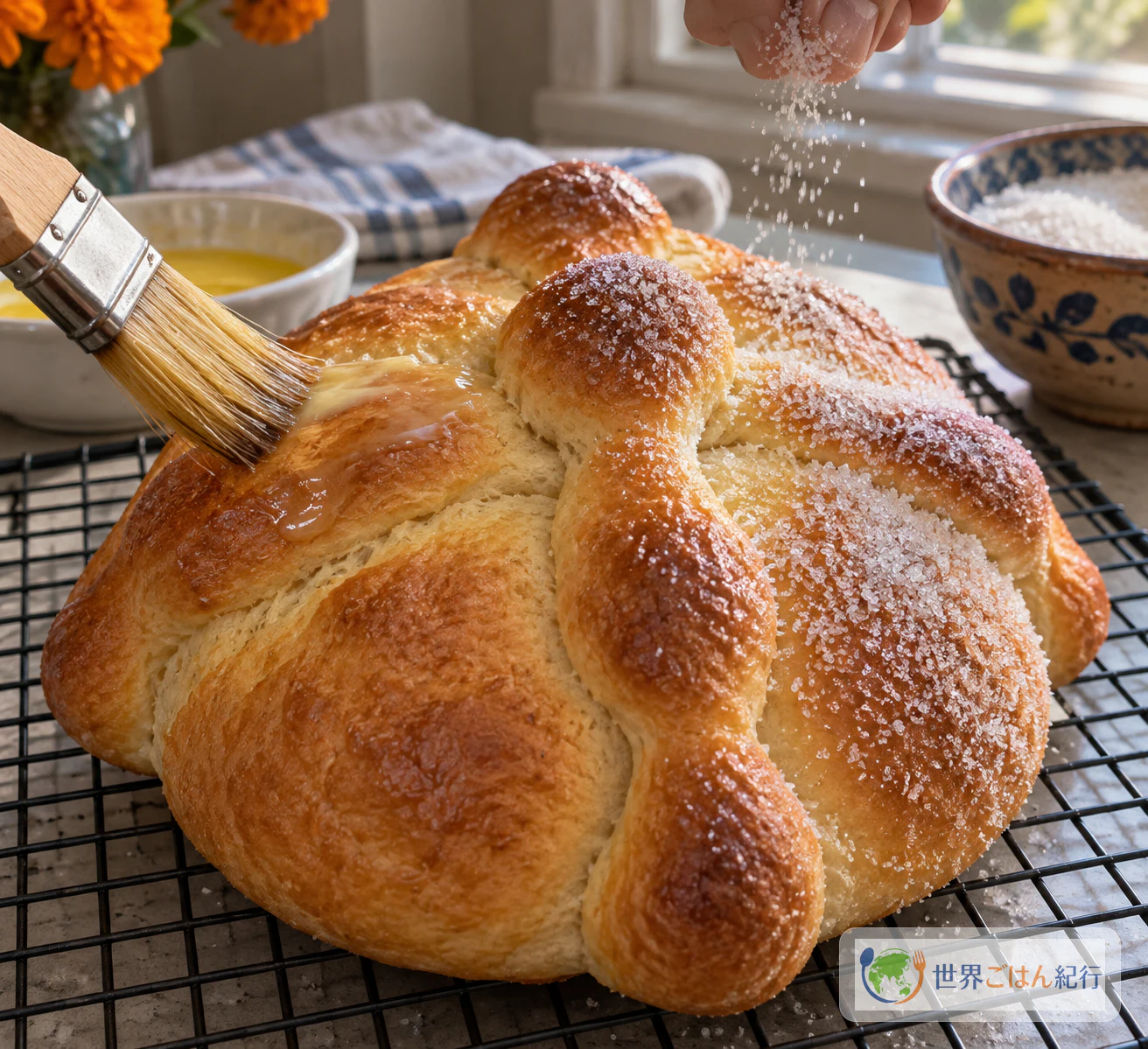
Pan de Muerto: A Bread for the Ofrenda and for the Family Table
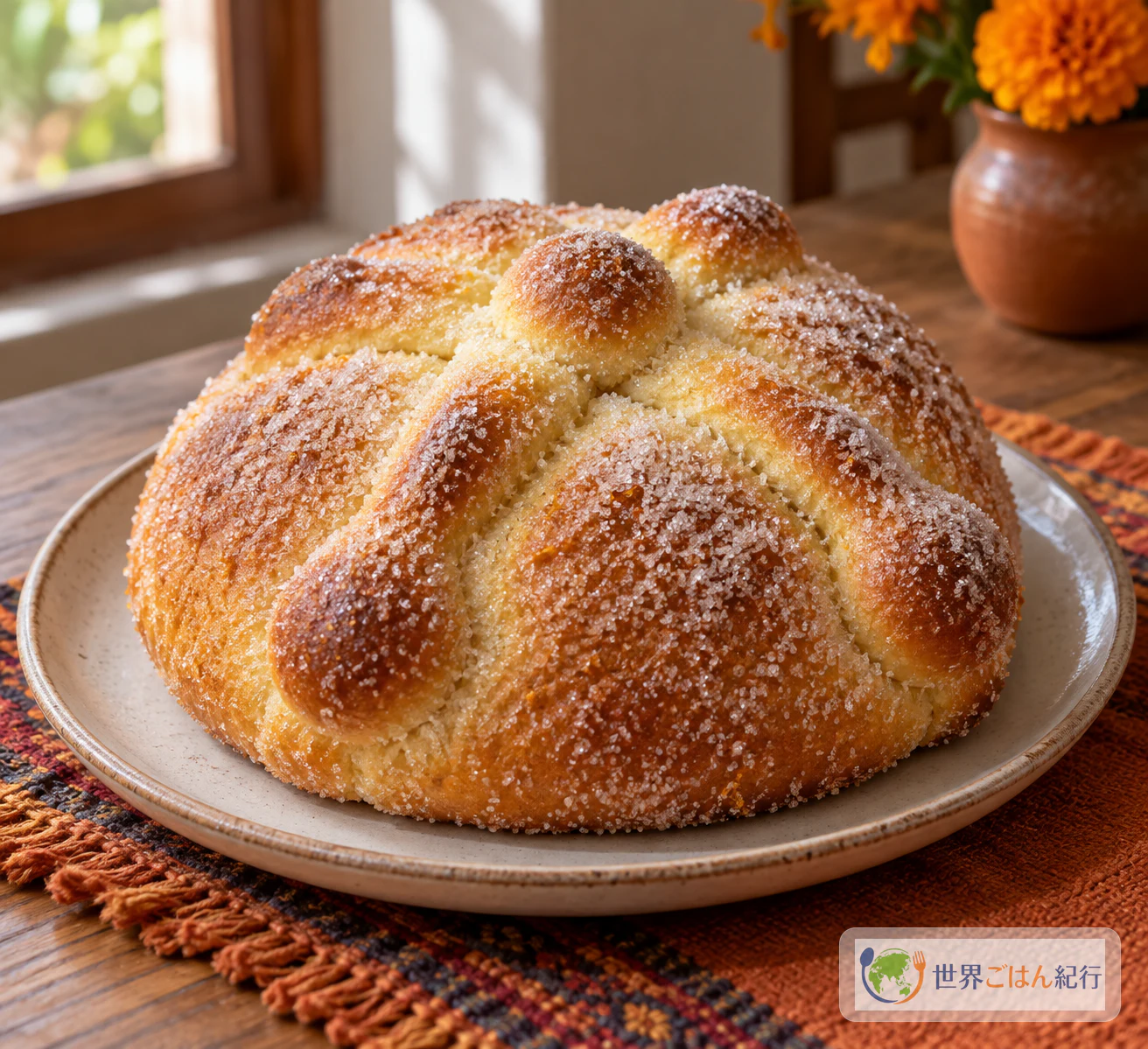
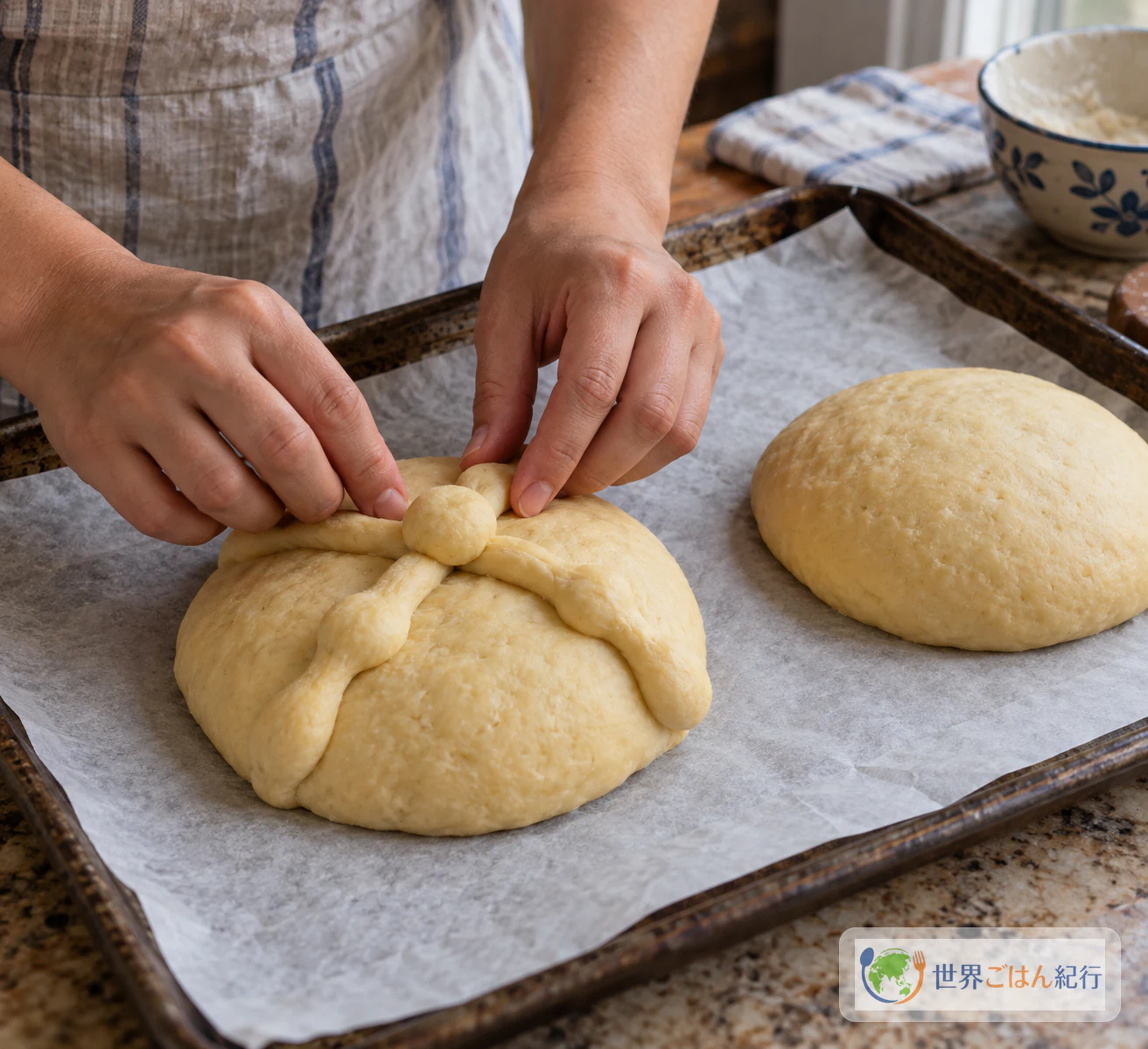
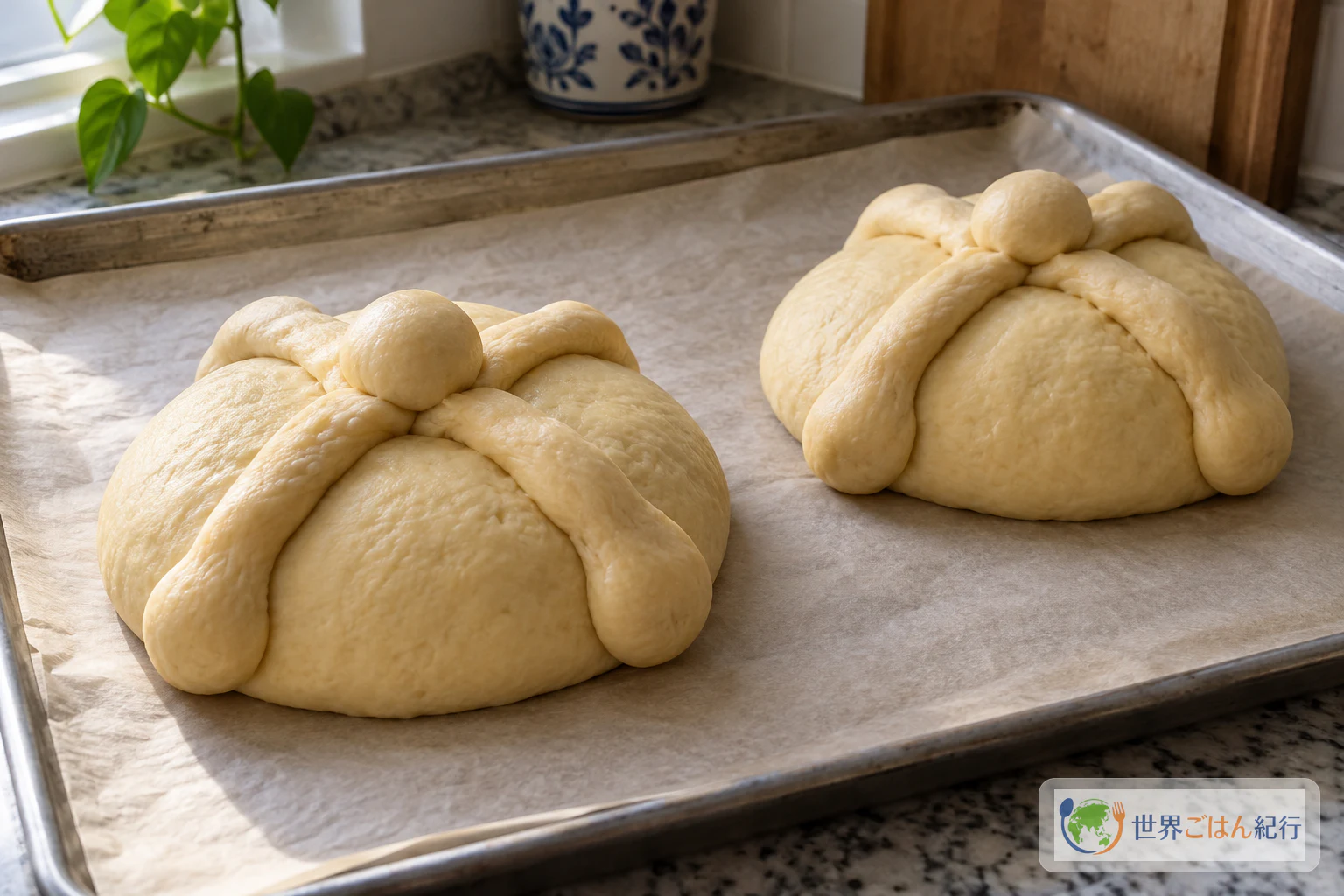
A soft, rich crumb scented with orange and anise, two dough bones crossed on top with a small ball holding them in place, and a crust of butter and sugar. Let the dough stay slightly sticky, and let the long rest do its work.
Around November 1 and 2, during Día de Muertos, round sweet breads scented with citrus and anise appear across Mexico. Pan de muerto, "bread of the dead," has two places at once: it is set on the ofrenda, the offering prepared to welcome those who have died, and it is also cut and shared at the family table.
This article makes one particular form: the round loaf familiar from central Mexico, with bone-shaped strips of dough crossed over the top and a coating of butter and sugar. It is not the only pan de muerto. Breads made for the season take many shapes and flavors across the country, and those differences come later in the article. The quantities and method here follow a single published recipe for two loaves, without mixing in other formulas.
Pan de muerto is Spanish for "bread of the dead." Searching with the Spanish name alongside "Día de Muertos" makes it easier to find regional forms and recipes.
Which Loaf This Recipe Makes
The recipe below is the one published by King Arthur Baking and credited to Pati Jinich, a Mexican cook. It makes two loaves about 8 inches (about 20 cm) across, starts with a small yeasted preferment, enriches the dough with eggs and butter, and gives it a long cold rest. The recipe page lists about 11 hours from start to finish, of which roughly 50 minutes is hands-on work and 40–45 minutes is baking; most of the rest is rising and chilling, and that part changes with the temperature of your kitchen.
It is one reproducible expression of the central style, not a definitive national formula. The Consulate of Mexico in Philadelphia, for example, has published a different pan de muerto recipe with extra egg yolks, water, an egg wash to attach the decorations, and a syrup finish. That formula is mentioned here only for comparison; none of its amounts or steps are used below.
Sekai Gohan has not kitchen-tested this recipe as a whole. The times and temperatures come from the published recipe, and home ovens and room temperatures vary, so use the signs of readiness in each step alongside the clock.
Ingredients for Two Loaves
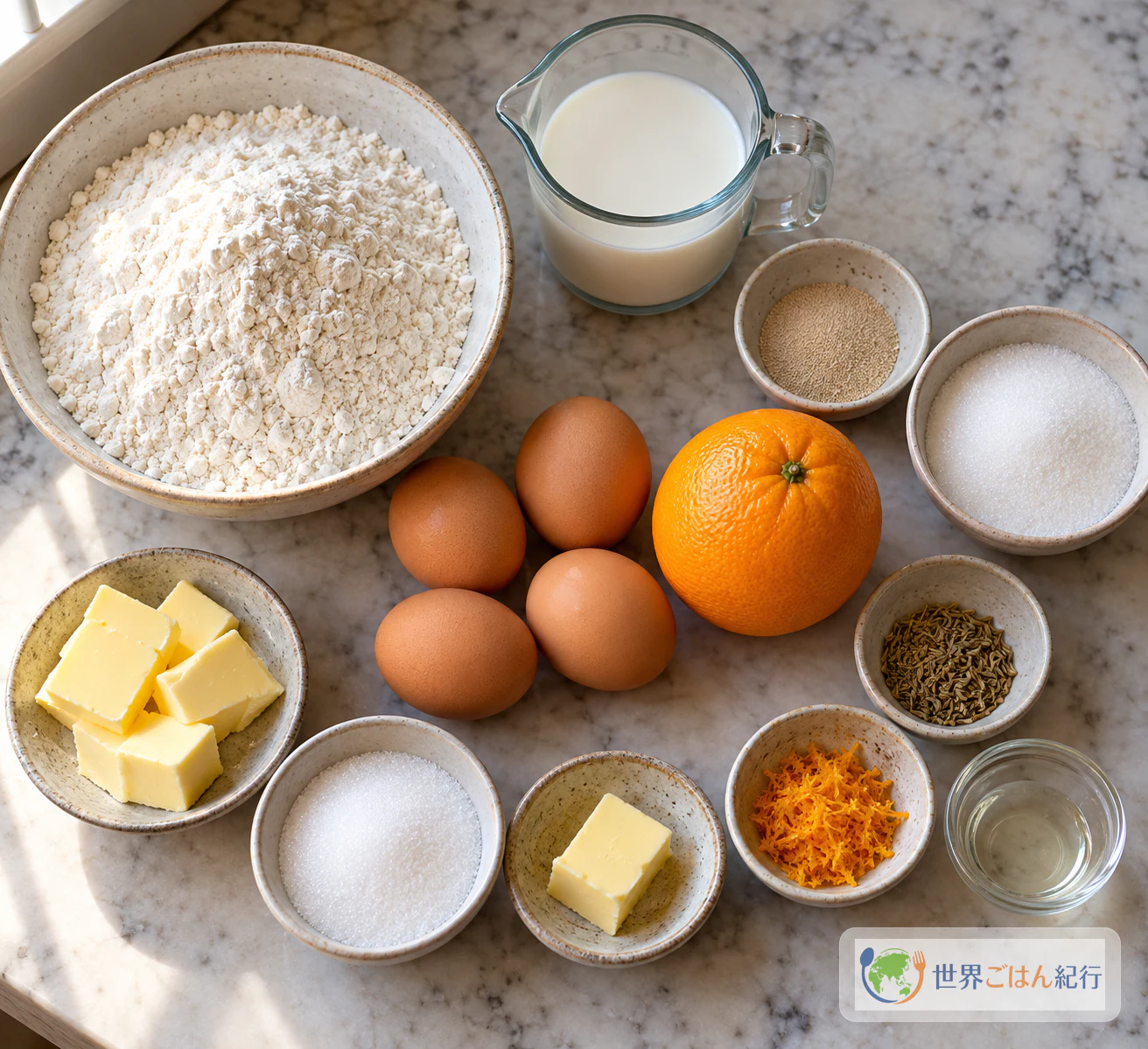
Butter and sugar each appear twice: one portion goes into the dough and a separate portion is used for the finish. Keep them in separate bowls so they don't get mixed up.
Equipment
- Stand mixer with a dough hook
- Kitchen scale
- Mixing bowl for the preferment, and a larger bowl for rising, lightly oiled
- Cover for the bowl
- Bench scraper, for dividing and shaping
- Baking sheet lined with parchment
- Aluminum foil, for tenting during baking
- Digital probe thermometer, for checking the center of the loaves
- Oven thermometer, for checking the actual oven temperature
- Pastry brush
- Cooling rack
Choosing and Substituting Ingredients
Bread flour, milk, eggs, unsalted butter, oranges and anise seeds are ordinary supermarket ingredients. Look for whole anise seeds; star anise and fennel are different spices and should not be swapped in.
Orange blossom water is the ingredient you may need to seek out, at a baking supply shop or online. If you can't find it, use the same 2 tbsp of plain water; the bread will have a gentler aroma, with the orange zest and anise carrying the flavor. Rose water is the other option, but it pulls the aroma away from citrus and anise toward something floral.
This bread contains wheat, milk and eggs. Check the labels of the products you buy for other allergens and shared-facility statements. The dough contains raw egg, so wash your hands, the mixer bowl and your tools after handling it.
How to Make Pan de Muerto
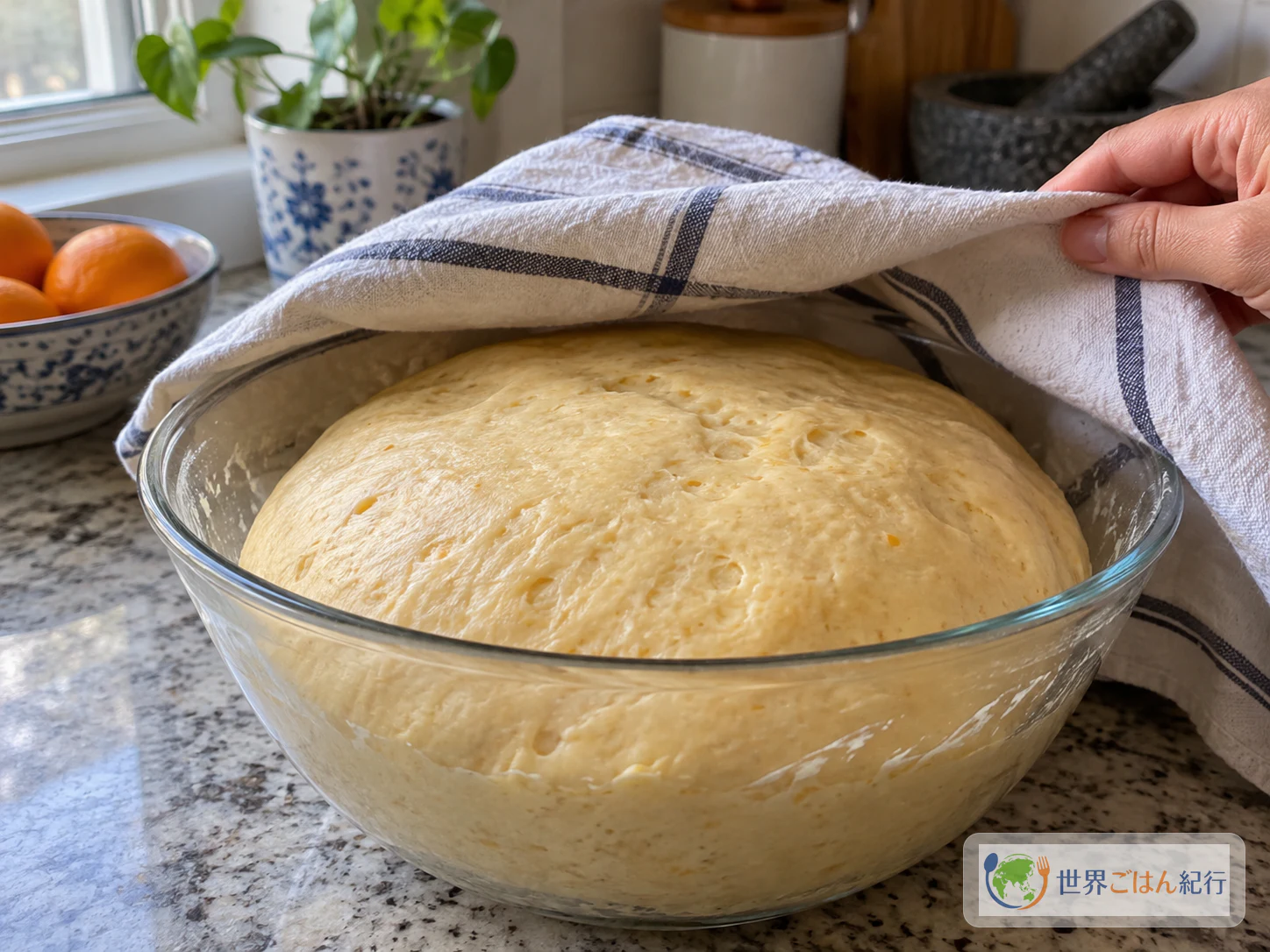
The dough rests in the refrigerator for at least 4 hours or overnight before shaping, so it is easiest to mix it one day and shape and bake the next. Rising times depend on how warm your kitchen is; watch the dough as well as the clock.
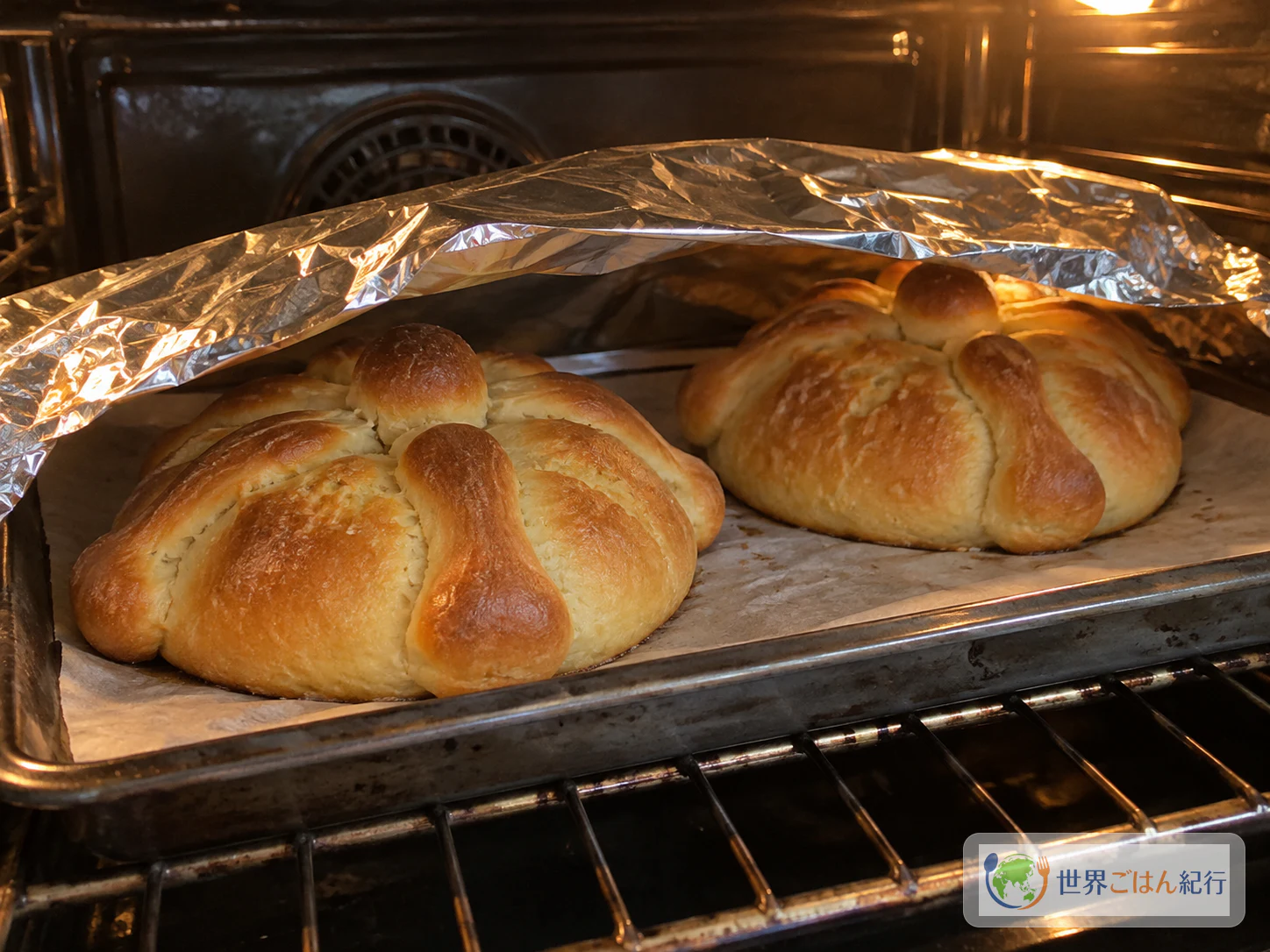
The temperatures here are given in Fahrenheit. If your oven is set in Celsius, convert carefully, and check the real temperature with an oven thermometer, since home ovens often differ from their dial. The 190°F reading in the center and a deep golden color are better signs of doneness than the timer alone.
Not Rising, or the Bones Fall Off
| Problem | Likely cause | What to do |
|---|---|---|
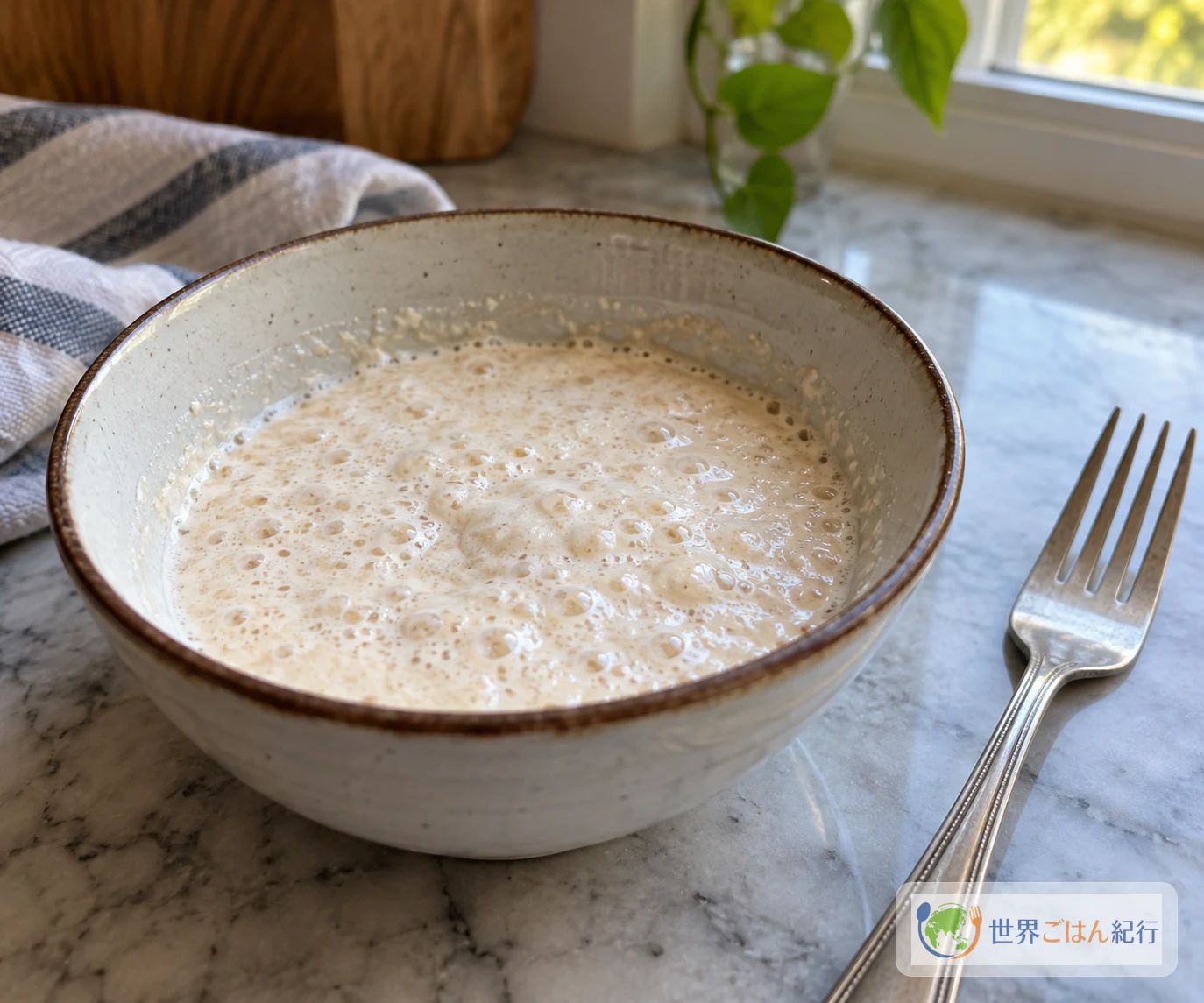
| No bubbles on the preferment | Inactive yeast, or milk that was too hot | Check that the yeast is active before making the dough. Warm the milk only to lukewarm |
| The dough is slow to rise | A cool kitchen | Go by volume, not the clock: nearly doubled for the first rise, roughly doubled for the second |
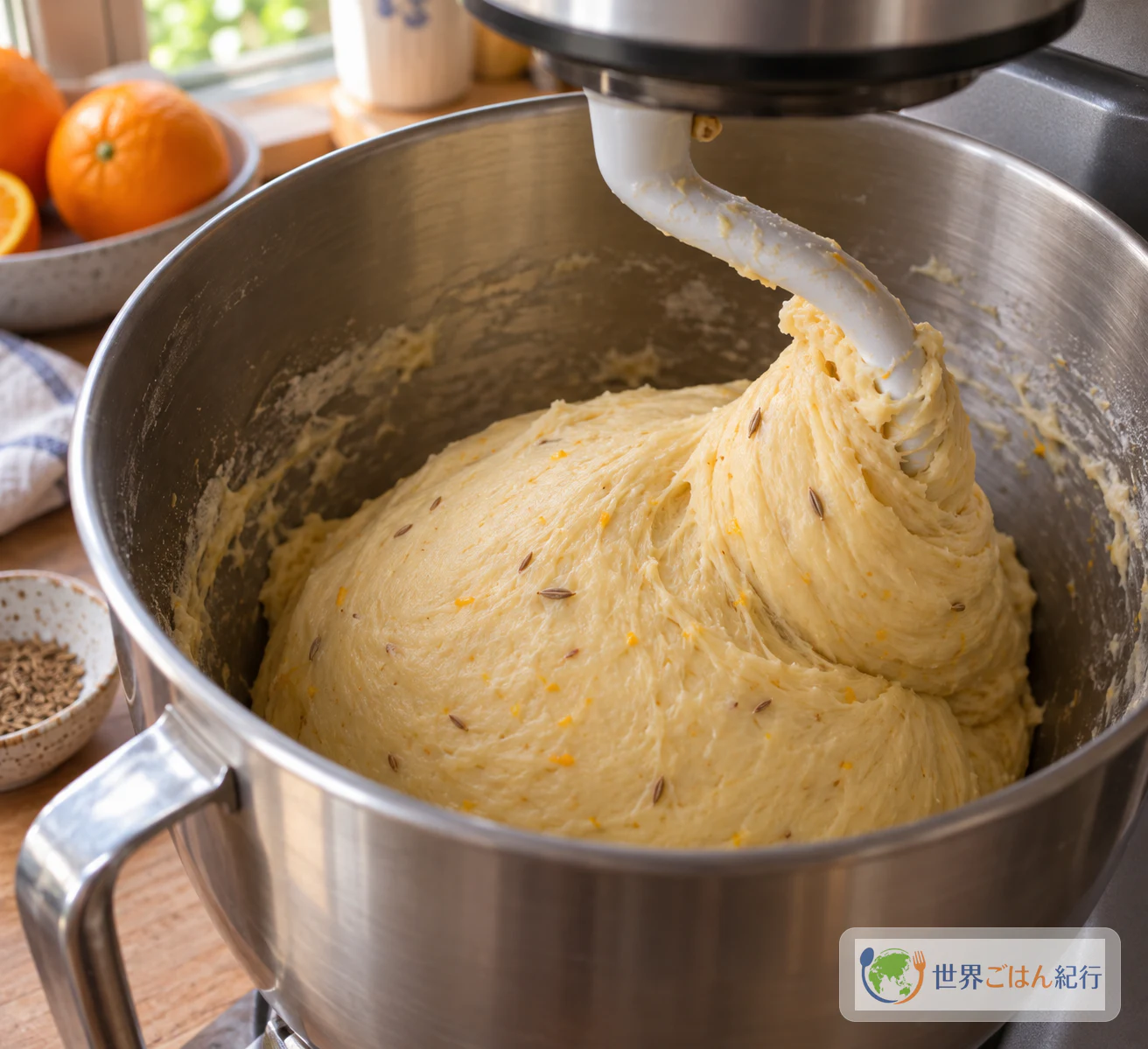
| The dough feels sticky | This is the intended texture | Don't add flour. Use a bench scraper for handling |
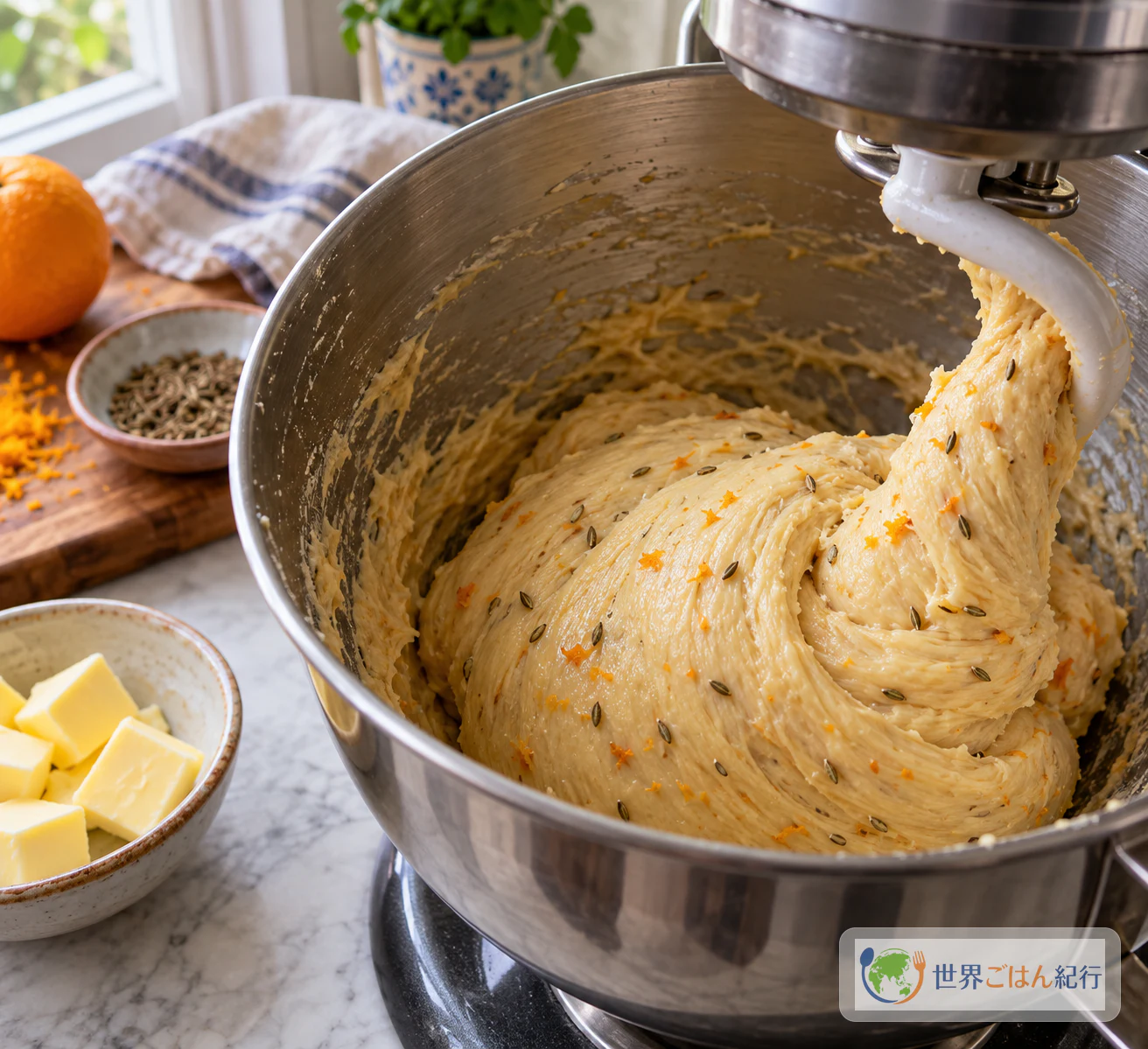
| The butter won't blend in | Too much added at once, or butter too cold | Add about 3 tbsp at a time, with the butter at room temperature, and wait for each addition to disappear |
| The bones lift or the center ball slides off | Not pressed on firmly enough | Press the ball firmly where the ropes cross when shaping, and check again before baking |
| The top is browning too fast | Oven running hot | Tent with foil once the top is lightly colored, and check the oven with a thermometer |
Variations Within This Recipe
The main choice this recipe allows is the aromatic liquid: orange blossom water, rose water, or plain water, always 2 tbsp. Orange blossom water layers with the zest and anise; water lets the orange and anise come through more quietly; rose water gives a distinctly floral loaf.
The recipe is written for two loaves. Making one smaller loaf would mean recalculating every ingredient, the decoration dough and the baking together, and that scaled version is not covered here. The mermaid breads and red breads described in the next section are separate regional breads, not variations to make from this dough.
What Is Pan de Muerto? The Ofrenda, the Table and Regional Differences
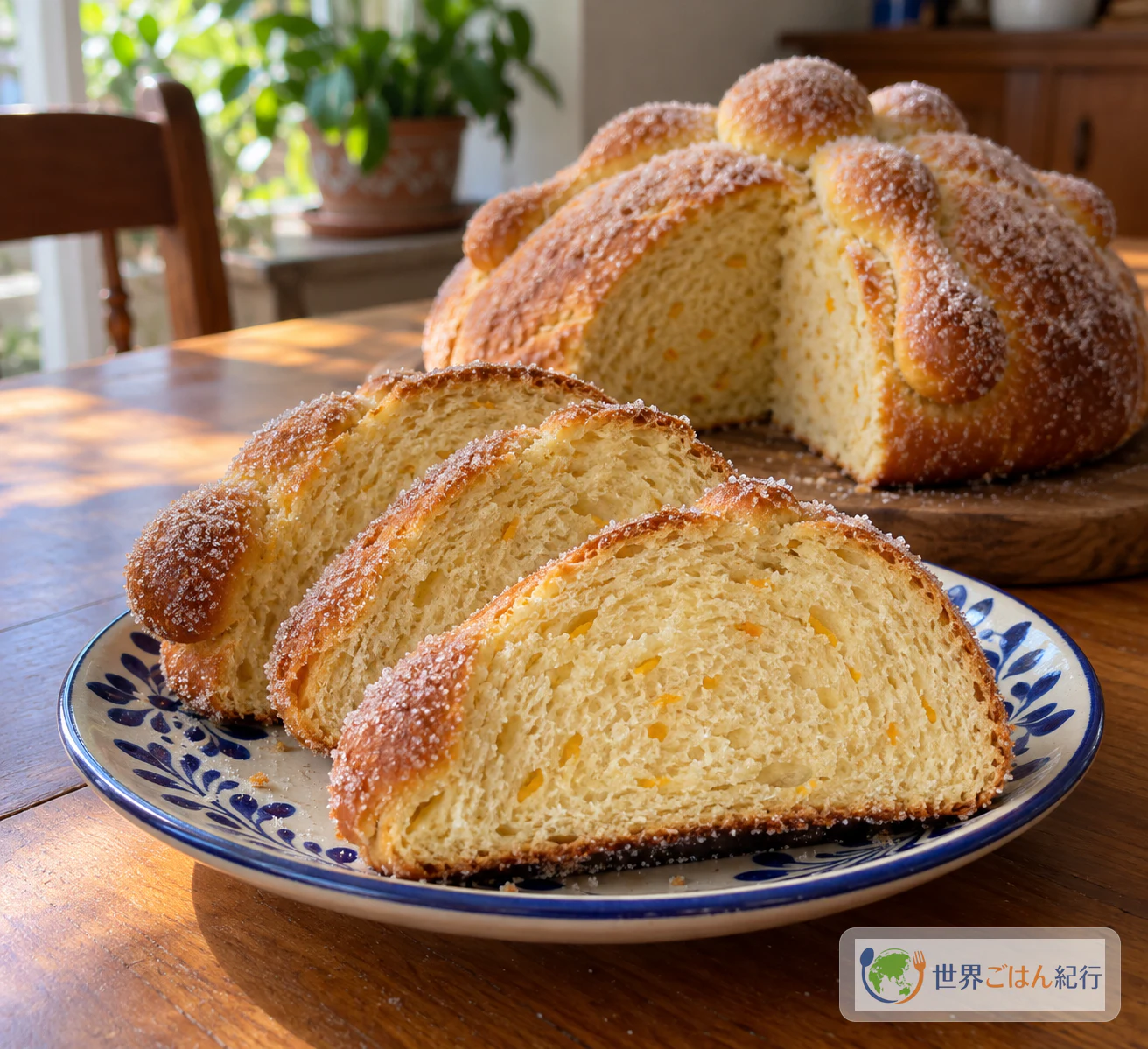
Pan de muerto belongs both to the ofrenda and to the family table. During Día de Muertos it is placed on the offering for the dead and also eaten. An article from UNAM's science outreach office (Ciencia UNAM-DGDC) describes the bread in the context of the ofrenda, and the King Arthur Baking recipe presents it as the bread of the November 1–2 holiday.
The dough bones crossing the top are the most recognizable feature of the central-Mexican loaf. They are described here as what the eye sees; the bread is given various meanings, and this article does not fix a single interpretation.
The bread's origins are not settled. The UNAM article reports competing origin narratives from an anthropologist, and points to a 1938 cookbook and a 1951 painting as places where the modern, recognizable recipe and shape appear. Dr. Alberto Peralta de Legarreta, a food historian at Universidad Anáhuac México, explains that historical evidence for the bread under its present name and form is limited, notes that older Mexican sweet-bread recipes share its flavorings and finishing touches, and cautions against reducing it to a single pre-Hispanic origin. It cannot be said that today's loaf descends in a straight line from an ancient bread.
The sugar, butter and orange flavor of the central style is not universal across Mexico. The UNAM article introduces regional breads that depict local forms and meanings, such as mermaid-shaped breads among the Chinantec people of Oaxaca and the red-decorated bread of Alcozauca in Guerrero. The Anáhuac feature likewise describes seasonal breads with diverse shapes and names. The Consulate of Mexico in Philadelphia's recipe decorates its bread with a skull and bones and treats proofing and shaping as household practice. For more of the country's cooking, see the Mexico country page.
Serving and Keeping
On the ofrenda, the loaf is set out whole. At the table, cut it into thick slices so each piece has some of the sugared crust.
Once the loaves have cooled completely, wrap them and keep them at room temperature for a few days. Freezing and reheating are not covered by this recipe.
Frequently Asked Questions
When is Día de Muertos?
The King Arthur Baking recipe places it on November 1 and 2. Pan de muerto is made for that season.
Can I leave out the anise?
You can, but the aroma changes and it is no longer the recipe as published, which includes 1 1/2 tsp anise seeds alongside the orange zest. Don't substitute star anise or fennel.
Is orange blossom water essential?
No. The published recipe offers rose water or plain water as alternatives in the same 2 tbsp amount. Water gives a gentler aroma; rose water a more floral one. The strong anise tea offered in the consulate's separate recipe is not an option for this formula.
Can I skip the refrigerator rest?
The recipe includes at least 4 hours or overnight in the refrigerator. If you skip it, there's no way to say the same dough will give the same result.
Can I knead by hand?
The method is written for a stand mixer with a dough hook, with the dough kneaded for long stretches and kept slightly sticky. Hand kneading isn't covered, so the same result can't be promised.
How many loaves does it make?
Two round loaves, about 8 inches (about 20 cm) across.
Has this recipe been tested?
We have not baked it in our own kitchen. The amounts, times and temperatures follow the published recipe; rely on the signs in each step, such as bubbles, volume, color and the 190°F center temperature.
Sources
- King Arthur Baking (recipe credited to Pati Jinich), "Pan de Muerto (Day of the Dead Bread)." The adopted recipe for two 8-inch loaves: all preferment, dough and topping quantities, the rising and refrigeration, the bone decorations, baking at 350°F to an internal 190°F, storage, total time, the orange-anise flavor and the Día de Muertos context. https://www.kingarthurbaking.com/recipes/pan-de-muerto-day-of-the-dead-bread-recipe
- Ciencia UNAM-DGDC, "Pan de Muerto. Sabor y tradición en un alimento." Competing origin narratives reported from an anthropologist's account, the 1938 cookbook and 1951 painting showing the modern form, the central-Mexican style not being universal, regional breads, and the ofrenda context. https://ciencia.unam.mx/leer/1183/pan-de-muerto-sabor-y-tradicion-en-un-alimento?lang=es
- Consulado de México en Filadelfia / Secretaría de Relaciones Exteriores, Dirección Ejecutiva de Diplomacia Cultural, "Pan de Muerto." A separate recipe used only for comparison: skull and bone decoration, an egg wash and syrup finish, orange blossom water or strong anise tea, and proofing and shaping as household practice. https://consulmex.sre.gob.mx/filadelfia/images/CMF/2020/Pan_de_Muerto.pdf
- Universidad Anáhuac México, Facultad de Turismo y Gastronomía (Dr. Alberto Peralta de Legarreta), "Nuestro querido Pan de Muerto: historia y significado." The limits of historical evidence for the present-day form, shared elements with older Mexican sweet breads, and the diversity of regional seasonal breads. https://www.anahuac.mx/mexico/noticias/nuestro-querido-pan-de-muerto-historia-y-significado