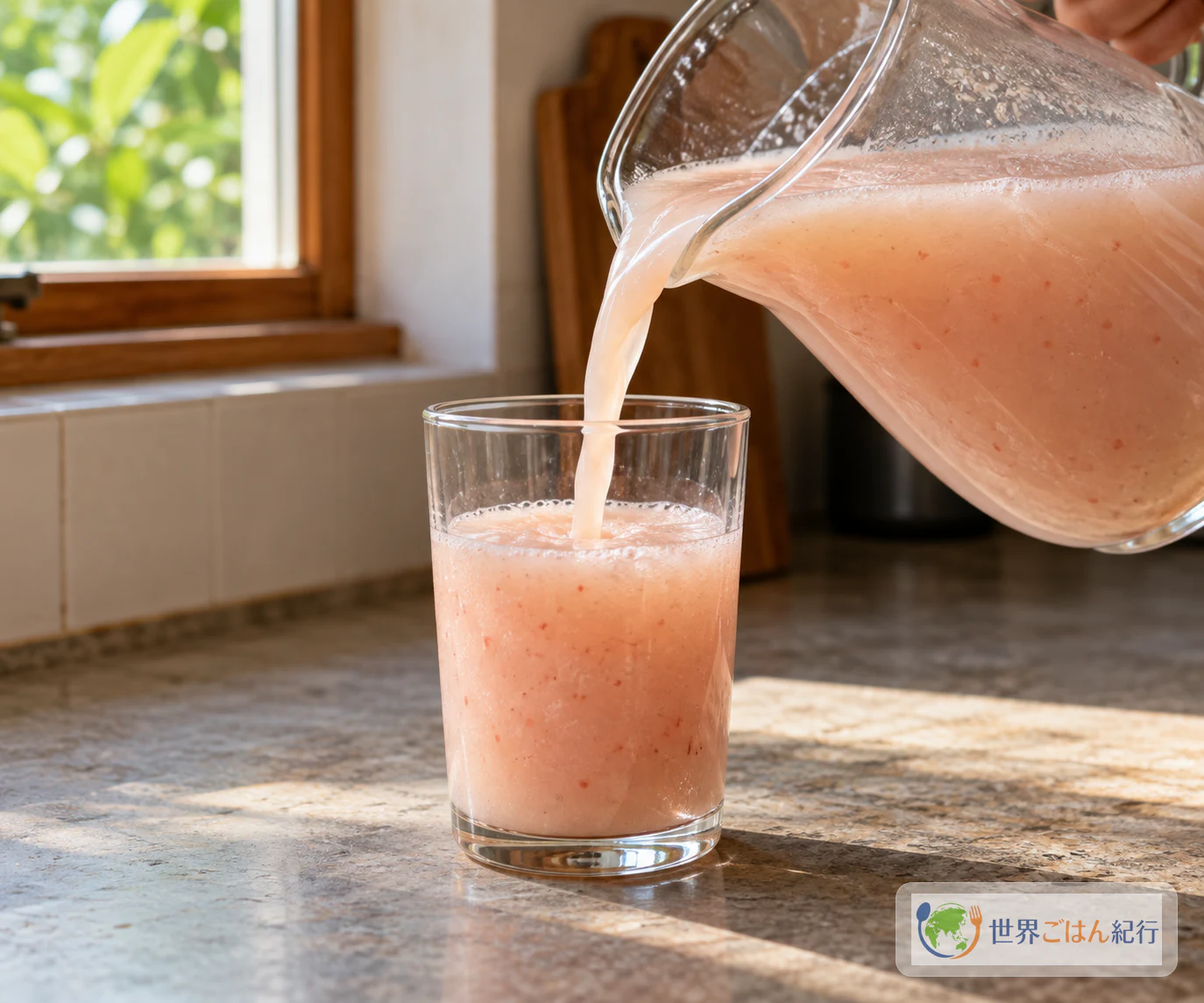
Pulque: A Living Drink in the Glass
Pulque is a fermented drink made from aguamiel, the sap of the maguey. The recipe here does not ferment anything. It flavors pulque that has already been made, using guava, following a regional Hñähñu recipe.
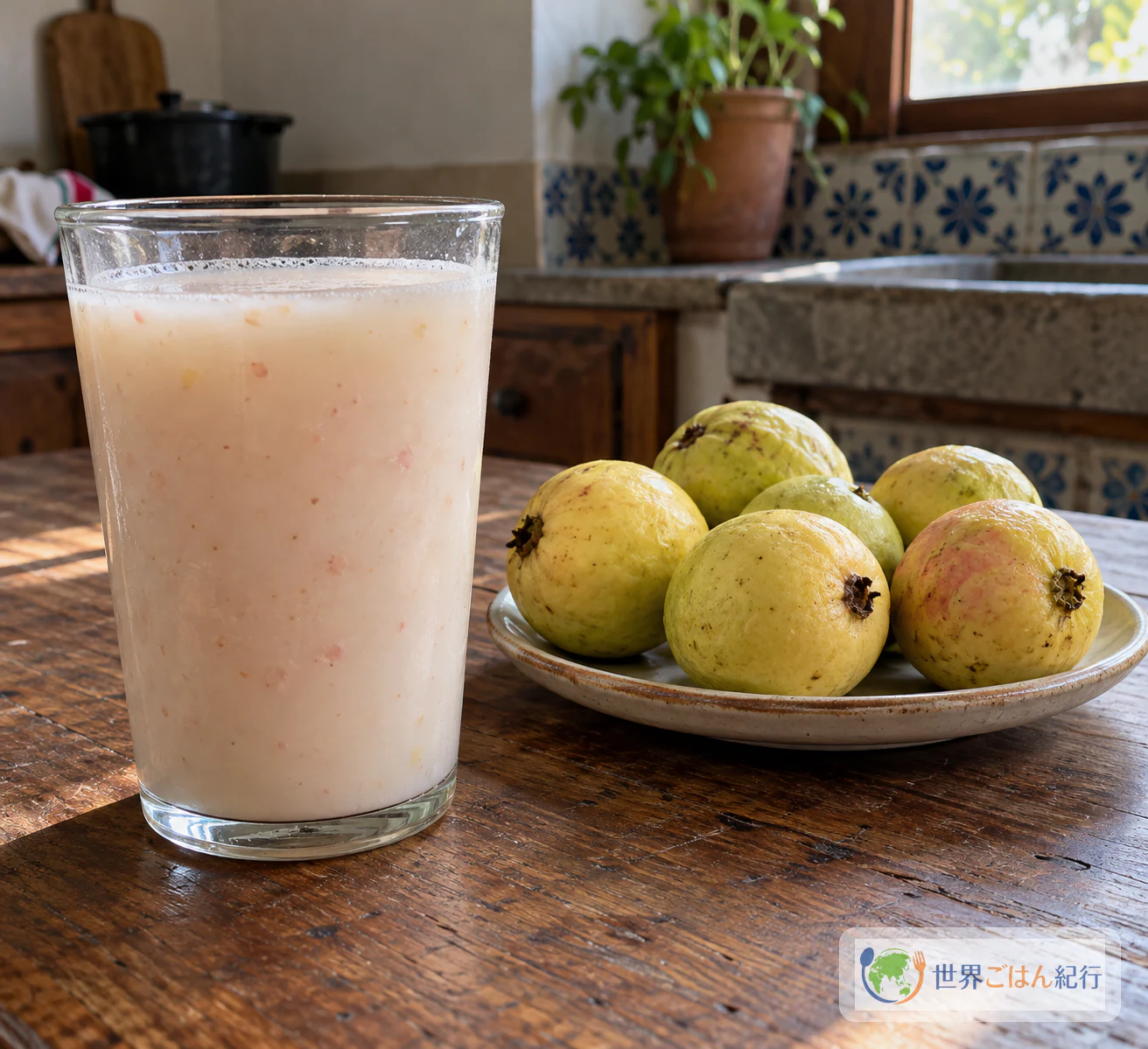
A glass of pulque is white and opaque, and it can be drunk as it is, natural, or as a curado, mixed with fruit or other flavorings. The short moment of pouring it hides a much longer story. Before any pulque reaches a glass, a maguey has to grow to maturity, its sap has to be collected by hand, and that sap, called aguamiel, has to be fermented by people who know how to manage it.
This article follows that path backward from the glass to the plant. It explains what pulque is and is not, where it comes from, and how natural pulque and curado differ. It then gives one specific recipe: the guava pulque curado (pulque curado de guayaba) recorded from Cirilo Mejía of El Sitio, Santiago de Anaya, in a Hñähñu cookbook published by Mexico's Secretaría de Cultura. It is a recipe of only two ingredients, and one of them, pulque itself, is something you have to obtain rather than make.
- Pulque: the fermented drink made from aguamiel.
- Aguamiel: the fresh sap collected from the maguey.
- Maguey / maguey pulquero: the agave plants from which aguamiel is taken.
- Tlachiquero: the person who collects the sap.
- Acocote: the traditional gourd tool used to draw the sap.
- Curado: pulque mixed with fruit or other flavorings.
Pulque Is Made From Aguamiel, Not Distilled From Agave
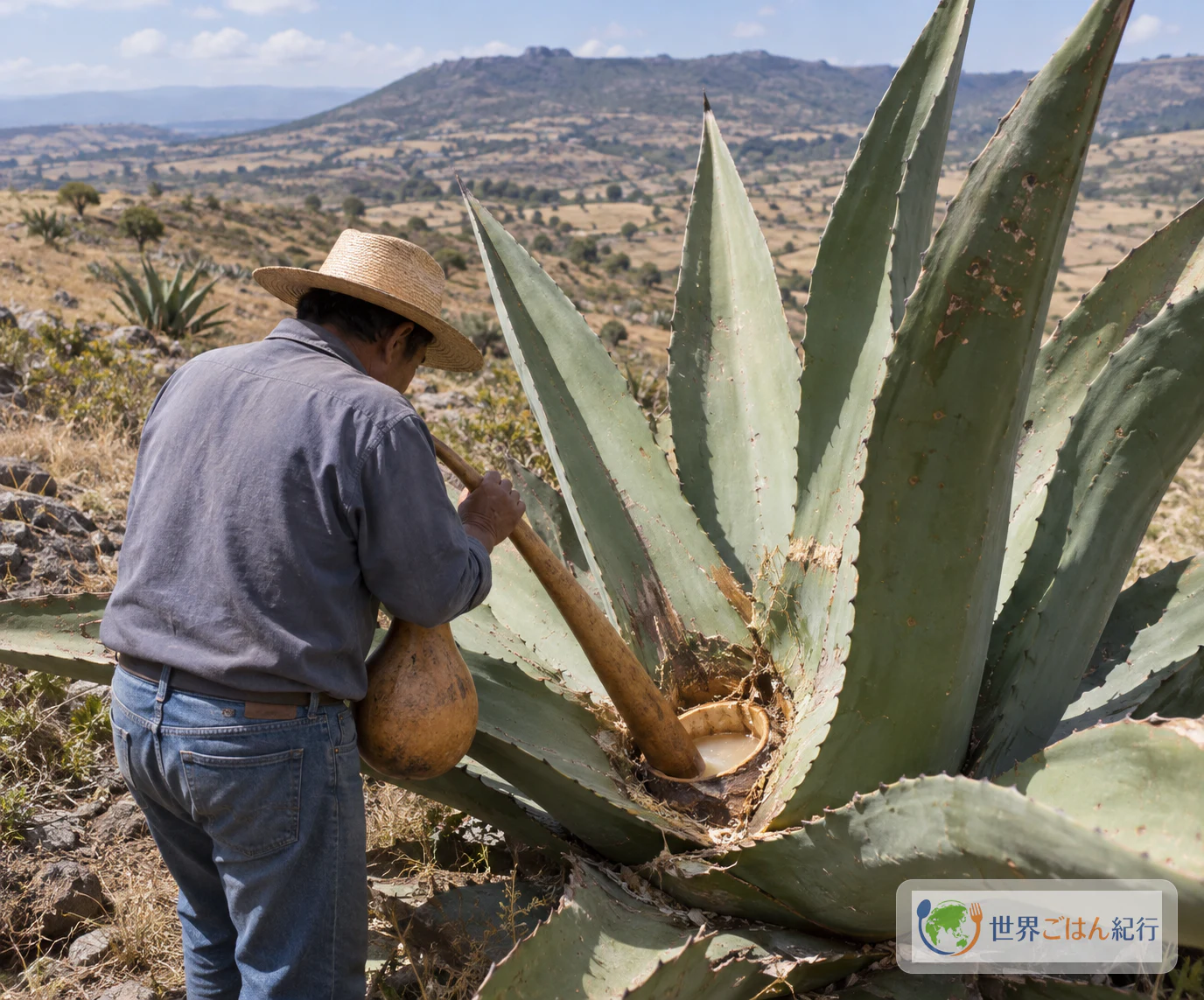
Pulque is a fermented alcoholic beverage, not a distilled spirit. A review of pulque's history, microbiology and production in Frontiers in Microbiology describes it as made from aguamiel collected from the pulquero maguey, and Mexico's Sistema de Información Cultural likewise describes aguamiel being collected from the maguey and fermented into pulque. Tequila and mezcal are distilled agave spirits, and agave syrup is a sweetener; none of them is pulque, and aguamiel is not the same thing as agave syrup.
The work begins long before fermentation. The same review describes aguamiel collection and fermentation as skilled, ongoing processes: a tlachiquero collects the sap with an acocote, and fermentation takes place in vats, with production practices that vary. In the community of Rancho Nuevo in Hidalgo, people interviewed by the state's Secretaría de Cultura said a maguey takes about 12 years to mature and, once it has been rasped, produces sap for roughly 2 to 3 months depending on its size. They described mixing aguamiel with pie de pulque, a starter, and keeping it in a shaded, ventilated place. That is an account of one community's practice, not a home method, and this article does not give one.
A Drink Tied to the Maguey Landscape of Central Mexico
In Rancho Nuevo, pulque is described as a community drink, and the knowledge of growing maguey and extracting its sap is passed from one generation to the next. Mexico City's cultural heritage repository describes the pulque-making process in similar terms, as intergenerational knowledge of maguey management and aguamiel fermentation. On 3 October 2024, Mexico City declared this practice intangible cultural heritage, and the declaration names producing communities in several of the city's boroughs.
The history reaches further back, but it needs careful handling. The Sistema de Información Cultural page on maguey and pulque describes the plant's many uses and quotes historical references to pulque offerings. It also preserves hostile descriptions of pulquerías written by colonial-era chroniclers. Those passages tell us how certain writers viewed pulque and the places where it was drunk; they are not neutral observations. Likewise, recognizing pulque-making as living heritage does not mean every modern practice is unchanged from antiquity.
For more dishes from the country, see Mexican recipes.
Natural Pulque and Curado: Two Ways to Drink It
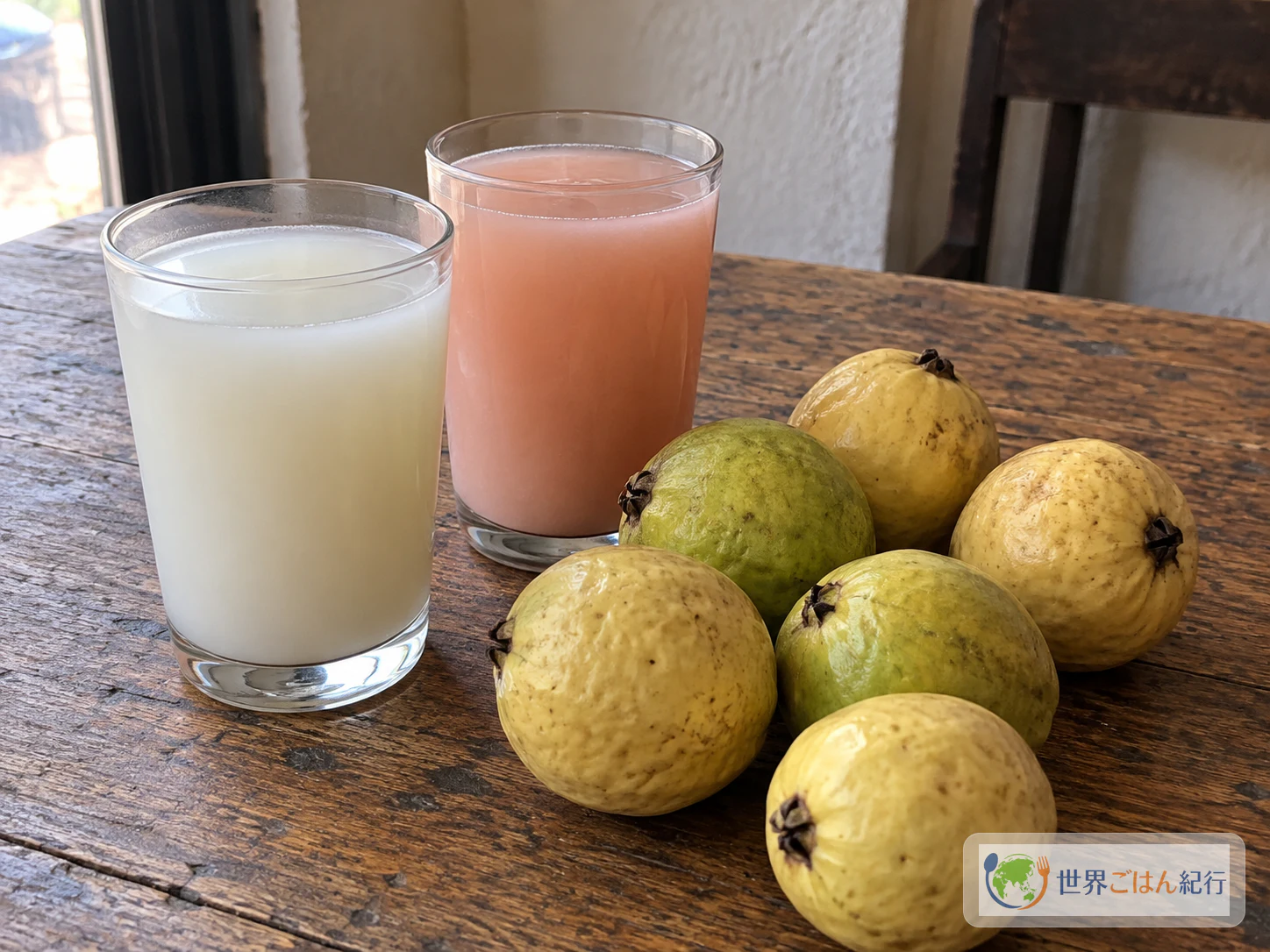
Pulque can be drunk natural, without anything added, or as a curado. The Frontiers in Microbiology review describes curado as pulque mixed with fruit, vegetables, nuts or spices. A curado is made by mixing flavorings into pulque that has already fermented; it is not a separate fermentation stage.
There is no single national curado recipe. The Hñähñu cookbook, which collects recipes from the Mezquital region, records several pulque recipes from different cooks, and they differ from one another. Cirilo Mejía's guava curado is notably simple: guava and pulque, nothing else. Other recipes in the same collection use other fruits, different quantities, or added ingredients such as dairy and cinnamon. Each is its own recipe, and they are not combined here.
Sekai Gohan has not kitchen-tested this recipe as a whole.
Ingredients
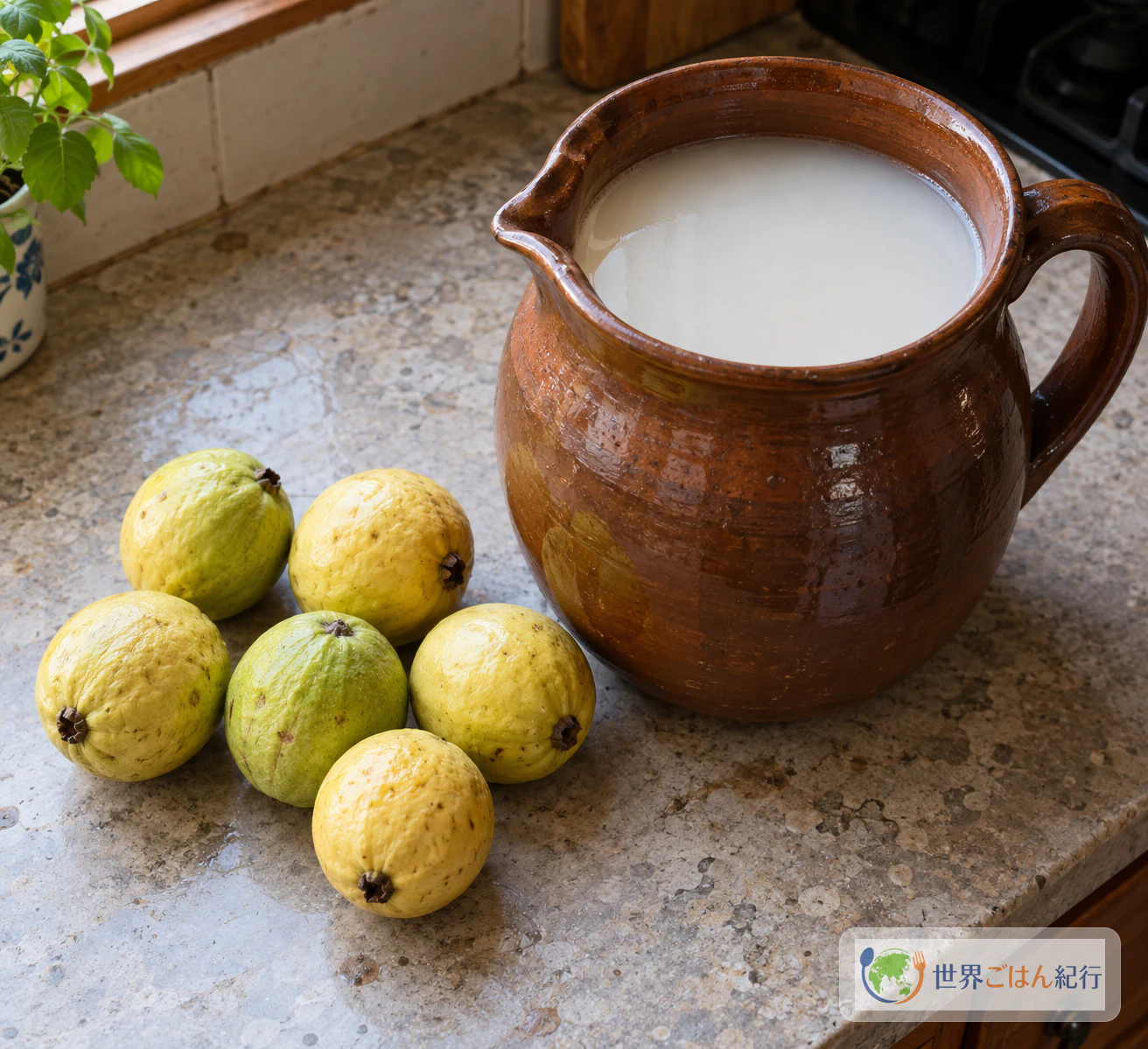
Use pulque that has already been made and sold as pulque. This recipe does not make the fermented base.
Pulque contains alcohol, and the amount varies by producer and batch. This drink is not suitable for children, during pregnancy, or for anyone who should avoid alcohol. Follow the handling instructions on the pulque you buy.
Equipment
- Blender
- Fine strainer
- Bowl to strain into
- Large vessel holding the remaining pulque
- Spoon or spatula for stirring
- Glasses for serving
Choosing Guava and Pulque, and What Not to Substitute
Pulque is the ingredient that decides whether you can make this recipe. Guavas, a blender and a strainer are ordinary, but authentic, ready-made pulque may be hard or impossible to find outside Mexico. We have not confirmed a reliable retail or import source for it, including in Japan, so we cannot point you to a supplier or product. If you find a packaged product, check that its label actually says pulque.
Do not replace pulque with tequila or mezcal, which are distilled spirits. Agave syrup is a sweetener, not aguamiel. Other fermented drinks such as kombucha or sour beer are not pulque either. Any of these would make a different drink, and it should not be called pulque curado. If you cannot get pulque, this recipe is best read as a record of a regional drink rather than something to recreate at home.
Do not add sugar, milk, cinnamon, mint, ice or garnish to this recipe. Those belong to other recipes or are not part of this one.
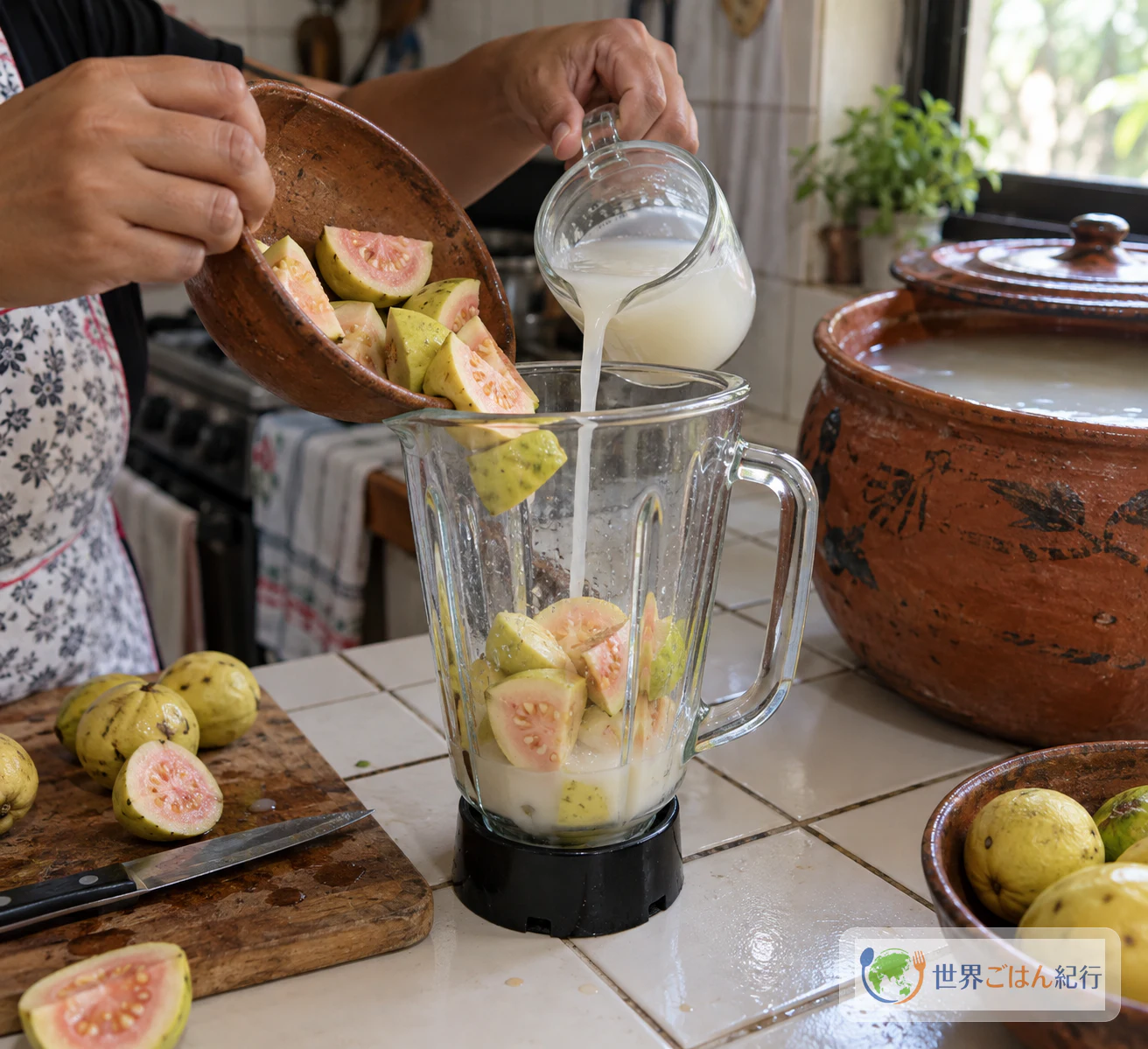
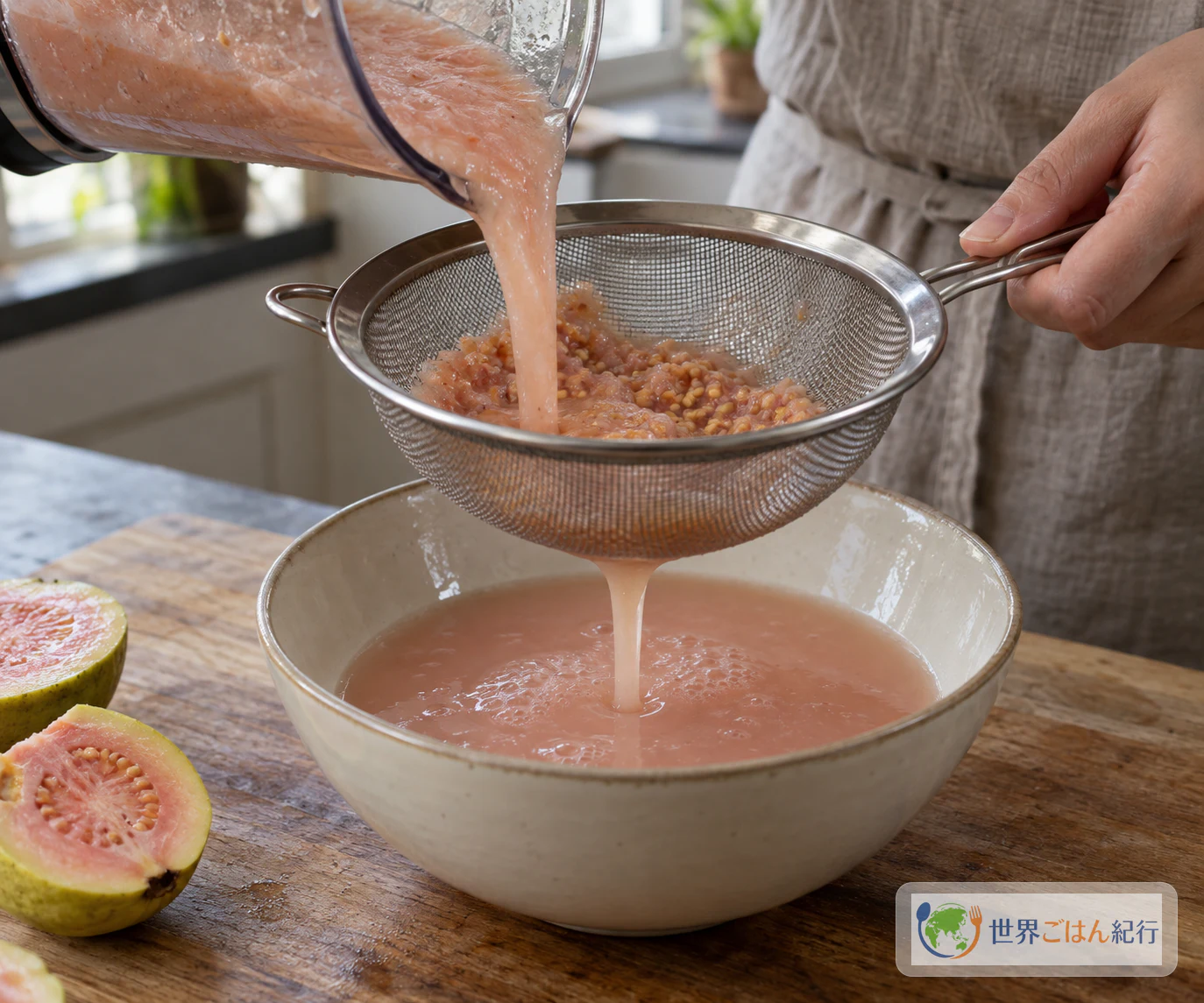
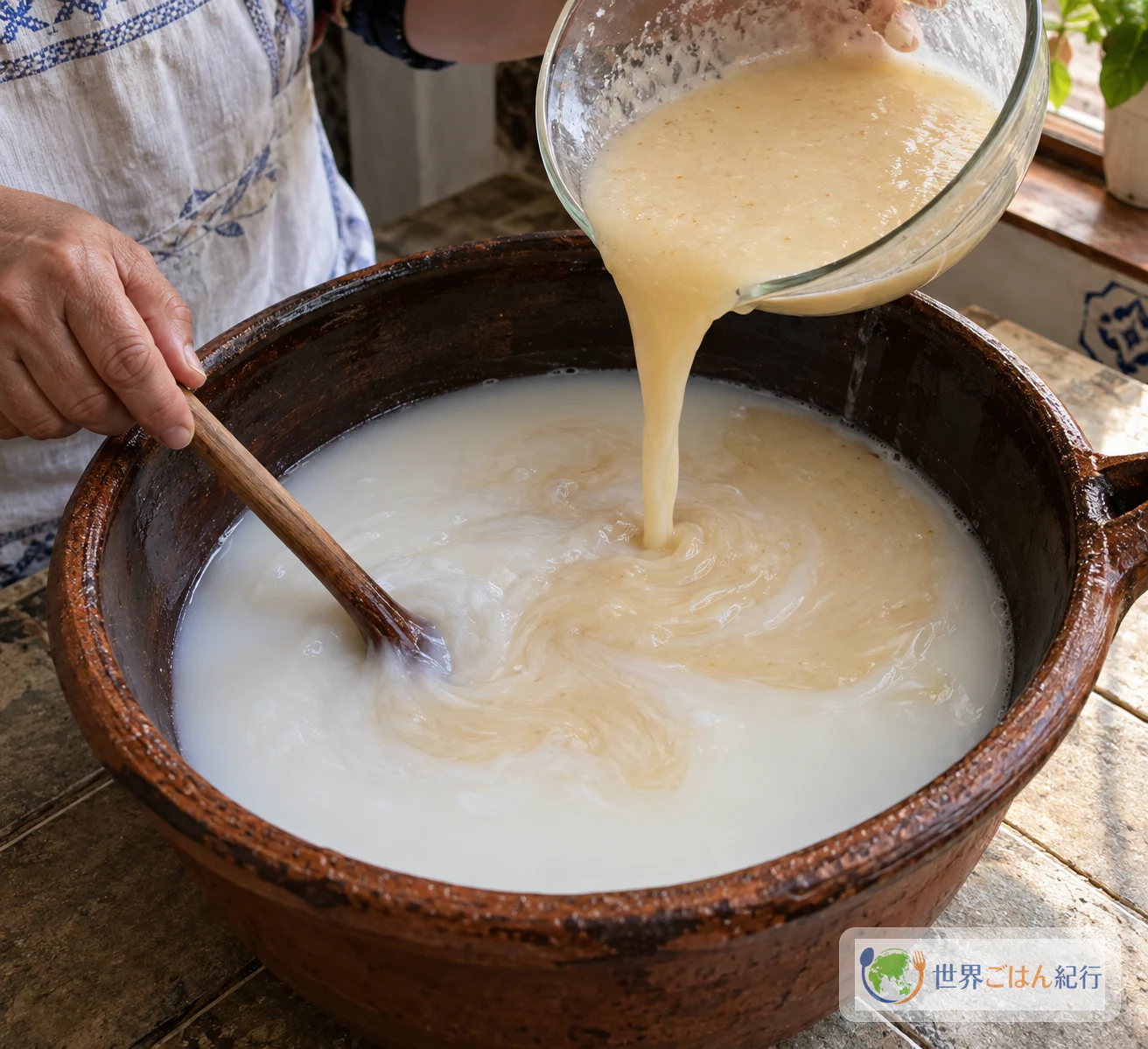
Method: Blend, Strain, Combine
There is no heating, cooling or waiting in this recipe. Keep most of the pulque in its vessel and take out only a little for the blender.
Troubleshooting
| Situation | What to do |
|---|---|
| You cannot find pulque | Do not substitute another drink. Without pulque, this recipe cannot be made as written. |
| The pulque you bought has handling instructions | Follow the label. Do not apply storage times from elsewhere. |
Variations: Separate Recipes, Not Add-ins
These are other ways pulque is drunk. They are not tested substitutions for the guava recipe above.
- Natural pulque: pulque drunk as it is, with nothing mixed in.
- Guava curado from El Sitio, Santiago de Anaya: the recipe in this article.
- Strawberry pulque: a different recipe in the same Hñähñu collection, which includes a dairy ingredient.
- Pineapple pulque: another recipe in the same collection, with its own quantities.
- Mora curado: a separate recipe in the Hñähñu cookbook, with dairy and cinnamon.
Mexico has other traditional drinks, too. Champurrado, for example, is a hot corn and cacao drink, entirely different from fermented pulque.
Frequently Asked Questions
Is pulque a kind of tequila?
No. Pulque is fermented aguamiel and is not distilled. Tequila and mezcal are distilled agave spirits.
Can I ferment pulque at home?
This article does not give a home fermentation method. The sources describe producer-managed collection, starters and vats, with practices that vary, and none of them offers a tested home protocol. Pulque-making depends on mature maguey, fresh aguamiel and the knowledge of producing communities.
What exactly is a curado?
A curado is pulque that has already fermented, mixed with fruit, vegetables, nuts or spices, as described in the Frontiers in Microbiology review. Adding guava in this recipe flavors the pulque; it does not start a new fermentation.
How much pulque goes into the blender?
The recipe says only "a little" and gives no exact amount. Use a small portion and keep the rest of the 5 L aside for step 3.
How many servings does this make?
The recipe does not state a yield, a serving count or the weight of the guavas, so none is given here. The ingredients are 6 guavas and 5 L of pulque; the finished volume is not stated.
How alcoholic is it?
It varies. The Frontiers in Microbiology review cites a 1972 Mexican standard that gives bulk pulque alcohol ranges of 4–9% depending on category, and notes that producers assess fermentation differently. Those are category ranges, not the strength of any particular batch or glass.
How long does it keep?
The recipe and sources used here do not establish a storage time. Follow the handling instructions on the pulque you buy.
Is pulque good for your health?
This article makes no health, probiotic or nutritional claims. Pulque is an alcoholic drink.
Sources
- Dirección General de Culturas Populares, Indígenas y Urbanas, Secretaría de Cultura (Mexico), "Recetario Hñähñu: Pulque curado de guayaba." The guava curado recipe of Cirilo Mejía, El Sitio, Santiago de Anaya: six guavas and five litres of pulque; blend the guavas with a little pulque, strain, and add to the remaining pulque. Also the separate strawberry, pineapple and mora recipes in the same collection. https://www.culturaspopulareseindigenas.gob.mx/pdf/2020/recetarios/Recetario%20H%C3%B1%C3%A4h%C3%B1u.pdf
- Secretaría de Cultura del Estado de Hidalgo, "Pulque – Memoria de Hidalgo." Testimony from Rancho Nuevo on pulque as a community drink, knowledge passed across generations, maguey maturity of about 12 years, roughly 2–3 months of production after rasping, and the local practice of mixing aguamiel with pie de pulque. https://memoria.culturahidalgo.gob.mx/sabores-de-hidalgo/pulque/
- "Pulque, a Traditional Mexican Alcoholic Fermented Beverage: Historical, Microbiological, and Technical Aspects," Frontiers in Microbiology, 2016. Pulque as fermented aguamiel; the tlachiquero, acocote and vats; variable production practices; the 1972 standard's alcohol ranges by category; natural pulque and curado. https://www.frontiersin.org/journals/microbiology/articles/10.3389/fmicb.2016.01026/full
- Secretaría de Cultura de la Ciudad de México, Repositorio de Patrimonio Cultural, "Proceso de elaboración del pulque." Intergenerational knowledge of maguey management and aguamiel fermentation; declaration as intangible cultural heritage on 3 October 2024; producing communities in several boroughs. https://repospatrimonio.cultura.cdmx.gob.mx/declaratorias-de-patrimonio-cdmx/proceso-de-elaboracion-del-pulque/?order=ASC&orderby=date&perpage=12&pos=1&source_entity_id=268&source_list=term
- Sistema de Información Cultural, Secretaría de Cultura (Mexico), "El maguey y el pulque." Aguamiel collected from the pulquero maguey and fermented into pulque; the uses of maguey; historical references to pulque offerings and attributed colonial-era descriptions of pulquerías. https://sic.cultura.gob.mx/ficha.php?disciplina=&table=gastronomia&table_id=53