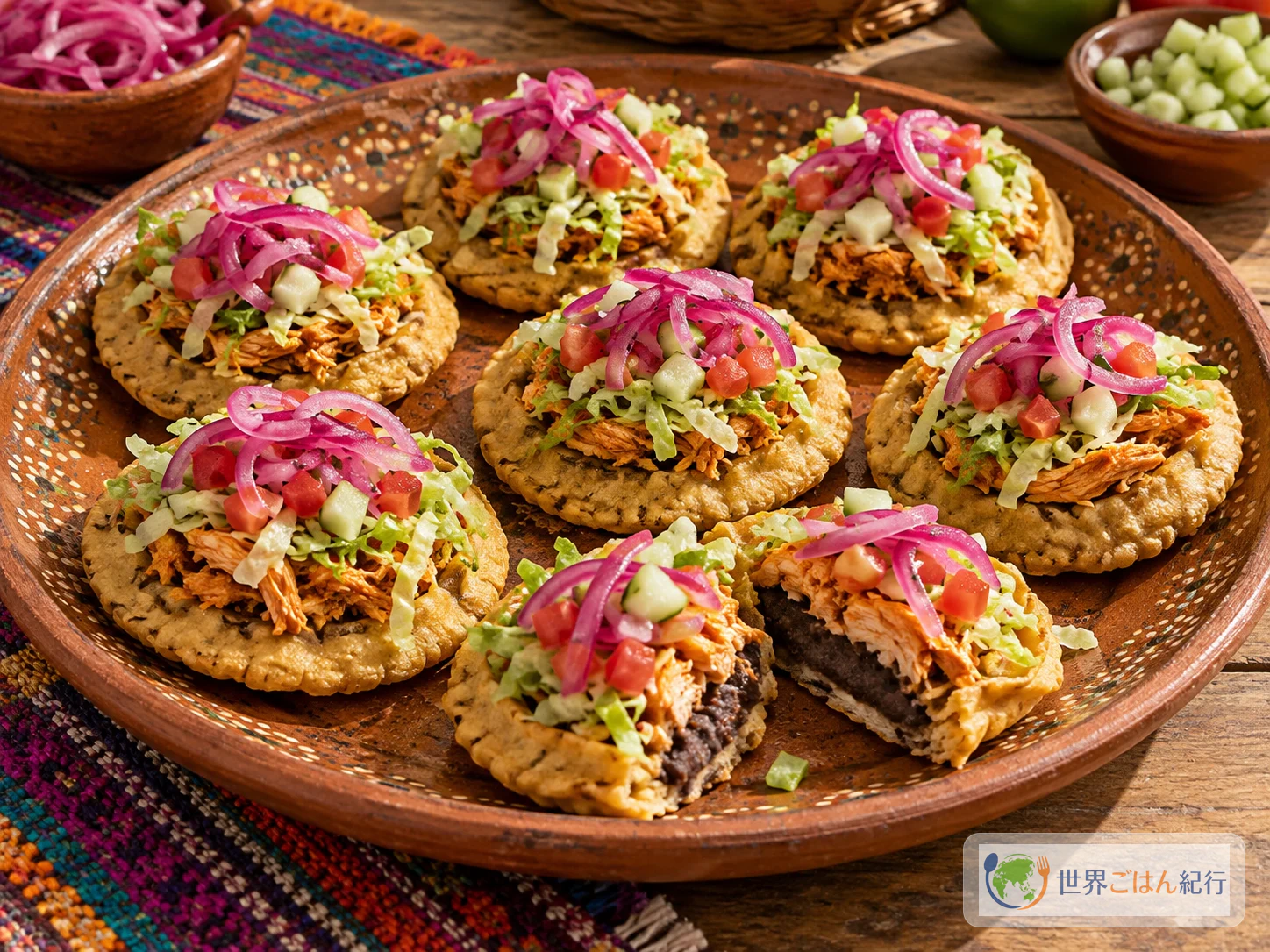
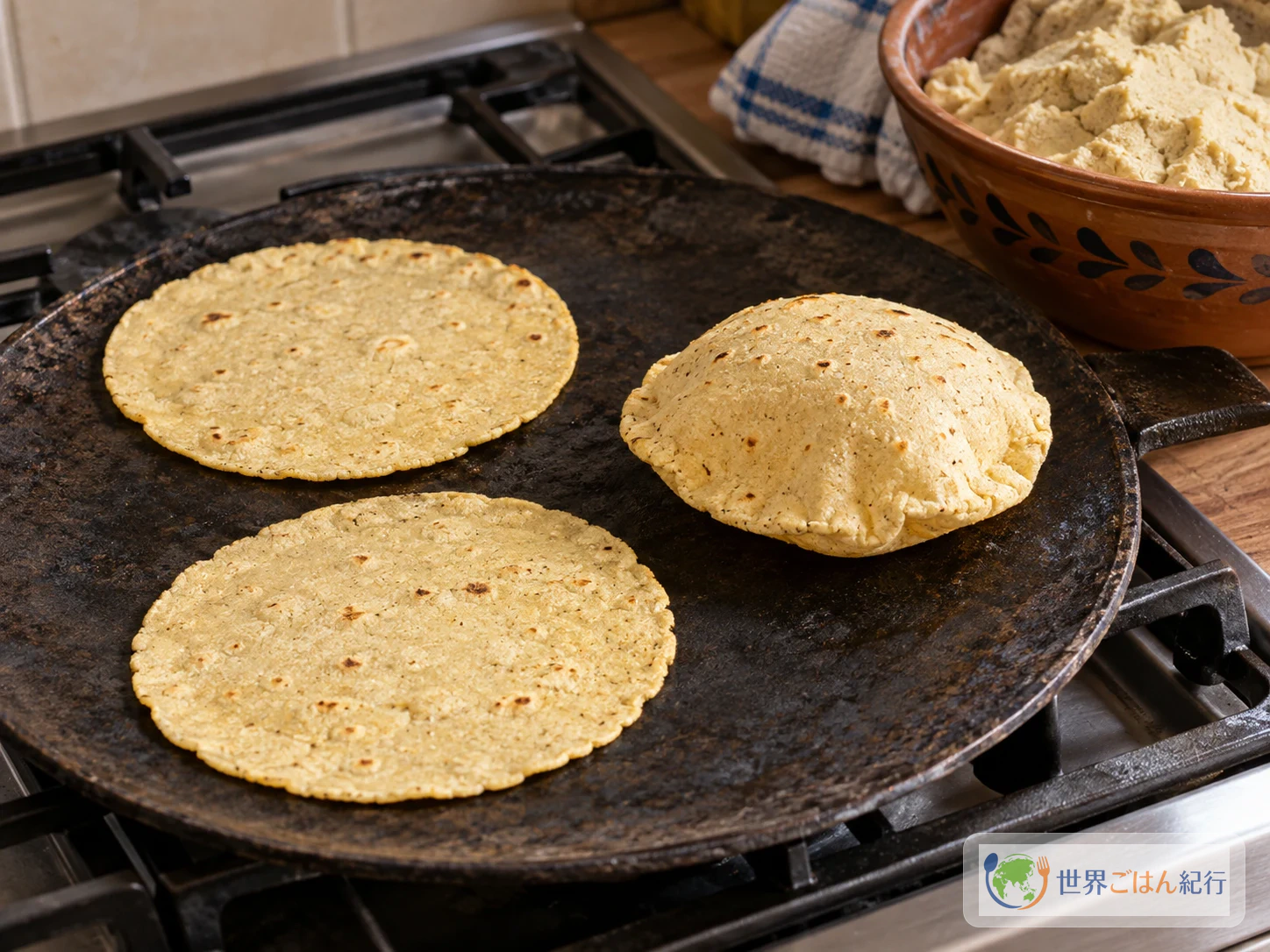
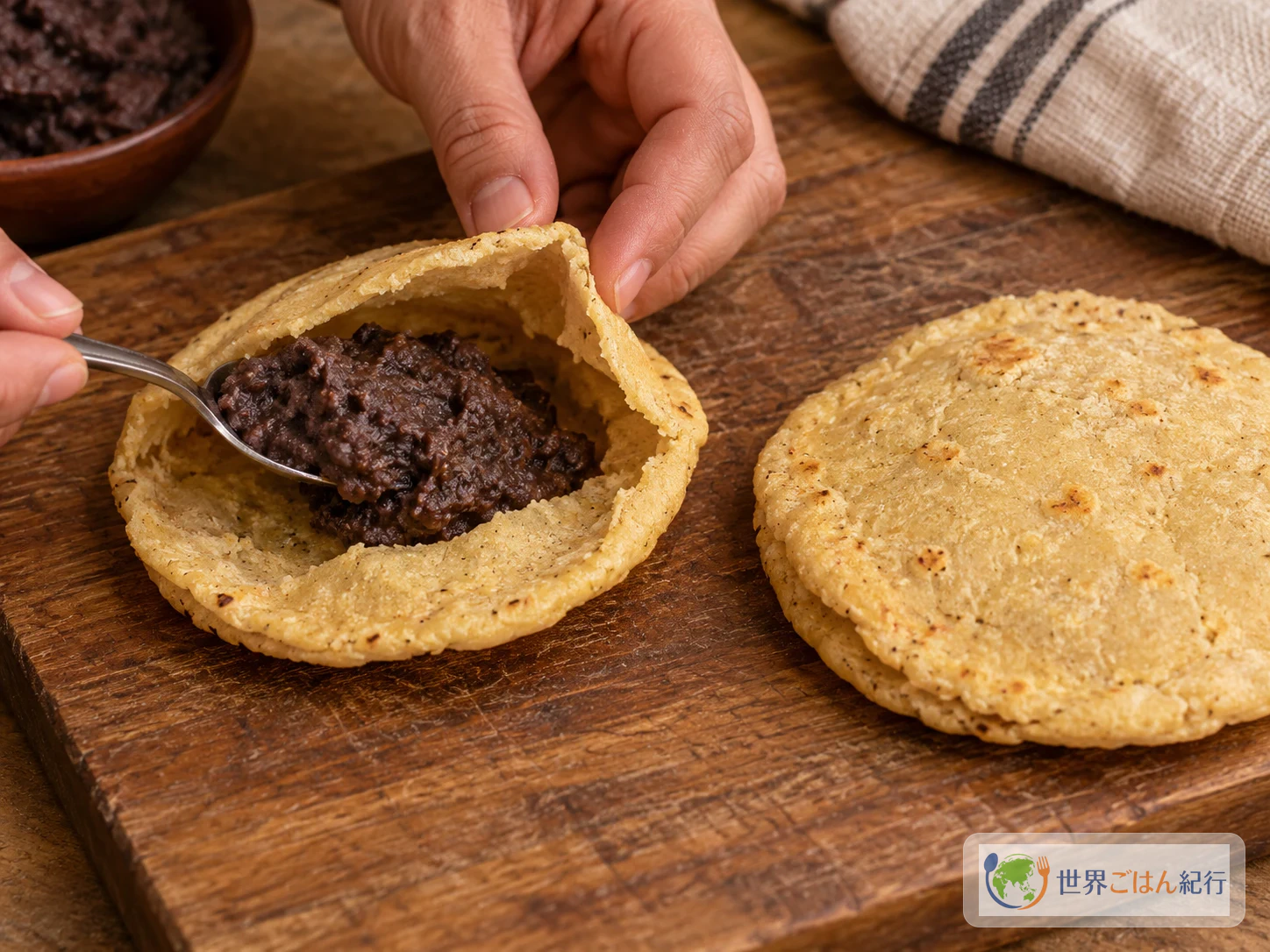
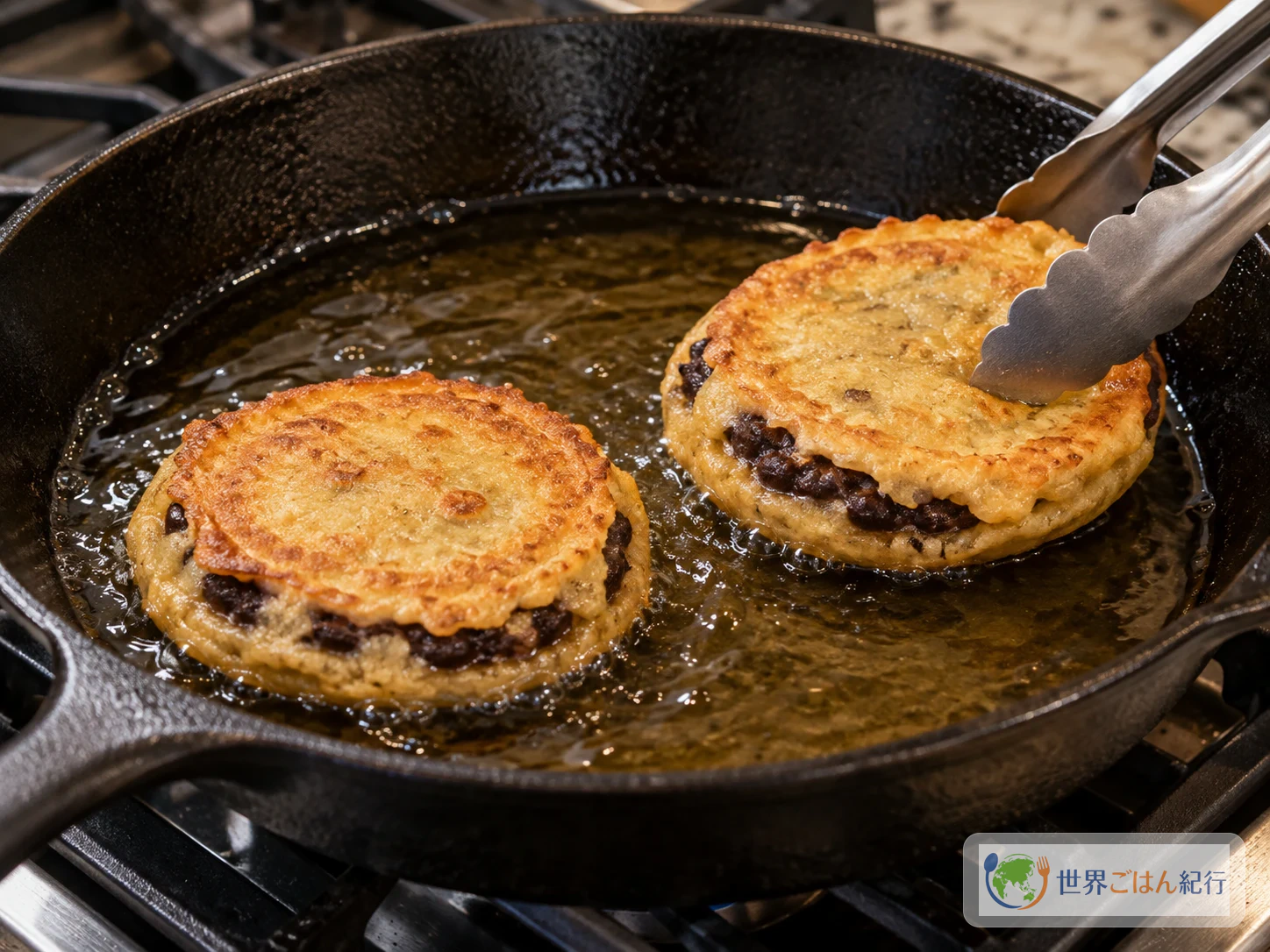
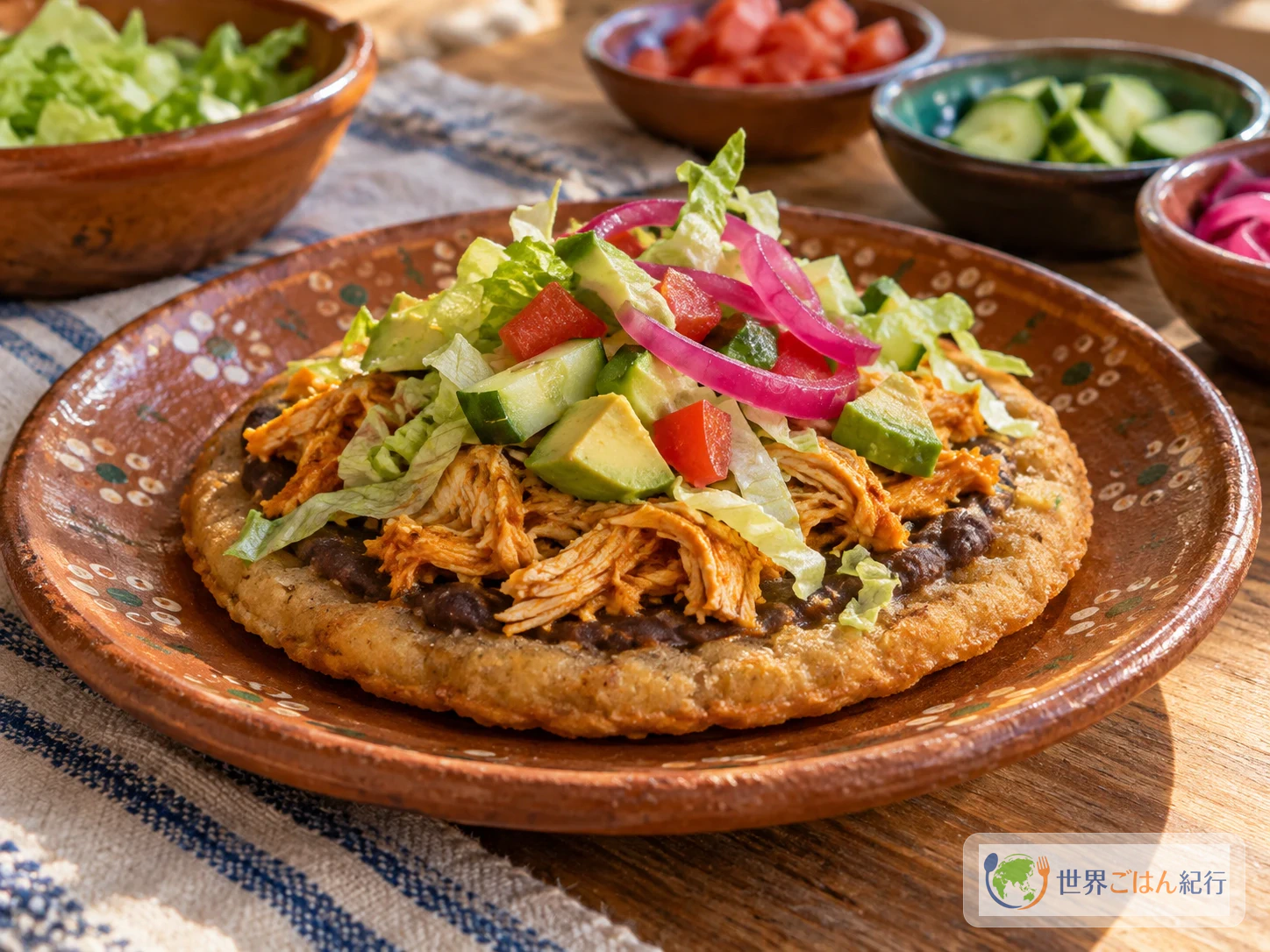
Morning in Mérida, at the market or a no-frills lunch counter. A small corn tortilla puffs up on the griddle, a thin layer lifts away from the rest, and a spoonful of black bean paste slides inside. The beans are not spread on top but tucked inside, and that is the whole gesture of panuchos (singular: panucho). The tortilla slips into the oil with a sizzle, and once it comes out, meat, vegetables, and red onion pile on top. The Yucatán state tourism board lists them among the dishes you find at market stalls, casual eateries, and restaurants. This is an ordinary breakfast plate.
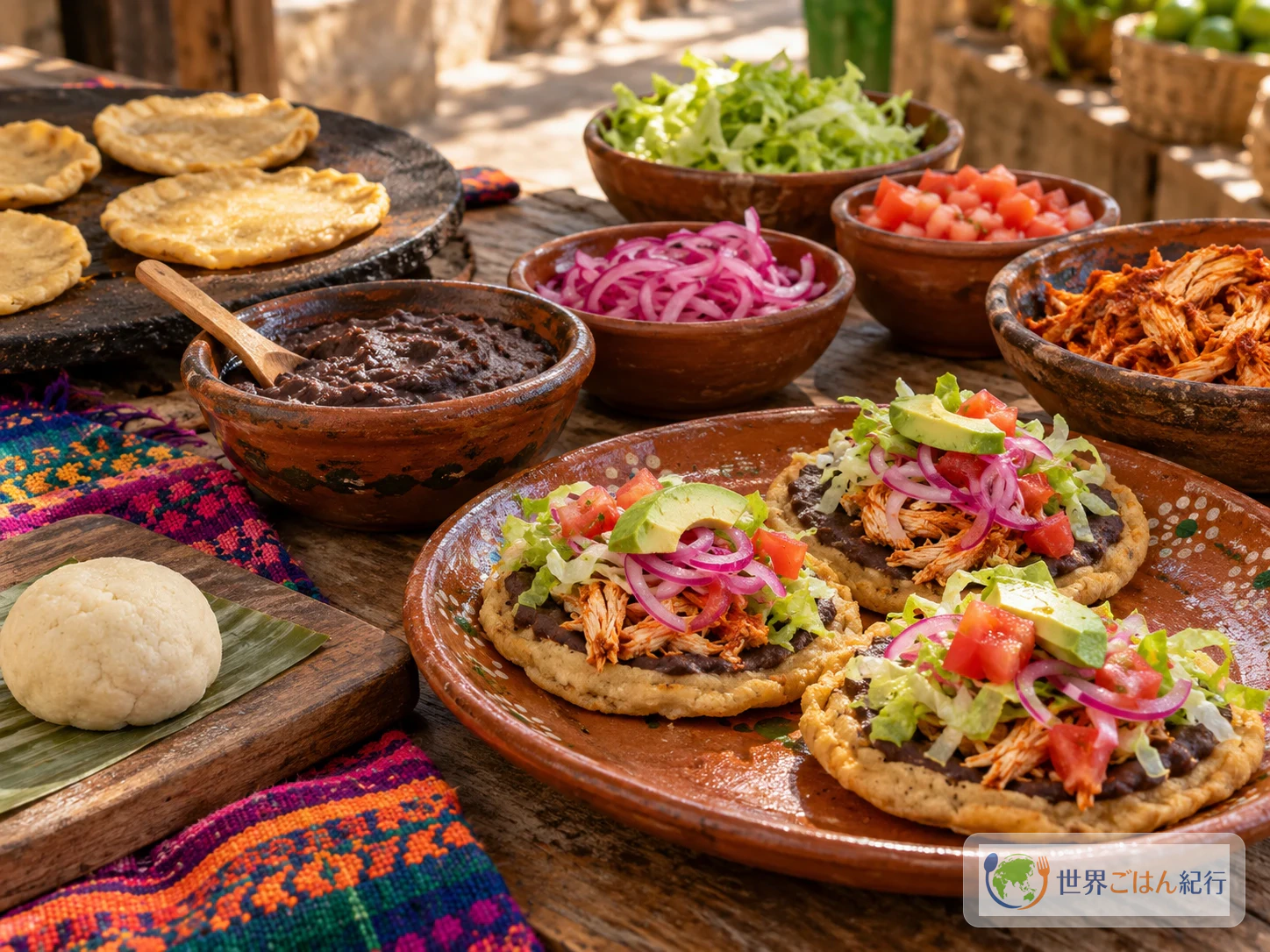
Bite in, and the outside is toasty while the inside gives way to rich black bean paste. On top sit achiote-style chicken, lettuce, tomato, avocado, and red onion. The tang of the red onion cuts through the weight of fried dough and beans, so the last bite is as light as the first. The sources confirm chicken or turkey as the meat; the vegetables are the part a home cook can rearrange, so treat the two separately. Three things trip people up the first time: the type of flour, the thickness of the bean paste, and opening the thin layer of the cooked tortilla without tearing it.
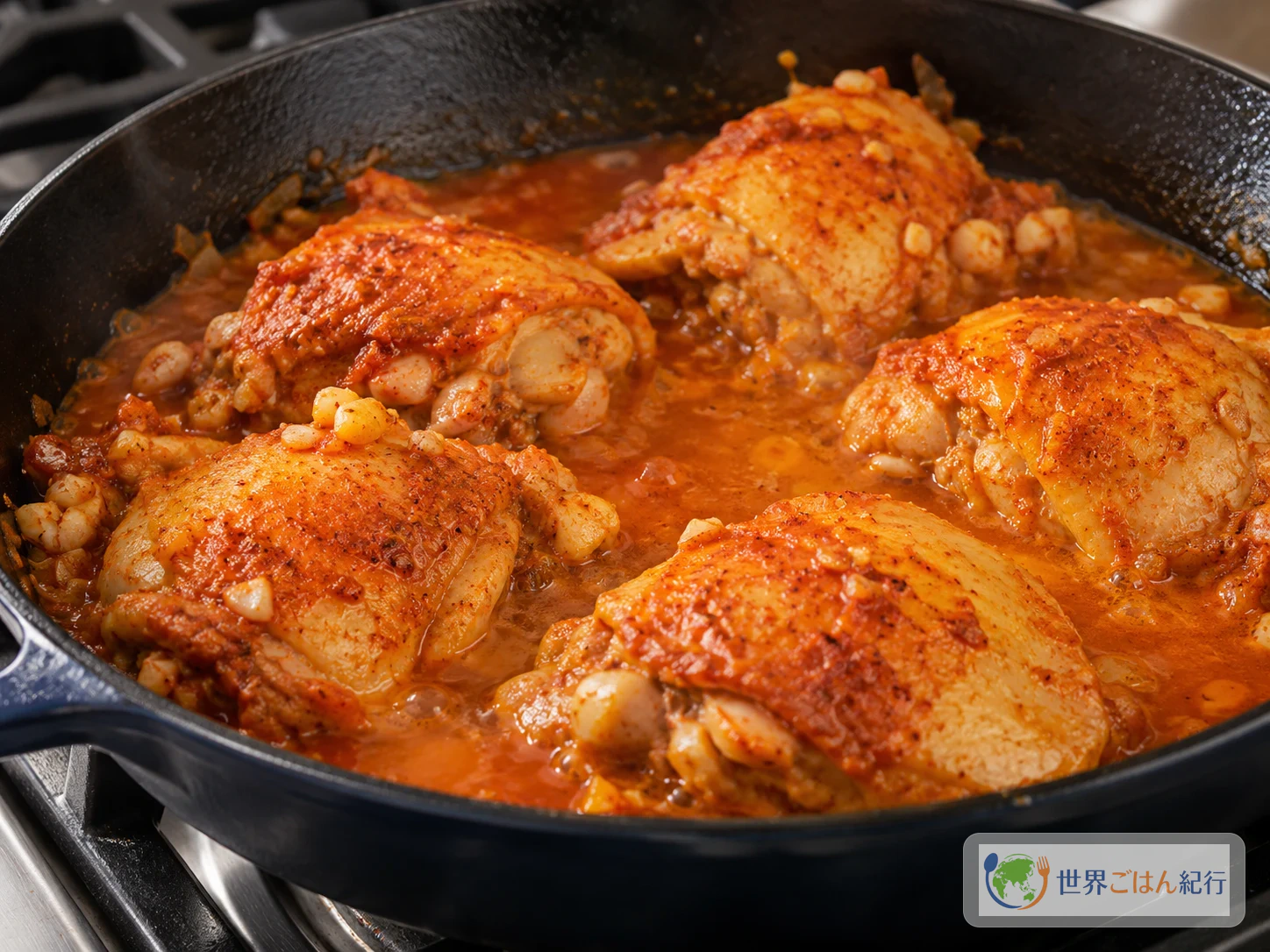
This home version makes 8 panuchos for 4 people. It uses masa harina instead of fresh masa, and replaces sour orange with orange and lime juice. Boneless chicken thighs are marinated with achiote, cumin, oregano, and citrus, then cooked in a home skillet to at least 74°C at the center and shredded. A tortilla press is not required; a sturdy bag and a flat-bottomed dish will do. The quantities here are our own adaptation, rescaled to 4 servings from the home-style formulas we consulted. They are not the one traditional formula.
Beans Tucked Inside the Tortilla, Yucatán Morning Style
Yucatecan cooking rests on the corn of the Maya. Mexico's Secretaría de Cultura and the Yucatán state government explain that encounters with Spain, the Caribbean, and other parts of Europe added layer upon layer of ingredients and flavors. Red onion, sharp citrus, achiote, habanero: flavors that are crisp rather than just sweet. Different eras of flavor are layered around corn, and panuchos stack corn, beans, meat, acidity, and heat on a single plate.
A similarly named dish is the salbute. For panuchos, the top layer of a puffed, griddled tortilla is opened, beans go inside, and then it is fried. Salbutes are described as fried dough with no filling (Yucatán Travel, Directo al Paladar México), so the beans inside are the big difference. Neither is the "correct" one. They are two different dishes with different textures, sold at the same eateries and markets.
The name panuchos is sometimes tied to a man called Don Hucho and an inn in Mérida. Food articles such as Directo al Paladar México retell this story, but it survives as legend, not as a documented origin. Rather than pinning down a single origin, it is more rewarding to look at how the dish is still eaten today in Yucatecan markets and casual eateries.
Mérida's casual eateries, market stalls, and restaurants all serve panuchos. The toppings vary by source: chicken, turkey, lettuce, tomato, avocado, cucumber, red onion, habanero (Yucatán Travel, Secretaría de Cultura, SIC). This recipe uses chicken and prepares the vegetables and the tangy red onion separately. Instead of fixing the meat and vegetables in one go, stack them at the table, so each person can build every panucho differently. In Yucatán they may come with fresh fruit water or habanero sauce, but that is no reason to make the heat uniform for everyone.
Ingredients (serves 4, makes 8)
The tables are divided into five parts: black beans, tortilla dough, chicken, red onion and toppings, and frying oil. Two things should not be swapped. Masa harina for the flour, achiote for the color and aroma. Masa harina is not the same as ordinary cornmeal, cornstarch, or wheat flour; it is the dedicated flour that carries the corn aroma and lets the dough hold its shape. Achiote (annatto) carries an earthy aroma as well as color, so red food coloring will not give the same flavor. Look for masa harina and achiote at Latin American grocers or online.
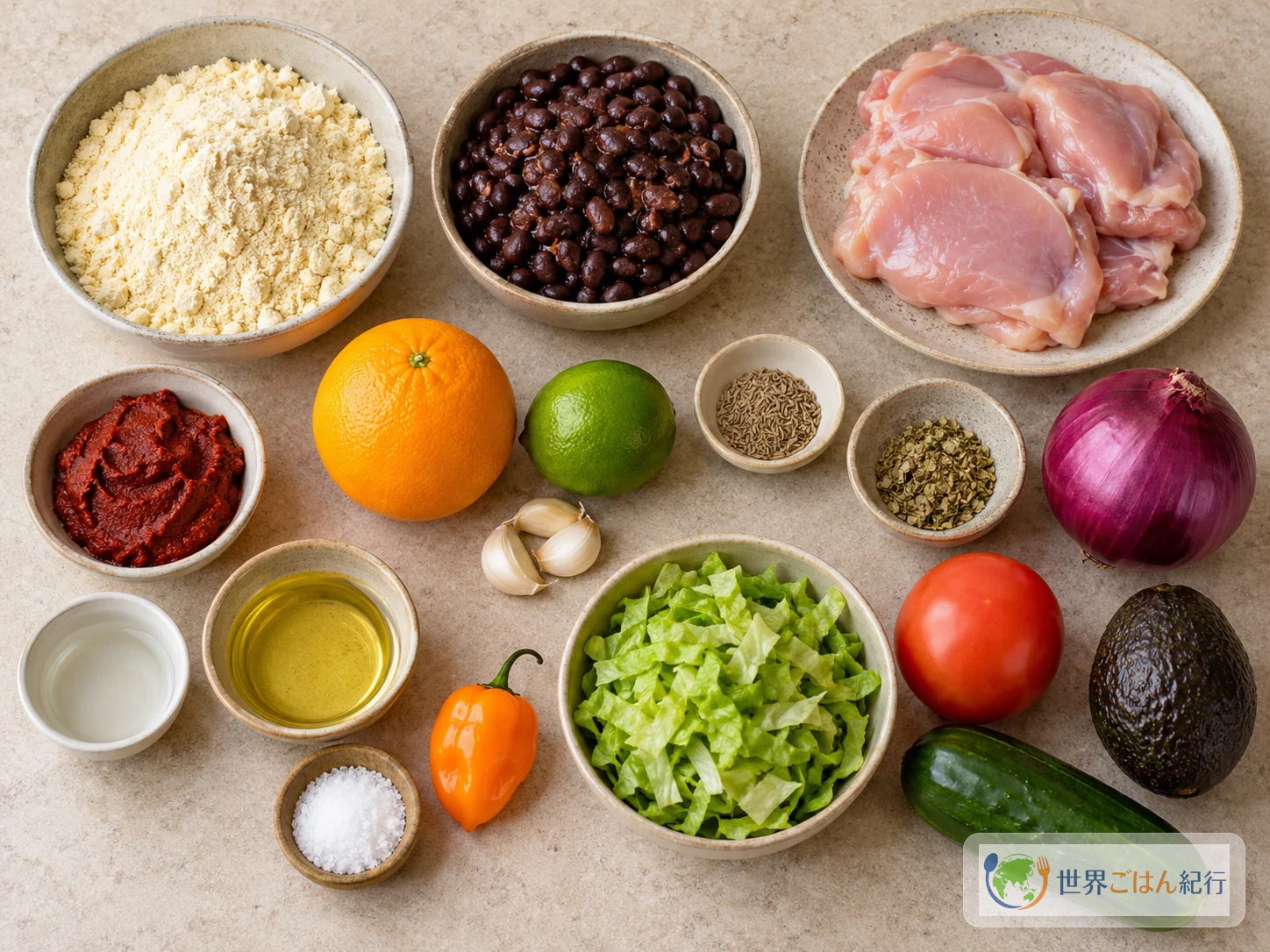
Buy masa harina first. It directly affects how the tortilla holds together, so it is worth getting even for a first attempt, rather than making do with ordinary cornmeal. Achiote is not essential if you only want the color. But if you want the chicken to take on that Yucatecan red-orange and earthy aroma, put it on the list. A tortilla press is not required: for only 8, cut open a sturdy storage bag and press with a flat-bottomed pan or plate. Not finding fresh masa, sour orange, or turkey does not take away the heart of the dish; use the substitutes in the table. Buy the special flour, and do not rush to buy the special tool. That is the order for gathering ingredients.
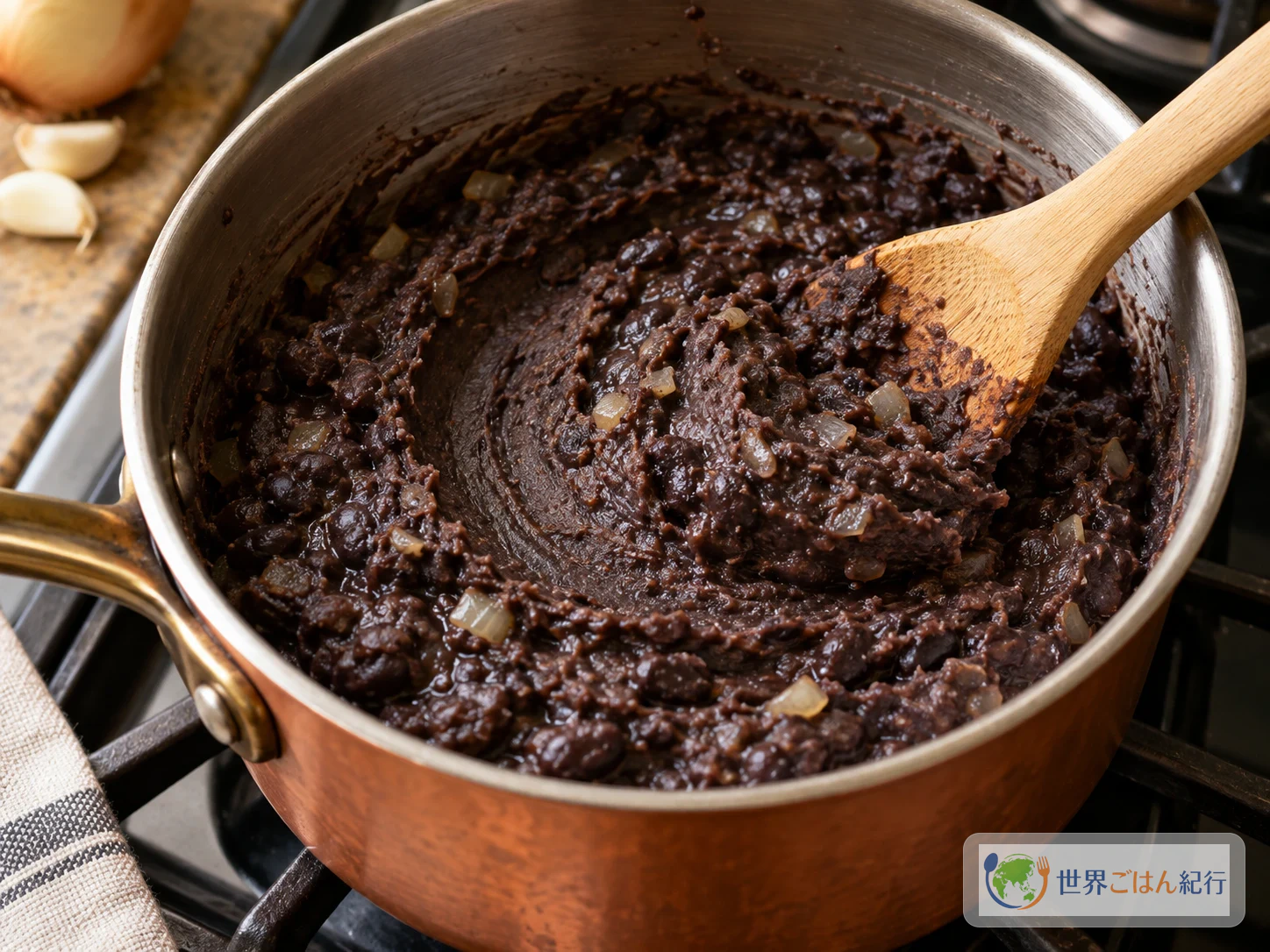
Black bean paste can be made from canned beans. Choose plain, salted cooking beans, not sweetened ones, and drain them before use.
This dish uses corn, beans, chicken, citrus, and spices. Check labels for allergens and shared facilities on achiote paste, canned goods, vinegar, and frying oil. Confirm that the chicken reaches at least 74°C at the center, and do not reuse the knife, cutting board, or tongs from raw chicken on raw vegetables. Do not drop watery toppings into the frying oil, and lower the tortillas in gently. If oil spatters, never throw water on it. Do not touch your eyes or face after handling habanero, and keep the pickle and sauce separate for anyone who dislikes heat.
Directions
Finish the chicken, beans, and red onion first; griddle, stuff, and fry the tortillas just before eating. If the bean paste is too hot, the inside of the dough turns damp, and if the chicken or pickles are too wet, the frying oil spatters. So handle temperature and moisture step by step. Cool the fillings, and fry the dough last. Keep that order in mind and follow the timing, color, thickness, and puffing cues in each step.
Wash utensils that touched raw chicken before using them on vegetables. Also avoid pouring chicken juices directly over raw vegetables. Do not drop watery tomato, pickles, or wet beans into the frying oil. Shake off surface liquid from the toppings before piling them on. Panuchos hold their texture best right after frying, so do not store them with toppings on.
Bringing Panuchos to the Table
Here is how to carry a plate from a Mérida market or eatery into a home. Set out plates of lettuce, tomato, avocado, cucumber, red onion, and habanero beside the stack, and let everyone dress their own fresh panucho however they like. Do not fix a single plate; choose the toppings at the table. This is not about any particular restaurant. It is about bringing the way the dish has been eaten in daily life into your own kitchen. The meat may be turkey or chicken (Yucatán Travel, SIC, Secretaría de Cultura), so this chicken version is not the only right answer. In Yucatán they may come with fruit water or a separate habanero sauce, but you can adjust the heat and drinks at home as you like.
The name's origin survives only as legend, and no reliable account of its beginnings exists. So rather than deciding on one "authentic plate," it is safer to see it as a dish whose toppings and sides differ from eatery to eatery and home to home. The regional variation the sources can confirm goes only as far as how it sits next to salbutes and the range of toppings such as chicken or turkey. The stacking shown here is one example chosen from within that range.
Here is what stays and what changes when you cook it outside Mexico. Masa harina is the most practical choice when fresh masa is hard to find. But changing the flour changes both the puff and the aroma of the dough. In place of sour orange, use orange and lime juice. Orange supplies the round fruit note, lime the sharp acidity, so do not use lime alone or vinegar alone. With achiote paste you add color and aroma in one step. Red coloring, paprika alone, or chili powder alone will not give the same flavor. What you buy is flour and aroma; what you can skip is a special tool, and you do not need a tortilla press for a single batch. Only people who make the dough often need to weigh it against the time it saves.
For more of the background on achiote and acidity, see Cochinita Pibil.
To compare shapes with other Mexican masa dishes that stack beans and toppings, Sope is a good guide.
For the difference from dishes made with steamed corn dough, see Tamales.
What to Do When Things Go Wrong
When something goes wrong, the fastest fix is to look at the state and correct just one of water, heat, or acidity. Cracking dough means too little water or uneven thickness; no puff means low heat or overcooking; leaking beans mean overstuffing or a weak patch. If the dough soaks up oil, fry fewer at a time and bring the oil back to 170–175°C. If it scorches, lower the temperature, and do not stir blackened bean paste back in. If the flavor feels heavy, add pickled red onion rather than more habanero. If the chicken has dried out, return a little of the liquid you set aside.
| Problem | Likely cause | How to fix |
|---|---|---|
| Edges crack when pressed | Too little water, not rested enough | Knead in water 1 tsp at a time and rest for 10 minutes |
| Tortilla does not puff | Dough too thick, skillet too cool, overcooked | Press one thinner and adjust the cooking time between medium and medium-high heat |
| Beans leak into the oil | Paste too loose, overstuffed, top layer not patched | Use fewer beans and seal the edge with a little masa |
| Surface scorches, inside is heavy | Oil too hot | Lower to 170–175°C before the next one and reduce the heat |
| Soft from oil | Oil too cool, too many at once | Fry 1–2 at a time and stand on a rack to drain |
| Flavor feels heavy | Not enough acidity, too much chicken liquid | Add more red onion and return chicken liquid 1 tsp at a time |
Break the first fried one in half and check the firmness outside, the heat of the beans, the seam, and the leftover oil. If the beans are not hot, the paste may have cooled too much. Rewarm the rest on low heat without adding too much water. If it lacks acidity, add more red onion. Dough that has absorbed extra oil is better not re-fried.
Storage and Eating the Next Day
Chill the dough and fillings separately is the basic rule. Spread the chicken and black beans in shallow containers, let the steam off, and refrigerate within 2 hours. Keep raw vegetables and pickles in separate containers. Cooked chicken keeps 3–4 days in the refrigerator. If it smells off, feels slimy, or was left at room temperature, do not eat it. To freeze, portion only the chicken and beans. Red onion changes texture in the refrigerator, so use make-ahead pickles quickly from a clean container. Do not store panuchos with toppings on.
The next day, rewarm the tortillas in a dry skillet or toaster oven, warm the fillings separately, and stack at the table. Cooling and refrigeration follow general food-safety principles; the days given are a guide.
| What to store | Container and time | How to revive next day |
|---|---|---|
| Shredded chicken | Shallow airtight container, 3–4 days refrigerated, or freeze in portions | Warm through in a small pot with a little liquid |
| Black bean paste | Clean container, about 3 days refrigerated | Add water 1 tsp at a time and loosen over low heat |
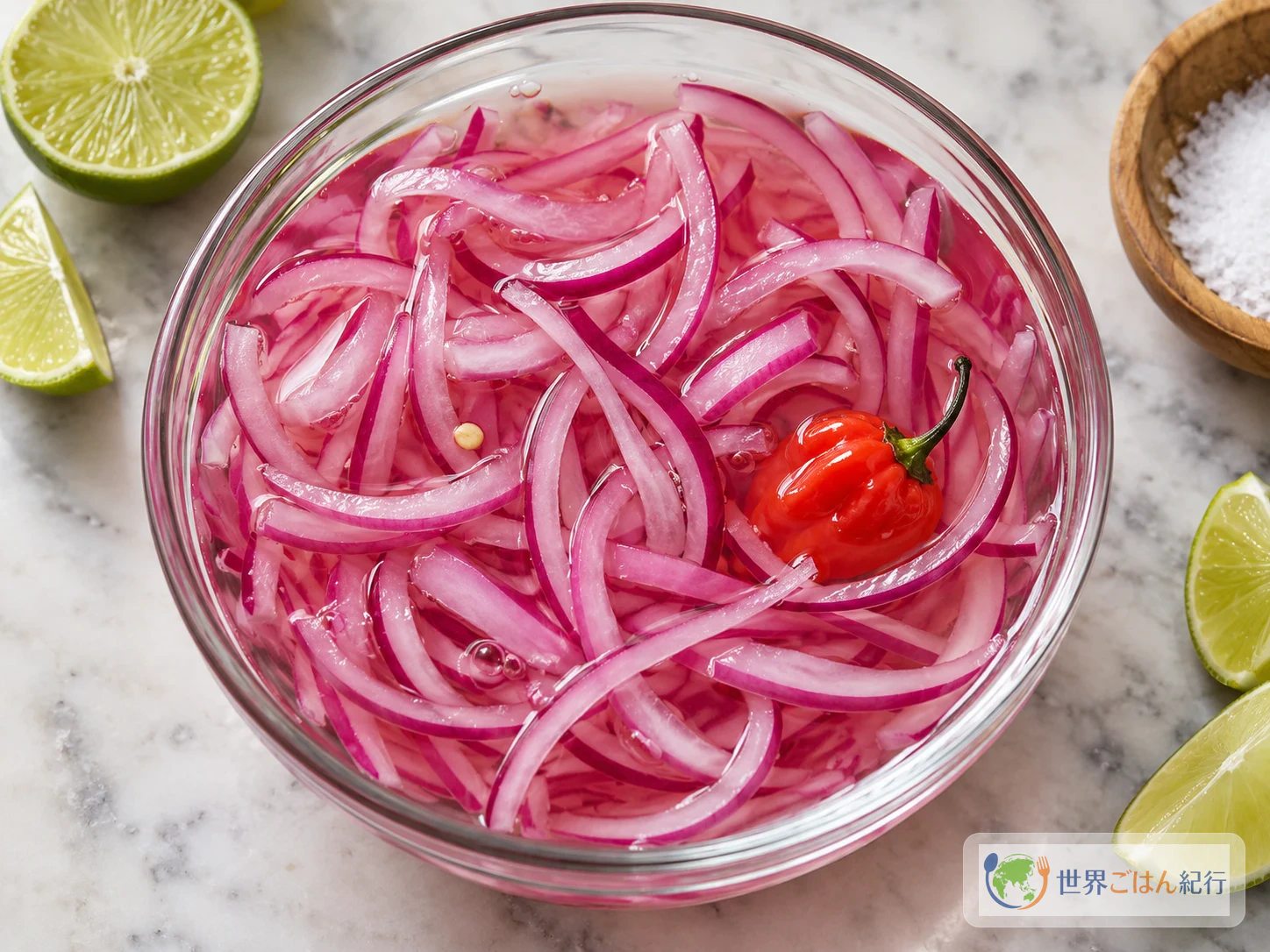
| Pickled red onion | Airtight container with the brine covering everything, refrigerated | Do not heat; drain and top |
| Fried tortillas | Without toppings, same day | Warm briefly in a dry skillet; if the texture does not return, make fresh |
Frequently Asked Questions
What is the difference between panuchos and salbutes?
Panuchos have black beans stuffed inside the tortilla and are fried; salbutes are fried dough with no filling (Yucatán Travel, Directo al Paladar México). Both are topped with meat and vegetables, so they are hard to tell apart by looks alone.
Can I use cornmeal instead of masa harina?
Ordinary cornmeal or cornstarch holds water and shapes differently, so I do not recommend it for panuchos. Without masa harina, skip stuffing the beans inside and switch to a different home dish: a plain corn tortilla topped with beans and toppings, which is more honest about the substitution. If you do buy masa harina, you will waste less if you plan to use the rest for taco tortillas or sopes.
If I have no achiote, can I just add red color?
Achiote carries color and a mild earthy aroma, so paprika or food coloring alone will not give the same flavor. If you cannot get it, cook the chicken with citrus, garlic, cumin, and oregano as an achiote-free home version, and enjoy it knowing the flavor is different. Even if it turns red-orange, do not think of it as the same taste as the original.
Do I need a tortilla press?
For 8, you can cut open a sturdy storage bag and press from above and below with a flat-bottomed pan or plate. It makes work easier for people who cook often or want even diameters, but it is not a necessity for one batch. Spending the budget first on masa harina and achiote makes the difference in flavor easier to check.
Can I leave out the habanero?
Yes. Keep the pickled red onion and serve only the habanero on the side, and the acidity and heat are separated. Habanero appears in cooking sources and Yucatán state guides, but there is no rule that everyone eat it at the same heat. Do not touch your face after handling raw habanero, and remember to wash the knife and cutting board.
Sources
- Gobierno del Estado de Yucatán, "Antojitos de tradición yucateca: salbutes y panuchos" (accessed and checked 1 October 2026)
- Larousse Cocina, "Panuchos" (accessed and checked 1 October 2026)
- Secretaría de Cultura, Gobierno de México, "La tradición gastronómica yucateca, combinación de sabores de tres continentes" (published 2 February 2011, accessed and checked 1 October 2026)
- Sistema de Información Cultural, "Gastronomía de Yucatán" (accessed and checked 1 October 2026)
- Gobierno del Estado de Yucatán, "Gastronomía" (accessed and checked 1 October 2026)
- Directo al Paladar México, "Panuchos de Yucatán" (published 2 September 2020, updated 4 May 2022, accessed and checked 1 October 2026)