An Orange Wild Berry on an Island Table Better Known for the Sea
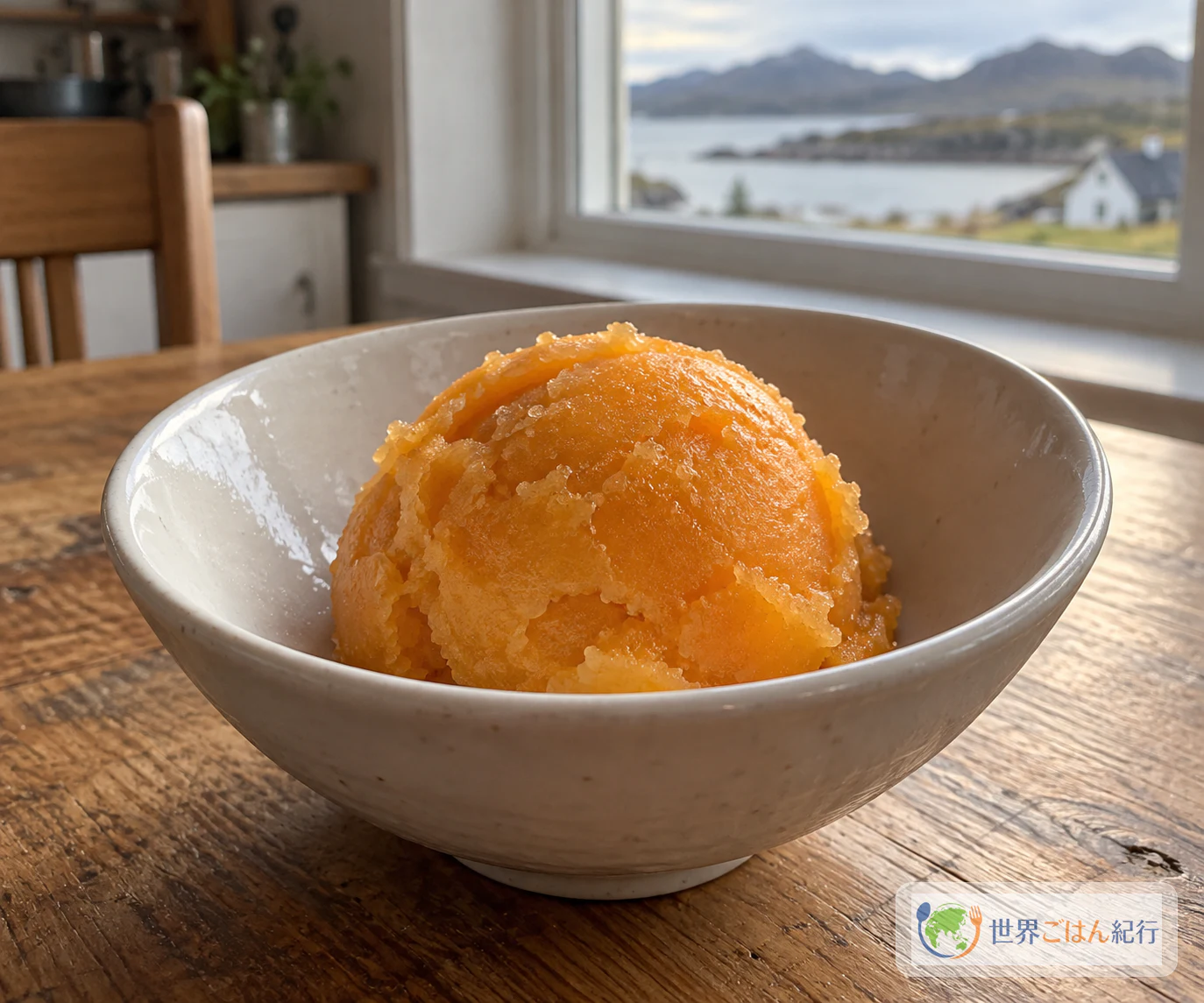
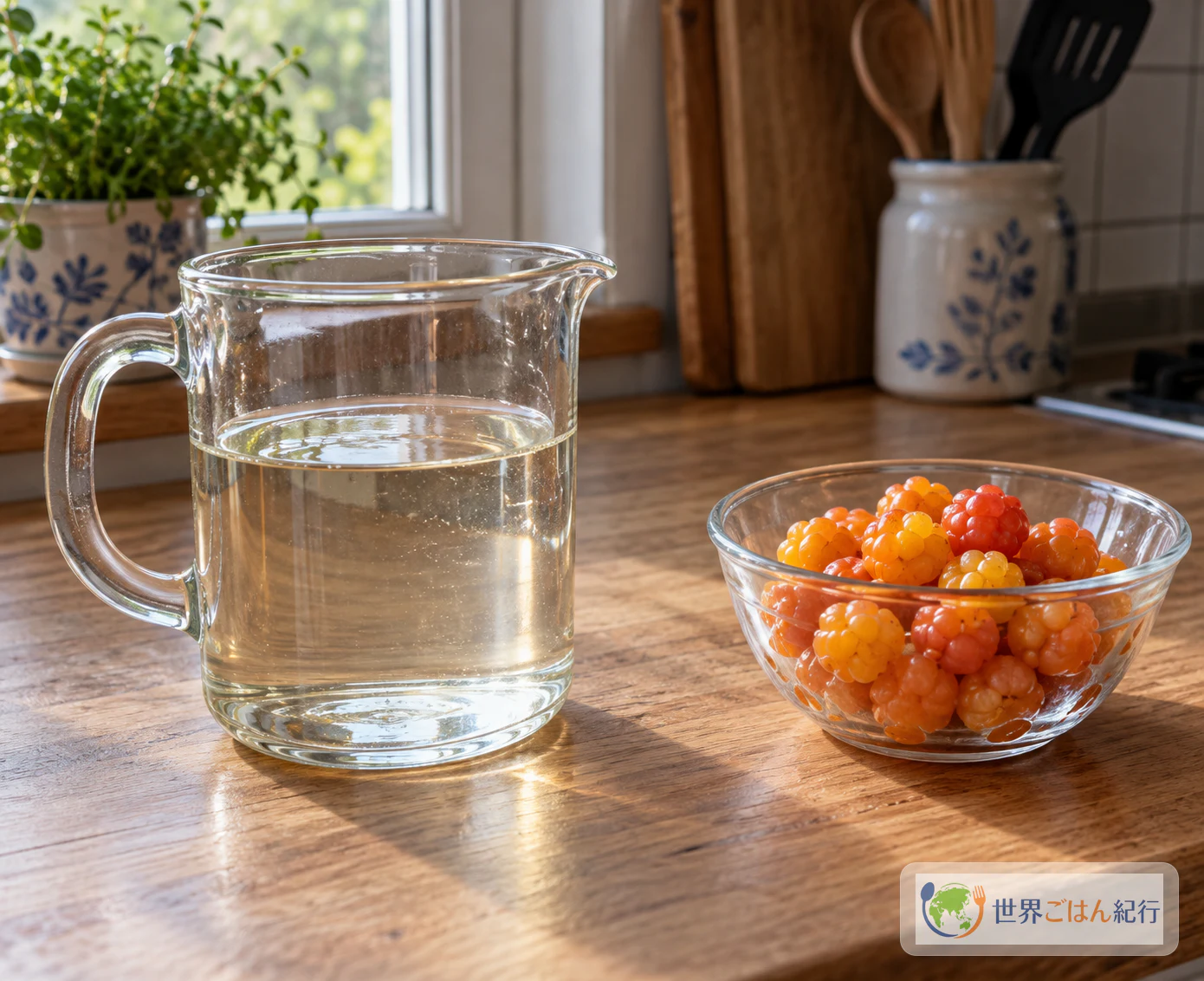
Four ingredients, nothing more: berries, water, sugar and glucose. The syrup is boiled and fully cooled, the purée is strained, and the fruit's color and character carry the whole bowl.
Saint Pierre and Miquelon is a small French archipelago in the North Atlantic, off the coast of Canada, and it is the sea that most people picture when they think of its food. Among the island specialties listed by the French Ministry of Agriculture, though, is a fruit: the plate-bière, also called plaquebière or ronce des tourbières, an orange wild berry. The same record notes that it is made into jam or into sorbet.
That bright orange against a table of fish and seafood is where this article begins. Sorbet de plaquebière is, at heart, a way of eating that berry cold.
On the islands, the berry is known as plate-bière, plaquebière or ronce des tourbières. In English it is the cloudberry, and in Norwegian molter. In Quebec it appears as chicouté or chicoutaï as well as plaquebière. There are several theories about where these names come from, and this article does not settle on any of them.
Where the Recipe Comes From
The island's official record confirms the fruit and its use in sorbet, but it does not give amounts or a method. No recipe with measurements from Saint Pierre and Miquelon itself could be found for this article.
So the amounts and steps here are borrowed from somewhere else that shares the same berry: a cloudberry sorbet by Norwegian chef Tom Victor Gausdal, published by Visit Norway. It is a short, clear recipe of cloudberries, water, sugar and glucose, cooked into a syrup, blended, strained and churned. In Norway it is served with krumkaker and cream, but those are separate accompaniments and are not part of the sorbet itself, so they are left out here.
To be plain about it: this is not a traditional island recipe. It is a working recipe for the berry the islands are known for, taken from a Nordic kitchen. The recipe in this article has also not been kitchen-tested by Sekai Gohan. If an island recipe with its own measurements turns up, it would be the better guide.
If you enjoy simple frozen desserts built around one aromatic ingredient, nutmeg ice cream is another to try.
What Kind of Fruit Is the Plaquebière?
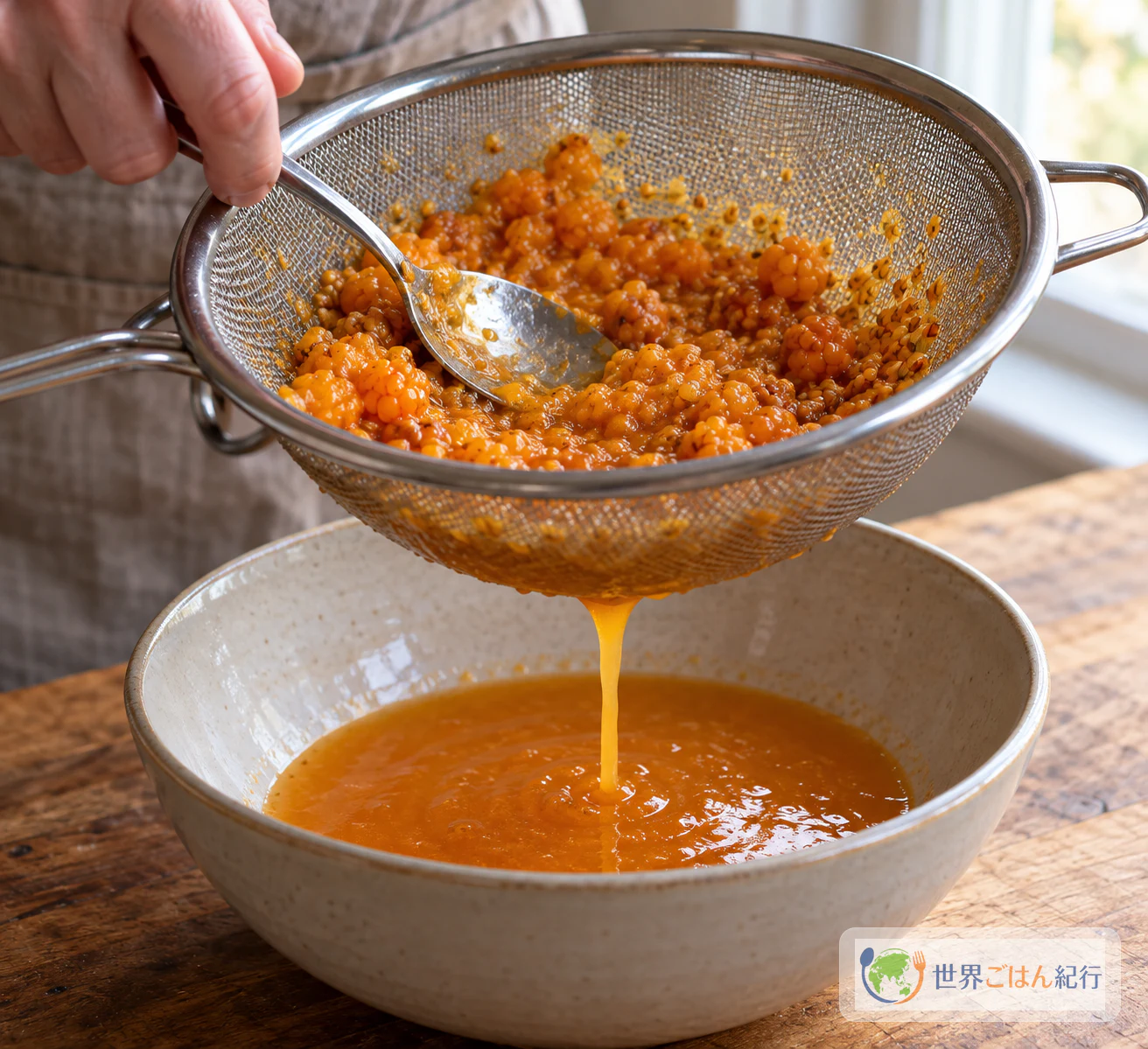
Ripe cloudberries are soft, amber in color and juicy, according to the University of Alaska Fairbanks Cooperative Extension Service. The same extension resource advises handling the berries gently, and notes that the seeds can feel hard after cooking, which is why some recipes pass the fruit through a sieve.
In Quebec, the Le Québec cuisine site records the berry under the names chicouté, chicoutaï and plaquebière, and connects it with desserts and jams in the north. That is a useful comparison for how the same fruit is used across northern regions, but it is not evidence about the island's own customs or history.
No flavor comparison is given here. The berry is described in these records by its color, softness and juiciness, and that is where this article stops.
Ingredients
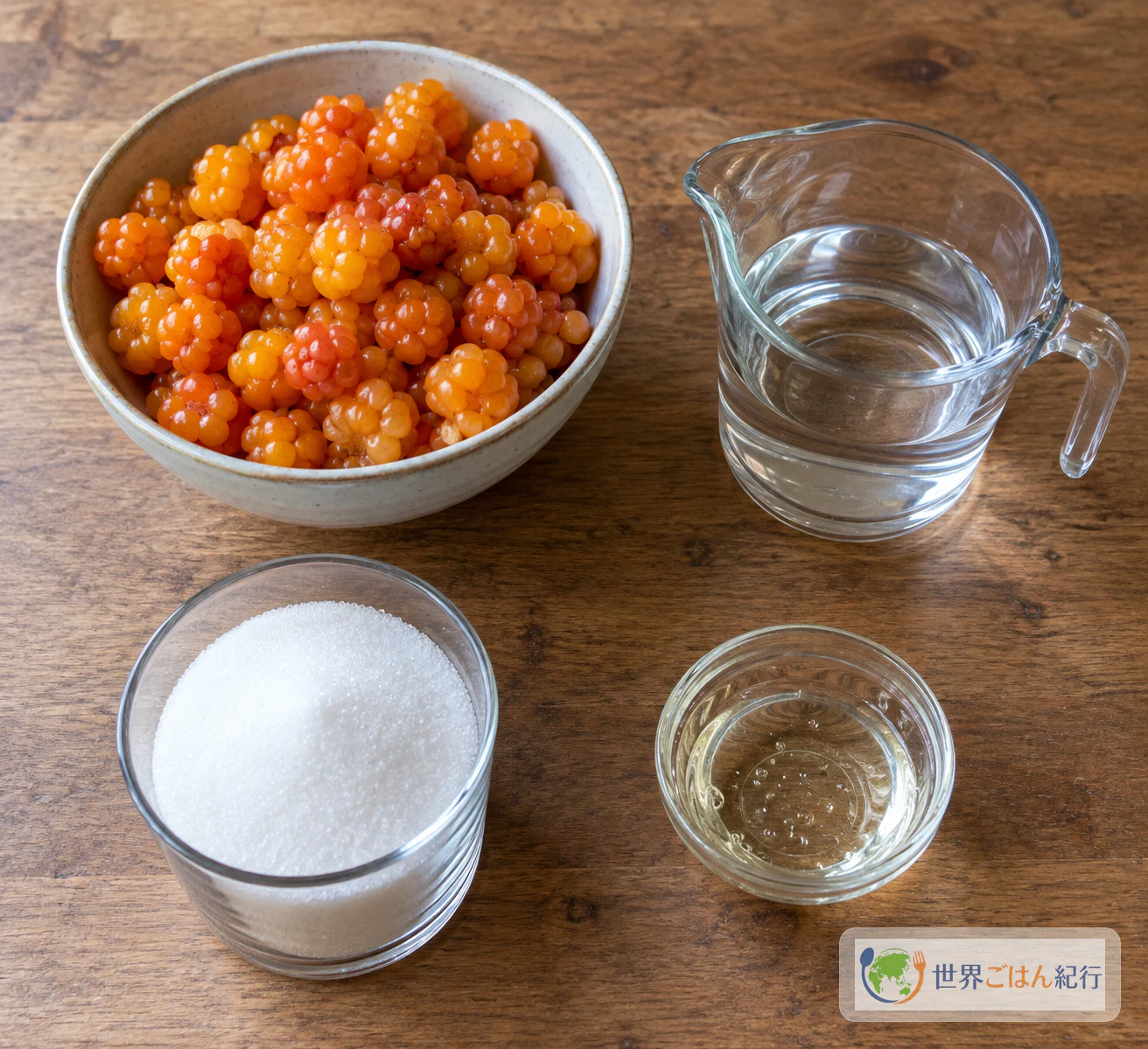
Equipment
- Shallow tray
- Small saucepan
- Measuring jug with ml markings
- Heatproof jug
- Blender
- Fine-mesh sieve
- Bowl
- Ice cream maker
- Small serving bowls
Choosing and Substituting
Fresh or frozen berries. Frozen cloudberries can be used. If you use frozen berries, keep them all in the same state, either all thawed or all still frozen, so the purée is consistent. How the extra liquid from thawing changes the finished texture has not been confirmed.
Other berries. There is no evidence that raspberries, yellow peaches or other common fruit give the same flavor, so no substitute is offered as part of this recipe. If you use another fruit, think of it as a different sorbet.
The recipe contains no egg, dairy, wheat or nuts. Packaged ingredients such as glucose can still carry allergen or shared-facility statements, so check the label when you buy. Keep raw fruit and every tool clean, and do not skip basic hygiene with fresh berries.
Method
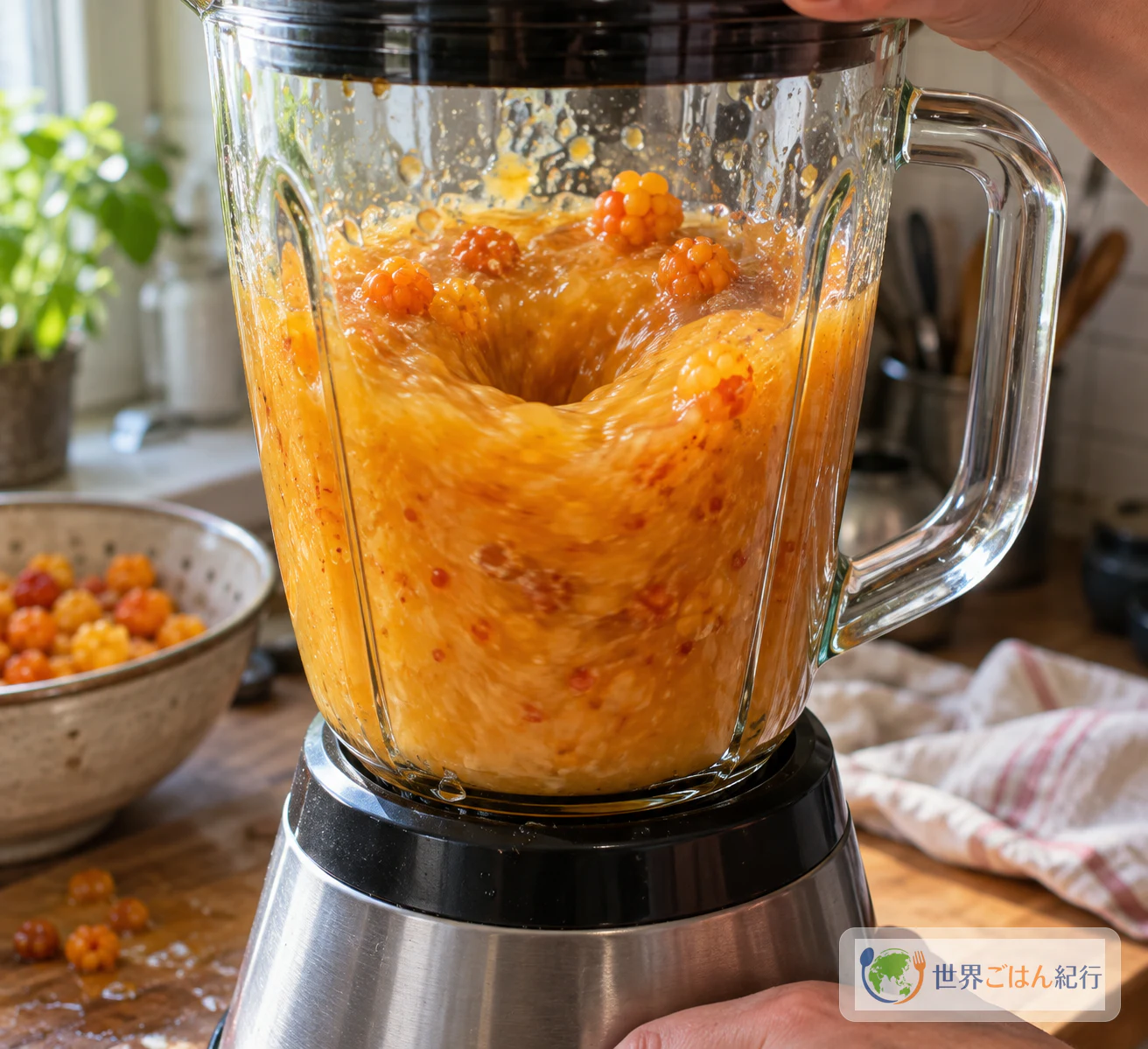
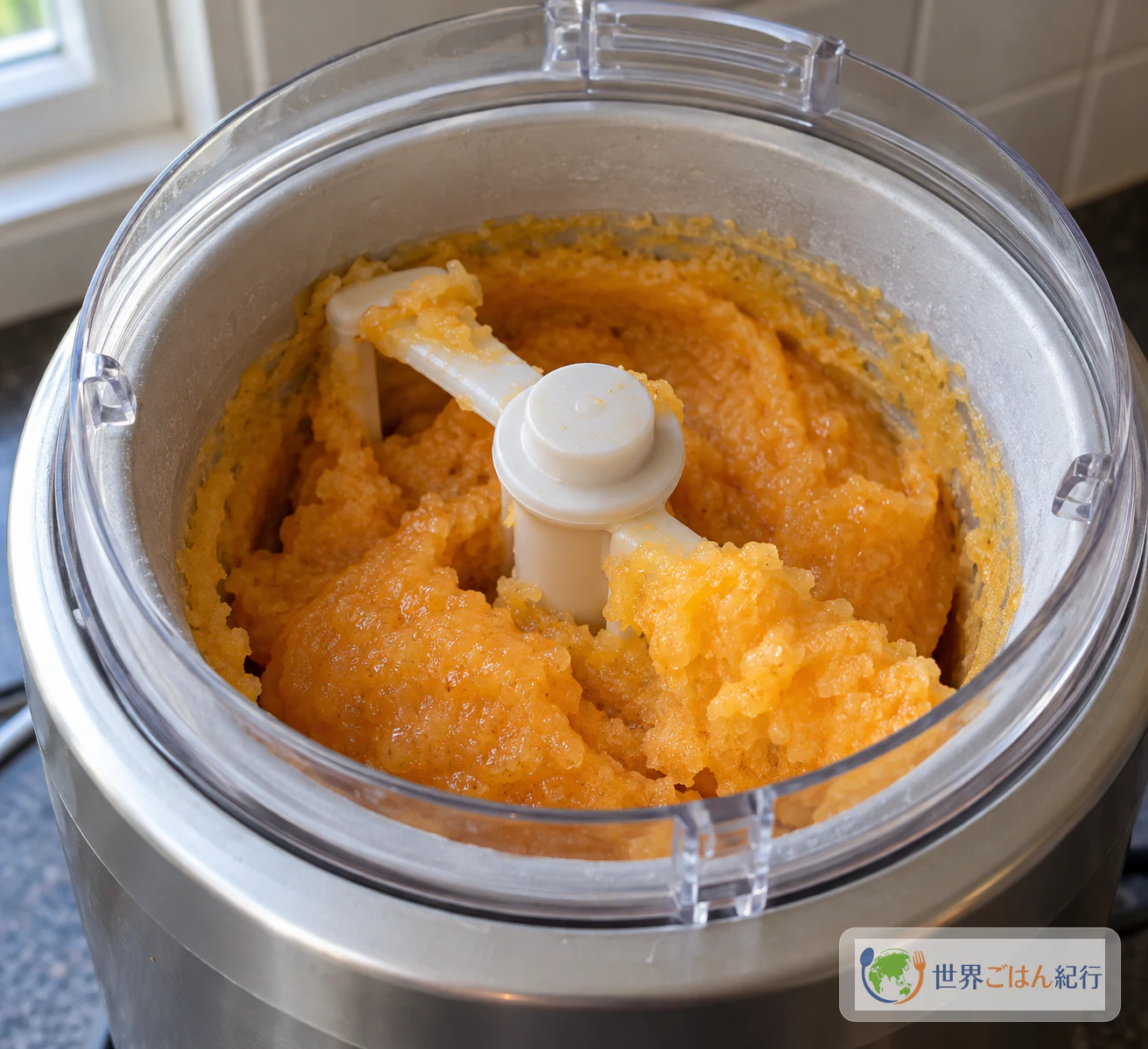
Follow your ice cream maker's instructions for any pre-freezing of the bowl and for churning time. The syrup must be completely cool before it meets the fruit.
Smoothness and Troubleshooting
Most of what decides the texture happens before the machine is switched on: whether the berries were handled gently, whether the syrup was truly cool, and whether the seeds were strained out.
| Condition | Likely cause | What to do |
|---|---|---|
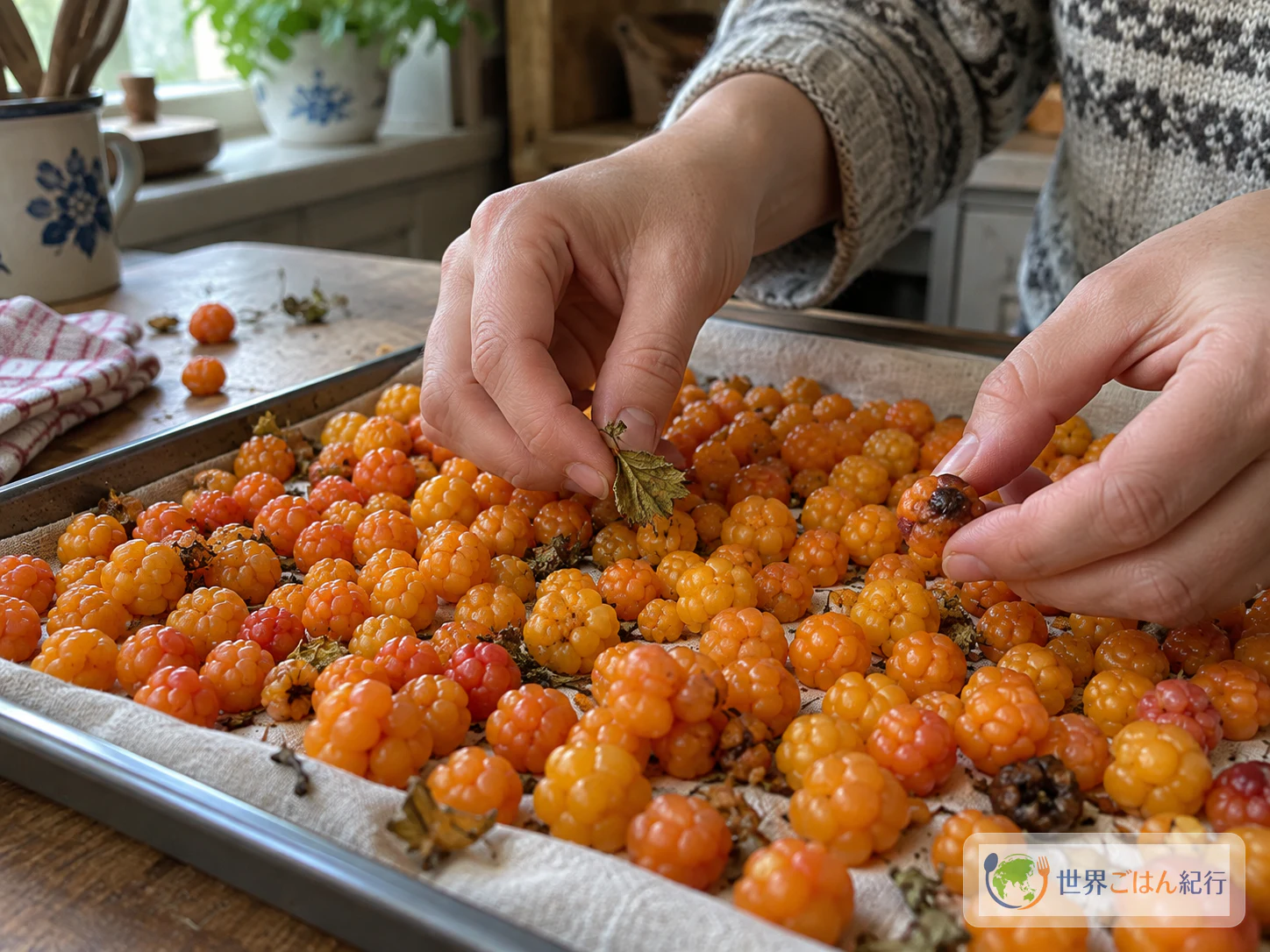
| Berries crushed and leaking before blending | Pressed or tumbled while sorting | Sort them spread out on a tray and pick out leaves by hand, without stirring the berries around |
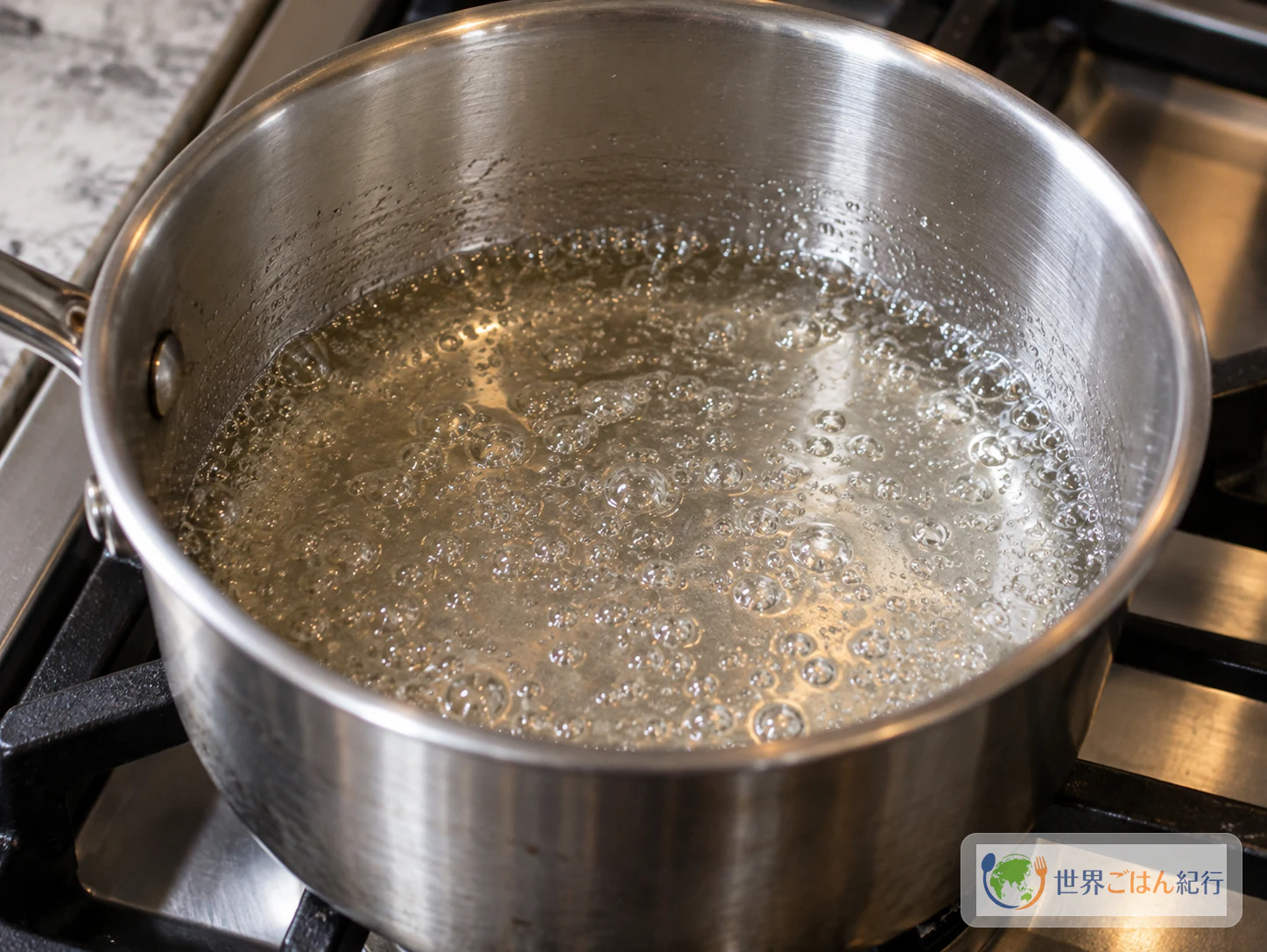
| Syrup still warm when you are ready to blend | Not left long enough | Wait. Blending only begins once the syrup has cooled completely |
| Gritty or hard bits in the sorbet | Seeds left in the purée | Press the purée through a fine-mesh sieve before churning. Cloudberry seeds can feel hard |
| Sorbet stays loose in the machine | Machine or bowl not ready, or churning cut short | Check your ice cream maker's instructions for preparing the bowl and for churning |
| Sorbet too hard to scoop after time in the freezer | It has frozen further | Let it soften a little and check with a spoon. No fixed softening time is given for this recipe |
Variations to Consider
These are ideas outside the recipe above. None of them has been confirmed to give the same result.
- Leave it unstrained. You keep more of the fruit's body, but the seeds stay too, and the University of Alaska Fairbanks extension notes they can feel hard. For a smoother sorbet, strain as in the method.
- Use frozen berries year-round. Possible, and mentioned in the Norwegian recipe, but how the thawing liquid affects the finished sorbet has not been checked.
- Adjust the sugar to the berries. Tempting if your fruit is very sweet or sharp, but it changes the balance of the recipe and has not been tested, so it is not part of the recommended amounts.
- A quick blender version without a machine. New Scandinavian Cooking publishes a separate cloudberry sorbet by Andreas Viestad: frozen cloudberries 3 cups (7 dl), sugar syrup 1/2 cup (1 dl) and 7 ice cubes, blended and served right away, for 4 servings. It is a different recipe with different amounts and texture, so do not mix it with the one above.
Serving and Keeping
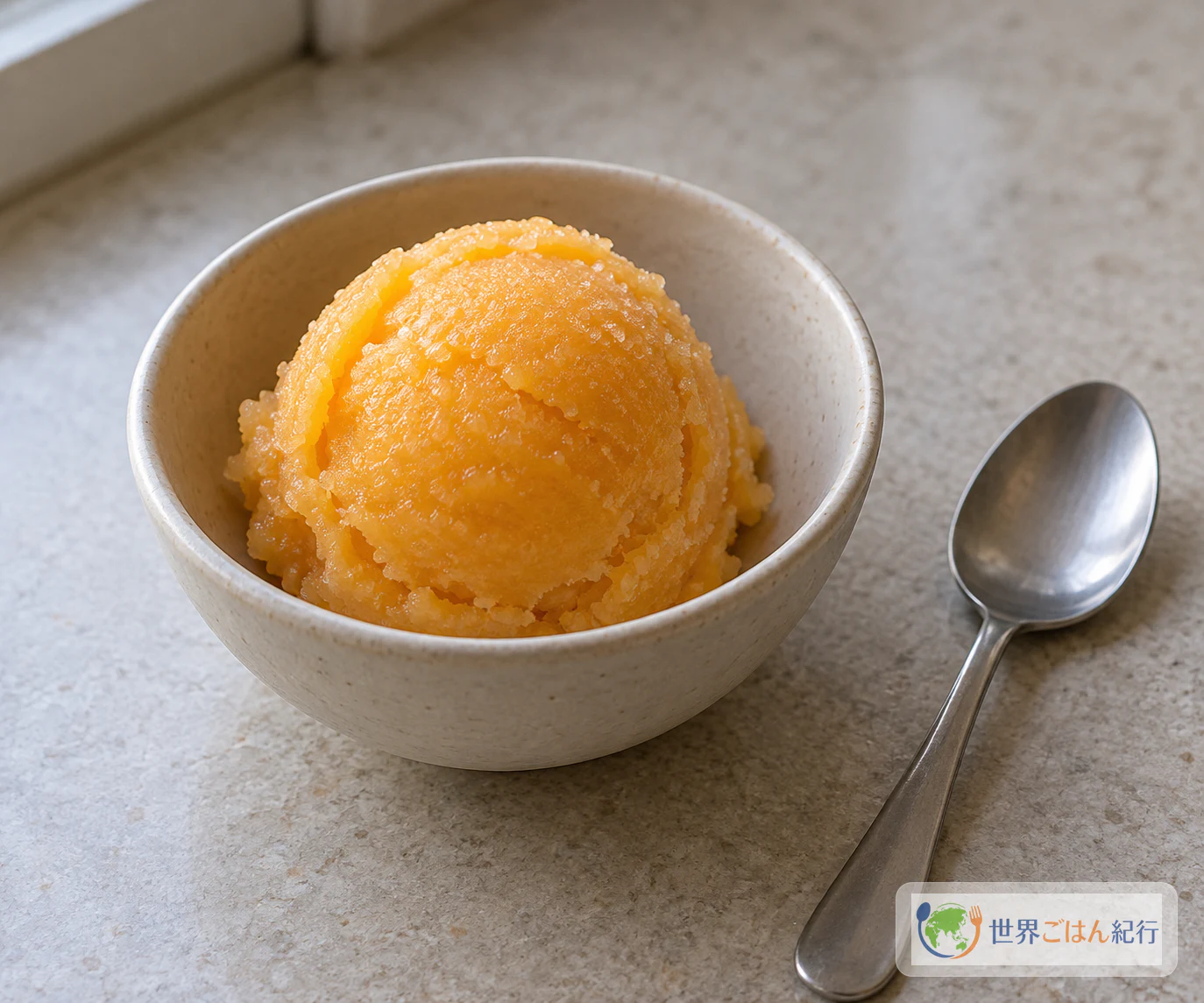
Serve the sorbet on its own in small bowls, so the color and character of the berry come first. In Norway, the chef's sorbet is part of a dessert with krumkaker and cream, but those are additions, not part of this recipe.
None of the sources consulted gives a storage period for this sorbet, so none is given here. Serve it once it has been churned and can be scooped.
Frequently Asked Questions
Are the plaquebière and the cloudberry the same fruit?
Regional sources connect the names: the island record lists plate-bière, plaquebière and ronce des tourbières, and a Quebec source lists chicouté, chicoutaï and plaquebière. When buying, check the botanical name and country of origin on the label as well as the common name.
Is this a traditional recipe from Saint Pierre and Miquelon?
No. The French Ministry of Agriculture confirms that the berry is an island specialty made into jam or sorbet, but it gives no recipe. The amounts and method here come from a cloudberry sorbet by Norwegian chef Tom Victor Gausdal, published by Visit Norway.
Can I use other berries instead?
There is no basis for saying another berry gives the same flavor, so no substitute is recommended. Using a different fruit makes a different sorbet.
Can I make it without an ice cream maker?
This recipe uses an ice cream maker. A separate quick blender method exists in New Scandinavian Cooking's recipe, using frozen berries, sugar syrup and ice cubes, but its amounts and texture differ, and it should not be treated as the same sorbet.
Why is the sugar measured in millilitres?
That is how the recipe gives it, and converting it to grams would mean guessing at a density. Use a measuring jug with ml markings.
What about nutrition?
No nutritional figures are available for this recipe, so none are given here.
Sources
- Ministère de l'Agriculture, de l'Agro-alimentaire et de la Souveraineté alimentaire (France), "Saveurs de Saint-Pierre et Miquelon." Lists plate-bière / plaquebière / ronce des tourbières as an island specialty, an orange wild berry made into jam or sorbet. Does not give a sorbet recipe. https://agriculture.gouv.fr/saveurs-de-saint-pierre-et-miquelon
- Visit Norway, "Tom Victor Gausdal's cloudberry sorbet with krumkaker and cream." The source of the amounts and method used here (cloudberries 500 g, water 150 ml, sugar 150 ml, glucose 1 tbsp; syrup boiled and cooled, blended with the berries, strained and churned). A Norwegian chef's recipe, not a traditional island recipe. https://www.visitnorway.com/things-to-do/food-and-drink/the-norwegian-cookbook/cloudberry-sorbet-with-krumkake/
- New Scandinavian Cooking, "Simple Cloudberry Sorbet" (Andreas Viestad recipe). A separate blender method with frozen cloudberries, sugar syrup and ice cubes, mentioned only as a different recipe. https://www.newscancook.com/dessert/simple-cloudberry-sorbet
- University of Alaska Fairbanks Cooperative Extension Service, "Cloudberries." Describes ripe cloudberries as soft, amber and juicy, advises handling them gently, and notes that seeds can feel hard after cooking and are removed with a sieve in some recipes. https://www.uaf.edu/ces/publications/database/food/cloudberries.php
- Le Québec cuisine, "La chicouté ou chicoutaï ou plaquebière." Records the names chicouté, chicoutaï and plaquebière and the berry's use in northern desserts and jams in Quebec. Used only as a regional comparison. https://quebecuisine.ca/aliments/la-chicoute/