Tostadas: A Crisp Corn Base, Built Bite by Bite at the Table
A flat corn base that still snaps, a thin layer of warm beans holding everything in place, and cool, fresh toppings added only at the last moment. Assemble each tostada right before it is eaten.
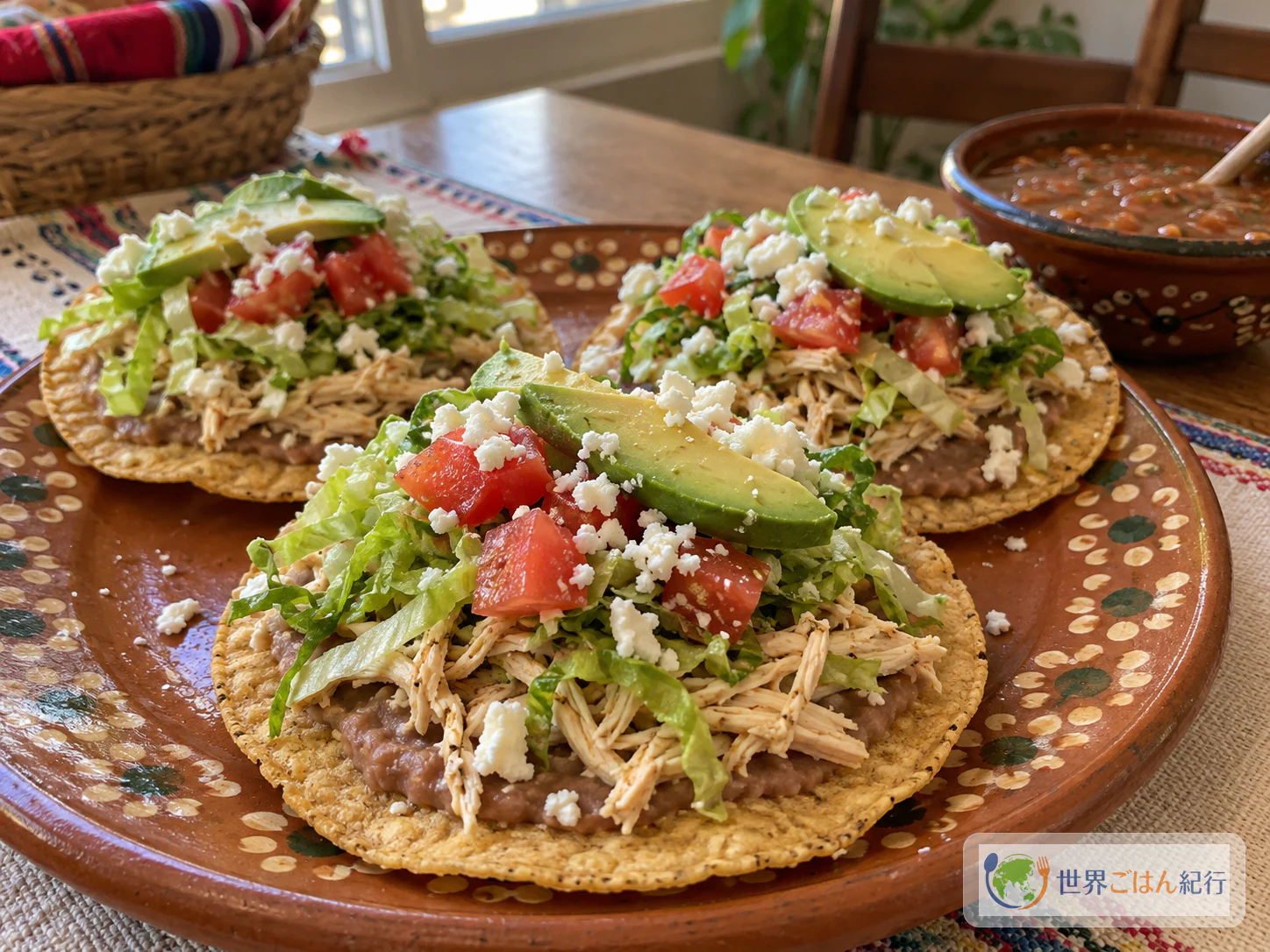
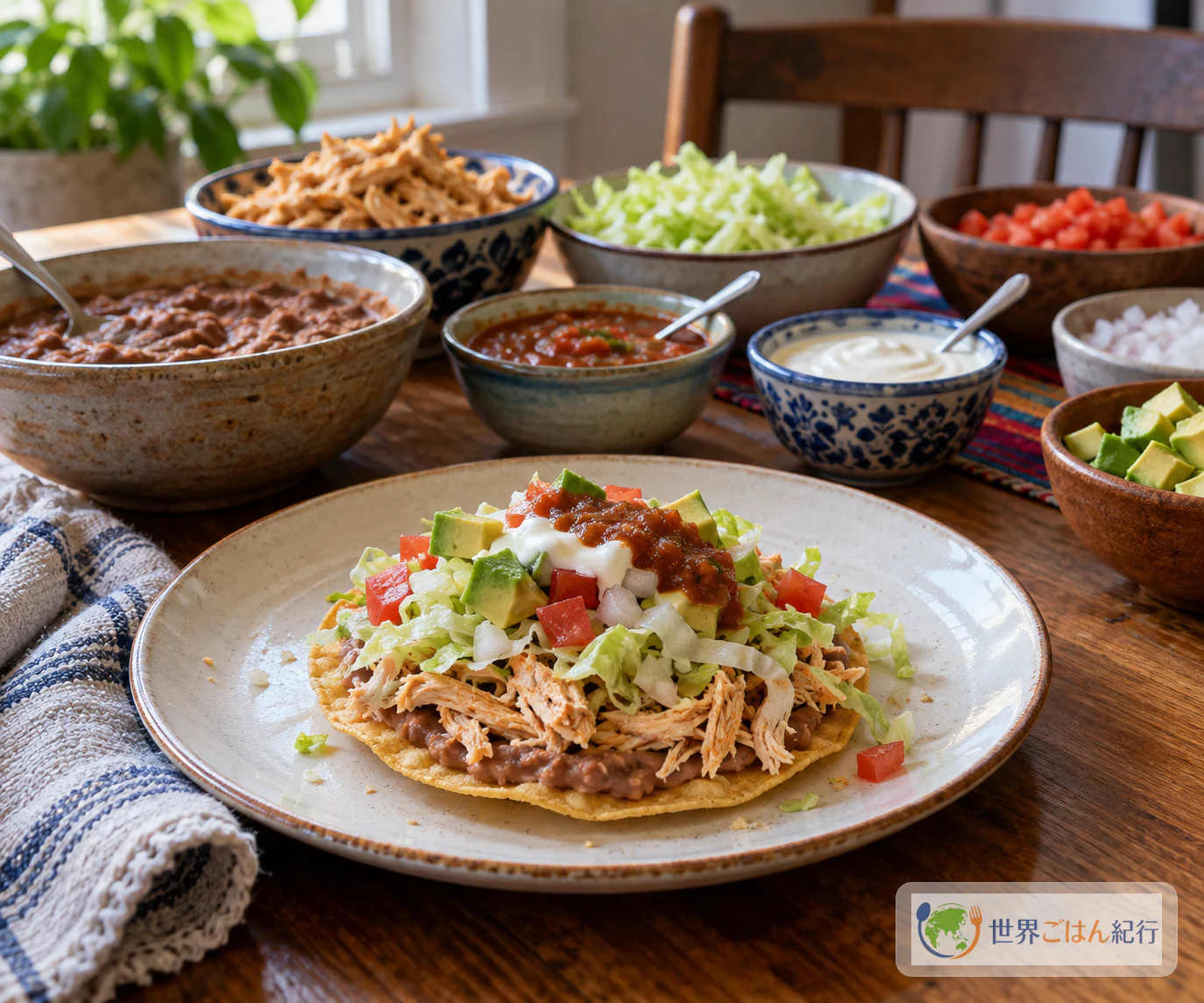
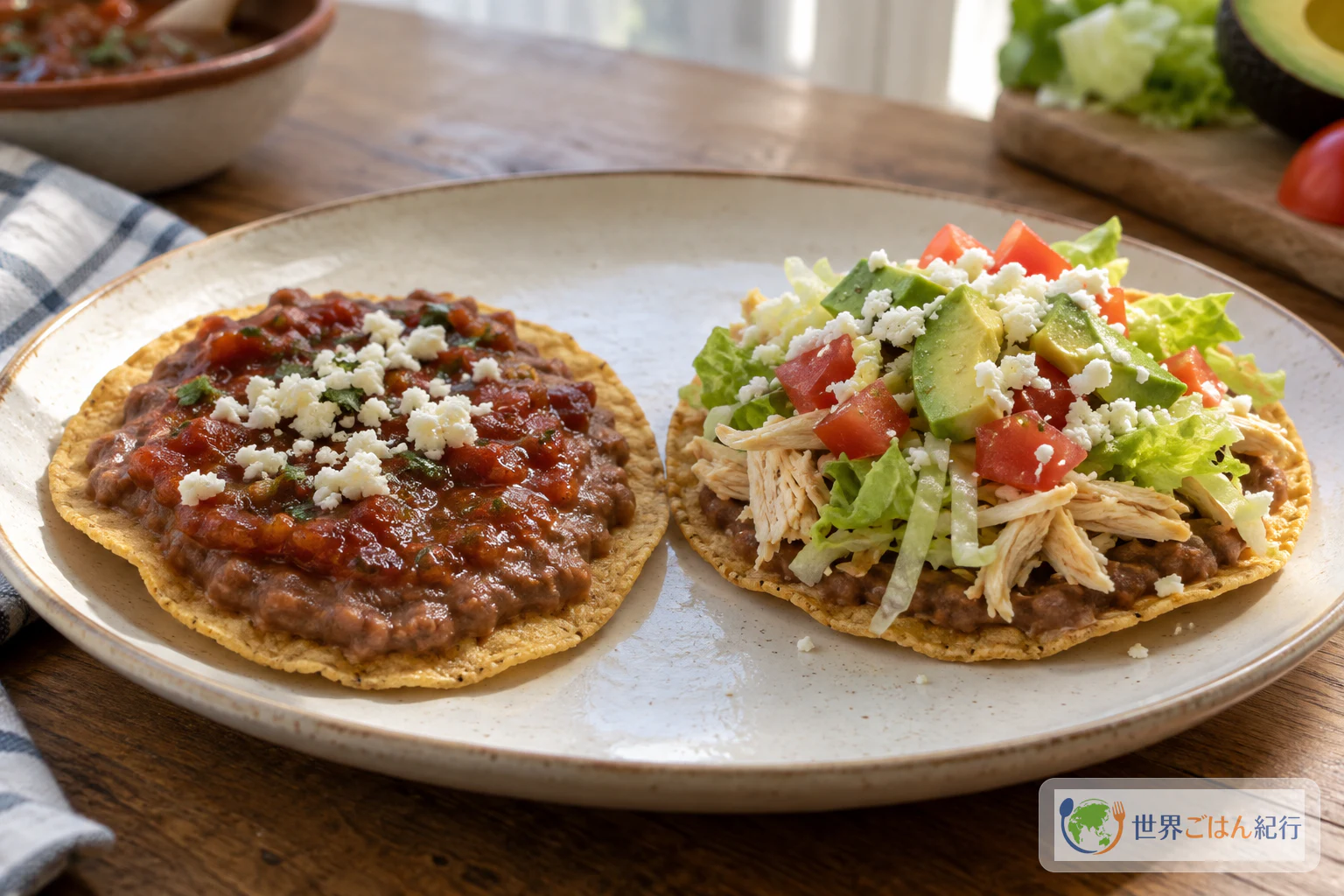
Small bowls go out on the table: warm refried beans, shredded chicken, lettuce, tomato, avocado, crumbled cheese, perhaps some salsa and pickled jalapeños. Next to them sits a stack of crisp, flat corn tostadas. In the version by Mexican cook Mely Martínez, 12 tostadas feed 4 people, and each one is put together from these components rather than cooked as a finished dish in a pot. The Mexican Food Journal describes the same practical idea for parties and gatherings: prepare the toppings ahead and let everyone build their own the way they like.
That way of serving is not just convenient. A tostada base is crisp, and once wet toppings sit on it for a while, it softens. Warm beans, cool vegetables and the crunch of the corn base are the contrast this dish is built on, and that contrast lasts only if the layering happens just before eating. So what is a tostada, exactly, and why does this recipe ask so little of the stove?
A Mexican Corn Dish Defined by Its Base, Not One Fixed Topping
A tostada is a crisp corn base with toppings combined on it. Mexico's Secretaría de Cultura, in its cultural information system, describes the tostada as an antojito whose base can be a fried tortilla, a tortilla toasted on a comal, or one baked in the oven, with the toppings on top combined freely. The name connects to the Spanish verb tostar, to toast, but there is no single national recipe behind it.
The same record lists a wide range. There is a simple version with only refried beans and salsa, and a version that adds crema and cheese. Beyond those, it names toppings such as pata de res, tinga poblana, picadillo and pollo (chicken). Rather than one dish with one correct set of toppings, the tostada is better understood as a format: a crisp base and toppings put together at the table.
That record was last updated in 2008, and it describes the dish as part of a broader corn-based food culture. It does not establish a date of origin, an inventor, or an unbroken history of one fixed form, so this article does not build a timeline around it.
The Chicken Version Here, and How It Differs from Tinga
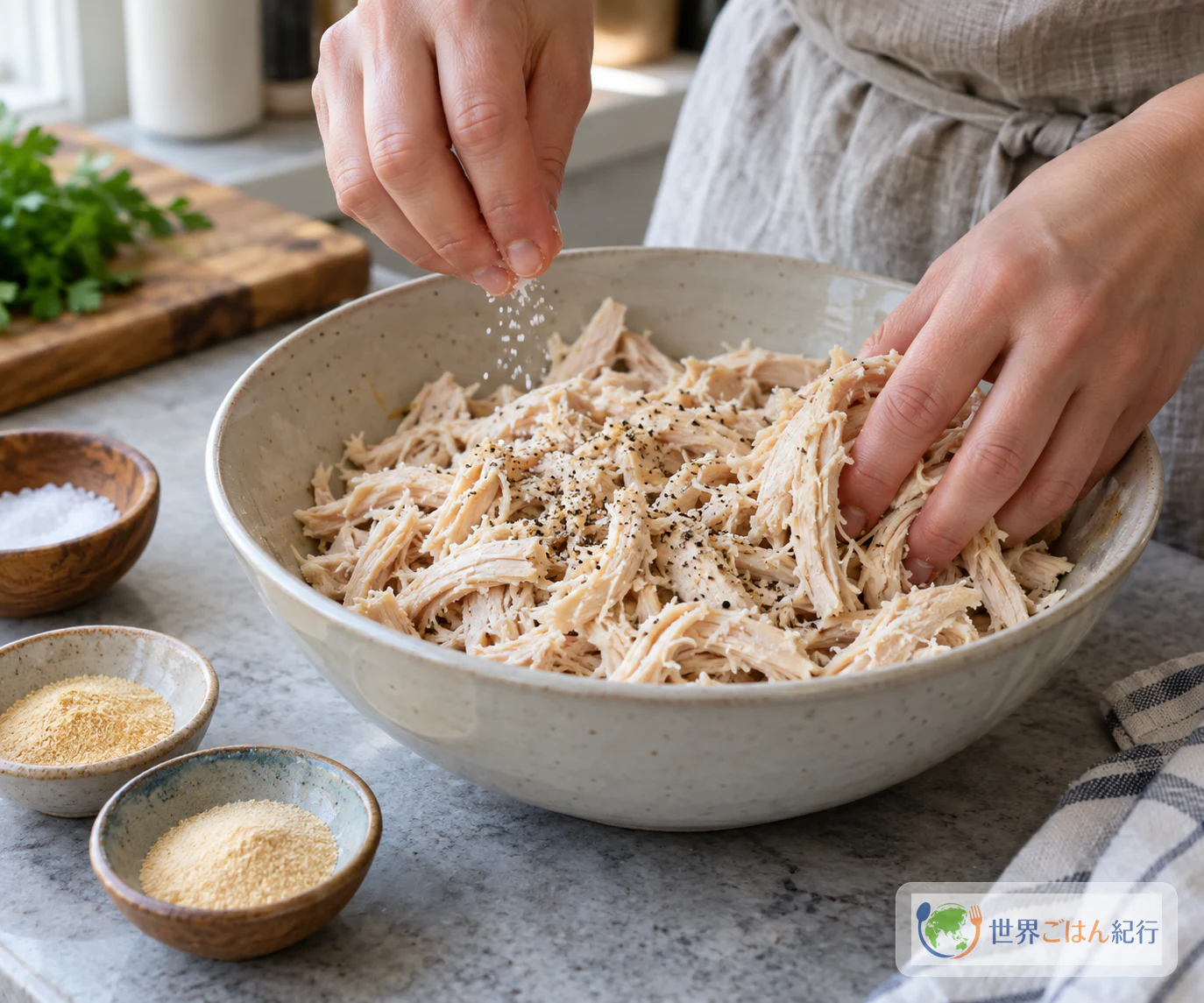
This recipe follows Mely Martínez's tostadas de pollo, published with permission from her book The Mexican Home Kitchen. The chicken is breast that has already been cooked and shredded. It is seasoned simply with salt and pepper, and optionally garlic powder and onion powder, and then layered. The original recipe does not specify how to cook the chicken; it notes that store-bought rotisserie chicken breast is a time-saver.
Chicken tinga is a different dish. Tinga de pollo stews chicken in a sauce of chipotle, tomato and onion, and the stewed filling can then go on a tostada. In the cultural record, tinga and pollo appear as separate topping examples, and the tinga poblana it describes is made with shredded beef, so it is not the same as chicken tinga either. The difference lies in how the topping is cooked: here there is no sauce to simmer, only components to prepare and layer.
Ingredients: 4 Servings, 12 Tostadas
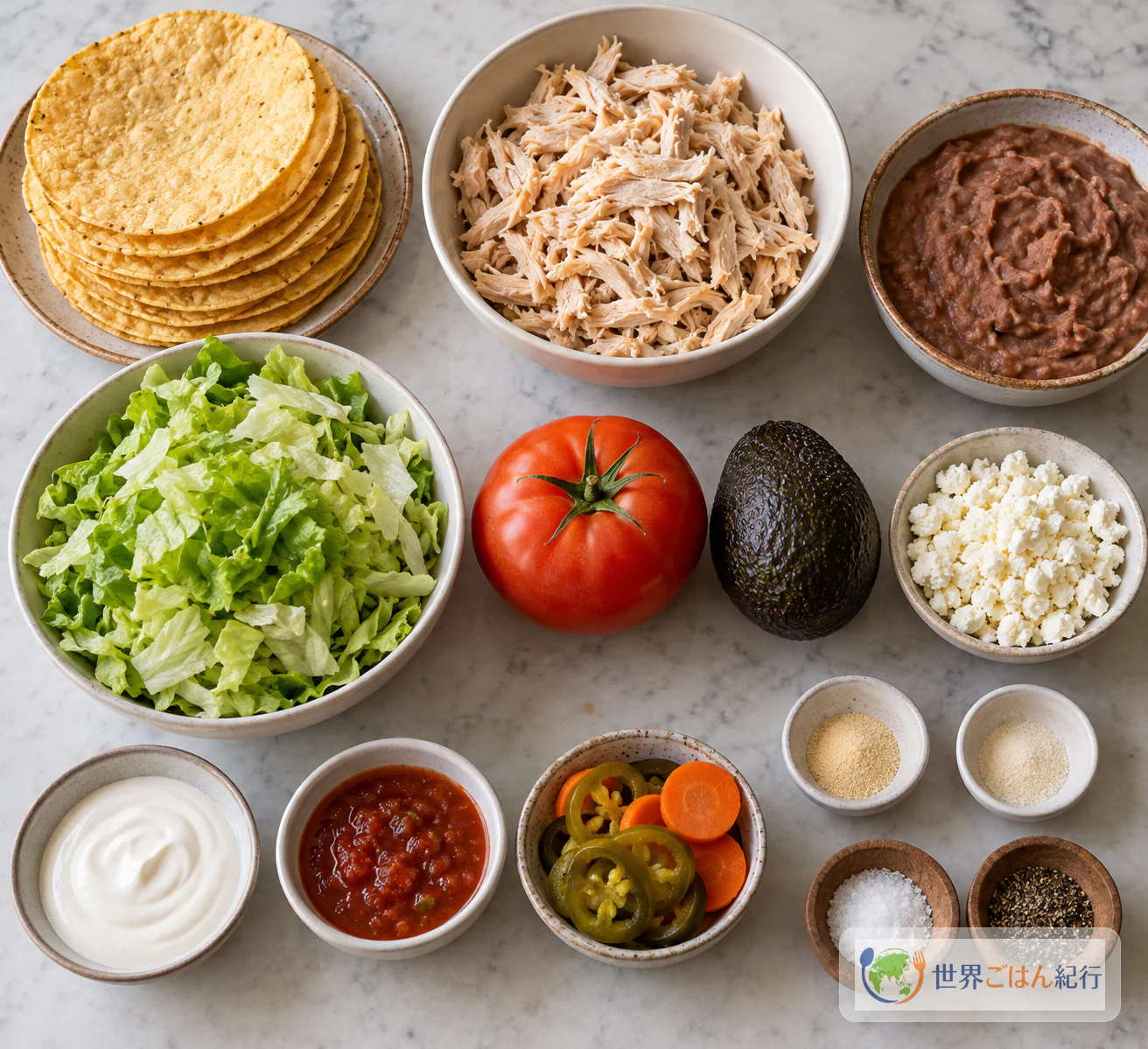
Optional items are marked as optional.
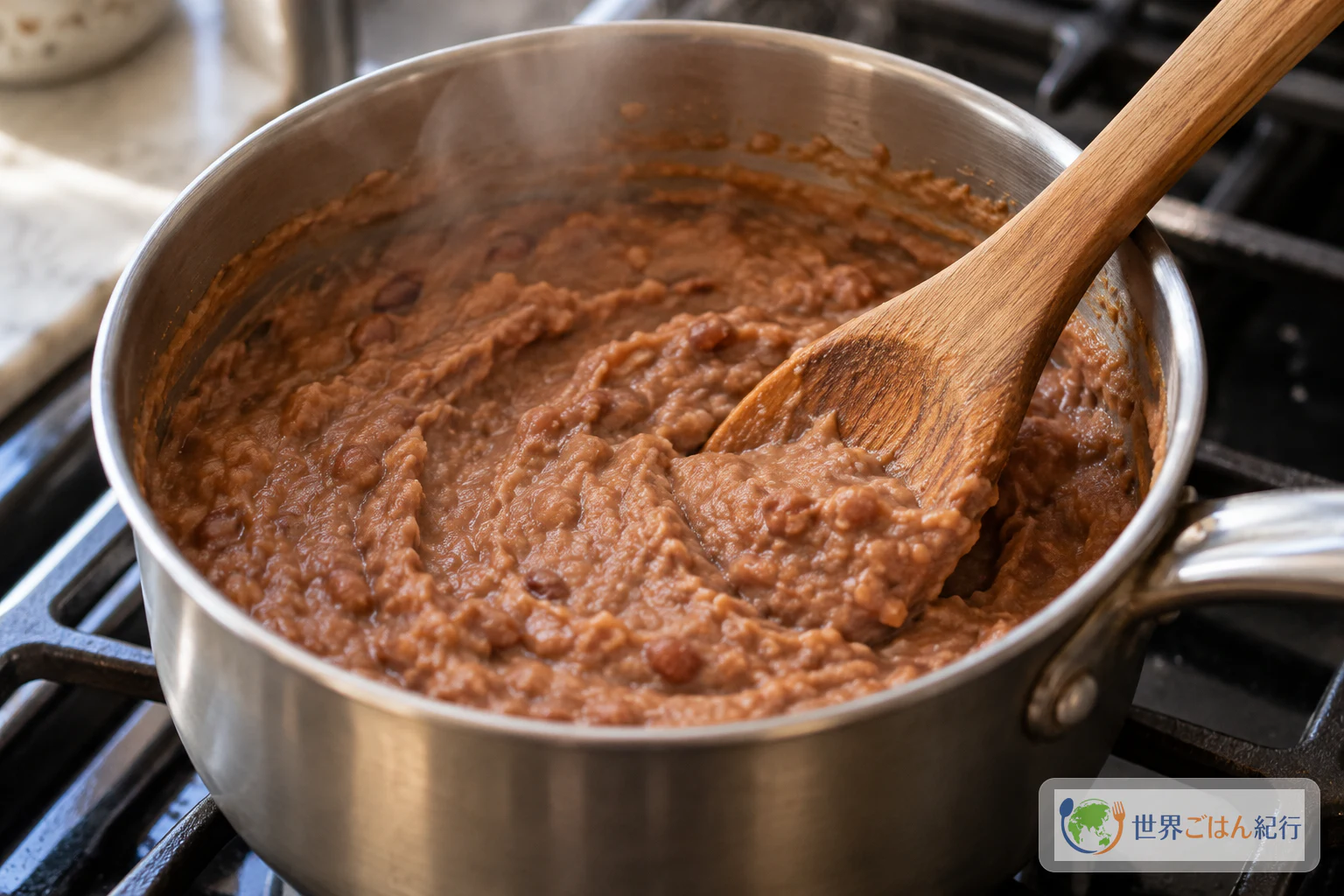
The 240g of beans is the amount to prepare. The recipe spreads about 15g (about 1 tbsp) on each tostada, so 12 tostadas use about 180g, leaving about 60g. Keep the remainder separate rather than piling all of it onto the shells; stretching each portion beyond the recipe's amount is a different recipe.
Queso fresco and crema contain milk. Packaged tostadas, refried bean products and salsa vary by brand, so check each label for wheat, soy and other allergens.
Equipment
- Small saucepan for warming the beans
- Spoon for stirring and spreading the beans
- Fork, or your fingers, for crumbling the cheese
- Colander or salad spinner for draining washed lettuce
A tortilla press is not needed, since this recipe uses ready-made tostadas.
Choosing and Substituting: Where the Texture Changes
Look for "corn tostadas" first. They are flat corn tortillas already made crisp. Soft corn tortillas used as they are give a completely different texture, and making your own crisp bases by frying or baking is a separate recipe not covered here. Flour tortillas are not the same thing.
Refried beans are sold in cans and pouches; search import grocers or online shops by the general name. Mashing your own cooked beans is possible, but the fat, salt and smoothness will differ, and the layer may spread differently.
Queso fresco and Mexican crema are specialty items. If you use another fresh cheese in place of queso fresco, expect a different flavor. Crema is optional and can simply be left out.
Lettuce: wash it and drain it well. Water left on the leaves soaks into the base and softens it sooner.
Tomato: slices or dice both work. If your tomato is very juicy, removing the seeds is a reasonable way to keep the base drier.
Method: Layer Everything Just Before Eating
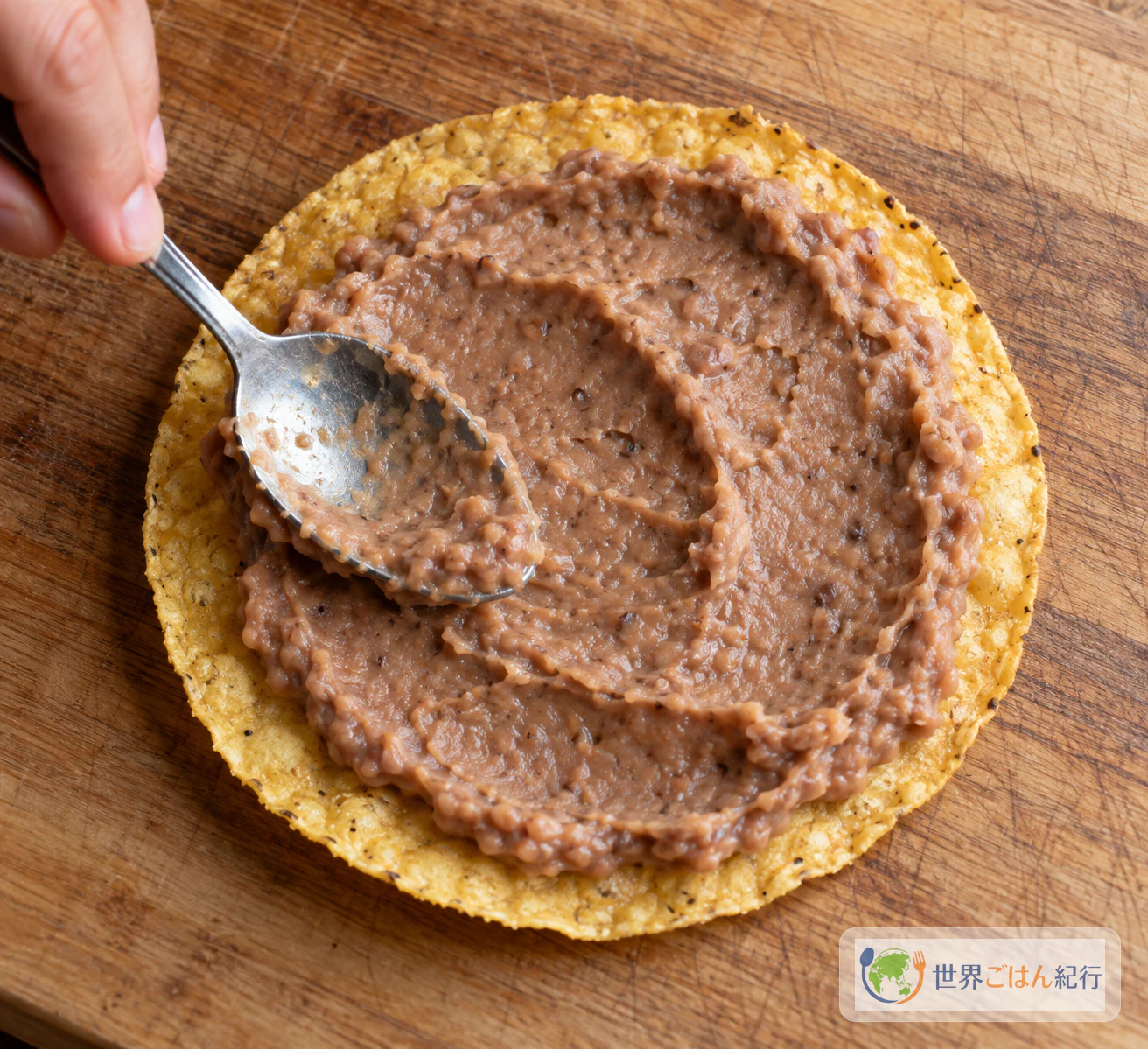
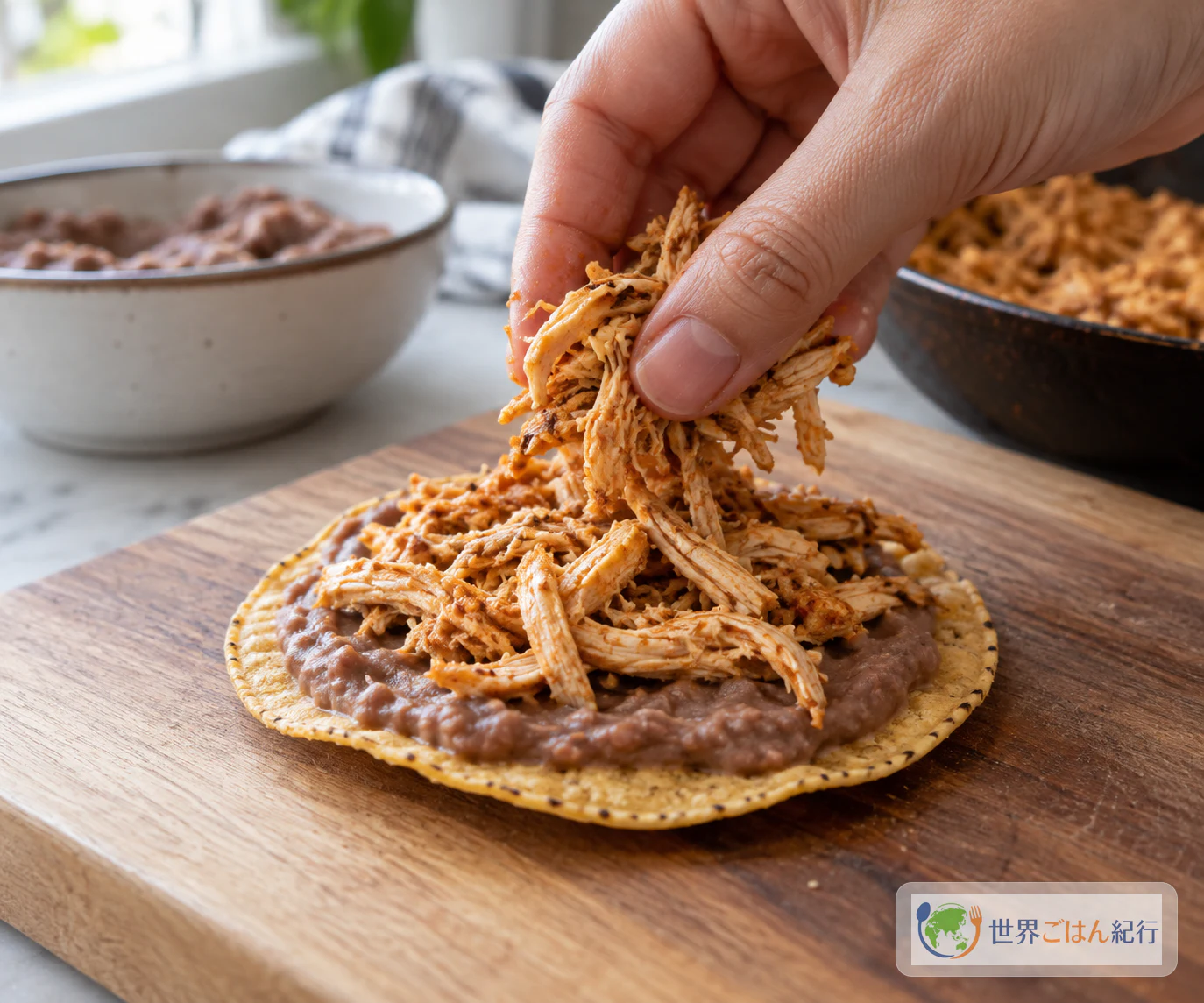
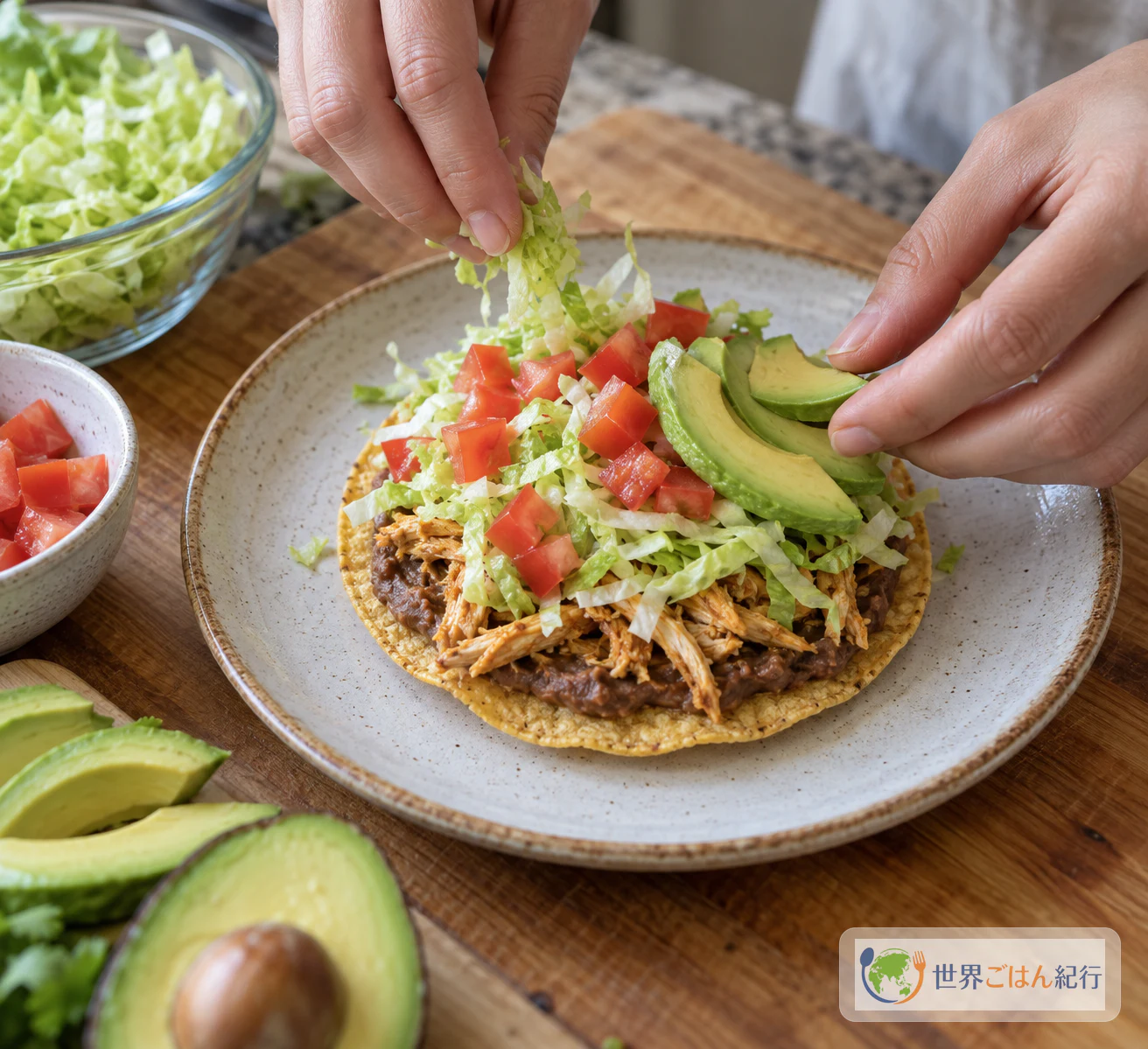
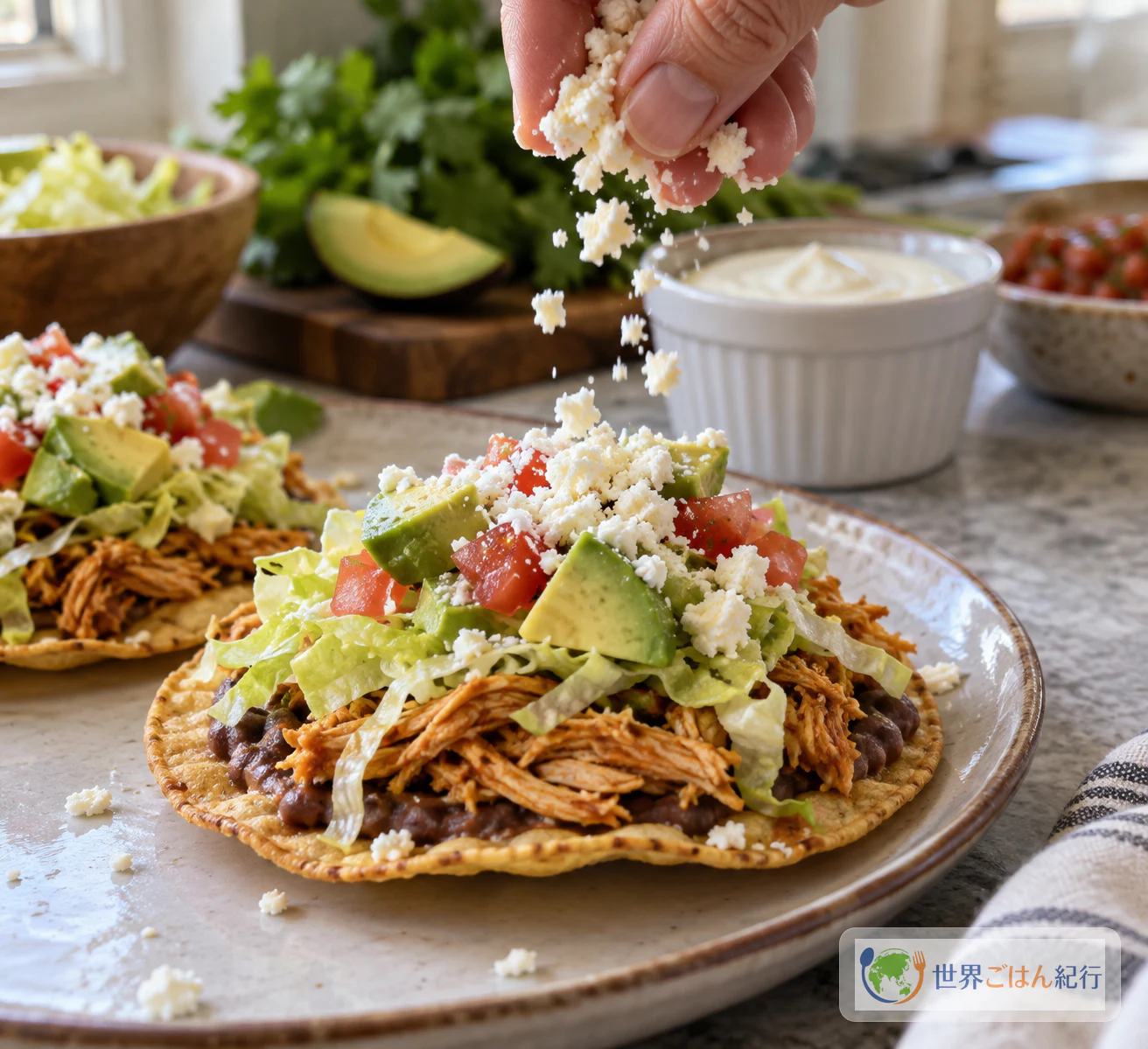
Beans first as the glue, then chicken, then vegetables, then cheese. Prepare every component in advance, and do the layering only when people are ready to eat.
This recipe starts from chicken that is already cooked. If you cook chicken from raw, Japan's Ministry of Agriculture, Forestry and Fisheries advises heating it until the center reaches at least 75°C for at least 1 minute. Check the thickest part with a thermometer. Do not reuse the cutting board or tongs used for raw chicken on vegetables or cooked food.
Soggy or Falling Apart: Keeping Tostadas Crisp and Intact
| Problem | Main cause | What to do |
|---|---|---|
| The base went soft | Moisture from the toppings, and time | Set out all the components first and start layering from the beans only right before eating. Don't store vegetables that have released water on a tostada |
| Toppings fall off | Too much piled on at once; beans not spread across the surface | Spread the beans thinly over the whole surface and keep the toppings light enough to hold in your hand and break with the first bite |
| The chicken is too salty | Store-bought chicken already seasoned | The original says salt to taste, so taste the chicken first and salt sparingly |
| Lots of beans left over | 240g is the prepared amount; about 180g is used at 15g per tostada | Keep the remainder separately rather than loading it all onto the shells |
The whole design of the dish leans toward eating it right away. Assembled tostadas lose their texture if stored, so keep the chicken, beans and vegetables separate and handle them hygienically instead of holding finished tostadas.
Tostadas Across Mexico: Regions, Tables and Toppings
The cultural record from the Secretaría de Cultura includes a depiction of tostadas at taquerías in Mexico City, with toppings such as pata de res, tinga poblana, picadillo and pollo. Its tinga poblana is a shredded beef topping, which is another reason not to treat it as the same thing as chicken tinga.
A school food manual from the state of Querétaro gives a different picture. Its nopal tostada places nopales, beans, lettuce, tomato, onion, cilantro and cheese on a baked tostada, and its bean tostada puts cooked, mashed beans and a little cheese on a homemade tostada. These are recipes for food served in schools, not a nationwide standard, and they are a separate formula from the chicken version above.
Seen together, these examples show why a fixed list of toppings would be misleading. What holds steady is the structure: a crisp corn base, a spread that binds, and toppings that vary with the region, the household and the occasion.
Five Ways to Change the Topping
- No chicken: beans, salsa and cheese. The cultural record describes a simple version with only beans and salsa, and another with crema and cheese. Spread the beans and let the salsa carry the flavor.
- Nopales. The Querétaro school manual pairs nopales with beans and fresh vegetables. Nopales can be hard to find outside Mexico, and other vegetables are not the same thing, so treat any replacement as a different topping.
- Chicken tinga. Use chicken stewed in chipotle and tomato sauce as the topping. This adds a cooking step that the recipe above does not include.
- Beef toppings such as pata de res. These appear in the cultural record as Mexico City toppings. They need their own preparation and are not covered by this recipe.
- Salsa and pickles on the side. Set out salsa and pickled jalapeños and carrots and let each person adjust the heat and tang, as both Mely Martínez's recipe and the Mexican Food Journal suggest.
Frequently Asked Questions
What is a tostada?
It is a Mexican antojito built on a crisp corn base, which can be a fried tortilla, one toasted on a comal, or one baked in the oven, with toppings combined on top. The toppings range from just beans and salsa to chicken, beef and more.
How is it different from a taco?
A tostada uses a flat, hard base, and the toppings sit on top of it instead of being wrapped. That is why it is eaten held flat and why the order of the layers matters.
What if I can't find ready-made corn tostadas?
Soft corn tortillas used as they are will give a different texture. Making crisp bases yourself by frying or baking is a separate process with its own method, and it is not part of this recipe.
How do I prepare the chicken safely?
The recipe uses chicken that is already cooked, such as store-bought rotisserie chicken breast. If you cook it from raw, heat the center to at least 75°C for at least 1 minute, check the thickest part with a thermometer, and keep the boards and tongs used for raw chicken away from vegetables and cooked food.
In Short
A good tostada comes down to four things: a crisp corn base, a thin layer of beans as the glue, seasoned chicken with fresh vegetables, and assembly right before eating. Set the components out in small bowls, let everyone build their own, and change the toppings with the region and the occasion while keeping that structure.
Sources
- Sistema de Información Cultural, Secretaría de Cultura de México, "Las tostadas." Describes the tostada as an antojito on a fried, comal-toasted or oven-baked tortilla base with freely combined toppings; the range from beans and salsa to pata, tinga poblana, picadillo and pollo; and tostadas at Mexico City taquerías. Record last updated 2008. https://sic.cultura.gob.mx/ficha.php?table=gastronomia&table_id=90
- Kavey Eats, "Tostadas De Pollo | Mexican Chicken Tostadas," published with permission from Mely Martínez's The Mexican Home Kitchen. Source of all ingredients, amounts and assembly steps for the main recipe (4 servings, 12 tostadas). https://www.kaveyeats.com/tostadas-de-pollo-mexican-chicken-tostadas
- Douglas Cullen, Mexican Food Journal, "Chicken Tostadas." A separate chicken tostada example, and the practice of preparing toppings ahead so each person assembles their own at the table. https://mexicanfoodjournal.com/chicken-tostadas/
- USEBEQ, "Manual para personas que preparan, distribuyen y venden alimentos en las escuelas." School food examples from Querétaro, including the nopal tostada and bean tostada. https://www.usebeq.edu.mx/Content/estudia/C2425/Manual%20alimentos%20en%20las%20escuelas-103025.pdf
- Ministry of Agriculture, Forestry and Fisheries of Japan, "鶏料理を楽しむために~カンピロバクターによる食中毒にご注意を!!~" (Enjoying chicken dishes safely: beware of Campylobacter food poisoning). Heating chicken to at least 75°C at the center for at least 1 minute, and avoiding cross-contamination from raw chicken and utensils. https://www.maff.go.jp/j/fs/campylobacter.html