
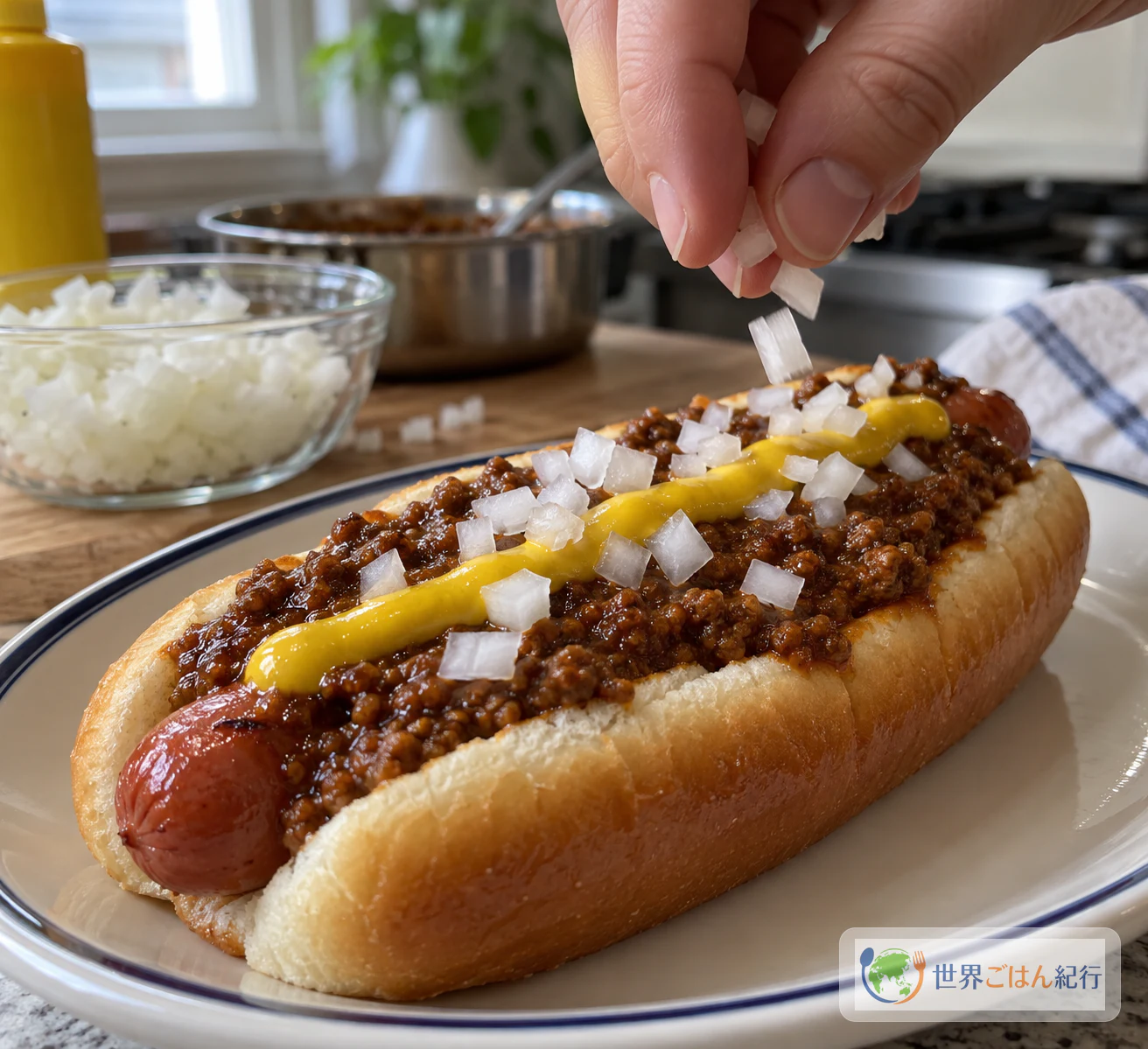
Detroit-Style Coney Dog: A Hot Dog Under Fine, Beanless Beef Sauce
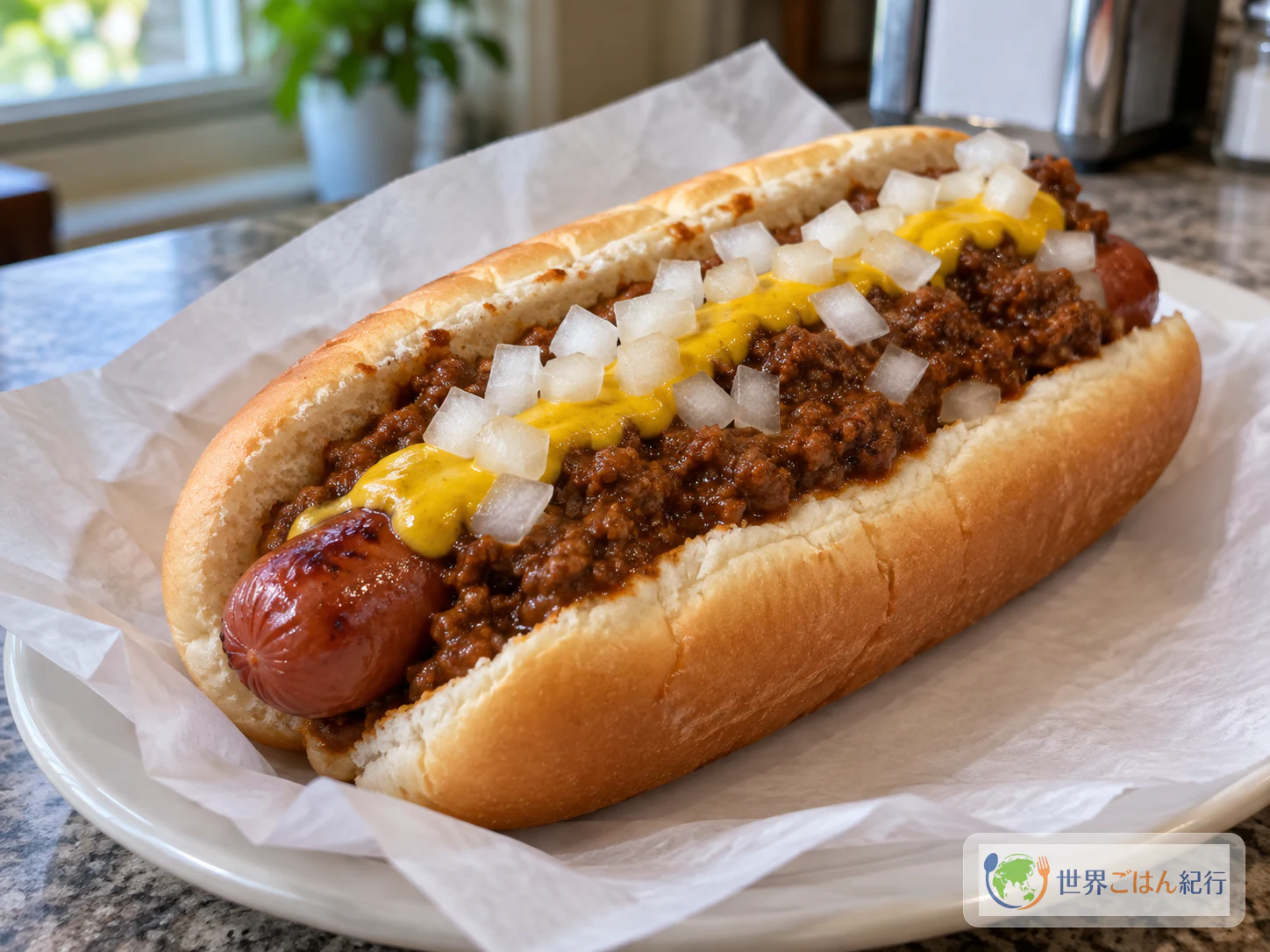
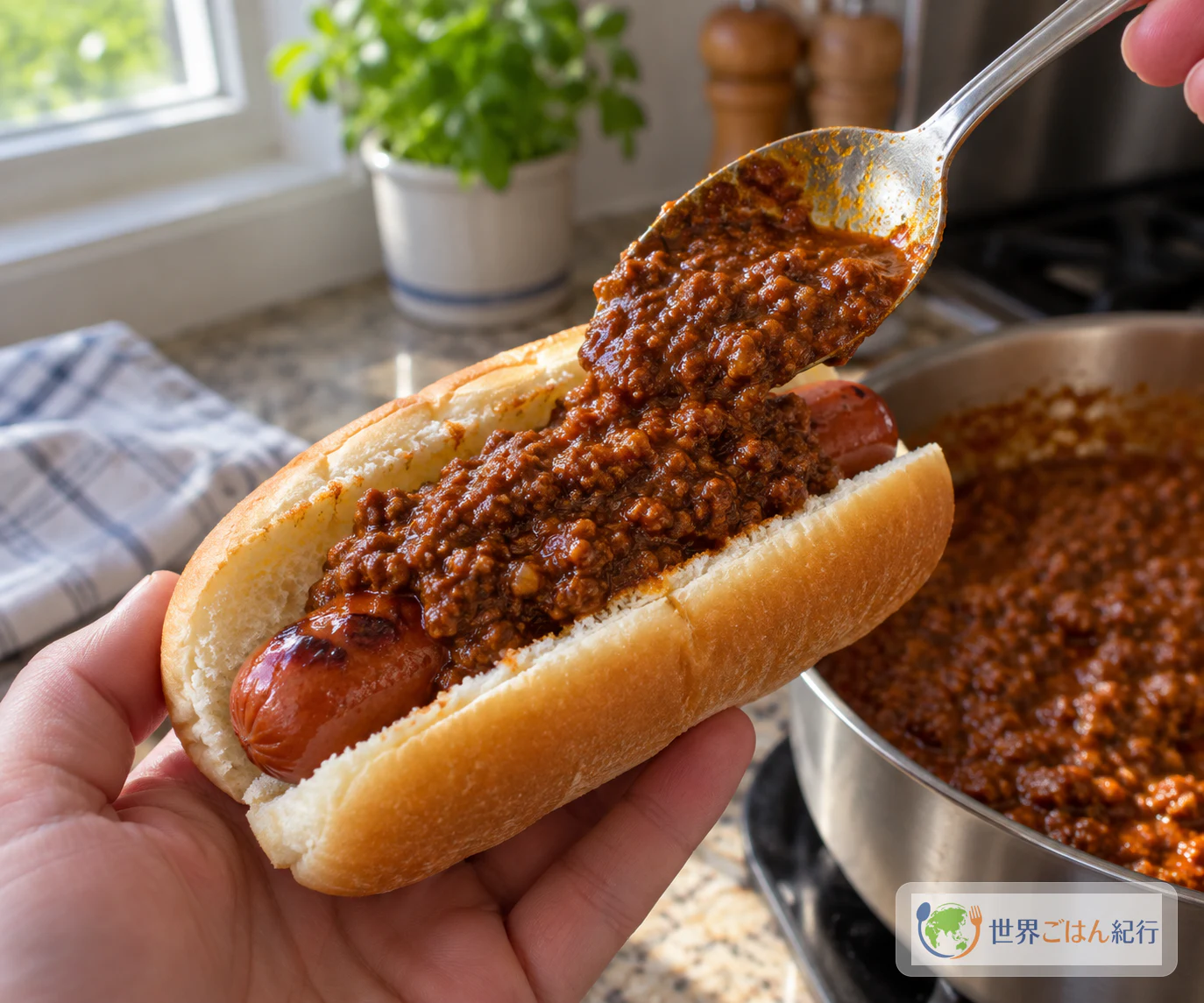
Break the beef into very fine pieces, keep beans out of the sauce, and finish with yellow mustard and chopped raw onion. Those are the core of the Detroit-style Coney dog.
Picture a narrow Detroit diner counter. A hot frankfurter sits in a soft bun under a reddish-brown meat sauce, a stripe of yellow mustard and a scatter of white chopped onion, and whatever spills over the edge of the paper plate gets chased down with a fork. Local reporting from Detroit describes regulars who go back and forth between American Coney Island and Lafayette Coney Island, two rival restaurants side by side, and the late-night meals people remember there.
That raises the question most readers start with: if it's called a "Coney Island" hot dog, isn't it from New York? The name means different things in different places. In New York, a hot dog sold at Brooklyn's Coney Island is generally a comparatively plain affair. In Michigan and elsewhere in the Midwest, a "Coney" means a hot dog topped with meat sauce, and the Detroit version did not originate at Brooklyn's Coney Island. Flint, also in Michigan, has its own drier, more crumbly style of sauce, and Cincinnati's chili is a different tradition again. This article is about the Detroit style.
The recipe here follows a published home recipe from The Washington Post that makes four Detroit-style Coney dogs. It is one example of a home version, not a copy of any Detroit restaurant's secret sauce and not the only correct way. What it does give you is the outline of the dish: fine beef sauce with no beans, a snappy hot dog, a soft bun, mustard and onion.
If you're coming from a bowl of chili con carne, note that it is a separate dish: Coney sauce is a beanless topping made to be spooned over a sausage, not a stew eaten on its own.
Ingredients: Coney Sauce and Assembly for 4
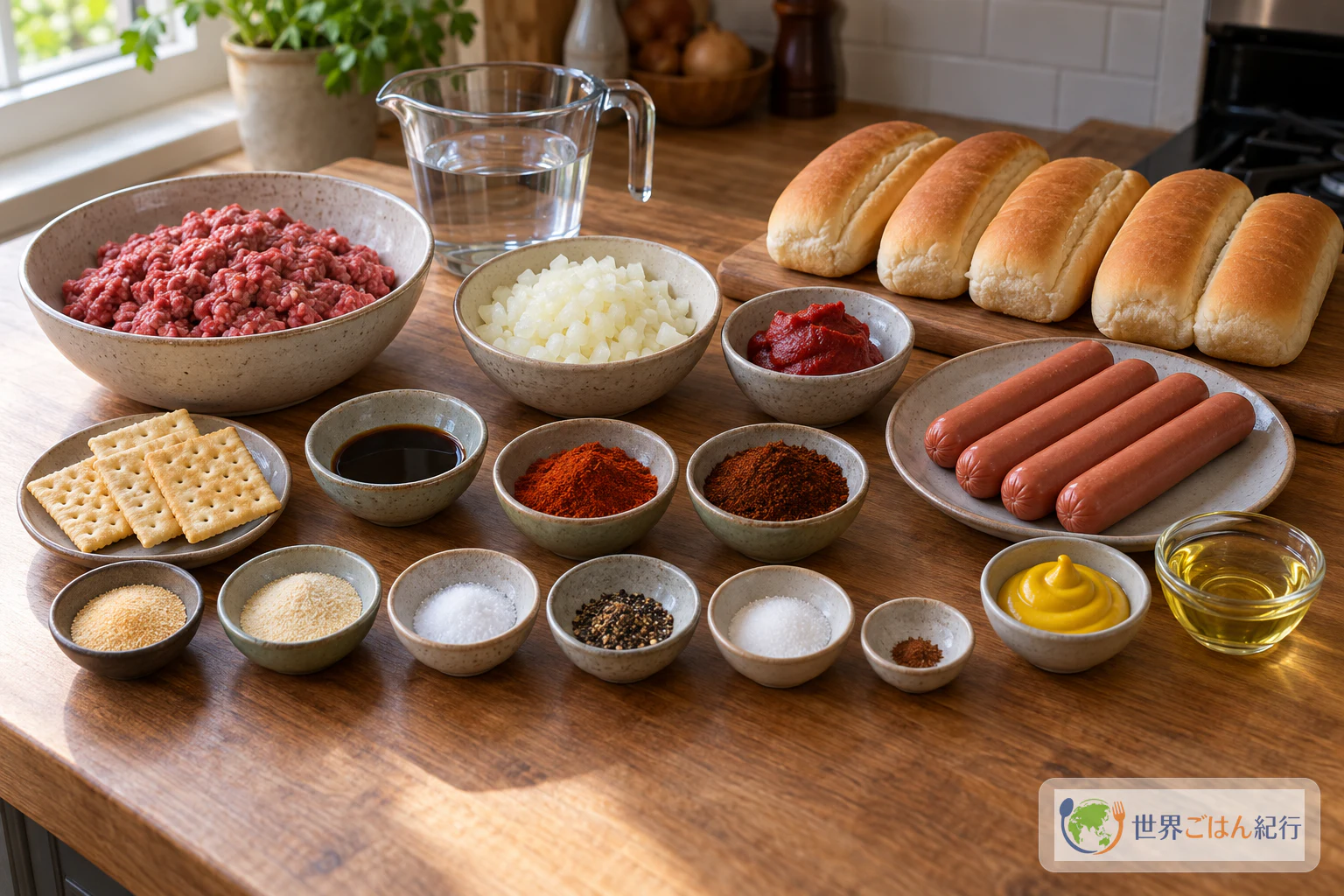
Cups here are about 240 ml.
Check the ingredient labels on the hot dogs, buns, saltines and Worcestershire sauce. Whether they contain wheat, milk, egg, soy or other allergens varies by product. For a gluten-free version, choose suitable buns and crackers, and check the production-line statements as well.
Choosing and Substituting: What Changes the Flavor
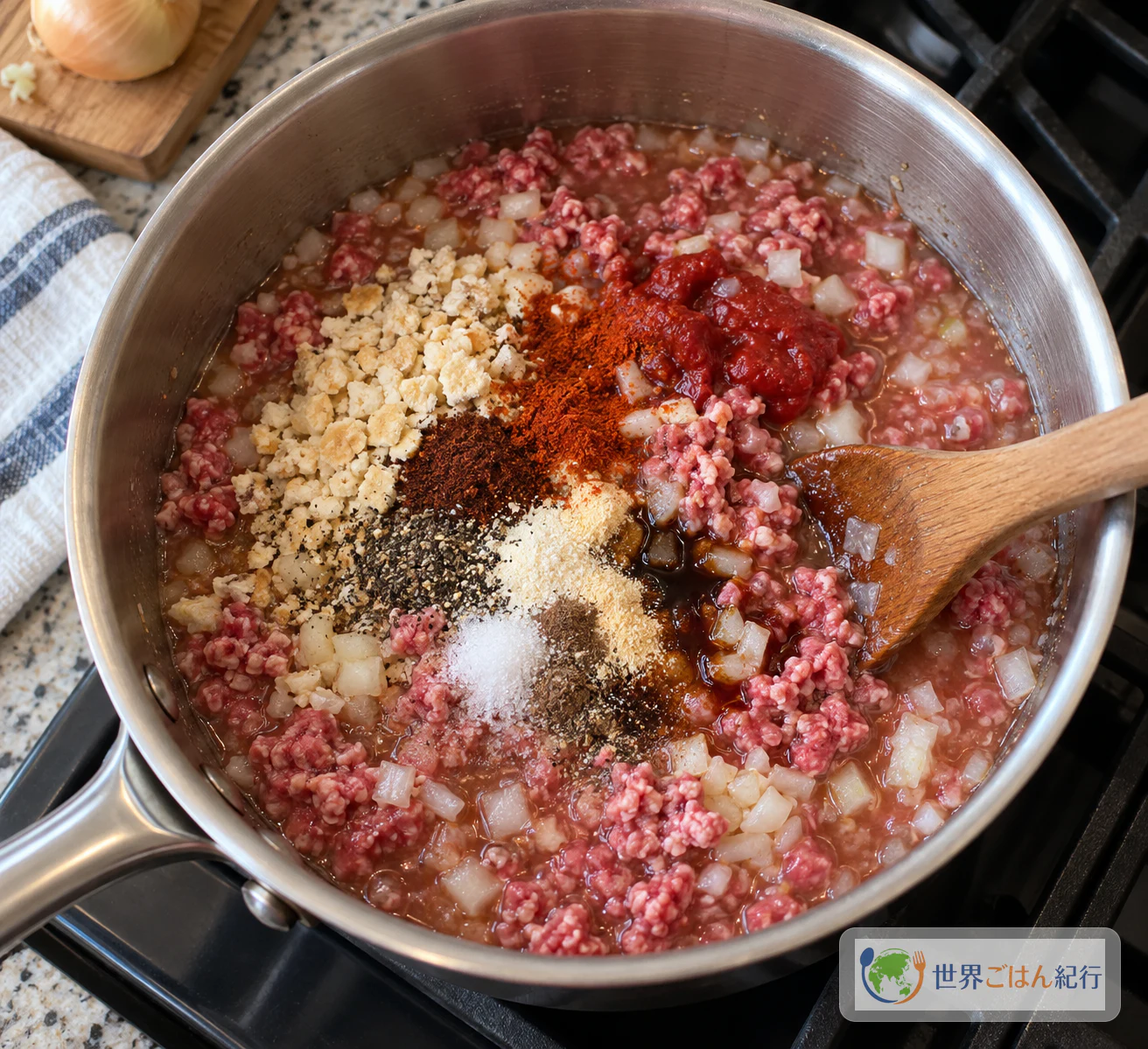
Ground beef. Use ordinary ground beef that is easy to find. A beef-and-pork mix also works, but the pork adds sweetness and makes the beef flavor milder.
Saltines. Plain or unsalted crackers can stand in. Saltiness differs by product, so adjust the salt at the end. In this recipe the crackers help give the sauce body; they are not a standard ingredient shared by every Detroit restaurant.
Tomato paste. Avoid swapping in ketchup, which makes the sauce sweeter and more sour.
Worcestershire sauce. Worcestershire-style sauces vary. Some, such as Japanese-style versions, are sweeter and more vegetable-forward, so the same amount gives a different flavor.
Chili powder. American chili powder is a spice blend, not the same as pure ground chile. If you substitute a hotter pure chile powder, start with less and adjust aroma and heat separately.
Granulated garlic and onion powder. The powders spread aroma evenly through the sauce. Replacing them with fresh garlic or onion changes the moisture and flavor.
Allspice. If you don't have it, leave it out. Don't replace it one-for-one with cinnamon or another spice.
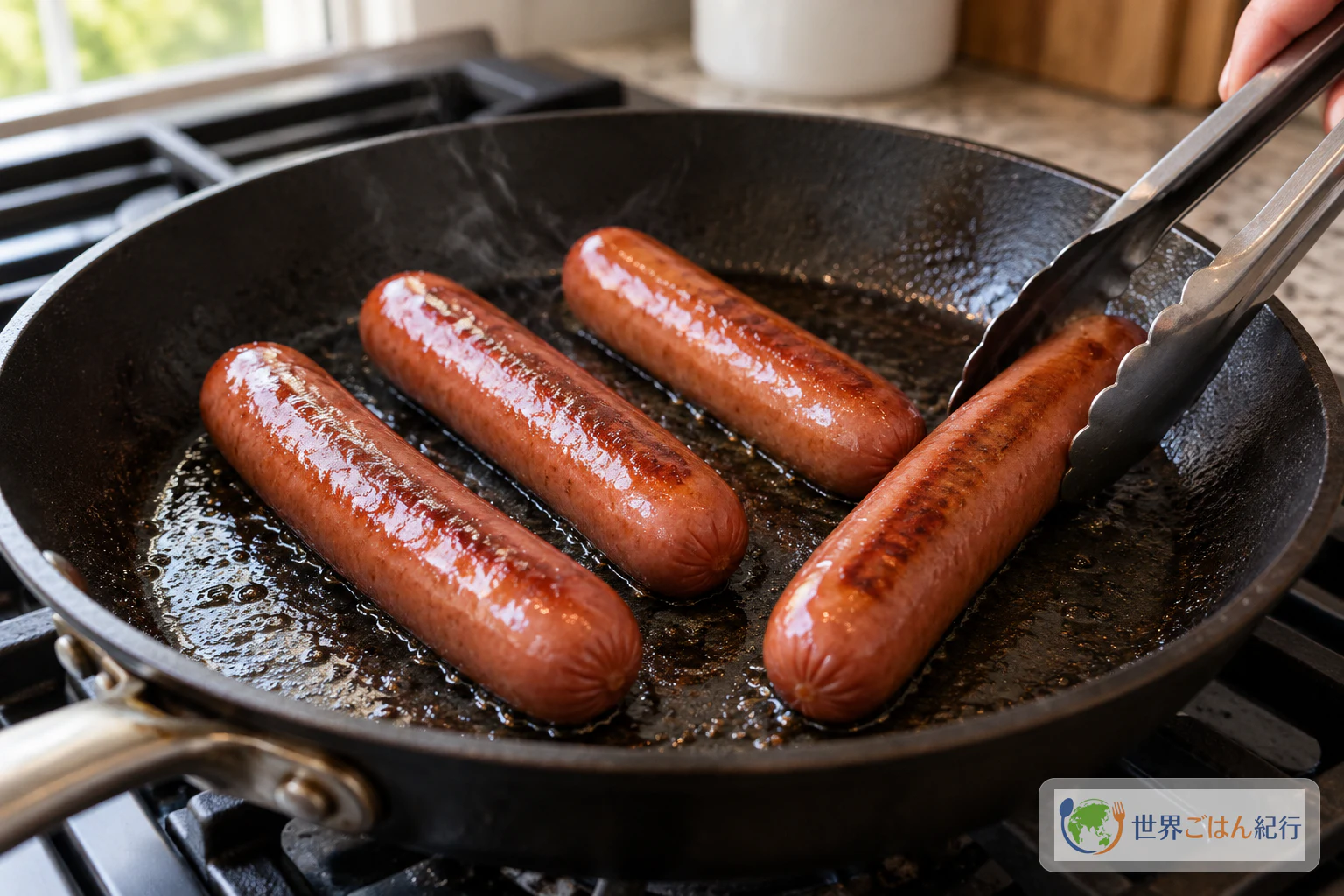
Hot dogs. Beef-and-pork hot dogs with natural casings are best. Coarse-ground sausages work as a substitute, but you won't reproduce the snap of a natural casing or the flavor of Michigan-made products. Follow the package for whether the sausage is pre-cooked or raw and how to heat it.
Buns. Small soft rolls can substitute, though sweetness and crust thickness will differ.
Mustard. Look for American-style yellow mustard. Hot Japanese mustard (karashi) or wholegrain mustard taste different and move the dish away from its usual finish.
Raw onion. Chop it and use it soon. Keep the onion for topping in its own container, apart from anything that has touched raw meat.
Equipment
- Small saucepan (a heavy-bottomed one helps against scorching, but any small pan works if you stir along the bottom)
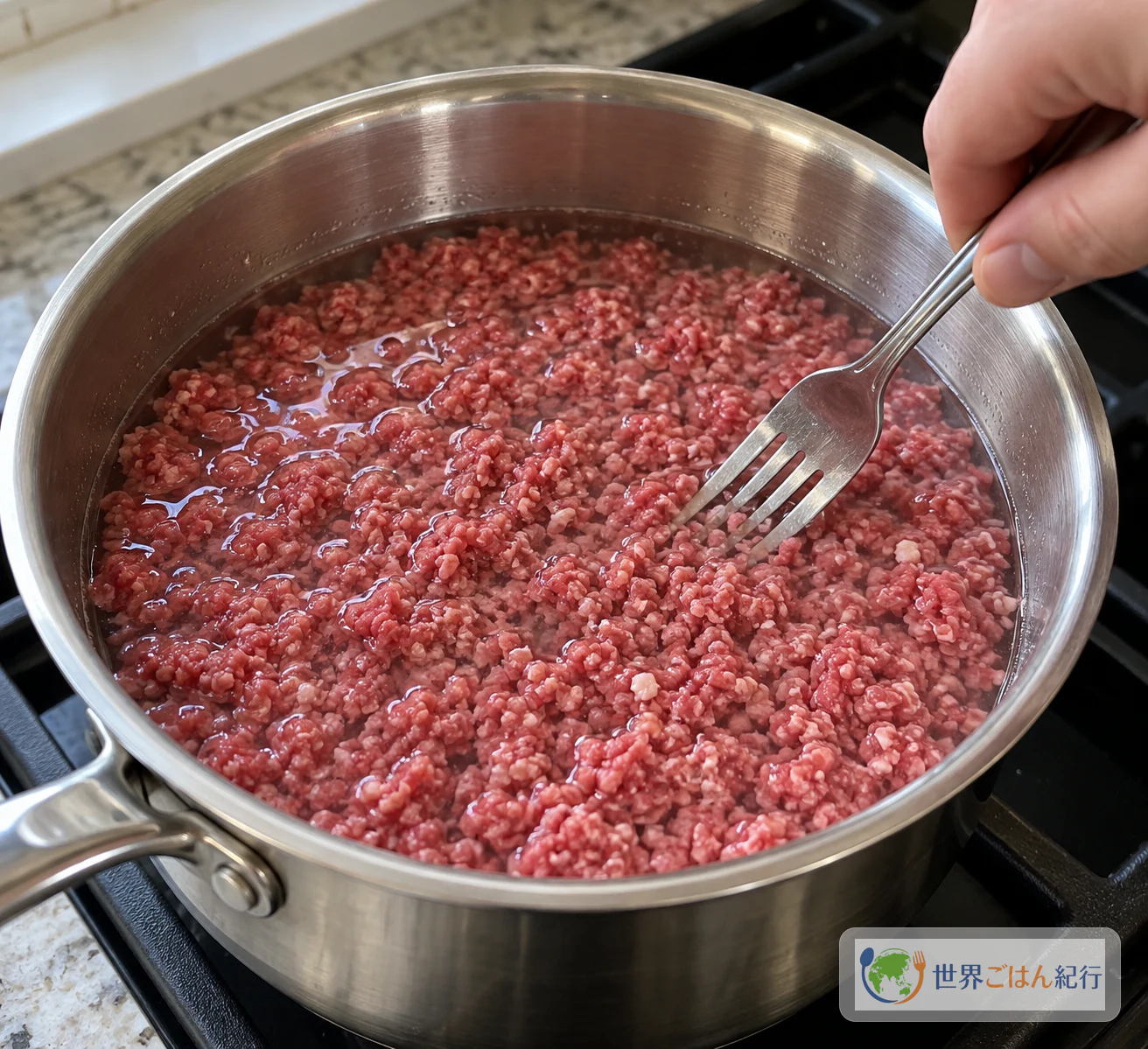
- Fork for breaking up the raw beef
- Wooden spoon or spatula for stirring the sauce
- Skillet for the hot dogs and buns
- Food thermometer for checking the sauce
- Separate small container for the raw topping onion
- Paper plates and forks for serving
The fork you use to break up the raw beef should not go on to touch the raw onion, the buns or the finished dogs. Wash it, or use separate utensils, and keep the topping onion in a separate container.
Method: From Fine Beef Sauce to the Finished Dog
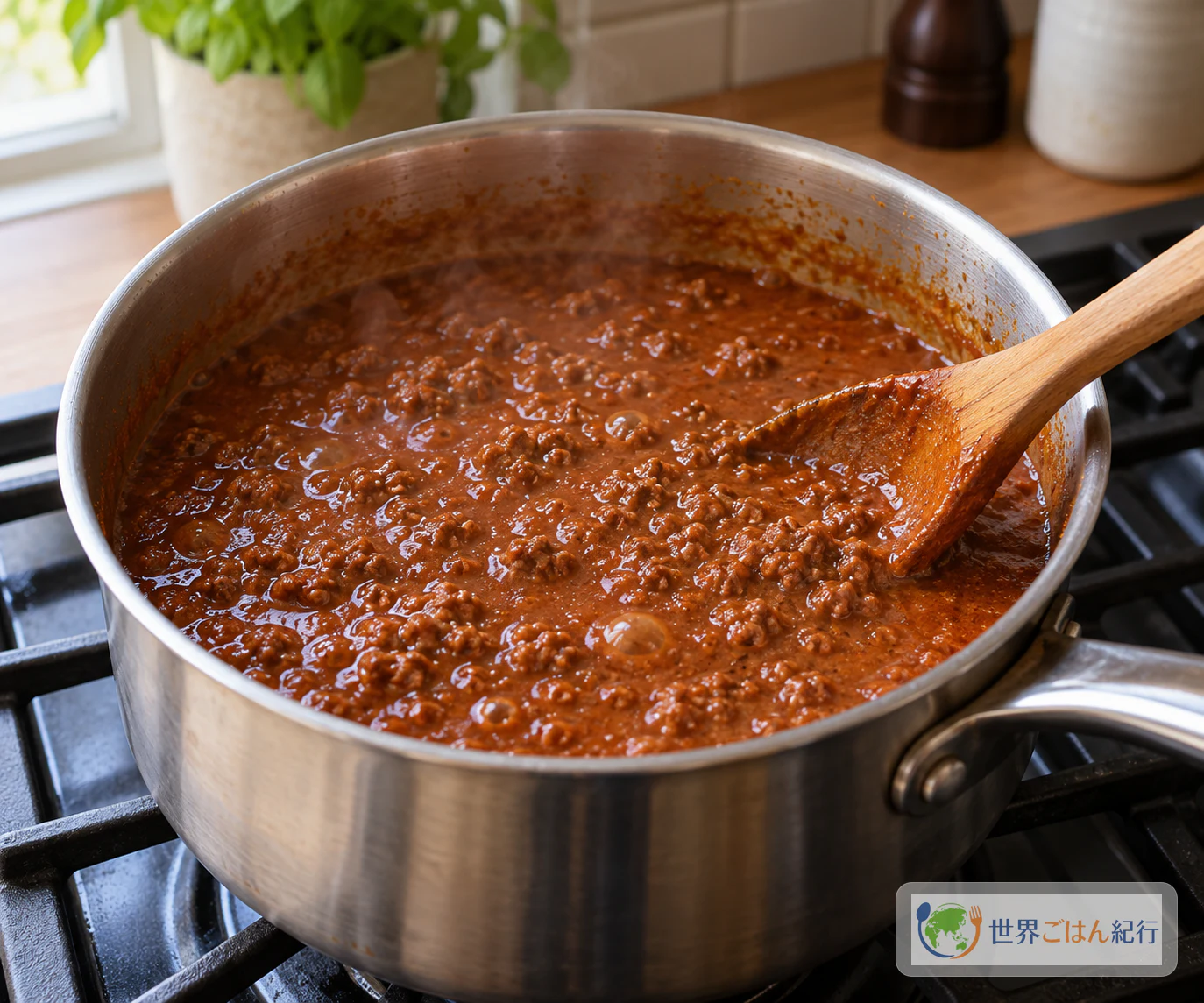
The sauce is made first: the beef goes into water and is broken up before any heat. While the sauce simmers, brown the hot dogs and toast the buns, then assemble while everything is warm.
Troubleshooting: Lumpy, Soupy, Stiff or Soggy
| Problem | Likely cause | What to do |
|---|---|---|
| The meat forms big crumbles | Not broken up enough in the water before heating | Break it up thoroughly in water before the heat goes on, and stir from the bottom a few times while it simmers |
| The sauce is soupy | Not cooked down enough | Keep it uncovered at a gentle boil and cook a few minutes more at a time |
| The sauce is stiff and packed | Cooked down too far | Add water back a little at a time. Don't add a lot at once; keep the sauce holding together |
| The sauce scorches | Kept on high heat; bottom not stirred | Don't keep simmering on high. Stir along the bottom regularly and lower the heat if it starts to stick |
| The bun falls apart | Untoasted bun, or left standing after topping | Lightly toast the cut side, and eat soon after assembling |
| The flavor feels flat | Mustard or raw onion left off | Don't skip the yellow mustard and raw onion. If you want more heat, adjust in small amounts rather than piling on chile |
Making the Sauce Ahead and Reheating
The original recipe notes that the sauce can be refrigerated for up to 3 days or frozen for up to 1 month. Treat that as the recipe's own make-ahead note, not as a universal safety deadline for every home kitchen.
To store it, move the sauce into a clean, shallow container soon after cooking and refrigerate it. Store the sauce, hot dogs and buns separately, and assemble just before eating rather than making finished dogs ahead. Thaw frozen sauce in the refrigerator.
Reheat in a saucepan over medium-low heat. If the fat separates, stir in water 1 tbsp at a time until it comes back together. Reheat thoroughly, using the same check as when cooking: 75°C (167°F) at the center for at least 1 minute. For the hot dogs, follow the package's heating instructions.
Variations That Keep the Character
These change the flavor in clear ways. None of them is "the authentic standard"; they're options for a home table.
| Variation | What changes |
|---|---|
| All-beef hot dogs | The sausage tastes meatier, with less of the sweetness pork brings |
| Beef-and-pork ground meat in the sauce | The beef richness becomes rounder and milder |
| Less chili powder | Lower heat, with the paprika and allspice aroma more to the front |
| Extra raw onion on the side | Stronger raw sharpness and crunch; keep it in a separate container |
| Sauce served alongside | The bun stays drier, and each person decides how much sauce to add |
Keep these changes separate from the base recipe. Making the sauce drier and more crumbly, for example, moves it toward the Flint style, which is a different regional type rather than an improvement on the Detroit one.
Culture and History: Why Detroit Has So Many "Coney Islands"
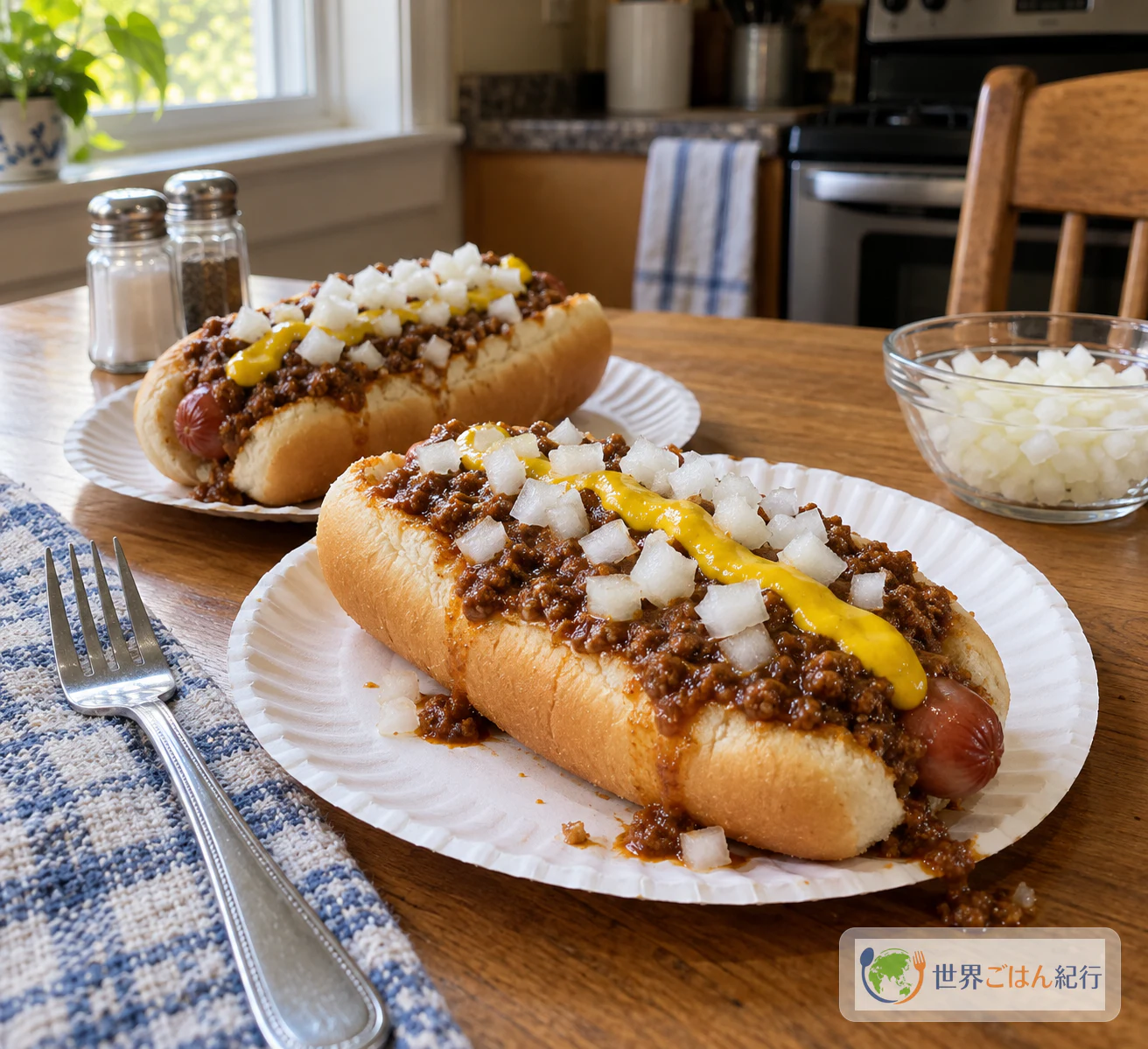
In Detroit, a Coney dog is a frankfurter in a steamed soft bun, topped with beanless meat chili, diced onion and yellow mustard. That is how the Detroit Historical Society's Encyclopedia of Detroit describes it, noting that the dish did not originate at Brooklyn's Coney Island. The "Coney Island" name on Detroit restaurants, then, doesn't mean the food was carried over unchanged from New York, where hot dogs are comparatively unadorned.
Smithsonian Magazine traces the Coney's spread through the Midwest to Greek and Macedonian immigrants, and points out that the same name came to mean different things in New York and the Midwest. It also notes a resemblance between Coney sauce and saltsa kima, a Greek meat sauce. That is a point of comparison, not a proven origin. The magazine does not name one uncontested inventor, and early Detroit restaurant history remains disputed.
The Detroit Historical Society likewise presents several early-restaurant claims, including Greek immigrant Gust Keros and American Coney Island in Detroit, and Todoroff's in Jackson, Michigan. These are claims as recorded, and they don't settle who was first.
WDET, the public radio station of Wayne State University, connects the Coney to the city's working life: a quick meal suited to auto-industry workers, served in restaurants where regulars and families have long come back. Its reporting includes Greek immigrant family accounts and the rivalry between American Coney Island and Lafayette Coney Island, which stand next to each other. Those family stories belong to the people who tell them. WDET also notes that the exact sauce recipes at these restaurants are kept secret.
That secrecy is part of why the sauce matters so much: in Detroit, the difference in sauce is a large part of each restaurant's identity. Even within the city the sauces differ, and in Flint the style is described as drier, with more texture from the meat. None of these is a single "correct" recipe.
That's the frame for the recipe on this page. It doesn't claim to reproduce American's or Lafayette's sauce. It's a published home recipe that keeps the parts a home cook can control: very fine beef, no beans, a snappy hot dog, a soft bun, mustard and raw onion. For more American regional dishes built around bread, see the po' boy.
Frequently Asked Questions
Is the Coney Island hot dog a New York dish?
It depends on where you are. In New York, it can mean the comparatively plain hot dog sold at Brooklyn's Coney Island. In Michigan and the Midwest, a Coney is a hot dog topped with meat sauce, and the Detroit version did not originate in Brooklyn. Its history runs through Greek and Macedonian immigrant restaurateurs, and the exact origin story is disputed.
What's the difference between a Detroit Coney and a Flint Coney?
As a broad tendency, Detroit's sauce is looser and saucier, while Flint's is drier with more meat texture. Restaurants differ even within each city, so treat this as a general direction rather than a rule.
Do Coney dogs have beans or ketchup?
Not in this Detroit-style recipe. The sauce is beanless, and the finish is yellow mustard and chopped onion. Ketchup isn't part of the standard topping.
Can I use whatever sausages I can find?
Yes. Coarse-ground sausages work, but you won't get the snap of a natural casing or the flavor of the Michigan-made hot dogs the dish is known for. Follow the package for whether the sausage is pre-cooked and how to heat it.
Can I make the sauce ahead?
The original recipe says the sauce can be refrigerated for up to 3 days or frozen for up to 1 month. Cool it in a shallow container, store it apart from the hot dogs and buns, and reheat it in a saucepan over medium-low heat until the center reaches 75°C (167°F) for at least 1 minute, stirring in a little water if the fat separates.
Sources
- Smithsonian Magazine, "The Origin of the Coney Island Hot Dog Is a Uniquely American Story." The different meanings of the name in New York and the Midwest, the role of Greek and Macedonian immigrants, the uncertain invention story, differences among Detroit, Flint and Cincinnati styles, and disputed early Detroit restaurant history. A historical overview; it does not establish one inventor or a canonical recipe. https://www.smithsonianmag.com/history/origins-coney-island-hot-dog-uniquely-american-story-180959659/
- Detroit Historical Society, Encyclopedia of Detroit, "Coney Dog." The Detroit Coney's composition (frankfurter, steamed soft bun, beanless meat chili, diced onion, yellow mustard), that it did not originate at Brooklyn's Coney Island, early-restaurant claims in Jackson and Detroit, and differences in sauce among Detroit restaurants. https://www.detroithistorical.org/learn/online-research/encyclopedia-of-detroit/coney-dog
- WDET 101.9 FM / Wayne State University, "CuriosiD: Why are there so many Coney Islands in Detroit?" The Coney as a quick meal in the context of Detroit's working and auto-industry life, attributed Greek immigrant family accounts, the American/Lafayette rivalry, restaurant atmosphere and regulars, toppings that differ from Brooklyn's, and the secrecy of restaurant sauce recipes. https://wdet.org/2023/03/09/curiosid-why-are-there-so-many-coney-islands-in-detroit/
- The Washington Post, Jessica Rudolph, "Coney Island Hot Dogs." The basis of this recipe: 4 servings, sauce ingredients and original quantities, breaking the beef up in water before simmering, the uncovered simmer of about 30 minutes, browning the hot dogs for 8–10 minutes, toasting the bun interior and assembling with sauce, mustard and onion, and the make-ahead note of up to 3 days refrigerated or 1 month frozen. A published home recipe, not a copy of a Detroit restaurant's sauce. https://www.washingtonpost.com/recipes/detroit-style-coney-island-hot-dogs/
- Ministry of Health, Labour and Welfare (Japan), "家庭でできる食中毒予防の6つのポイント" (Six points for preventing food poisoning at home). Heating to 75°C at the center for at least 1 minute, keeping utensils separate, cooling in shallow containers and reheating. It does not give Coney-specific amounts or storage periods. https://www.mhlw.go.jp/stf/seisakunitsuite/bunya/kenkou_iryou/shokuhin/syokuchu/01_00006.html