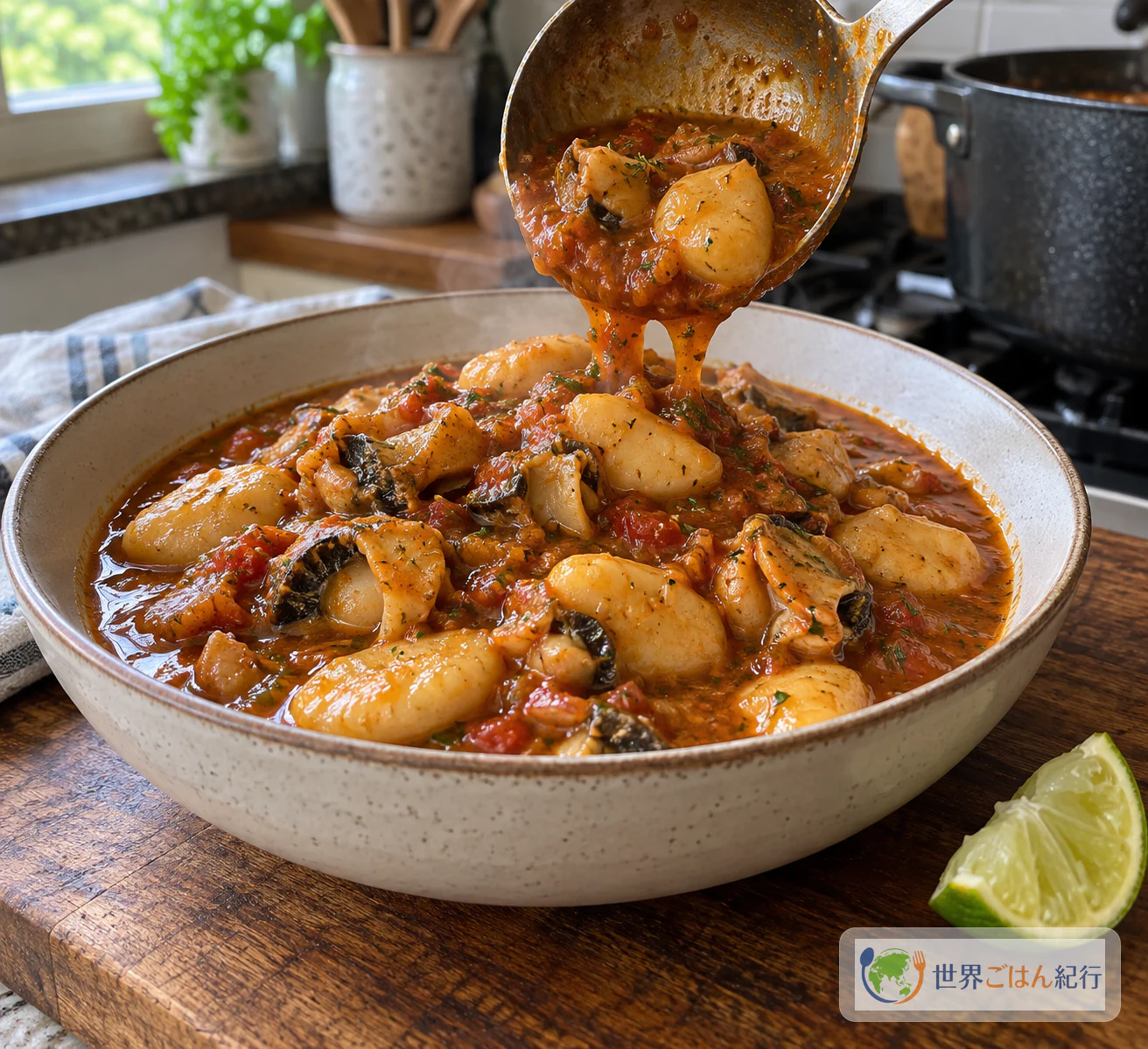
Conch and Dumplings: Firm Shellfish and Soft Dumplings in One Dark Gravy
Cook the conch until you can bite through it, keep the Scotch bonnet whole so it scents the gravy without bursting, and give the dumplings just enough time in the simmering gravy to cook through to the center.
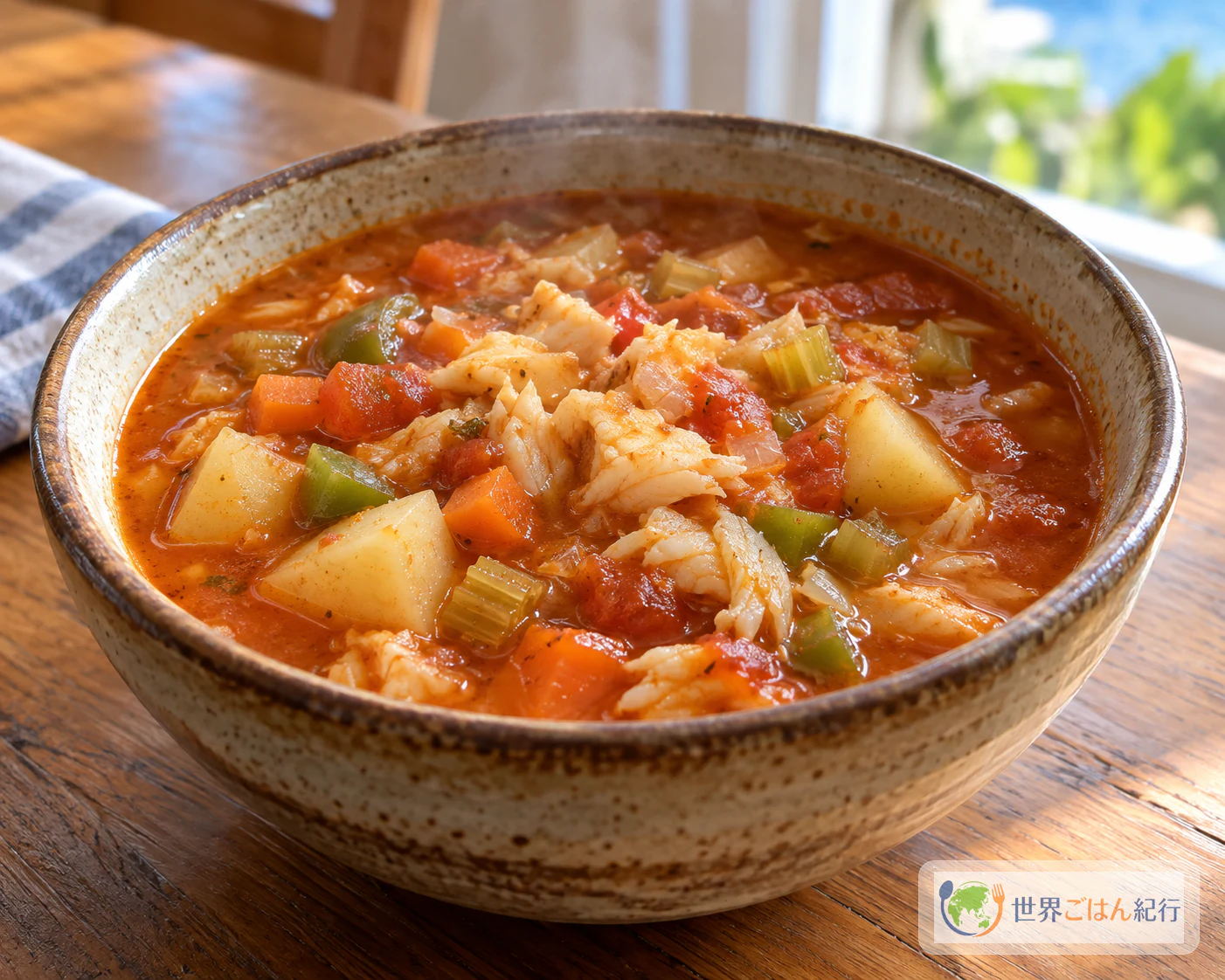
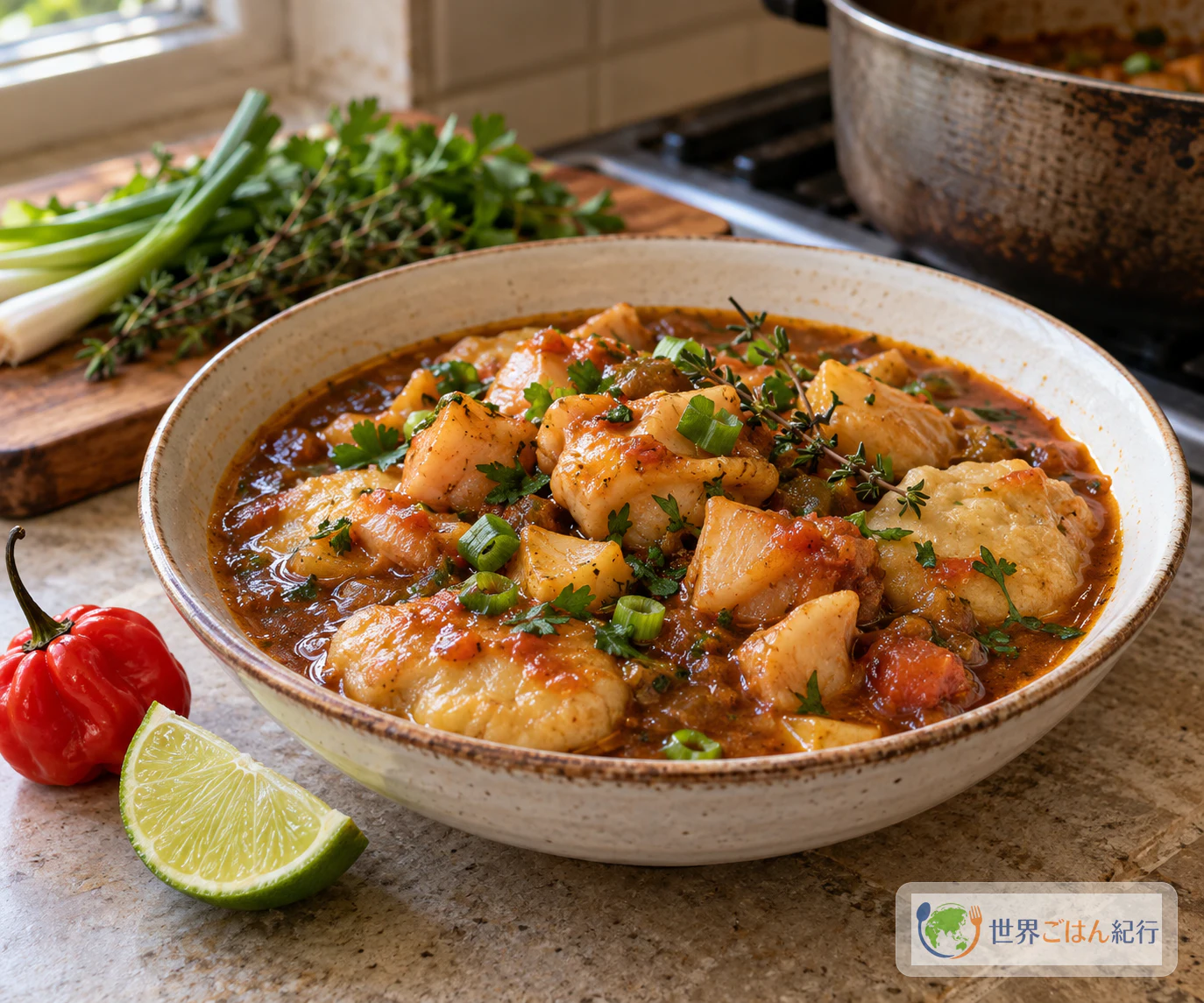
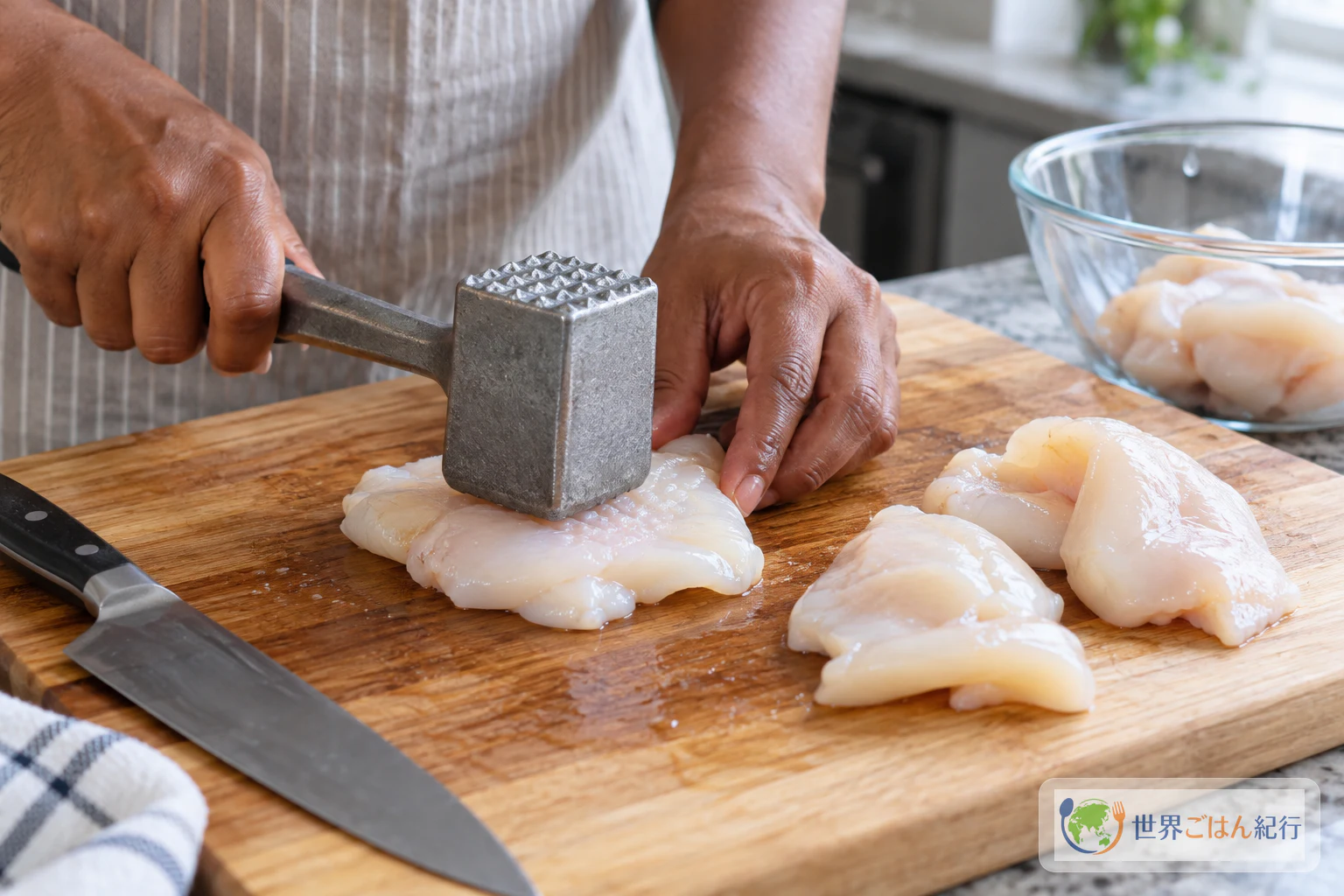
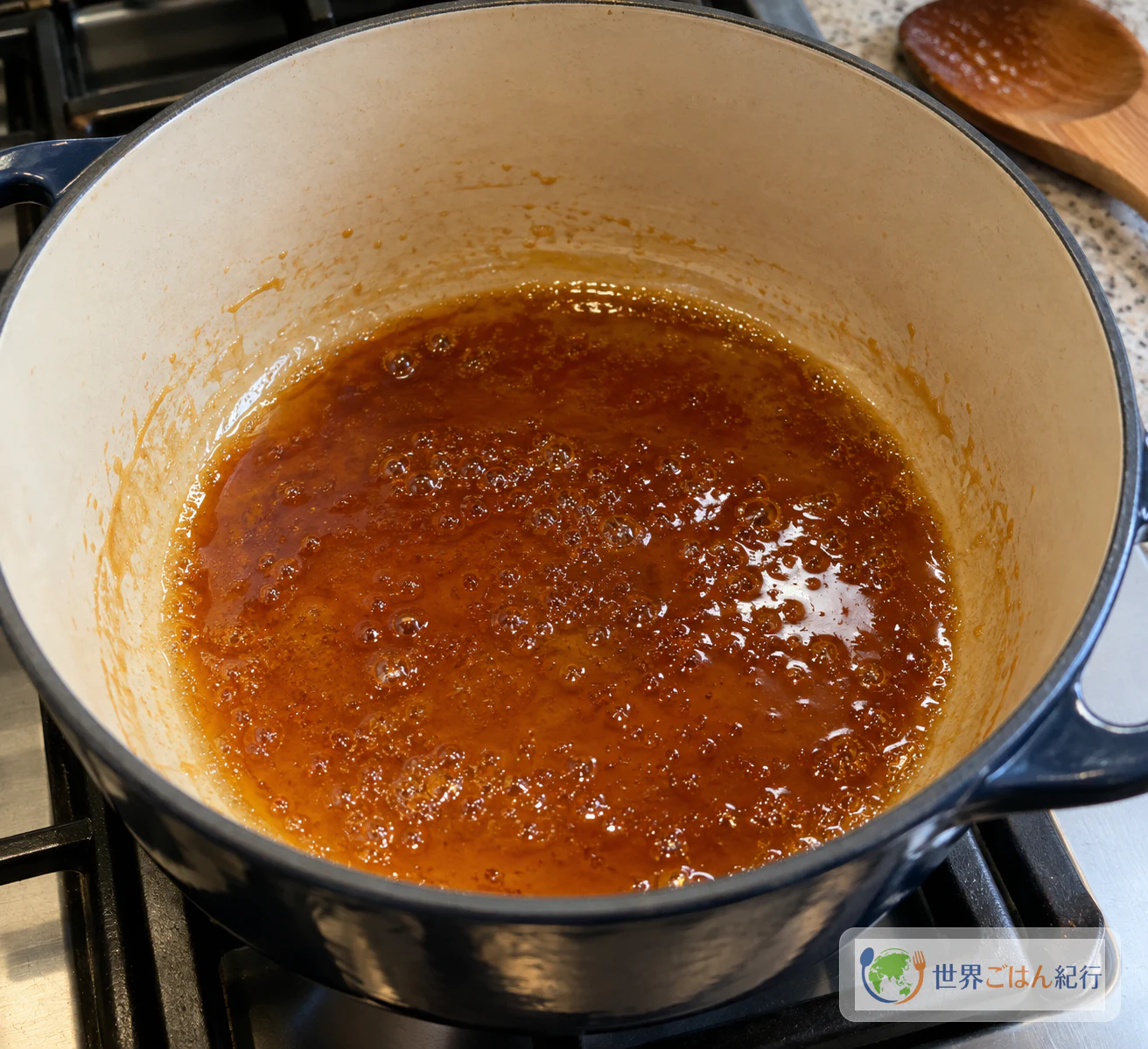
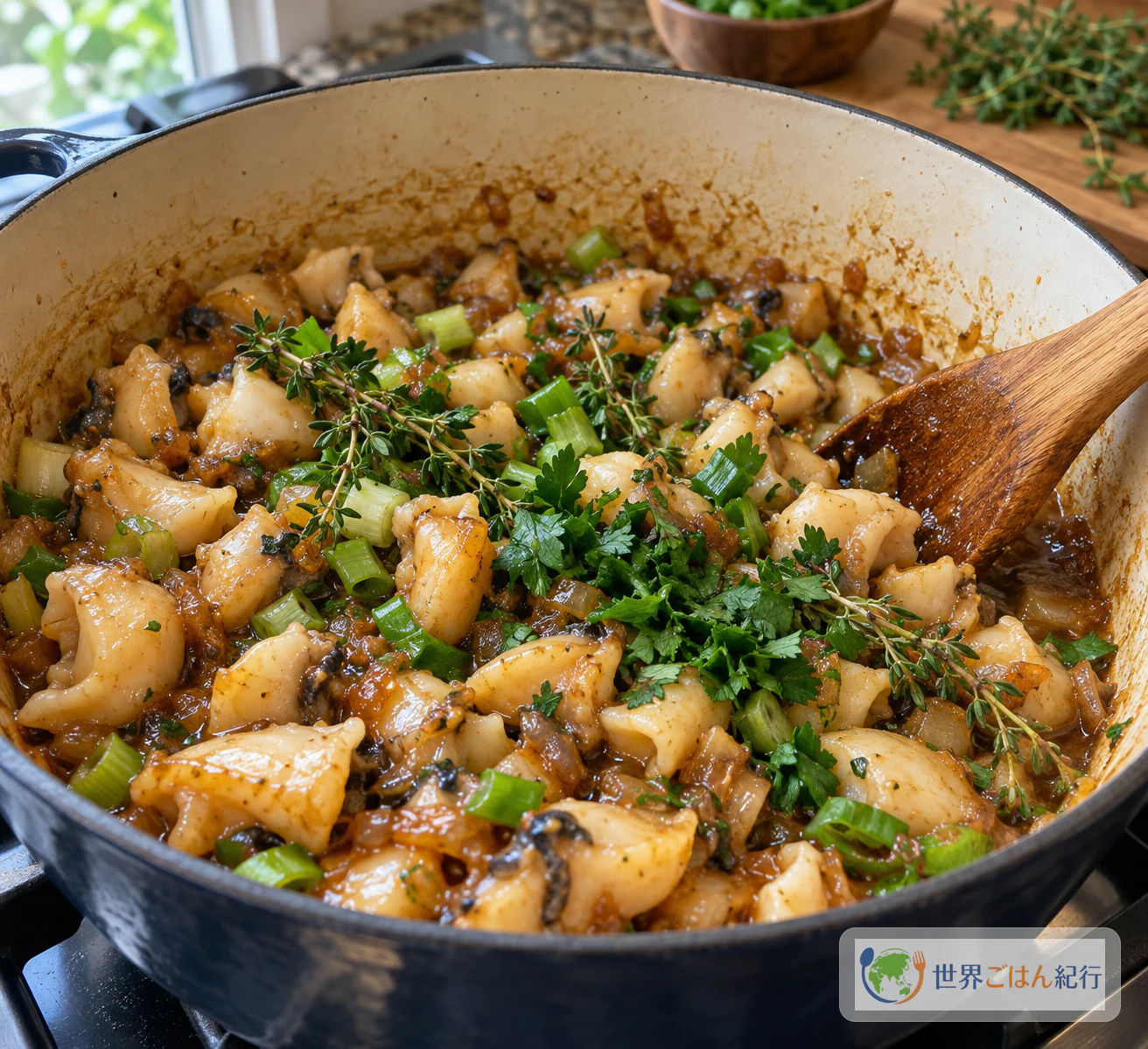
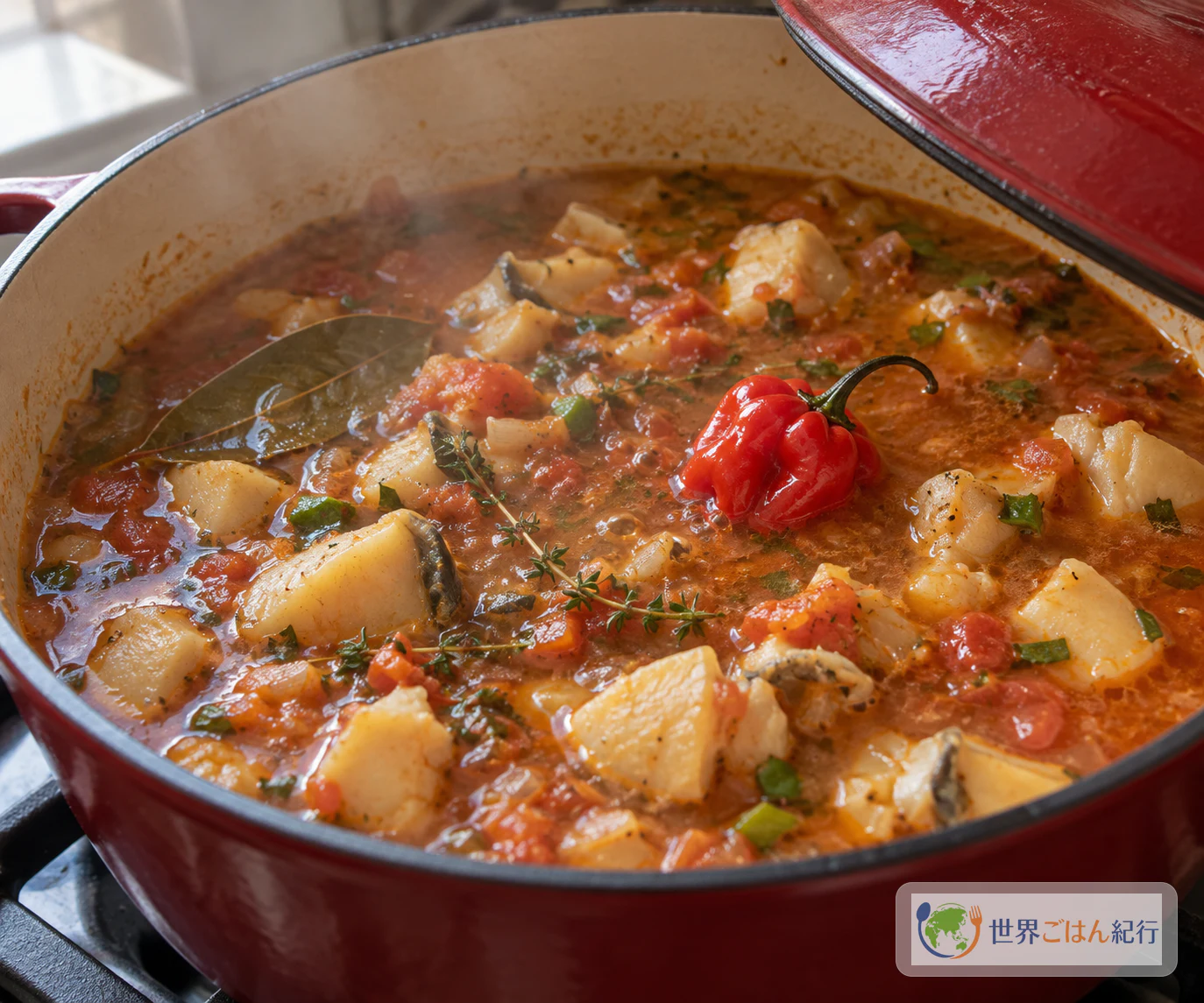
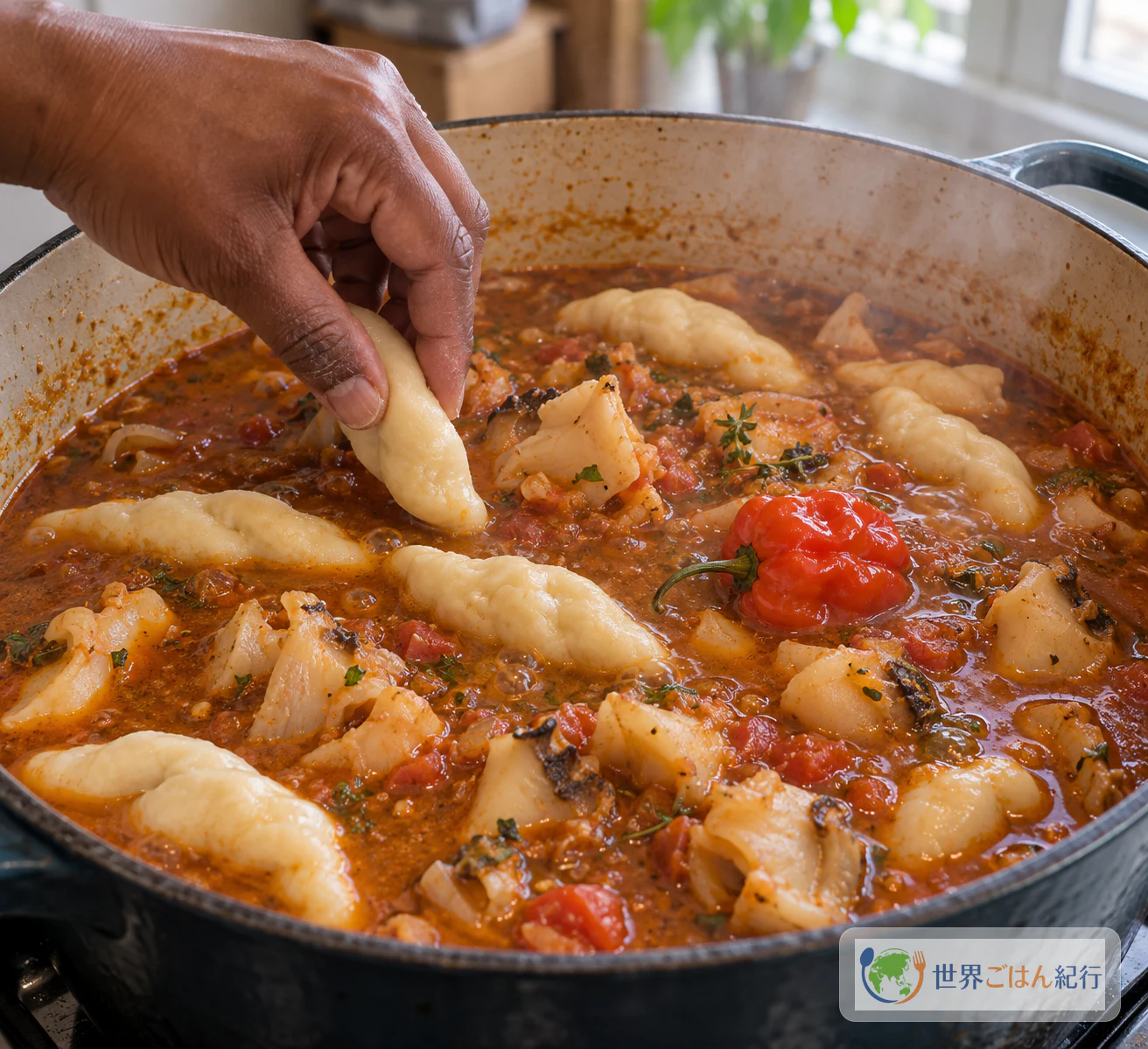
Brown sugar melts into hot oil and darkens at the bottom of a heavy pot. Pieces of pounded conch go in and pick up that caramel color, then spring onion, thyme and parsley, and finally water, tomato purée, bay leaves and one whole Scotch bonnet. The pot simmers with the lid on until, near the end, small flattened flour dumplings are dropped in to cook in the gravy. That is conch and dumplings, a dish named among the local foods of Sint Maarten, the Dutch side of an island shared with French Saint-Martin.
The recipe here follows one published six-serving version from FabulousFusionFood, used as a whole, without mixing in amounts from other recipes. It is one example from the web, not an official recipe and not a single standard for every kitchen on the island. Sekai Gohan has not kitchen-tested this recipe.
You will see the dish written as Conch and Dumplings or Conch with Dumplings in English. The Sint Maarten National Heritage Foundation & Museum lists it as "Conchs Dumpling."
A Lolo Dish, and One of Several "National Dish" Answers
Visit St. Maarten / St. Martin, the island's tourism site, describes the lolo as a small traditional eatery and names conch and dumplings, alongside callaloo soup, as local dishes to try there. Callaloo soup is a separate dish; it is not another name for conch and dumplings. The same site frames the island's food as the product of a multicultural Dutch-French setting.
The Sint Maarten National Heritage Foundation & Museum includes "Conchs Dumpling" in its list of the island's food culture. The listing confirms the dish's place but does not describe ingredients, method or history, so this article does not offer an origin story or a date.
A Taste of Sint Maarten, a cooking site run by someone from the island, writes that what people name as the national dish varies from person to person: conch with dumplings is one answer, alongside saltfish and barbecue chicken with johnny cakes. The site puts weight on family cooking and memories of the table. That is one person's view rather than an official designation, so here conch and dumplings is treated as one of the island's well-loved dishes, not the only correct national dish.
Sint-Maarten.net, a general information site, also describes the dish as Dutch-side cooking and mentions rice, vegetables and johnny cakes as things eaten with it. That page carries its own recipe, but its ingredient list and method disagree about sugar, so its amounts are not used here.
What you are building in the pot
| Part | What it brings | What to watch |
|---|---|---|
| Conch | A firm shellfish bite in every spoonful | Pound or pressure-cook first, then judge by whether you can bite through it |
| Caramel base | Color and depth from brown sugar cooked in oil | Take it dark, but stop before smoke, blackening or a bitter smell |
| Herbs, tomato and chilli | Spring onion, thyme, parsley, tomato purée, bay and a whole Scotch bonnet | Keep the chilli whole and unbroken |
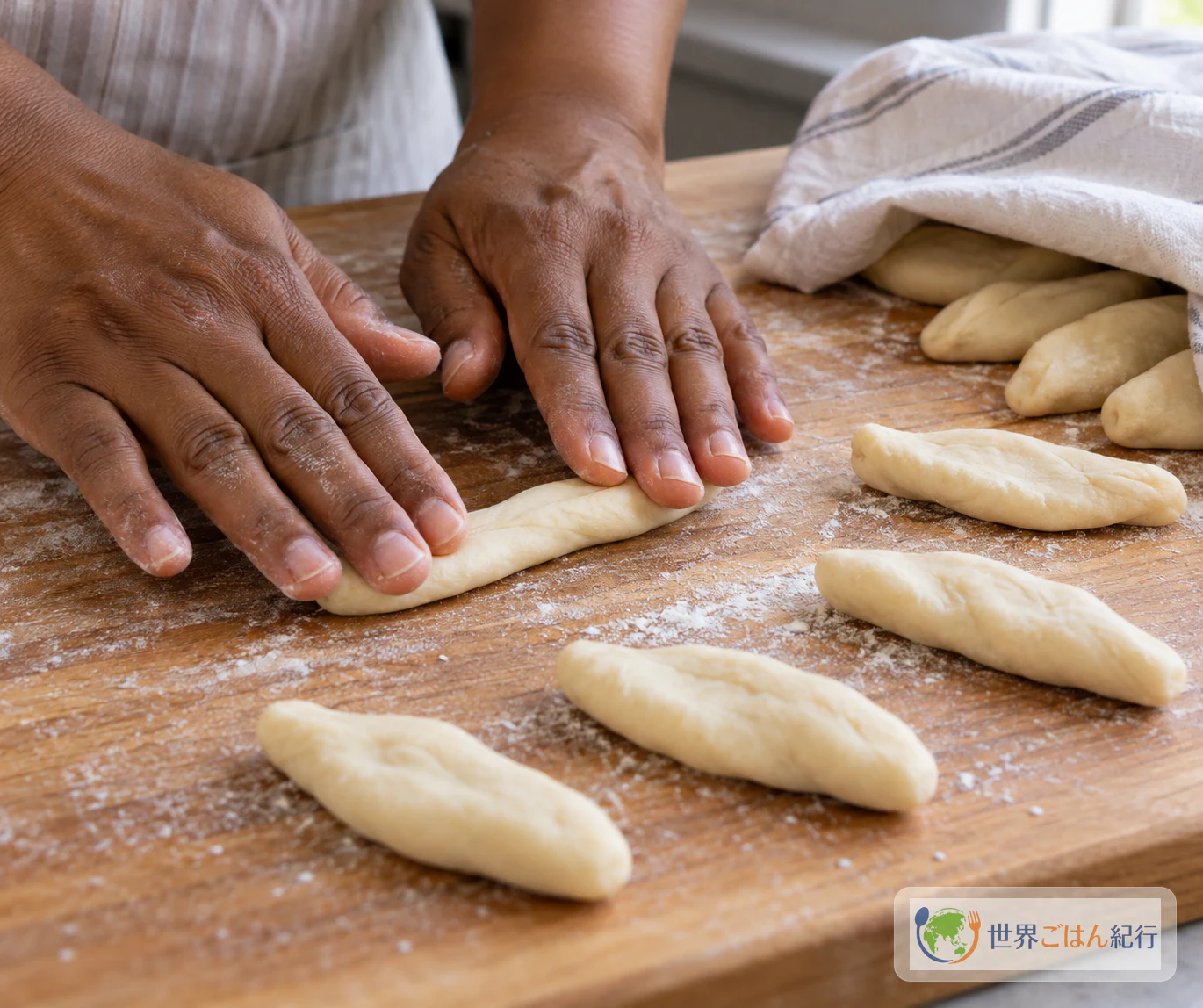
| Dumplings | Soft, plain flour pieces that cook in the gravy | Shape small and slightly flat; split one to check the center |
Ingredients for 6: Stew and Dumplings Measured Separately
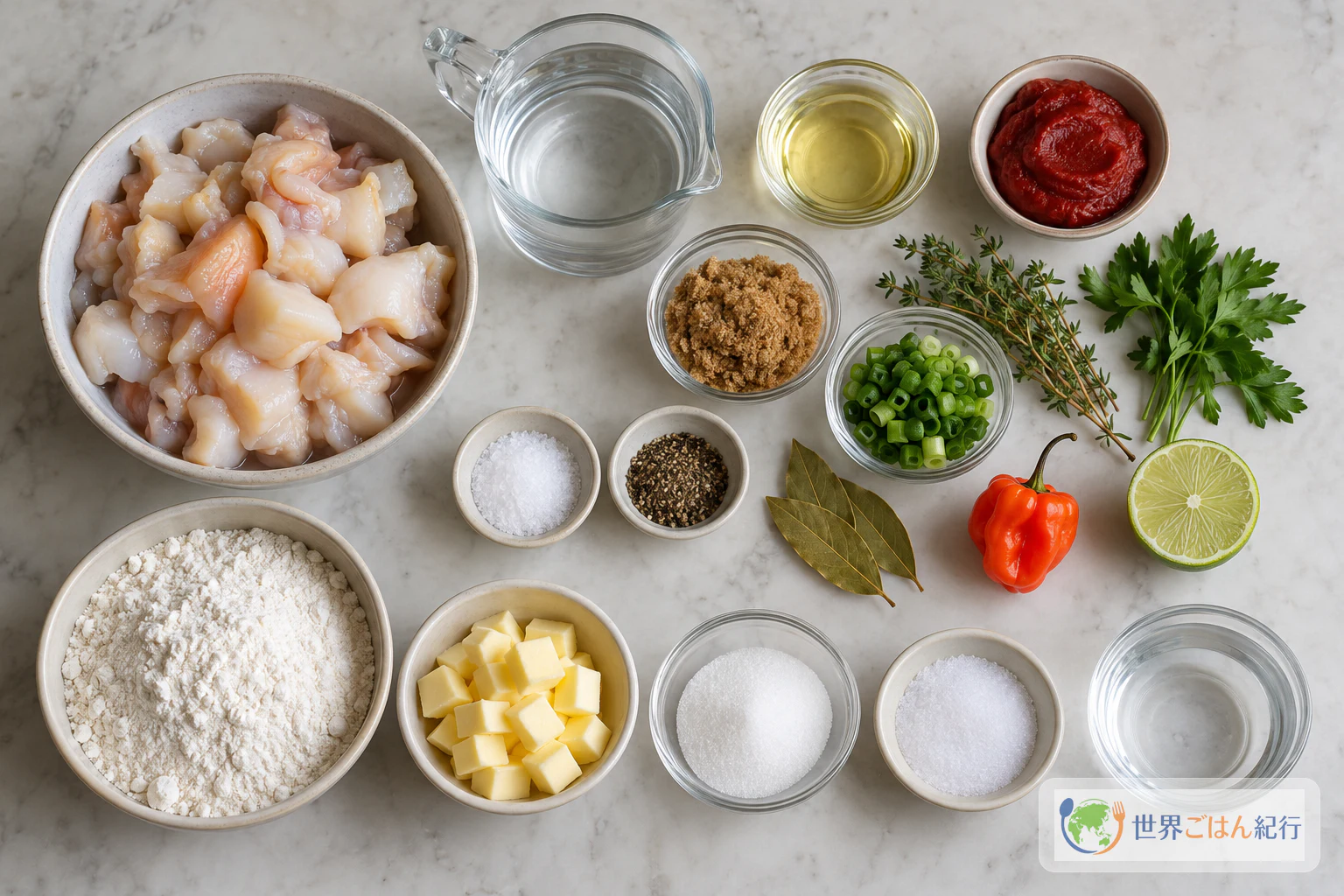
Two waters, two sugars and two salts appear below. Set the dumpling ingredients apart from the stew ingredients before you begin so they don't get mixed up.
Equipment
- Heavy pot with a lid
- Cutting board and sharp knife
- Meat mallet (or a pressure cooker)
- Sieve for the flour
- Mixing bowl
- Clean damp cloth
- Wooden spoon
Choosing and Substituting
Conch. Fresh conch may be hard to find outside the Caribbean, and availability varies by place. If you buy frozen or canned conch, check the label for whether it is already cooked and follow its handling and preparation instructions; pre-cooked conch will behave differently in the pot, and the texture will not be the same. Other shellfish can be cooked this way, but the bite and flavor change, so the result should not be thought of as the same dish.
Tomato purée. Products sold under the British term "tomato purée" and under "tomato paste" can differ in concentration, so if you use a concentrated tomato paste instead, treat it as your own adjustment and taste as you go.
Scotch bonnet. If you can't get one, another chilli will give a different heat and aroma. Whatever you use, add it whole.
Herbs. Flat-leaf parsley has a different scent and leaf from curly parsley. Use fresh thyme.
Flour. Use plain (all-purpose) flour for the dumplings rather than switching to bread flour.
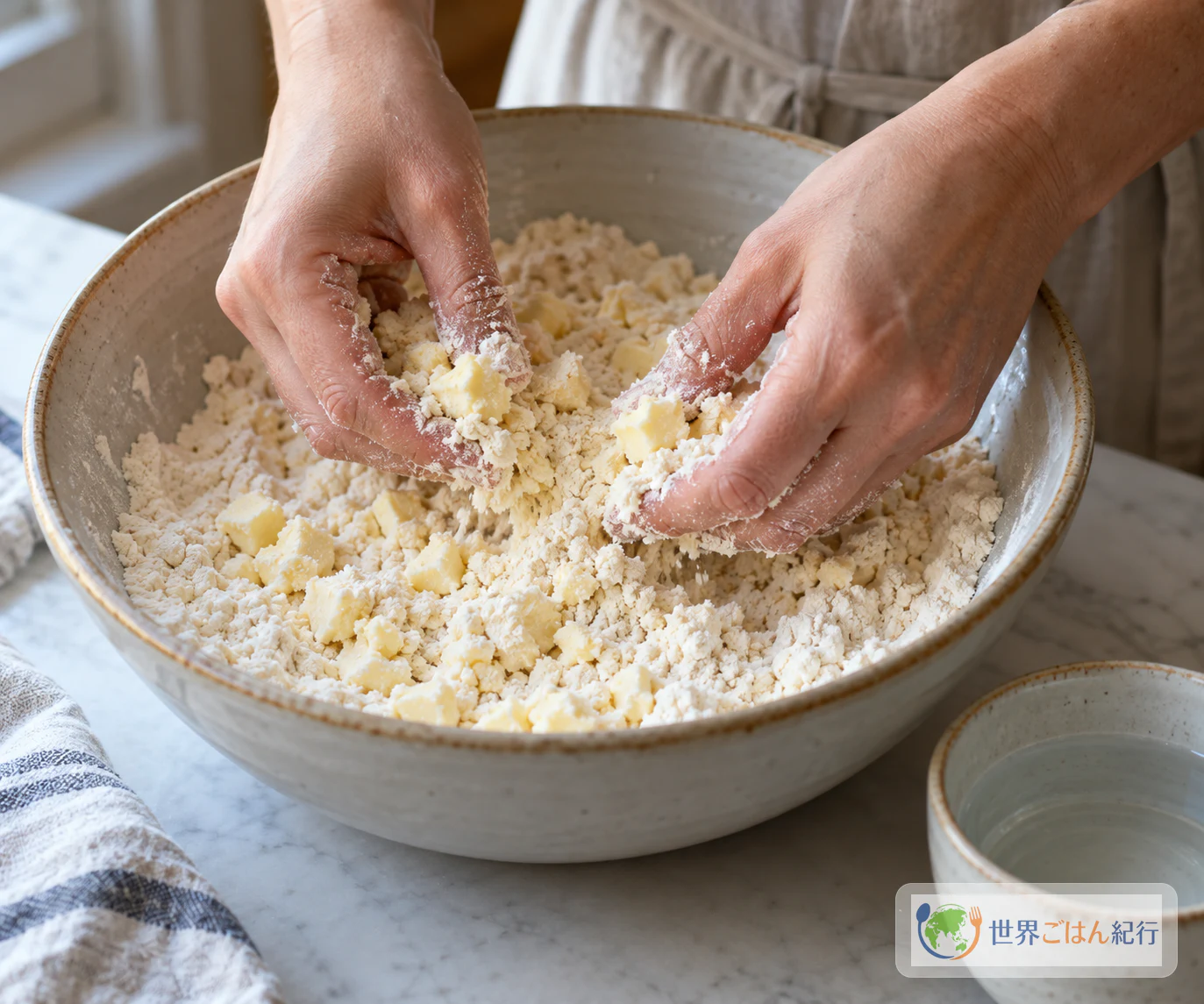
Butter. Use diced butter.
Method: Tenderize, Caramelize, Simmer, Then Dumplings
The times below are guides. How firm your conch is, what the package says, and your pressure cooker's manual come first. The conch is ready when you can bite through it; a dumpling is ready when its center is cooked when you split it.
Fixing Problems in the Pot
| Problem | Likely cause | What to do |
|---|---|---|
| The conch is still tough | Pieces too thick, or simply not cooked long enough for that conch | Keep simmering and check again; the time is a guide, not a promise. Next time, pound the thick parts more evenly |
| The caramel smokes, turns black or smells bitter | The sugar has burnt | Don't carry on with it; clean the pot and start the caramel again, stopping at a deep amber |
| The dumplings are hard | Extra flour worked into the dough | Next time, add the water gradually and stop when the dough is slightly sticky, without adding more flour |
| The dumplings are raw in the middle | Not enough time in the gravy | Keep simmering and split another to check |
| The dumplings stick to the pot | Settling on the bottom as the gravy thickens | Stir gently, and add a little water if the gravy is getting thick |
| The gravy has reduced too far | Long simmer with the lid lifting | Add water a little at a time before it scorches |
| The gravy is hotter than you like | The chilli has split, or simmered longer than you wanted | Keep the chilli whole and unbroken |
Variations and Serving
How it is served. Sint-Maarten.net mentions rice, vegetables and johnny cakes as things eaten with conch and dumplings. They are serving examples, not part of this recipe; the dish here is served on its own.
The dumpling shape. The recipe used here compares the dumplings, rolled into short ropes and slightly flattened, to Trinidad's "spinners." That is a comparison of shape only; it does not mean the dish comes from Trinidad.
Other versions. Other published recipes use different amounts, and families on the island will have their own. The version here is one recipe example, not the island's single standard.
Frequently Asked Questions
What can I use if I can't find conch?
Other shellfish can be cooked in this gravy, but the texture and flavor will be different, so treat it as a different dish rather than an equivalent. If you find frozen or canned conch, check the label for whether it is already cooked and follow its instructions.
What are "spinners"?
The recipe followed here uses the word for the dumpling shape: short, slightly flattened ropes of dough, like Trinidad's spinners. It describes the shape, not the dish's origin.
How can I keep the heat down?
Add the Scotch bonnet whole and keep it unbroken while the pot simmers, tasting the gravy as it cooks. It comes out before serving. Swapping in a different chilli changes both heat and aroma.
How long should I cook frozen conch?
There is no confirmed time for frozen conch. Follow the package instructions, including whether it is already cooked, and simmer until you can bite through it. The 60-minute simmer and the 20-minute pressure-cooker option in the recipe are published guides, not times that hold for every conch or every pressure cooker.
Is the 20 minutes in a pressure cooker reliable?
It is the time given in the published recipe, but it doesn't say how the cooker is brought to pressure or released. Follow your cooker's manual and check the conch afterward; if it is still firm, give it more time in the simmer.
Sources
- Visit St. Maarten / St. Martin, "Taste the best restaurants of St.Maarten / St.Martin." Describes the lolo as a small traditional eatery and names conch and dumplings, alongside callaloo soup, as local dishes; describes the island's multicultural Dutch-French food setting. Does not give a history or recipe. https://www.visitstmaarten.com/culinary-capital/
- Sint Maarten National Heritage Foundation & Museum, "National Symbols." Lists "Conchs Dumpling" in the island's food culture. Gives the name only, not ingredients, method or history. https://www.sintmaartenmuseum.org/national-symbols
- A Taste of Sint Maarten, "About Us." A cooking site run by someone from Sint Maarten, who writes that conch with dumplings is among several dishes people name as the national dish, and who emphasizes family cooking. One person's view, not an official designation. https://atasteofsintmaarten.com/about-us
- FabulousFusionFood, "Conch and Dumplings." A six-serving recipe example used for all amounts and steps in this article: conch tenderizing, caramelizing, simmering, and when to add the dumplings. One published recipe, not an official or island-wide standard. https://www.fabulousfusionfood.com/recipes/misc-sint-maarten-conch-dumplings
- Sint-Maarten.net, "What Is the Culinary Culture of St. Maarten?" A general information site describing several cultural influences on the island's food, conch and dumplings as Dutch-side cooking, and rice, vegetables and johnny cakes as accompaniments. Its own recipe is not used here because its ingredient list and method disagree about sugar. https://www.sint-maarten.net/population/culture/cuisine