The Story of the Po' Boy: A Port-Town Lunch Wrapped in Paper
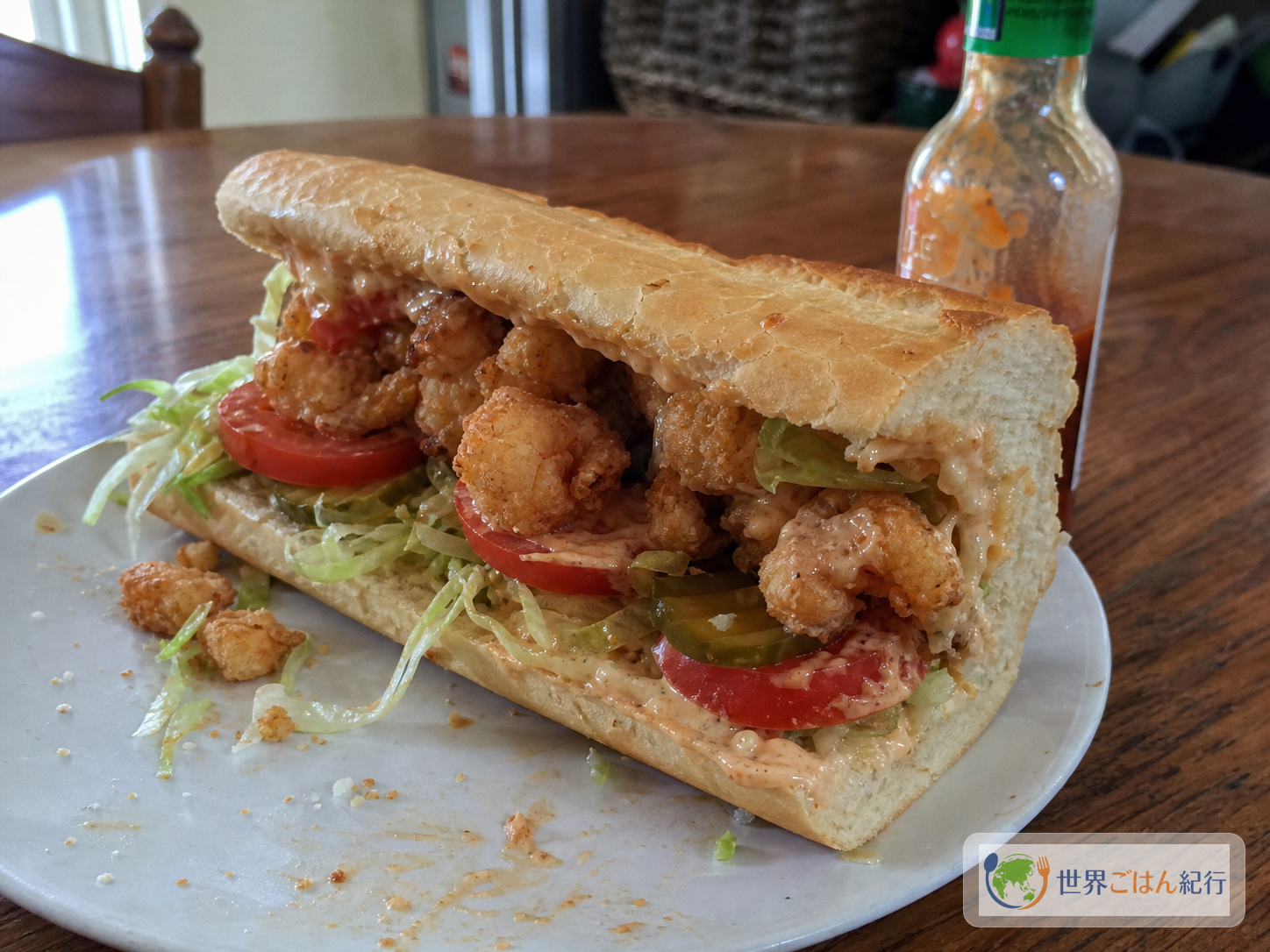
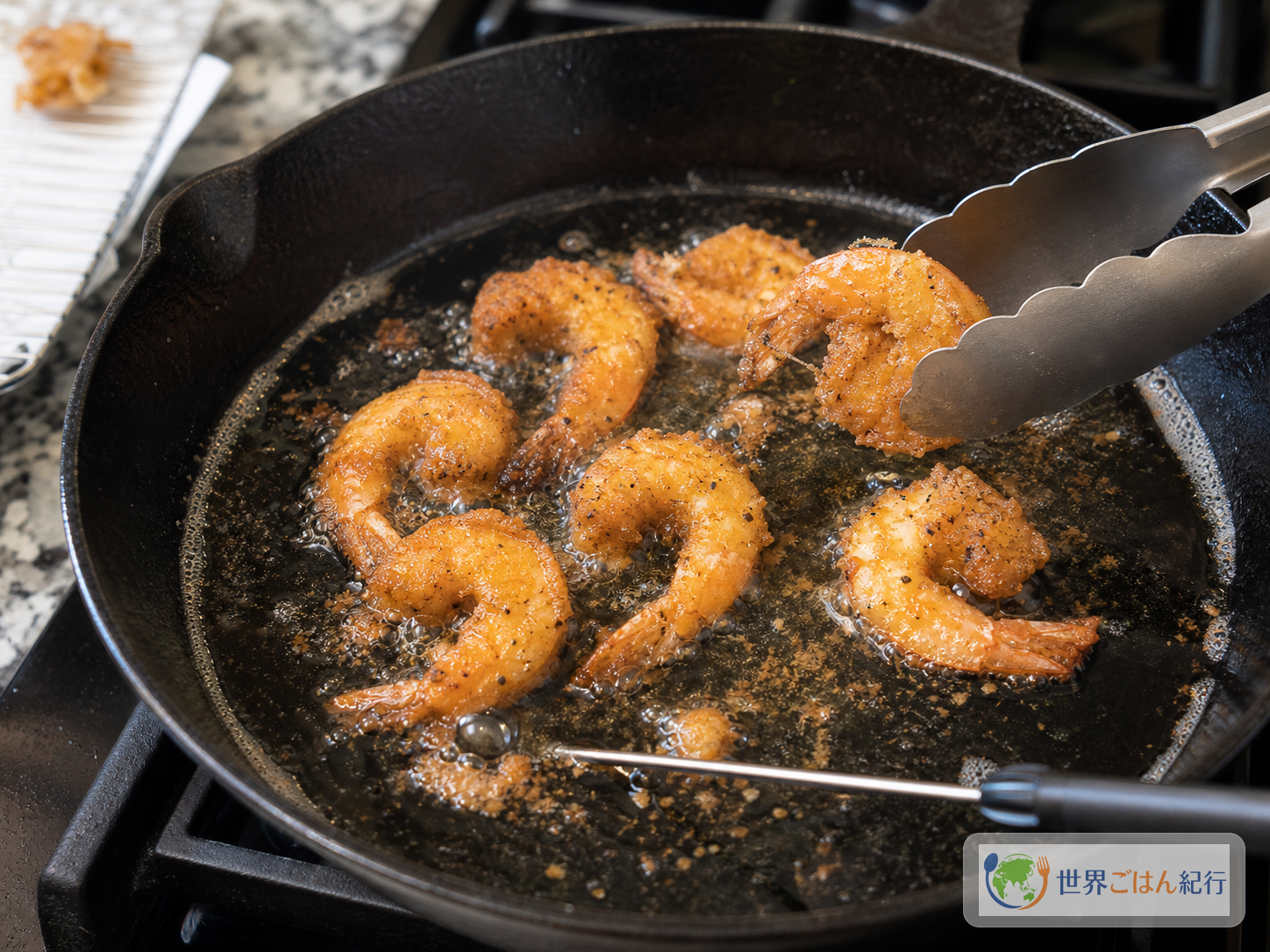
Lift freshly fried shrimp onto a rack and thin lines of oil drip from the corners of the coating, and the smell of lemon and hot sauce mixes into the kitchen. Then you open a soft loaf of French bread, spread remoulade, and stack on lettuce, tomato, and pickles. The po' boy is less a fancy restaurant dish than a sandwich you wrap in paper and bite into at lunchtime in New Orleans.
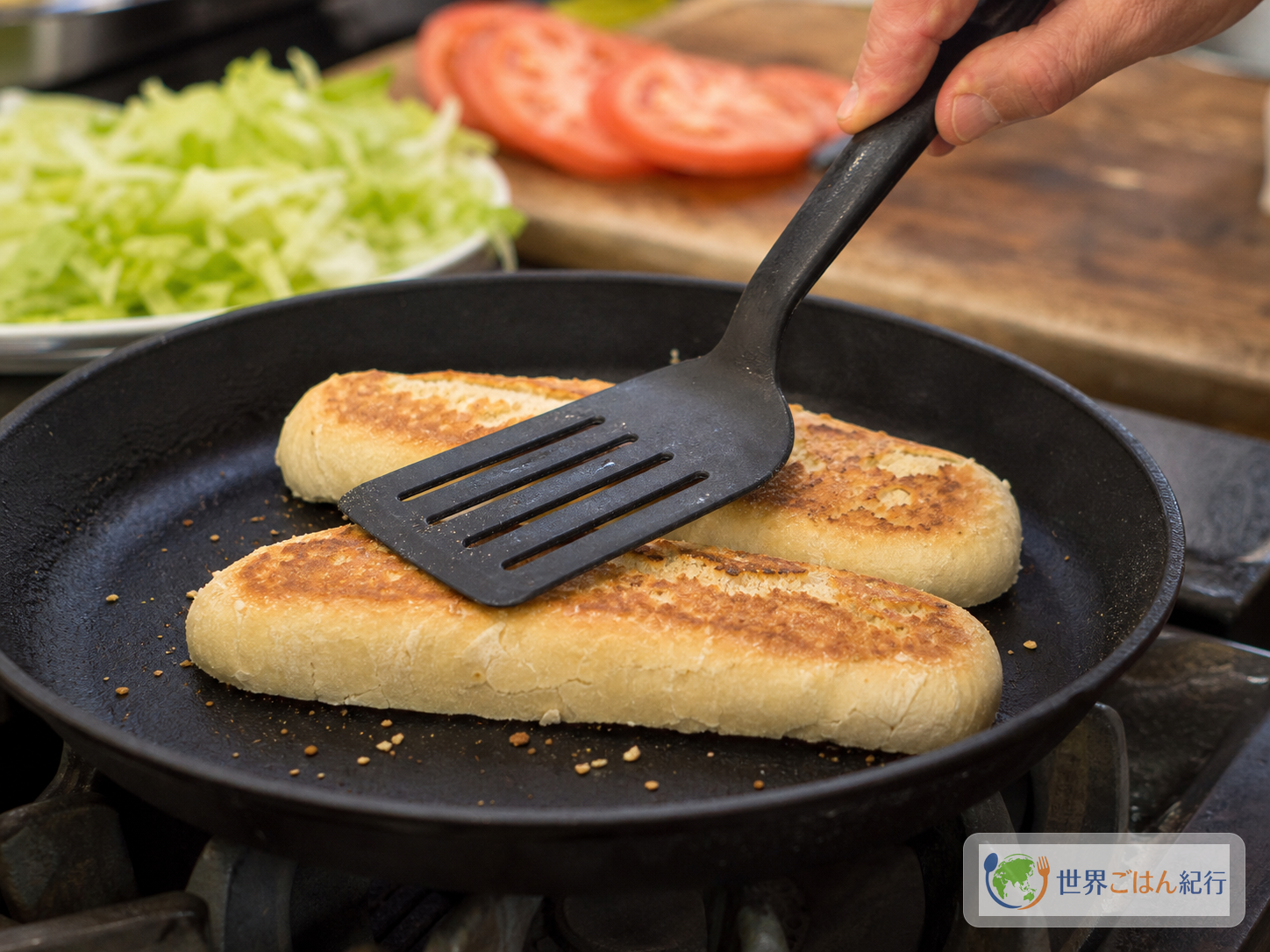
When you make it at home, before how to fry the shrimp, the question is how to think about the bread. The French bread used for po' boys locally has a thin crust and a soft, light inside. If you use a hard baguette as is, the filling is pushed out with the first bite and the shrimp escape. Here we lean toward warming a soft French roll or a slender loaf lightly so that only the surface is crisp.
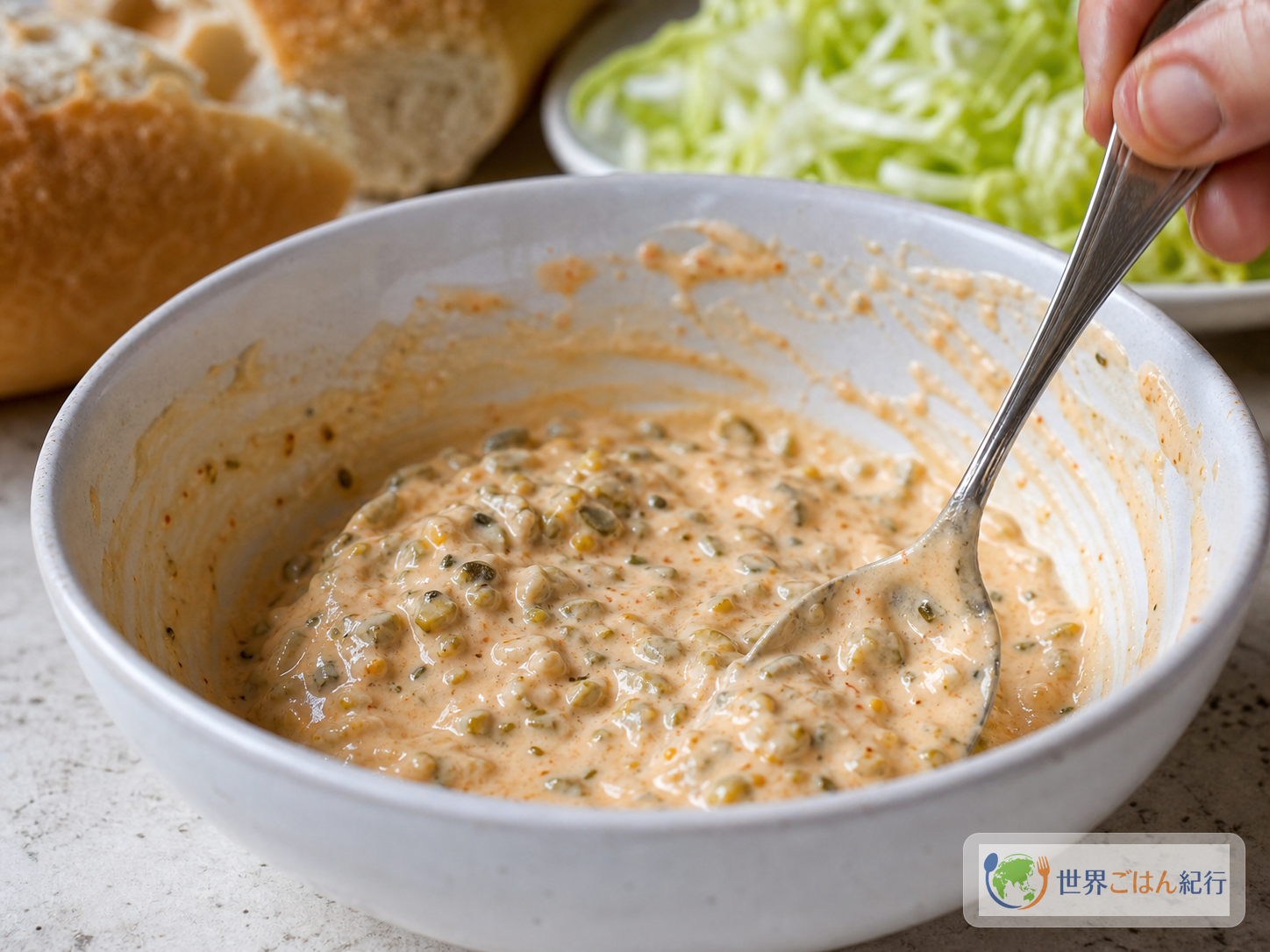
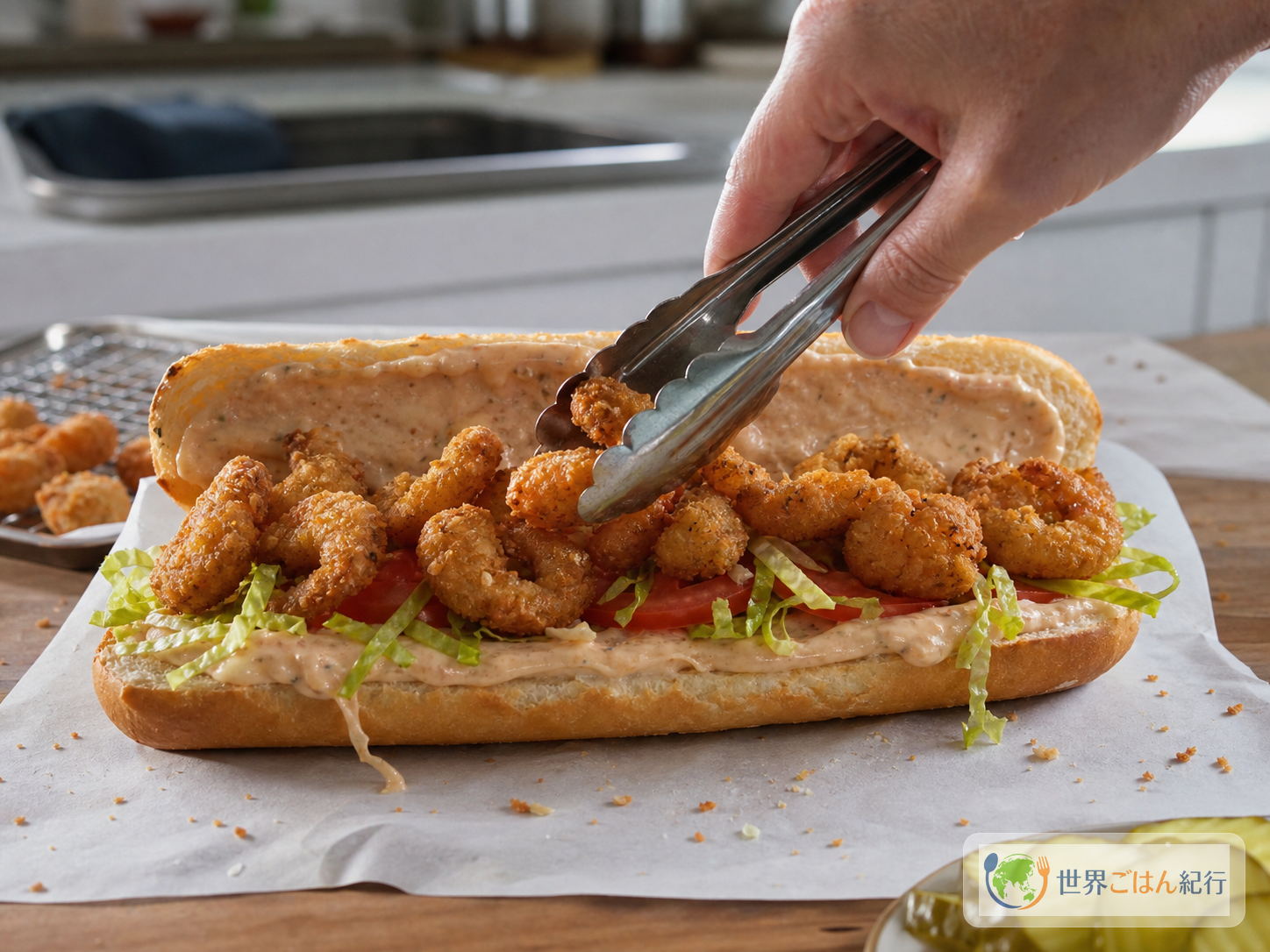
The other password is dressed. In New Orleans, getting a sandwich dressed generally means having lettuce, tomato, pickles, and a mayonnaise-based sauce on it. This article pairs it with a remoulade that doesn't kill the aroma of the fried shrimp, builds on ingredients you can buy at an ordinary grocery store, and keeps the sourness, heat, and aroma that feel like Louisiana.
If Red beans and rice is the Monday pot, the po' boy is the face of lunch in the same New Orleans. For other fried foods, Pholourie and Coxinha are good comparisons, and as American home cooking, City chicken, pork on a skewer that is fried and pan-finished, is interesting too. As a dish where bread receives the filling, set it beside Banh mi and you can see how each country's "one-handed meal" differs.
What Is a Po' Boy, and What Does It Protect?
The po' boy is a roll sandwich that developed around New Orleans. Fillings range widely: roast beef, fried shrimp, oysters, catfish, ham. The official New Orleans tourism site also presents it as one of the city's traditional foods. That events such as the Oak Street Po-Boy Festival, centered on this one sandwich, continue shows that it is treated not as mere snack food but as part of the city's food culture.
The origin most often told concerns the 1929 streetcar strike. The account is that the Martin Brothers' shop served sandwiches to striking workers and called them poor boys, and the name spread from there. There are several theories of the etymology, but at least the core remains of "a working-class lunch that fills you up."
| What to look at | What matters in a po' boy |
|---|---|
| Local name | Po' boy, poor boy. A roll sandwich around New Orleans |
| Filling | Fried shrimp, oysters, catfish, roast beef, and more. This article is the shrimp version |
| Dressed | With lettuce, tomato, pickles, and a mayonnaise-based sauce |
| Bread | Thin crust, light inside. A soft French roll is easiest to work with outside Louisiana |
| What to keep at home | A light coating on the shrimp, a sauce with acidity, bread that doesn't push the filling out |
The biggest ways a home version drifts off are a hard baguette, too thick a coating, and a tartar sauce that is only sweet. A po' boy is not a tempura sandwich, so make a thin, crisp coating around the shrimp, and cut the oil with the sourness of lemon, hot sauce, and pickles to get closer.
Ingredients (serves 4)
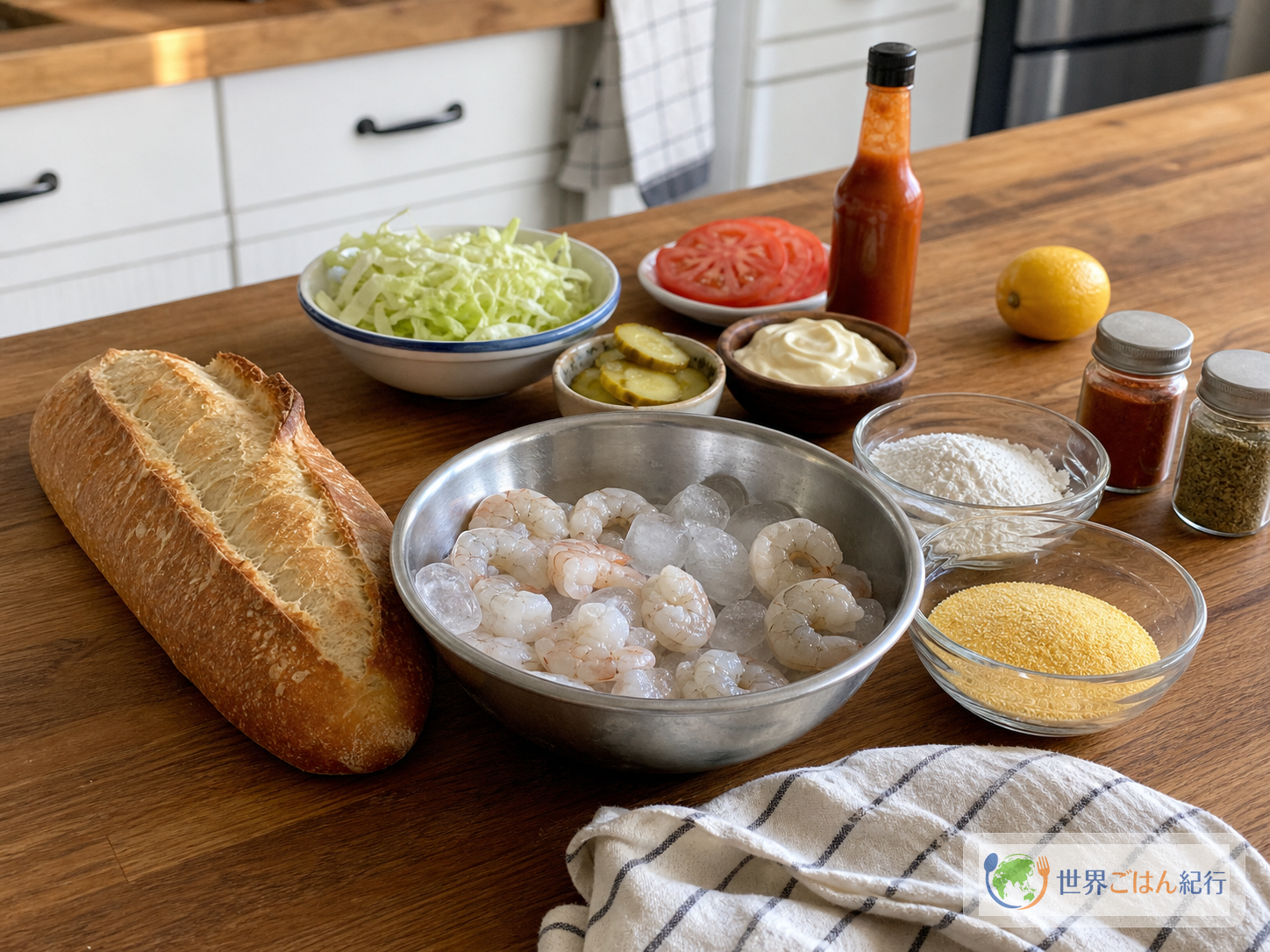
This makes four po' boys of about 25 cm. If your loaves are large, you can cut two in half to serve four. For shrimp, allow 500 g net weight if in the shell, or 500 g if peeled. On days you use frozen shrimp, thaw them in the refrigerator and wipe the surface dry thoroughly before the marinade.
This recipe uses shrimp, wheat, egg, and dairy. If you have an allergy to shellfish, dairy, egg, or wheat, avoid it. FoodSafety.gov advises cooking crustaceans such as shrimp, lobster, and crab until the flesh is pearly and opaque and firm. Break open one piece of fried shrimp and make sure no translucence remains at the center.
Sourcing Ingredients
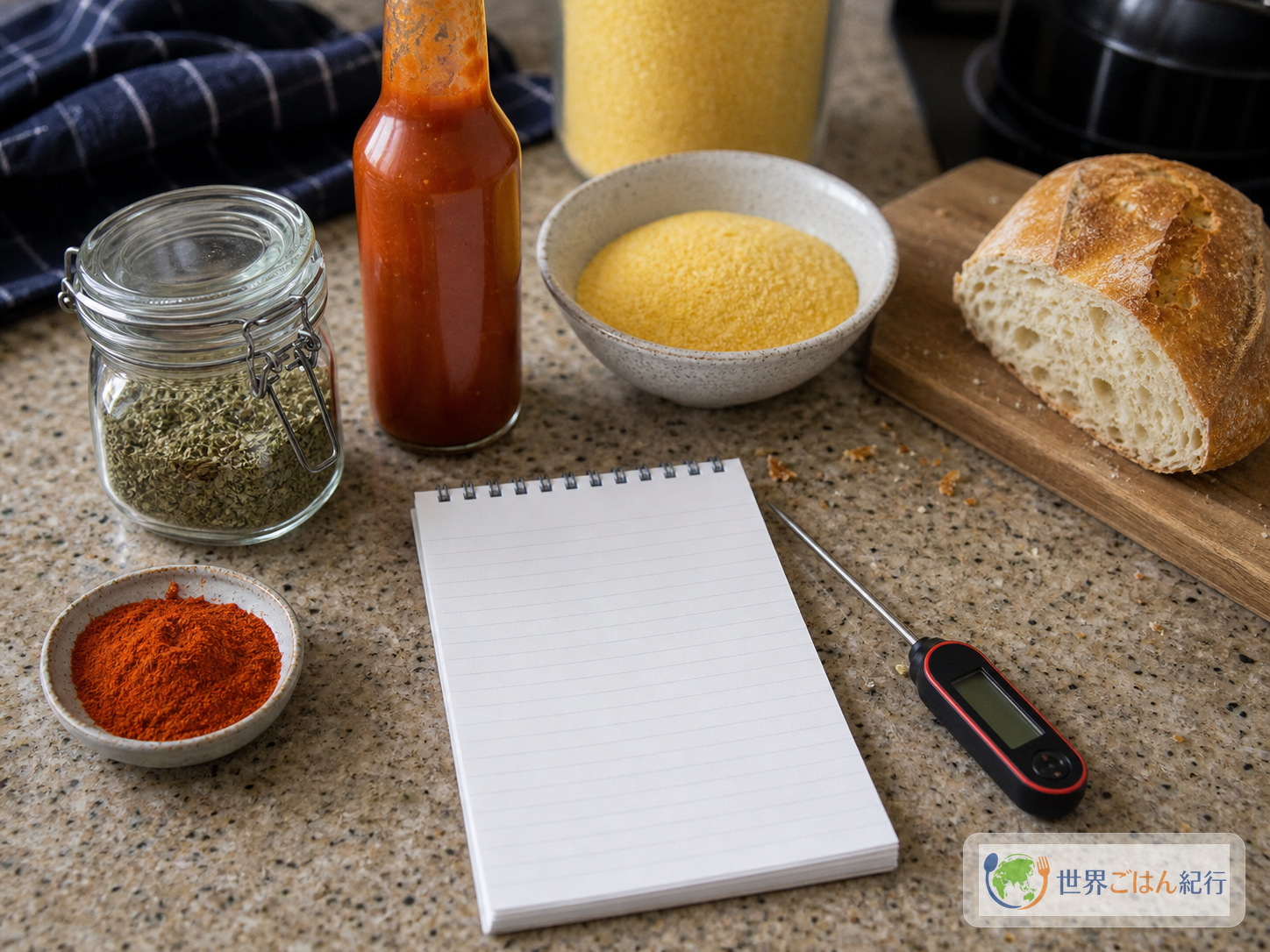
From an ordinary grocery store, you need shrimp, bread, lettuce, tomato, mayonnaise, and pickles. These aren't ingredients you need to hunt for. What makes the difference is smoked paprika for the smoky aroma, oregano to build depth in the sauce and coating, and a thermometer to keep you from missing the oil temperature.
For the bread, soft French rolls, sub rolls, and short loaves of French bread suit better than a hard, authentic baguette. A bread that takes too much force to bite through pushes the filling out the side. If you buy from a bakery, choosing "thin on the outside, light on the inside" makes mistakes less likely.
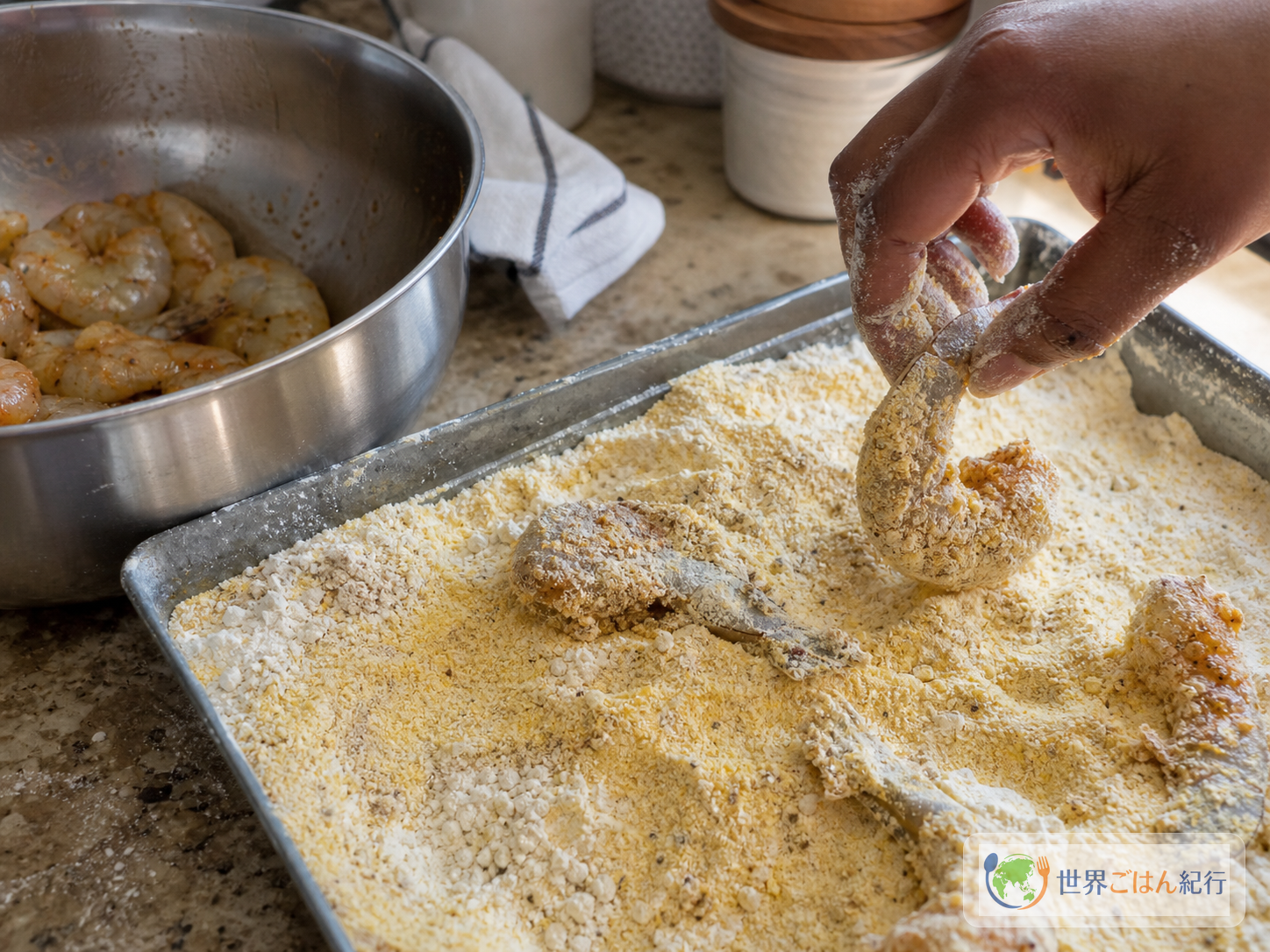
If you can't find cornmeal, mix equal amounts of fine bread crumbs and all-purpose flour. However, the thin, gritty coating of cornmeal will be weaker, so for a first batch it is an ingredient worth getting if you can. For shrimp, medium sizes you can bite in one go suit a sandwich better than very large tiger prawns.
Method
If you fry the shrimp and then chop the vegetables, the coating gets damp by the time you assemble. A better order is to prepare the vegetables and sauce first, open the bread, and put the fried shrimp in last.
Where It Easily Goes Wrong
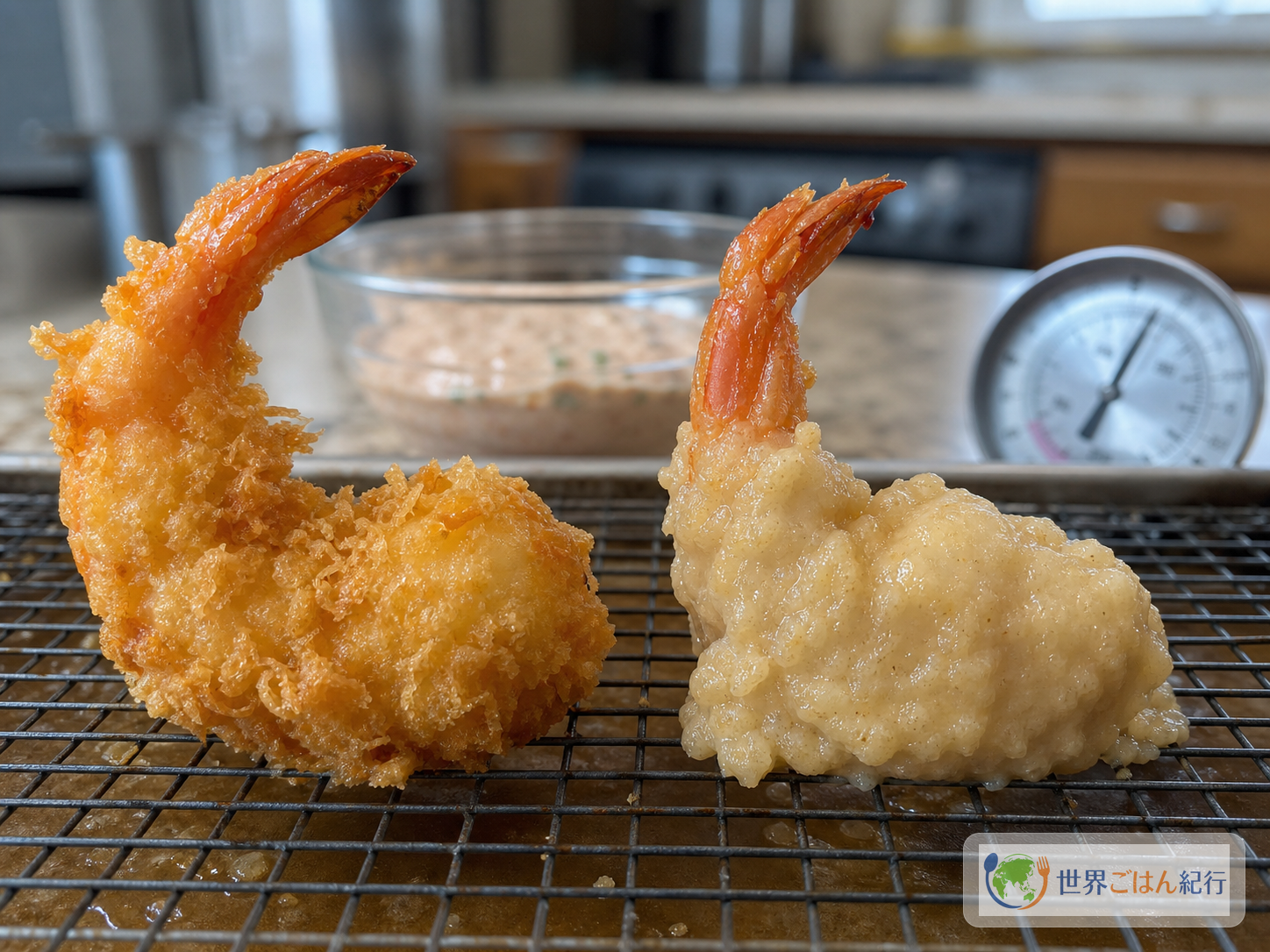
Po' boy failures show up in texture more than seasoning. The shrimp are good but the bread is hard, the coating is heavy, or the sauce is sweet and blurs the whole thing. Avoid these three, and even a home version comes quite close.
| Failure | Main cause | Fix |
|---|---|---|
| Filling is pushed out the side | Bread is hard, or the cut is shallow | Use soft French rolls and don't cut the bread all the way through |
| Coating is thick and heavy | Flour was packed on, or the marinade wasn't shaken off | Drain off the excess liquid and don't press the flour on too hard |
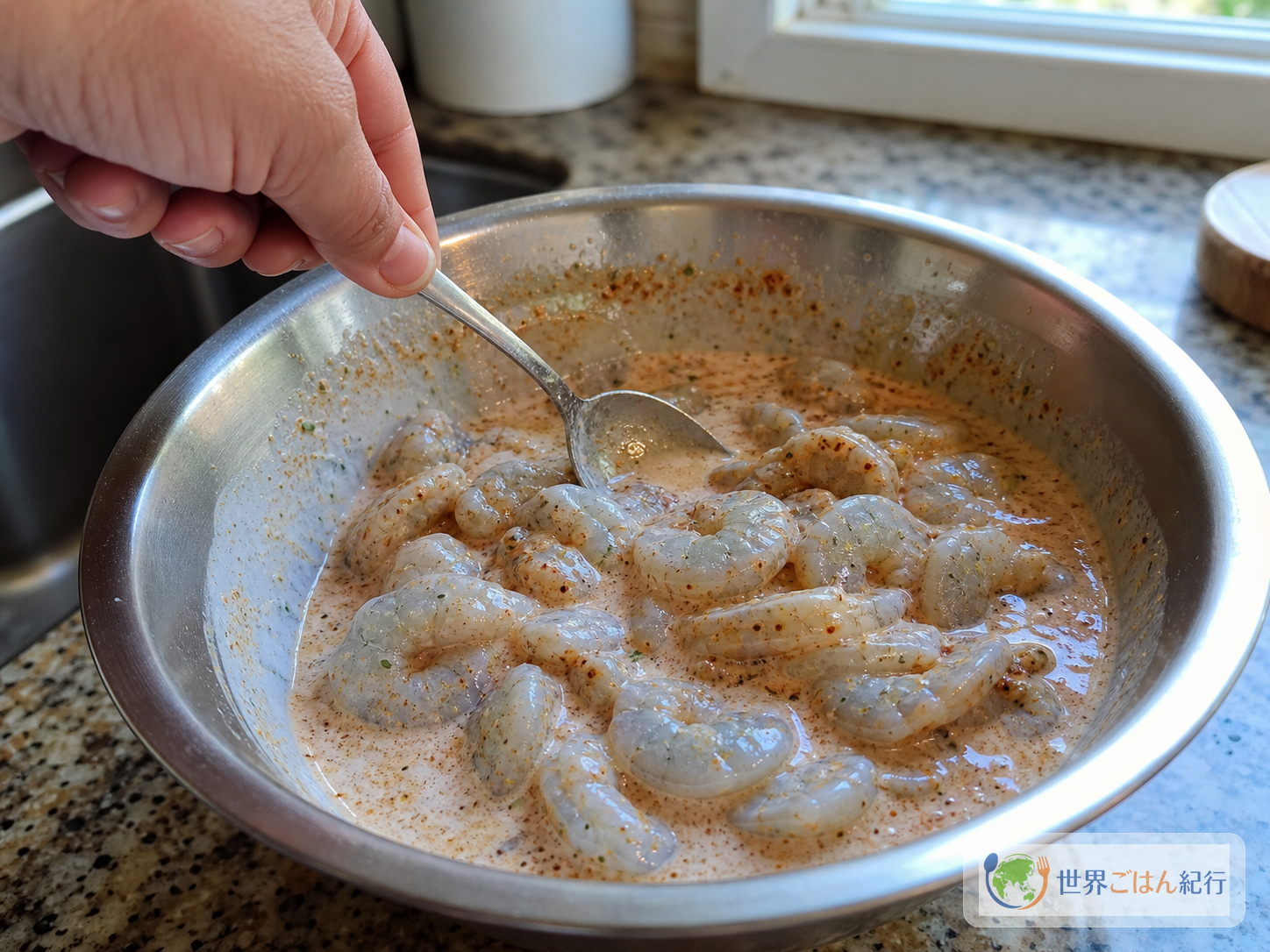
| Shrimp are tough | Marinated too long, or fried too long | Marinate 10 minutes, and stop frying at 2 1/2 to 3 minutes total |
| Coating is pale and oily | Oil temperature is low, or too many shrimp went in | Hold 170 to 180°C and fry in 2 batches |
| Flavor is sweet | Sweet pickles or a sweet mayonnaise sauce | Add sourness with lemon juice, hot sauce, and capers |
| Whole thing is dry | Bread was toasted too much, or too little sauce | Warm only the cut side and spread a thin layer of sauce on both sides of the bread |
At local shops there are also fried oysters, fried catfish, and roast beef with gravy. For a first time at home the shrimp version is easiest to handle, but the ideas about oil temperature and bread apply to other fillings. However, the frying times and oil temperature in this article were worked out for shrimp; the heating conditions for substituting oysters have not been checked.
A Decision Table for Getting Close to the Original in a Home Kitchen
| Ingredient you're unsure about | Choice that gets closer | Choice that can substitute | Why the substitute is hard |
|---|---|---|---|
| Bread | Soft French rolls, sub rolls | A short baguette, lightly warmed | A hard crust pushes the filling out and is hard to bite into |
| Buttermilk | Milk mixed with lemon juice | 2 tbsp unsweetened yogurt plus 150 ml milk | Sourness and a thin dairy film cling to the shrimp |
| Cornmeal | Fine cornmeal | Fine bread crumbs and all-purpose flour | The light, gritty coating gets weaker |
| Hot sauce | A sour chili sauce | A little Tabasco-style sauce | Sweet chili sauce changes the direction |
| Pickles | Dill pickles | Unsweetened cucumber pickles | Without sourness the oil feels heavy |
The order to protect is bread, doneness of the shrimp, sourness, and lightness of the coating. The dish still comes together if the spices change somewhat, but hard bread and a heavy coating change the experience of eating it a great deal.
Storage and Menu
A po' boy is not a dish to store in finished form. Keeping the bread, fried shrimp, vegetables, and sauce separate preserves their textures the next day. If you refrigerate the finished sandwich, the lettuce water and sauce make the bread damp, and the coating doesn't recover.
| State | How to store | Guide | Reheating |
|---|---|---|---|
| Fried shrimp | Cool on a rack, then airtight container | 1 day refrigerated | Toaster oven at 200°C for 4 to 5 minutes |
| Remoulade | Refrigerate in a clean container | 2 days | Don't heat. Stir again if it separates |
| Chopped vegetables | Drain and keep in a separate container | Same day | Don't heat |
| Bread | Return uncut to the bag | Until the next day | 180°C for 2 to 3 minutes |
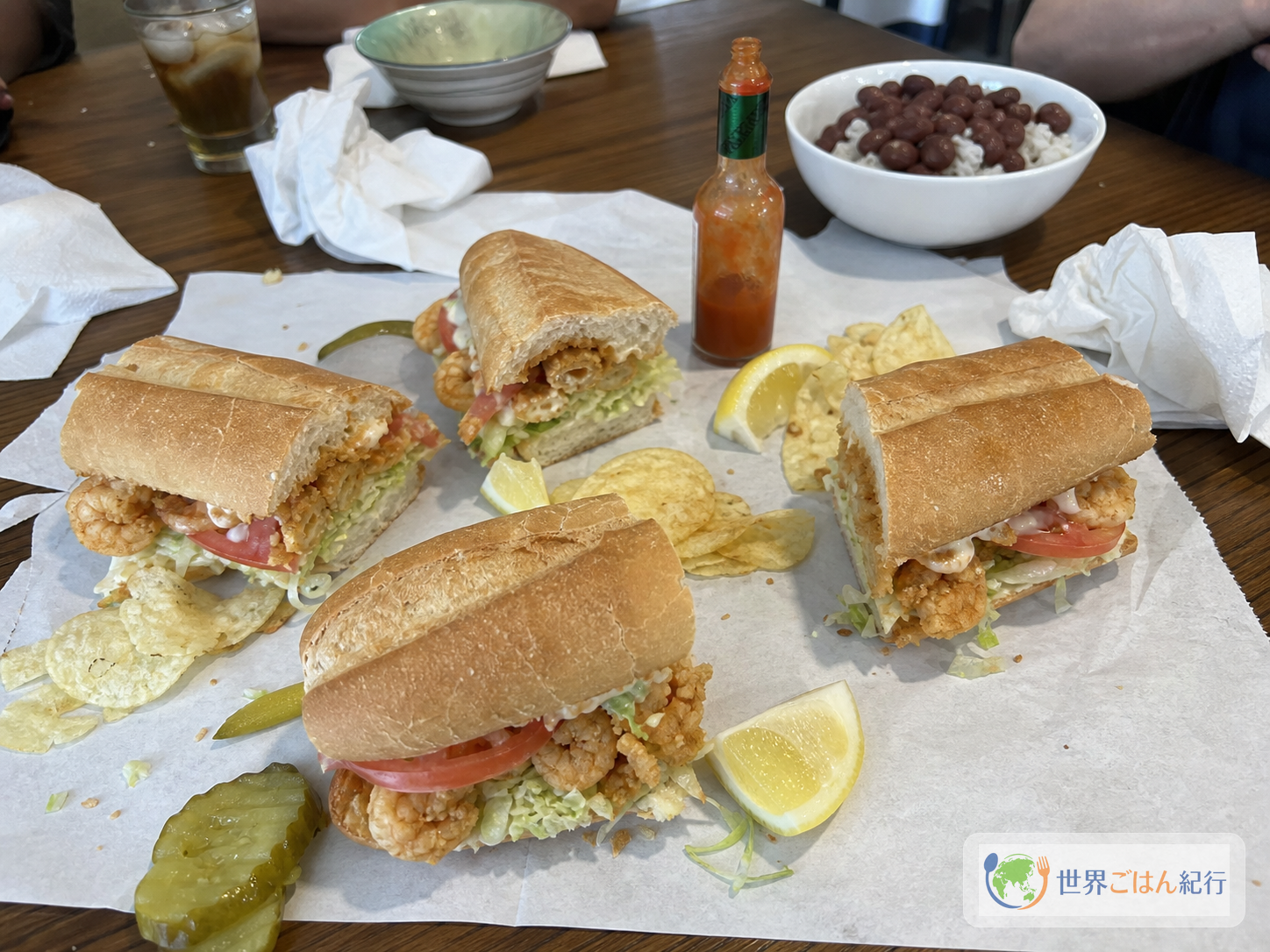
For a menu, making Red beans and rice, from the same New Orleans, a small side brings out the contrast between the softness of the beans and the fried coating on the shrimp. For a light lunch, potato chips, pickles, and lemon alone are enough. On days you want to widen a fried-food table, setting it beside Pholourie, with its aroma of lentil dough, or Lumpiang shanghai, which wraps chicken, lets you enjoy the differences between coatings and fillings.
FAQ
Can I use frozen shrimp?
Yes. Thaw slowly in the refrigerator and pat dry with paper towels before the marinade. If the surface stays wet, the flour clumps and the coating tends to peel off when fried.
I only have a baguette.
You can use it, but cut off the hard crust short and don't over-warm the cut side. If you are filling it generously, pressing the inside of the bread down slightly with your fingers makes the shrimp less likely to escape.
Can I make it with tartar sauce instead of remoulade?
Yes. But a sweet tartar alone makes the oil feel heavy. Adding lemon juice, hot sauce, pickles, and capers and raising the sourness and heat a little brings it back toward a po' boy.
Can I make it in the oven without frying?
It becomes something different, but it is possible. Toss the coated shrimp all over with 2 tbsp oil and bake in a 220°C oven for 8 to 10 minutes. Turn once partway through, and take them out when opaque through the center. The light crunch of a fried coating will be weaker, so warm the bread slightly harder to make up the texture.
Can I make an oyster po' boy?
Oyster po' boys are a local classic too, but the frying times and oil temperature in this article were worked out for shrimp, and the heating conditions for substituting oysters have not been checked. We can't give a guideline such as frying them more briefly than shrimp, so if you use oysters, don't reuse this article's times; follow the guidance that public food-safety agencies give for cooking oysters. Even oysters sold for raw eating should be cooked through to the center when used in a sandwich.
Sources
- New Orleans & Company "Po-Boys": https://www.neworleans.com/restaurants/traditional-new-orleans-foods/po-boys/
- Oak Street Po-Boy Festival: https://www.poboyfest.com/
- Wikipedia "Po' boy": https://en.wikipedia.org/wiki/Po%27_boy
- FoodSafety.gov "Seafood": https://www.foodsafety.gov/food-safety-charts/safe-minimum-internal-temperatures