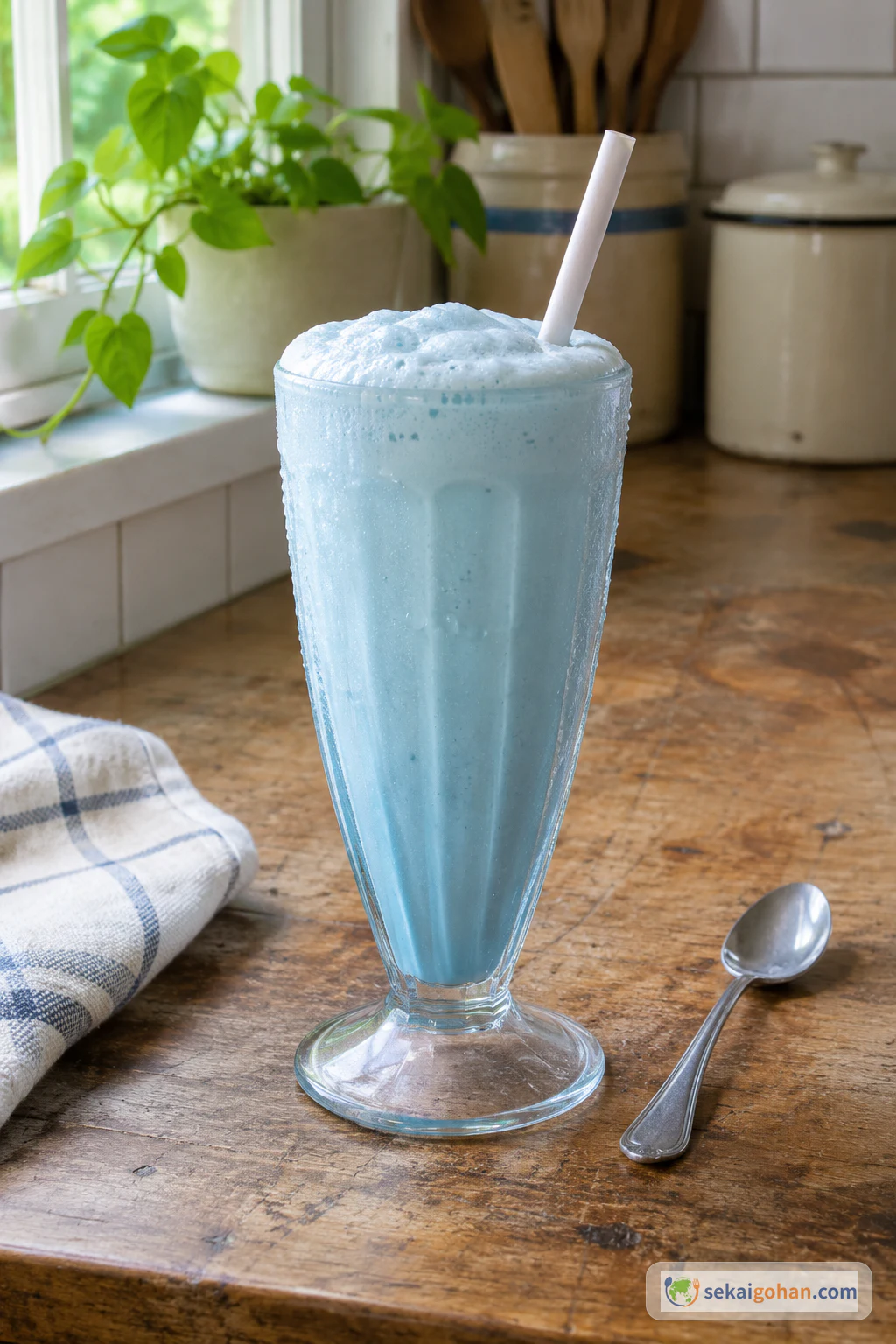
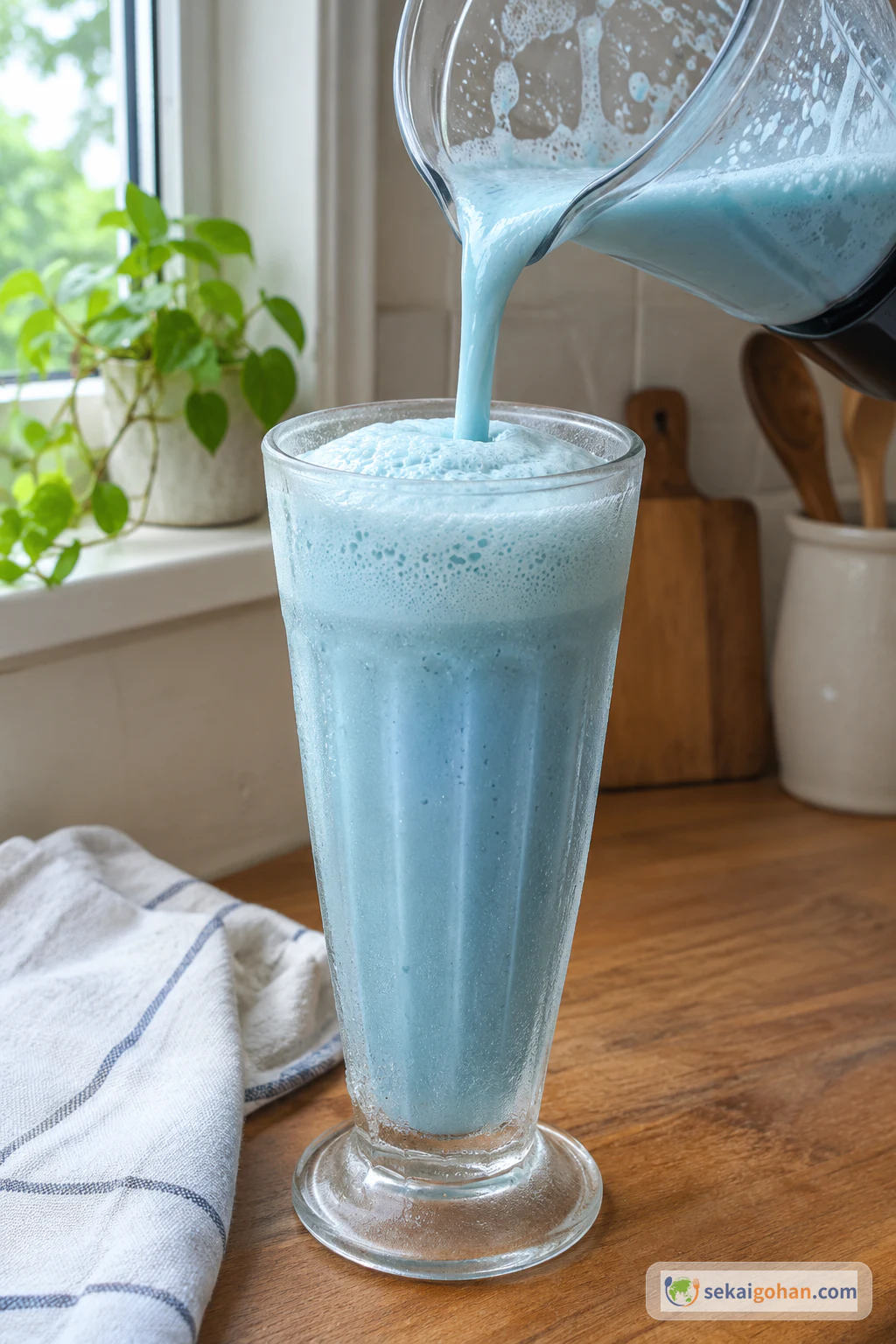
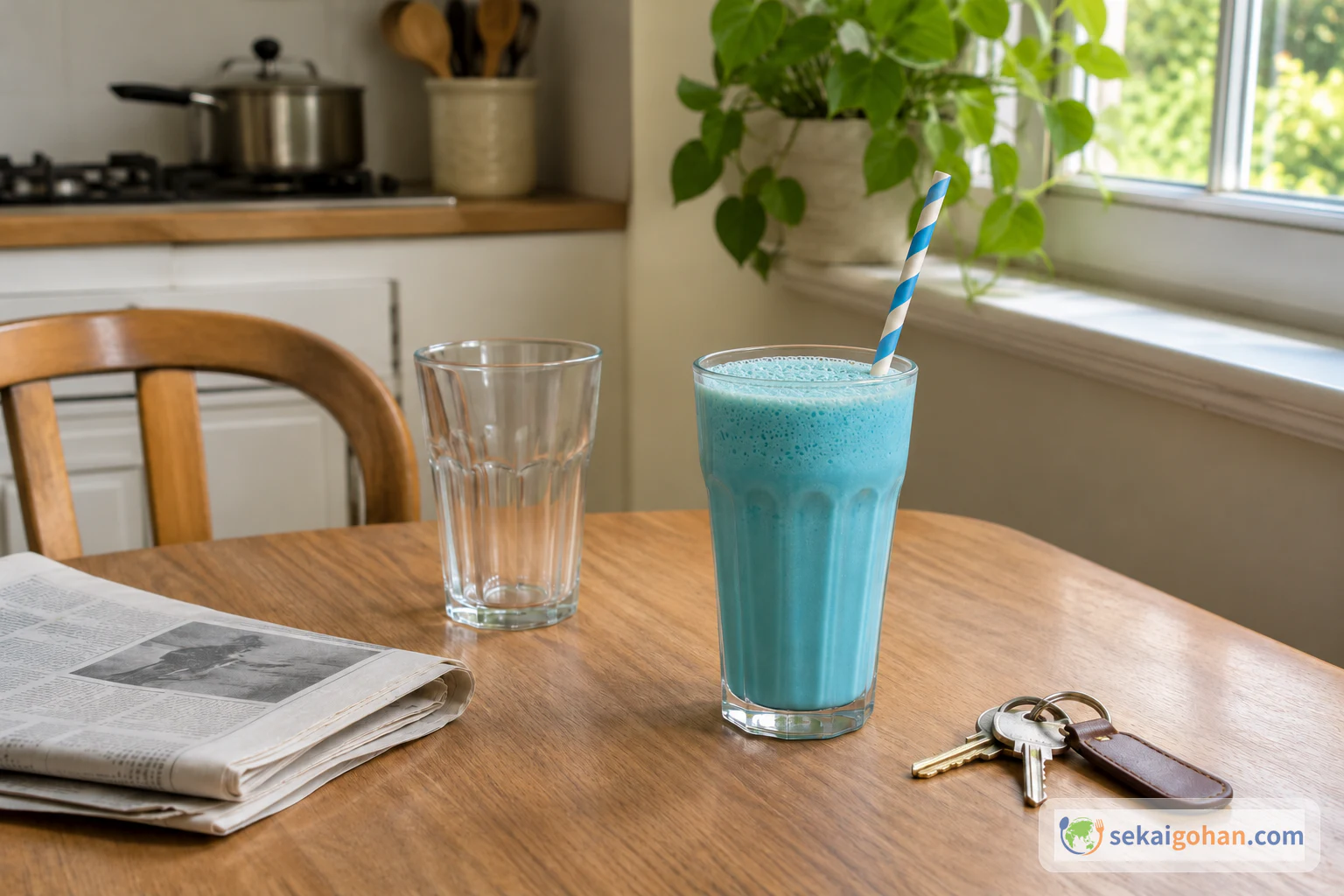
The glass comes out of the freezer with a thin film of frost on it. The shake goes in pale blue, and a domed head of fine froth rises to the rim before the straw goes in. A Blue Heaven milkshake is the blue one on the board at an Australian milk bar: cold full-cream milk, a sweet blue topping and a scoop or two of vanilla ice cream, spun until thick. Vanilla comes first, then a fruity sweetness that leans toward raspberry and that people who grew up with it find hard to name. The color is loud, and the drink underneath is soft, cold and milky.
A Milk Bar Flavor That Nobody Can Quite Name
Flavored milkshakes were in Australian country towns well before anyone called one Blue Heaven. In 1899 a café in Moree, New South Wales, was advertising raspberry, strawberry and pineapple milkshakes. By 1934 in Mackay, Queensland, a milkshake cost 4 pence, ice cream was 2 pence extra, and you could ask for an egg in it as well. Milk bars had their great years in the 1940s and 1950s, then shrank as fast food chains and supermarkets arrived.
Some kept going. In Newcastle, Jim's Dairy Delite has been open since 1957 and still mixes its own flavors for its shakes, Blue Heaven among them. The people behind the counter say its taste is hard to put into a single word. You still find the blue shake at coastal kiosks and old-style ice cream shops, and a doughnut chain in Australia blends fresh milk, ice cream and a vanilla-raspberry blue heaven syrup in a traditional milkshake mixer.
Where the name came from
The vivid blue itself has a date. Brilliant Blue FCF (color 133) was first made in 1929 and later approved for food, and without it there would be no shake this color. The drink is generally counted as an Australian invention, but where it was first made is not settled, and it has not been found on menus from before the 1950s. The name is often linked to the 1928 song "My Blue Heaven" or to a 1951 film, though little evidence backs either.
In Colac, Victoria, a family connected with the town's aerated water factory, known locally as Hay's, tells another story. A judge from the factory tasted an entry called Blue Heaven at the Melbourne Show, liked it, and recreated it. It is a family account, and it sits alongside the song and the film rather than replacing them.
One name, many flavors
What "blue heaven" tastes like depends on who made the bottle. The best-known milk bar topping has a definite, strong fruity flavor and keeps its flavoring blend private. Shop shakes are sold as vanilla and raspberry. A Bulla ice block of the same name was sold as pineapple. Vanilla is the shared base under all of them, and the blue color is the one thing every version agrees on. The shake you make at home tastes of the topping you put in it.
A Blue Heaven cocktail also exists, made with blue curaçao, amaretto, rum and pineapple juice. It shares only the name with the milk bar shake, and blue curaçao has no place in this glass.
Ingredients (serves 1)
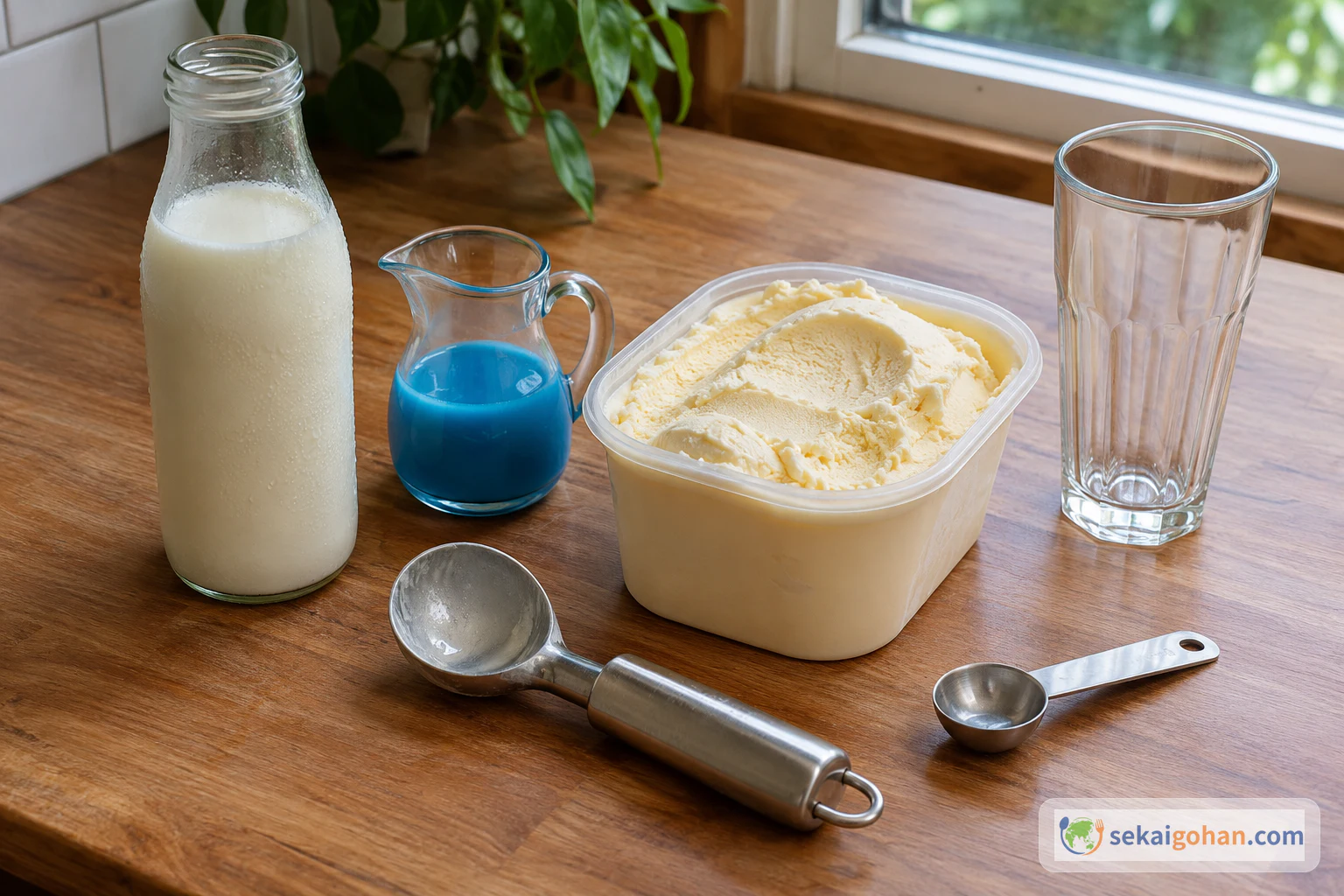
The topping is built for 2 tbsp in 1 cup of chilled milk, and that pair alone makes a thin, sweet blue milk. The vanilla ice cream is the milk bar habit layered on top, and it is what gives the shake its weight and its froth. Start at 2 tbsp of topping. More makes it sweeter and bluer at the same time, because the flavor and the color come from the same bottle.
Warm milk gives a flat, thin shake that will not hold froth. Pour it straight from the fridge, and keep the ice cream in the freezer until the moment it goes into the blender.
Milk and ice cream are dairy, so this shake is not for anyone with a milk allergy. Ice cream can also contain egg, soy, nuts or wheat depending on the brand, so read the label on yours. The bottled Blue Heaven topping lists no allergens, but other topping flavors such as caramel contain milk. Leave raw egg out of the shake. Drink it as soon as it is made.
Equipment
- A blender (a 1-quart / 1 L jug or larger if you make two at once) or a milkshake spindle
- A tall glass or a metal milkshake cup that fits in your freezer
- Measuring spoons, or a 30 ml pump that gives one press per shake
- A small bowl for the measured topping
- An ice cream scoop, so the scoops come out the same size each time
- A straw, and a long spoon for the thickshake
Choosing the Topping and What to Use Instead
Blue Heaven topping comes in a 3-liter (about 3-quart) catering bottle with a 30 ml pump. The label reads water, sugar, thickener, flavor, an acidity regulator, a preservative and color 133. Once opened, store it the way the label says, in a cool, dry place. It is a lot of syrup for one kitchen, but it is the taste milk bars use.
If you can't get the bottle, make the homemade syrup. Stir all the syrup ingredients together in a clean jar, leave it for about 30 minutes, then strain out the raspberry pulp. It points in the same direction as the bottled topping, vanilla and raspberry under a blue color, but it is a different syrup, because the milk bar topping's flavoring blend is not public. The syrup is never heated, so make it on the day and use it the same day. Use 2 tbsp of it in place of the bottled topping, with the same milk and ice cream.
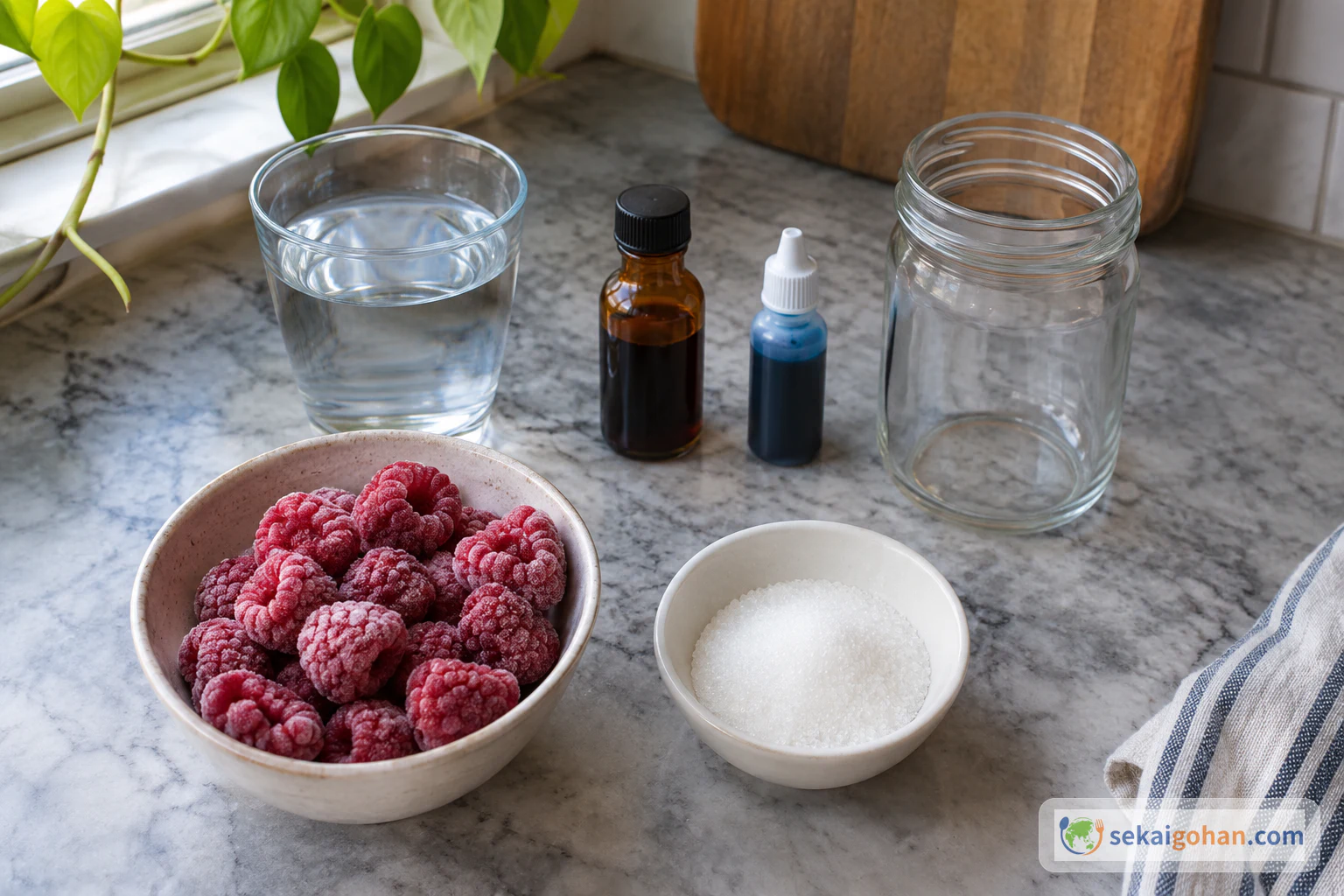
For color, buy a water-soluble blue food coloring from the baking aisle and check that its label names Brilliant Blue FCF (133). In Japan the same dye is listed as Food Blue No. 1. The drops are for color only. For a paler shake add one drop, or leave it out entirely, and the taste stays the same. Bottled blue syrups with similar names are different products and taste different. Blue curaçao is a liqueur and belongs to the cocktail.
The other ingredients swap more easily, with one honest change each. Low-fat milk makes a thinner, weaker-tasting shake. An ice cream with more milk fat makes a richer one. Barista-style oat or soy milk with a dairy-free frozen dessert makes a dairy-free shake, as long as the topping label shows no milk.
Method
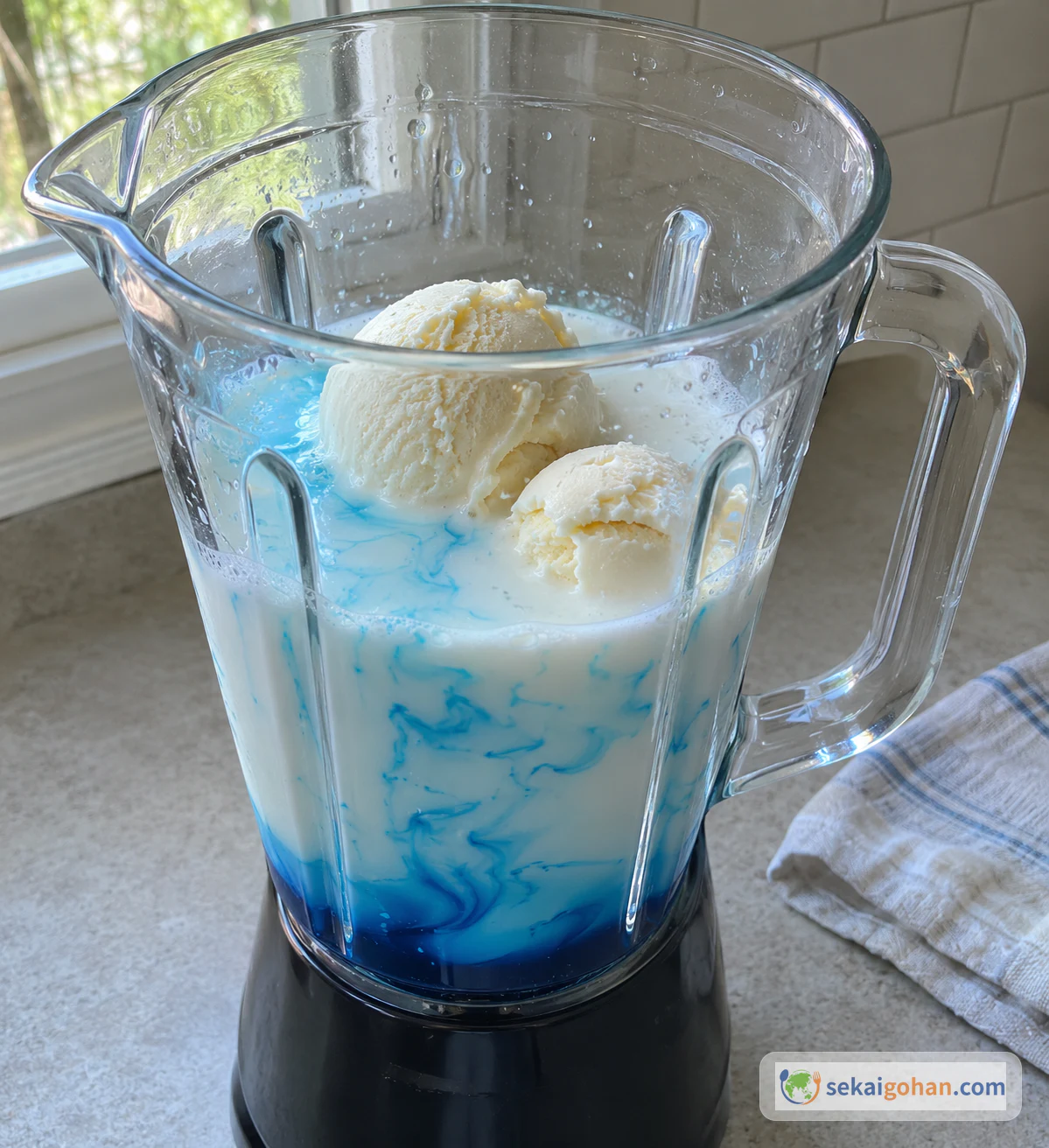
Most of the waiting happens at the start. The glass chills in the freezer while you measure the topping and get the milk and ice cream ready. After that the shake moves fast, and it should be blended right before someone drinks it.
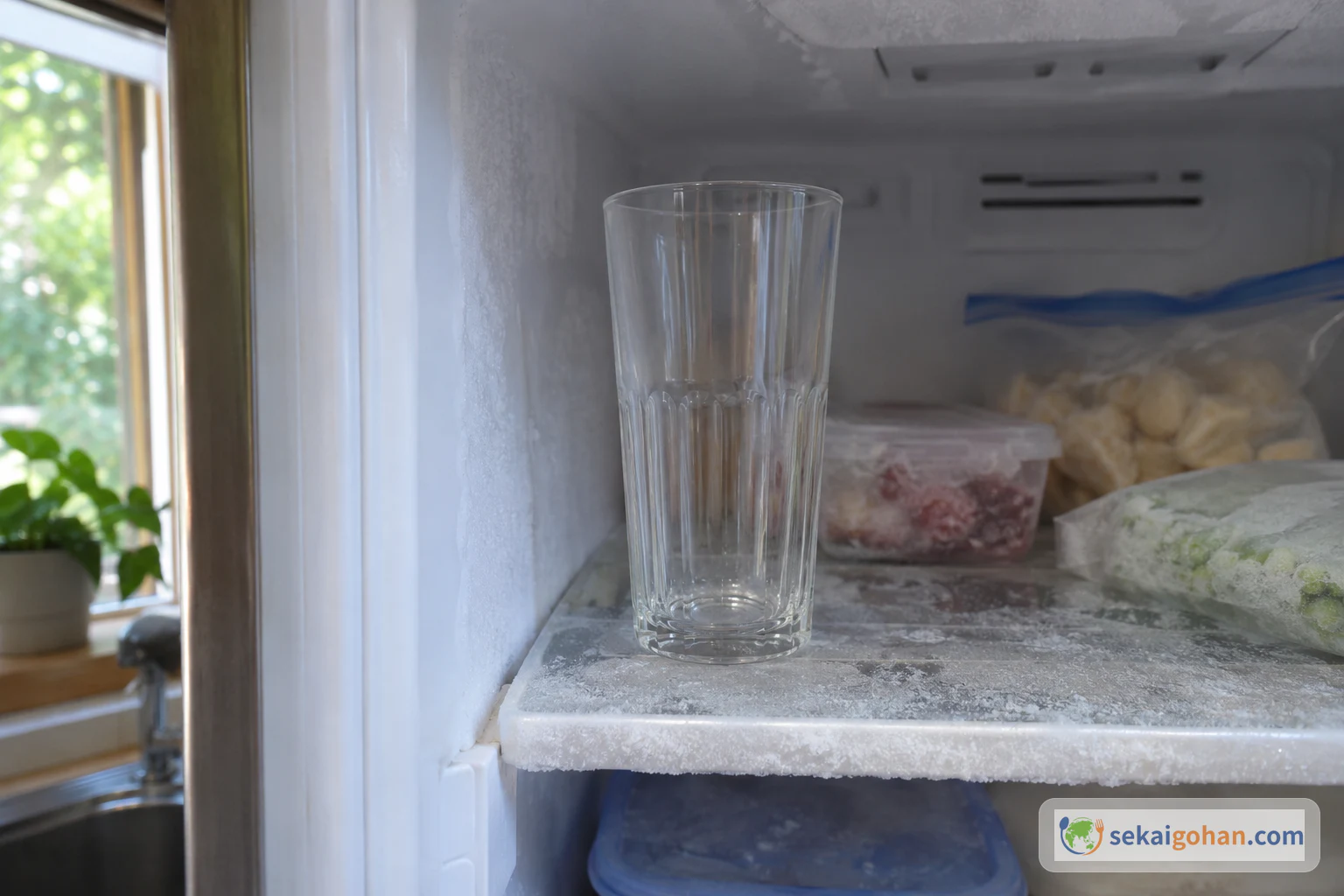
Set the tall glass or metal cup in the freezer for 10 minutes, until a thin frost forms on the outside.
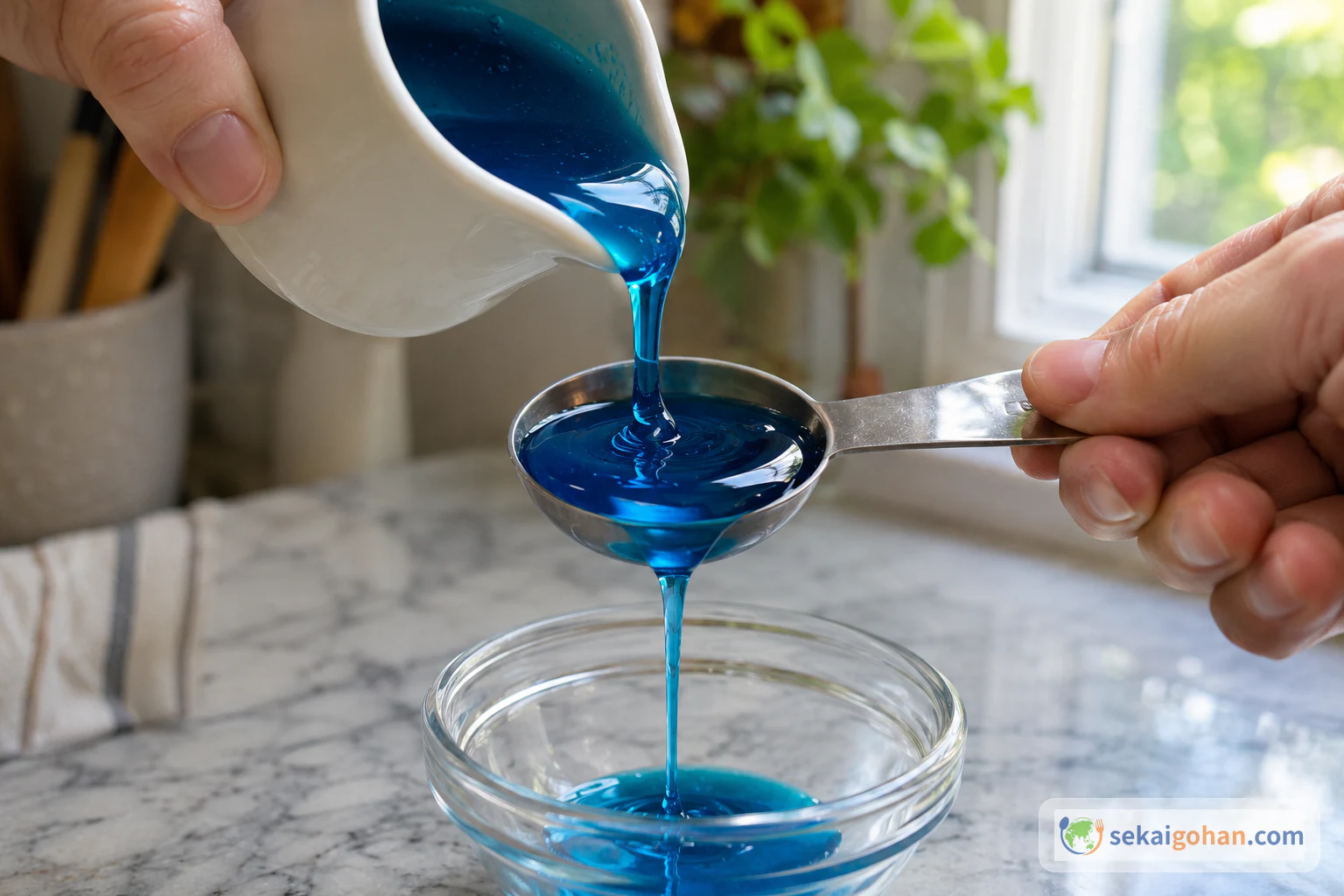
While it chills, measure the topping with a spoon or one press of the pump and set it aside in a small bowl. This is where sweetness and color are decided, so measure it rather than pouring by eye.
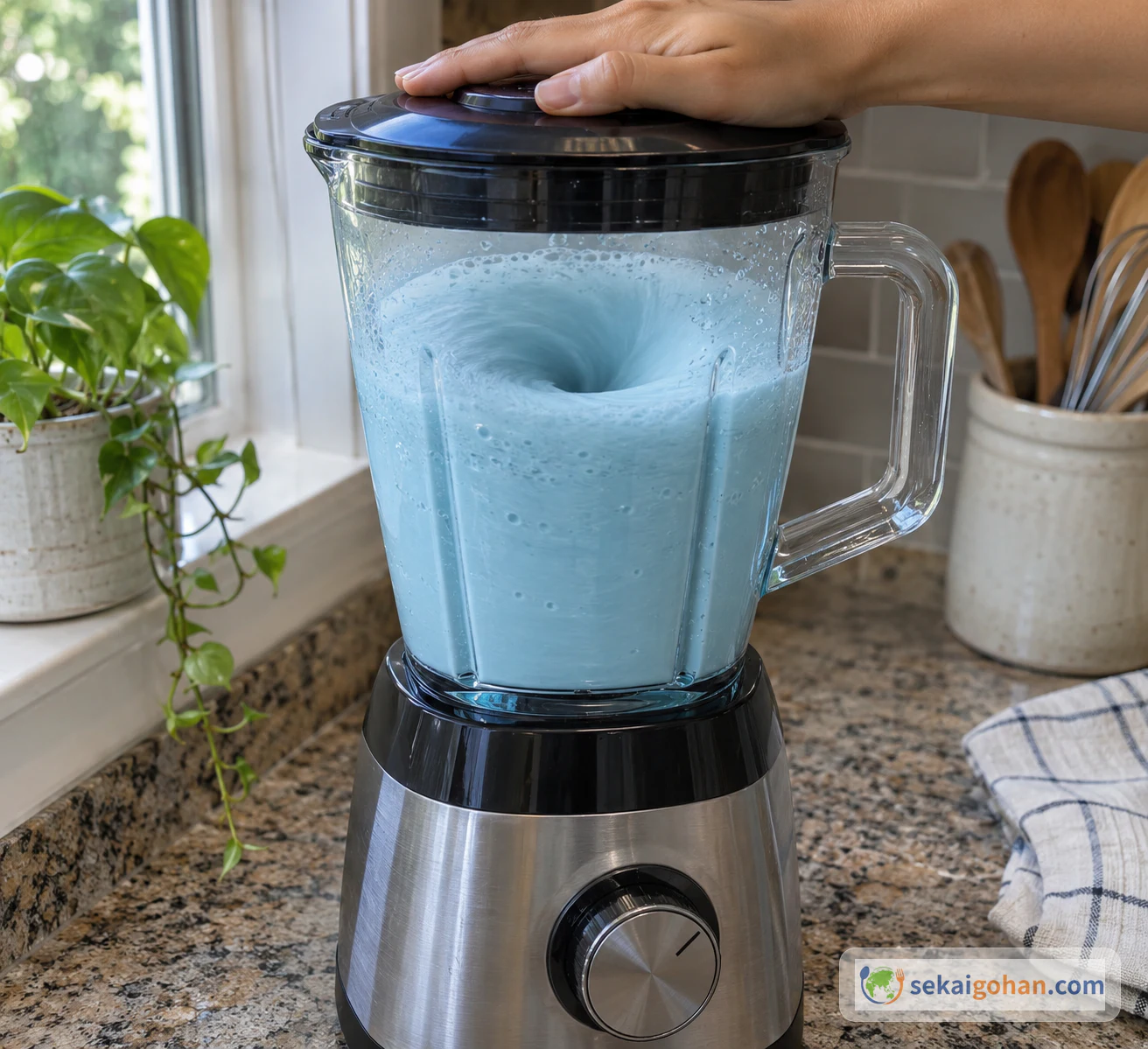
Running past a minute warms the shake through friction and loosens it. A short, full blend keeps the froth tight and the shake cold.
When It Goes Wrong
| What you see | Why | What to do |
|---|---|---|
| Thin, watery shake | Warm milk, or too much milk for the ice cream | Use milk straight from the fridge; next time cut the milk and add ice cream |
| No froth on top | Glass not chilled, blended too briefly, or ice added to stretch it | Chill the glass fully and blend for the full 30–60 seconds |
| Too blue and too strong | Too much topping | Use less topping; color and flavor come from the same syrup, so both drop together |
| Too sweet | Generous topping or a lot of ice cream | Use less ice cream or bring the topping toward 4 tsp (20 ml); never add sugar |
| Separated in the glass | Left standing after blending | Blend again just before serving, and make it only when someone is ready to drink |
| Ice cream won't blend | Ice cream straight from a very cold freezer | Let the scoops sit out a few minutes; soften them too long and the shake goes thin |
Serving, Variations and Storage
Serving
This is an afternoon glass more than a dessert course: one tall shake with a straw, drunk while it is still frothy. For two shakes, double everything in one blender run. For three or more, blend in batches that fit your jug, because a crowded jug will not froth. For children, split one shake between smaller glasses. On a table of Oceania sweets it sits comfortably beside a pavlova, cold milk against crisp meringue, and after something salty and heavy like a halal snack pack a cold sweet glass is an easy finish.
Variations
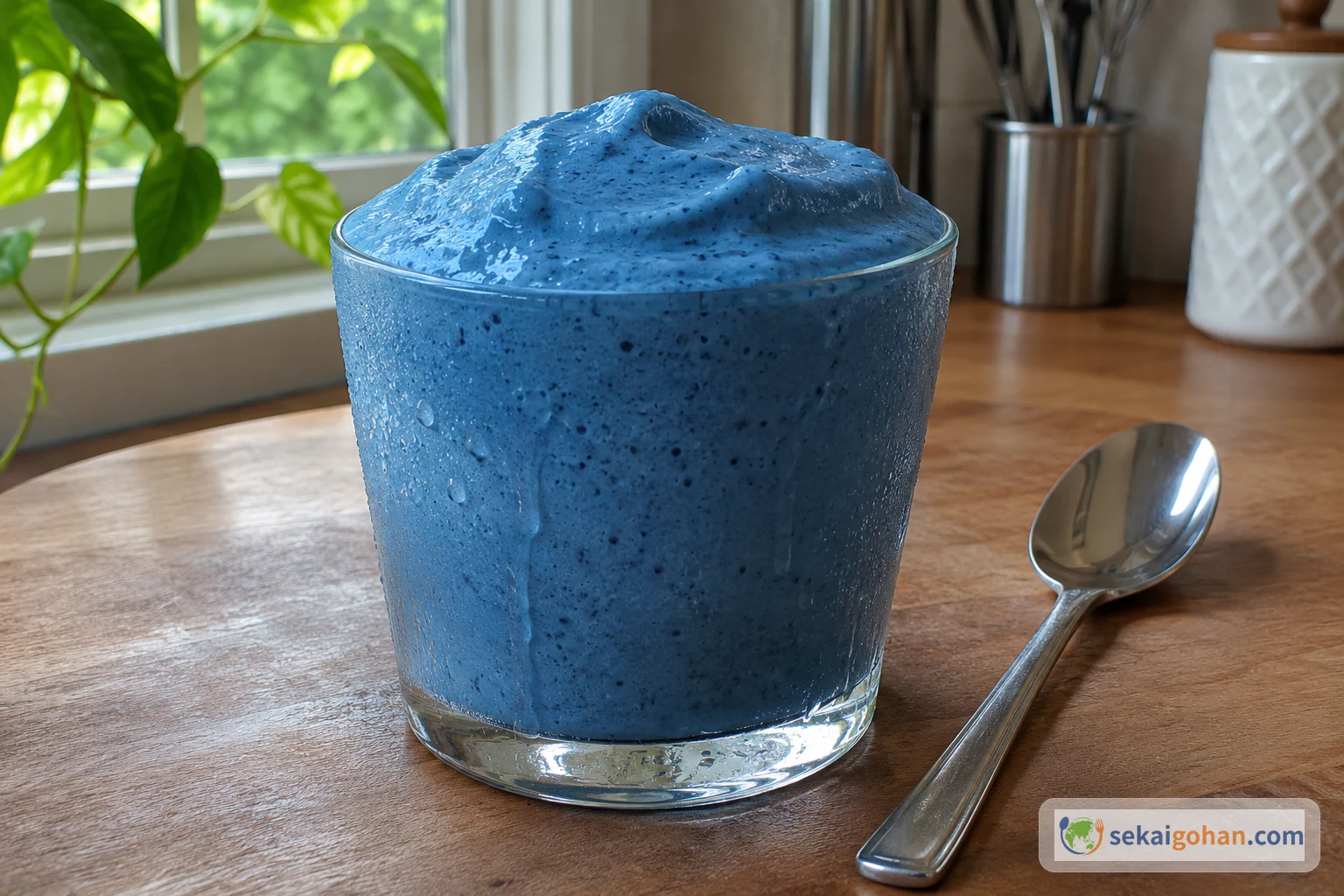
- Thickshake. Halve the milk to ½ cup (125 ml) and double the ice cream to 2–4 scoops, keeping the same 2 tbsp of topping. It comes out thick enough to eat with a spoon, so serve one with it.
- Light version. Leave the ice cream out and blend the milk and topping with a handful of ice. It is thinner and fresher, good on a hot morning.
- Dairy-free. Barista oat or soy milk with a dairy-free frozen dessert, following the same steps. Check the topping label for milk first.
- Sundae. Pour the topping over a mound of vanilla ice cream and serve it as a dessert rather than a drink.
Storage
Drink the shake as soon as it is made. It does not keep, and a melted shake should not go back into the freezer. Store an opened bottle of topping as its label directs, in a cool, dry place. Make the homemade syrup on the day and use it that day.
Frequently Asked Questions
Can I use another blue syrup or blue curaçao?
Blue curaçao is a liqueur from the cocktail of the same name, so keep it out of a milkshake. Other blue syrups are separate products with their own flavors, and they give a blue shake with a different taste. For the vanilla-raspberry direction, use the homemade syrup above.
How much sugar is in one glass?
The 2 tbsp of bottled topping carries about 17 g of sugar before any ice cream goes in. For comparison, a large shop-made blue heaven shake of about 1 lb (475 g) lists 65.2 g of sugars. For children, pour one shake into smaller glasses.
Will the shake still taste right with less food coloring?
Yes. In the homemade syrup the coloring adds color only, so one drop or none gives a paler shake with the same flavor. With the bottled topping, color and flavor come together, so using less of it makes the shake paler and milder at once.
Can I make it without a blender?
This shake is made in a blender or on a milkshake spindle. Blend for 30–60 seconds, until the shake is thick and frothy on top and the color is an even pale blue.