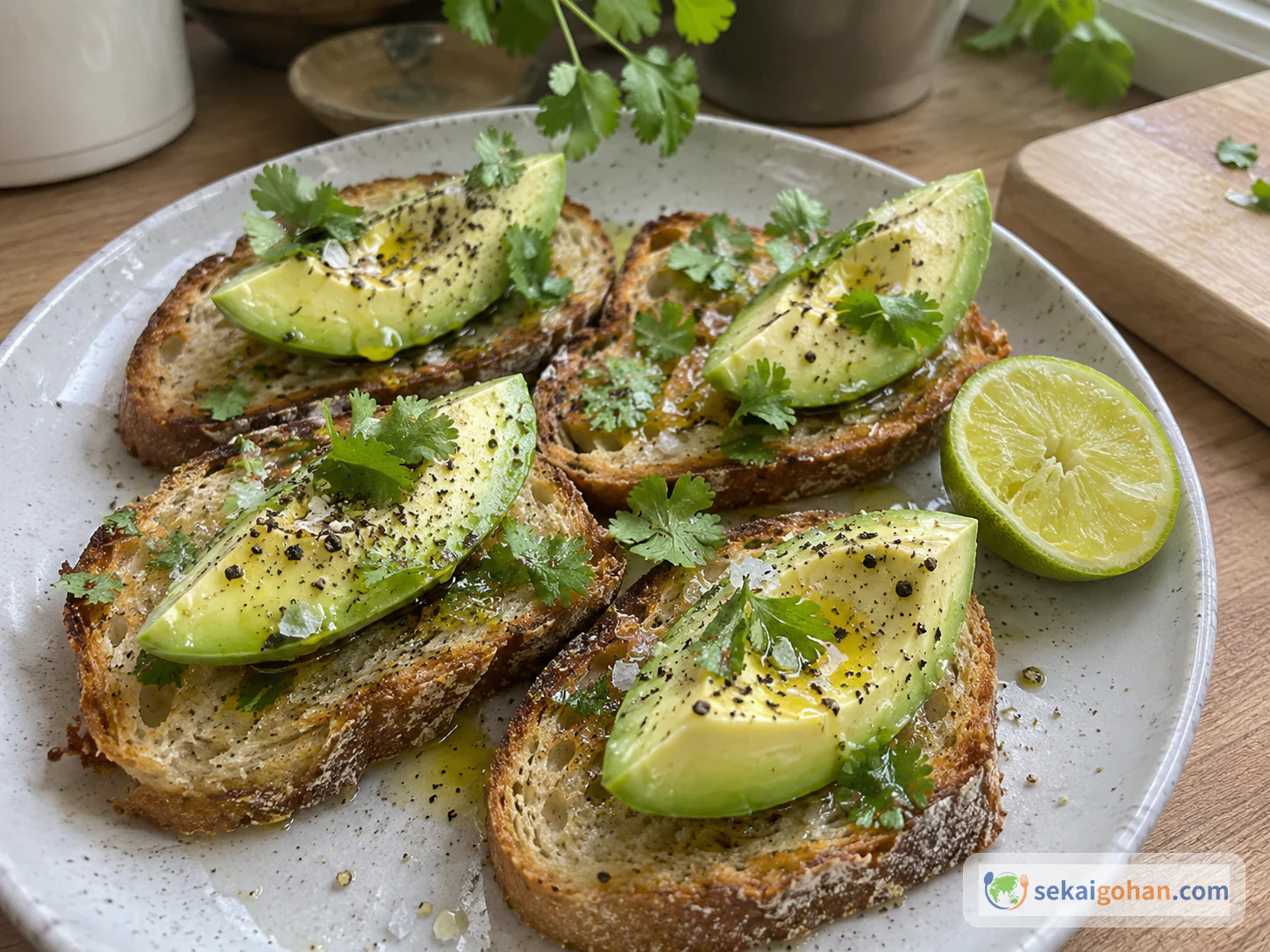
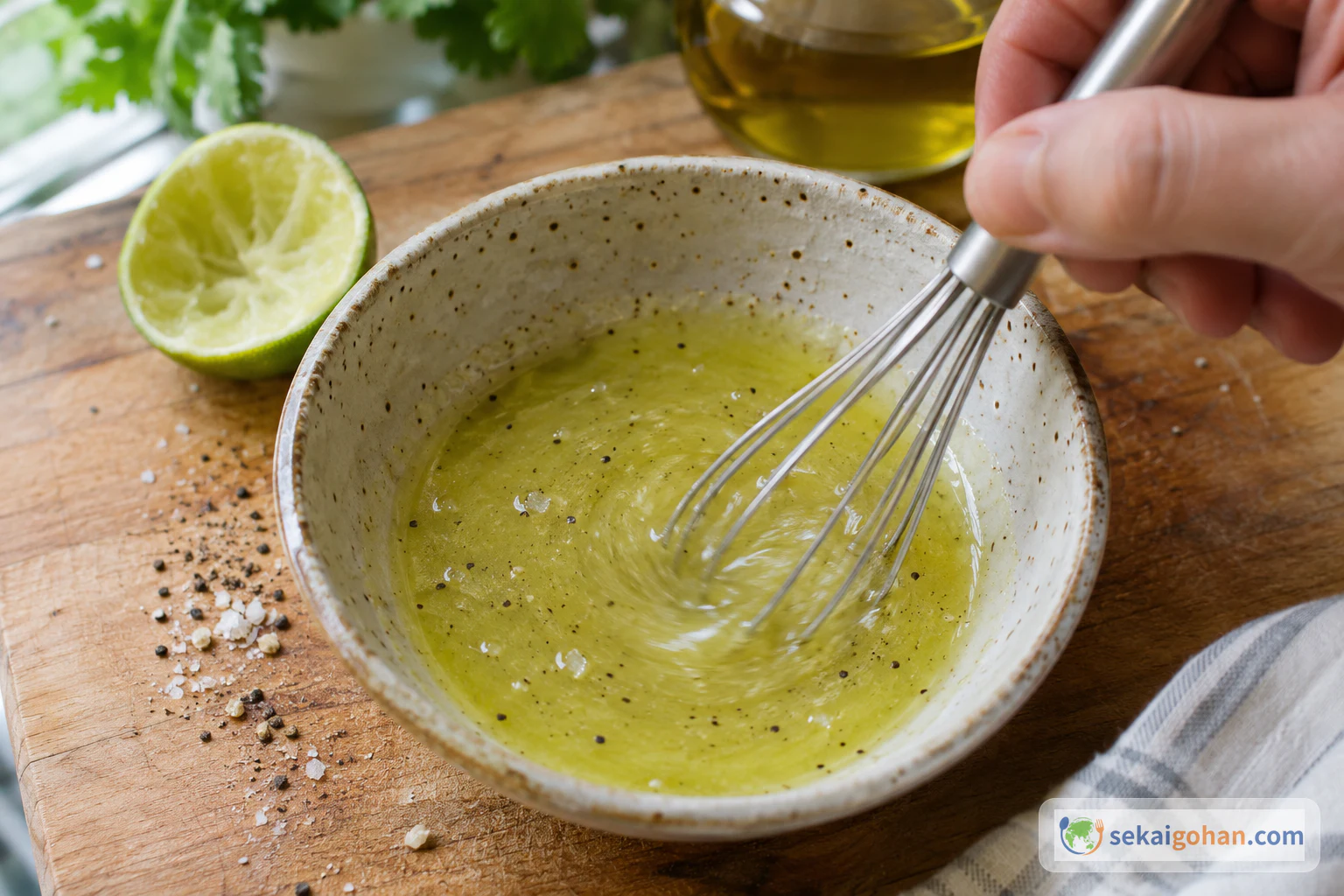
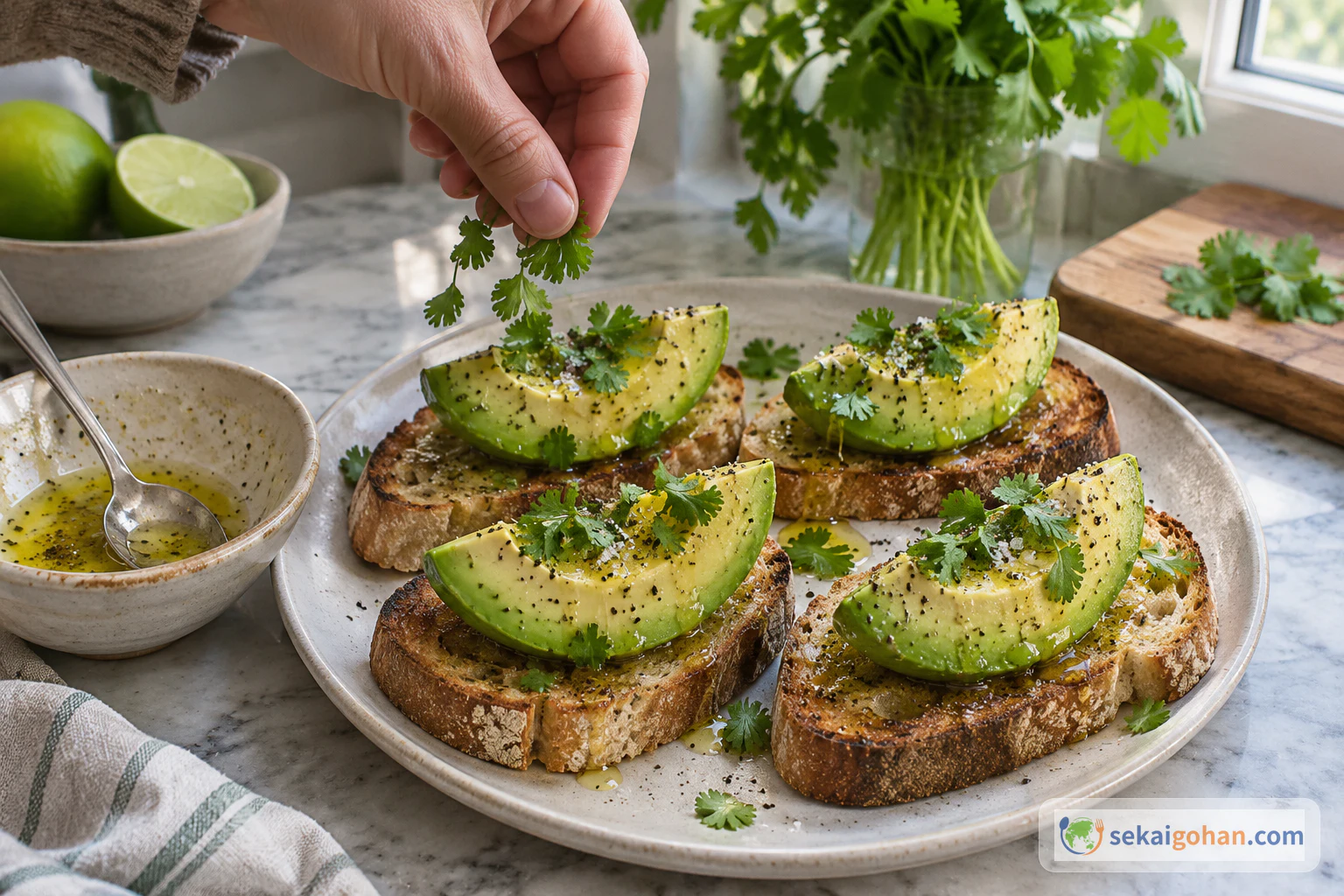
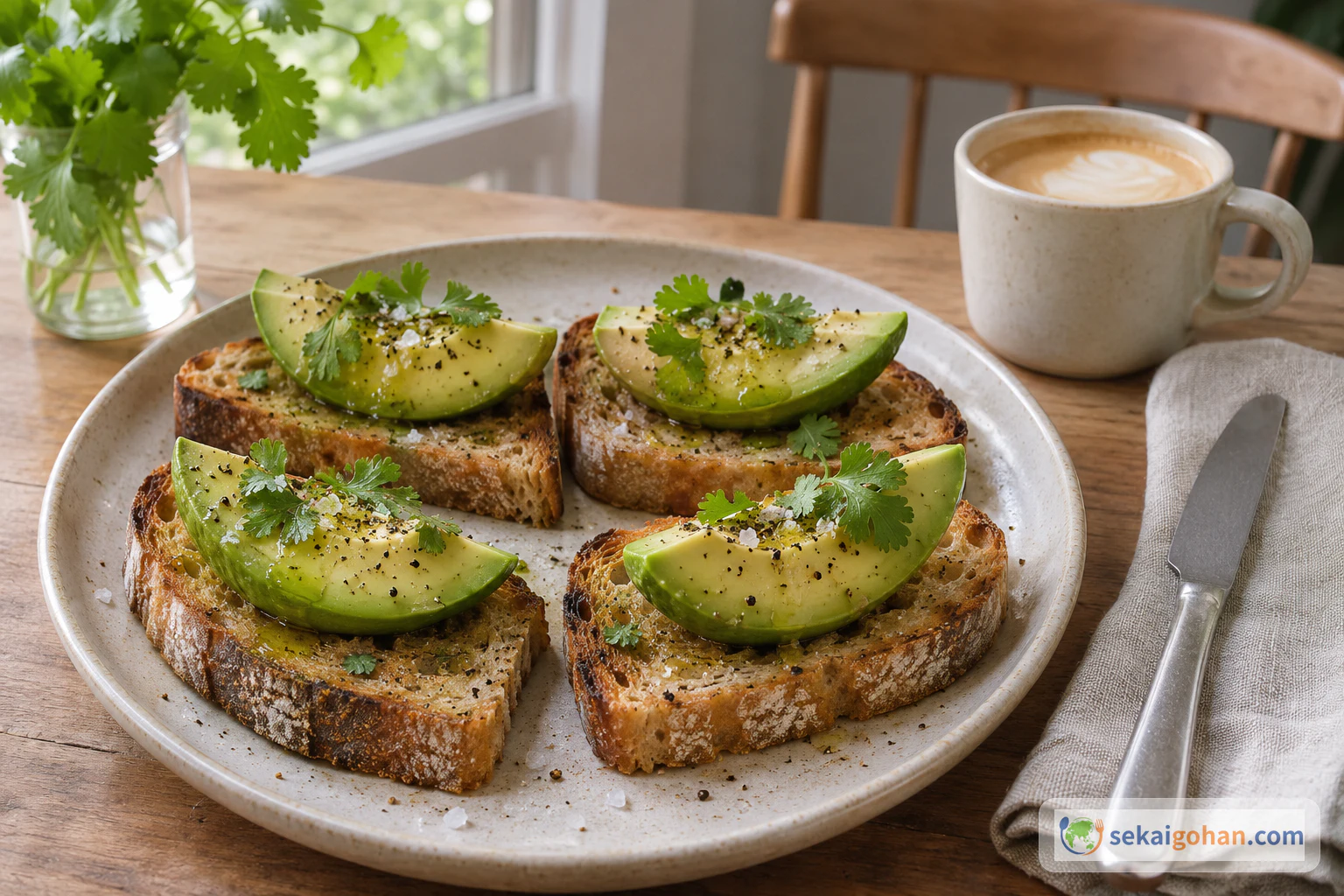
The dressing turns cloudy under the whisk: lime juice and olive oil, a pinch of sea salt, flecks of black pepper. A pale green quarter of avocado goes onto each golden slice of sourdough, the dressing runs into the crust, coriander leaves land on top, and the pepper mill turns more times than seems reasonable. The first bite is cool and buttery, then sharp with lime, then warm with pepper against the crunch of the toast. This is avocado toast as Australian cafés made it famous, a breakfast plate that went from Sydney to the rest of the world.
The avocado stays in whole quarters here, sliced into with a knife and fork at the table. The other Australian favourite, mashed with feta and mint, comes later in this piece.
How a Sydney Breakfast Travelled the World
A fruit that waited a century
Avocado seeds first reached Australia in 1840, planted in the Royal Botanic Garden in Sydney. For roughly the next hundred years almost nobody did anything with them. The fruit had long been eaten in Central America and the Caribbean, and botanically it is a berry, but in Australia it stayed a curiosity until the late 1920s, when growers began cultivating varieties brought from California.
Today the country's crop is dominated by two varieties, which matters at the shop and comes up again below. In Australia's cafés, avocado on toast became a breakfast fixture.
A café that could not open at night
In 1993 Bill Granger opened a café called bills in Darlinghurst, an inner-Sydney neighbourhood. The building had no zoning for night trading, so the place had to make its living from breakfast. He built out the morning menu, and avocado on toast, sharpened with lime, salt and chilli flakes, went onto it. The plate fitted the moment. Australian café culture, shaped by Italian and Greek migrants and their coffee, was turning breakfast out into a ritual, and a flat white with something green on sourdough became the picture of a Sydney morning.
The recipe went into print in 2000, first made as a snack to go with drinks. Granger later opened cafés in London, Tokyo, Osaka, Fukuoka and Seoul. In the 2000s Australian cooks in New York, at Cafe Gitane among others, put it on menus there, and after Instagram arrived in 2010 it became a symbol far beyond any one city.
In Australian cafés a common order is "smashed avo", avocado roughly mashed and piled on toast, often with feta and mint. The quartered version in this recipe is the early Sydney style, with the avocado left whole and the dressing doing the seasoning.
Who was first
Where avocado toast began is not settled, and Granger never claimed it. He said someone must have put avocado on toast before him, though he may have been one of the first to put it on a café menu and into print. In 1920 a local newspaper in California's San Gabriel Valley printed almost the same thing: peel the avocado, mash it with a fork, spread it thick on hot toast, add salt and pepper. In 1931 a Los Angeles hotel coffee shop listed avocado on toast for lunch. What Australia gave the world is the café style, the plate on the breakfast menu with good bread, sharp citrus and plenty of pepper.
In the 2010s that plate became shorthand for young people's spending, mocked as a millennial extravagance and even blamed, in the arguments of the day, for the housing problem. A slice of toast ended up carrying a generational debate. The plate itself kept being ordered.
More Australian dishes live on the Australia country page.
Ingredients (serves 4)
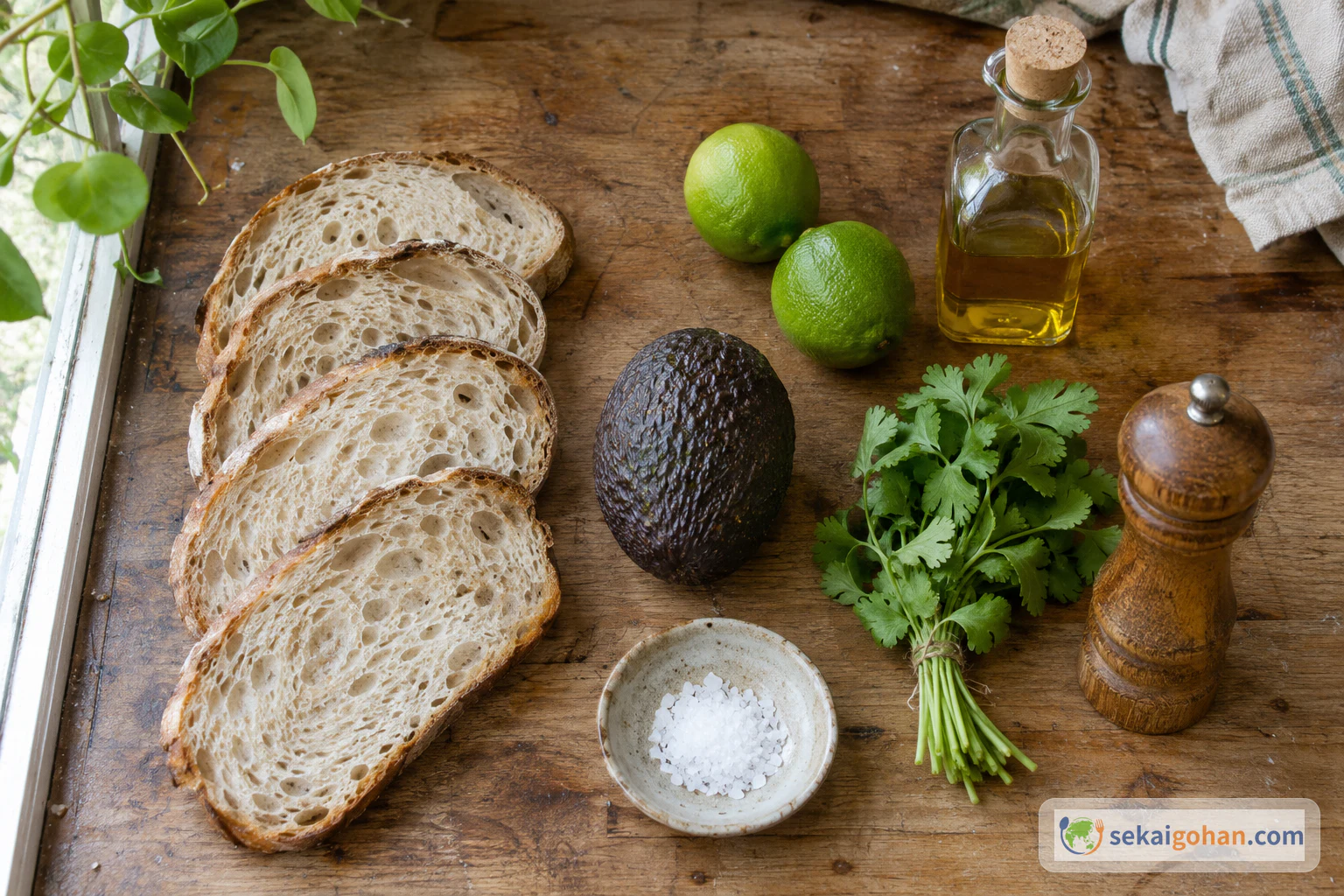
Lime juice and olive oil go in at equal measure. Use 2 tbsp of each. One avocado with this much dressing makes a sharp plate, so pour, taste and stop when it suits you.
The bread is made from wheat flour, and the café variation below adds feta cheese and rye bread. Read the bread label for what else it contains. If you have any concern about eating avocado, ask a doctor before making this.
Equipment
- Small bowl and small whisk
- Cutting board and a small sharp knife
- Toaster, or a grill pan and tongs
- Pepper mill
- Measuring spoons
Choosing the Avocado, Bread and Herbs
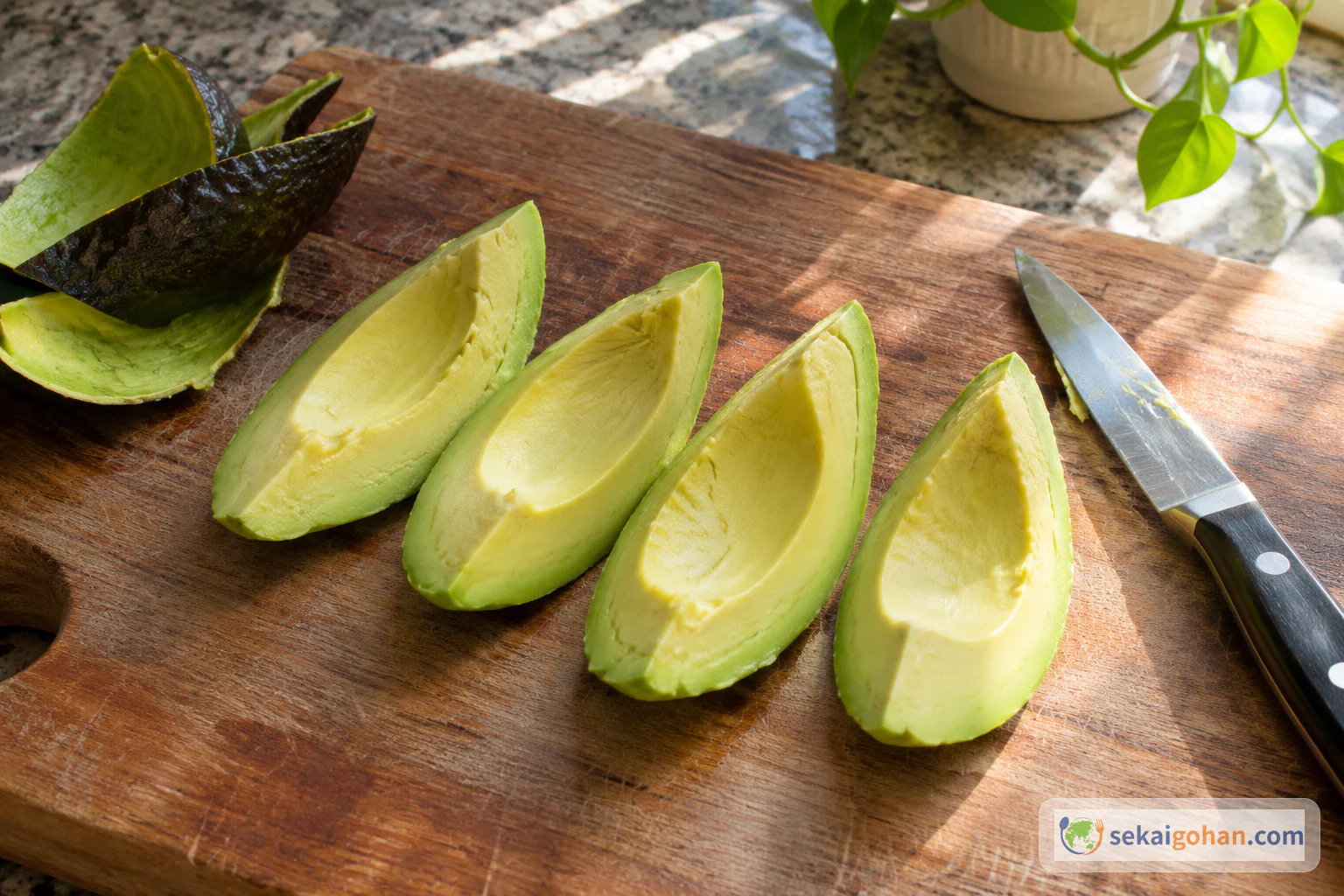
Most of the result is decided before the knife comes out, in how ripe the avocado is. Australia grows mostly Hass, about 80 percent of the crop, and Shepard, about 15 percent, and you read them differently. Hass has pebbly skin that turns from green to a dark olive colour as it ripens, so you can judge it by eye. Shepard stays glossy green, slightly pear-shaped, and comes into shops around February and March from Far North and Central Queensland. Press its stem end lightly; when it gives a little, it is ready. Shepard also browns more slowly once cut than Hass does.
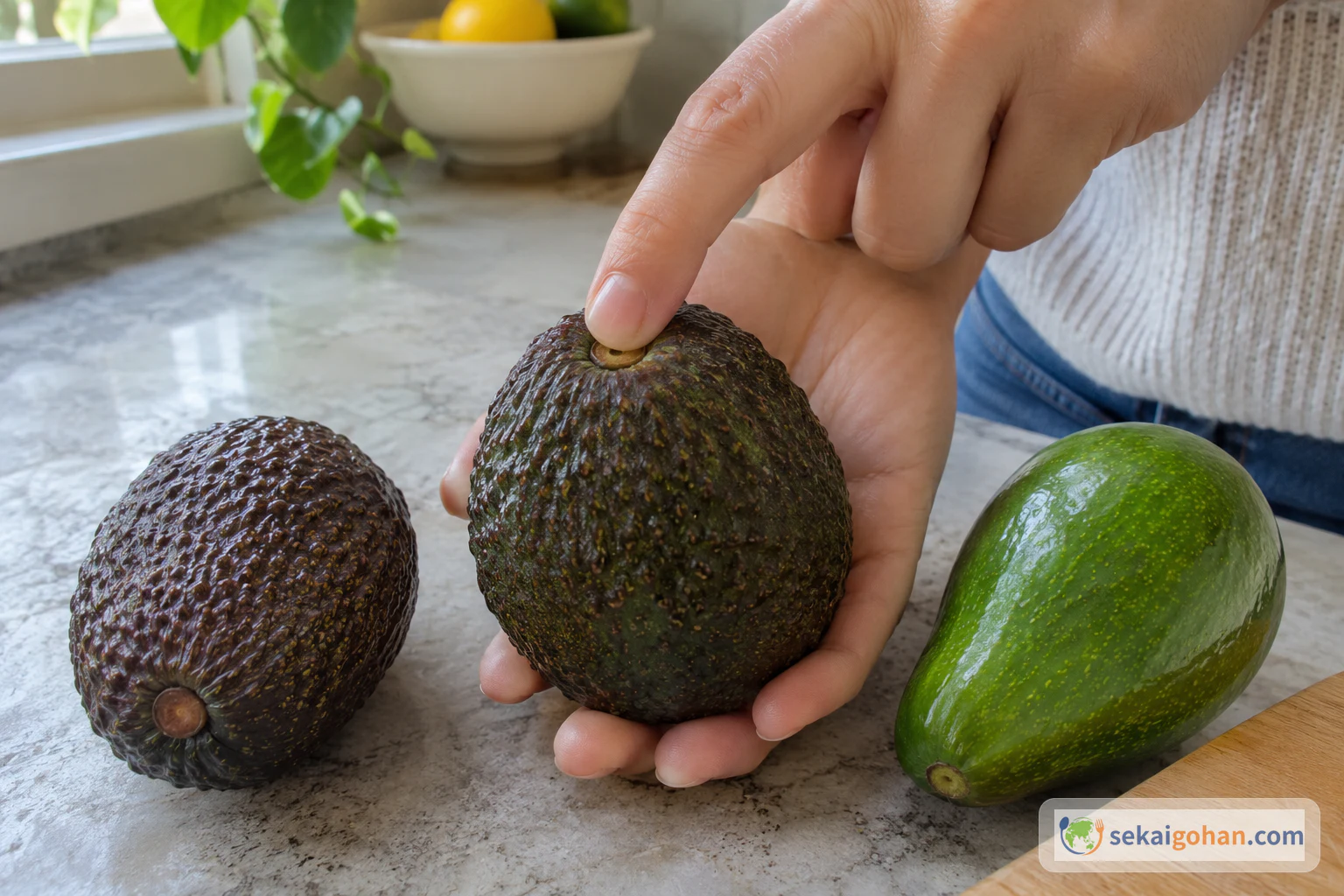
Leave unripe avocados at room temperature until they ripen, then move them to the fridge. For this dish, ripe means soft enough to be buttery but firm enough to hold a wedge shape on the toast.
| Ingredient | What works | What changes |
|---|---|---|
| Sourdough | A tangy rustic loaf or wholemeal bread | Close in chew and sourness. Soft sandwich bread holds more moisture and goes limp under the dressing |
| Fresh lime | Bottled lime juice | The nearest swap. Lemon gives a rounder, milder acid |
| Coriander | Fewer leaves, or flat-leaf parsley | Parsley is quieter and easier for children; the plate loses some of its edge |
| Sea salt | Any coarse salt | Same job; add by taste |
| Olive oil | Extra virgin | A strongly flavoured oil pushes to the front of the taste |
Keep the lime, salt, oil and plenty of pepper. That balance of acid, salt, fat and aroma is what makes this taste like the Sydney plate rather than avocado on bread.
Method
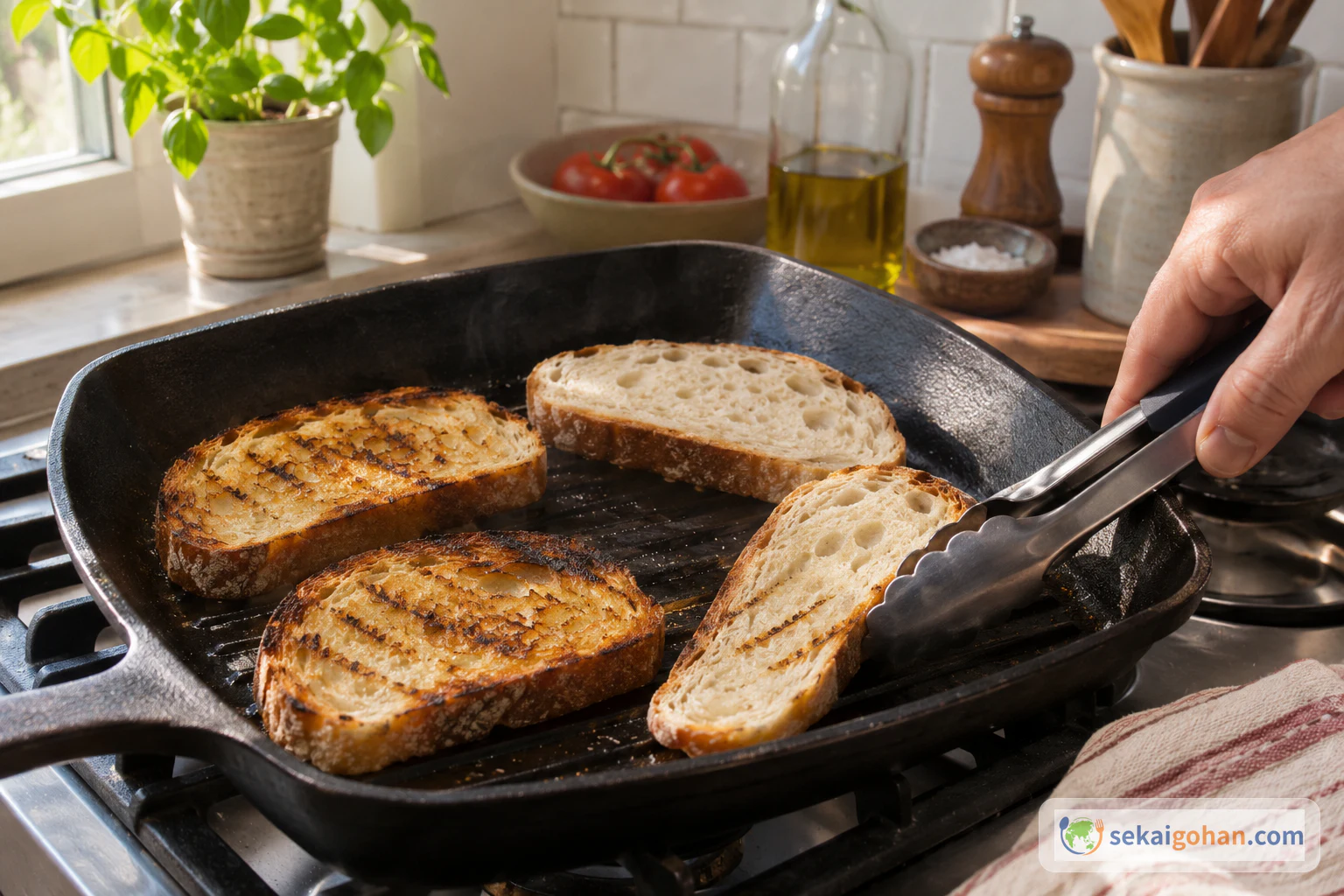
Only the bread sees heat. Make the dressing first so it is ready, cut the avocado next, and toast last so the bread is still crisp when everything goes on.
Salt and pepper go into the dressing and again on top at the end. The second round, scattered right on the avocado, is what makes the first bite taste seasoned.
Cut avocado starts to brown as soon as the air reaches it. Cut it after the dressing is made and just before the bread goes in to toast, so it reaches the table bright.
When It Goes Wrong
| What you see | Why | What to do |
|---|---|---|
| The bread goes soggy | Toast too pale, or avocado very soft | Toast until golden with a dry crust. If the avocado is very soft, keep it in whole quarters and serve at once |
| It tastes too sour | All the dressing went on | Pour less; taste after the first spoonful and stop when it suits you |
| It tastes flat | Not enough salt and pepper | Add sea salt and plenty of freshly ground pepper on top |
| The cut sides turn brown | Air on the cut flesh | Cut just before serving. Keep any spare avocado covered or under lemon juice |
| The avocado is hard | It was picked unripe | Leave it at room temperature to ripen. For Shepard, check the stem end for a slight give |
| The coriander is too strong | Coriander divides people | Use fewer leaves, or switch to flat-leaf parsley |
Serving, Variations and Storage
At the table
This is a breakfast and brunch plate, eaten in Australia with a coffee, often a flat white. One slice per person makes a light breakfast or a snack. For a fuller plate, add a poached egg or thin slices of ham on top.
Variations
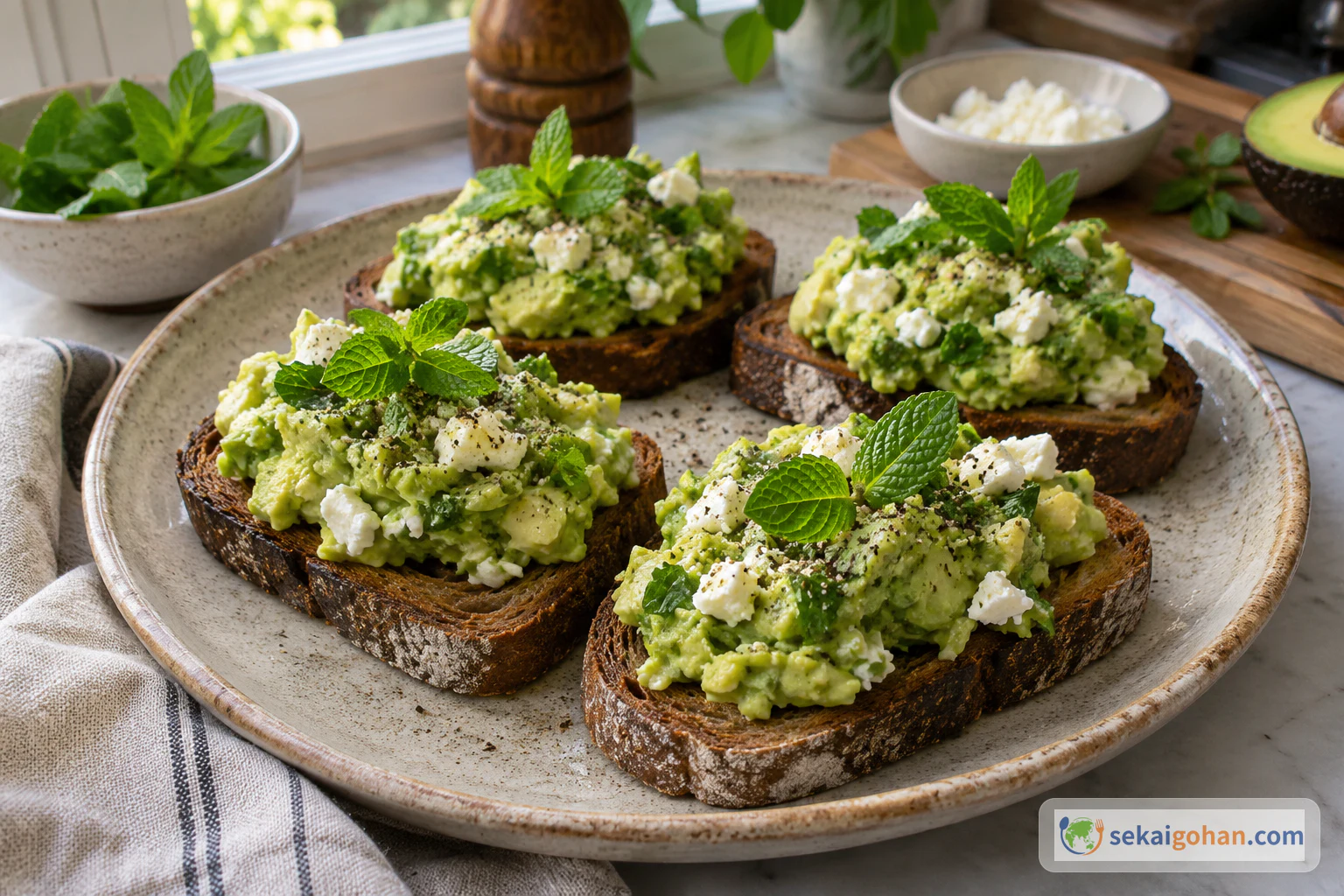
The café smash with feta and mint. This is a separate recipe, for 4. Take 2 small, firm-ripe avocados, pitted and peeled, and mash them roughly with a fork in a bowl. Add 3 oz (80 g) soft feta, crumbled, 2 tbsp chopped fresh mint, and a large squeeze of lemon juice, and mash until just mixed, still chunky. Season with sea salt and freshly ground pepper. Toast 4 large slices of rye bread until golden, spoon a quarter of the mix onto each, scatter with more mint and serve straight away. The texture turns creamy and salty, and the topping stays put on the bread.
Poached egg. The yolk runs into the lime dressing and turns breakfast into a full meal. Thin ham does the same job with salt instead of richness.
Chilli flakes. Heat cuts through the fat of the avocado. This was part of the early café version and remains one of the most common additions.
Lemon for lime. The acid is rounder and gentler, and lemons are easier to find in many shops.
Storage
Assembled toast does not keep; eat it the day it is made, as soon as it is ready. If you cut only part of an avocado, put the rest in an airtight container or squeeze lemon juice over the cut surface, then refrigerate it. The dressing can be made ahead. The oil and lime separate as it stands, so whisk it again just before you pour it.
Frequently asked questions
How do I make it for two?
Halve everything: half an avocado cut into two quarters, two slices of sourdough, 1 tbsp each of lime juice and olive oil. Keep the other half of the avocado in an airtight container in the fridge, or with lemon juice over the cut side.
Toaster or grill pan?
Either works. A toaster gives an even golden surface, and a grill pan adds char lines and a slightly smoky edge. With a pan, turn the slices with tongs so both sides colour and the crust dries out.
Which olive oil should I use?
Extra virgin gives the dressing the most character. A peppery or very grassy oil will lead the flavour over the lime, so a mild one keeps the avocado in front.