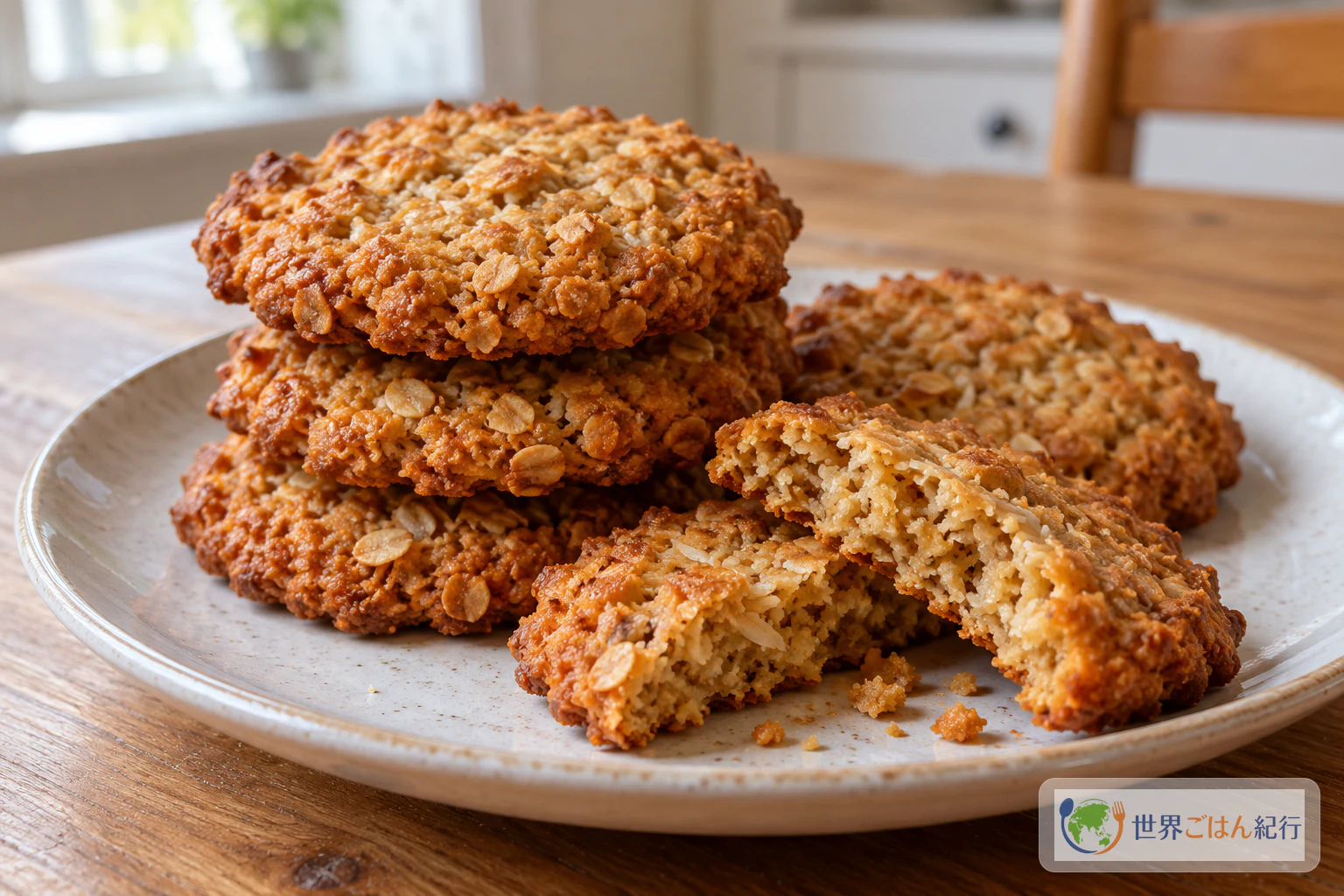
ANZAC Biscuits: A Sweet Oat Biscuit Two Countries Call Their Own
One formula and nothing mixed in from other recipes: rolled oats, flour, sugar, coconut, butter and golden syrup. Bake at 150°C for 20 minutes, then let the biscuits cool before you judge their texture.
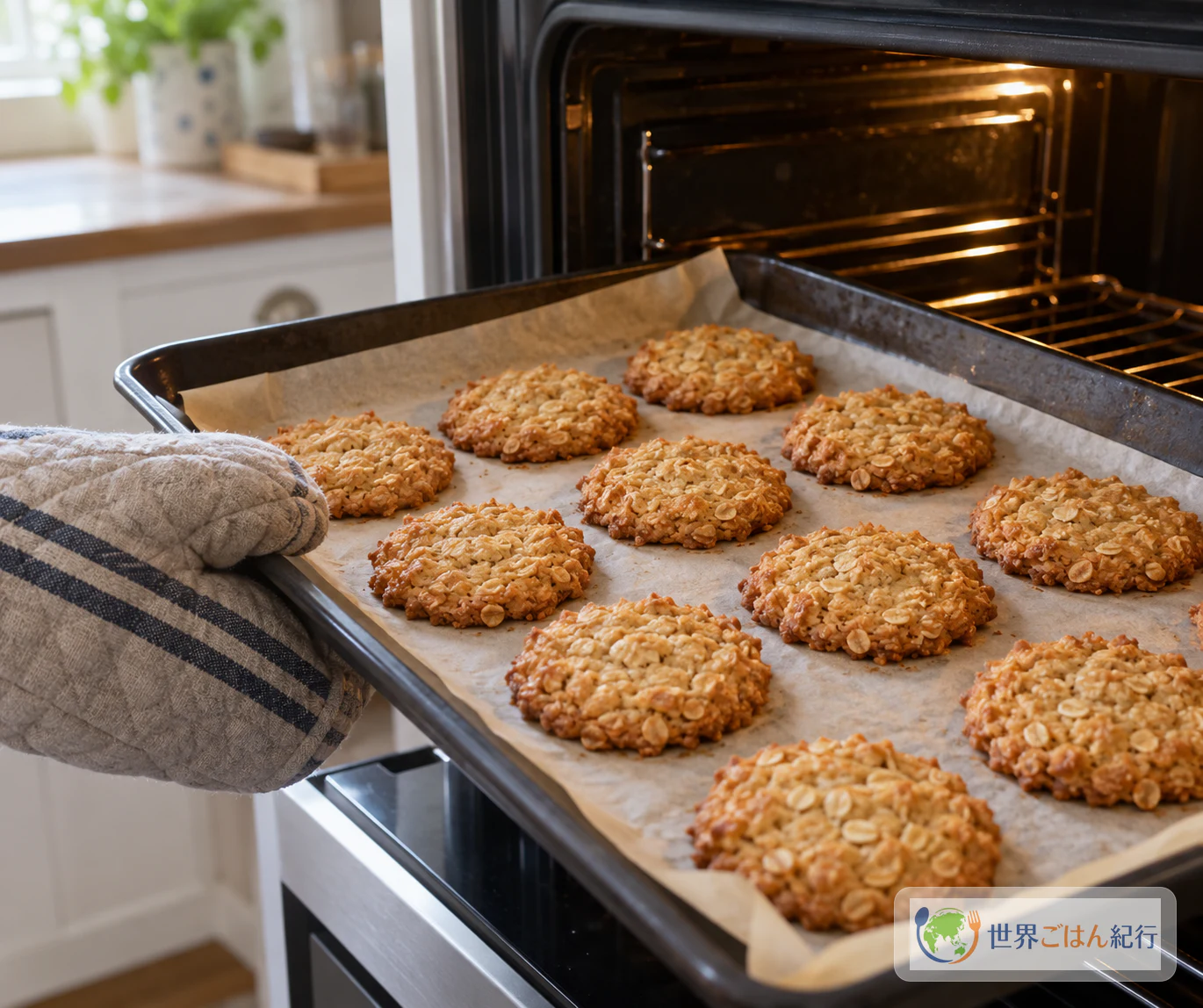
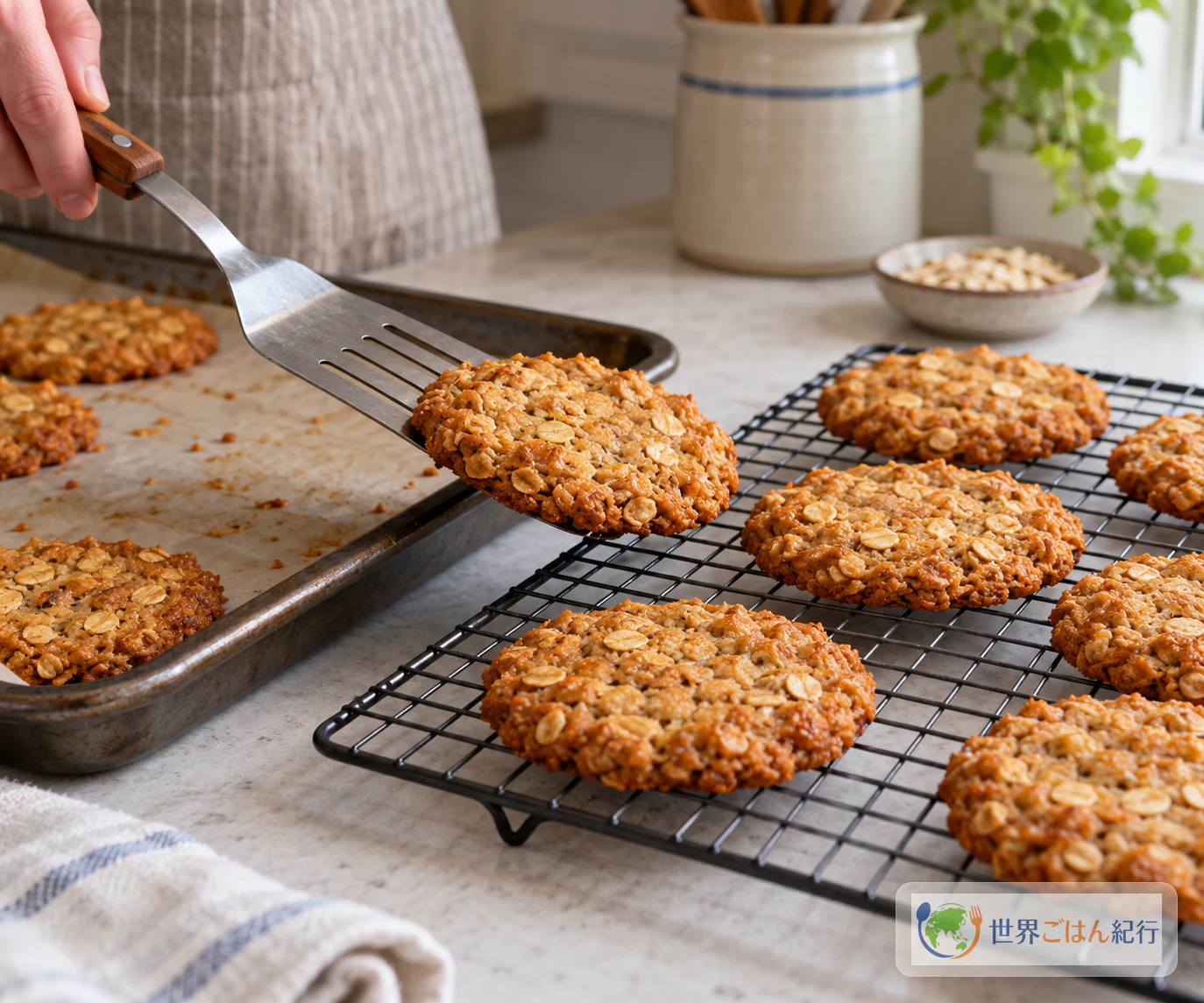
Lift a tray of ANZAC biscuits out of the oven and they can feel surprisingly soft. One ABC News recipe (a different formula from the one below) describes exactly this: the biscuits are very soft while hot and firm up as they cool. That change, from tender to set, is part of baking them, and it is worth knowing about before you decide a batch needs more time in the oven.
The ANZAC biscuit belongs to more than one country. Te Ara, the Encyclopedia of New Zealand, describes it as a biscuit that emerged in the twentieth century as a national biscuit of both Australia and New Zealand. This article sits in our Australia section, but that placement is an index, not a claim of sole origin or ownership.
It is also important to separate two very different things that share the name. The Australian War Memorial distinguishes the hard army biscuit, known as hardtack or the "Anzac tile", a ration used as a bread substitute, from the sweet oat and syrup biscuit baked at home. The Memorial does not treat the origin of the sweet biscuit, or its connection with what was sent to the front, as settled. Australia's Department of Veterans' Affairs (DVA) explains that people at home sent parcels containing long-lasting foods to those serving overseas. The two institutions frame this history differently, and this recipe does not claim that today's sweet biscuit certainly reached the soldiers at Gallipoli.
Records of the name and the recipe shift over time, too. DVA reproduces "Anzac Biscuits" from the 1917 War Chest Cookery Book: a quite different biscuit made with egg, rice flour and spices, sandwiched with jam and iced. Te Ara's short entry on the subject gives 1921 as the year the name appeared in a recipe book, while the Australian War Memorial traces an oat-based recipe close to today's traditional type to a 1920 newspaper. Because each source defines "first" differently (the name, the oat recipe, or the modern form), no single year is presented here as the verified beginning.
Ingredients (Makes 20 Biscuits)
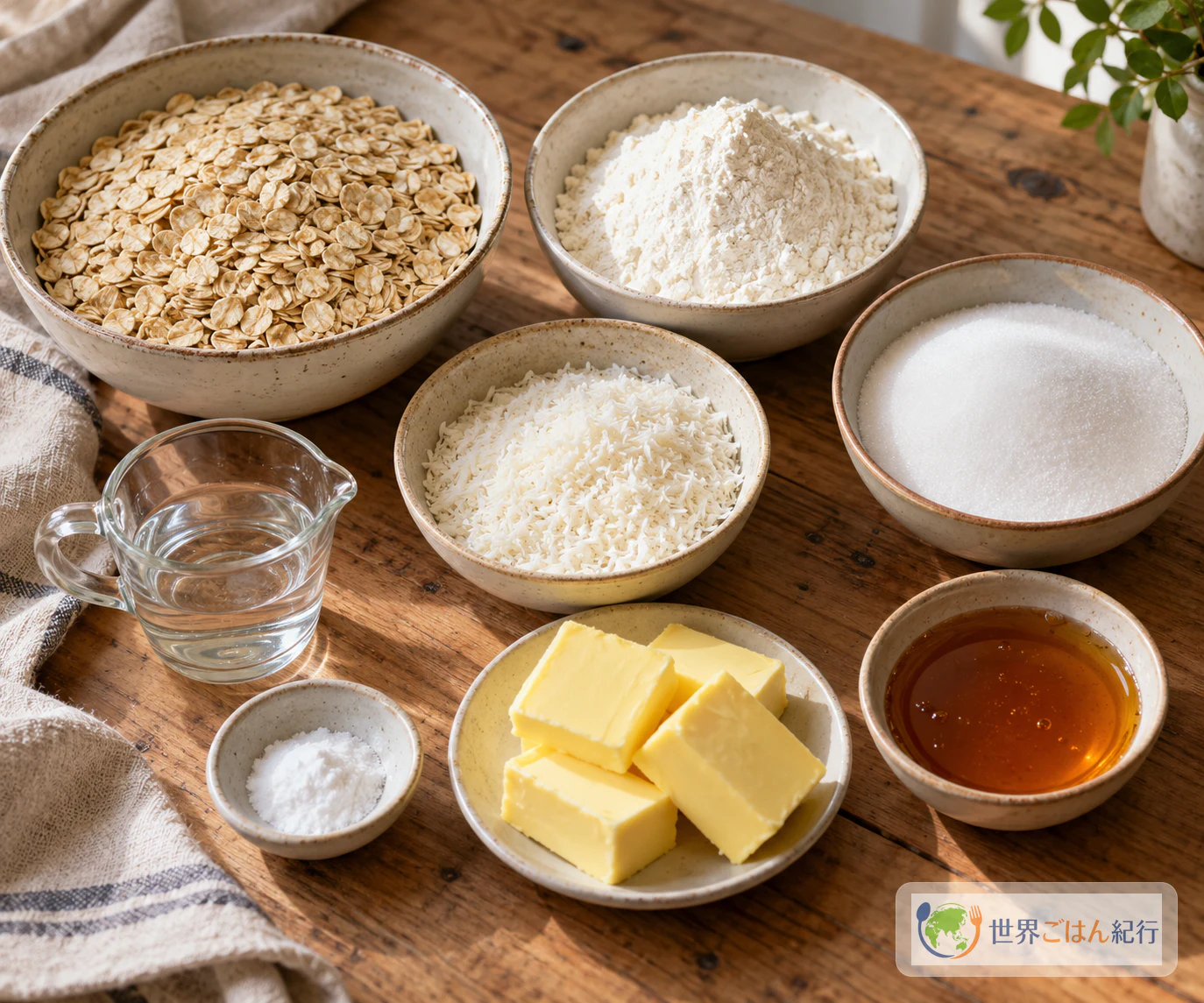
These quantities come from a single modern recipe by chef Matt Moran, published by the Australian War Memorial. It makes 20 biscuits; that is a count of biscuits, not 20 servings. Amounts from other recipes are deliberately not mixed in.
Everything except golden syrup is an ordinary supermarket ingredient, and no special equipment is needed. Look for the general product name “golden syrup”.
This formula contains wheat (flour), milk (butter), oats and coconut. It contains no egg, but that is true only of this recipe: historical "Anzac biscuits", such as the 1917 version reproduced by DVA, used egg. This is not an allergen-free recipe. Check the labels and any shared-facility statements on every ingredient you buy.
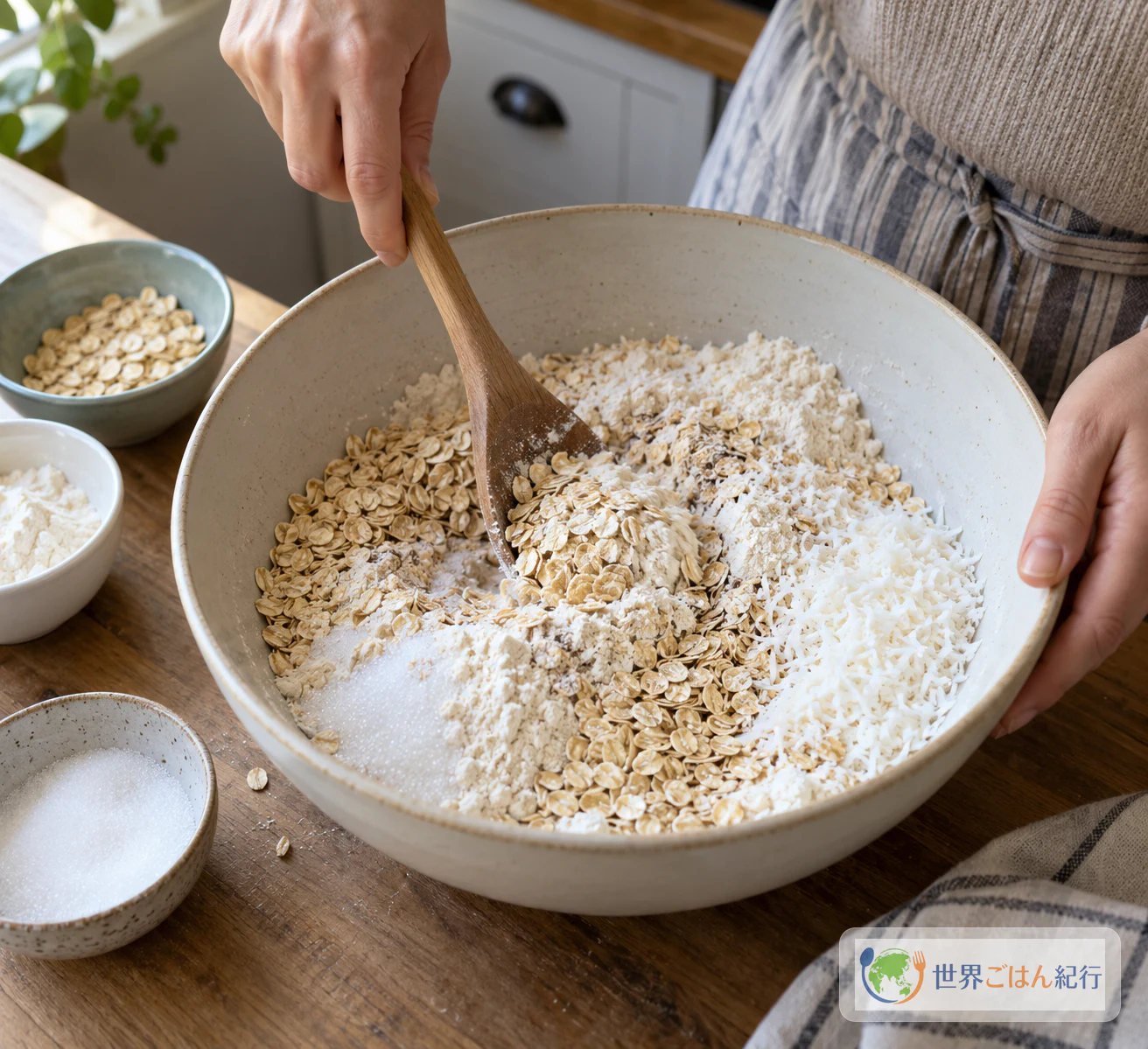
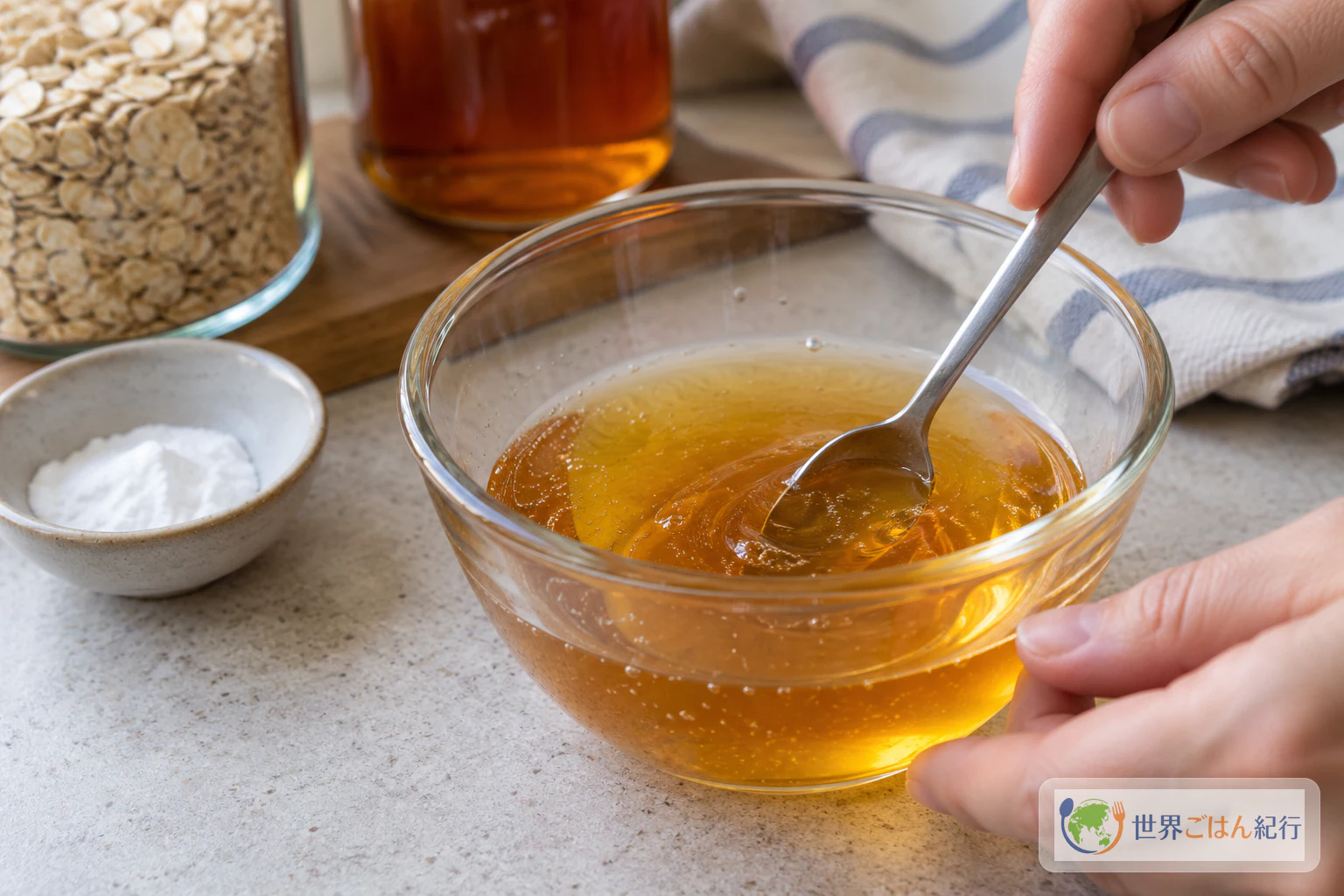
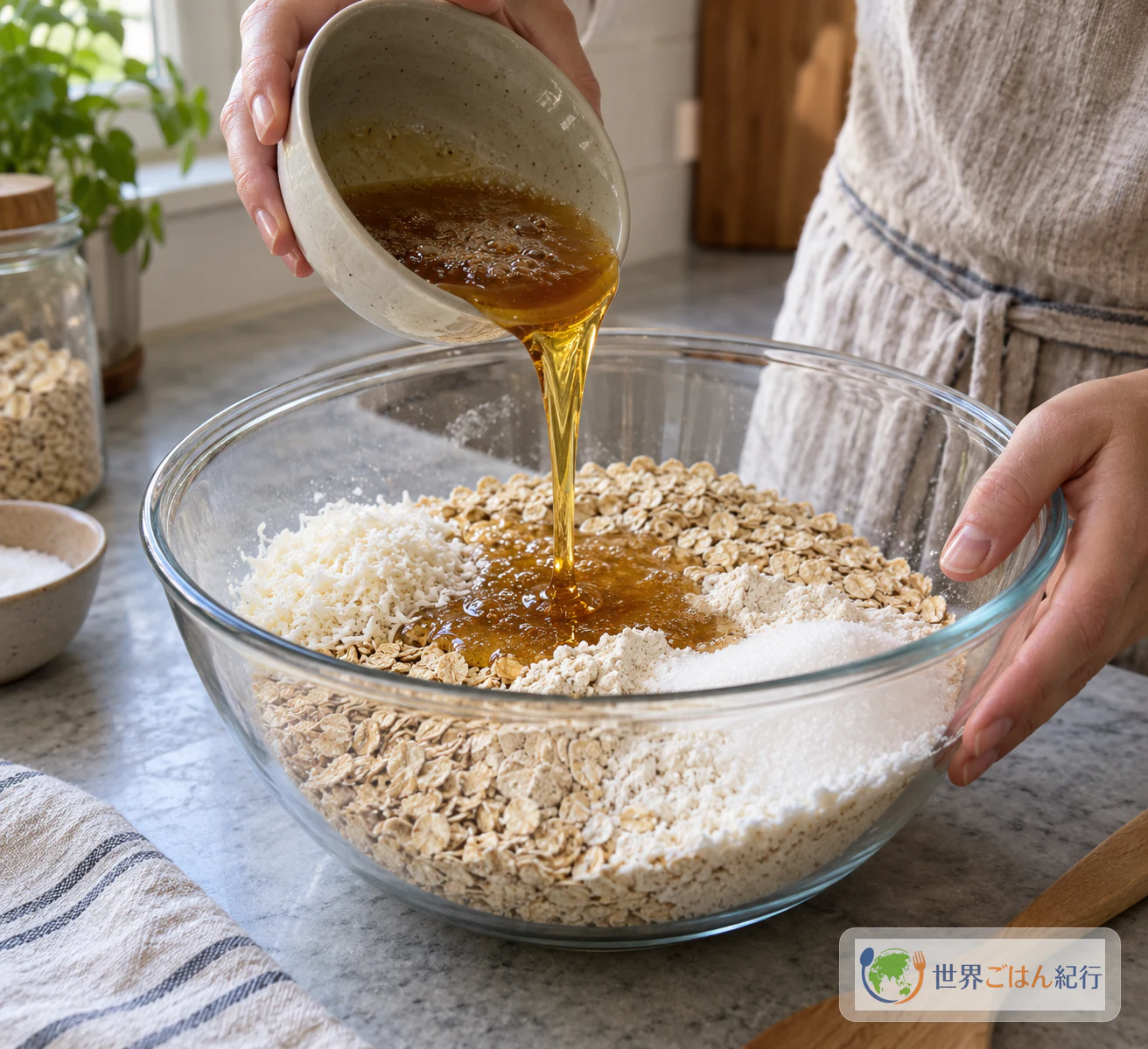
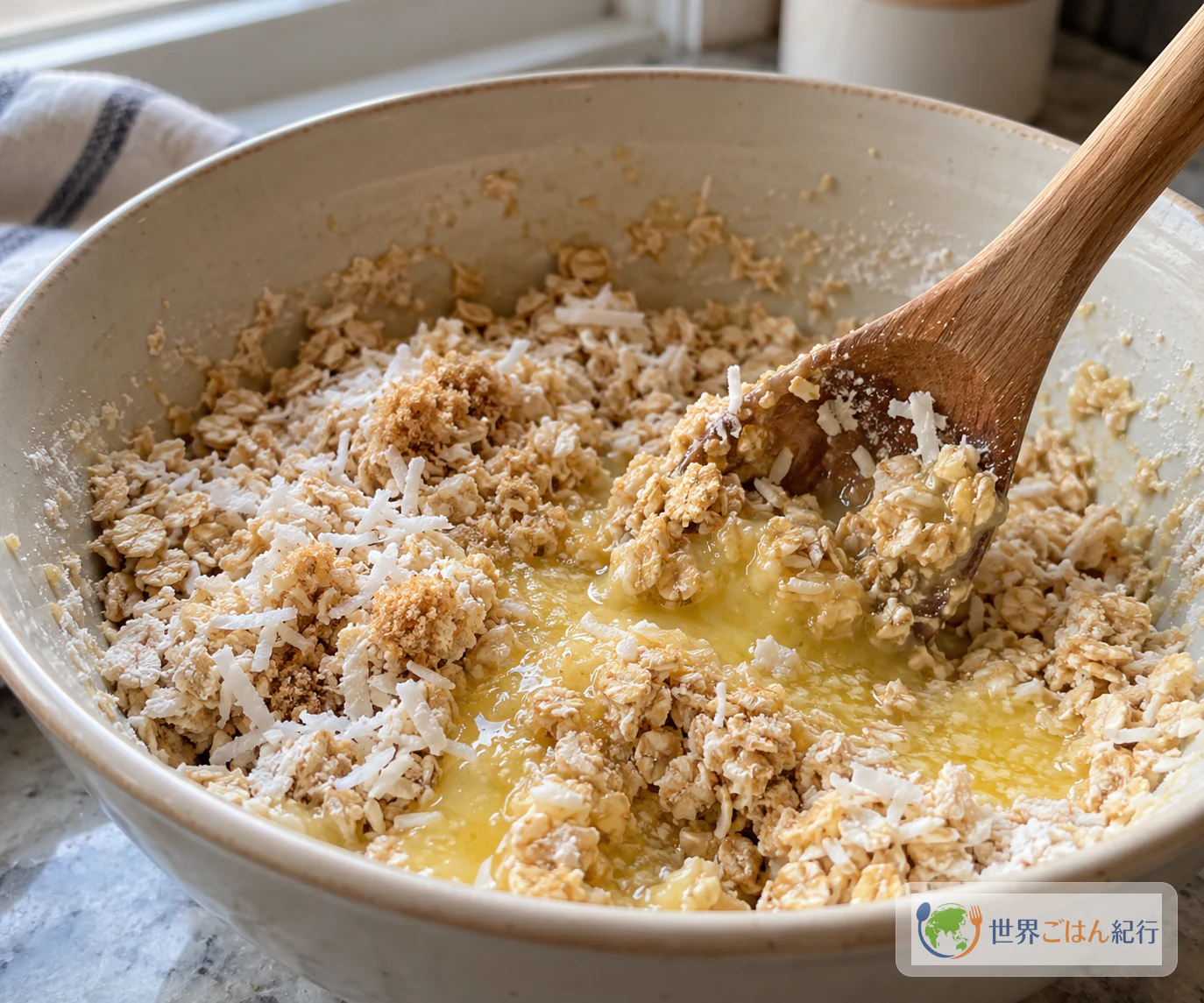
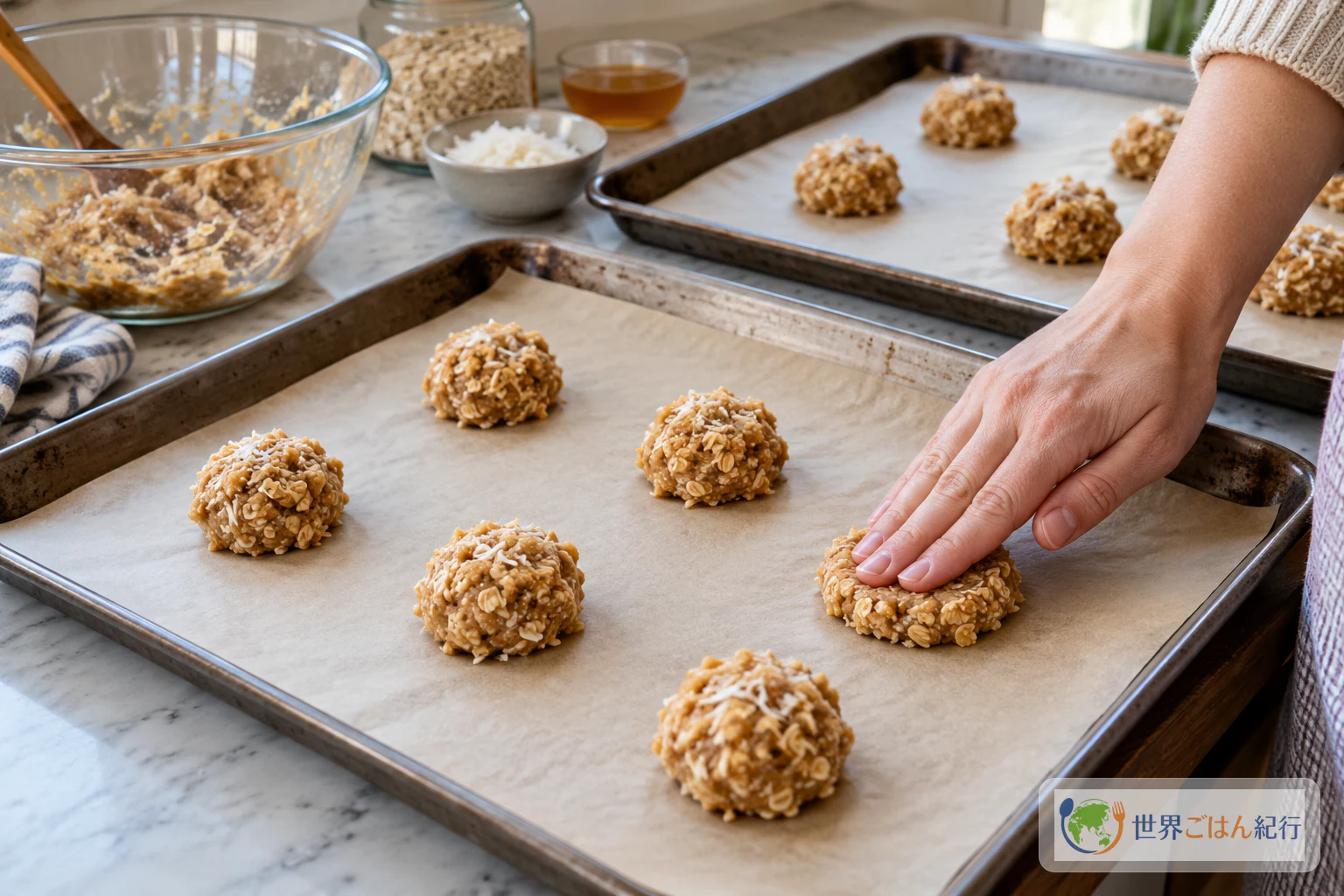
Method: Mix, Shape into 20, Bake at 150°C
The source recipe gives 150°C and 20 minutes but does not say whether this is a fan or conventional setting. No conversion is offered here; note how your own oven behaves on the first batch.
Troubleshooting
| Problem | What to check | What to do |
|---|---|---|
| Biscuits spread into each other | Uneven portions or too little space | Divide into 20 even portions and leave more room on the tray. The source gives no fixed extra flour, so don't change the formula on the first batch |
| Dough is crumbly and won't hold | Mixing, measuring | The source gives no extra-water amount. Check your weights, mix thoroughly, and note how the dough behaves rather than adding liquid by guesswork |
| A soapy or soda taste | Soda measurement or uneven mixing | Weigh 5g accurately and mix the soda evenly through the syrup/water mixture |
| Soft straight from the oven | Still hot | Let them cool first; in another recipe's description they firm as they cool. Don't extend the baking time on that basis alone |
| Too dark or too hard | Oven differences | Start from 20 minutes at 150°C and note your oven's color. No fan-oven temperature is given in the source |
Coconut, Sweetness and Texture: How Home Recipes Differ
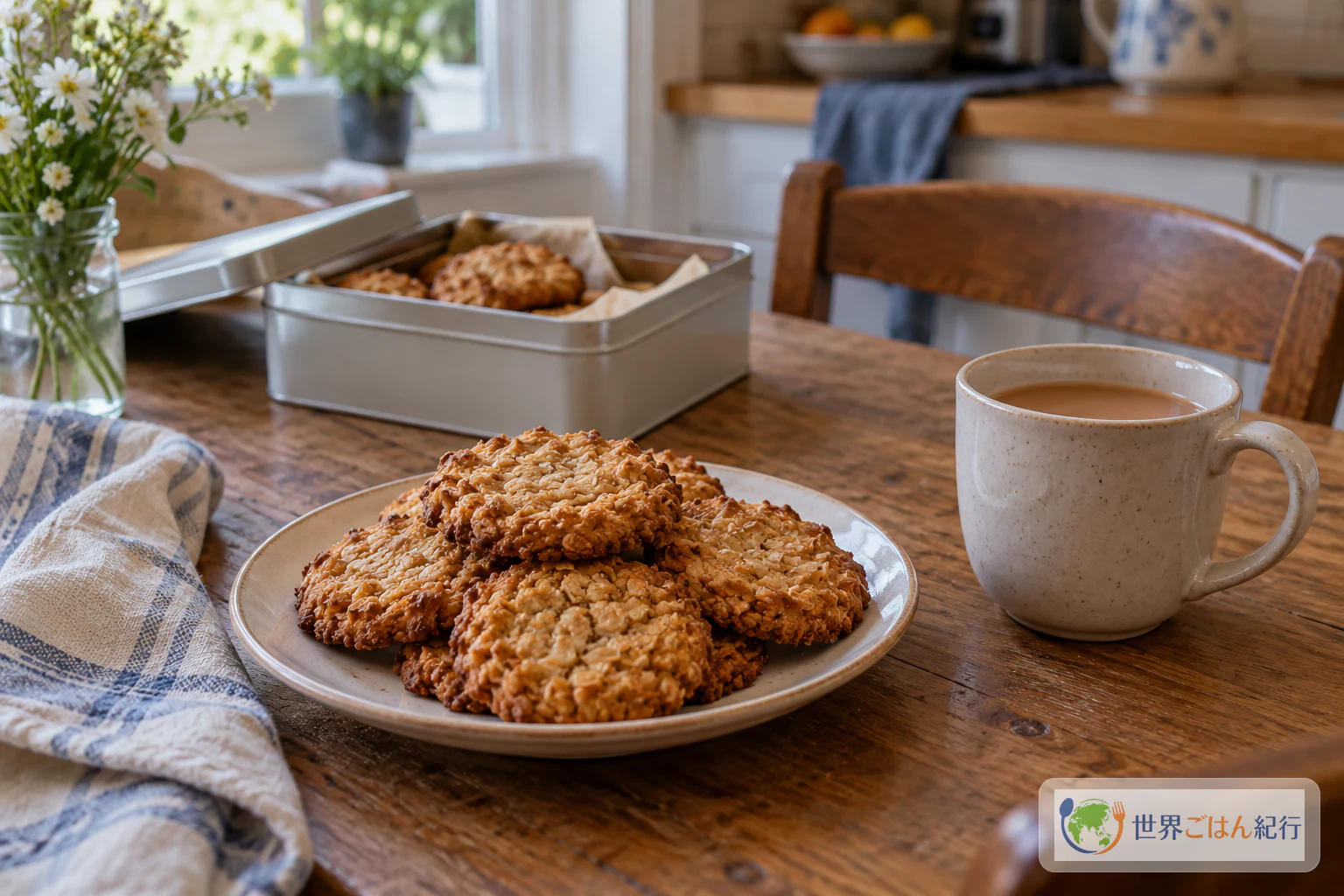
There is no single fixed ANZAC biscuit formula. The Australian War Memorial publishes a 1926 recipe without coconut and a 1933 CWA recipe that includes it. The changes below are different recipes recorded in the sources, not equal replacements for the formula above; none has been tested in this recipe.
- Coconut or none: The 1926 recipe has none; the 1933 CWA recipe and this modern formula include it. Leaving it out makes a different biscuit, and how it binds and spreads without coconut is untested here.
- Caster or brown sugar: Modern recipes use both. DVA's modern recipe uses brown sugar; the result in this formula is not guaranteed.
- Butter or margarine: DVA's recipe allows either. Expect a difference in flavor.
- Soft or crisp: The Australian War Memorial notes that a 1920 recipe says keeping the dough in rounds gives softer biscuits, while flattening it a little makes them thin and crisp. A separate CWA recipe on ABC News suggests shorter baking for softer biscuits and longer for crisper ones, using its own times. ABC News also notes that preferences for soft or crisp, and for size, vary by household and state.
- Golden syrup, honey or treacle: The Australian War Memorial records honey and treacle in older recipes. They differ in flavor and moisture, so there is no basis for a like-for-like swap.
Today the biscuit is part of shared culture in both Australia and New Zealand. ABC News has reported on a CWA branch in Victoria that bakes ANZAC biscuits ahead of Anzac Day, keeping strictly to its own recipe. That home-baking tradition is a present-day practice, separate from the uncertain history of what was sent overseas during the war.
Storage
The source recipe does not give storage guidance. A separate CWA recipe published by ABC News says that once completely cooled, the biscuits can be kept in an airtight container for a few days and freeze well. That note comes from a different recipe and is not a guarantee of long-term storage for this one.
Frequently Asked Questions
Are these the biscuits sent to soldiers in the war?
The relationship is not settled by these sources. The Australian War Memorial distinguishes the very hard army ration biscuit (hardtack or "Anzac tile") from the sweet home-baked biscuit, and does not treat the sweet biscuit's origin or its link to the front as settled. DVA describes families sending parcels of long-lasting food. The sources differ, so the relationship is not stated here as fact.
Is coconut essential?
No single answer. A 1926 recipe published by the Australian War Memorial has no coconut, while a 1933 CWA recipe does. This modern formula uses 50g, and removing it makes a different, untested version.
Which is correct, soft or crisp?
Both exist. Preferences vary by household, and older and modern recipes describe how pressing the dough and baking time change the result. This recipe uses lightly pressed rounds and 20 minutes at 150°C.
What if I can't find golden syrup?
Older recipes recorded by the Australian War Memorial used honey or treacle, but there is no evidence that swapping the same amount gives the same flavor or texture. It is best to find golden syrup for this formula.
Is it a failure if they're soft straight from the oven?
Not necessarily. In a different ABC News recipe, the biscuits are very soft while hot and firm up as they cool. Let them cool before deciding, rather than extending the baking time.
How long do they keep?
A separate CWA recipe says a few days in an airtight container once completely cooled, and that they freeze well. No longer storage period is given or guaranteed here.
For more dishes from the same country, see recipes from Australia.
Sources
- Australian War Memorial, "ANZAC Biscuits — Recipe by Matt Moran." The 20-biscuit formula, quantities, mixing order, shaping, and 150°C for 20 minutes used in this recipe. https://www.awm.gov.au/sites/default/files/matt_moran_anzac_biscuits.pdf
- Australian War Memorial, "Anzac biscuits." The distinction between army hardtack/Anzac tile and the sweet biscuit, and the unsettled origin of the sweet biscuit. https://www.awm.gov.au/articles/blog/anzac-biscuits
- Australian War Memorial, "Anzac biscuit recipes." The 1926 recipe without coconut and the 1933 CWA recipe with coconut. https://www.awm.gov.au/articles/encyclopedia/anzac/biscuit/recipe
- Australian War Memorial, "An Anzac Biscuit Bakeoff!" The 1920 newspaper oat recipe, variation in 1920s recipes including honey and treacle, and soft versus crisp shaping. https://www.awm.gov.au/articles/blog/anzac-biscuit-bakeoff
- Australian Department of Veterans' Affairs, Anzac Portal, "Anzac biscuits to make for Anzac Day or a commemorative event." Wartime food parcels, the reproduced 1917 War Chest Cookery Book recipe, and a modern recipe using brown sugar and butter or margarine. https://anzacportal.dva.gov.au/commemoration/event-planning/anzac-biscuits
- Te Ara — The Encyclopedia of New Zealand, "Australia and New Zealand — Common culture." The ANZAC biscuit as a national biscuit of both countries. https://teara.govt.nz/en/australia-and-new-zealand/page-5
- Te Ara — The Encyclopedia of New Zealand, "Anzac biscuits and pavlova." The "soldiers' biscuits" account and 1921 as the year the name appeared in a recipe book. https://teara.govt.nz/en/artwork/33143/anzac-biscuits-and-pavlova
- ABC News Australia, "Anzac Biscuits" (2022). A different recipe in which the biscuits are soft while hot and firm as they cool. https://www.abc.net.au/news/2022-04-14/anzac-biscuits/13841420
- ABC News Australia, "Anzac biscuits have a strict recipe in this CWA kitchen" (2023). Disputed origins, household variation, spacing, and the warning about too much soda. https://www.abc.net.au/news/2023-04-23/anzac-biscuits-recipe-tightly-held-tradition/102255666
- ABC News Australia, "CWA no-fail Anzac biscuits" (2020). Cooling on the tray, airtight storage for a few days, and freezing, for a different recipe. https://www.abc.net.au/news/2020-04-23/cwa-anzac-biscuits/12176750