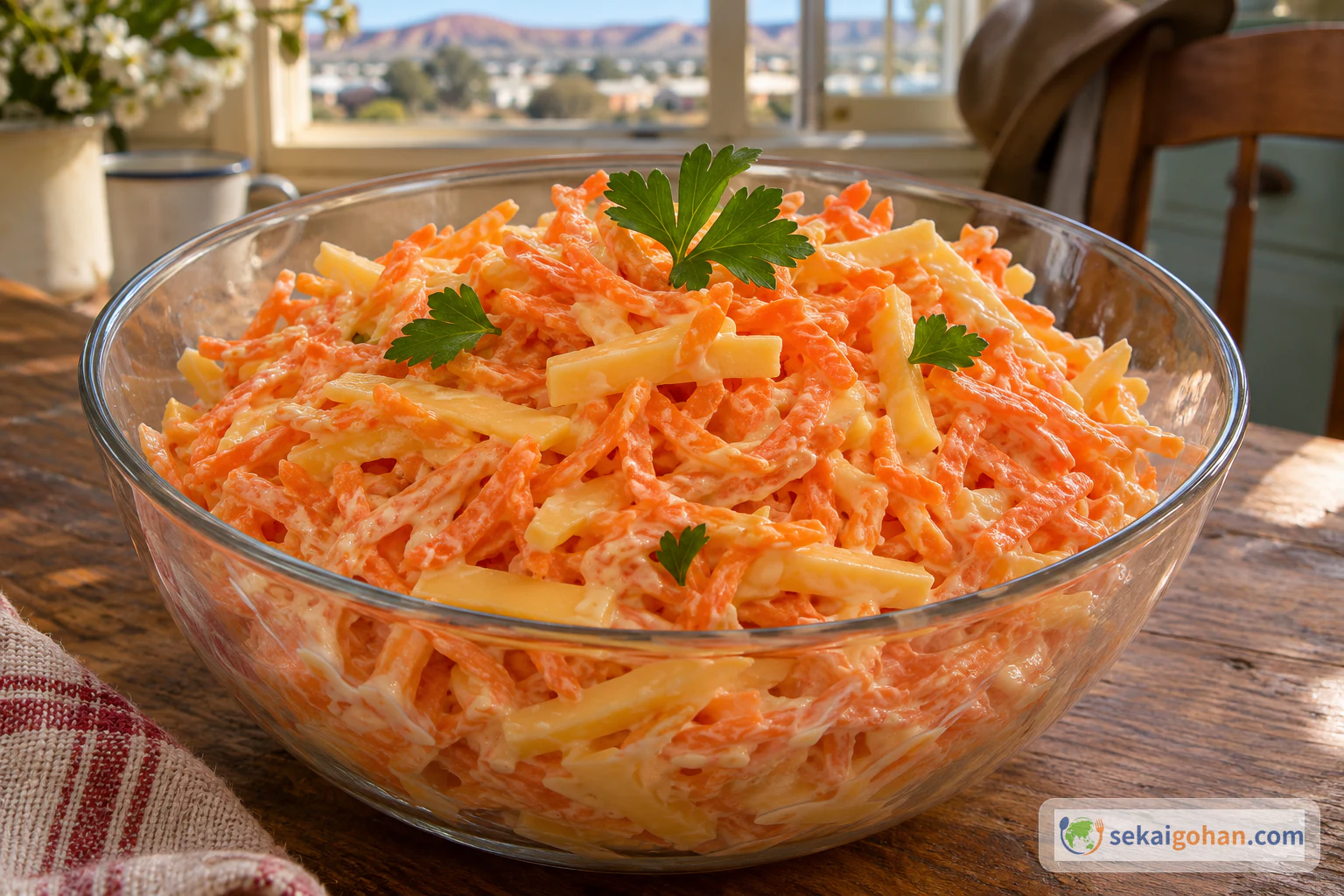
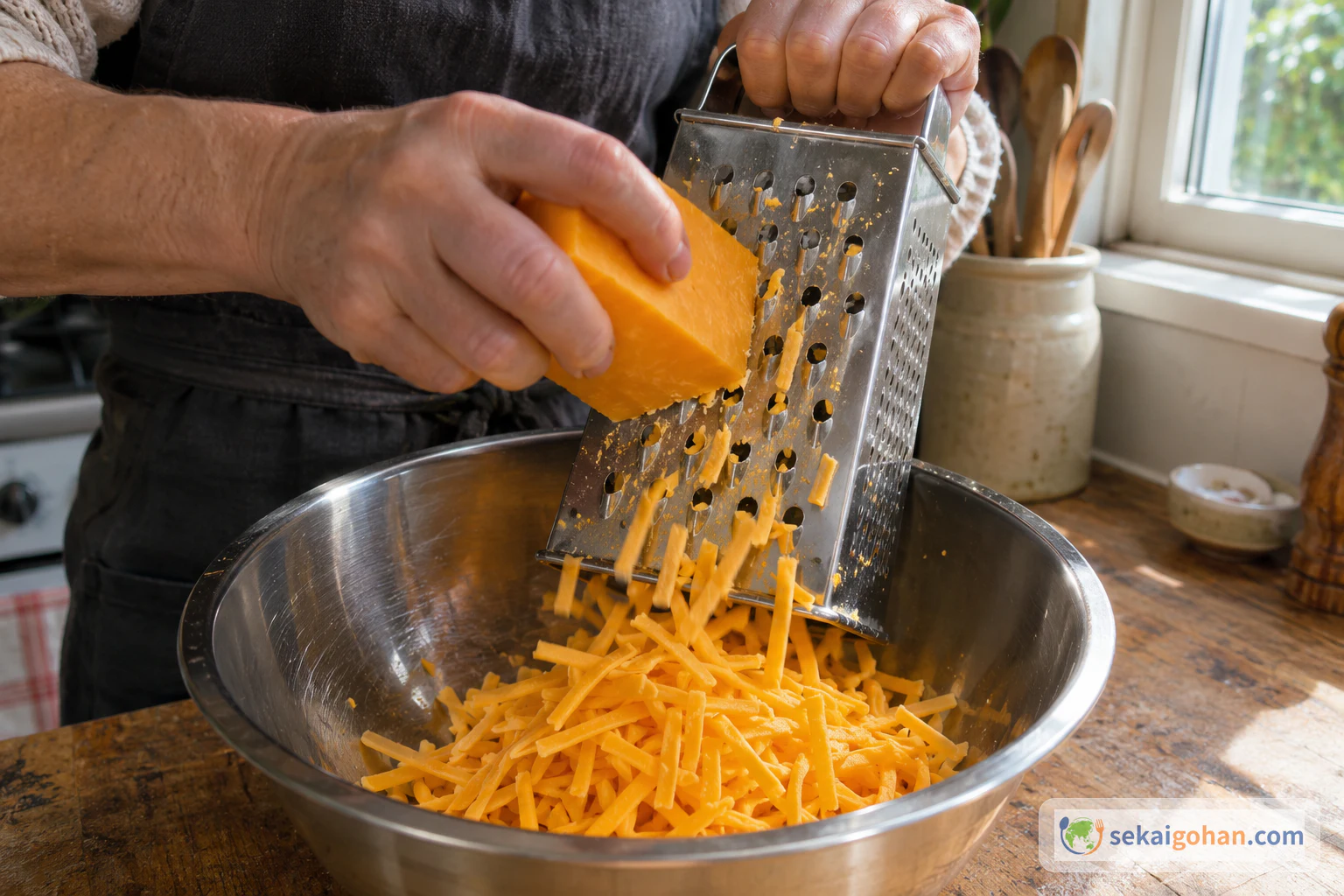
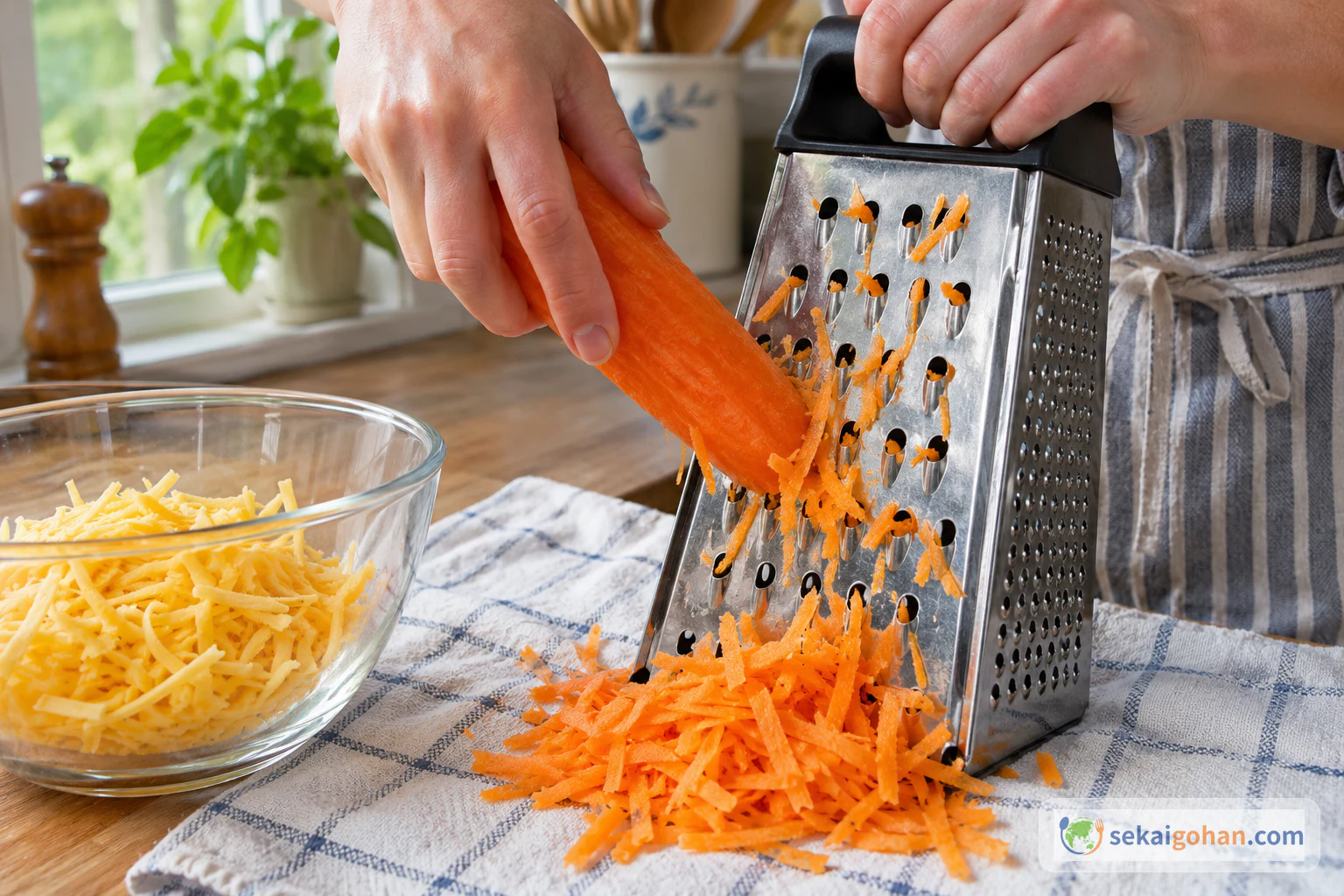
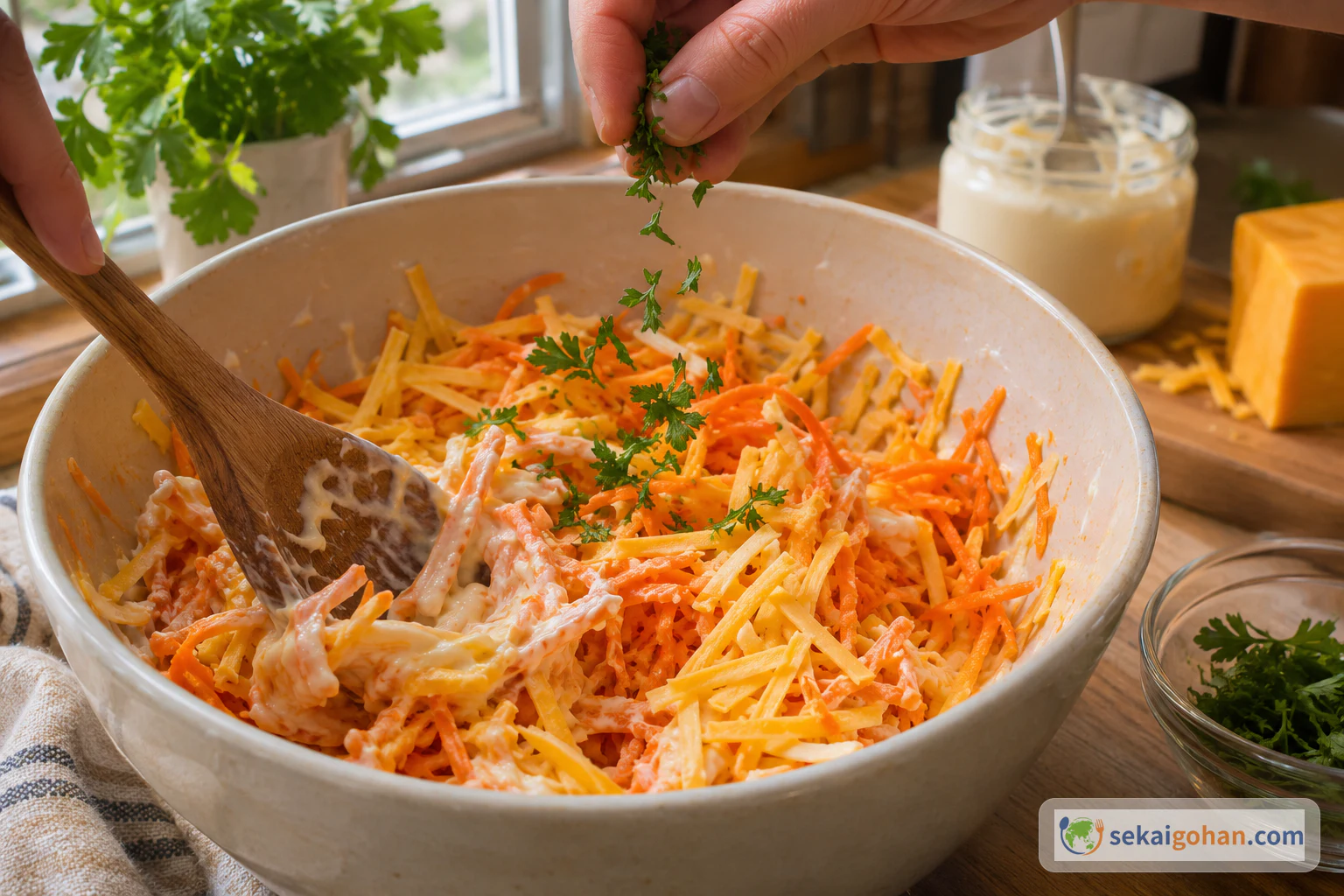
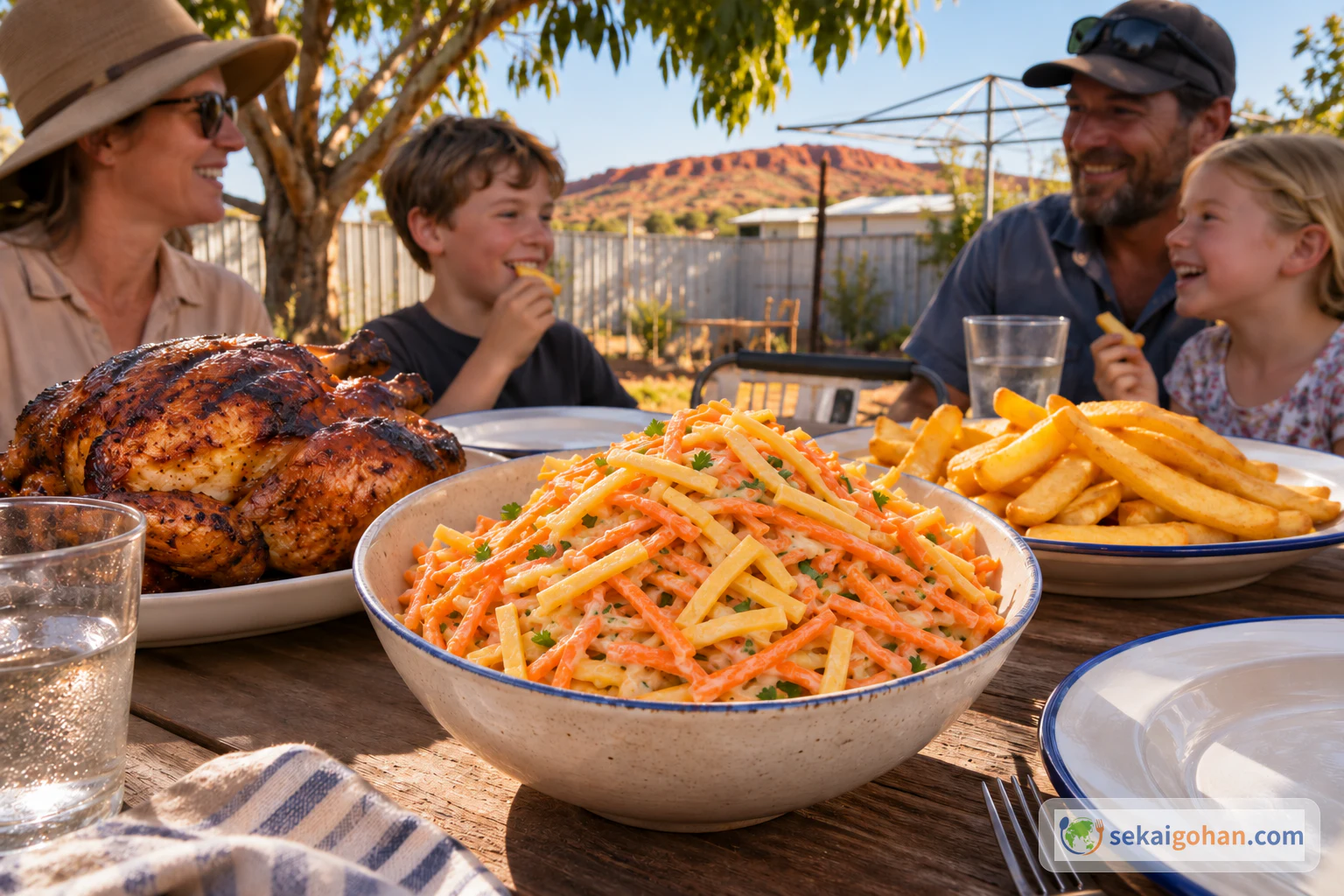
The cheddar comes off the grater in thick strands that look almost like matchsticks, and they pile up next to a heap of orange carrot grated on the same coarse face. Add a few spoonfuls of mayonnaise, give it a turn with the spoon, and the bowl is ready. In Broken Hill, the mining town in New South Wales, it goes on the table beside a barbecued chook and hot chips. People spoon it straight over the hot chicken so the cheese starts to melt. Cheese slaw tastes of sharp, salty cheddar and sweet raw carrot held together by creamy mayonnaise, and every forkful crunches.
Cheese and Carrot: Broken Hill's Own Salad
What goes in the bowl
On paper it looks like too little to make a dish: grated cheese, grated carrot and mayonnaise, often with a pinch of parsley. In Broken Hill the people who run the takeaways say the basic recipe is just carrot, cheese and mayo, and they mean it as a point of pride. Leaving out cabbage is what separates it from coleslaw. Cheese and carrot carry the whole bowl.
Locals also like to say there are probably a million recipes. Some households add mint or spring onion, and some swear by one particular brand of cheese. Takeaway counters sell it by the tub. One shop has sold it for 22 years and goes through at least 44 lb (20 kg) of carrots every four days, which tells you how often this simple salad ends up on the town's dinner tables.
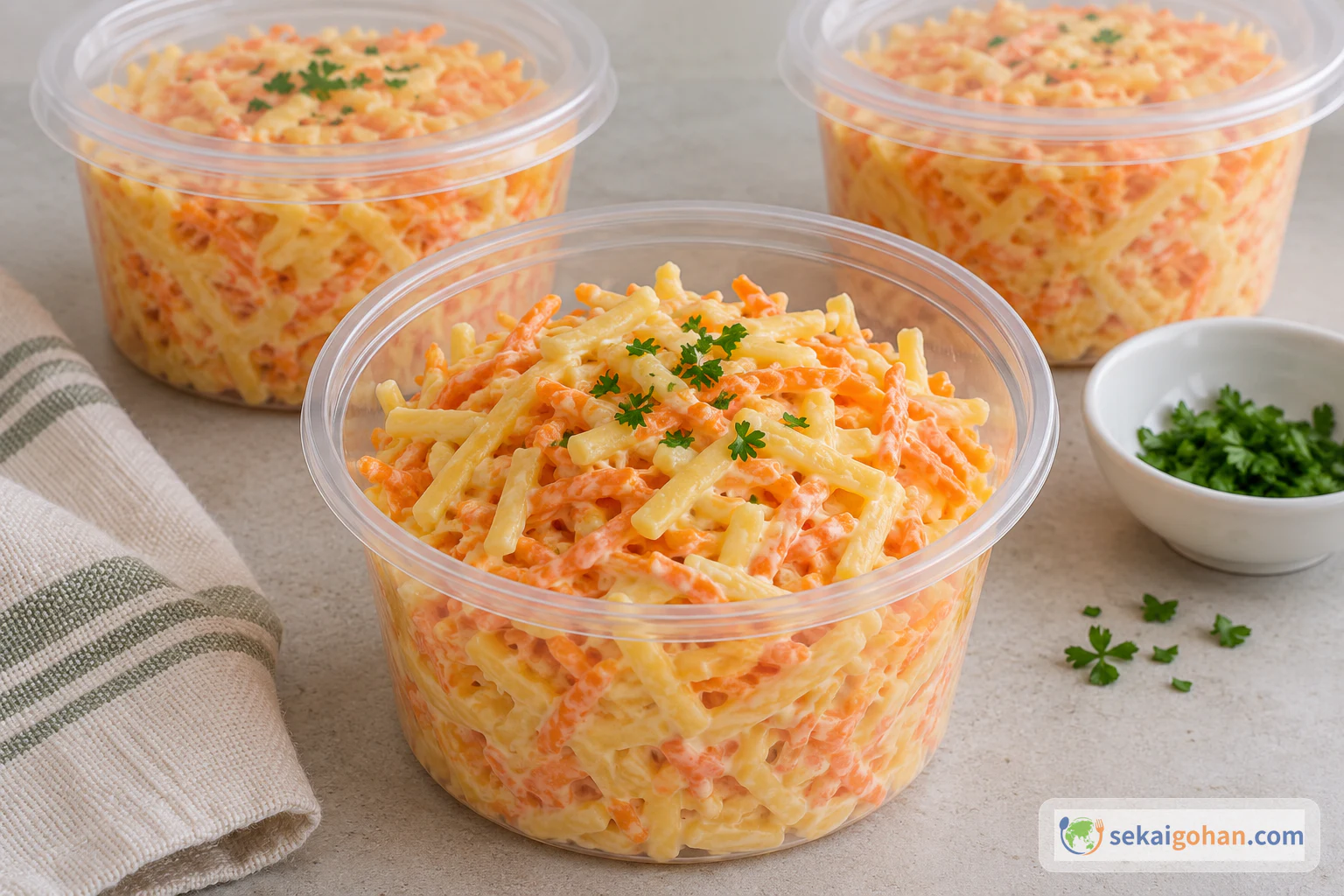
Cheese slaw is cheese plus coleslaw, run together into one word. In Broken Hill it is usually written as one word, cheeseslaw. People who remember it from family lunches in the 1930s and 1940s say that at home it was simply called "cheese and carrot".
Where it began
Where the Broken Hill bowl first came from is not settled. The oldest printed recipe found so far ran in a Townsville newspaper in December 1939, and it was a different dish: a "ham and cheese slaw" of 2 cups (480 ml) julienned cooked ham, 1 cup (240 ml) cubed cheese, 3 cups (720 ml) crisp shredded cabbage, 1 cup (240 ml) mayonnaise, 1 tbsp lemon juice, 2 tbsp mustard, and salt and pepper to taste. A women's magazine later printed versions of its own. The 1946 one cooked the cabbage, and the 1966 one added caraway seeds and cottage cheese. The 1939 and 1946 versions lean on cabbage, so they sit closer to coleslaw than to what Broken Hill eats today.
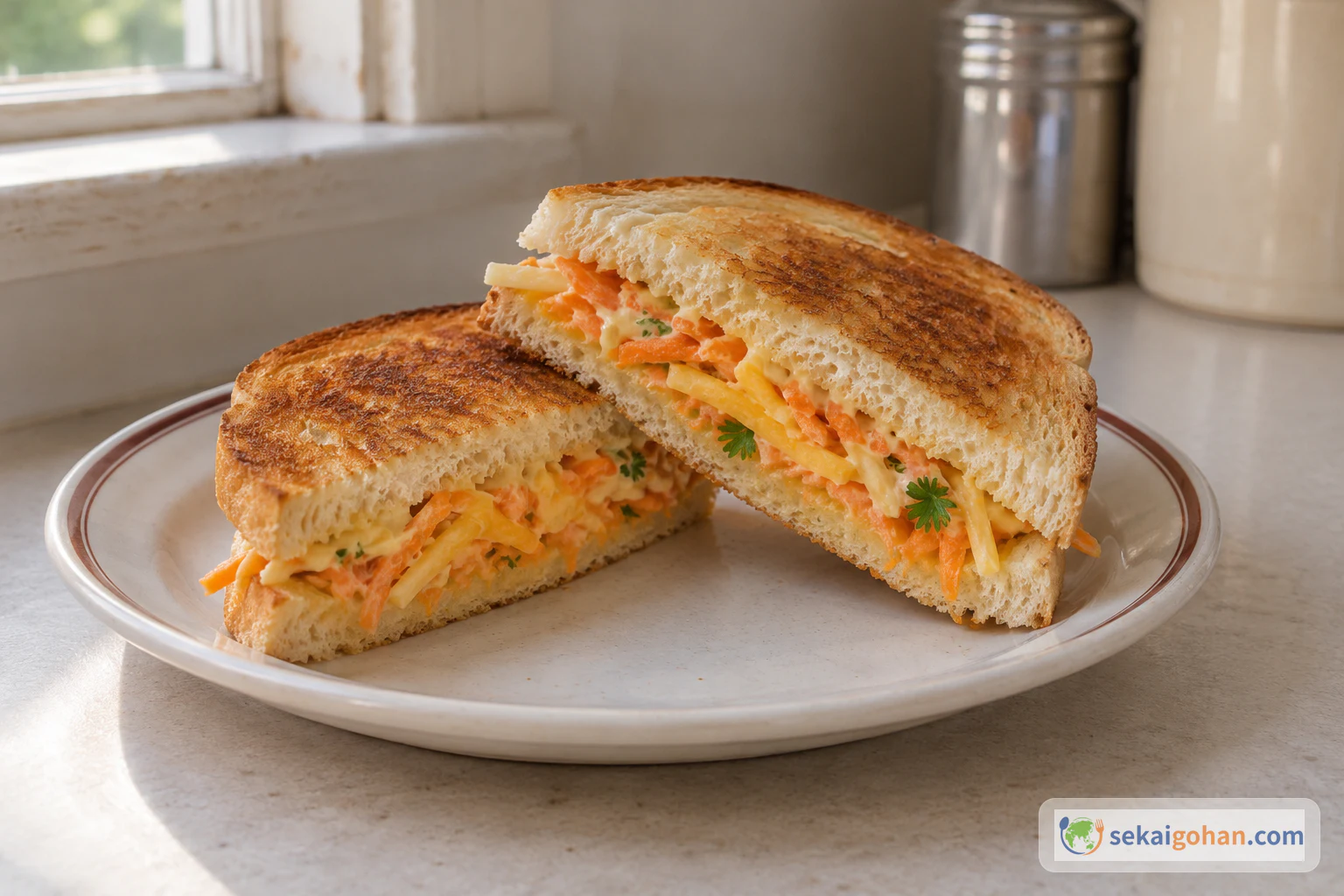
In Broken Hill the story runs through the town's own kitchens and counters. It started at family lunches in the 1930s and moved into the milk bars by the 1960s. At the Argent Milk Bar, in the late 1960s and up to 1970, grated cheese, carrot, mayo and parsley went into toasted sandwiches, and cheese slaw was among the fillings in the sandwiches that went on board Qantas flights.
A championship and a dictionary entry
In 2016 a local radio presenter dreamed up the town's first cheeseslaw-making championships. Twenty-two entries were split into traditional and creative categories, and the winner took home a golden grater. Traditionalists held firmly to the three ingredients. The creative category went wider, and its winner was a pizza topped with cheese slaw and chicken. In 2019 the Macquarie Dictionary announced that "cheeseslaw" would go into its 2020 print edition and its mid-year online update, labelled as a Broken Hill word.
There is a cheese slaw in the United States too, but it is its own modern dish: cabbage with blue or Swiss cheese, often heaped on hot dogs. Back in Australia, cheese slaw belongs to the same takeaway world as the halal snack pack, and it sits among the many other dishes from Australia that started in one place and stayed fiercely local. Next to a Greek salad, where cheese sits in chunks among cut vegetables, cheese slaw works the other way. Both ingredients are grated to the same size, so every bite carries both.
Ingredients
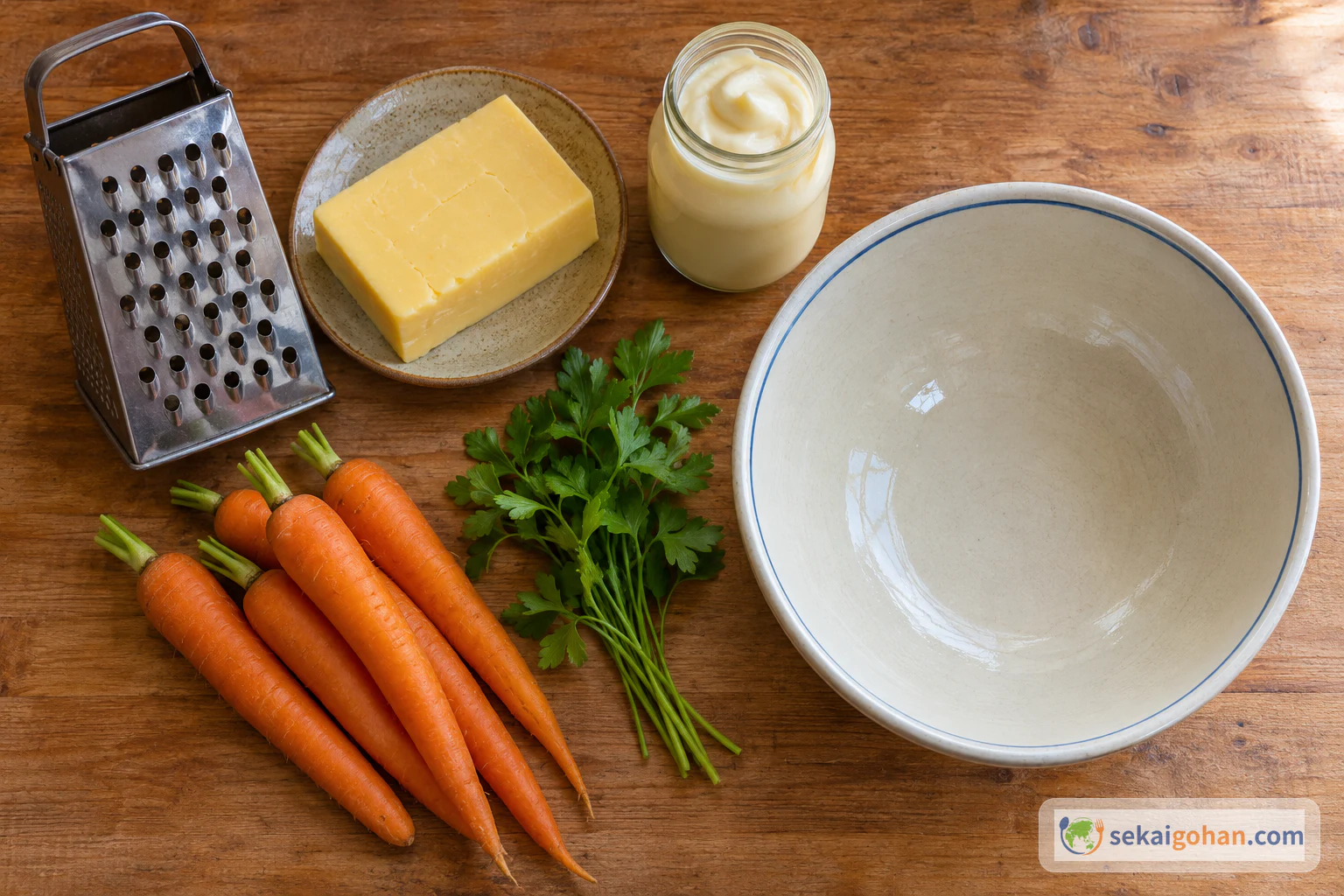
The cheese and the carrot go in equal parts by volume. That one rule shapes the whole salad, and the mayonnaise only decides how loose or firm the result is.
Cheddar is a dairy product (milk). Mayonnaise is usually made with egg, so check the label if anyone at the table avoids egg.
Equipment
- Box grater with a coarse shredding face (a food processor with a coarse grating disc works for a large batch)
- Large mixing bowl
- Measuring cups
- Wooden spoon or large spoon
Choosing the Cheese, Carrot and Herbs
Buy cheddar as a block and grate it yourself. That is the only way to get the thick, matchstick-type strands that make the texture. A firm, well-flavoured cheddar keeps its shape against the mayonnaise and brings enough salt that the salad needs no other seasoning. Some Broken Hill locals prefer a processed brand such as Kraft. It gives a softer, milder bowl and is a household preference rather than the rule.
For the carrots, choose whole, firm ones that will go down the grater in long strokes. Any ordinary jar of mayonnaise works, because you add it by feel anyway. Parsley is the usual herb. Spring onion, shallots, chives or mint all turn up in local bowls, and each one pulls the flavour in its own direction: oniony and sharp, or cool and bright with mint.
| Keep for the Broken Hill taste | Can change freely |
|---|---|
| Cheddar and carrot in equal volume | Parsley, or a swap to another fresh herb |
| A coarse, matchstick grate on both | The exact amount of mayonnaise |
| Mayonnaise as the only dressing | The brand of cheddar |
Use the same coarse face for the cheese and the carrot. Strands of matching size mix evenly, keep the equal-parts balance honest, and give you cheddar and carrot in every spoonful.
Method: Grate, Grate, Fold
Nothing here is cooked, and there is no waiting. Grate the cheese first, then the carrot on the same coarse face, then bring them together with mayonnaise in the bowl. All the skill goes into the size of the strands and the moment you stop adding mayonnaise.
You can always add another spoonful, but you cannot take one out. Fold in a little, look, and add more only while the strands still look dry. This is the decision that sets the texture.
When It Goes Wrong
| What you see | Why | What to do |
|---|---|---|
| Pasty, mushy slaw with no distinct strands | Cheese or carrot was grated too fine | Use the coarsest face next time; the thick matchstick grate is what gives the bite |
| Wet, sloppy slaw pooling in the bowl | Too much mayonnaise went in at once | Grate a little more cheese and carrot in equal amounts and fold them in |
| Strands broken and clumped together | Stirred too hard or too long | Fold from the bottom of the bowl with a few gentle lifts and stop once coated |
| Heavy and all cheese | Carrot came up short on the measure | Fold in more coarse carrot until the colours look balanced |
| Dry strands that fall apart on the fork | Too little mayonnaise | Add a small spoonful and fold until the mix holds together |
Serving and Variations
At the Broken Hill table
The classic place for cheese slaw is beside a barbecued chook and hot chips. Spoon it over the top while the chicken is hot and the cheddar starts to melt into the meat. It also goes into toasted sandwiches the milk-bar way, and with chicken in the filling it is said to be the best way to eat it. The coarse strands soften a little in the heat of the bread and still keep their crunch.
Variations
- Spring onion or chives: Fold in snipped spring onion, shallots or chives along with the parsley, or in its place. They add a sharp, oniony edge that cuts through the cheese.
- Mint: A handful of chopped mint makes the bowl cooler and brighter, and it goes especially well with barbecued meat.
- More carrot: Tip the balance toward carrot for a lighter, sweeter, crunchier slaw where the cheese plays a supporting part.
- Dry cheese slaw: Leave out the mayonnaise completely and toss the cheese, carrot and herbs together. The strands stay loose and fresh, and the cheddar comes through more strongly.
- Cheese slaw pizza: Taking its cue from the championship's creative winner, scatter cheese slaw and chicken over a pizza base. The cheddar melts and the carrot softens into the topping.
Frequently asked questions
Can I grate everything in a food processor?
Yes, and for a big batch it saves a lot of time. Fit the coarse grating disc and feed the cheese and carrot through separately. Check that the strands come out thick. If the disc makes fine shreds, the slaw turns pasty, and a box grater gives you more control.
Is it really a salad when half of it is cheese?
Broken Hill bowls are often at least half cheese, so the question comes up every time someone from out of town sees it. Locals call it a salad and eat it like one, as a cool side to hot food. For a fresher bowl, push the carrot side up or switch to the dry version.
Does it matter which cheddar I use?
It changes the character more than anything else. A firm, sharp cheddar gives a salty, tangy slaw with strands that stay separate. A mild or processed cheese makes a softer, creamier bowl that some locals prefer.