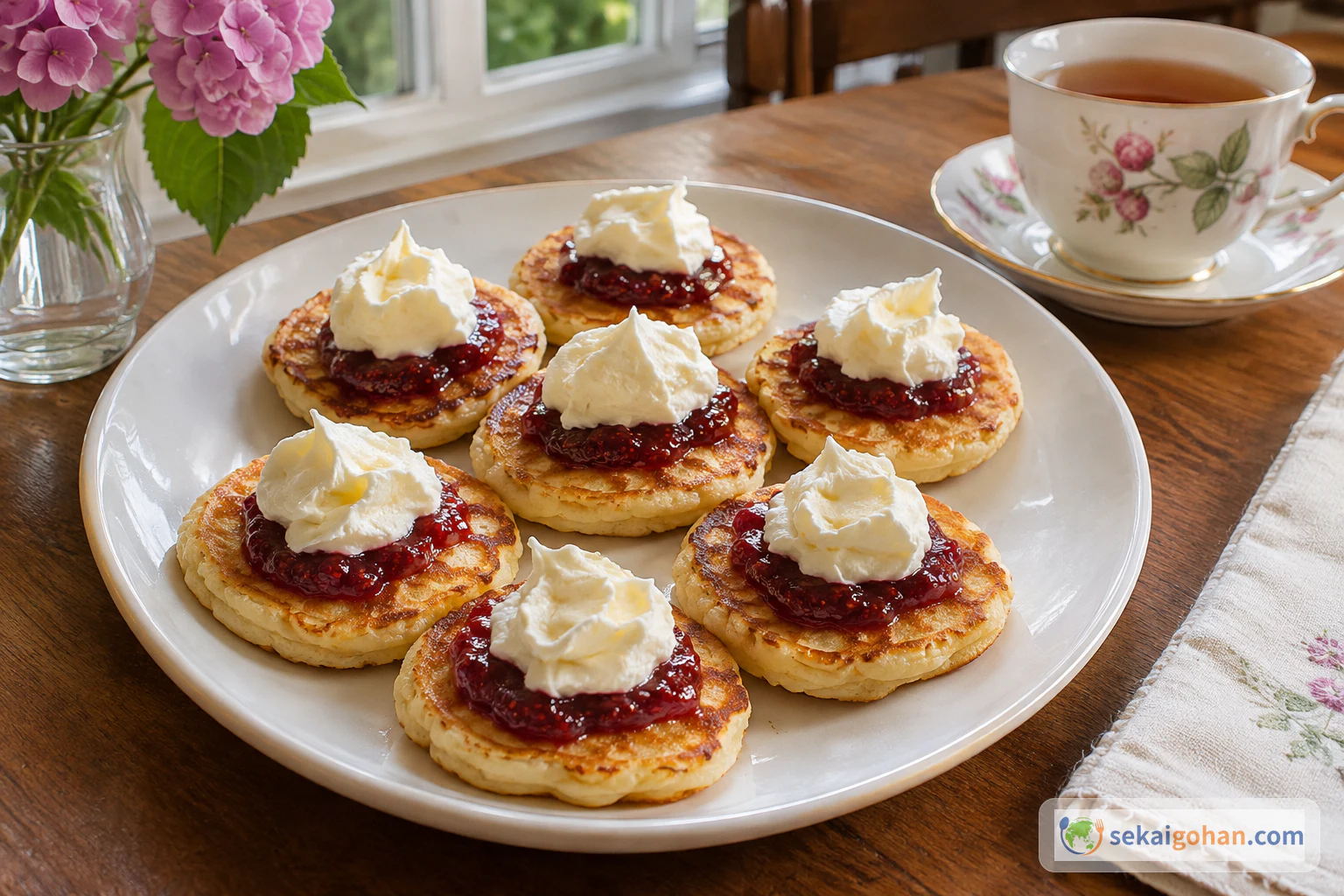
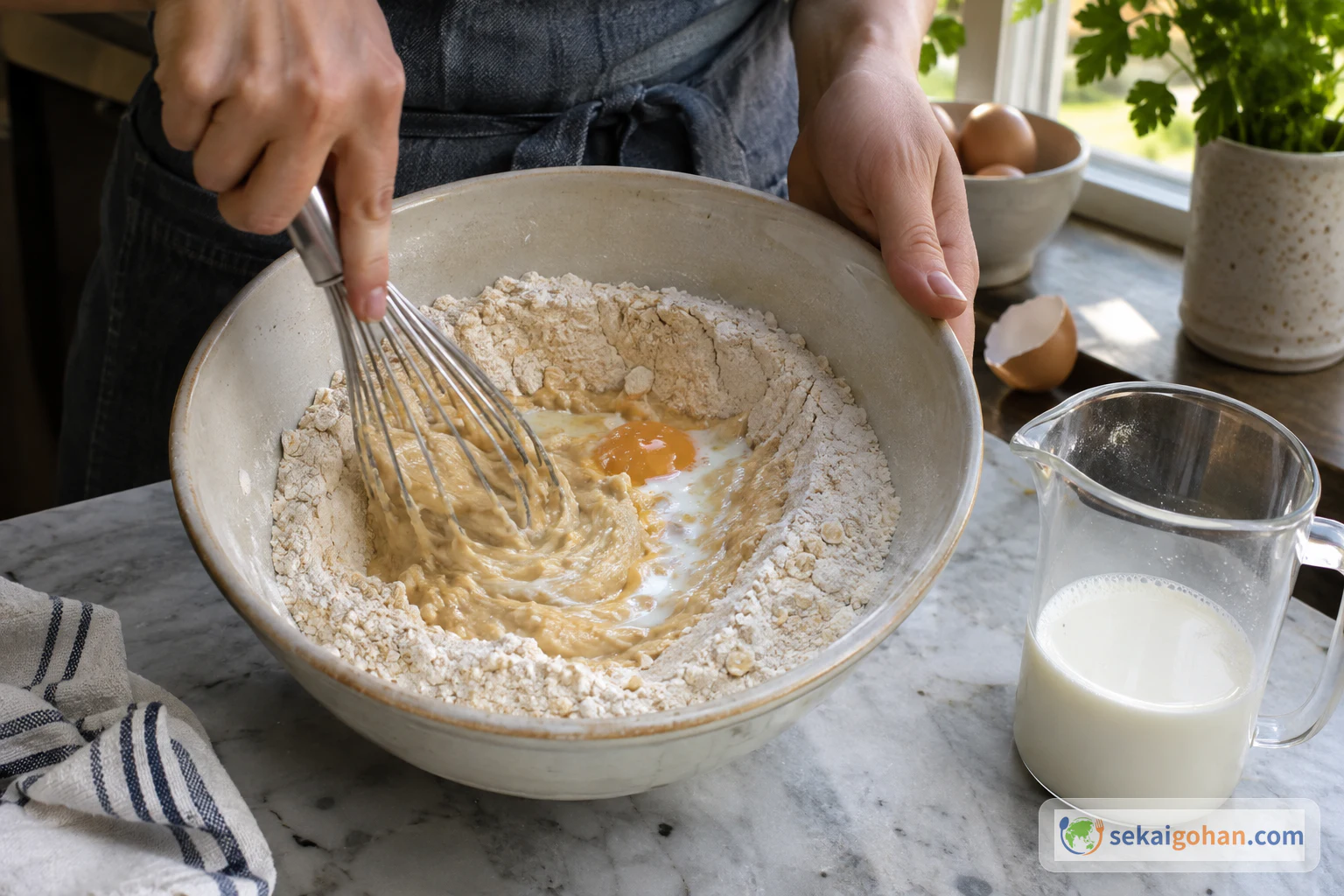
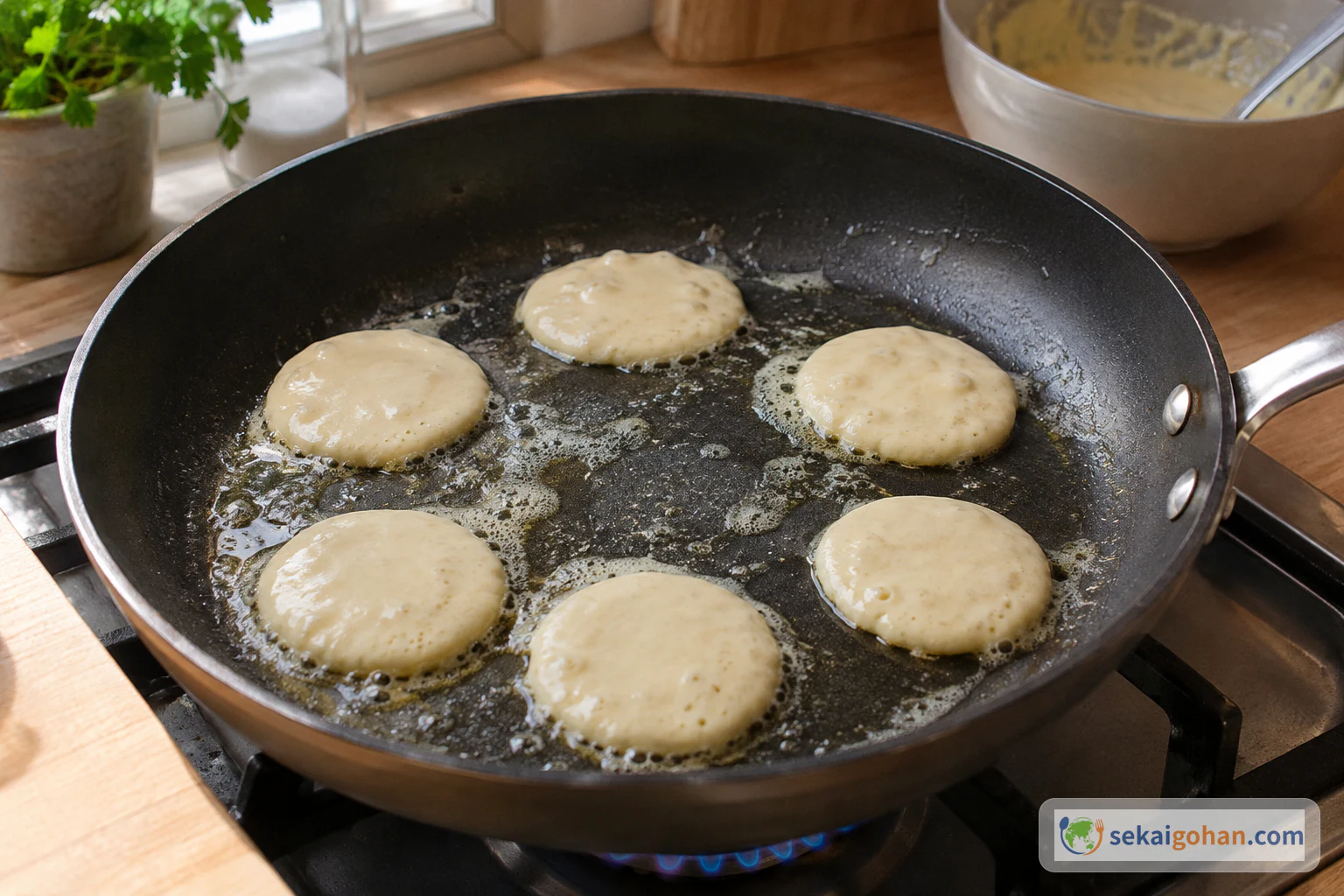
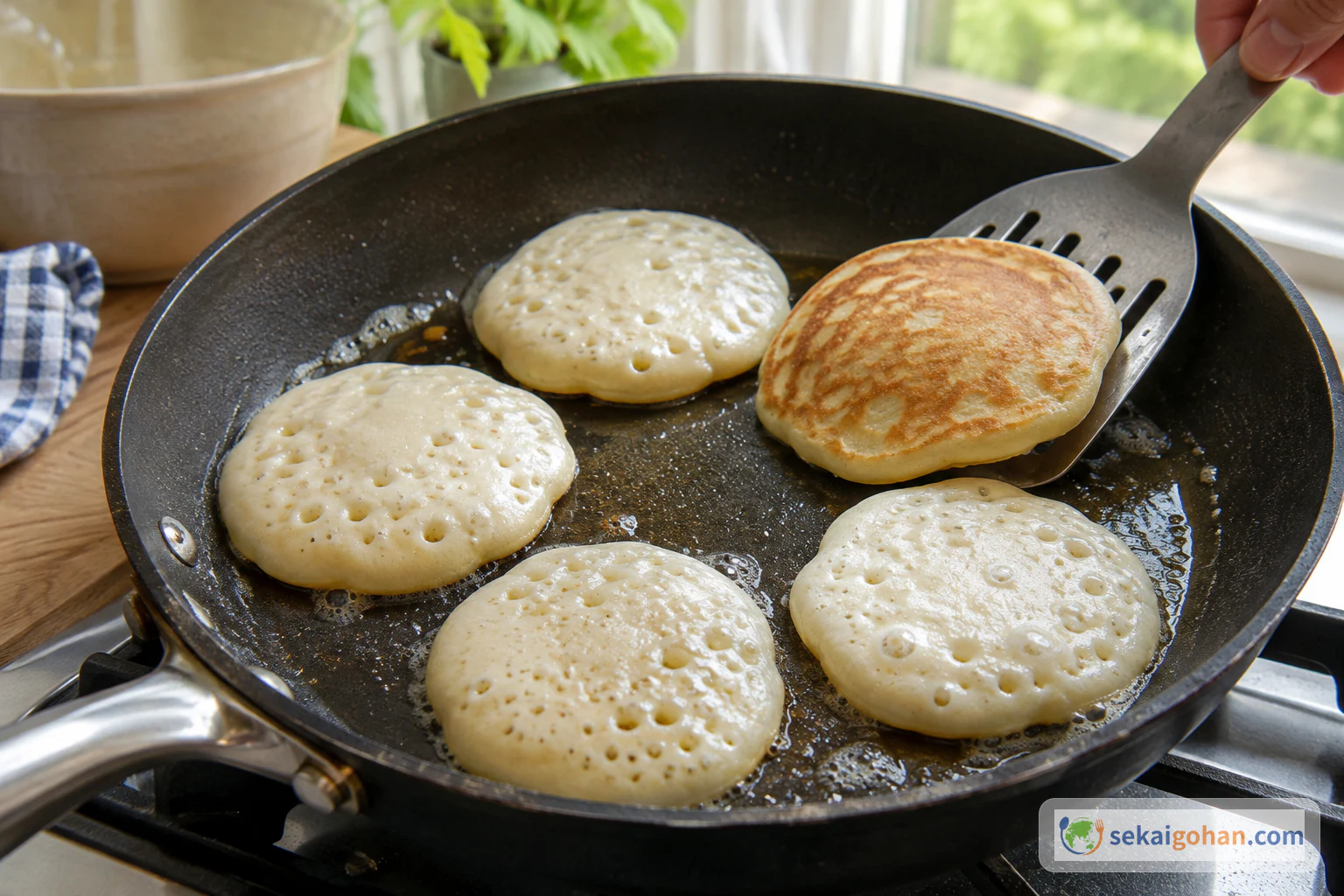
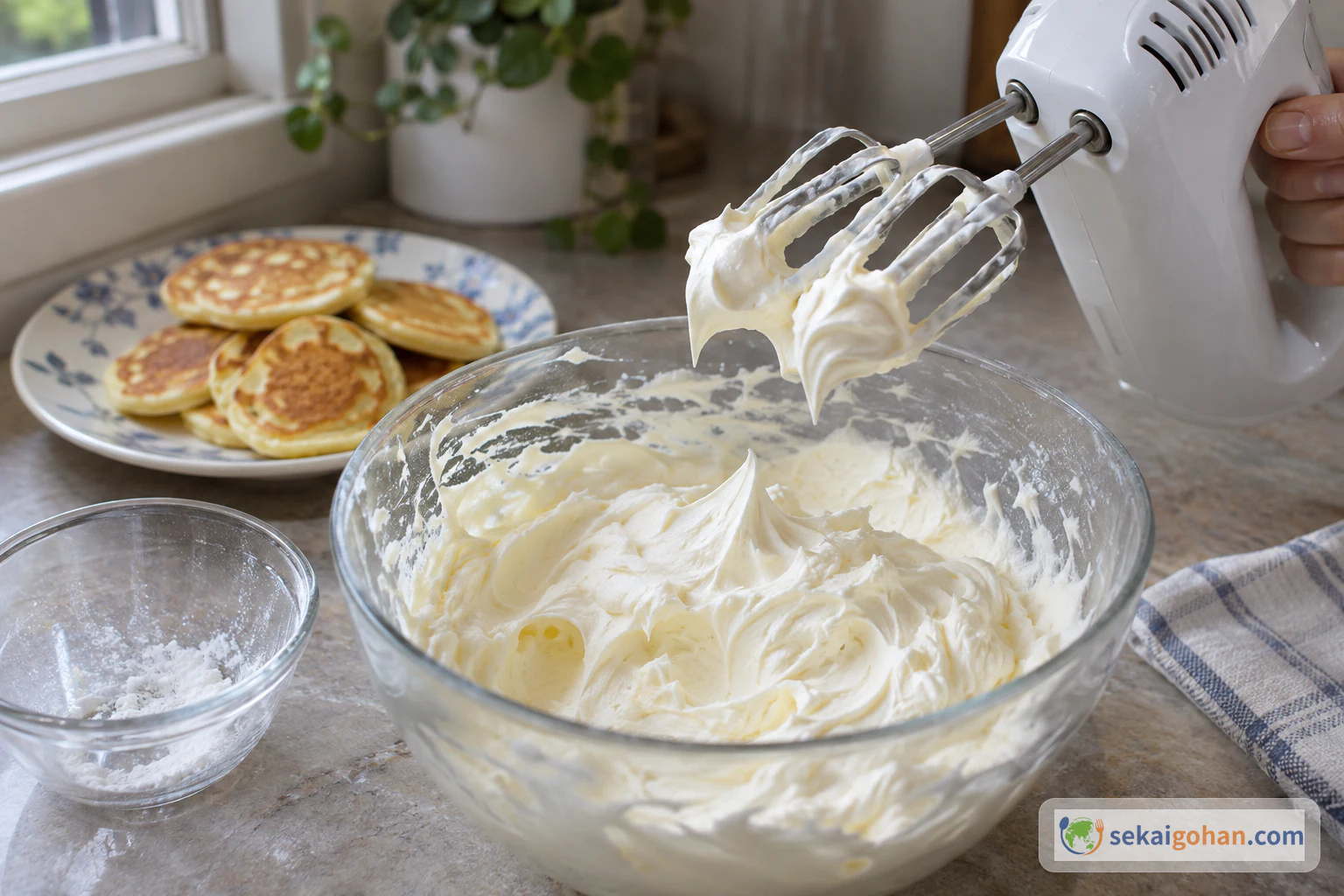
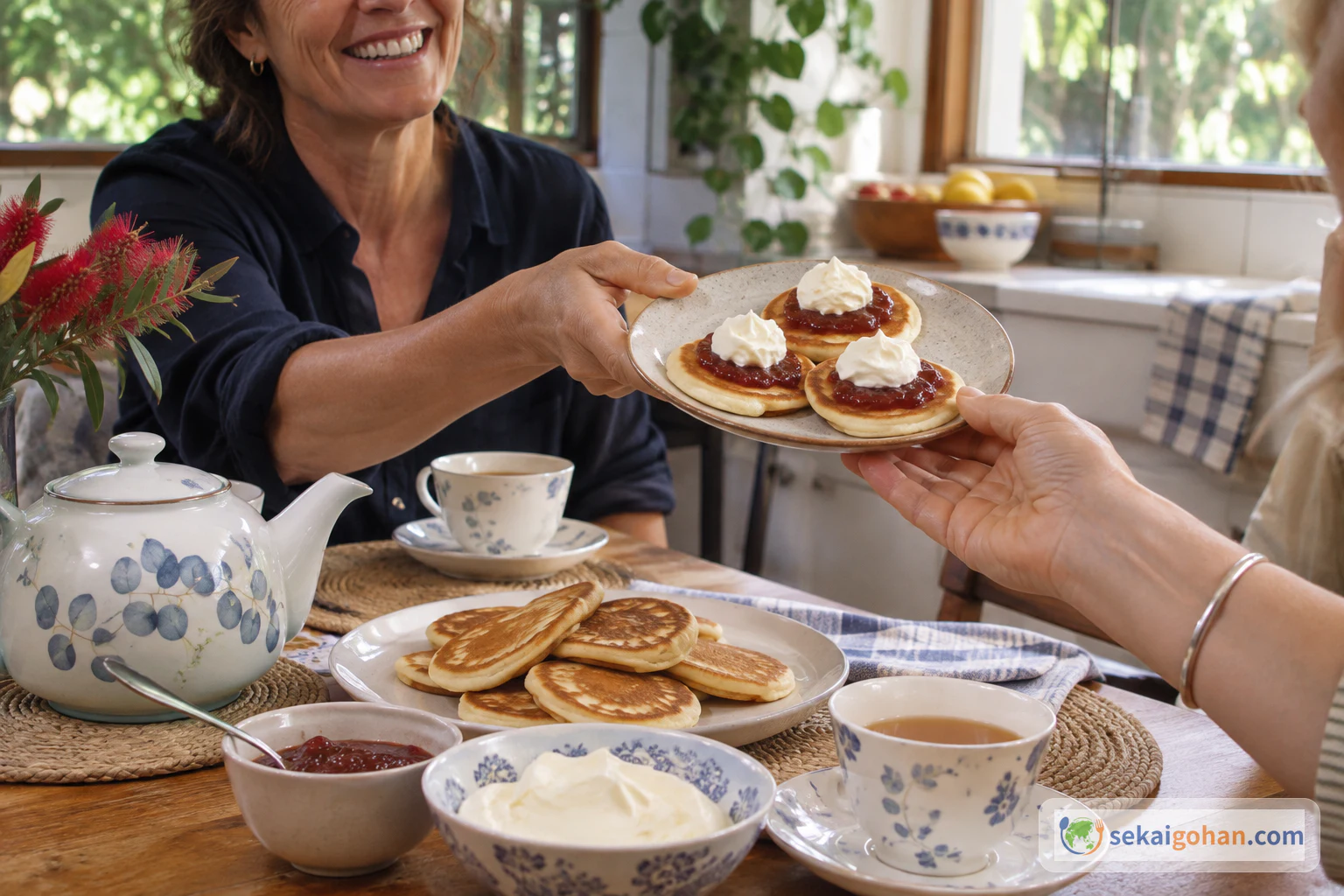
Small rounds of batter sit in a buttered pan. Tiny bubbles rise and open across their pale tops, and that is your signal to slide the spatula under and turn them. The undersides come up golden and smelling of butter and caramel-edged brown sugar. A pikelet is a little pancake about the size of a palm's centre, thick and soft. In Australia and New Zealand it comes out at morning tea and afternoon tea with raspberry jam and a spoonful of whipped cream. It tastes gently sweet and tender, and it is still good once it has cooled on the plate.
A Pancake for the Teapot
In Australia, pikelets are a classic snack for morning and afternoon tea. They are the thing you can mix in a few minutes when someone is coming over, cook in batches while the kettle boils, and set out on a plate between the cups. Across the Tasman in New Zealand they hold the same place, and a New Zealand newspaper notes that everyone's mum had a favourite pikelet recipe. Some households serve them plain with butter. Others go the full way with jam and cream, which is the finish here.
They are eaten warm from the pan and also cold. That makes them easy for a gathering, since a stack can be cooked ahead and set out on the table as people arrive. For more food from the same country, see the Australia country page.
Pikelets, crumpets and drop scones
The word causes confusion because it means two different things. In parts of the UK, Yorkshire among them, a pikelet is a regional name for a crumpet, the yeasted bread cooked inside a metal ring until its top is full of holes. The Australian and New Zealand pikelet has no yeast and no ring. The batter is dropped straight into the pan, so it spreads into a flatter, more pancake-like round with a smooth, fine crumb.
Its closest relatives are the drop scone and the Scotch pancake, which are cooked the same way from a similar batter. Self-raising flour does the lifting, which is why a pikelet can go from bowl to pan with no waiting.
Pikelets were once called "poor man's crumpets." The usual explanation is that cooks without crumpet rings dropped the batter freely into the pan. The reason is not settled.
Ingredients (makes about 16 pikelets)
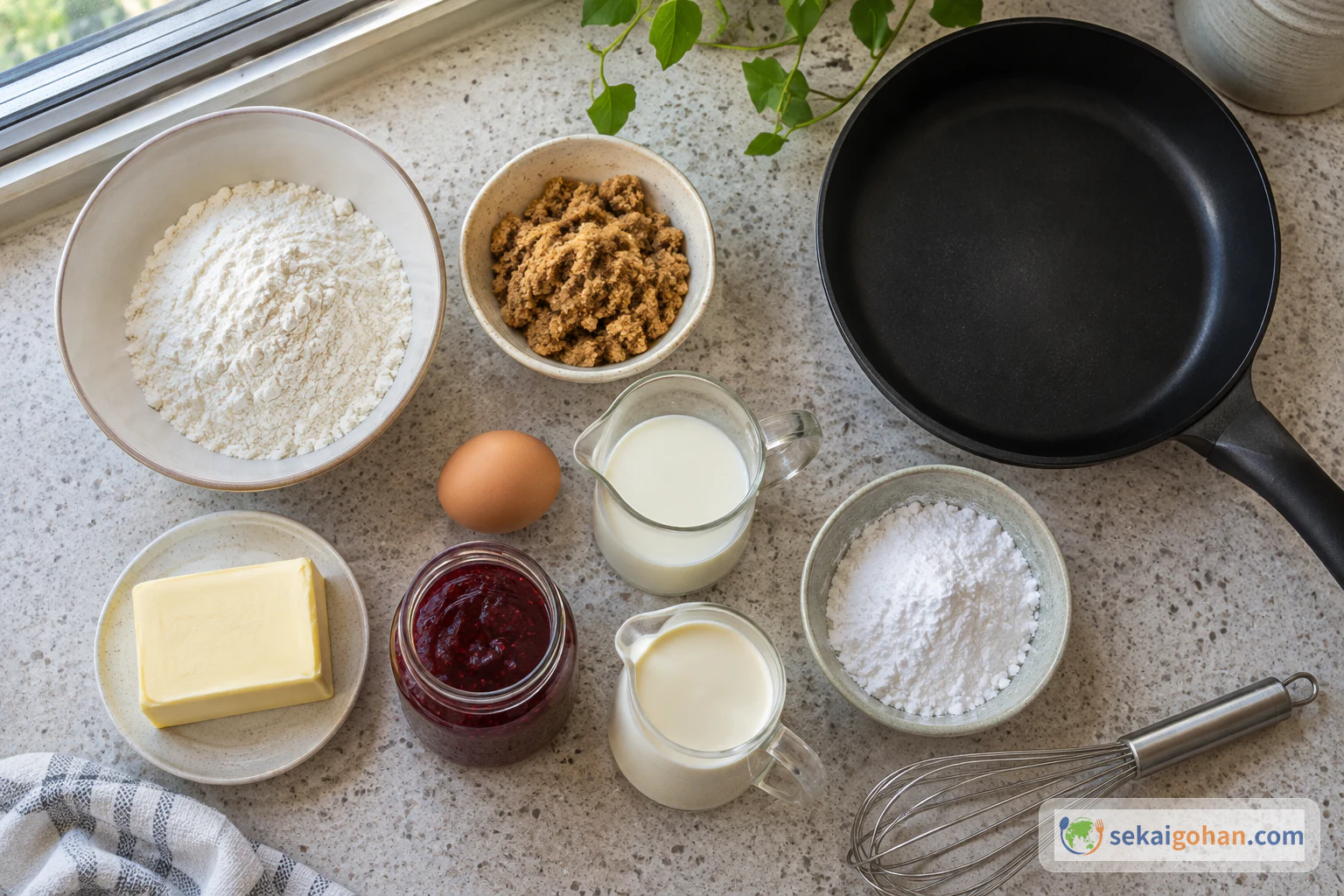
Each pikelet takes 1½ tbsp of batter.
Pikelets contain wheat, egg and milk. The whipped cream adds more dairy. Check the labels on the flour, jam and cream if you are cooking for someone with allergies.
Equipment
- Mixing bowl
- Balloon whisk
- Non-stick frying pan
- Spatula
- Tablespoon for dropping the batter
- Electric hand mixer and a second bowl for the cream
Choosing and Substituting
Self-raising flour is the one ingredient to get right, because it carries the rise. If you cannot find it, use plain flour with baking powder, following the proportion on the baking powder pack.
Brown sugar gives these pikelets their warm, toffee-like depth. The more usual sugar for pikelets is caster sugar. Use it, or ordinary white sugar, and you get a lighter, cleaner sweetness. Thickened cream is the Australian whipping cream. Elsewhere, buy whipping cream or heavy cream. Icing sugar mixture is Australian icing sugar, and powdered sugar does the same job. If there is no raspberry jam, strawberry jam works, though it is softer and less tart against the cream. Salted or unsalted butter are both fine for the pan.
The small size is what makes a pikelet. At 1½ tbsp of batter each, the rounds cook through before the outside darkens and stay thick and soft. Larger pours turn them into ordinary pancakes.
Method
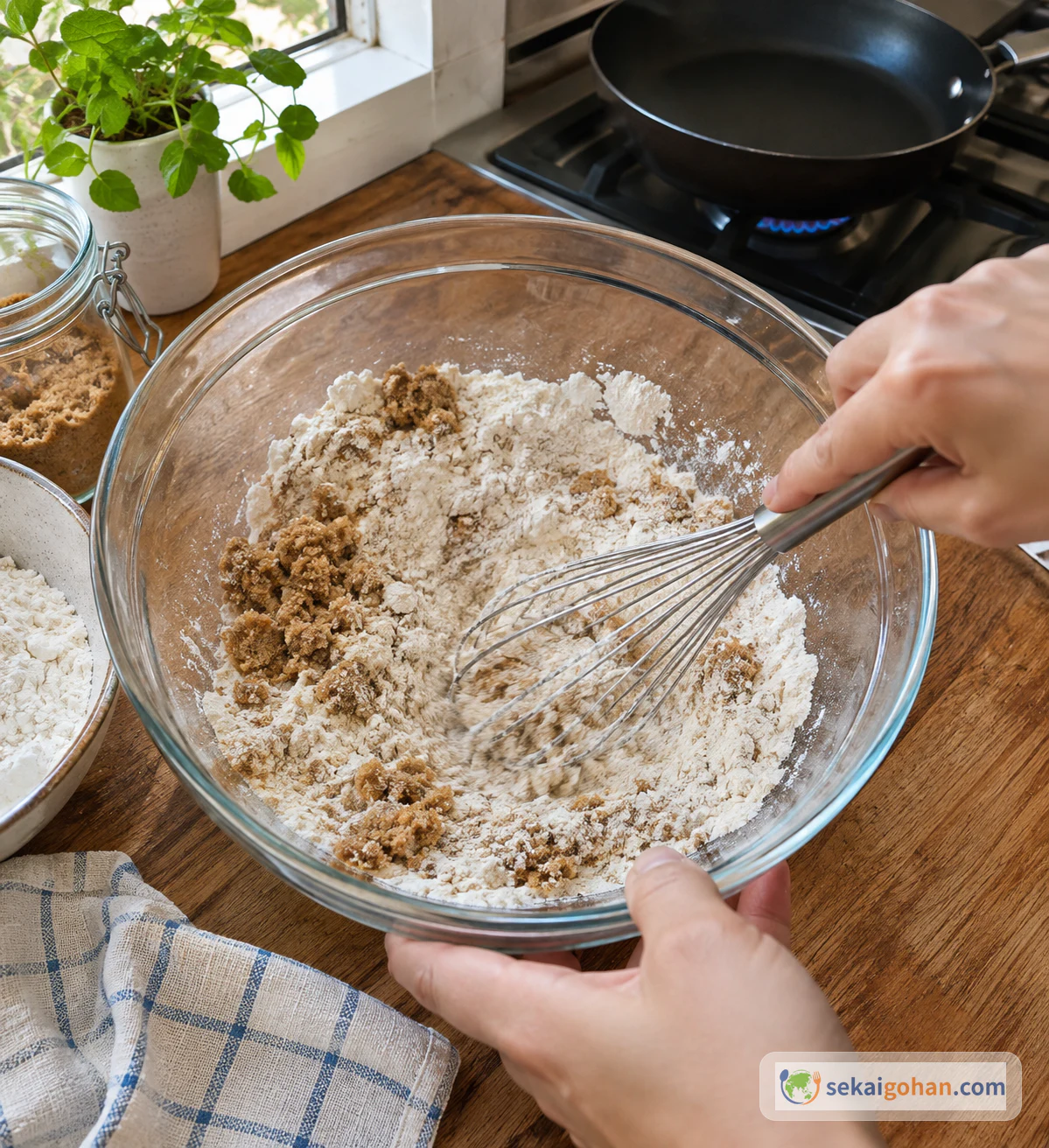
The batter takes about five minutes to mix, and the pan work takes about fifteen. Mix the batter first, then cook the pikelets in batches. Whip the cream while the pikelets cook or between batches, so everything reaches the table at the same time.
Keep the heat at medium. Butter in a hot pan burns and spits easily. Keep the handle turned away from the edge of the stove and use a spatula rather than your fingers to turn the pikelets.
When It Goes Wrong
| What you see | Why | What to do |
|---|---|---|
| Small lumps of flour in the batter | The dry mix wasn't whisked first, or the liquid went in all at once | Whisk the flour and sugar thoroughly first, and add the milk in stages |
| Pikelets spread flat and thin | Too much milk | Hold back the last of the milk and stop when the batter falls from a spoon and holds its shape |
| Pale underside, wet middle | Flipped before the bubbles came up | Wait for bubbles across the surface before turning |
| Rounds run together in the pan | Portions dropped too close | Leave space between each 1½ tbsp portion |
| Dark outside, raw inside | Pan too hot or portions too big | Keep the heat at medium and keep each pikelet small |
Serving, Variations and Storage
Pikelets go with a pot of tea, at morning tea or in the afternoon, often for visitors. A plate of them warm or cold makes an easy spread for a gathering, so you can cook them before people arrive.
Variations
- Butter only. Spread a little butter on a warm pikelet and stop there. The brown sugar flavour comes through most clearly this way.
- Caster sugar instead of brown. This is the more usual pikelet. It is paler, with a lighter and cleaner sweetness and less caramel depth.
- Strawberry jam. A softer, sweeter fruit note than raspberry, with less tartness against the cream.
Storage
As one published guide for pikelets suggests, to freeze cooked pikelets, wrap each one individually, or stack them with baking paper between the layers. Freeze for up to a month. Thaw at room temperature for about 20 minutes before serving.
Frequently Asked Questions
Are pikelets nicer warm or cold?
Both are good. Warm from the pan they are at their softest, with the butter still fragrant. Cooled, they hold jam and cream without melting it, which suits a plate that sits out through afternoon tea.
Can I grease the pan with salted butter?
Yes, either salted or unsalted works. Salted butter leaves a faint savoury edge on the crust that sits well against the jam. Use only a thin film so the pikelets brown evenly instead of frying.
Why is the brown sugar version darker than other pikelets?
Brown sugar colours both the batter and the crust. The pikelets come out a deeper gold with a caramel smell. The bubbles are still the cue to flip, but keep the heat at medium so the outside doesn't darken before the centre cooks.
What can I use if I don't have a hand mixer?
The cream can be whipped by hand with a balloon whisk, in the same order: soft peaks first, then add the icing sugar and beat to stiff peaks. It takes more effort. The finished cream should hold a firm peak on the whisk just the same.