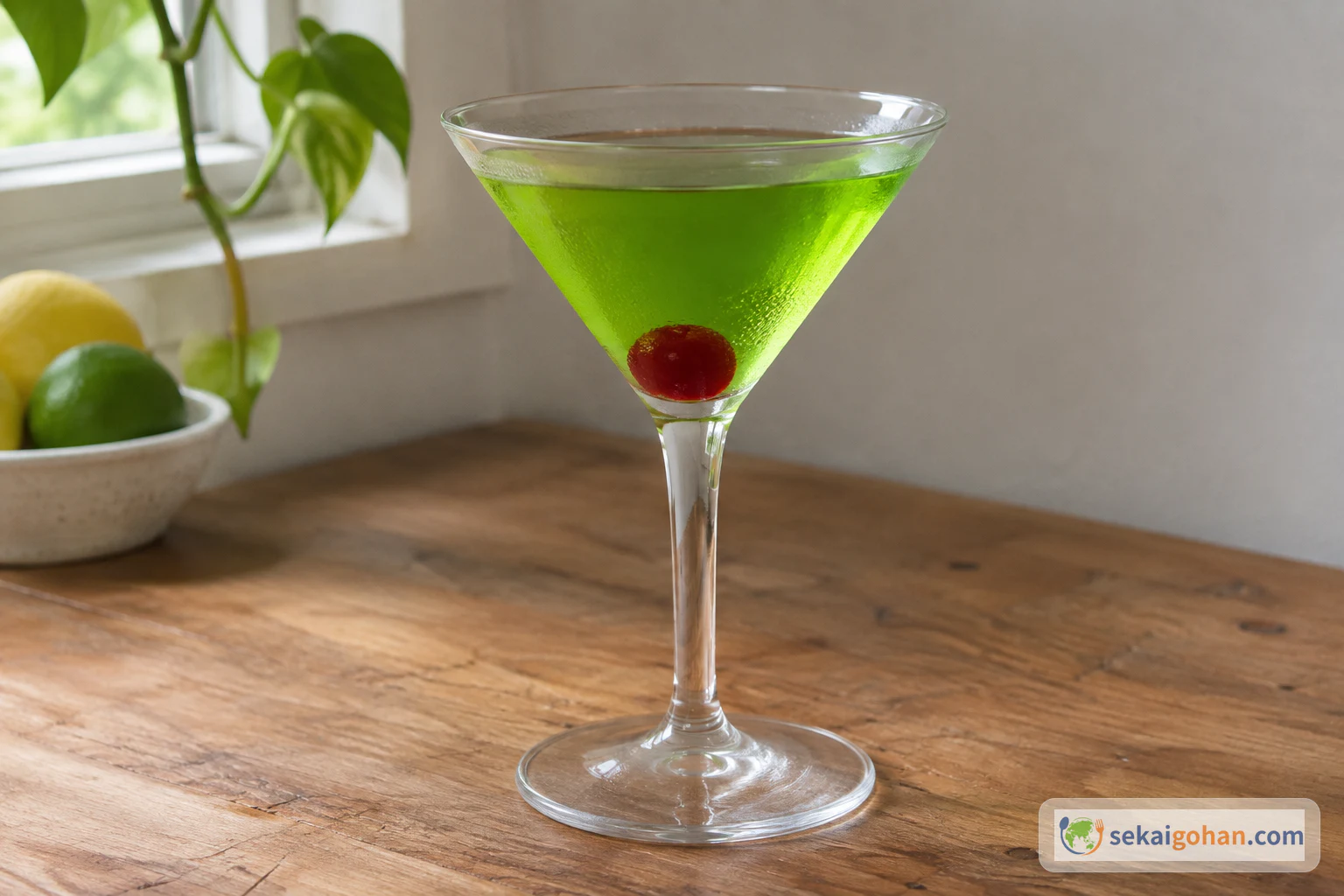
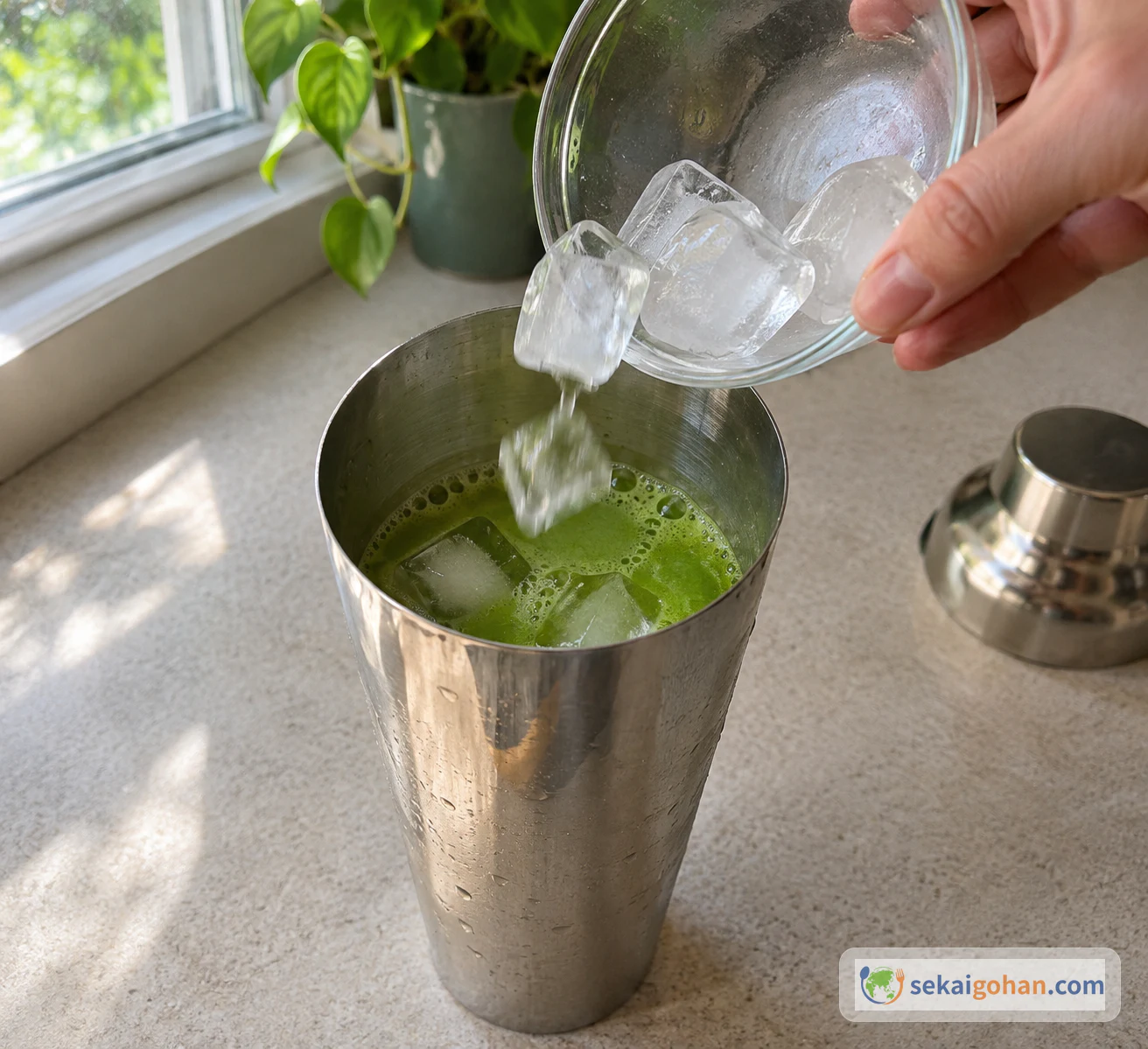
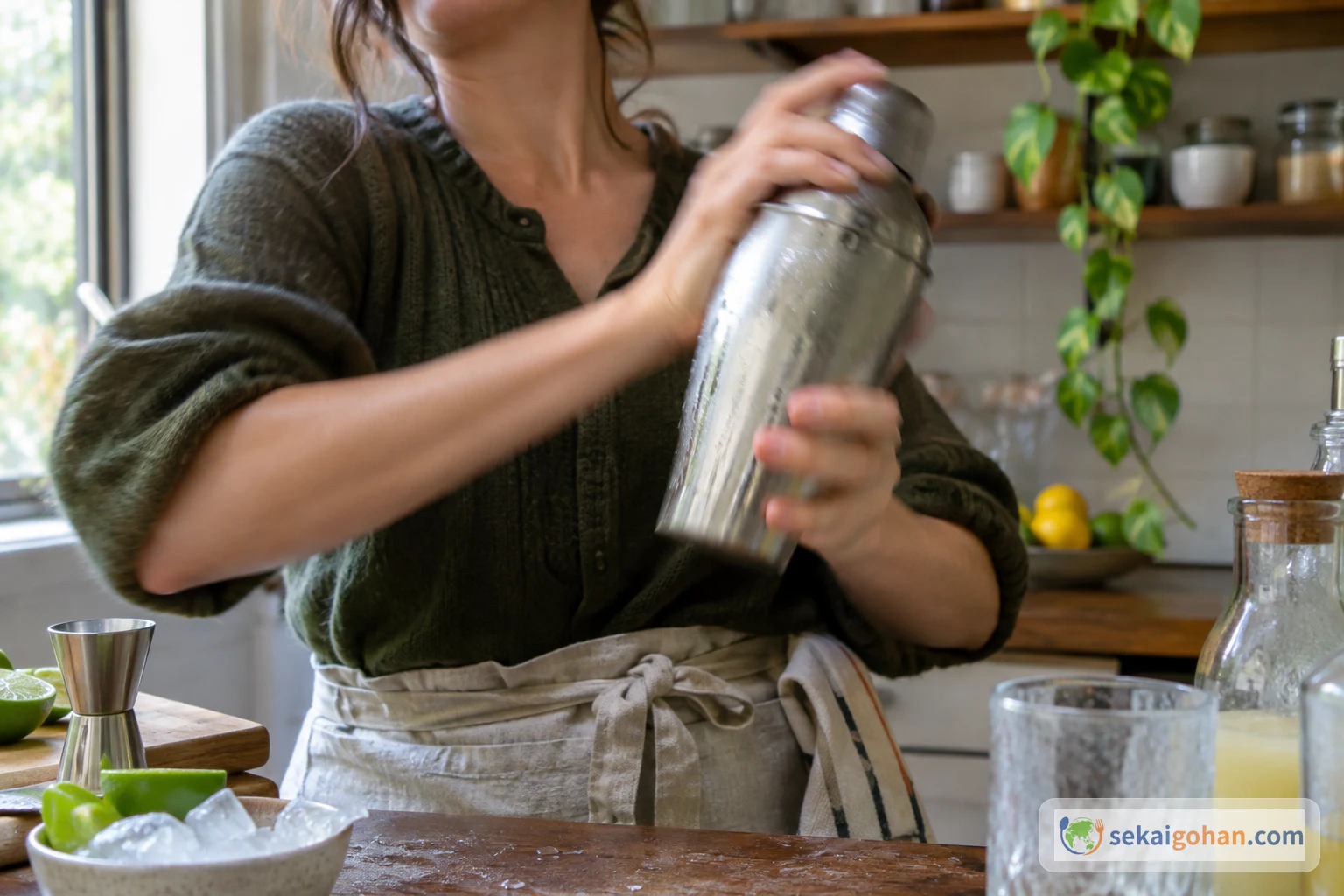
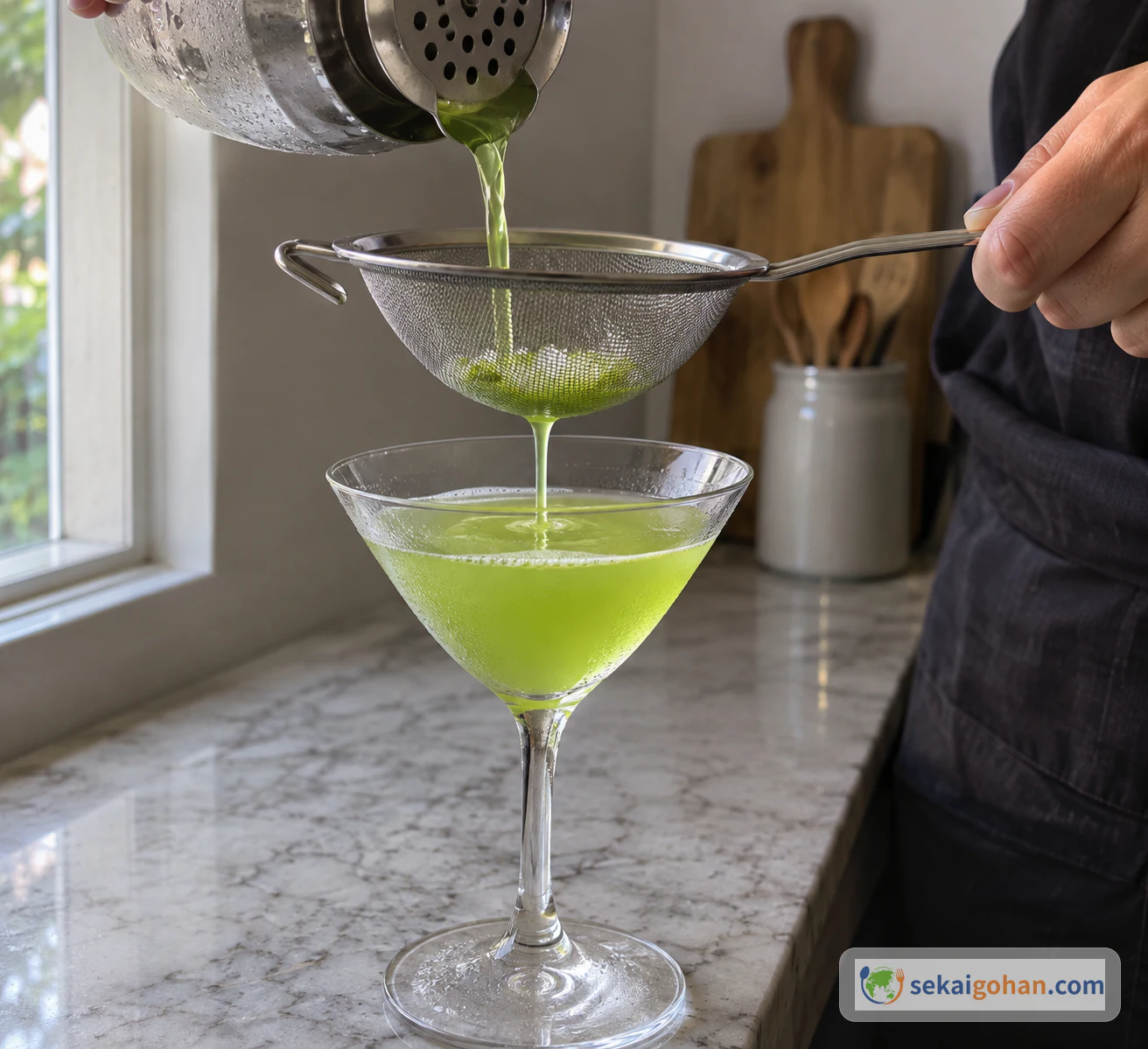
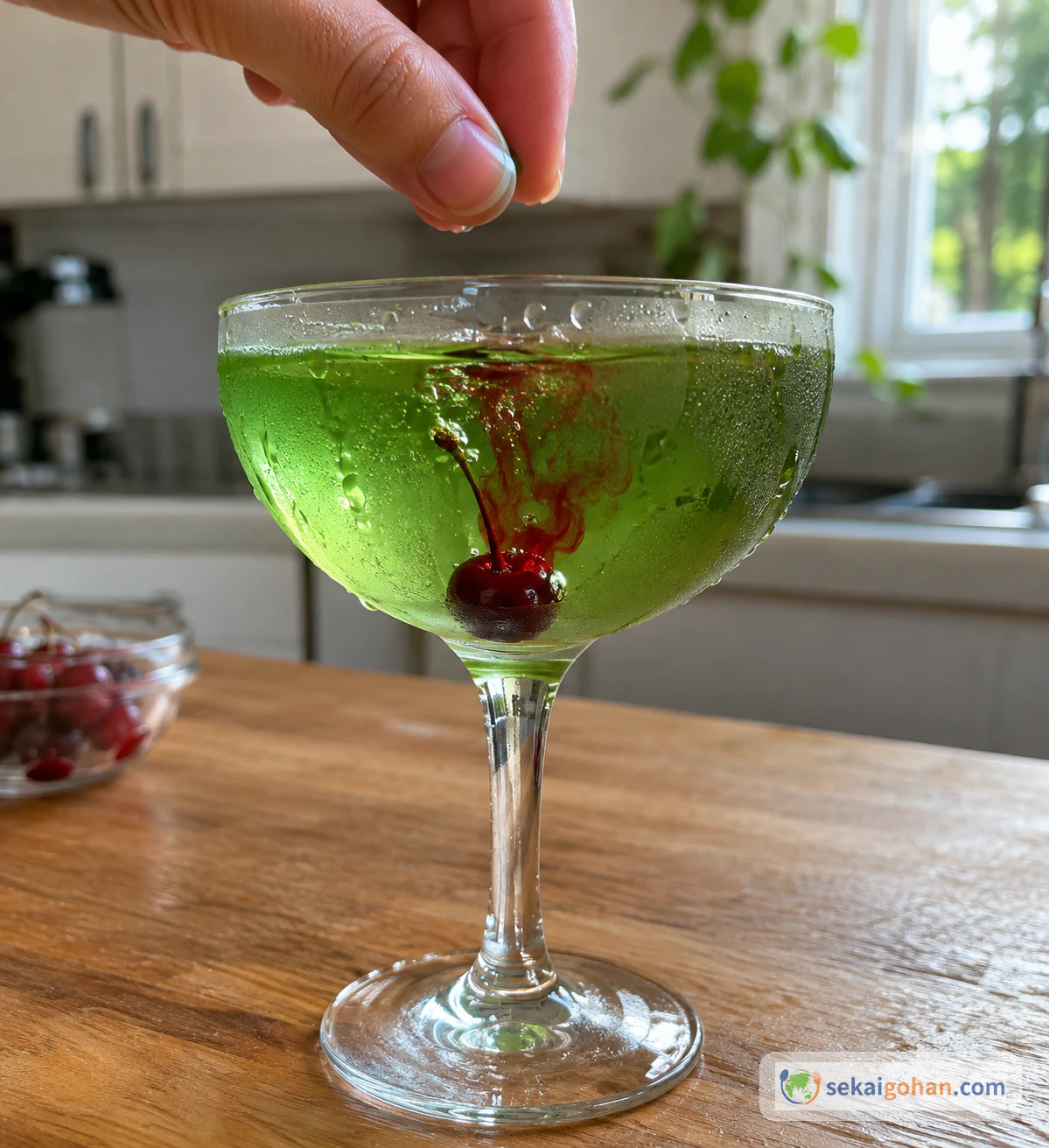
The shaker goes cold and frosted under your fingers, and when you pour through the fine strainer the drink lands in the glass a clear, almost electric green. One maraschino cherry drops in and sinks to the bottom, trailing a thread of red. That is a Japanese Slipper, the Melbourne cocktail of green melon liqueur, orange liqueur and fresh lemon juice in equal measure, shaken over ice and served up in a chilled glass. Sweet melon comes first, the orange liqueur rounds it out, and the lemon cuts in at the end so the sweetness stays bright instead of sticky.
A Melbourne Bar, a Sample Bottle and a Book
The drink was born in 1984 at Mietta's in Melbourne, the restaurant run by Mietta O'Donnell and Tony Knox, which reopened that year in new premises on Alfred Place. It had a restaurant upstairs and a salon below, and behind the bar stood Jean-Paul Bourguignon, a French-born bartender. A sales rep came by with a sample bottle of Midori, the vivid green melon liqueur. Bourguignon found it sweet and balanced it with Cointreau and fresh lemon, in the equal-parts sour shape the drink still has today.
The name has nothing to do with Japanese footwear in particular. Bourguignon was learning English at the time and was reading a book about a Japanese woman and her slippers, and that image stuck. So this is an Australian drink from first pour to last; only its name and its melon liqueur point toward Japan.
In English, "Japanese slipper" also means the indoor slippers worn in Japanese homes. When you look for the drink, add "cocktail" or "Midori" so you land on the glass and not the shoe rack.
From one bar to the whole country
Bourguignon left Mietta's in 1985 and kept putting the drink on menus wherever he worked: hotels, airlines, resorts, casinos. Within two or three years it was poured across Australia, and it became one of the signature drinks of the 1980s and 1990s, part of Melbourne's early cocktail revival and a fixture of Australian drinking culture.
Then came the slump. The Japanese Slipper was written off as a sweet eighties drink, and it survived largely because Midori's brand ambassador from 2007 to 2017, Manuel Terron, kept teaching it to bartenders. Around 2020 it came back onto serious menus. Above Board in Melbourne makes a version with Pierre Ferrand Dry Curaçao, lime and malic acid; Bar Liberty pours a Japanese Slipper No. Blue built on gin, yuzu sake and a melon liqueur from Ota Shuzo. For more from the same table, see the other dishes of Australia.
Ingredients (serves 1)
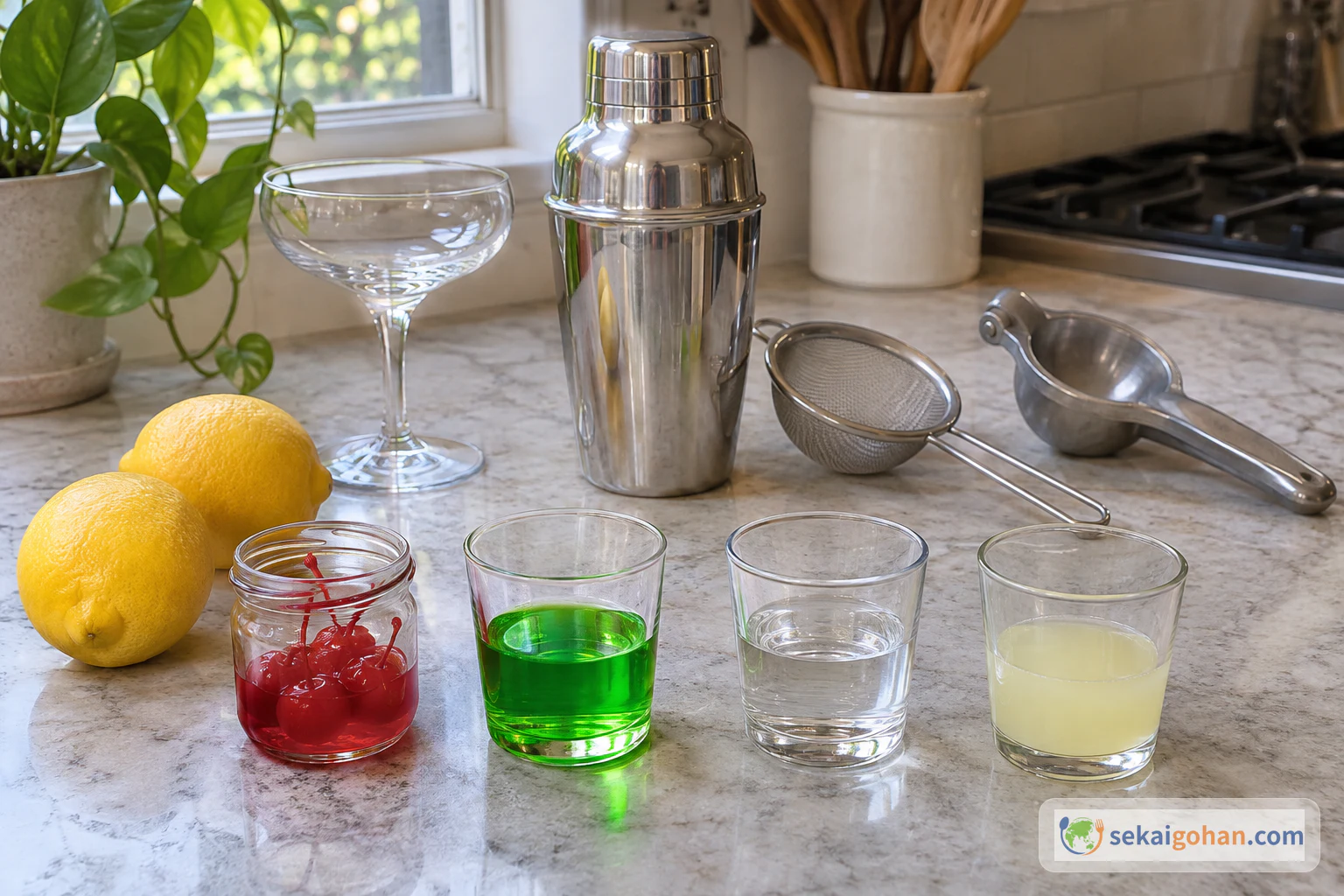
The whole drink rests on equal parts of the three liquids. Keep the ratio exact and you get the balance the drink is known for; tip it in any direction and either the sugar or the sourness takes over.
Liqueurs and maraschino cherries are processed products. Check the ingredient labels on each bottle and jar, including the colorings and preservatives in the cherries, if you or your guests have allergies or sensitivities.
This is an alcoholic drink. In Japan, no one under 20 may drink alcohol; wherever you are, follow your local drinking age. Do not drink it if you are pregnant or breastfeeding, before driving a car or riding a bicycle, while taking medication, or when you feel unwell. It tastes sweet and goes down easily, so stay aware of how strong it is and how much you have had. Avoid drinking on an empty stomach and keep water on the table.
Equipment
- Cocktail shaker (tin and glass)
- Jigger, or measuring spoons
- Fine strainer (a tea strainer works)
- Citrus squeezer
- Stemmed cocktail or martini glass, about 4½ to 5¾ fl oz (130–170 ml)
Choosing and Substituting
The green is the drink's signature. Midori is the classic, and other green melon liqueurs work too, though each shifts the sweetness and the melon aroma a little. A colorless melon liqueur gives you a different-looking drink altogether; it may taste close, but it no longer reads as a Japanese Slipper in the glass.
Cointreau is the usual orange liqueur, and a 40% triple sec is the standard. Any other triple sec or white curaçao fills the role; the sugar and alcohol levels change from bottle to bottle, so check the label and expect the sweetness to land a little differently. Lemon should be squeezed fresh. Bottled juice still makes the drink, but the bright citrus aroma drops away. The cherry can be skipped, though the drink then loses its familiar look.
Glass size matters more than it seems. Three measures plus the water from shaking need room, so a glass in the 130–170 ml range holds the drink comfortably, while a 4 fl oz (125 ml) glass runs tight. For shaking, use solid cubes; crushed ice melts fast and waters the drink down.
Method
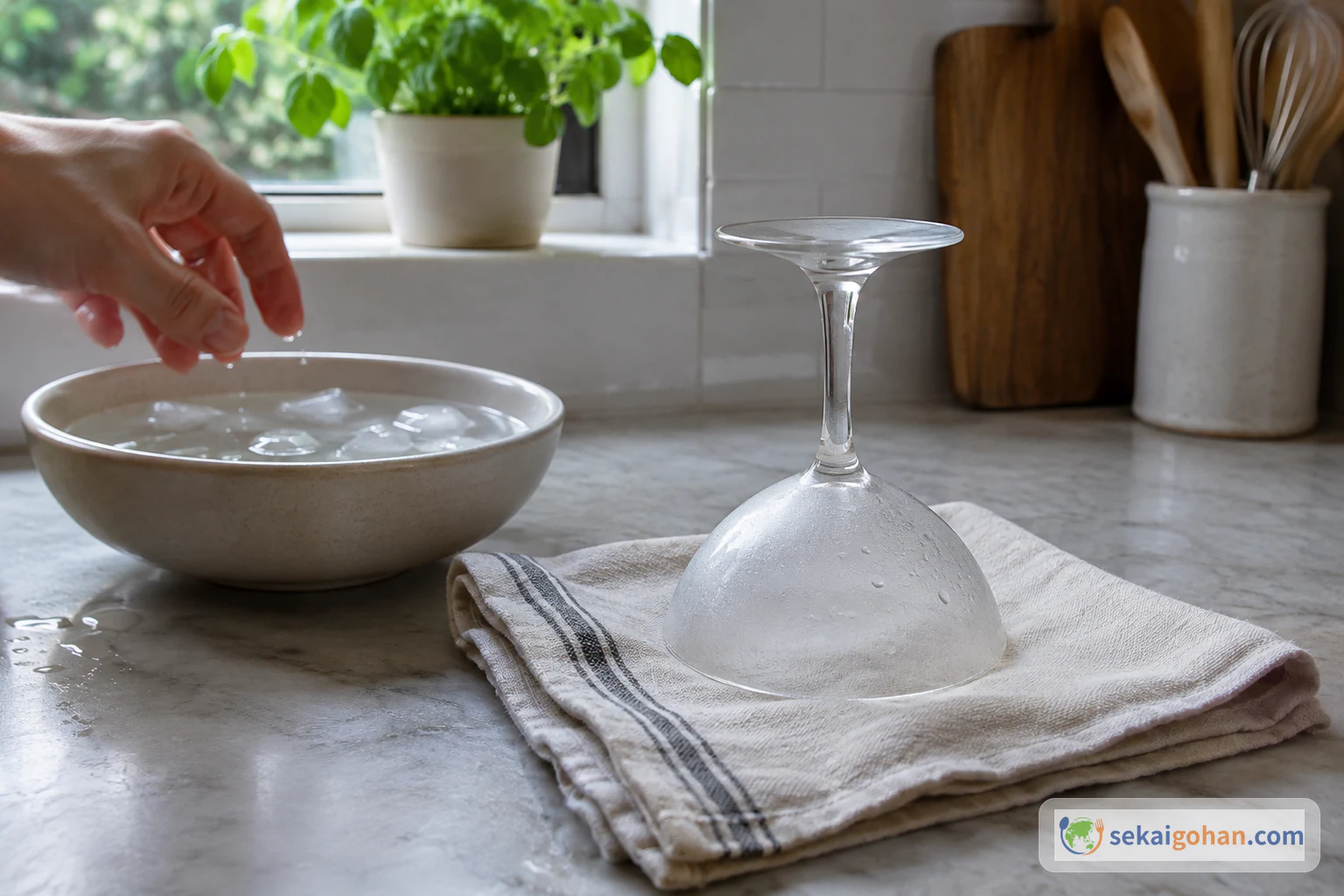
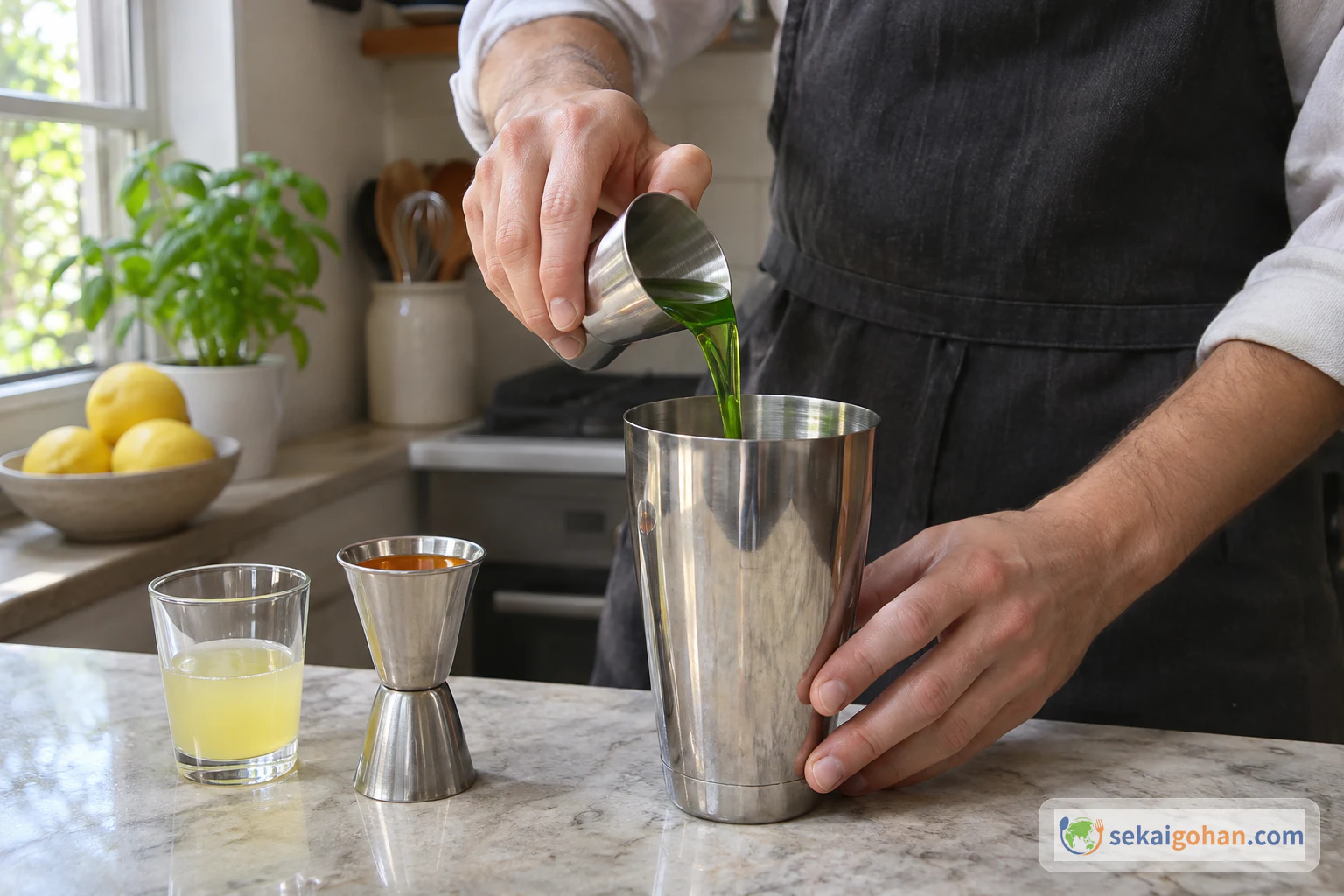
Nothing here is cooked, and the whole drink moves fast once the shaker is in your hands. The only waiting is for the glass to chill, so start there, squeeze the lemon while it cools, and have the cherry ready before you shake. Then shake, strain and serve without pausing.
When It Goes Wrong
| What you see | Why | What to do |
|---|---|---|
| Too sweet | Short on lemon, a sweeter orange liqueur, or too little dilution | Go back to exact equal parts and shake harder. Next time, add a little more lemon and compare, rather than adjusting a drink already poured |
| Warm or flat | The glass was not chilled, too little ice, a weak shake, or the drink stood too long | Chill the glass first, fill the shaker with ice, and serve right after straining |
| Cloudy | Ice chips and lemon pulp got into the glass | Pour through a fine strainer |
| Pale or the wrong color | A colorless melon liqueur was used | Use a green melon liqueur; without it the drink becomes something else |
| Tastes too strong | A high-proof orange liqueur or too large a pour | Keep the ratio, reduce all three measures equally, and use a smaller glass |
Serving and Variations
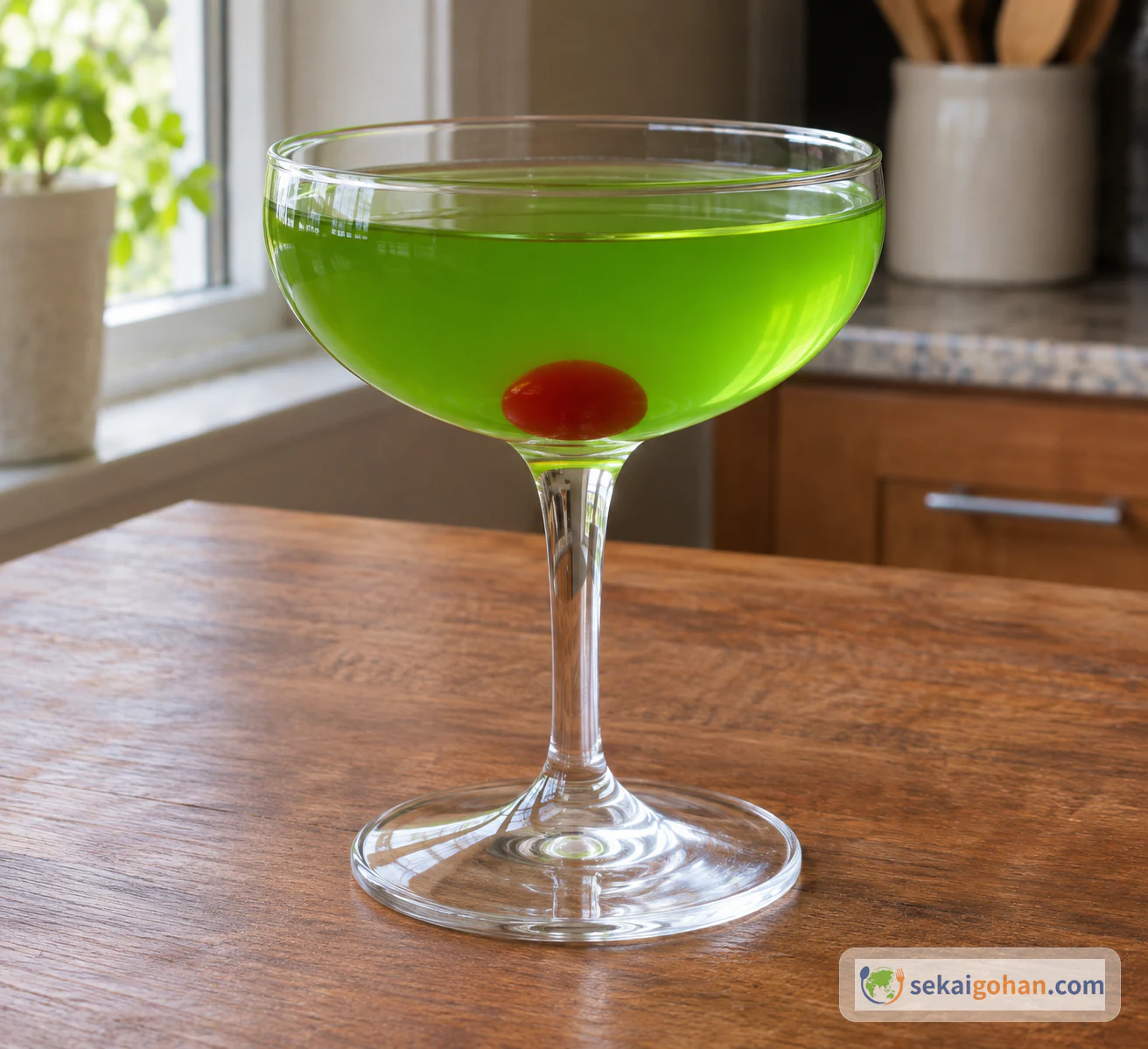
At the table
The Japanese Slipper works well as a drink before the meal. Its sweetness and acidity reset the palate before fried or rich food, which makes it a natural opener ahead of a halal snack pack, or beside something sharp and fresh such as Fijian kokoda. After a sweet dessert like pavlova it piles sugar on sugar, so serve it earlier in the evening. Each drink is shaken to order, so make one at a time for each guest.
Variations
- Dry curaçao and lime. Swapping the Cointreau for a drier curaçao and the lemon for lime, with malic acid, gives a leaner, sharper drink with less obvious sugar, the direction Above Board takes.
- Gin and yuzu. Building on gin and yuzu sake with a Japanese melon liqueur, as in the Japanese Slipper No. Blue, pushes the drink drier and more aromatic and moves the citrus toward yuzu.
- A different green melon liqueur. Trying another brand changes the depth of green and the character of the melon; taste it neat first so you know how sweet it is before it goes into the shaker.
Frequently Asked Questions
Can I mix a batch ahead for a party?
Make each drink to order. Mixed in advance and held in the refrigerator, the three liquids lose their fresh aroma, and once they hit the ice they dilute further. Measure the liquids into separate containers ahead of time if you like, then shake each drink just before serving.
How many lemons should I buy?
Lemons vary in size and juiciness, so one lemon cannot be counted as one measure of juice. Buy one more than you think you need and measure the juice rather than counting fruit.
Why do I sometimes see it made with smaller measures?
Some Japanese cocktail references give 20 ml of each liquid for a 4 fl oz (125 ml) glass. The ratio stays the same; it is simply a smaller drink. If your glasses are small, scale all three measures down together.