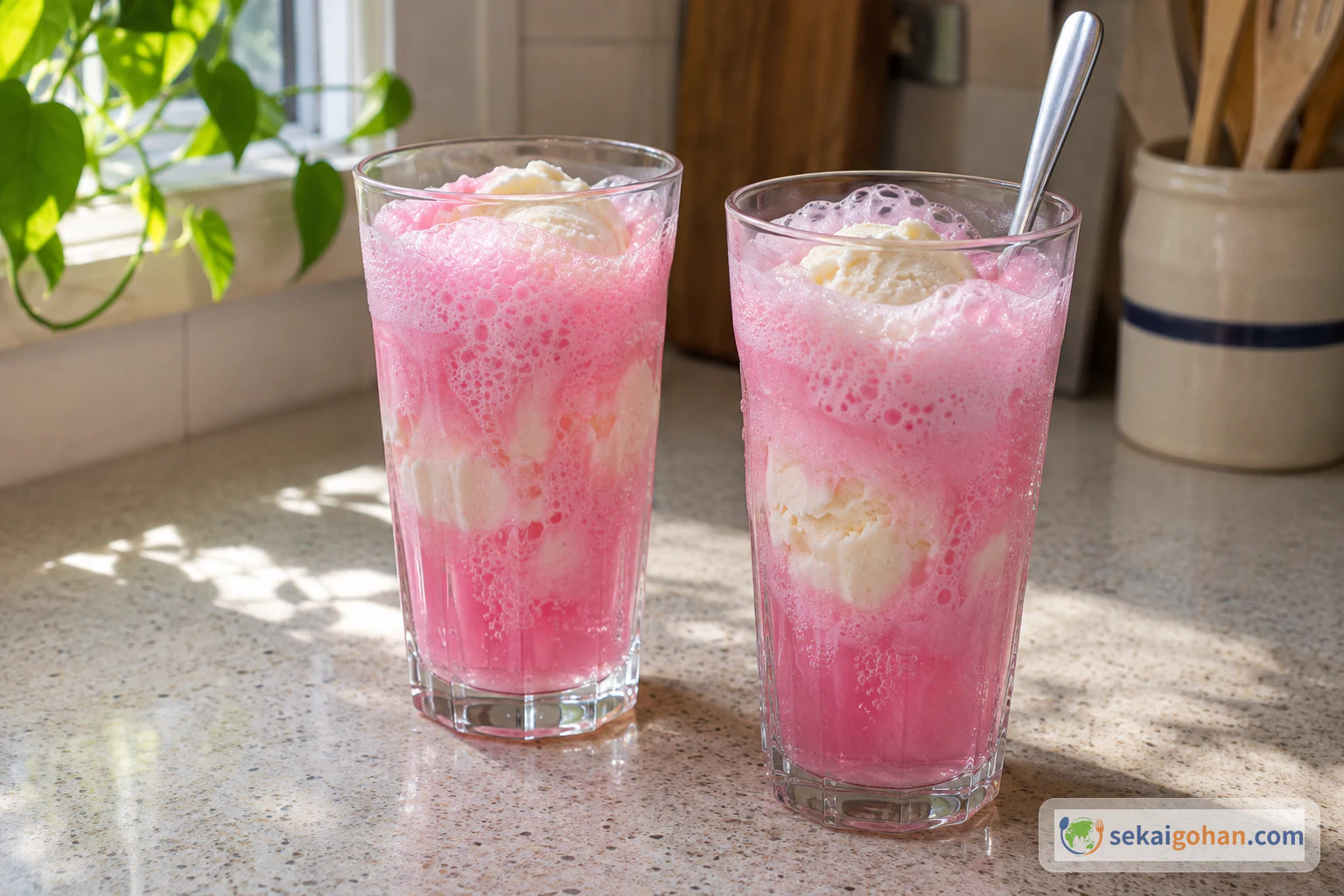
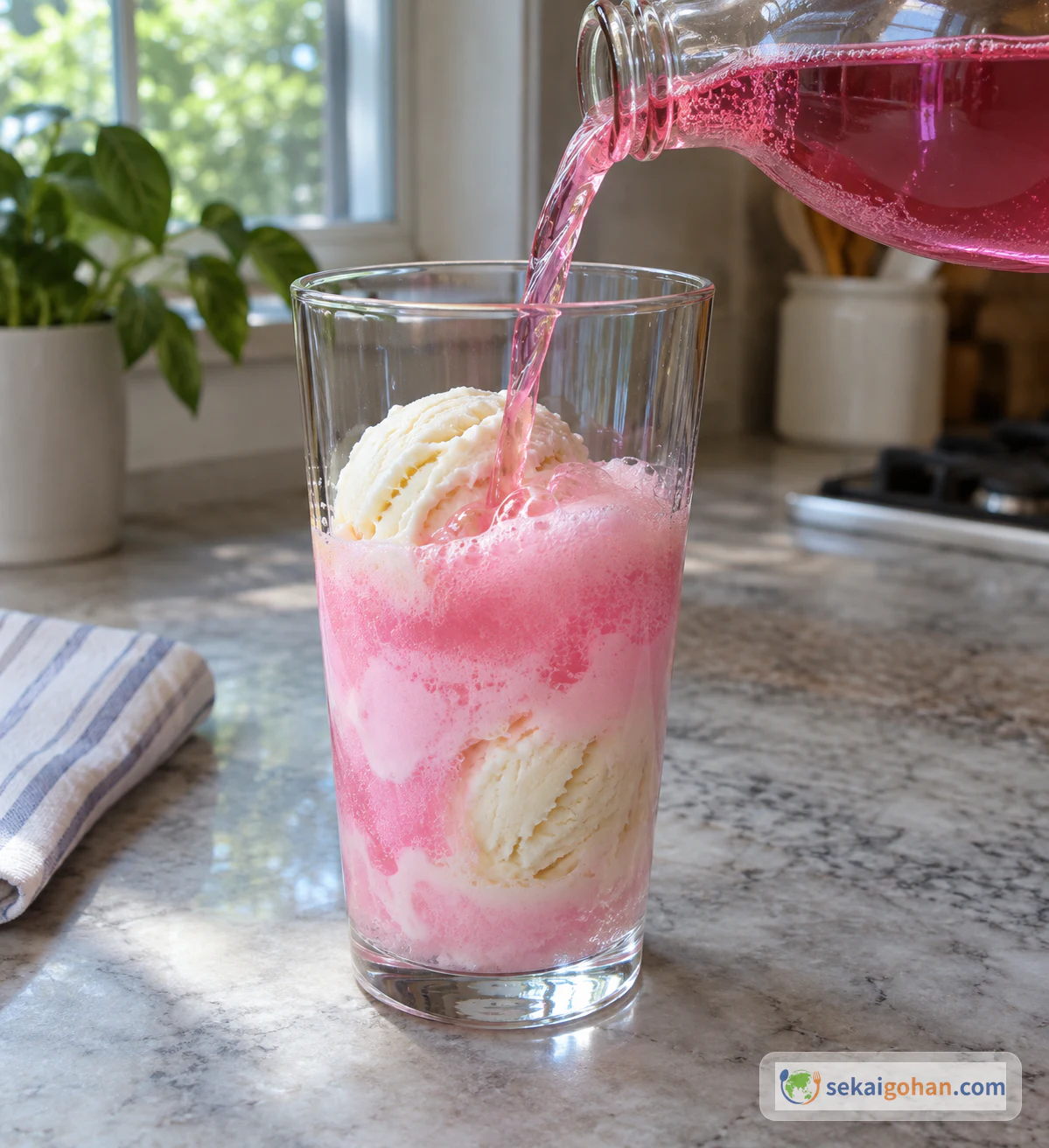
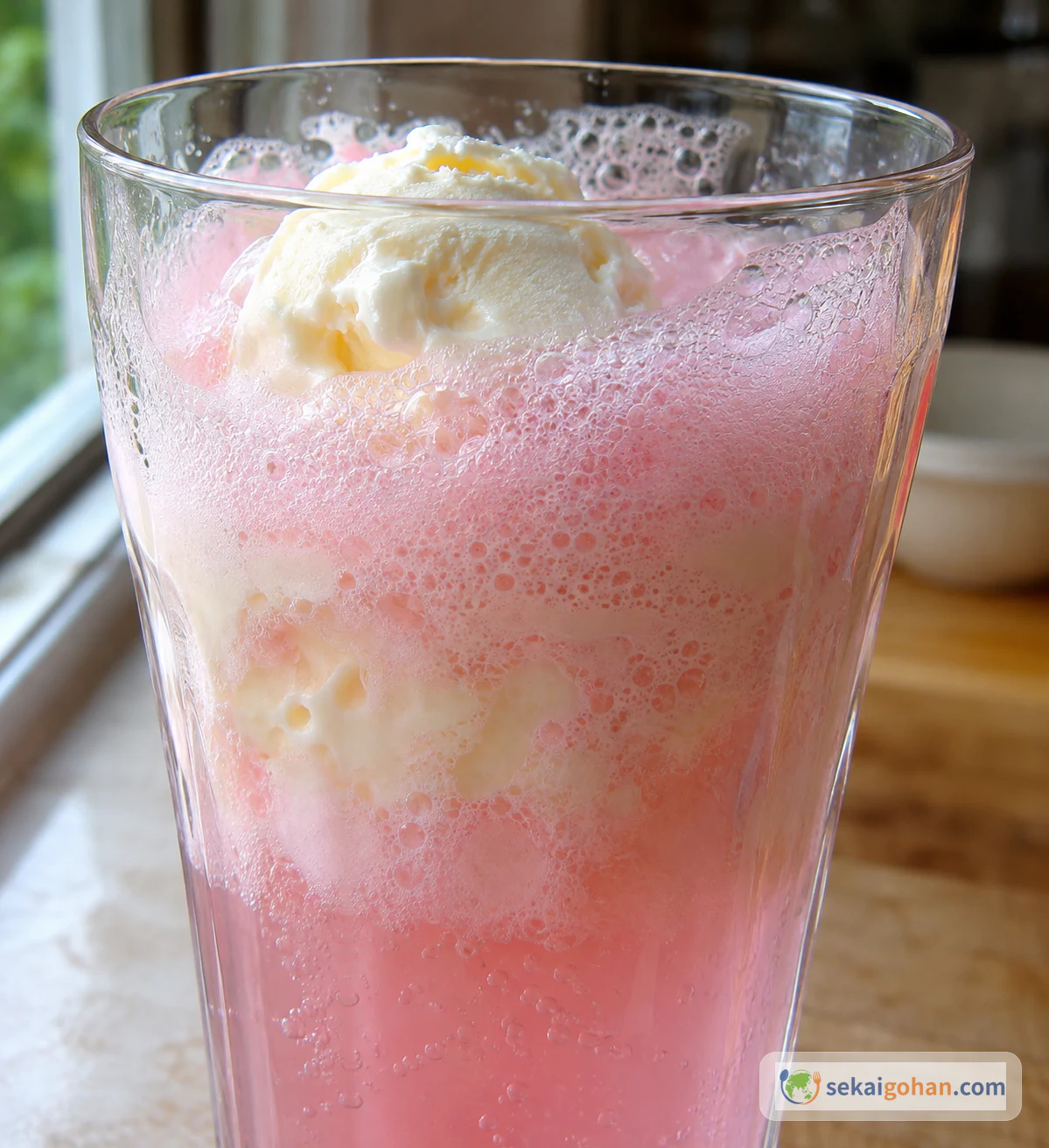
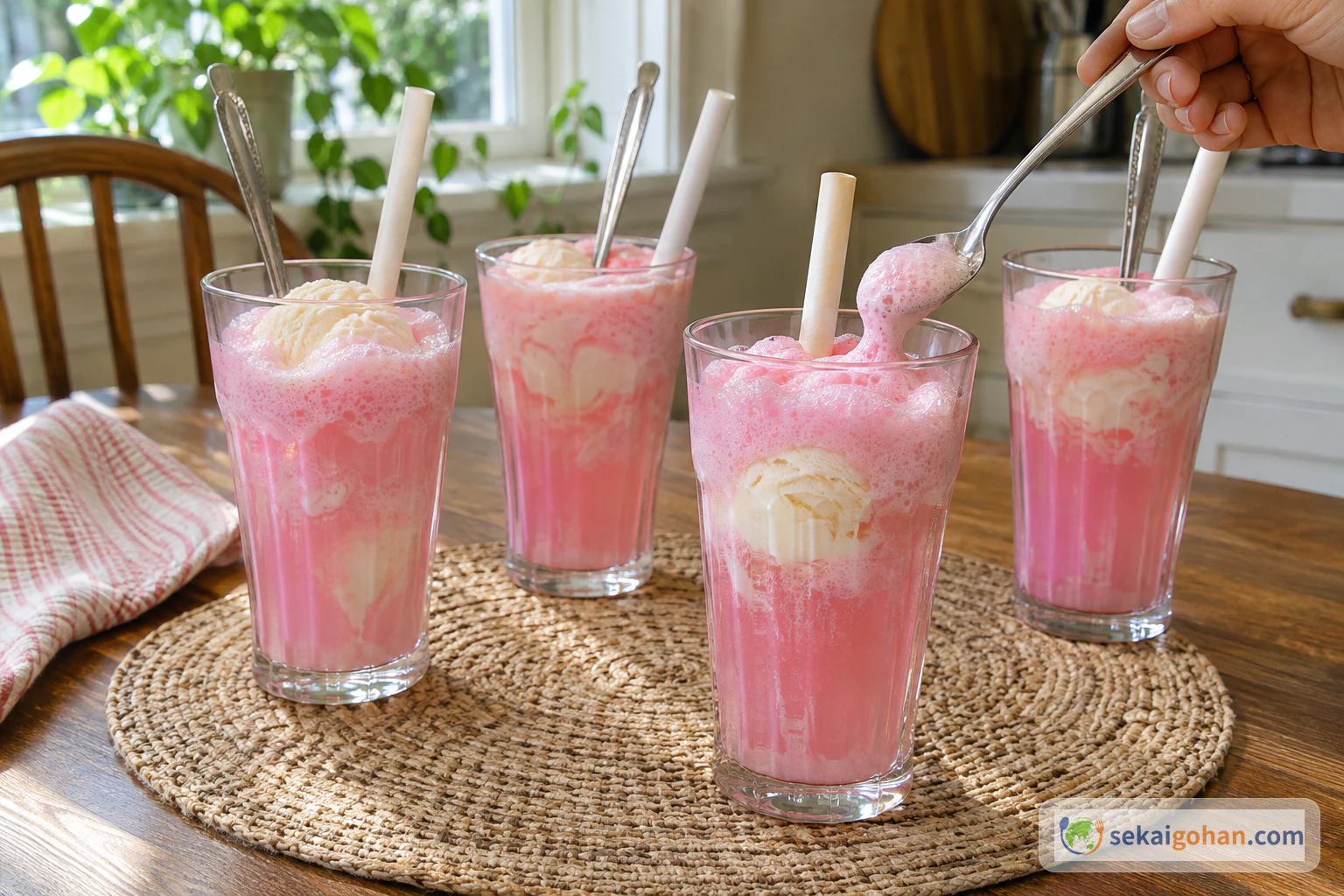
Pink soda hits the cold scoops of vanilla, and the glass comes alive. A pale froth of fine, uneven bubbles climbs the inside wall and stands on top. You eat that froth first with a long spoon, then drink the rest through a thick straw while the ice cream melts into the fizz. In Australia and New Zealand this is a spider: vanilla ice cream topped with creaming soda, a pink, vanilla-sweet soft drink. It tastes like a milkshake that fizzes, cold and creamy at the bottom of the glass, light and sparkling at the top.
Spider: The Name, the Milk Bar and the Gold Rush
The name comes from the foam. When the soda meets the ice cream, the bubbles spread over the surface and creep up the glass in a web-like lace, and Australians and New Zealanders have called the drink a spider for as long as anyone remembers. New Zealand shares the name, the way the two countries share a dessert table that can hold a pavlova next to a tray of tall glasses.
The float itself is usually traced to Philadelphia in 1874. Robert M. Green ran a soda fountain at the Franklin Institute's semi-centennial and put ice cream into a carbonated drink, and his own account of it was printed in 1910. Other names come up for the root beer float: Fred Sanders, Philip Mohr, and George Guy, an employee of Green's who put his own date at 1872. Who was first is not settled.
The Australian story may run further back. Some trace ice cream and soda drinks in Australia to the 1850s, with a gold-rush spider that tasted of brandy, ginger beer and ice cream. How far back it really goes is not settled either. What is clear is where the spider lives now. It belongs to milk-bar nostalgia. Retro diners still pour it in tall glasses with creaming soda, lemonade, lime, cola, orange or raspberry, and modern bars rework it for adults. It sits on the same table of Australian comfort food as a late-night halal snack pack, and there is more of that table on our Australia page.
In the United States the words split. An ice cream soda is ice cream with soda water and syrup, and a float is ice cream in a fizzy soft drink such as root beer. Australians and New Zealanders skip the distinction and call the glass a spider after its foam.
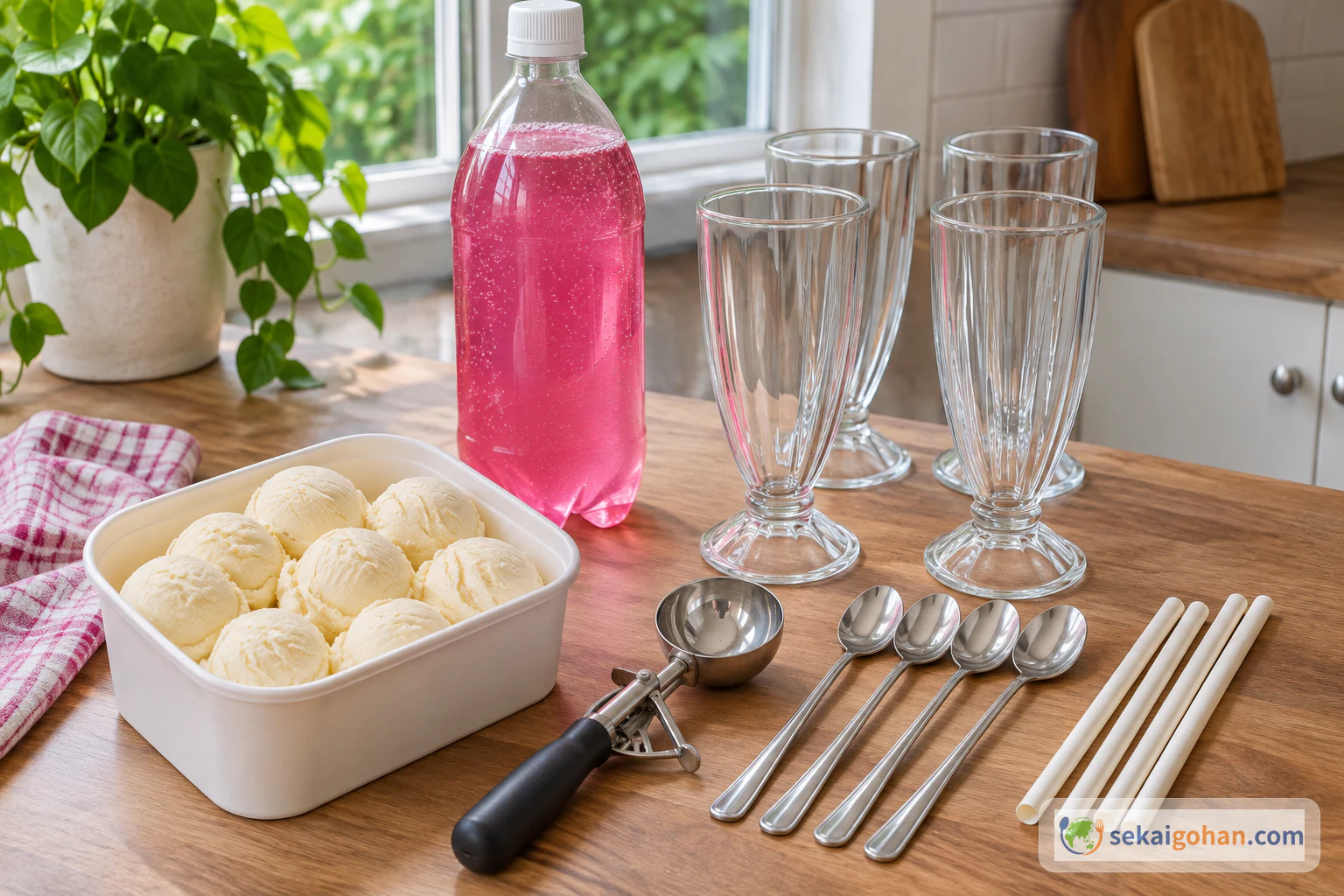
Ingredients (serves 4)
Most ice cream contains milk. Check the allergen labelling on the ice cream you buy, and read the soda label too, especially if you switch to another soda.
Equipment
- 4 tall glasses, 1½ cups (375 ml) each
- Ice-cream scoop
- 4 long spoons
- 4 thick straws
Choosing the Soda and Ice Cream
Pink creaming soda is the taste to keep. It is a vanilla-sweet soda from Australia and New Zealand, and with vanilla ice cream it gives the spider its soft, creamy, pink flavour. Outside those two countries, look for a soda sold as "creaming soda". Pink creaming soda and vanilla ice cream are what make the drink taste Australian.
Any fizzy drink works, and each one makes a different spider:
| Swap | What changes |
|---|---|
| Lemonade | A clear, sharper citrus spider |
| Cola | Dark brown with a pale-brown head, and the glass now has caffeine |
| Ginger beer | Pale amber, with a ginger bite against the cream |
| Lime soda | Pale green, with a white froth |
| Orange soda | Orange colour and a fruit-soda sweetness |
Vanilla ice cream is the safest choice with every soda. A richer vanilla puts the vanilla flavour up front. Ice creams with different fat and air content foam differently and taste different, so the head changes from tub to tub.
Before you pour four glasses, put a spoonful of the ice cream into a splash of your soda and taste it. This matters most when you are swapping sodas, because some flavours sit better with vanilla than others.
Method: Two Moves and a Spoon
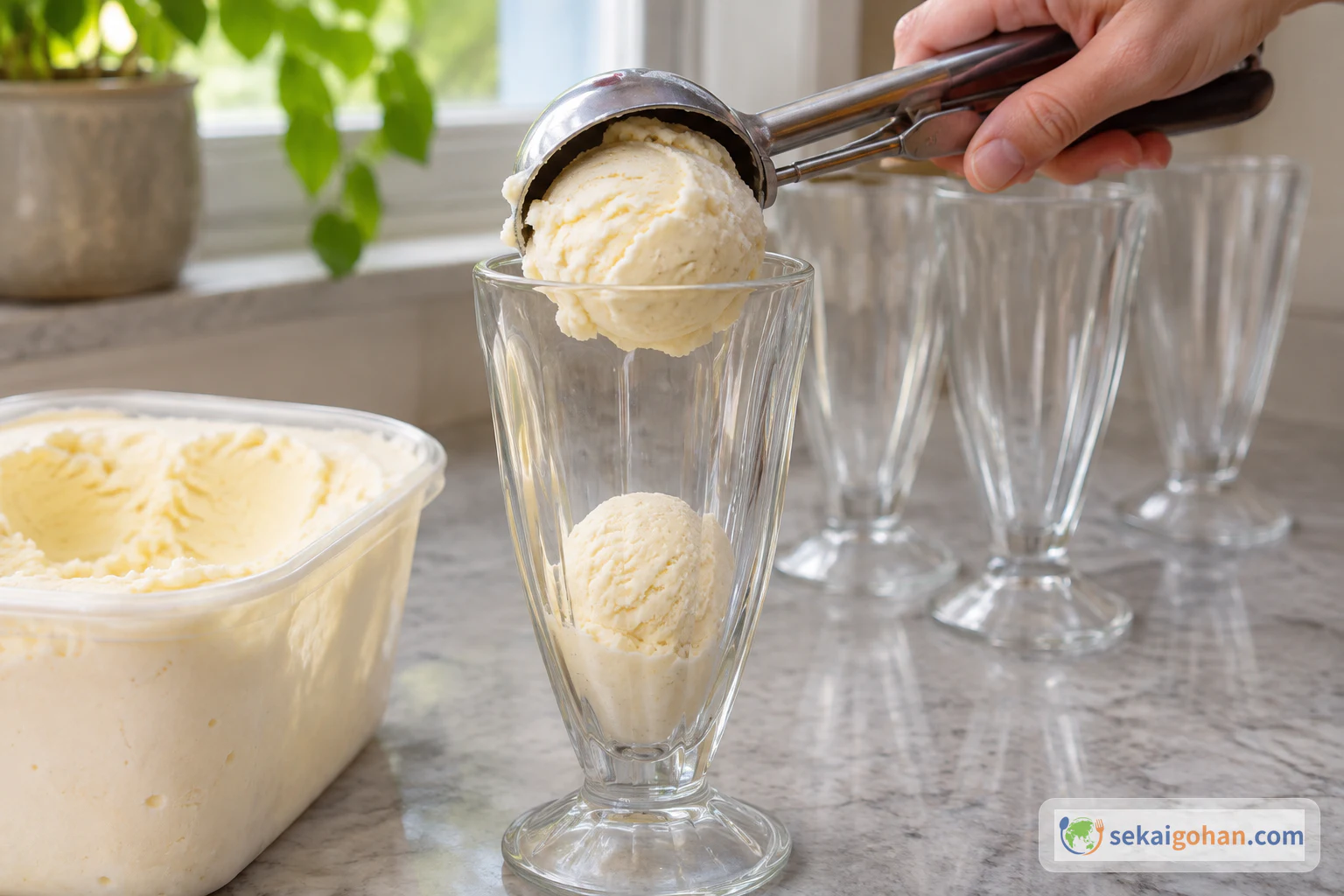
Get the glasses, scoop, spoons and straws out first, then take the ice cream from the freezer and the soda from the fridge. The whole job takes about five minutes and there is no waiting time, so scoop all four glasses, pour, and serve right away.
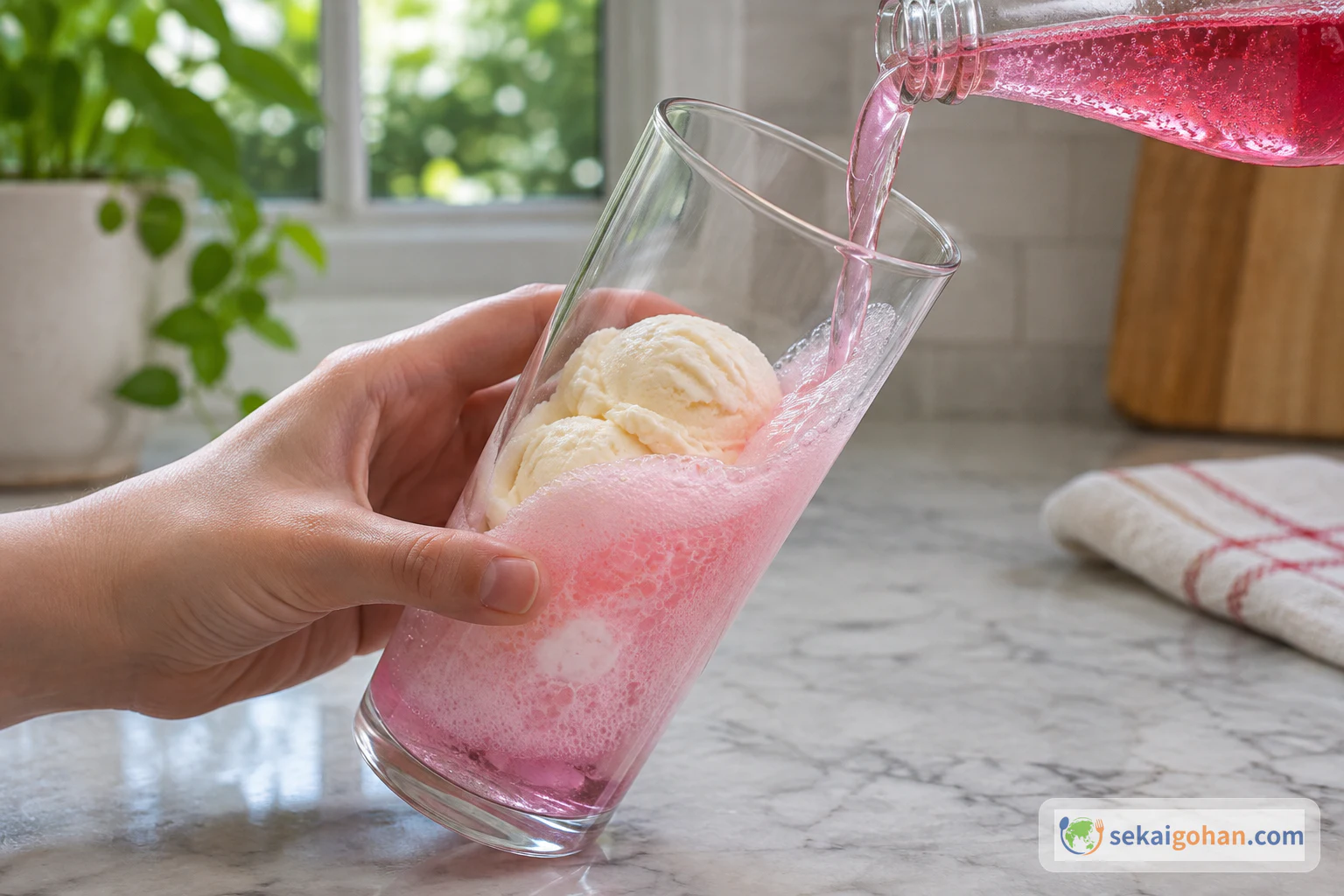
Soda and ice cream foam up fast and spill over the rim easily. Leave room in the glass and stop pouring before the foam reaches the rim. If you want to chill the glasses, put them in the fridge, or use glasses made for the freezer. A room-temperature glass put straight into the freezer can crack.
To try for a steadier head, let the ice cream soften on the bench for about 90 seconds before scooping. Then tilt the glass and run the soda slowly down the inside wall instead of dropping it straight onto the scoops.
When It Goes Wrong
| What you see | Why | What to do |
|---|---|---|
| Foam spills over the rim | The soda went in fast, straight onto the scoops, or the glass was too full | Tilt the glass, pour slowly down the inside wall, and stop before the foam reaches the rim |
| Little foam and a flat look | The ice cream may have been rock hard from the freezer, or the glass is short | Soften the ice cream for about 90 seconds before scooping, and use a tall glass so the head has room to rise |
| The head collapses and the drink turns cloudy and sweet | The glass stood too long or got stirred | Serve as soon as it's poured and leave it unstirred. Spoon and straw do the work |
| A glass cracks while chilling | A room-temperature glass went straight into the freezer | Chill glasses in the fridge, or use freezer-safe glasses |
Serving, Variations and Leftovers
At the table
A spider goes to the table as a drink and a dessert at once. Each glass gets a long spoon and a thick straw: the spoon for the froth and the softening ice cream, the straw for the cold pink soda underneath. Make spiders when the whole table can drink them at the same moment, because the head is at its best in the first minutes.
Variations
Each of these changes only the soda. Keep the two scoops of vanilla per glass.
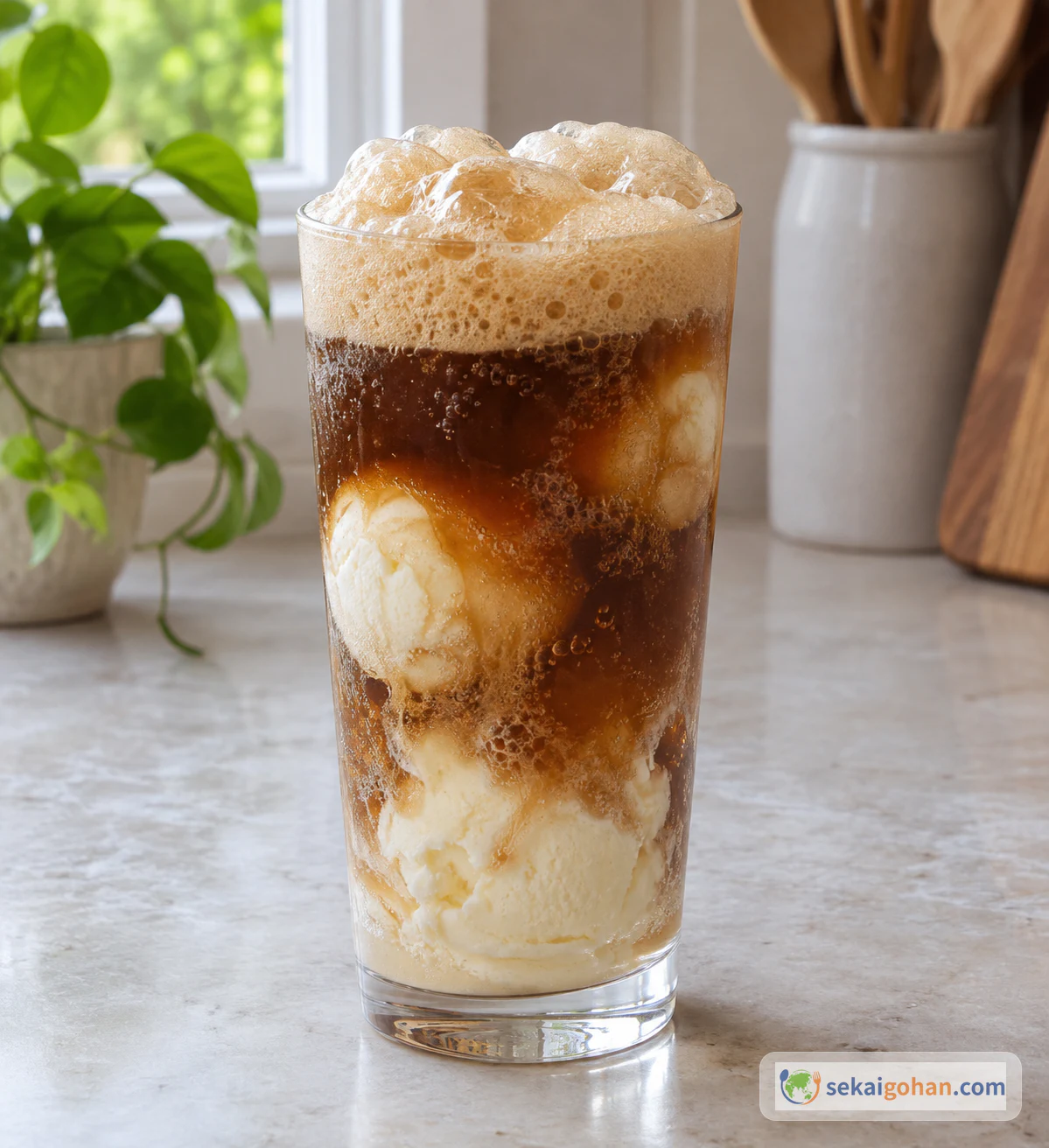
Cola spider. Cola turns the glass dark brown with a pale-brown head and a sharper, spiced sweetness.
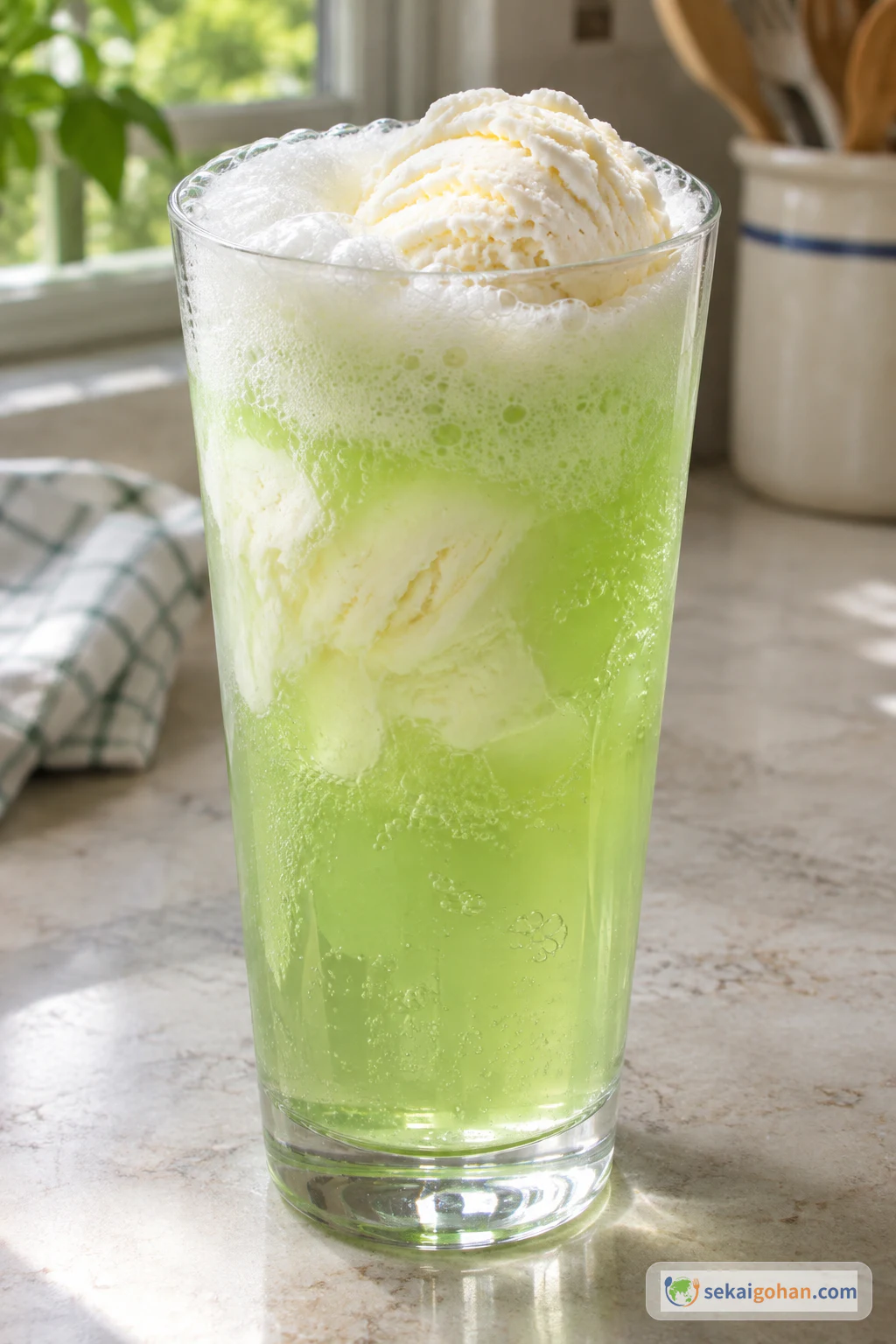
Lime spider. Lime soda gives a pale green glass with a white froth and a sour edge against the vanilla.
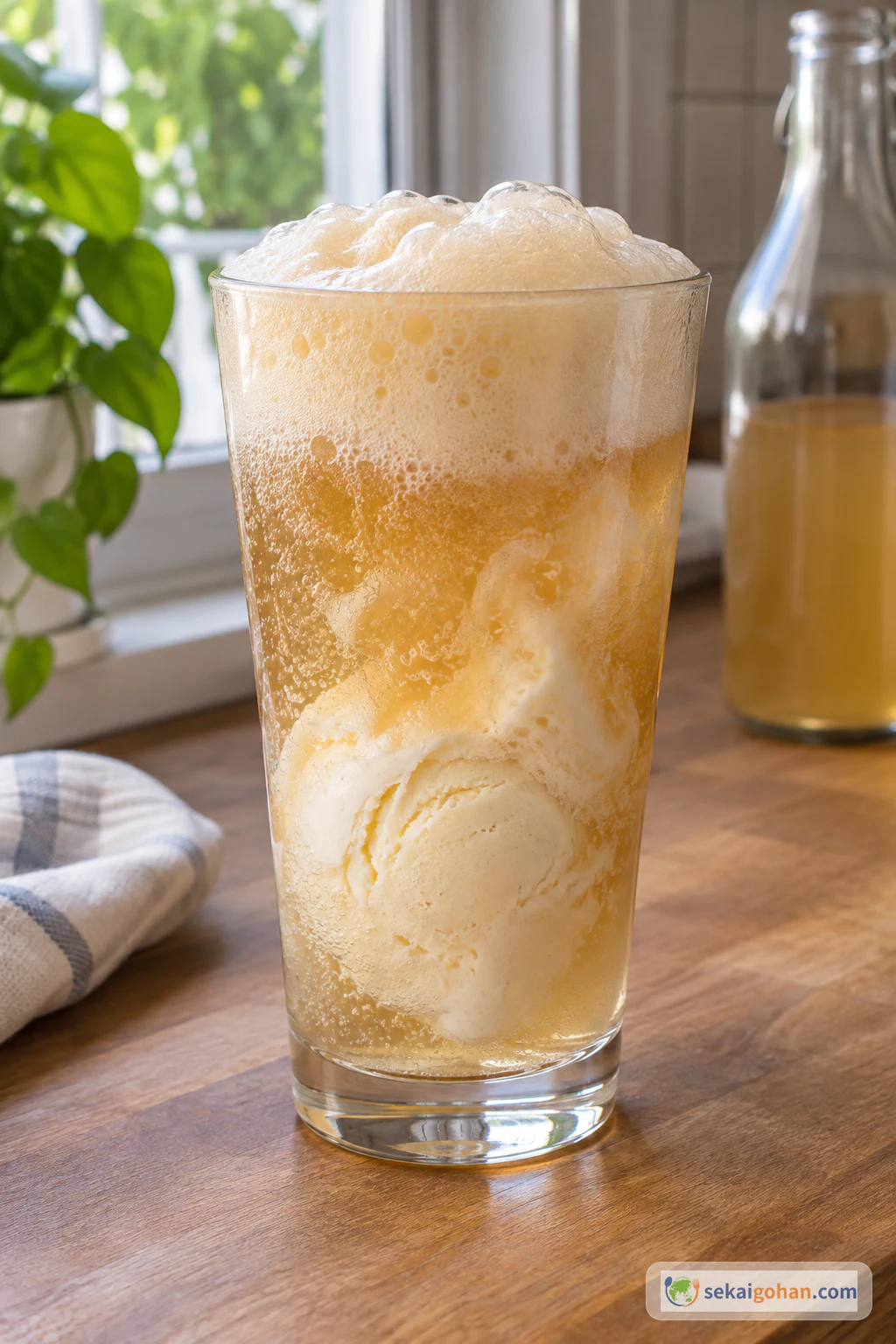
Ginger beer spider. Ginger beer turns the glass pale amber and adds a ginger heat that cuts through the cream.
Lemonade, orange or raspberry. Lemonade makes a clear, citrusy spider. Orange and raspberry sodas give the glass bright colour and a fruit-soda sweetness.
For adults there is a spider that leans back toward the gold rush, with brandy, ginger beer and ice cream. Keep it to grown-ups.
Cola and brightly coloured fruit sodas change the caffeine, sugar and colouring in the glass, so read the label when making spiders for children. The brandy version is for adults only. Keep it away from minors and never drink and drive.
Leftovers
A spider can't be made ahead and doesn't keep once poured, so build it only when you're ready to drink it. Store leftover ice cream and unopened or opened soda as their labels direct.
Frequently asked questions
Is a spider the same as a milkshake?
A spider is built in the glass and never blended. Its foam comes from carbonation meeting the ice cream. A milkshake is milk and ice cream whipped together, so it is thick and smooth all the way through. A spider stays layered: froth on top, ice cream in the middle, fizzy soda underneath.
Can I use an ice cream flavour other than vanilla?
Vanilla is the classic because it suits every soda. If you want to try another flavour, taste a spoonful of it in a splash of your soda before building whole glasses. Match the ice cream to the soda, not the other way round.
Can I make just one glass?
Yes. Put two scoops of vanilla ice cream in one 1½-cup (375 ml) glass and top it with creaming soda until the foam nears the rim. Serve it right away with a spoon and a straw, the same as for four.