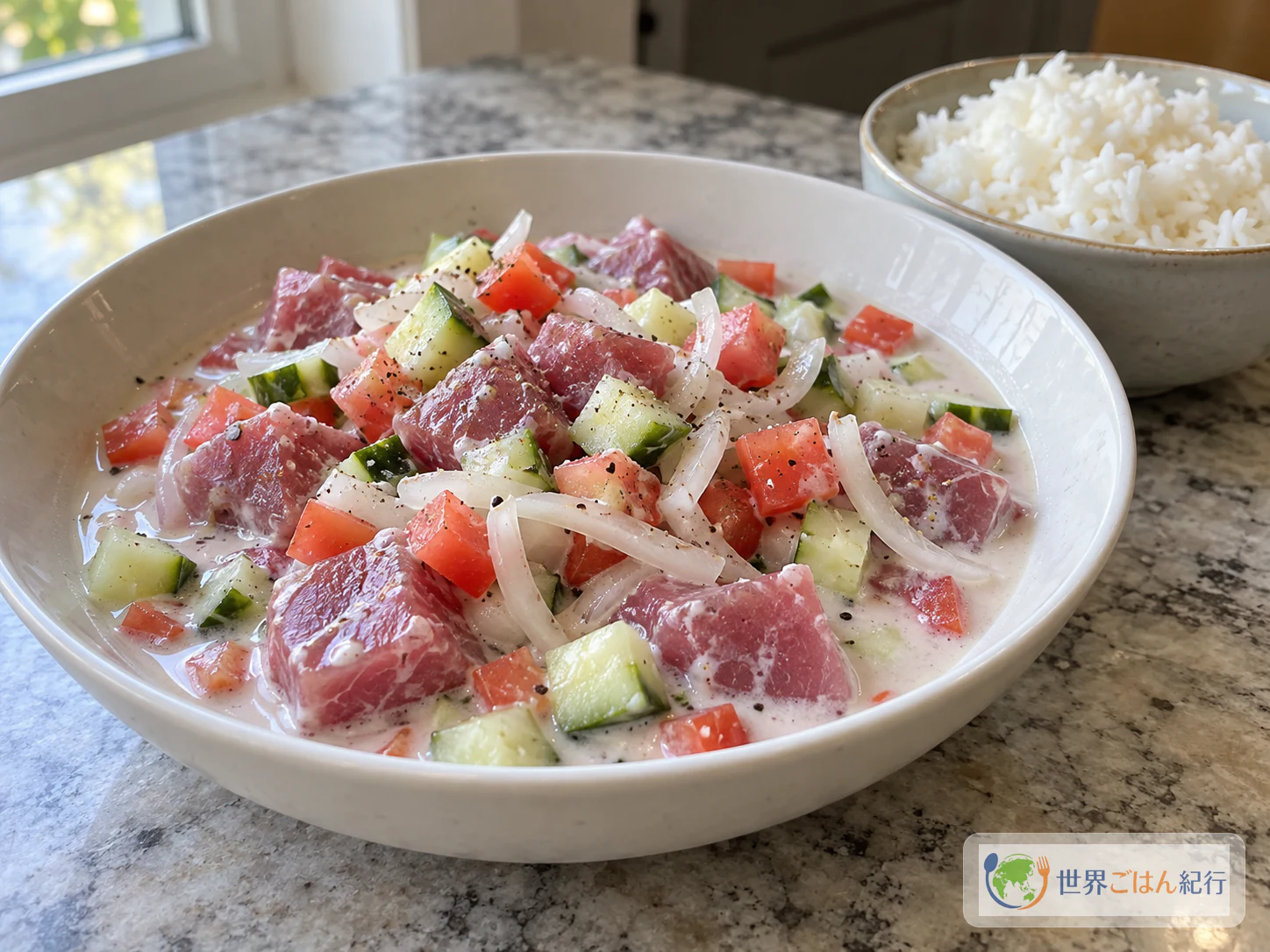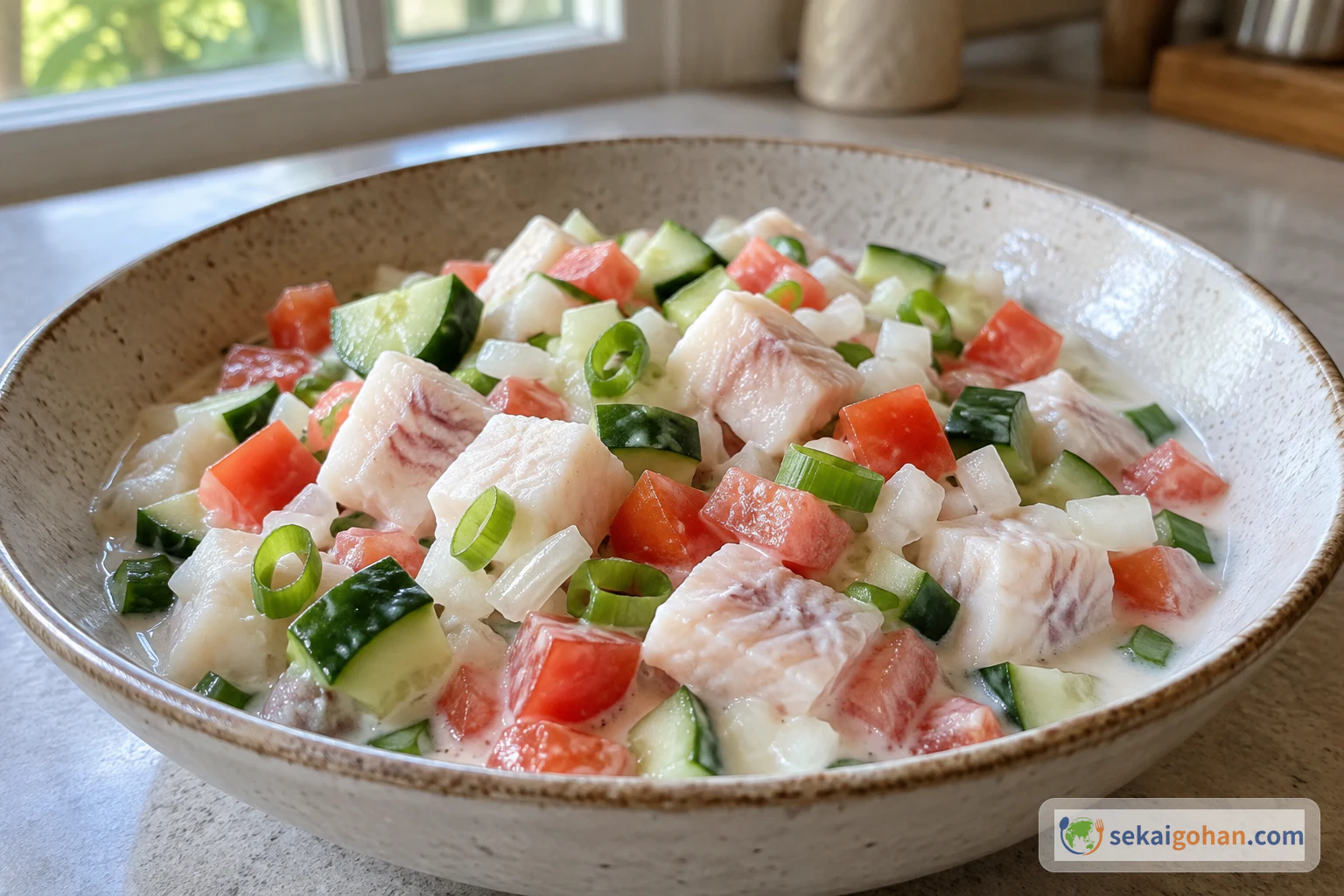
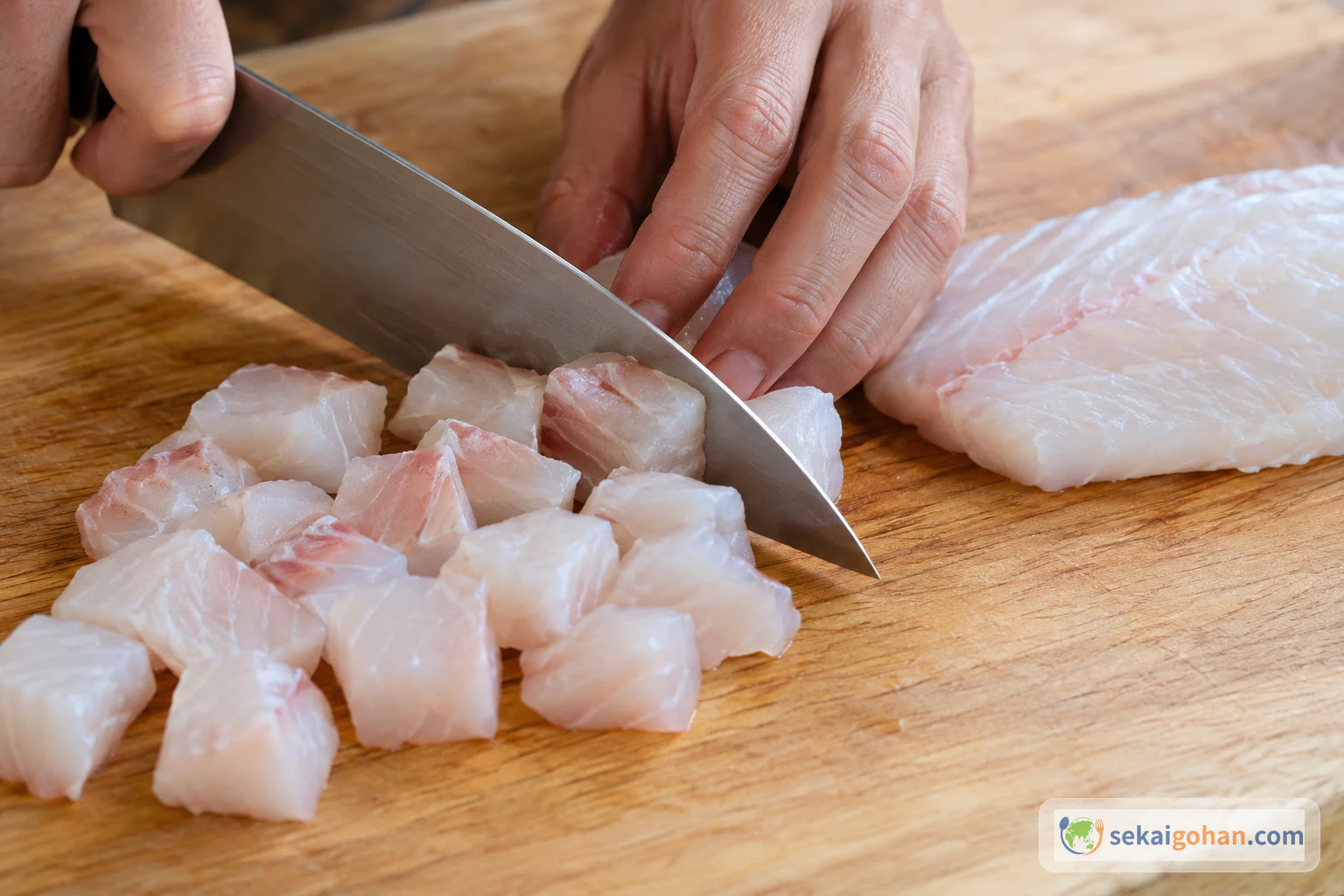
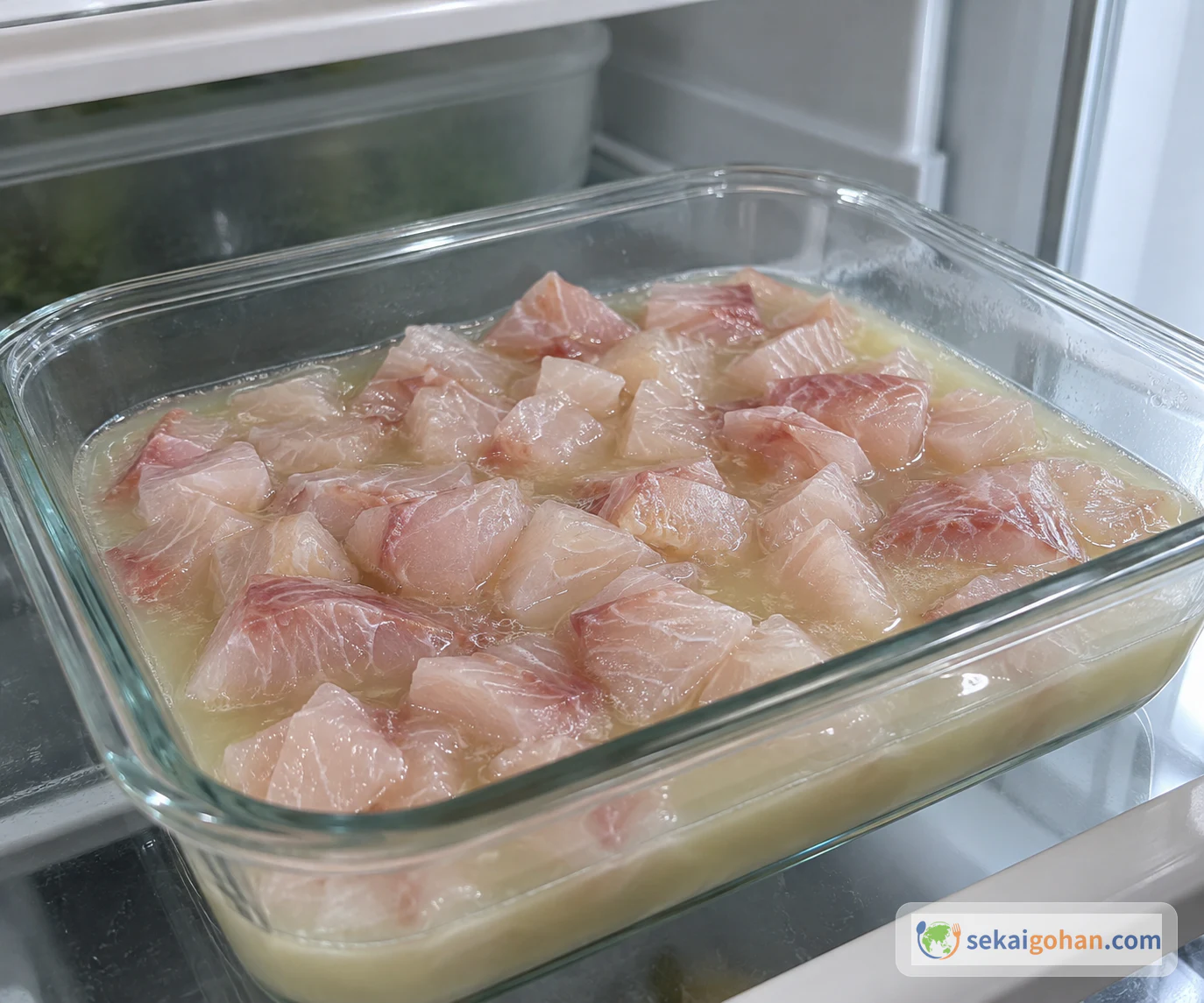
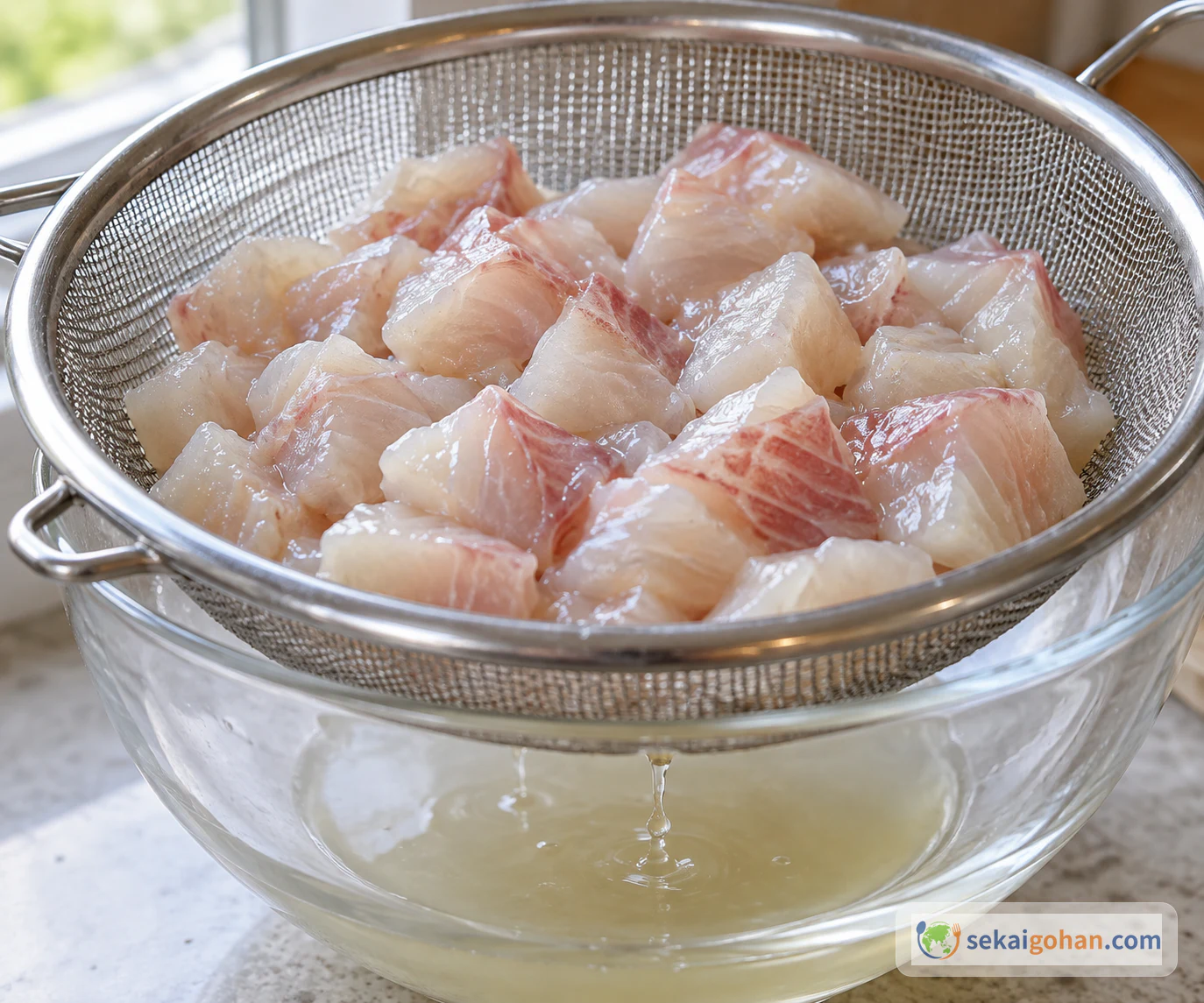
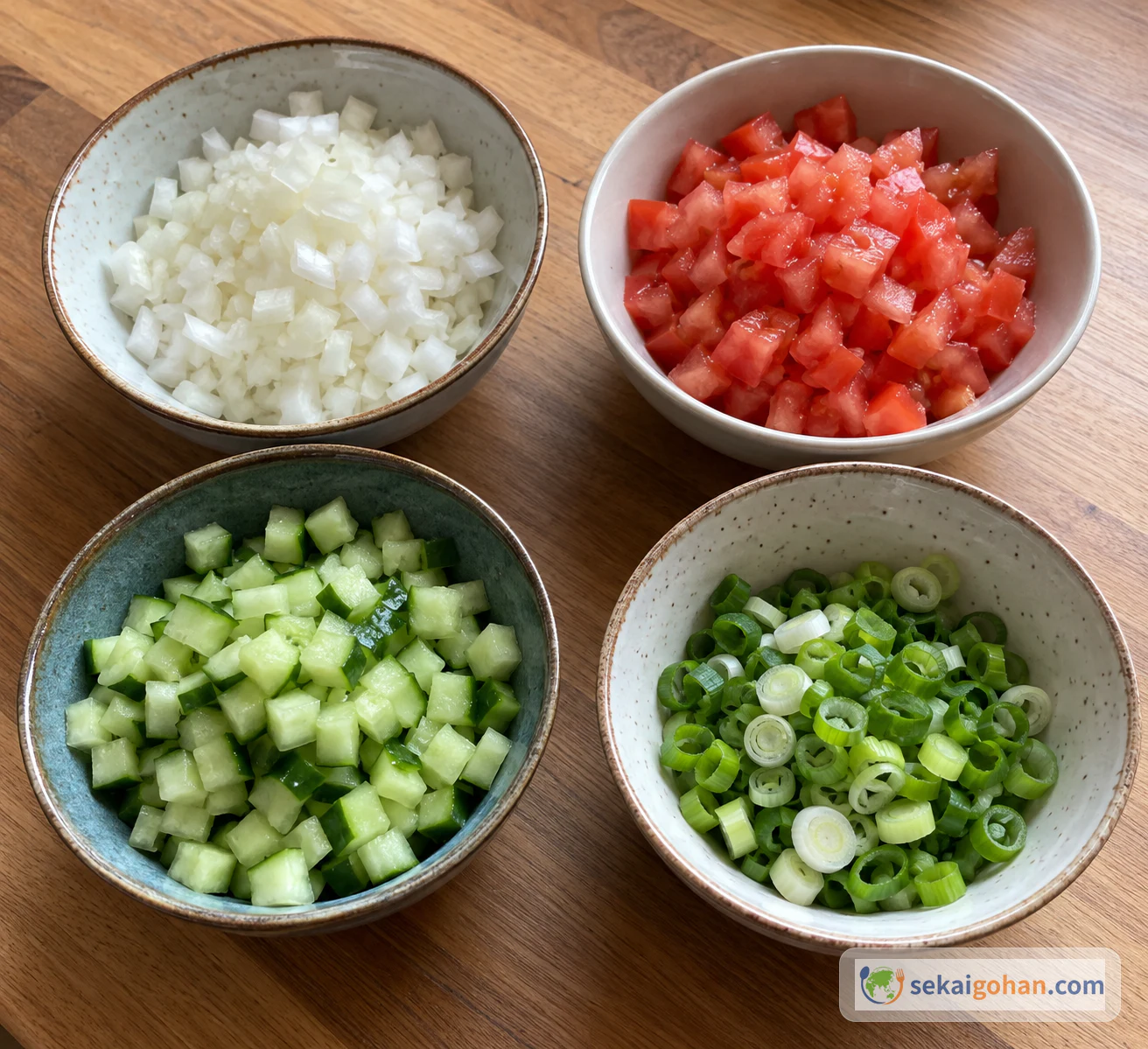
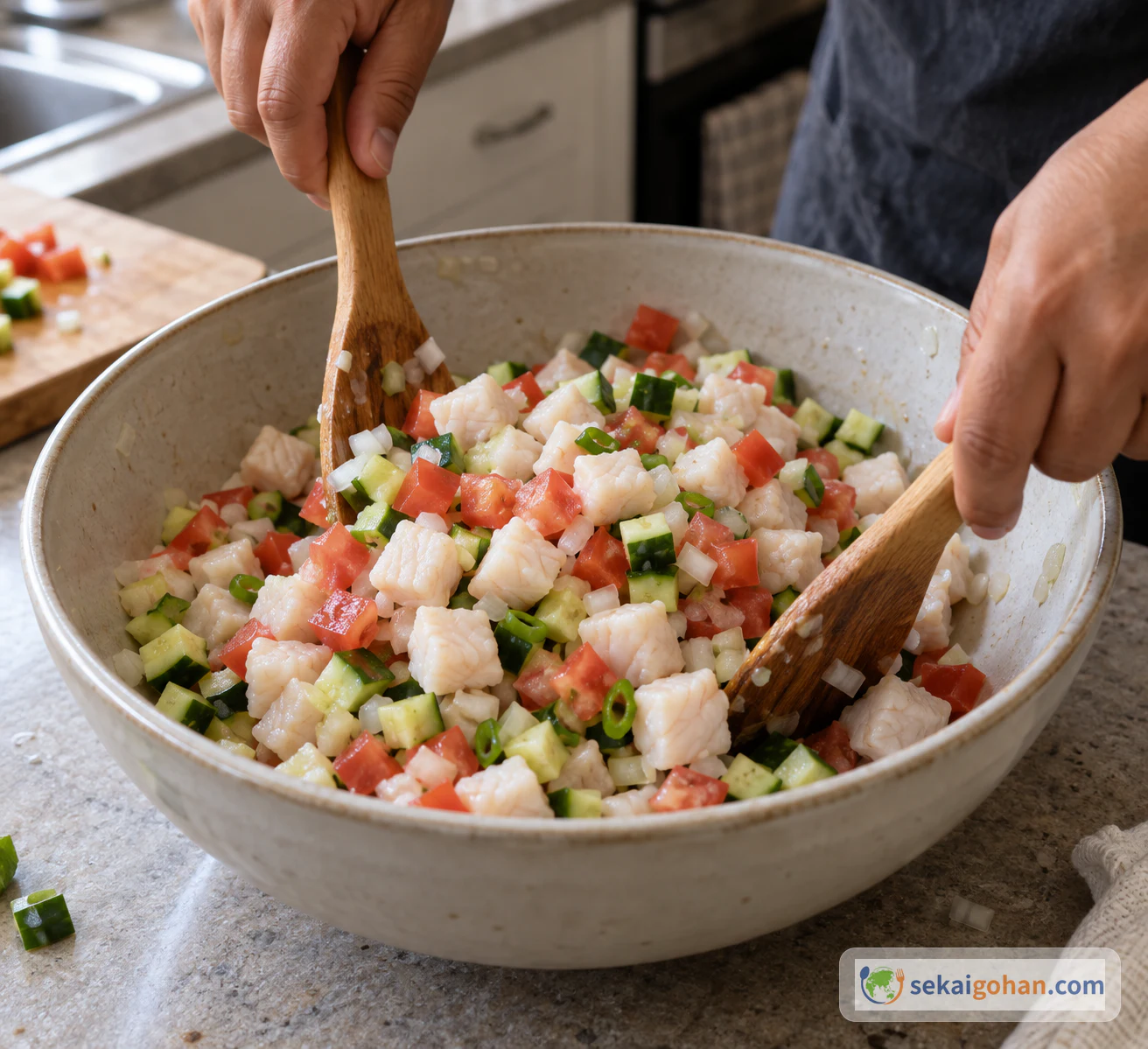
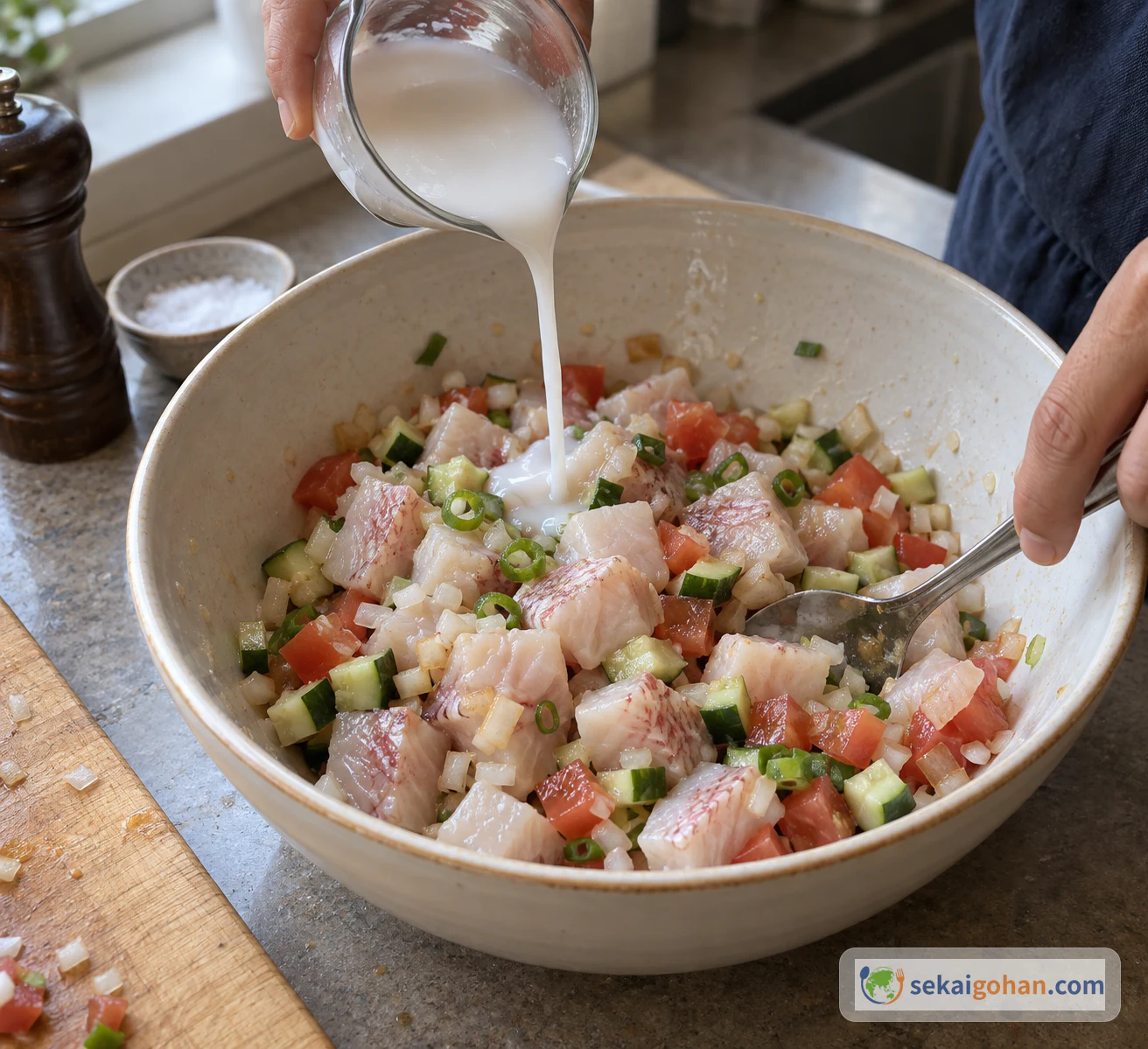
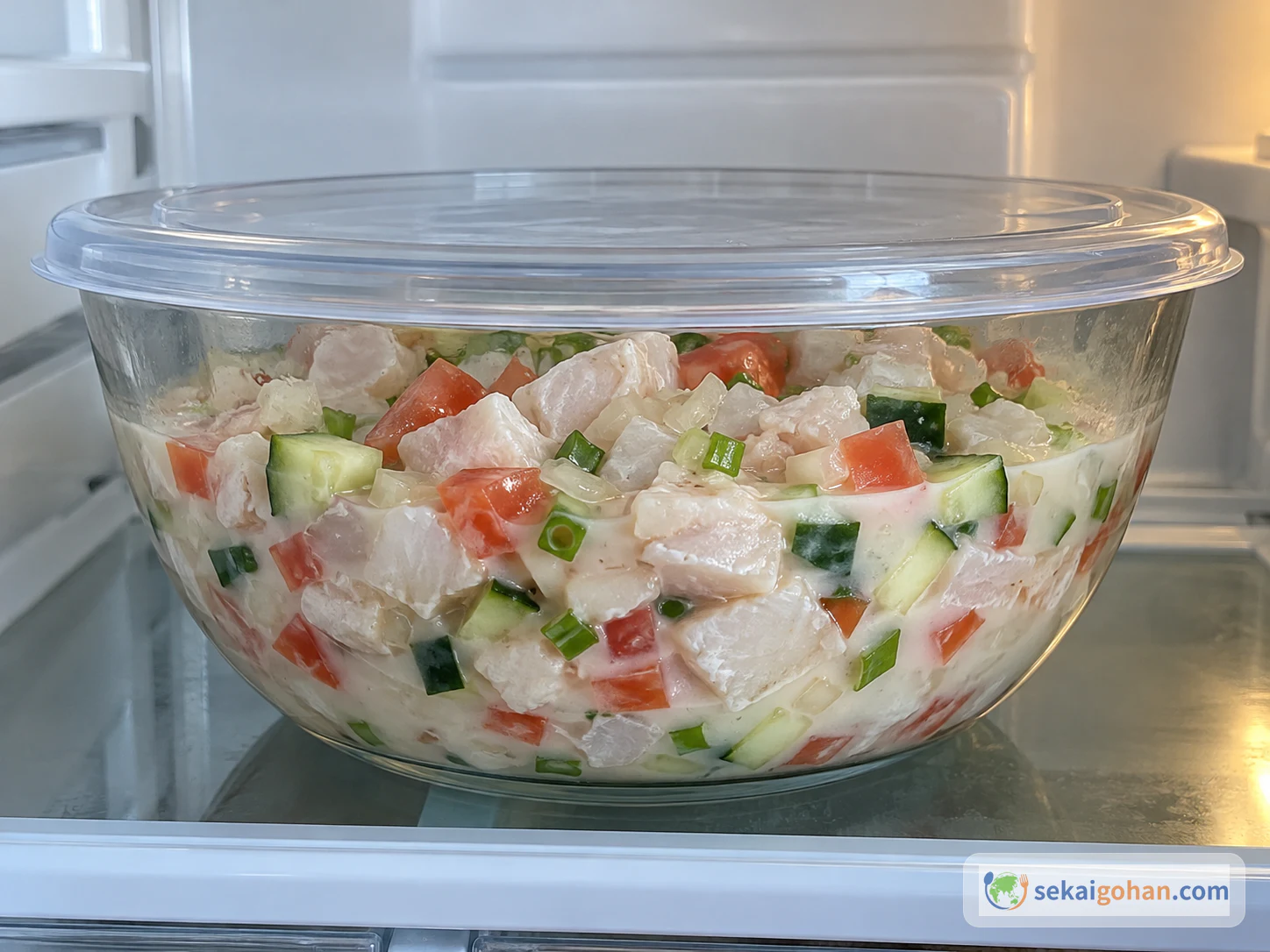
After 10 to 15 minutes in lime juice, the surface of each small cube of fish turns from glassy to an opaque, milky white. Once the juice is drained away, the fish meets tomato, cucumber and onion, then a pour of pale coconut milk that turns the bowl soft and creamy. Oka, also written oka i'a, is the raw fish dish of Samoa. It tastes cool and bright: lime at the front, coconut rounding it off, and the crunch of raw vegetables against firm, tender fish.
Fish, Coconut and a Shared Table
Samoa is surrounded by sea, and seafood and coconut run through its cooking. Oka is a dish you find on menus there, built on the same few things wherever it appears: raw fish, coconut, freshly squeezed lime, onion and tomato. Eating with extended family is one of the pleasures of Samoan food, and a big bowl of oka belongs to that kind of table, where everyone reaches in.
The vegetables are where households part ways. This version uses light coconut milk, cucumber and spring onion alongside the tomato and onion. Another uses snapper with cucumber, tomato, red onion and celery, leaves the fish in citrus until it turns white, then chills it, with the vegetables cut to an even size so the bowl looks neat. Coconut can be rich coconut cream or a lighter coconut milk. No single mix is the one correct oka; what every bowl shares is firm fish, sharp citrus and coconut, with fresh, crisp vegetables through it.
You will see the dish written both as oka and oka i'a. Both refer to the same bowl of raw fish with citrus and coconut.
Ingredients (serves 5)
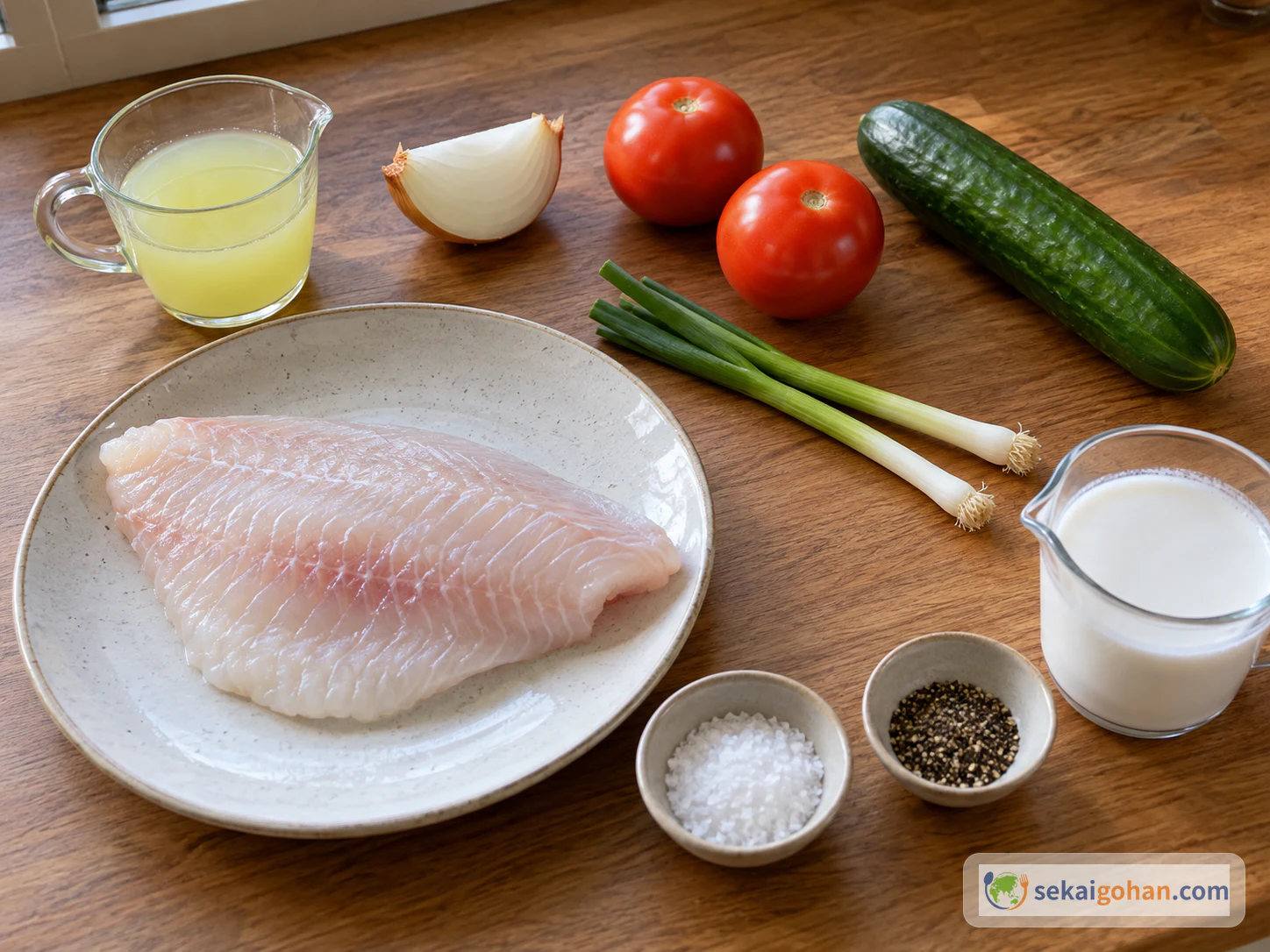
This dish contains fish and coconut. Check the labels of canned coconut milk for other allergens and shared-facility statements.
Equipment
- Sharp knife and cutting board (keep the board for raw fish separate from the vegetables, or wash it well in between)
- Clean, shallow, acid-resistant dish, such as glass
- Fine stainless-steel sieve and a bowl to drain into
- Large mixing bowl
- Cover or lid for chilling
- Measuring cups
Buying the Fish and Choosing Swaps
The fish decides everything here, so buy it first and buy it carefully. Firm white fish such as snapper, flathead or kingfish is what this dish is built on; red sea bream sold for eating raw gives the same kind of firm, clean cubes and is what this version uses. At the fish counter, ask whether the fish is sold for raw eating, how it has been handled, and how to keep it cold on the way home. Choose fish kept refrigerated or on a thick bed of ice, with a mild smell and firm flesh, and follow the seller's handling, temperature and date labels.
Keep the fish cold from the shop to the bowl. Wash your hands and every tool that touches the raw fish, and keep the fish and its juices away from other food. Look, smell, species, farming and a raw-eating label do not on their own make fish safe to eat raw. Do not eat the innards raw, and look over the flesh and remove any parasites you can see. Lime turning the fish white is not cooking: acid does not sterilize fish, and vinegar, salt, soy sauce and wasabi do not kill anisakis worms. People who are pregnant, young children, older adults and anyone with a weakened immune system should avoid raw or undercooked seafood and choose a fully cooked fish dish instead.
The rest of the list is forgiving. Lemon juice works in place of lime and gives a slightly softer, rounder sourness. If you cannot find Lebanese cucumber, an ordinary cucumber works, though it carries more water and a different crunch, so dice it small. Look for cans labeled light coconut milk; coconut cream is thicker and richer and makes a heavier, sweeter bowl.
| Keep | Can change |
|---|---|
| Firm fish, cut small and even | Snapper, flathead, kingfish or red sea bream |
| Fresh citrus, then drained | Lime or lemon |
| Coconut folded in at the end | Light coconut milk here; coconut cream for a richer bowl |
| Raw, crisp vegetables | Lebanese or ordinary cucumber; other households add red onion and celery |
Method
The work is short and cold. Cut the fish, let it sit in lime in the fridge, drain it, then cut the vegetables while the drained fish stays chilled. After the coconut milk goes in, the bowl needs a full hour in the fridge, which is the longest wait.
Mixing it just before the meal skips the chill that makes oka cool and settled. The hour in the fridge is part of the dish, though it is a cooling step and not a safety step.
When It Goes Wrong
| What you see | Why | What to do |
|---|---|---|
| Some cubes white, others still glassy | Uneven cubes, or juice not reaching every face | Cut to an even ⅜ inch (1 cm) and turn the cubes once while they marinate |
| Thin, sharp, watery dressing | Lime juice not drained | Drain in a sieve before the vegetables go in |
| Bowl turns watery after chilling | Ordinary cucumber with more water | Dice the cucumber small; Lebanese cucumber holds less water |
| Flat, dull flavor | Not enough salt | Add salt a pinch at a time after the coconut milk and taste again |
| Heavy, overly rich bowl | Coconut cream used in place of light coconut milk | Use light coconut milk for the lighter balance |
Serving and Variations
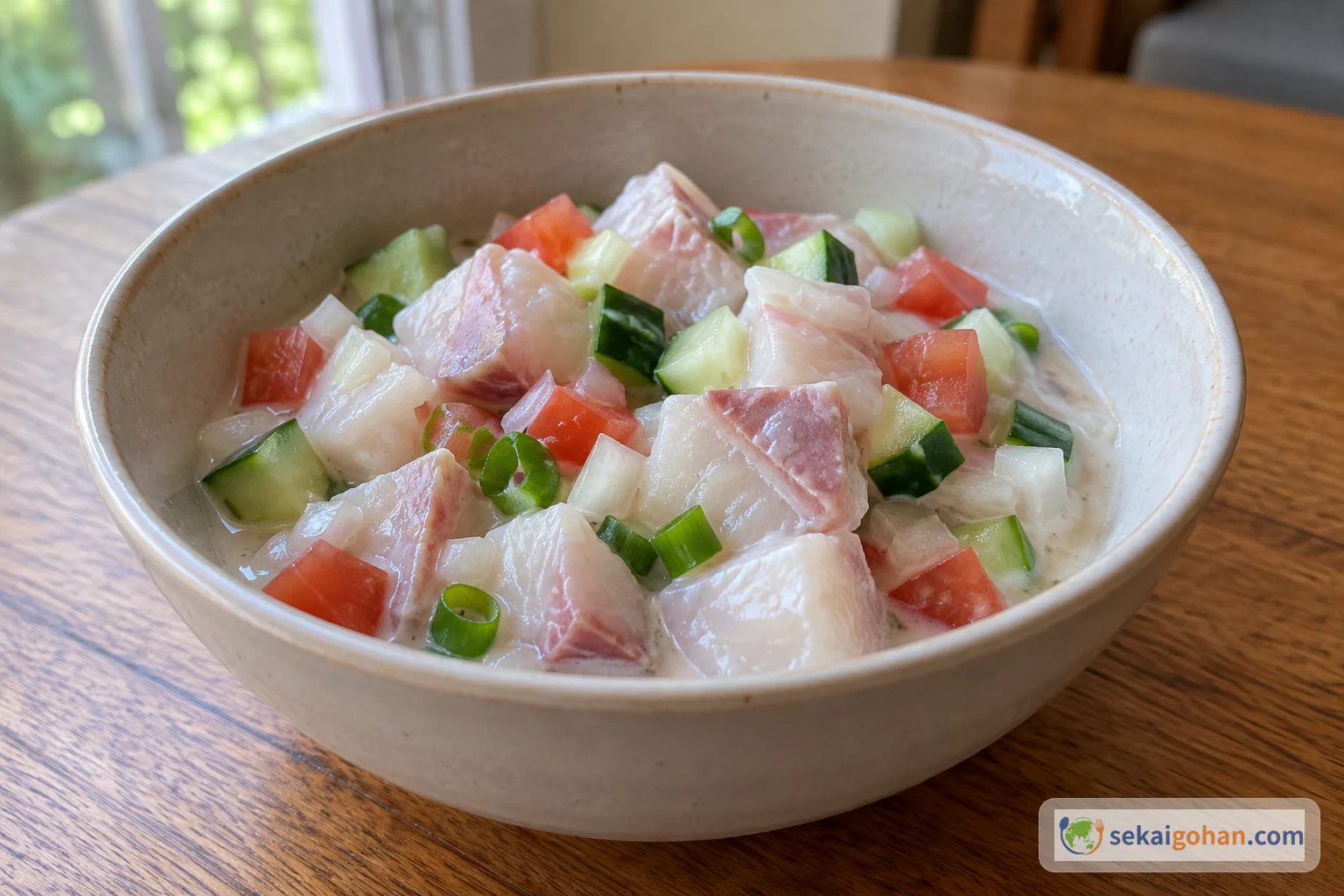
Oka goes to the table cold, in a shared bowl or small individual bowls, at the kind of family meal where a lot of food sits in the middle and everyone helps themselves. Bring it out of the fridge at the moment you serve, and eat it promptly.
Variations
- Lemon instead of lime. The sourness turns softer and rounder; everything else stays the same.
- Chilli. One optional chilli can be added; this version leaves it out.
- Red onion and celery. Another household mix uses red onion and celery with the cucumber and tomato. The bowl gets sharper and crunchier.
- Coconut cream. Richer and thicker, closer to how oka is often described on Samoan menus, and heavier on the palate.
Frequently Asked Questions
Can I use frozen fish?
Yes, if it is sold for eating raw. Thaw it in the fridge and never thaw fish you will eat raw in the microwave. Freezing does not remove every harmful microbe, so buy, store and handle frozen fish with the same care as fresh, following the label.
Can I make oka the day before?
Make it on the day you eat it. Cut, marinate and mix, give it its hour in the fridge, and serve it straight from the fridge.
How small should the vegetables be?
Small dice, close to the size of the fish cubes, with the spring onions thinly sliced. Even pieces mean every spoonful carries fish, crunch and dressing together.
Do I have to use Lebanese cucumber?
An ordinary cucumber works. It brings more water and a slightly different crunch, so dice it small and drain the fish well, which keeps the dressing from going thin.