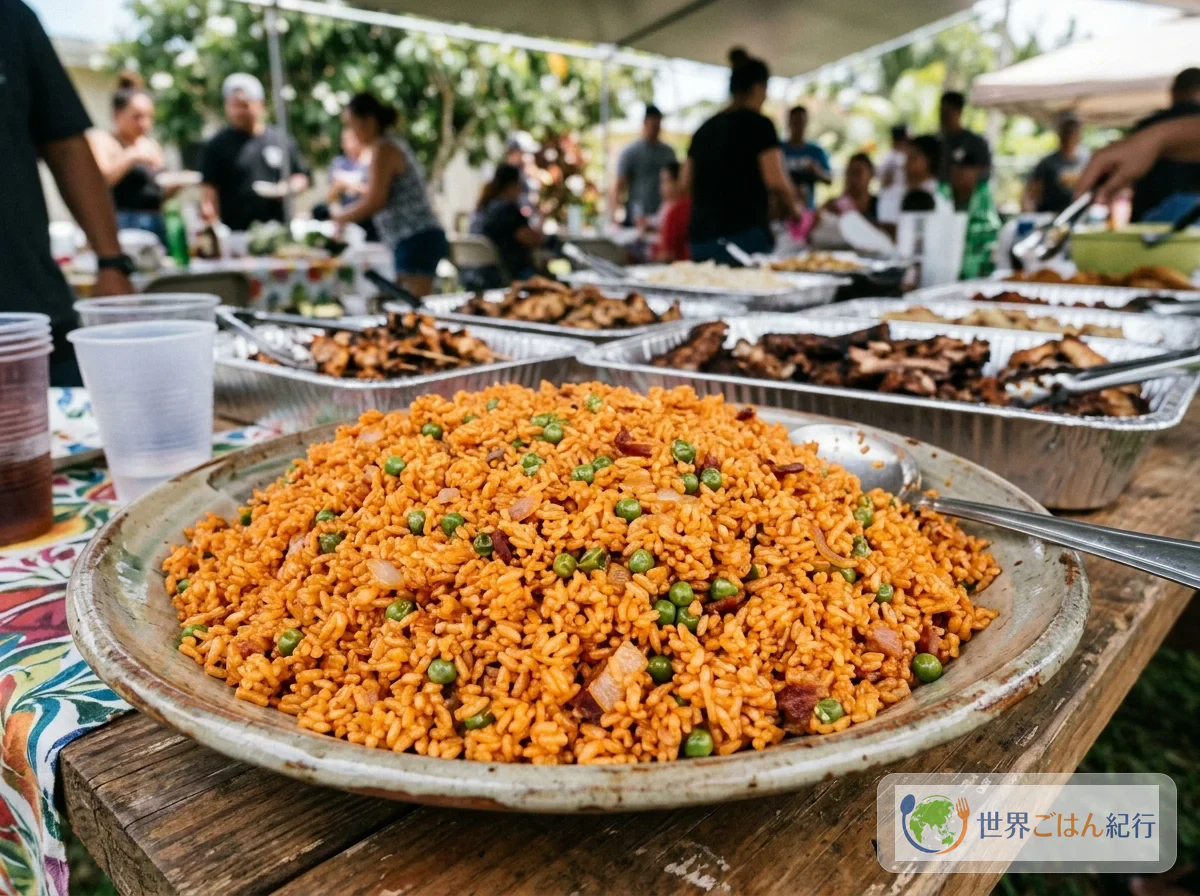
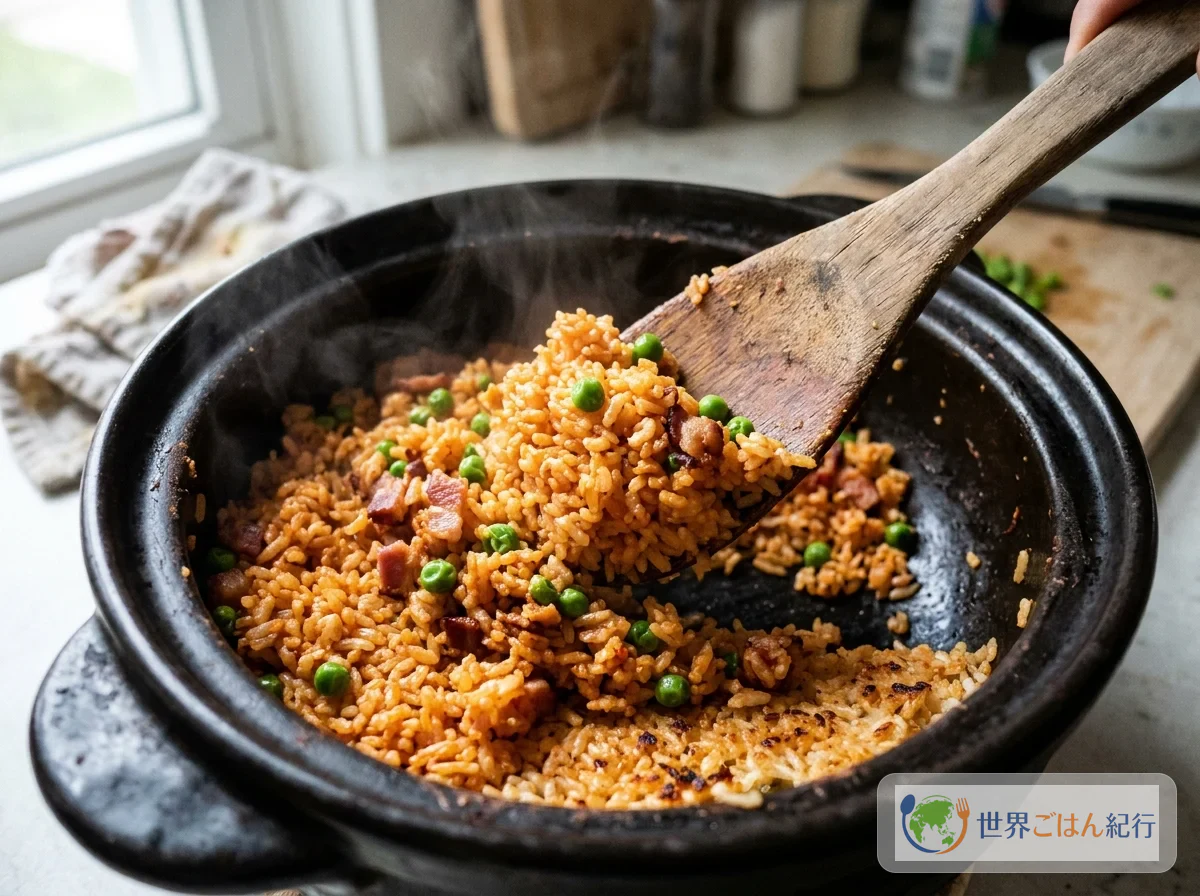
Aluminum trays line up one after another on the long tables of a village hall. Freshly grilled barbecue chicken and spare ribs, fried chicken, bananas simmered in coconut milk. At the very end of the table, in the first position, goes a bright orange rice. This is hineksa' aga'ga', red rice, which the Chamorro people, who have lived on Guam since ancient times, never leave out of a festival or a big family gathering. In Chamorro, hineksa' means "cooked rice" and aga'ga' means "red."
The fiesta table begins with red rice
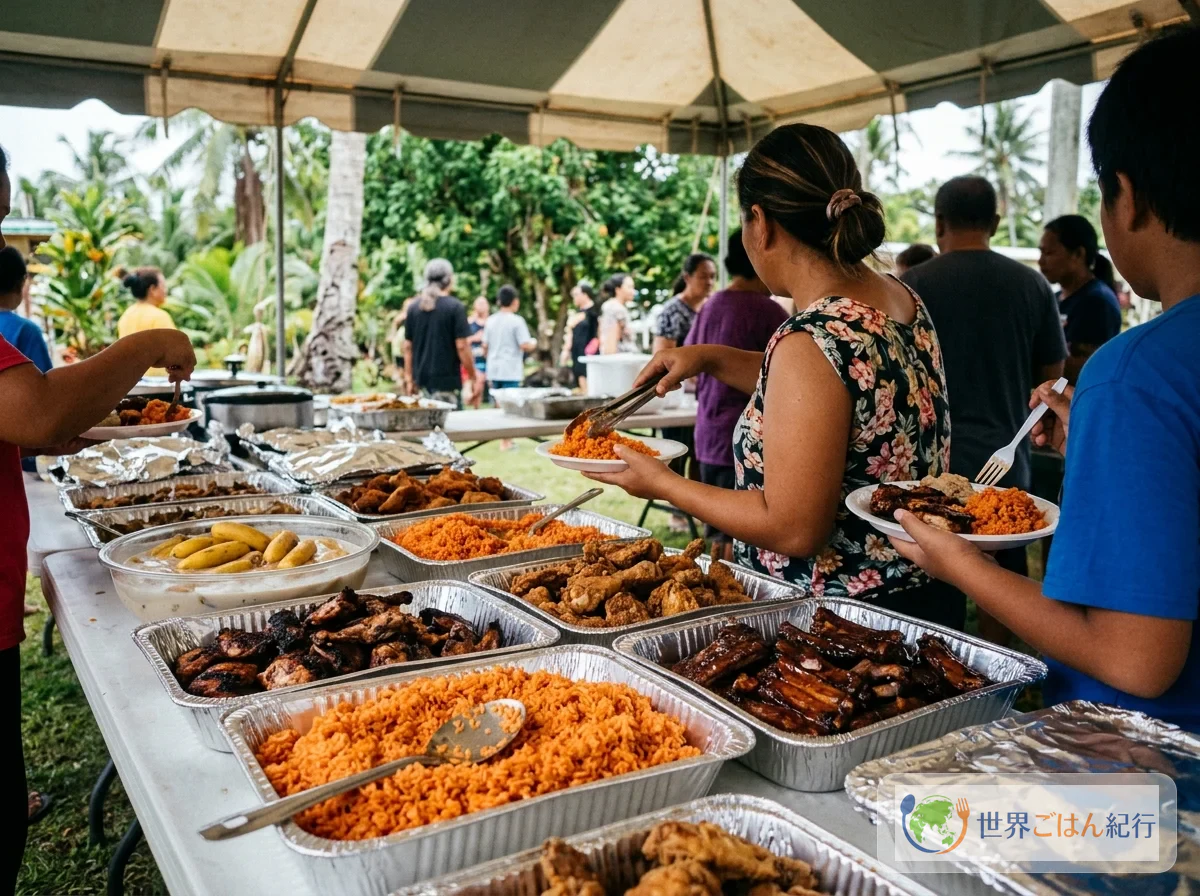
On Guam, fiestas, Catholic festivals celebrating each village's patron saint, are held all year round. Relatives and neighbors gather and sit around dishes the whole family has prepared. According to Guampedia, the encyclopedia of Guam, at the fiesta table red rice is always placed first, at the head of the table, followed by starchy dishes such as titiyas, which resemble tortillas, breadfruit, taro, and bananas cooked in coconut milk. It is a dish indispensable to a big gathering.
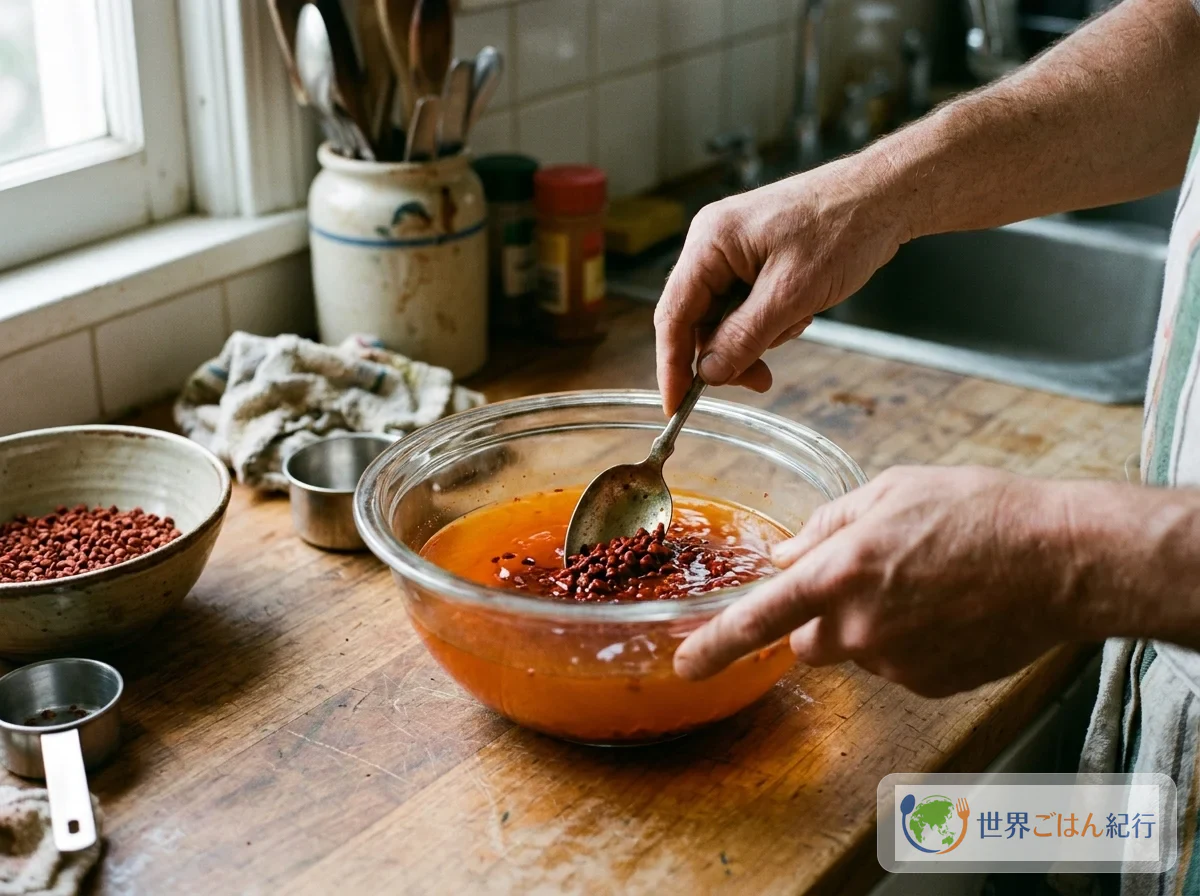
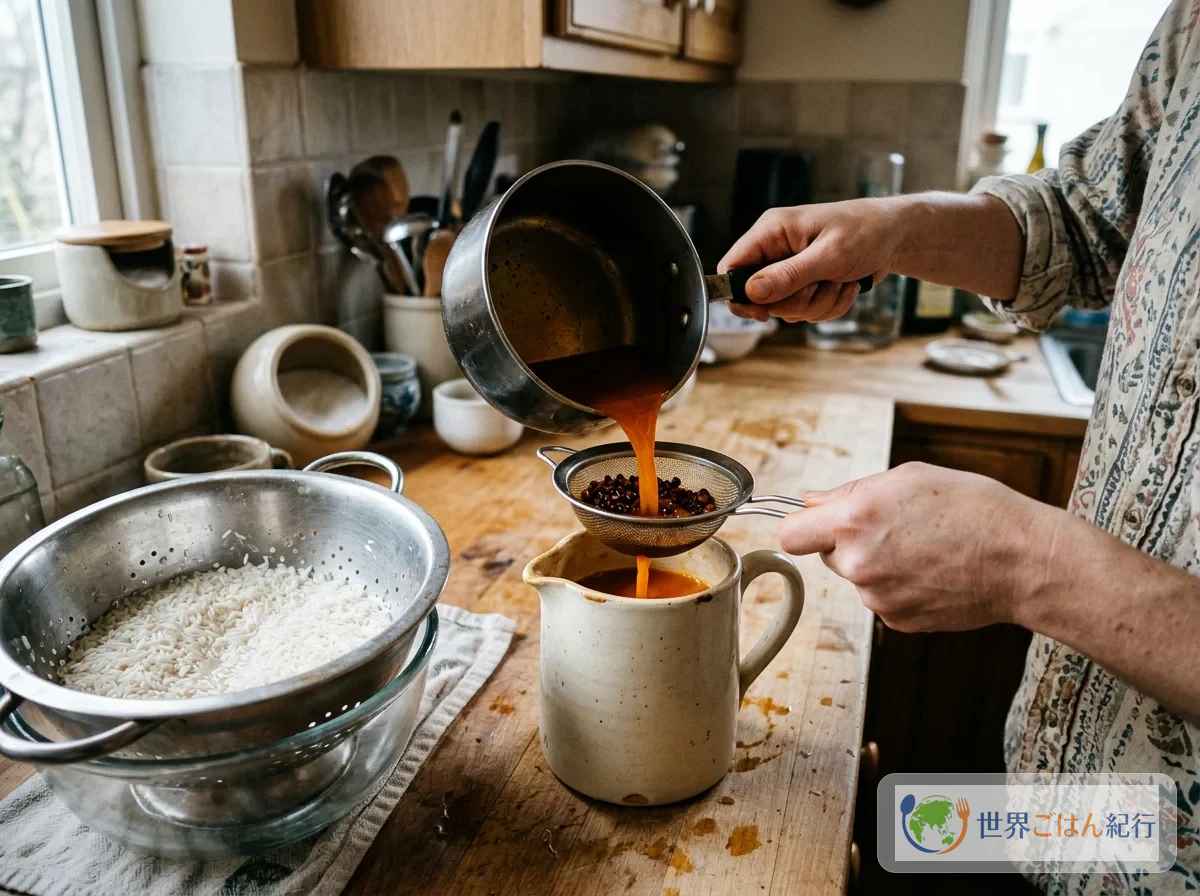
What dyes the rice red is the seed of a plant called achote (annatto). It was brought to the Mariana Islands in the Spanish colonial period, probably from Mexico. Soak the red seeds in water and rub them, and the water turns deep orange. Cook rice in that colored water, and you get a red rice with a faintly nutty aroma.
The history of rice in the Marianas is old. On Guam, pottery sherds bearing the imprint of rice grains have been found, one of which has been dated to 1325 to 1491. In old Chamorro society, rice was a ceremonial food for special days, and at weddings the two families are said to have exchanged gifts of rice.
Today, almost all the rice eaten on Guam and the Northern Mariana Islands is imported. Even so, red rice is thoroughly rooted in daily life and is served quite ordinarily even in restaurants that are not Chamorro. According to Guampedia, you can choose red rice as a side at the island's Kentucky Fried Chicken, too.
What to know when making it in a home kitchen
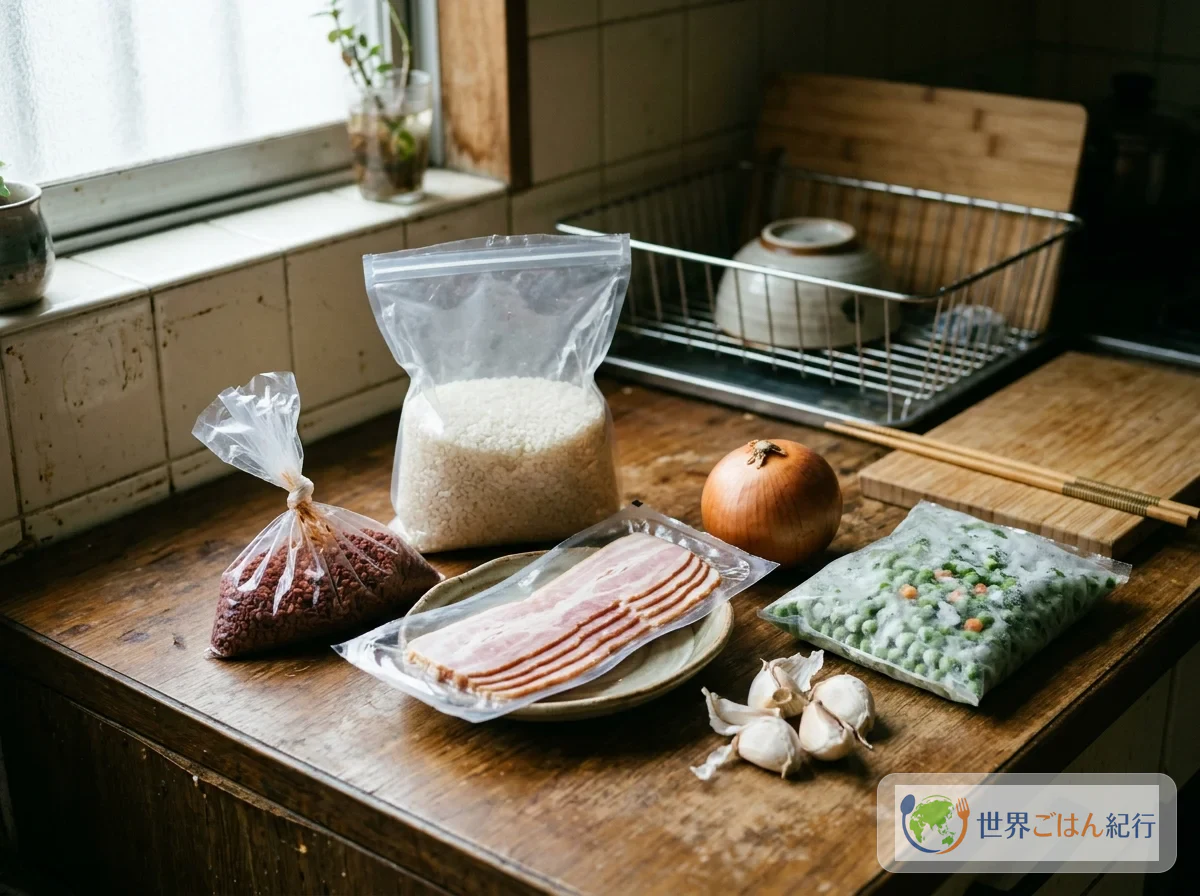
The rice used for red rice on Guam is mainly short- or medium-grain. A sticky short-grain rice is just what suits this dish. The only thing you need to find is annatto seeds. They are sold as "annatto seeds" or "achiote" at Latin American food stores and online. There is also powdered annatto, which makes the colored water just by dissolving it in water.
The amount of annatto varies quite a lot from home to home. The recipe by Martha Mendiola on Guampedia is generous, 1 cup of seeds to 4 cups of rice, while the recipe by Sean Naputi, chef of the San Francisco Chamorro restaurant Prubechu, is light, 4 teaspoons of seeds to 4 cups of rice. This article takes the middle, 2 tablespoons for 3 rice-cooker cups (540 ml) of rice. If the color seems pale, use more seeds next time.
The longer you soak the annatto seeds and the more thoroughly you rub them with your fingers or a spoon, the deeper the color. Naputi of Prubechu writes that he uses seeds soaked overnight and stirred well the next morning. On a day short of time, soaking in lukewarm water for 30 minutes and rubbing firmly for about 5 minutes gives enough color.
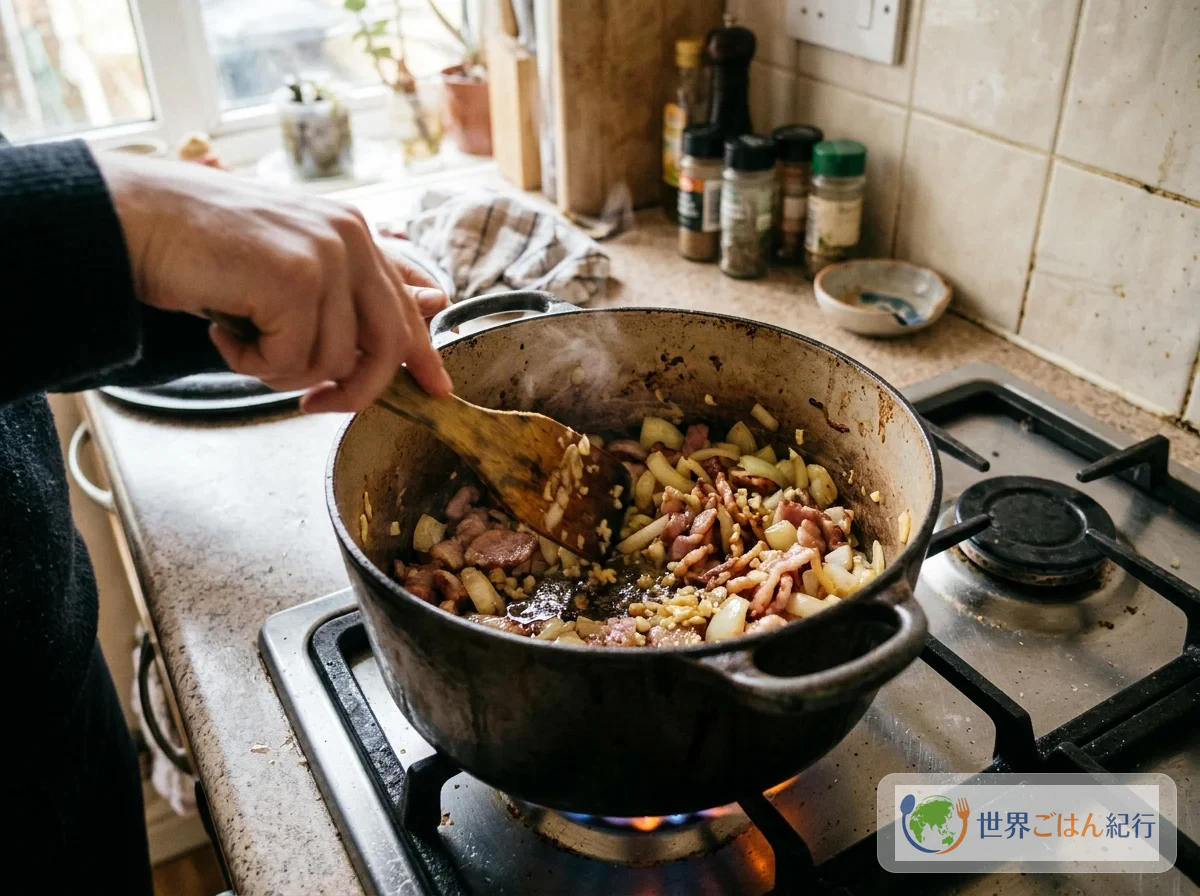
The bacon and green peas are optional. Guampedia's recipe also gives them as "to taste." Still, frying onion in bacon fat adds savory depth and richness to the rice.
Ingredients (serves 6)
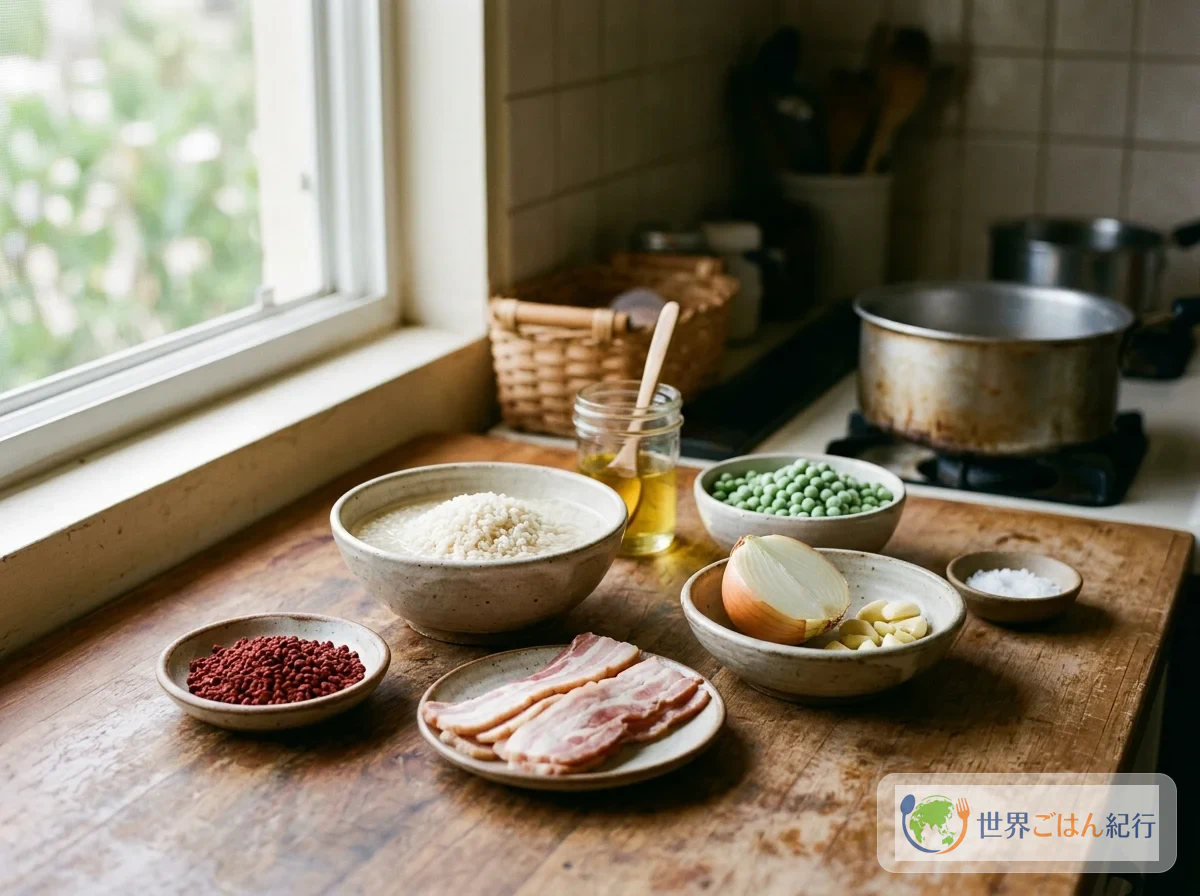
The annatto colored water stains cloth and wooden cutting boards and is hard to remove, so wear an apron and wipe up spills at once. Cooked rice left at room temperature for a long time can grow the bacteria that cause food poisoning. Even when serving on a large platter as at a fiesta, refrigerate it early once people have finished eating.
How to make hineksa' aga'ga'
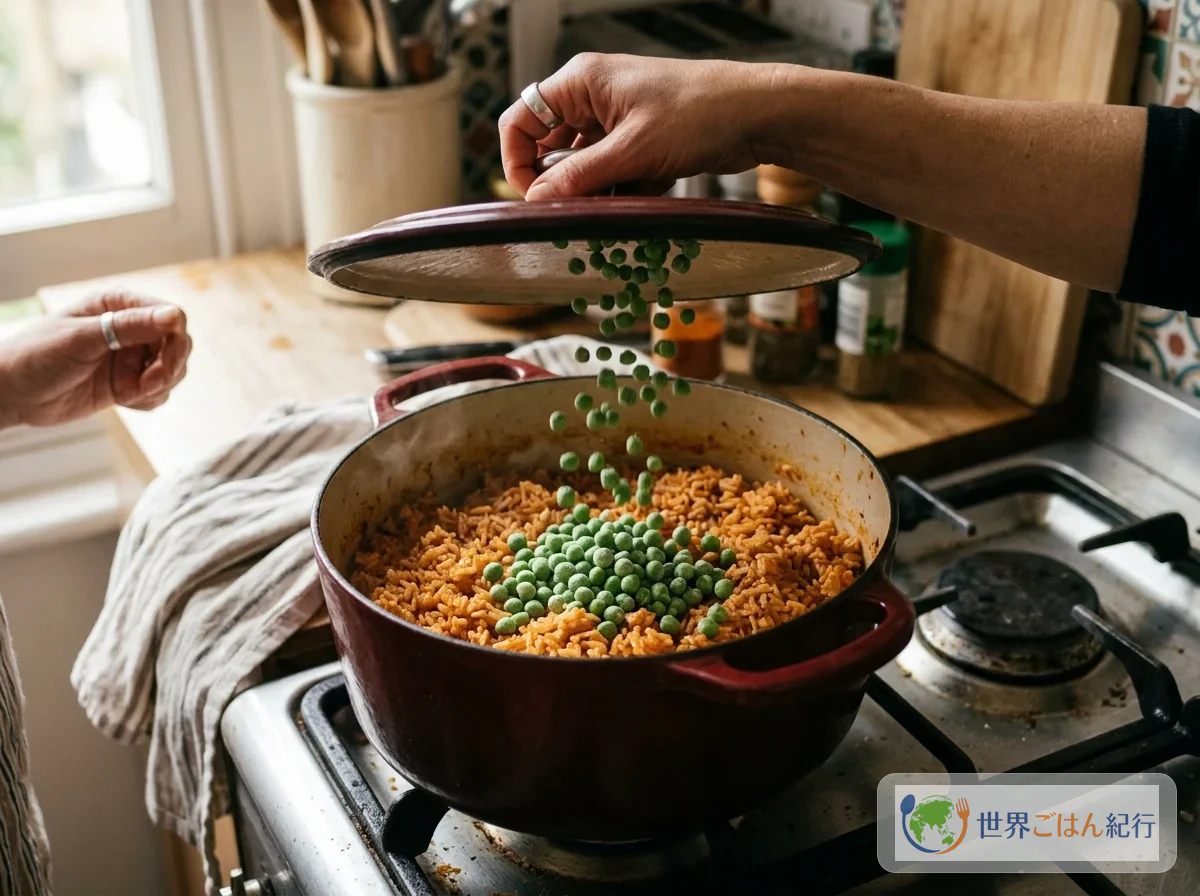
Including the time to make the annatto water, the whole thing takes about 1 hour 15 minutes. If you make the colored water the night before, it cooks in 30 minutes on the day.
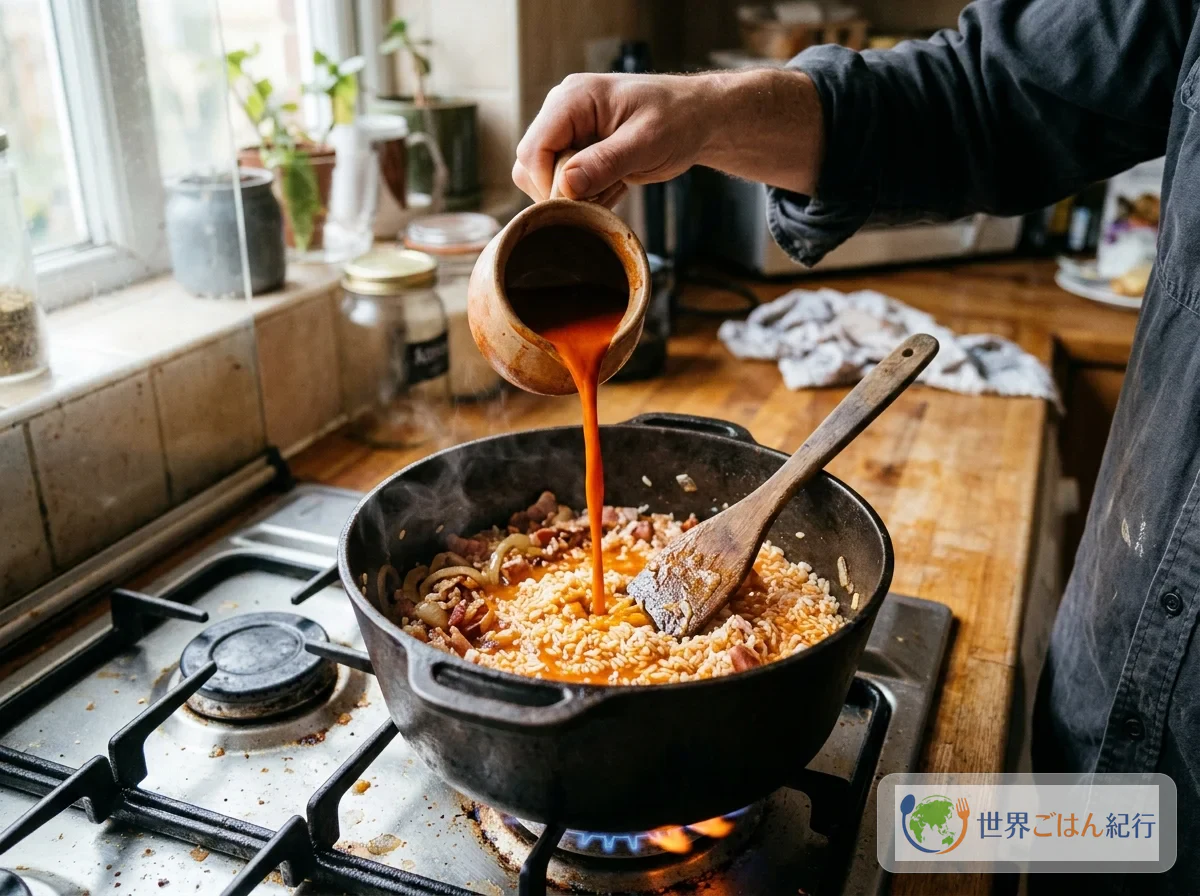
If cooking in a rice cooker, put the bacon and onion cooked in step 3 and the washed rice in the inner pot, pour in the annatto colored water to just above the 3-cup line, and cook as usual. If there is colored water left over, you can discard it. Mix in the peas after cooking, and keep it on warm for about 5 minutes to heat them.
When cooking in a pot, the rule is not to lift the lid even once after lowering the heat. Opening it partway lets steam escape and leaves rice with a hard core. If you smell something scorching, turn off the heat at once and steam for 10 minutes.
On a big platter, with barbecue
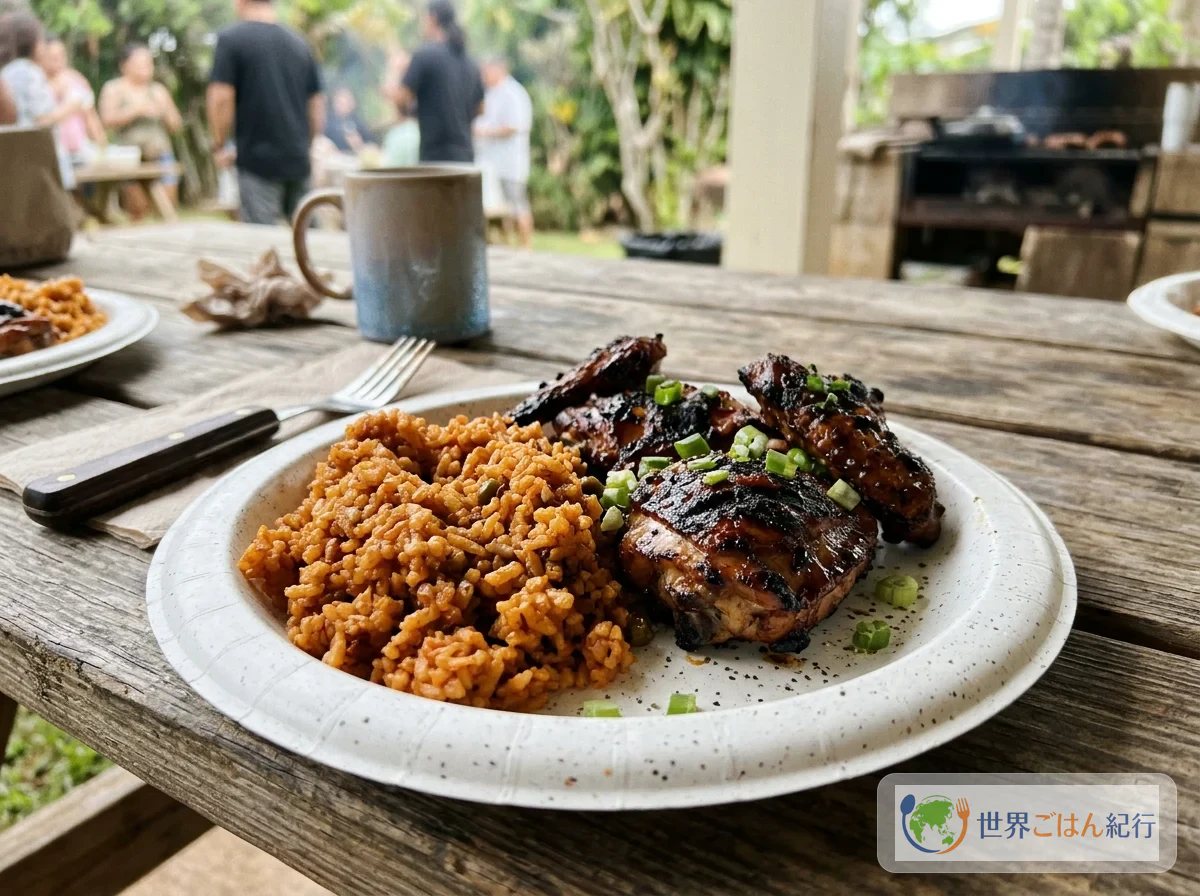
Red rice is less a rice that stars on its own than a rice you can eat endlessly beside meat. On Guam it is heaped on a paper plate with barbecued chicken or spare ribs, fried chicken, and sometimes Spam. The aroma of annatto is mild, so it does not get in the way of any side dish.
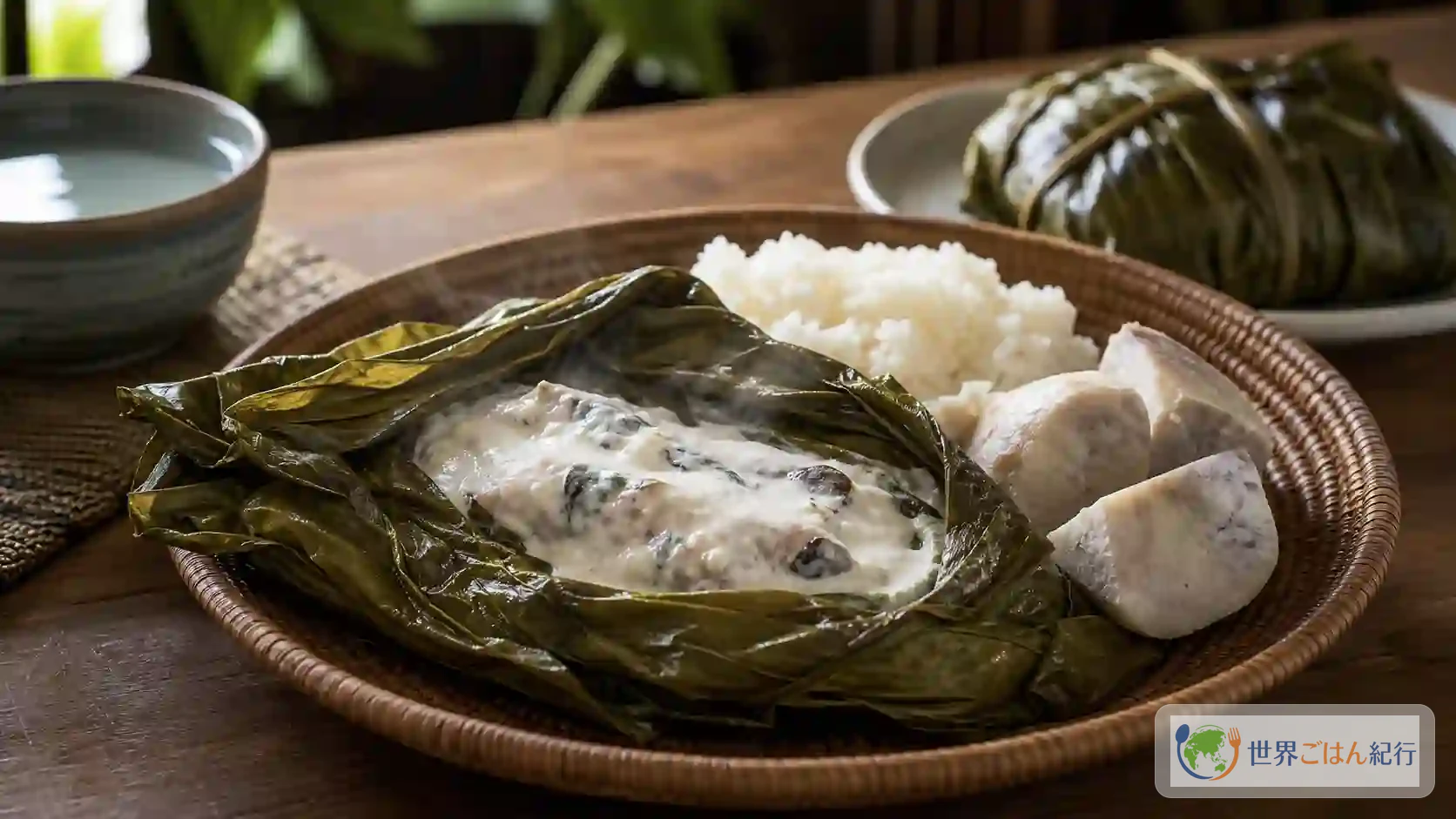
At home, serve it with teriyaki-style grilled chicken thighs or charcoal-grilled spare ribs, and you get the feel of an outdoor barbecue on Guam. When you want to line up festive dishes from the South Pacific, pairing it with Samoa's taro-leaf parcel palusami or Fiji's earth-oven dish lovo (in Japanese) also makes for a fun table.
A nutrition survey that looked into the food at a fiesta held in Sinajana, Guam, found that red rice was the dish of the greatest weight among all that was prepared. Considering the number of people who gather at a fiesta, it takes several pots to cook it.
Ways to enjoy variations
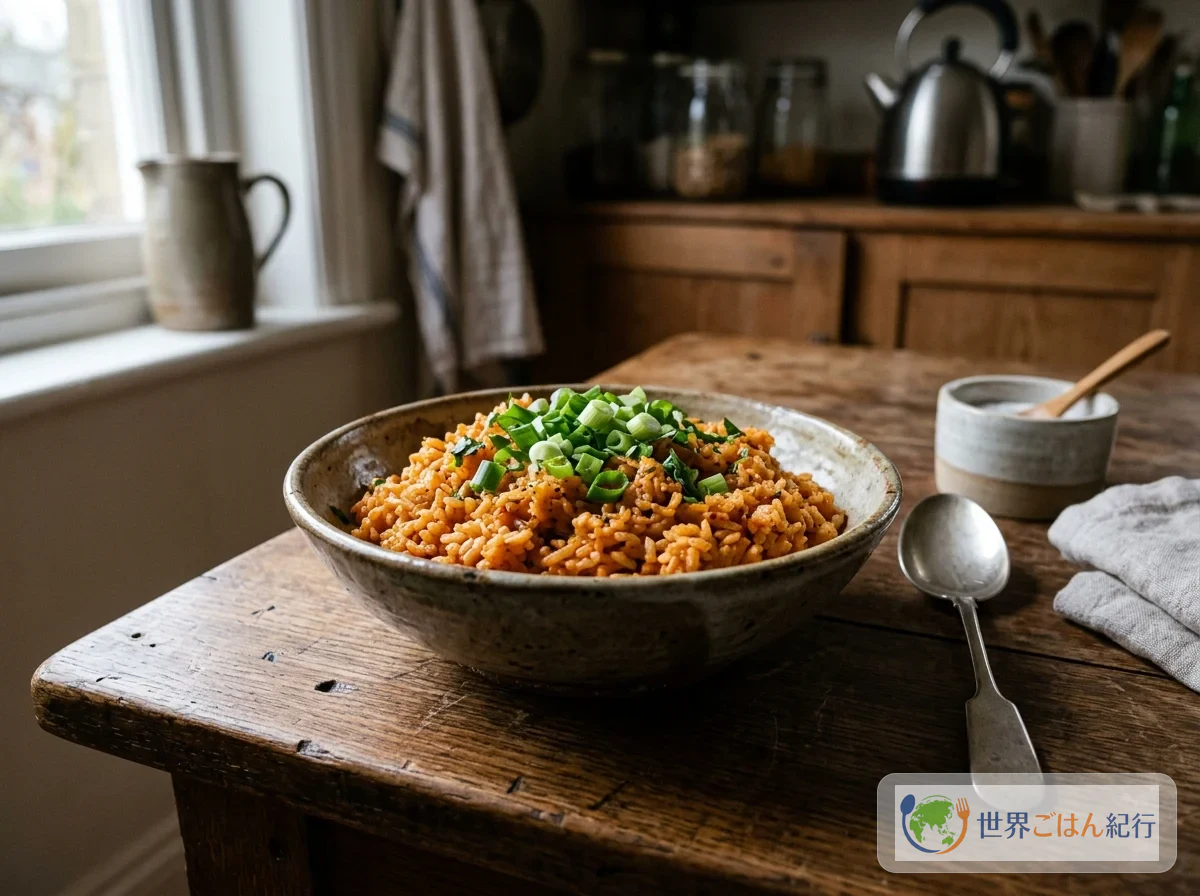
Replace part of the water in the colored water with chicken stock and you get a red rice with stronger savory depth. Guampedia also introduces methods using chicken stock or bouillon. In this case, halve the salt first and then taste. Scattering finely chopped scallions over it at the end also makes a pleasing color contrast.
Leave out the bacon, fry only the onion and garlic in oil and cook the rice, and you get a cleaner red rice. Naputi's recipe from Prubechu takes this form and recommends serving it with grilled chicken. If you like heat, some households cook a little chopped red chili into the rice.
Frequently asked questions
Is there a substitute for annatto seeds?
For color alone, paprika or turmeric can give a similar shade, but the aroma and flavor change and it becomes a different rice. If you can get annatto powder, dissolve 1 tsp in the colored water in place of the seeds.
Can you taste the annatto?
There is no strong flavor. Only a faint nutty aroma and a slight earthiness. The appeal of red rice lies above all in its color.
Can I make it ahead?
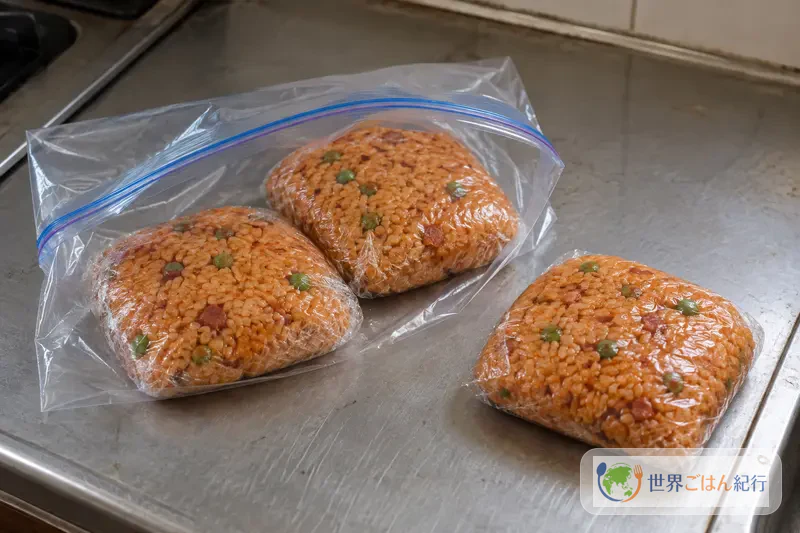
Once the heat is off, wrap single portions in plastic wrap and put them in a freezer bag, and it keeps about 2 to 3 weeks frozen. To eat, heat in a microwave until hot all the way through. In the refrigerator, finish it by the next day.
Can I make it with long-grain rice?
Yes. On Guam too it is made with short-, medium- and long-grain rice alike. Long-grain rice absorbs water differently, so adjust the amount of annatto colored water to the water amount stated on the bag.
Sources
- Guampedia, Michael Lujan Bevacqua, “Hineksa’ Aga’ga’: Red Rice.” Recipe: Martha VC Mendiola. Accessed and checked 22 October 2026. https://www.guampedia.com/hineksa-agaga-red-rice/
- 7x7, “Prubechu’s Red Rice.” Accessed and checked 22 October 2026. https://www.7x7.com/prubechus-red-rice-recipe-2436196352.html
- Wikipedia, “Chamorro red rice.” Accessed and checked 22 October 2026. https://en.wikipedia.org/wiki/Chamorro_red_rice