
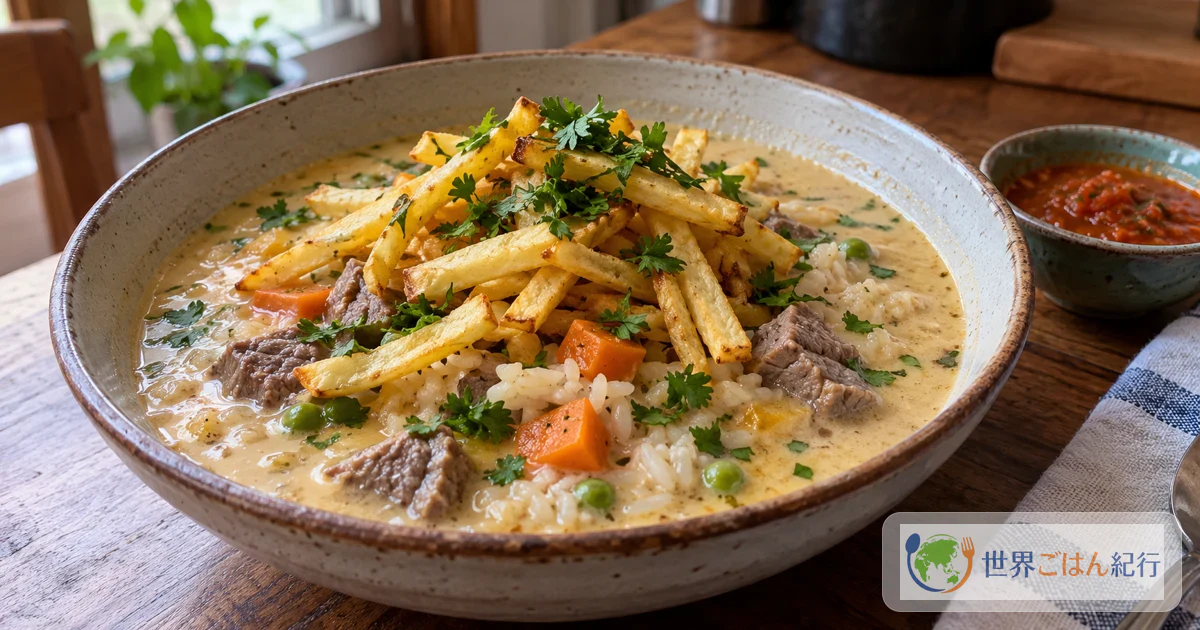
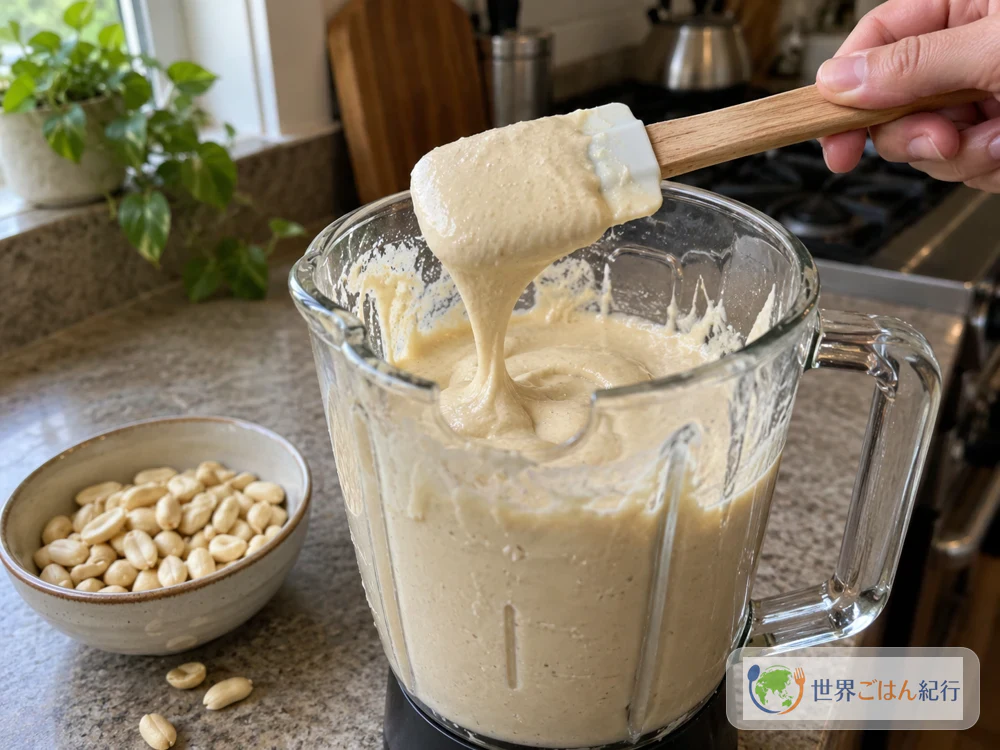
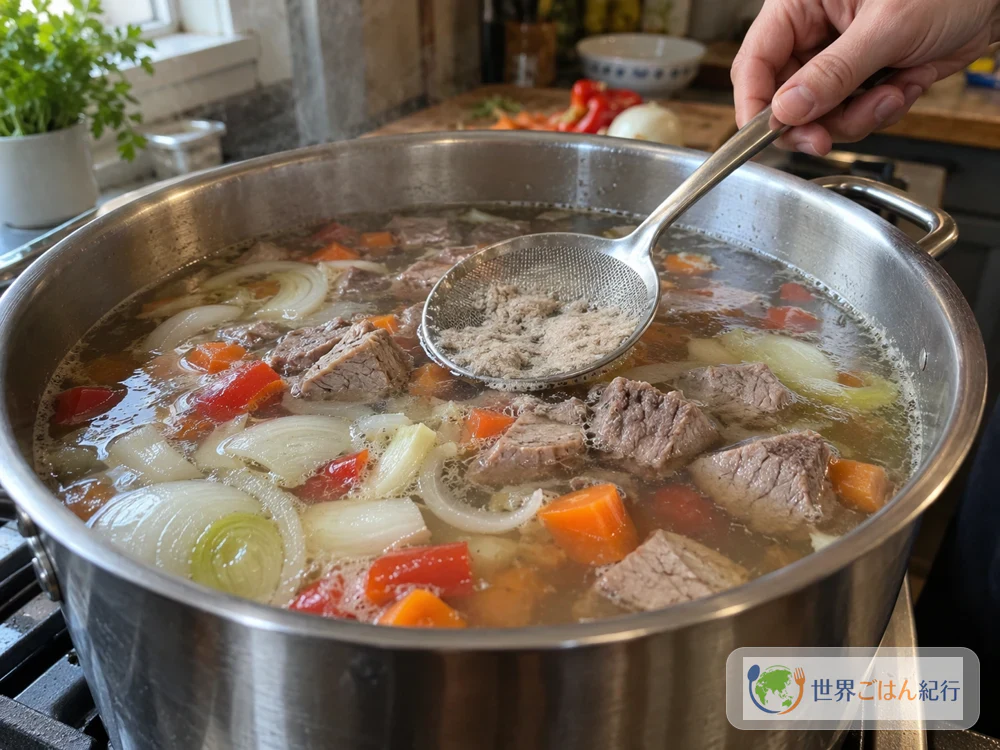
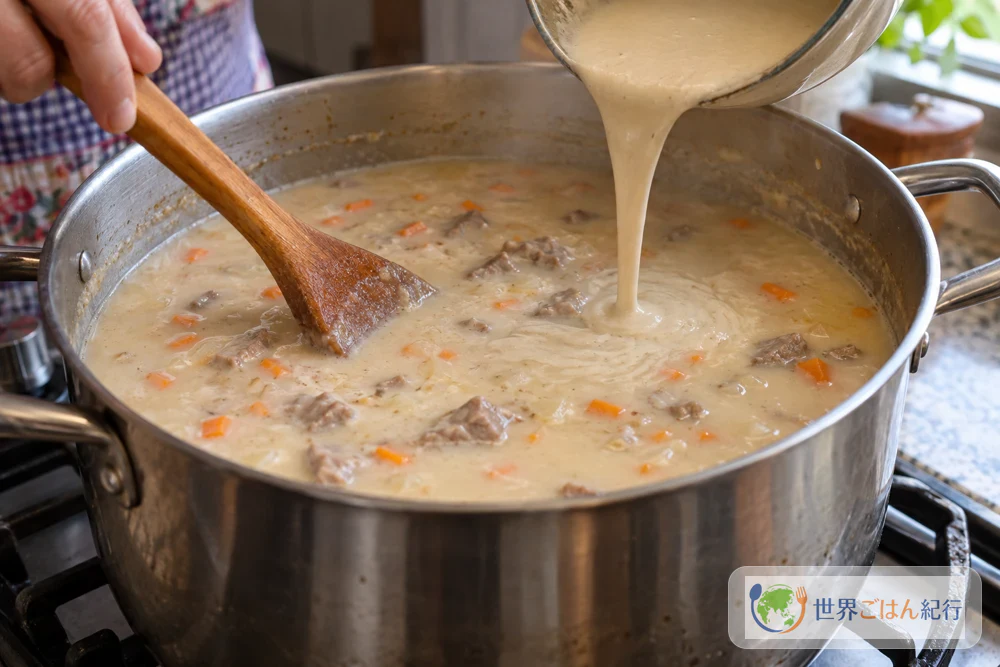
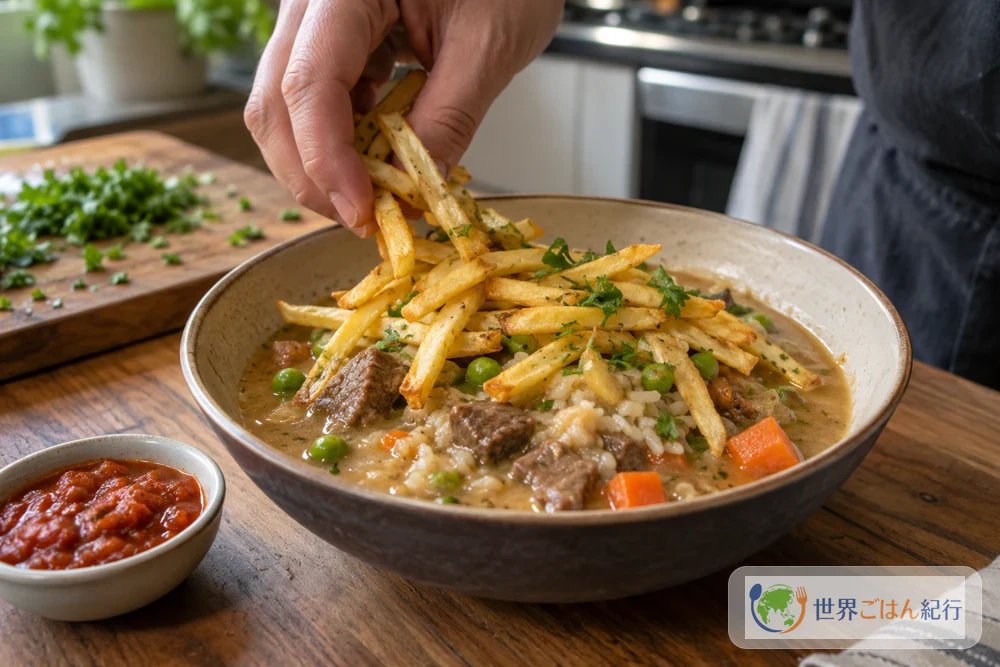
The surface of the pot slowly turns a pale beige, like milk tea. A soup made by grinding raw peanuts and simmering them layers the sweet scent of nuts over beef broth, and the steam alone makes you hungry. Pour it into a bowl, pile freshly fried potatoes on top, and scatter chopped parsley. In Bolivia, this sopa de maní is often served as the first dish of Sunday lunch. In Spanish, "maní" means peanut. It looks humble, but you can make the real thing from raw peanuts with tools in an ordinary kitchen.
Bolivian Sunday Lunch Starts with Peanut Soup
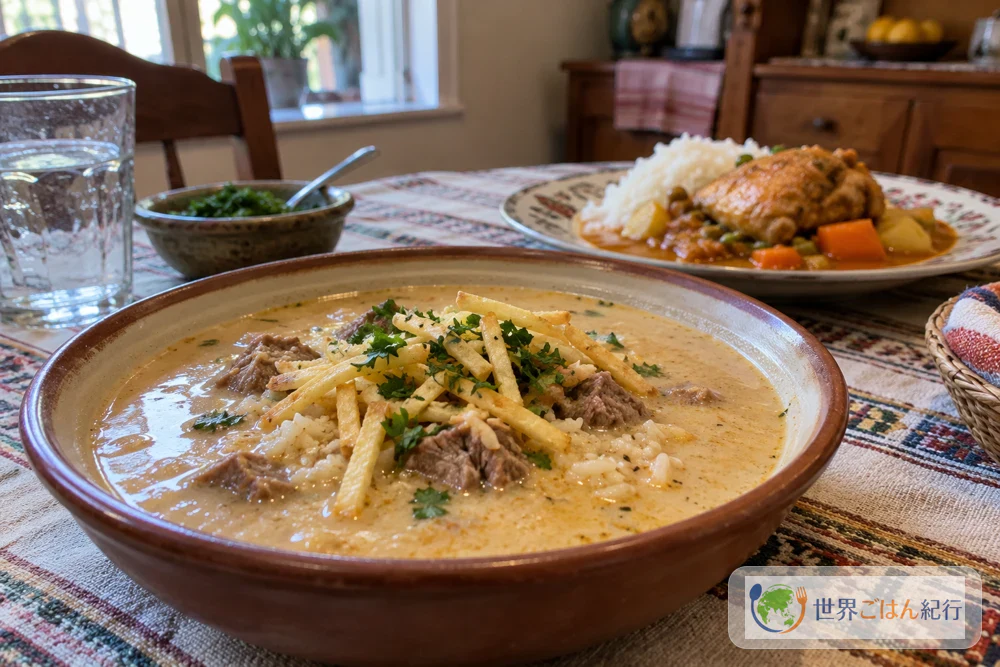
Sopa de maní is a soup often served as the first course of Sunday lunch. It is described as something you taste first, with the second course following. In an article in the Bolivian newspaper Los Tiempos about set lunches at eateries in Cochabamba, it is named alongside picante de pollo (a spicy chicken stew) as a signature soup included in many set meals. Whether at home or in an eatery, it is a very familiar bowl for Bolivians.
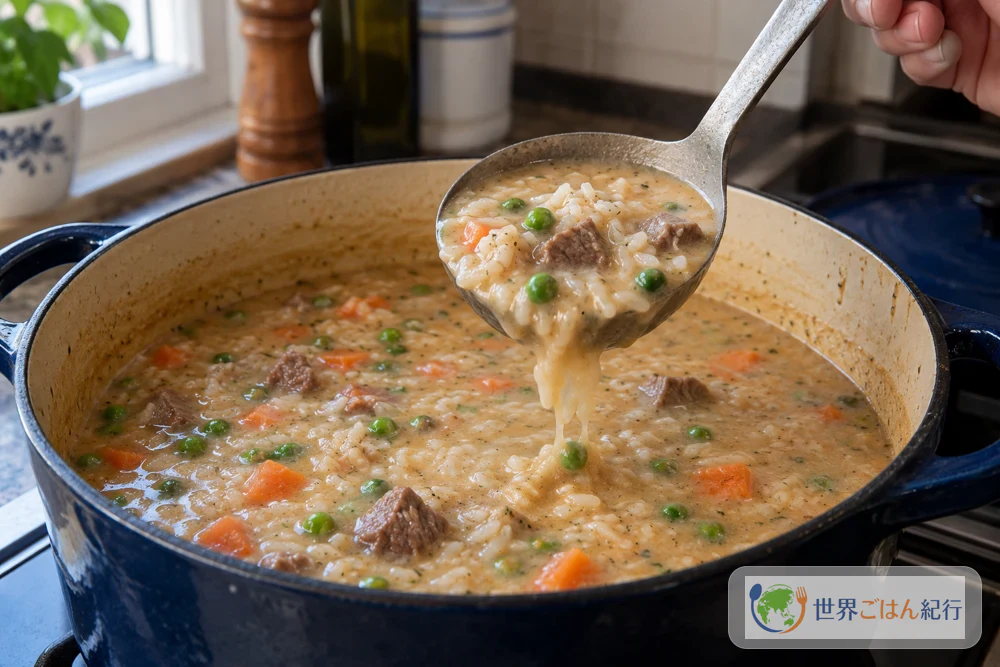
The soup contains ground peanuts, beef, potatoes, vegetables such as carrot and onion, and rice or macaroni. The mark of the dish is a layer of fried potatoes laid on top of the soup. Potatoes that soak up the thick soup turn moist over time, while the parts floating on the surface stay crisp. The texture changing within one bowl is part of the pleasure.
On October 31, 2018, the Asociación Boliviana de Chefs announced a bill to make sopa de maní the country's national dish, a "plato bandera," and to make August 7 each year "Sopa de Maní Day." The dish was chosen by social-media vote, and the call was to eat this soup in hotels, eateries, markets and homes.
South America is the original home of the peanut. Bolivia is regarded as a center of the peanut's geographic origin, and the Chaco region of Bolivia is said to have especially large genetic diversity. Cook the local bean with local meat and tubers, and it can be called a soup that packs the whole table of this country into one bowl.
Macaroni or Rice: A Bowl That Changes by Place
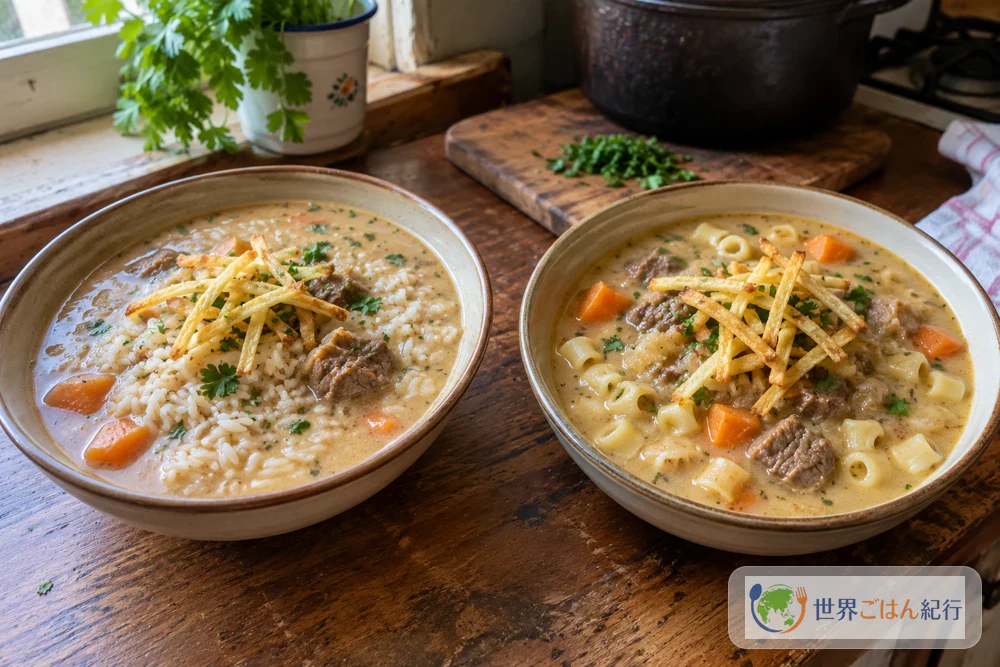
What goes into sopa de maní varies quite a lot by region. It is described as using macaroni in the western highlands and rice in the eastern lowlands, and in some areas adding green beans. The examples given by chef Emilio Garnica Villagomez in the Los Tiempos article are more specific: in La Paz a short macaroni called "manga de fraile" is used, and in the Chaco it is "only peanut, with nothing else in it."
Sucre's sopa de maní is known for being yellow. In Sucre, cabbage, chuño (freeze-dried potato) and chickpeas go in, and the color comes from a yellow spice called palillo. Some regions also add wheat. It is interesting that even the color changes within the country for a soup with the same name.
Each year Cochabamba holds the "Feria de los Picantes y la Sopa de Maní." The 10th edition on August 4, 2024 drew more than 20 vendors.
The history of this soup may be newer than you would think. Historian Beatriz Rossells points out that this recipe does not appear in records from before the 19th century. Some researchers think it was born from "cazuela de maní," a richer and more elaborate peanut stew.
The story of Che Guevara is also a famous legend about this soup. It is said that Guevara, captured in 1967, ate sopa de maní before his execution, but the details differ depending on who tells it. What is certain about how it became known abroad is the 2014 TV show "MasterChef Argentina." Elba Rodríguez, whose parents are Bolivian, won with this soup, and the name sopa de maní became widely known.
Ingredients (serves 6)
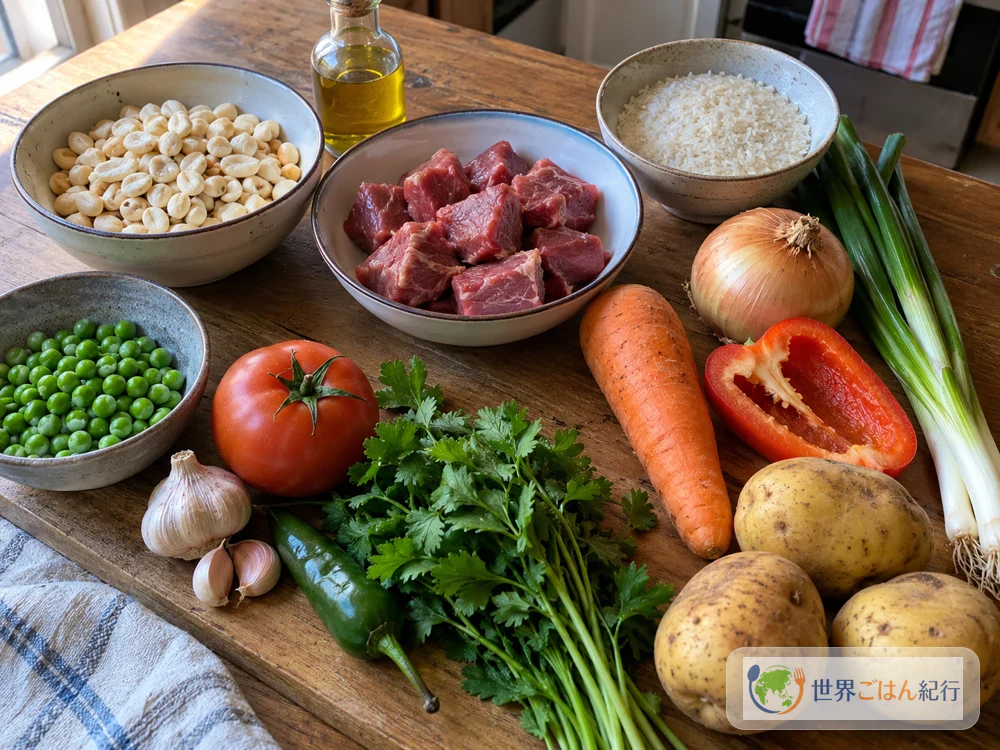
The amounts are a home-cook formulation based on a recipe from the Bolivian community published by the City of Buenos Aires. With plenty of beef and rice, it is less a soup than a meal that fills you up in one bowl.
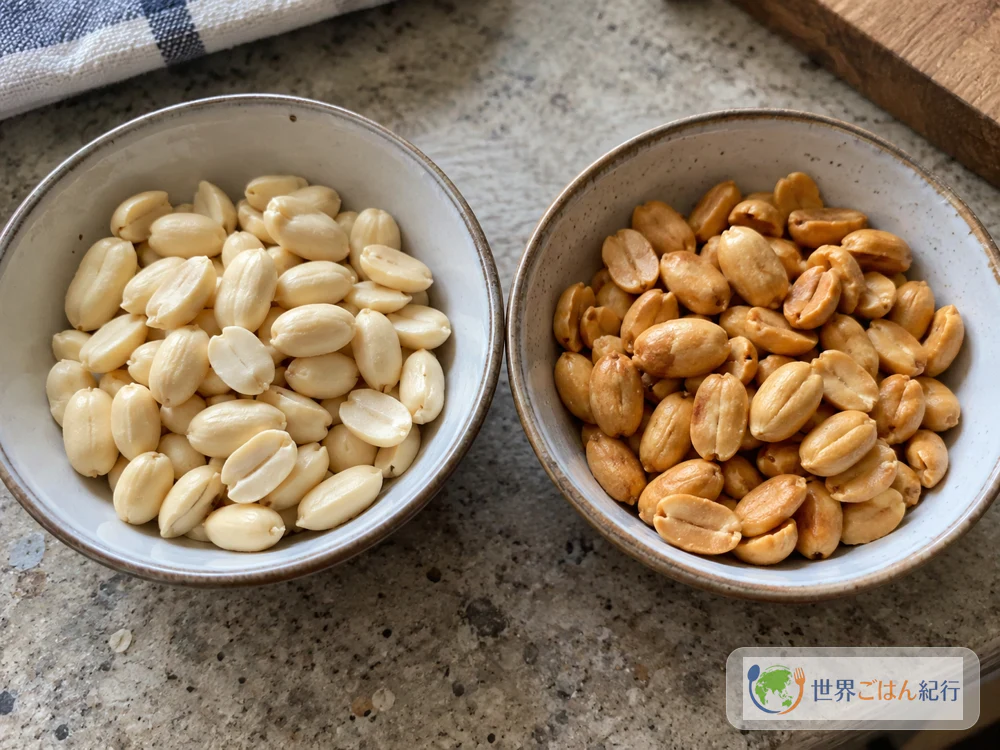
Raw peanuts are often sold in the shell or with the skin on, and skinless raw peanuts can be found at baking-supply shops or online. Using skin-on peanuts makes the soup color a little duller, so choose skinless if you can. If you use roasted peanuts, use unsalted ones.
Peanuts can cause severe allergic reactions. Do not serve this to anyone with a peanut allergy. If you share a blender or pot, wash them well after use.
How to Make Sopa de Maní
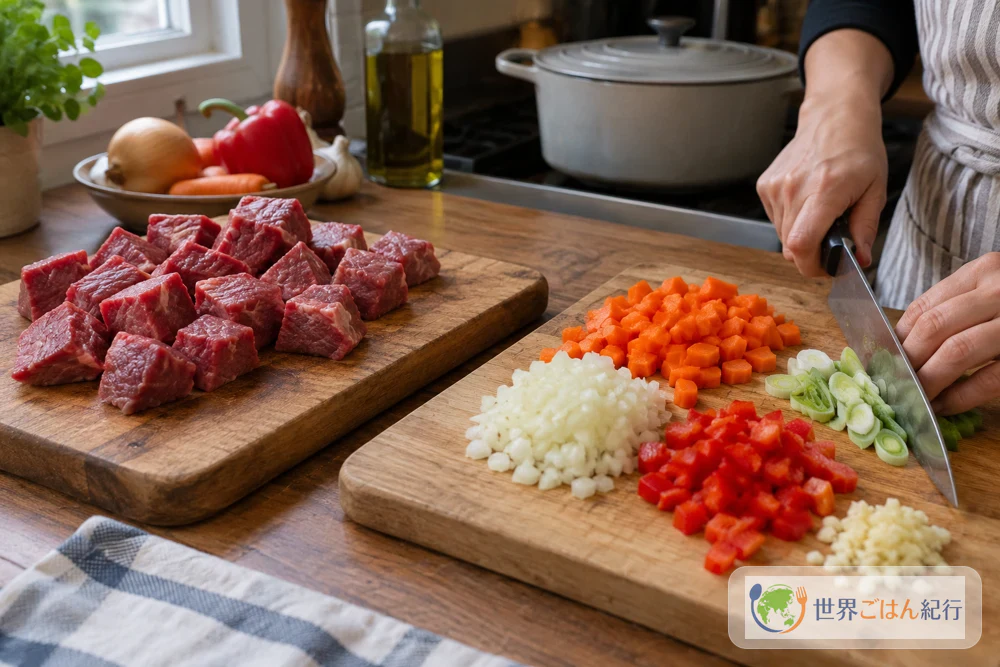
Plan about 30 minutes of prep, about 70 minutes of simmering, and about 20 minutes for the sauce and potatoes. If you fry the potatoes while the soup simmers, the whole thing takes about 2 hours.
When frying the potatoes, wipe off all moisture before they go into the oil. Leftover water makes the oil splatter. About 3 cm of frying oil in the pot is enough, and it is important not to leave the stove.
Tips to Prevent Scorching and Separation
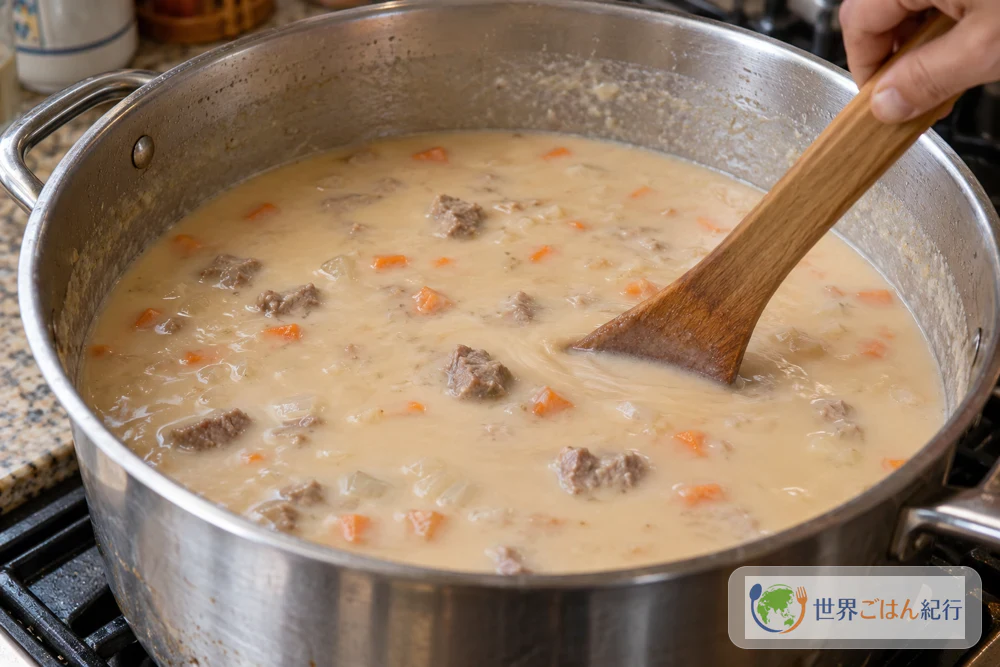
The most common failure with sopa de maní is scorching on the bottom of the pot. Peanut paste contains starch and fat, and the thicker it gets, the more it sinks and traps heat. Use a heavy pot and do not raise the heat above medium-low. When stirring, rather than swirling the surface, the trick is to keep the spatula against the bottom and sweep it from edge to edge.
If you smell even a little burning, do not scrape the bottom; move the unburnt upper part to another pot. Stirring in the burnt film spreads bitterness through the whole soup.
If the paste is coarse, oil can float up as it simmers and look like separation. If that bothers you, run the blender one minute longer when making the paste. Oil that floats during simmering blends back into the soup if stirred well.
When you reheat the next day, the rice absorbs liquid and gets quite firm. Add hot water a little at a time and loosen over low heat while stirring. Put the fried potatoes on the reheated soup just before eating to keep their texture.
With Chicken, With Macaroni: How to Adapt
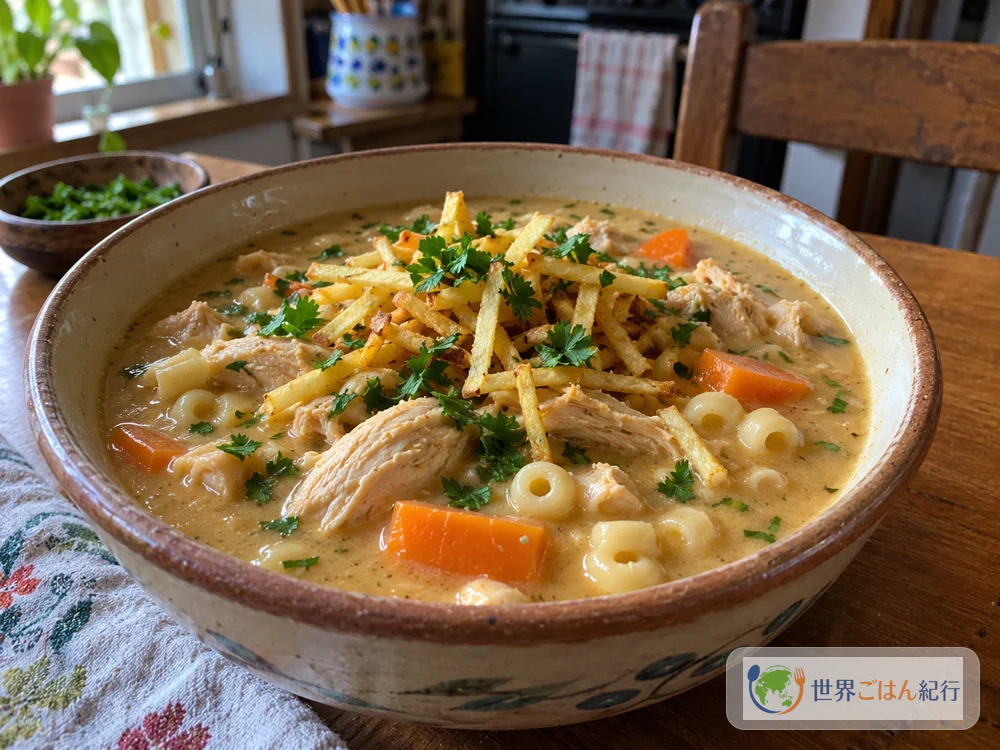
The meat need not be beef. A recipe on the American site Together Women Rise, based on Rommy Holman's book The Bolivian Cookbook, says it is traditionally made with beef ribs or chicken. If you use chicken thighs, bone-in pieces give better broth. The same recipe also has a step of crushing garlic, cumin and black pepper into the soup before finishing, and sprinkling a pinch of oregano at the end. Adding that aroma when making it with beef gives a slightly earthy fragrance.
Swapping the rice for macaroni gives a western-highlands style. Add short macaroni at the same time as the rice and cook by the time on the package. For a Chaco style, peanut-only soup, omit the meat, make it with vegetable bouillon, and make up the substance with fried potatoes. The same recipe says it also suits vegetarians.
With ingredients you can find in a typical kitchen, adding napa cabbage or cabbage besides the leek moves it toward Sucre's cabbage version. Adding canned chickpeas gives a pleasantly fluffy texture.
How to Eat It
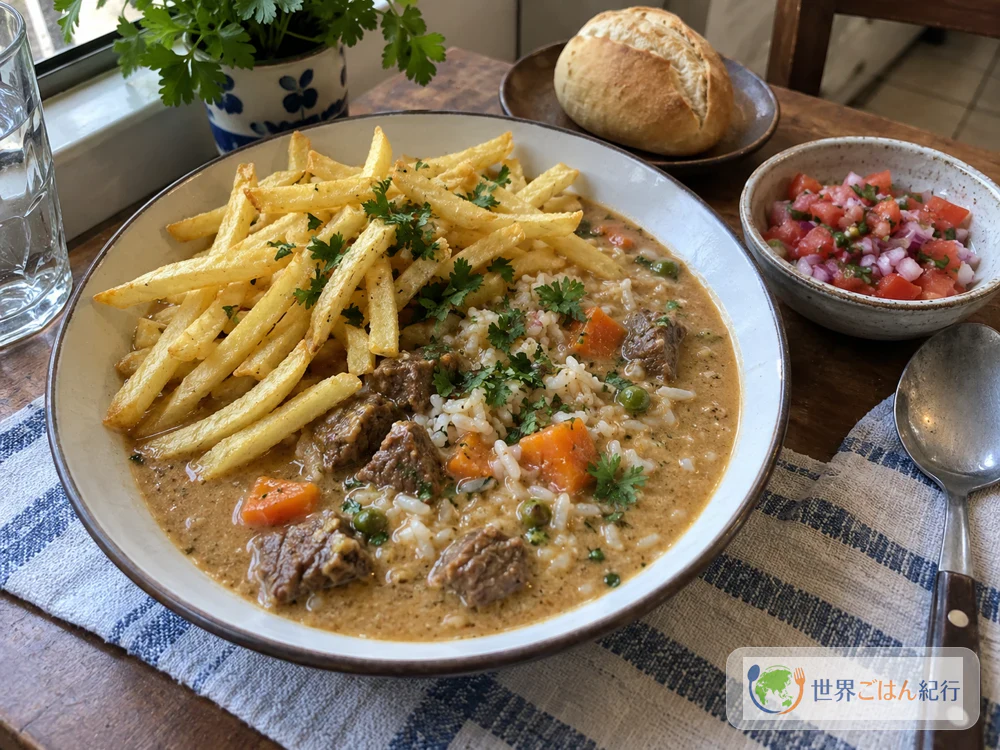
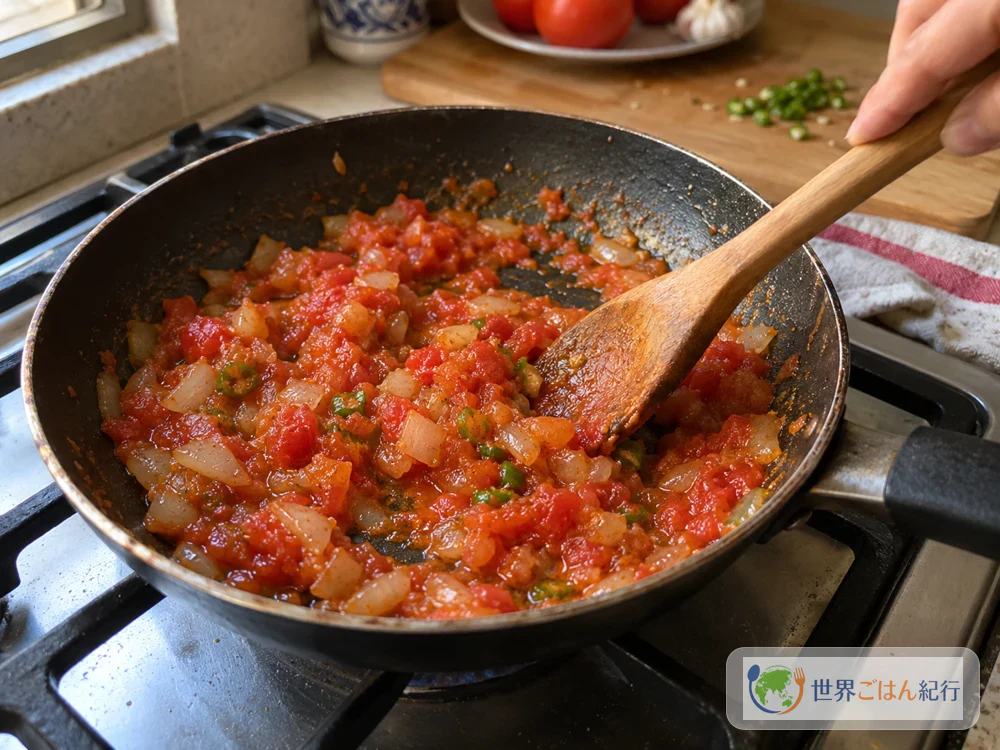
At the table, take one bite as it is first. Taste the gentle sweetness of the peanuts and the beef broth, then drop in the spicy sauce a little at a time. In Bolivia it is customary to serve llajua, a spicy salsa made with a thick-fleshed chili called locoto. The onion and tomato sauce here follows the Buenos Aires recipe. Bread goes well with it too.
Following a Bolivian menu, the proper flow is to follow this with a meat dish. Making silpancho (in Japanese), the thin breaded Bolivian beef cutlet, your second course gives a combination that feels like Sunday lunch. If you want to learn more about dishes that use peanuts in stews, compare it with the Malian peanut stew mafé. Even with the same bean, the direction of flavor is completely different on another continent.
Frequently Asked Questions
Can I use peanut butter instead?
I do not recommend it. Commercial peanut butter often has sugar, salt and oil added, so both flavor and thickness differ from a paste ground from raw peanuts. If you cannot find raw peanuts, blending the same amount of unsalted roasted peanuts gets you closer.
How long should the raw peanuts be cooked?
In this recipe, you simmer for 50 minutes after adding the paste and about 20 more minutes after adding the rice, about 70 minutes in total. The Together Women Rise recipe also says raw peanuts need to be cooked for at least an hour. Do not cut it short; simmer it for the time.
Can I make it in a pressure cooker?
Softening the beef shank first in a pressure cooker is a good idea, but once the peanut paste and rice are in, it is safer to simmer in an ordinary pot while stirring. A thick soup tends to scorch on the bottom inside a pressure cooker.
Can I make it not spicy?
The soup itself has no chili, so it is not spicy. You adjust the heat only with the separate sauce. If you are eating with children, set aside the sauce only for the adults.
Can I make it ahead?
Soup with rice in it gets firm as the rice absorbs liquid over time. If you make it ahead, cool and refrigerate it before the rice goes in, and on the day you eat it, reheat it and then cook the rice. I cannot give a clear storage period, so eat it soon.
Sources
- Buenos Aires Ciudad, “Sopa de maní boliviana,” Recetas de las colectividades. Accessed and checked: October 22, 2026. https://buenosaires.gob.ar/gcaba_historico/recetas-de-las-colectividades/sopa-de-mani-boliviana
- Together Women Rise, “Bolivian Peanut Soup (Sopa de Maní), Tested,” adapted from Rommy Holman, The Bolivian Cookbook. Accessed and checked: October 22, 2026. https://togetherwomenrise.org/recipes/bolivian-peanut-soup-sopa-de-mani-tested/
- Catherine Camacho, “Prepare este menú y celebre las fiestas patrias,” Los Tiempos, published August 3, 2019. Accessed and checked: October 22, 2026. https://www.lostiempos.com/tendencias/cocina/20190803/prepare-este-menu-celebre-fiestas-patrias
- Los Tiempos, “Invitan a la ‘Feria de los Picantes y la Sopa de Maní’,” published August 1, 2024. Accessed and checked: October 22, 2026. https://www.lostiempos.com/actualidad/cochabamba/20240801/invitan-feria-picantes-sopa-mani
- OnCuba News (EFE feed), “La última comida que probó el Che, camino de ser plato bandera de Bolivia,” published November 1, 2018. Accessed and checked: October 22, 2026. https://oncubanews.com/mundo/america-latina/la-ultima-comida-que-probo-el-che-camino-de-ser-plato-bandera-de-bolivia
- ABC Color, “La sopa de maní,” published August 20, 2016. Accessed and checked: October 22, 2026. https://www.abc.com.py/edicion-impresa/suplementos/gastronomia/la-sopa-de-mani-1509717.html
- Silvia Costantini, “Sopa de maní: a culinary portrait of Bolivia,” Pilgrimaps, published October 15, 2025. Accessed and checked: October 22, 2026. https://www.pilgrimaps.com/sopa-de-mani-a-culinary-portrait-of-bolivia/


