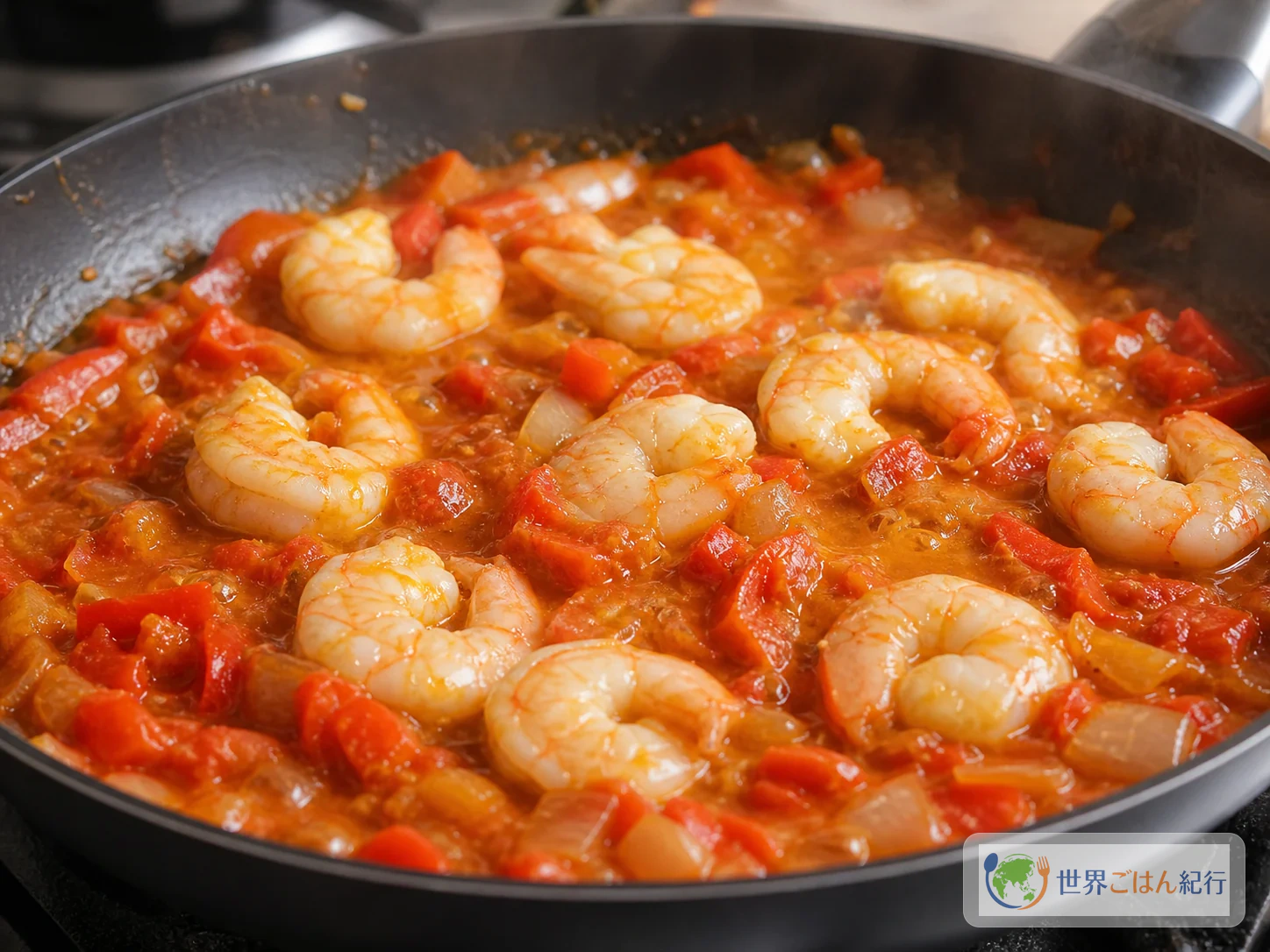
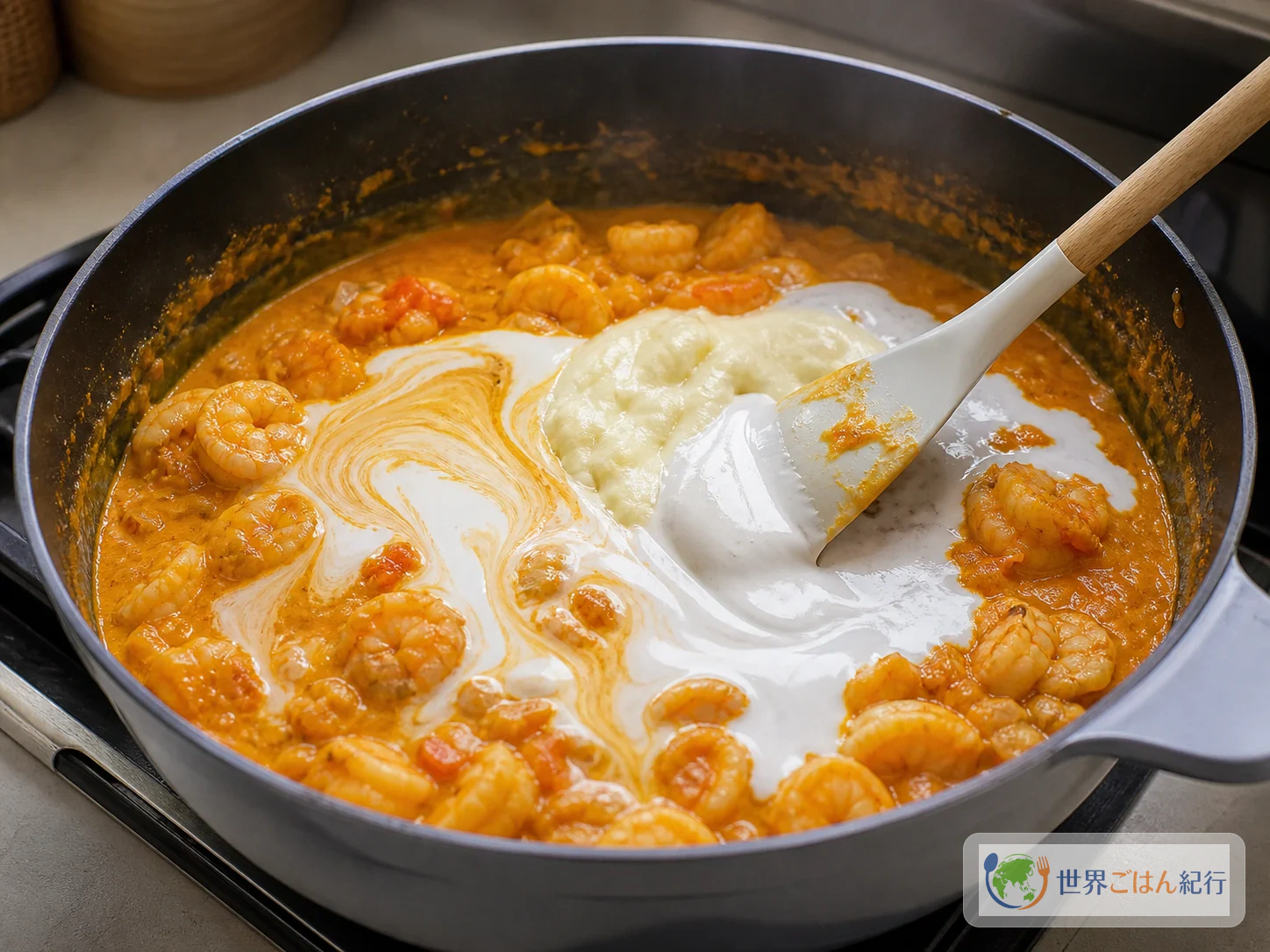
Bobó de camarão begins with an orange sauce
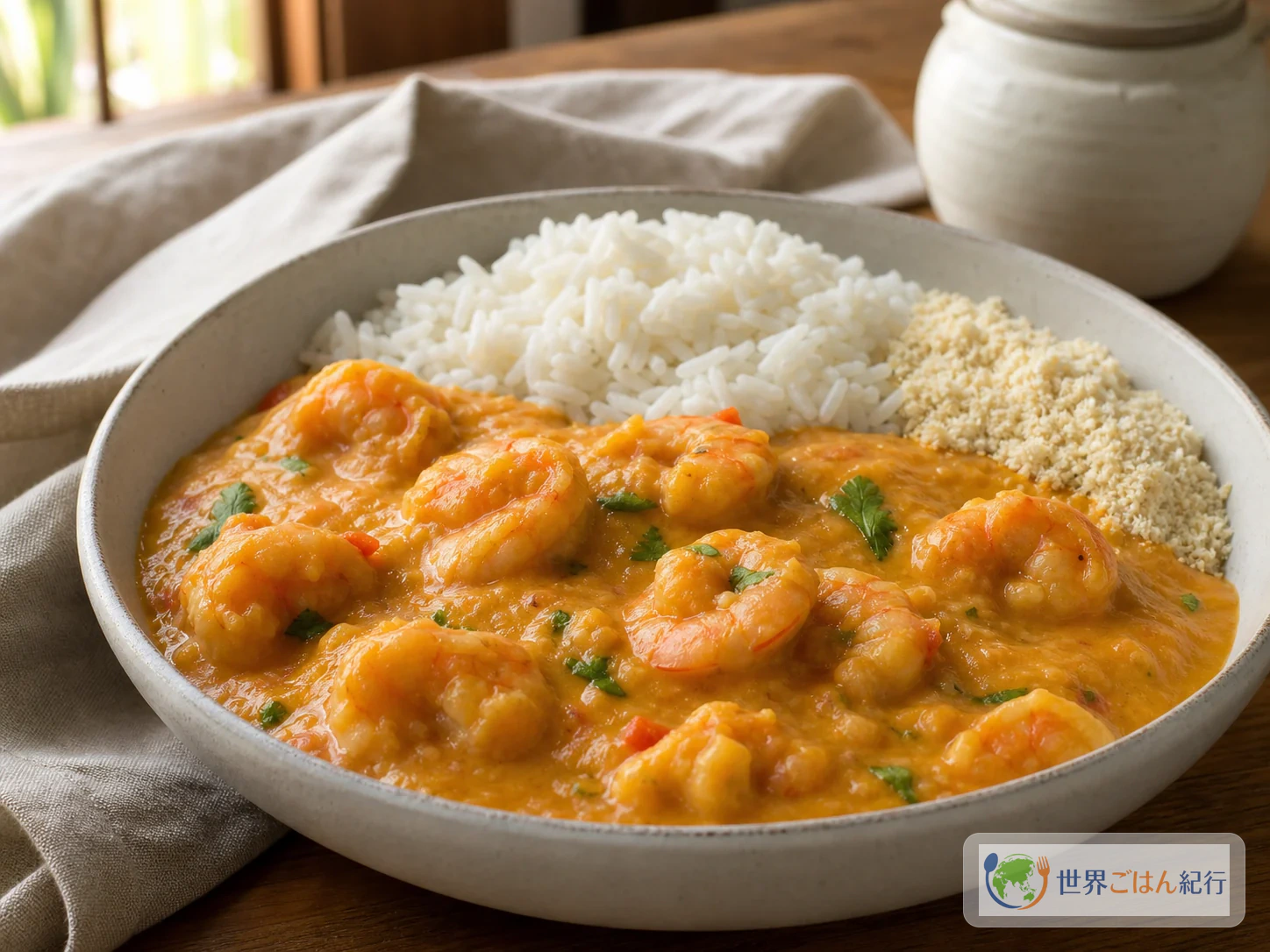
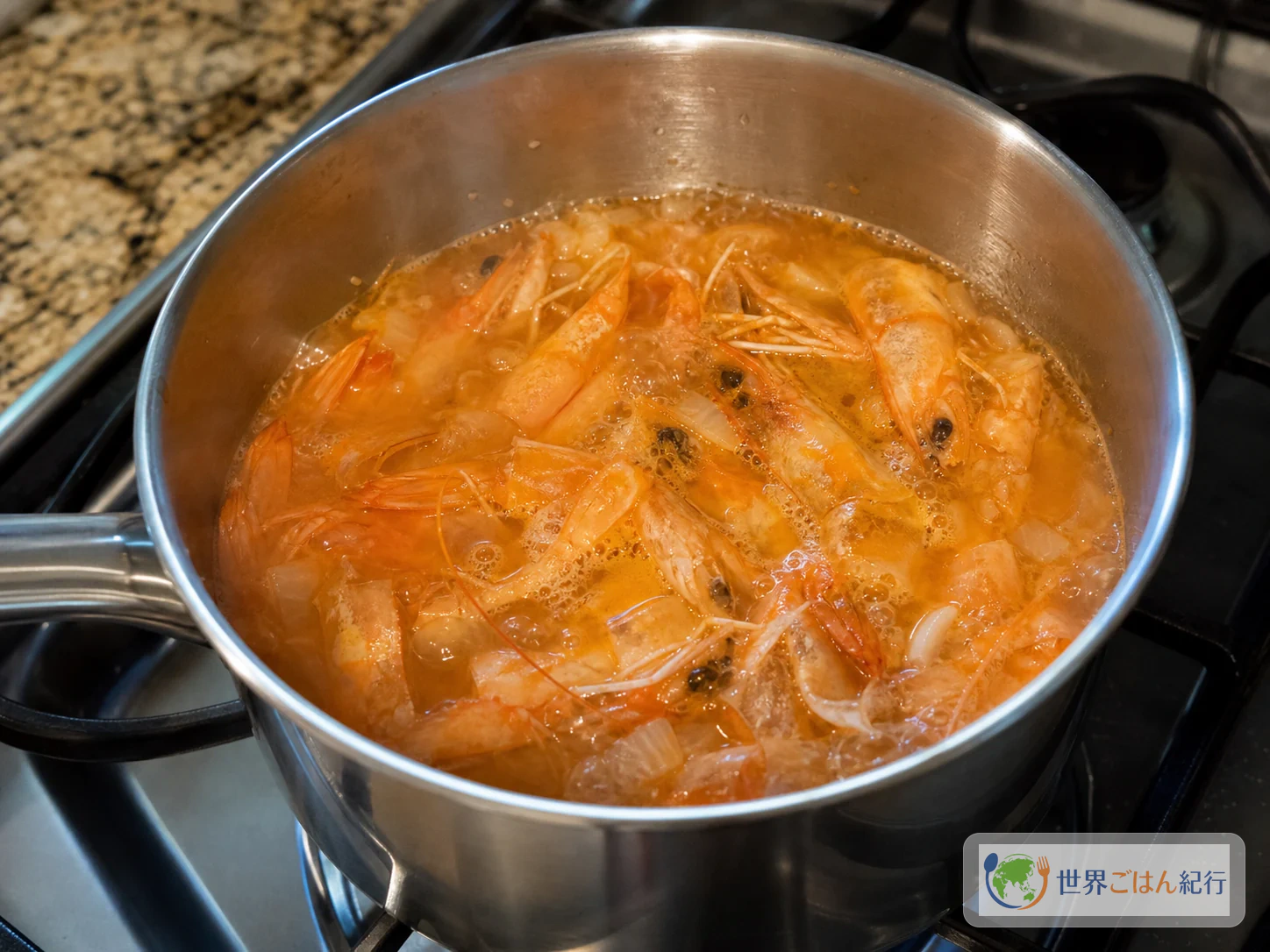
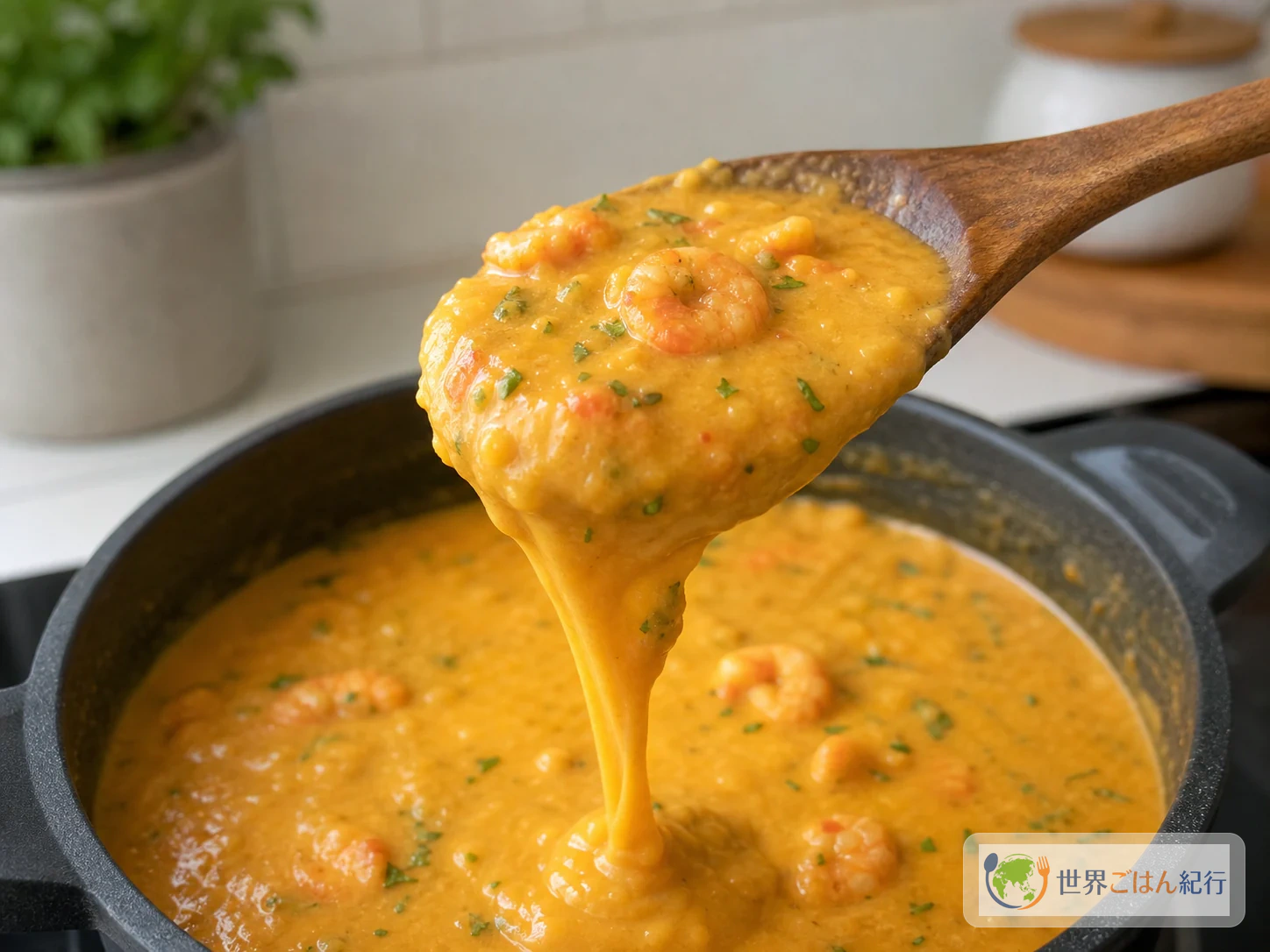
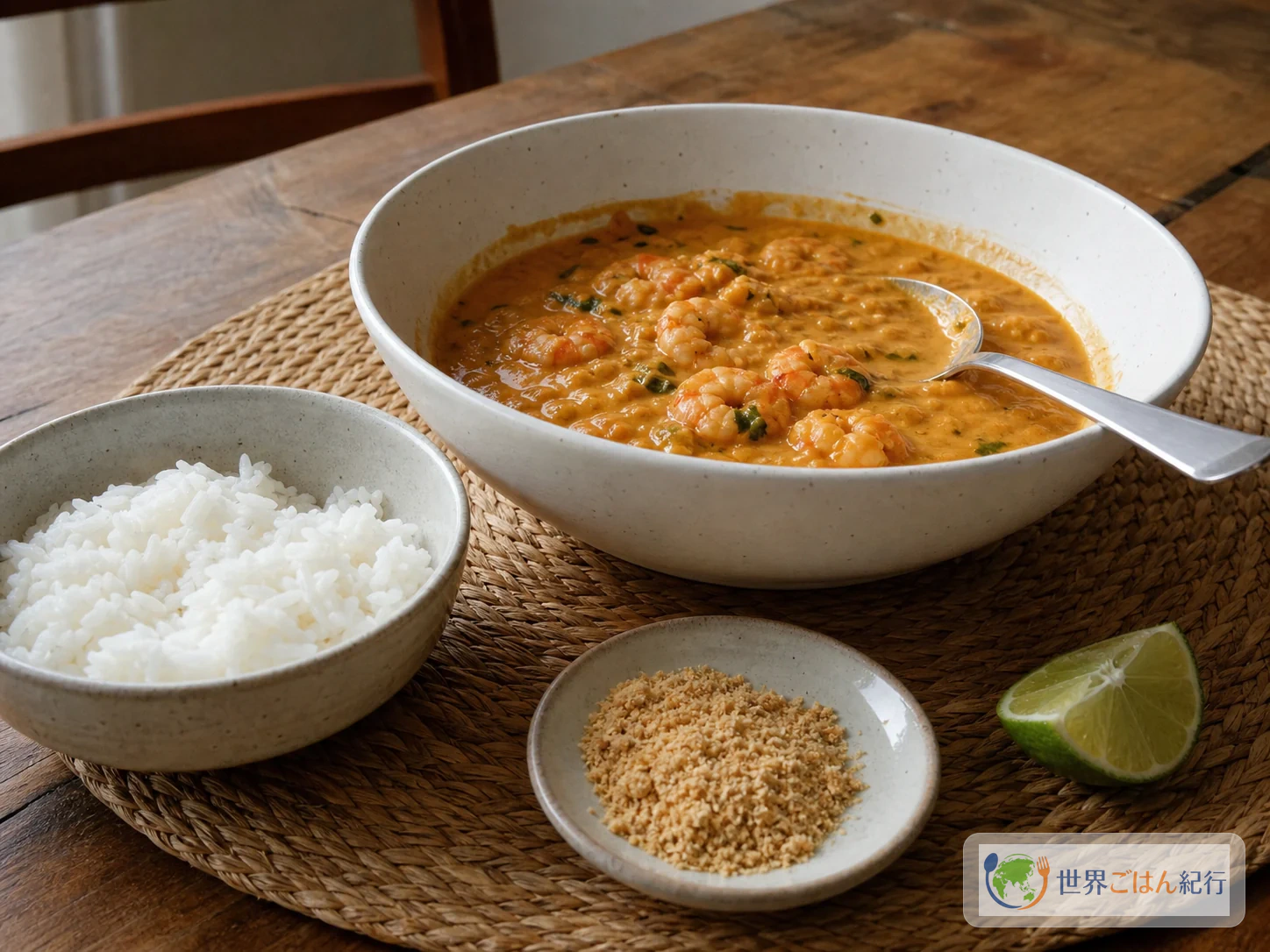
When you lift the lid of the pot, what you notice first is the color of the sauce, before the shrimp. An orange with a tinge of yellow. Put in a spoon, and it does not flow freely; it opens a path slowly and closes back. Red, curled shrimp come in and out of view in it.
Bobó de camarão is a shrimp dish loved in Bahia, in northeastern Brazil. The camarão in the name is Portuguese for shrimp. The base of the flavor is boiled and mashed cassava, coconut milk, and dendê oil, with its distinctive aroma and color.
Making it for the first time elsewhere, you stop at two points. "How much dendê oil makes it taste local?" and "How smooth should the cassava sauce be?" Decide these on impulse and either the oil comes forward alone or it turns into heavy mashed potatoes.
This article is set into a 4-serving home recipe. The frame of the flavor is the thickness of cassava, the roundness of coconut, the aroma of dendê oil, and finally the sweetness of the shrimp. Keep this order and even if you replace some ingredients, "what you are eating" does not blur.
In Portuguese it is written bobó de camarão. Introductions to Brazilian food culture explain that the origin of bobó is the Fon language of West Africa, but there are several views in the history of the dish. Rather than rushing to a conclusion, it is better to enjoy it as a dish that grew in Bahia.
The axis of flavor to decide first
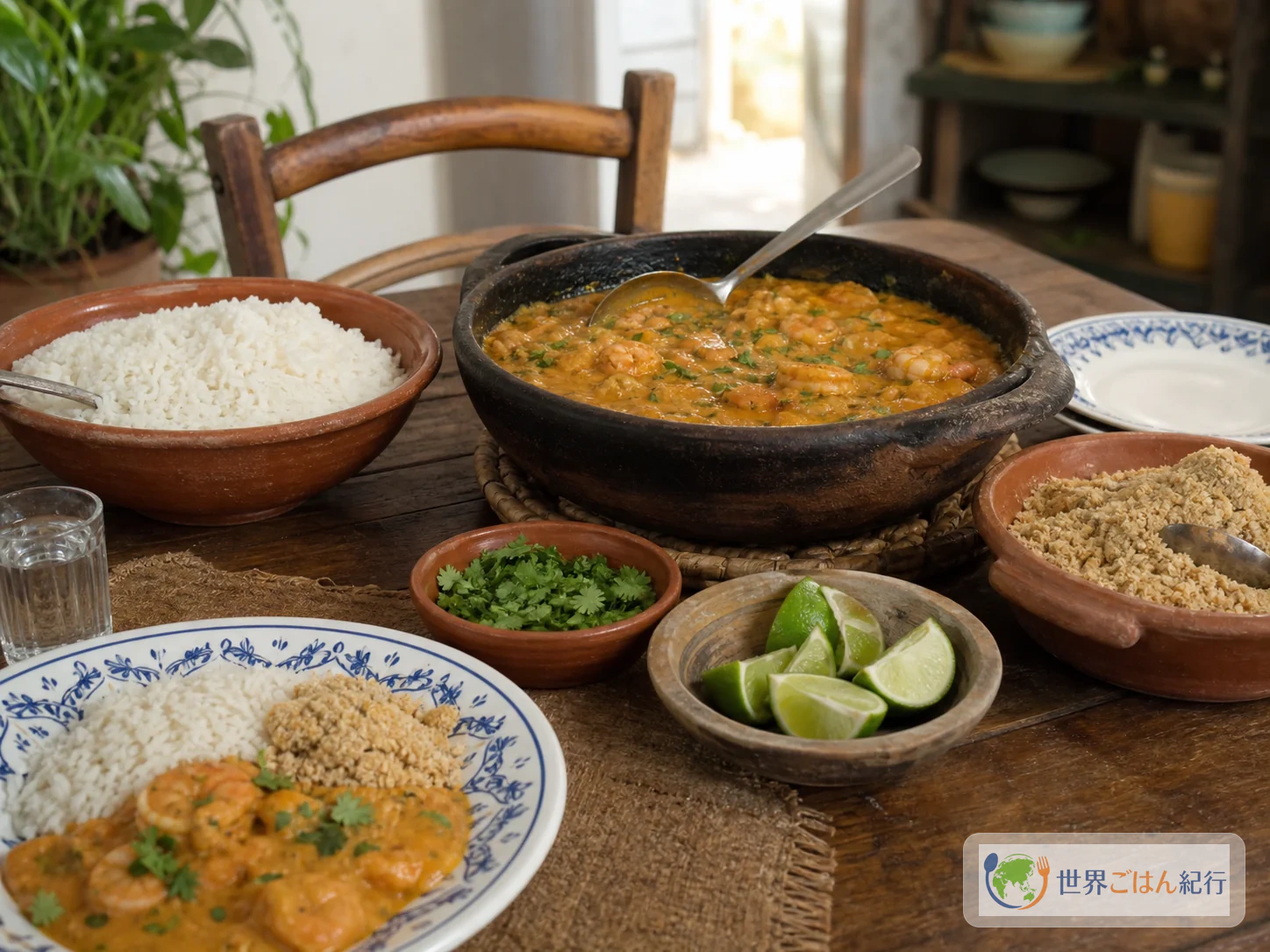
For the first plate, the mix uses 2 tbsp of dendê oil, that is, 30 ml. But you don't need to put in all 30 ml at the start. Fry 15 ml with the aromatics and add the remaining 15 ml after turning off the heat, and it is easier to keep the color and aroma.
The "local character" of this dish is not strong heat. The Instituto Brasil a Gosto's explanation of the dish (here) also presents it as the Bahian flavor in which dendê oil, coconut milk, chili, and shrimp overlap. The bobó sauce is less a dish pushing with sharpness than one where cassava holds the aroma of oil and the thickness of coconut.
Tasting in the following order makes it hard to lose your way.
- Is there the sweet, earthy quality of cassava?
- Is there the roundness of coconut milk?
- Does the dendê oil scent come from behind?
- Does the sweetness of the shrimp remain at the end?
Holding back the dendê oil makes it easier to eat, but it moves toward a different dish. If you are unsure whether to buy a bottle from the first time, read the note below on red palm oil. It gives both the reason to buy and the reason to skip it this time.
Ingredients (serves 4)
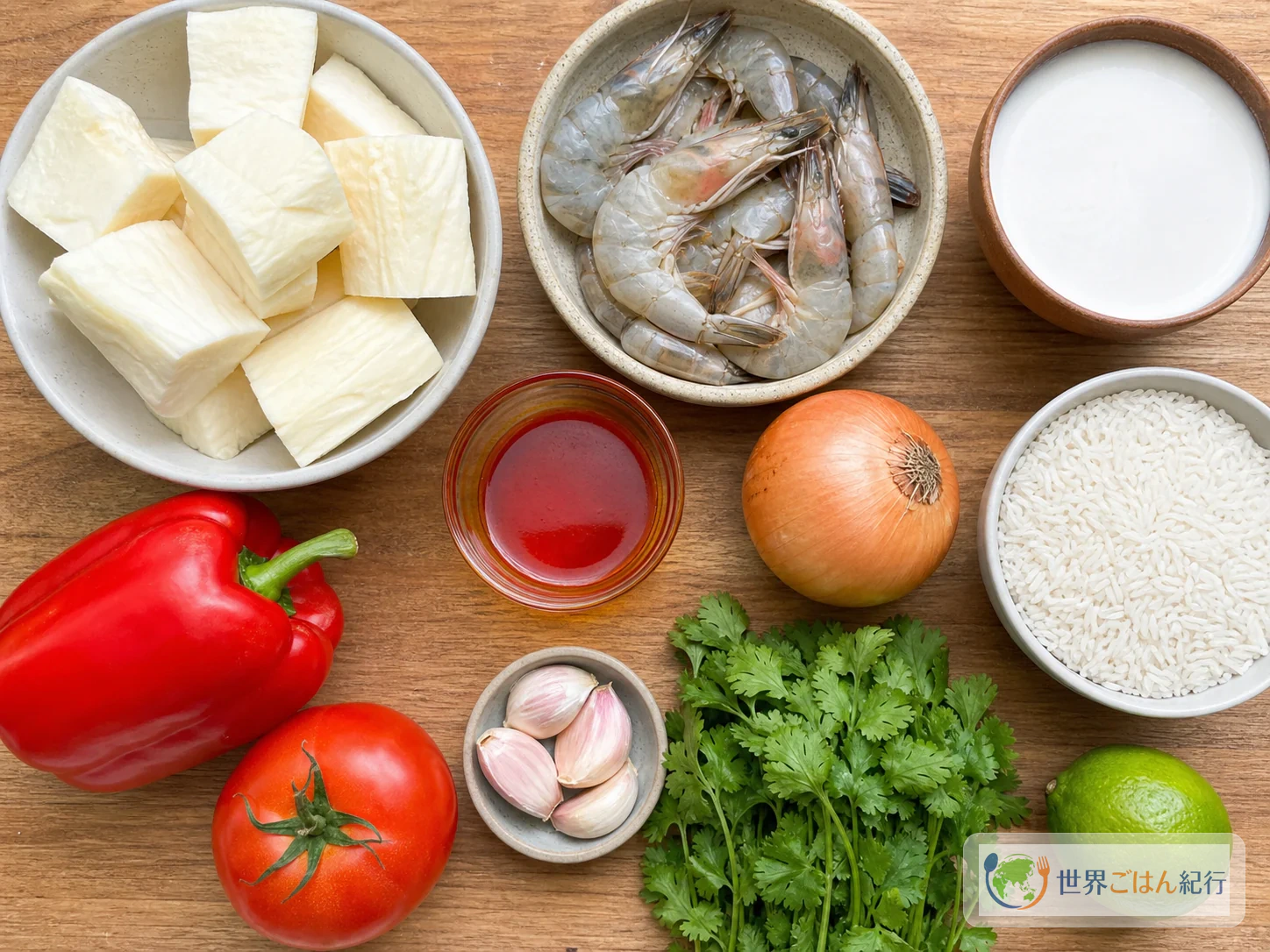
Do not eat shrimp raw; cook until the center of the flesh is white and opaque. Use separate knives and cutting boards for raw shrimp and vegetables, or wash them with detergent before use. If you have an allergy to shrimp, coconut, or palm oil, check the ingredient labels and do not force substitutes. Peel cassava and always boil it before use.
Steps
Preparation and making the sauce
How to tell when it is ready to plate
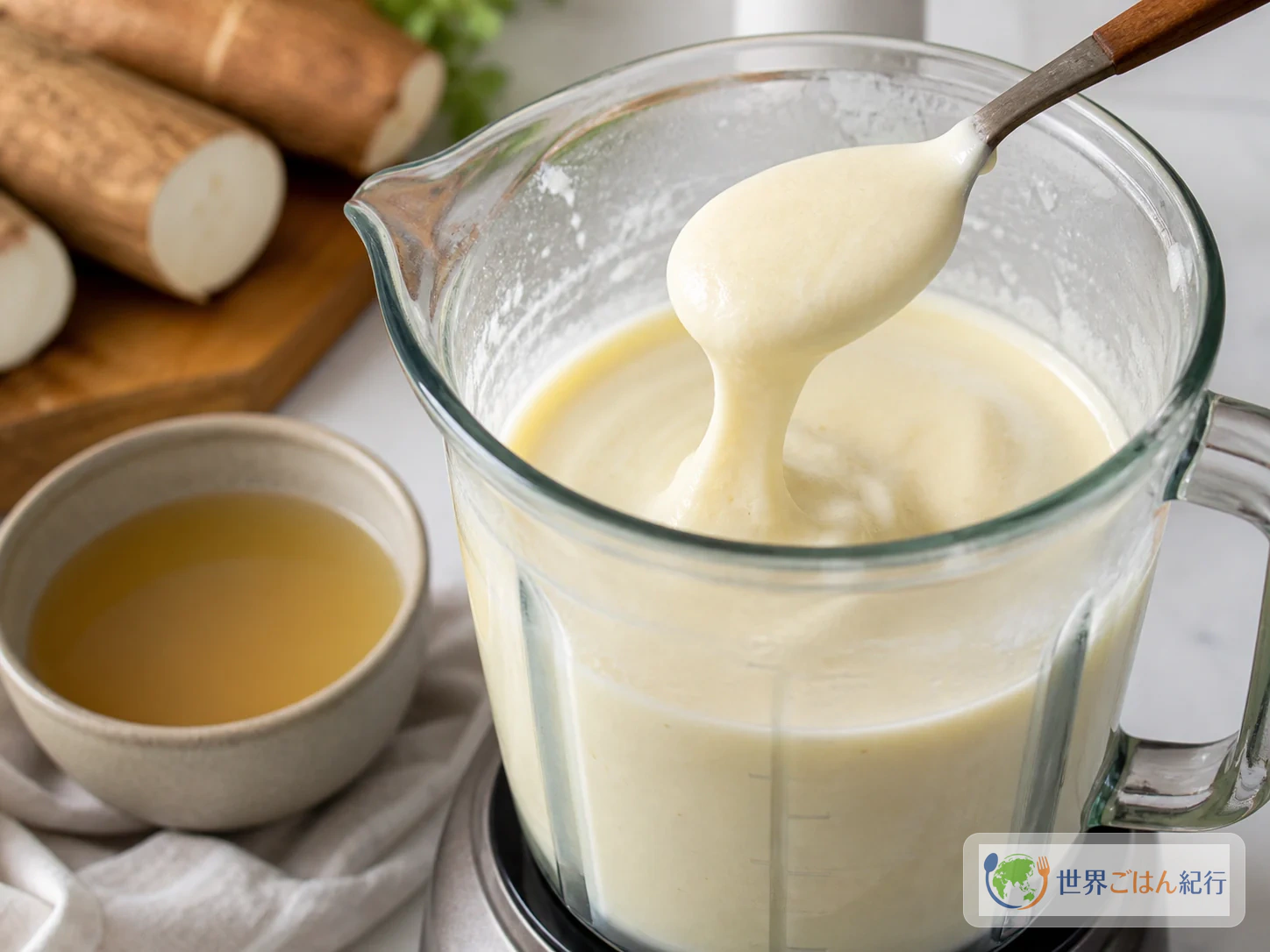
The sauce on the plate should not set like a mound but spread slowly beside the rice. If it all runs off the tilted spoon at once, there is a lot of stock. If instead a lump does not move, mix in the reserved stock 15 ml at a time.
The shrimp is best when the center is white, the surface red-orange, and the tail tip not fully shriveled. When the green of cilantro, the orange of dendê oil, white rice, and pale farofa sit side by side, a dish that was one color in the pot gets the rhythm of a table.
Tips for getting it right
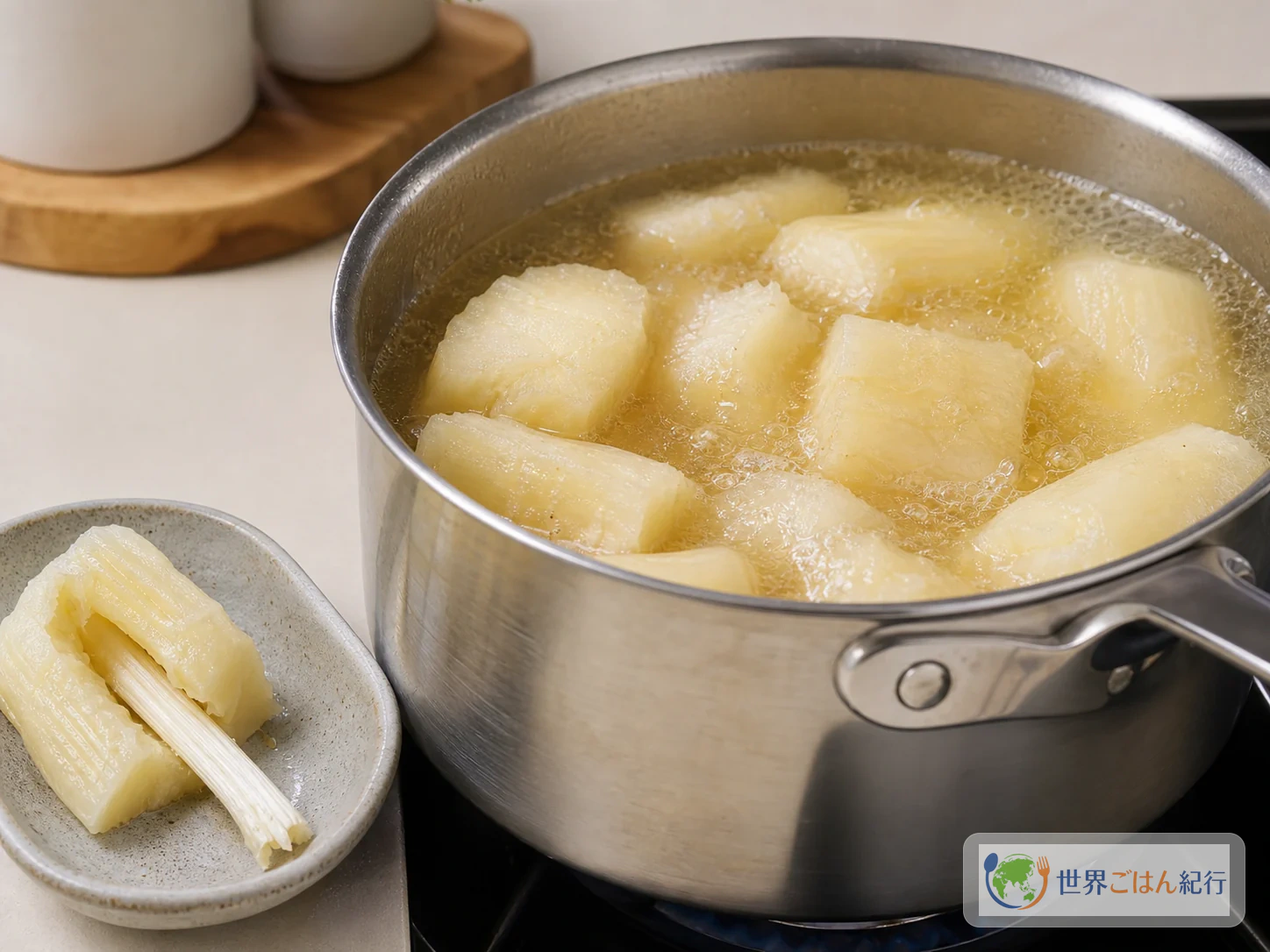
If the hard fiber in the center is left, a stringy texture appears even after blending. When you split the cassava after boiling, if a white hard streak runs through the center, remove it. Frozen cassava breaks easily, so check with your fingers before it crumbles completely.
If you are not used to strongly scented oil, you can reduce it to 10 ml for frying and 5 ml for finishing. If it seems too little, add a few drops at a time from above on the plate. Because it is hard to take out oil that has gone in, it is safer not to pour the whole amount into the pot at the start.
If watery, remove the lid and simmer over low heat for only 2 to 3 minutes. If too heavy, add hot shrimp stock 15 ml at a time. Avoid adding cold water, which lowers the temperature and gives the shrimp extra cooking.
Do not boil hard once the shrimp is in. When the center is white and opaque, lower to low heat at the stage of adding the cassava cream. If the shrimp finishes first, you can also lift it out once with a skimmer, adjust the sauce, and return it for the last 30 to 60 seconds.
What can change in a home kitchen, and what should not
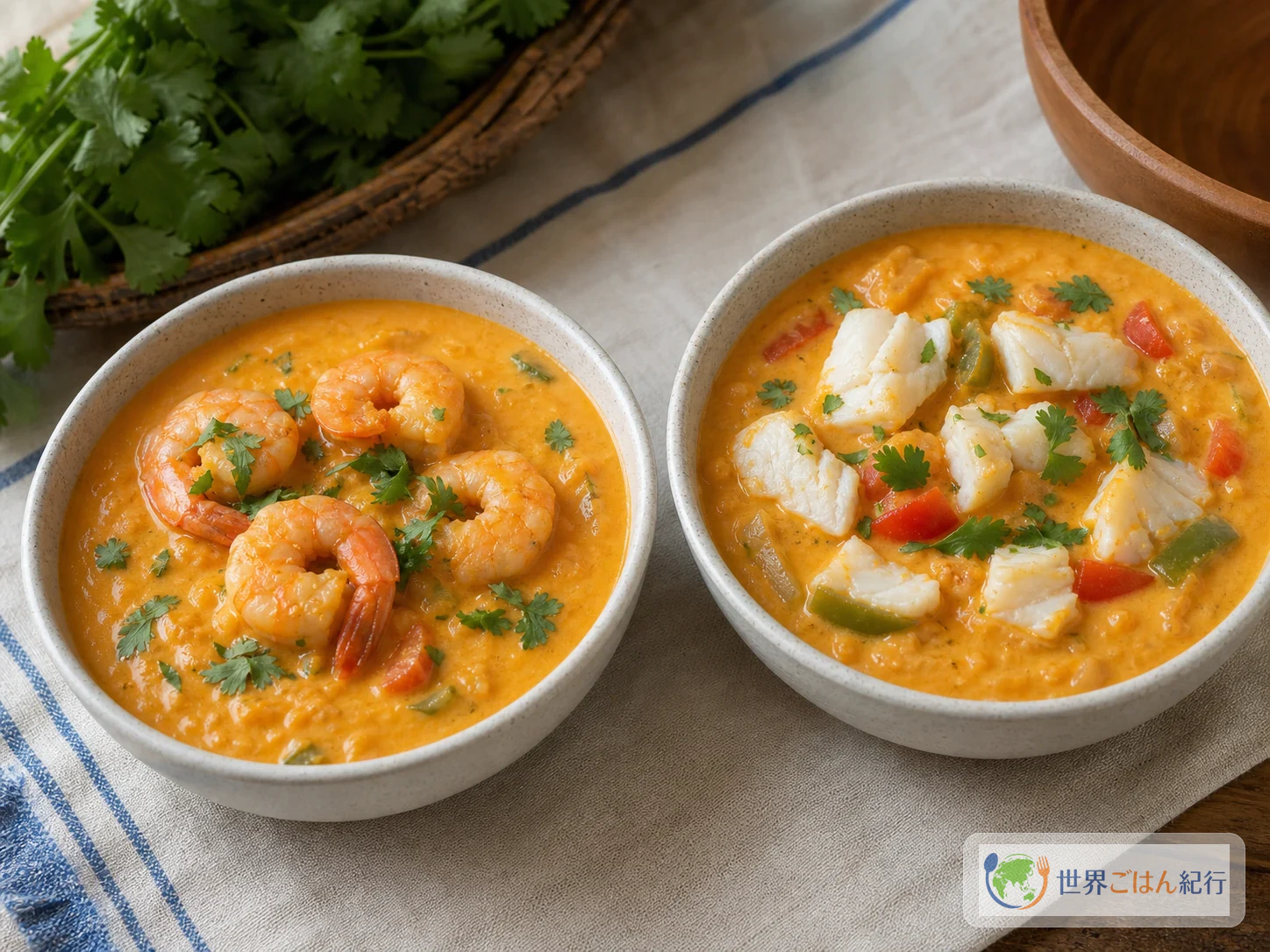
Going easy on the dendê oil
The first time you can make the dendê oil a total of 15 ml, 10 ml for frying and 5 ml for finishing. The color gets paler and the aroma milder. This cannot be called "the same as the original," but it is a realistic choice to start from an amount you can finish.
Using shell-free shrimp
With 400 g of peeled shrimp, you cannot make shell stock. Use 600 ml of unsalted seafood stock, divided between boiling the cassava and thinning the sauce. The depth of flavor is lighter than with shell-on, but the shrimp prep is shorter.
A white fish bobó-style
Instead of raw shrimp, cut 400 g of boneless white fish into 3 cm cubes. Add it to the aromatics, cook 2 minutes per side, and add the cream when the flesh is white and flaking. Since there is no shrimp, think of it not as bobó de camarão but as a bobó-style seafood stew.
With mushrooms and hearts of palm
Switch the shrimp stock to vegetable stock and add 150 g of shimeji and 100 g of hearts of palm, and you can make it with plant ingredients. The aroma of coconut milk and dendê oil stays, but it is not a re-creation of the shrimp dish. Rinse jarred hearts of palm, which are salted, before use.
Adding a little dried shrimp
For a deeper Bahian flavor, fry 10 g of rehydrated dried shrimp with the aromatics. The shrimp flavor gets stronger, so reduce the salt for the raw shrimp and the overall salt by 2 g each and taste. Not suitable for those with shellfish allergy.
Changing the rice and farofa
The white rice can be cooked with a little coconut milk added. Farofa can be replaced with dry-toasted fine breadcrumbs if you have no cassava flour. The light grit of farofa is an escape for the rich sauce; you can leave it out altogether, but adding it changes the impression of the plate.
Bobó de camarão seen from the Bahian table
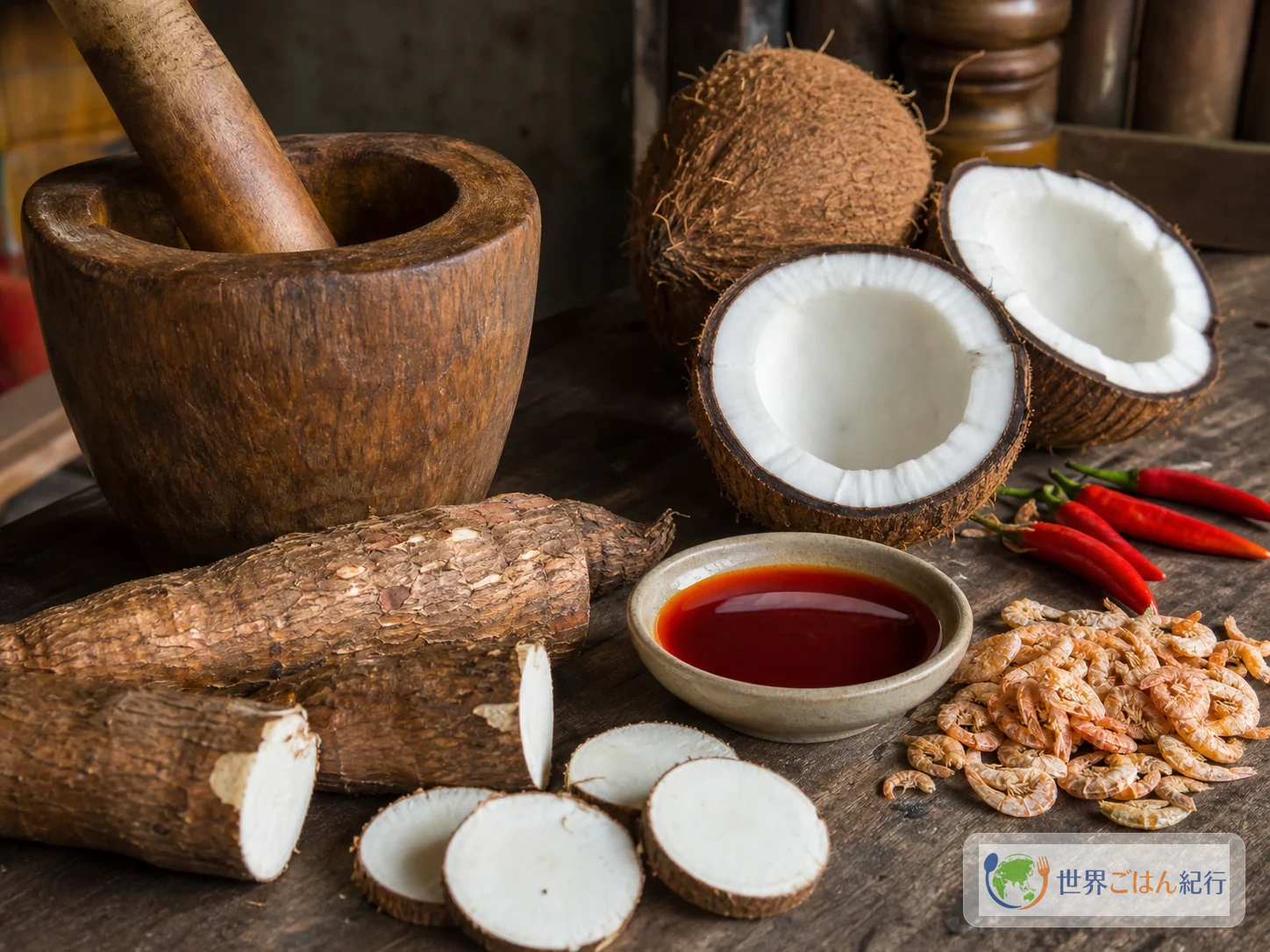
The food culture of Bahia cannot be explained by a single origin. Brazil's National Institute of Historic and Artistic Heritage (IPHAN) presents Bahia's intangible culture as an overlap of African, Indigenous, and European cultures. Cooking is the same: the road ingredients came by and how they were used on the land overlap.
Cassava is native to South America and is an ingredient that supports the Brazilian table. Dendê oil came from the food culture of West Africa and adds color and aroma to Bahian dishes. Coconut milk, chili, and dried shrimp overlap too, becoming the flavor now presented as Afro-Bahian cuisine.
There is an explanation that names ipetê, yam simmered with dendê oil and dried shrimp, as an ancestor of bobó. Even so, in culinary research and introductory articles, its relation to bobó is treated not as one fixed lineage but as a possibility of several influences and changes. It is better to read this as one theory, without deciding "this is the only origin."
Bahian dishes also change form among homes, ritual occasions, and restaurants. The Bahia state government's introduction to its food culture explains the difference in context so that the food of Candomblé is not equated with general Bahian cooking. When making bobó, one wants to enjoy the background while avoiding language that treats a dish of faith lightly as a commodity.
Regional differences and re-creating it elsewhere
Even within Brazil there are versions that replace cassava with yam, versions that add dried shrimp, and versions that reduce the coconut milk. UOL's introduction to the dish also presents it as a dish whose ingredients and presentation change by region and household.
When re-creating it elsewhere, adjusting in the order of using frozen cassava, combining shell-free shrimp with unsalted stock, and trying dendê oil from 15 ml lets you see what you changed. What is better not to change is making the cassava smooth and cooking the shrimp briefly at the end.
At the table, bobó is eaten with white rice and farofa. Scoop the sauce and coat the rice, mix in a little farofa. After eating the shrimp, chase the sauce alone once more. This is a dish that comes together on the plate with the staple rather than being tasted ingredient by ingredient.
About red palm oil
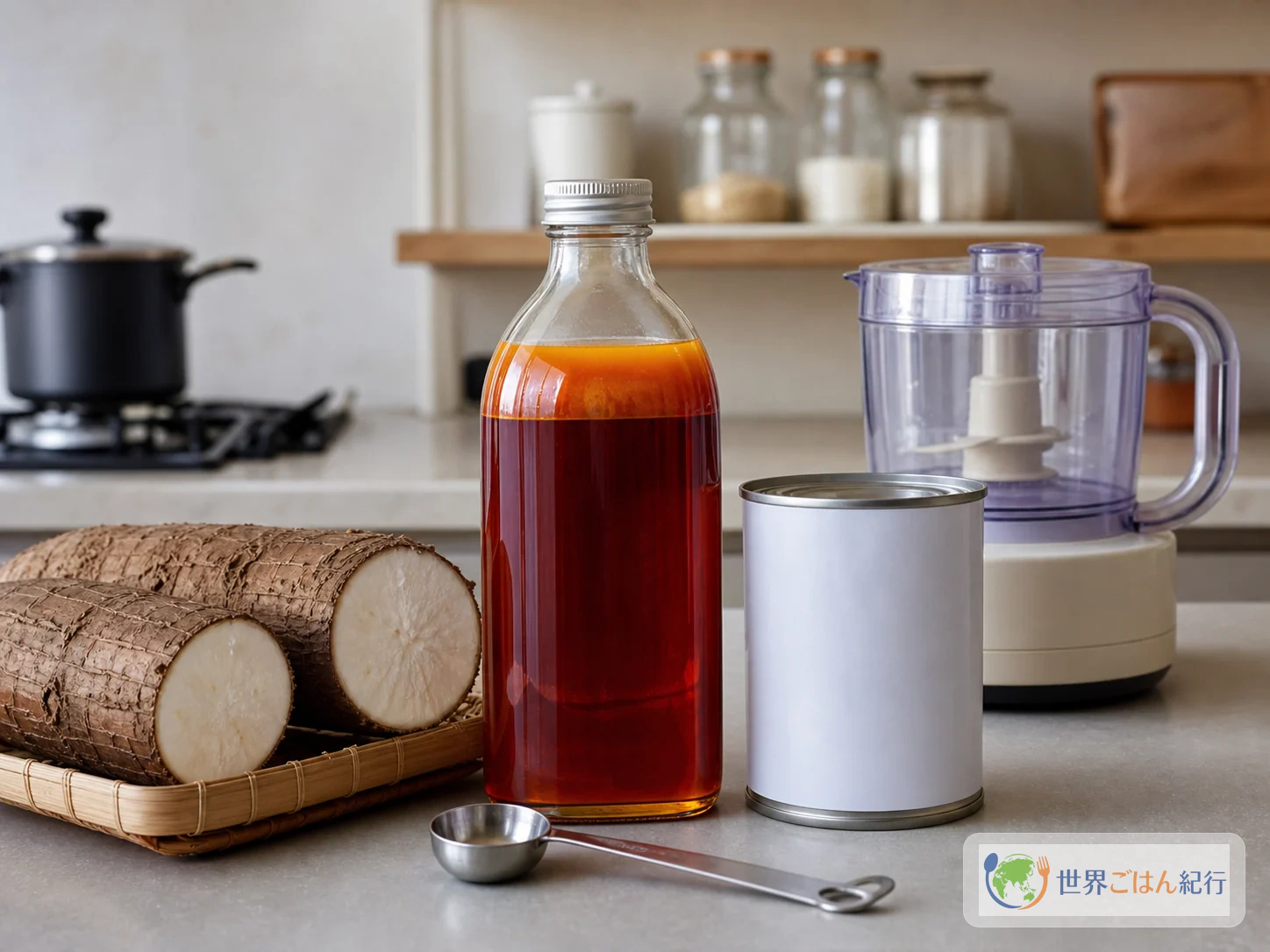
Edible red palm oil is for buying the axis of flavor
The reason to buy dendê oil is if you want to confirm the Bahian aroma and orange color once. One bottle can also be used for finishing other dishes, such as acarajé and moqueca. Conversely, if you dislike the aroma of the oil, have no plans to use it in other dishes, or want to try a light taste the first time, it is fine to skip it this time. Bringing only the color closer with 15 ml of rice bran oil and a little paprika is possible, but the aroma is another thing.
Check that the product is labeled edible red palm oil, usually sold in about 500 g sizes. Cosmetic or non-food palm oil cannot be substituted.
A food processor is for those who want the cassava fiber smooth
If you already have a blender and can make a small amount of sauce, you don't need to buy one. It can also be made by chopping finely with a knife and pushing through a sieve. The conditions for buying are wanting an even cassava cream, wanting to use it for prepping aromatics too, and having storage space. Check not only the capacity but whether it can handle hot ingredients and the handling conditions for the feed opening and bowl. Because it is not always safe to run hot cassava in a sealed container, always follow the product manual when using it.
Storage and frequently asked questions
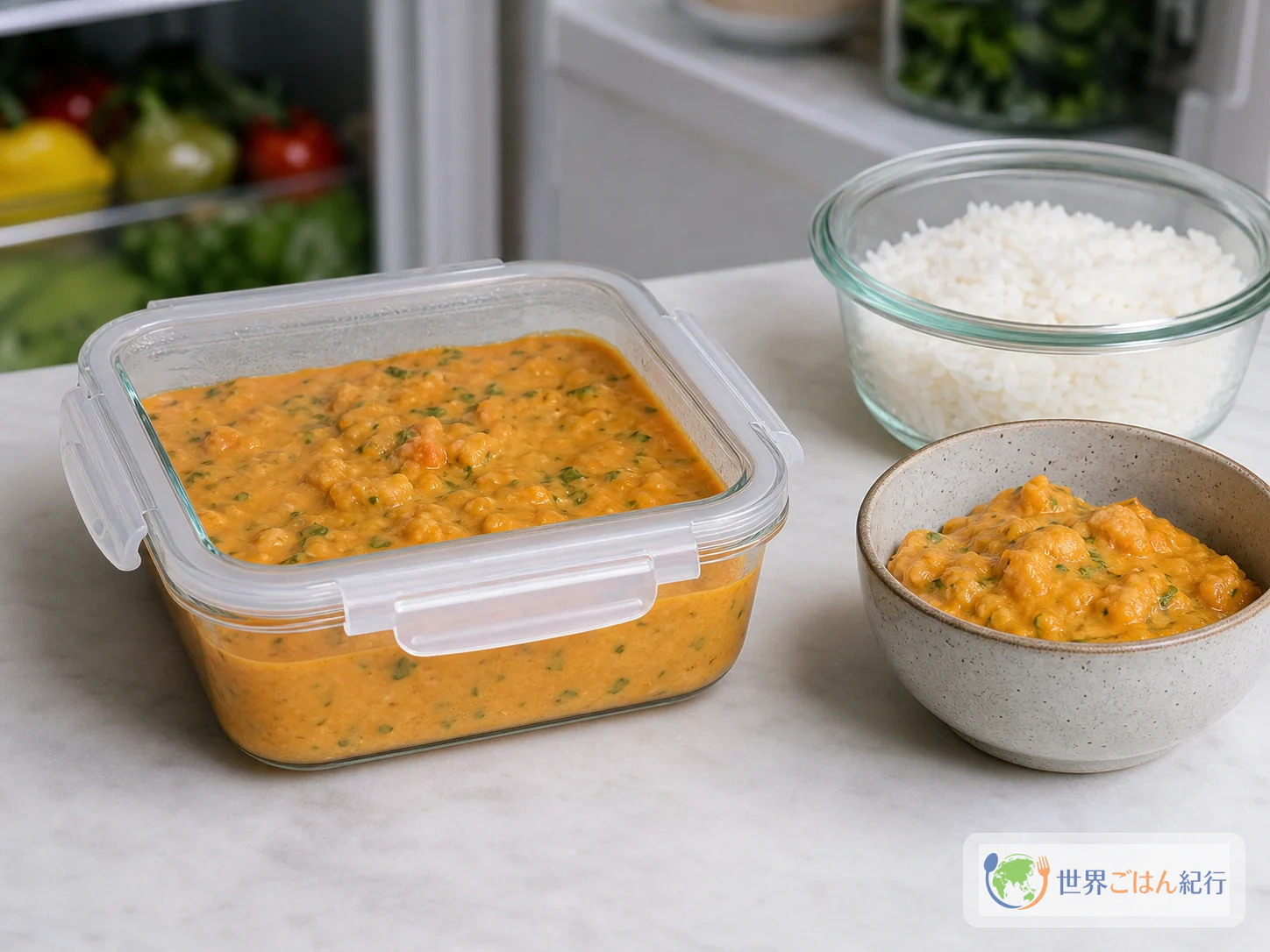
How should I refrigerate it?
Once the heat has dissipated, move it to a shallow container and refrigerate the sauce and rice separately. It depends on your refrigerator at home, but because it contains shrimp, finish it within 2 days. When reheating, stir over low heat and heat to the center. Repeated reheating toughens the shrimp, so it is easier to portion out only what you will eat.
Can I freeze it?
You can, but the cassava and coconut milk may separate and the texture of the shrimp changes. If freezing, it is easier to recover if you take the shrimp out a little early and portion only the sauce. After thawing, return the shrimp and warm over low heat to the center. Freeze rice separately.
Can I use frozen cassava?
Yes. Because the boiling time varies by product, check with a fork in addition to the labeled time. If fibers remain in the center, remove them while warm. For a watery frozen product, reduce the stock added to the cream by 50 ml from the start.
What can replace dendê oil?
There is a method of adding a little paprika to rice bran or vegetable oil. But that is a substitute for color, not for the aroma of dendê oil. If you want to confirm the axis of flavor, buying a small amount of edible red palm oil and, if the aroma does not suit you, using less next time makes it easier to see what you changed.
Can I fix shrimp that turned tough?
It will not return fully. Next time, reduce the aromatics first and cook the shrimp only briefly right before combining with the sauce. If translucent parts still remain in this pot, take them out, adjust the sauce, and return them for 30 to 60 seconds at the end until the center is white and opaque.
What should I cook with it?
To continue with the same Bahian aroma, candidates are the bean-based acarajé (in Japanese) and the seafood and coconut moqueca baiana. On a day you want to see the Brazilian table from the big pot of beans and meat, going on to the black bean stew feijoada shows how the role of farofa changes even with the same farofa. On a day you want the bobó sauce at the center, limiting the sides to white rice and farofa keeps the flavor from scattering.
Summary: for those with a reason to buy dendê oil
When making bobó de camarão at home, the order to keep is simple.
- Remove the fiber in the center of the cassava and make it smooth with stock and coconut milk
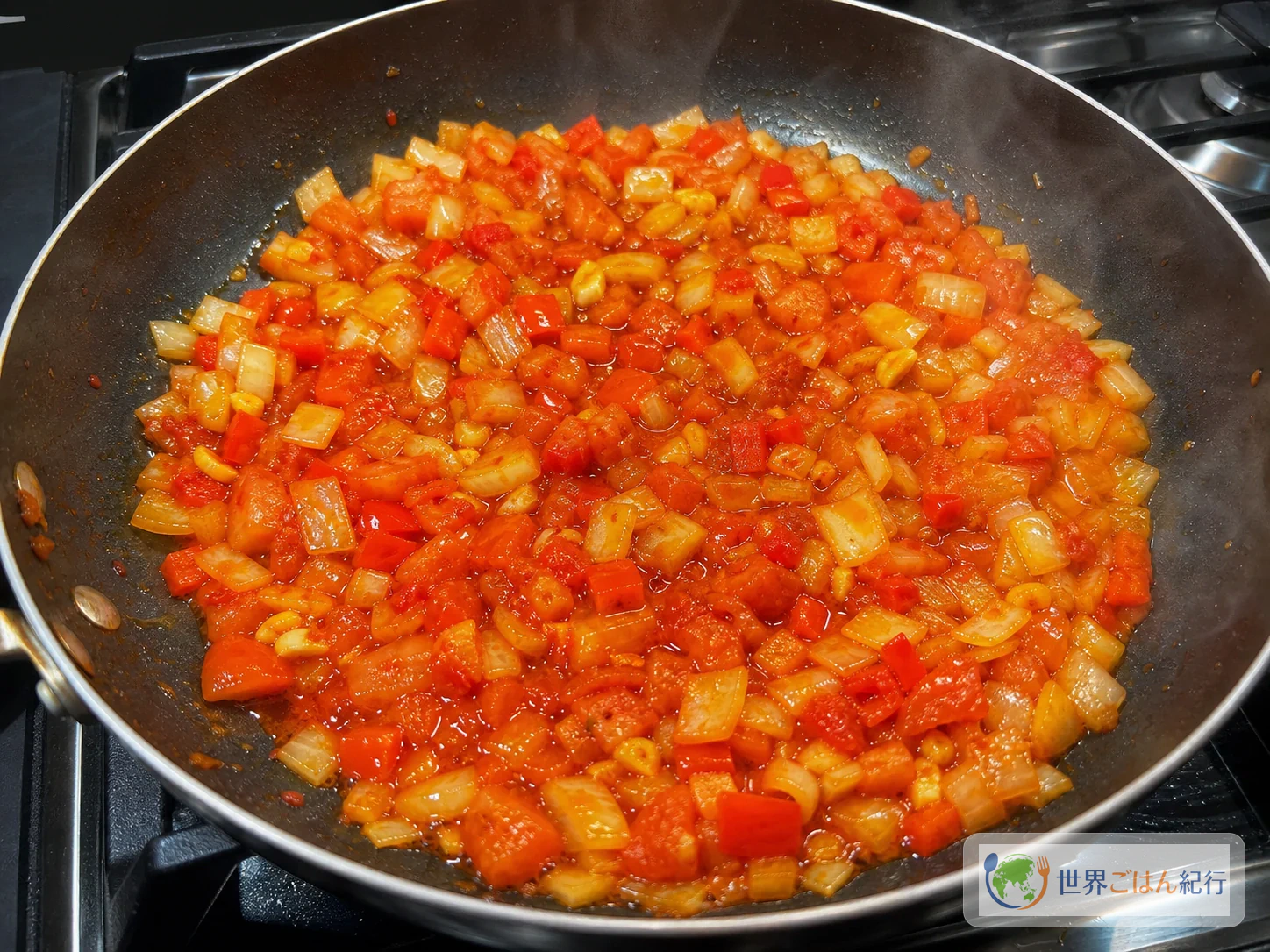
- Fry the aromatics until the moisture of the tomato is gone
- Add the shrimp last and do not overcook once the flesh is white and opaque
- Divide the dendê oil into frying and finishing amounts and adjust the aroma to your liking
Whether to buy red palm oil can be decided by whether you want to use the Bahian aroma again. Skipping it this time, trying it with rice bran oil, and learning only the cassava thickness and the shrimp heat first is also a proper choice.
Conversely, if you want to catch even the aroma of dendê oil at the moment you scoop the orange sauce, it is worth buying a small amount. Rather than finishing it all at once in the pot, add the aroma last and stop at "this much" on your own plate. That is the most thoughtful adjustment for keeping this dish going in a home kitchen.
Sources
These are the materials used to check the dish's history, regional character, and cooking steps. Accessed 17 July 2026.
English sources
- Instituto Brasil a Gosto, "Shrimp Bobó"
- Google Arts & Culture / Instituto Brasil a Gosto, "Shrimp Bobó"
- Food.com, "Shrimp Bobo"
- FoodSafety.gov, "Safe Minimum Internal Temperatures"
- Instituto do Patrimônio Histórico e Artístico Nacional (IPHAN), intangible heritage of Bahia
- Conselho Nacional de Segurança Alimentar e Nutricional, "No tabuleiro da baiana tem..."
- Companhia de Desenvolvimento e Ação Regional da Bahia, dialogue on dishes of African origin
- Fundação Joaquim Nabuco, "Cozinha Baiana"
- Globo Receitas, "Bobó de camarão com farofa de dendê"
- UOL Nossa, "Bobó de camarão e mais: prato com tempero baiano esquenta de Norte a Sul"