
A Costa Rican morning, bean flecks spreading through the rice
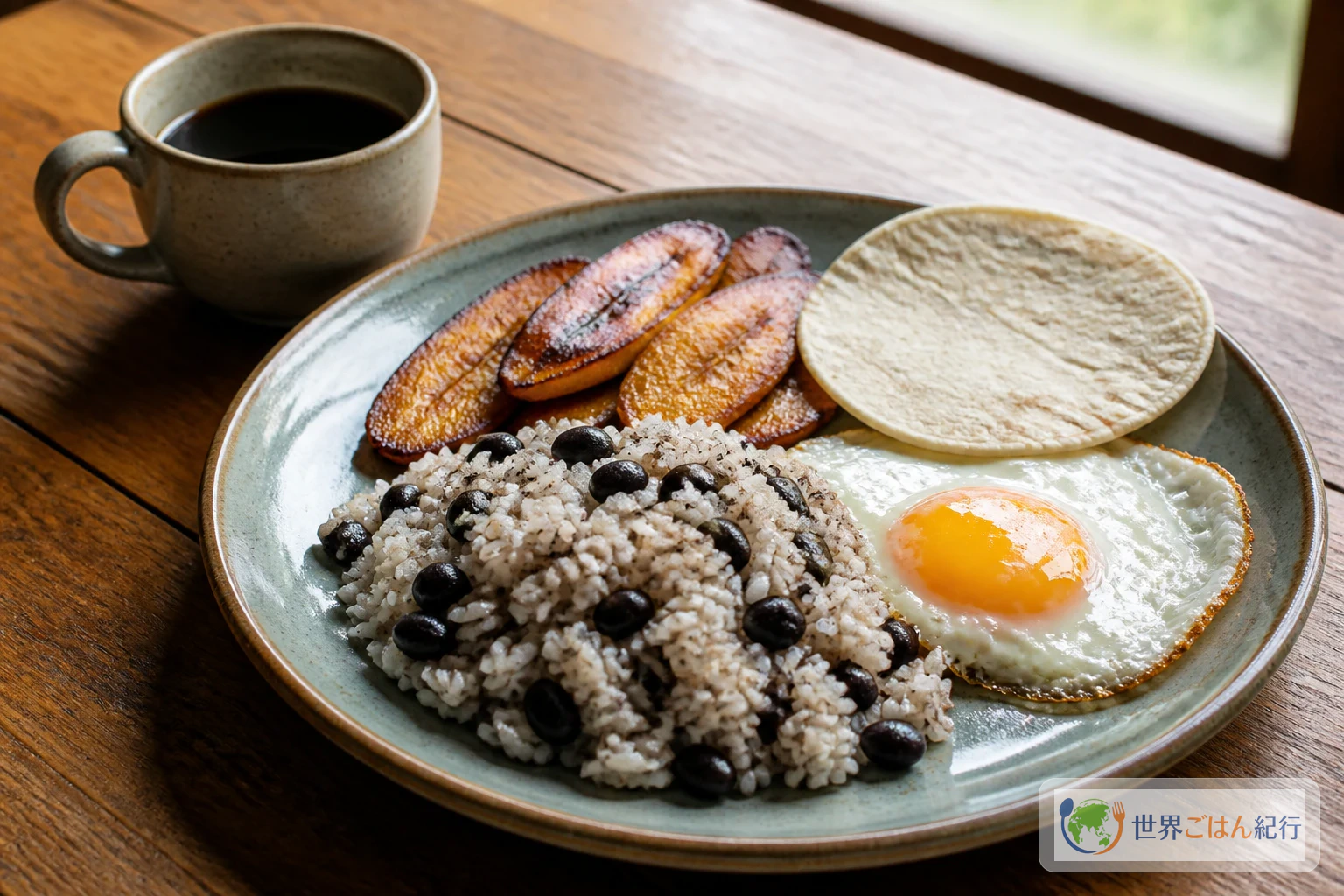
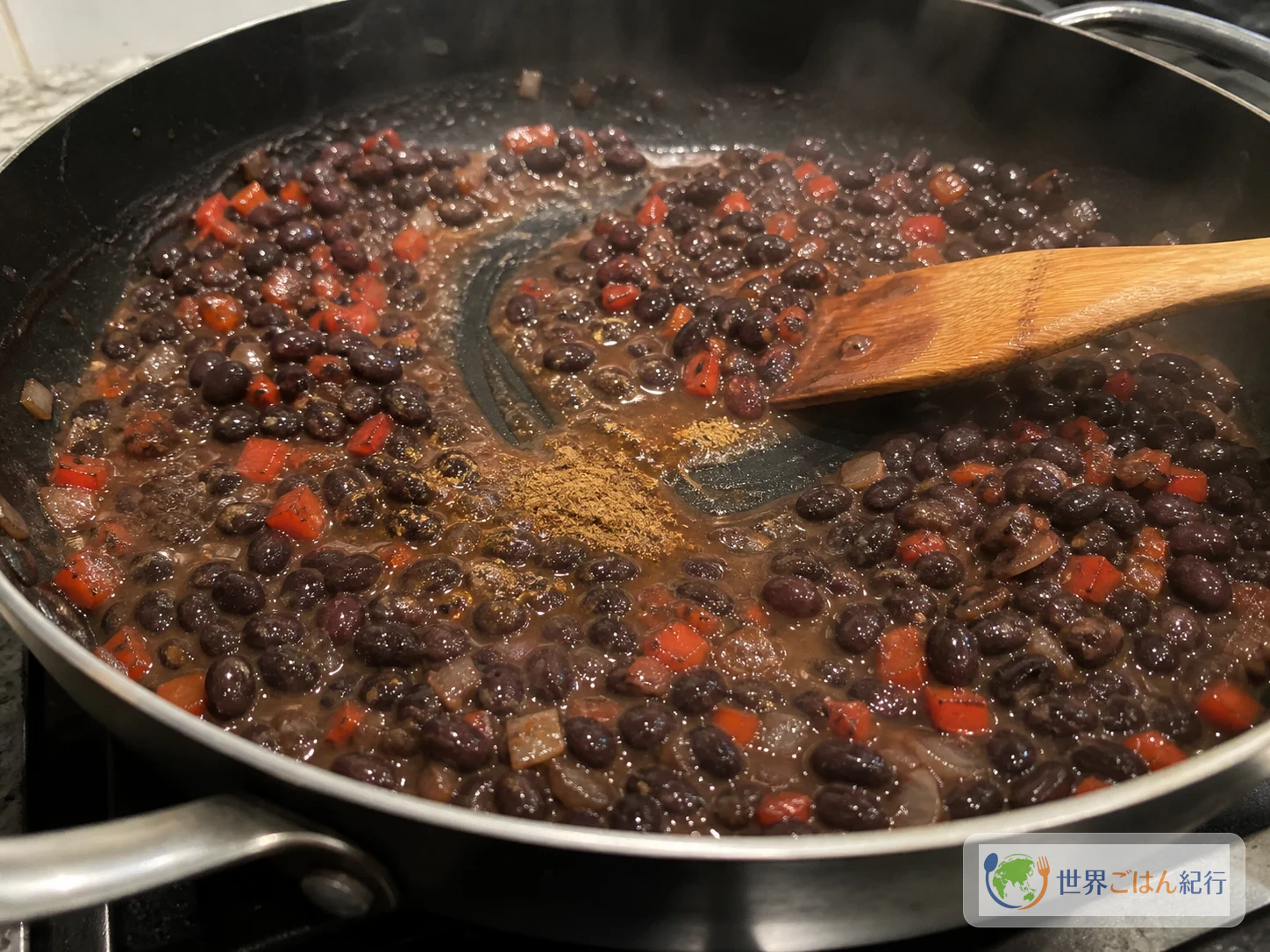
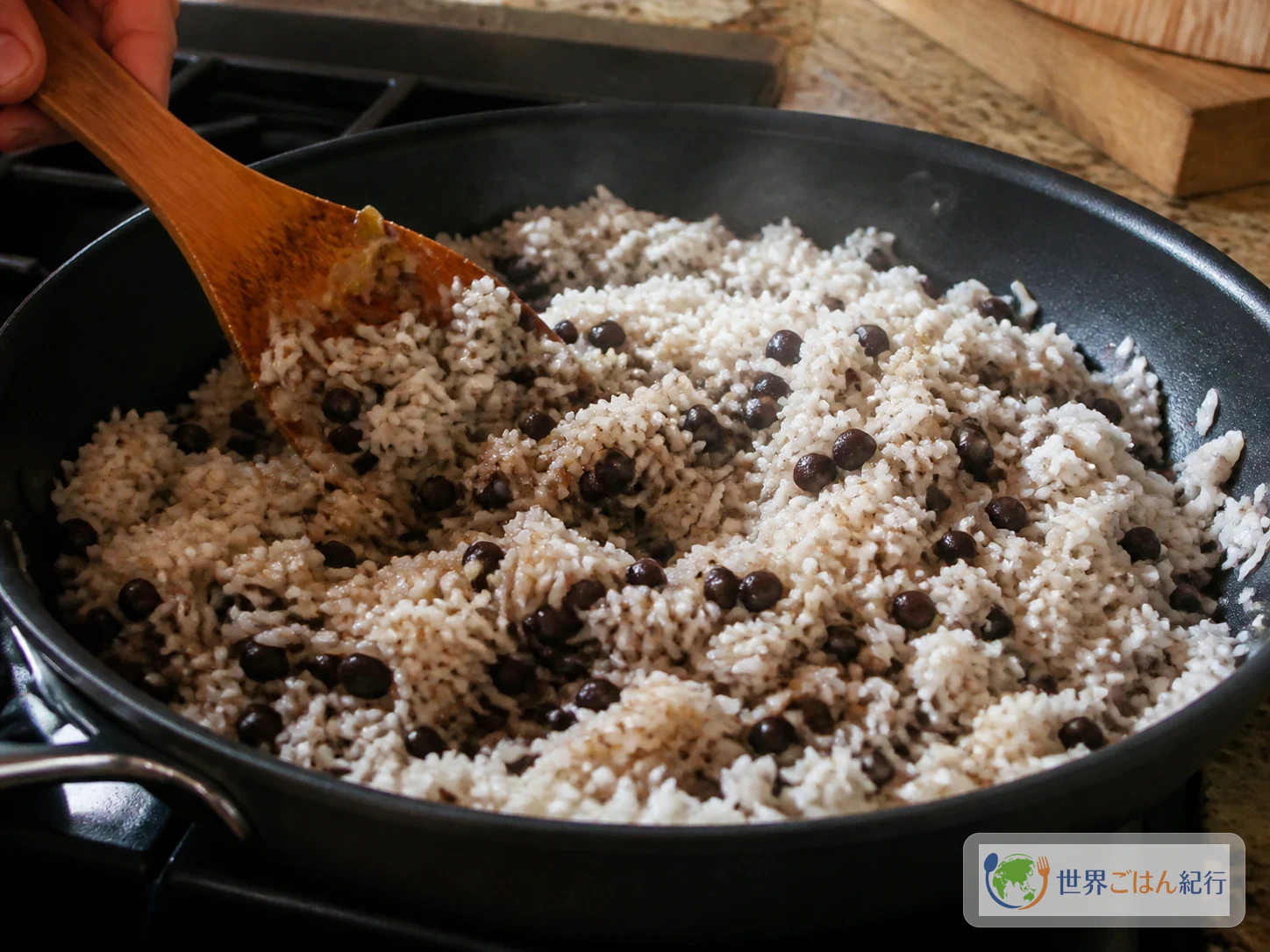
Tilt the pan and the black bean liquid leaves a pale brown speckle on every white grain of rice. Each time the wooden spoon passes along the bottom, the sweet smell of sautéed onion rises with the faint tang of the sauce. This is not fried rice cooked dark and browned. It is a breakfast in which the beans stay whole and the rice keeps its grains while it holds the liquid.
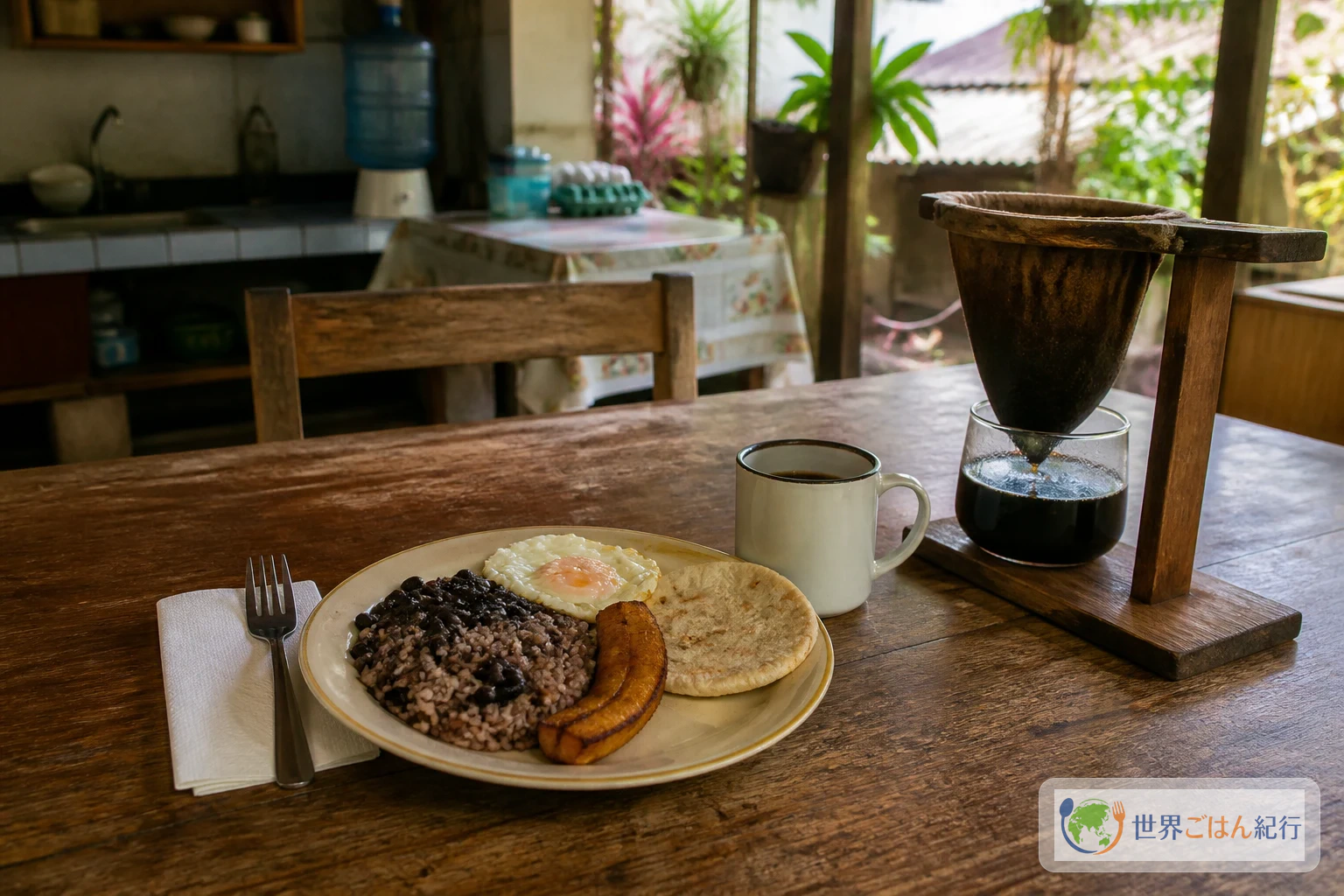
The dish is called gallo pinto. In Costa Rican tourism guides it appears as a morning staple served with eggs, sweet plantains, tortillas and coffee. Even when people call it a "national dish," that does not mean every household eats the same plate every morning. Two things overlap here: the practicality of pairing leftover rice with beans on a weekday, and the symbolism of a dish people point to as representing the country.
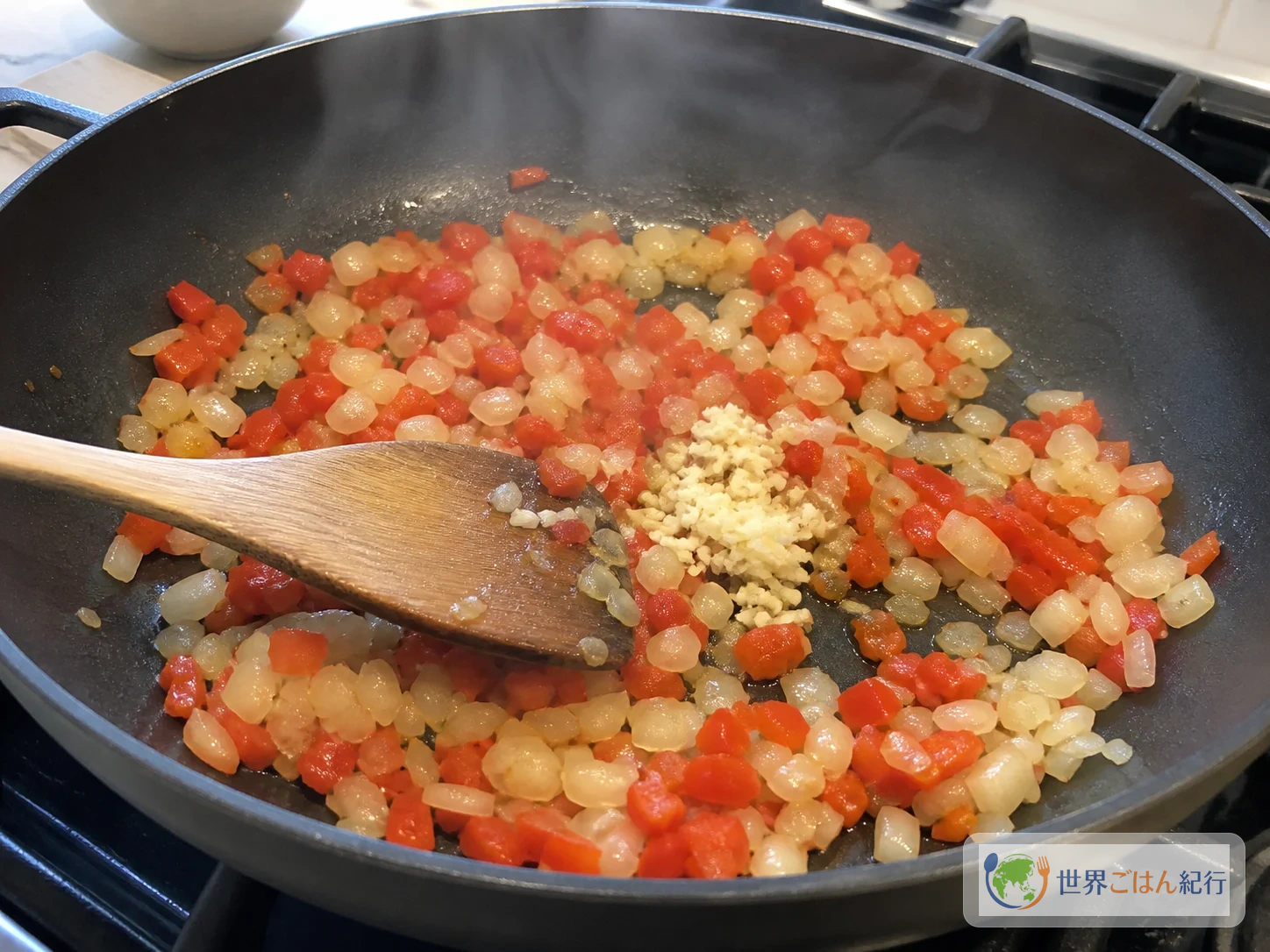
What we make here is a Central Valley style of gallo pinto, with black beans and Salsa Lizano. If you have cooked rice and cooked beans ready, the rest is quick: sauté the aromatics, reduce the bean liquid a little, and fold in the rice. It lands in a different place from Nicaraguan gallo pinto, made with red beans, and from the coconut milk "rice and beans" of the Limón coast, even though all of them are rice and beans.
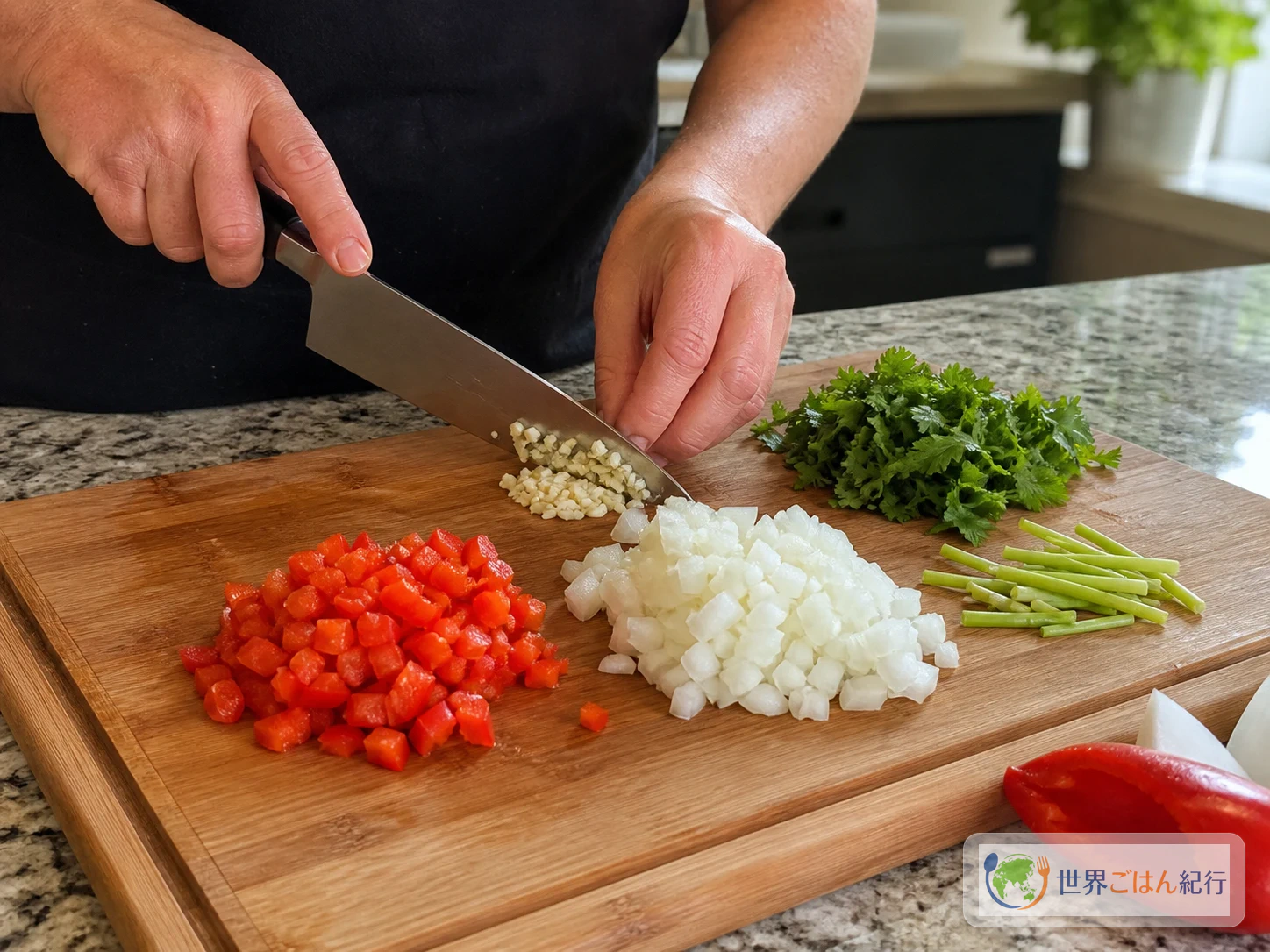
Gallo means rooster and pinto means spotted. One theory is that the name likens the dish to a rooster with black-and-white feathers. Neither the origin nor the name is settled, and the dish is an everyday food in both Costa Rica and Nicaragua. This recipe adapts, for a home kitchen, the combination often described for the Costa Rican Central Valley: black beans, cilantro, sweet pepper and Salsa Lizano.
Ingredients, and choosing substitutes that keep the flavor
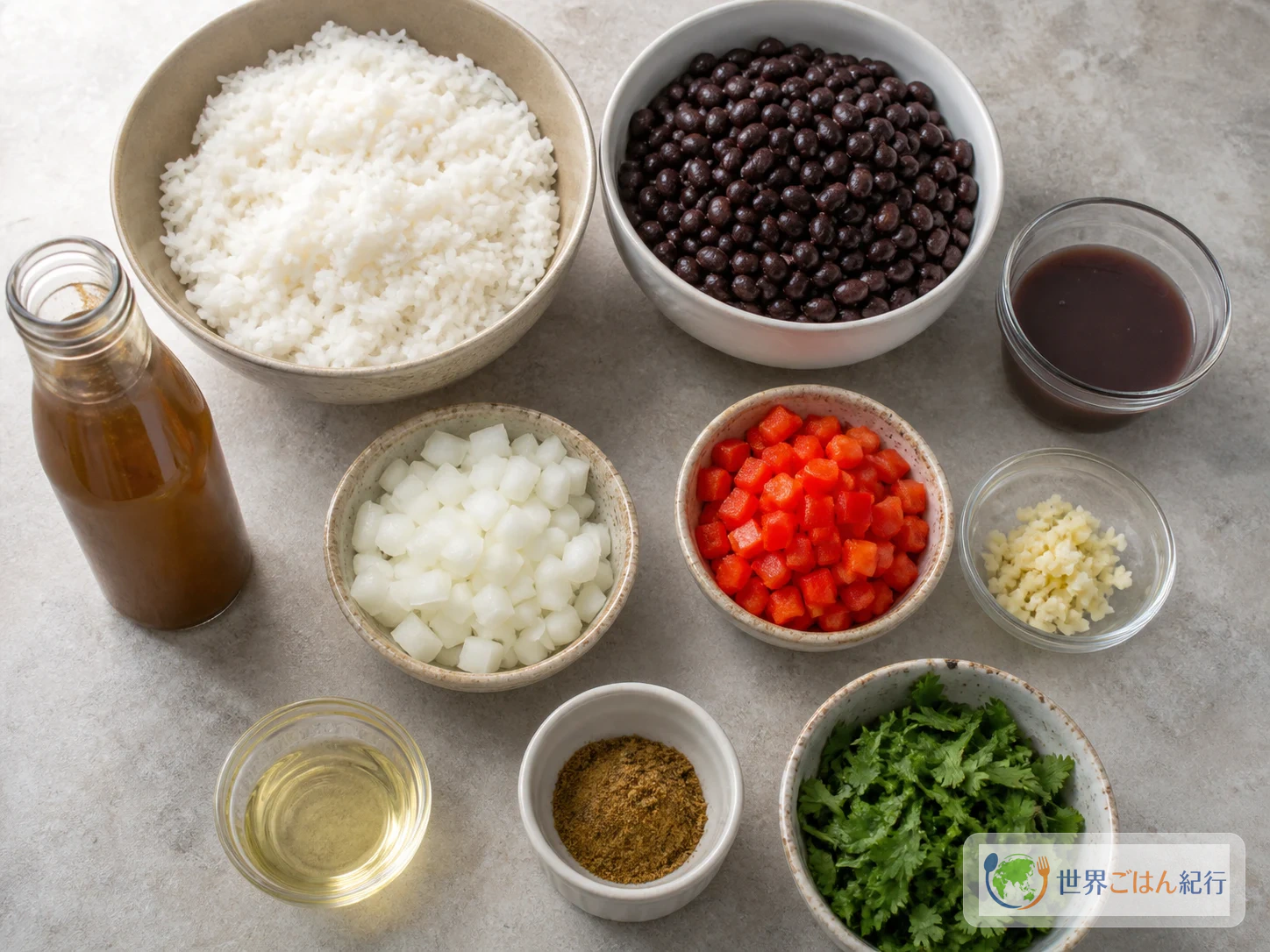
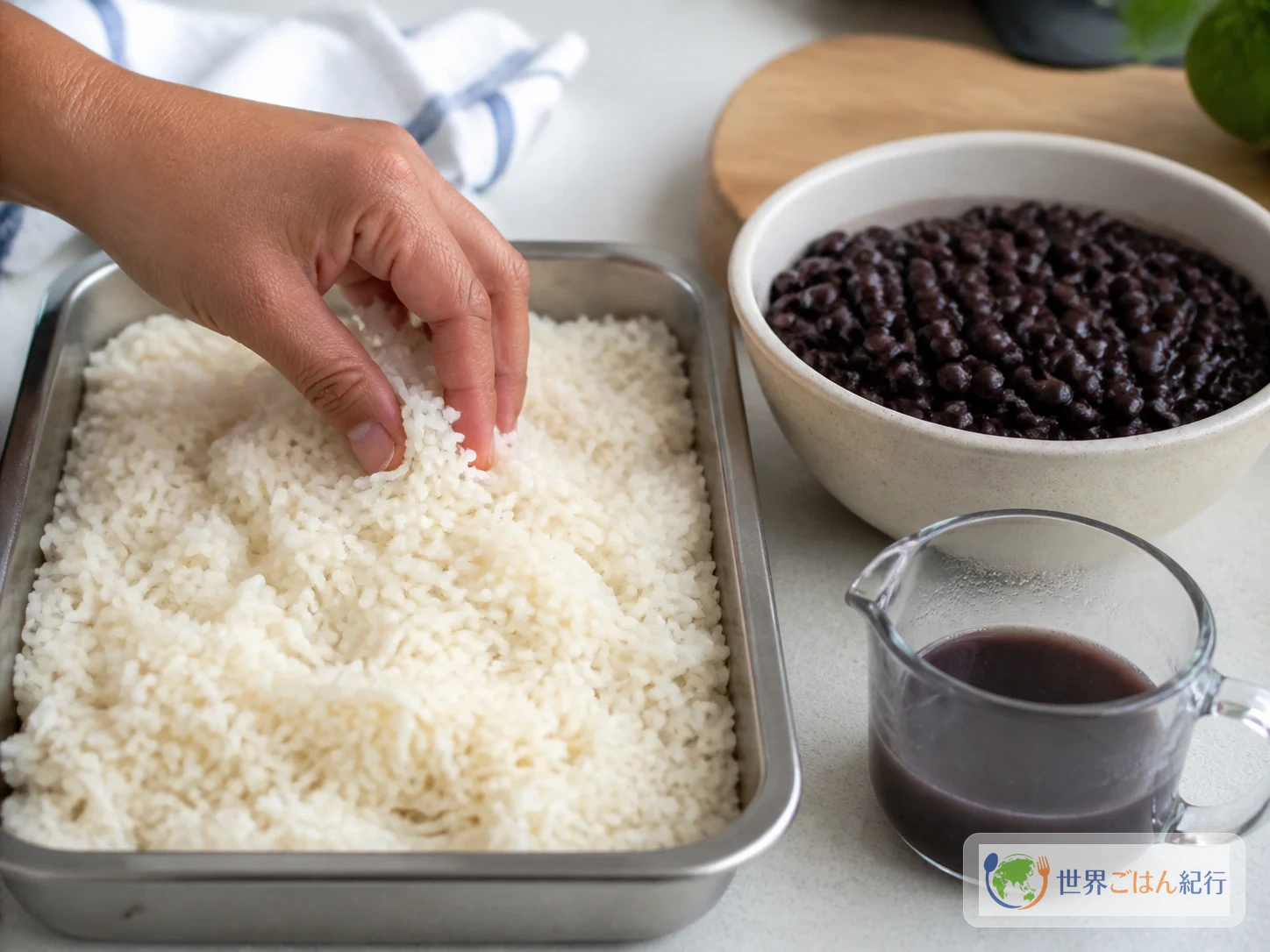
This makes 4 servings, starting from cooked rice and cooked beans. Rice from the day before is easiest to handle. If you cook it the same day, spread it in a shallow tray and refrigerate it once the steam settles. Don't pour away all the bean liquid; keep 120 ml of the seasoned liquid. The right amount of moisture, with the rice not dried out and the beans not turned into soup, is what balances the color of the black beans with the texture of the grains.
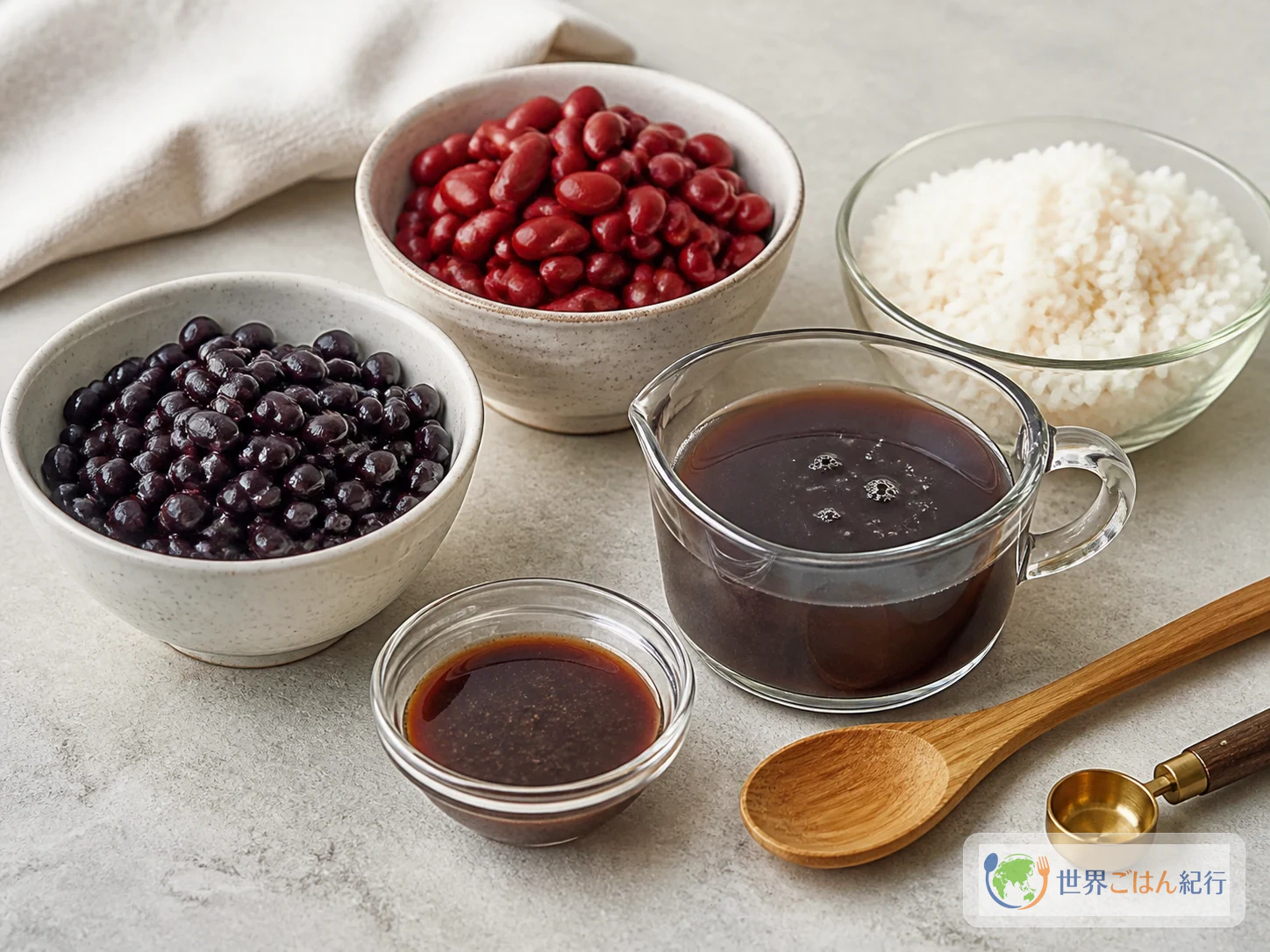
If you start from dried beans, soak 200 g of black beans in plenty of water for 6–8 hours, then boil them in fresh water until soft enough to crush between your fingers. Don't salt heavily at the start; decide the seasoning once the beans are tender. Set aside a portion of the cooked beans to weigh 400 g and keep 120 ml of the liquid, and you can move to the same steps you would use with canned beans.
Salsa Lizano adds layers of vegetable sweetness, acidity and spice to Costa Rican gallo pinto. If you can't get it, mix 20 ml Worcestershire sauce, 5 ml rice vinegar and 2 g sugar. The substitute tastes more acidic up front and doesn't reproduce the roundness of the vegetables in the local sauce, but it still does the job of tying beans and rice together. Worcestershire and bottled sauces contain different ingredients by brand, such as seafood, wheat or soy, so check the label if you have allergies.
Cumin is not an essential ingredient that defines gallo pinto. If you expect to use it in other bean or meat dishes, a jar is worth having. If you won't use up a 65 g jar and you already have black pepper at home, it is fine to skip it this time.
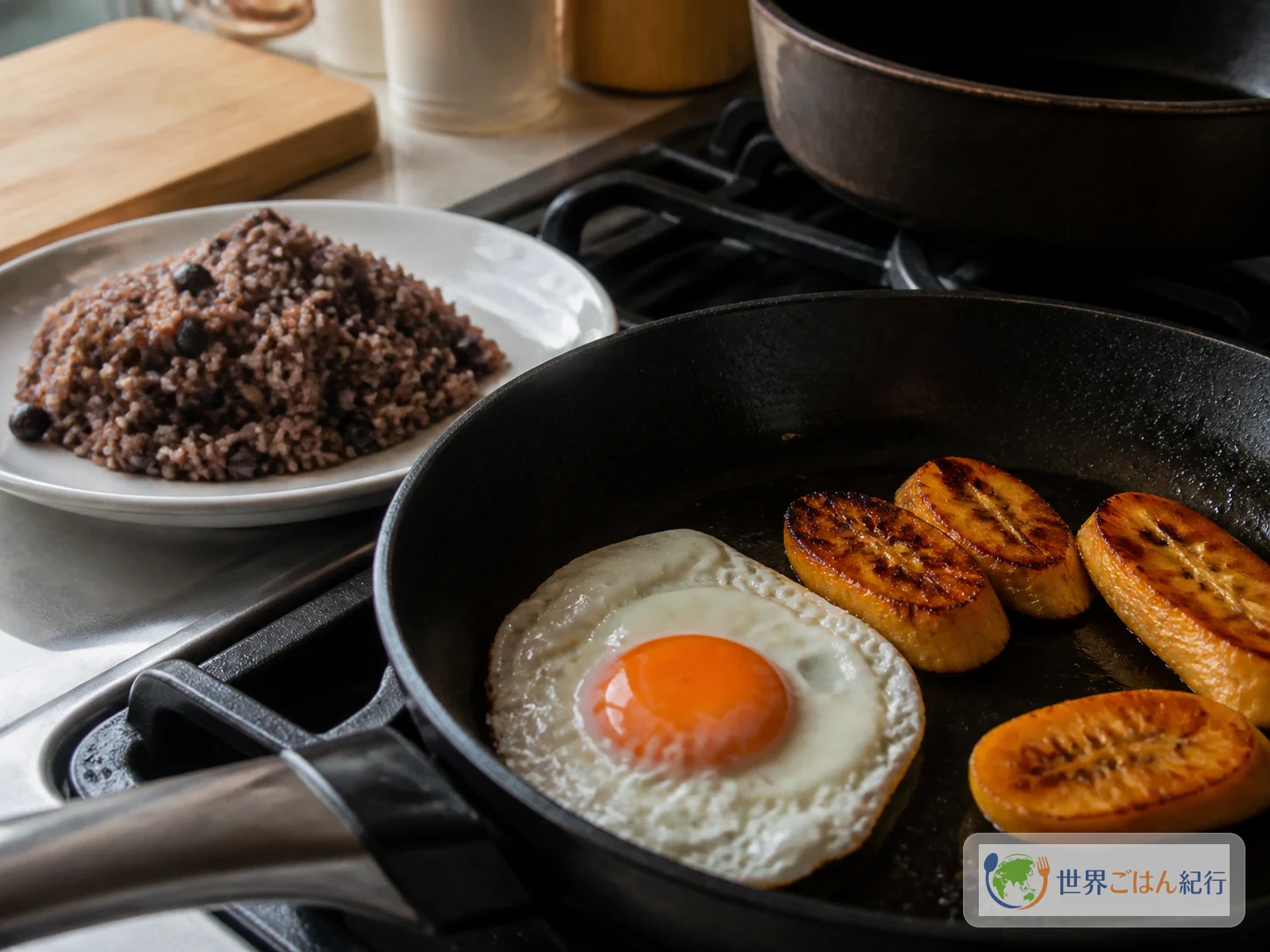
For serving, plan on 4 fried eggs, 2 ripe bananas and 4 corn tortillas. If you have real plantains, cut them 1 cm (1/2 in) thick; outside the tropics, ripe bananas that hold their shape are a good stand-in. A teaspoon per person of sour cream or plain yogurt gives a cool element that meets the saltiness of the beans. Leave out the eggs and dairy, check the ingredients of the sauce, and the breakfast becomes plant-based.
The nutrition figures are approximate for one quarter of the gallo pinto itself. Eggs, ripe bananas, tortillas and yogurt are not included, and the numbers shift with the salt in the beans and the sauce.
Method: finishing rice and beans in one pan
Cooking the rice and beans separately is not only a way to keep their flavors apart. If you reduce the beans first and then add the rice, flavor coats the surface of each grain and little liquid remains in the pan. Cook rice and beans together from the start and the bean liquid breaks the rice down, so you get a soft mixed rice rather than a stir-fried dish.
Compared with Costa Rica's casado, a lunch with several dishes on one plate, gallo pinto leans toward a breakfast in which the rice and beans themselves are stir-fried together. For other ways of eating rice with beans, Puerto Rico's arroz con gandules (in Japanese) and Brazil's baião de dois (in Japanese) make good comparisons.
Heat and fixes for keeping the grains distinct
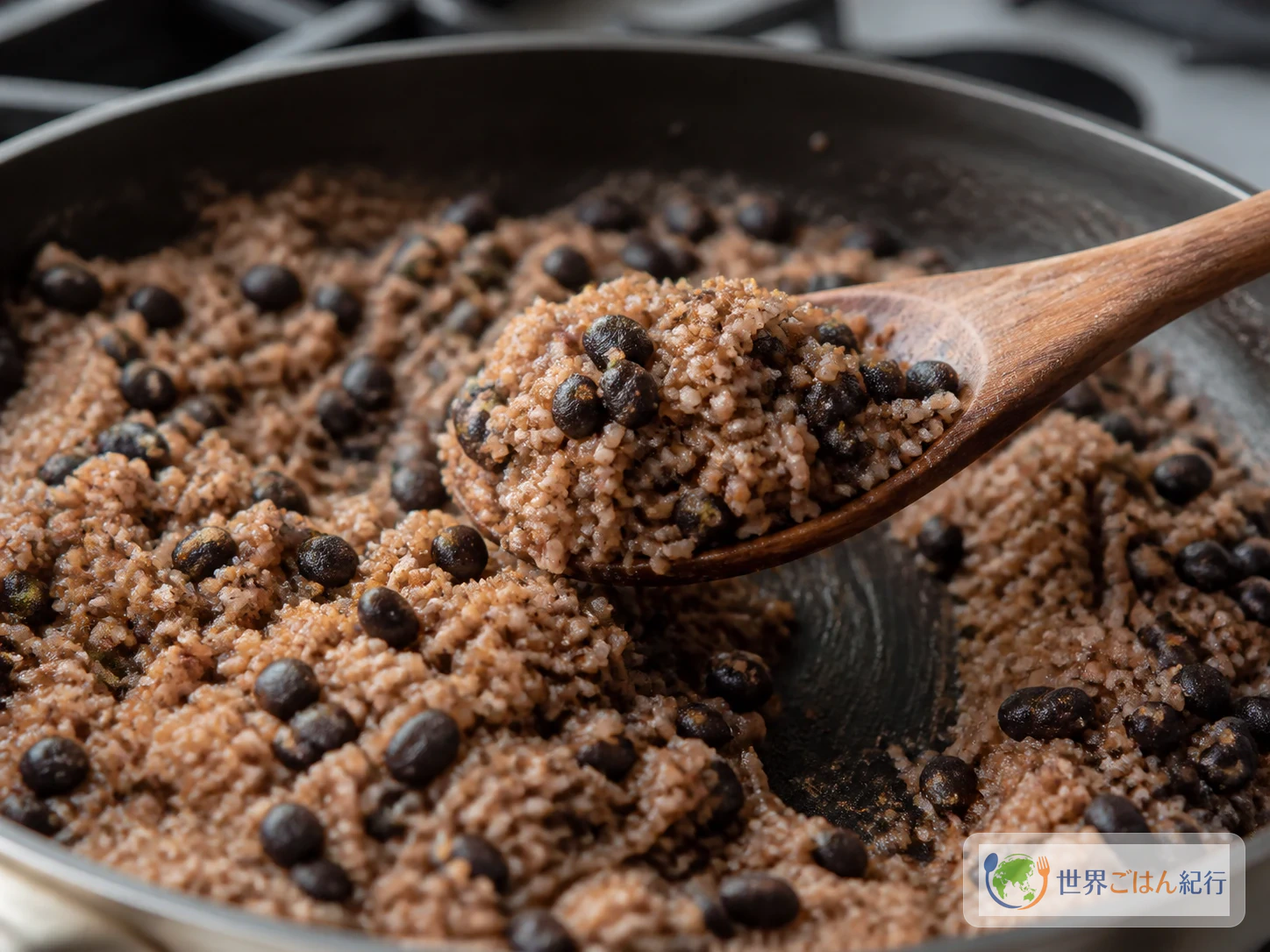
In finished gallo pinto the rice doesn't stay white; the color of the black beans has transferred here and there. If the whole pan turns an even brown paste instead, there was probably too much liquid or the rice was stirred too hard. The beans can break a little, but the aim is for skins and shapes to remain, and for rice to come along when you scoop with the spoon.
If liquid runs across the bottom of the pan after the beans go in, don't add the rice yet. Reduce for 1–2 minutes over medium-low heat until the spoon leaves a trail. If the rice is already in, leave the lid off and stir-fry it spread out over medium to medium-high heat for 2–3 minutes. If all four servings won't fit in the pan at once, cook in two batches so steam doesn't get trapped.
If the rice is hard and only the beans remain on the bottom, add 15 ml of the bean liquid or water and stir for just 1 minute over low heat. Add 120 ml at once and the rice absorbs too much water before the dryness is fixed. Fix the moisture before you add more Salsa Lizano, and recheck the salt at the end.
Cumin goes flat when overheated, and the sauce tastes saltier the more it reduces. Start light, and check aroma and salt after the rice goes in. The same goes for a Worcestershire substitute: reduce the bean liquid before adding any more.
Packing four servings into a 20 cm (8 in) pan means steaming for longer than you stir-fry. Turn from the bottom in an ordinary 24–28 cm (9–11 in) frying pan, and split into two batches if the quantity is large. You don't need to buy a special pot just for capacity.
Don't use sweetened black bean preserves; choose lightly salted boiled or canned beans. Worcestershire sauce and Salsa Lizano may contain wheat, soy or seafood depending on the product, so check the label if you have allergies. After cooking, don't leave the pan at room temperature. Move leftovers to a shallow container and chill them soon.
"Rice and beans" that change from region to region
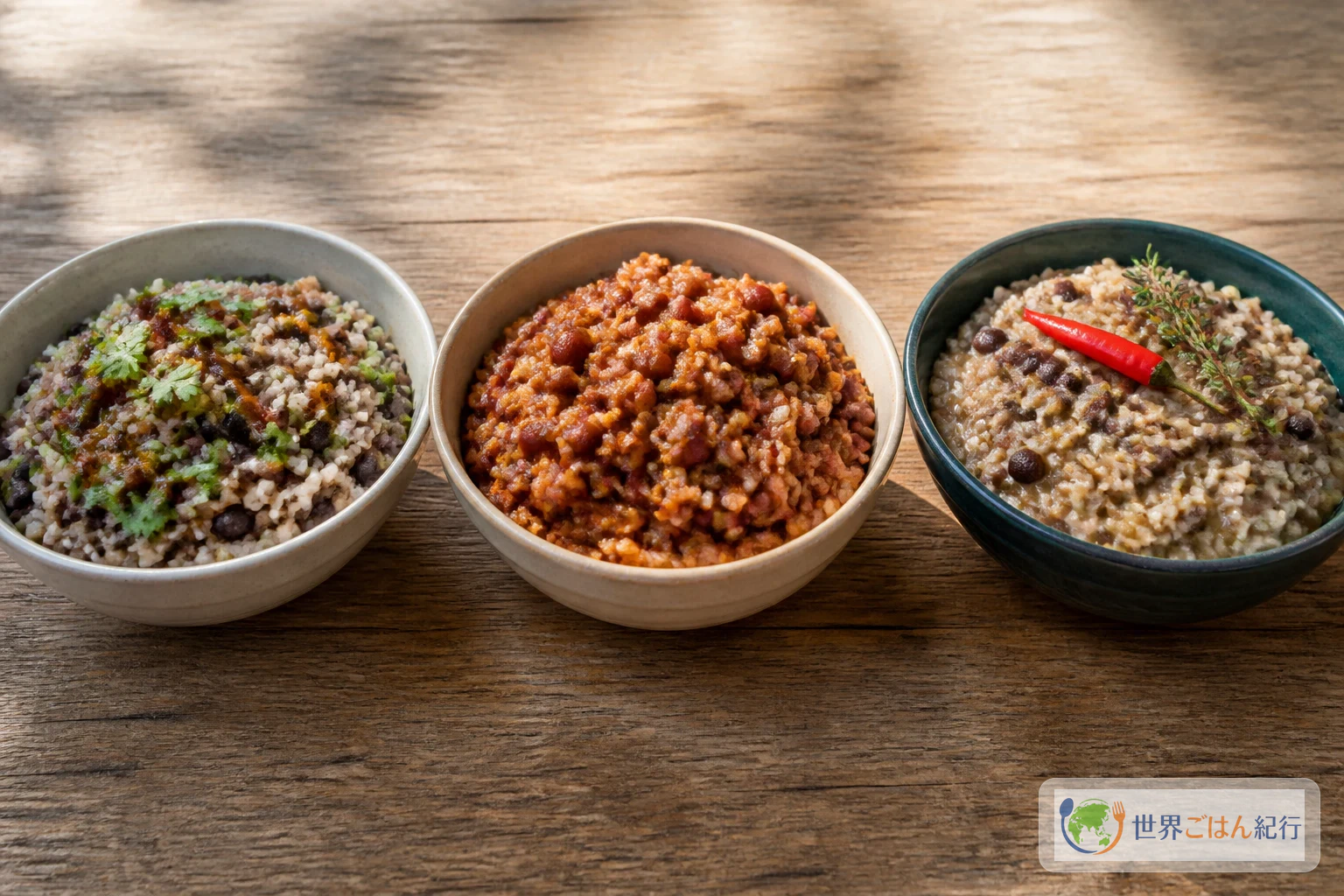
If you treat Costa Rican gallo pinto as one fixed recipe, the tables of each region become harder to see. Official food guides explain that the moisture and the amount of fat vary by region, and local recipe sources show differences down to the color of the beans, the aromatics and whether there is coconut milk. When you recreate it outside Costa Rica, deciding first which region's flavor you are making keeps substitutions from becoming confusing, more than fixing a single dish name.
| Region or name | What is said of it locally | To get close in a home kitchen |
|---|---|---|
| Central Valley and San José gallo pinto | Black beans, onion, sweet pepper, cilantro, Salsa Lizano. A moist breakfast dish | Use the quantities on this page as written, and don't reduce the bean liquid too far |
| Guanacaste gallo pinto | Red beans, garlic and onion, made with somewhat more fat. Some versions go light on cilantro | Swap the black beans for red kidney beans, raise the oil to 35 ml and leave out the cilantro finish |
| Limón "rice and beans" | Coconut milk, red or black beans, with hot chili and thyme | Use coconut milk from the stage of cooking the rice; don't stir it into finished gallo pinto |
| Nicaraguan gallo pinto | Many households use red beans; descriptions mention frying rice and beans separately and then combining them | Switch to red kidney beans, drop the Salsa Lizano, red bell pepper and cilantro, and fry separately |
The black beans of the Central Valley version color the rice while the skins stay mostly intact, and that is where the texture comes from. The Guanacaste version is described as one with more red bean and fat presence, so it has a different flavor axis from the Central Valley. The Limón version is not the same dish under the same name; it is another plate where the ingredients and methods of the Caribbean coast come first. Pour coconut milk over a finished Central Valley version and only the surface of the rice gets heavy, so build it from the stage of cooking the rice.
The difference from Nicaragua is not one of better or worse, but of how the beans meet the rice. In the Central Valley version the beans are first brought together with aromatics and sauce, then coated onto the rice. To lean toward the Nicaraguan version, warm red beans in a separate pot, fry the rice in oil, and combine them, and the line between beans and rice remains. Because the two countries contest the name and origin of the dish, it is more accurate not to declare "only this one is authentic" and to read the regional differences as characteristics of the plate.
How it became a morning plate, and why two countries love it
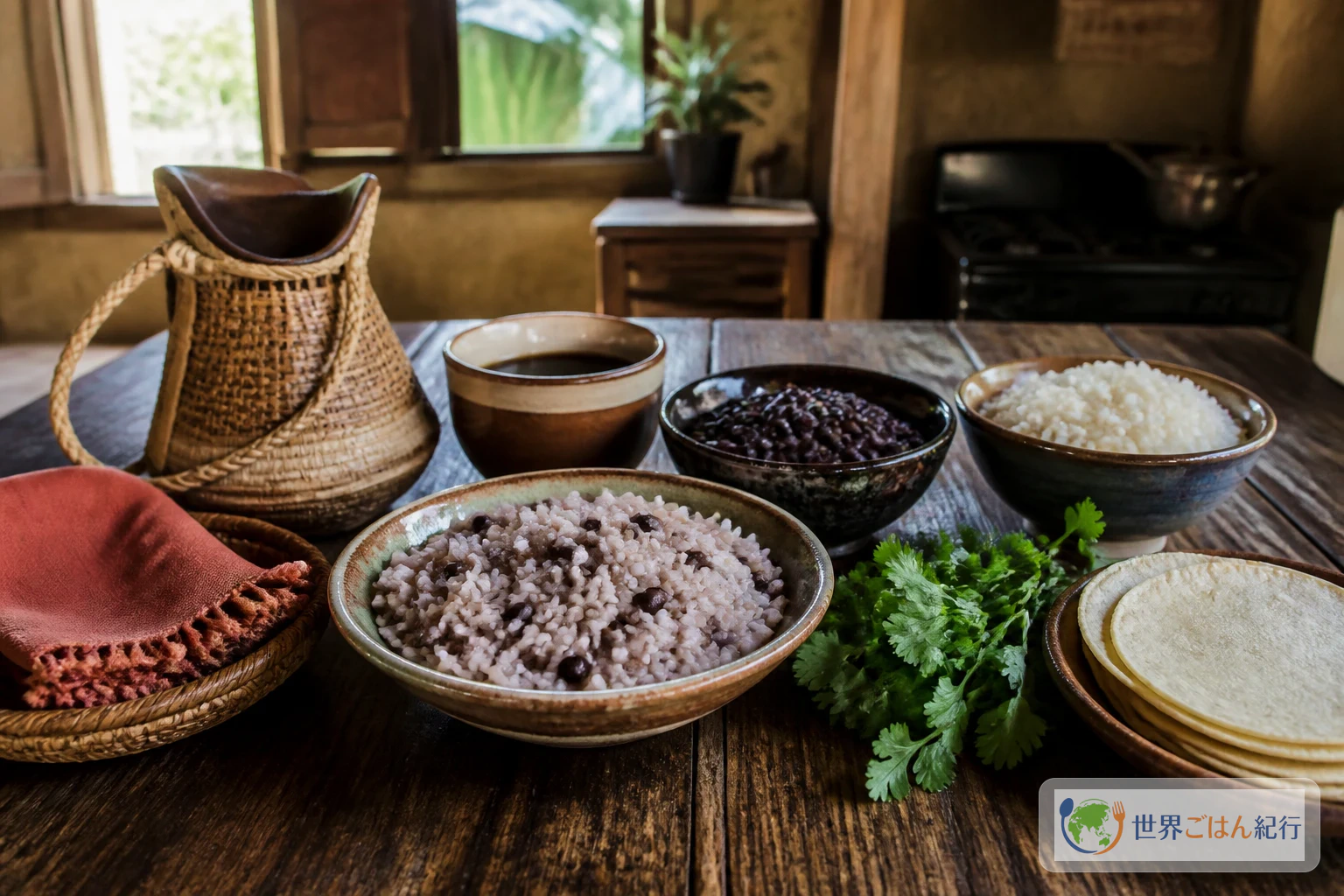
The origin of gallo pinto can't be traced back to one cook or one town. There are several theories about the name, and the pairing of rice and beans itself spans a wide area of Central America and the Caribbean. Research material from the University of Costa Rica summarizes that beans were an important food in Central America from prehistoric times, that rice took hold after the arrival of the Spanish, and that it grew in importance with the expansion of coffee exports in the 19th century. The food culture of combining rice and beans is also discussed in connection with the influence of Afro-Caribbean laborers who migrated in the 19th century to build the railway.
This is not a simple story of a dish that came from outside. Beans that suited the land, rice that spread later, and the cooking methods of people on the move joined the oil and aromatics at hand and turned into a different breakfast in each household. Not fixing the origin in one place also helps explain why gallo pinto is talked about as an everyday food in both Costa Rica and Nicaragua.
In the Costa Rica Tourism Board's introduction, gallo pinto comes out in the morning with eggs, tortillas, sweet bananas and coffee. It also describes the habit of brewing coffee through a cloth filter, the chorreador, so it is closer to understand gallo pinto as part of how a morning is put together than as a stir-fried rice by itself. Where the midday casado gathers meat and salad onto one plate, gallo pinto reheats the previous day's rice and beans and places them at the entrance to the day with an egg and something sweet.
The Nicaraguan embassy's introduction to its food culture also treats gallo pinto, made with red beans and rice, as a typical dish. Meanwhile, Costa Rican food guides and English-language articles on food culture describe the combination of black beans, Salsa Lizano, cilantro and sweet pepper as what makes it Costa Rican. Once you know both, buying black beans and Lizano is not "getting closer to the one right answer" but choosing the flavor of the Central Valley.
Making ahead, and eating it the next day
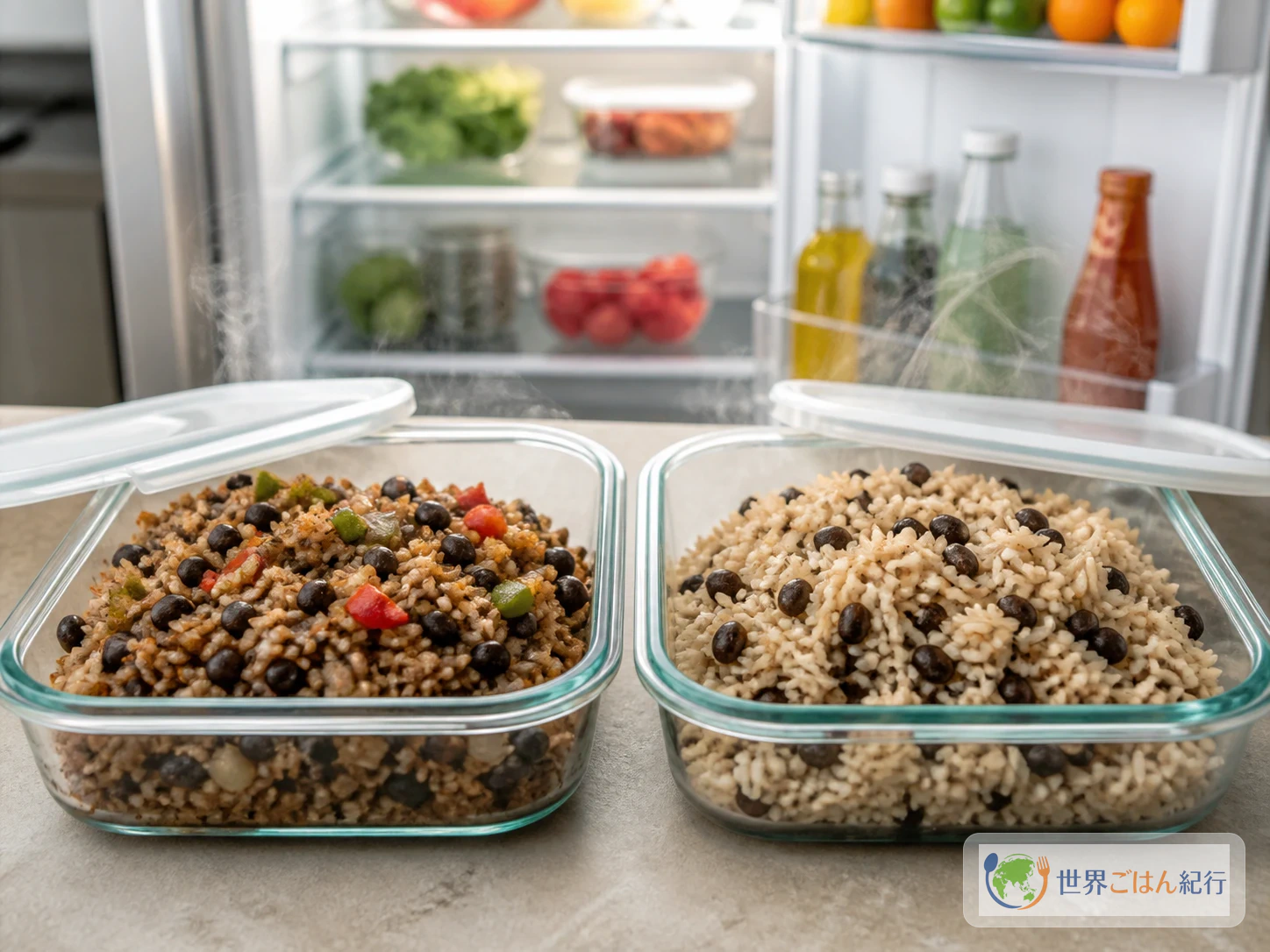
Gallo pinto is often explained as a dish born from using leftover rice, but that doesn't mean cooked rice can be left at room temperature. If you won't finish what you made, don't let it cool in the pan. Spread it in a shallow container, bring the heat down quickly, then seal and refrigerate. The next day take out only what you will eat and reheat it until it is steaming hot through the center. Stored food isn't necessarily safe just because the smell and color look normal, so don't keep it long; eat it soon.
Store the eggs and ripe bananas separately. If you chill it with the egg on top the yolk hardens, and if you mix bananas into the rice, moisture and sweetness transfer. The next day, put only the gallo pinto in a frying pan over medium heat, add 1–2 tsp of bean liquid or water and loosen it. To bring back the toasty surface, leave the lid off and stir-fry it spread out for 2–3 minutes. If you freeze it, seal single portions, thaw them in the refrigerator or microwave, and don't thaw them at room temperature.
FAQ
Q1. Can I make it with freshly cooked rice?
You can, but the grains separate less easily than with cold rice from the day before. Spread 600 g of freshly cooked rice in a shallow tray, refrigerate it soon after the steam settles, and use it once the surface moisture has dried. If it goes into the beans hot, it tends to soak up the bean liquid and turn soft.
Q2. Can I swap the black beans for red kidney beans?
Yes. Red beans give a brighter color and lean toward Guanacaste and Nicaragua. Don't use Japanese sweet simmered black beans, which are strongly flavored with sugar and soy sauce; choose lightly salted boiled or canned beans. If you use canned, taste the liquid for salt and, if needed, dilute it with water to 120 ml.
Q3. Can I make it without Salsa Lizano?
Yes. Use a substitute made from 20 ml Worcestershire sauce, 5 ml rice vinegar and 2 g sugar, and start with only 20 ml. The aroma is more direct than Lizano's, so keep a little of the bean liquid back and adjust the salt at the end. If you skip the substitute and use only salt and black pepper, you get a breakfast that centers on the flavor of beans and vegetables.
Q4. Will it satisfy me without meat?
The dish itself uses no meat. Serving it with eggs, yogurt and tortillas, or adding 50–100 g more beans, adjusts the amount for a breakfast. For a fully plant-based version, leave out the eggs and dairy and also check the ingredients of the sauce.
Q5. I mixed the beans and rice and it turned mushy. Can I fix it?
You can't fully restore the original grains, but you can get closer to something eaten happily. Take off the lid, spread it thinly in a wide frying pan and stir-fry over medium heat for 2–3 minutes. If it is still wet, split it into two batches. Adding more liquid or stirring hard only increases the stickiness, so if texture matters most, use it as a filling for grilled tortillas or as a bean rice dish, and leave the distinct grains of the Central Valley style for next time.
Q6. Are gallo pinto and casado the same dish?
No. Gallo pinto is the center of a breakfast, rice and beans stir-fried together, while casado is a lunch arrangement that puts rice, beans, meat or fish, salad and sweet plantain on one plate. You can put gallo pinto on a casado plate, but that doesn't swap one dish name for the other.
Sources
- Visit Costa Rica, "Culinary Adventures" https://www.visitcostarica.com/things-to-do/culinary-adventures (English, accessed and checked 26 August 2026)
- Visit Costa Rica, "Gallo Pinto" https://www.visitcostarica.com/press/press-releases/culinary/gallo-pinto (English, accessed and checked 26 August 2026)
- Universidad de Costa Rica, Kérwá, Patricia Vega Jiménez, "Gastronomía e identidad nacional: el caso del gallo pinto" https://kerwa.ucr.ac.cr/items/01407fb1-4eb8-4dbd-bb63-0083c045168c (English abstract, accessed and checked 26 August 2026)
- Embajada de Nicaragua, "Gastronomía" https://embajadadenicaragua.org/pages/gastronomia.php (Spanish, accessed and checked 26 August 2026)
- Eater, "A Guide to Costa Rican Food" https://www.eater.com/21516828/costa-rica-food-explainer (English, accessed and checked 26 August 2026)
- Unilever Food Solutions Latinoamérica, "El gallo pinto, plato representativo de todas las regiones de Costa Rica" https://www.unileverfoodsolutionslatam.com/tendencias/lizano/gallo-pinto.html (Spanish, accessed and checked 26 August 2026)
- Unilever Food Solutions Latinoamérica, "Condimentos en Costa Rica: Salsa Lizano y otros" https://www.unileverfoodsolutionslatam.com/tendencias/lizano/condimentos-en-costa-rica.html (Spanish, accessed and checked 26 August 2026)
- Laylita, "Gallo Pinto" https://www.laylita.com/recetas/gallo-pinto/ (Spanish, accessed and checked 26 August 2026)
- Morpho Evasions, "The Gallo Pinto Recipe" https://morphocostarica.com/en/the-gallo-pinto-recipe/ (English, accessed and checked 26 August 2026)
- Ministry of Agriculture, Forestry and Fisheries of Japan (MAFF), "Smart ways to use your refrigerator: storing food well" https://www.maff.go.jp/j/syouan/seisaku/foodpoisoning/frige.html (Japanese, accessed and checked 26 August 2026)


