The Story of Casado: A Whole Lunch on One Plate
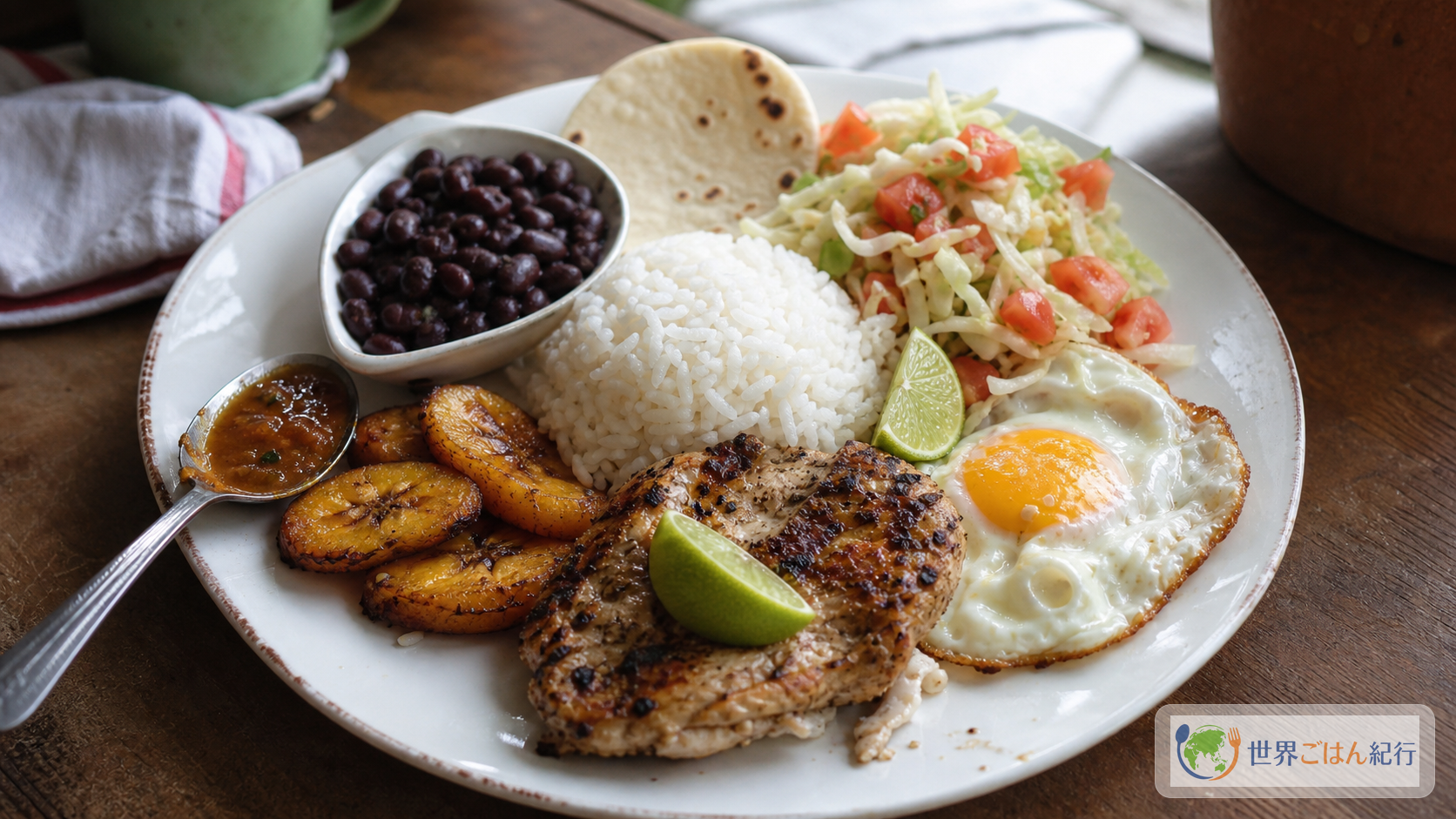
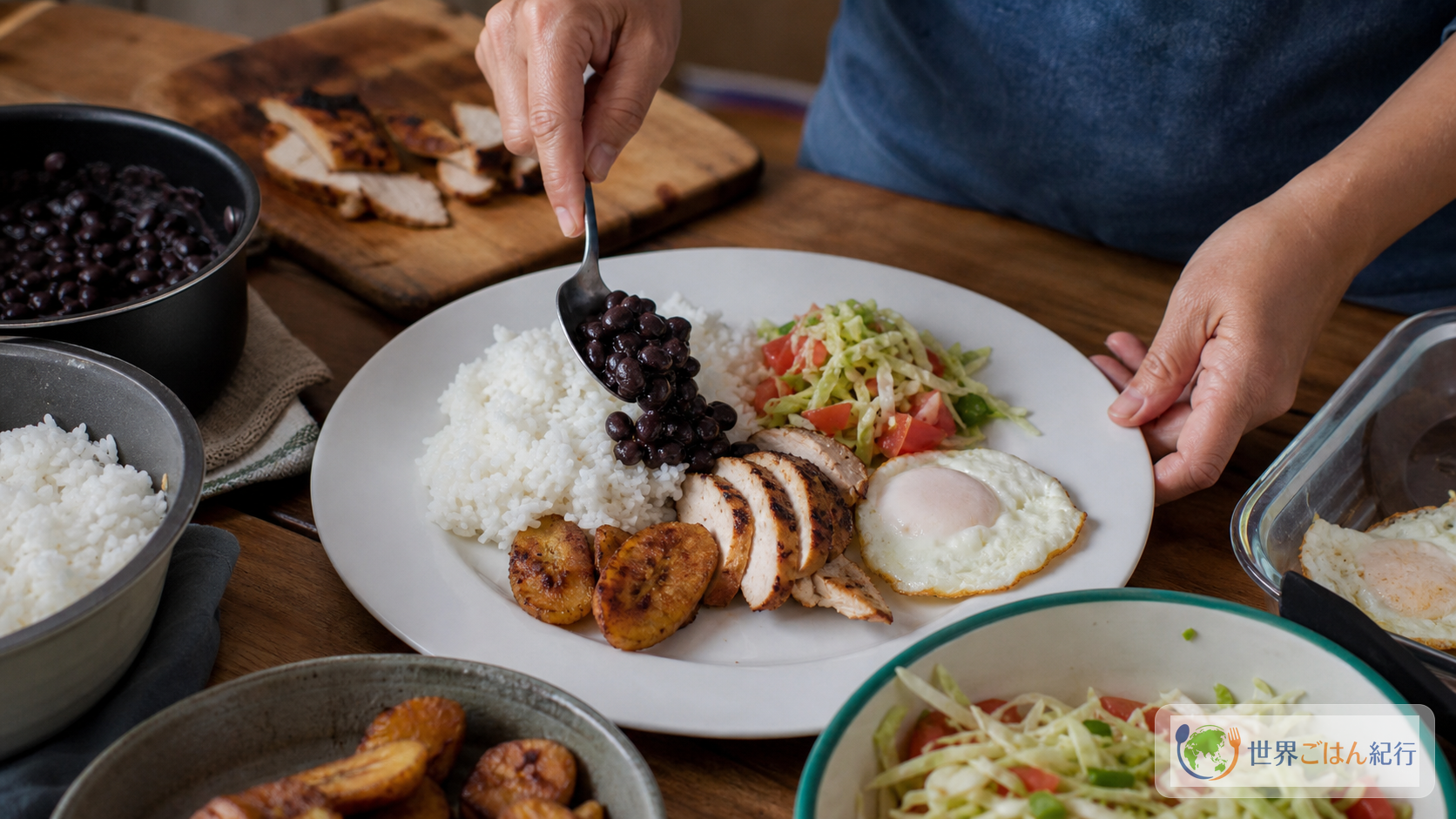
Order lunch at a Costa Rican diner and a little of everyday life lands on the plate: white rice, beans, grilled meat, sweet plantain, a tart salad. It is not a banquet. It is the plate you can see will carry you through the afternoon, whether you are working or traveling.
Casado is the set-meal plate commonly served at sodas, the casual neighborhood eateries of Costa Rica. The word means "married," and the usual explanation is that rice and beans, meat or fish, salad and plantain come together on one plate. There are several theories about the origin, but what matters is the everyday logic of pulling separate side dishes into a single lunch.
At home, the hard part is not an unusual seasoning. It is the sequence: cook the rice, keep the beans from getting watery, grill the chicken, make the plantains sweet without scorching them, and use the salad's acidity to lighten everything. Once you see that order, you can get quite close without any special pot.
Among other Central American home cooking, Honduras's baleadas (in Japanese) leans toward breakfast, with beans wrapped in a flour tortilla, and Nicaragua's vaho (in Japanese) is a weekend dish of meat and root vegetables steamed in a big pot. Casado sits between the two: the everyday midday plate.
Casado Is a Costa Rican Lunch of Rice, Beans and a Main on One Plate
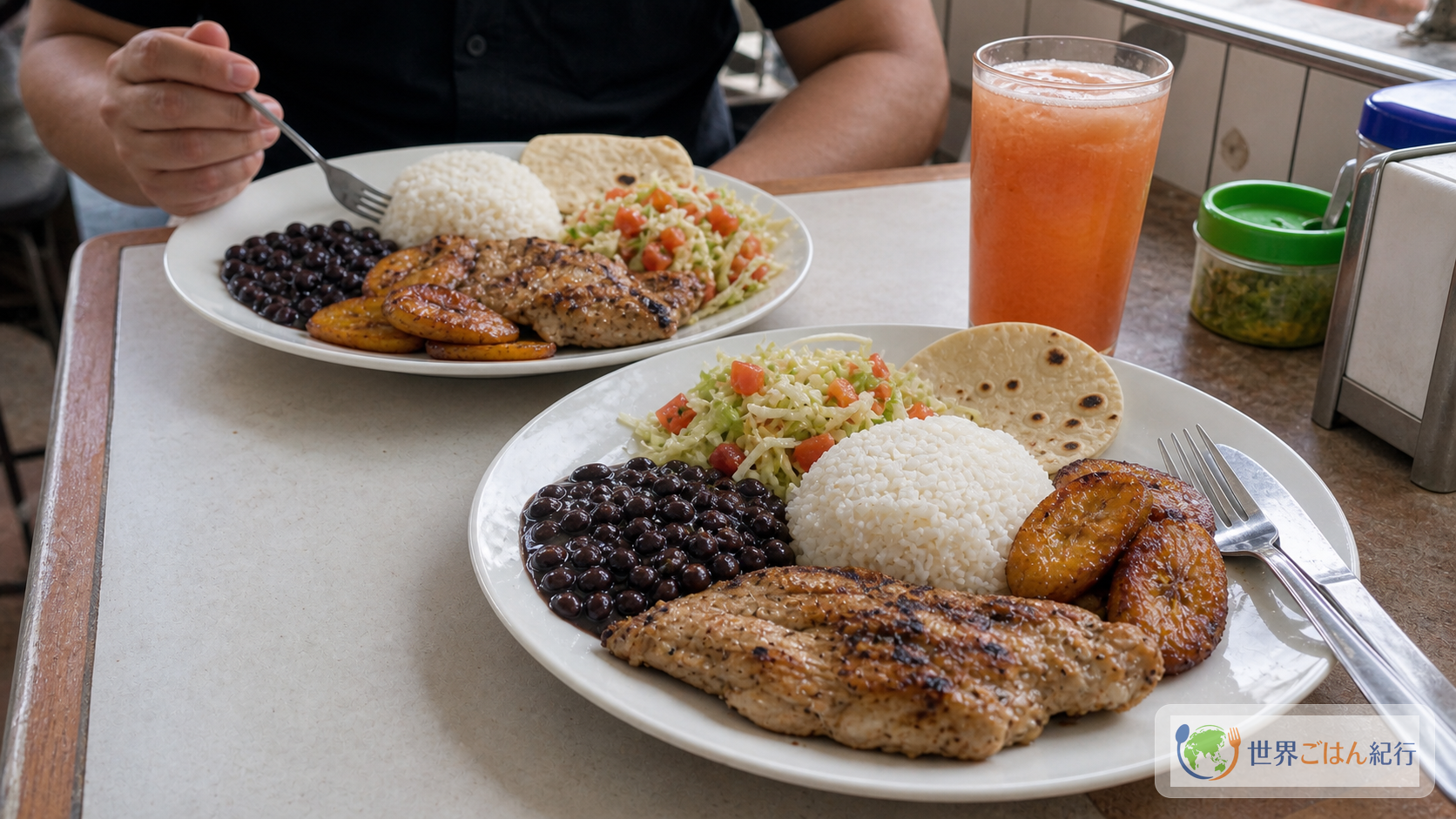
Visit Costa Rica's food introduction describes casado as a plate with black beans, white rice, sweet plantain, cabbage, a fried egg and more. Anywhere's Costa Rican food guide also describes casado as a typical meal of rice, beans, salad, beef, fish or chicken, and fried plantain. The Wikipedia entry for Casado likewise lists rice, black beans, plantain, salad, tortillas and an optional protein as the basics.
| Element | What you commonly see in Costa Rica | The principle to keep at home |
|---|---|---|
| Rice | White rice, often served separately rather than as gallo pinto | Cook slightly firm so it can take the bean juices |
| Beans | Black or red beans | Canned black beans, or unsweetened canned red kidney beans |
| Main | Chicken, beef, pork or fish | Start with chicken thighs for dependable cooking |
| Sweetness | Ripe plantain | If you cannot find plantain, briefly fry firm bananas |
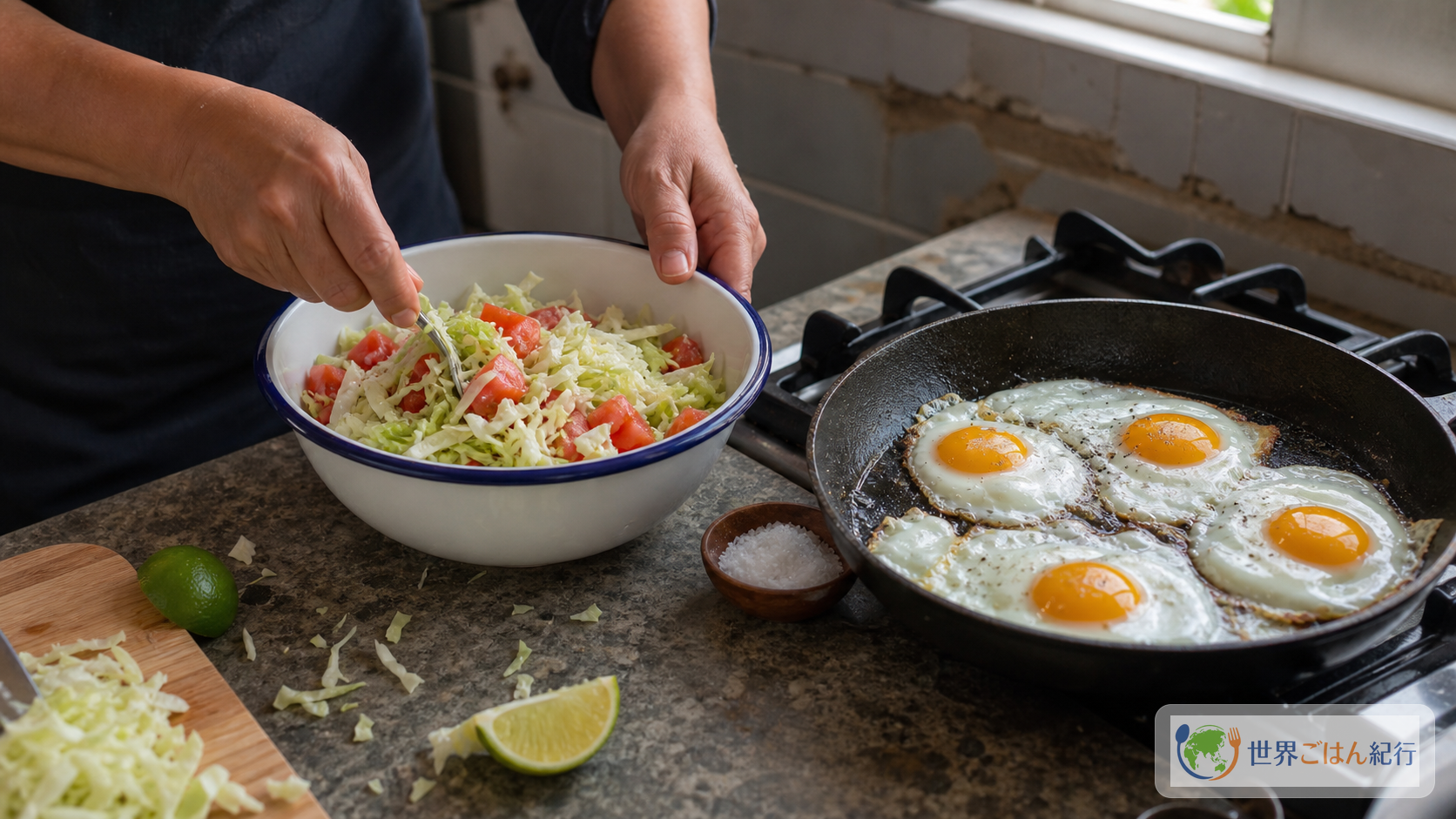
| Acidity | Cabbage, tomato, lime, vinegar | Make a separate salad to cut the heavy rice and beans |
| Side bite | Tortilla, fried egg, picadillo | Add a fried egg and store-bought tortillas for the soda feel |
This article does not try to define what a Costa Rican household does. It focuses on a way to cook that keeps the roles of rice, beans, main, sweet plantain and acidity intact with ingredients you can buy. Salsa Lizano is the classic local sauce but can be hard to find, so the recipe approximates a tart brown sauce with Worcestershire sauce, vinegar, soy sauce, sugar and cumin.
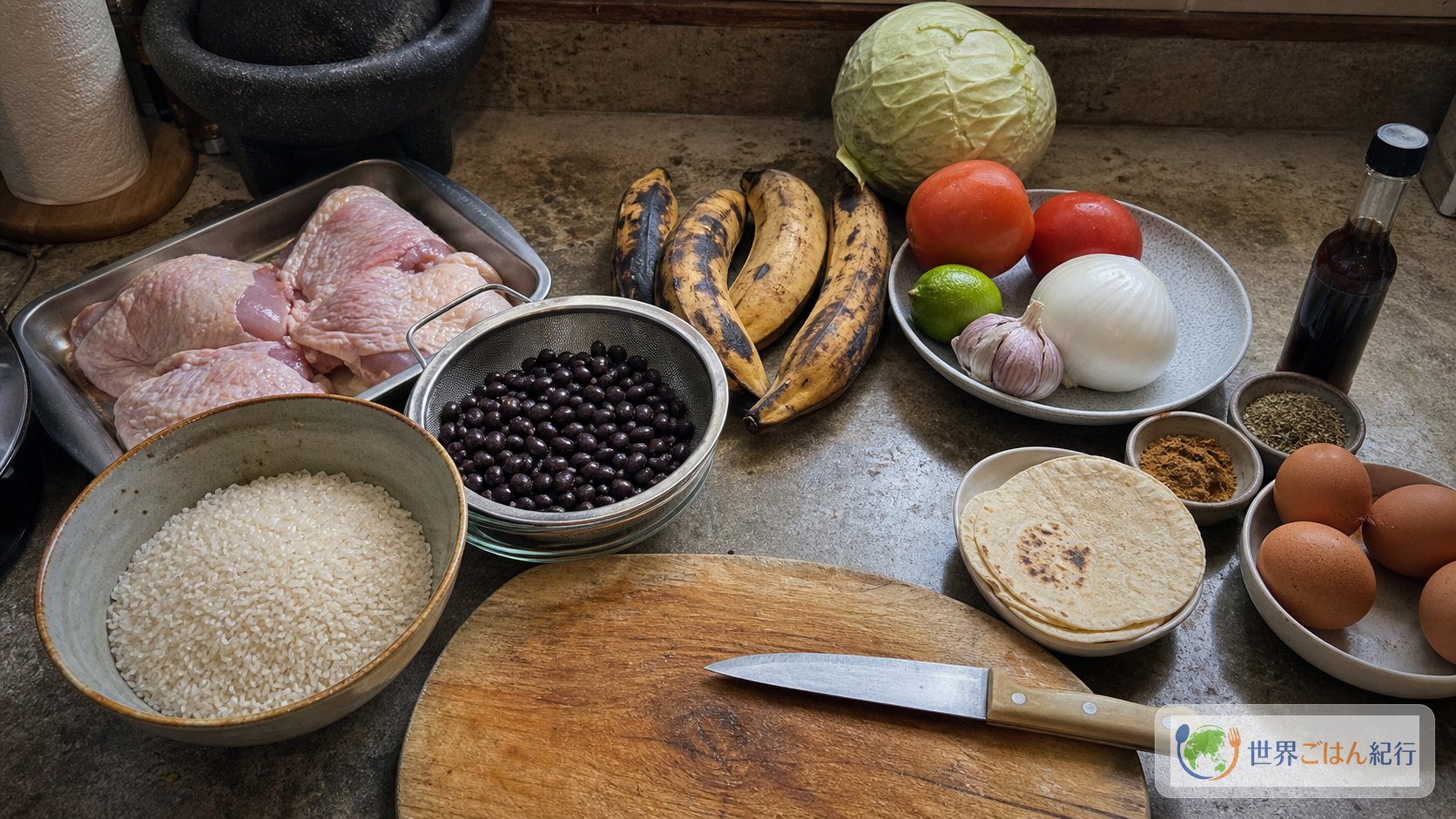
Ingredients (serves 4)
The two items people stumble over when shopping are black beans and plantains. For the beans, use salted canned (cooked) beans, not sweetened ones. Plantains can sometimes be found at international grocers; if not, use bananas that still have some firmness and fry them without adding sugar. Overripe bananas fall apart and read as dessert.
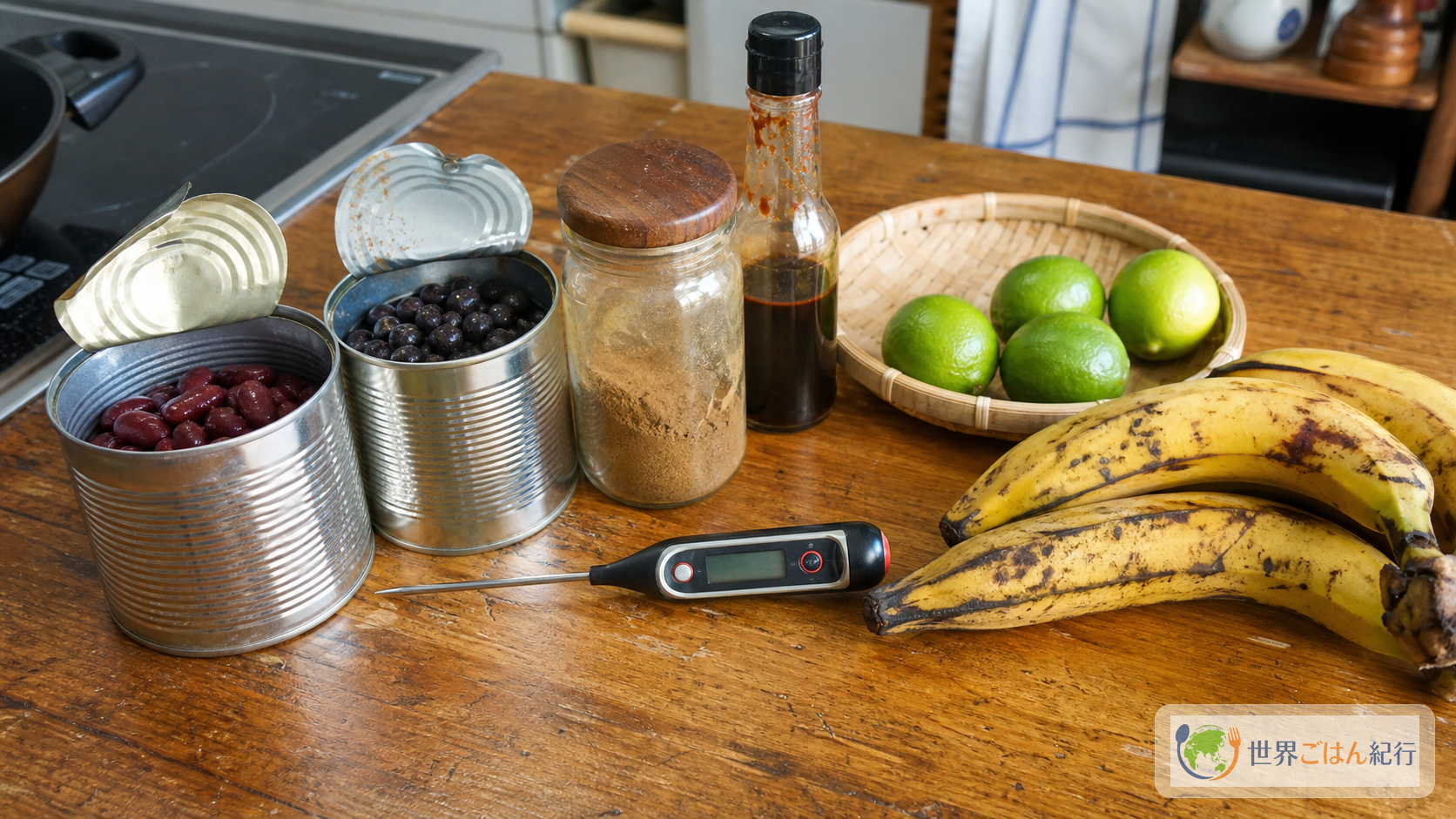
On a day when you cannot find canned black beans, unsweetened canned red kidney beans will do. Black beans taste more Costa Rican, but red beans can still play the role of a small dish of beans that supports the rice and meat.
Cumin is not the star, but a small amount ties the base of the beans and chicken together. Substituting curry powder pushes the aroma in a different direction, so it is safer to keep a small jar of ground cumin.
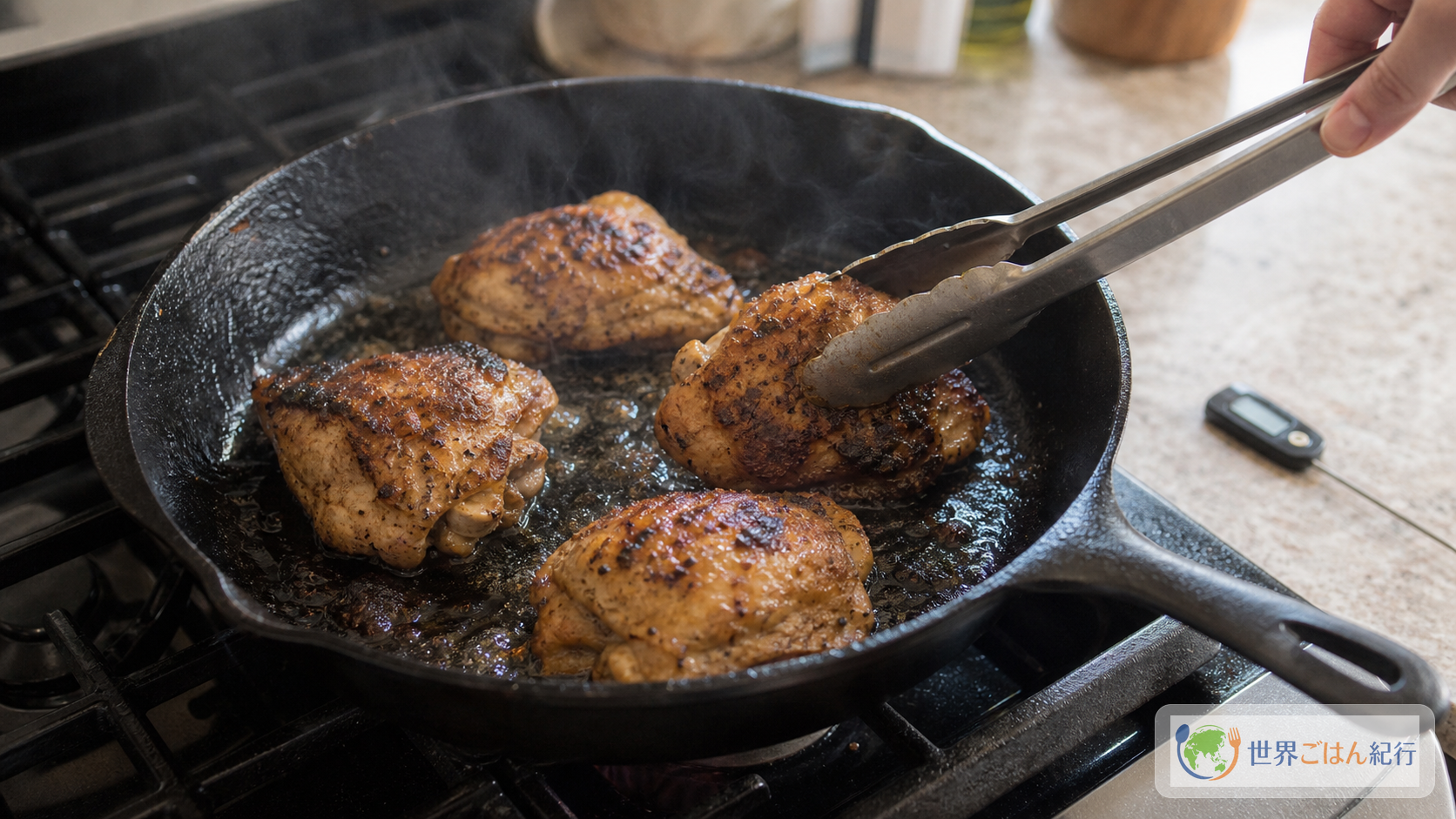
Chicken thighs can brown on the outside while the thick part stays hard to judge. Do not rely on color; aim for an internal temperature of 74°C (165°F), and you can build the rest of the plate with confidence.
Method: Landing the Rice, Beans, Meat and Sweet Plantain at the Same Time
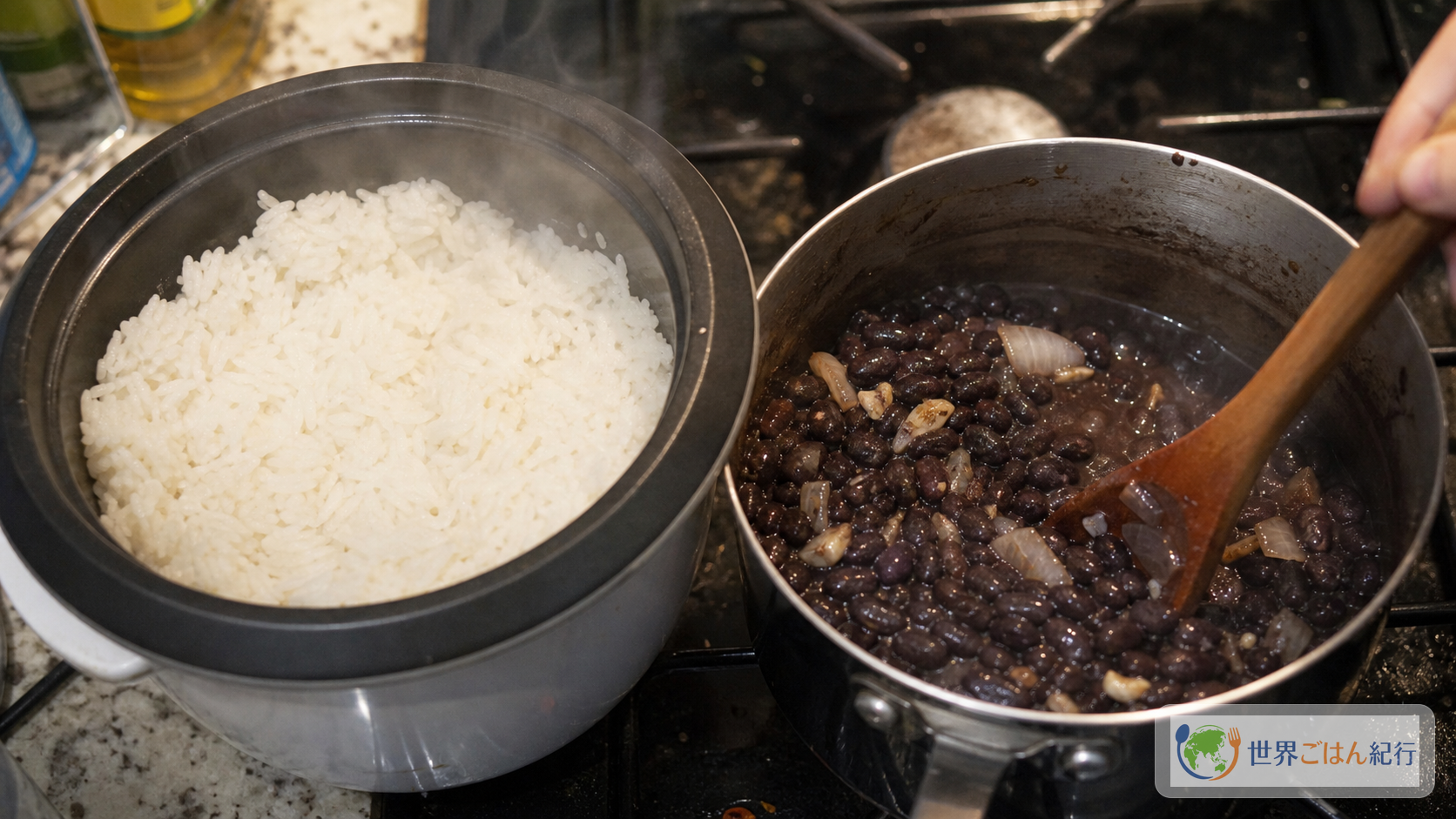
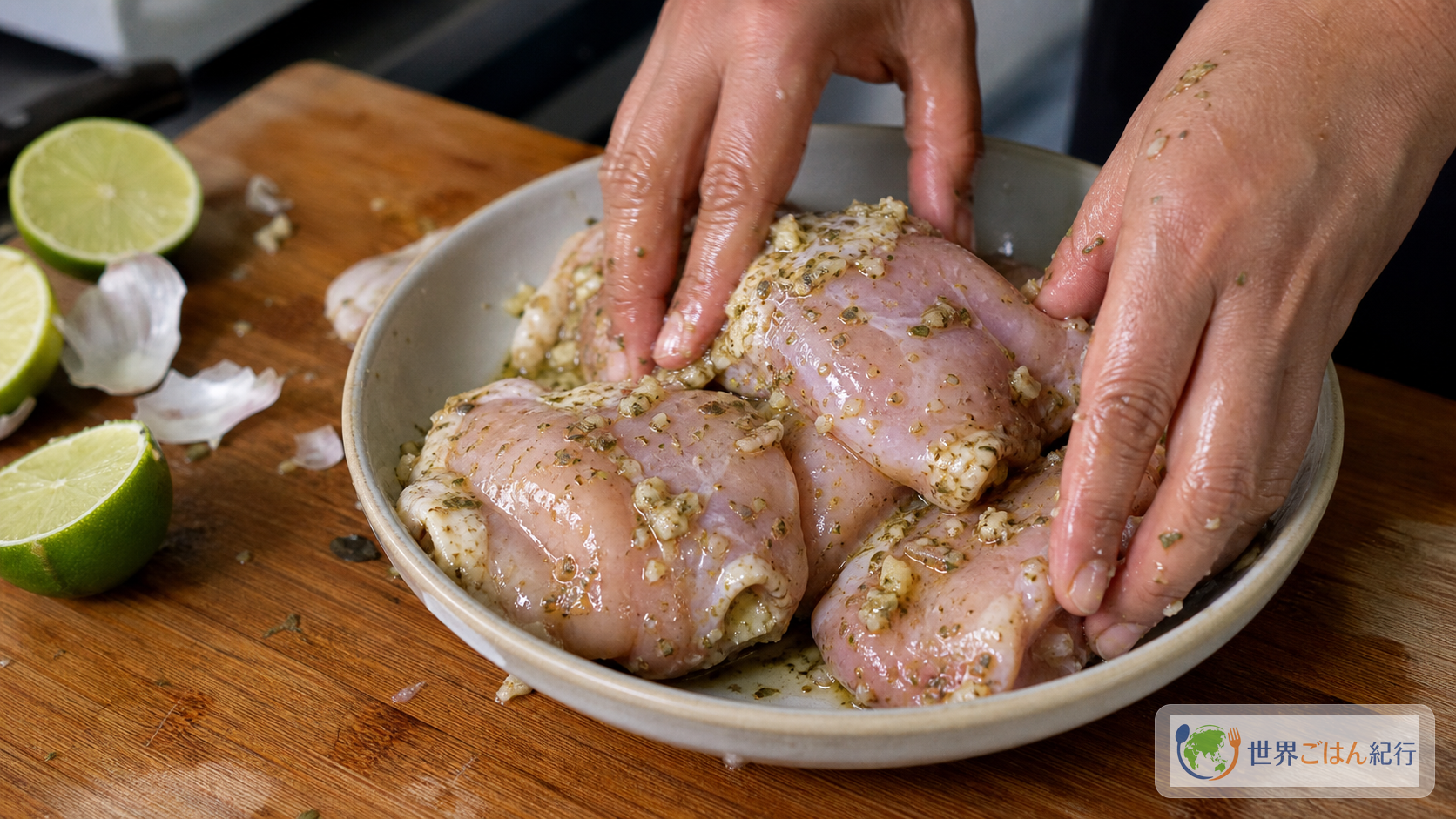
Casado is not a one-pot dish. You make the rice, beans, meat, something sweet and something sour separately, then place them on one plate at the end. Start the rice first, season the chicken, warm the beans, then cook the meat and plantains, and nothing on the plate cools off.
Getting Closer to the Original: Substitution Table
If you insist on an exact replica, casado stalls at the grocery store. What to preserve is not the dish's name but the roles of rice and beans, a main, sweetness and acidity. As long as you keep those, ordinary supermarket ingredients get you close to a soda plate.
| Hard-to-find item | Ideal | Substitute | What changes |
|---|---|---|---|
| Black beans | Salted canned black beans | Canned red kidney beans | Color and aroma are a bit lighter |
| Plantain | Ripe, with black spots | Firm bananas | Sweeter and more fragile; do not slice thin |
| Salsa Lizano | Costa Rican salsa Lizano | Worcestershire, vinegar, soy sauce, sugar, cumin | Gets close on acidity, but the vegetable aroma of the local sauce is weaker |
| Tortilla | Corn tortillas | Flour tortillas | Less aroma, but still scoops up rice and beans |
| Main | Chicken, beef, pork or fish | Chicken thighs | Cooks reliably the first time and teaches you the plate's sequence |
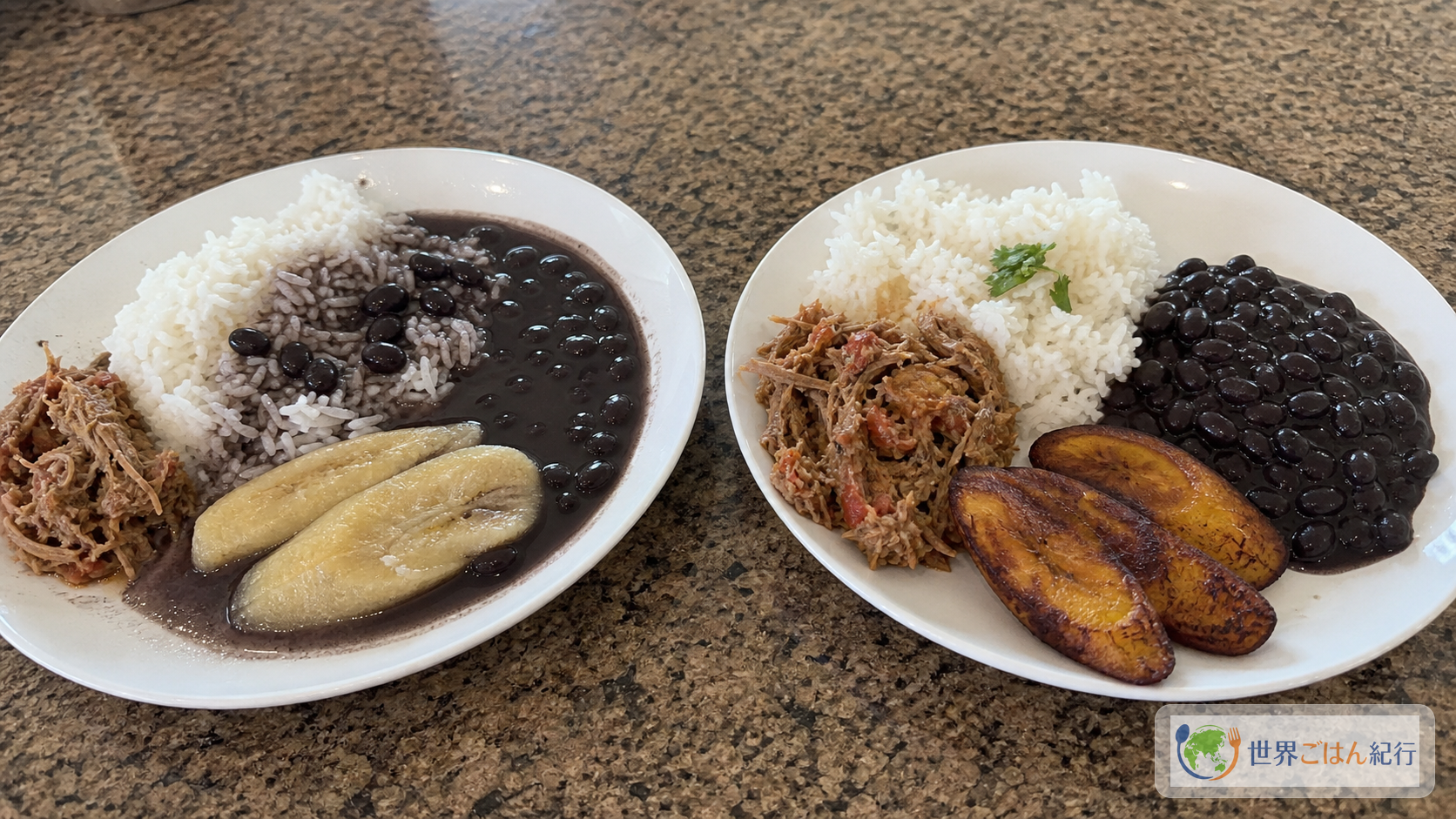
Once you find plantains, you can move on to mofongo (in Japanese) and vaho (in Japanese). If you want to add another bean plate, compare Venezuela's pabellón criollo (in Japanese) and Brazil's feijoada; both are rice and beans, but the weight of the flavor is quite different.
Common Mistakes
The beans are watery and even the rice turns soggy
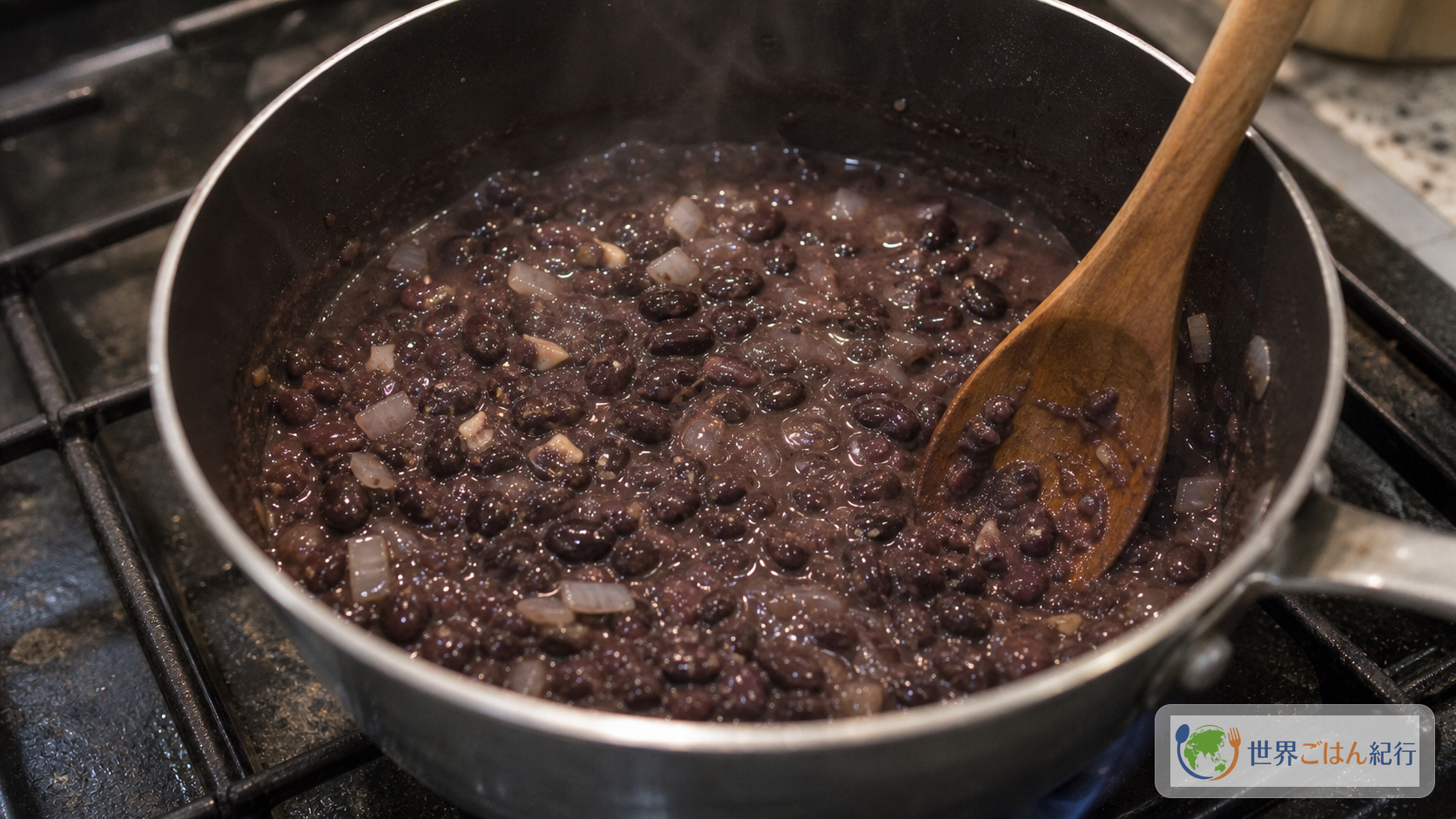
If you add all the liquid from the can, the beans spread too far beside the rice. Start with 120 ml and mash a few beans at the end to thicken. Aim for a small dish of beans that cling to the rice, not soup.
The plantains scorch or fall apart
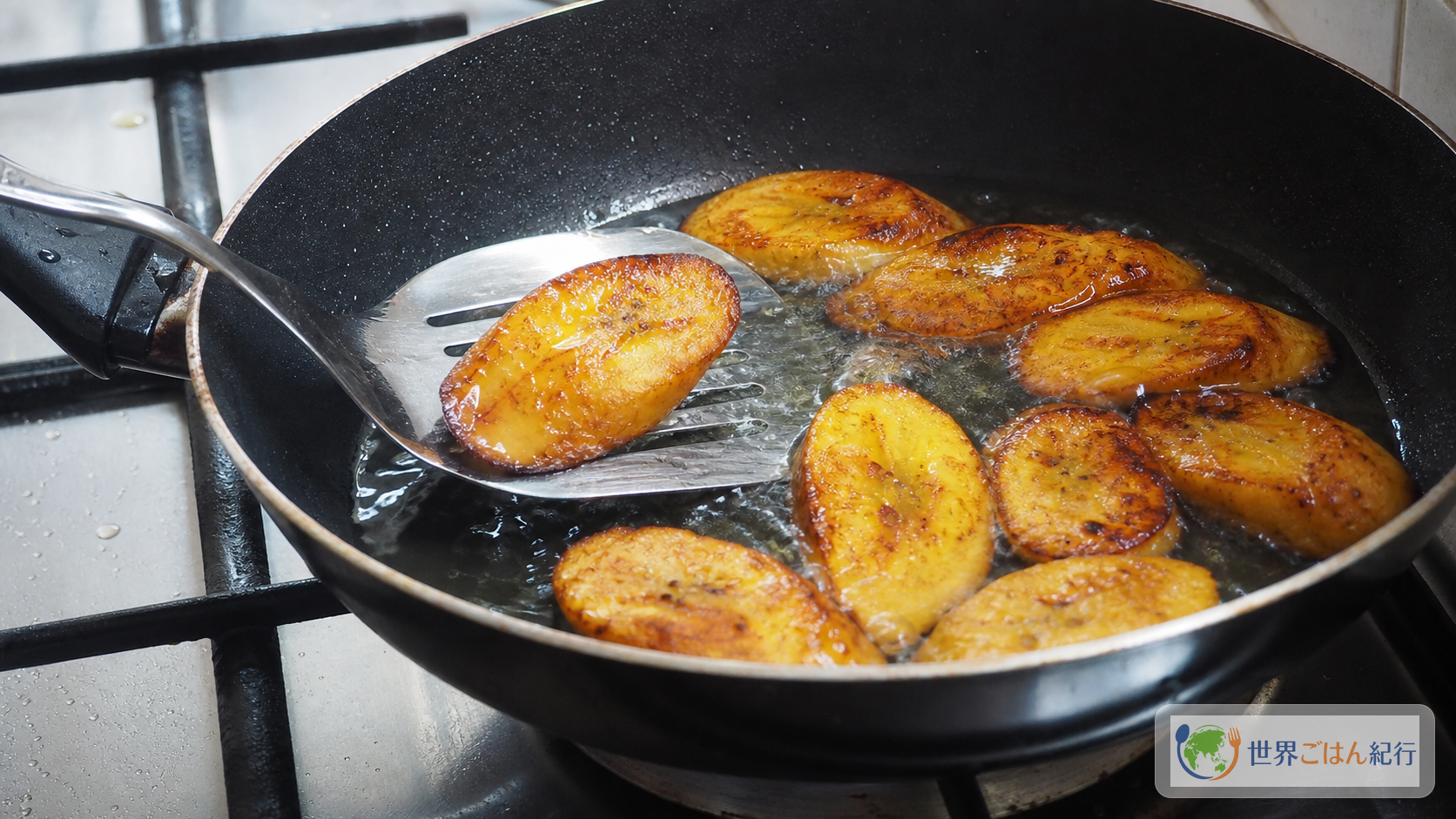
If the oil is too hot, only the outside scorches; too cool, and they soak up oil and turn heavy. Hold the oil at about 170°C (340°F), where fine bubbles rise quietly at medium heat. Bananas are softer than plantains, so cut them thicker and move them as little as possible.
The chicken tastes disconnected from the plate
The main in casado holds together better when it is not too strongly seasoned on its own. Salt, garlic, citrus and a little cumin are enough. Moving toward barbecue sauce or sweet teriyaki drifts away from the plain character of the beans and plantains.
Everything gets mixed on the plate
Mixing it all is not wrong, but if you mix everything from the start, you lose the casado feeling of separate dishes sharing one plate. A bit of beans on the rice, a bit of tart salad with the chicken, plantain in between: that way of eating is the fun of it.
Storage and Make-Ahead
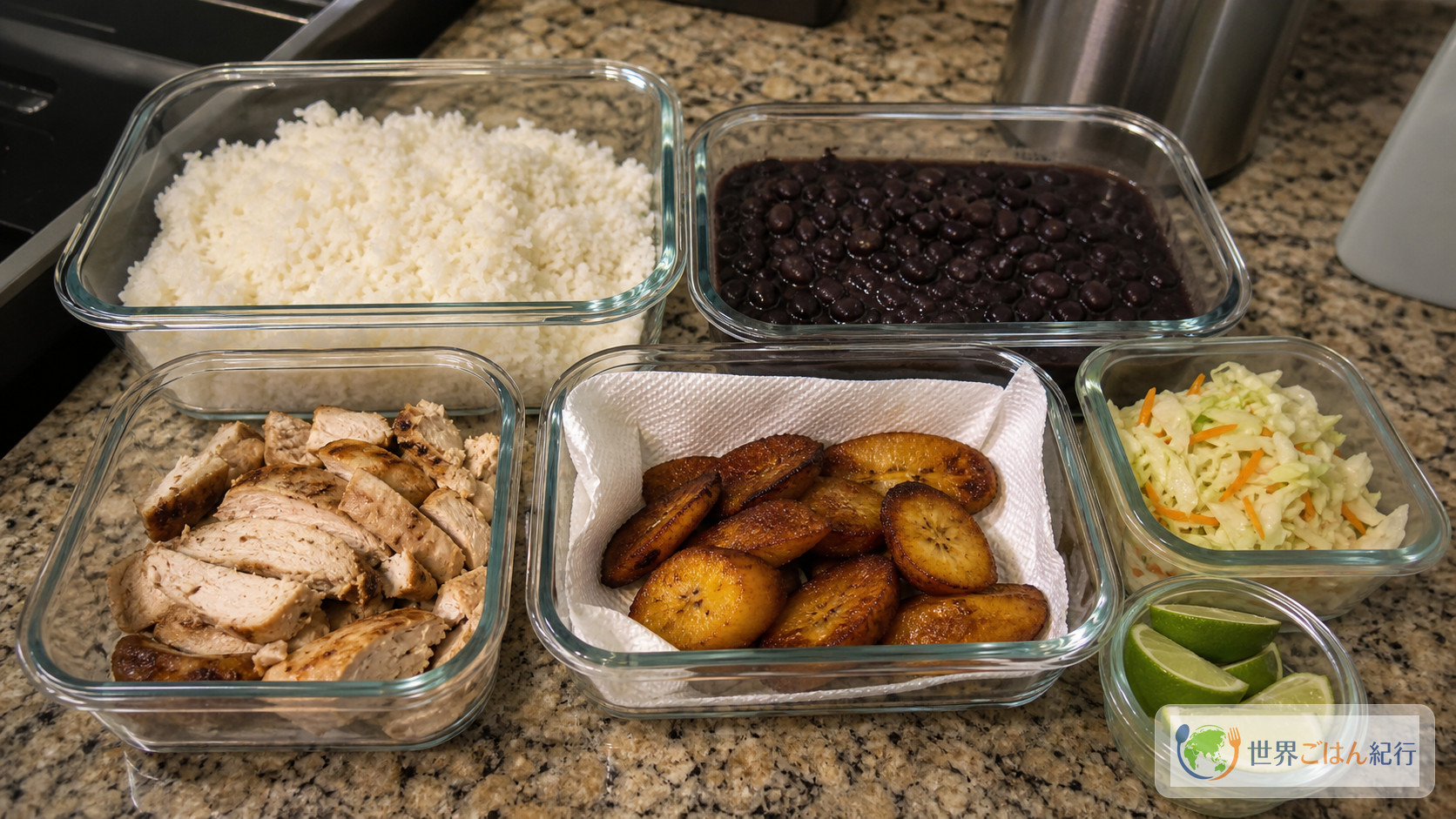
Store the rice, beans, chicken, plantains and salad separately. Refrigerating them plated lets the salad's moisture move into the rice and dampens the plantain surface. As a guide for make-ahead, refrigerate the rice and beans for 2 days and the chicken for 2 days; the plantains keep from the same day to the next, and the salad should be eaten the same day.
To reheat: microwave the rice at 600 W for 1 minute 30 seconds to 2 minutes, warm the beans in a small pot over low heat for 5 minutes, and heat the chicken covered in a skillet over low heat for 4 minutes. Warm the plantains in a toaster oven for 3 minutes to revive the surface. Do not heat the salad; add a little lime just before eating.
The next day, instead of just putting it back on a plate, you can set a little rice, beans and chicken onto a tortilla for a light lunch. Wrapping the plantains and salad in too would release moisture, so serve them on the side.
FAQ
Q1. Does casado always use black beans?
Black beans fit best, but some regions and restaurants use red beans. What matters more is using salted canned or cooked beans rather than sweet simmered ones. Sweet simmered beans move the plate toward a sweet New Year's dish of simmered black beans rather than a staple meal.
Q2. Can I make it without meat?
Yes. A workable version replaces the chicken with 300 g of grilled fried tofu (atsuage, thick deep-fried tofu), adds 2 more fried eggs and uses 1 extra can of beans. Keeping the beans slightly salty and the salad slightly tart helps the rice go down even without meat.
Q3. Is it not authentic without salsa Lizano?
It is handy for adding the local aroma, but casado can be made without it. As long as rice, beans, a main, plantain and salad are on the plate, the structure holds. Use the substitute sauce sparingly, a little over the chicken and beans, to pull things together.
Q4. What can I use if I cannot get plantains?
Cut firm bananas thick and cook them briefly. Fully ripe bananas are too soft and fall apart, so stop at bananas with just a few spots on the peel. Thinly fried sweet potato can add sweetness, but the aroma is different.
Q5. What is the difference between casado and gallo pinto?
Gallo pinto is known as a breakfast-leaning dish of rice and beans stir-fried together. Casado is a lunch or dinner format that puts several dishes, including rice and beans, on one plate. Both have rice and beans, but the composition of the meal differs.
Sources
- Visit Costa Rica, "Culinary Vacation" https://www.visitcostarica.com/culinary-adventures
- Anywhere, "Costa Rican Food, Drink, & Dessert Guide" https://www.anywhere.com/costa-rica/travel-guide/food
- Sistema de Información Cultural de Costa Rica, "Casado tradicional con fresco de cas" https://si.cultura.cr/manifestaciones-culturales/casado-tradicional-con-fresco-de-cas
- Wikipedia, "Casado" https://en.wikipedia.org/wiki/Casado