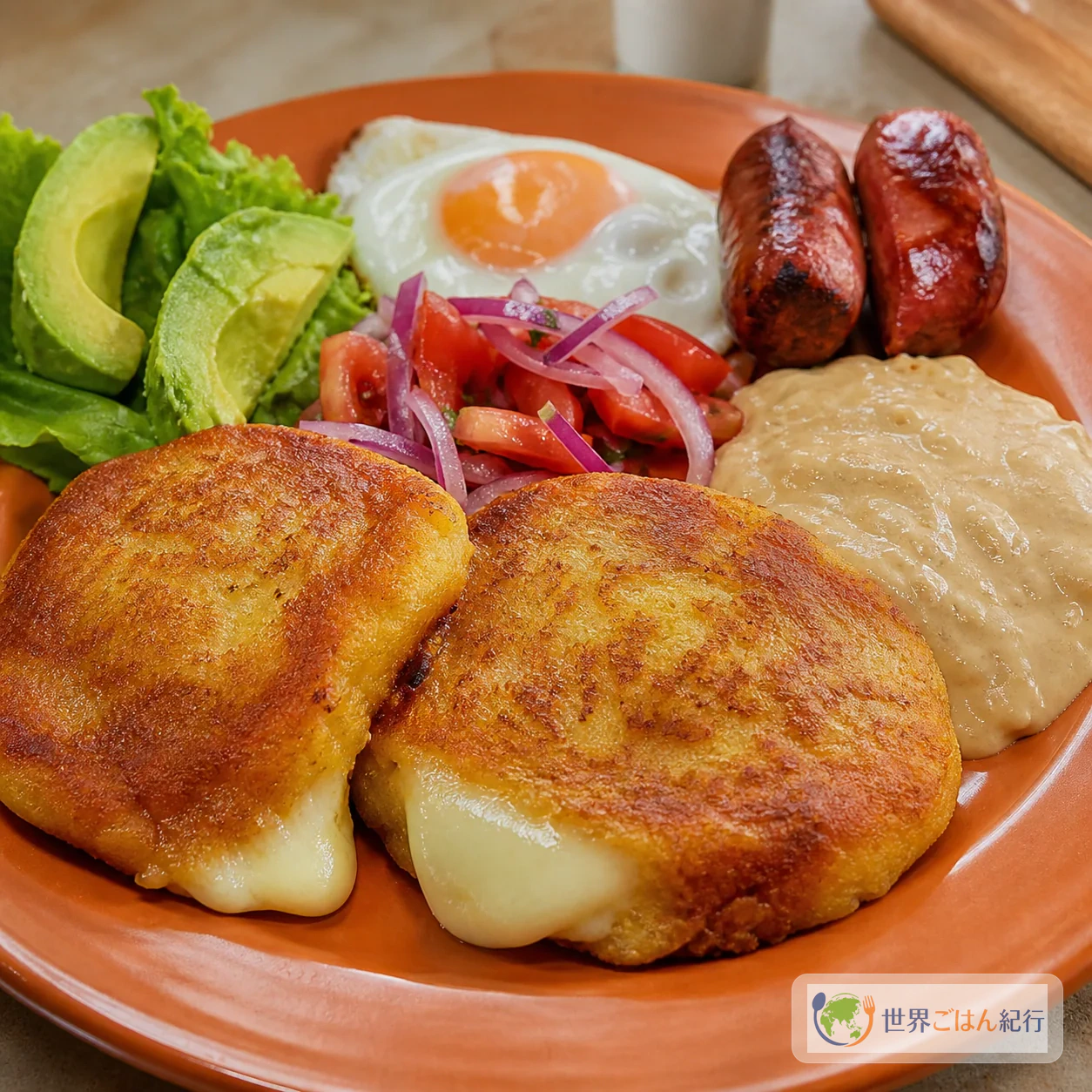
The Ambato market, and a plate of griddled potato
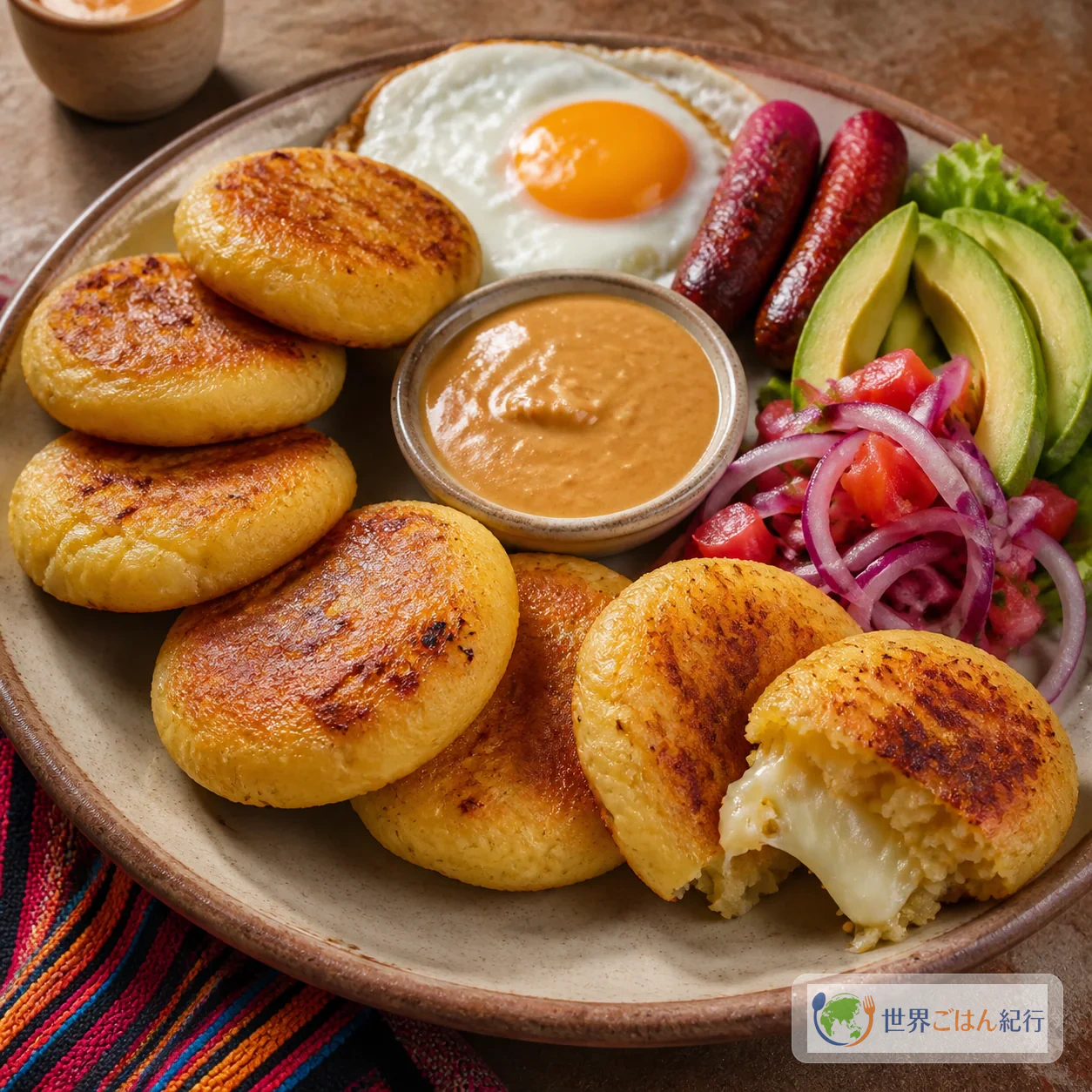
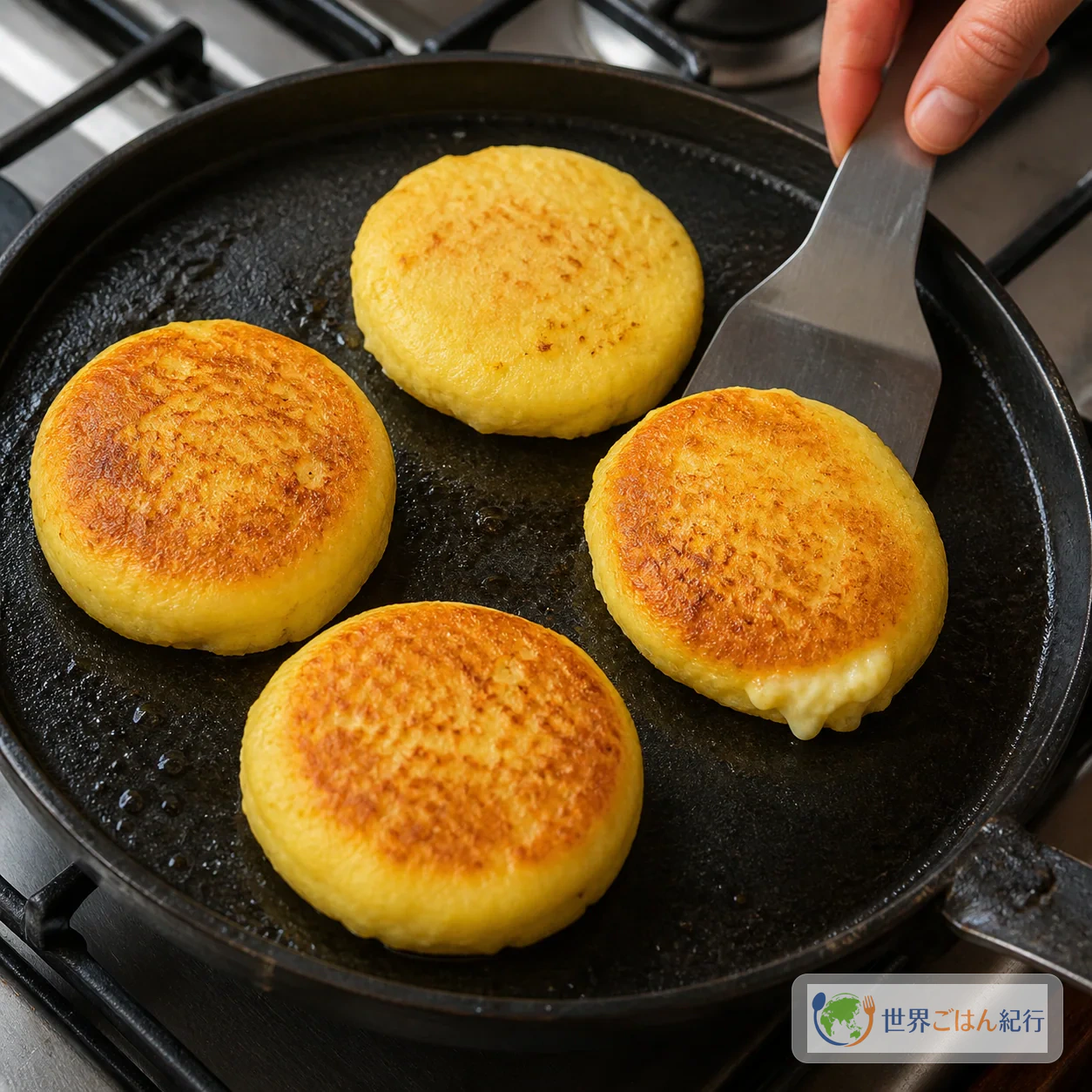
Just before the potato discs go from the pan to the plate, press one lightly with the spatula and only the surface crackles. Melted cheese stays inside, and the scent of orange-colored oil and potato rises. Llapingachos is an Ecuadorian dish in which these thick, browned potato patties are eaten with salsa de maní, curtido, egg, chorizo and avocado.
In Spanish it is written llapingachos, and some sources spell it yapingachos. It is less a single snack than a dish in which accompaniments are layered around the potato to make a meal, and it serves as breakfast, brunch, a midday set meal or a side to meat.
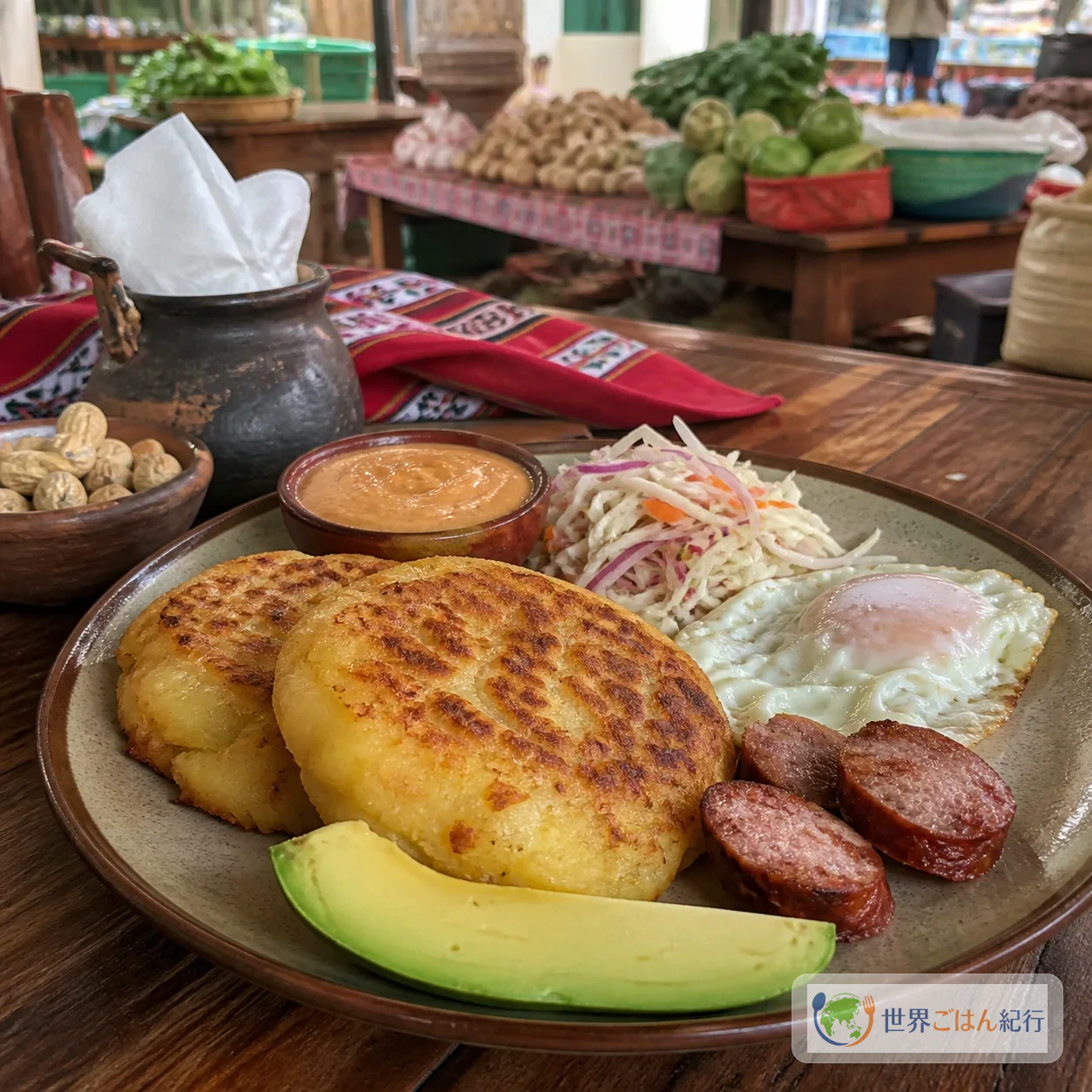
In Ambato, in Tungurahua province in central Ecuador, llapingachos has long been spoken of as the plate that represents the place. A local newspaper report describes a cook at a market stall run for three generations who insists on starchy papa chola potatoes and Ambato-style chorizo. Treating the potato variety and the accompaniments as the memory of a place gives it an outline different from simply "potatoes with cheese."
As for its origin, one cook recalls an Indigenous woman who began selling it on Calle Colón in Ambato, while the way of eating it has also changed across households and regions. Rather than fixing a single year of origin, it is closer to the truth to see how it took root as an Ambato market dish and became today's plate with the addition of chorizo and egg. Some recent sources introducing Ecuadorian food culture spell it yapingacho, so the name too keeps its variation from place to place.
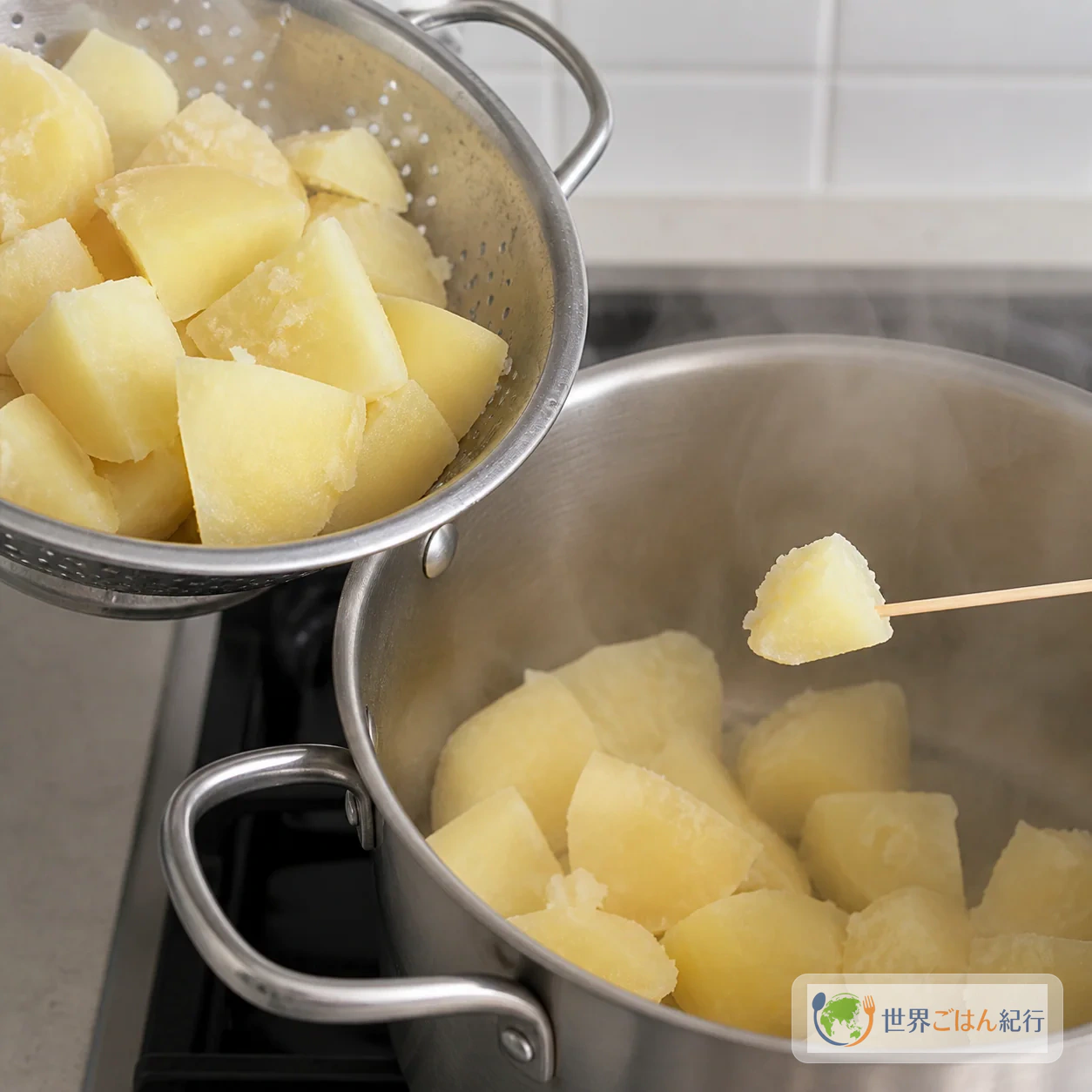
What to decide first when cooking it elsewhere is how much to keep the potato as the star. The starchy papa chola is not a variety you can always get, so substitute a floury potato such as russet or Yukon Gold. But if water is left in the boiled potatoes, the dough sags before it even reaches the pan and cannot hold the cheese. Drying the potatoes before mashing is the judgment to protect before the aroma of annatto or peanut.
To get closer to an Ambato table, pour warm salsa de maní on the plate and add sharp curtido. The ají is not mixed into the pot but kept separate so that each diner can add it. Set beside encocado, the coconut stew of seafood, or encebollado (in Japanese), known as a breakfast soup, it shows how the axis of the table changes between the coast and the mountains even within Ecuador.
Boil the potatoes, drive off the steam, mash, cool, wrap the cheese, cook. If you do not rush this order, the browned outside and the soft inside can both be had. Finish the sauce and curtido while the patties rest.
Ingredients: what firms up the dough, and what completes the plate
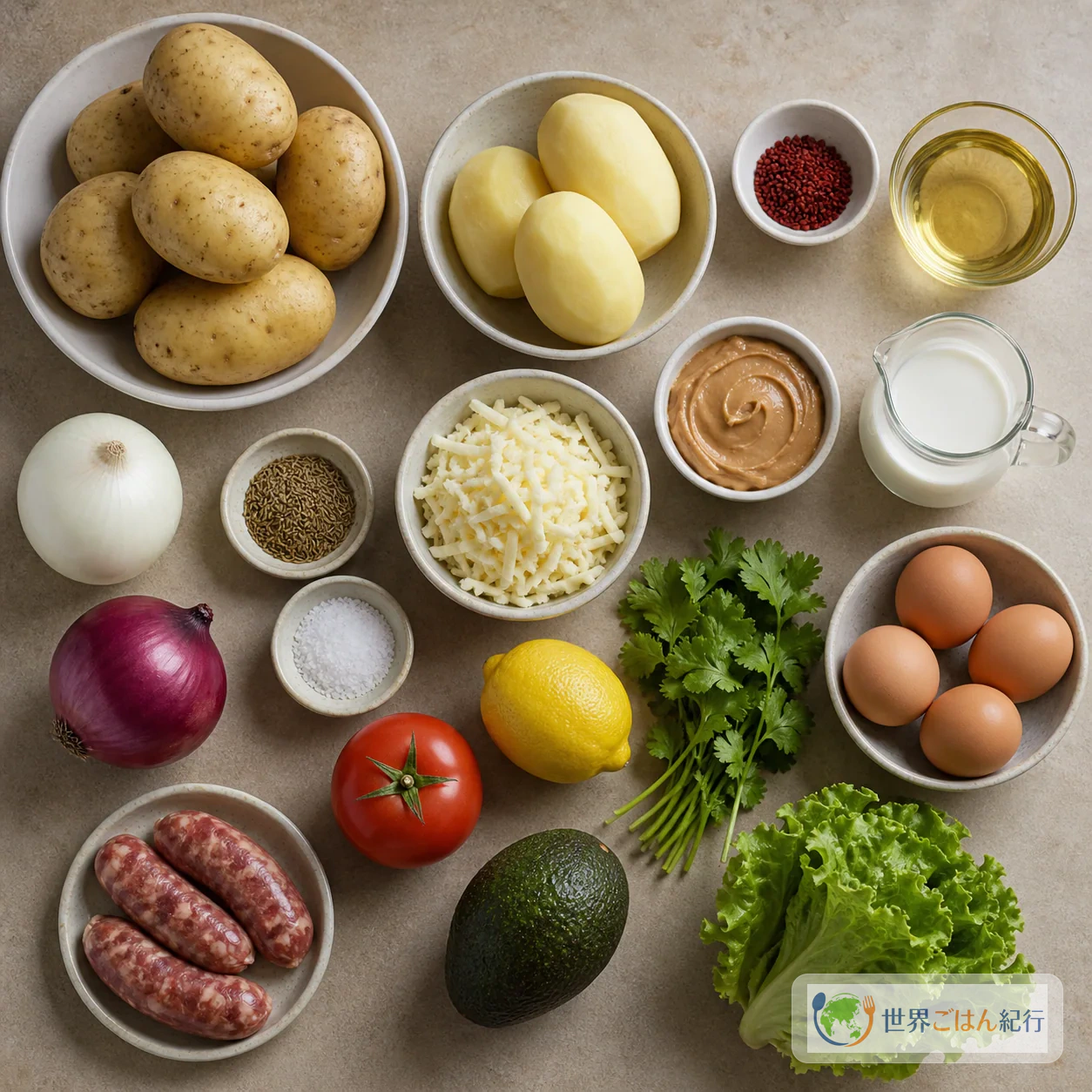
This makes 8 cheese-stuffed patties for 4 servings. Rather than weighing the potatoes after peeling, it is easier to deal with differences in water if you prepare 1 kg unpeeled, boil them, and adjust after looking at the state once peeled. Choose a floury variety such as russet or Yukon Gold, and avoid making it with waxy potatoes alone.
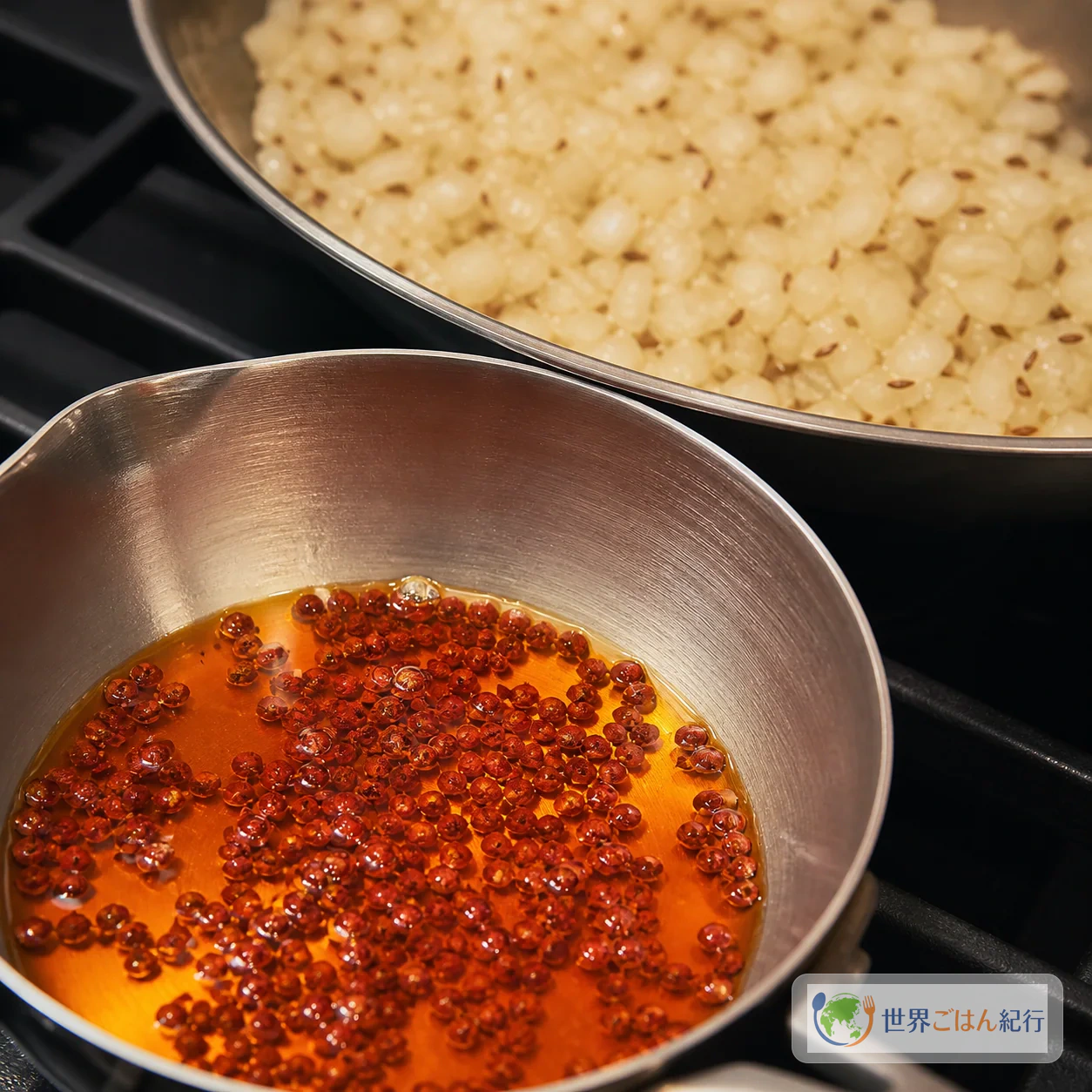
Annatto is not a hot chili but a seed that dyes oil red-orange. Its aroma is not strong, but it has an earthiness that receives the cumin and onion. Powdered annatto works, but warming the seeds in oil and watching the color change shows why you should not hurry the heat. If you want to know the difference in aroma after making it once, whole seeds are worth buying rather than powder.
If you only want to add color for a single batch of llapingachos, you can replace it with 1 tsp paprika. But paprika does not reproduce the aroma of annatto, so do not think of it as the same dish; use it as a landing point made with what you have.
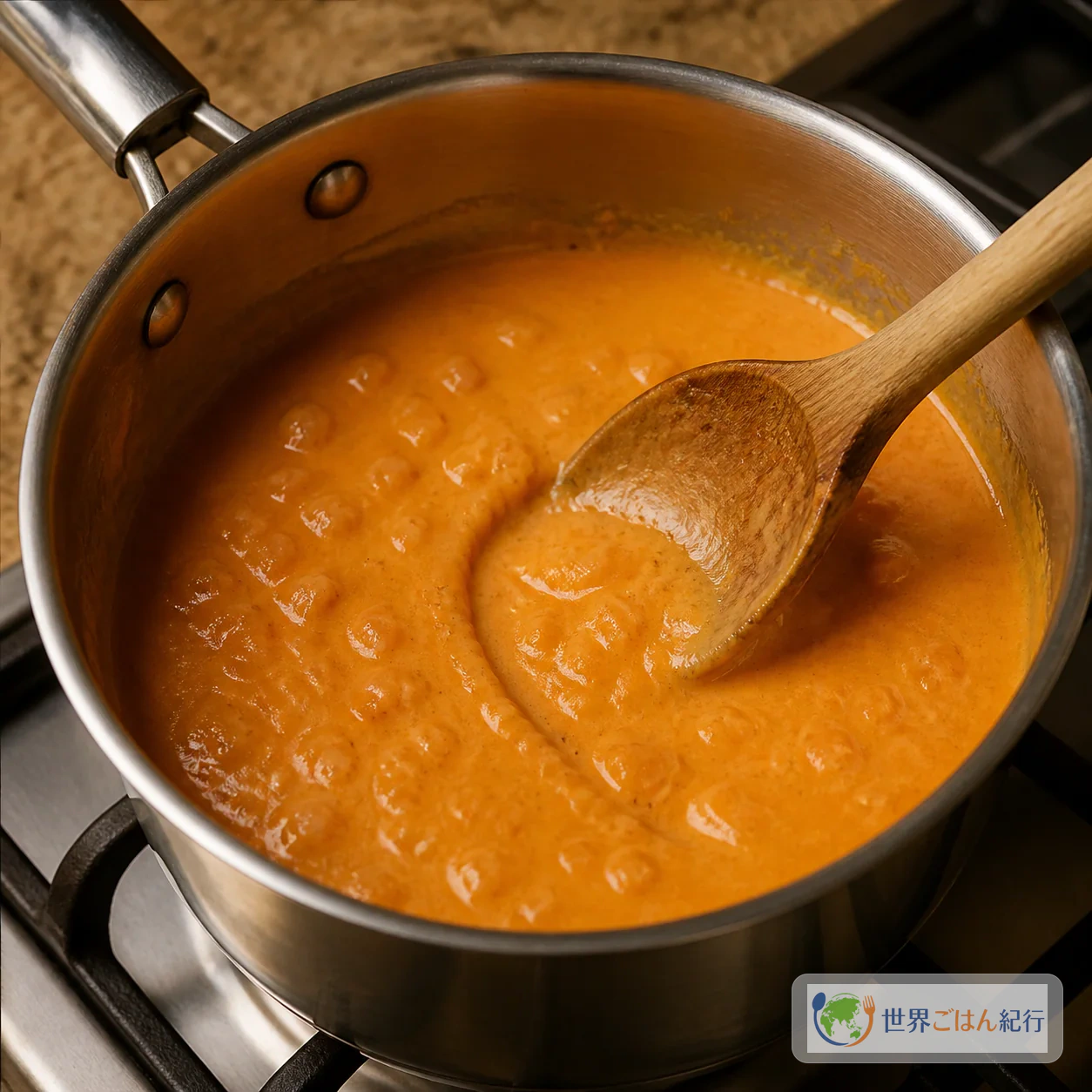
Salsa de maní is made in some places by grinding roasted peanuts, but at home unsweetened peanut butter is easier to handle. Make it as a warm sauce combining peanut butter, milk, onion, cumin, achiote and cilantro. Sweet peanut cream or sweetened types bring sweetness ahead of the potato's saltiness, so check the ingredient label.
Method: dry the boiled potatoes before cooking
Because the patties need to rest, allow about an hour and a half for cooking. Make the annatto oil while the potatoes boil, and finish the salsa and curtido during the 30 to 60 minutes after shaping, and you can serve without keeping the patties waiting.
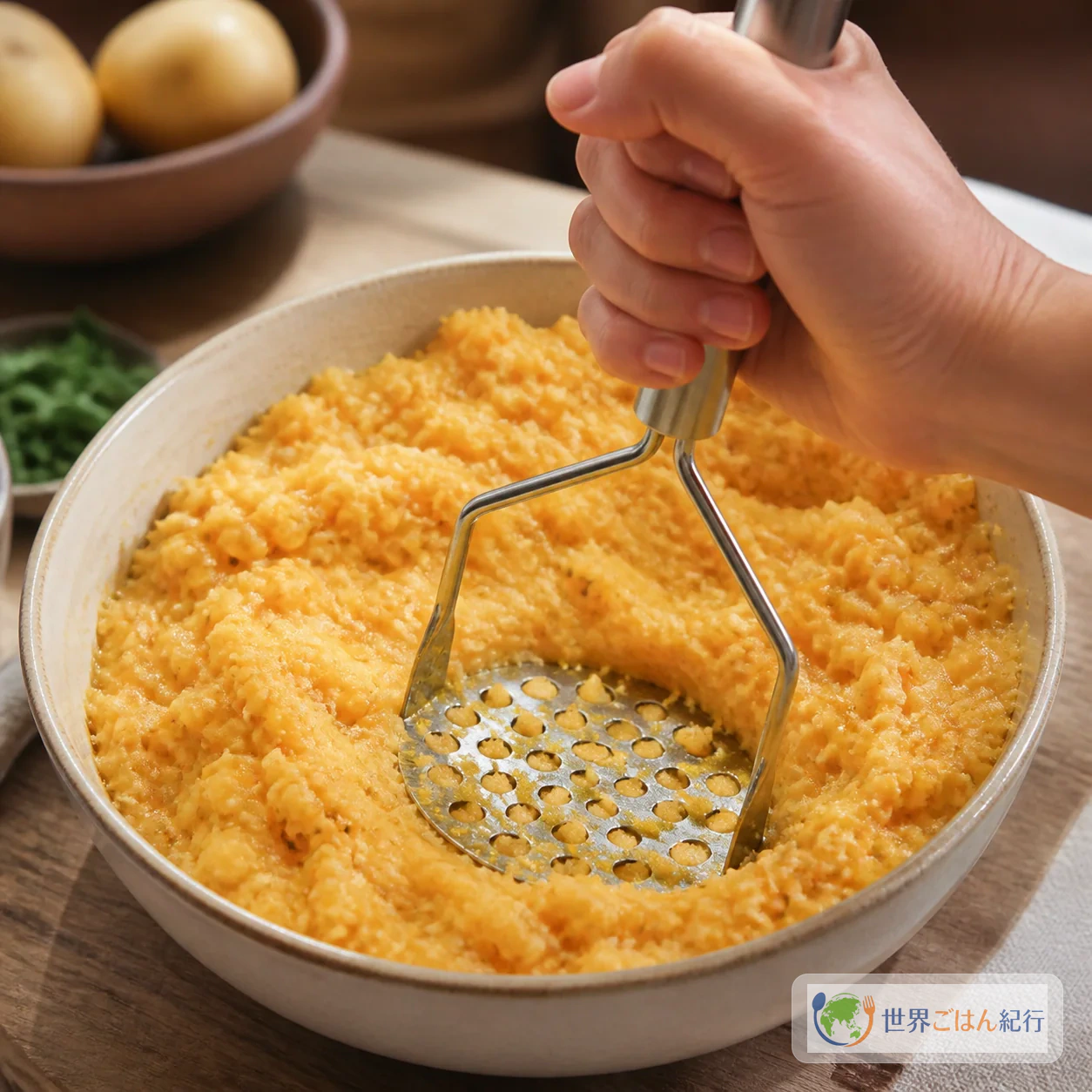
When mashing the potatoes, working them in a food processor or with an immersion blender tends to make them gluey. Pressing them with a perforated masher while hot, until no coarseness remains, makes the patties less likely to crack after they cool.
The Ambato plate, seen through regional differences
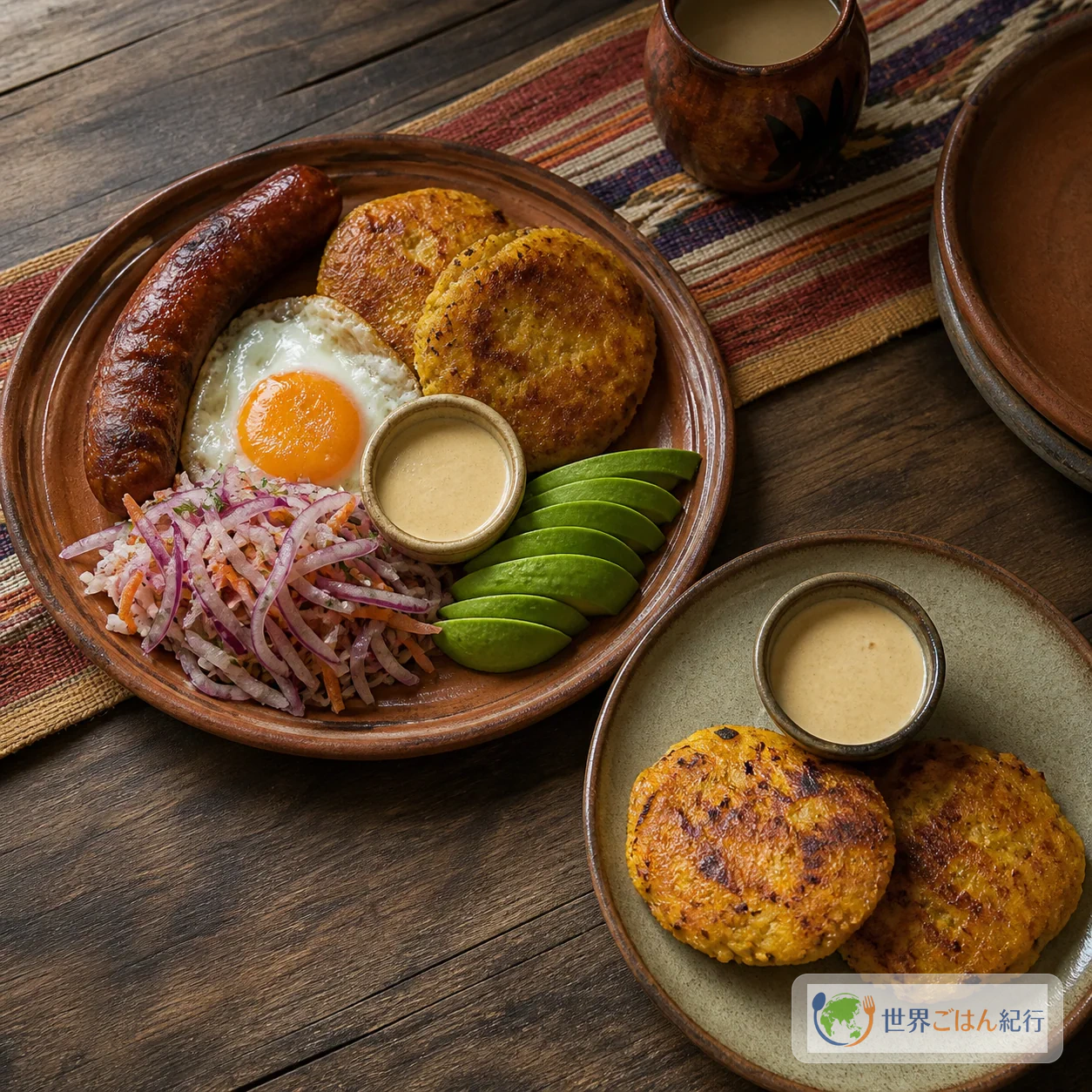
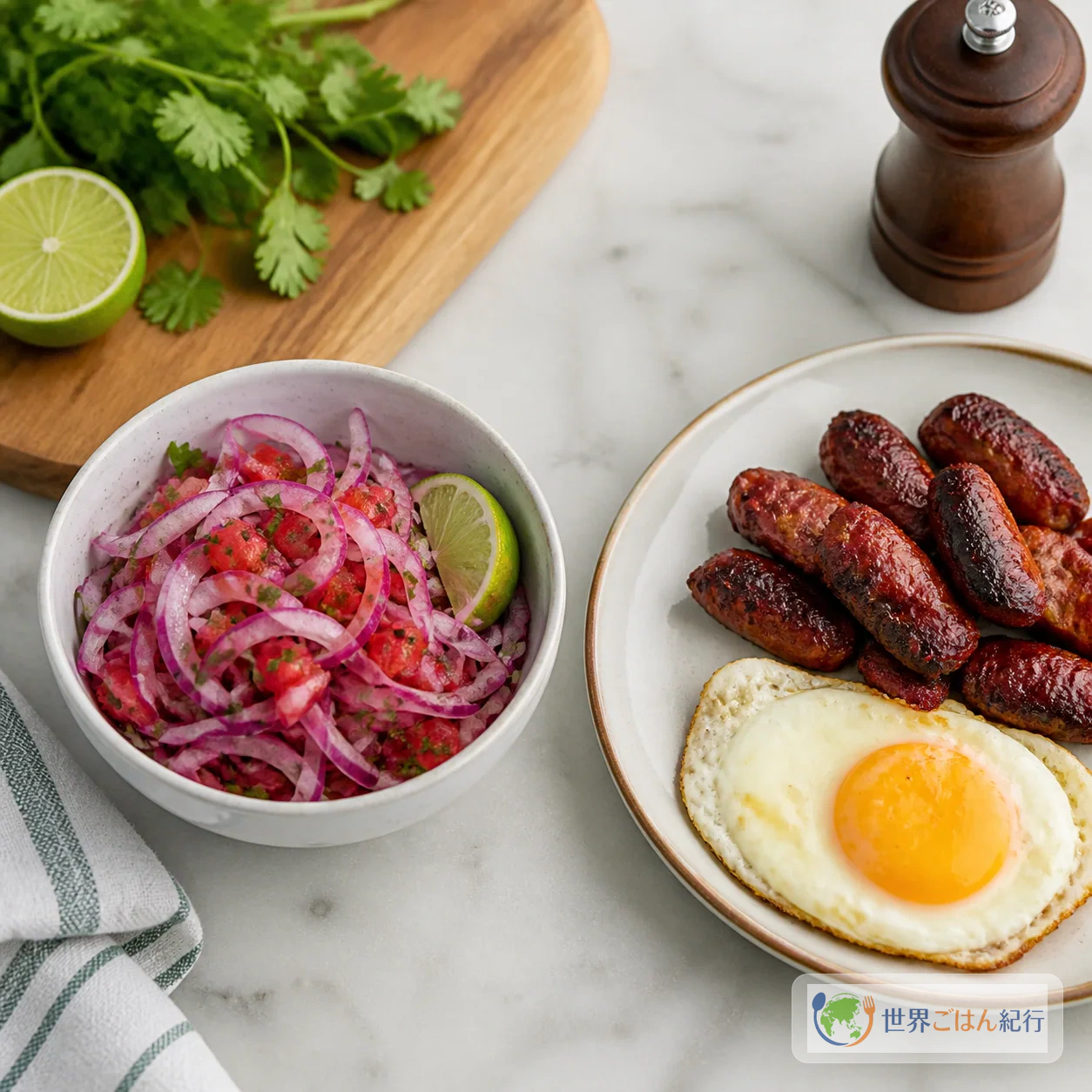
Ambato's llapingachos does not close the plate with the potato patty alone. The basic combination described in local articles is a cheese-stuffed patty layered with peanut sauce, chorizo, fried egg, salad, avocado, curtido and ají. Because the hot sauce can be added afterward, the strength of flavor changes with each diner even on the same plate.
At Ambato's markets some people eat it as a morning meal and others choose it as a side for meat. Some Ecuadorian recipe sources also have examples of serving llapingachos with hornado or fritada. Because the potato is placed like a staple and meat and egg are added in small amounts, the plate has more presence as a meal than the patty alone.
Regional differences are not a contest of methods. Where starchy potatoes are available the dough is the star, and at places proud of their chorizo the savoriness of the meat stands out. Some households leave out the egg and avocado and serve just the patty and salsa. That the spelling yapingacho survives in sources on Ecuadorian food culture is because the dish has not come down by a single recipe card alone.
Even within the same country, the aromas on the table differ between encocado, with coconut and seafood from the coast, encebollado, combining fish and yuca, and llapingachos, with the potatoes of the highlands as the star. Compared with the Peruvian cold potato dish causa limeña, causa builds layers with acidity and cold, while llapingachos pulls the plate together with browned crust and warm sauce.
What to change and what to keep in a home kitchen
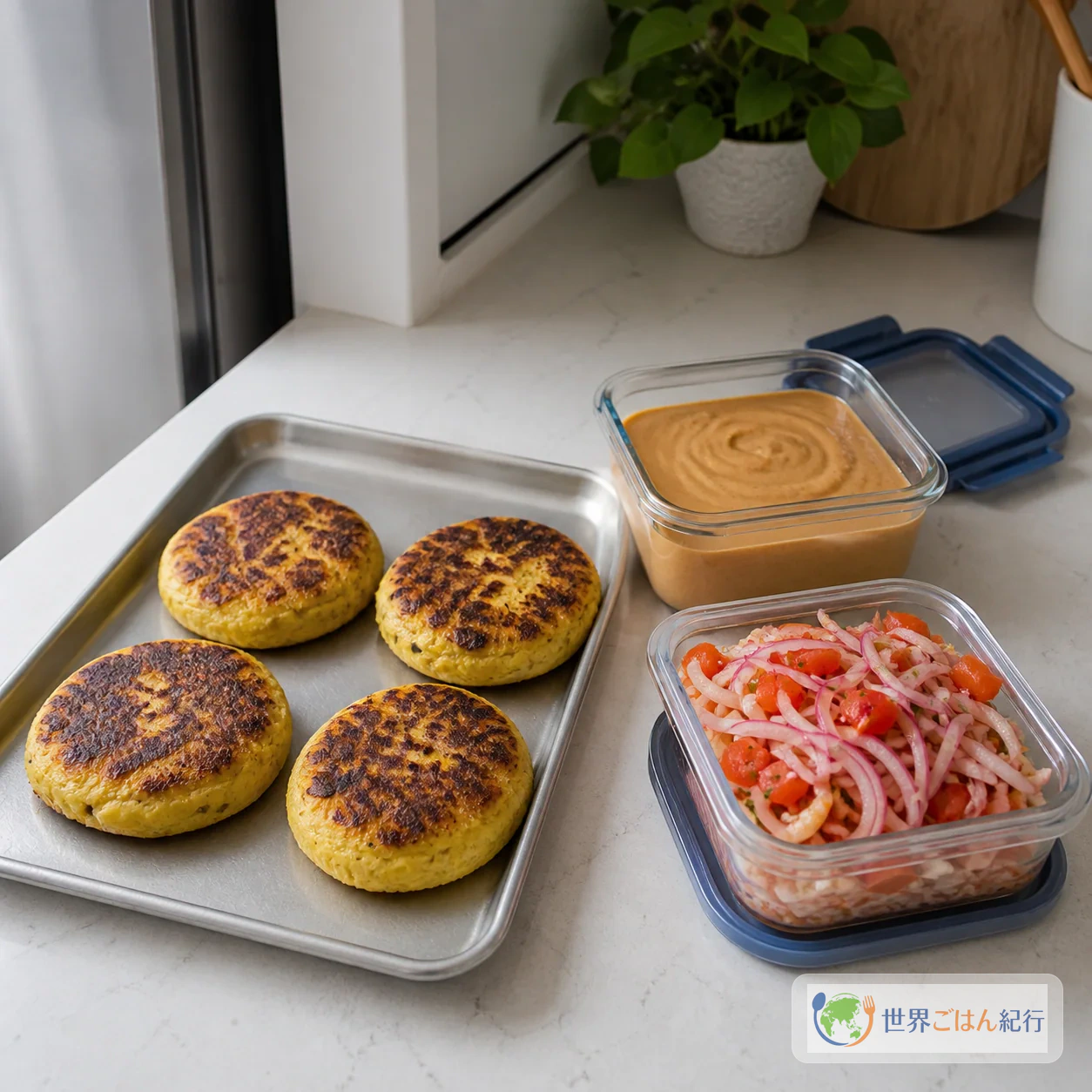
If you make salsa de maní with roasted peanuts, you can keep the texture of coarsely ground nuts better than with unsweetened peanut butter as is. Warm 120 g unsalted peanuts in a pan over low heat for about 5 minutes, cool slightly, grind in a mortar, then add 180 ml milk, onion and cumin and simmer. If you do not want to go that far every time, peanut butter is enough; a mortar is only worth getting if you want to try the grain of this sauce once.
Granite mortars suit spices and herbs too, but for a single cooking this time you can use a bowl and a wooden spoon and skip buying one.
Japanese potatoes, or potatoes elsewhere, do not have a water content decided by variety name alone. New potatoes and large pieces tend to keep water, and if you shorten the boiling time the center is firm. Give priority to driving off the steam in the pot after the skewer goes through, and cooling the dough enough. If the dough is loose, extend the cooling time before judging, and only if it still cannot hold its shape add 1 tsp potato starch. Too much brings a mochi-like springiness ahead of the potato.
Annatto can be replaced by paprika, but this is not a dish where you only add color. The oil in which onion and cumin were cooked goes into the dough, so even with paprika warm it lightly in oil before mixing. Ají or red chili can be left out if someone in the family dislikes heat. Changing the peanut sauce to tomato sauce makes another taste, but if there is a peanut allergy there is no need to force it close. If milk and cheese are also allergies, make it as a dough without dairy and state clearly that it is an adaptation different from the background of the dish.
For storage, move the cooked patties, salsa, curtido, egg and chorizo to separate clean containers. After cooling slightly, divide into shallow containers and refrigerate without leaving them long at room temperature. Japan's Ministry of Health, Labour and Welfare advises dividing leftovers into shallow containers to cool them quickly and reheating thoroughly, with 75°C or higher as a guide. If eating the next day, re-cook the patties over medium-low heat for 3 to 4 minutes per side, and warm the salsa over low heat, stirring. The acidity of the curtido and the texture of the egg fade easily, so add them on the day if you can.
The salsa de maní uses peanuts, the patties cheese, and the accompaniments eggs and fresh sausage. If you have allergies, check the ingredient labels and do not reuse the same utensils. Cook fresh sausage thoroughly to the center, and discard stored food without eating it if there is any off smell, sliminess or abnormal moisture in the container.
FAQ
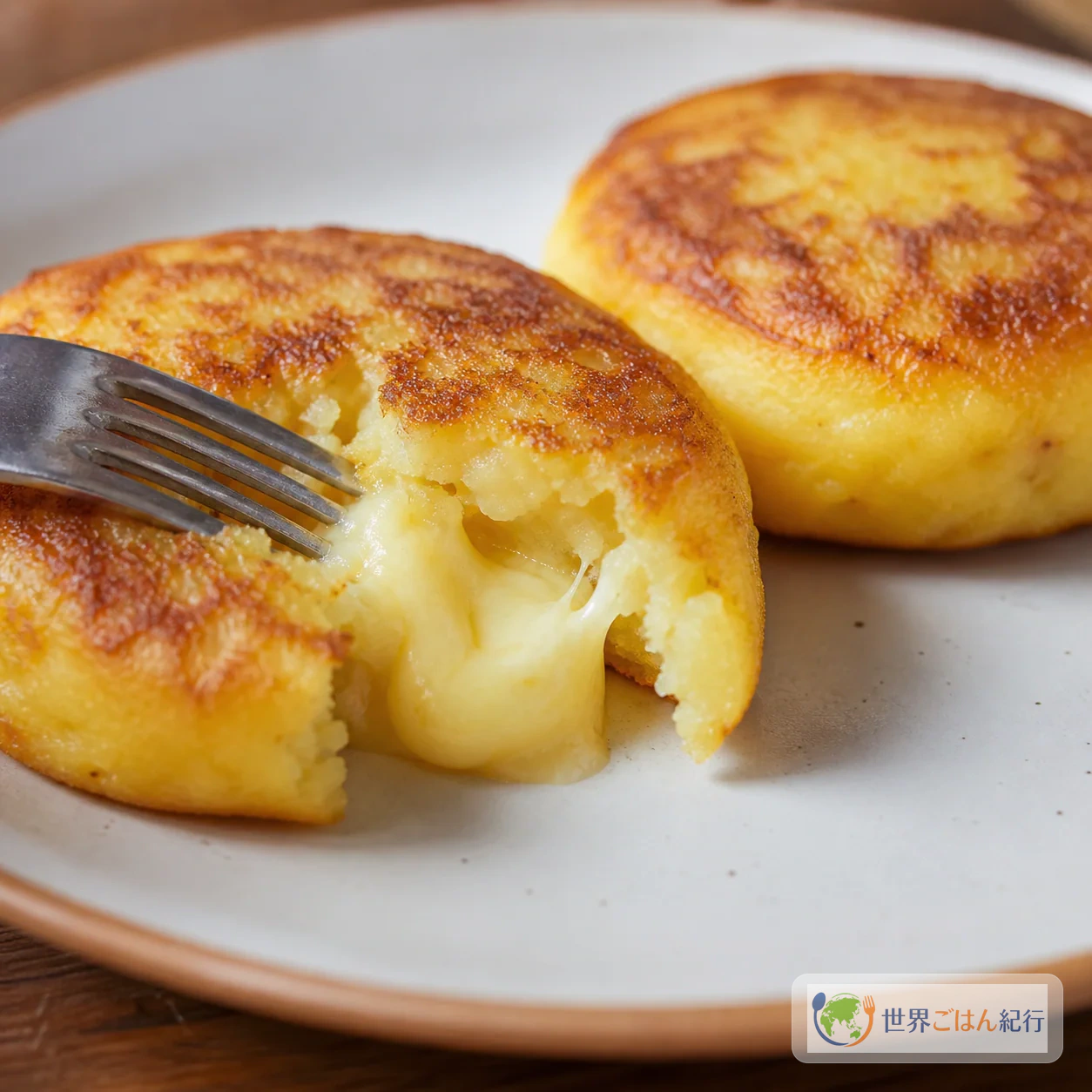
The cheese runs out during cooking
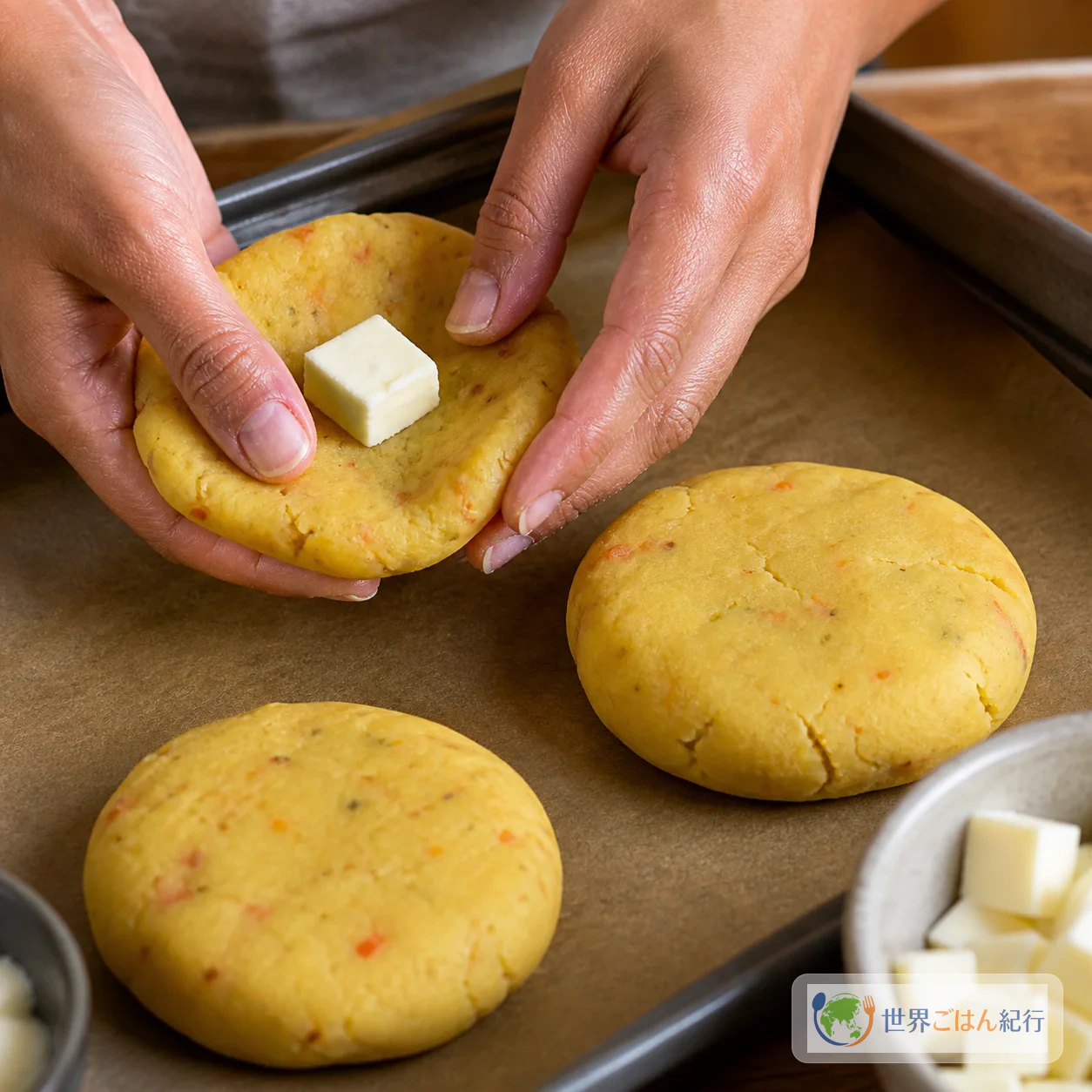
The edge may have been thin when shaped, or the rest time too short. Move the cheese to the center, close the edge firmly with your fingers, and then shape to 8 cm across and 1.5 cm thick. Chill for 30 minutes or more before cooking and do not move them for the first 4 to 5 minutes, and you will reduce cracking when you slide in the spatula.
The potato dough is too soft
Often cooking water or steam remains. Return it to the pot and dry it over low heat for 2 to 3 minutes, then spread on a tray to cool. If it still sticks to your hands, add 1 tsp potato starch and bring everything together. Putting in a cooling step before adding starch avoids increasing the amount you need too much.
I have no annatto
Blend 1 tsp paprika into 30 ml oil over low heat for about 30 seconds, then cook the onion in it. The color gets closer, but the aroma special to annatto is weaker. Adding turmeric or curry powder gives a different aroma, so try paprika alone first.
Can I use sweetened peanut butter?
Choose unsweetened, because sweetened throws off the balance between the saltiness of the salsa and the sweetness of the potato. If you only have the sweetened type, rather than reducing the amount and adjusting with salt and lemon, it is easier to settle on a flavor by switching to a separate side sauce using milk and unsweetened sesame paste.
Can I make just the patties ahead?
You can go as far as the stage where they are shaped and have rested in the refrigerator for 30 to 60 minutes. If you store them after cooking, keep the salsa and curtido separate. Reheating cold patties in a microwave alone softens the surface, so restore the crust in a pan.
Sources
- Laylita's Recipes, "Llapingachos or Ecuadorian stuffed potato patties", https://www.laylita.com/recipes/llapingachos-or-stuffed-potato-patties/ (accessed and checked 11 August 2026)
- Laylita's Recipes, "Salsa de maní or peanut sauce", https://www.laylita.com/recipes/salsa-de-mani-or-peanut-sauce/ (accessed and checked 11 August 2026)
- Primicias, "En Ambato, el llapingacho es con papa chola y chorizo, 'o no es llapingacho'", https://www.primicias.ec/noticias/entretenimiento/gastronomia/llapingacho-ambato-ecuador-ingredientes-papa/ (accessed and checked 11 August 2026)
- El Universo, "El llapingacho, plato emblema de Ambato", https://www.eluniverso.com/noticias/2020/02/26/nota/7755831/llapingacho-plato-emblema-ambato/ (accessed and checked 11 August 2026)
- Escuela Superior Politécnica de Chimborazo, Ecuador, un país de gastronomía infinita, https://publicaciones.espoch.edu.ec/docs/books/2025-07-21-221604-libro_ecuador_un_pais__de_gastronomia_infinita_compressed.pdf (accessed and checked 11 August 2026)
- Teka Ecuador, "Receta fácil de llapingachos", https://www.teka.com/es-ec/inspiracion/receta-y-gastronomia/receta-facil-llapingachos/ (accessed and checked 11 August 2026)
- Ministry of Health, Labour and Welfare of Japan, "Preventing food poisoning at home" (in Japanese), https://www.mhlw.go.jp/stf/seisakunitsuite/bunya/kenkou_iryou/shokuhin/syokuchu/01_00008.html (accessed and checked 11 August 2026)