Pique Macho: One Platter of Meat Juices, Fried Potatoes and Raw Locoto
Cook the beef covered so it keeps its juices, fry the sausage and potatoes separately, and bring everything together only at the end. Raw locoto, onion and tomato, plus sliced hard-boiled egg, go on top, not into the pan.
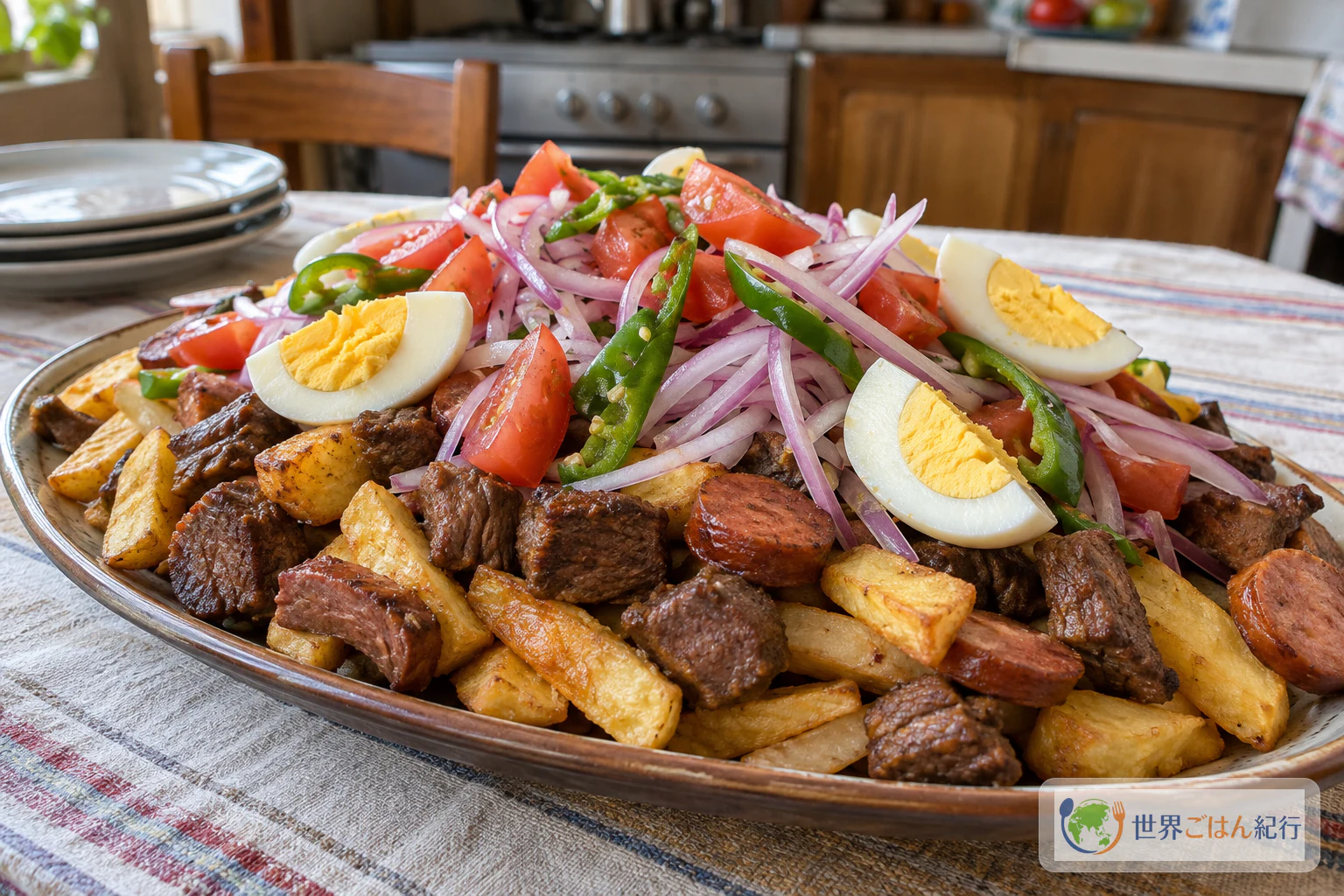
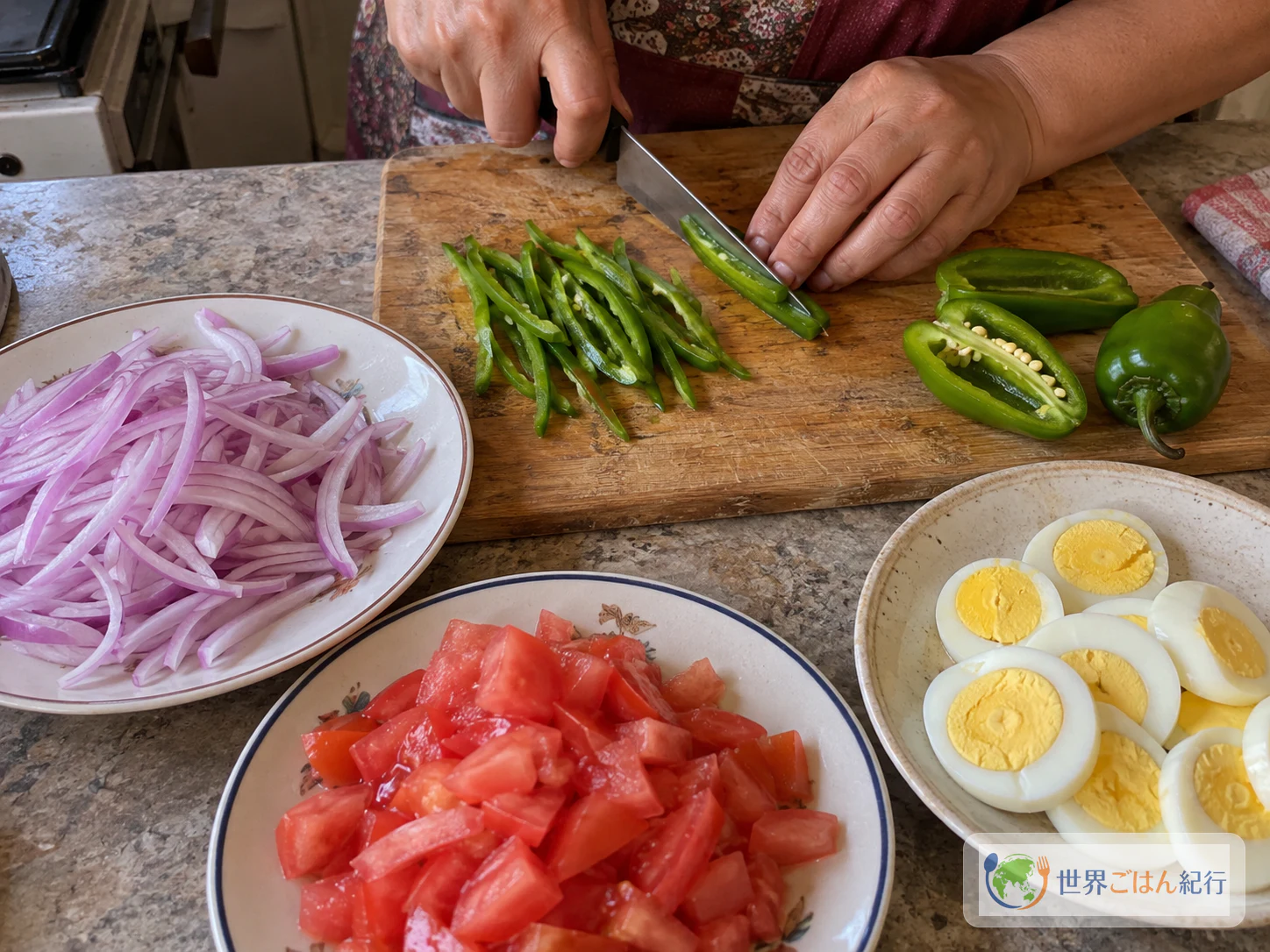
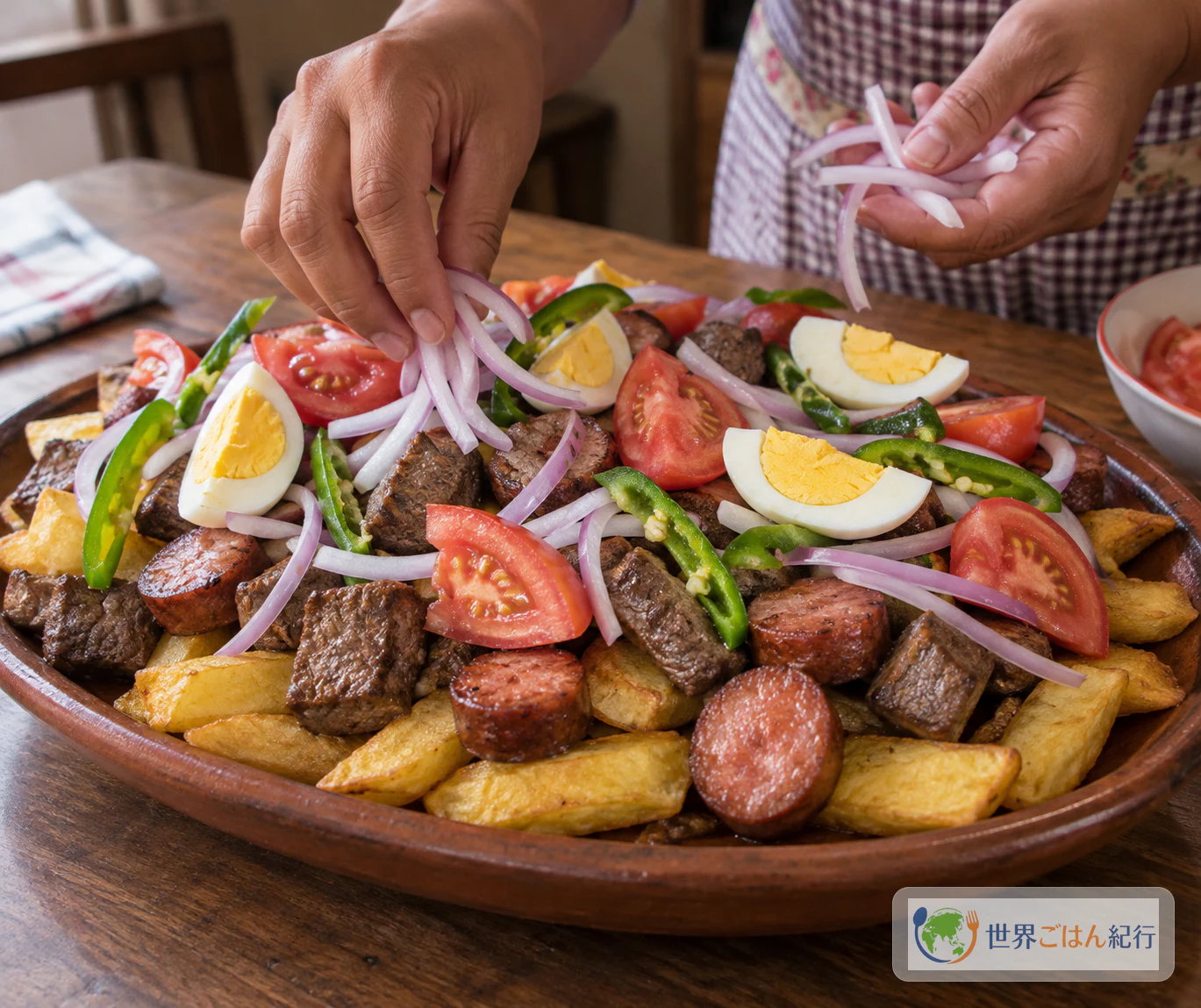
Cubes of beef seasoned with salt, pepper and a pinch of cumin, fried sausage, a pile of golden potato batons, and on top, long strips of raw locoto, feathery slices of onion, tomato and rounds of hard-boiled egg. Pique macho brings all of this together on a single platter, and the hot, savory layer underneath meets the sharp, fresh layer on top.
The Bolivian newspaper Los Tiempos presents pique macho as a casual dish tied to Cochabamba, the kind of food that belongs to weekends with friends and informal celebrations. This article follows the recipe Los Tiempos published, in its original amounts and order. That recipe does not state how many people it serves or how long it takes, so neither is given here. It is written as a generous platter to share, and how far it stretches is up to your table.
The dish appears as both Pique macho and Pique a lo macho. Searching both spellings makes it easier to find Bolivian recipes and descriptions. The origin of the name is not explained here, because the sources consulted do not support one.
What Kind of Dish Is Pique Macho?
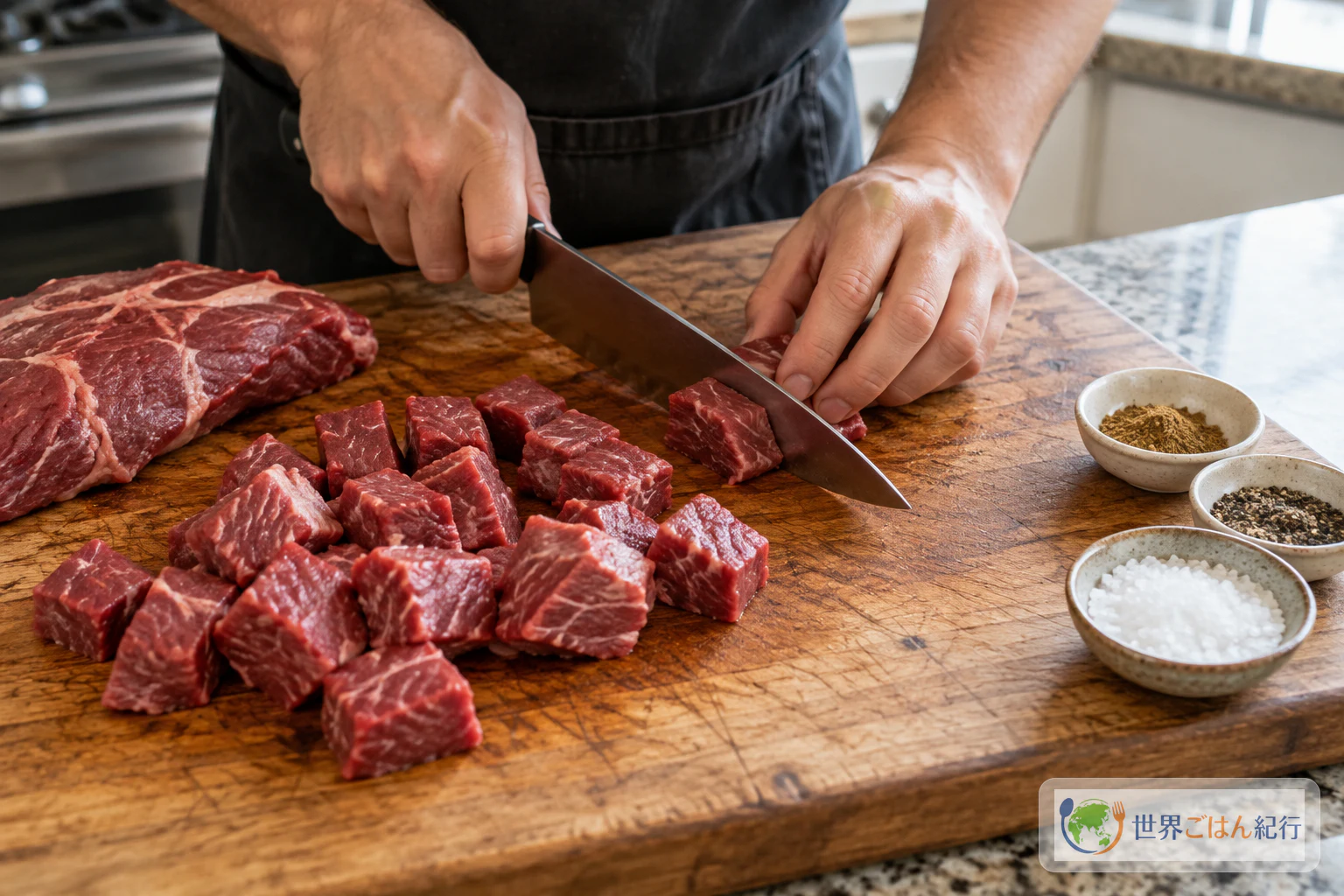
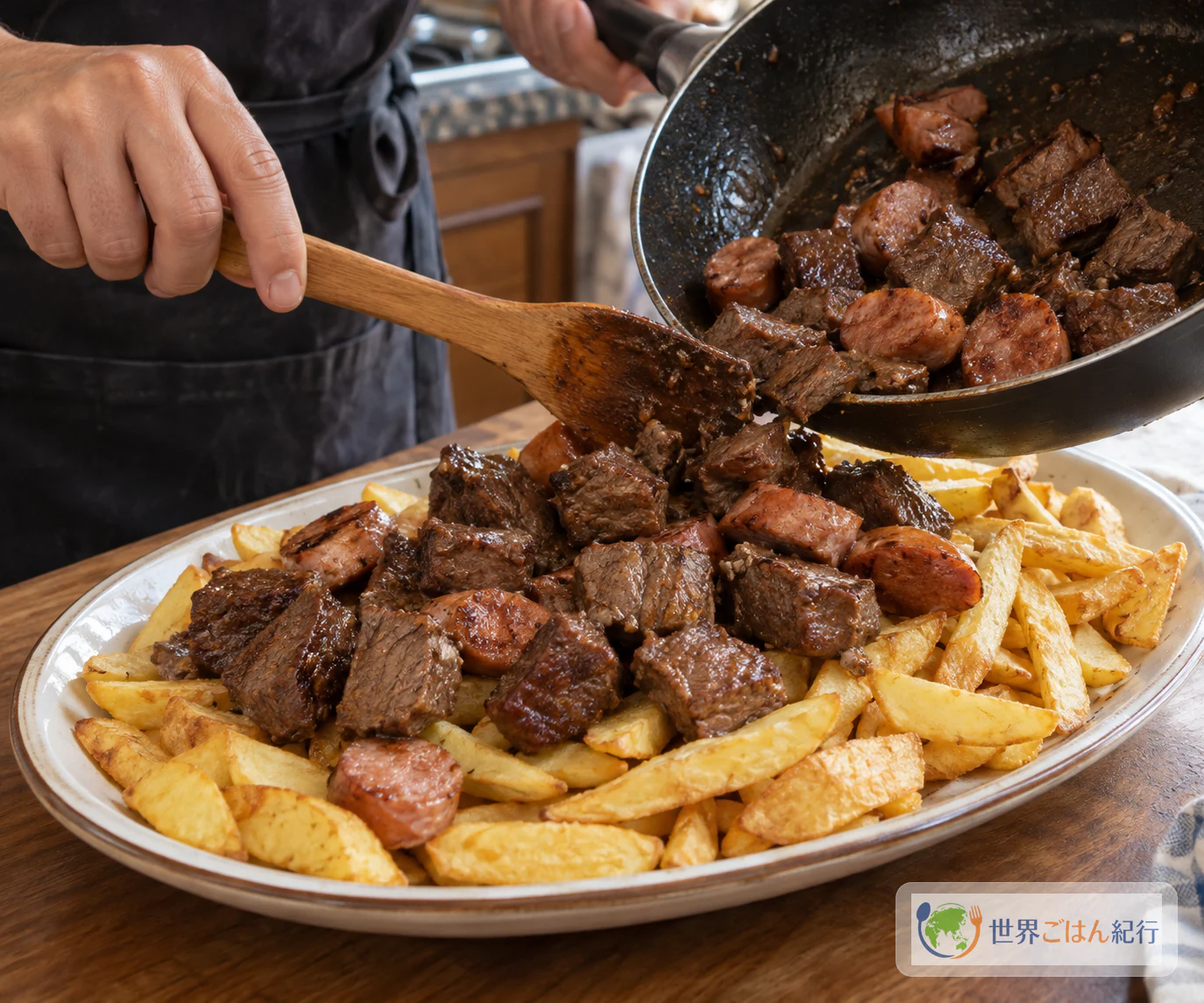
At its core, pique macho is a composed platter: beef, cooking sausage and fried potatoes, finished with raw vegetables and hard-boiled egg. In the Los Tiempos version, the beef is cut into roughly 2.5 cm cubes and cooked under a lid, the sausage and potatoes are fried separately, and everything is mixed just before serving. The locoto, onion, tomato and egg stay raw or simply boiled and sit on top as a garnish.
This makes it a very different dish from silpancho, another Bolivian plate, which is built around thin, flattened fried beef served with rice, egg and salad. Pique macho has no rice and no flattened cutlet; it is about chunks of meat and sausage tumbled together with fried potatoes.
Recetas de Cochabamba, a recipe site from the city, also introduces pique macho as a Cochabamba dish shared among friends. Recipes for it vary from source to source, so the version here should be read as one well-documented recipe, not as the only authentic formula for all of Bolivia.
Ingredients (as published by Los Tiempos)
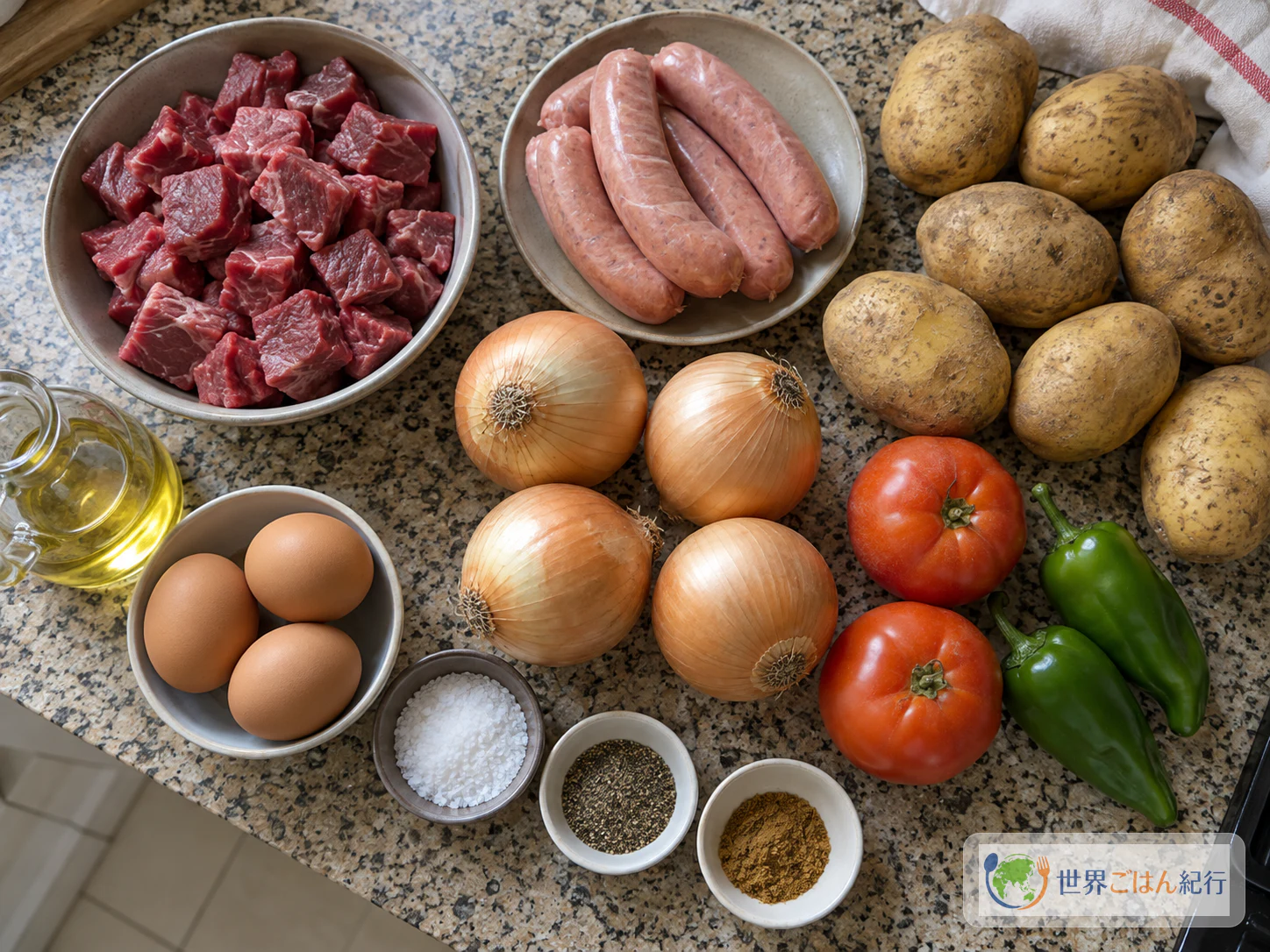
The 1½ taza of oil is for frying. It is not the amount the potatoes and sausage absorb. In practice, what matters is having enough oil in the pot to cover the bottom well so the potatoes can fry rather than stew.
The dish contains egg. Sausages vary widely by product, so check the label of the one you buy for allergens such as wheat, milk or soy, and follow its cooking instructions.
Choosing Beef, Sausage and Locoto Outside Bolivia
Beef. Use lomo. Outside Bolivia, look for a lean cut suited to quick sautéing. Cut it into even cubes so the pieces cook at the same pace.
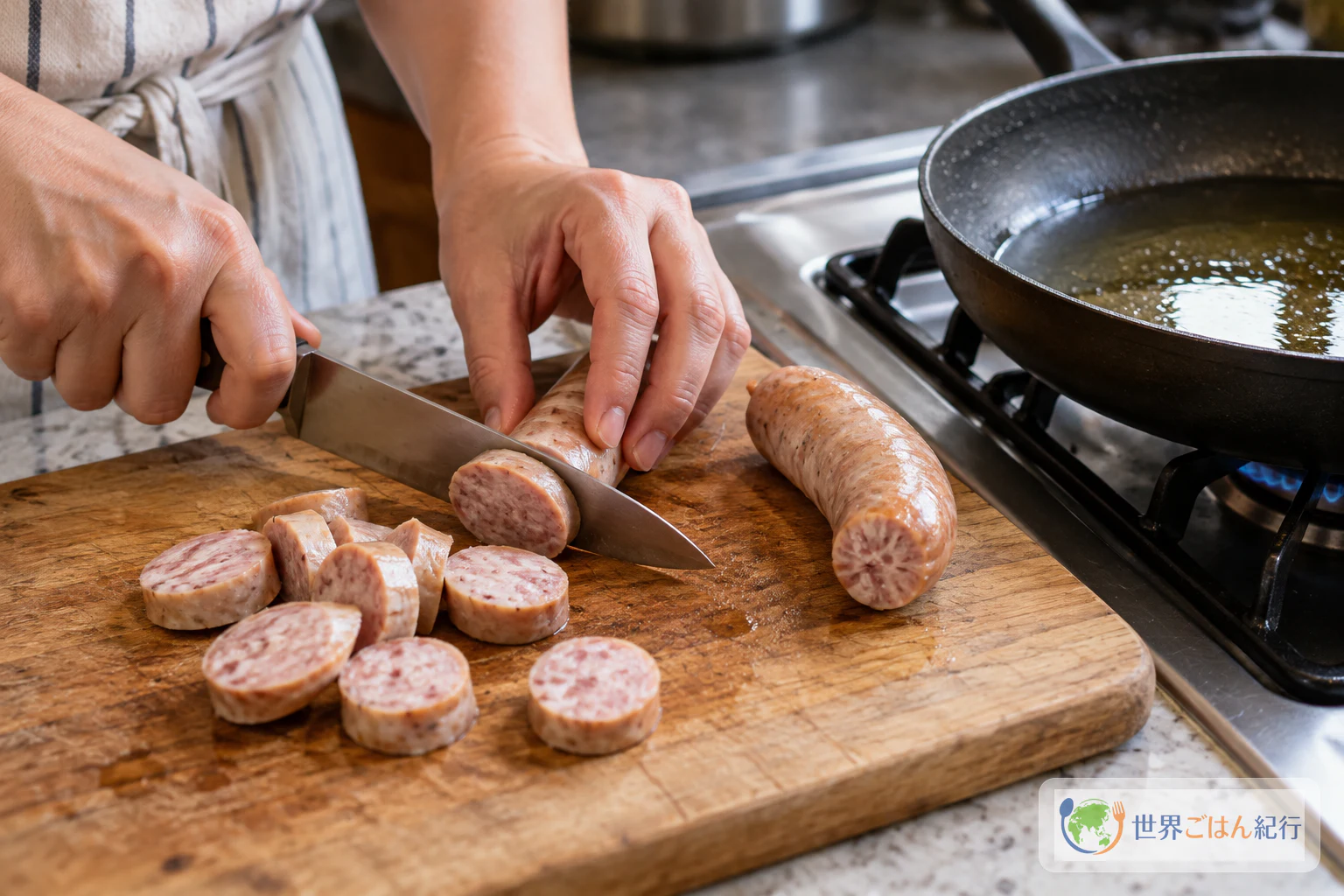
Sausage. Salchichas de calentar are sausages meant to be heated before eating. No particular product elsewhere can be called the same thing, so choose a plain cooking sausage and cook it according to its label. Sausages differ in saltiness, which affects the whole platter (see the salt note in the method).
Locoto. Locoto is a fresh chile, and its heat varies by variety and by individual pod. If you can't find it, a fresh chile from your local shop can stand in, but its aroma and heat will not be the same. Start with less, taste, and add more as you go. Removing or reducing the seeds makes it milder.
Potatoes. Use medium potatoes that you like for frying.
Equipment
- Sharp knife and cutting board
- Pot or heavy skillet with a lid, for the beef
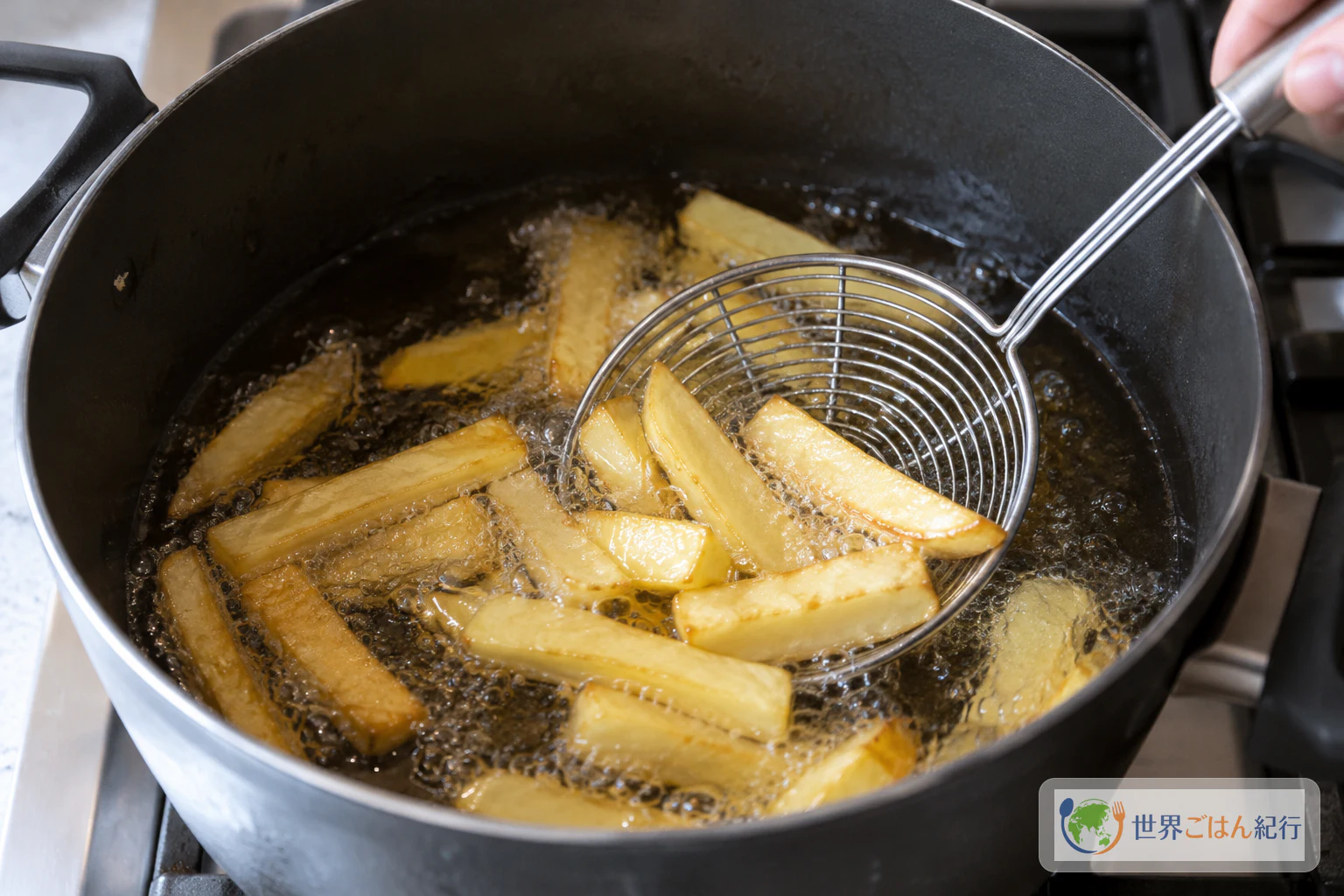
- Deep pot for frying the sausage and potatoes
- Slotted spoon or spider skimmer
- Paper towels or a clean cloth for drying the potatoes
- Small pot for boiling the eggs
- One large serving platter
Method: Cook Each Part Separately, Then Bring Them Together
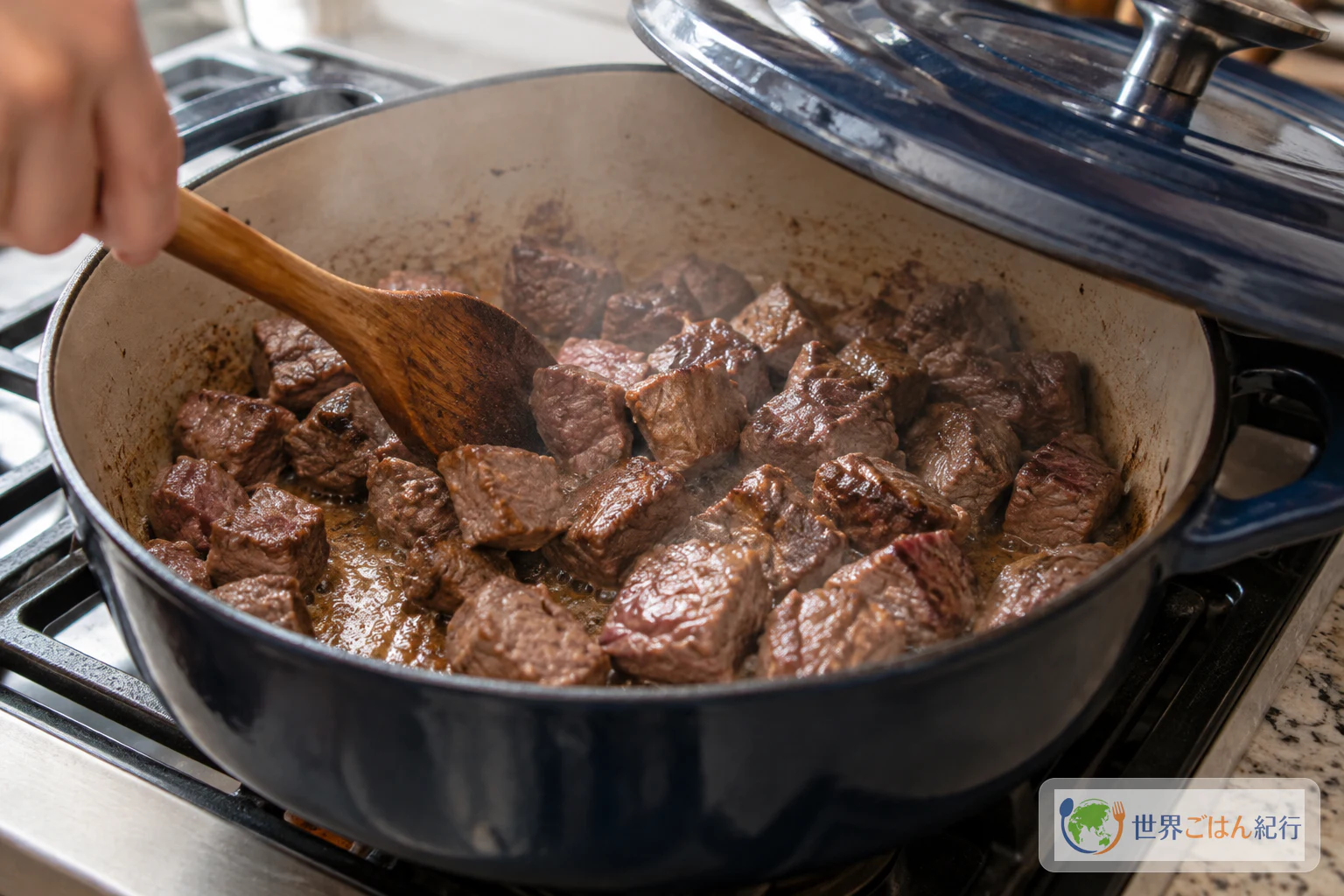
Cook the beef through without relying on juice color alone, cook the sausage as its product label directs rather than treating browning as proof of doneness, and cook the potatoes through as well as coloring the outside.
Troubleshooting
| Problem | Likely cause | What to do |
|---|---|---|
| The beef is dry | The lid was left off, so the juices cooked away | Keep the pan covered while the beef cooks through, and add it to the platter with its juices |
| The oil spatters badly | The potatoes went in wet | Wipe the batons dry before frying, and add them in small amounts |
| The potatoes are pale and soft | Too many potatoes in the oil at once | Fry in smaller batches so they can color, and lift them out once cooked through and golden |
| The platter tastes too salty | Salty sausage on top of the full salt for the beef | Next time, hold back some salt in step 1 and adjust at the end |
| The potatoes go soggy before serving | The platter was assembled early or sat too long | Combine and top just before eating |
| The locoto is too hot | Heat varies between pods and varieties | Reduce the seeds, use fewer strips, or serve the locoto on the side |
Assemble the platter promptly and don't leave it sitting out for a long time. The sources give no guidance on how long leftovers keep or how to reheat them, so none is given here.
Variations
- Locoto on the side. Instead of scattering all the locoto over the platter, put it in a small dish so each person can add as much heat as they like. This changes only how it is served.
- A different fresh chile. If locoto isn't available, a fresh local chile can replace it, with the understanding that the aroma and heat will differ. Start with less.
- No garlic. Garlic is optional in the original, so the version without it is just as complete.
- Salt to finish. Because the sausage changes the overall saltiness, you can use less salt on the beef and adjust the finished platter.
- Other people's sauces. Some Bolivian recipes serve pique macho with beer, vinegar or llajua (a Bolivian chile sauce) on the side. These belong to other recipes; try them as a separate version rather than adding them to this one.
Pique Macho in Cochabamba and Beyond
Los Tiempos describes pique macho as a casual dish for weekends with friends and for celebrations, linked to memories of Cochabamba. The way the recipe is built, with everything piled onto one platter, fits that picture of a shared, relaxed table. That is not to say every household in Bolivia eats it the same way. For more of the country's dishes, see the Bolivia country page.
Recipes differ noticeably from one source to another. Recetas de Cochabamba gives its own recipe with chorizo and suggests sides such as vinegar, beer and llajua. Ajinomoto Bolivia's version adds optional chicken, chorizo, cheese, olives and beer, along with the company's own seasoning products. Bolivian.com uses a different approach to marinating the meat and cooking the vegetables. These are best understood as regional and household variations, and this article keeps them separate from the Los Tiempos recipe rather than blending them into one.
Some pages also carry origin stories for the dish. Since those claims rest on a single source and have not been independently confirmed, they are not presented here as history.
Frequently Asked Questions
How many people does this serve?
The Los Tiempos recipe does not say, so no number is given here. It is a generous platter meant to be shared, and how far it goes depends on your table and what else you serve.
What can I use if I can't find locoto?
A fresh chile from your local shop is the most practical option, but its aroma and heat won't match locoto. Use less than you think, taste, and consider serving it on the side.
What kind of sausage should I buy?
The original calls for salchichas de calentar, sausages meant to be heated. Choose a plain cooking sausage, check the label for allergens and saltiness, and cook it as the label directs.
Do I need mayonnaise or ketchup?
They are not part of the Los Tiempos recipe. Some households and other recipes add sauces, but this version is finished with raw vegetables and egg only.
How is pique macho different from silpancho?
Pique macho is a platter of beef cubes, fried sausage and fried potatoes with raw toppings. Silpancho is built on thin, flattened fried beef served with rice, egg and salad.
Sources
- Los Tiempos / Editorial Canelas S.A., "Pique macho," Paladar, 2023-08-06. Source of the ingredients, amounts and method used in this article, and of the description of pique macho as a casual dish for weekends and celebrations with friends. https://www.lostiempos.com/sites/default/files/edicion_online/esp_paladar_web-2.pdf
- Recetas.com.bo, "Pique macho | Recetas de Cochabamba." Introduces pique macho as a Cochabamba dish eaten with friends, with its own recipe and serving suggestions; its origin claim is not treated as confirmed. https://www.recetas.com.bo/content/pique-macho
- Ajinomoto Bolivia, "Pique a lo macho." A different recipe including optional chicken, chorizo, cheese, olives and beer, cited to show variation between recipes. https://ajinomoto.com.bo/pique-a-lo-macho/
- Bolivian.com, "Pique Macho - Cocina Boliviana." A different recipe with its own seasoning and cooking method, cited to show variation between recipes. https://bolivian.com/cocina/piquemac.html