Empanada de Pino: Beef and Onion Folded into a Golden Baked Crust
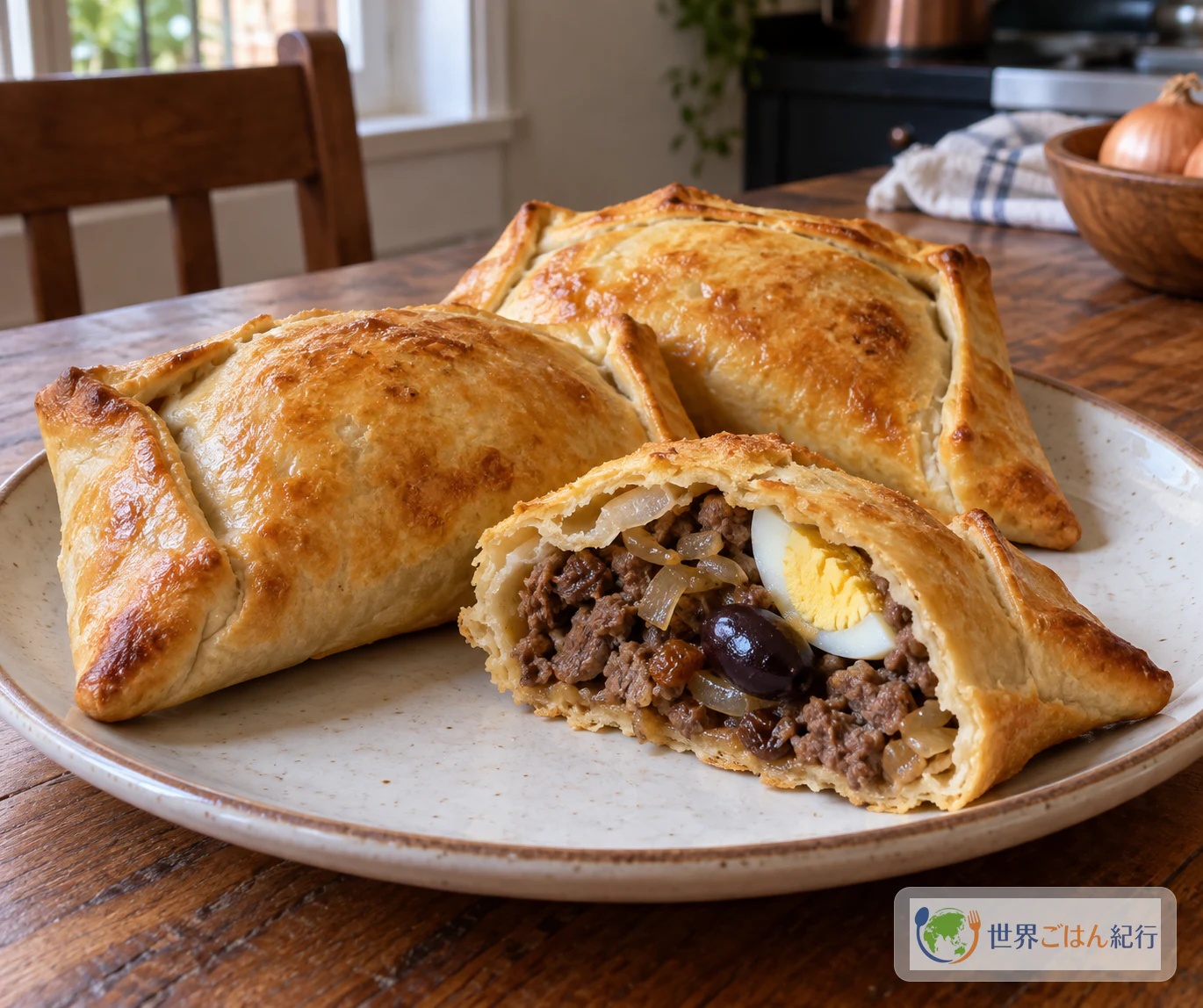
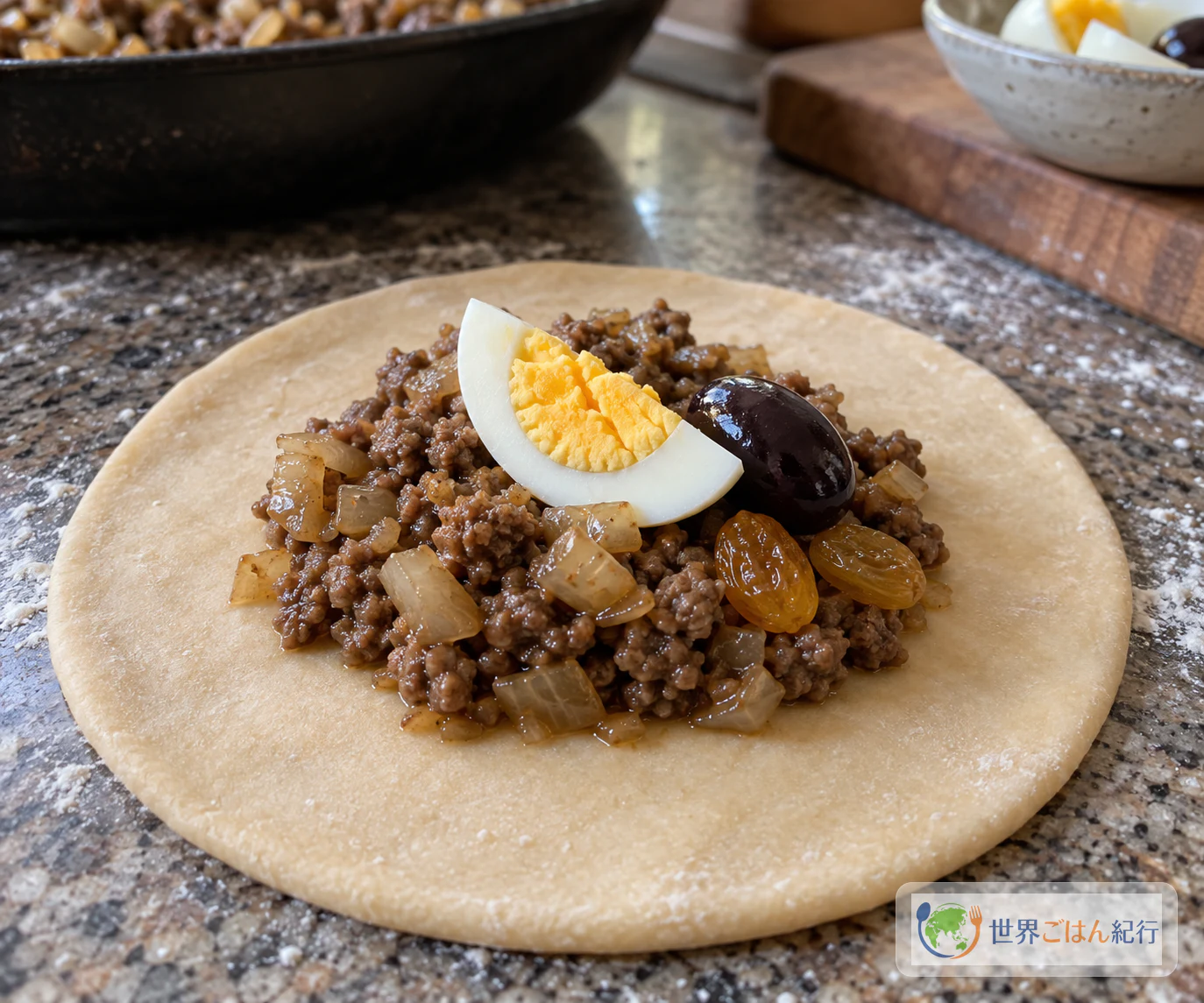
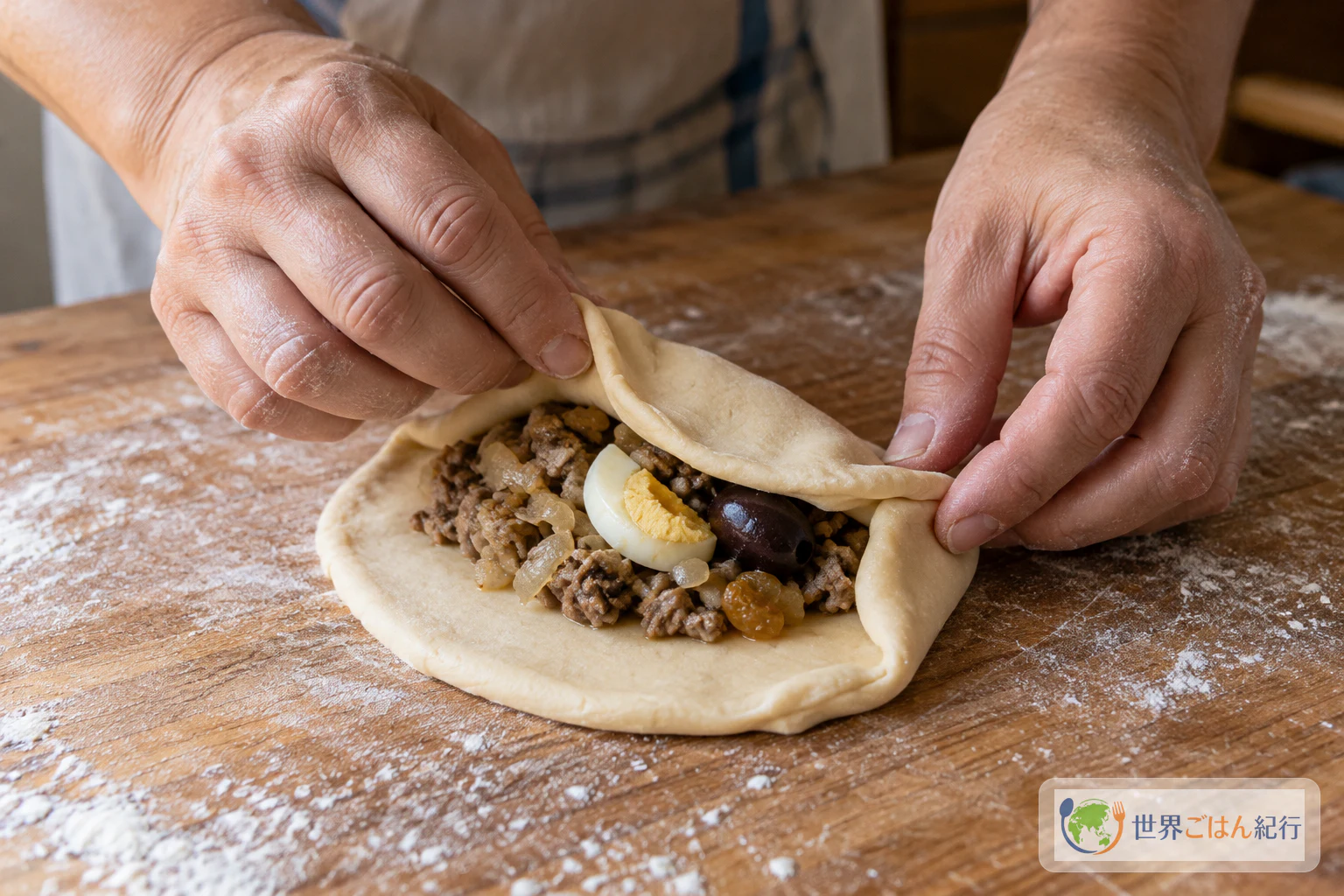
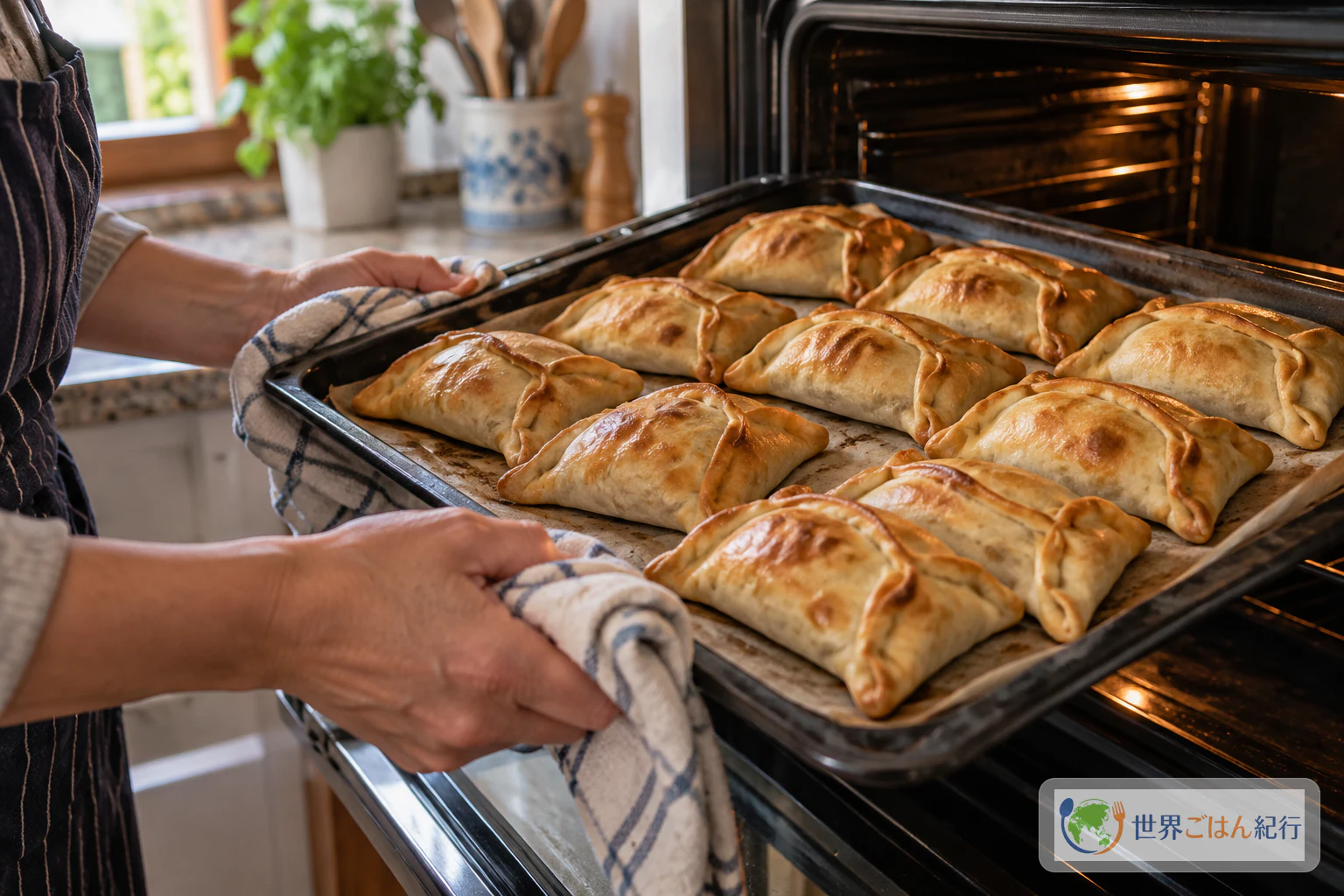
Onions cooked until soft and sweet, beef cooked all the way through, and in every pastry one piece of hard-boiled egg and one black olive. Seal the edges well and bake until golden.
In September, during Chile's Fiestas Patrias, people gather at fondas, communal venues where food and festivities are shared. Empanadas de pino are among the foods eaten most at this time of year. Picture one handed over warm from the oven: you break the baked wheat crust and the smell of beef and onion rises up, seasoned with cumin and the red Chilean seasoning ají de color. Chile Travel points out that although their consumption rises during the national holidays, empanadas de pino are eaten year-round as well. They are a festival food and an everyday food at the same time.
The filling is called pino. In this article, pino means the cooked filling built mainly on beef and onion. The sources used here do not confirm where the word comes from, so we will not offer an origin story for it.
This recipe follows the version published by Gourmet Chile, which makes 12 empanadas. Its amounts are kept as the source gives them, including the places where the source leaves things open, such as the size of the onions or how much salt and pepper to use. This recipe has not been kitchen-tested for this article. Read the visual cues in each step as your guide, and judge the dough and the bake with your own eyes and hands.
For more of the country's cooking, see our Chile country page.
What Makes the Chilean Version Its Own
Empanadas are made in many countries, and the dough, the filling and the cooking method change from place to place. The empanada de pino in this article is a specific Chilean type: a baked wheat-dough pastry (empanada de horno) wrapped around beef-and-onion pino, with hard-boiled egg and black olive inside. Raisins are optional.
That makes it different from the general Argentine-style empanadas, and also from the fried Chilean cheese empanadas, which are a separate preparation. Even within Chile, published recipes differ in the fat used in the dough, the amount of spice, the number of raisins and the baking conditions. So this article sticks to one recipe throughout and does not treat it as the only correct form for the whole country.
The flavor rests on a few clear points:
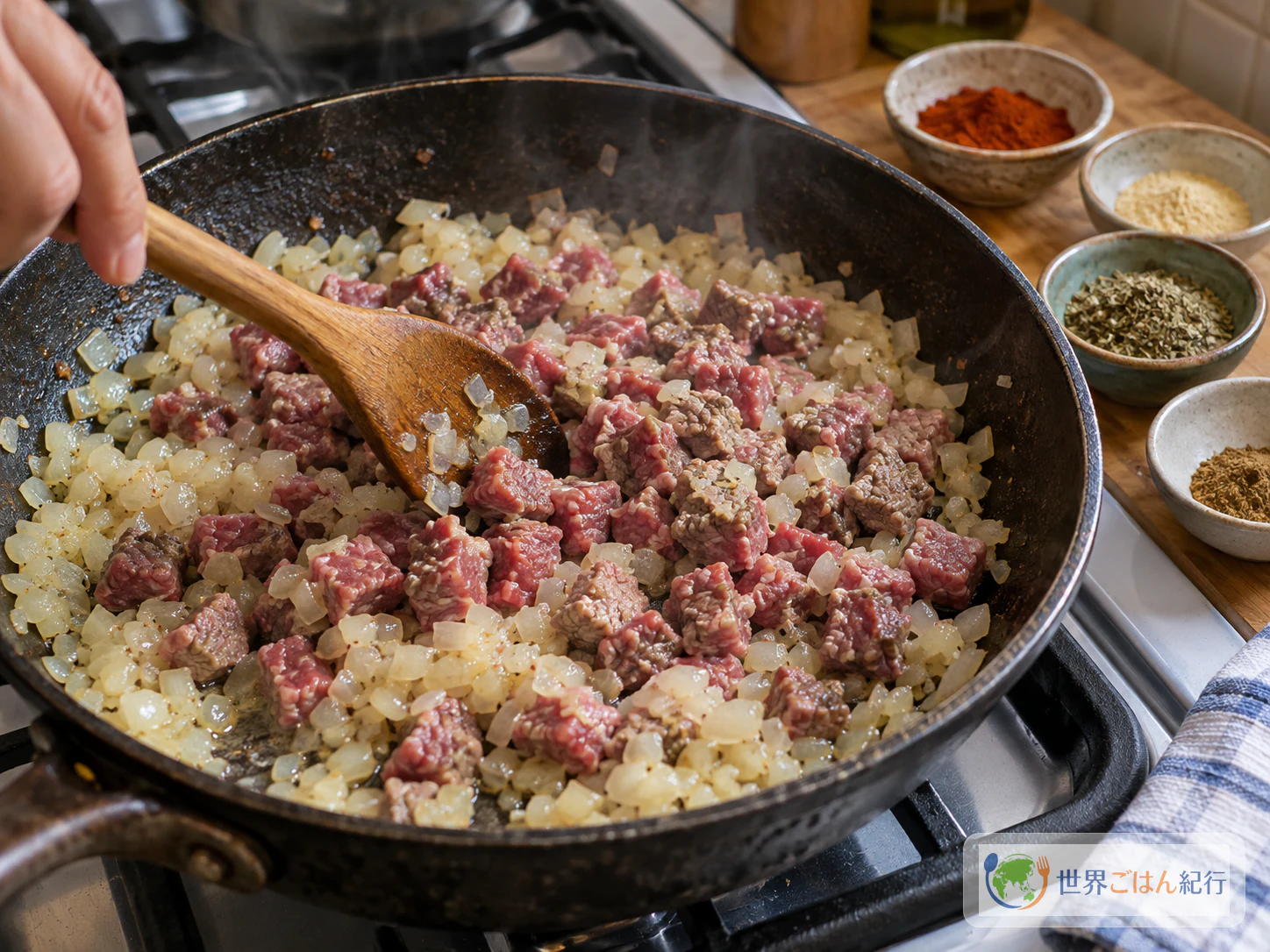
- Onion cooked until translucent and very soft, giving sweetness
- Beef in small cubes, cooked completely
- Cumin and ají de color for warmth and red color
- Black olive for a salty bite, and hard-boiled egg for a soft, mellow texture
- Golden raisins, if you use them, for small bursts of sweetness
Ingredients for 12 Empanadas (Gourmet Chile Version)
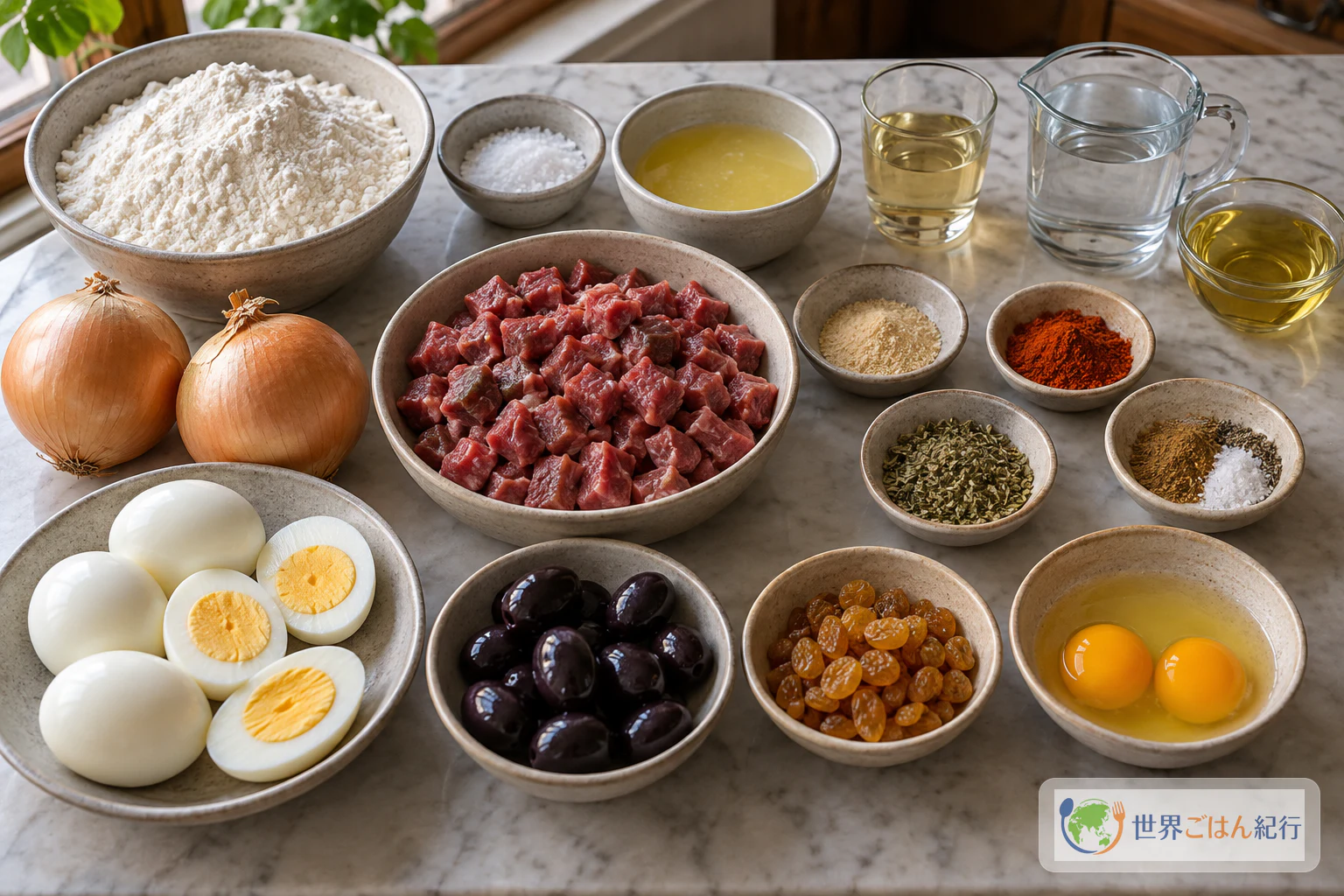
Cdta is a teaspoon, cda a tablespoon and taza a cup. Season with salt and pepper to taste.
Equipment
- Skillet or frying pan for the pino
- Large mixing bowl for the dough
- Rolling pin
- Small bowl of water for moistening the edges
- Baking tray
- Pastry brush
- Toothpick
- Oven
Choosing and Substituting: Shortening, Ají de Color, Wine and Beef
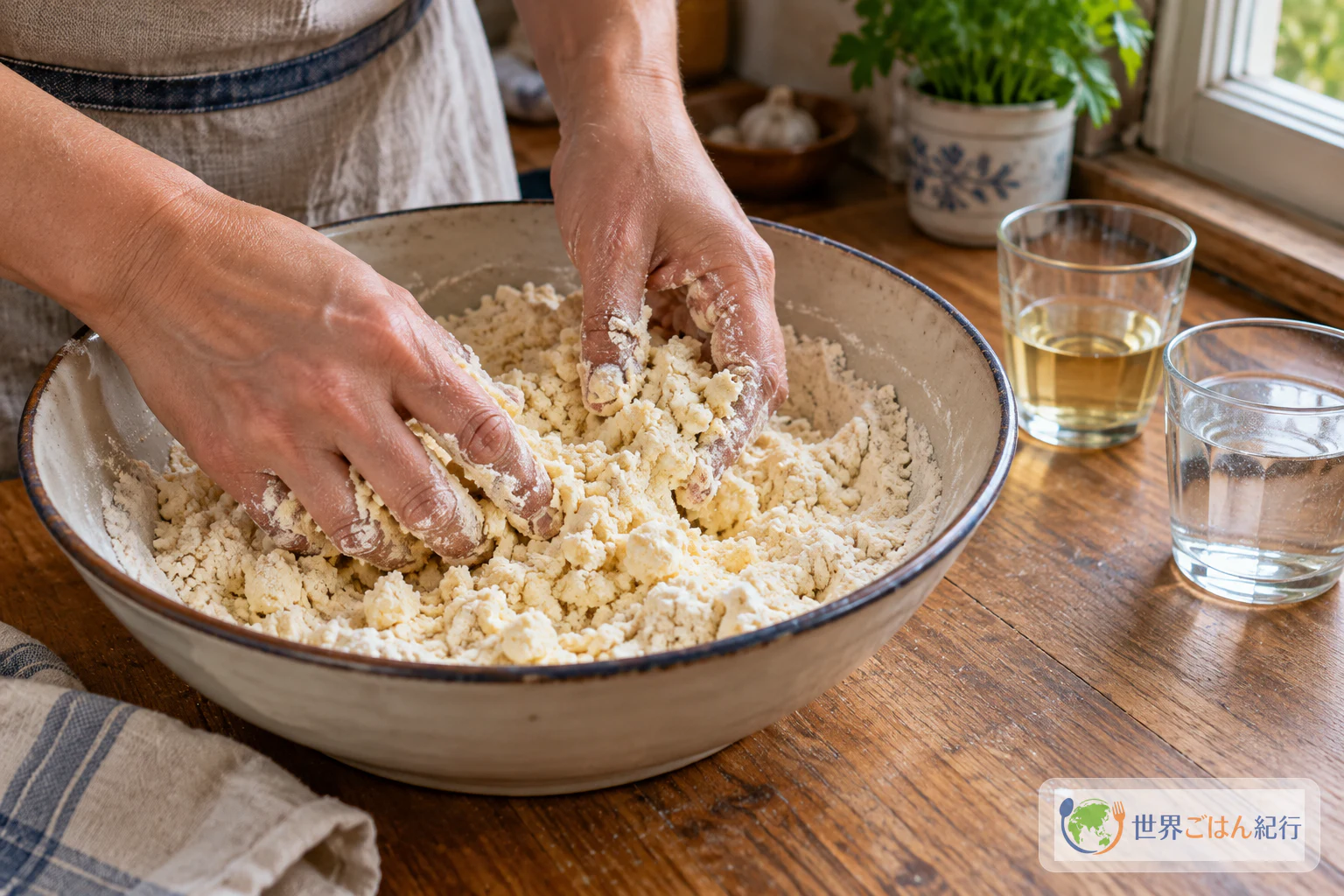
Vegetable shortening (manteca vegetal). The recipe uses vegetable shortening, melted and still warm. It is not the same as lard, and butter is not an equivalent either: changing the fat changes the texture and flavor of the dough, and the result will no longer be this recipe. If you can find plain vegetable shortening, use it, and check the ingredient label.
Ají de color. This is a red Chilean chili seasoning. If you cannot find it, paprika is a possible stand-in, but expect a difference in color, heat and aroma; treat it as a substitute, not the same thing.
White wine. If you prefer to avoid alcohol, replacing the wine with water is an option, but it is a change to the recipe and the flavor and texture of the dough may differ.
Beef. In Chile, posta rosada or posta negra is used. Outside Chile, a lean beef cut of the kind used for braising is a reasonable candidate, but it will not be the identical cut. Cut it into small cubes.
Flour. The recipe simply says harina (wheat flour) without naming a type. Different flours absorb water differently, which is one reason the water amount is only approximate.
This recipe contains wheat and egg. Check the label of the vegetable shortening and any other processed ingredients. Cook the beef completely before using it as a filling. The beaten raw egg for brushing goes on before baking; keep it and the brush away from other foods.
Method: Pino, Dough, Filling, Sealing and Baking
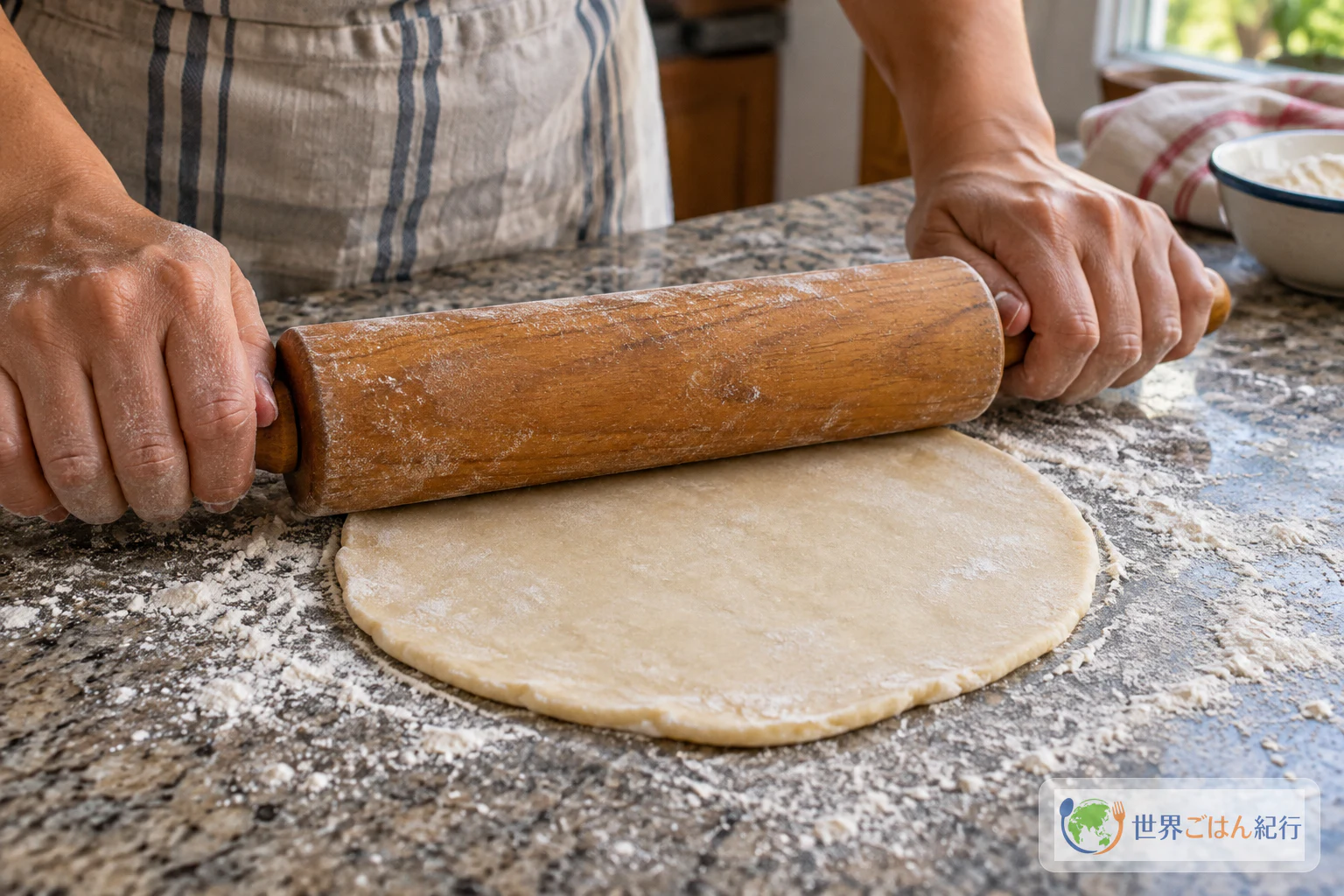
Make the pino first so it has time to cool while you prepare the dough. Watch the onion, the dough and the color of the crust rather than the clock.
Troubleshooting: Sticky Dough, Leaks and Bursts
| Problem | Likely cause | What to do |
|---|---|---|
| The dough is sticky | Water added too fast; the flour absorbs less than expected | Add the warm water gradually and stop when the dough is soft and not sticky. The ¾ taza is an approximate guide, not a fixed amount |
| The dough is hard to handle around the filling | The pino was still hot | Let the pino cool before filling (practical advice, not from the source recipe) |
| The edges won't stay closed | Filling or juices on the rim | Keep moist filling off the edge, moisten the rim with water and fold the edges in firmly |
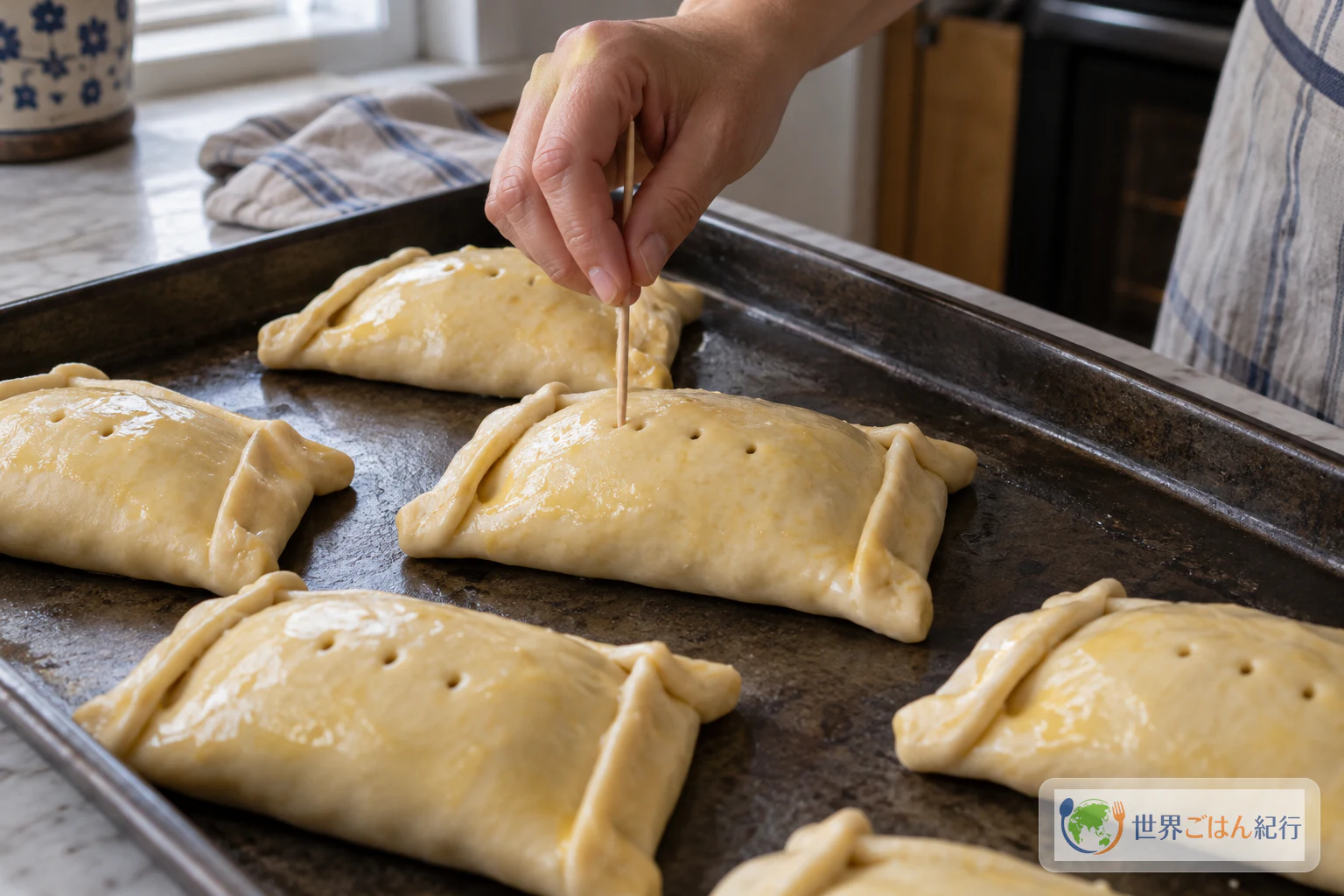
| An empanada burst in the oven | Too much filling, or edges not closed well | Prick the tops as the recipe says. Next time, adjust the amount of filling per empanada and how you close it, without changing the base amounts |
| The top is golden but the bottom is pale | Oven differences | Check the bottom as well as the top; the recipe says 40 minutes or until golden |
At the Table: Festival Food and Everyday Food
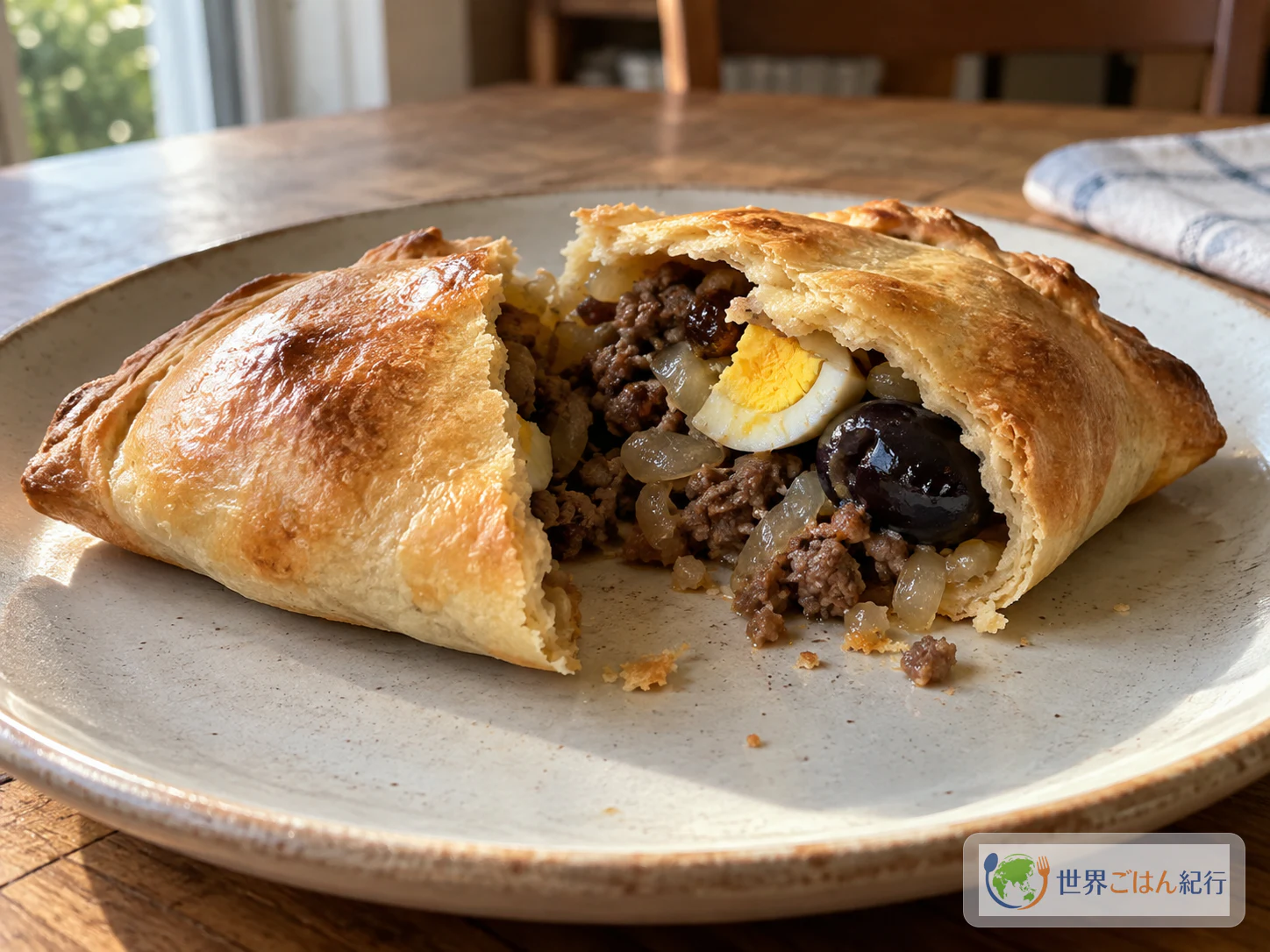
Chile Travel describes empanadas de pino as baked pastries filled with meat, onion, egg and olives, with raisins optional, and notes that they are eaten more during Fiestas Patrias at the fondas where people share food and celebrations, but are also eaten throughout the year. So there is no need to save them for September.
Recipes differ from source to source and household to household. Gourmet Chile uses 24 raisins for 12 empanadas, while Típico Chileno lists 48 raisins "to taste" in a different, larger recipe. Neither is a national standard. That second recipe also differs in its dough fat, spice amounts and baking conditions, which is why this article does not mix the two.
Variations
These are ways to adjust the dish without turning it into a different recipe:
- Without raisins. Raisins are optional; leave them out if you prefer a fully savory filling.
- With raisins. Add 2 golden raisins per empanada, as in the Gourmet Chile version.
- More heat. Add heat at the table, separately from the ají de color in the pino.
- Cut of the beef. Cutting the beef a little coarser or finer changes its texture; keep the same amounts and still cook every piece completely through before filling.
- Shape. Folding into a squared shape or a half-moon changes the look. Treat it as a difference in appearance, not as the one correct regional form.
Storage
The sources used for this recipe do not give guidance on storing leftovers, how long they keep or how to reheat them, so this article does not set any storage period or reheating temperature.
Frequently Asked Questions
What is pino?
In this article, pino is the filling of beef and onion, seasoned here with garlic powder, ají de color, oregano, cumin, salt and pepper. The origin of the word is not confirmed by the sources used here.
Are raisins required?
No. Raisins are optional and a matter of taste. The Gourmet Chile recipe lists 24 golden raisins as optional, 2 per empanada.
What if I can't find ají de color?
Paprika can stand in, but the color, heat and aroma will differ. Treat it as a substitute rather than the same ingredient.
What temperature do I bake at?
This recipe bakes at 180°C in a preheated oven for 40 minutes, or until golden. Other published recipes use different conditions, for example a medium oven for about 15 minutes in Típico Chileno's version, but that belongs to a different recipe and is not mixed in here.
Why cool the pino before filling?
It makes the dough easier to handle. This is practical advice, not a step with a time or temperature specified by the source recipe.
Can I use lard or butter instead of vegetable shortening?
They are not the same as vegetable shortening, and the dough's texture and flavor will change. For this recipe, use vegetable shortening if you can find it.
Sources
- Chile Travel, "Fiestas Patrias in Chile: 5 traditions you should know." Supports the description of empanada de pino as baked and filled with meat, onion, egg and olives with optional raisins, its increased consumption during Fiestas Patrias alongside year-round eating, and fondas as communal celebration venues. https://chile.travel/en/blog/national-independence-holiday-in-chile-five-traditions-that-you-must-get-to-know/
- Gourmet Chile, "Receta Empanadas de Pino." The recipe followed in this article: 12 empanadas, dough and filling ingredients, method and assembly, baking at 180°C for 40 minutes or until golden, and raisins as optional. https://www.gourmet.cl/recetas/empanadas-de-pino/
- Típico Chileno, "Empanadas de Pino." Used only for comparison: a different published recipe with beef-and-onion pino, olives, hard-boiled egg, raisins to taste and a different dough and baking method. Its amounts are not mixed into this recipe. https://www.tipicochileno.cl/empanadas-de-pino/