Lechona: A Celebration Dish, Folded Down to Fit a Home Oven
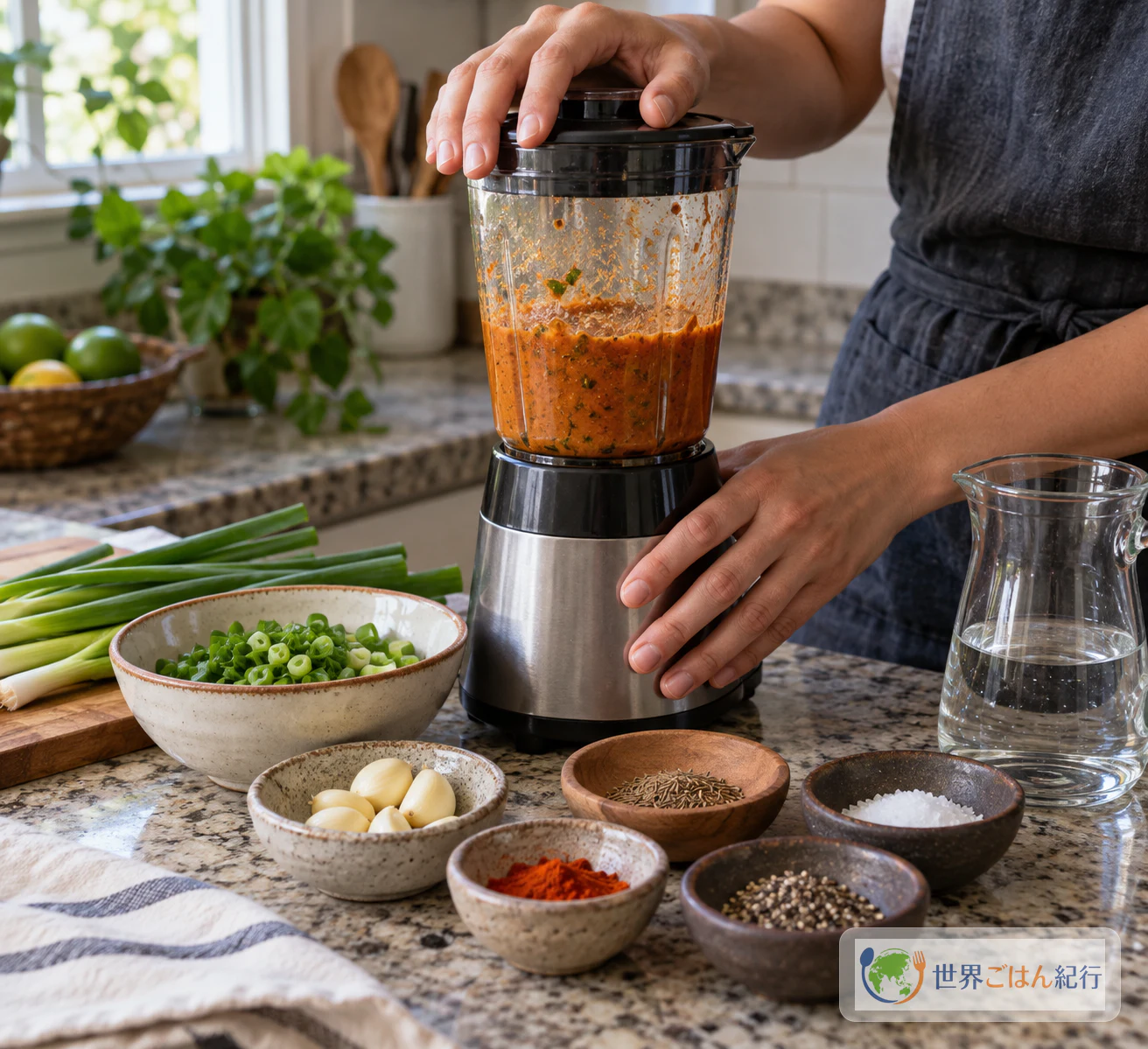
Pork and lard for richness, cumin, achiote, garlic and long onion for aroma, a plain filling of peas and rice, and a skin that roasts to a deep, crackling gold. This is not a spicy dish.
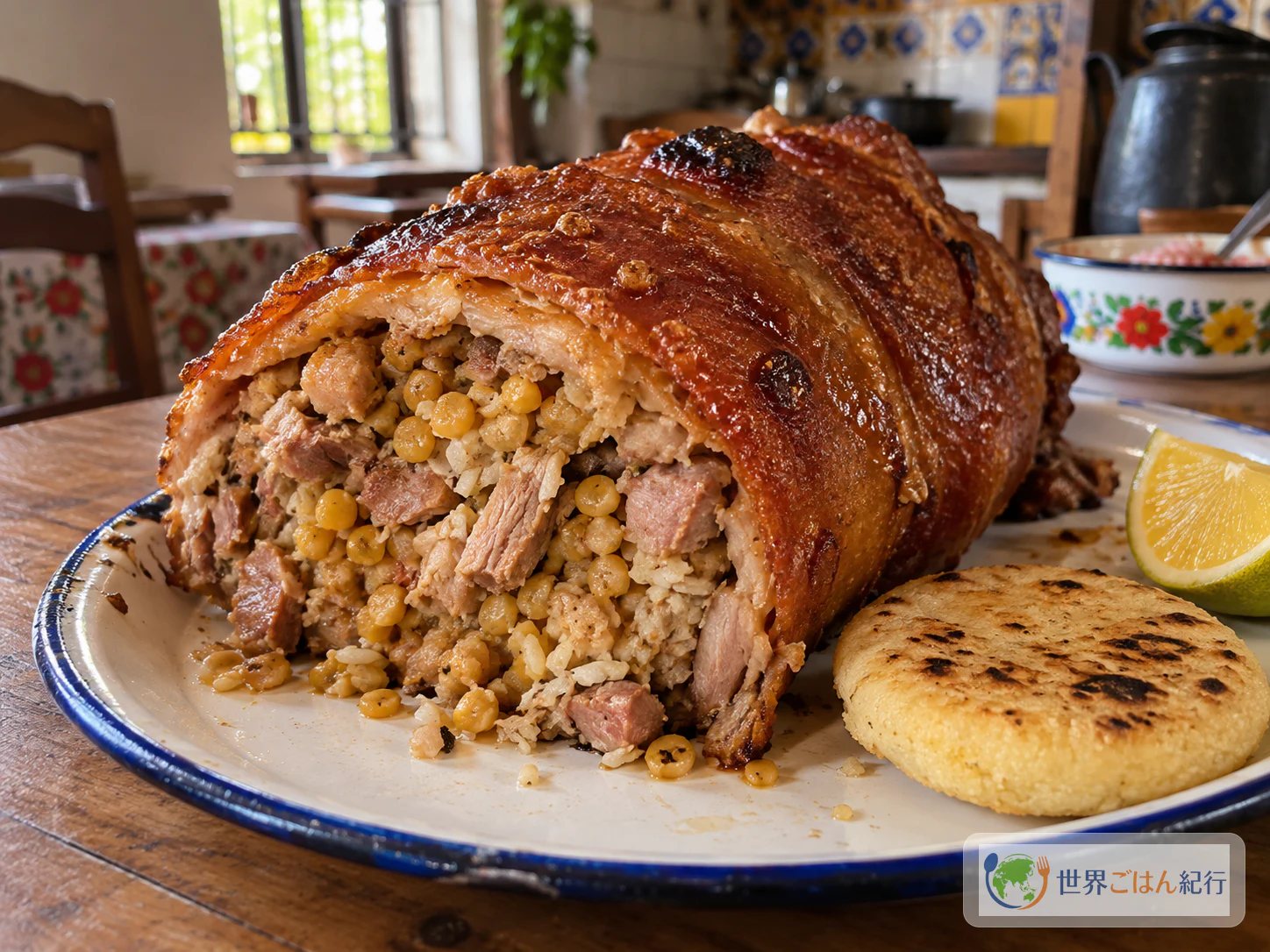
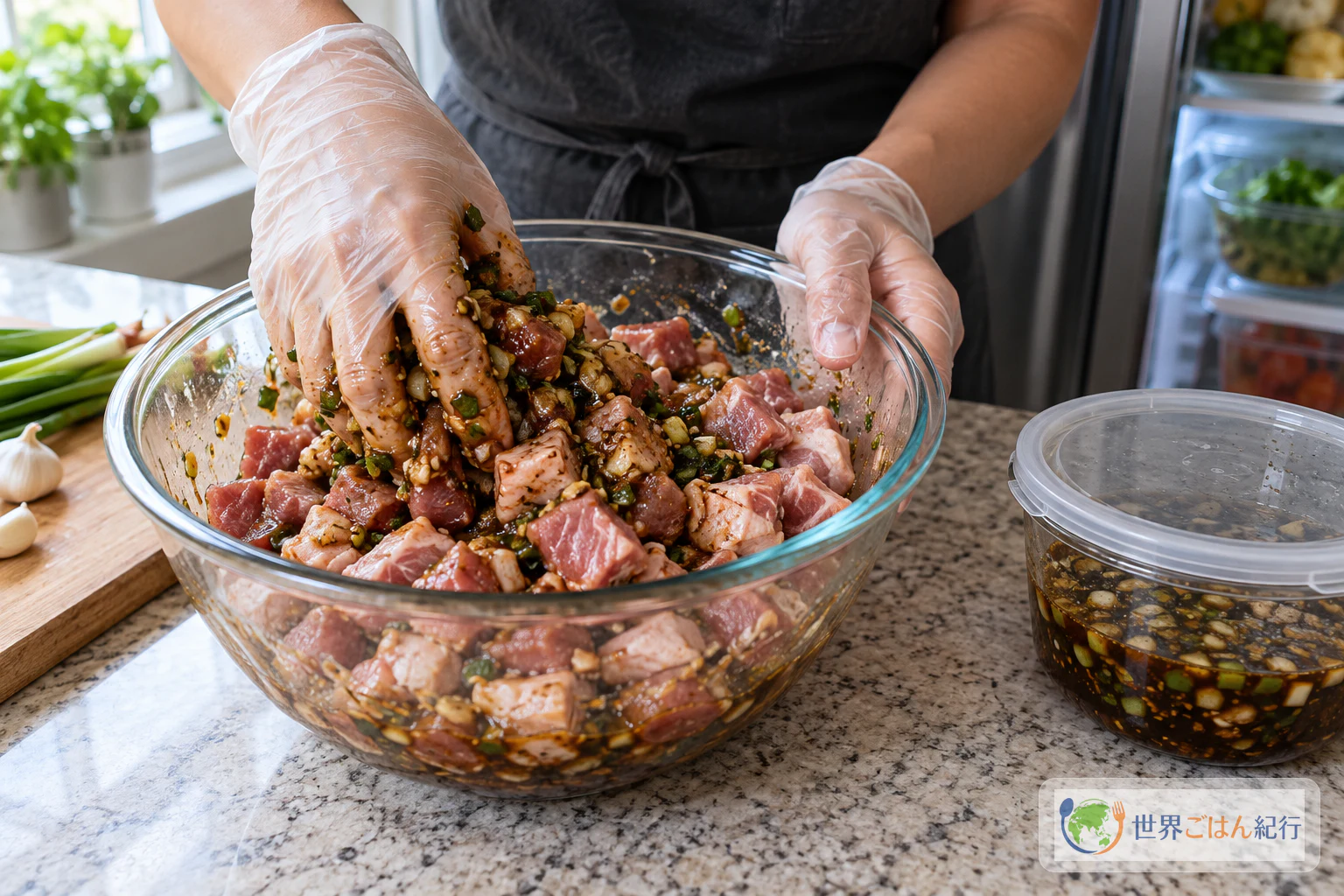
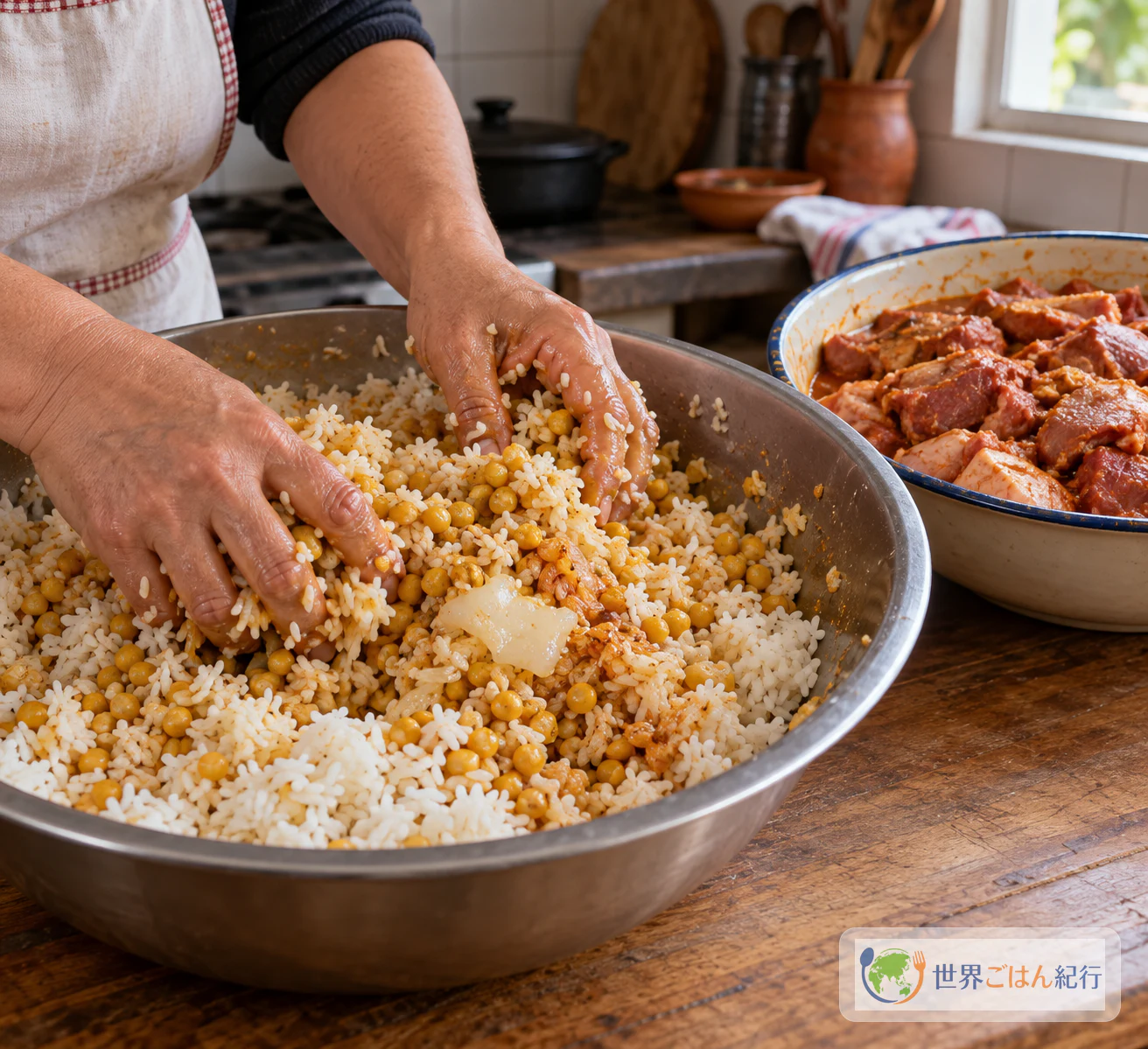
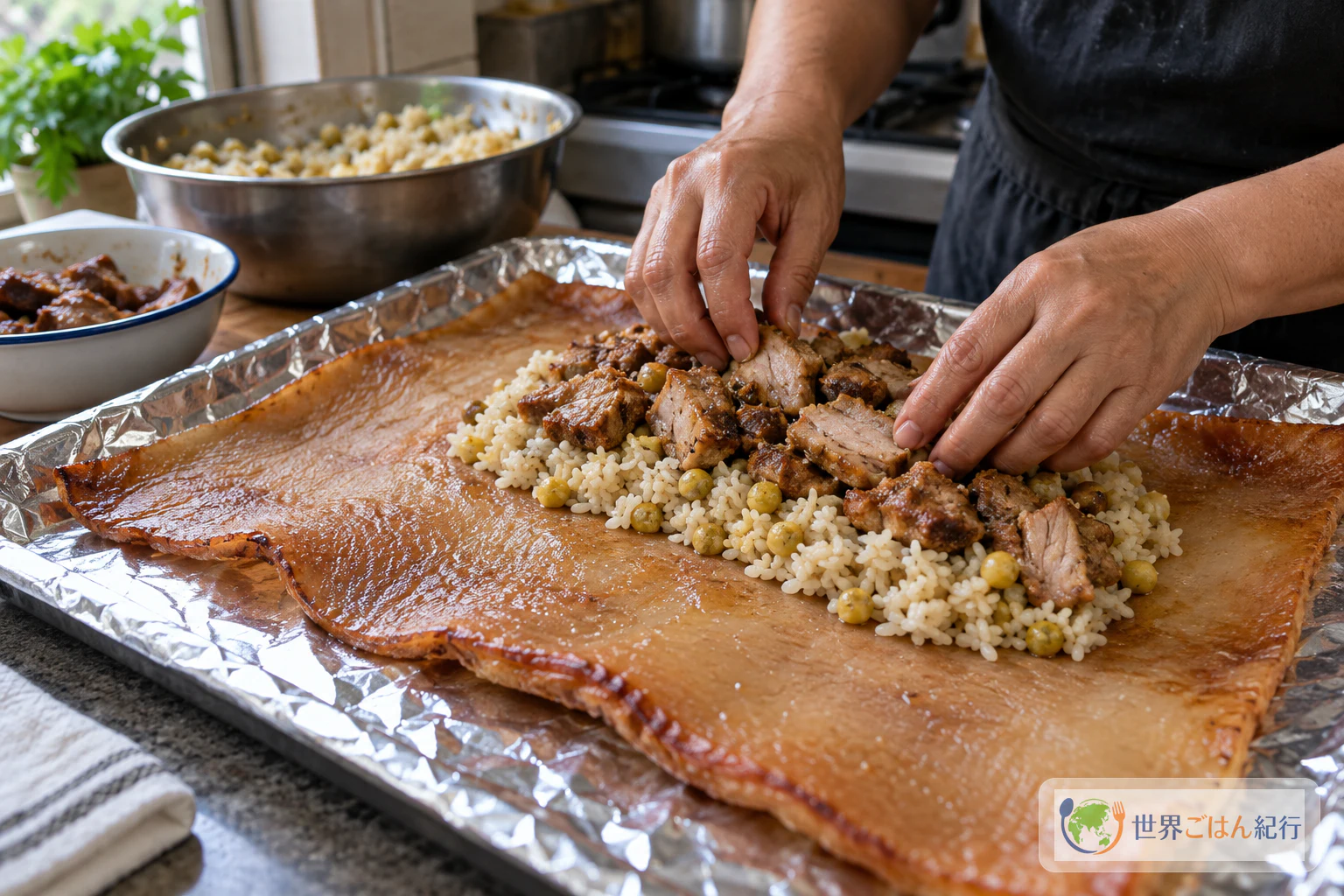
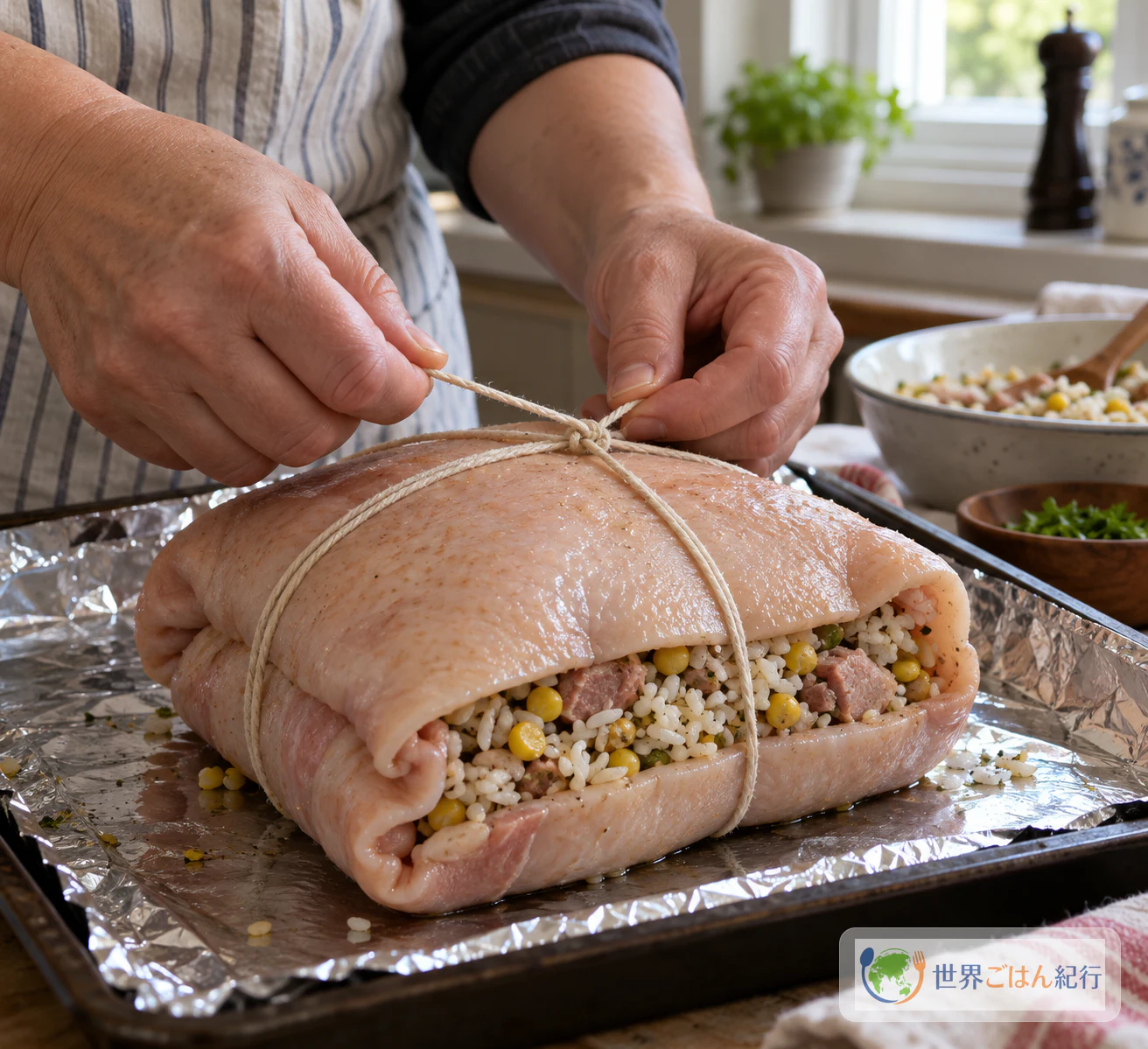
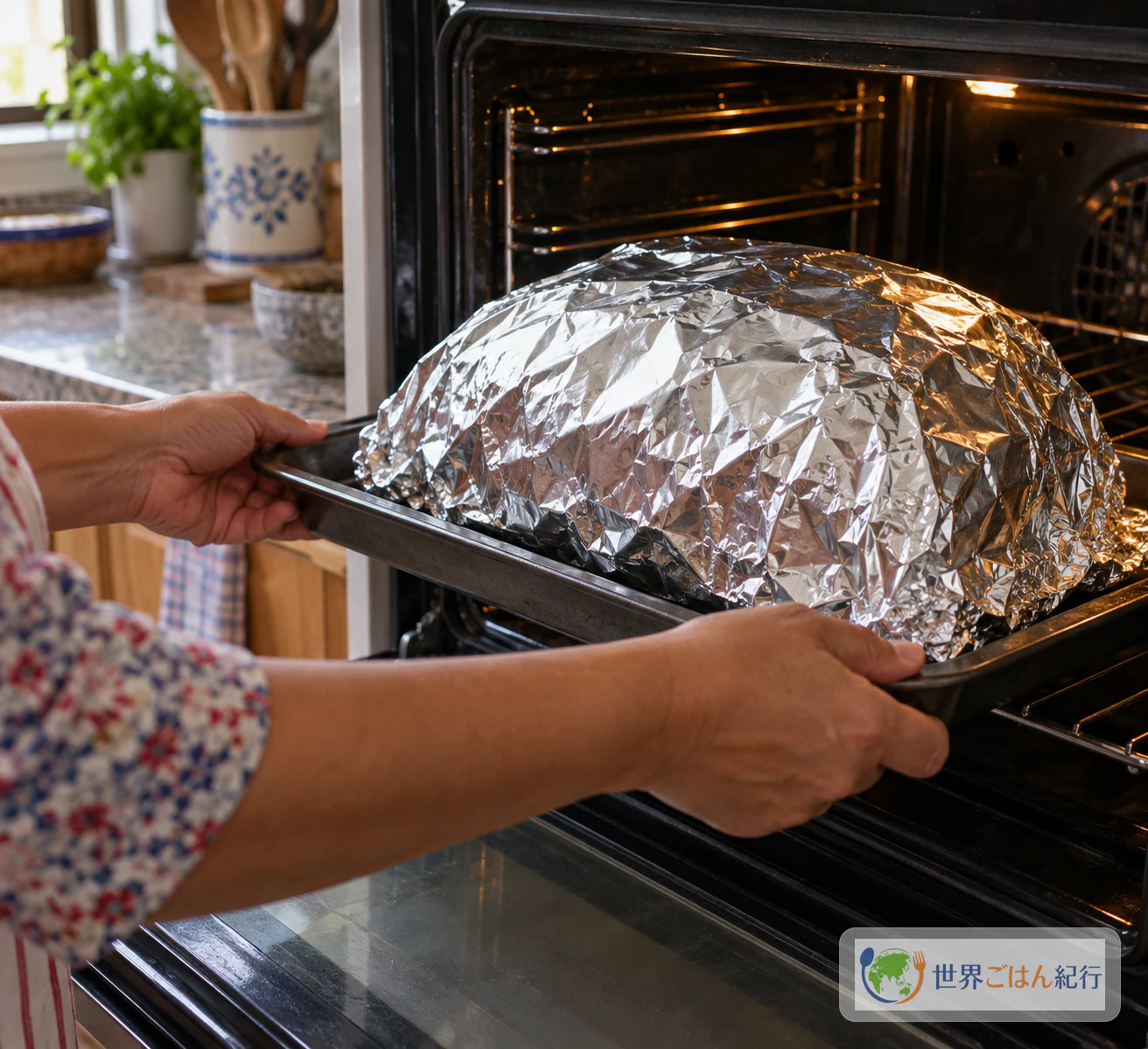
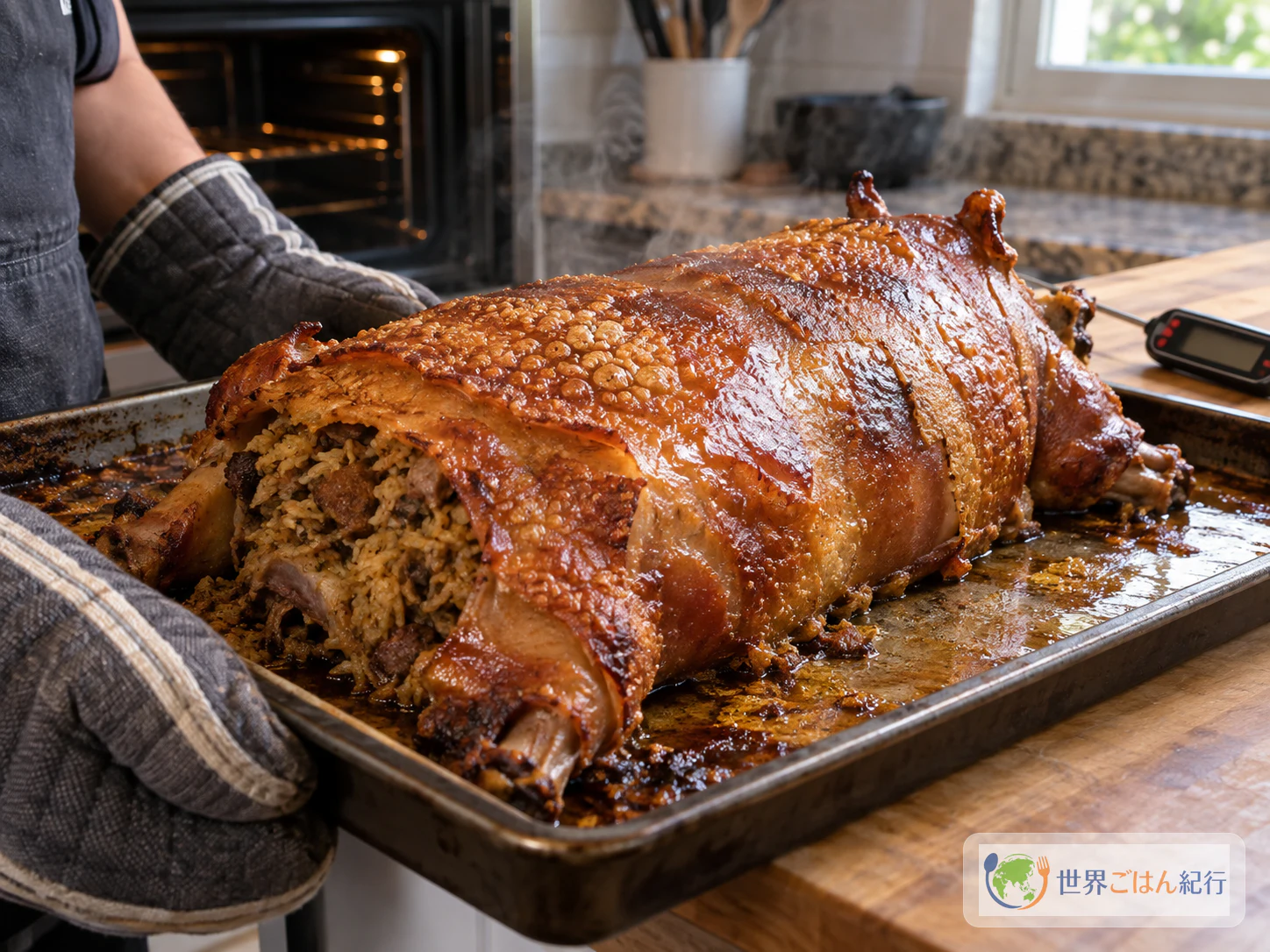
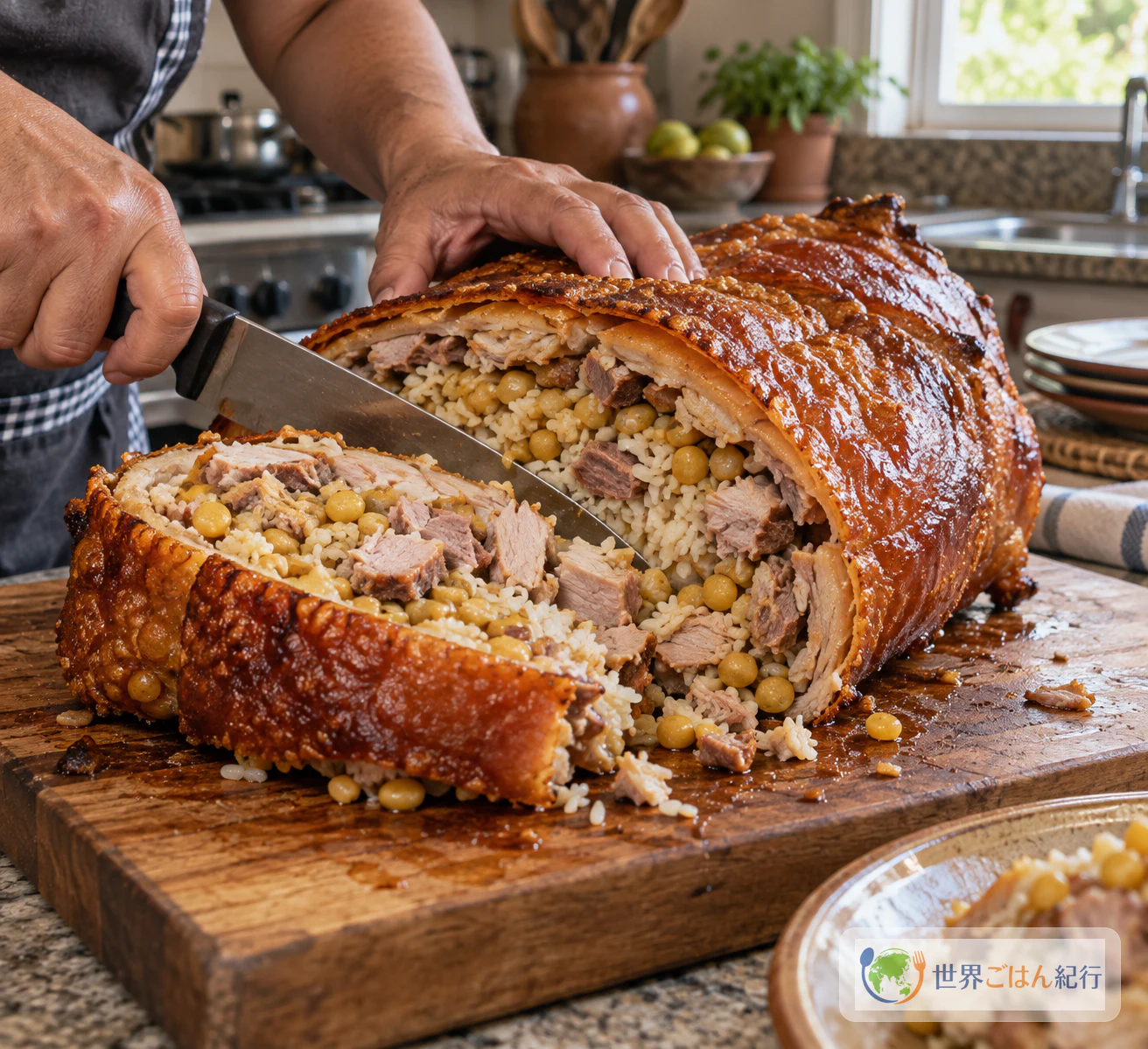
A broad sheet of pork skin is laid flat on a foil-lined tray. Across its center go cooked rice and yellow peas, loosened with lard and a rust-colored adobo, and pieces of pork that spent the night in the refrigerator soaking up cumin and achiote. Then the skin is rolled up around everything and tied, and the parcel goes into the oven, first under foil, then uncovered and hot, until the skin blisters and browns. When it is finally cut, the cross-section shows the layers: pork, peas, rice, all held inside the skin.
Lechona, often called lechona tolimense, is a Colombian dish of pork with peas roasted inside pork skin, centered on the Tolima region. In its large festive forms it is a project of long preparation and stitching; Colombia's Ministry of Culture's Tolima cookbook also records a smaller wrapped form, the cojín ("cushion"), sewn closed in skin. This recipe follows that same idea at home scale: a compact parcel for six, based on a published home recipe that includes rice.
The names sound alike, but Colombian lechona and Filipino lechon are different dishes. Both belong to cultures that roast pork, but the ingredients, the form of the dish and the regional history are separate, so don't treat one as the origin or a version of the other.
There is no single fixed recipe for lechona. Some voices in Tolima treat the rice-free version as the traditional one, while versions with rice are also well established in other regions, in families and among Colombians abroad. The recipe below is the rice-containing home version; the rice-free Tolima style is explained further down, so you can see where each one sits.
Ingredients: Serves 6, Home Version with Rice
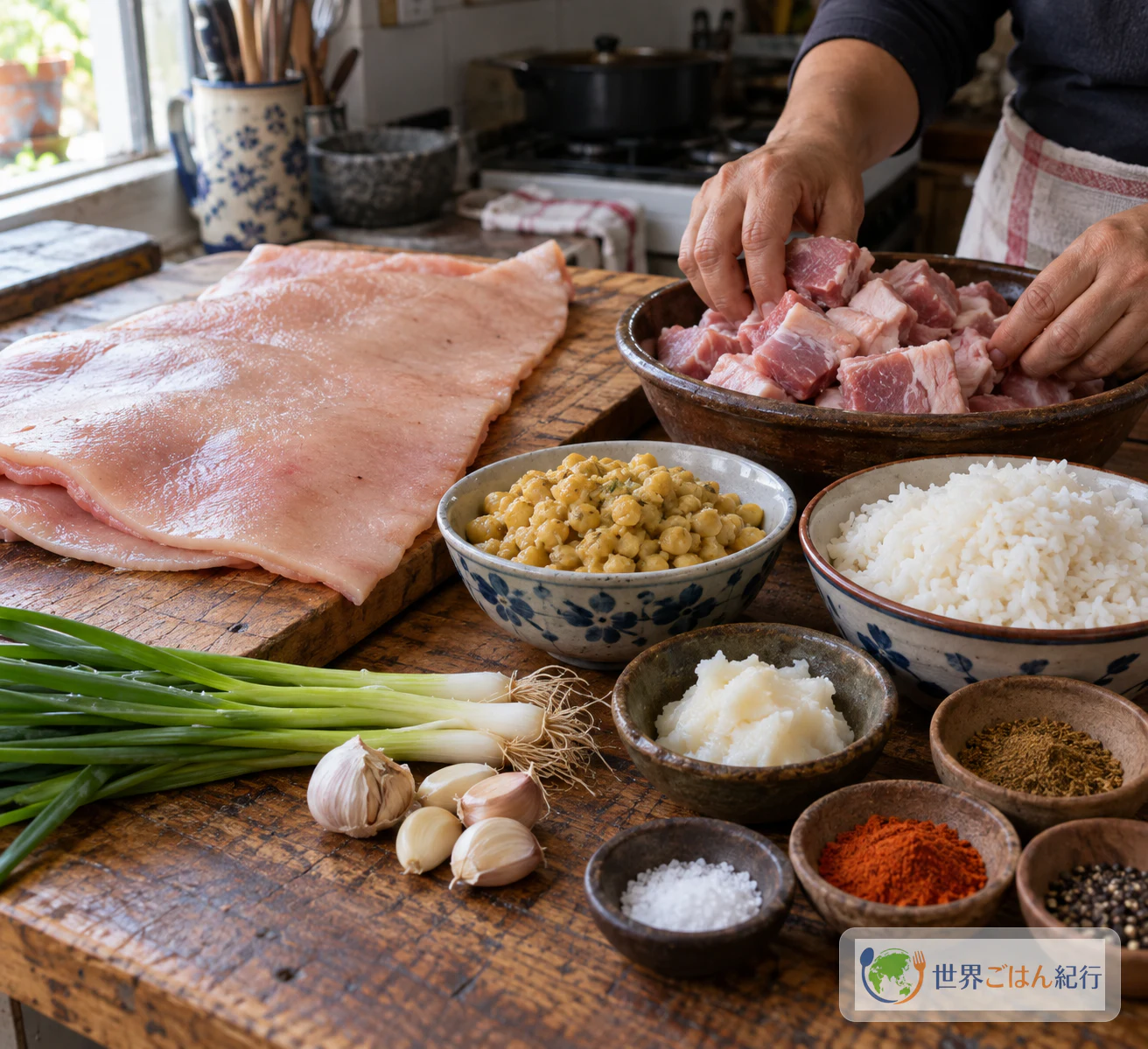
The peas and rice are measured already cooked. This recipe makes six servings.
Of the 2 tsp of cumin, put half into the adobo and 1/2 tsp into the filling. Of the 1 tsp achiote, put 1/4 tsp in the adobo and add achiote to the filling. Salt the skin to taste, separately from the 1 tsp used for the adobo and filling.
None of the listed ingredients is a common major allergen in itself, but check the labels of processed lard and cooked peas for allergens and any cross-contact statements. Keep the raw pork refrigerated while it marinates, and wash cutting boards, knives, bowls and gloves that touched raw pork before using them for anything else.
Equipment
- Blender
- Food thermometer
- Covered container for the reserved adobo
- Bowls for marinating the pork and mixing the filling
- Baking tray
- Aluminum foil, for lining the tray and covering the parcel
- Kitchen twine
- Cutting board and sharp knife
Choosing and Substituting: Skin, Peas and Achiote
Pork skin is the hardest part to find. You need a single piece broad enough to roll around the filling. Ask a butcher for skin-on pork skin rather than relying on a supermarket counter. Skin-on pork belly is sometimes suggested as a stand-in, but it changes the thickness and shape of the skin and the ratio of fat. It has not been verified as an equivalent for this recipe, so don't expect the same result.
Long onion (cebolla larga): Ordinary long green onions, such as Japanese negi, are a reasonable choice, but the balance of white and green parts and the aroma differ from the Colombian onion, so treat this as an editorial substitution.
Peas: Cooked yellow or green peas both work. Green peas change the color and aroma of the filling. Traditional Tolima recipes use dried yellow peas cooked from scratch. If you start from dry peas, cook them first and measure 3/4 cup cooked.
Achiote: Look for ground achiote, also sold as annatto powder, at import grocers or online. Paprika can stand in for the color only; its aroma is different, so treat it as an option, not a match.
Lard: Measure 1/4 cup in a US cup.
Method: Marinate Overnight, Wrap, Then Roast in Two Stages
Steps 1–2 happen the day before; the pork marinates overnight in the refrigerator. Steps 3–8 happen the next day. Roast for about 90 minutes plus about 30 minutes. Ovens vary, so watch the skin and use a thermometer rather than relying on time alone.
Serving: Arepa, Boiled Potatoes and Lemon
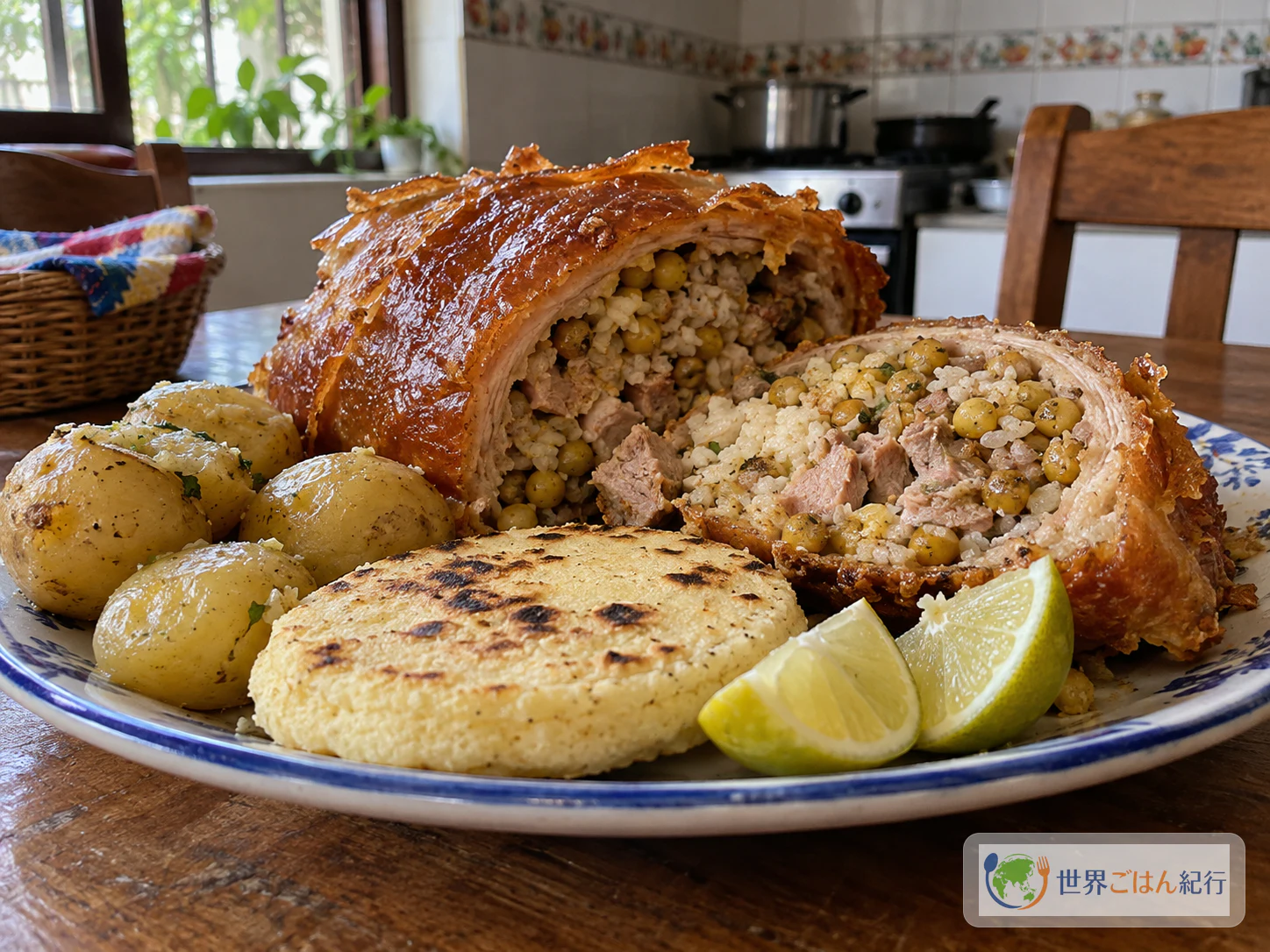
The source home recipe serves lechona with arepa, potatoes boiled in salted water, and lemon. Lemon cuts through the richness of the pork and lard, and the arepa and potatoes give the meal a plain base. In the Ministry of Culture's Tolima recipe, the roasted cojín is served with insulsos and arepas orejas e'perro. These are regional accompaniments worth knowing about, but they are not required for this home version.
Troubleshooting: Skin, Seams and the Center
| Problem | Likely cause | What to do |
|---|---|---|
| The skin won't wrap around the filling | The skin is too small, or there is too much filling | Check the skin's area before you start. Take out some filling instead of stretching the skin. Pork belly in place of skin will not give the same shape |
| The parcel opens during roasting | The twine is loose or too sparse | Tie firmly along the whole length. Traditional recipes stitch the seam closed |
| The skin browns too early | The hot stage is running long, or the rack is too close to the heat | Check often during the 232°C stage. If it is about to burn, return the foil or adjust the rack position |
| The skin is pale and soft | The skin was still wet, or the hot stage was too short | Dry the skin completely before salting. Continue the uncovered stage while watching it |
| The outside looks done but the center is uncertain | Roasting time is only a guide | Measure several points, in the thickest pork pieces and the center of the filling. Extend roasting and measure again if needed |
Variations Kept Separate from the Main Recipe
- Rice-free Tolima style: The Ministry of Culture's Tolima cojín uses yellow peas, pork, pork skin, long onion, salt, cumin and coloring, with no rice. Its amounts are for 20 people and follow a different method, so they are described here for context, not scaled down into this recipe.
- Green instead of yellow peas: The source recipe allows either; green peas change the color and aroma.
- Paprika instead of achiote: Gives a similar color only; the aroma is different.
- Skin-on pork belly instead of pork skin: An untested option; expect a different thickness, shape and fat ratio.
- Other ways of roasting: Other published recipes roast a whole suckling pig with different times and temperatures. Those belong to that method and don't transfer to this parcel.
Culture and History: Tolima, Stitching and the Celebration Table
Lechona is closely tied to Tolima and is presented in Colombian food writing as a dish of Tolima Grande, the area covering Tolima and Huila. Explore more of the country's cooking on the Colombia page.
In the cultural feature from Yo Soy Colombia, lechona is described as slow, laborious work, with long preparation and the skin sewn shut, and as food for family tables, religious festivals and local celebrations. The recipe shared there by Pilar de Posada uses pork and yellow peas without rice, and that piece treats rice-free lechona as the original form. That is a regional position, not a nationwide consensus: the same article notes that lechona with rice exists as a regional variation within Colombia. El Espectador also describes lechona as a dish shared at celebrations, and its home recipe lists rice among the ingredients.
The Ministry of Culture's Tolima cookbook shows the traditional rice-free cojín step by step: dried yellow peas soaked from the night before and simmered for about 3 hours the next day, then layered with pork inside the skin, sewn closed and roasted. The home recipe in this article comes from Erica Dinho of My Colombian Recipes, who explains that both versions, with and without rice, exist, and presents the rice-containing home version herself. Rather than ranking the two, it is more accurate to say that rice-free lechona is emphasized where Tolima's identity is the subject, while lechona with rice has taken root in other regions, in households and among Colombians living abroad.
Frequently Asked Questions
Does lechona have rice in it?
It depends on whom you ask and where. The Tolima recipe from the Ministry of Culture contains no rice, and some Tolima voices consider rice-free lechona the traditional form. Rice-containing versions are also documented as regional and home styles. This recipe uses rice, following the source home recipe.
Can I use dried yellow peas instead of cooked ones?
Yes, but cook them first. The traditional Tolima method soaks dried peas overnight and simmers them for about 3 hours. This recipe calls for 3/4 cup of peas that are already cooked. The source gives no dry weight, so measure after cooking rather than converting.
Where can I find pork skin and achiote?
Ask a butcher for a broad piece of skin-on pork skin, and say you need to roll it around a filling. Look for ground achiote, often labeled annatto powder, at import grocers or online.
How do I know it is cooked through?
Use a food thermometer, not the roasting time. The USDA guideline for whole cuts of pork is 145°F (62.8°C) with at least a 3-minute rest. That standard has not been confirmed for a mixed pork, rice and pea filling, so measure in several places, in the thickest pork and in the center of the filling, and keep roasting if you are unsure.
How should I store and reheat leftovers?
The sources used here give no storage period, so none is stated. When you reheat leftovers, bring them to 165°F (73.9°C), measured with a food thermometer, following the USDA guideline for leftovers.
Is lechona spicy?
No. Its flavor comes from pork and lard, with the aroma of cumin, achiote, garlic and long onion. It is aromatic rather than hot.
Sources
- Ministerio de Cultura de Colombia, "Tolima: Cojín de Lechona Tolimense" (heritage cookbook publication). Supports the Tolima cojín wrapped and sewn in skin; its ingredients of yellow peas, pork, pork skin, long onion, salt, cumin and coloring, without rice; soaking dried peas overnight and simmering about 3 hours; and serving with insulsos and arepas orejas e'perro. https://patrimonio.mincultura.gov.co/SiteAssets/Paginas/Publicaciones-biblioteca-cocinas/Tolima.pdf
- Erica Dinho, "Lechona Tolimense," My Colombian Recipes. Source of the six-serving home recipe with rice: ingredients and amounts, the overnight adobo marinade, roasting at 175°C for about 90 minutes then 232°C for about 30 minutes, the 20-minute rest, the accompaniments, and the note that versions with and without rice both exist. https://www.mycolombianrecipes.com/es/lechona-tolimense/
- El Espectador, "Receta de lechona casera: ingredientes y cómo prepararla en casa" (recipe credited to Chef Jorge Márquez). Supports lechona as a dish of Tolima Grande (Tolima and Huila), shared at celebrations, and that roasting methods differ between recipes. https://www.elespectador.com/gastronomia-y-recetas/receta-como-preparar-lechona-un-plato-muy-colombiano/
- Yo Soy Colombia, "Lechona tolimense: tradición que se cocina a fuego lento." Supports Pilar de Posada's rice-free recipe with pork and yellow peas, the view of rice-free lechona as the original form, the existence of rice versions as regional variation, and the stitching, family tables and festivals. https://yosoycolombia.com.co/es/yosoysaborcolombia/lechona-tolimense
- USDA Food Safety and Inspection Service, "Safe Minimum Internal Temperature Chart." Supports 145°F (62.8°C) with a 3-minute rest for whole cuts of pork, 165°F (73.9°C) for reheating leftovers, and measuring with a food thermometer. https://www.fsis.usda.gov/food-safety/safe-food-handling-and-preparation/food-safety-basics/safe-temperature-chart