
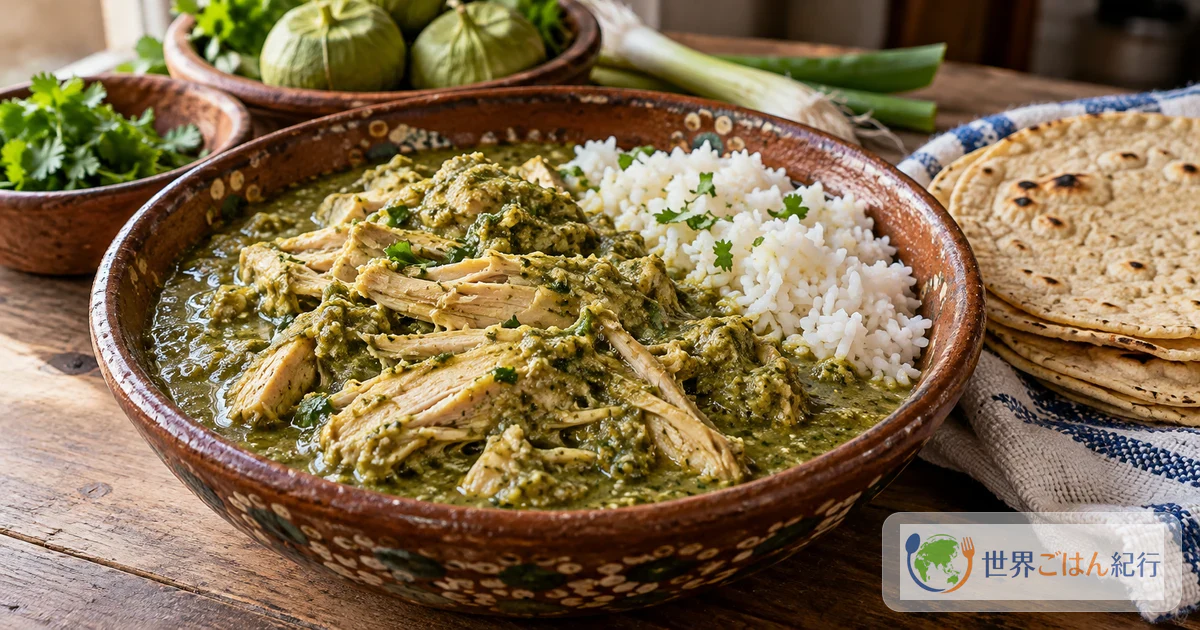
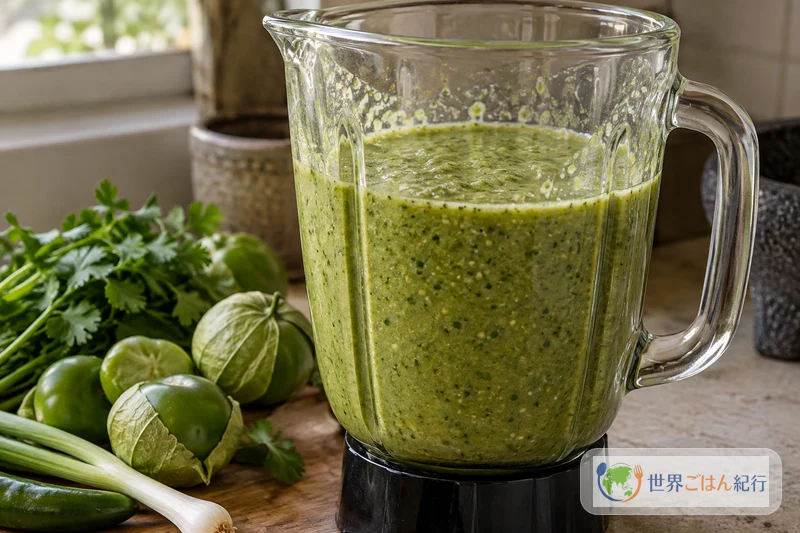
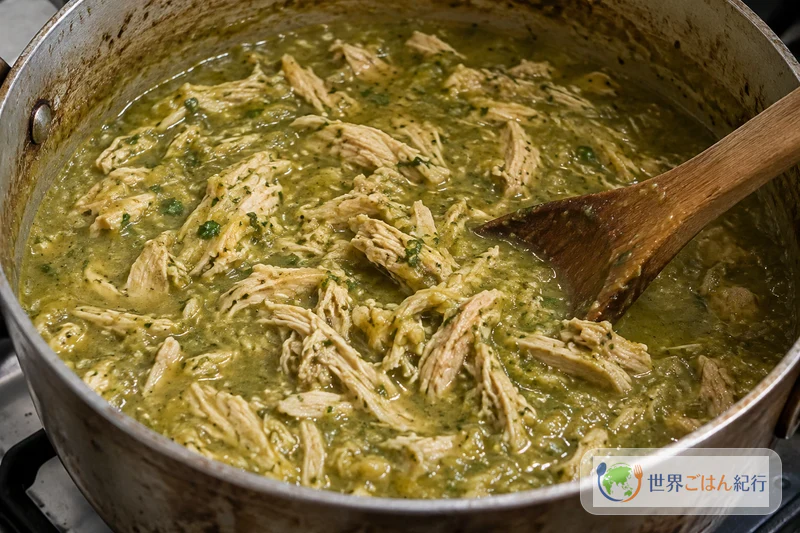
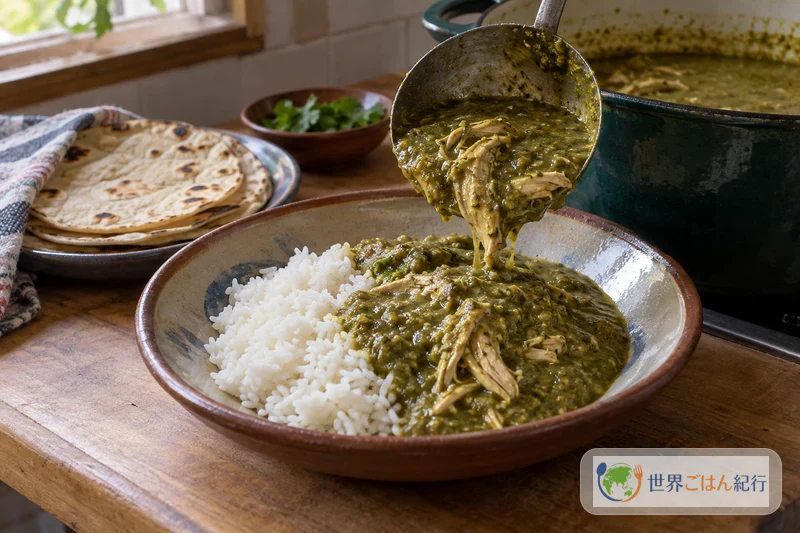
Once tomatillos, cilantro, scallions, and green chiles start spinning in the blender, a bright green sauce comes together in no time. Add ground toasted pumpkin seeds and sesame plus soaked tortillas, and the sauce turns a deeper, slightly muted green and thickens. Return shredded chicken to the pot to simmer in it, and you have jocón, the green stew that Guatemala's Maya people have handed down. It is served with white rice and tortillas.
A Maya Stew Whose Name Means "Green Sauce"
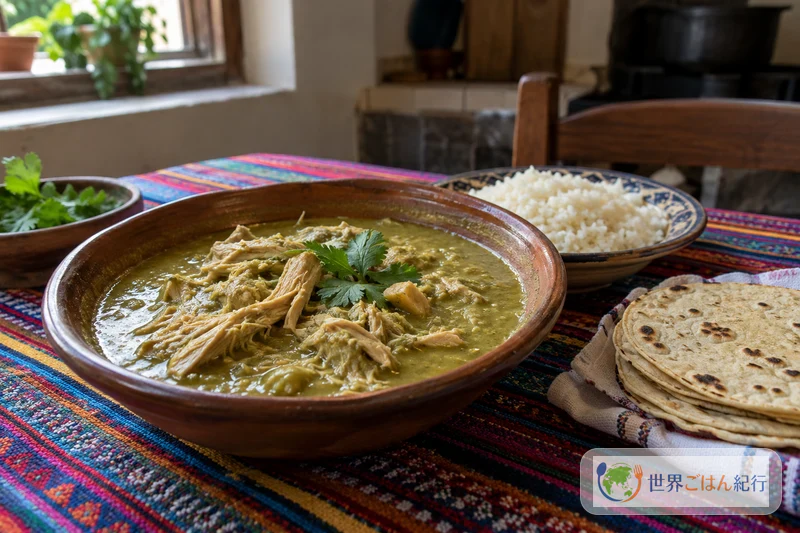
The name jocón is said to come from "jok om" in K'iche', one of the Maya languages, meaning "green sauce." The Guatemalan newspaper Prensa Libre describes jocón as a dish built from green ingredients: miltomate (tomatillo), green pepper, scallions, cilantro, and celery. As the name says, the color on the plate is the dish's whole personality.
In Guatemala, the sauce for a stew like this is called a recado. Antigua-based photographer Rudy Giron, on his blog, tells the two apart as "the brown Maya curry," pepián, simmered in a brown recado, and "the green Maya curry," jocón. Calling them curries is only a figure of speech, but the method of grinding toasted seeds and aromatics into a sauce really is close to curries that toast and grind spices.
What Guatemalans call miltomate is what Mexicans call tomatillo: a green fruit wrapped in a thin, papery husk like a ground cherry, with a bright tang. Cilantro is sometimes called culantro in Guatemala.
From Ceremonial Dish to a Specialty of Huehuetenango
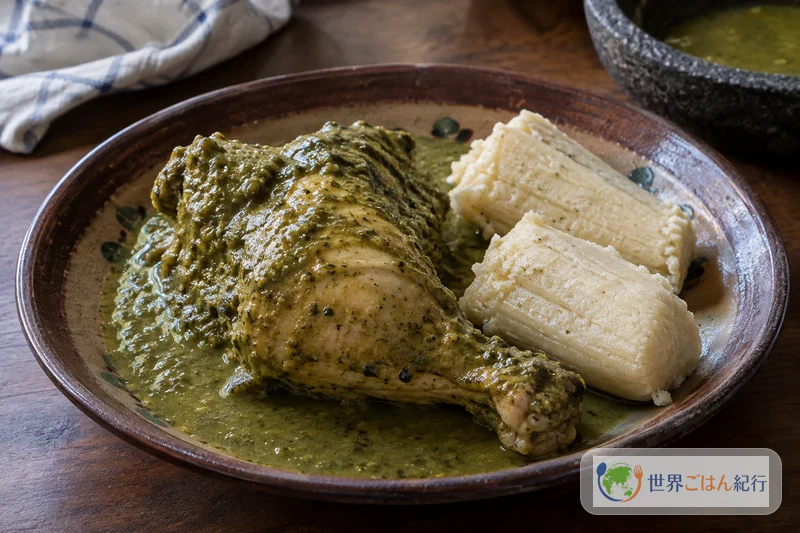
According to Prensa Libre, jocón was originally made only for ceremonies. Over time it spread to everyday tables and became a signature dish of Huehuetenango, the department in northwestern Guatemala on the Mexican border.
Traditional jocón is made with hen and eaten with small corn tamales (tamalitos). A Spanish-influenced version uses young chicken and is paired with white rice. It is interesting that tamalitos or rice shows you the layers of history the dish has passed through. This recipe uses the easier combination of chicken and rice.
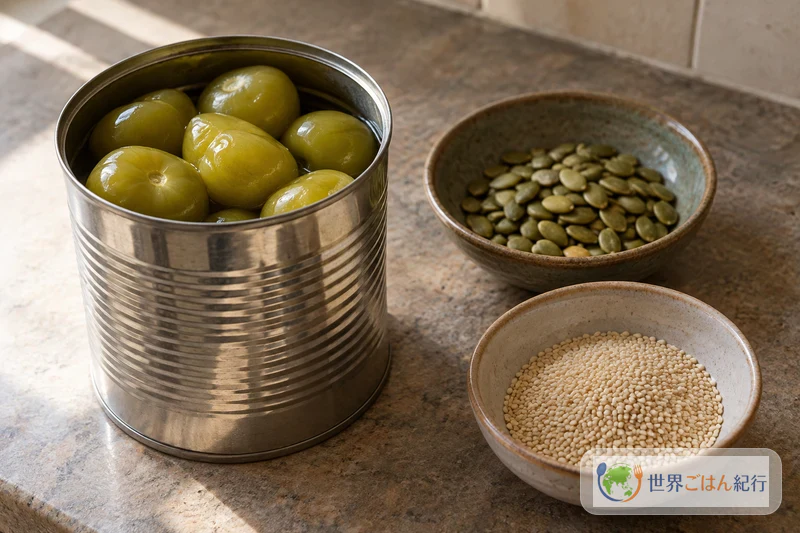
The biggest obstacle when making it outside Guatemala is the tomatillo. Fresh ones may be hard to find where you live, but canned or jarred tomatillos are available at many Latin American grocers and online. With those, you can get quite close to Guatemala's green sauce.
Ingredients (serves 5)
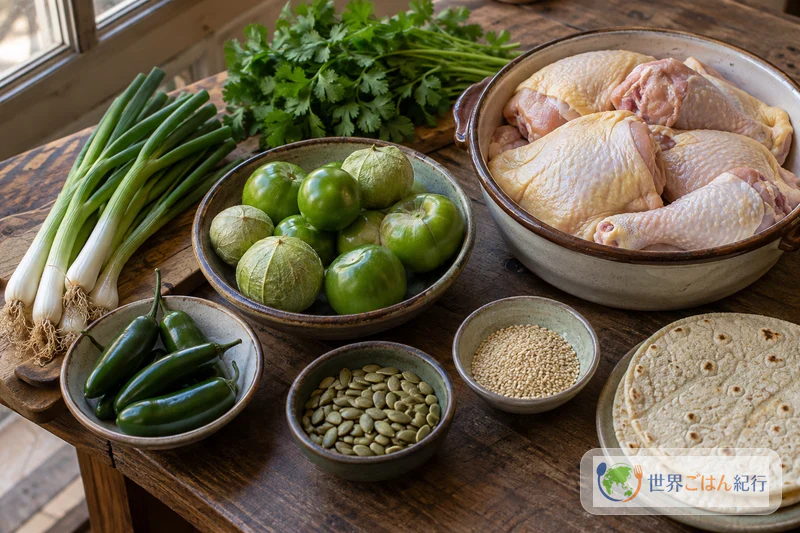
This formula is based on a recipe (serves 4 to 6) from Whats4Eats, a US website for home cooking from around the world, adapted to measures that are easy to use.
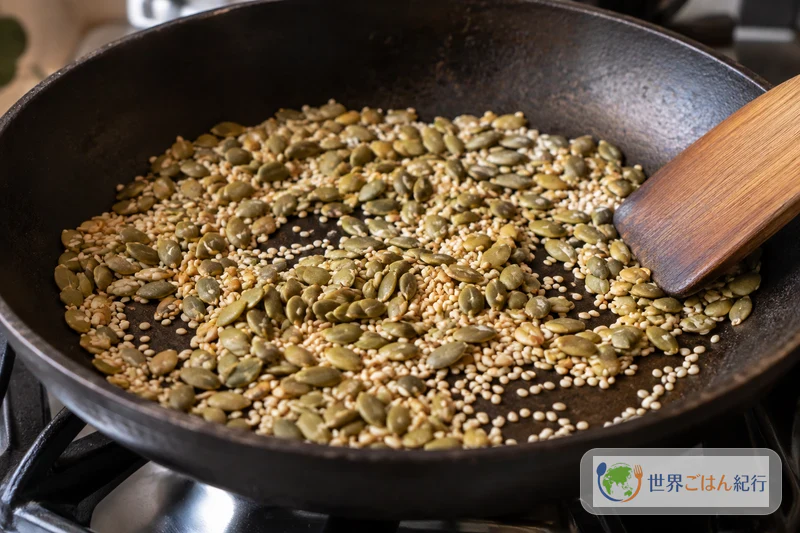
Use hulled pumpkin seeds, sold as "pepitas" in the nut or baking aisle or at Latin American grocers. Toasting the pumpkin seeds and sesame before grinding them gives the sauce its toasty flavor and its body.
Sesame is a common allergen. Do not serve this to anyone with a sesame allergy. Green chile heat lives in the seeds and white pith, so keep your hands away from your eyes after cutting them.
How to Make Jocón
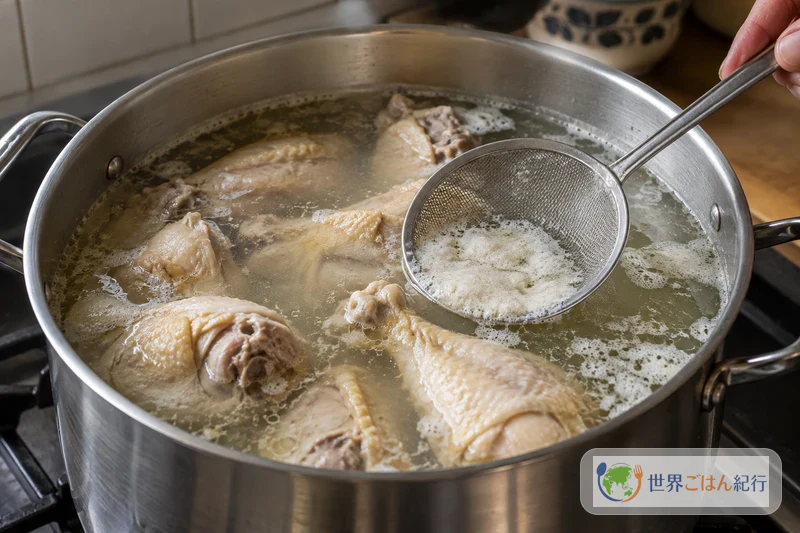
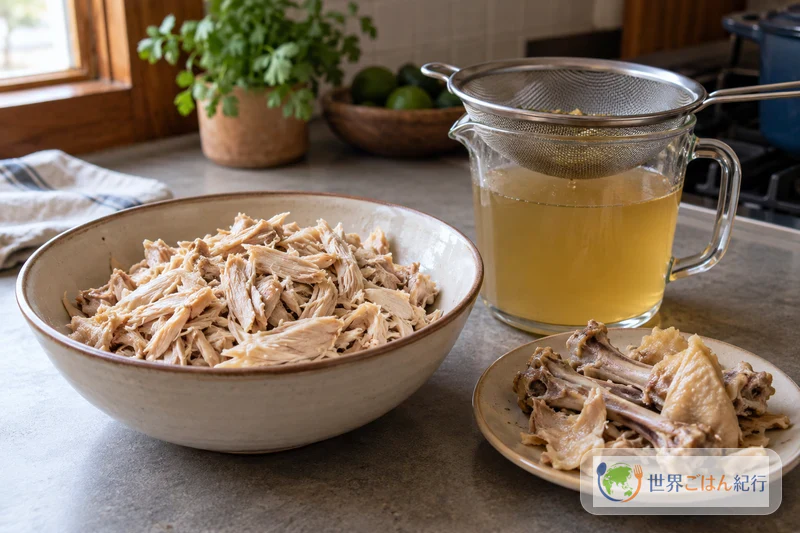
Allow about 25 minutes of prep and about 75 minutes to poach the chicken and simmer it in the sauce. While the chicken poaches, toast the seeds and prepare the sauce ingredients to keep things moving.
A thick sauce at a simmer can bubble and spit hot droplets. Keep the heat at medium-low and stir with a long-handled wooden spoon.
Tips for Color and Thickness
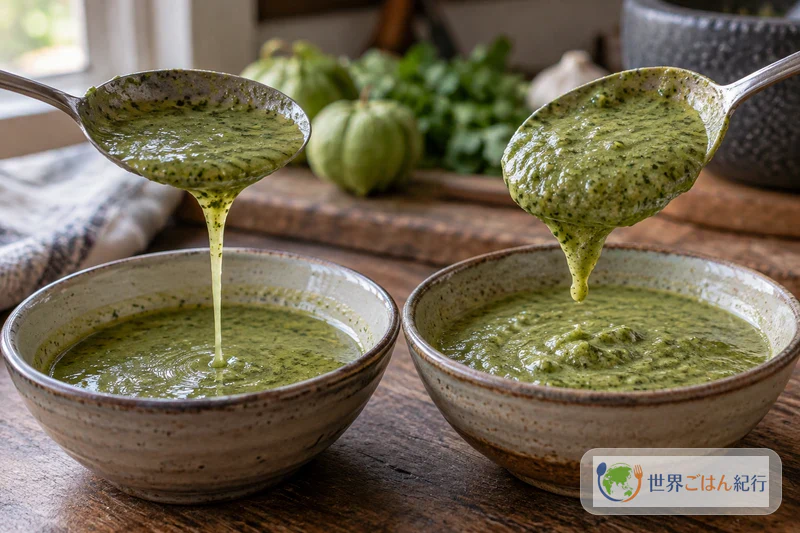
The color of jocón sauce is decided mostly by how much cilantro and scallion you use. The trick is to use plenty of cilantro, stems and all. The stems carry aroma too, and they deepen the color. The longer the sauce simmers, the duller the green becomes, so keep the simmer to around 20 minutes.
Tortillas and the ground seeds do the thickening. If the sauce seems thin, soak one more tortilla, blend it, and stir it into the pot. If it is too thick, thin it with the poaching liquid.
If it needs more brightness, add 1–2 tsp lime juice for freshness.
Over-toasted seeds and sesame turn bitter and make the sauce brownish. Take them off the heat at the stage when they have just taken on a light color to keep the sauce green.
Variations: With Pork, or With Only Sesame
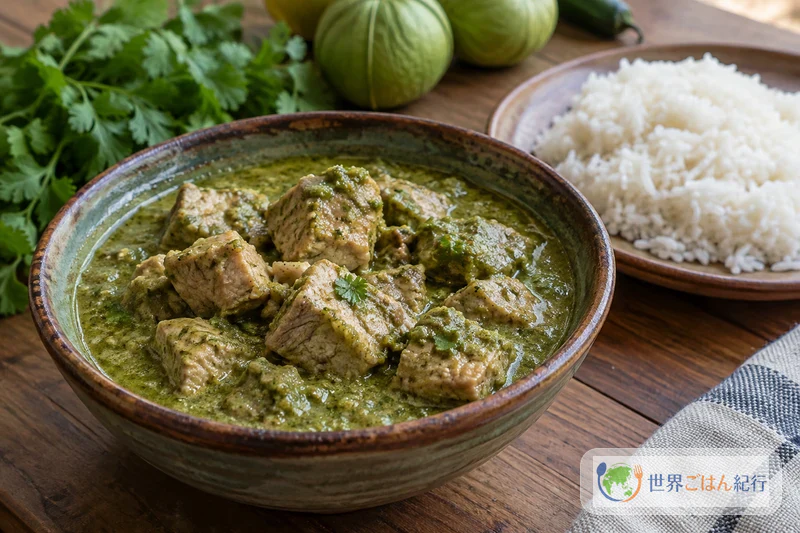
You can also make it with cubed pork shoulder instead of chicken. Use the pork as is without shredding, and poach it longer than chicken until tender. The fat's richness melts into the sauce for a fuller result.
If you cannot find pumpkin seeds, increase the sesame to 1/2 cup. If you use sesame paste or tahini in place of sesame seeds, use a little less. In either case, the toasted seeds are the core of the toasty flavor, so we recommend not skipping the toasting step.
How to Eat It
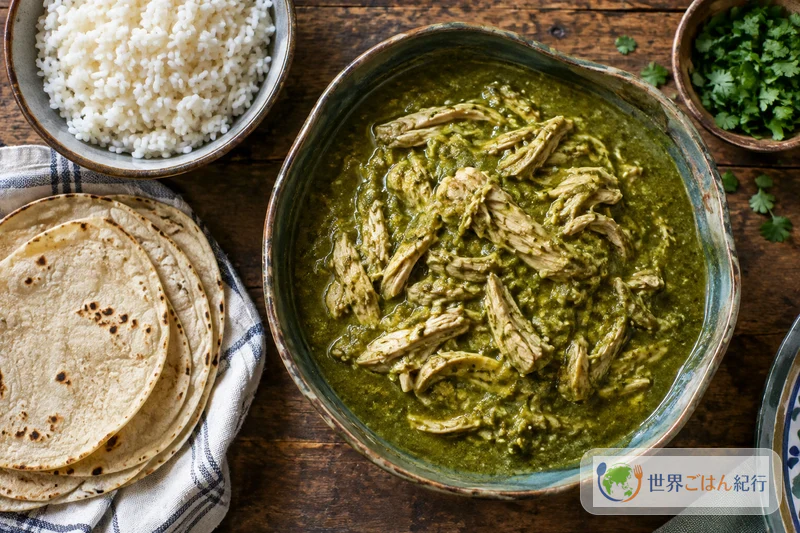
Spoon plenty of sauce over white rice. Scooping up the sauce with a tortilla is also a very Guatemalan way to eat it. If you cook the rice in the leftover poaching liquid, the chicken's savoriness carries into the rice and blends well with the sauce.
For another Guatemalan stew, try making it side by side with pepián, which is simmered in a brown recado. Even with sauces built from toasted seeds and chiles, the color and aroma are completely different. Kak'ik, the red turkey soup, is another Guatemalan dish that carries on Maya tradition.
FAQ
Can I make it without tomatillos?
The tang and green aroma of tomatillos are the foundation of jocón's flavor, so get canned ones if you can. There is no easy substitute for tomatillos, so canned or jarred ones from a Latin American grocer or online are the reliable choice.
Can I adjust the heat?
Adjust it by the number of green chiles. If you do not like spicy food, use 1 and remove the seeds and pith completely. For more heat, add more.
Can I make it ahead?
Once cool, refrigerate in an airtight container, and thin with a little water or poaching liquid when reheating. We cannot give a firm number of storage days, so finish it soon. Reheating dulls the green further, so scatter chopped cilantro to restore the look.
What if I do not have a blender?
An immersion blender works too. Put the ingredients in a deep container and blend a little at a time. If you use a mortar, grind the ground seeds, cilantro, and scallions first, then add the tomatillos and tortillas.
Sources
- Prensa Libre (C-Studio), "Los siete platos más ricos de Guatemala," published 7 July 2024. Accessed and checked 22 October 2026. https://www.prensalibre.com/c-studio/los-siete-platos-mas-ricos-de-guatemala/
- Whats4Eats, "Jocón (Guatemalan chicken in tomatillo-cilantro sauce)." Accessed and checked 22 October 2026. https://www.whats4eats.com/poultry/jocon-recipe
- Rudy Giron, "Guatemalan Food: Jocón," Antigua Daily Photo, published 25 March 2014. Accessed and checked 22 October 2026. https://antiguadailyphoto.com/2014/03/25/guatemalan-food-jocon


