The "Yellow Scramble" of a Caribbean Morning
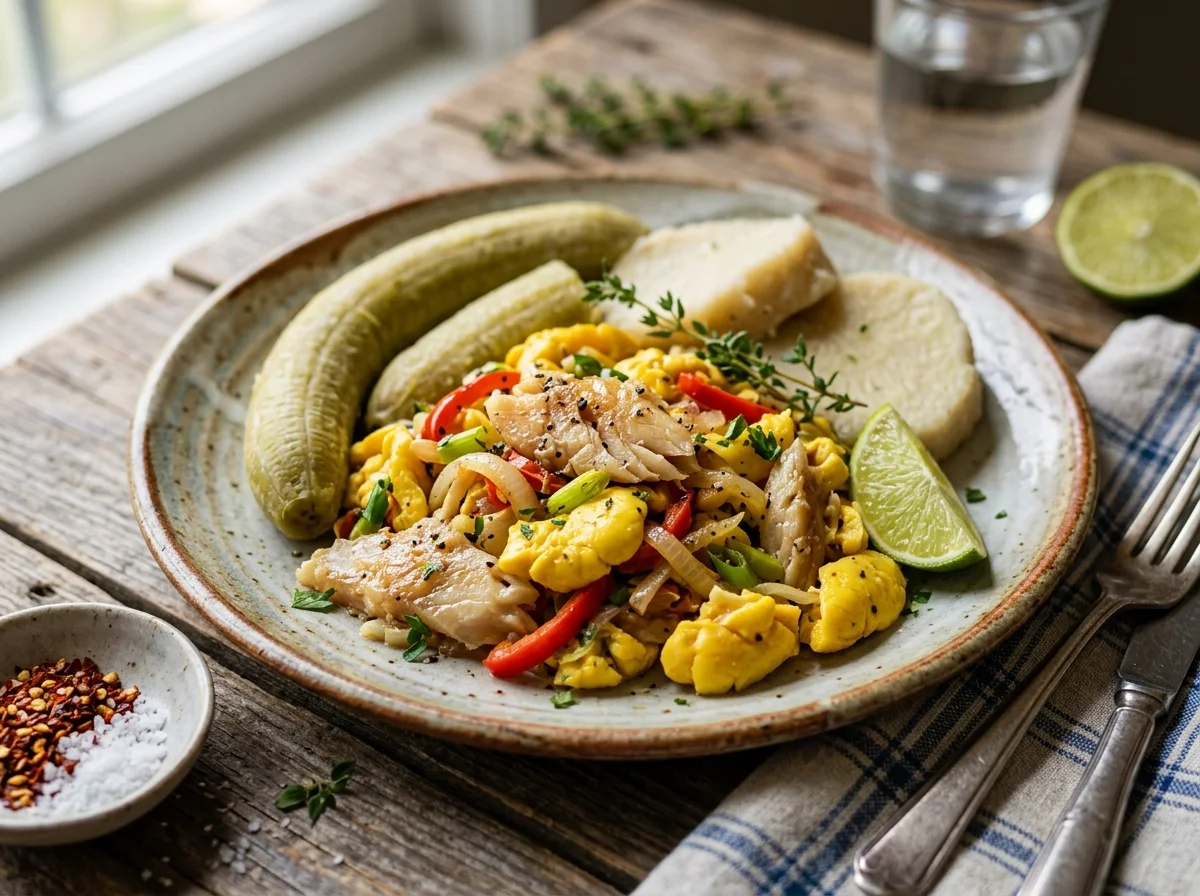
In Jamaica, the morning doesn't really start without this dish. Ackee and saltfish is ackee, a fruit native to West Africa, sautéed with salt cod from the Atlantic, and it is Jamaica's national dish. Among the Caribbean and Latin American cuisines (in Japanese), few plates fuse African and European food traditions as vividly as this one.
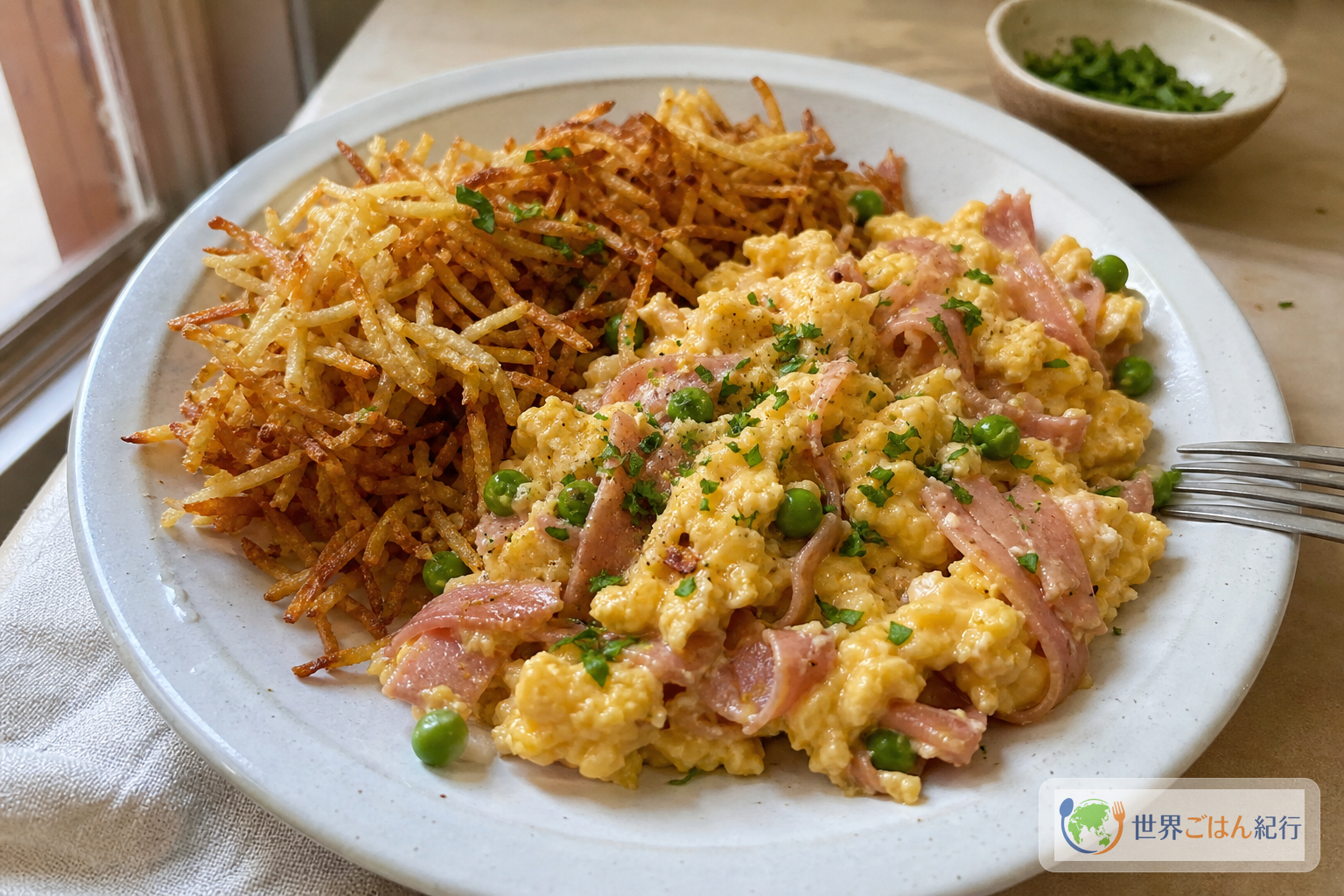
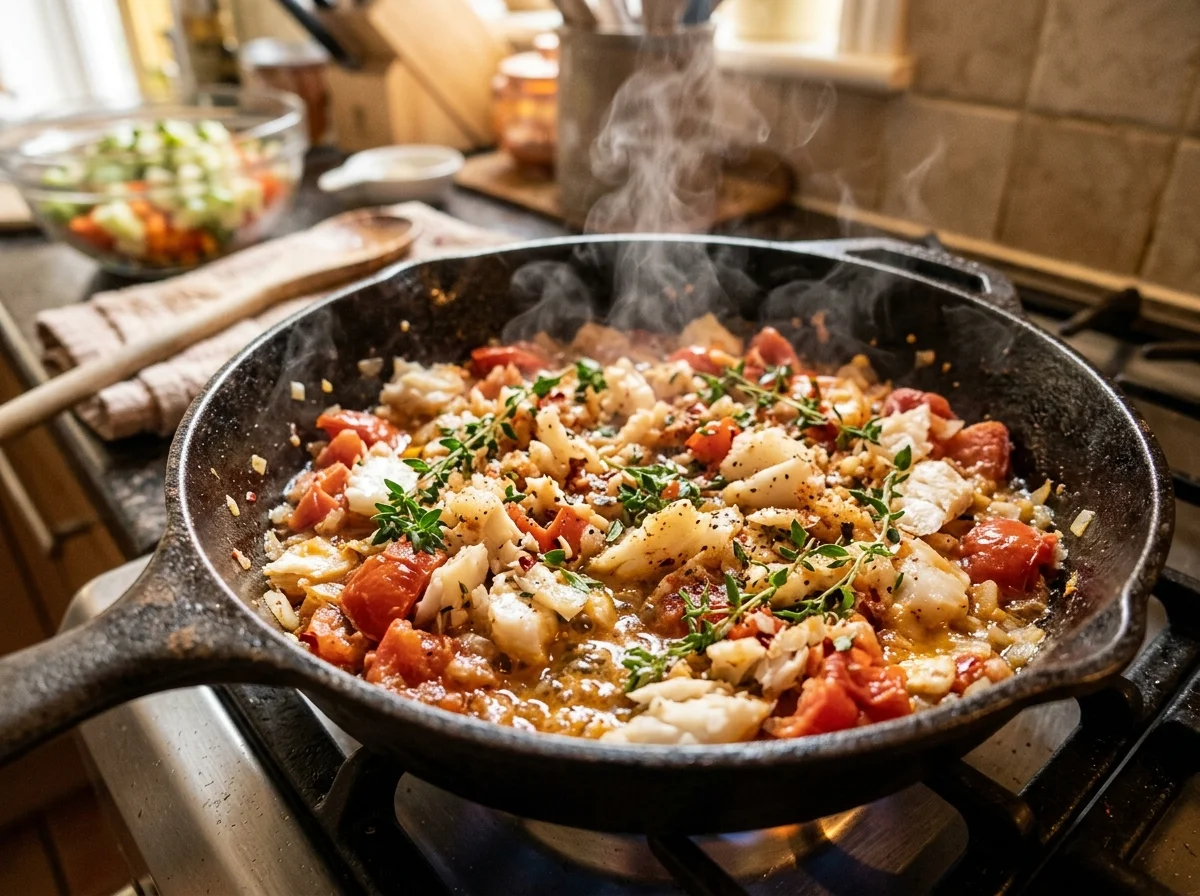
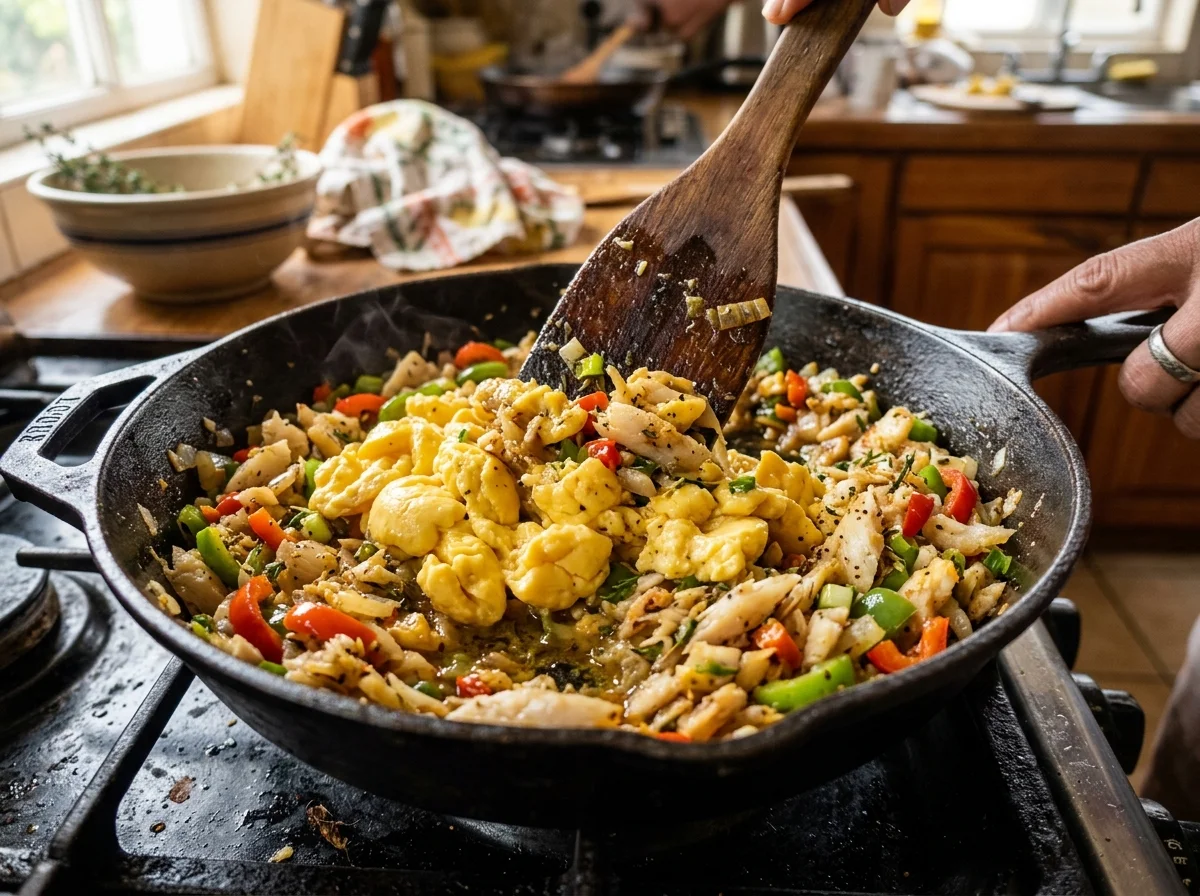
It looks a lot like scrambled eggs, but there isn't an egg in sight. The flesh of ripe ackee breaks apart under a fork into soft yellow curds, and the savory flakes of salt cod and the bright heat of Scotch bonnet pepper cling to it. Fresh thyme and the gentle sweetness of allspice pull everything together. It is a beloved Jamaican breakfast staple.
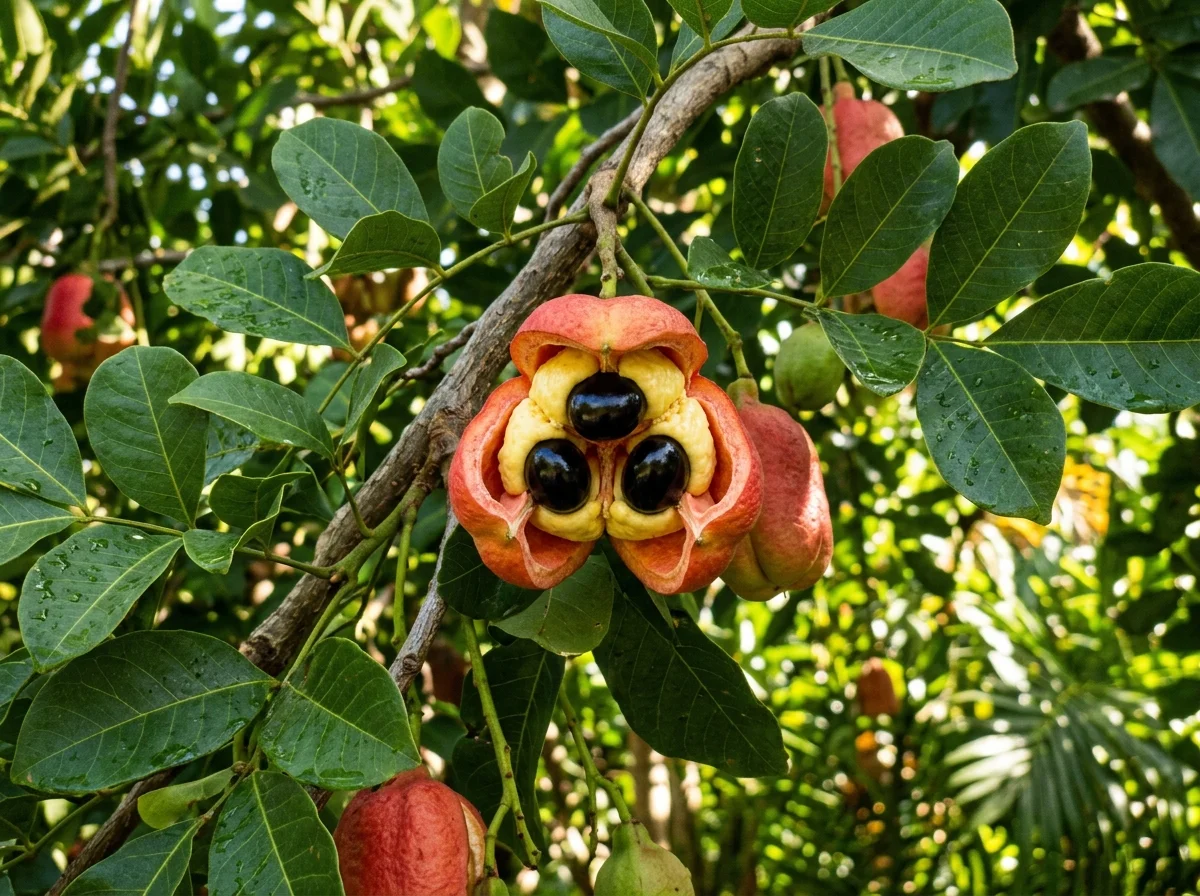
Ackee is the fruit of an evergreen tree in the soapberry family (Sapindaceae), native to West Africa, and it is Jamaica's national fruit. It is believed to have arrived in Jamaica on ships from West Africa in the 18th century. Only the yellow aril of a fruit that has ripened and split open on its own is edible. Unripe fruit contains a toxin called hypoglycin A, so there are strict rules for how ackee is prepared. Saltfish means salted cod, a preserved food shipped from the North Atlantic in the days before refrigeration. Put the two together and you have the dish that became Jamaica's national dish.
Search for ackee and saltfish and you'll find plenty of recipes, but the points that make it both safe and delicious are often skimmed over: how to handle ackee safely, how to desalt salt cod properly, and the Jamaican trick of adding a Scotch bonnet whole so it gives flavor without overwhelming heat. It stands alongside Jamaican jerk chicken (in Japanese) and Cuban ropa vieja (in Japanese) as one of the signature dishes of the Caribbean. This guide is built on English-language primary sources.
Ingredients (serves 4)
Eating raw ackee that is not fully ripe can cause severe poisoning. In Jamaica the illness is known as "Jamaican vomiting sickness": hypoglycin A, found in unripe ackee, causes low blood sugar and vomiting. Canned ackee is processed after the fruit has fully ripened, so it is safe. If you ever get fresh ackee, use only fruit that has split open naturally, remove the black seeds and the red membrane completely, and then cook it. If you have any doubt at all, we strongly recommend using canned ackee.
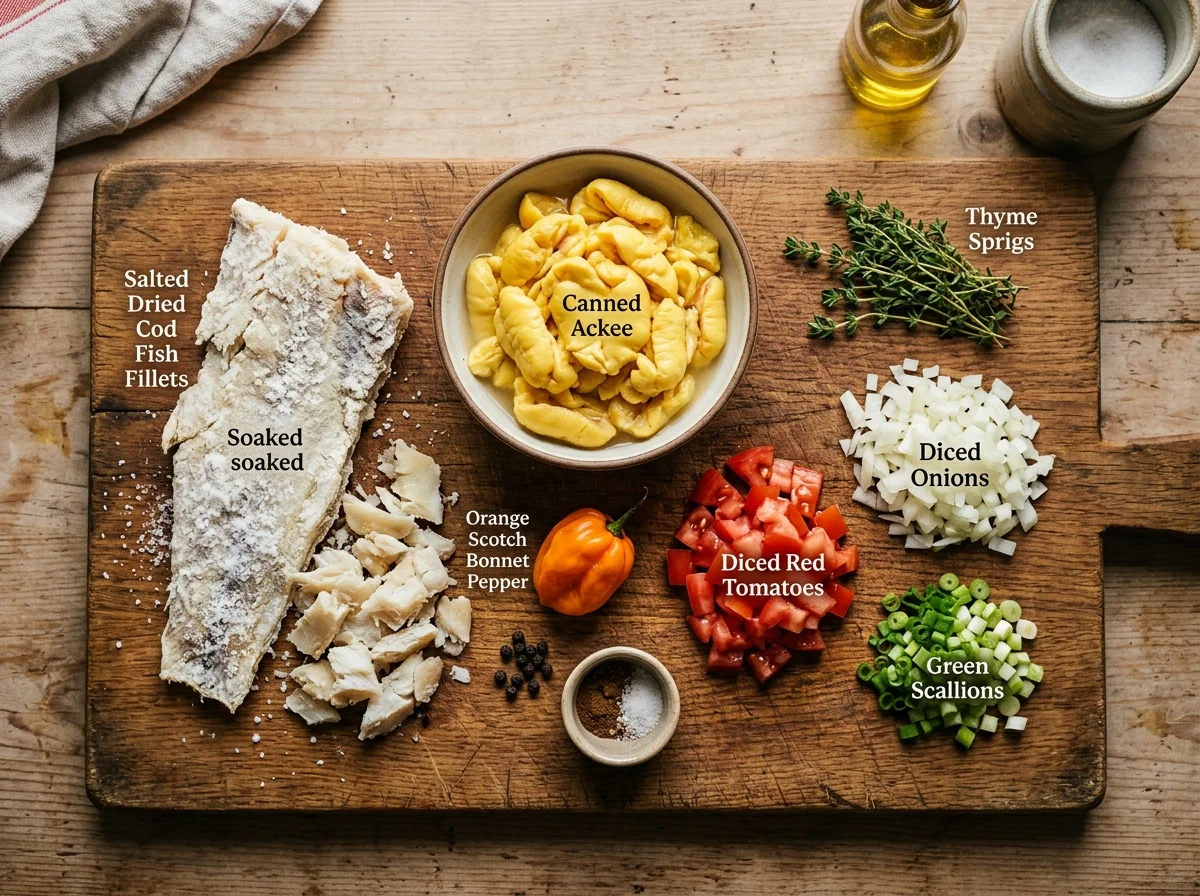
This is one of the great secrets of Jamaican cooking. Dropping the Scotch bonnet into the pot whole, without cutting it, lets its fruity flavor move into the dish while the explosive capsaicin heat stays locked inside. Cut or crush it and the heat spreads through everything, upsetting the delicate balance of flavors. If it bursts during cooking, take it out right away.
Tips for Success
Much of the dish's beauty depends on chunky pieces of yellow ackee staying intact. Canned ackee falls apart more easily than fresh, so tilt the pan and slide it in, and when you mix, scoop up from the bottom in big, gentle motions.
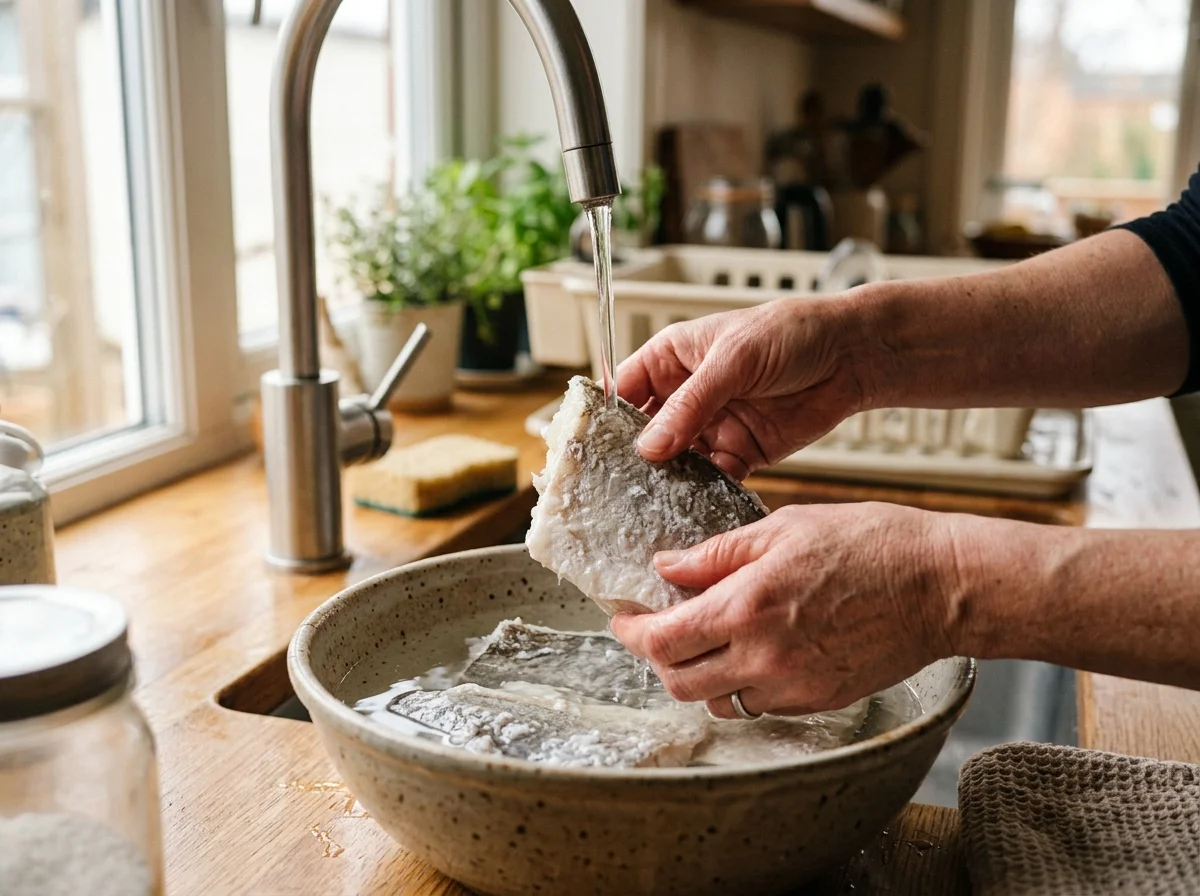
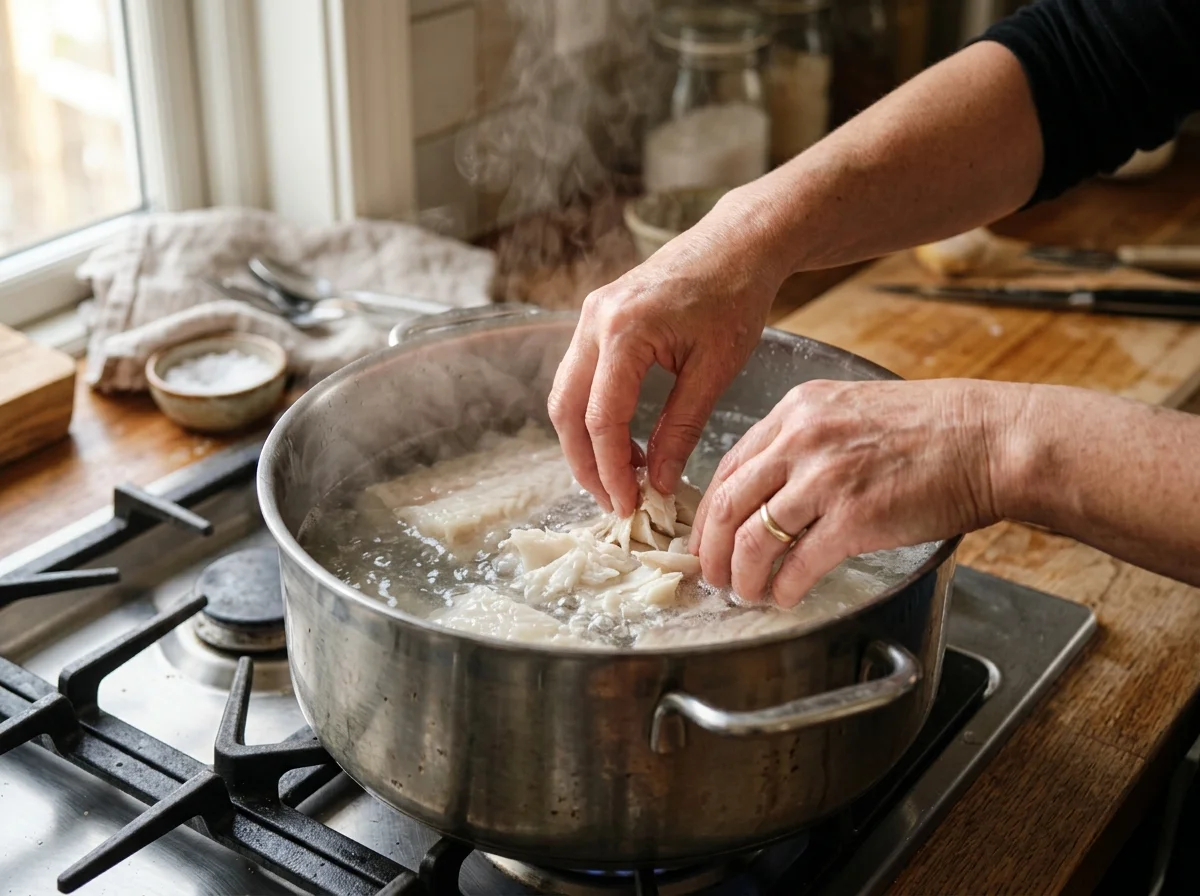
Remove all the salt and you'll lose the flavor of the cod too. After 12 hours of soaking, taste it: the sweet spot is "too salty to eat on its own, just right for cooking." Much like lemon juice in Lebanese hummus (in Japanese), the salt in the cod is what shapes the flavor of the whole dish.
Coconut oil adds a sweet aroma that suits the mellowness of ackee. Vegetable oil works perfectly well too. If you want a noticeable coconut aroma, choose unrefined (virgin) coconut oil rather than refined.
Dried thyme works, but whole sprigs of fresh thyme give a much clearer aroma. Stand any leftover sprigs in a glass of water in the refrigerator and they'll keep for several days.
Variations
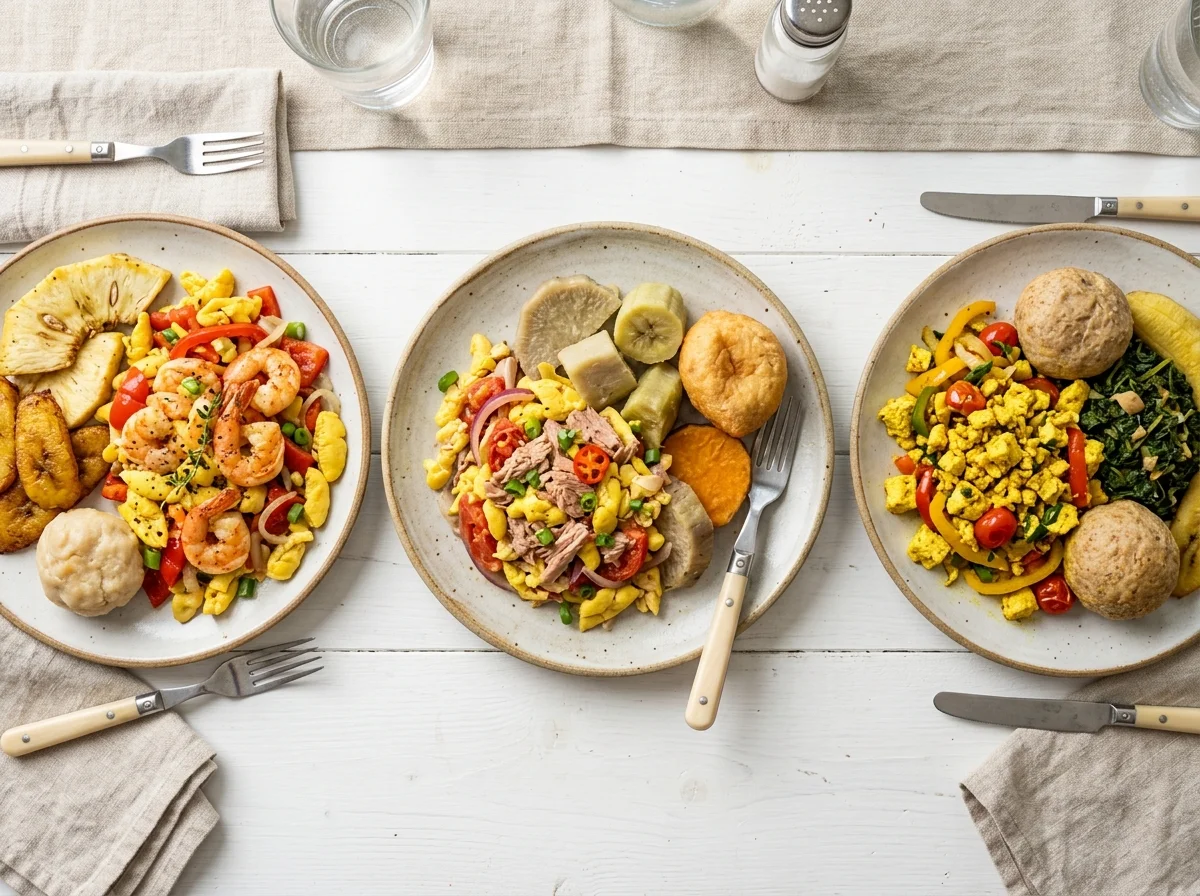
Shrimp version (ackee and shrimp)
Use 200 g (about 7 oz) peeled shrimp instead of salt cod. Devein the shrimp and rub them with salt, then add them to the aromatic base and sauté for 2 minutes, until they turn pink, before adding the ackee. It's sweeter than the salt cod version, and the snappy shrimp contrast nicely with the fluffy ackee.
Tuna version (quick, from a can)
If desalting salt cod feels like too much work, 2 cans of oil-packed tuna will do. Drain the tuna, add it once the aromatic base is ready, sauté briefly, then add the ackee. It's the easiest version to make, and the flavor is well balanced.
Vegetarian version (ackee only)
Leave out the salt cod and use 200 g shimeji mushrooms and 200 g firm tofu (pressed) for protein. Break the tofu into large pieces by hand and sauté it with the mushrooms. A tablespoon of soy sauce boosts the savory depth. Jamaica also has Ital food, the largely plant-based cooking of the Rastafari.
Ackee spread (dip)
Pulse leftover ackee and saltfish coarsely in a food processor and you have a spreadable dip. Spread it on toast or crackers; it's popular as party finger food. Like Middle Eastern hummus (in Japanese), it's also good alongside a baguette.
Background
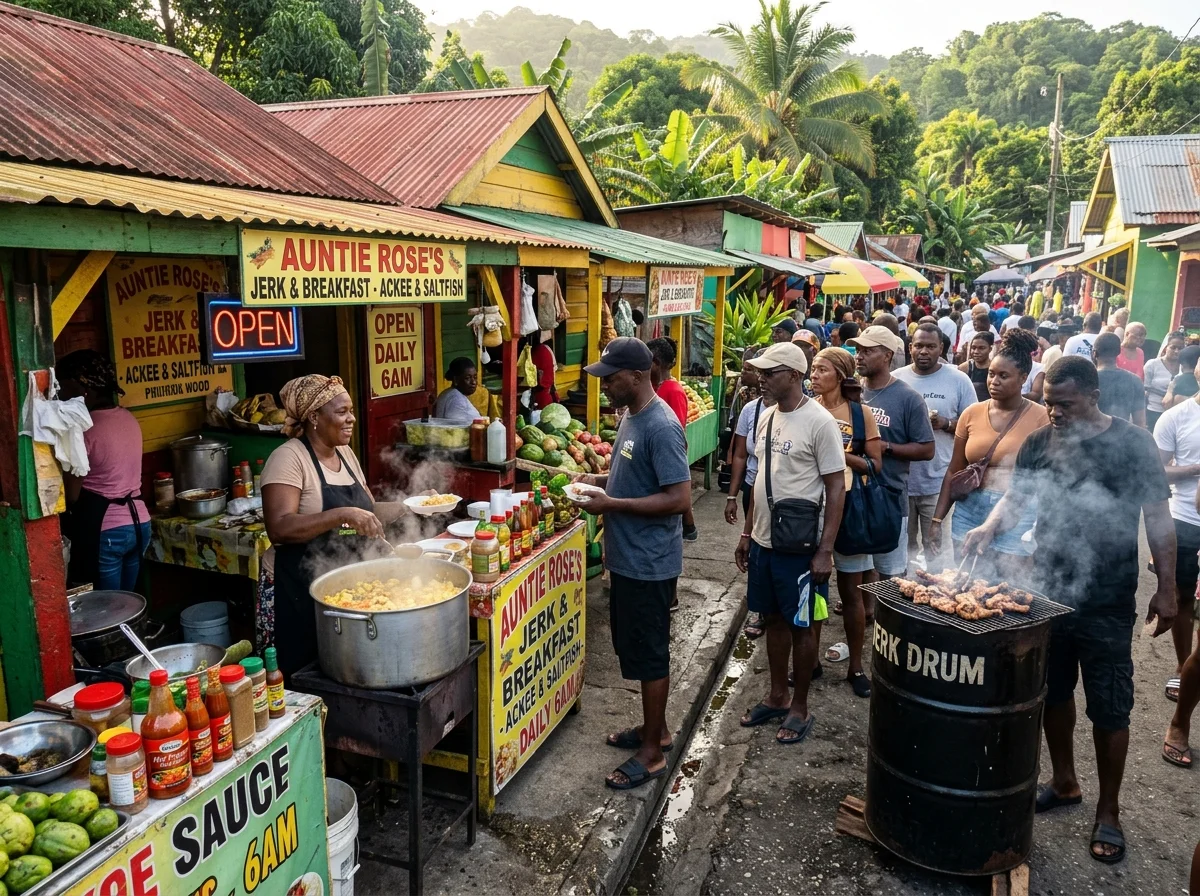
A food culture born of the Atlantic triangular trade
Ackee and saltfish is the history of the Atlantic triangular trade condensed onto a single plate.
Ackee is native to the Gulf of Guinea coast of West Africa. Its scientific name, Blighia sapida, honors Captain William Bligh (famous as the captain of the Bounty mutiny), who took plants from Jamaica to Britain in 1793. Ackee itself is thought to have arrived earlier in the 18th century, probably carried from West Africa on slave ships. The name is said to come from the Twi word ankye, from Ghana.
Saltfish (salted cod), on the other hand, is a product of European preservation techniques. Cod caught off Newfoundland in Canada and off Norway was packed in large amounts of salt and supplied to Caribbean plantations as cheap protein. It was brought in to feed the enslaved people forced to work on the sugar plantations.
In Jamaica you often see ackee trees in yards and along roadsides. When ripe, the red fruit splits open on its own, revealing yellow flesh topped with black seeds. Never harvest the fruit until it has opened naturally: that is the basic rule for eating it safely.
Jamaican breakfast culture
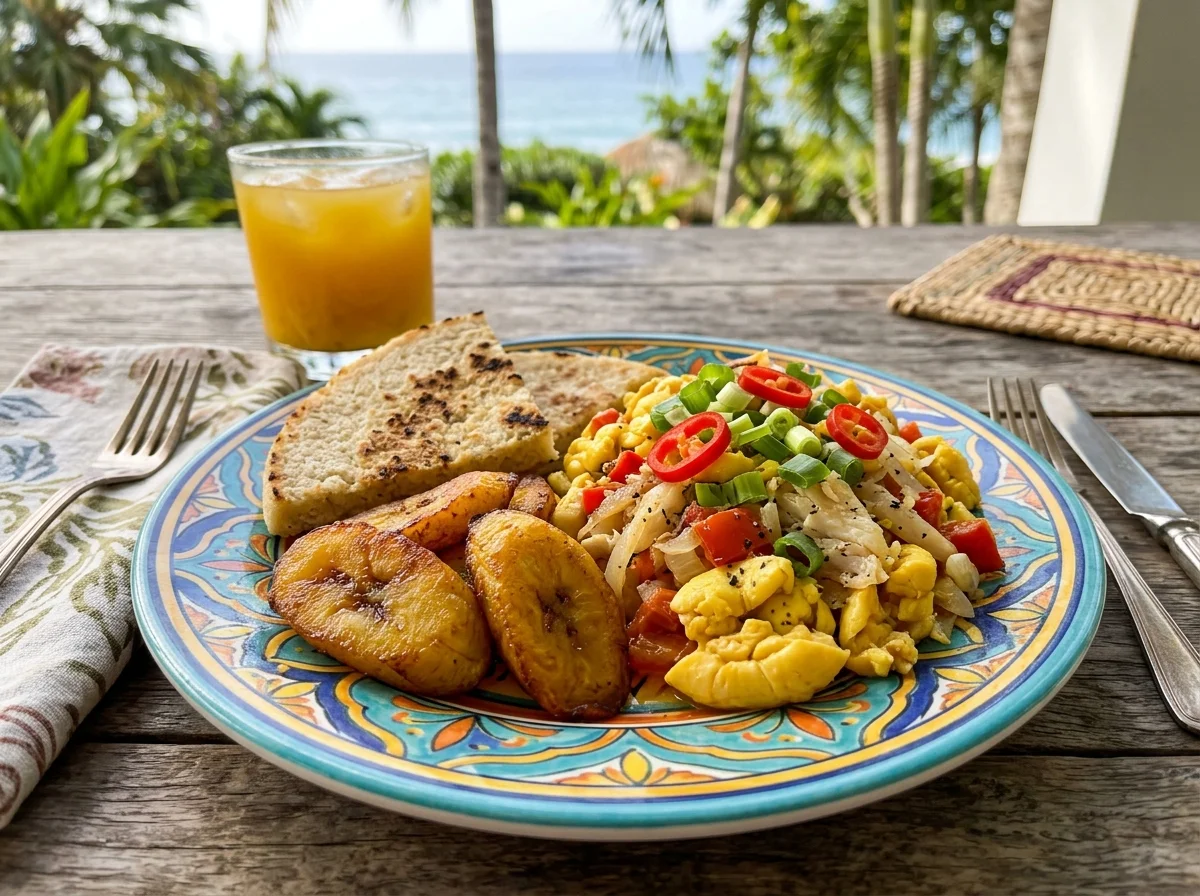
Breakfast is considered the most important meal of the day in Jamaica, and its size is closer to what many people would call lunch. Ackee and saltfish sits at the center, surrounded by sides like these.
Bammy is a flatbread made from grated, squeezed cassava, shaped into a disk and cooked. Like Ghanaian fufu, it's made from cassava, but where fufu is soft and doughy, bammy is a crisp, toasted bread. Fried plantains are a Caribbean staple: ripe plantains cut on the diagonal and fried. Their sweetness and crisp edges are a perfect match for the saltiness of the dish.
Hard dough bread is a uniquely Jamaican loaf, dense and firm. It's cut into thick slices and toasted, with ackee and saltfish piled on top. Thick-cut white sandwich bread, toasted well, gets you close to the texture.
Jamaican food around the world
The Jamaican diaspora has spread mainly to the United Kingdom, Canada and the United States. Lively Jamaican restaurants and takeout spots are concentrated in places like Brixton and Notting Hill in London, Little Jamaica in Toronto, and Flatbush in New York.
For Jamaicans living abroad, ackee and saltfish is a taste of home.
How to eat ackee safely
Hypoglycin A, found in ackee, is present in high amounts in unripe fruit and can cause severe hypoglycemia (low blood sugar) and vomiting. When the fruit ripens and opens naturally, and is properly cleaned and cooked, the amount of this compound drops considerably. In Jamaica, the traditional way of handling ackee has been passed down: don't harvest until the fruit has opened naturally, remove the black seeds and red membrane, and throw away the water it was boiled in.
Canned ackee is made from ripe fruit. Imported canned ackee is limited to products made in quality-controlled factories. When cooking at home, canned ackee is by far the safest choice.
Nutrition (per serving, 1 of 4)
For a fruit, ackee is unusually high in fat. Combined with the protein from the salt cod, this makes a hearty, filling breakfast.
| Nutrient | Amount |
|---|---|
| Calories | 310 kcal |
| Protein | 28 g |
| Fat | 16 g |
| Carbohydrates | 18 g |
| Fiber | 3 g |
| Sodium | 720 mg |
Values are approximate, per serving out of 4. Salt cod is high in sodium, so if you are watching your blood pressure, desalt it thoroughly and hold back on added salt.
More to Cook Alongside
- How to make jerk chicken (in Japanese): another dish from the same Jamaican table.
FAQ
Here are the questions we hear most often from people making ackee and saltfish for the first time.
Q1. I can't find canned ackee. Is there a substitute?
Nothing fully replaces ackee, but firm tofu (pressed) comes closest. Crumbled and sautéed in a skillet, it takes on a soft, fluffy texture similar to ackee. Add 1/2 tsp ground turmeric to recreate the yellow color too.
Q2. I can't find Scotch bonnets.
Habanero is the closest substitute (the same species, Capsicum chinense). If you can't find habaneros either, use 2 small dried red chiles plus 1 tsp paprika. The distinctive fruity flavor of Scotch bonnet is hard to reproduce, though. Dried Scotch bonnets are also available online.
Q3. Can I eat it at times other than breakfast?
Of course. Even in Jamaica it's eaten not just for breakfast but for brunch and lunch. It also goes very well over rice, served as a rice bowl.
Q4. Can I make it ahead?
It keeps for 2 days in the refrigerator. Reheat it in a skillet over low heat rather than in the microwave. Ackee breaks apart easily, so cover the pan and let it warm through gently in its own steam. Freezing isn't recommended, as it ruins the texture of the ackee.
Q5. Can kids eat it?
If you add the Scotch bonnet whole and remove it before serving, the dish is very mild. You can leave the Scotch bonnet out entirely and it's still delicious. Canned ackee is processed for safety, so children can enjoy it too.
More Caribbean Dishes
If ackee and saltfish has caught your interest, explore more of the Caribbean's food culture.
- Jerk chicken (in Japanese): Jamaica's other iconic dish. Spicy chicken marinated in allspice and Scotch bonnet, then grilled
- Griot (in Japanese): Haitian fried pork, from the Caribbean's meat-cooking tradition
- Ropa vieja (in Japanese): Cuban beef stewed with tomatoes, from the Spanish-speaking Caribbean
The history of how the Atlantic triangular trade fused the food cultures of Africa, Europe and the Caribbean is condensed into a single plate.
- Doubles (in Japanese): Trinidad's street food, where the Caribbean meets India
- Mofongo (in Japanese): Puerto Rico's plantain dish, from the Caribbean's root-vegetable tradition
Sources
- Jamaica Information Service, "Jamaican National Fruit - Ackee" (arrival from West Africa, Captain Bligh and the scientific name, safe harvesting; accessed 22 October 2026)
- Office of the Prime Minister, Jamaica, "National Fruit - Ackee" (the national fruit and the national dish, ackee and codfish; accessed 22 October 2026)
- Wikipedia, "Ackee and saltfish" (components of the dish and the history of salt cod; accessed 22 October 2026)
- Houston, Lynn Marie. Food Culture in the Caribbean. Greenwood Press, 2005. (Caribbean food culture)