Hot pickle poured over fried fish
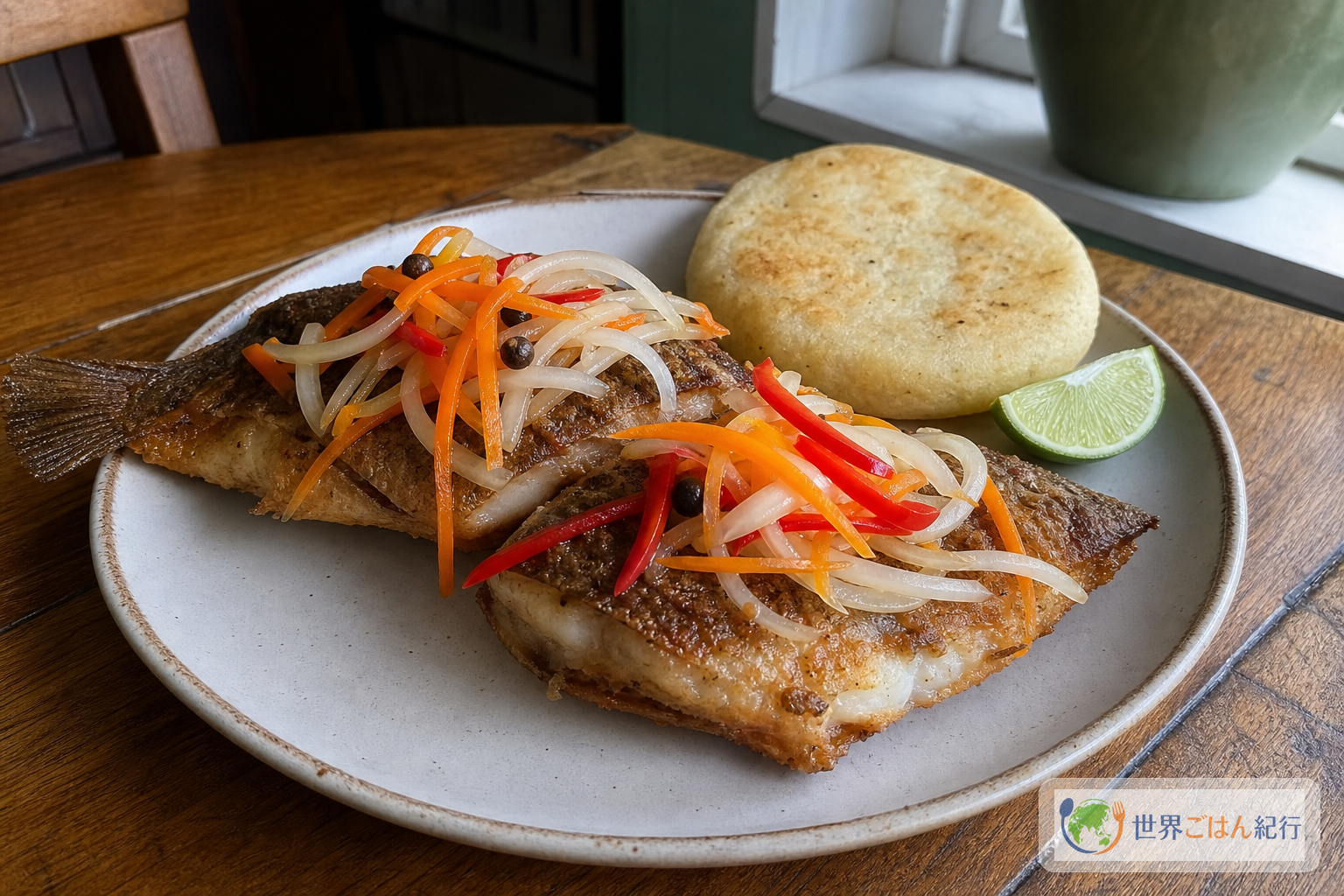
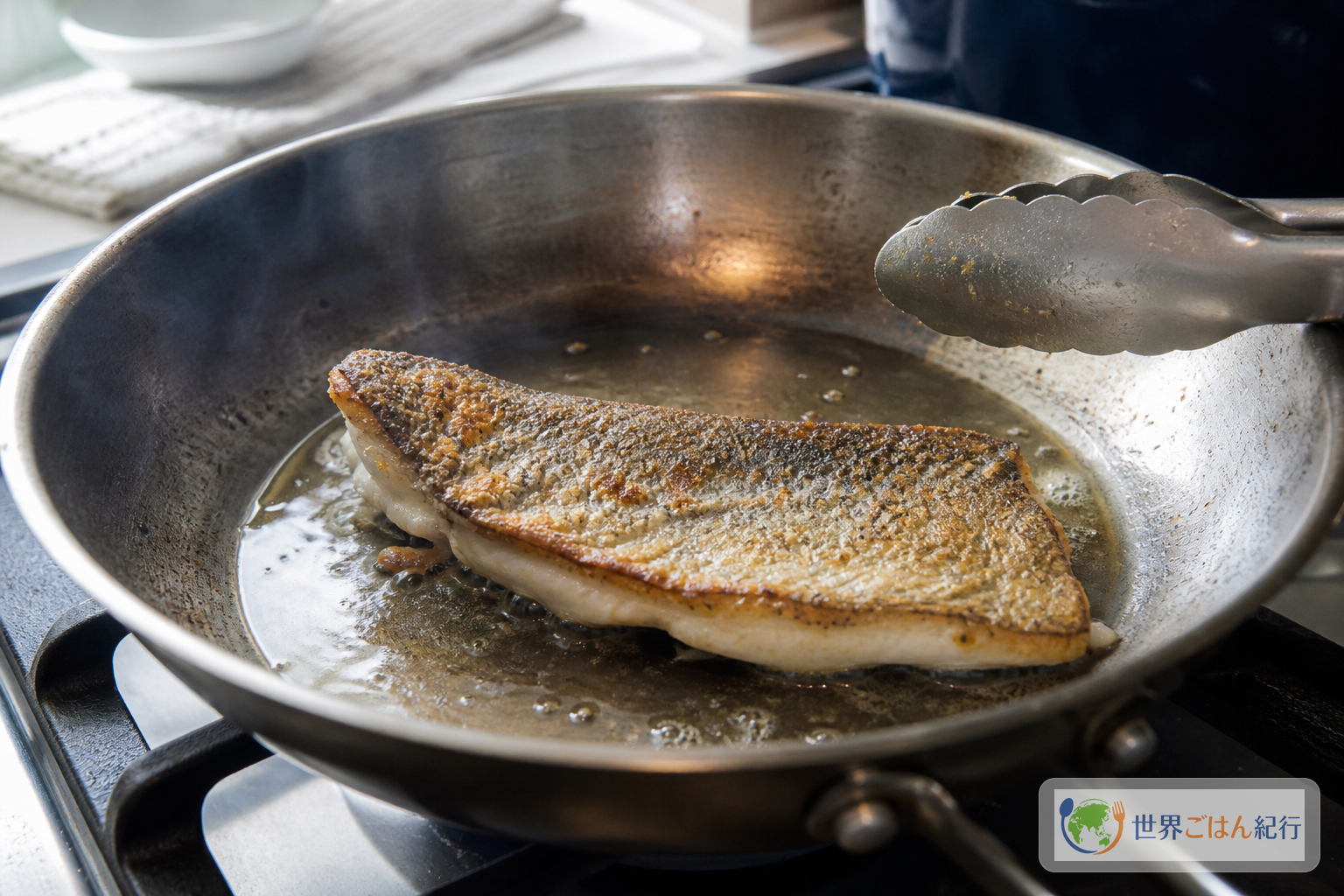
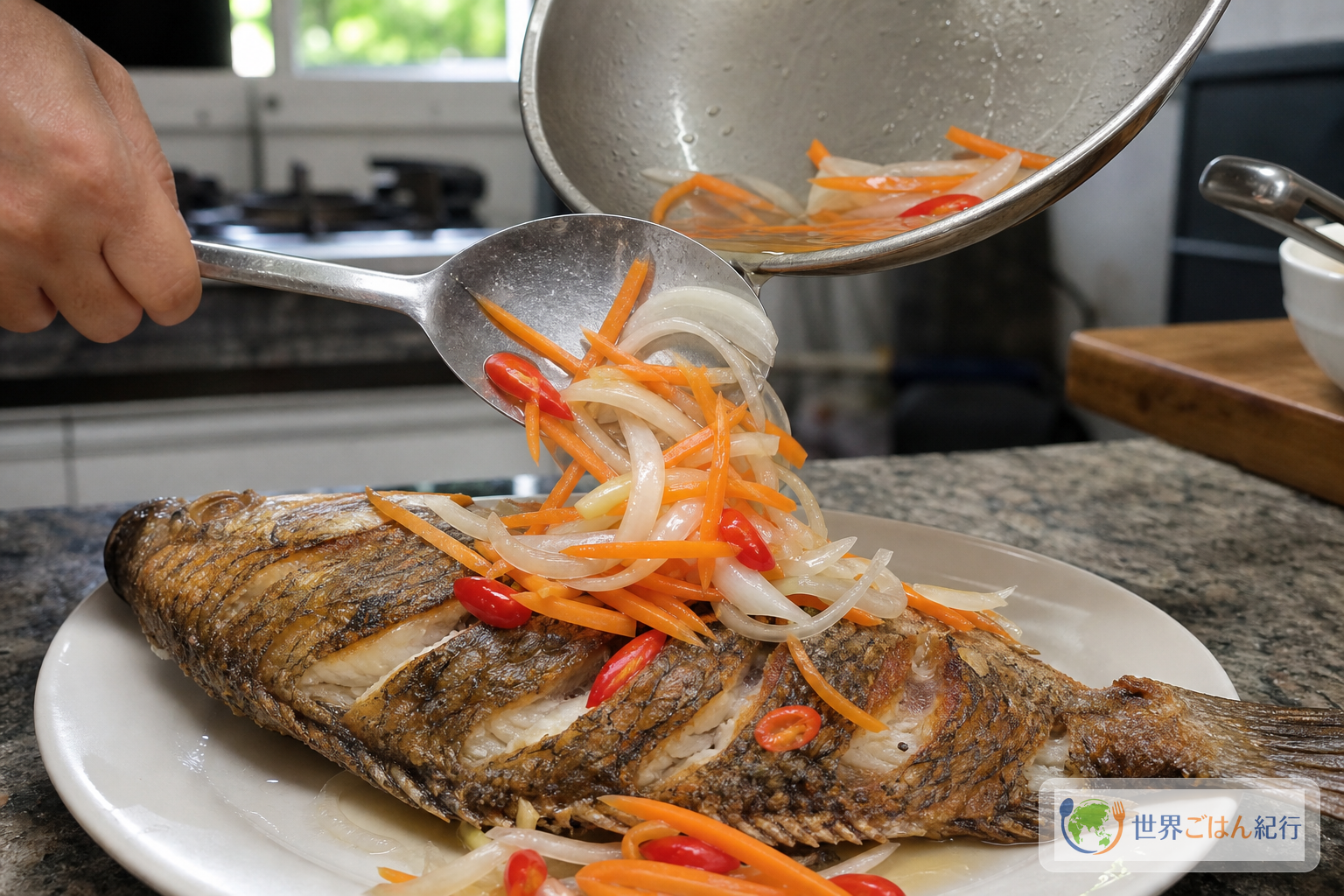
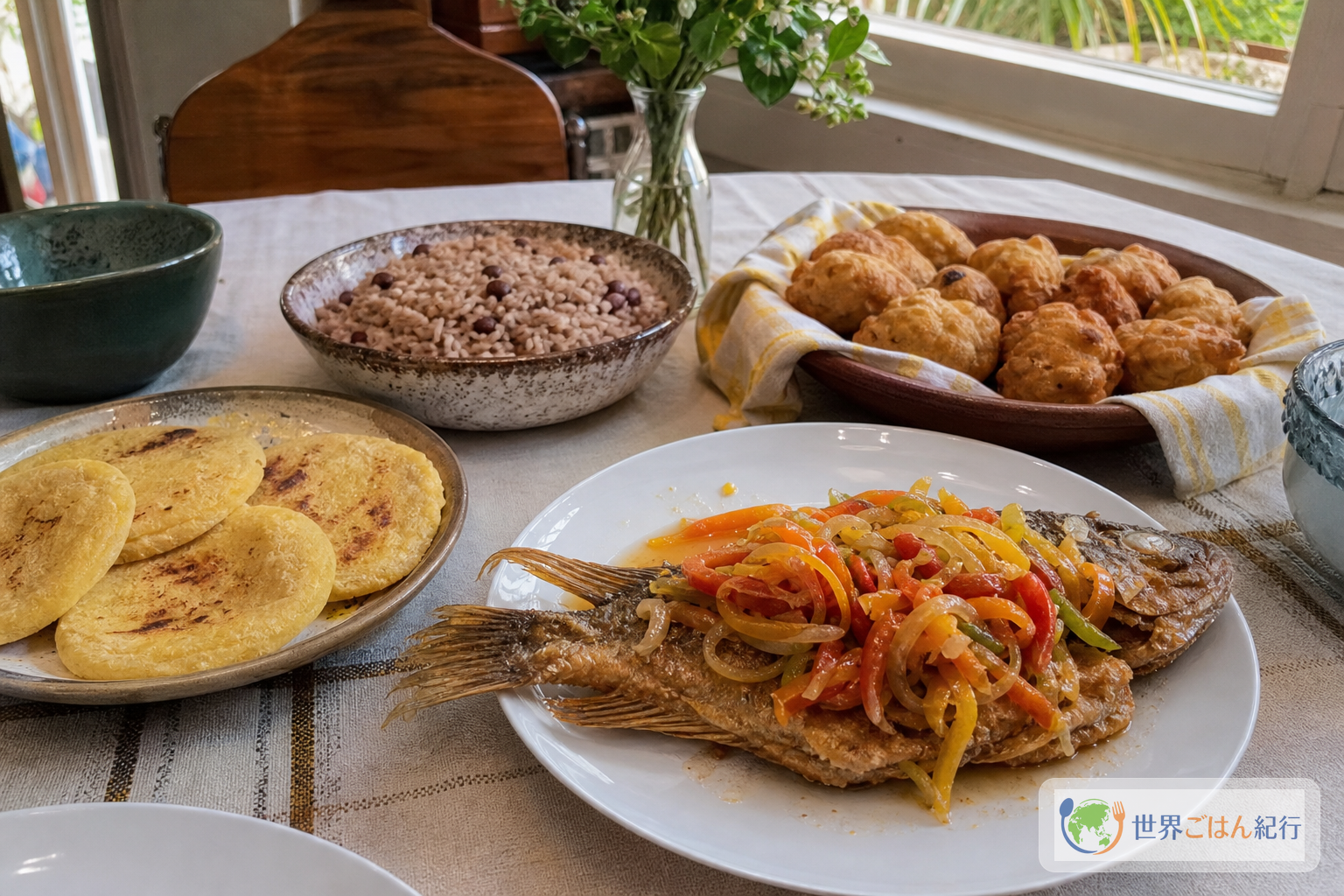
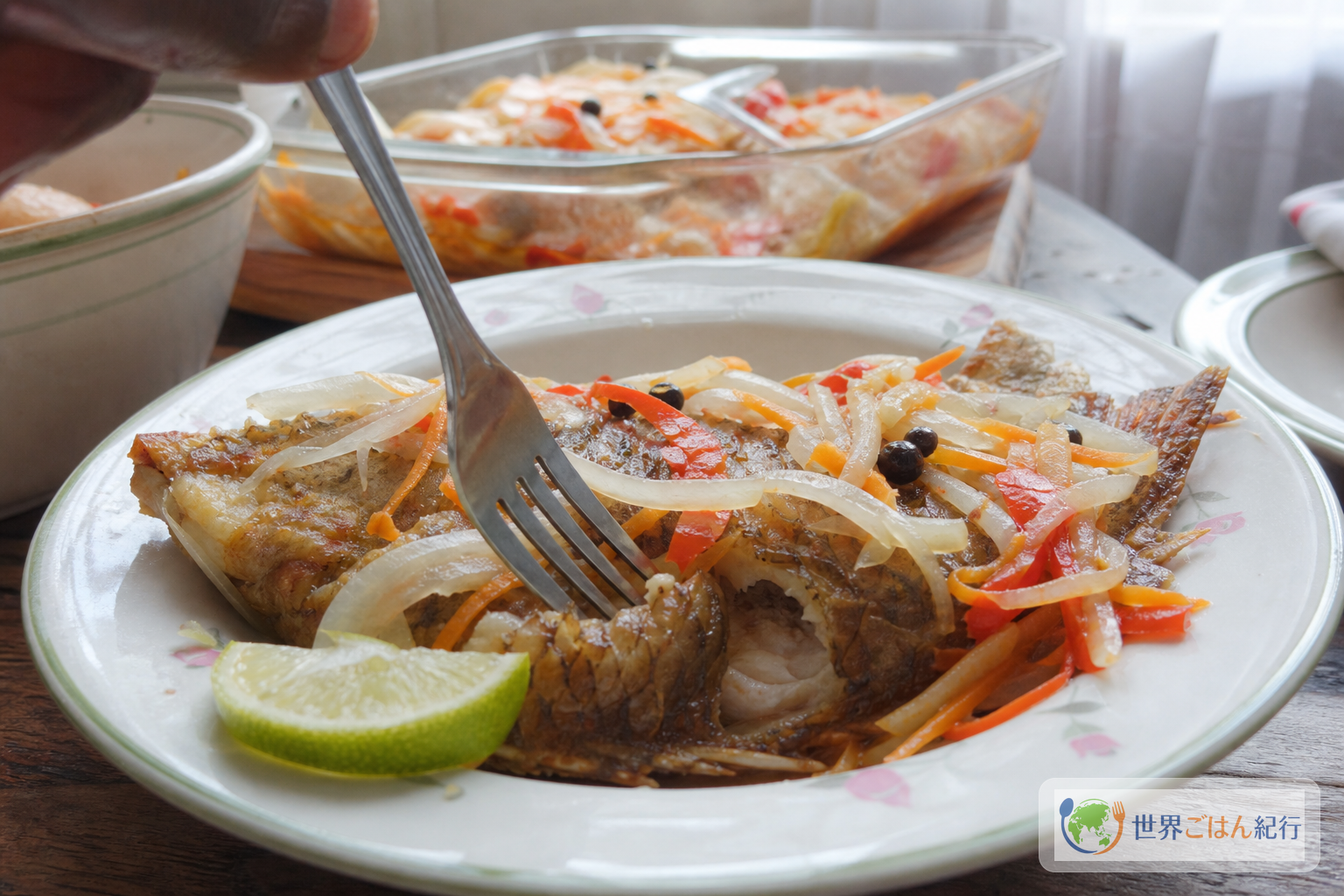
Lift the fish out of the pan and, while the oil is still crackling, spoon over vegetables that have been warmed in vinegar in a separate pot. The skin of the white fish stays crisp, yet the sweetness of the onion and the sharp scent of vinegar rise at once. It is fried food, but the plate never feels heavy.
This is Jamaican escovitch fish. In English you will see it spelled both Escovitch and Escoveitch. The basic form is fried fish under a light sauce of thinly sliced chile, carrot and onion dressed with vinegar and salt.
The choices that trip up home cooks are whether to fry the fish whole or use fillets, how much heat to keep, and whether to buy whole allspice. This version pan-fries skin-on white fish fillets and leaves whole allspice berries in the pickle. Amounts and visual cues are spelled out in detail so you can decide, right at the table, whether the toasty fish or the sharp vinegar should lead.
A Jamaican table where the pickle takes center stage
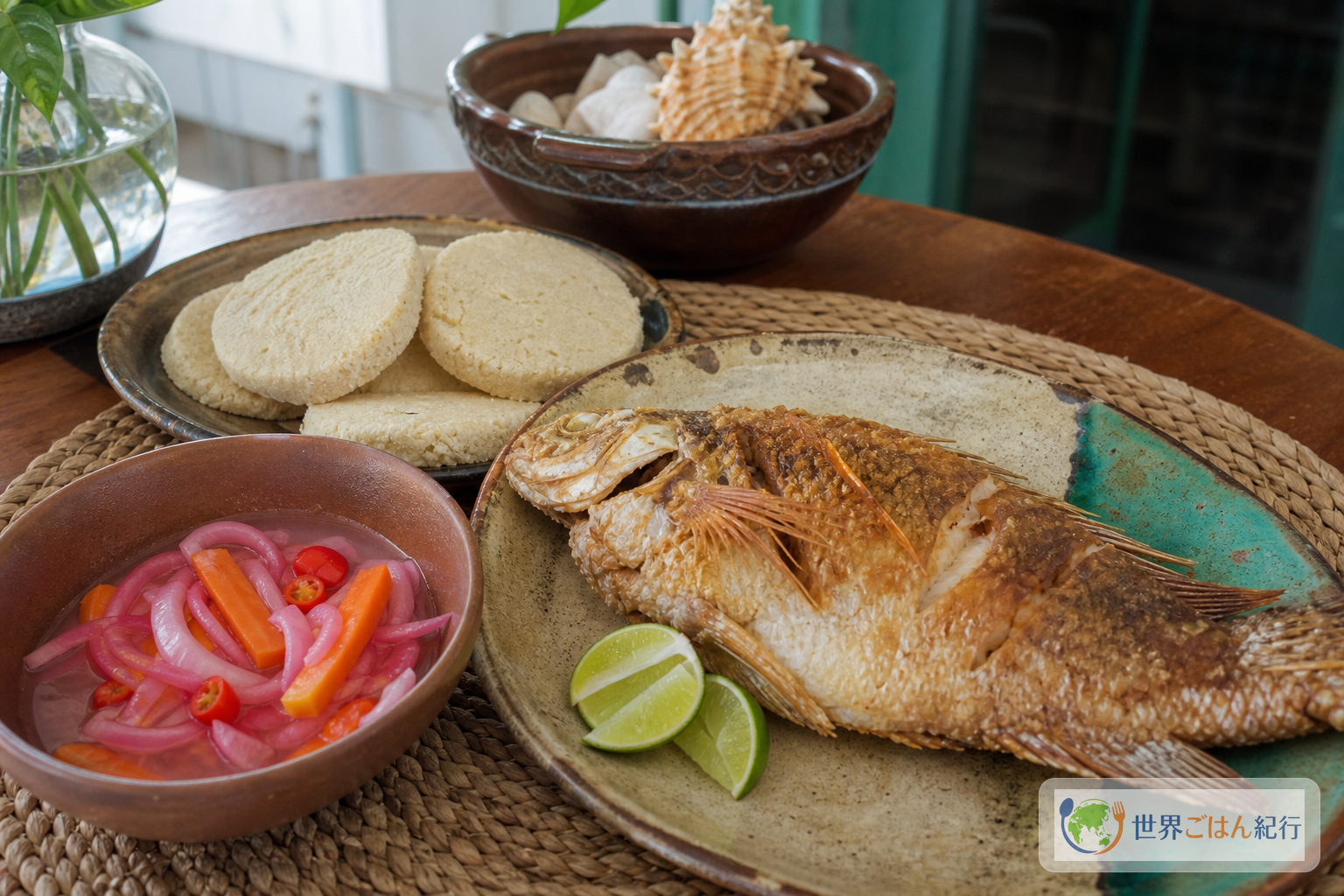
Escovitch fish doesn't end once the fish is fried. Layering sourness, heat, aromatic berries and crunchy vegetables over white fish changes how each bite tastes. Just as fried fish is often paired with festival, a sweet fried dough, it is also served with a starchy side alongside. Rather than eating the fish on its own, having a carbohydrate to soak up the sourness makes the range of heat more enjoyable.
The Jamaican government's culinary heritage page describes escovitch-style fish with cassava bammy as an example of a Spanish-derived frying technique meeting the cassava foodways of the Indigenous Taíno on a single plate. Rather than tracing the dish to a single country, it is a way into how different food cultures layered onto the island's table. The 2026 culinary arts handbook from the Jamaica Cultural Development Commission also lists escovitch fish among traditional Jamaican dishes.
So it makes sense not to lock the vegetables into one fixed combination. Some households build on onion, carrot and chile and add chayote or bell pepper; others hold back the heat and let the vinegar come forward. What should stay is the structure: fried fish and hot pickle layered on the same plate.
In English, both Escovitch and Escoveitch are used. Dishes of fried fish marinated in vinegar are said to be related to Mediterranean vinegar preparations such as Spanish escabeche.
What to keep and what to swap at home
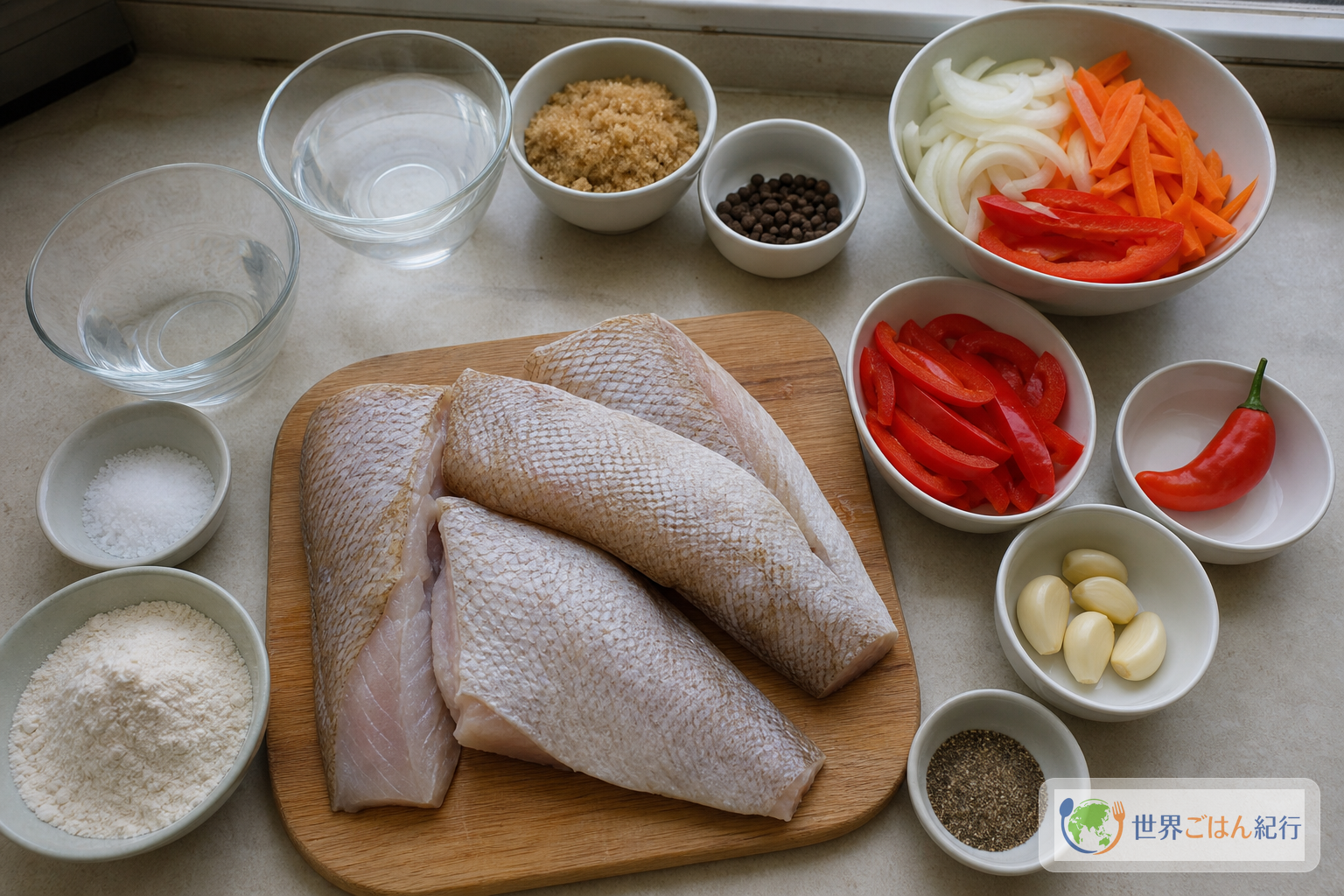
Jamaican recipes often suggest red snapper. Elsewhere, skin-on fillets of firm white fish that hold together, such as sea bream, grunt or sea bass, are easy to work with. Oilier fish will work, but if you want to keep the lightness once the pickle goes on, white fish 2–3 cm (about 1 inch) thick is the safest place to start.
If you can find Scotch bonnet, use part of one. For a first attempt, swap in 1 red chile and taste a few slices before adding more. Substitutes that remove the heat won't match the aroma. If you use only mild bell pepper, you'll still get a tangy fish dish, but the layered aroma that makes it escovitch will be weaker.
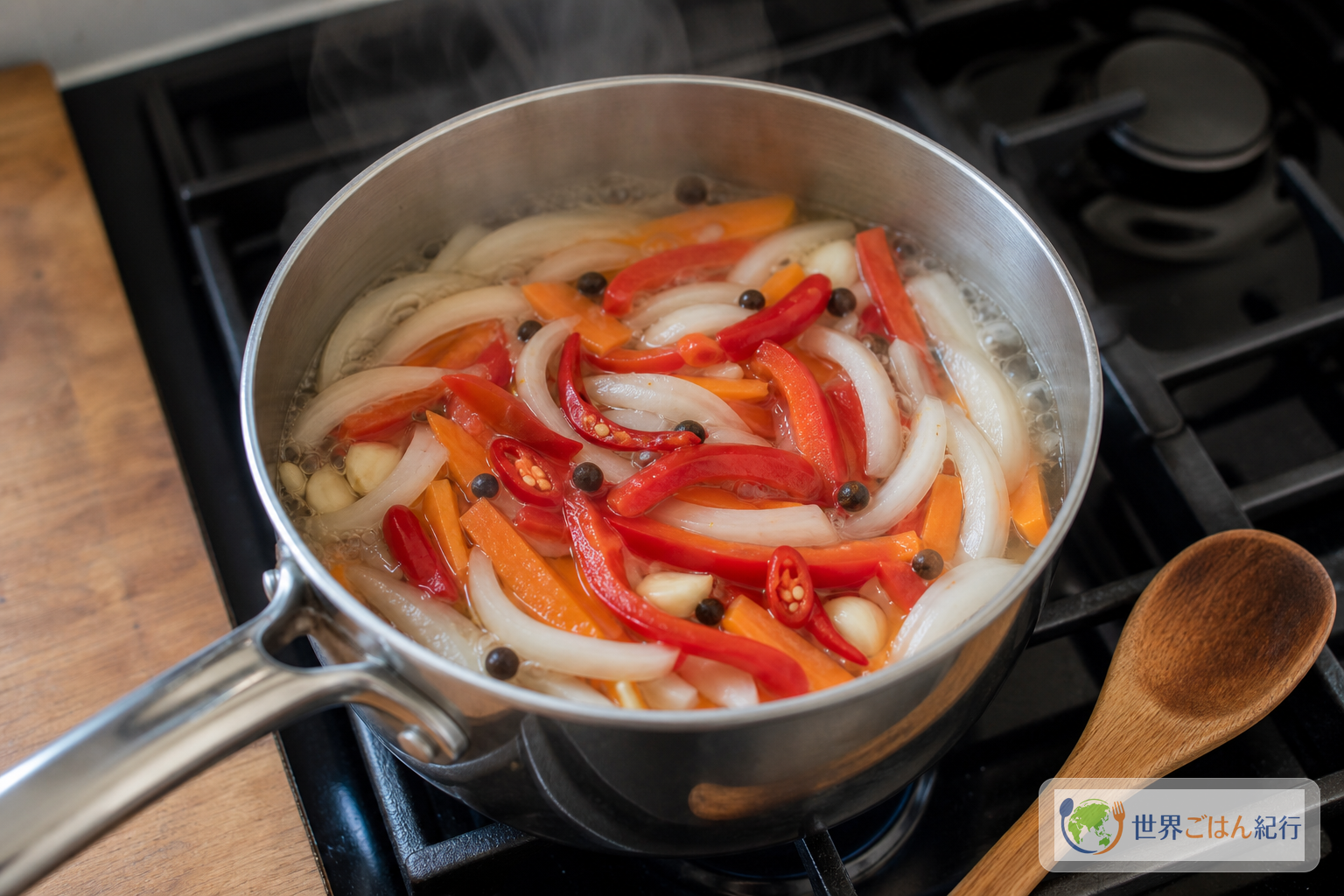
Chocho (chayote) can be added in thin slices if you come across it; otherwise, use red bell pepper. Cutting the vegetables thin isn't only for looks: it lets them meet the hot vinegar briefly and lets you lift them with the fish in one forkful. Cut the onion about 5 mm wide and the carrot about 3 mm so the textures match.
Ingredients (serves 4)
This recipe uses fish and wheat. You can swap rice flour for the all-purpose flour, but if the frying oil is shared with other wheat products or seafood, watch for cross-contact. After cutting fresh chiles, don't touch your eyes or mouth until you have washed your hands with soap. For anyone sensitive to heat, or for children, serve the chile on the side so each person can adjust on the same plate.
Two shopping decisions
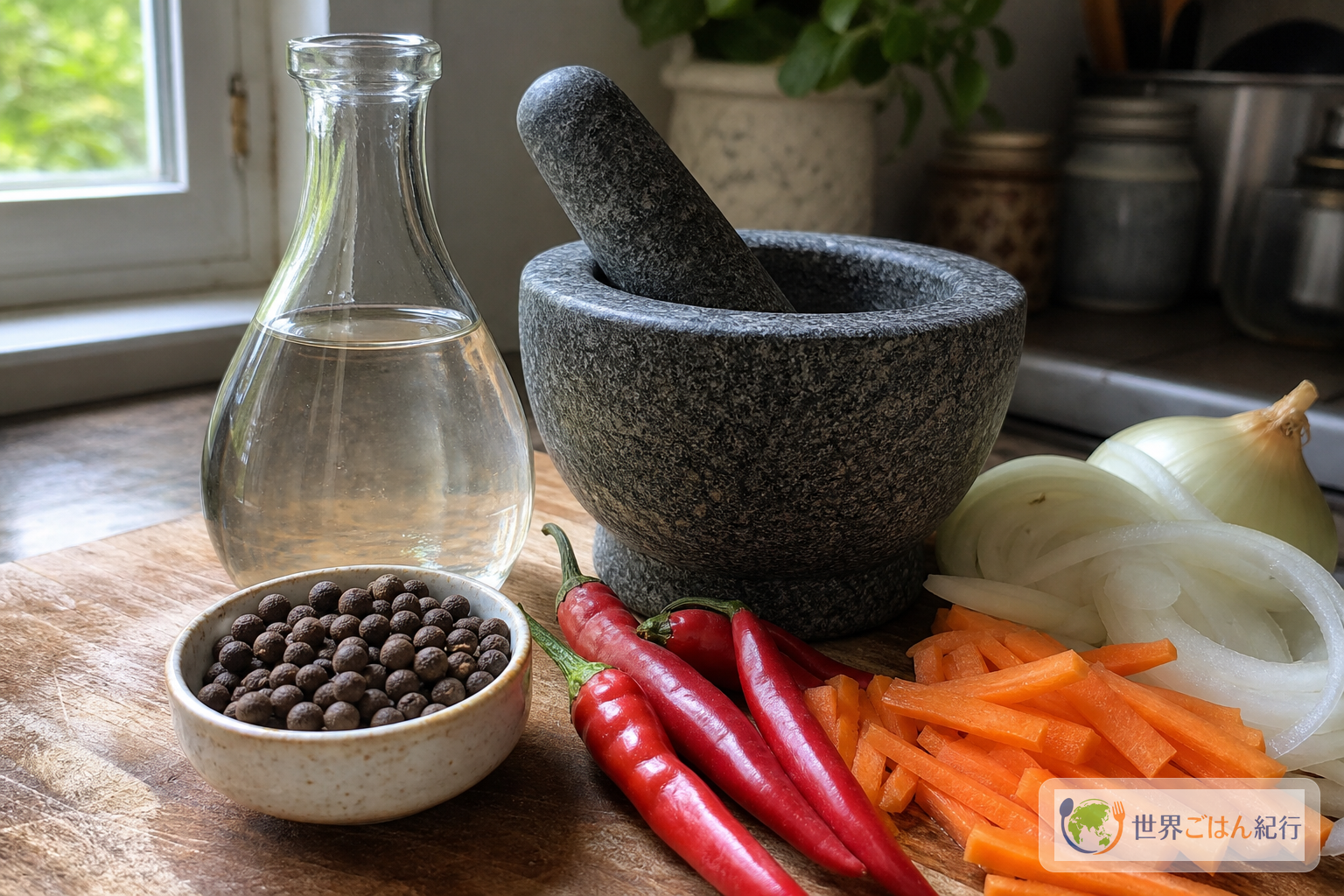
Choose whole allspice
Whole allspice is the ingredient a regular supermarket may not carry. Ground allspice will work, but you lose the coarse aroma on the fish and the look of dark berries floating in the pickle. If you plan to make Jamaican jerk chicken (in Japanese) as well, whole berries pay for themselves across two dishes.
Look for a package labeled whole allspice, with the berries intact. A large bag tends to go unused after one fish dish, so if you have no other plans for it, a small jar of ground allspice is perfectly fine.
Steady heat comes from choosing the chile
You could hunt down a bottled Scotch bonnet sauce, but this recipe uses a fresh red chile so you can add heat later. There's no need to buy something fiery from the start. If your household is split on heat, set the chile aside on a separate plate, pour only the pickling liquid over the fish, and let everyone add more themselves.
Buy a mortar, or make do?
Consider a mortar and pestle only if you want to crack whole spices coarsely yourself. It's worth buying if it can crush small amounts of whole spices and garlic; skip it if the back of a knife or a small bowl does the job and you have no other use in mind.
If the skin browns deeply while the flesh is still cold, don't keep the heat high. Lower it to medium-low, leave the pan uncovered, and move the thickest part to the center of the pan. If the coating softens, plate the fish skin side up just before pouring on the pickle to keep some contrast in texture.
Dialing in sour, heat and crunch
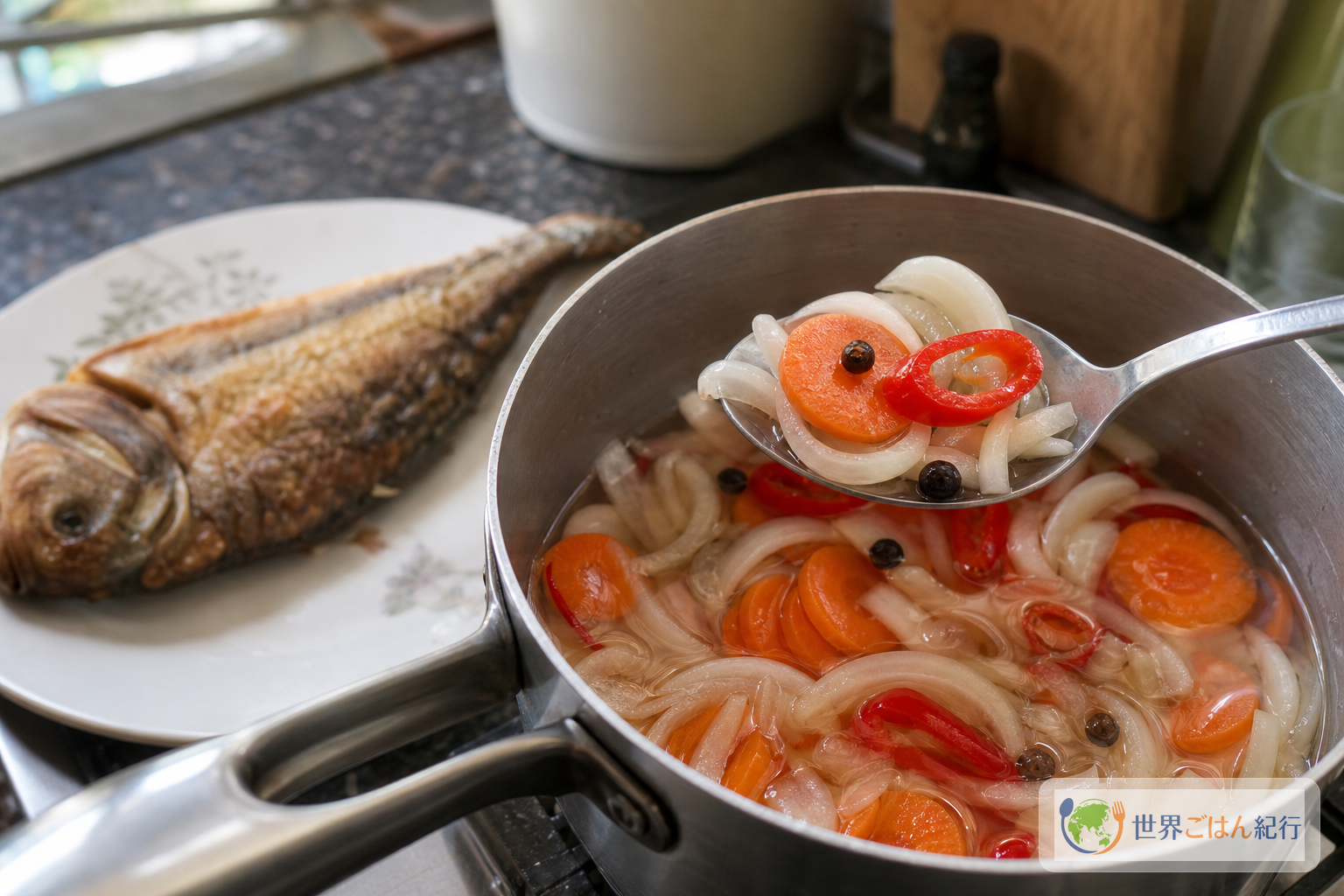
The flavor of this dish depends less on sweetening the vinegar than on when it meets the fish. Poured on hot, the acidity soaks into the coating; after 5 minutes, it mingles with the fish's richness. Poured on cooled, the vegetables keep their crunch, but the surface feels less unified. For a first try, it's easy to pour half over right after turning off the heat and add the rest at the table.
If it's too sour
Add water 1 tbsp at a time and up to 1 tsp sugar, then warm for just 30 seconds. If you add a lot of vinegar and then only increase the sugar, it drifts toward sweet-and-sour vegetables. Instead of adjusting just before eating, taste the liquid with the vegetables in it once with a spoon, and stop while the acidity still has an edge.
If it's too spicy
Remove just the chile and add 1 tbsp water to the liquid. If it's already on the fish, add more onion or carrot to spread out the heat. Trying to dilute the heat with oil only makes the whole dish heavy; thinning the pickle is easier to undo.
If you want less vinegar aroma
Swap the white vinegar for a milder grain vinegar and start with 100 ml water. Milder vinegar has a rounder aroma and cuts the fish's richness a little more gently. Using only rice vinegar can taste sweet, so start with 2 tsp brown sugar and add more to taste.
Five ways to change the fish and sides
1. Fry the fish whole
If you can get small sea bream or grunt, a whole fish makes a stronger impression than fillets. Scale and gut it, cut 2–3 diagonal slashes in the skin, then rub on the measured salt and flour. Because it's thicker, cook it longer over slightly lower medium heat than fillets, and check that the center flakes white. If the fish won't fit in a home skillet, it's safer not to force it whole.
2. Serve with bammy
Bammy is a round flatbread made from cassava. The Jamaican government's culinary heritage page also describes it as a cassava food paired with fish dishes. If you buy frozen bammy, thaw it and pan-fry both sides in a little oil. Its job is to soak up the pickling liquid, so make a little extra sauce.
3. Serve with festival
Festival, a sweet fried cornmeal dough, puts sweetness between the heat and the sourness. If you're making Jamaican festival (in Japanese) at the same time, fry the fish first, then change the oil before frying the dough so the fish flavor doesn't carry over. With two fried dishes in one day, cut the pickle vegetables early so the stovetop doesn't get crowded.
4. Serve with rice and peas
For a milder menu, rice and peas, rounded with coconut, is a good match. Even on a day when the coating ends up too sour, the rice and beans balance it out. With a starch on the table, it's also easy to serve one fillet per person, which suits a home meal.
5. Use leftover pickle in other dishes
The pickle isn't just for fish; it works on grilled chicken or beans too. Served alongside a coconut dish like run down (in Japanese), it freshens the finish after a rich sauce. However, if the pickle has touched the fish and you want to reuse it, don't leave it at room temperature: refrigerate it and reheat it before using.
Eat it by the next day
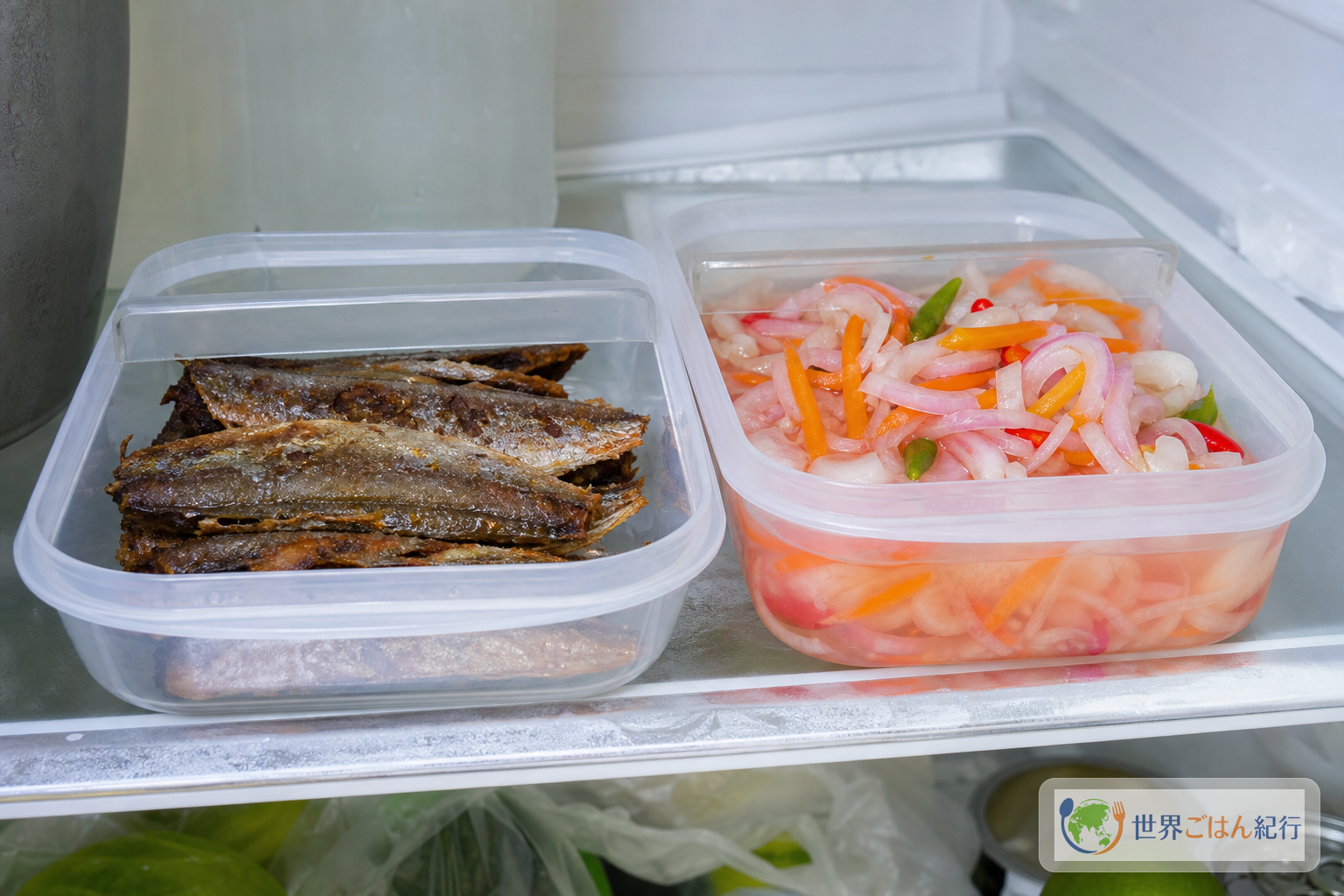
To keep the skin as crisp as possible, store the fish and the pickle in separate shallow containers. Once they've cooled slightly, cover and refrigerate, and finish them by the next day. If you store the fish with the pickle poured over, the flavors meld but the coating softens. Before eating, bring just the pickle to a boil in a pot and warm the fish in the microwave in short bursts to keep the flesh from drying out.
Don't let refrigerated fish sit out at room temperature for a long time before eating. When reheating, make sure the center of the fish is hot and the flesh flakes white. FoodSafety.gov advises cooking seafood, including fish, to an internal temperature of 145°F (63°C), or until the flesh is no longer translucent and flakes easily with a fork. This isn't a make-ahead dish; frying only what you'll eat at dinner keeps the texture best.
Cook the fish through to the center, and refrigerate any leftovers and finish them by the next day. Scotch bonnet is extremely hot, so after cutting it, keep your hands away from your eyes and face.
FAQ
Can I substitute five-spice powder or cinnamon for allspice?
Five-spice powder contains other aromas such as star anise and Sichuan pepper, so a straight swap pulls the dish away from escovitch. Cinnamon alone won't match either. On a day when you truly have none, add a little more black pepper and make it a fish dish where the crunch of the pickled vegetables is the star. If you plan to cook Jamaican food again, whole allspice is worth buying.
The fish skin sticks to the pan.
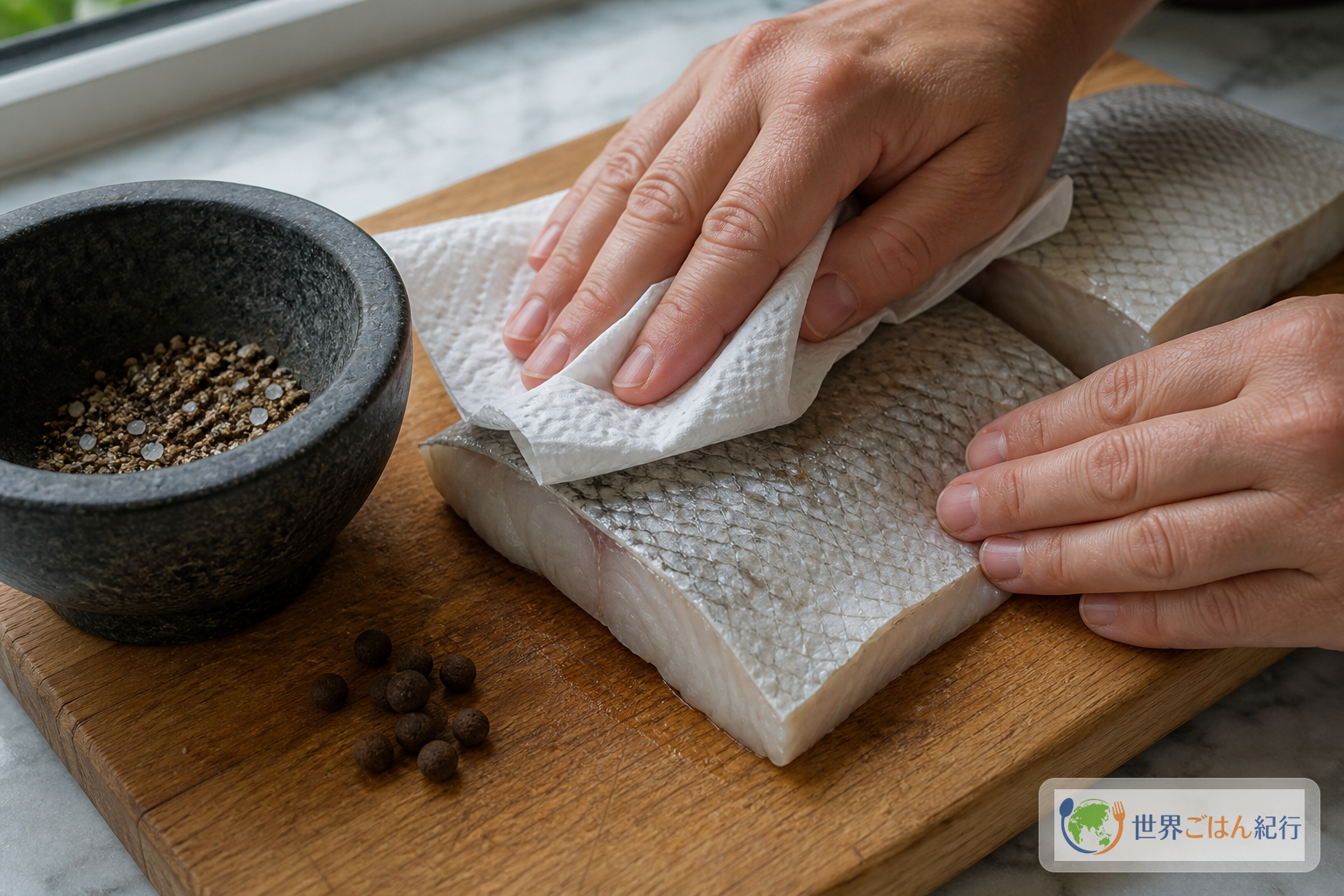
Blot the fish dry, and once floured, don't let it sit for 5 minutes; add it skin side down only after the oil reaches 170–180°C (340–355°F). Moving it right after it goes in tears the coating before it sets. Wait about 3 minutes and don't touch it until the edges of the skin lift on their own. If a thin fillet curls, press it gently with a spatula for just the first minute.
How do I keep the pickled vegetables crisp?
Cut the vegetables thin, add them once the vinegar and water are bubbling, and turn off the heat after 2–3 minutes. Boiling continuously softens the onion and dulls the carrot's aroma. Warm the pickle in a small pot right before pouring it over the fish, and plate without delay.
Can I make it without Scotch bonnet?
Yes. Start with half of 1 red chile, taste the liquid, then add the rest. If you want the fruity aroma as well as the heat, serving Scotch bonnet sauce on the side for everyone to add is the safe route. Adjusting at the table is easier to undo than adding strong heat to the pot all at once.
Can I bake it instead of frying?
You can brush the fish lightly with oil and bake it in an oven preheated to 220°C (425°F) until the skin colors. But you lose the toasty flavor of a pan-set coating and the sturdy surface that holds up to the pickle. It's an alternative on days you want to avoid frying, but for your first plate, shallow-frying in a little oil makes it easier to grasp how the dish is built.
More Jamaican dishes
With escovitch fish at the center, expand your use of allspice with jerk chicken (in Japanese) and add a starch that soaks up the sourness with rice and peas, and you can build a menu without leftover spices. On a day you want another fried dish on the table, sweet Jamaican festival (in Japanese) is a good pick.
Sources
- Jamaica 55, "Culinary Heritage" (cultural overlap of bammy and escovitch-style fish) (accessed October 22, 2026)
- Jamaica Cultural Development Commission, "2026 Culinary Arts Handbook" (traditional dishes and seasoning categories) (accessed October 22, 2026)
- Jamaican Foods and Recipes, "Jamaican Escovitch Fish Recipe" (home-style example of fish, pimento, pickled vegetables and sides) (accessed October 22, 2026)
- FoodSafety.gov, "Cook to a Safe Minimum Internal Temperature" (safe internal temperature of 63°C / 145°F for fish) (accessed October 22, 2026)