A Breakfast Dish Where the Coconut Thickens at the Bottom of the Pan

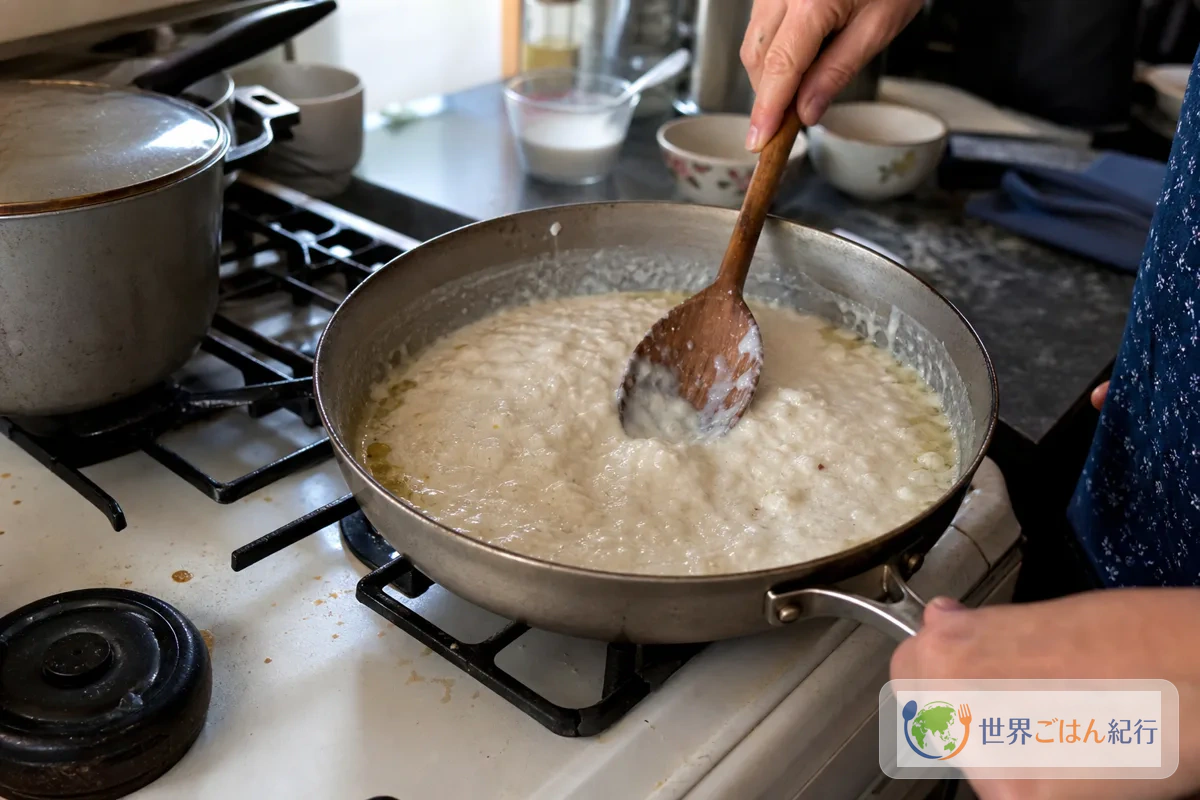
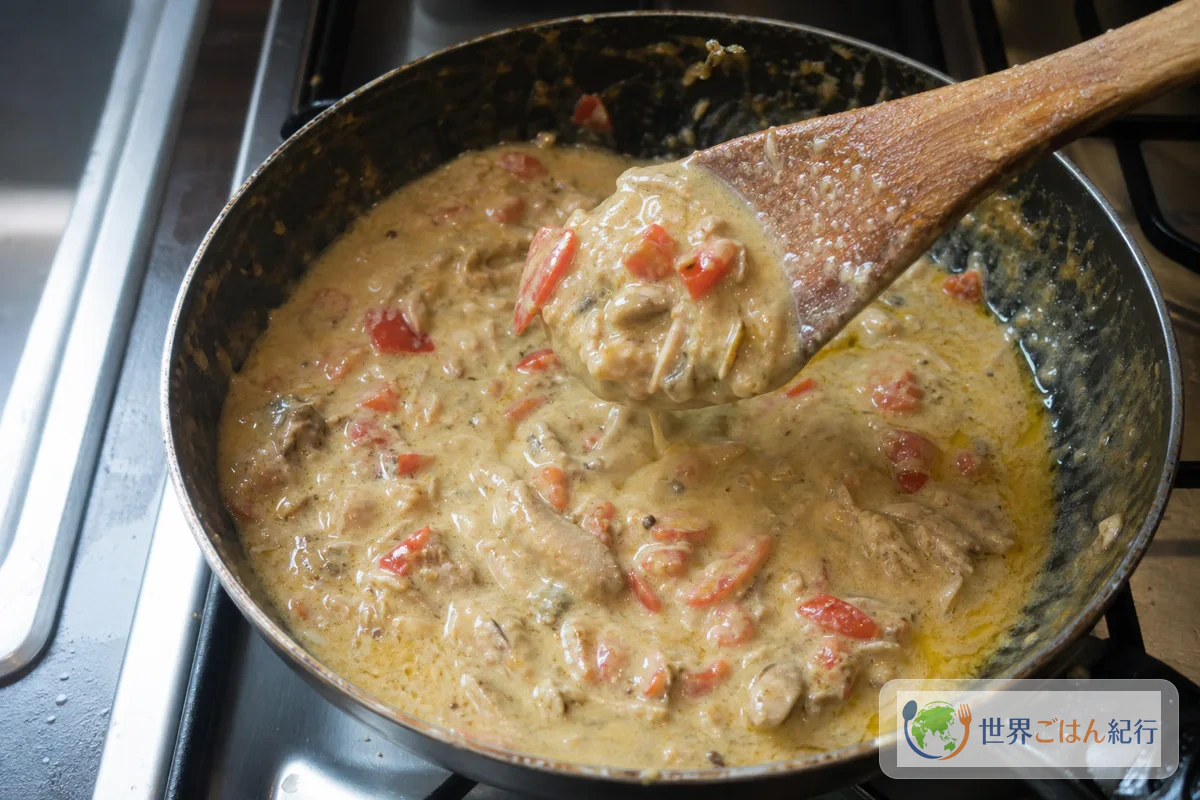
When you first heat coconut milk in a pan, it looks like a pale, light soup. Little by little the water cooks off, the wooden spoon leaves a trail across the bottom, and yellow oil begins to seep around the edge. Jamaican run down is a dish that waits for that change.
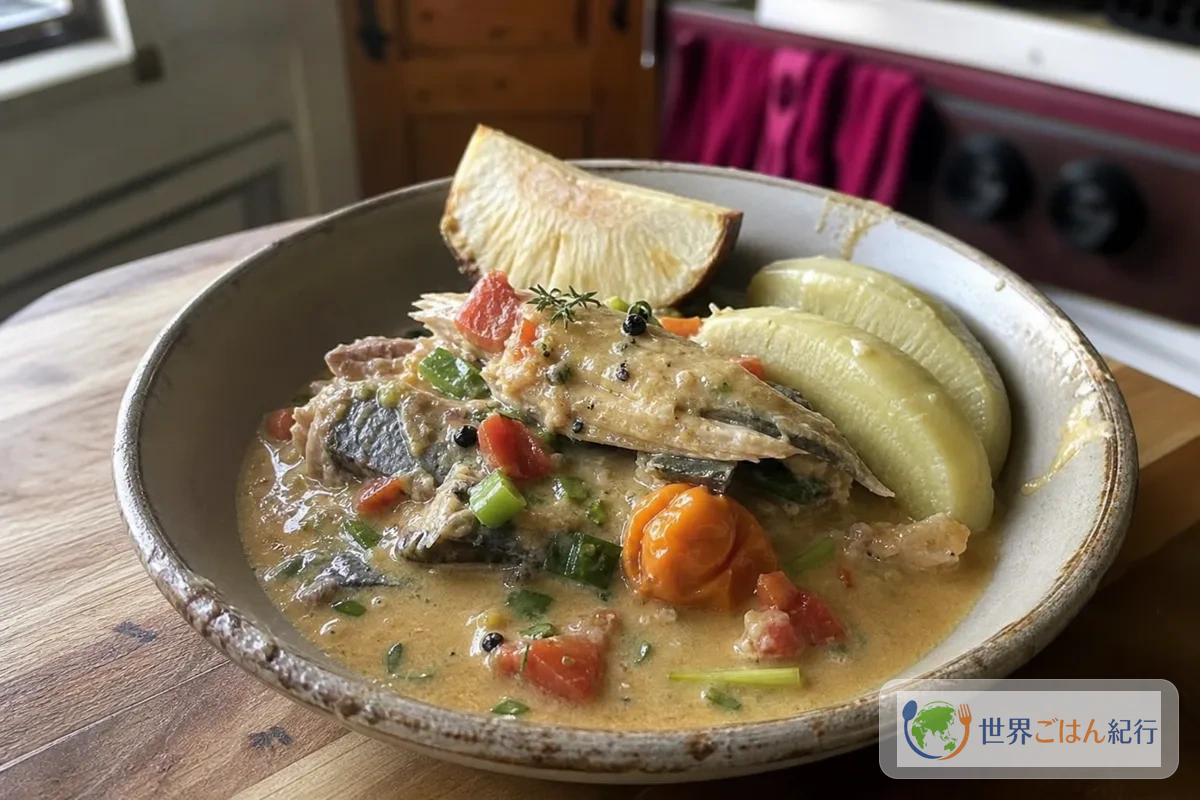
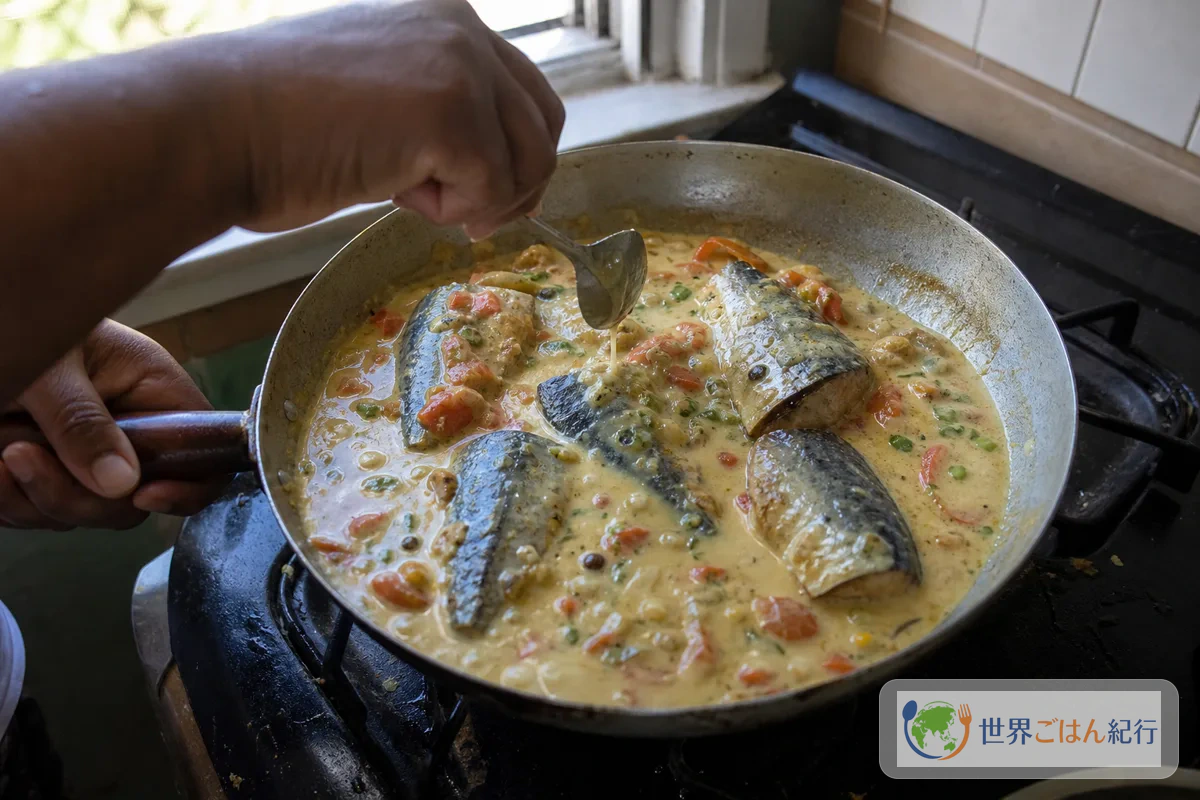
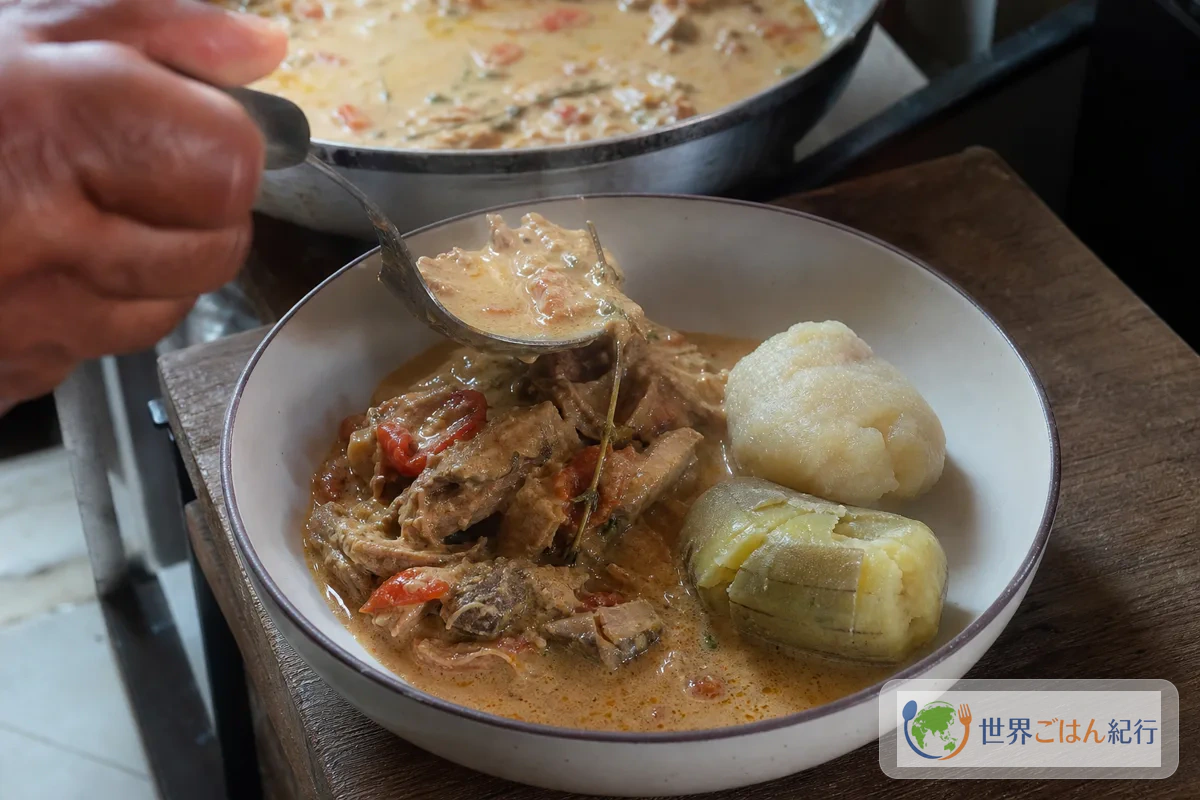
Run down (also written run dung) is a Caribbean home dish in which salt fish, mackerel, cod, or salmon is simmered in reduced coconut milk with tomato, onion, thyme, and Scotch bonnet. It is often introduced in English as mackerel rundown, and sometimes spelled "run dung" to follow the local pronunciation.
From the name alone it might sound like a way to use up leftovers. In practice it is a dish with a sharp outline, setting the saltiness of the fish against the sweetness of coconut. It is not the charcoal heat of jerk chicken; it leans toward the coconut fragrance of rice and peas, with the savor of fish added.
This article is arranged so you can make it with ingredients that are easy to find: lightly salted mackerel, lightly salted cod, or canned mackerel. You do not need to track down green banana or breadfruit every time. What you should watch closely is how far the coconut milk has reduced, because a thin sauce will not taste like run down.
Jamaican run down is a dish in which coconut milk is reduced and fish is simmered in it. It is sometimes written "run dung" to reflect the local pronunciation. This article uses "run down" throughout and gives the local spelling where it helps.
Background: A Kitchen of Preserved Fish and Coconut
Run down belongs to a lineage of "fish and coconut" dishes found across the Caribbean islands, not only in Jamaica. Fish preserved with salt is soaked, simmered in coconut milk, and eaten with a starchy side such as green banana, boiled dumplings, or roasted breadfruit. Starchy roots and dough that soak up the sauce suit it better than rice does.
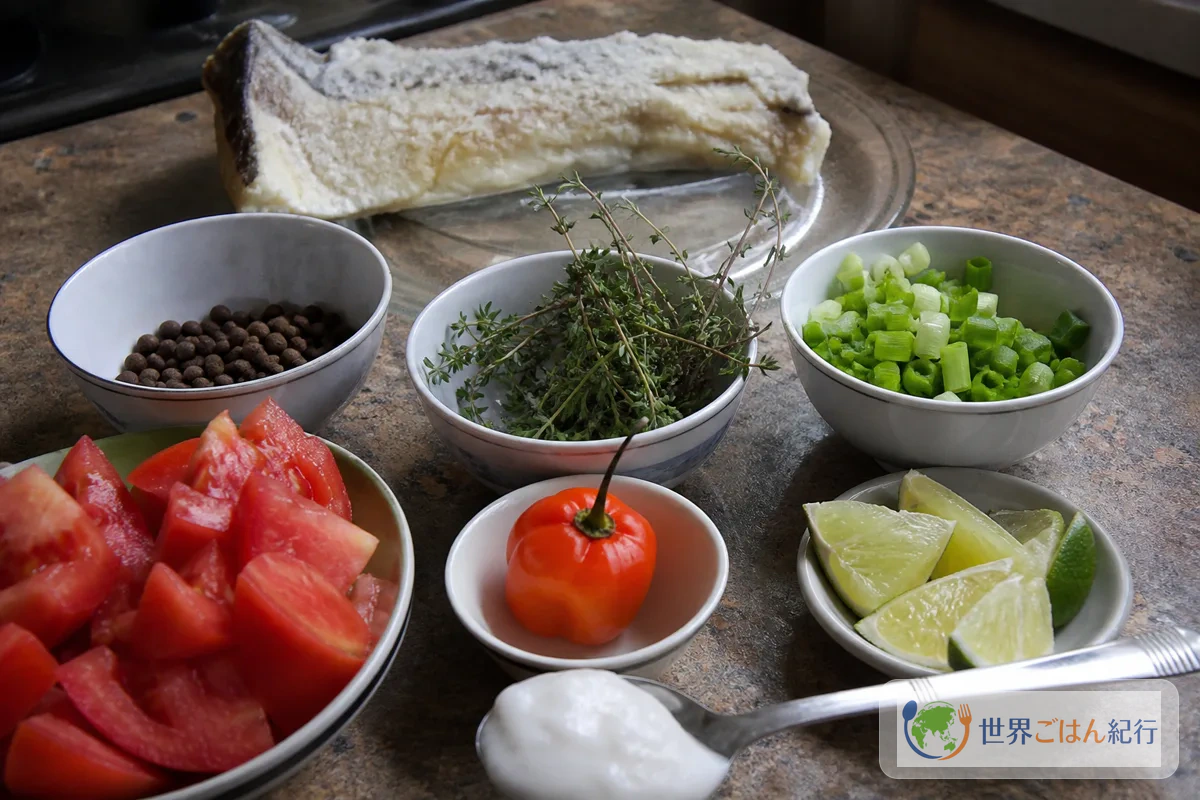
On English-language Jamaican food sites, most versions use salt mackerel, saltfish, or codfish, and the standard vegetables are tomato, onion, scallion, garlic, and thyme. Even with the same salt fish, ackee and saltfish is a breakfast stir-fried with the yellow flesh of ackee, whereas run down reduces coconut milk until it clings to the fish. Some home versions drop the Scotch bonnet in whole to give up its fragrance and then remove it at the end, rather than chopping it to make the dish hot.
In a home kitchen, the biggest question is the salt fish. You can look for imported salt mackerel or salt cod, but lightly salted mackerel, lightly salted cod, or canned mackerel are also good ways in. The difference lies in desalting and simmering time. Soak strongly salted fish; add canned fish at the end and do not break it up. Keep those two things apart and the dish is easy to manage.
| Local anchor | Realistic choice | Why keep it |
|---|---|---|
| salt mackerel | lightly salted mackerel, salt mackerel, lightly salted cod | The saltiness of the fish tightens the sweetness of the coconut |
| coconut milk | unsweetened canned coconut milk for cooking | Once reduced it becomes the core of the sauce |
| scotch bonnet | whole, or a bottled hot sauce at the table | Adds a fruity heat |
| thyme / pimento | fresh thyme, allspice | Moves the aroma toward Jamaican cooking |
| green banana | green banana, potato, rice-flour dumplings | Something to take the rich sauce |
Ingredients: Decide on the Salt Fish and Coconut First
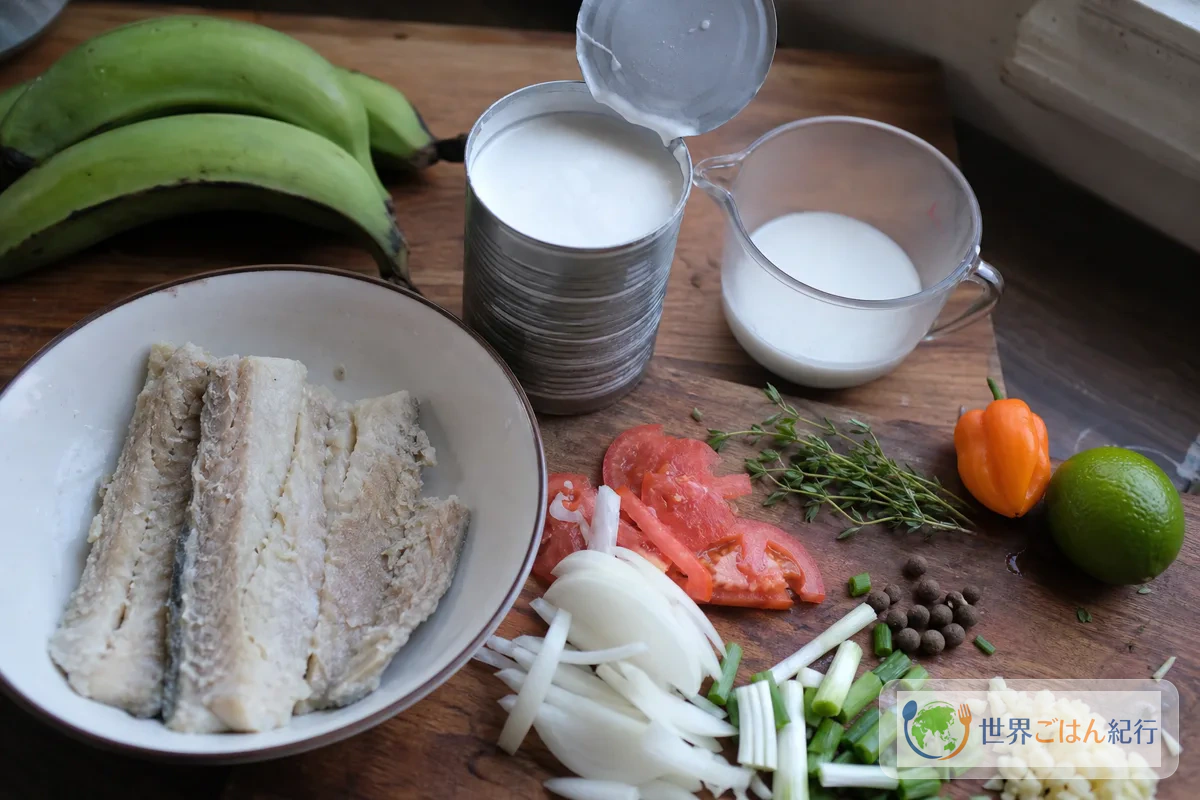
Serves 4. If you serve it as a main dish, add boiled green banana, potato, rice-flour dumplings, or firm bread to make it filling. The fish is lightly salted mackerel as the base, and the table also lists adjustments for strongly salted fish, canned fish, and cod.
This dish uses fish and coconut. The salt content of salt fish and canned fish varies a great deal by product. If you are limiting salt, for example because of high blood pressure, taste a small piece of the fish after desalting and finish the dish without adding any salt to the sauce. Scotch bonnet is a very hot chile. If you chop it, wear gloves and keep it away from your eyes and mucous membranes.
Quick Guide When You Change the Fish
| Fish | Prep | Simmering time | Result |
|---|---|---|---|
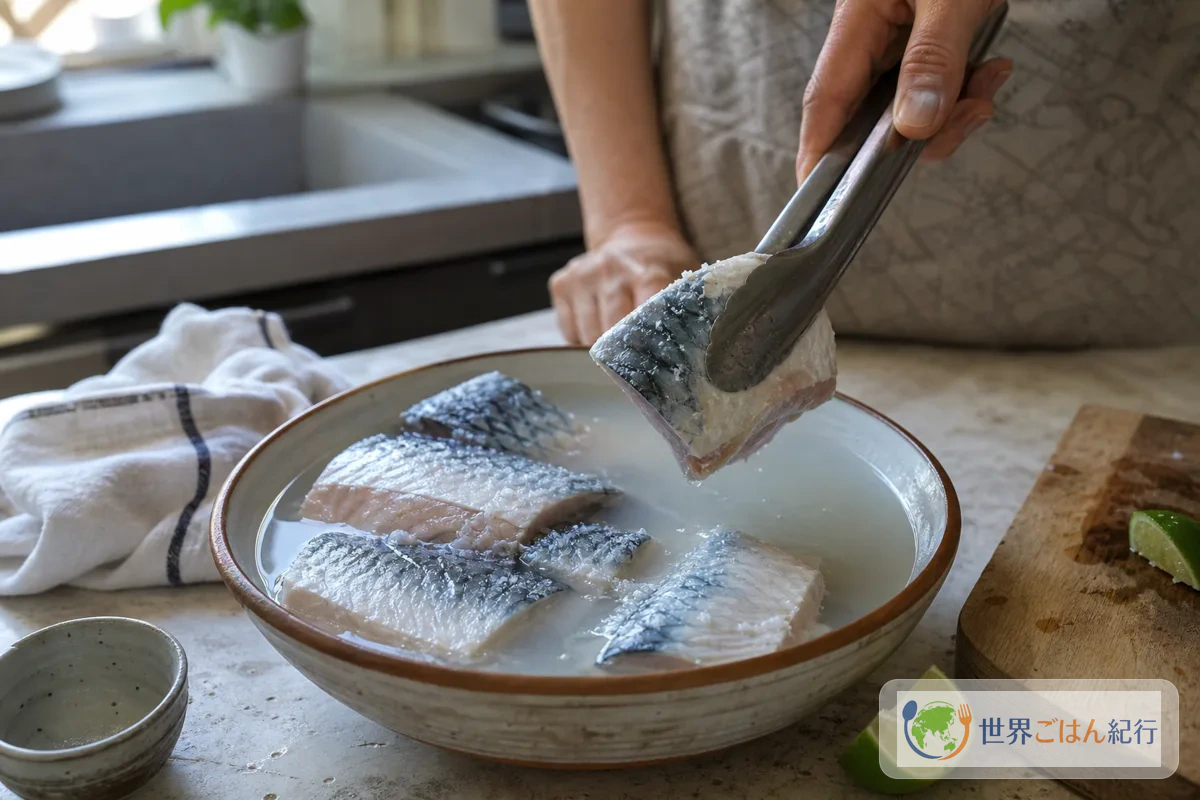
| Lightly salted mackerel | Soak in water for just 10 minutes, pat dry | 8–10 minutes | Fatty and easy for home cooks |
| Salt mackerel | Soak in water for 20–30 minutes | 8–10 minutes | Saltier, so the sauce is more tightly seasoned |
| Lightly salted cod | Soak in water for 10 minutes | 6–8 minutes | Mild and gentle in flavor |
| Canned mackerel in water | Drain, add at the end | 3–4 minutes | Quick, but breaks apart easily |
| Fresh salmon | Sprinkle with 1/2 tsp salt and rest 10 minutes | 6–8 minutes | Closer to a different dish, but easy to eat |
Method: Don't Let the Coconut Stay Thin
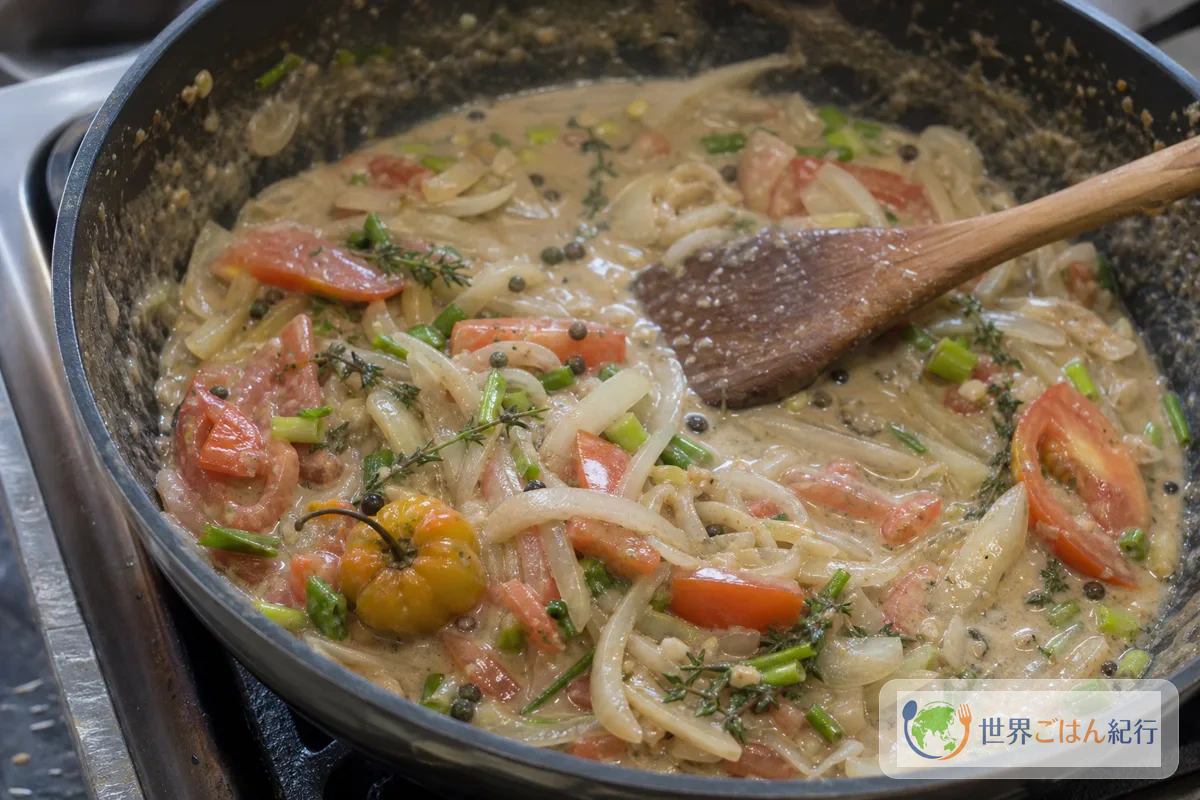
Run down is a dish in which you build the thickness of the coconut milk before the fish goes in. If you add the fish at the start, the sauce tends to stay thin before the flesh has a chance to break down. So reduce the coconut first, add the aromatics, and add the fish last.
Shopping Notes: Only the Ingredients That Might Give You Trouble
The fish, onion, tomato, scallions, and garlic can all come from a regular grocery store. What is worth seeking out at a Caribbean or international market or online is unsweetened coconut milk, allspice (called pimento in Jamaican cooking), and a Scotch bonnet-type chile.
Choose canned, unsweetened coconut milk for cooking, not the carton beverage type. The beverage type has more water and sugar and does not turn into a sauce even when reduced.
Pimento is the Jamaican name for allspice. It is not the same thing as the pimiento pepper. Whole berries give a softer fragrance, but if all you have is ground allspice, put it in a tea bag or small mesh bag instead of adding it directly, and it will be less gritty.
If you can't find fresh Scotch bonnet, it is safer not to put heat in the pot and to add a little hot sauce at the table instead. Everyone can set their own level of heat, so this is the safe way to do it the first time.
Why It Goes Wrong: When It's Watery, Look at the Sauce, Not the Fish
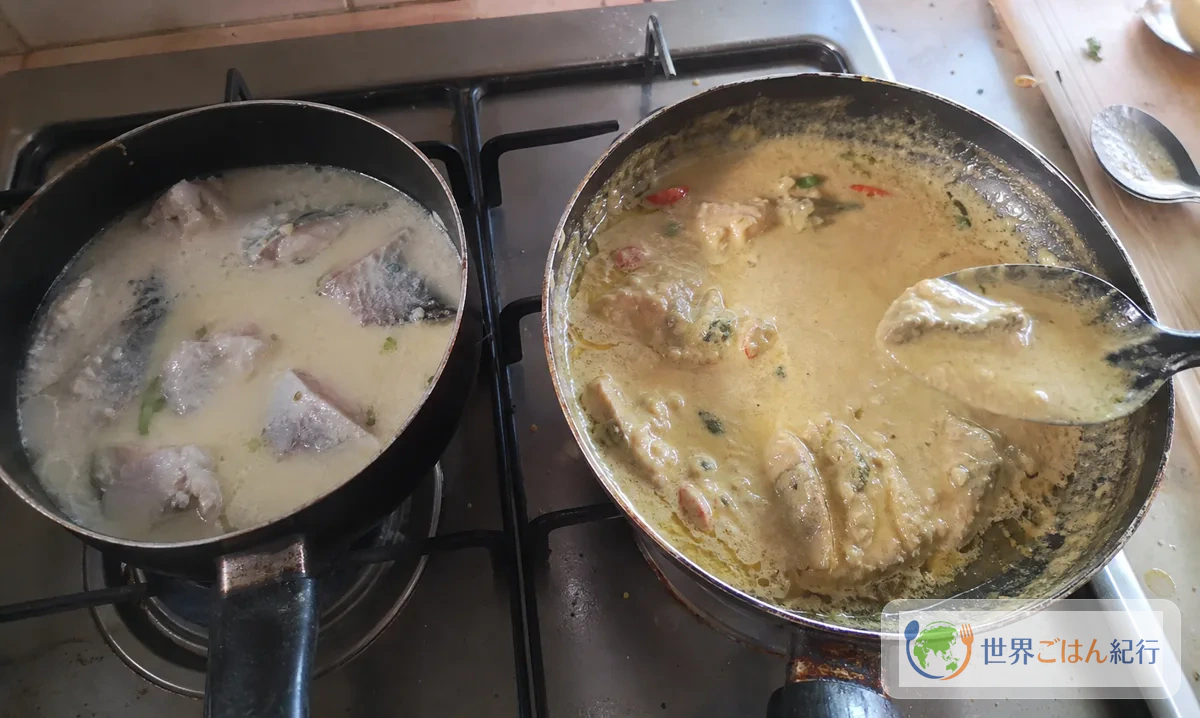
The most common failure with run down is putting the fish in while the coconut milk is still thin. A thin sauce cannot hold up against the saltiness of the fish and turns watery on the plate. Reduce it too far, on the other hand, and it becomes oily and heavy.
| State | Likely cause | How to fix |
|---|---|---|
| Watery | Fish added before the coconut was reduced | Take the fish out once and reduce the sauce over medium-low heat for 3–5 minutes |
| Too salty | Salt fish was not soaked enough | Serve with potato or green banana, and soak 10 minutes longer next time |
| Fish falls apart | Boiled hard or stirred too much | Keep the heat low after adding the fish. Shake the pan to move the sauce |
| Too hot | The Scotch bonnet broke | Take it out right away, add 3 tbsp coconut milk, and bring it back on low heat |
| Weak aroma | Not enough thyme and pimento | At the end, add a little dried thyme and steep allspice in a tea bag for just 2 minutes |
You do not need to bring salt fish all the way back to the taste of plain water. Run down is a dish where the saltiness of the fish tightens the whole sauce. When you taste, do not judge from the fish alone: take fish, sauce, and green banana or potato together in one bite. Something that is a little too salty on its own settles down when paired with the starch.
Canned mackerel in water breaks apart easily, so add it at the very end of step 4. Use only 2 tbsp of the canning liquid and leave out the rest. Warm it for 3 minutes, turn off the heat, and finish by spooning the sauce over; this makes it less likely that the flesh will fall to pieces.
Serving and Storage: Potato Will Do If You Can't Find Green Banana
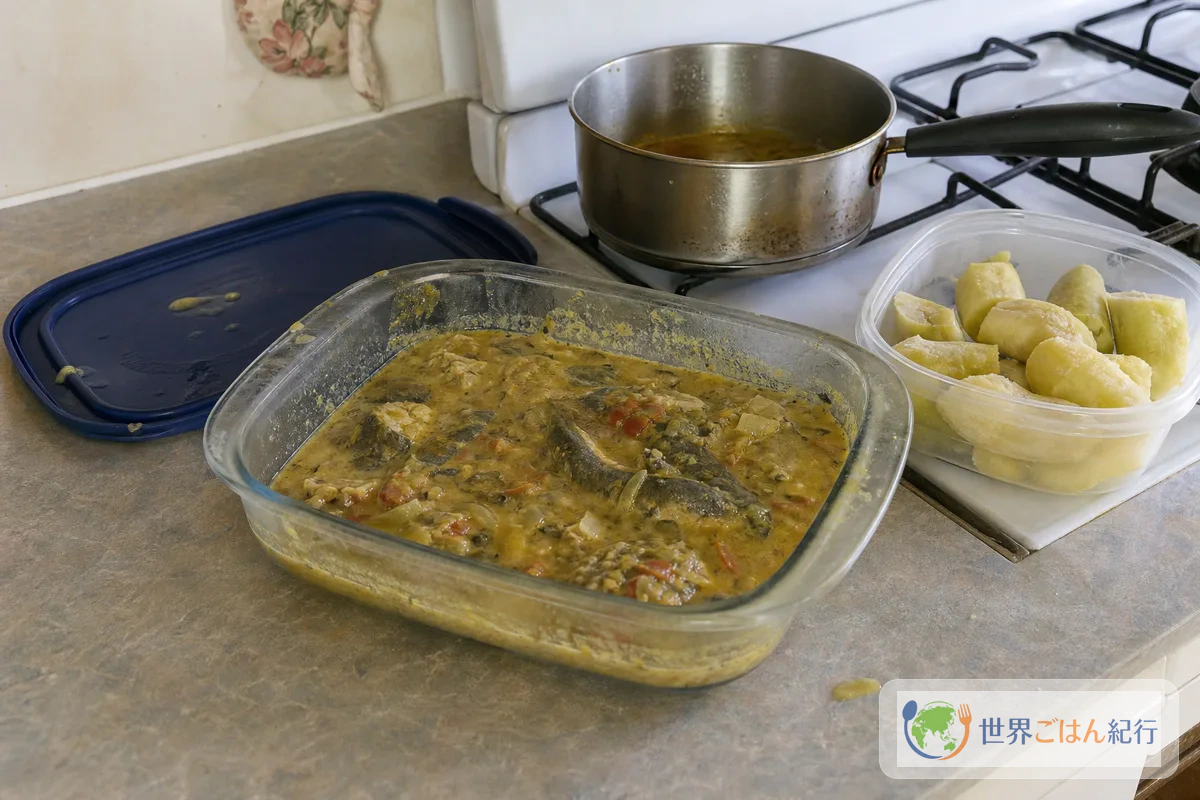
Run down tends to come together better with green banana, boiled potato, dumplings, or firm bread than spooned over plain white rice. The sauce is rich, so the starch should not be too soft.
| To serve with | How it's used | Substitute |
|---|---|---|
| Green banana | Parboiled in the skin, then peeled and served | Potato, taro |
| Fried dumplings | For scooping up the sauce | Rice-flour dumplings, firm bread |
| Breadfruit | Roasted and served alongside | Roasted sweet potato, potato |
| Rice and peas | Fragrant bean rice | Rice and peas |
To build a Jamaican table, make run down the center, with green banana beside it, a little rice and peas, and a sour cucumber salad. On a meat day, compare it with jerk chicken: run down puts the richness of coconut ahead of the heat.
To store, move the fish and sauce to a shallow container and cool it down quickly. Do not leave it at room temperature for long; refrigerate within 2 hours. Plan on keeping it in the refrigerator until the next day. To reheat, move it to a small pot, add 1–2 tbsp water, and warm over low heat for 5–6 minutes until steam rises from the center. In a microwave, cover loosely with plastic wrap, heat at 600 W for 2 minutes, let it stand for 30 seconds without stirring, then heat 1 more minute.
You can freeze it, but the coconut sauce separates a little. If you freeze it, don't break the fish up finely; wrap it flat in single portions and finish it within 2 weeks. If oil floats up after thawing, warm it over low heat, add 2 tsp water, and bring it back slowly with a wooden spoon.
Substitutes That Keep the Character: What You Can Change and What to Keep
Run down is home cooking, so the fish and the starch vary widely. But if you substitute too much in a home kitchen, it drifts toward "fish in coconut curry." Keep three things: no curry powder, reduce the coconut, and add thyme and pimento even if only a little. That helps bring it back toward Jamaica.
| What you change | Substitute | Caution |
|---|---|---|
| Salt mackerel | Lightly salted cod, fresh salmon, canned mackerel | With fresh fish, sprinkle salt first and rest 10 minutes |
| Green banana | Potato, taro, rice-flour dumplings | Don't use sweet yellow banana |
| Scotch bonnet | A little habanero, hot sauce at the table | Chopping makes it too hot, so start small |
| Fresh thyme | 1 tsp dried thyme | Rosemary changes the aroma |
| Whole allspice | 1/4 tsp ground | Too much makes the sweet aroma dominate |
You can also brown the fish before adding it. It gives a toasty note, but the feeling of "the savor of the fish falling into the sauce," which is typical of run down, becomes a little weaker. The first time, simmering without browning makes it easier to grasp the relationship between thickness and saltiness.
If you use light coconut milk, reduce for 3–5 minutes longer. Because there is less fat, it takes longer to thicken. Making it with coconut cream alone is too heavy, so splitting it into 200 ml cream and 200 ml water is easier to handle.
Frequently Asked Questions
Does using lightly salted mackerel take it far from the real thing?
The saltiness is different from the local salt mackerel, but it works well enough as a way into making it at home. For lightly salted mackerel, soak for 10 minutes, add no salt to the sauce, and adjust at the end by tasting. It is fatty, so if the coconut sauce feels heavy, add 1 tsp lime juice.
Is it okay if the coconut milk separates as it reduces?
A little yellow oil floating at the edge is normal. If it separates so much that white curds and oil are clearly apart, which happens when it boils hard for too long, add 2 tbsp water, lower the heat, and bring it back slowly with a wooden spoon. It does not have to be perfectly smooth, but it is easier to eat if you do not boil it so hard that it turns grainy.
What can I use if I don't have Scotch bonnet?
For heat alone, a little habanero will do, though the aroma changes a bit. The first time, it is safest to leave chile out of the pot and add a few drops of Scotch bonnet-style hot sauce at the table. Everyone can set their own heat, and the whole pot does not become too hot.
I can't find green banana.
Potato can stand in. Peel and cut into bite-size pieces and boil in salted water for 12–15 minutes. Sweet yellow bananas have too much aroma and sweetness and are not suited as the starch for run down. Firm bread or rice-flour dumplings also go well.
Can I make it ahead?
Up to the next day. Because it contains fish and coconut, don't leave it at room temperature for long; refrigerate within 2 hours. Reheat over low heat, adding a little water if needed. It can be frozen, but the sauce separates easily, so finish it within 2 weeks.
Can children eat it?
Yes, if you leave out the heat. Do not put Scotch bonnet in the pot; let only the adults add hot sauce at the table. The fish also tends to be salty, so for children use less sauce and serve it with potato or rice.
Sources
- Jamaicans.com "Jamaican Rundown Recipe": https://jamaicans.com/rundown/
- Eat Jamaican "Traditional Jamaican Coconut Rundown Recipe": https://www.eatjamaican.com/recipes/traditional-Jamaican-coconut-rundown-recipe.html
- Jamaican Foods and Recipes "Mackerel Rundown Recipe": https://jamaicanfoodsandrecipes.com/mackerel-rundown-recipe/
- Wikipedia "Run down": https://en.wikipedia.org/wiki/Run_down
- FDA "Safe Food Handling": https://www.fda.gov/food/buy-store-serve-safe-food/safe-food-handling