
Put the Shrimp Heads in the Pot and the Soup Becomes a Meal
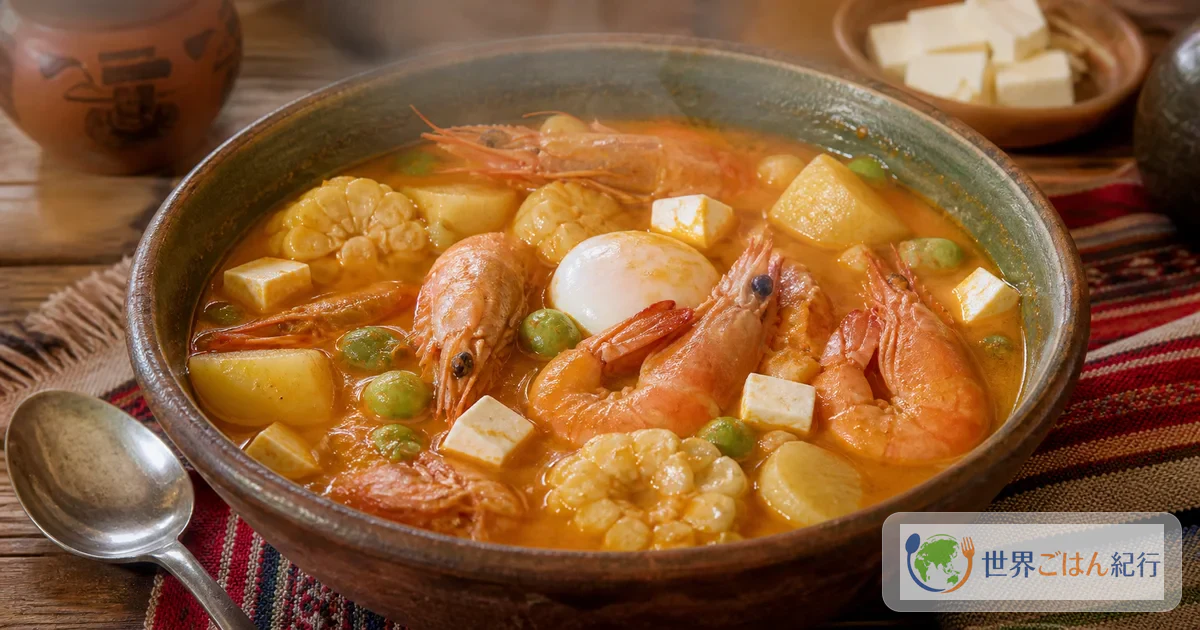
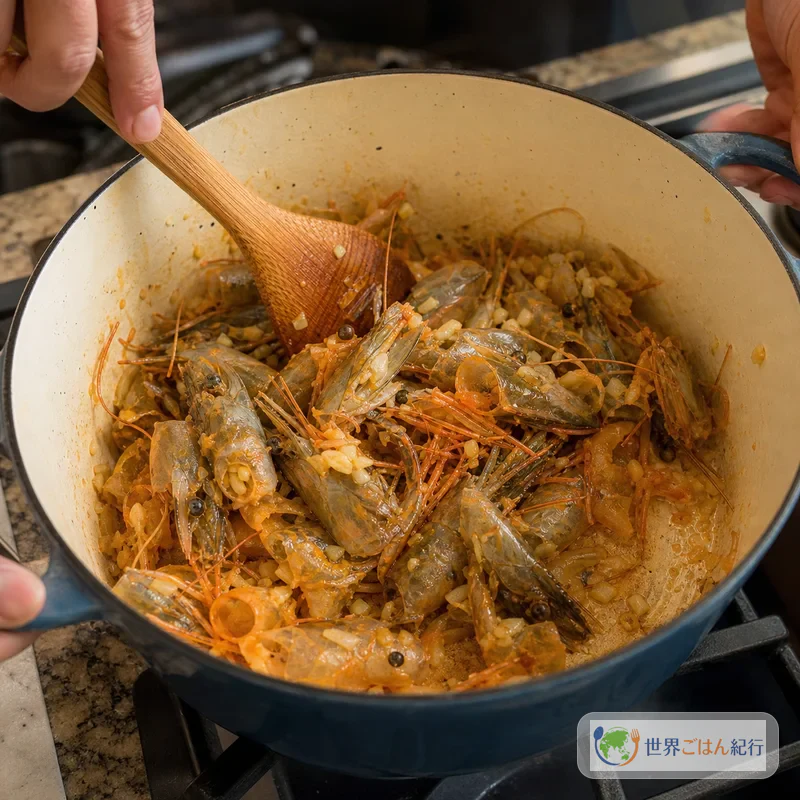
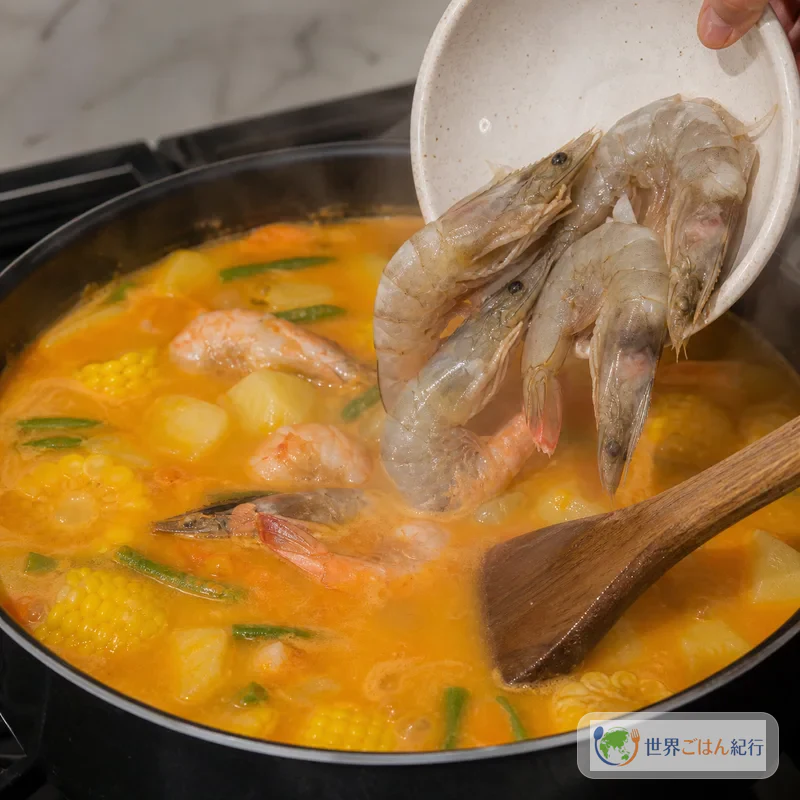
When you take head-on shrimp from the freezer, you may hesitate over whether to remove the heads and use only the flesh, or put them straight into the pot. For chupe de camarones, you don't throw away the heads and shells. Lightly crush them in the pot where you have sautéed onion and garlic, pour in water and simmer to draw out an orange stock.
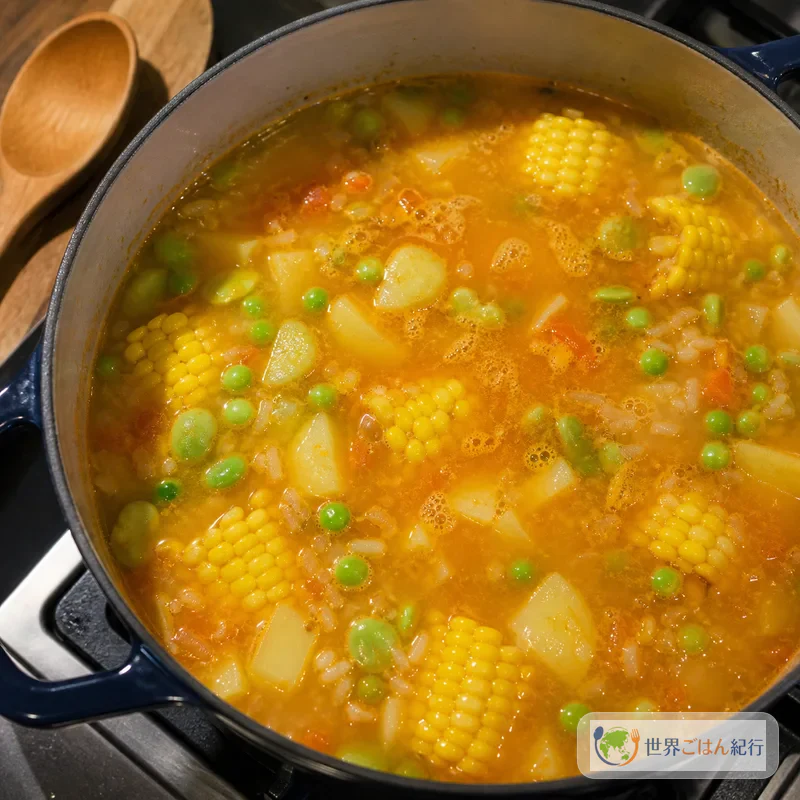
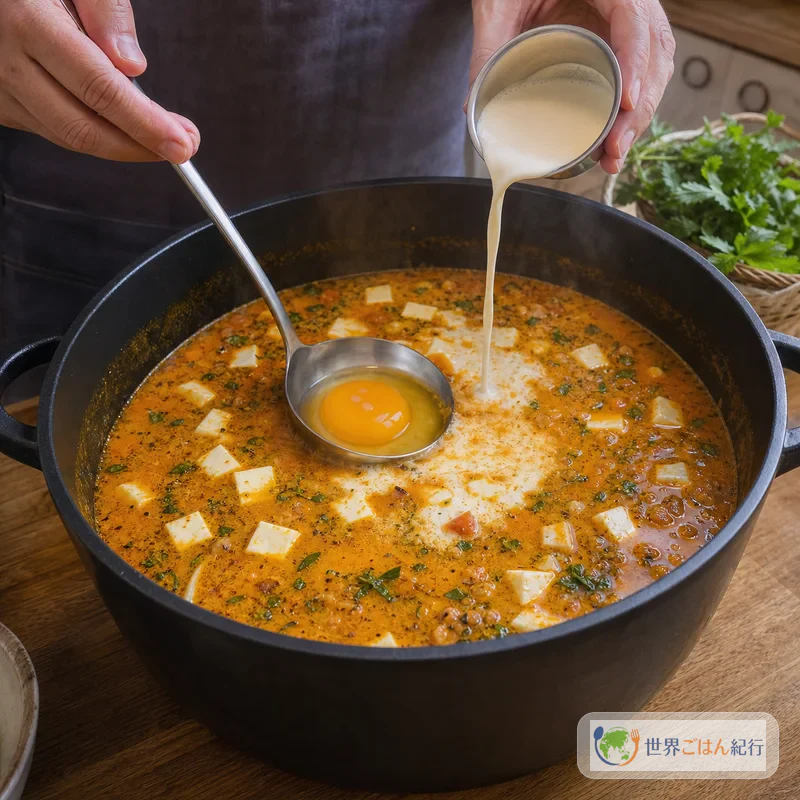
Onto that you layer the fruity heat of ají amarillo, the floury quality of potato, and the sweetness of rice and corn. At the end you add milk, cheese and egg, and the shrimp flesh is returned just before the heat is turned off. In one mouthful live together the toasty shell, soft potato, grains that keep their bite, and the springiness of shrimp.
Chupe de camarones (chupe de camarones) is known as a rich shrimp soup from Arequipa in southern Peru. It can be made with black tiger shrimp or red shrimp, which are easy to get elsewhere, but whether you can use raw head-on shrimp changes the depth of the stock. If you use peeled shrimp without heads, add a small amount of unsalted fish stock. In exchange, the sweet aroma that comes from simmering the shells is more restrained.
What you need to decide after reading is not to find every Peruvian ingredient. First build the skeleton of the dish with the shrimp heads, and then decide whether to look for ají amarillo or substitute yellow bell pepper. If you can draw that line, chupe is not far away in a home kitchen either.
Background and Regional Differences: Chupe Is Bigger Than "Shrimp Soup"
When talking about Arequipa's food culture, you can't leave out the picantería. Arequipa's picanterías are explained as having spread from taverns that served chicha, and as places gathered around spicy food and drink they have taken root in the town's table. Chupe too, rather than simply a soup with shrimp in it, shows its outline when read as a dish that gathers the ingredients of the land in a single pot.
Peru's government tourism information presents chupe de camarones, made in a wood-fired pot, as a dish of Arequipa. It is a shrimp soup that includes milk and cheese, in which the roundness of dairy is layered over a shrimp stock. MINCETUR (Peru's Ministry of Foreign Trade and Tourism) links the word chupe to the Quechua for "deep dish," and explains that as it spread from the Andes to the coast, ingredients and cooking methods of Spanish origin were added as well.
Reproducing this origin faithfully in one plate is difficult. What matters is not to make the shrimp the only star and cut down on the other ingredients. Potato, corn, rice, beans, egg, cheese. A different texture comes up with each spoonful, so though it is a soup, it serves in place of a staple.
In the picanterías of Arequipa, the rhythm of a table where the dish served changes by the day of the week is also recorded. Chupe, among these, is close to a dish eaten slowly in the middle of conversation around a pot full of ingredients. At home, even without putting a large pot on a wood fire, if you carefully draw only the first stock, the center of gravity of the dish can be moved over.
The origin of chupe is hard to pin to a single story also because the ingredients and thickness have changed from place to place. There are pots that combine coastal seafood, and pots on the mountain side that use more potato and beans. What is here is not a single right answer but a standard for reading Arequipa's regional differences in a home kitchen. In reproducing it elsewhere, keeping the shrimp stock and the order of cooking the ingredients works on the taste more than the wood fire itself.
In Spanish it is written chupe de camarones. You may see both "chupe de camarones" and "chupe de camarón," but camarones is the plural meaning shrimp. For searching, "Peruvian shrimp soup" and "Arequipa chupe" are also clues.
The Core of Flavor to Keep
The ingredients of chupe are many, but their roles can be separated. The shrimp heads and shells are the stock, ají is aroma and heat, potato and rice are the thickening, corn and beans are the bite, and milk and cheese carry the roundness of the latter half.
| Role | Local element | Where it lands elsewhere |
|---|---|---|
| Stock | River crayfish or shrimp heads and shells | Raw head-on shrimp. If headless, add a little unsalted fish stock |
| Aroma and heat | Ají amarillo, ají panca | Ají amarillo paste. Make up the panca with paprika and a little chili flakes |
| Thickening | Potato, rice | Starchy potatoes such as Russet or Yukon Gold, short-grain rice |
| Sweetness and texture | Choclo, pumpkin, fava beans, green peas | Choose, in order, fresh corn, frozen, or canned, whichever is easiest to use |
| Green aroma | Huacatay | Dried huacatay. If none, a little each of mint and oregano |
| Finish | Milk, cheese, egg | Unsweetened evaporated milk, low-salt fresh cheese, eggs |
Ají amarillo has not only the heat of chili but the aroma of yellow flesh. If you swap in only chili flakes because you don't like hot food, the pot just turns red and the sweet aroma of chupe thins out. Making a paste of a little yellow bell pepper and adding just a little chili flakes is closer in direction.
You don't need to avoid potato varieties that break down, and the melted part becomes the thickness of the soup. If you want to keep corners, cut half large and the rest small. Just not making everything the same size changes the expression of the plate.
Method: Make the Stock and Return the Shrimp at the End
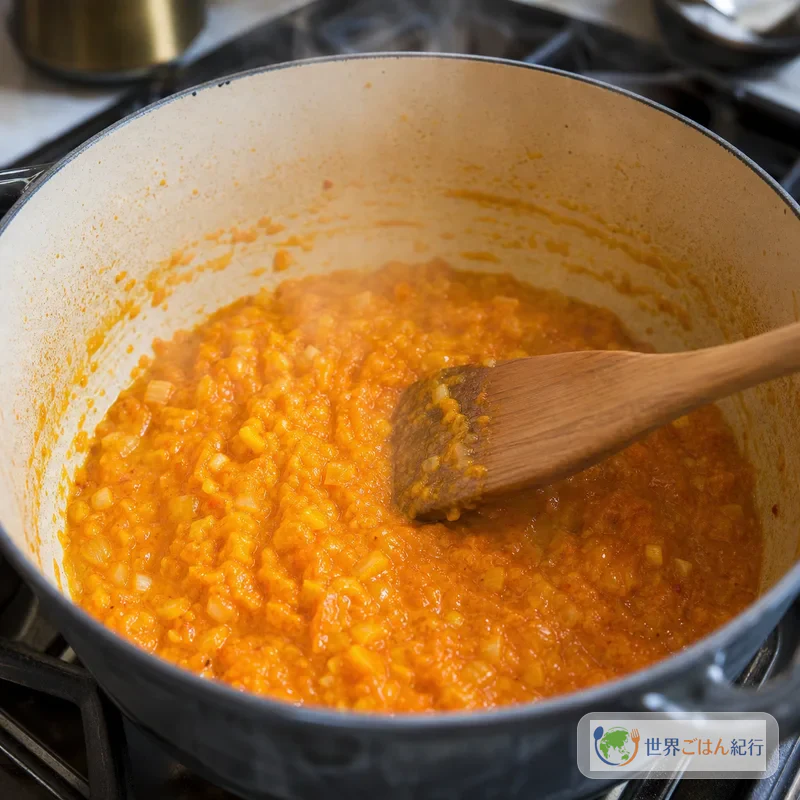
The work goes in this order: draw a stock from the shrimp heads and shells, cook down the aderezo, cook the rice and vegetables, add dairy and egg, return the shrimp. If you keep cooking the shrimp from the start the flesh turns hard, so put them back in the pot only for the last few minutes.
If you keep simmering here, the shrimp change from a part that gives stock to a hard ingredient. Stir once from the bottom of the pot and go on to plating before the flesh curls up too tightly.
Ingredients (serves 4)
This uses shrimp, egg, milk and cheese. Don't serve it to people with crustacean, egg or milk allergies, or separate the ingredients into another pot. Wash the cutting board and knife that touched raw shrimp with detergent before the next task, and refrigerate or freeze the shrimp right after buying. Don't eat shrimp raw that are not meant to be eaten raw.
Sourcing Ingredients: What to Buy, What to Swap in the Kitchen
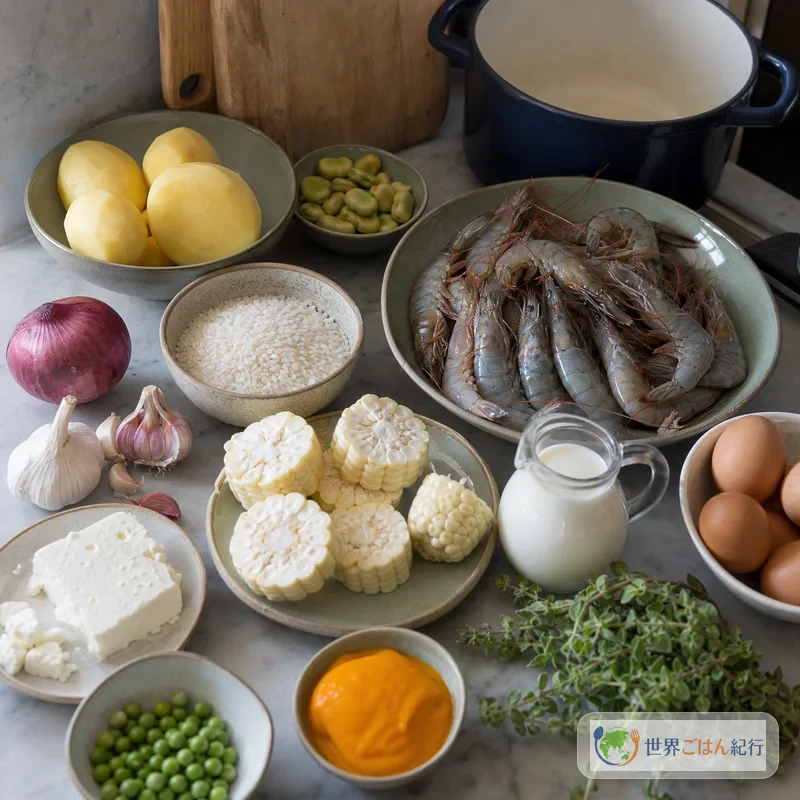
What you can gather nearby is potato, onion, tomato, pumpkin, corn, milk, cheese and eggs. What is worth finding and buying is raw head-on shrimp and ají amarillo. A dedicated pot or thermometer is not essential. You can start with a deep pot and an ordinary sieve.
For ají amarillo paste, check not only the product name but the net contents and ingredient list on the label. Buying it is for people who want to use the yellow aroma not only for chupe but also for ceviche's seafood marinade and causa limeña. If you are only adding heat once, it is better to substitute yellow bell pepper and chili flakes and not add storage after opening.
When you open the jar, check the net contents, ingredient list and storage method. If you are unsure about the heat, use 20g rather than 30g the first time, and divide the rest into portions and freeze.
| What you want | Reason to buy | Reason to pass |
|---|---|---|
| Ají amarillo | You will make Peruvian dishes several times, for the aroma too | The only aim is heat, and there is no other use |
| Raw head-on shrimp | You want to make stock from the shells and heads and use the flesh too | You want to skip the preparation time. Swap in peeled shrimp and fish stock |
| Dried huacatay | You want to try the aroma of a green herb | For one time, mint and oregano are enough |
| A large deep pot | You want to make 4 servings without boiling over | For just 2 servings, a saucepan you already have is enough |
At the Table, Keep the Sourness Outside the Pot
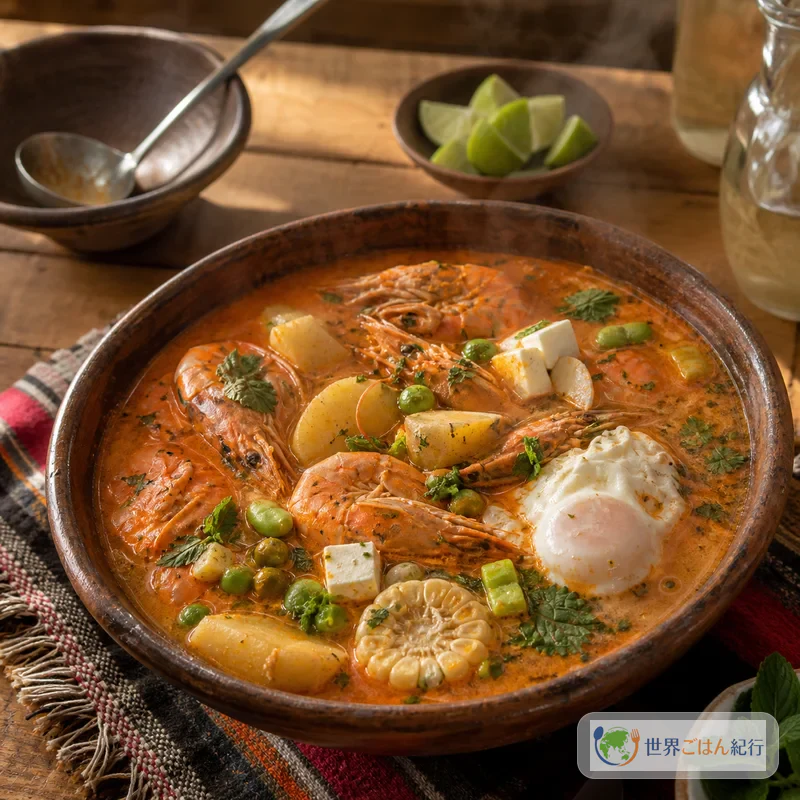
Turn off the heat and rest 5 minutes. Pour the soup into deep bowls and distribute so that the head-on shrimp, peeled flesh, egg, potato and corn go in evenly. Lumps of cheese tend to sink to the bottom, so scoop once from the bottom of the pot.
Don't squeeze all the lime into the pot; serve it at the table. People who want to keep the roundness of the dairy can leave it as is, and only those who find it a little heavy add a few drops. Keeping the sourness separate also makes it easy to serve a bowl for children or a milder bowl from the same pot.
There is no need to add bread or white rice. Rice, potato and corn are already in it, so try the first bowl with chupe alone. If it is not enough, serve bread with the next bowl.
How to Fix It When It Goes Wrong
- The soup is thin: Warm the shrimp stock you set aside and add it 100ml at a time. Adding water alone thins the aroma too.
- The milk separated: It most likely boiled. Turn off the heat, mix a little of the hot soup at a time into milk in another bowl, then return it to the pot. It won't come back completely, so next time add the dairy over low heat.
- The shrimp are hard: Overcooked. Move the flesh you can take out to a plate and pour warm soup over it just before eating. Next time cook for only the last 2 to 4 minutes.
- Too hot: Add a little unsweetened evaporated milk or shrimp stock and add more potato. Adding sugar to hide the heat muddies the sweetness of the corn.
- Too salty: Dilute with unsalted stock and add a few more ingredients. Adding only milk leaves the saltiness behind the sweetness of milk.
Five Ways to Extend It
- Use more shrimp heads for a richer stock. Changing the start of the pot brings out more aroma than increasing the amount of flesh.
- At the time you add the potato, add 200g white fish to make it a pot of shrimp and fish.
- On days you want less heat, reduce the ají amarillo to 20g and add 50g yellow bell pepper. This makes it easy to keep the aroma and lower only the heat.
- More fava beans and fewer green peas brings the floury texture of the beans forward.
- The next day, take out only one serving into a small pot and warm it over low heat. Don't reheat the whole amount over and over.
Storage and Reheating
Chupe is best on the day you add the shrimp and dairy. If there is some left, move it to a shallow storage container, don't leave the heat at room temperature long, and refrigerate. Eat homemade seafood soup by the next day as a guide, and if there is anything off in smell, stickiness or taste, don't eat it.
To reheat, use a small pot over low heat. Boiling separates the milk and toughens the shrimp. If eggs remain, warm one serving at a time so that they get hot to the center. If you freeze it, dividing it at the stage of stock and vegetables before adding the shrimp and dairy, and adding the milk, cheese, egg and shrimp after thawing, keeps the texture better.
Frequently Asked Questions
Is chupe a curry?
It is not a curry. The color is similar because ají and tomato are sautéed, but it is a soup that brings together shrimp shell stock, milk, cheese, egg and potato in one pot. It is easier to understand as a dish where you scoop up the ingredients rather than pour it over rice.
Can I make it with headless shrimp?
Yes. In place of the heads and shells, use only 300 to 400ml of unsalted fish stock and make up the rest with water. If the stock has salt in it, hold off the final salt until the end.
Can I eat it if I don't like spicy food?
Start with 20g ají amarillo and add yellow bell pepper. Removing the heat completely weakens the aroma too, so rather than swapping to only chili flakes from the start, it is better to keep a little of the paste.
Can I use milk alone?
You can, but it finishes lighter than with evaporated milk. Adding 200ml of milk tends to thin it, so add 150ml first and add more after checking the thickness. Not letting it boil is the same.
Do I need a big pot?
For 4 servings, a deep pot of 3L or more is easier to handle. For 2 servings, halve the ingredients and a deep saucepan you already have is fine. Give priority to a height where the shrimp stock doesn't boil over.
Conclusion: Today a Substitute, Next Time Buy the Ají
Chupe de camarones is not a soup of boiled shrimp but a pot dish of Arequipa in which Andean ingredients and dairy are layered over a shrimp stock.
- Sauté the heads and shells first, and add the shrimp flesh last
- Make a full meal of one plate with potato, rice and corn
- Ají amarillo is an ingredient you buy for aroma. A substitute for one time; choose the paste if you will make it often
Make it first with yellow bell pepper, and try squeezing lime at the table. If you then want one more step of aroma in the pot, buy the ají amarillo next. On days you want to try a cold Peruvian starter, causa limeña; for a high-heat stir-fry, lomo saltado; for raw seafood, ceviche, and the same yellow chili shows a different face in each dish.
Sources
- Peru Travel "Cocina de Arequipa": https://www.peru.travel/gastronomia/pe/cocina-peruana/cocina-de-arequipa.html (Overview of Arequipa cooking, picanterías and chupe. Accessed and checked: 2026-08-05)
- Peru's Ministry of Foreign Trade and Tourism (MINCETUR) "Chupe de camarones fue elegida como una de las mejores 20 sopas del mundo": https://www.gob.pe/institucion/mincetur/noticias/576672-chupe-de-camarones-fue-elegida-como-una-de-las-mejores-20-sopas-del-mundo (Origin of the dish name, ingredients, spread from the Andes to the coast. Accessed and checked: 2026-08-05)
- Ministry of Culture materials "Los chupes del Perú": https://cdn.www.gob.pe/uploads/document/file/1738076/Los%20chupes%20del%20Per%C3%BA.pdf (Historical record and regional differences of chupe. Accessed and checked: 2026-08-05)
- Sociedad Picantera de Arequipa "Picantería": https://sociedadpicanteradearequipa.pe/picanteria/ (Origin of the picantería and its table culture. Accessed and checked: 2026-08-05)
- El Comercio / Provecho "Receta de chupe de camarones": https://elcomercio.pe/provecho/recetas/cocina-criolla/receta-de-chupe-de-camarones-comida-arequipena-ingredientes-preparacion-como-se-hace-noticia/ (Cross-check of the ingredient composition, steps in the pot and adding the shrimp last. Accessed and checked: 2026-08-05)
- Ministry of Health, Labour and Welfare of Japan, "Preventing food poisoning at home" (in Japanese): https://www.mhlw.go.jp/stf/seisakunitsuite/bunya/kenkou_iryou/shokuhin/syokuchu/01_00008.html (Cooling, refrigeration, utensil hygiene. Accessed and checked: 2026-08-05)
- FoodSafety.gov "Cook to a Safe Minimum Internal Temperature": https://www.foodsafety.gov/food-safety-charts/safe-minimum-internal-temperatures (Internal temperatures for seafood and cooking guides for egg dishes. Accessed and checked: 2026-08-05)
- USDA FSIS "Leftovers and Food Safety": https://www.fsis.usda.gov/food-safety/safe-food-handling-and-preparation/food-safety-basics/leftovers-and-food-safety (General principles for cooling, storing and reheating leftovers. Accessed and checked: 2026-08-05)


