Soy sauce in South America: the miracle called chifa
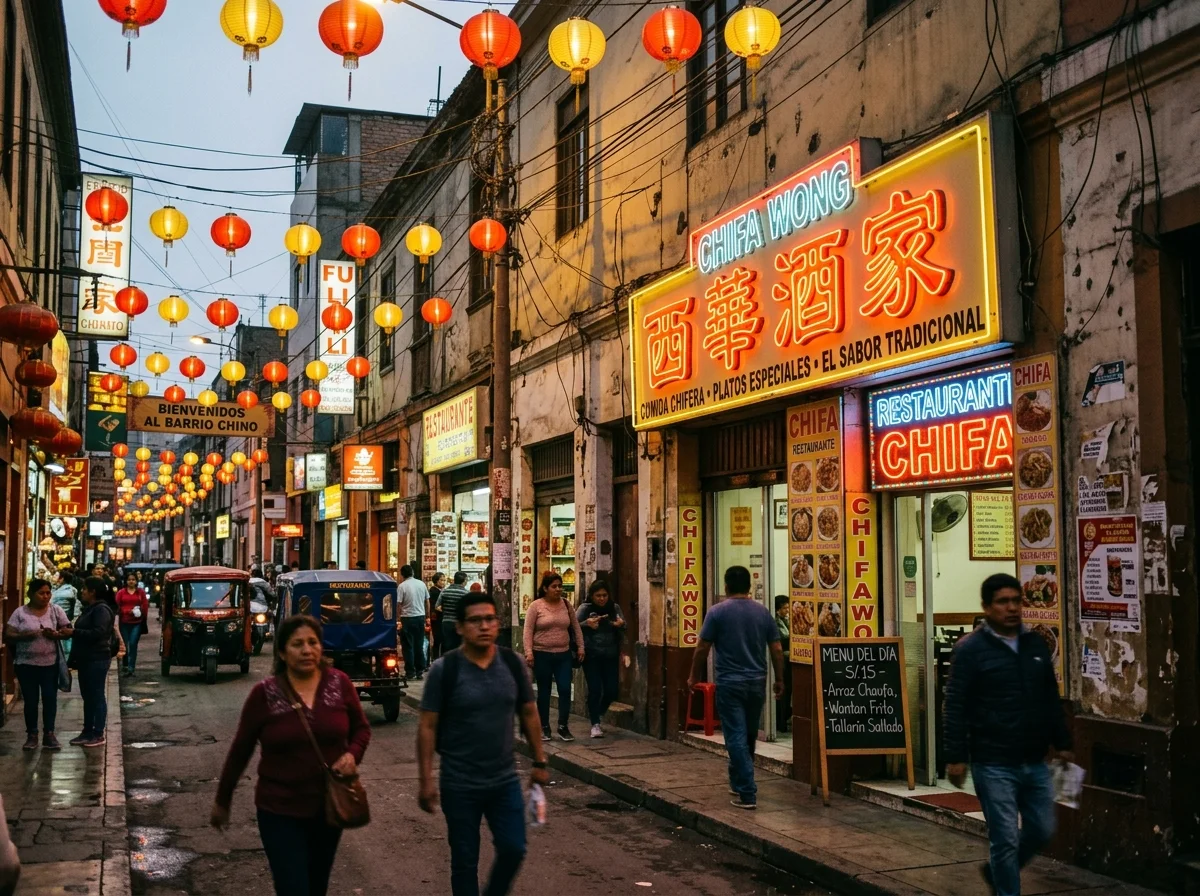
In the old center of Lima, restaurants called chifas line the streets. They look like Chinese restaurants, but the menus are in Spanish, the chile is aji amarillo, and the seasoning is soy sauce, known locally as sillao. Chifa is the result of a food culture that Chinese immigrants brought to Peru in the 19th century and that has blended with South American ingredients for more than a hundred years.
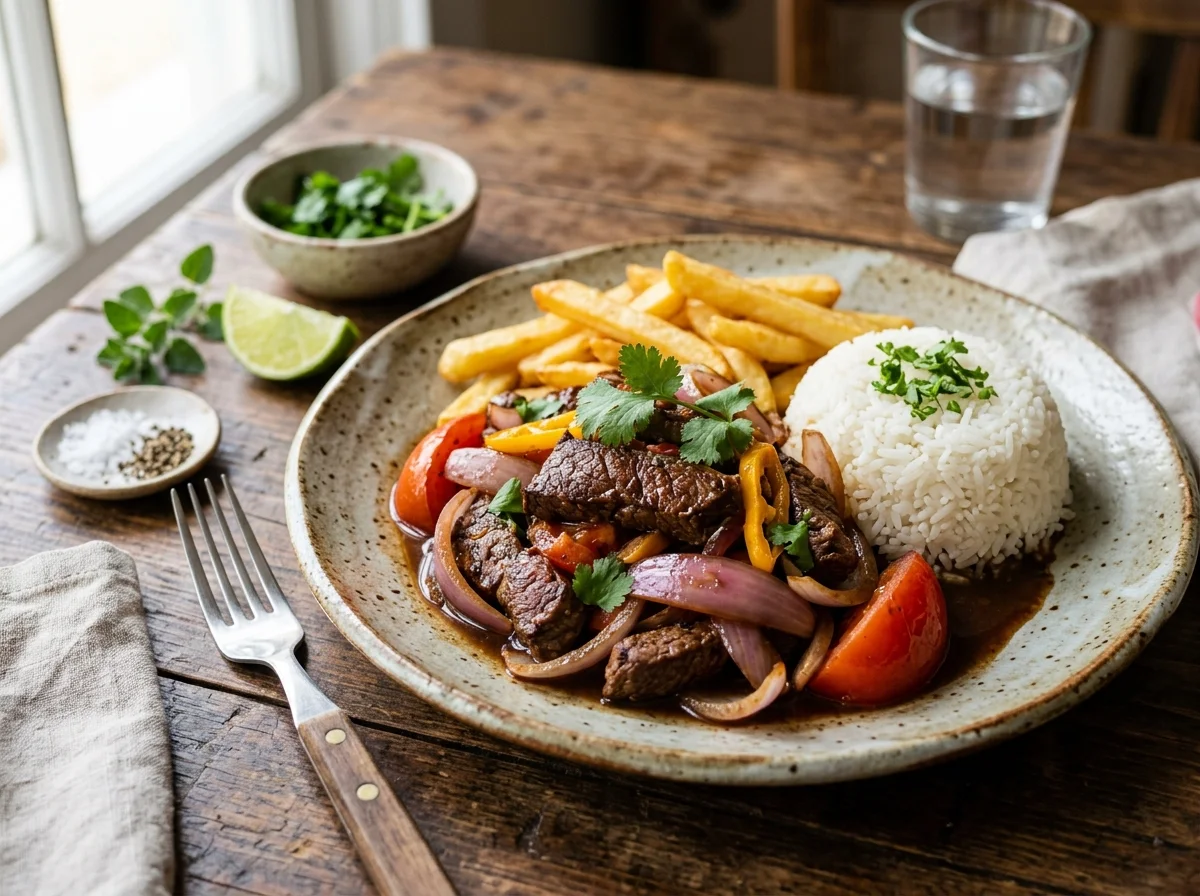
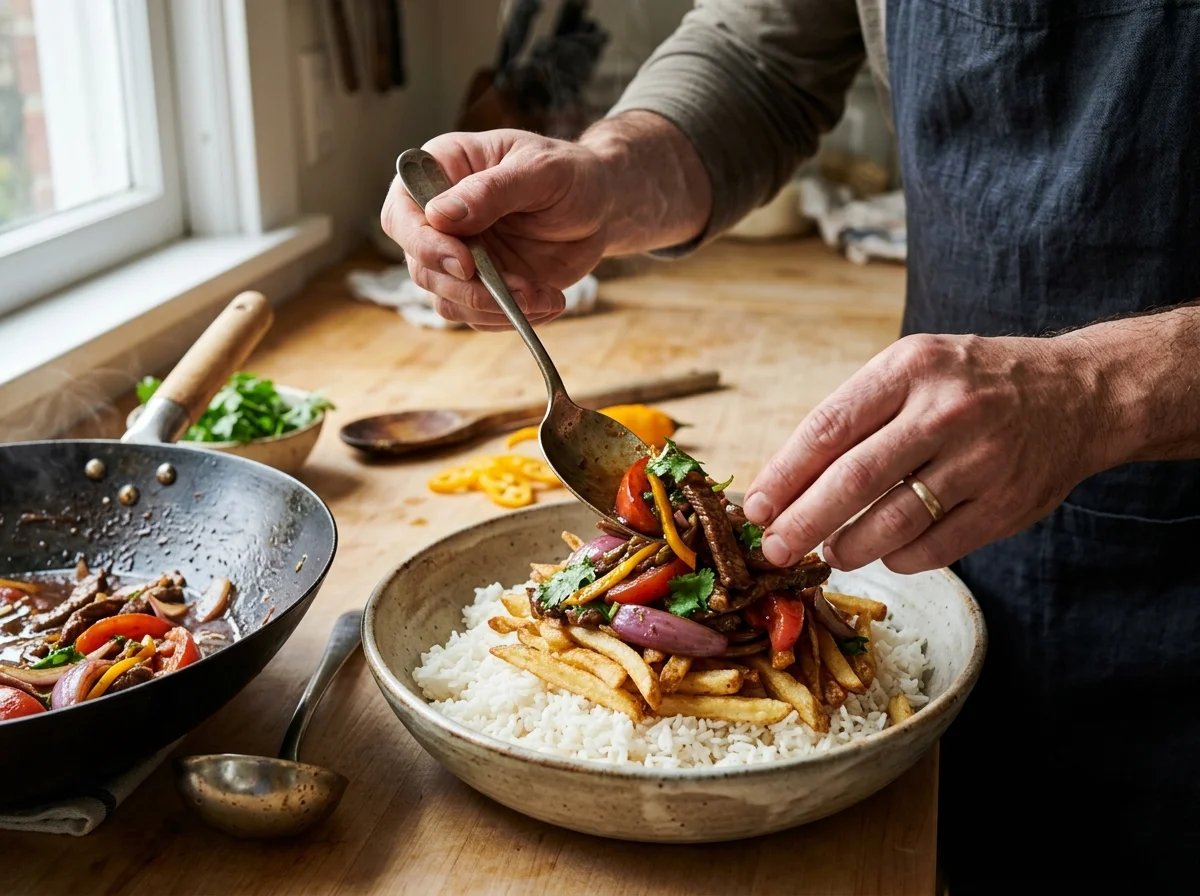
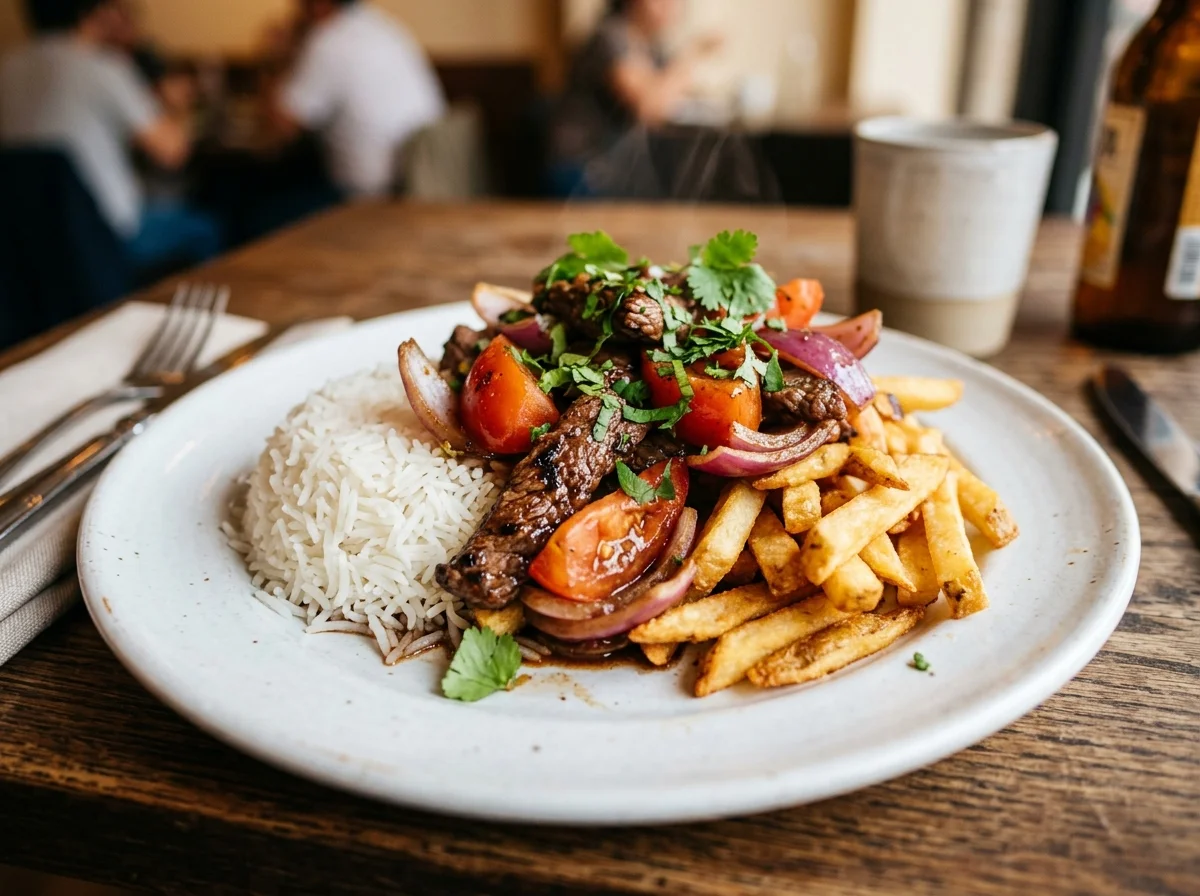
Its best-known dish is lomo saltado, Peru's national plate: beef sirloin, tomatoes and red onion stir-fried all at once in a very hot wok, seasoned with soy sauce and vinegar, and served with French fries and white rice. Among the cuisines of South and Central America (in Japanese), it stands out as the clearest fusion with Asian cooking techniques.
What makes lomo saltado unusual is that a wok stir-fry, French fries and rice share one plate, which is rare anywhere in the world. The stir-fry comes from China and the fries from Europe, and putting them together on one plate is a Peruvian idea. That cultural mix is the heart of Peruvian cooking, and lomo saltado is its symbol.
Lomo saltado is a classic Peruvian home dish. "Lomo" is beef loin and "saltado" is Spanish for "stir-fried." It was born as a chifa dish, where the cooking techniques Chinese immigrants brought to Peru from the 19th century onward met local ingredients, and today it is eaten in homes and casual restaurants alike.
Ingredients (serves 4)
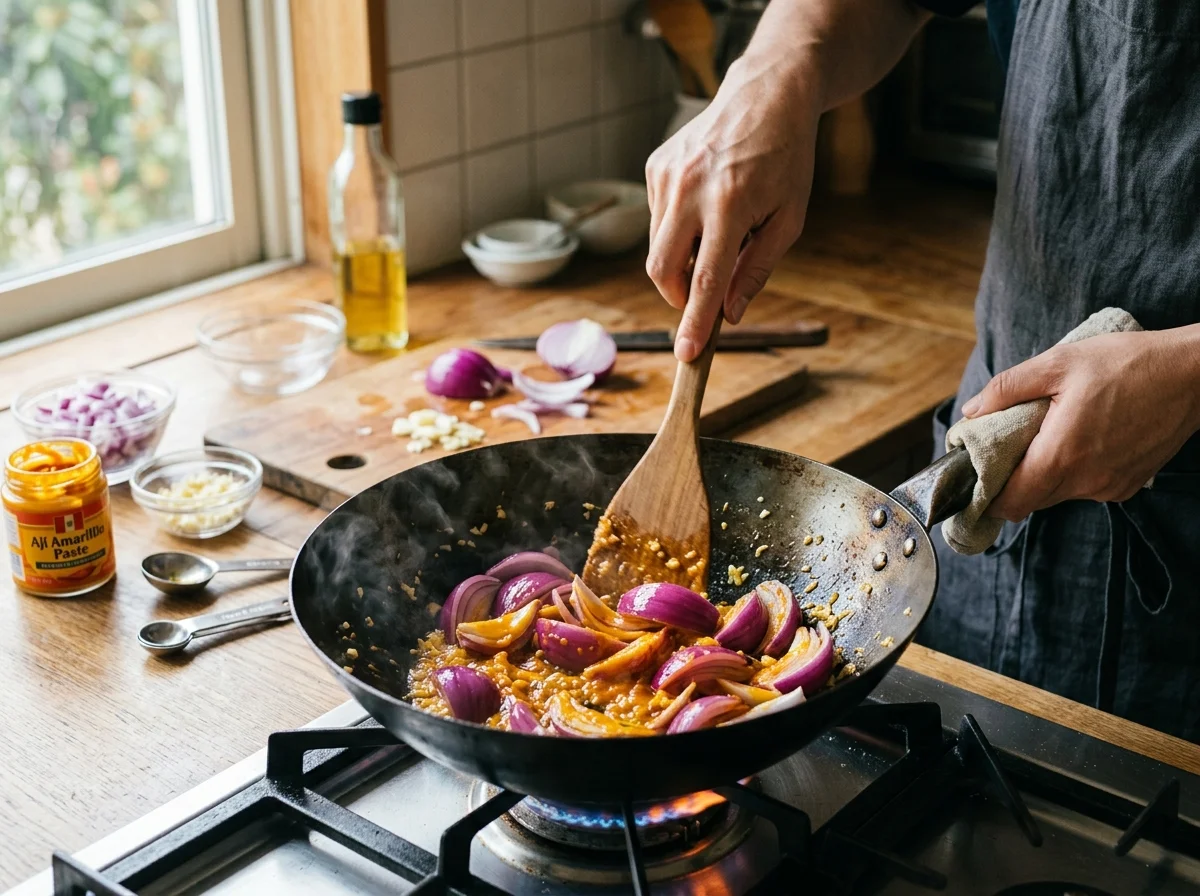
Aji amarillo is the most important chile in Peruvian cooking, with a distinctive fruity heat and a bright yellow color.
- Online: search for "aji amarillo paste" to find jarred paste.
- Latin American grocers: stores that carry Central and South American ingredients often stock the paste or frozen whole chiles.
If you can't get it, 1 tbsp Korean gochujang + 1/2 tsp turmeric + 1/4 tsp cayenne approximates the color and heat, though the flavor won't match the real thing.
If the real paste hasn't arrived yet, a substitute sauce built on yellow bell pepper with a little chile and vinegar comes closer to the yellow, fruity flavor of Peruvian cooking than gochujang does.
Method
Prep
Take the beef out of the refrigerator and let it come to room temperature (cold meat drops the temperature of the wok, so it simmers instead of searing). Measure the soy sauce, red wine vinegar and aji amarillo paste ahead of time and keep them together in a small dish so you aren't scrambling mid-cook. As in Chinese cooking, the rule for lomo saltado is finish all your prep before you turn on the heat.
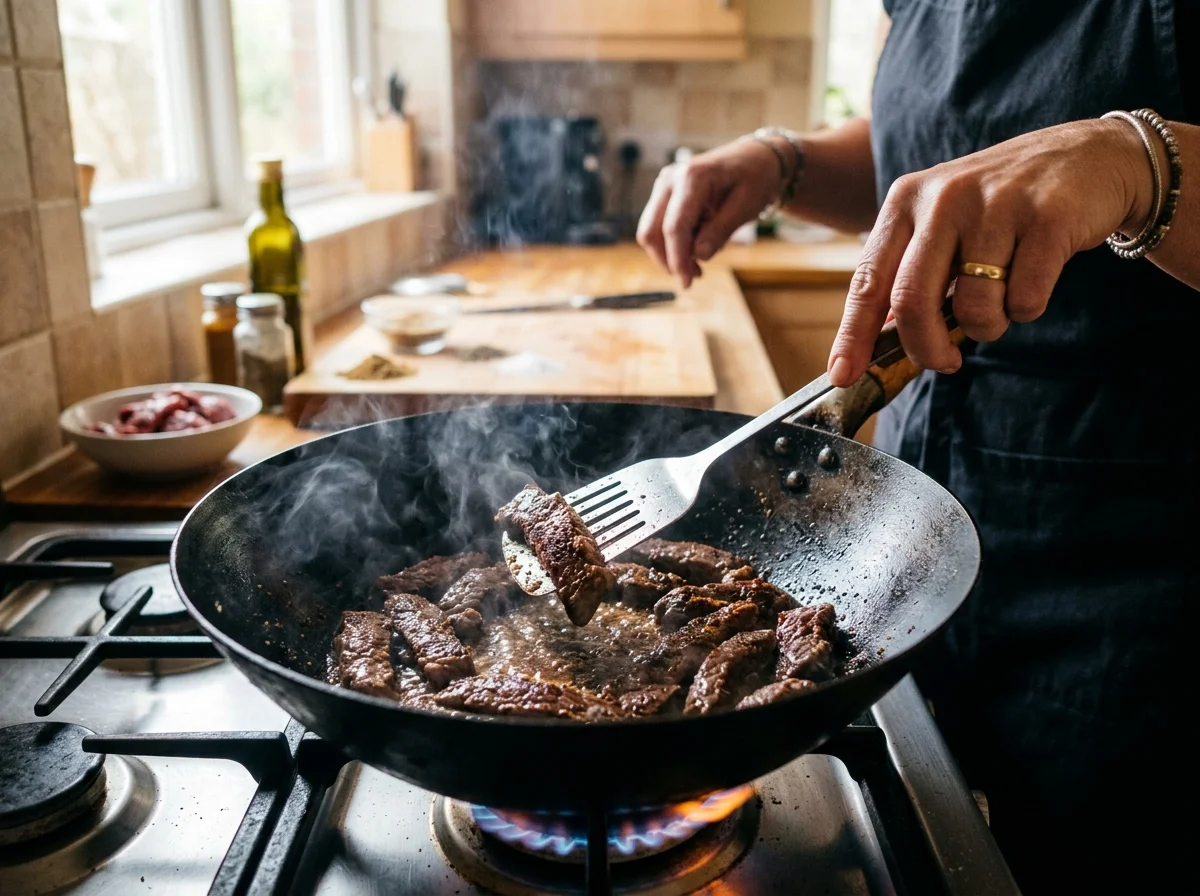
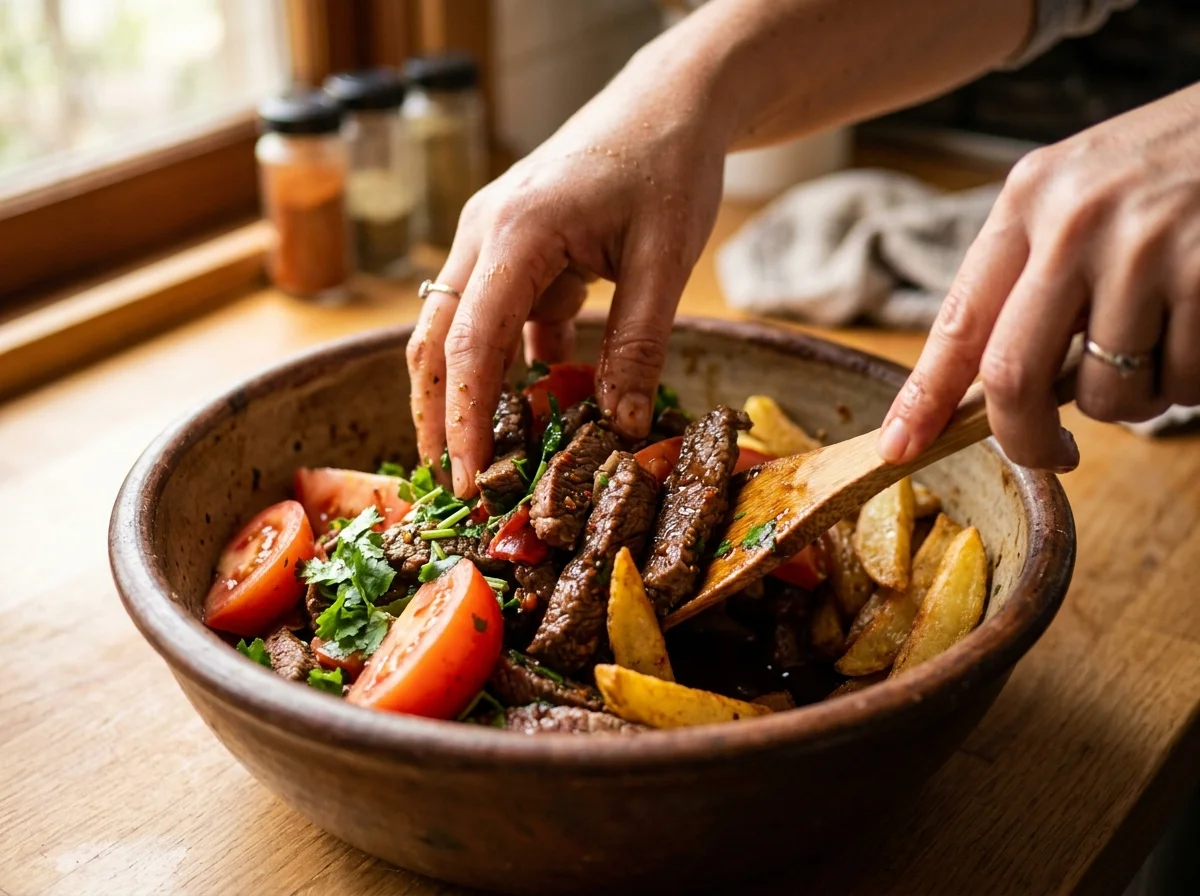
Lomo saltado is a dish of tossing in a hot wok. Keep the heat on high from start to finish. Every addition lowers the temperature of the pan, so work quickly. Don't throw everything in at once: stick to the order of beef, remove, onion, tomato, return the beef, and finish each step within 30 seconds to 1 minute. If you are using a skillet, stir-fry in two batches to hold the temperature.
The history of the dish: a fusion born from Chinese laborers in South America
The history of lomo saltado is closely tied to the story of Chinese laborers (coolies) who emigrated to Peru in the 19th century.
In 1849, to fill labor shortages on sugar plantations and in guano (bird droppings) mining, Peru began taking in contract workers from southern China, mainly Guangdong. By 1874 about 100,000 Chinese had gone to Peru, bound to long contracts under harsh working conditions.
After their contracts ended, many of them settled in Lima and began running small eateries and general stores. Using the techniques of home, above all high-heat wok stir-frying, they combined Peruvian ingredients (tomatoes, aji amarillo, potatoes) with Chinese seasoning (soy sauce), and that was the beginning of chifa cooking.
One theory holds that the word "chifa" comes from Cantonese "sik faan" (to eat rice) or the Chinese "chi fan." By 2007 there were said to be more than 6,000 chifas in Lima alone, and for Peruvians "going to a chifa" is an everyday way to eat out.
Lomo saltado is the most successful dish of this chifa culture. The Chinese wok technique, Peru's aji amarillo and Europe's French fries: a dish that packs the food cultures of three continents onto one plate is regarded as a food symbol of Peruvian multiculturalism (mestizaje).
If ceviche (in Japanese) represents the "Peru of the sea," lomo saltado represents the "Peru of the land." Both are national dishes rooted deeply in Peruvian identity, standards loved both at home and in restaurants.
Cooking tips: five techniques for perfect lomo saltado
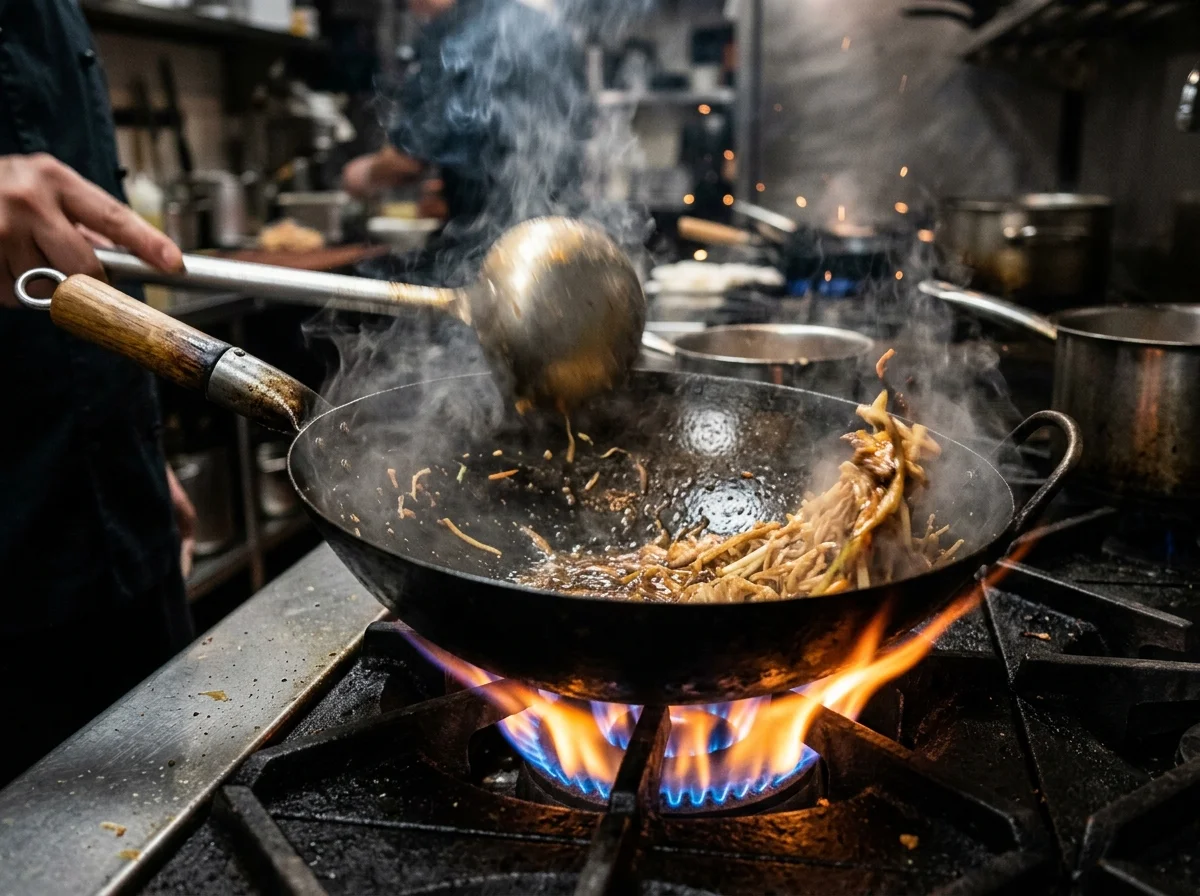
1. Get the "wok hei"
The Chinese "wok hei," the savory flavor created when ingredients scorch in a very hot pan, is the core of lomo saltado's flavor. To get it on a home stove:
- Cook in small batches (half at a time)
- Heat the oil until it smokes before adding anything
- Splash the soy sauce directly against the hot side of the pan so it sizzles and scorches
2. Stop the tomatoes while they're nearly raw
The ideal tomato in lomo saltado is half-raw. The pieces keep their shape clearly and burst with juicy acidity when you bite them. Cook them too long and they turn to sauce, and the dish becomes a stew instead of a stir-fry. The rule is to move on to the next step within 30 seconds of the tomatoes hitting the pan.
3. Ordinary soy sauce is enough
In Peru soy sauce is called sillao. It spread with the Chinese immigrants in the 19th century, and Japanese-style regular soy sauce substitutes for it perfectly well. Use plain soy sauce, not a sweet one like the kecap manis in nasi goreng (in Japanese).
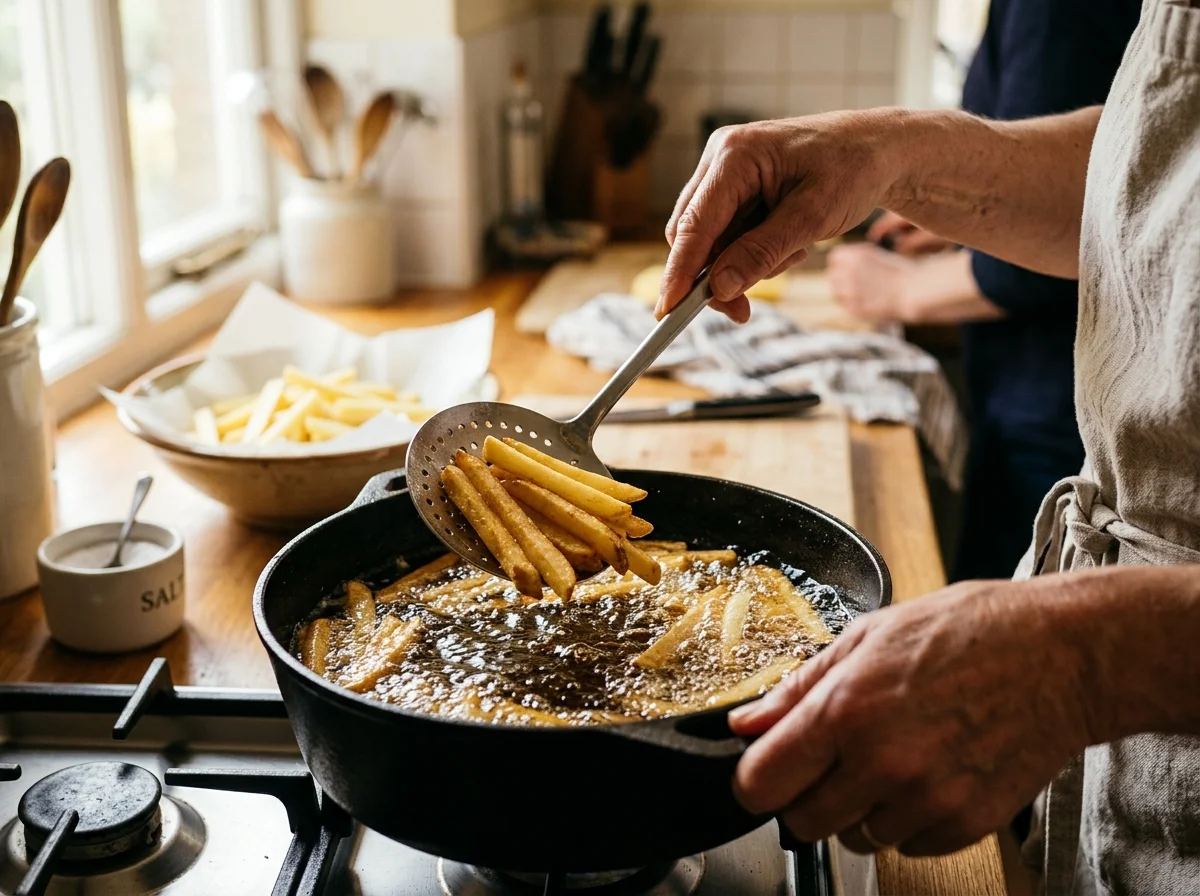
4. Cut the fries thick
Fries for lomo saltado are easier to handle cut into thick sticks about 1 cm square than as thin French fries. Cut thick, they don't fall apart when mixed into the stir-fry and stay fluffy inside. Just as in pastel de choclo (in Japanese), potatoes play an important supporting role in South American cooking.
5. Keep the "three-layer" plating
Lomo saltado is traditionally served on one plate with rice and fries. As you eat, mix them together so the rice soaks up the sauce and the fries absorb it as well, and everything comes together. Some restaurants serve the rice and fries on a separate plate, but at home one plate means less washing up.
The soy and tomato sauce left in the bottom of the pan is too good to throw away. Toss boiled spaghetti in it and you get the Peruvian-style "tallarin saltado," a pasta dish often made in Peruvian eateries and homes.
Variations: ways to adapt lomo saltado
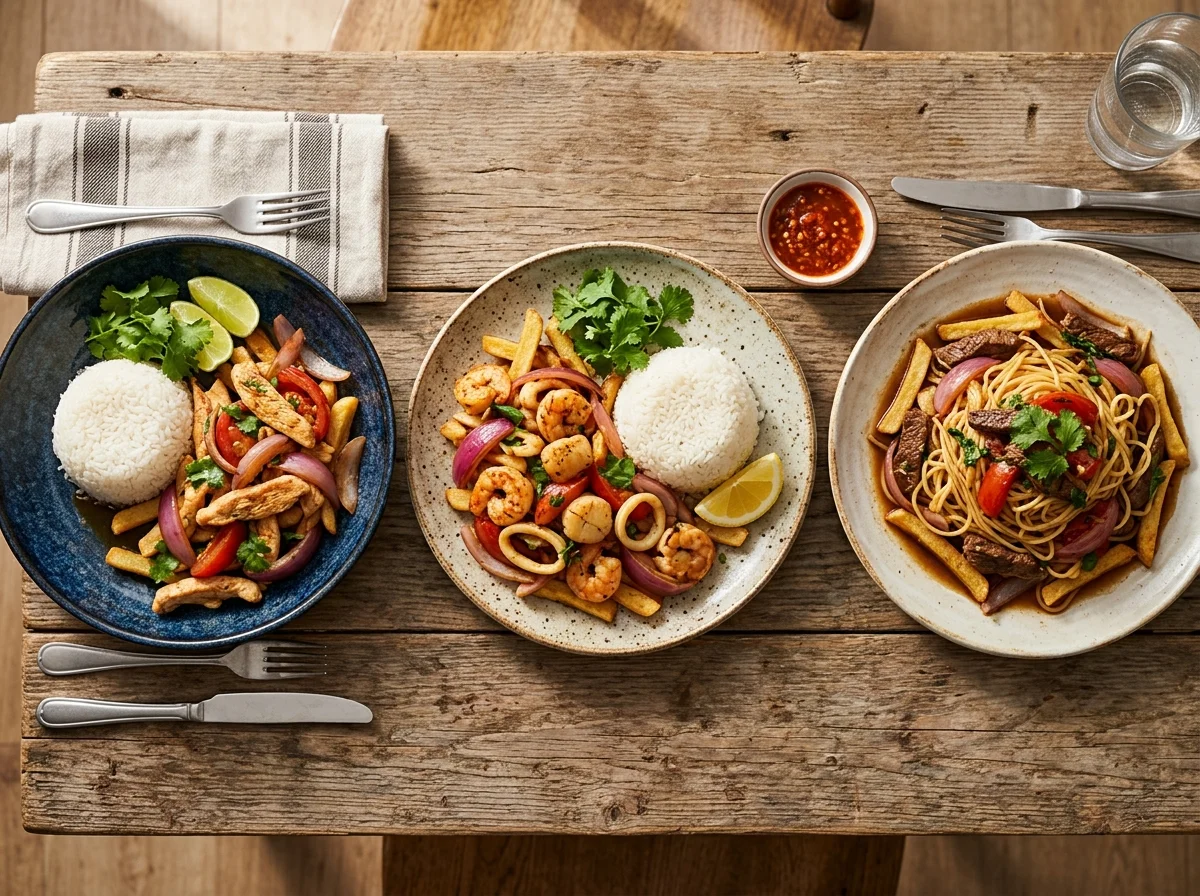
Pollo saltado (chicken)
A version that uses 500 g of chicken thighs in place of the beef. Cut the chicken into bite-size pieces and stir-fry over the same high heat. It is cheaper than beef and lighter in flavor. Chicken cooks quickly, so 20 seconds per side is enough for the sear. In Peruvian homes it is the everyday plate for the days when money is tight.
Mariscos saltado (seafood)
A seafood version that uses 200 g shrimp + 200 g squid in place of the beef. Seafood cooks quickly, so skip the first sear: add the shrimp and squid after the onion and stir-fry for just 1 minute. It is popular at restaurants along Lima's coast.
Tallarin saltado (pasta)
A variation that uses 200 g spaghetti in place of the fries and rice. Add boiled pasta at the end of the stir-fry and toss it in the sauce. It is a standard on chifa menus alongside lomo saltado. Like pad thai (in Japanese), it is a good example of Asian noodle culture evolving in its own way in South America.
Frequently asked questions
Can I make it without aji amarillo?
Without aji amarillo it is still a tasty soy-sauce stir-fry of beef and vegetables, but it loses much of its identity as Peruvian food. As a substitute, Korean gochujang + turmeric can make up the color and heat (the flavor will differ).
What is the best cut of beef?
Sirloin or chuck is best. They have a good amount of lean meat and stay tender with short, high-heat cooking. Round (leg) tends to turn tough, so avoid it. The easiest route is to slice a steak cut into strips.
Can I use frozen fries?
Frozen fries (the thick-cut kind) work. Fries made from fresh potatoes absorb the stir-fry sauce better and taste far more unified, though. Frozen is fine when you're short on time, but try it from scratch at least once.
What can I use instead of red wine vinegar?
White wine vinegar, apple cider vinegar or rice vinegar all work. Some Peruvian households use lime juice, which gives a fresh finish of its own. The sourness of the vinegar combined with that of the tomatoes plays an important role in cutting the richness, so don't leave the acid out.
Nutrition (one of 4 servings)
Calories: about 650 kcal; protein: 35 g; fat: 28 g; carbohydrates: 62 g; dietary fiber: 5 g; sodium: 950 mg.
Lomo saltado gives you good-quality protein from the beef, lycopene and vitamin C from the tomatoes, and potassium and fiber from the potatoes, which makes it a well-balanced dish. Having both rice and fries makes it high in carbohydrates and calories. To cut back, halve the amount of fries and serve less rice.
Sources
- Lomo saltado, Wikipedia (accessed 2026-10-22)
- Chifa, Wikipedia (accessed 2026-10-22)
- Lomo Saltado, Peru Delights (accessed 2026-10-22)
- From 'authentic Chinese' to 'authentic Peruvian Chinese': the changing face of Chinese cuisine in Peru, Melbourne Asia Review (accessed 2026-10-22)