

You Can Get Close to Peruvian Food Just by Shopping

The moment you drop limes into your shopping basket, the air in the kitchen changes a little. A sashimi-grade white fish, a red onion, cilantro, potatoes. Add one jar of yellow chile paste and dinner suddenly moves closer to a Lima lunch counter.
Peruvian food can sound far away from its names alone: ceviche, lomo saltado, ají de gallina, causa, tiradito. But take the ingredients apart and most are things you can buy at an ordinary supermarket: white fish, beef, potatoes, onions, tomatoes, chicken, eggs, rice, limes, soy sauce. The truly special ingredients are ají amarillo, quinoa, purple corn, and rocoto.
This guide organizes Peruvian cooking around one question: can you make it on your next shopping trip? It gives the big picture first, then seven approachable classics, what to buy, substitutes, and a weekend menu. For step-by-step recipes, go to the individual articles on ceviche (in Japanese) and lomo saltado. A kitchen already at home with raw fish, soy sauce, and rice is exactly where Peruvian food becomes "far away, but makeable."
Use this less as travel reading than as a shopping list. If you are cooking for the first time, start with ceviche; for a cooked dish, lomo saltado; for make-ahead food, causa or ají de gallina.
Peruvian dishes can include seafood, wheat, dairy, eggs, and nuts. Ceviche and tiradito use raw fish; do not assume that marinating in lime juice alone protects against parasites.
| Today's goal | Dish to make first | What to add to your basket | Difficulty |
|---|---|---|---|
| A light dish with sashimi-grade fish | Ceviche (in Japanese) | Limes, red onion, cilantro | Intermediate. Choosing the fish matters |
| A family dinner | Lomo saltado | Beef, tomatoes, potatoes | Beginner. Just stir-fry |
| A make-ahead appetizer | Causa | Potatoes, tuna, mayonnaise | Beginner. Better chilled |
| Something a bit more authentic | Ají de gallina | Chicken, bread, walnuts, milk | Intermediate. The sauce is the star |
The Shortest Route Before You Shop
If you only want to lean toward Peruvian food today, you don't need everything. On a day you can stop at the fish counter, add limes, red onion, and cilantro and make ceviche. On a day beef is cheap, add tomatoes, potatoes, and soy sauce and make lomo saltado. On a weekend when you want to play a bit, add one jar of ají amarillo and extend to causa or ají de gallina.
Buy in this order: fresh food, aromatic seasonings, then shelf-stable dried goods. Fish and beef are for the day. Ají amarillo, quinoa, and bottled lime juice carry over to later meals. Thinking this way reduces the mistake of buying too many imported ingredients that end up at the back of the shelf.
Why Peruvian Cuisine Is Admired Around the World

The strength of Peruvian cooking is not just that it has many unusual dishes. It is that Andean native ingredients, cooking methods from the Spanish colonial era, the food culture of Afro-Peruvians, the wok of Chinese immigrants, and the sashimi sense of Japanese immigrants all mix as everyday cooking within one country.
Peru Travel presents Peruvian cuisine as regional cooking of the coast, the Andes, the Amazon, Lima, Arequipa, and Novoandino. In other words, the single phrase "Peruvian food" holds seafood dishes of the coast, potato dishes of the highlands, jungle fruit, and urban immigrant cooking. It is as wide as if sushi, miso soup, Okinawan food, Hokkaido dairy, and Yokohama Chinatown were spoken of as one national cuisine.
In 2023, the Lima restaurant Central was named No. 1 on The World's 50 Best Restaurants, the first South American restaurant to take the top spot. Central was recognized for expressing Peru's range of altitudes and ecosystems on the plate. It may sound like a story about fine dining, but the root is the same attitude that runs through home cooking: valuing the ingredients of each place.
That same year, UNESCO inscribed the practices and meanings associated with the preparation and consumption of ceviche on its list of intangible cultural heritage. Ceviche is valued not as a mere marinated fish but as a culture that includes fishing, farm produce, household knowledge, and the way it is eaten in each region.
In English-language articles, Peruvian food is more often discussed alongside "biodiversity" than "fusion." The range of ingredients from the coast to the highlands to the Amazon is central to its reputation, not only the blending of cultures.
Four Foundations of the Food Culture

To understand Peruvian cooking, it helps to look at four foundations rather than memorize dish names. At the market you begin to separate "this is the taste of the coast" from "this is a Chinese-Peruvian technique."
Coastal Seafood
On Peru's Pacific coast, seafood dishes are central. The best known are ceviche and tiradito. Ceviche is diced fish tossed with lime, chile, and onion, and the marinade called tiger's milk is part of the flavor. Tiradito cuts the fish into thin slices, close to sashimi, with sauce poured over.
For cooks used to eating raw fish, this area is surprisingly approachable. But the handling of lime and chile differs from Japanese cooking. If you soften the acidity to something like a vinegared dish, the outline blurs, so at first it is more Peruvian to use plenty of lime as the recipe says.

Andean Potatoes and Grains
Peru is known as one of the original homelands of the potato, and the Andes have a great diversity of varieties. The International Potato Center counts more than 4,000 native potatoes growing in the Andean highlands of Peru, Bolivia, and Ecuador. At home, ordinary floury or waxy potatoes are fine, but it is worth keeping in mind that the potato is a star here, not a side.
Causa is a cold appetizer: yellow potatoes are mashed and seasoned with lime and chile, then layered with tuna or chicken and avocado. It is as approachable as potato salad, but lime and ají amarillo instantly make it taste of South America. Quinoa is another key Andean ingredient and works well in soups and salads.
The Chifa Wok
When you eat lomo saltado, you may wonder why soy sauce is in Peruvian cooking. The answer is chifa. Chifa is the Chinese-Peruvian cooking that Chinese immigrants developed in Peru, in which high-heat wok stir-frying, soy sauce, ginger, and rice culture mixed with Peruvian ingredients.
Lomo saltado is its symbol. Beef, tomato, and red onion are stir-fried at high heat, flavored with soy sauce and vinegar, and served with french fries and white rice. Potatoes and rice together with a stir-fry seem odd at first, but the potatoes that soak up the sauce are wonderful. It can be made in a home skillet, but the key is to heat the pan very hot and finish quickly.

Nikkei and the Sashimi Sense
Peru Info explains that Japanese immigrants arrived at the port of Callao in 1899, and that Nikkei cuisine later developed as Peruvian ingredients and Japanese techniques fused. "Nikkei" refers to people of Japanese descent living outside Japan, and in cooking it means the fusion of Japanese technique with Peruvian ingredients.
The sashimi way of cutting, and the sense of "not marinating the fish too long," are part of the background to how ceviche and tiradito became so refined. This is a big way in for cooks who know raw fish: Peruvian food can be seen not as distant but as lying just beyond familiar things like raw fish, soy sauce, and rice.

Seven Classics and How Easy They Are at Home

Here are seven Peruvian classics. You don't need to make them all at once. It is enough to pick by the day: a day you buy fresh fish, a day you want to stir-fry beef, a day you have leftover potatoes.
1. Ceviche
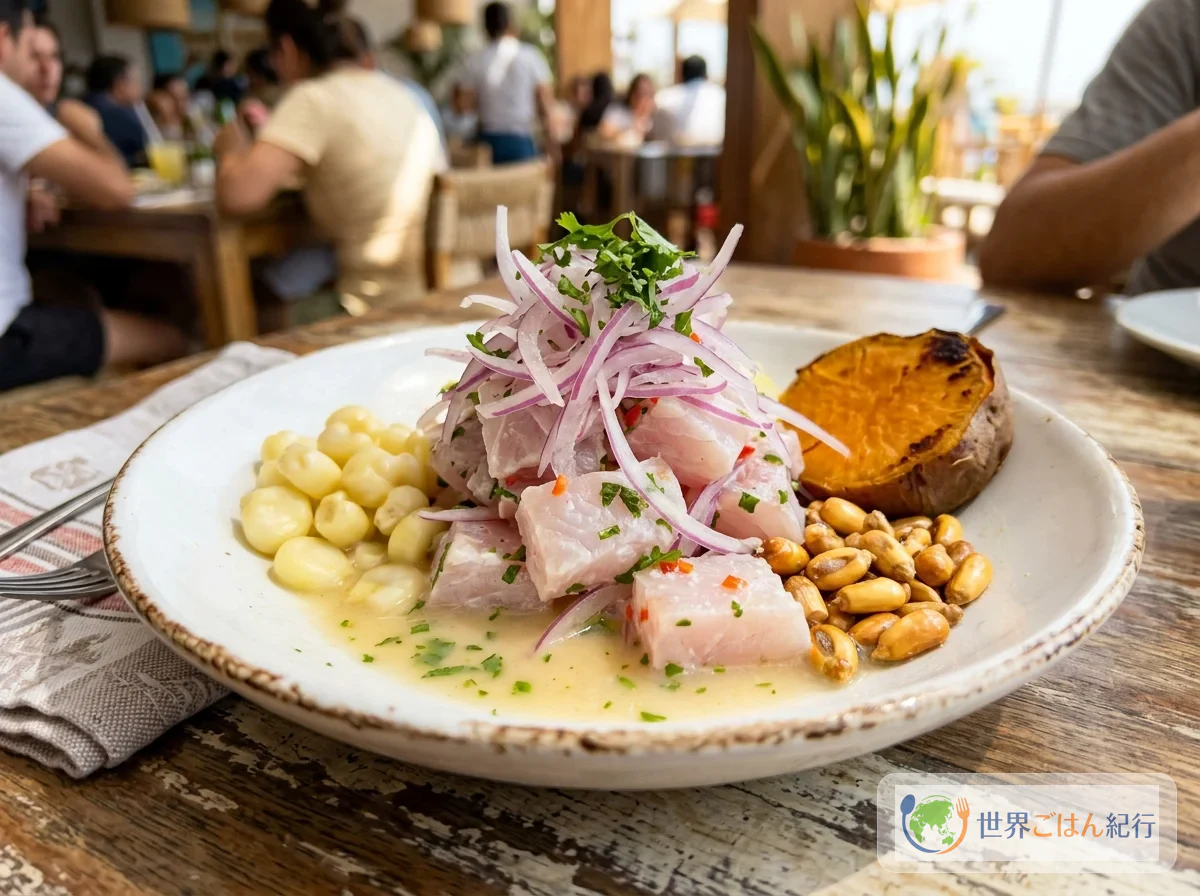
The representative Peruvian dish. White fish is tossed with lime, chile, red onion, and cilantro. The acid makes the fish look "cooked," but from a food-safety standpoint it is raw fish. Always use sashimi-grade.
Sea bream, flounder, sea bass, or farmed salmon are easy to use. Lime has a brighter aroma than lemon, so use lime if you can. If you don't have the large-kernel corn of Peru, boiled corn, sweet potato, or popcorn gives the feel. Detailed amounts are in the full ceviche recipe (in Japanese).
2. Lomo Saltado
A stir-fry of beef and vegetables. The flavor rests on soy sauce, vinegar, ají amarillo, and the meat juices. Because it is served with french fries and white rice, it is filling.
At home, beef shoulder loin or steak trimmings are enough. Don't cook the tomato until it falls apart; stop while it is half raw. Keep the onion a little crisp rather than limp. Because it finishes quickly over high heat, cut all the ingredients before lighting the stove. For the full steps, see how to make lomo saltado.

3. Ají de Gallina
Chicken dressed in a yellow sauce made from ají amarillo, milk, bread, and walnuts. It looks like a cream stew, but the taste has chile aroma and the richness of nuts, and it goes very well with white rice.
At home, boil chicken breast or tenderloin, shred it, and soak white sandwich bread in milk to make the sauce. If you don't like walnuts, cashews or a little sesame can stand in, but avoid it if there is a nut allergy.
4. Causa Rellena
A cold appetizer of mashed potatoes seasoned with lime and chile, layered with tuna, chicken, avocado, hard-boiled eggs, and the like. It is close to potato salad, so it is easy to serve to people new to Peruvian food.
Yellow potatoes are authentic, but ordinary floury potatoes also work. A little ají amarillo and turmeric brings the color closer. It keeps, so making it on the weekend and eating it for lunch the next day is realistic.

5. Tiradito
Fish sliced thin like sashimi, with a sauce of ají amarillo or rocoto poured over. It is even closer to sashimi than ceviche, and the influence of Nikkei cooking is easy to feel.
At home, slice white fish thin on the bias and pour over a sauce of lime, salt, ají amarillo, and a little olive oil. Because the fish is not marinated long, finish it just before eating. It also works well as an appetizer for guests.
6. Anticucho
A street food of skewered, grilled beef heart. It is marinated in ají panca, garlic, cumin, and vinegar, then grilled. Beef heart can be hard to find, so skirt steak or chicken thighs make easy substitutes.
The direction of the spices is close to yakitori, so it feels familiar at the table. It tastes best grilled over charcoal outdoors, but a broiler or skillet also works. Boiled potatoes and corn are the classic sides.
7. Pollo a la Brasa
Peruvian roast chicken. The chicken is marinated in garlic, cumin, soy sauce, vinegar, dark beer, and chile, then roasted until the skin is fragrant. In Peru there are many specialty restaurants for this popular dish, and it is served with a green sauce, ají verde.
At home, rather than oven-roasting a whole bird, it is easy to cook chicken thighs skin-side down in a broiler or skillet. Serve with a quick ají verde made from cilantro, green chile, mayonnaise, and lime, and it feels much more like Peru.
Shopping List and Substitute Ingredients

Shopping for Peruvian food is easiest if you build on what an ordinary supermarket sells, and limit specialty stores and online orders to "the things that decide the taste." One jar of ají amarillo can be reused across ceviche, lomo saltado, causa, and ají de gallina.
From the Ordinary Supermarket
White fish sold for sashimi, beef, chicken, potatoes, onions, red onions, tomatoes, limes, lemons, cilantro, garlic, ginger, eggs, rice, milk, and sandwich bread are all at an ordinary supermarket. If you have no limes you can use lemons, but for ceviche in particular the aroma changes a lot with lime.
What to Look for at Latin American Groceries, Specialty Stores, and Online
You may find ají amarillo paste, quinoa, purple corn drinks, rocoto sauce, Peruvian corn, and Inca Kola. You don't need to buy them all. The first thing to buy is ají amarillo paste.
Ají amarillo, quinoa, a wok, bottled lime juice, and spices are worth looking for online. Ají amarillo in particular is hard to substitute, and having it alone gives the yellow color and aroma of Peruvian food.
If you make ceviche and lomo saltado next, ají amarillo is the first thing worth seeking out. One jar goes into several Peruvian dishes, which makes shopping more efficient.
Lomo saltado changes with heat and the aroma of the hot pan. Even on a home stove, a wok makes it harder for the meat and tomatoes to turn watery.
If you make ceviche or tiradito often, a fragrant olive oil can be reused too. A drop at the end softens the acidity of the fish a little. If you want to try Andean ingredients, quinoa is a dried good that is unlikely to go to waste, since it works in salads, soups, and as a side.
| Ingredient | Used in | Substitute | Priority |
|---|---|---|---|
| Ají amarillo | Ceviche, lomo saltado, causa | A little turmeric + green chile + paprika | High |
| Lime | Ceviche, tiradito | Lemon, though the aroma changes | High |
| Red onion | Ceviche, lomo saltado | Ordinary onion, soaked in water | Medium |
| Quinoa | Salads, soups | Pearl barley, mixed grains | Medium |
| Rocoto | Hot sauces | Green chile, jalapeño | Low |
| Peruvian corn | Side | Boiled corn, popcorn | Low |
Weekend Menu Models

One Peruvian dish is enjoyable by itself, but as a menu its appeal is clearer. If you cook in one go after weekend shopping, combine a cooked dish with a cold appetizer.
Saturday Night: A Lomo Saltado Dinner
The main is lomo saltado. Cook white rice and use frozen french fries, and the actual work is about 30 minutes. For sides, an avocado and tomato salad is enough, and for soup, a bouillon with a little quinoa. The stir-fry has a strong toasty aroma, so keep the sides light.
Leftover stir-fried beef is also good in bread the next day for lunch. It turns into something more like a sweet-and-salty steak sandwich than anything Peruvian, but that too is part of the fun of home cooking.
Sunday Lunch: Ceviche and Causa
For Sunday lunch, make ceviche (in Japanese) with sashimi-grade white fish, and causa with potatoes boiled the day before. Almost no cooking over heat is needed, so it suits hot weather too.
If the acidity of the ceviche feels strong, serve it with sweet potato or corn to round out the taste. The Peruvian combination is well designed: sour fish, sweet potato, and toasty corn balance one another on a single plate.

Make-Ahead: Ají de Gallina
If you boil the chicken and make the sauce ahead, ají de gallina is good the next day as well. If the sauce stiffens, loosen it with milk. Served with white rice, a hard-boiled egg, and olives, it also works for a family lunch.
It uses walnuts, so choose a different dish in a household with allergies. Instead, a pollo a la brasa-style grilled chicken gives you a Peruvian mood without nuts.
Common Mistakes

The usual mistakes in Peruvian cooking are less about special technique than about being too timid. If you hold back on acidity, aroma, and heat, you get a thin marinade or an ordinary beef stir-fry.
Marinating Ceviche Too Long
The idea that fish becomes safe if it sits long in lime is dangerous. The acid turns the surface white but does nothing against parasites. Secure safety through the choice of fish, and keep the flavor quick. Use sashimi-grade fish and toss it just before eating.
Turning Lomo Saltado into a Stew
If you put in meat, onion, and tomato all at once, the skillet temperature drops and liquid is released. It is more fragrant if you sear the meat first and take it out, stir-fry the vegetables, and return the meat at the end. Letting the soy sauce hit the hot side of the pan raises its aroma.
Leaving Out Too Much Ají Amarillo
If you drop it entirely because it is a chile, the core of Peruvian food goes missing. If you worry about heat, use half the amount and make up the color with paprika or turmeric. What matters more than heat is the yellow aroma and fruitiness.
Using Only Lemon Instead of Lime
You can substitute, but in ceviche the difference shows. The green aroma of lime tightens up the smell of fish. If limes are expensive where you are, lean the whole dish toward lemon and add a little more cilantro and onion to keep the balance.
For a first try, about 150 g of fish for ceviche and 250 g of beef for lomo saltado make it easier to adjust the strength of flavor. Doubling the amount after you know the household's taste reduces failures.
Frequently Asked Questions

Q1. What do you recommend making first?
If you want a cooked dish, lomo saltado; for a cold dish, ceviche. For a family dinner, lomo saltado is more easily accepted; for an appetizer for people who love to cook, ceviche leaves more of an impression.
Q2. Is ají amarillo essential?
For an authentic aroma it matters a lot. Leave it out entirely and the yellow heat that marks Peruvian food weakens. For a first try, though, you can get close with a little turmeric, paprika, and green chile.
Q3. Can I make ceviche with store-bought sashimi?
Yes. Use white fish sold as sashimi-grade. If you can buy a block, you can make it with fish close to freshly cut. Do not use fish meant to be cooked, freshwater fish, or fish whose freshness you doubt.
Q4. Is Peruvian food spicy?
It depends on the dish. Ají amarillo is medium-hot, a fruity chile rather than a fiery one. Ceviche and lomo saltado are easy to adjust for heat, while dishes and sauces made with rocoto tend to be hot.
Q5. How is this different from the overview of South American cuisine?
The overview of South American cuisine (in Japanese) is a broad introduction that includes Brazil, Argentina, Chile, Colombia, and more. This article focuses only on Peruvian cuisine, and covers ceviche, lomo saltado, Nikkei, chifa, and shopping in more detail.
Sources
- UNESCO Intangible Cultural Heritage, Practices and meanings associated with the preparation and consumption of ceviche, an expression of Peruvian traditional cuisine (inscribed 2023)
- The World's 50 Best Restaurants, A historic day for Peruvian gastronomy: Central is The World's Best Restaurant 2023 (20 June 2023)
- Peru Travel, Peruvian Gastronomy (Peru's official tourism portal)
- Peru Info, Fusion and taste, discover Nikkei cuisine (on Japanese immigrants and Nikkei cuisine)
- International Potato Center, Native Potato Varieties (native Andean potatoes)
Summary

Peruvian cuisine looks like food from a far country, but it works well in any home kitchen. Raw fish, soy sauce, rice, potatoes, chicken, beef. Add only lime and ají amarillo to familiar ingredients and the landscape of flavor changes.
The first step is to make ceviche (in Japanese) on a day you can buy white fish. For a family dinner, start with lomo saltado. From there, extend to causa, ají de gallina, and tiradito, and the "coast, Andes, and immigrant culture" of Peruvian food begin to connect naturally.
If you are unsure what to buy, start with limes, red onion, cilantro, and ají amarillo paste. With just these, the aroma of Peru rises in a weekend kitchen. When you want to see the larger flow of South America, go from the overview of South American cuisine (in Japanese) to the dishes of other countries.


