
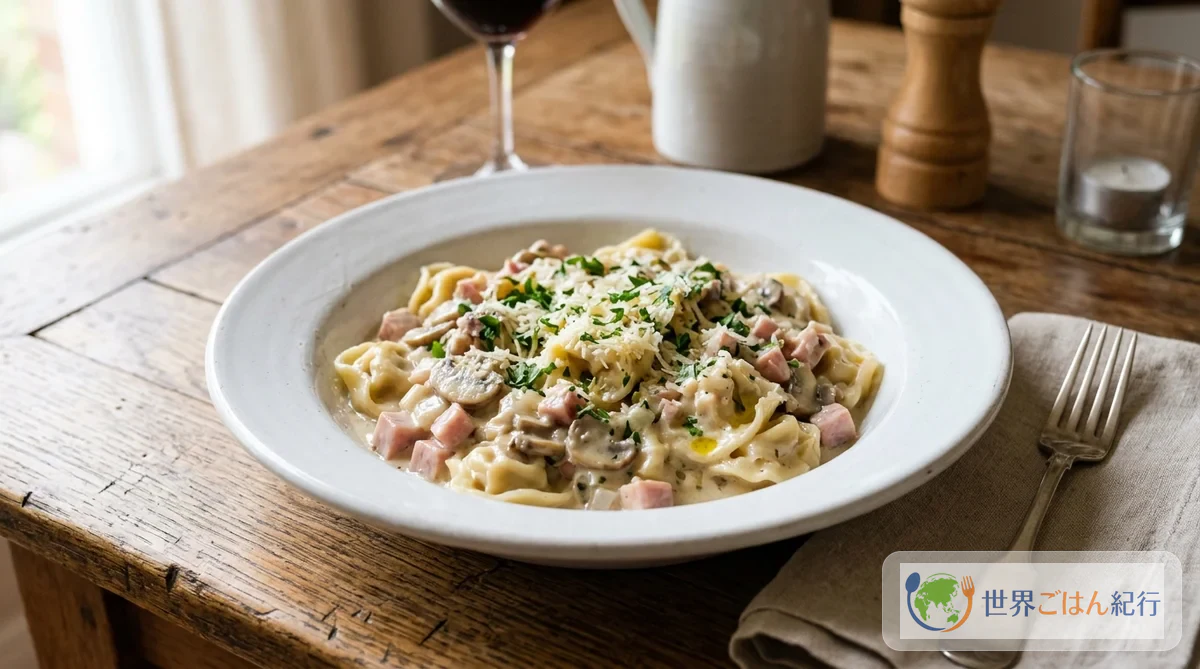
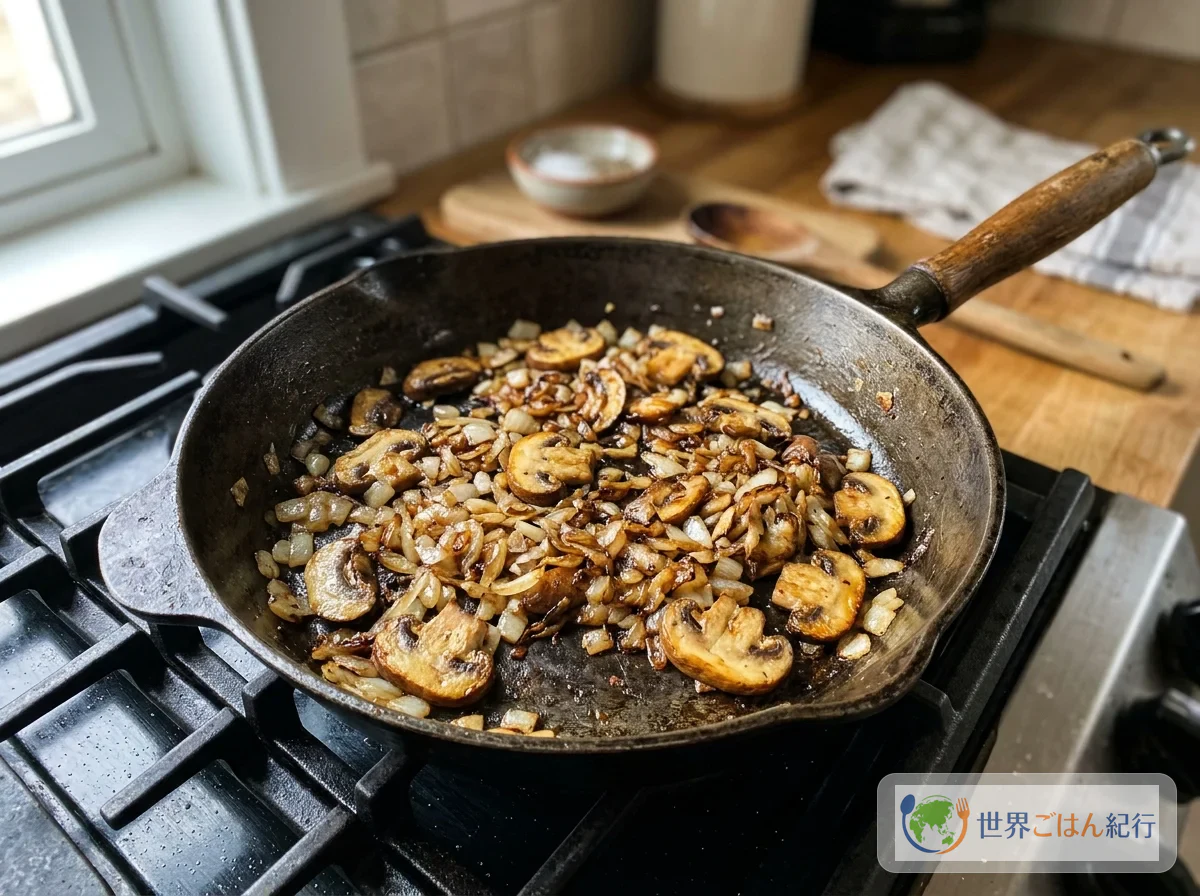
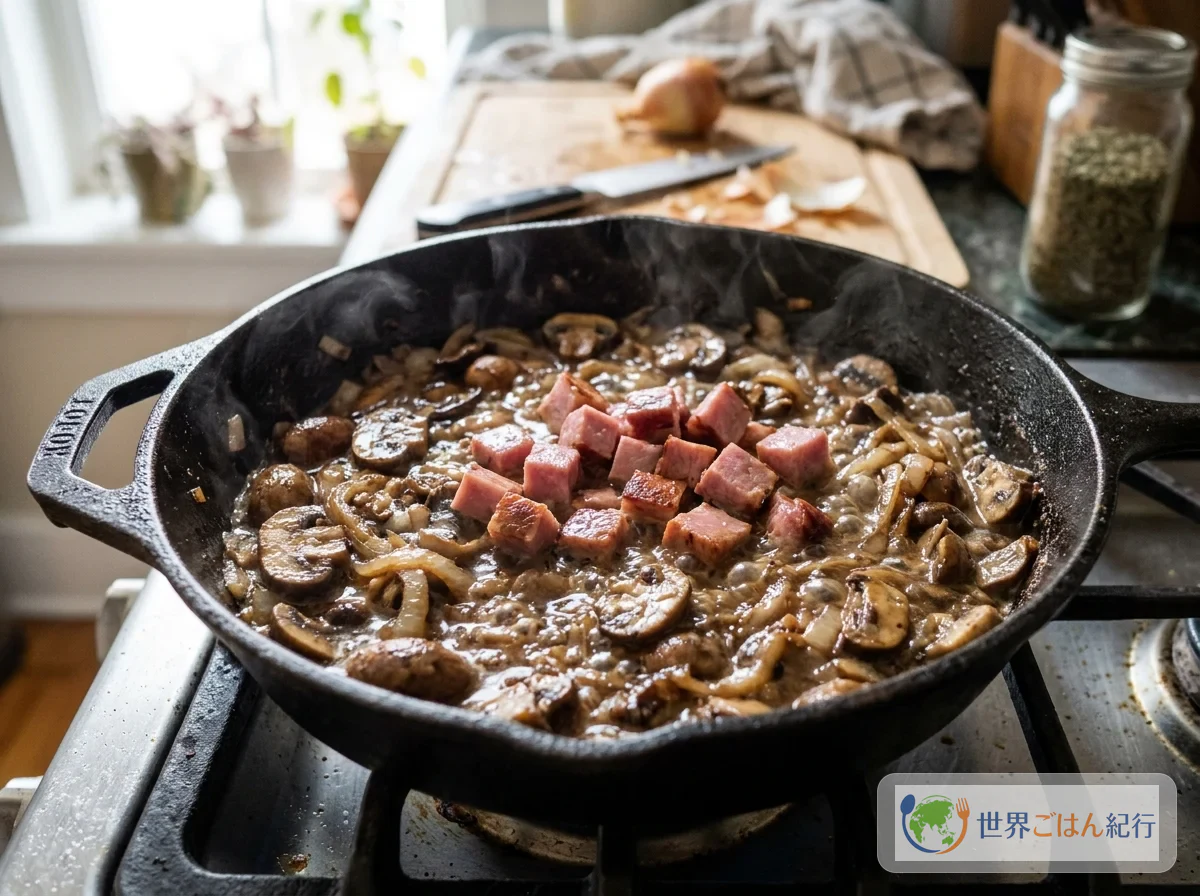
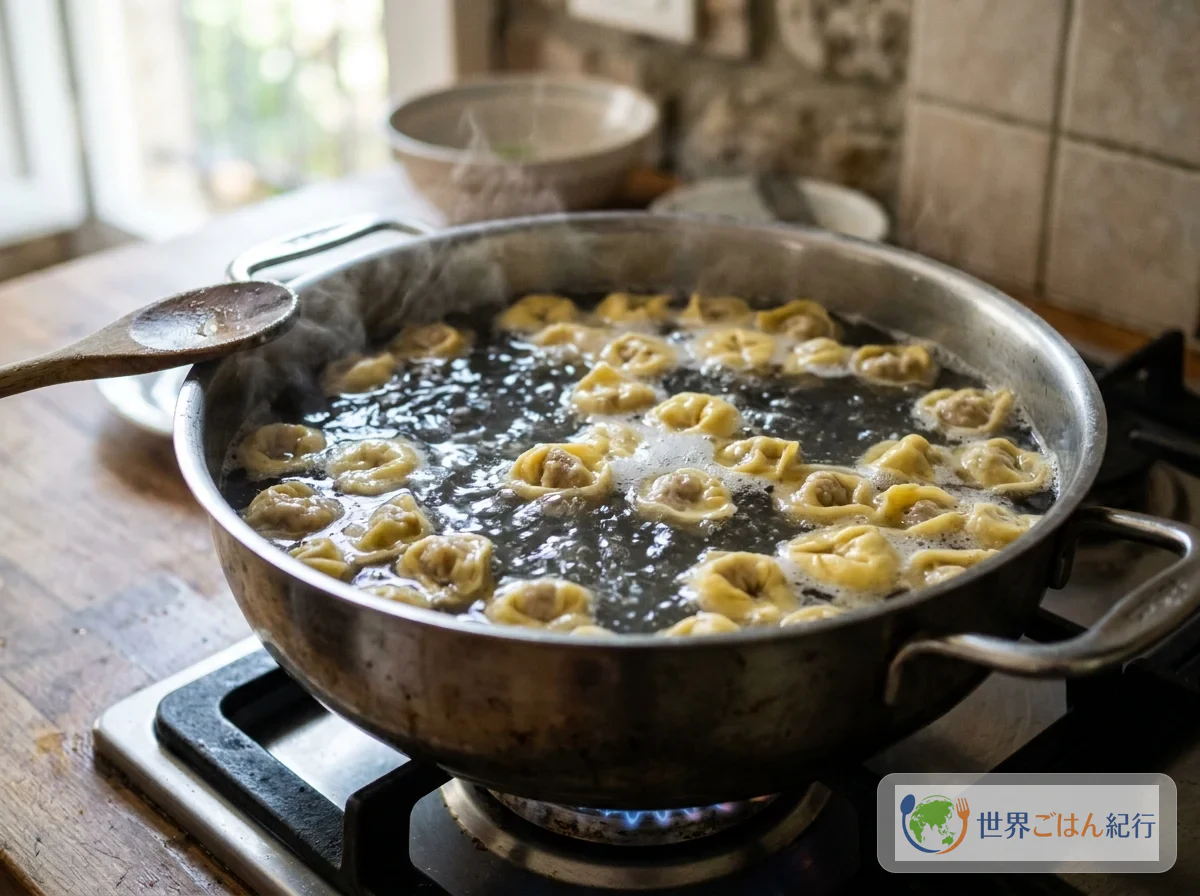
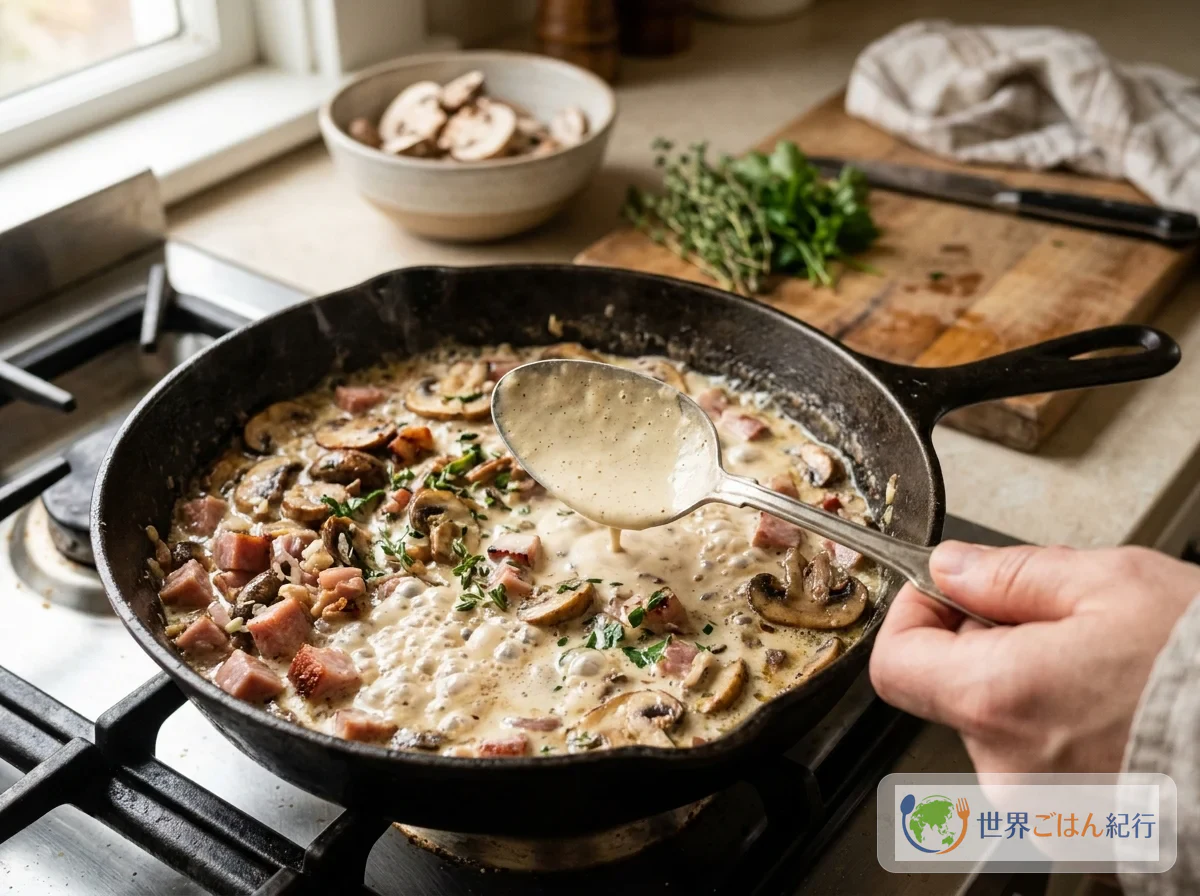
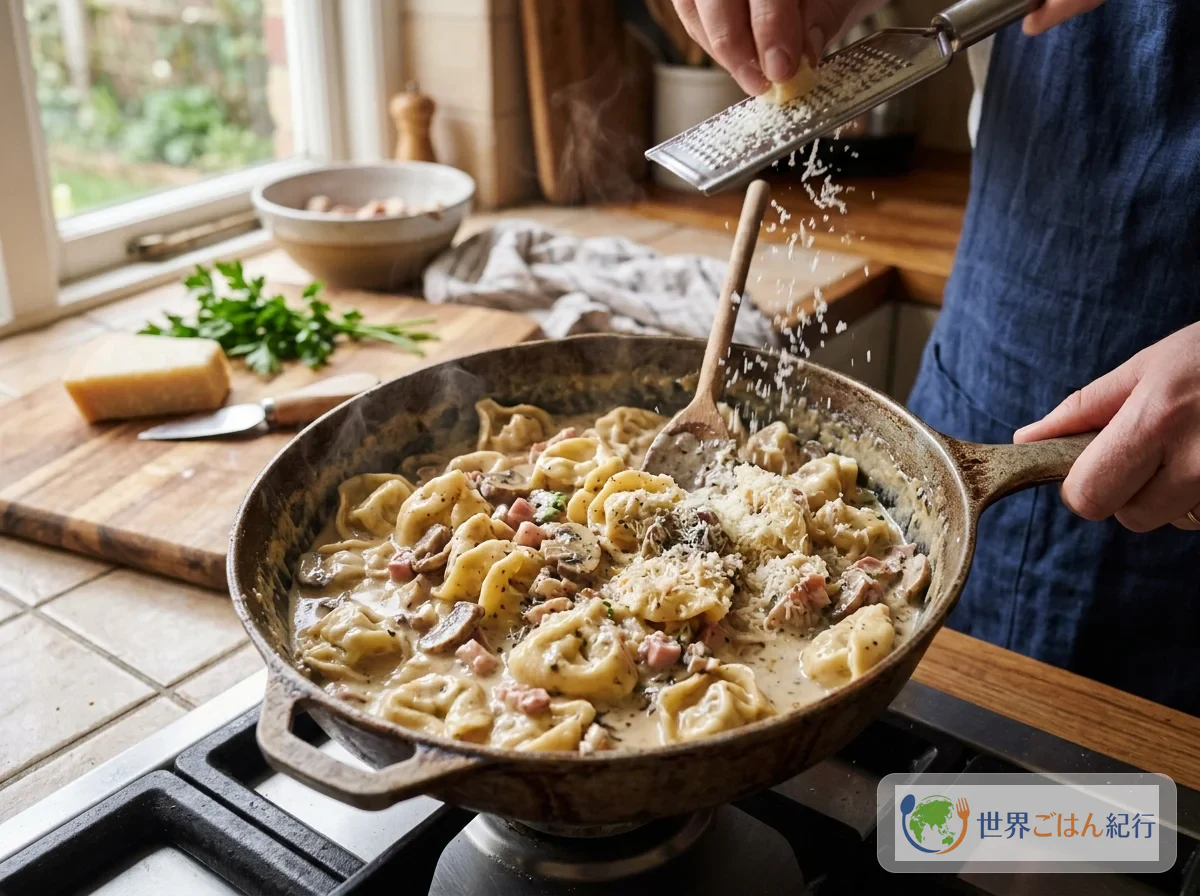
Steam rises from a big pot of boiling water, and in a skillet mushrooms sizzle in butter. In Montevideo, the capital of Uruguay, a city shaped by generations of Italian immigrants, one dish turns up on restaurant menus and family tables alike: small meat-filled pasta called capeletti, tossed in a generous cream sauce with ham and mushrooms. This is a pasta dish born in Uruguay, not Italy: capeletis a la Caruso.
The sauce is named for Enrico Caruso, the Italian tenor who was a worldwide star in the early twentieth century. Caruso himself never ate this dish. With store-bought meat-filled tortellini or capeletti, the sauce comes together in about 20 minutes.
A Montevideo Sauce Named for a Tenor
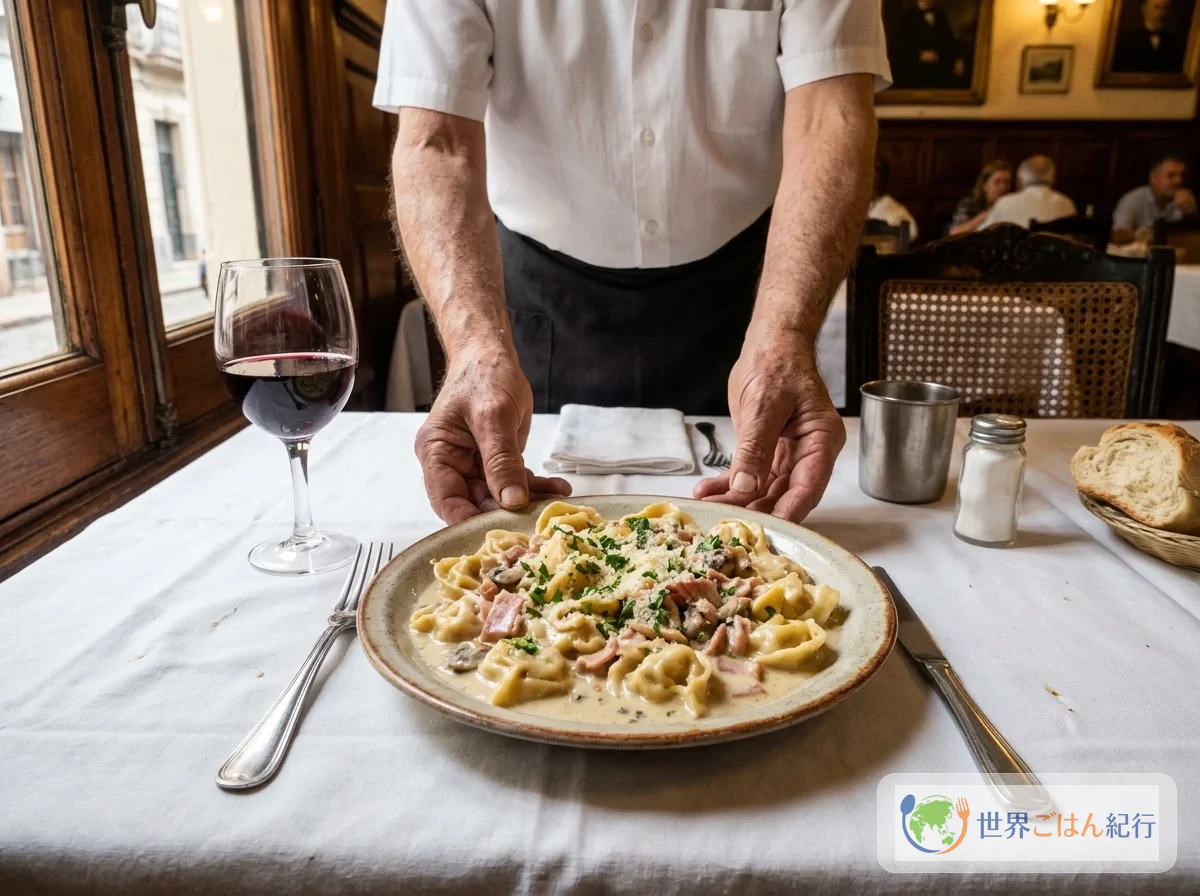
According to the Spanish-language Wikipedia, the Neapolitan tenor Enrico Caruso visited Montevideo in 1915. The city welcomed him warmly, and the newspapers filled with enthusiastic praise. Caruso, an Italian and a gourmand, is said to have tried many dishes during his stay, pasta above all.
The sauce itself appeared about 40 years later, in 1954. At the restaurant Mario y Alberto, on the corner of Calle Constituyente and Calle Tacuarembó in Montevideo, the Piedmont-born head chef Raimondo Monti made a sauce from cream, chopped ham, mushrooms sautéed in butter, and a spoonful of beef extract, and named it in Caruso's honor. The same article reports that this is how capeletti with this sauce was born.
According to the American food outlet Tasting Table, the novel element in Monti's sauce was the Liebig beef extract: a concentrated meat extract made near Montevideo, which was one of Uruguay's major industries throughout the twentieth century. Uruguayan cattle country and Italian cooking met in a single sauce.
Through cooking classes and other channels, Caruso sauce later spread to neighboring countries and is now eaten in Argentina and Brazil as well. Tasting Table writes that the sauce has been registered as cultural heritage by a Uruguayan gastronomic association. Built on an Italian foundation, it has been handed down as a dish found only in Uruguay.
Versions vary from restaurant to restaurant and home to home. The English-language Wikipedia mentions versions that add nuts or onion, and a simpler béchamel-based version with spices, walnuts, and ham. Tasting Table also mentions versions with white wine and versions without beef extract.
Ingredients (serves 4)
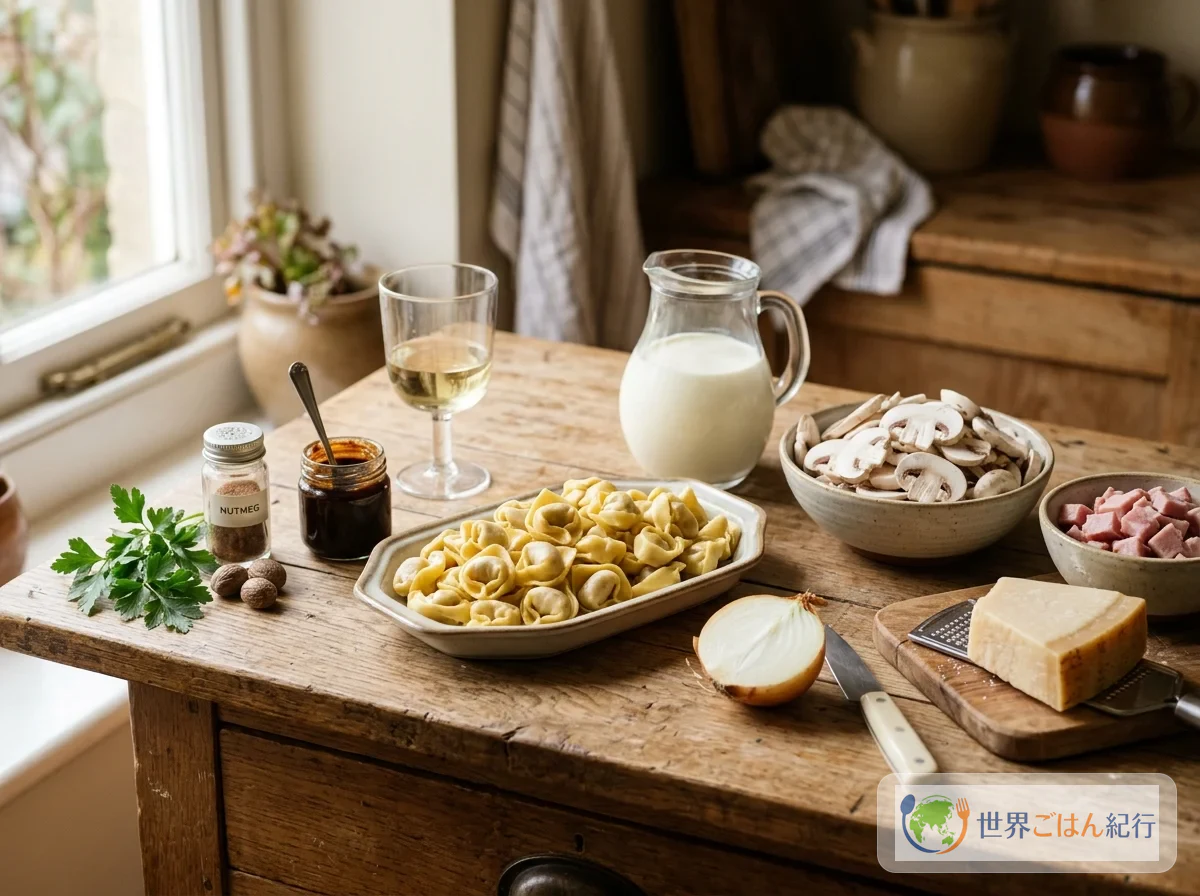
This is a home-kitchen version. It follows the structure of Monti's original sauce (cream, ham, mushrooms, beef extract) and adds the onion, white wine, Parmigiano, and nutmeg found in the South America Wine Guide recipe.
In place of the Liebig beef extract used in Monti's sauce, a commercial beef extract or granulated beef bouillon makes a good substitute. Both are salty, so start with a little, then taste at the end and adjust.
"Capeletti" means "little hats" in Italian, and the pasta is shaped much like tortellini. Meat-filled tortellini is often easier to find than capeletti; look for dried or frozen packages at Italian or specialty food shops or online.
How to Make Capeletis a la Caruso
If you make the sauce while the pasta cooks, the whole dish takes about 25 minutes. The key is timing the final reduction of the sauce with the moment the pasta is done.
If you boil cream hard over high heat, the fat separates and the sauce turns grainy. Once the cream is in, keep the heat low enough that only small bubbles form.
How to Keep the Sauce from Splitting
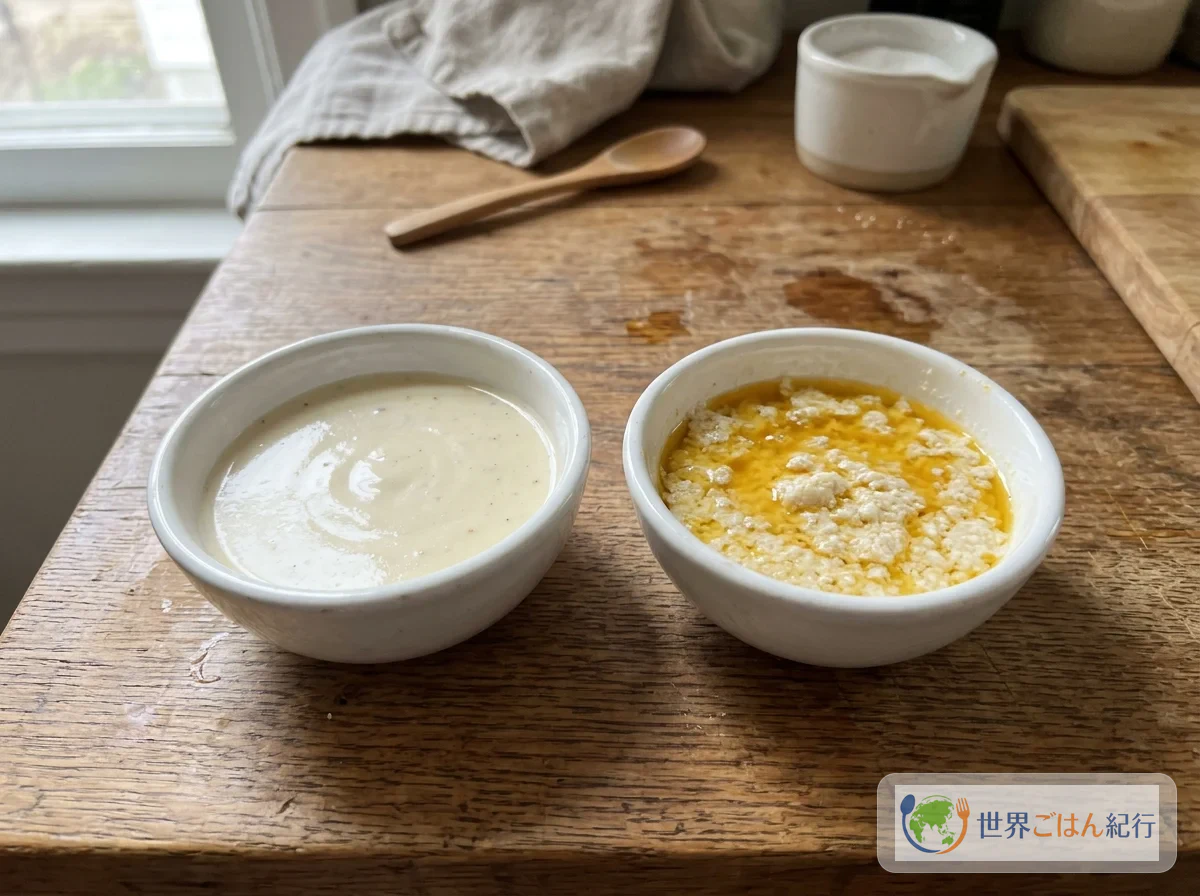
With so few ingredients, Caruso sauce shows your heat control directly in the result. There are two rules for a smooth sauce: simmer gently over medium-low heat once the cream is in, and add the cheese last, when you combine the sauce with the pasta.
Parmigiano clumps if you add it to boiling sauce. Add the pasta, lower the heat, then stir in the cheese and let the residual heat melt it.
If the sauce splits, take the pan off the heat, add 2 tbsp of the cooking water, and stir quickly with a wooden spoon. The water and fat sometimes come back together and the sheen returns.
A Walnut Version and a Béchamel Version
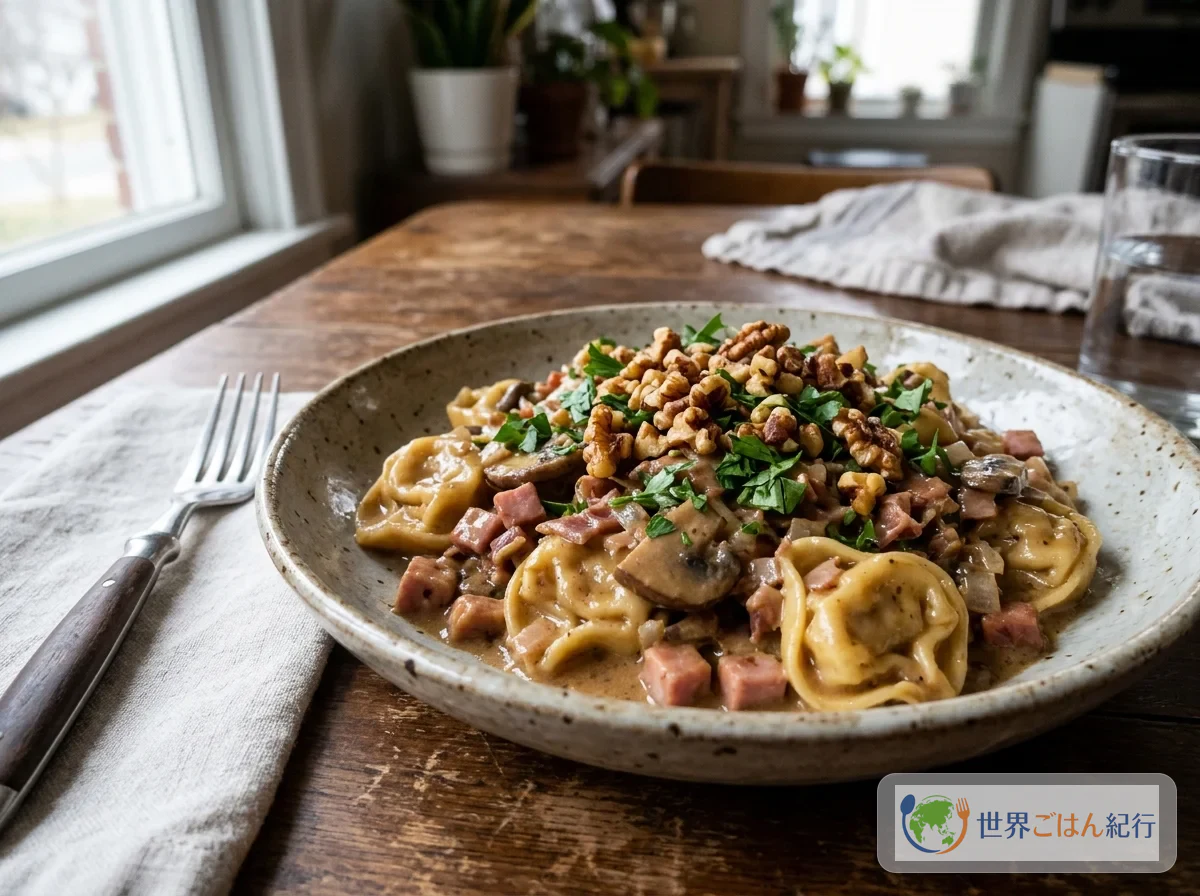
As the English-language Wikipedia notes, there is a version with walnuts. Dry-toast 30 g walnuts, chop them coarsely, and stir them into the sauce at the end for richness and a toasty aroma. Ham and walnuts make a good pairing: they add texture to the heaviness of the cream.
According to Tasting Table, there is also a béchamel-style version, with a roux of butter and flour combined with milk and cheese. To use milk instead of cream, cook 20 g butter with 2 tbsp all-purpose flour, whisk in 400 ml milk, and once it thickens, combine it with the ham and mushrooms as above. The result is lighter.
Serving
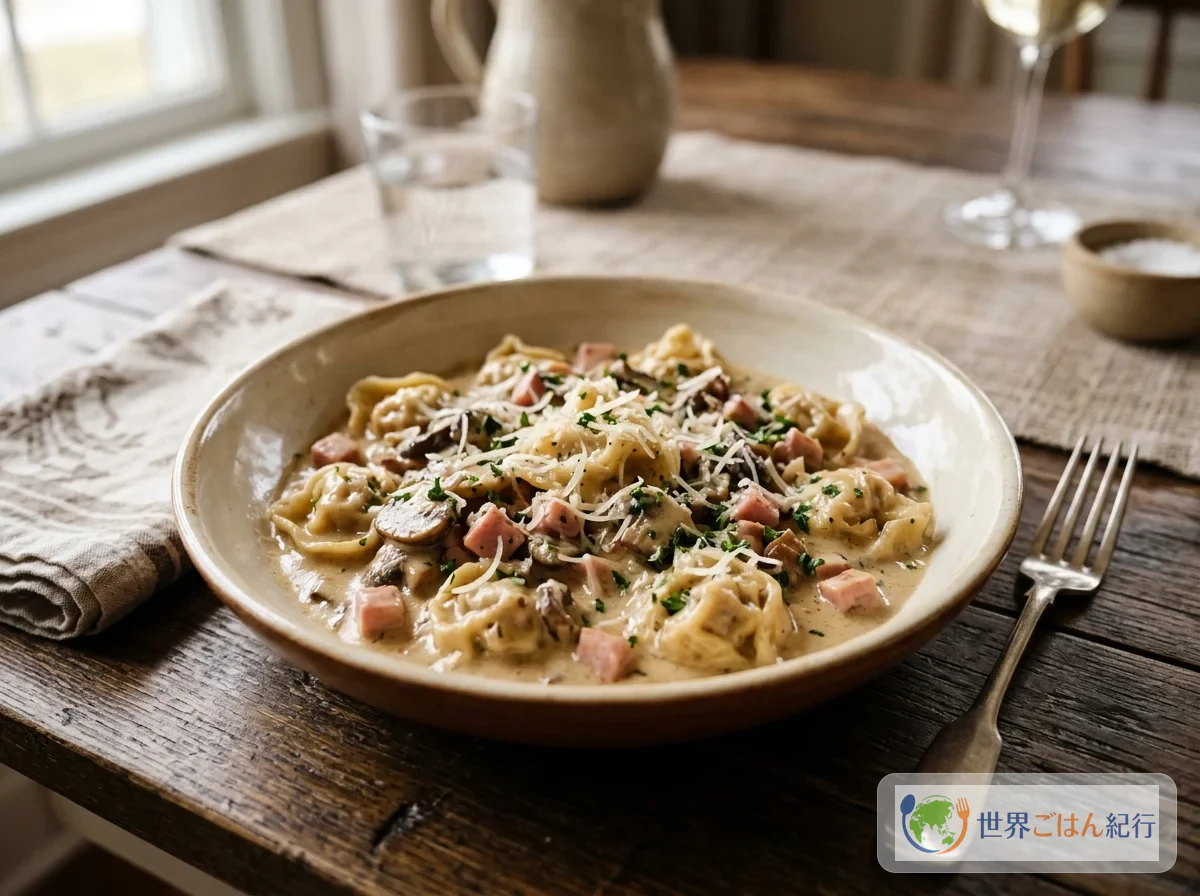
Serve in warmed shallow bowls, sprinkled with grated Parmigiano and parsley, and eat while hot. The South America Wine Guide presents it as a comforting dish for a rainy day. Cream sauce turns heavy as it cools, so eat it as soon as it is served.
For another Uruguayan dish, try the national sandwich chivito, with beef steak, ham, and egg stacked in a bun. If you are curious about the food culture of Italian immigrants in South America, try Argentina's milanesa (in Japanese).
Frequently Asked Questions
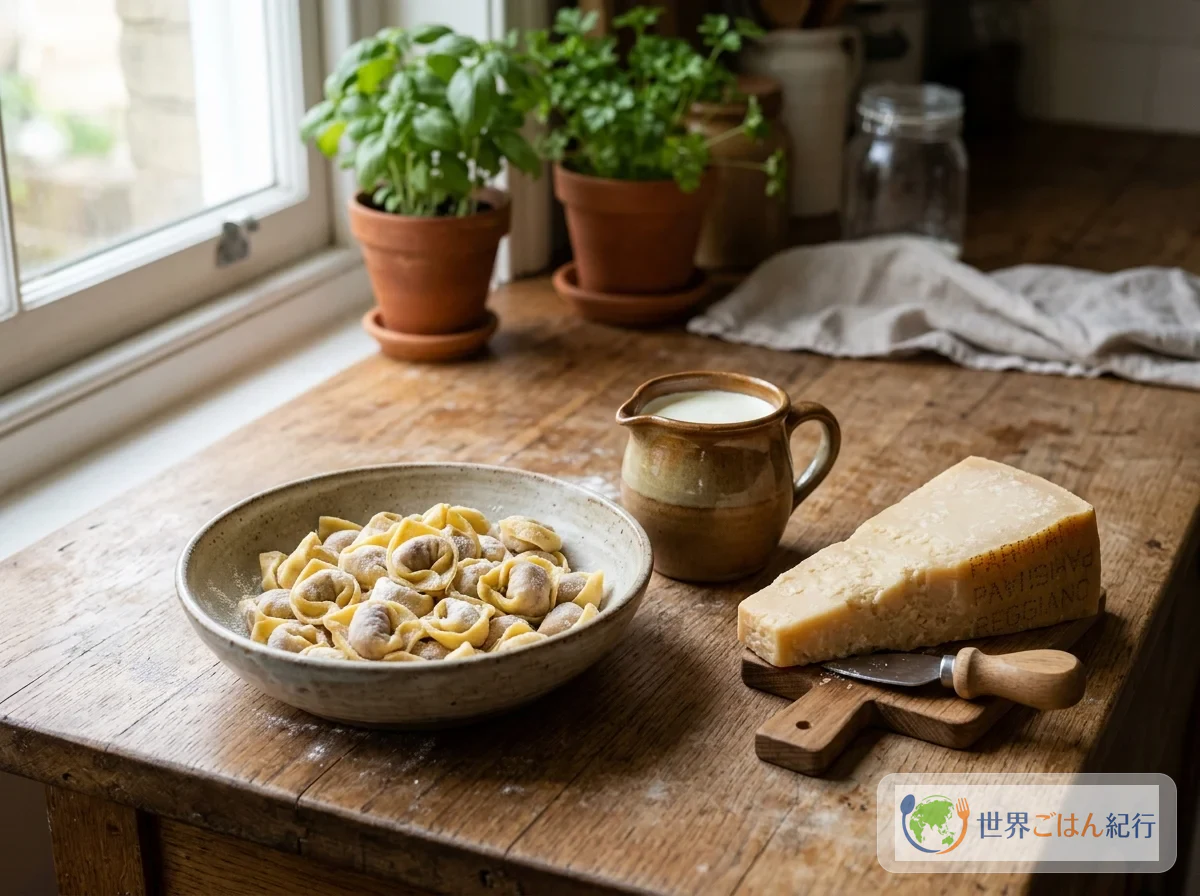
What if I don't have beef extract?
You can substitute 2 tsp granulated beef bouillon. According to Tasting Table, some versions are made without beef extract. In that case, adjust the seasoning with salt at the end.
Can I make it without white wine?
Yes. Monti's original sauce, as described in the Spanish-language Wikipedia, was made with cream, ham, mushrooms, and beef extract, with no white wine. Replace it with the same amount of water, or leave it out.
Can I make it ahead?
Cream sauce tends to split when reheated, and the pasta soaks up liquid and softens, so it is best eaten freshly made. The sauce alone can be refrigerated and reheated over low heat with a little added milk. We cannot give a firm storage time, so finish it soon.
What allergens should I watch for?
The pasta contains wheat and egg, and the sauce contains dairy (butter, cream, cheese). Depending on the product, meat-filled pasta may also contain soy and other allergens, so check the label.
Sources
- Wikipedia (Spanish), "Salsa caruso." Accessed and checked 22 October 2026. https://es.wikipedia.org/wiki/Salsa_caruso
- Wikipedia, "Caruso sauce." Accessed and checked 22 October 2026. https://en.wikipedia.org/wiki/Caruso_sauce
- Nikita Ephanov, "Uruguayan Caruso Sauce Is A Hearty Blend Of Ham And Cheese," Tasting Table, published 11 August 2023. Accessed and checked 22 October 2026. https://www.tastingtable.com/1361280/caruso-sauce-blend-ham-cheese/
- Amanda Barnes, "Ultimate recipe for Uruguayan Capeletis a la Caruso," South America Wine Guide, published 2022. Accessed and checked 22 October 2026. https://southamericawineguide.com/ultimate-recipe-for-uruguayan-capeletis-a-la-caruso/


