
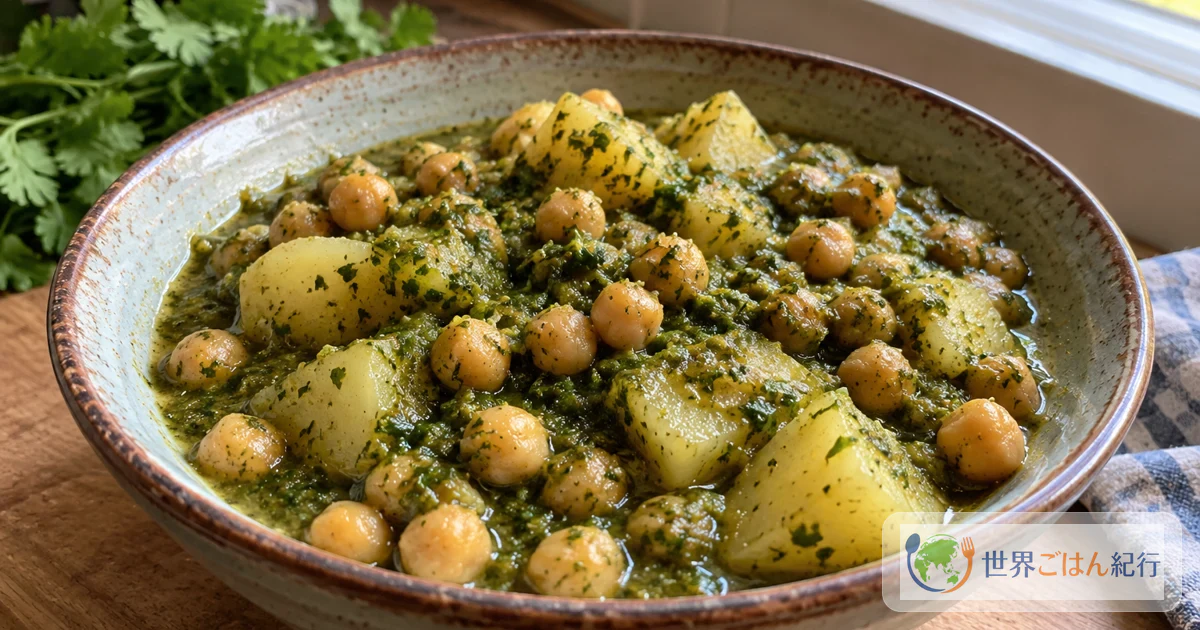
On a street corner stands a stall stacked with big pots. Lift the lid and chickpeas and potatoes sway in the steam. The seller quickly ladles a bowl, pours on a generous spoonful of green sauce, adds a dab of red hot sauce if you like, and hands it over. The sharp scent of garlic and vinegar, the green smell of cilantro. This is shor nakhod, the street snack sold on the corners and in the parks of Afghanistan.
Steam from a corner pot, and a sour green sauce
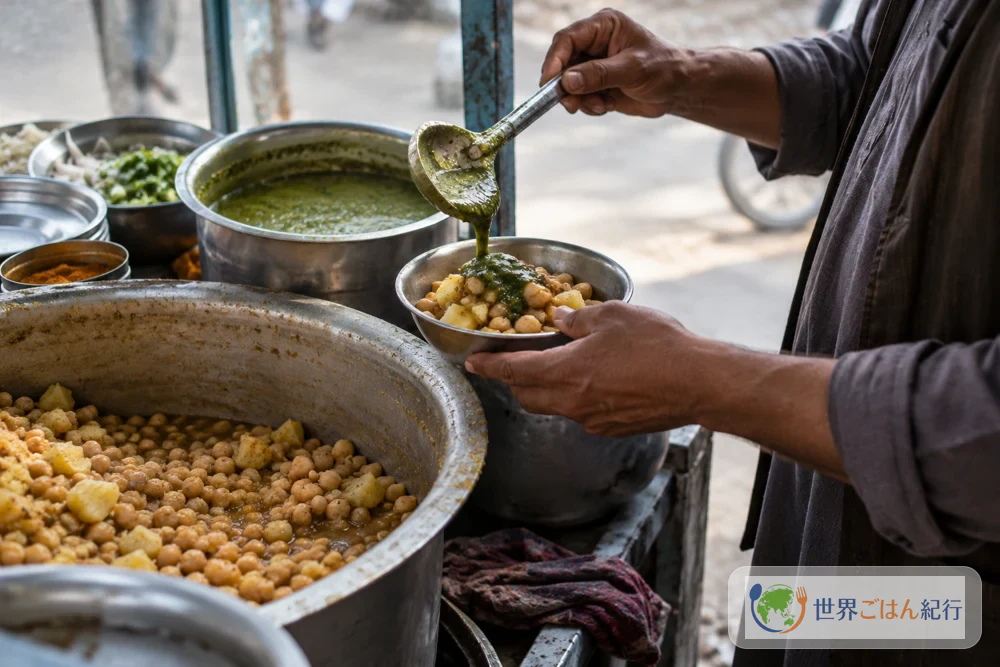
"Nakhod" is chickpea in Dari (Afghan Persian). In Afghanistan, stalls line the streets and parks, and shor nakhod is a staple. The American food magazine Milk Street describes how sellers finish bowls at assembly-line speed to keep up with the queue. It is a snack of hearty beans and potatoes topped with a vivid, energizing sauce, and is sometimes compared to the Indian street food chana chaat (a sour chickpea salad).
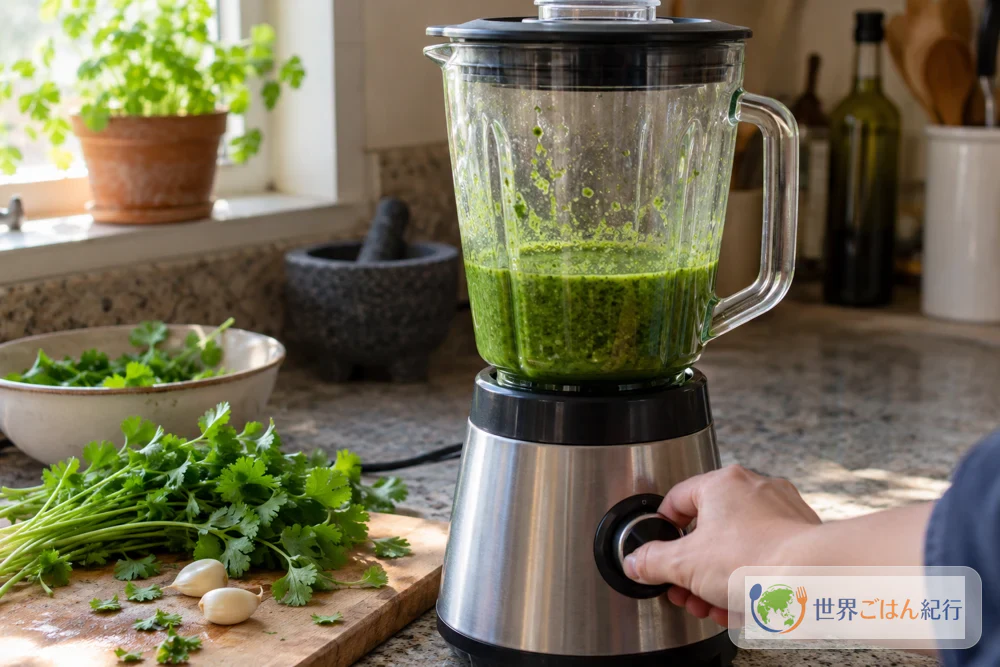
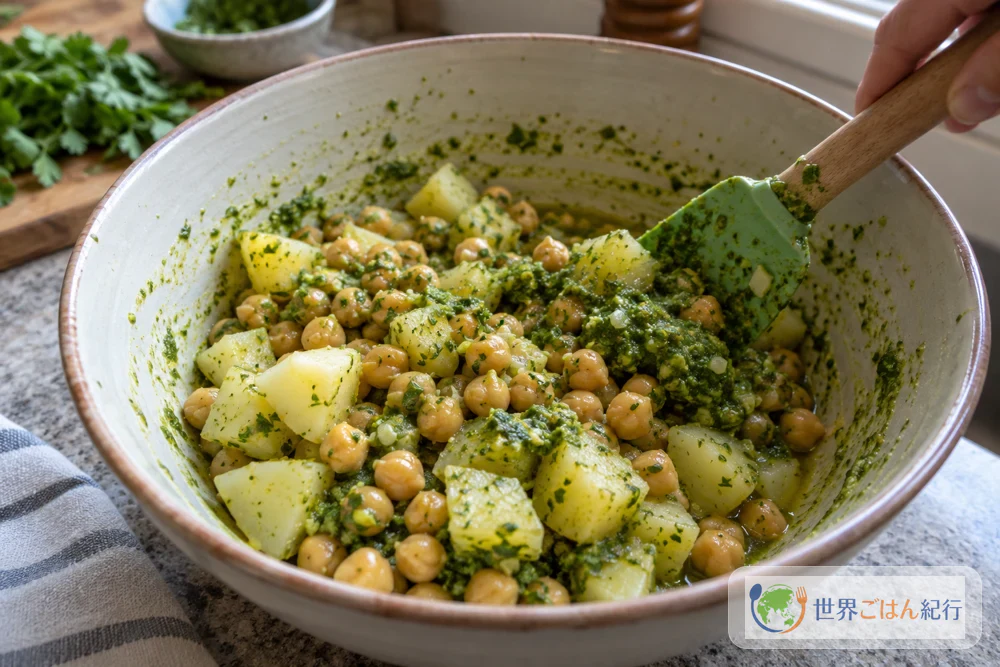
The star of this dish is neither the beans nor the potatoes but the sauce poured over them. It is a green sauce made by grinding cilantro and garlic smooth with white vinegar, and Milk Street writes that "herbs, white vinegar, an allium and olive oil are enough." Sellers add the sauce just before eating, and as the hot beans and potatoes cool, the sourness and aroma soak into them.
Besides the green sauce, it is the stall convention to add a little hot sauce made with red chilies. Only those who want heat put it on their own bowls and adjust, so a single pot meets everyone's preference.
It is also made at home, and Afghan-American cooks living in the United States each present their own proportions. Some use more potato and make it like a salad, while others mash everything into a dip. What they share is the three: cilantro, garlic and vinegar. With these three, every household's shor nakhod smells like that street stall.
What to know before you cook it at home
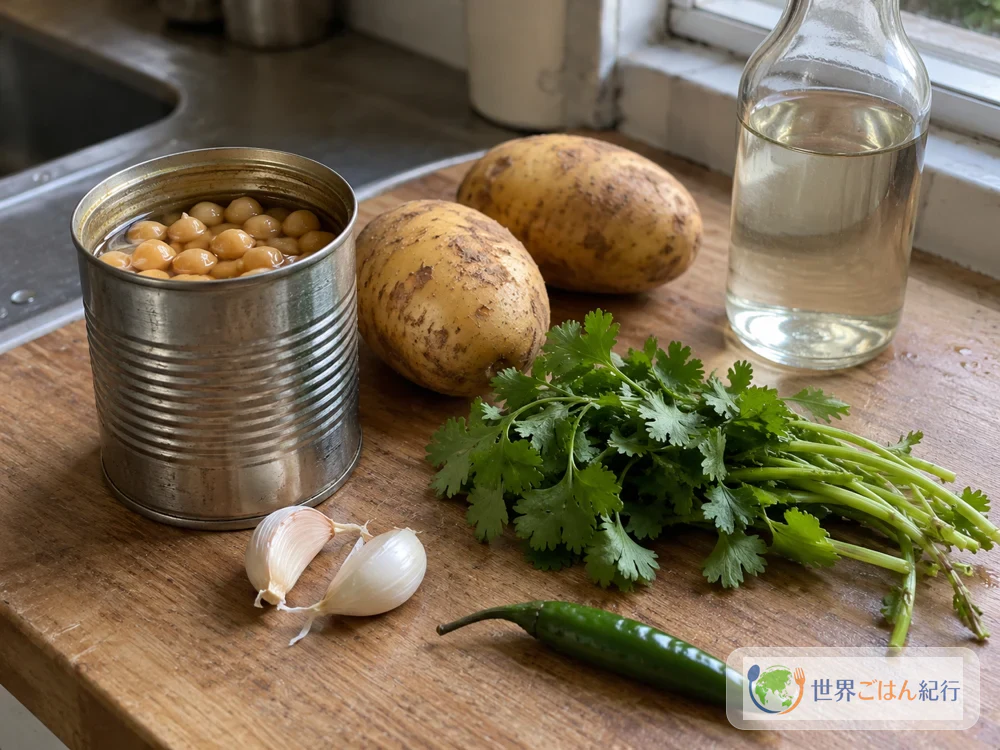
The proportions in this article are based on a recipe that the American nutrition education organization Food Literacy Center received from the local Afghan caterer Florence Amin-Popalzai. There are few ingredients, and most can be gathered at a supermarket. Canned chickpeas are convenient, and using them with their liquid is a feature of this recipe. If cooking from dried chickpeas, soak overnight, cook until soft and set aside a little of the cooking liquid.
Use a generous bunch of cilantro (about 30 g). The stems carry aroma too, so cut off only the hard base and use leaves and stems together in the sauce. The vinegar in the original is white vinegar. A plain distilled vinegar is closest, and rice vinegar gives a mellower result.
If someone dislikes the aroma of cilantro, replacing half the cilantro with flat-leaf parsley keeps the green color while softening the aroma. Adding a little mint, as in Milk Street's cauliflower variation, also goes well.
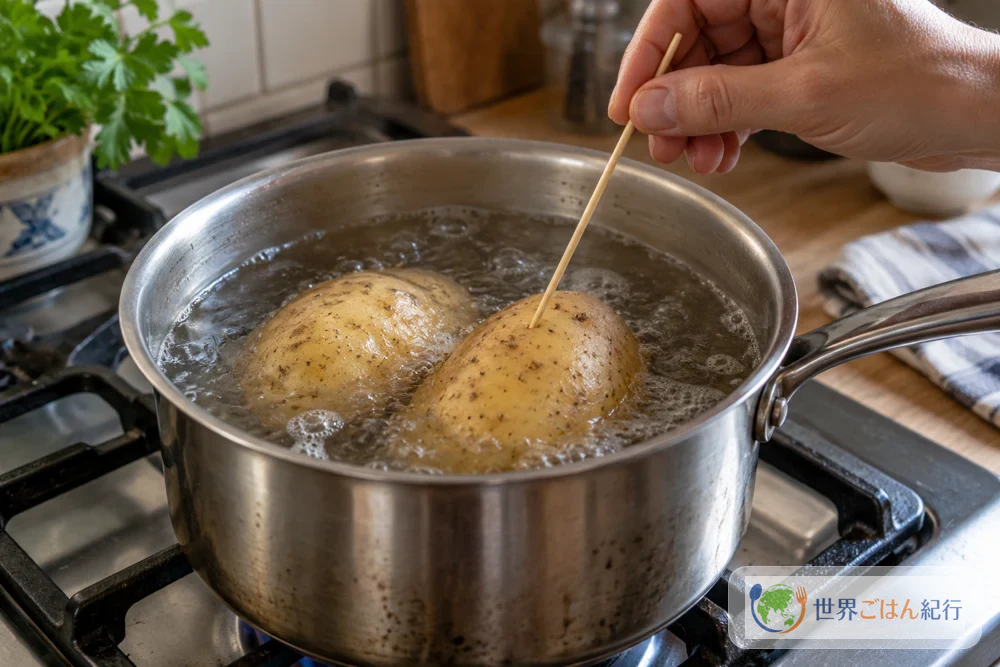
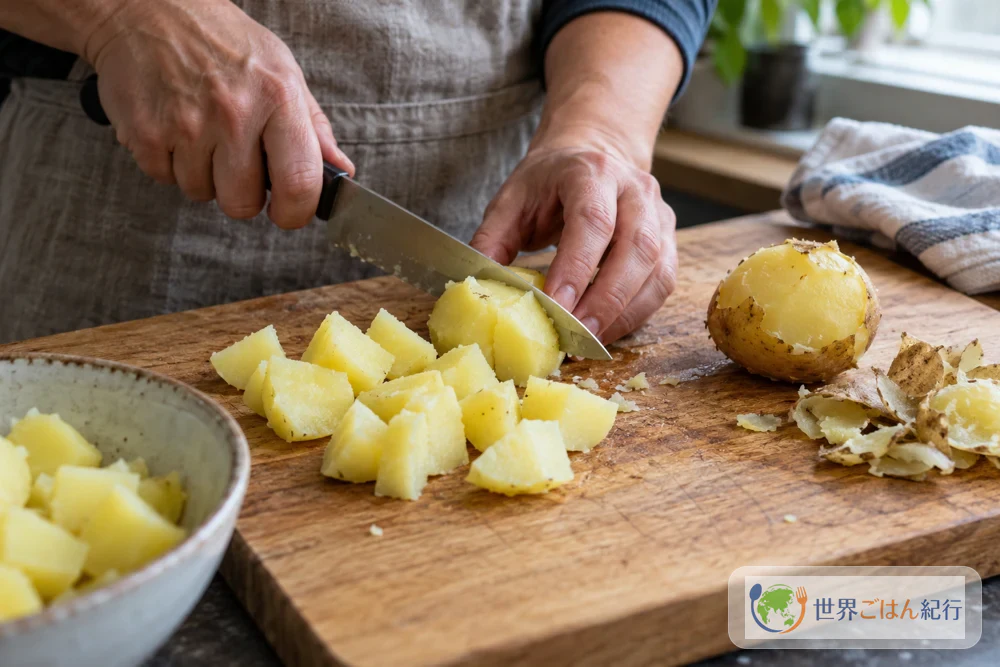
For potatoes, waxy ones that keep their shape when boiled suit best. Floury potatoes lose their corners when mixed and thicken the sauce, which is also delicious in its own way.
Ingredients (serves 4)
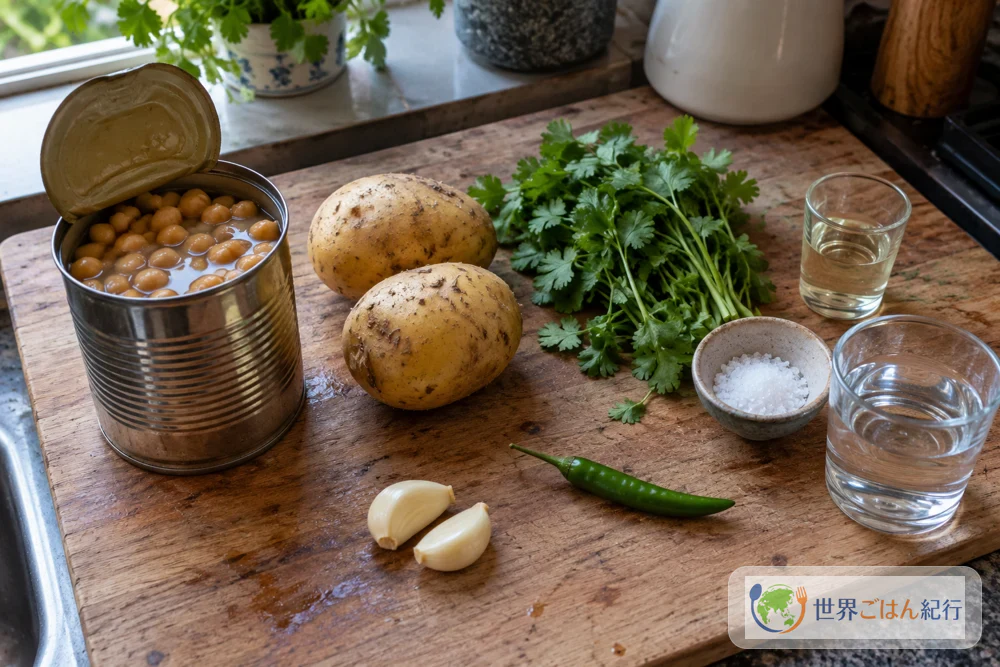
This dish contains no major allergens, but chickpeas are legumes. People with an allergy to legumes should be careful. After chopping green chili, wash your hands well so you don't touch your eyes or face.
How to make shor nakhod
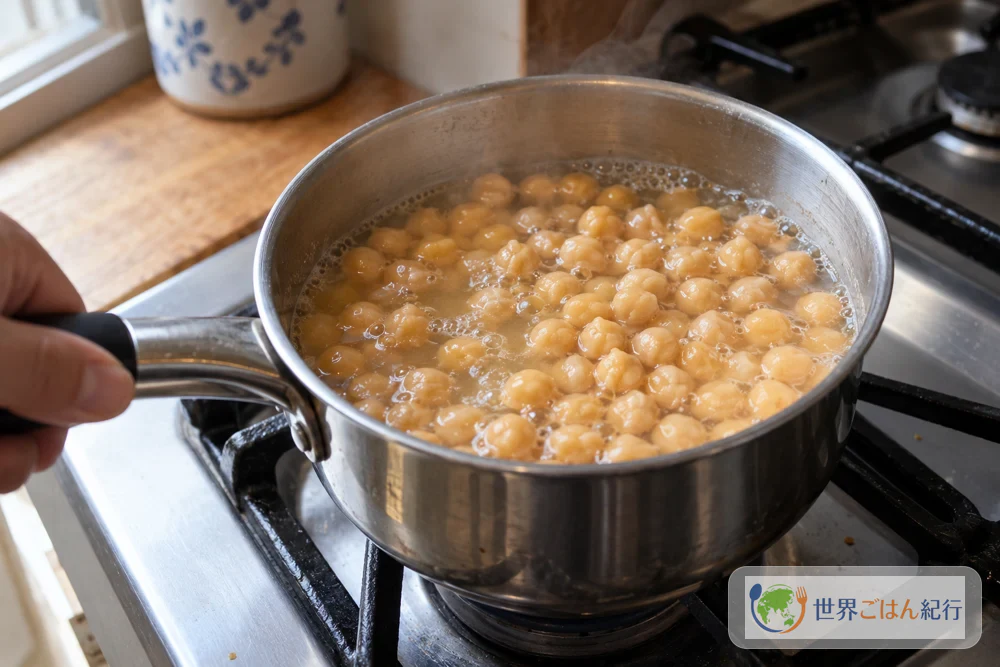
Including the time to boil the potatoes, it takes about 40 minutes in all. Making the cilantro sauce while the potatoes boil gets it done quickly.
Adding the sauce right before eating, as at the stall, keeps the color of the cilantro vivid. If left a while after making, the vinegar dulls the cilantro's green, but flavor soaks into the beans and potatoes in exchange. Decide when to add the sauce according to when you will eat.
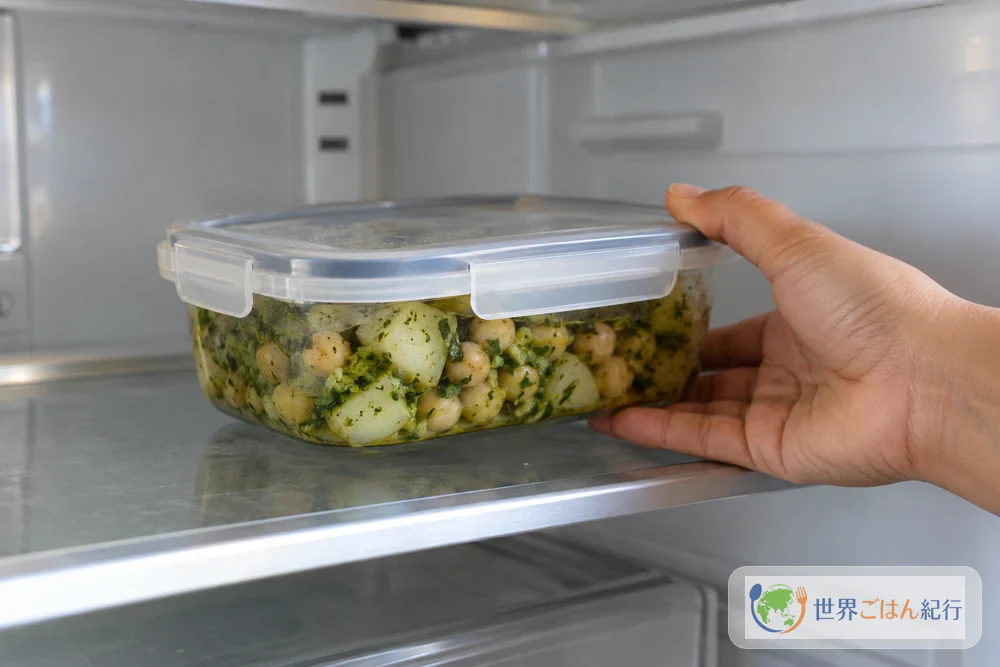
Once opened, don't store canned chickpeas in the can; move what you won't use to a storage container and refrigerate. Because the dressed shor nakhod uses raw garlic and cilantro, don't leave it long at room temperature, and refrigerate promptly what you can't finish.
Warm or cold, as a snack or a side
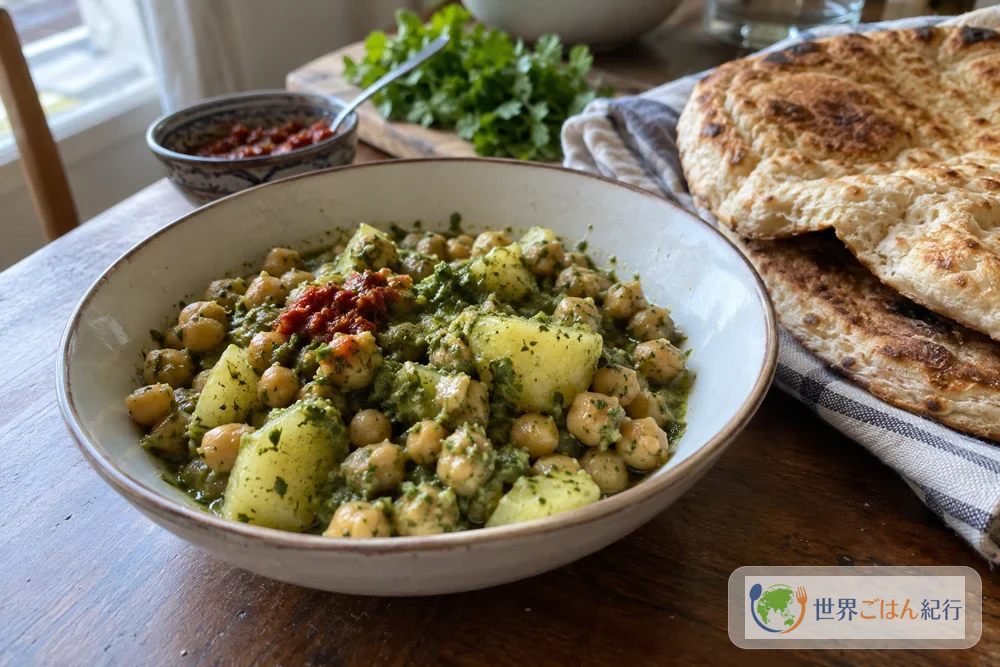
At the stalls shor nakhod is served warm, but at home it is enjoyed both warm and cold. Together Women Rise, an organization that presents Afghan-American cook Humaira Ghilzai's recipes, also says it may be eaten warm or chilled. Chilling mellows the acidity, and it becomes easy to eat as a salad on a hot day.
Hot sauce is generally made by grinding red chilies with garlic and vinegar. At home, a store-bought chili sauce or crushed red pepper dissolved in a little vinegar can substitute. With flatbread it makes a light lunch, and set beside dishes of an Afghan feast it works as a refreshing palate cleanser.
The green sauce of shor nakhod goes well not only with beans and potatoes but also served beside grilled meat or fried food. If you make extra, it can serve as a refreshing condiment at another day's table.
To cook another Afghan dish, combine it with ashak (in Japanese), the herb dumplings wrapped around leeks and scallions and boiled, Kabuli palaw (in Japanese), the celebration rice topped with raisins and carrots, and Afghan salad (in Japanese) of chopped tomato and cucumber, for a set that feels like an Afghan table.
Variations
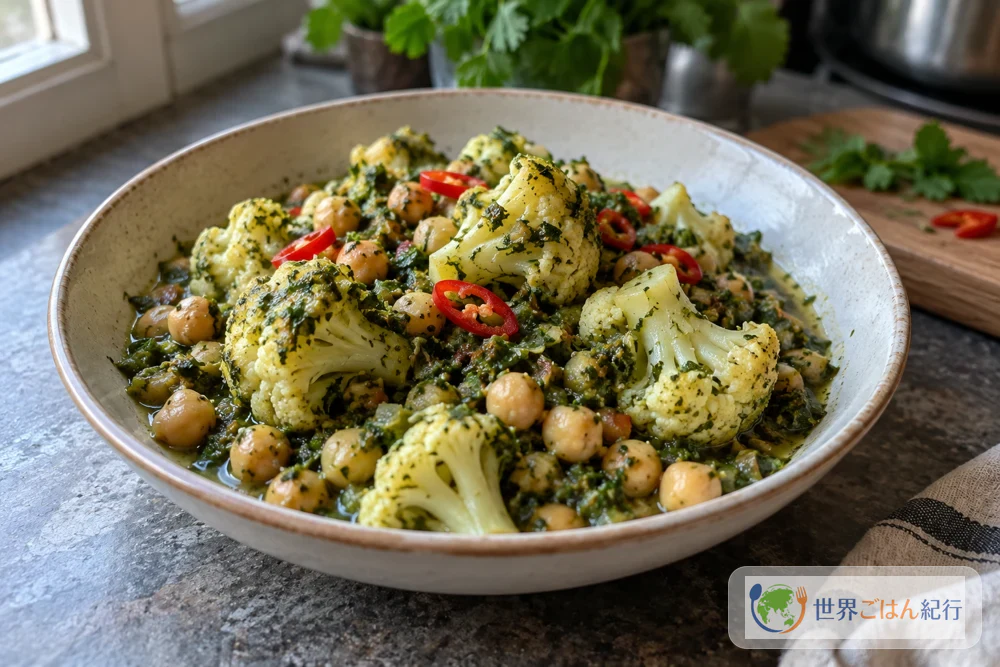
Using boiled cauliflower in place of the potato is also popular. Divide 1/2 head cauliflower into florets and boil in salted water for 3–4 minutes, until a little bite remains at the core. Adding a handful of mint leaves to the sauce alongside the cilantro increases the freshness. Scatter thin slices of red chili on top and it looks festive too.
You can also put everything in the blender and make a dip. With this article's ingredients, drain the chickpeas, blend them with the potatoes and cilantro sauce, and make it smooth by adding olive oil a little at a time at the end. Aim for just sour enough, and with flatbread or raw vegetables for dipping it is perfect as an appetizer.
FAQ
Can I make it ahead?
Dressed shor nakhod should be refrigerated in a storage container and finished by the next day. As time passes the cilantro color dulls and the aroma fades. If making ahead, I recommend refrigerating the beans and potatoes and the sauce separately and combining them right before eating.
Shouldn't I discard the canning liquid?
The Food Literacy Center recipe uses the liquid. The liquid adds a little thickness to the sauce and makes the bean flavor deeper. If the saltiness of the liquid bothers you, discard about half before using it, and if there is not enough liquid, add a little water.
Can I make it if I dislike cilantro?
You can make it with flat-leaf parsley or mint. The aroma will be completely different, but you can enjoy the same combination of garlic and vinegar in a sour sauce. Try starting by replacing only half of the cilantro.
What kind of vinegar is best?
The original is white vinegar, so distilled vinegar gives a similar taste. Some recipes use apple cider vinegar, which adds a fruity aroma and a softer acidity.
Sources
- Food Literacy Center, "Shor Nakhod (Afghan Cilantro Chickpea and Potato Dish)," published 24 March 2022. Accessed and checked 22 October 2026. https://www.foodliteracycenter.org/recipe/shor-nakhod
- Milk Street, "Dressing Vegetables the Afghan Way," published 29 November 2022. Accessed and checked 22 October 2026. https://www.177milkstreet.com/stories/dressing-vegetables-afghan-way
- Together Women Rise, "Afghan Potato Salad with Cilantro Dressing (Tested)" (recipe by Humaira Ghilzai). Accessed and checked 22 October 2026. https://togetherwomenrise.org/recipes/afghan-potato-salad-with-cilantro-dressing-tested


