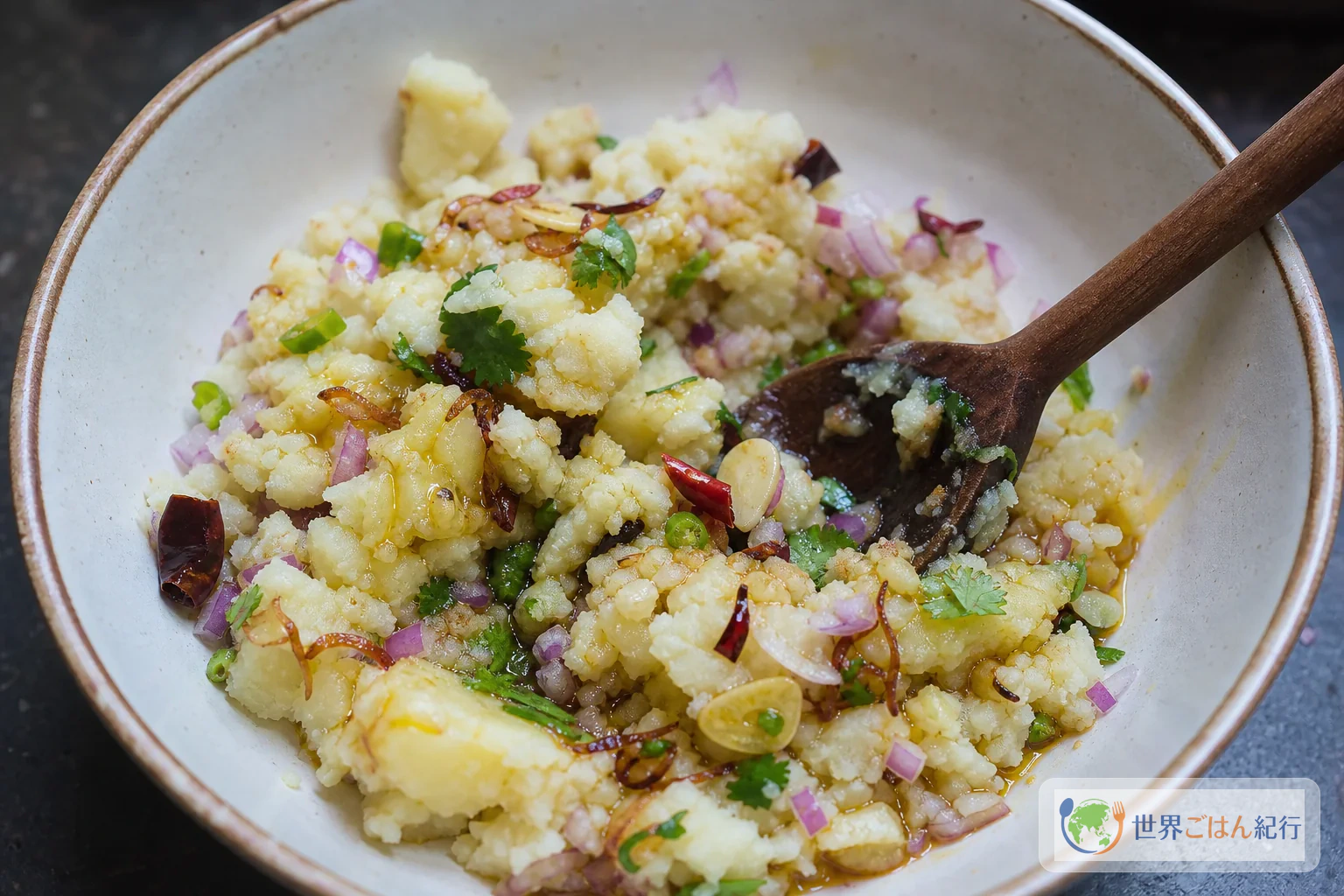
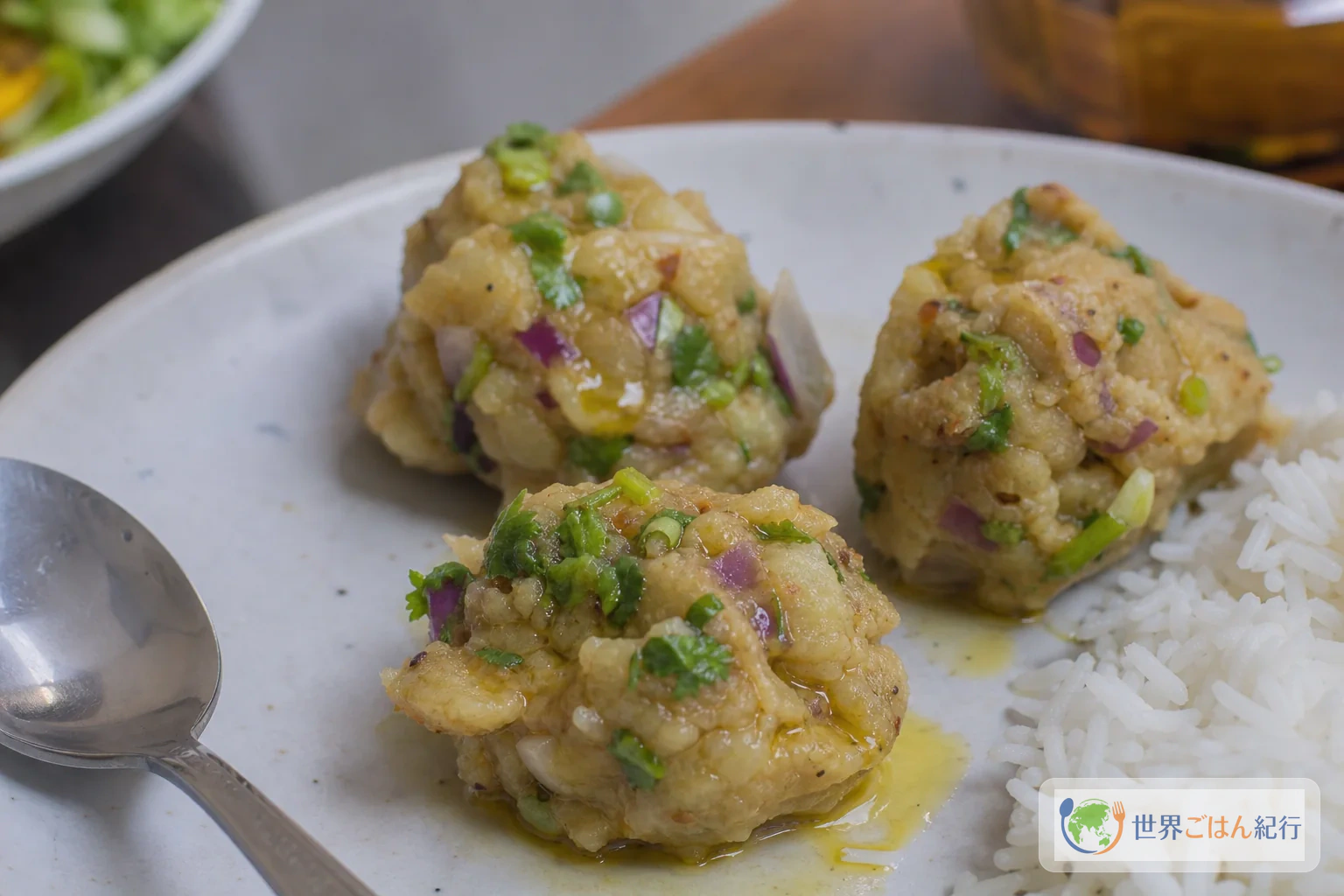
Bengali potatoes, fragrant beside the white rice
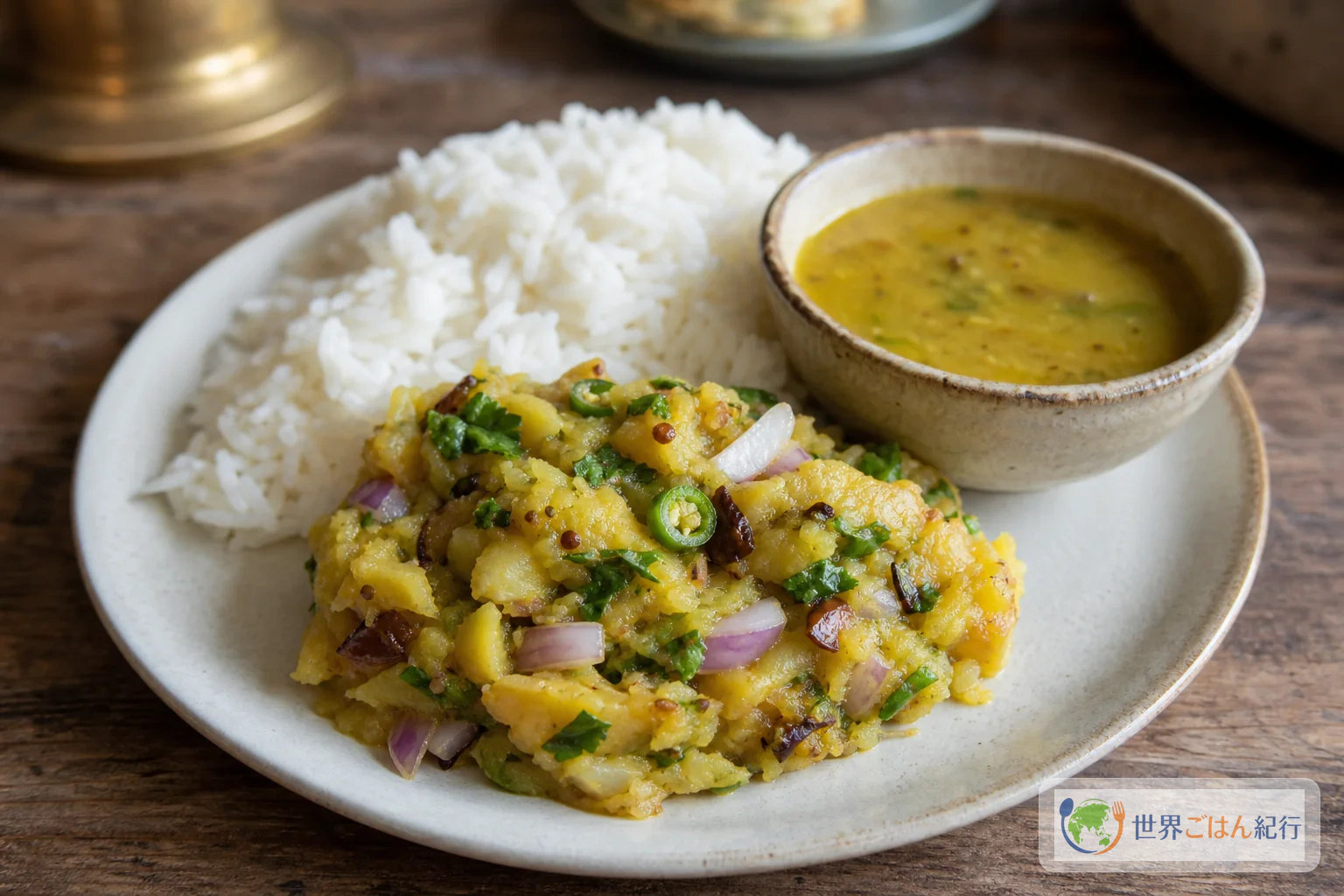
Put freshly cooked white rice on a plate and pour a little dal beside it. Then set a small yellow mound of potato next to it, and the air at the table changes. Not the scent of butter, but mustard oil that shoots straight up the nose, the bite of red onion, and the green fragrance of fresh chili. Aloo bhorta (Aloo Bhorta / আলু ভর্তা) is a side dish like spicy mashed potatoes that you often see on tables in Bangladesh and Bengal.
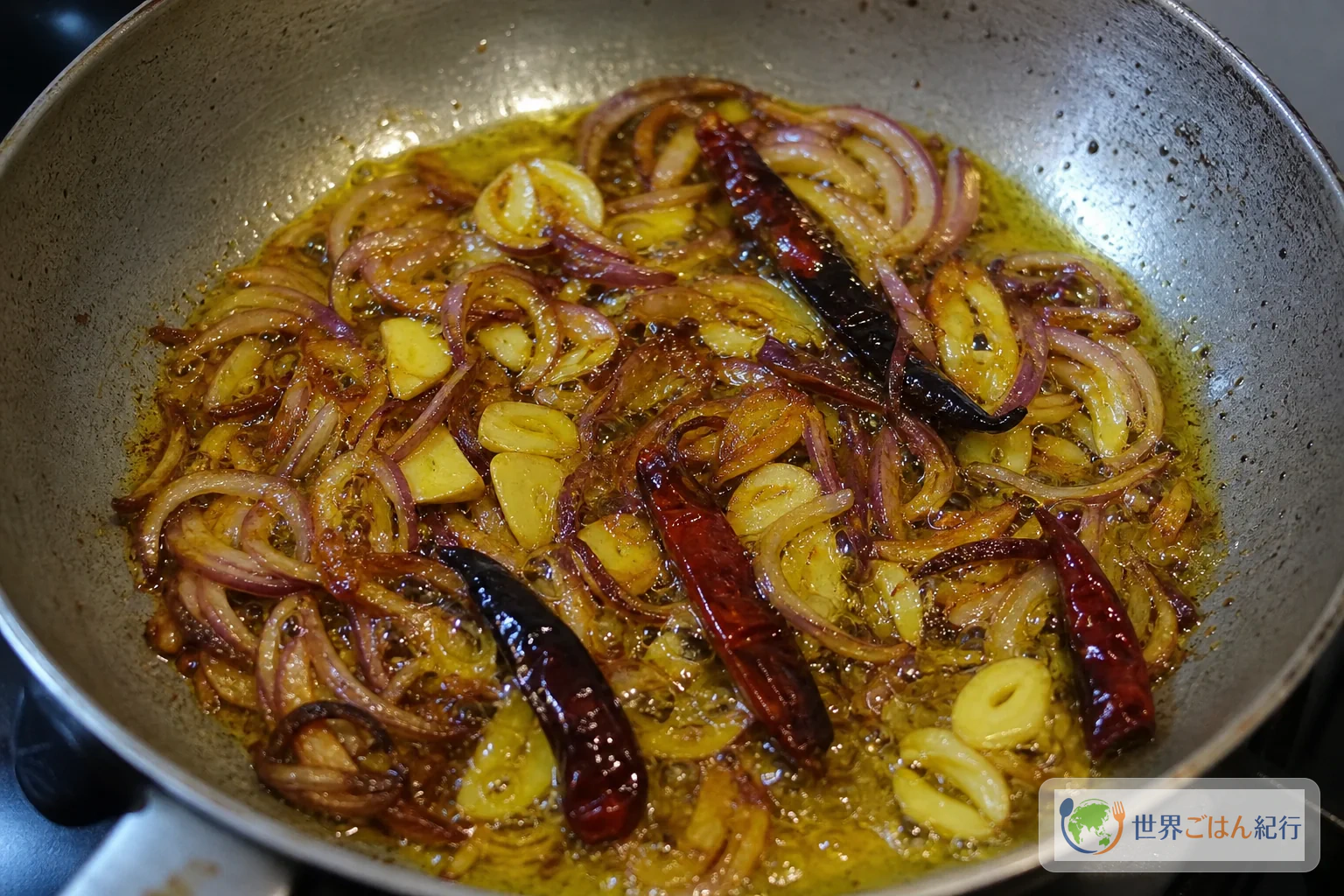
When you hear "mashed potatoes," you probably picture the Western side dish smoothed with milk and butter. Aloo bhorta is the opposite. It is not made too smooth, and the corners of the potato stay a little. The fat is mustard oil, not dairy. The aromatics are fried onion and garlic, dried chili, and then raw red onion and green chili. Mixed into rice little by little, the sweetness of the potato, the pungent aroma of the oil, and the sting of chili soak into the grains.
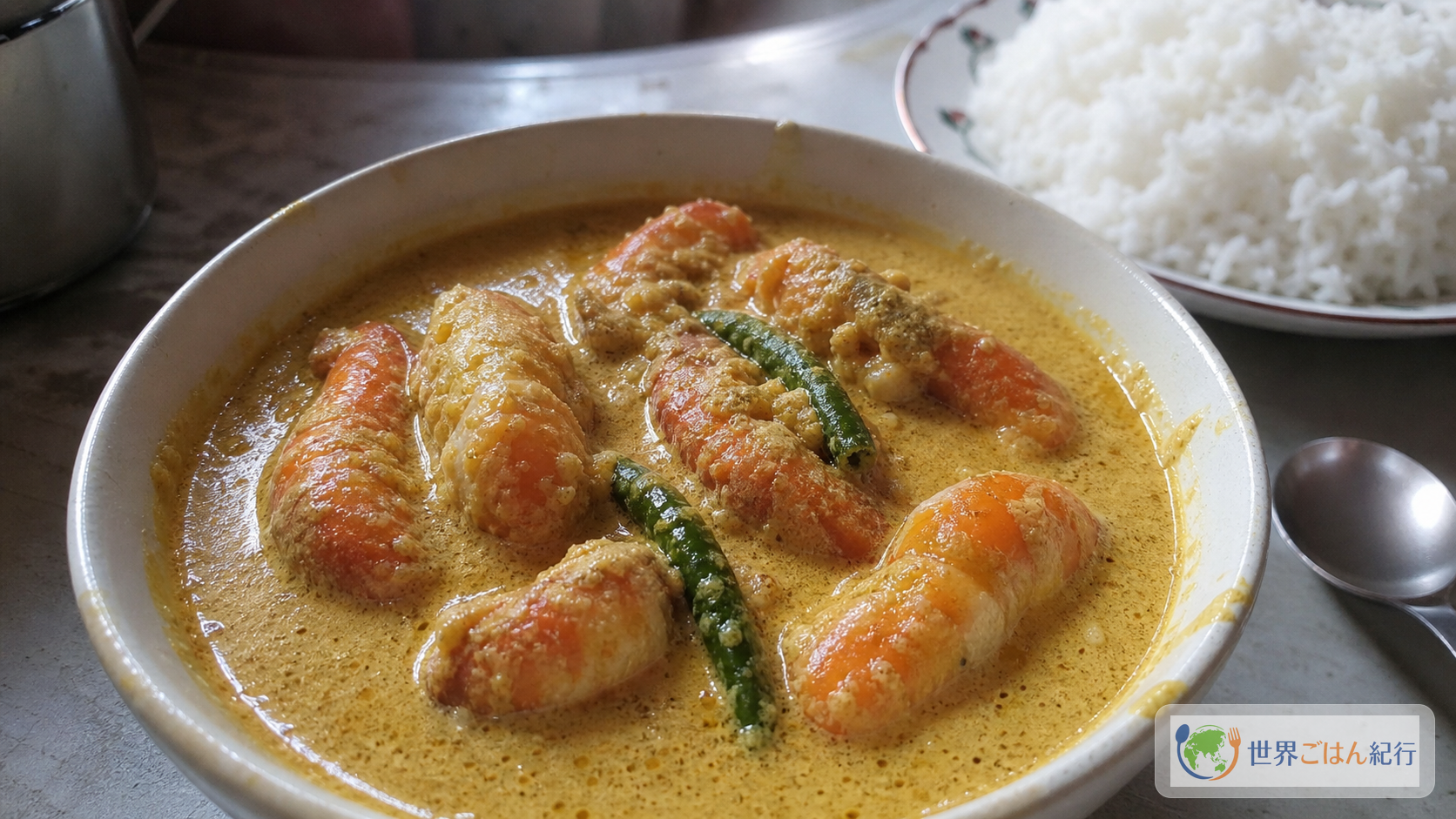
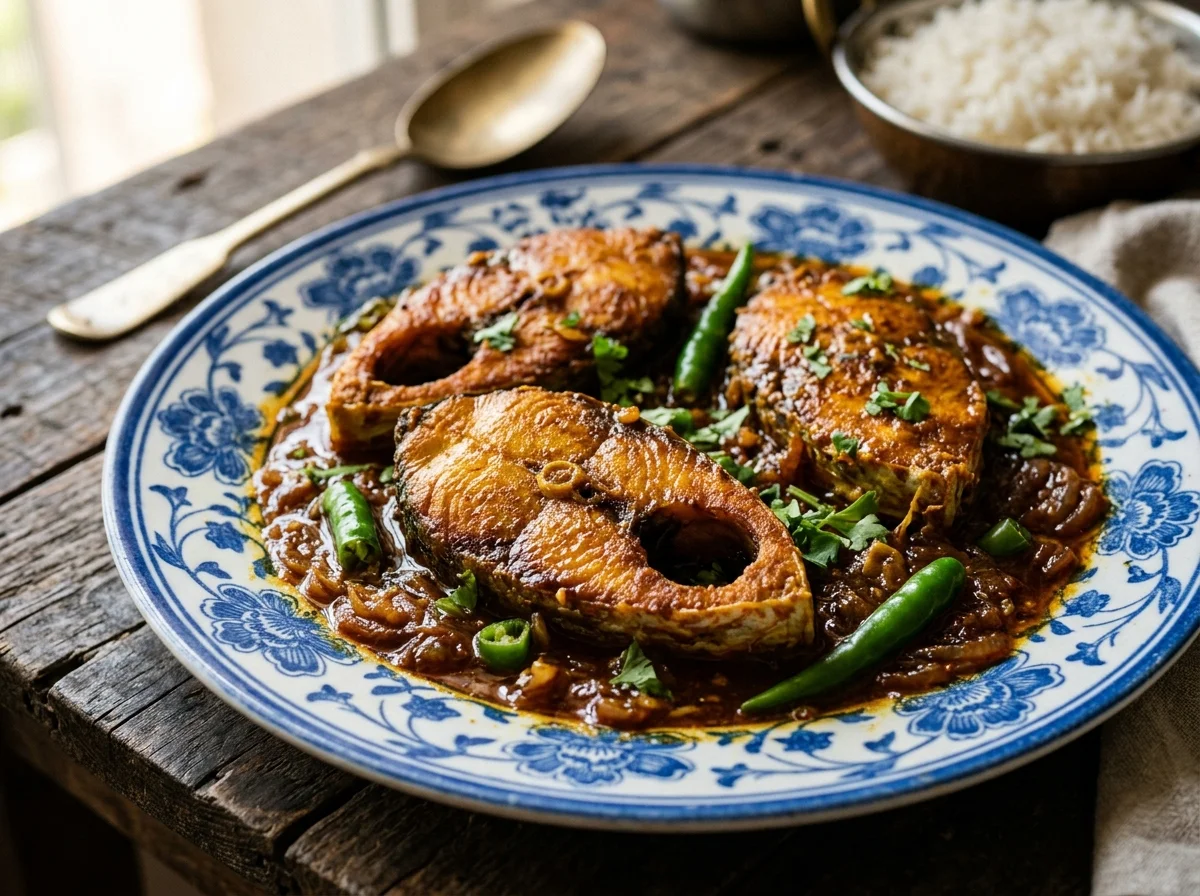
This article keeps the feeling of Bangladeshi home cooking while fitting it to quantities that are easy in a home kitchen. It works as a small dish in a rice-centered meal on a day with a hilsa fish dish like ilish bhuna, or beside the haleem of the Ramadan table. On a day when you want a little more rice-flour steam after the meal, continuing to the sweet bhapa pitha (in Japanese) shows how far apart a spicy side dish and a steamed sweet are within the same rice culture. And on a day you want the smoky char of roasted eggplant, setting the lighter begun bhorta beside it splits the roles between the sweetness of the potato and the toasty eggplant.
আলু (aloo) is potato, and ভর্তা (bhorta / bharta) refers to a dish of mashed and mixed ingredients. The English spelling varies: Aloo Bhorta, Aloo Bharta, Aloo Vorta, and so on. In Bangladesh the spelling bhorta is common, and there is a wide tradition of mashing vegetables, fish, dried fish, lentils, eggs, and more, and binding them with oil, onion, and chili.
Bhorta is not only "mashed": it is seasoning for eating rice
Bhorta looks simple at first, but its flavor design is quite clear. First, the main ingredient is mashed and salted while warm. Next, aromatics are brought out in oil. Finally, raw onion and chili are mixed in, leaving places where aroma comes only when you bite. With these three together, even a small amount makes the white rice go down.
On a Bangladeshi table, rice, dal, fish or meat, and several bhortas may be set out together. In terms of a Japanese set meal, the place is perhaps close to pickles or a seasoned miso condiment. But it is not something salt-preserved; it is a dish for enjoying the aroma of the day it is made. Mustard oil has a strong aroma when it meets air, and mixed with green chili, the sting changes with each bite.
The fork in the road when making it elsewhere is whether to use mustard oil. With vegetable oil alone you can make something like a "spicy potato salad," but the Bengali character weakens. The green pungency of mustard oil, the aroma that rises a little up the nose, and the glossy yellow oil that clings to the potato are the outline of this dish. If buying it for the first time, a bottle is worth having, since it can also go to dishes that use a lot of it, such as ilish bhuna or other eastern Indian fish dishes.
On the other hand, there is no need to force the original on yourself. Green chilies vary widely in heat from one to the next, so on a day you want less heat, split it into mild shishito-type peppers and a little chili flakes. If you have no red onion, use a sweet spring onion, and if you dislike cilantro, swap in scallion. The three points to keep are "do not make the potato a perfect paste," "bring out the aroma of the oil," and "leave a little raw aromatic."
Ingredients (serves 4): the amount to set beside white rice
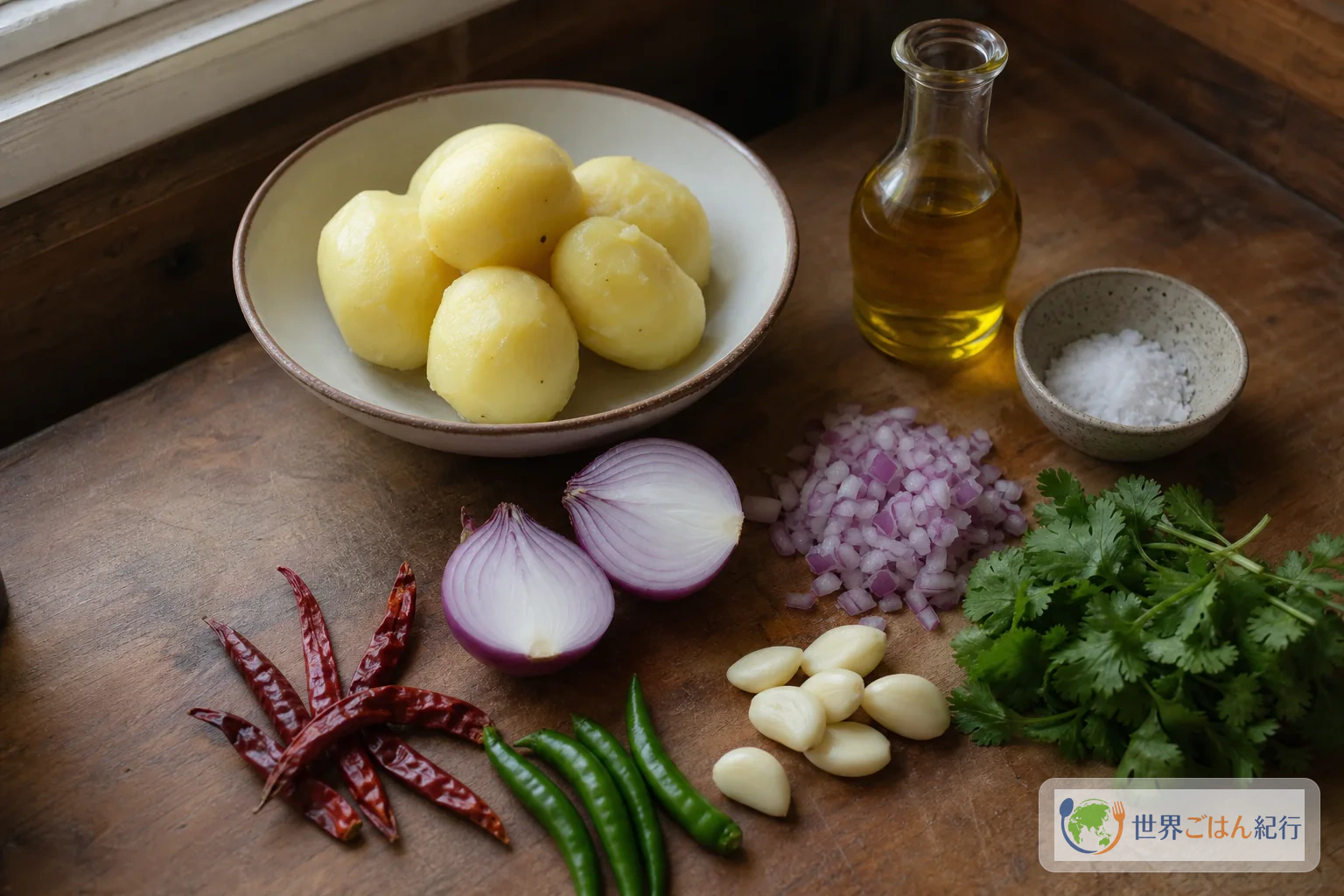
This serves 4. The amount is for a side dish placed beside white rice, dal, and a fish or egg dish, so it is not heaped onto a large plate like a main. With 600 g of potatoes you can make four small mounds about 6 cm across.
Mustard oil comes from mustard seeds. Do not serve it to anyone with a mustard allergy. Chili is strongly irritating to the stomach, so on days when children or people sensitive to heat are eating, leave out the green chili and serve it on a separate plate at the table. Cut away the sprouts and green parts of the potatoes generously, and do not use damaged potatoes.
How to think about shopping
Potatoes, red onion, garlic, cilantro, and lemon are all available at a regular grocery store. What is worth seeking out is mustard oil, whole cumin seeds that can be used for other dishes as a whole spice, and basmati rice for days you want the rice side lighter.
Mustard oil comes first. With vegetable oil, rice bran oil, or olive oil, the aroma that goes up the nose, unique to Bengali cooking, does not come. It is strongly aromatic in a small amount; after opening, store it in a cool dark place, and using it in fish curries, bean dishes, and stir-fried vegetables will help you finish it quickly.
Cumin seeds are not essential. The basic aloo bhorta has a clear outline with just mustard oil, onion, and chili. But if you want to try the feeling of moving the aroma of whole seeds into the oil, let just 1/4 tsp sizzle for 10 to 15 seconds right before the dried red chili. It is lighter in aroma than adding ground spice, and what is left over can go to dishes such as dal tadka and aloo gobi.
Japanese rice is no problem. If you set the dish on the same plate as dal or a fish dish and want the rice to catch the aroma of the oil lightly, a long-grain rice such as basmati makes the whole table lighter. It is easier to choose if you think of shopping not for aloo bhorta alone but for eating white rice, dal, and aromatic oil together.
How to make it: hot oil and a coarse texture
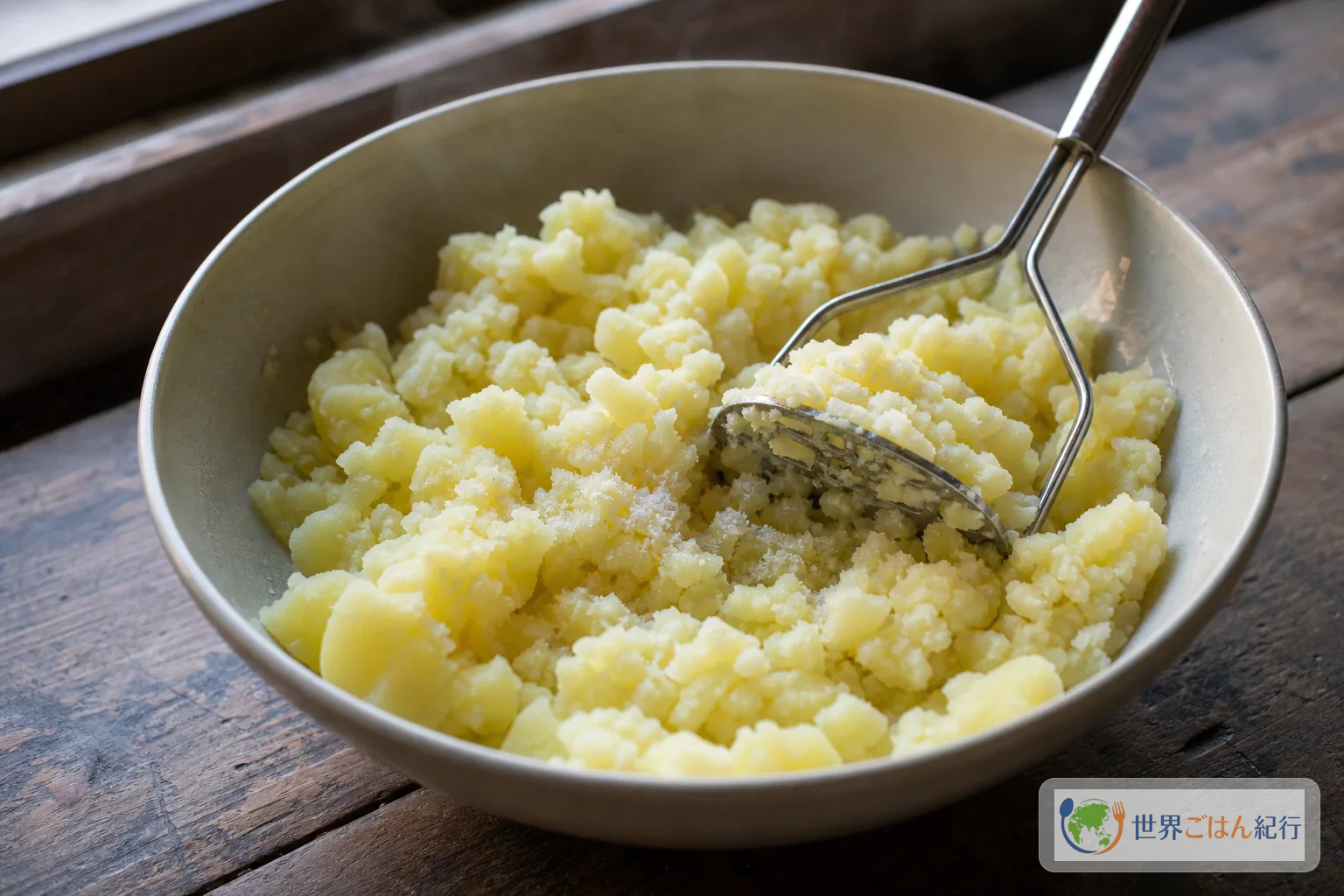
The high point of this recipe is not making the boiled potatoes too smooth. Make the aromatic oil in the pan, add it to the potatoes while hot, and mix in the raw aromatics last. It is built not as a make-ahead potato salad but as a side dish to set beside white rice while the aroma is still rising.
Substitutes: what to keep and what to change
Aloo bhorta has few ingredients, so the effect of substitutions is clear. Moving everything toward local Japanese ingredients makes it easier to eat but weakens the Bengali outline. Making only the heat match the original, on the other hand, makes it hard for a family to eat together. Deciding in advance where to change makes failure less likely.
| Ingredient in doubt | What to keep | Substitute |
|---|---|---|
| Mustard oil | The pungent aroma that goes up the nose, the glossy yellow oil | Mix 1/2 tsp of prepared mustard into 2 tbsp of neutral oil and add at the end. The local feel is weaker |
| Green chili | Fresh green aroma, heat that comes later | 2 shishito peppers and 1/8 tsp chili flakes. The heat can be separated |
| Red onion | Sweetness and bite when mixed raw | 80 g of sweet spring onion. It is milder, so add 1/2 tsp more lemon juice |
| Cilantro | The green aroma that lightens oil and chili | 12 g scallion. Less Bengali but goes with rice |
| Potatoes | Floury, coarsely crumbling, sweet | Waxy potatoes get sticky. If you use them, shorten the boiling time by 2 minutes |
If you make a version without mustard oil, heating the oil and then adding mustard drives the aroma off. If using prepared mustard, mix it into the oil after the heat is off, or add it right before mixing into the potatoes. But mustard varies by product in saltiness and sourness. It is safer to stop at 1/2 tsp first and add salt 1/8 tsp at a time at the end.
It is easier not to decide the heat by the number of green chilies alone. Fresh green chili has a good aroma and strong heat. Dried red chili carries toasty flavor into the oil and is mild if not bitten directly. On a day when someone in the family dislikes heat, use only dried red chili in the oil and put the green chili on a separate plate at the table. If the eaters mix it on their rice, the heat can be divided within one plate.
If you add cumin seeds, treat it as a branch in aroma, not part of the main recipe. After warming the mustard oil in step 2, add 1/4 tsp of cumin seeds and let them sizzle in the oil for only 10 to 15 seconds. They turn bitter if burnt, so once small bubbles appear around the seeds and the aroma rises, move straight on to the dried red chili and onion. Mixing in ground cumin tends to move the whole potato toward a curry-powder aroma, so in this dish use only a small amount of whole seeds.
Where it goes wrong: dry, oily, heat floating
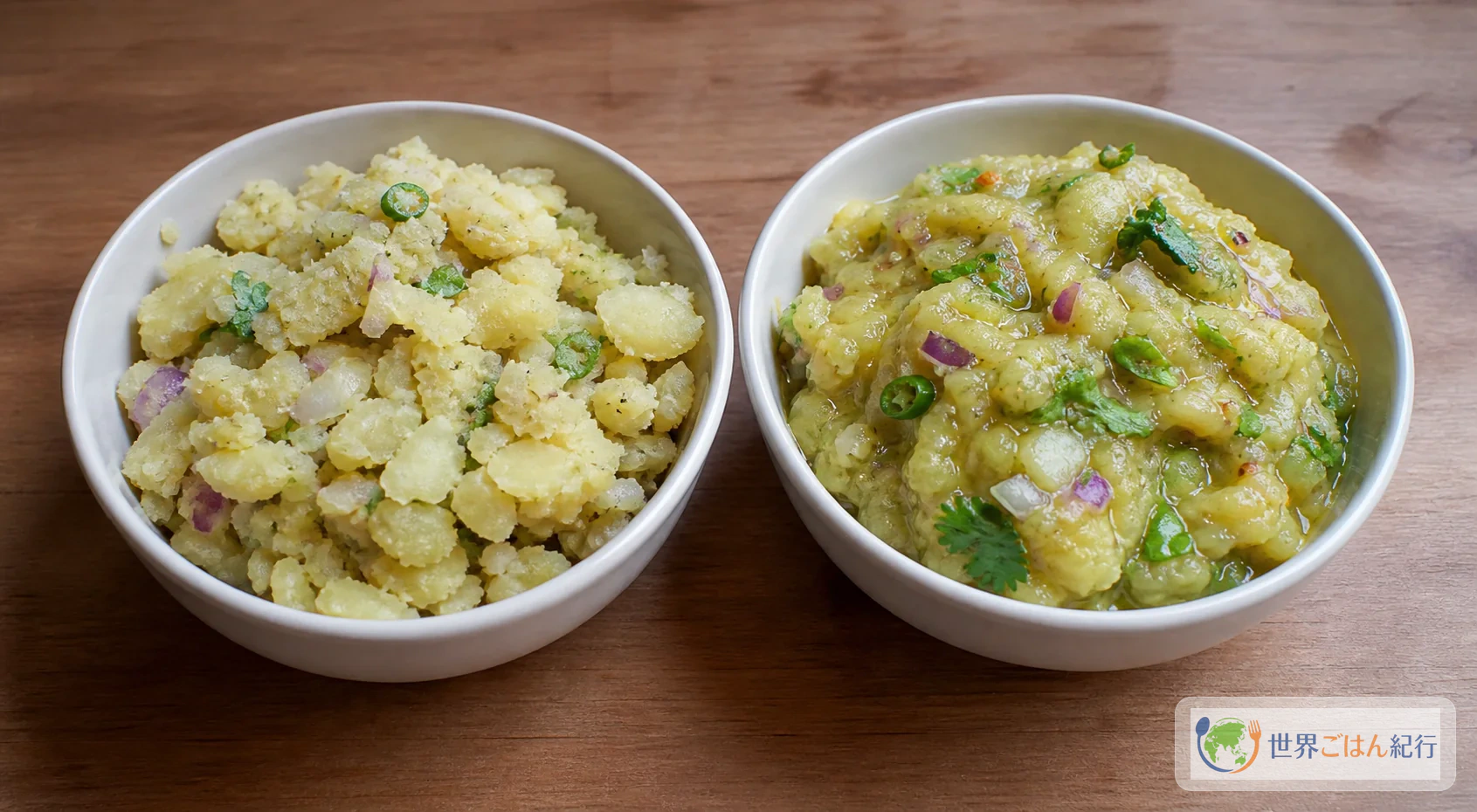
Aloo bhorta looks easy, but the amount of oil and how the potato is mashed change the impression greatly. Make it smooth in the manner of potato salad and it turns sticky; fear the oil and it turns crumbly. Because it is a dish you put a little of on white rice, it is right when it is slightly strong eaten alone.
| Condition | Cause | How to fix |
|---|---|---|
| Dry in the mouth | Steam driven off too far, too little oil | Add 1 tsp of mustard oil and turn from the bottom 20 times with a wooden spoon |
| Only oil left on the plate | Oil was added after the potatoes cooled | Warm in a 600 W microwave for 30 seconds and mix again while warm |
| Bitter | The garlic or chili burned | Remove the burnt aromatics and fry only the onion again in 2 tsp of fresh oil |
| Heat floating on top | Green chili cut too large, raw onion too thick | Re-cut the green chili to 2 mm rounds and the red onion to 3 mm dice and mix in |
| Sticky | Potatoes mashed too much, or waxy potatoes boiled too long | Next time use floury potatoes and leave lumps of 5 mm to 1 cm |
If it tastes flat, before adding more salt add just 1/2 tsp of lemon juice. Sourness cuts the weight of the oil and brings out the aroma of the chili. If it becomes too sour, eating it with white rice settles it. Judge aloo bhorta not by finishing it on its own but by the balance when eaten with rice, dal, fish, and eggs.
Tasted cold, the aroma of the oil feels weak and the salt stands out. Taste it once right after making, while warm, and mix it again right before serving. If it has sat for more than 20 minutes, warm it in a 600 W microwave for only 40 seconds, just until the oil on the surface loosens; the aroma recovers.
How to eat it: a little at a time beside rice, dal, and fish
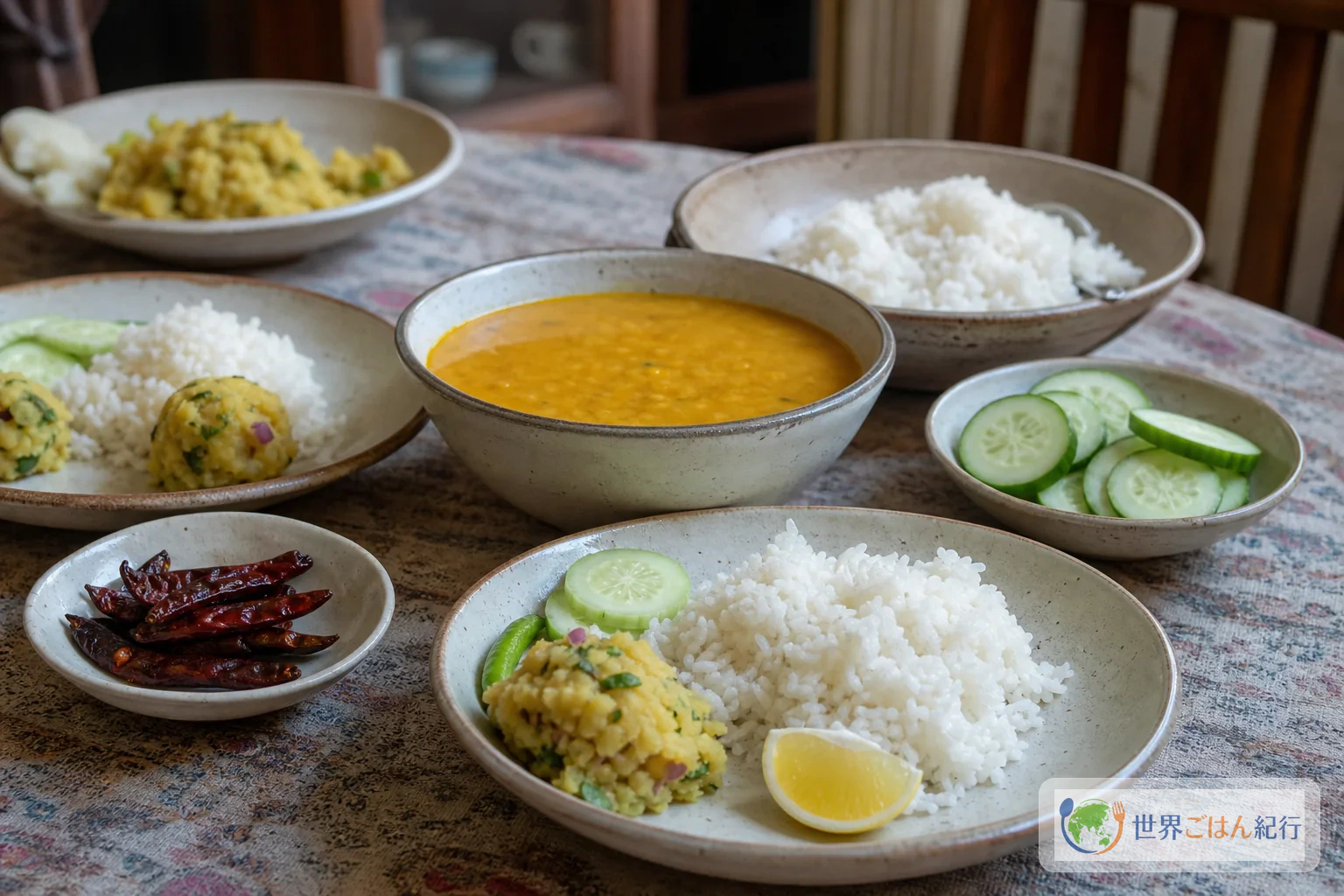
Aloo bhorta is easier to eat set as a small portion beside the rice than heaped in the center of the plate. First take a bite of plain rice, then rice with dal, and last crumble a little aloo bhorta into it. Then the sweetness of the rice, the gentle moisture of the dal, and the aroma of mustard oil come in turn.
On a day you want more sourness, put just 1 tsp of the Bengali green mango pickle aam er achar (in Japanese) beside it, and the sweetness of the potato does not feel heavy. Dividing roles, aloo bhorta as what you mix into warm rice and the pickle as what returns sourness and oil aroma with each bite, brings movement to the table even in small portions.
With fish, Bangladeshi ilish bhuna goes well. Since the fat of hilsa or mackerel, turmeric, and mustard oil overlap, halve the green chili in the aloo bhorta and add a little more lemon, and you won't tire. For a dense meat or grain dish, keep it on a separate plate from haleem and use it like a small condiment. On an Indian-food day, put in with dal tadka (in Japanese) or tandoori chicken side dishes, it connects naturally as a dish beside the white rice.
Is it good for a lunchbox? Not very. The aroma of raw onion, cilantro, green chili, and mustard oil is strong, and cold, the oil feels heavy. At home, the best way is to put it on warm rice and eat it right away. If you must carry it to the next day, put it in a small container, warm it lightly in the microwave, and put it on the rice.
For a menu, white rice, dal, aloo bhorta, cucumber, lemon, and either an omelet or grilled fish is enough. Since it is a dish of oil and heat, put something refreshing beside it. Cut the cucumber into 5 mm rounds and the lemon into wedges so you can reset your mouth partway through.
Storage and making ahead
Aloo bhorta is a dish of aroma, so fresh is best. If storing, move it to a clean container once the heat has dissipated and keep it refrigerated until the next day at most. Because it contains raw red onion and cilantro, do not leave it at room temperature for long. Anything left more than 2 hours after being put on the table is safer not kept in summer or in a heated room.
If you only move the steps forward, stop at boiling and peeling the potatoes. Break the boiled potatoes into larger pieces and put them in a container; they keep refrigerated until the next day. Take them out of the refrigerator 30 minutes before eating, warm for 1 minute in a 600 W microwave, then mix in the salt and aromatic oil, and the aroma is close to fresh. Do not mix the red onion, green chili, cilantro, and lemon juice in ahead of time. Moisture comes out, the heat dulls, and the outline of the mustard oil blurs.
To reheat, put one serving in a heatproof container, cover loosely with plastic wrap, and warm at 600 W for 40 seconds. Stir the whole, and if cold spots remain, add 20 seconds. Overheating brings out the raw onion aroma too strongly and makes the potatoes heavy. After reheating, adding just 1/4 tsp of lemon juice brings back the aroma of the oil.
I do not recommend freezing. Potatoes lose moisture when frozen and turn gritty after thawing. If you want to make ahead, boil and peel only the potatoes, store them refrigerated until the next day, and mix in the aromatic oil and raw aromatics right before eating. This keeps the aroma close to fresh.
Frequently asked questions
Q. Does mustard oil have to be heated before use?
The strength of aroma differs by product, but this recipe warms 2 tbsp as the aromatic oil and adds 1 1/2 tsp at the end for raw aroma. Using all of it raw is too sharp, and heating all of it rounds the aroma too far. Use this split the first time, and from the next time adjust to your family's taste, for example by reducing the finishing oil to 1 tsp.
Q. What do I do if I can't find green chili?
Slice 2 shishito peppers 2 mm and mix in 1/8 tsp of chili flakes. The shishito supplies the green aroma and the chili flakes supply heat. Bell pepper alone has a sweet aroma and lacks the sharpness of chili. On a day you want to split the heat at the table, don't mix in green chili or chili flakes; serve them in a small dish.
Q. Do I have to use basmati rice?
No. At home, serving it on freshly cooked short-grain rice is delicious enough. The good of basmati is that the grains are light and do not become heavy with mustard oil or dal. Make it with short-grain rice the first time, and try long-grain only on a day you eat it on one plate with dal or a fish dish.
Q. Does adding cumin seeds make it a different dish?
I wouldn't say a different dish, but it moves a little from a plain Bengali potato dish toward the whole-spice aroma of the Indian subcontinent. On days you prioritize the local character, leave it out, and keep it to 1/4 tsp only on days you want to try a change of aroma. Mixing in ground cumin later tends to be powdery, so if you use it, sizzling the seeds briefly in oil holds together better.
Q. Can I add butter or milk?
Adding them moves it toward the mashed potatoes commonly seen elsewhere. To make it as aloo bhorta, leave out the dairy and build the aroma with mustard oil, onion, and chili. Even when you want to lower the heat for children, removing the green chili and using less red onion and cilantro keeps the dish's outline better than adding butter.
Q. Can I boil the potatoes after peeling?
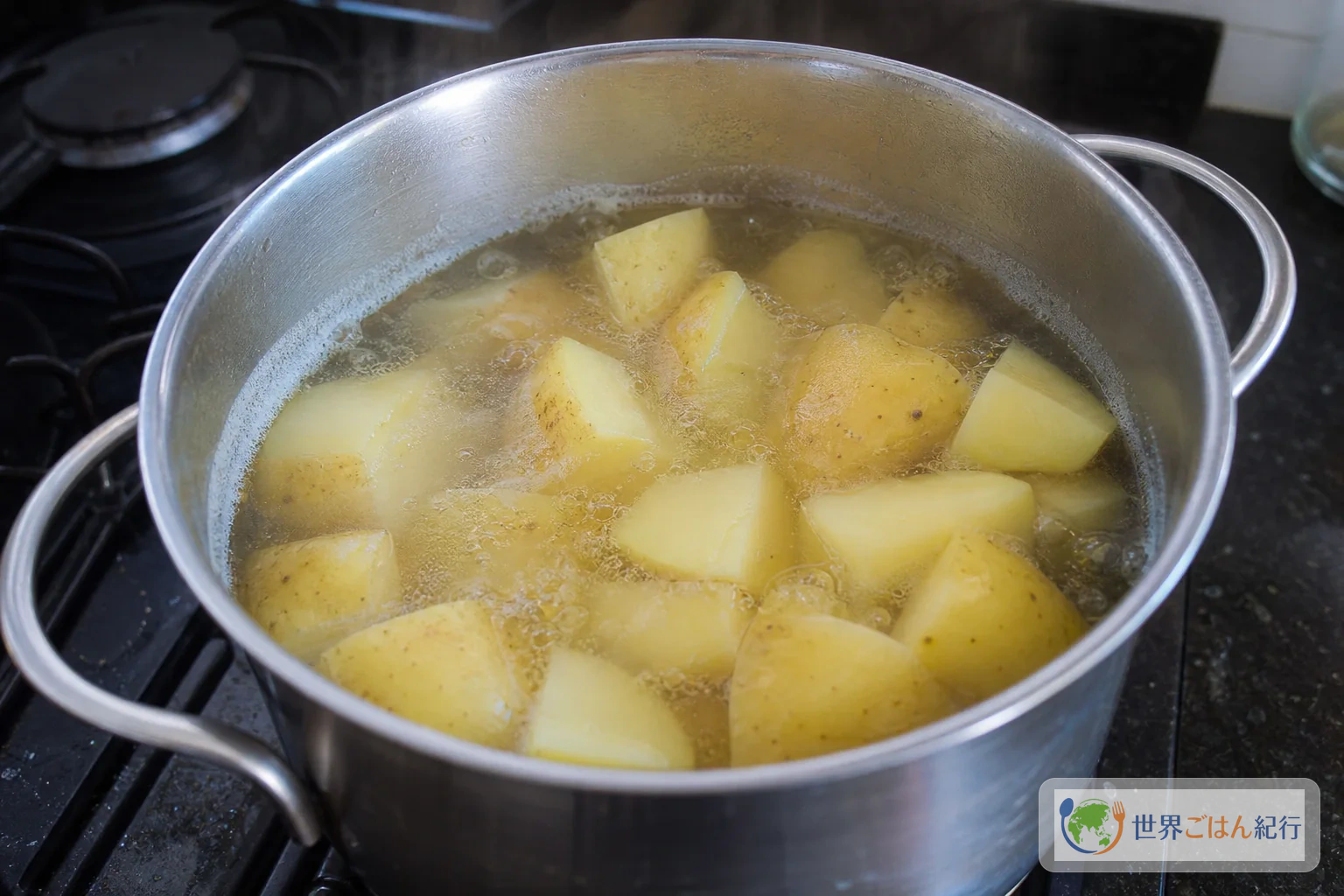
You can make it that way. But they absorb water more easily from the cut surfaces and turn watery when mashed. Boiling 3 cm cubes with the skin on and peeling while hot gives a fluffy center that holds together more easily when the oil goes in. On a day you want to save time, peel before cutting and drive off the moisture well before mashing.
Q. How hot is local style?
Households differ a lot, so the number of chilies alone cannot give the right answer. Putting a small portion beside white rice and dal, and letting each eater adjust the heat while crumbling it, is the easiest. The amounts in this article, 1 green chili and 2 dried red chilies, give a firm aroma and a medium heat. If you want it stronger, rather than increasing the mixed-in amount, put chopped green chili on a separate plate at the table.