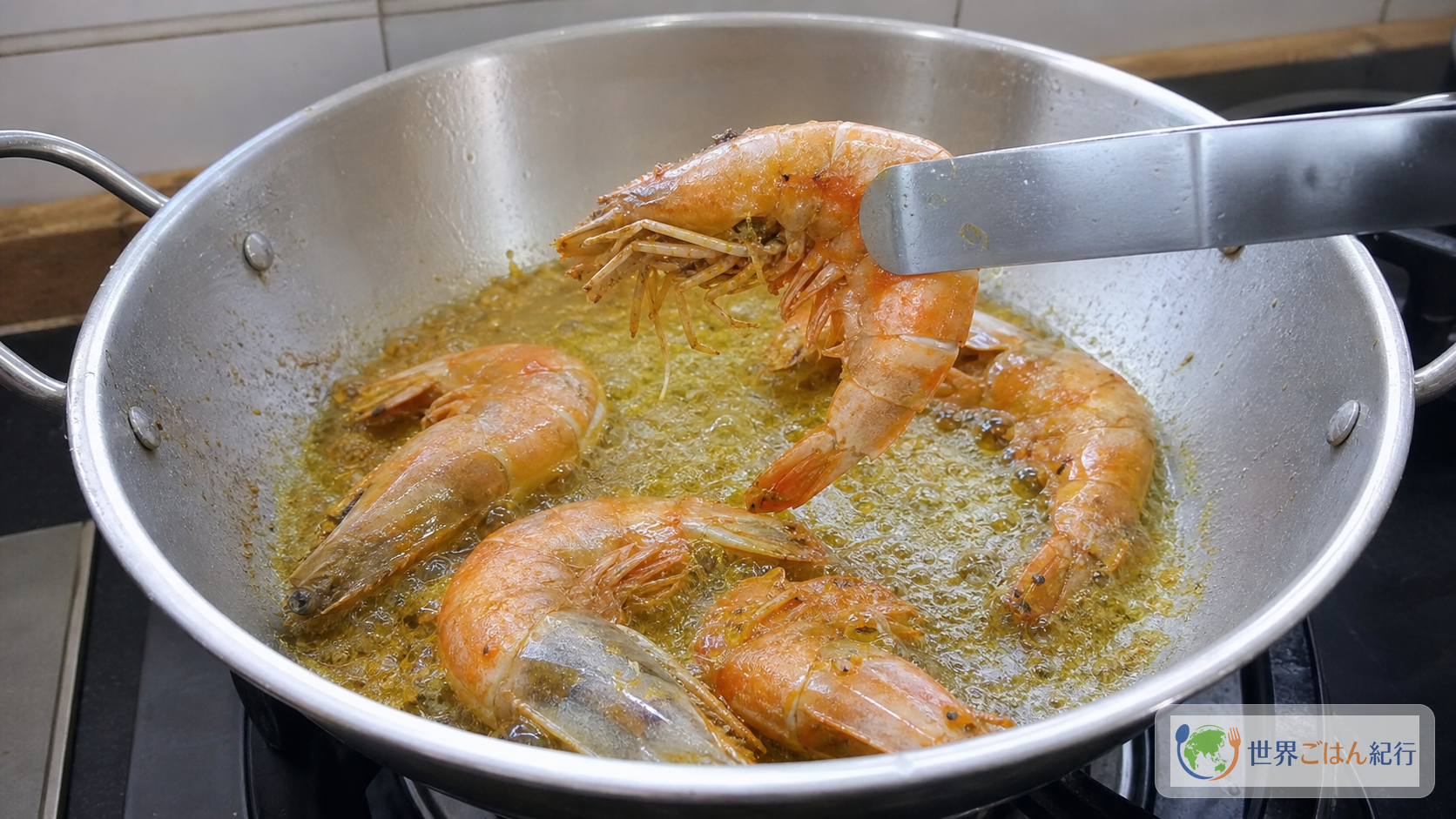
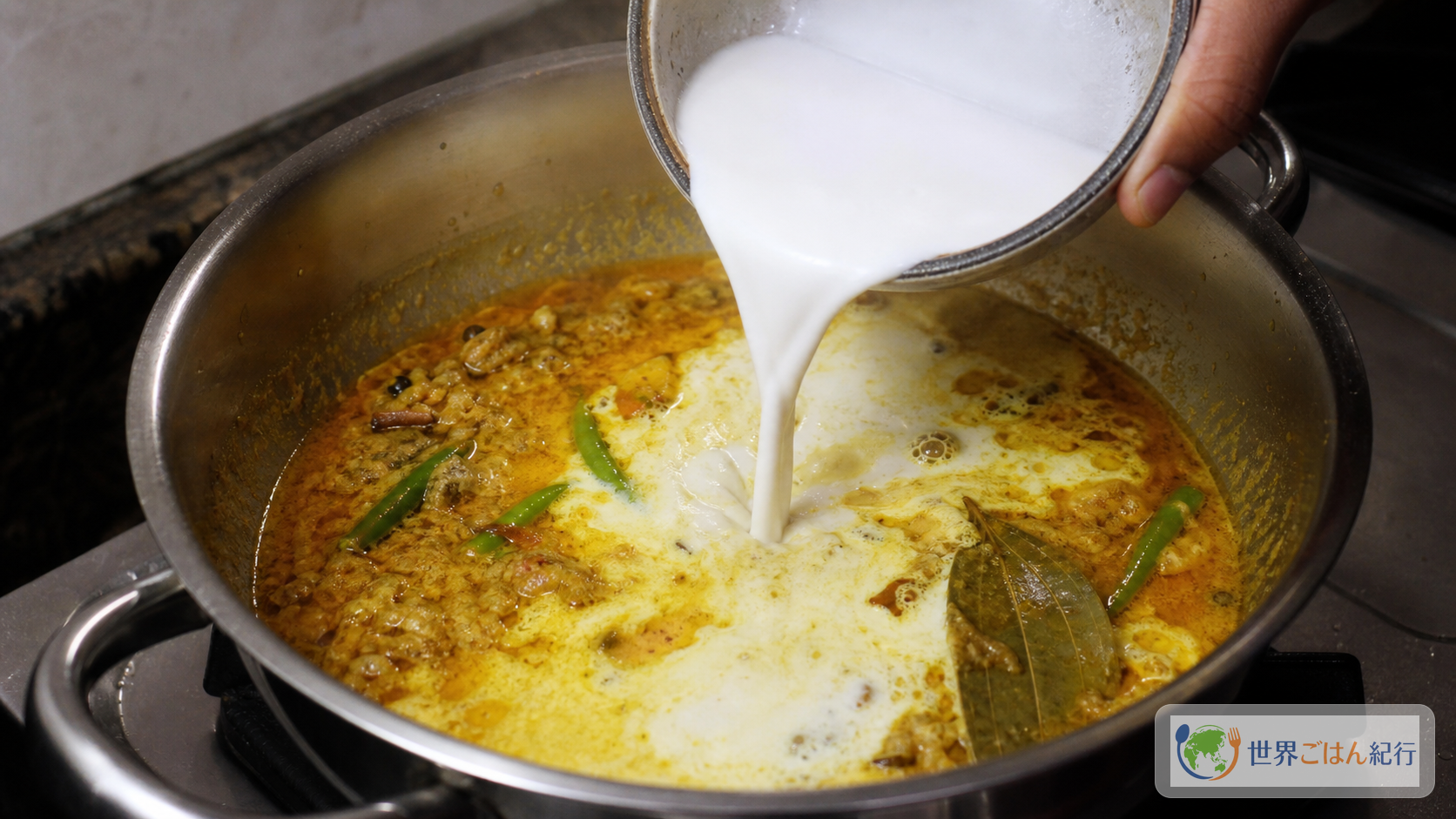
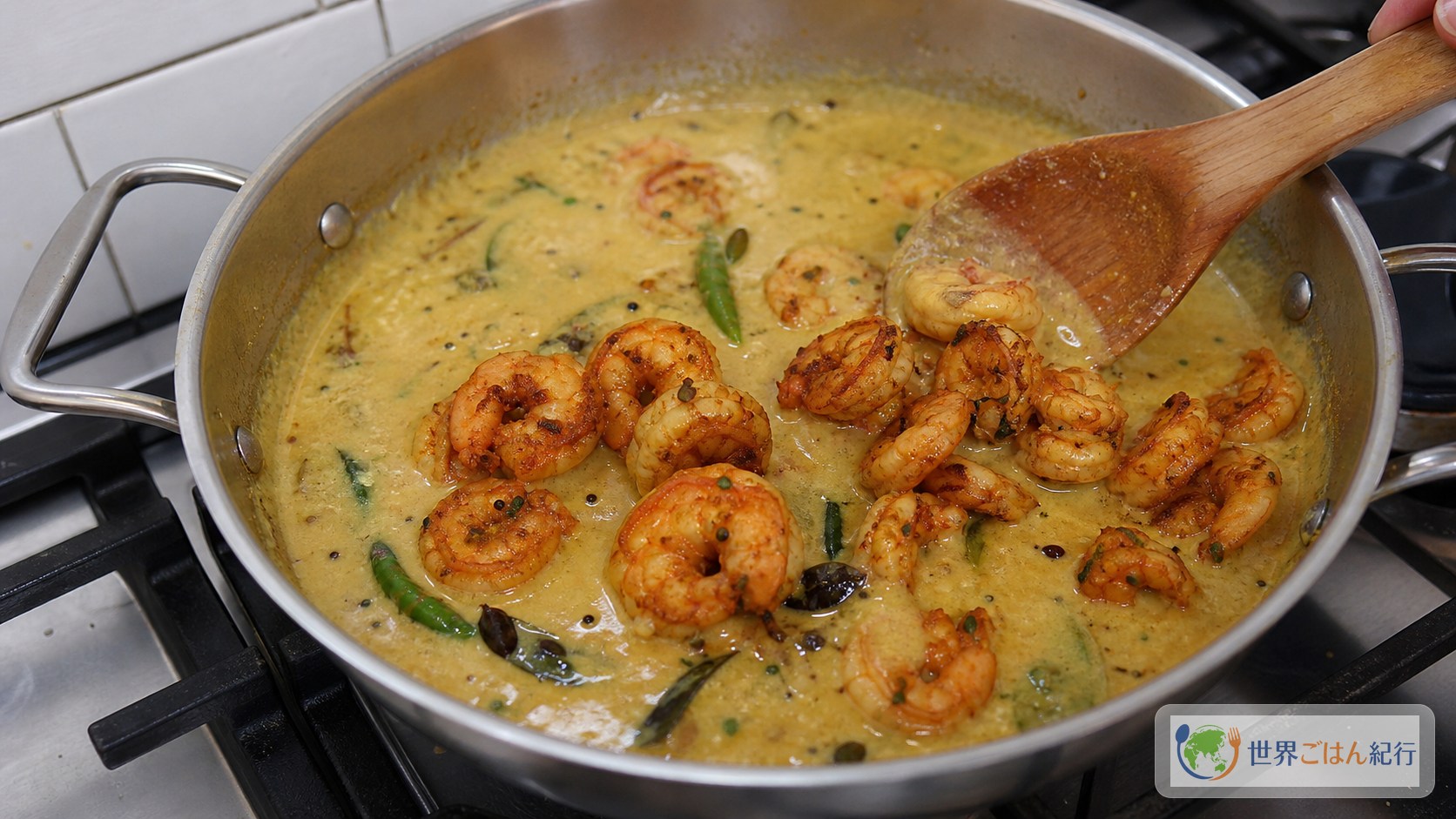
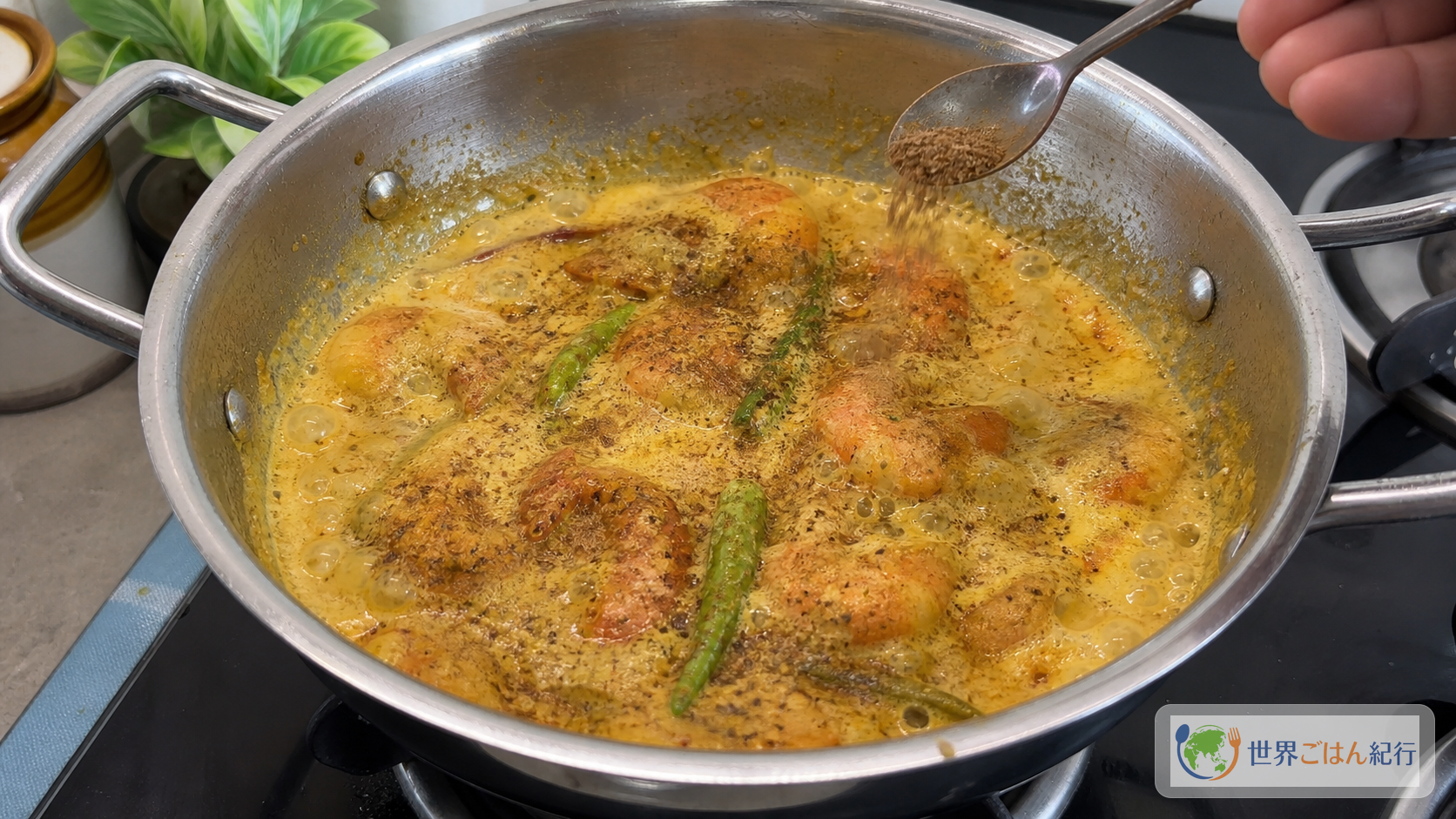
The moment the prawns turn orange in the pan
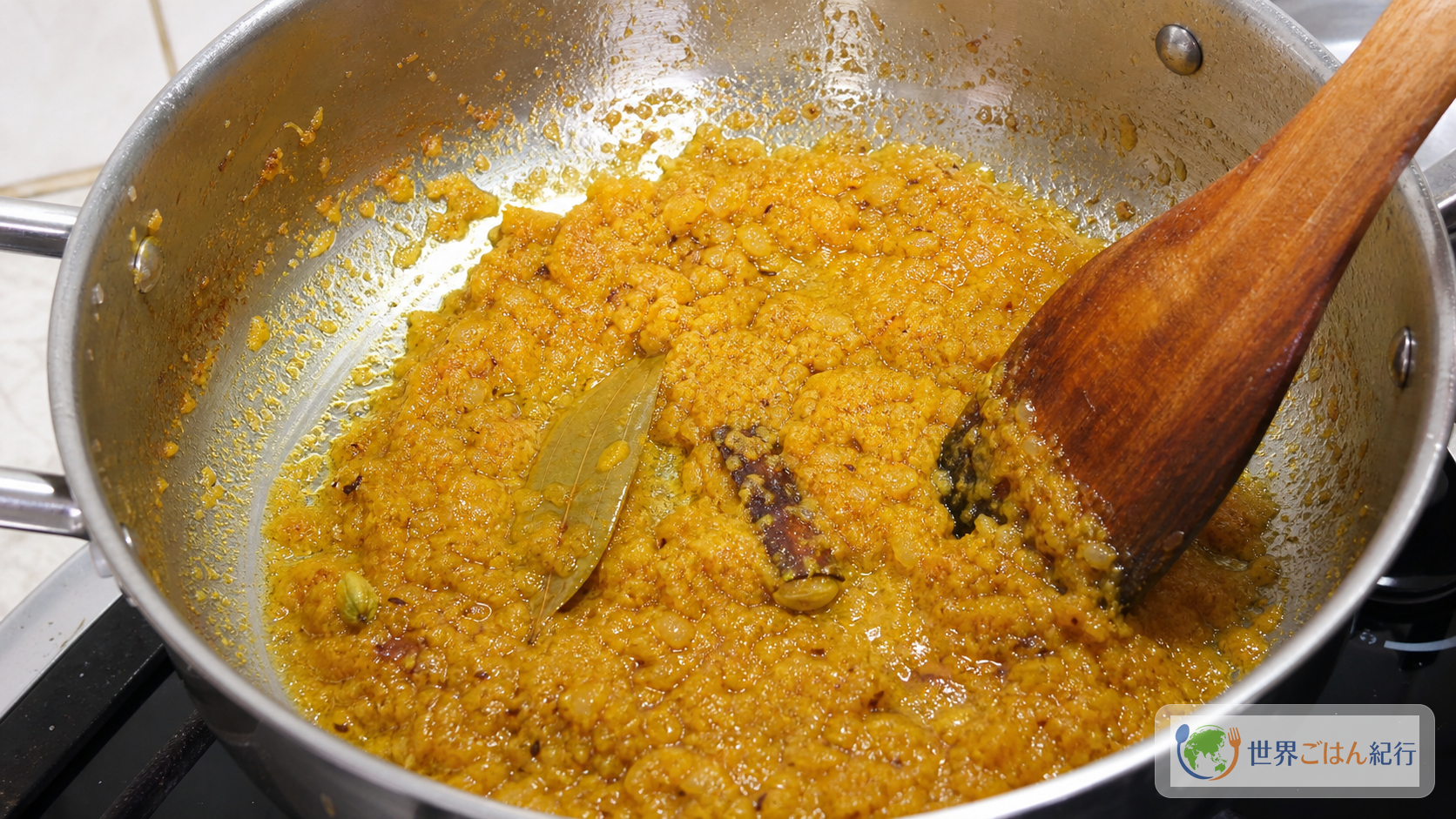
Set prawns in hot oil and the gray shells turn orange from the edges. You want to cook them longer, but hold back once, and take them out while the center is still a little translucent. The aroma of the prawns stays on the bottom of the pan, and when onion, ginger, bay leaf and cardamom go in, the kitchen moves at once toward a Bengali festive table.
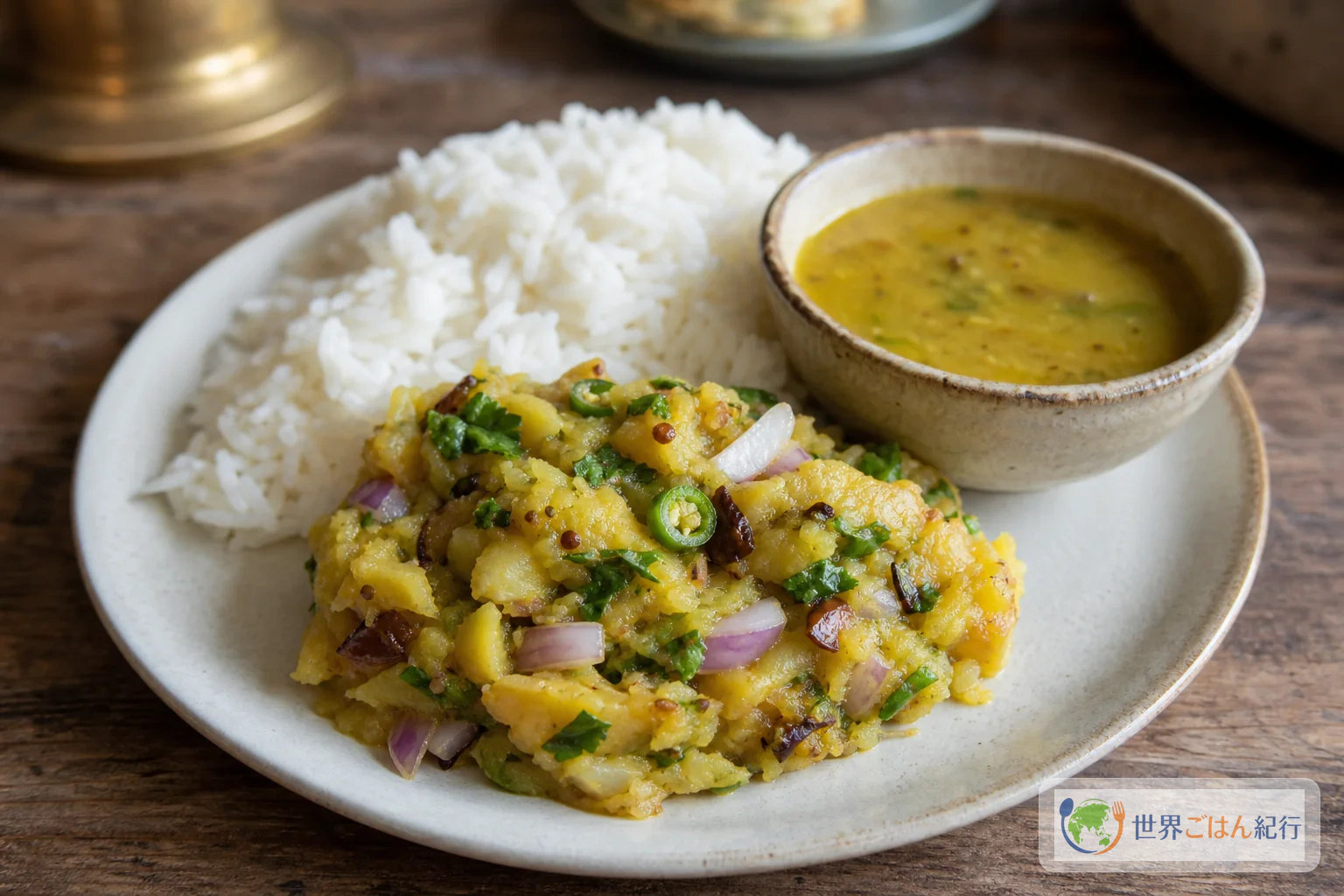
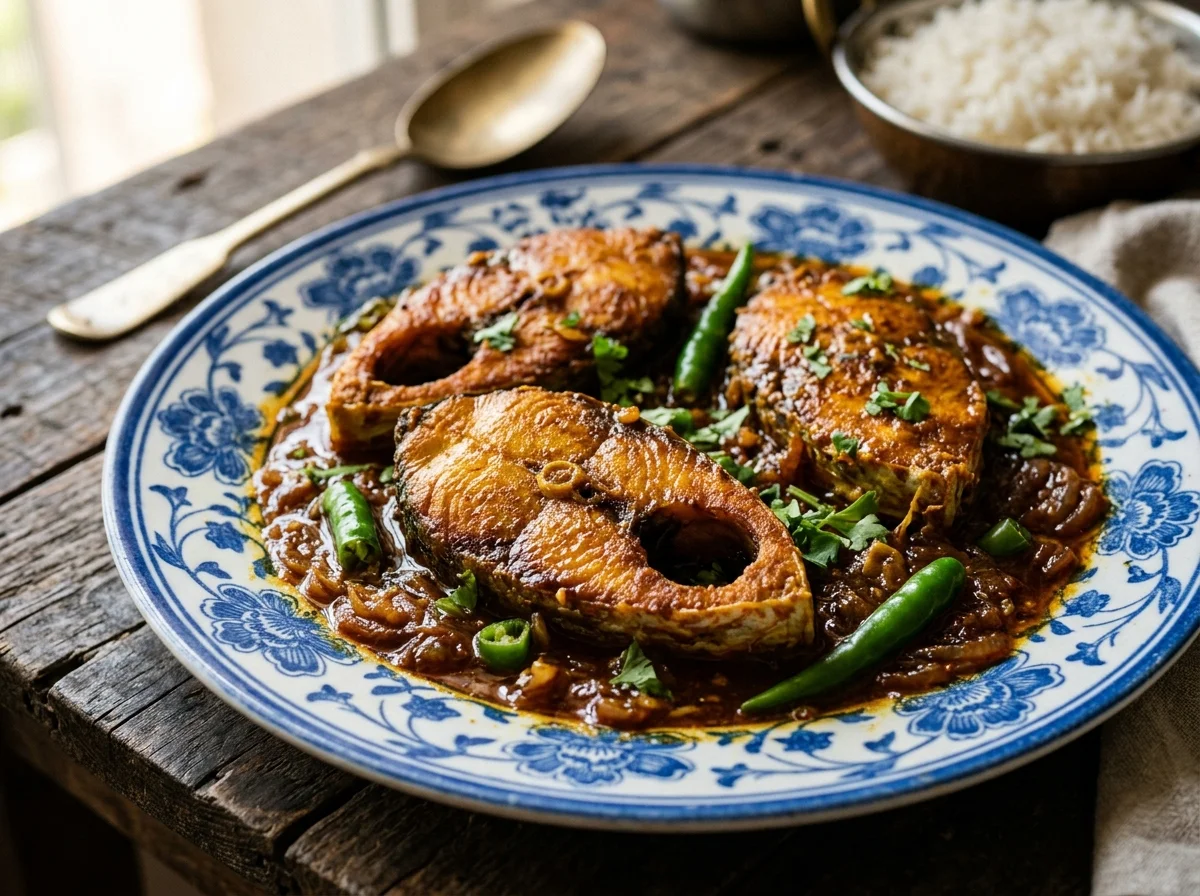
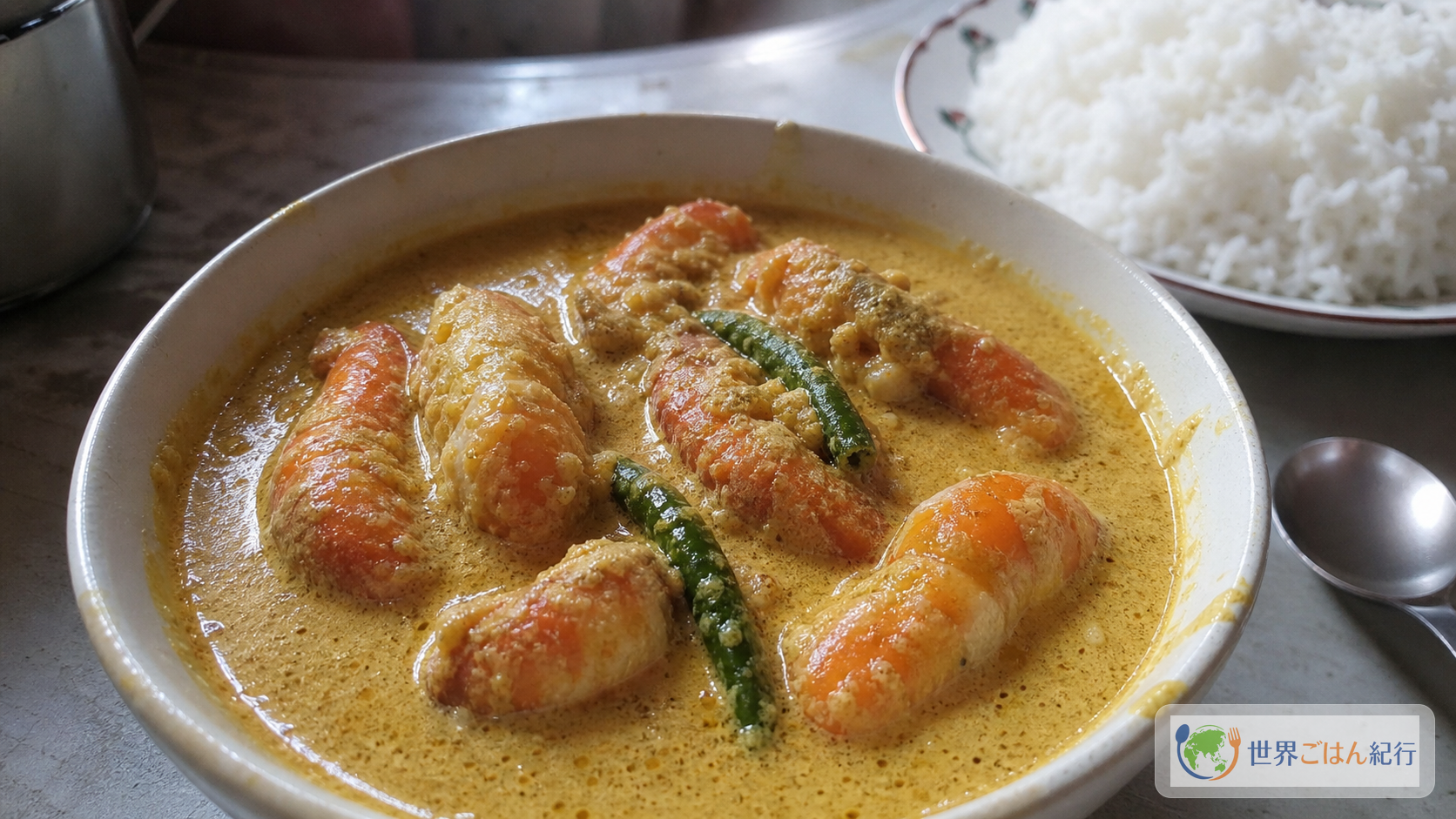
Chingri malai curry (Chingri Malai Curry / Chingri Malaikari / চিংড়ি মালাইকারি) is a dish from the Bengal region in which prawns are simmered in a pale coconut milk sauce. It is loved in Bangladesh and West Bengal and served as a main dish with white rice or polao. Among Bangladeshi fish dishes, it is rounder than ilish bhuna, which pushes mustard and the fat of the fish, and more of a dish for guests than aloo bhorta, the mashed vegetable served alongside rice.
The crux when cooking it is not toughening the prawns, not boiling the coconut milk too hard, and not leaving the onion raw-tasting. This article uses shell-on tiger prawns, frozen peeled prawns, canned coconut milk, and easy-to-find turmeric and garam masala, and settles on a method that does not stray too far from the outline of the original.
Chingri is used as the Bengali word for prawn. The English spelling varies: Chingri, Chingri Malai Curry, Chingri Malaikari and so on. This article calls the dish chingri malai curry and gives the more local form, Chingri Malaikari, alongside.
The local table and its origins: "malai" is not only cream
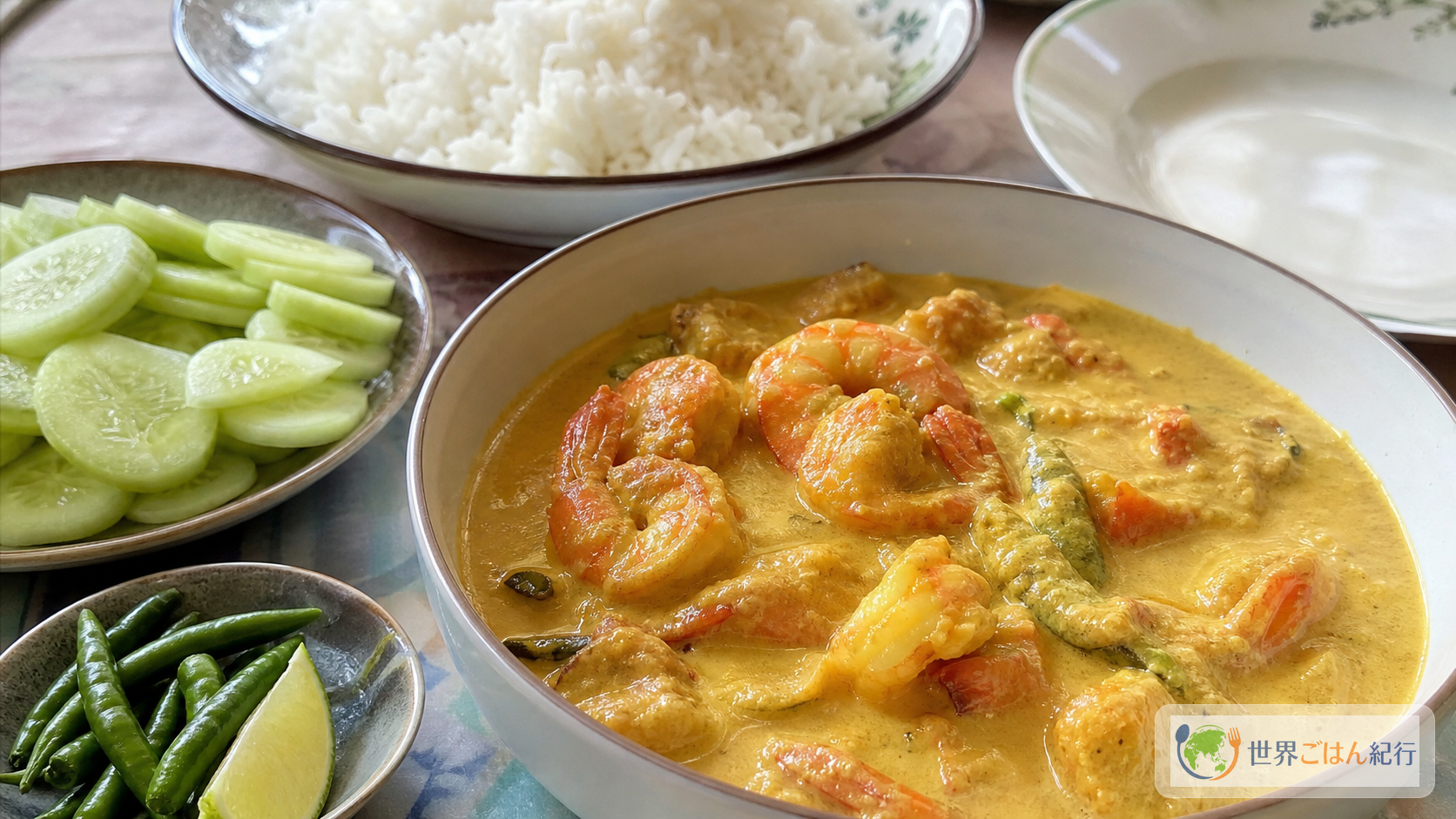
On a Bengali table, rice and seafood are a strong axis. There is the memory of lands near rivers, estuaries and the bay, and from everyday fish dishes to festive plates, seafood is more than mere protein. Within that, chingri malai curry leans a little toward a day of celebration. It uses large prawns and finishes the sauce pale with coconut milk, so it looks softer than a red, spicy curry and suits a table that welcomes guests or a day the family gathers.
The "malai" in the name recalls the milk-fat cream often seen in North Indian cooking. But Bong Eats and explanations of the dish's name say that while the look of prawns simmered in coconut milk tends to link it with "cream," another view introduced is that it changed from "Malay curry," suggesting the influence of Malay trade and cooking. Rather than deciding for one, it is more useful in the kitchen to see it as a dish from a Bengal that has taken in outside ingredients and techniques through rivers and sea, cities and trade. Coconut milk is sweet, and prawns turn tough quickly if overcooked. To bring these two together gently, the aroma leans on cinnamon, cardamom, bay leaf and a finishing garam masala.
There are regional differences too. In households that use large river prawns or tiger prawns shell on, the shells give the sauce umami and at the same time protect the flesh. Households that cook with peeled prawns find them easier to eat, but must shorten the cooking even more. At the Bangladeshi table the dish sits close to white rice, while introductions from West Bengal and Kolkata sometimes speak of it as a festival or guest dish. Close in the east of India, there are also prawn coconut curries such as Odisha's Chungdi Malai, and even where names and ingredients are alike, the placement of aroma and the sweetness of each household differ a little.
In a home kitchen, protecting the prawns matters more than hunting for the same large prawns as in the original. With shell-on tiger prawns you have more room in the cooking, and with frozen peeled prawns you wipe off the water well after thawing and shorten the searing time even more. There is a method of separating the first and second pressing from fresh coconut, but away from the source, it is more stable to loosen canned coconut milk with a little water and add the thick part at the end. Fry the onion paste through without scorching, do not boil the coconut milk hard, and return the prawns last for a short simmer. Keep to this flow and the flavor is less likely to blur, even with canned coconut milk.
Ingredients (serves 4)
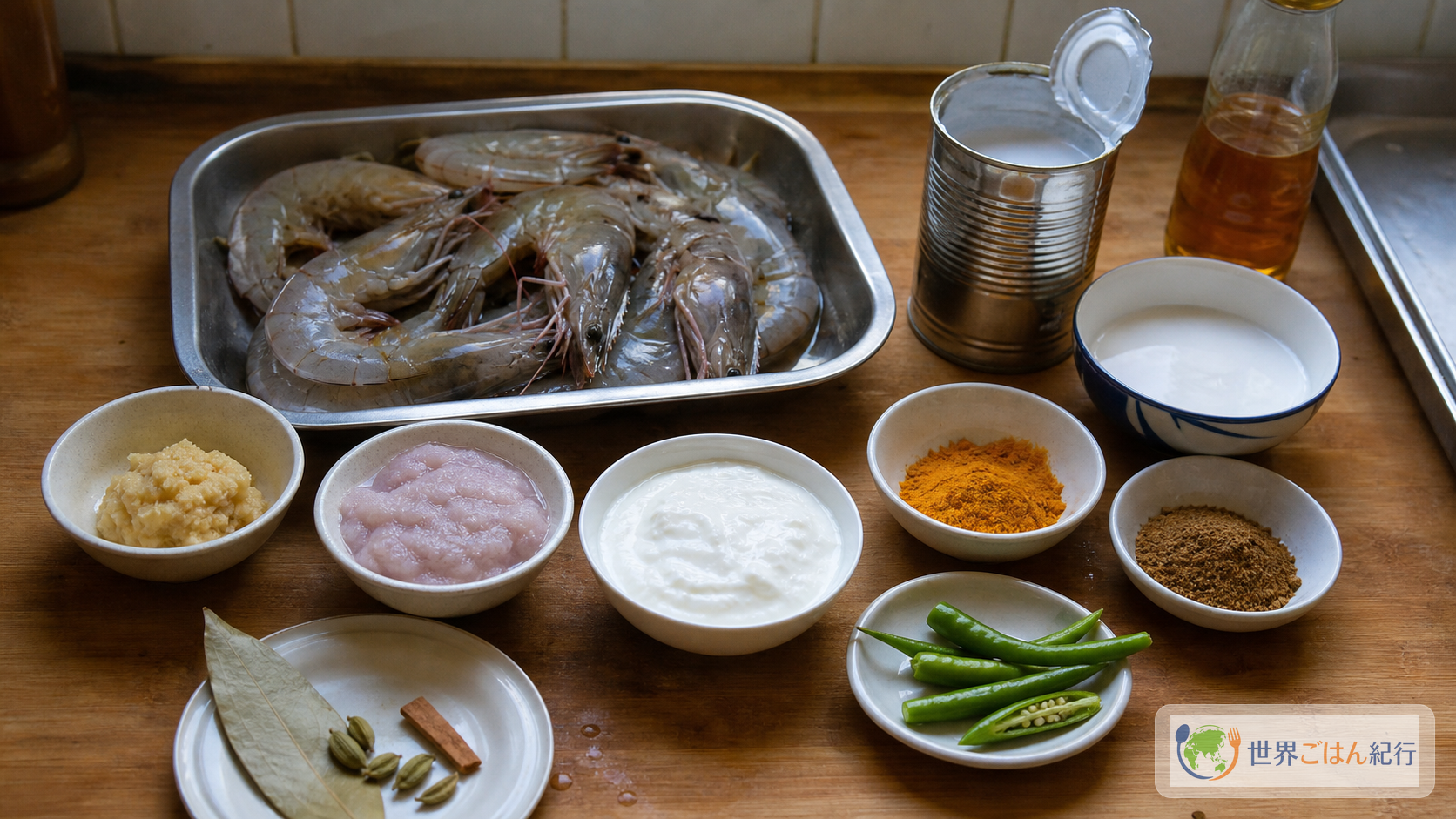
Make it in a deep skillet about 24 cm across, or a round-bottomed pot close to a kadai. Sear the prawns briefly first and take them out, then make the sauce in the same pot.
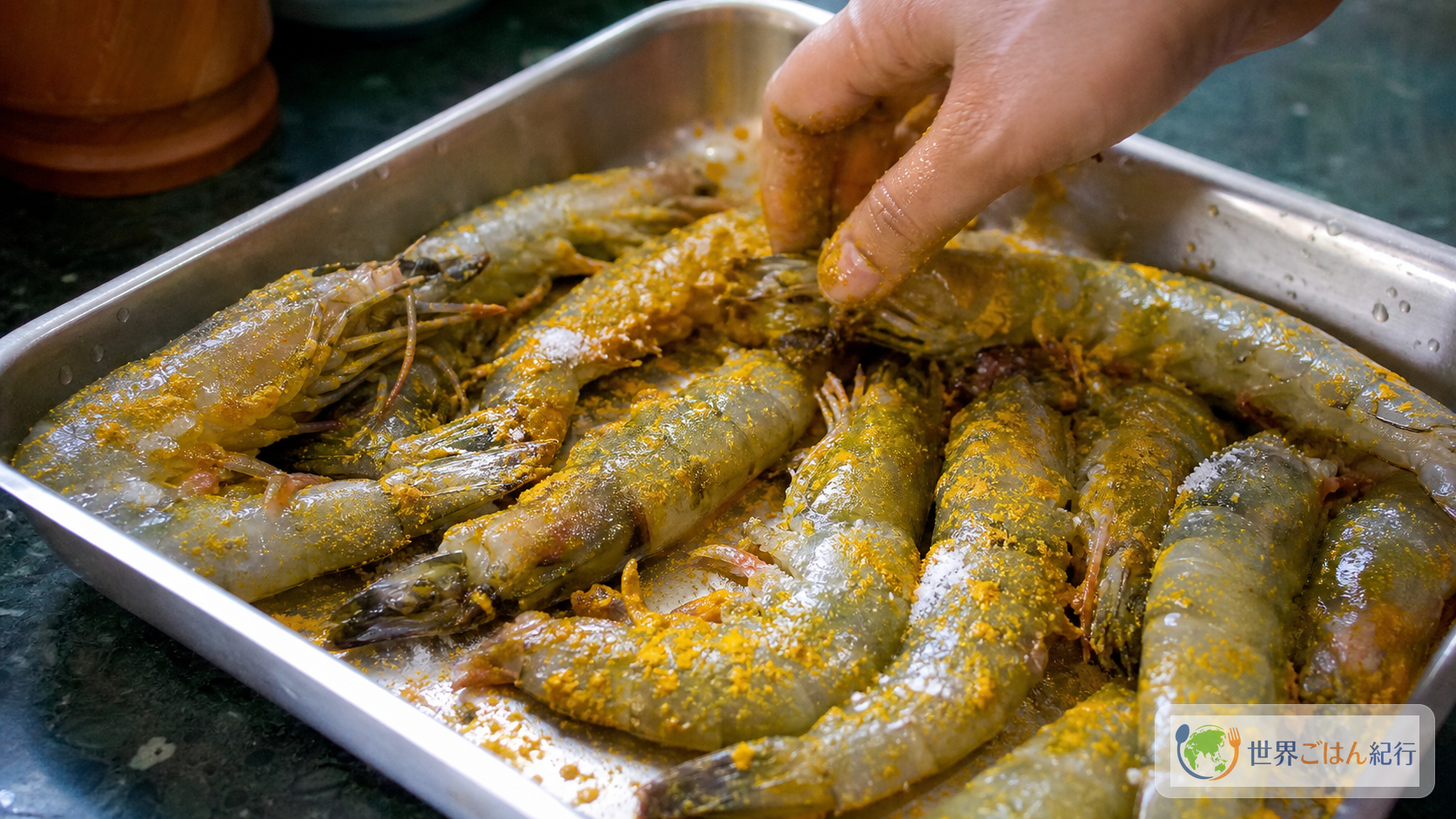
This dish uses prawns. Do not serve it to anyone with a crustacean allergy. It uses yogurt and ghee, so dairy also needs attention. Thaw frozen prawns in the refrigerator and wipe off surface water before cooking. Cook until the center is white and opaque, and do not leave it long at room temperature.
Shopping and substitution decisions
From the supermarket you buy prawns, onion, ginger, yogurt and cucumber. What is worth looking for at an Asian grocery or online are coconut milk, turmeric and garam masala. Prawns are fresh, so choose by looking at the real thing: shells with little darkening and flesh with some spring.
Coconut milk is the sauce itself in this dish. If the fat has solidified when you open the can, warm it a little in a hot water bath and mix, and it is less likely to split. A low-fat type gives a lighter result but lacks sauce thickness when the prawns come back. For a first time, a regular can is easier to work with.
Turmeric is used for the seasoning of the prawns as well as for color. With old powder you get only earthiness, so if it has been open a long time, rub a little between your fingers and check the aroma. Garam masala is the last aroma. Rather than putting a lot in during the simmer, scattering 1 tsp after lowering the heat leaves the gentle fragrance typical of chingri malai curry.
Coconut milk is a hard ingredient to substitute. Milk or cream moves the dish away from a Bengali prawn coconut curry, so start by getting one can.
If you want to stabilize the seasoning of the prawns and the color of the sauce, it is worth using a freshly opened turmeric, even in a small amount.
The last aroma is decided by garam masala. If yours is old, just replacing a small jar changes the finish considerably.
Method: bring the prawns back only at the end
Sear the prawns, make the sauce, return the prawns. Keep to this order and failure is less likely. After the coconut milk goes in, do not boil hard; hold it at a gentle bubble.
Where it tends to go wrong and how to fix it
When the prawns are hard, the first searing was too long or they were simmered too long after being returned. For shell-on, take them out within 1 minute per side, for peeled 30 to 40 seconds per side, and start checking the final simmer at around 3 minutes. Frozen peeled prawns have a lot of surface water, so if you wipe them poorly they steam rather than sear, and the flesh firms up.
When the sauce is grainy, the onion paste was not fried enough, or the yogurt went in over high heat. The onion does not need to be fried to dark brown, but if a pale, raw smell remains, the coconut milk will not come together. Rather than taking the yogurt straight from the refrigerator, mix it first in a bowl and add it over low heat, and it is less likely to split.
When the taste is too sweet, rather than reducing sugar, look again at the placement of green chili and salt. Chingri malai curry is not a hot red curry, but without the green aroma of green chili only the sweetness of the coconut milk is left. Adding one more green chili at the finish and a pinch of salt keeps the direction of the dish better than squeezing in a lot of lemon.
Storage and reheating
This is a dish for the freshly made. Prawns toughen easily on reheating, so if you make ahead, keep the sauce and prawns separate. Take the prawns out when seared and cool them, make the sauce up to the point where the coconut milk is added and warmed, and refrigerate. Right before eating, warm the sauce over low heat, return the prawns and simmer about 4 minutes, and the texture stays.
If there is leftover after finishing, cool it slightly, put it in an airtight container and refrigerate, to be eaten by the next day. To reheat, move it to a small pot, add 2 tbsp water and warm slowly over low heat. In a microwave, heat at 600 W for 1 minute, stir, and add 30 seconds at a time. Stop as soon as it is hot to the center, and do not reheat repeatedly.
If only sauce is left, adding a boiled egg or thick fried tofu makes another side dish. Because the aroma of the prawns has come out, however, do not share it with anyone with a crustacean allergy. Pairing it beside white rice with begun bhorta or haleem shows the differences in coconut, smoky notes and the richness of lentils and meat within the same Bengal world.
FAQ
Can I make it with peeled prawns?
Yes. Use 450 g peeled prawns, season the same way, and shorten the searing to 30 to 40 seconds per side. Without the umami and protection of the shells, stop at about 3 minutes after returning them to the sauce. Small prawns toughen easily, so choose medium or larger.
Can I make it with cream instead of coconut milk?
I do not recommend it. With cream, the heaviness of milk fat comes forward and moves away from the coconut-derived sweetness and lightness of chingri malai curry. If you really dislike coconut, think of it as a different prawn curry and adjust it as a "creamy prawn curry" rather than under this article's name.
Can I add the garam masala at the start?
Adding it at the finish leaves more aroma. Added at the start, the aroma dulls over the simmer and is buried by the sweetness of the coconut milk. Build the base aroma with whole cinnamon, cardamom and cloves, and use ground garam masala right before turning off the heat.
What should I eat it with?
White rice is the easiest pairing. On a day you want it lighter, long-grain rice; for a home dinner, short-grain is plenty. For a menu, a small portion of spicy aloo bhorta, and a steamed rice-flour sweet, bhapa pitha (in Japanese), for after the meal make Bangladesh's rice-eating culture look connected.