Akki Rotti: A Rice-Flour Round Pressed Out by Hand and Toasted on the Tawa
A soft, slightly sticky dough flecked with onion, herbs and coconut, pressed thin on a cold pan, then cooked under a lid until the wet sheen leaves the surface and brown spots form underneath.
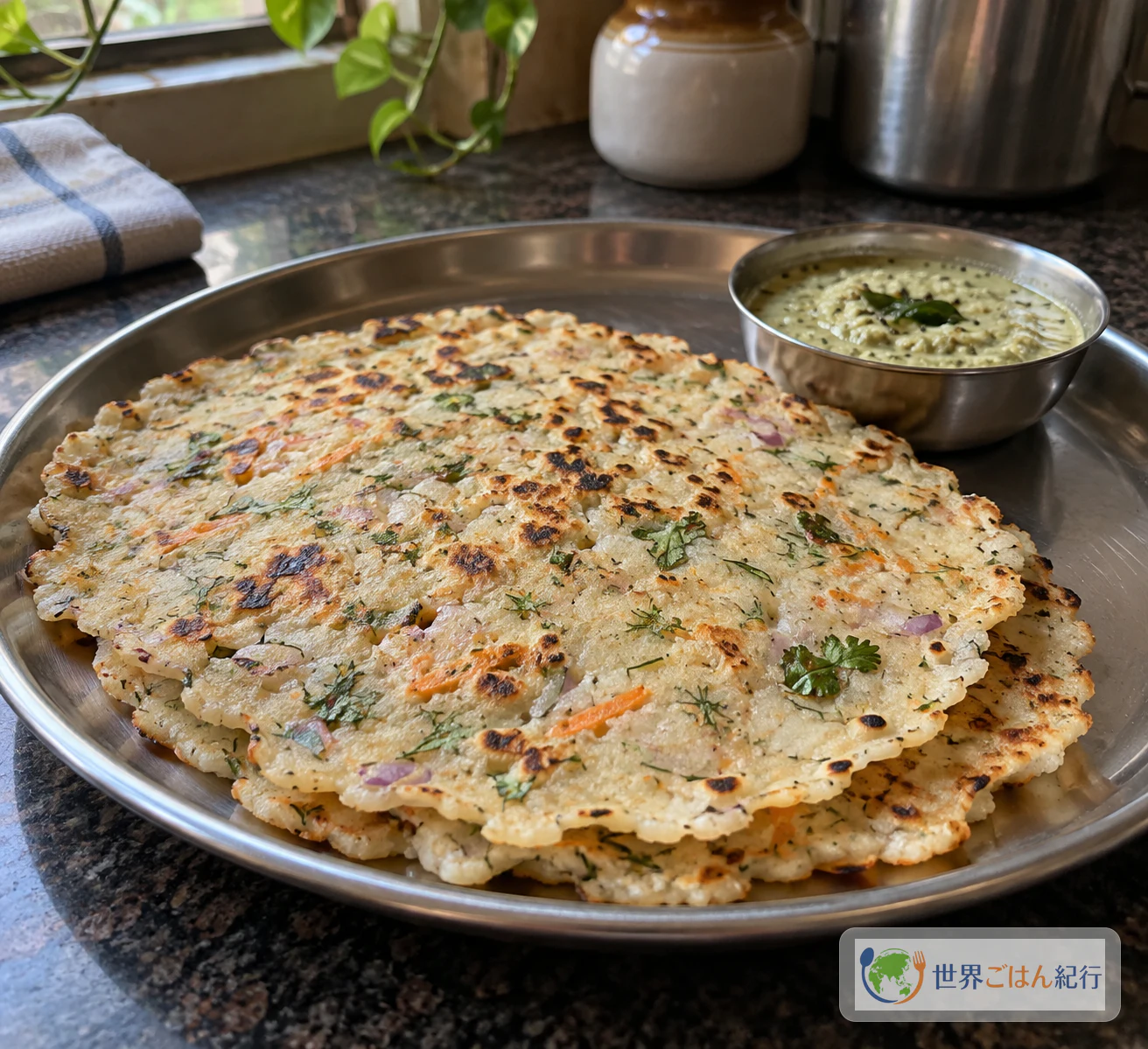
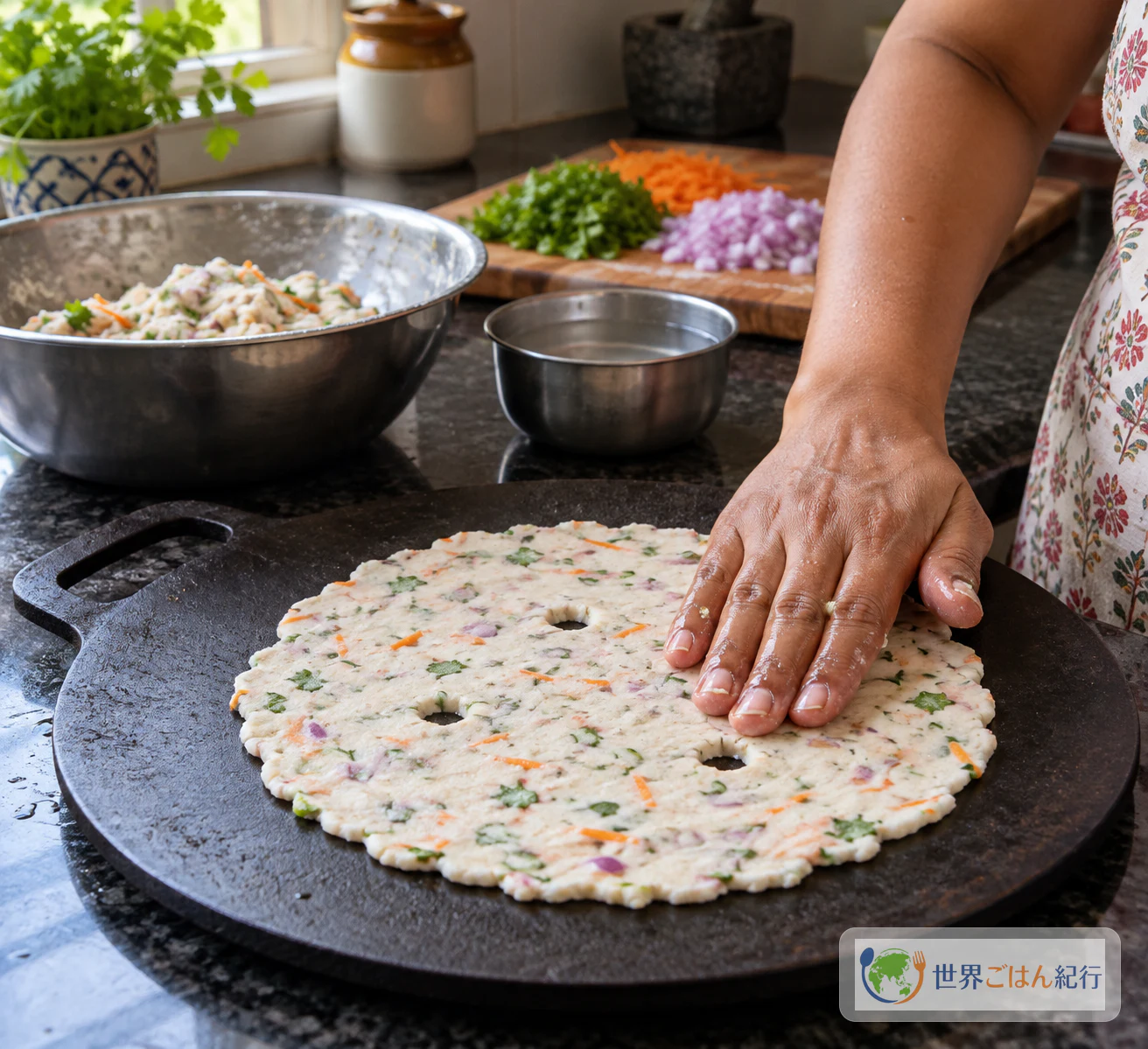
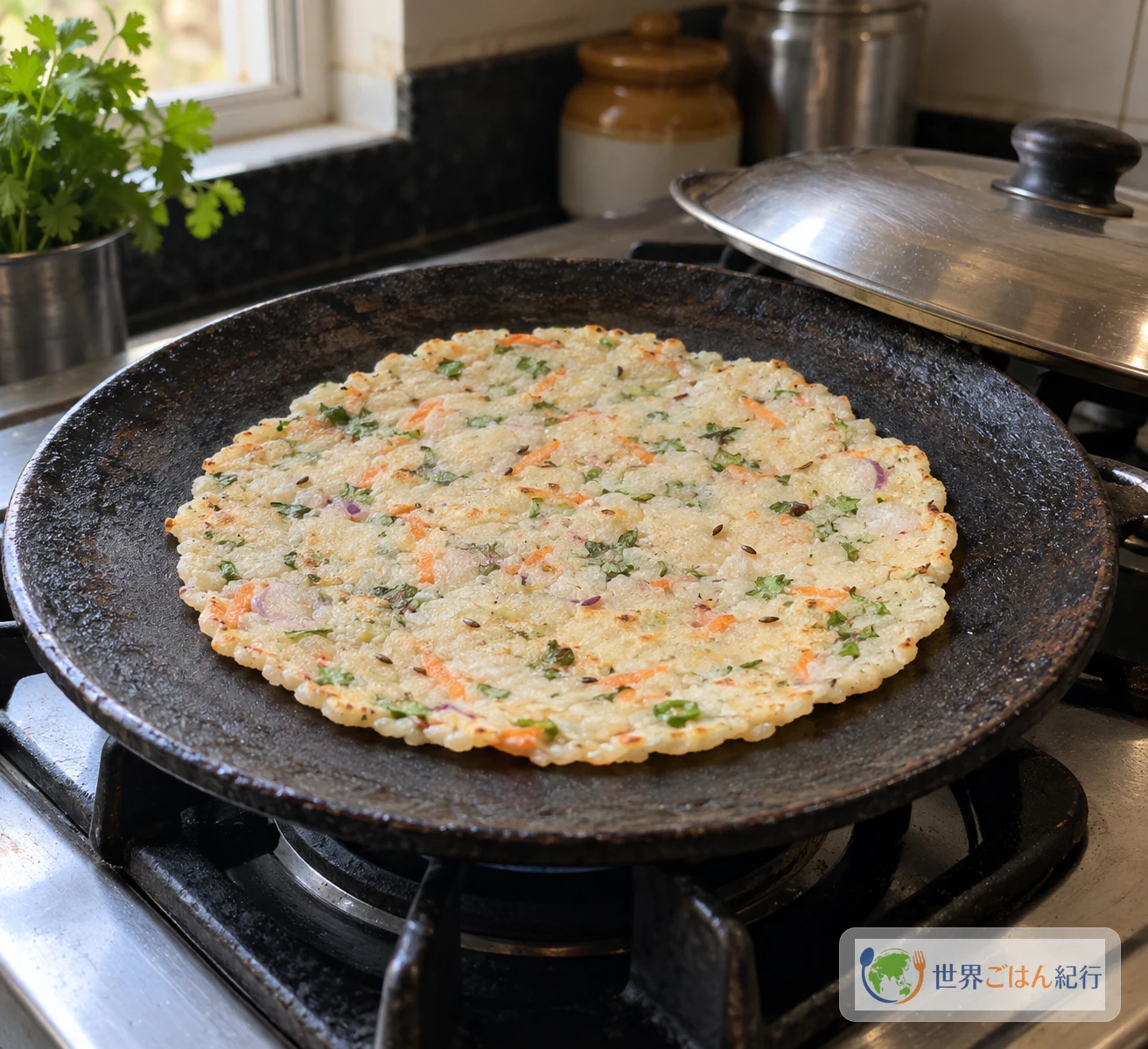
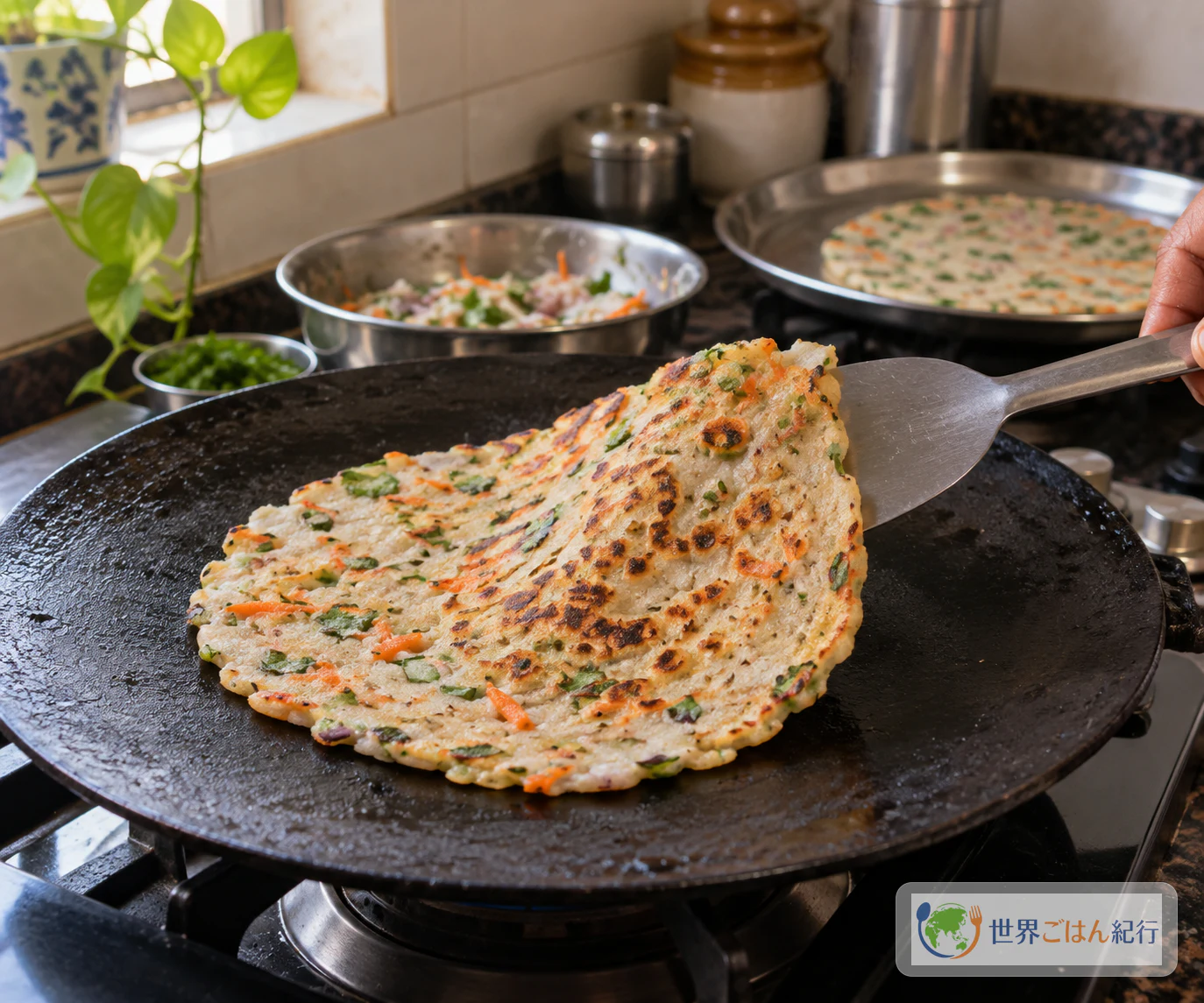
A ball of pale dough goes onto a flat iron pan, and damp fingertips push it outward until it becomes a thin round, bits of onion, green chilli and herbs showing all through it. Under a lid over medium heat, the glossy, wet look of the surface slowly fades; underneath, brown spots start to form. Turn it over, let the second side toast, and it goes to the table while still hot.
That is akki rotti, a flatbread from Karnataka in southern India. Akki refers to rice, and the bread is made from rice flour rather than wheat. Karnataka's state tourism department describes a type mixed with vegetables and herbs, cooked on both sides on a tawa and eaten hot with chutney or pickles. Without gluten, rice flour has no stretch, so the question most home cooks have is how the dough holds its shape at all. The answer in this recipe lies in the texture of the dough and in spreading it on a pan that has not yet been heated.
This article follows one specific recipe, the vegetable-and-herb version published by the recipe site Khaana. It is not the plain rice rotti made without vegetables, nor the version in which the dough is first cooked with hot water in a separate pot, nor the otti of the Kodava table. Those are different forms of rice bread and are not mixed in here.
This recipe has not been kitchen-tested by Sekai Gohan. The amounts and method follow Khaana's published recipe; the cooking times are that source's guides, and the advice on handling the dough and cooling the pan between rotti is editorial guidance, not verified results. Judge each stage by how the dough and bread look, not only by the clock.
Ingredients: Khaana's Vegetable-and-Herb Version
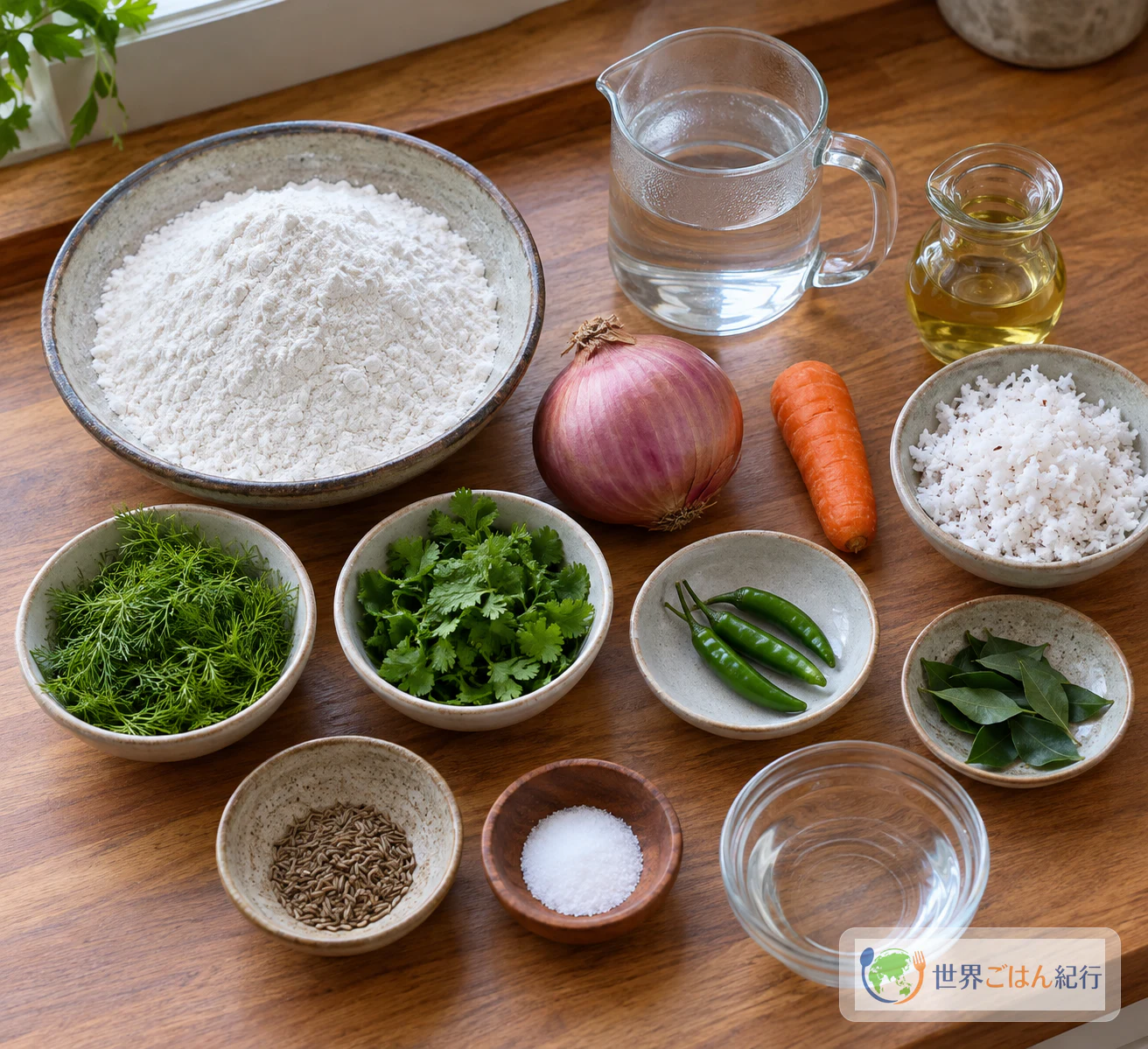
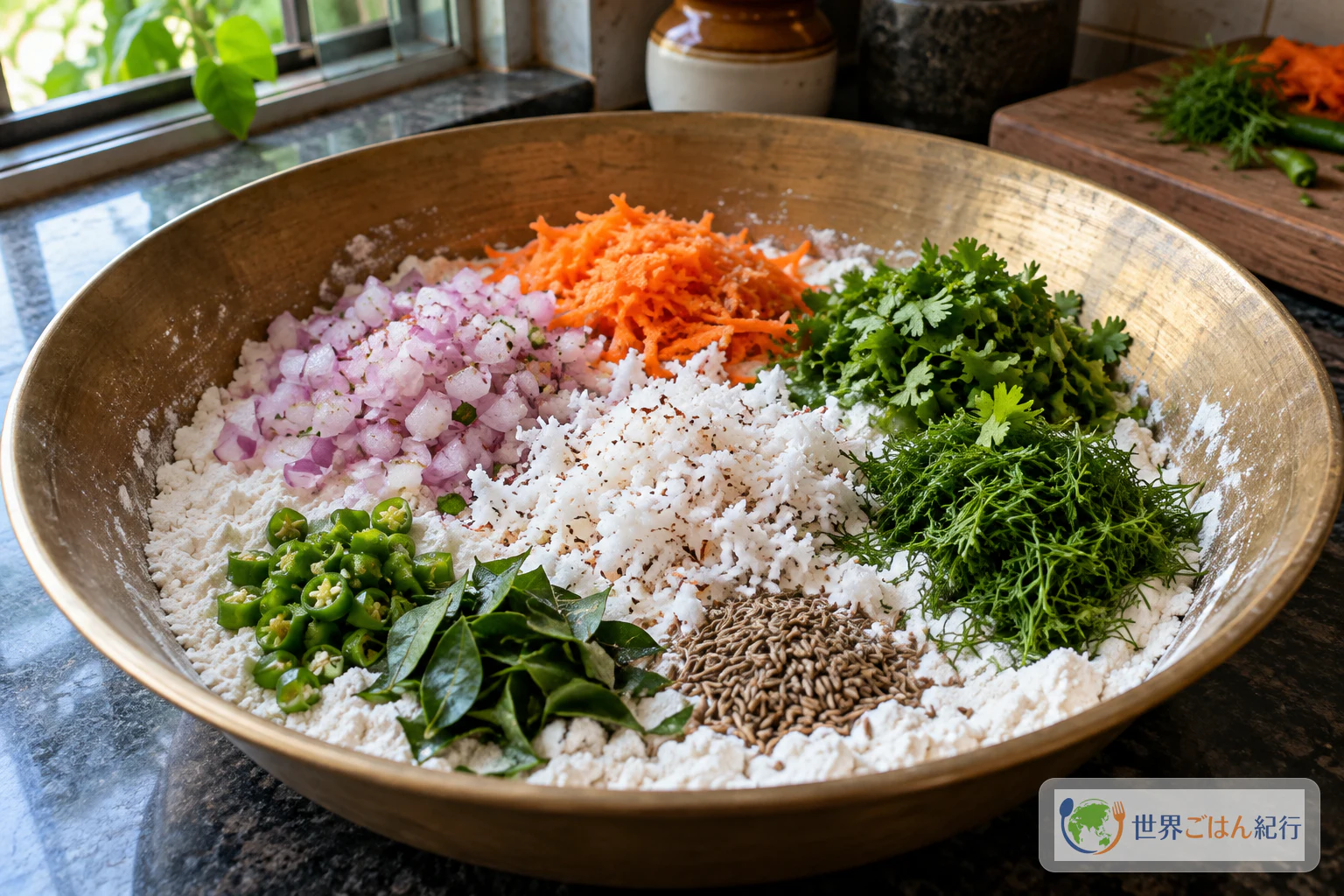
The amounts below are Khaana's, in the source's own units. The source gives the recipe as serving 3; that is a number of people, not a number of rotti. It does not say how many rotti the dough makes, and that depends on how large you portion each ball, so no count is given here.
The source lists its first herb as "dill or coriander leaves" and then lists coriander leaves again as a separate ingredient. This article reads those as two separate amounts: dill in the first slot and a separate 1/4 cup of coriander leaves. They are not the same 1/4 cup.
On the oil: have the 4 tbsp ready and use it both for greasing the pan and for the drops that go into the holes. The source also mentions 1/2 tbsp per rotti; that comes out of the 4 tbsp, not on top of it. If you run short and add more oil, you are going beyond the source's amounts.
On measuring: the source uses cups and spoons. If you measure in millilitres, Sekai Gohan's editorial convention is 1 cup = 240 ml, 1 tbsp = 15 ml and 1 tsp = 5 ml; these are not figures from the source. Rice flour is measured by volume here and is not converted to grams.
Serve with a ready-made chutney, as much as you like. It is an accompaniment, not part of the dough.
Equipment
- A wide bowl for mixing
- A wooden spatula
- A tawa (flat iron griddle) or a flat-bottomed frying pan
- A lid that covers the tawa or pan
- A thin spatula for loosening and turning
- A second pan of a similar kind, if you want to swap pans while the first cools (optional)
Choosing and Substituting
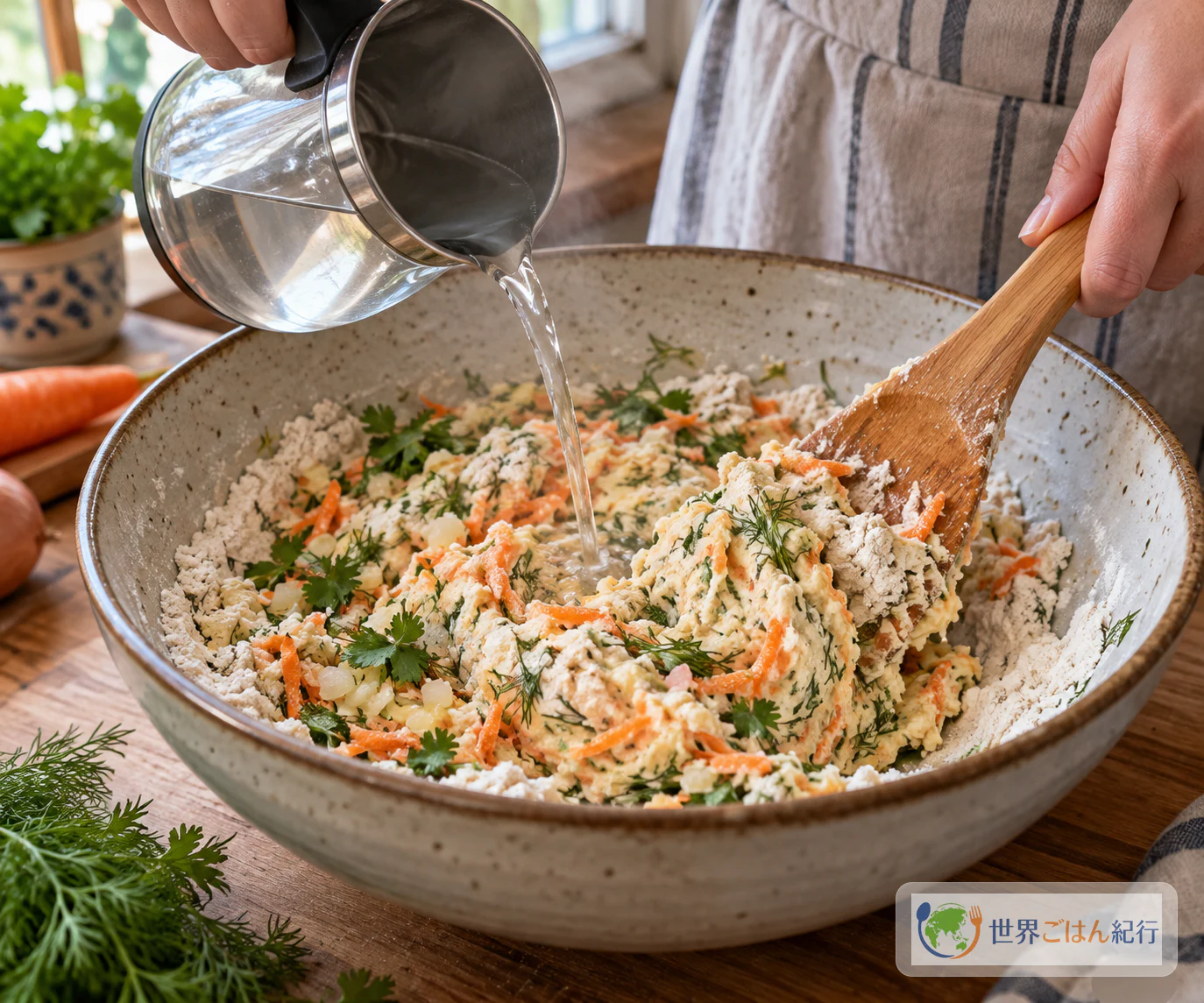
Rice flour. Fine rice flour is the base. Rice flours differ in grind and in how much water they absorb, so the source's water amount is a starting point, not a fixed figure. Add the hot water gradually and go by the dough.
Dill or coriander. Dill, called sabbasige soppu, gives the bread a grassy aroma associated with Karnataka. If you cannot find it, use coriander leaves or leave it out; the bread will smell different, not wrong.
Carrot. Optional in the source. Leaving it out makes a dough with less sweetness and less moisture. Swapping in another root vegetable changes how much water the dough takes.
Coconut. Use freshly grated coconut. Dried coconut changes both texture and moisture, so it is not a like-for-like swap.
Curry leaves. If you cannot find them, leave them out. Another herb is not a stand-in for their aroma.
Cumin. Whole seeds are used. Ground cumin releases its aroma differently.
Coconut oil. It contributes to the aroma. A neutral oil works for cooking but changes the flavor.
Green chillies. The source uses 3. Using fewer or more to suit your heat tolerance is an editorial suggestion, a change from the source.
Pan. A tawa's broad, flat surface makes spreading a round easy, but an ordinary frying pan also works.
The ingredient list contains no cashews or peanuts, but it does contain coconut, and how coconut is treated in allergen labeling differs by product and country. Check the labels on your rice flour and on any ready-made chutney you serve. A recipe site's "free of common allergens" note is not a complete guarantee for your situation.
Method: From Salted Onion to a Toasted Round
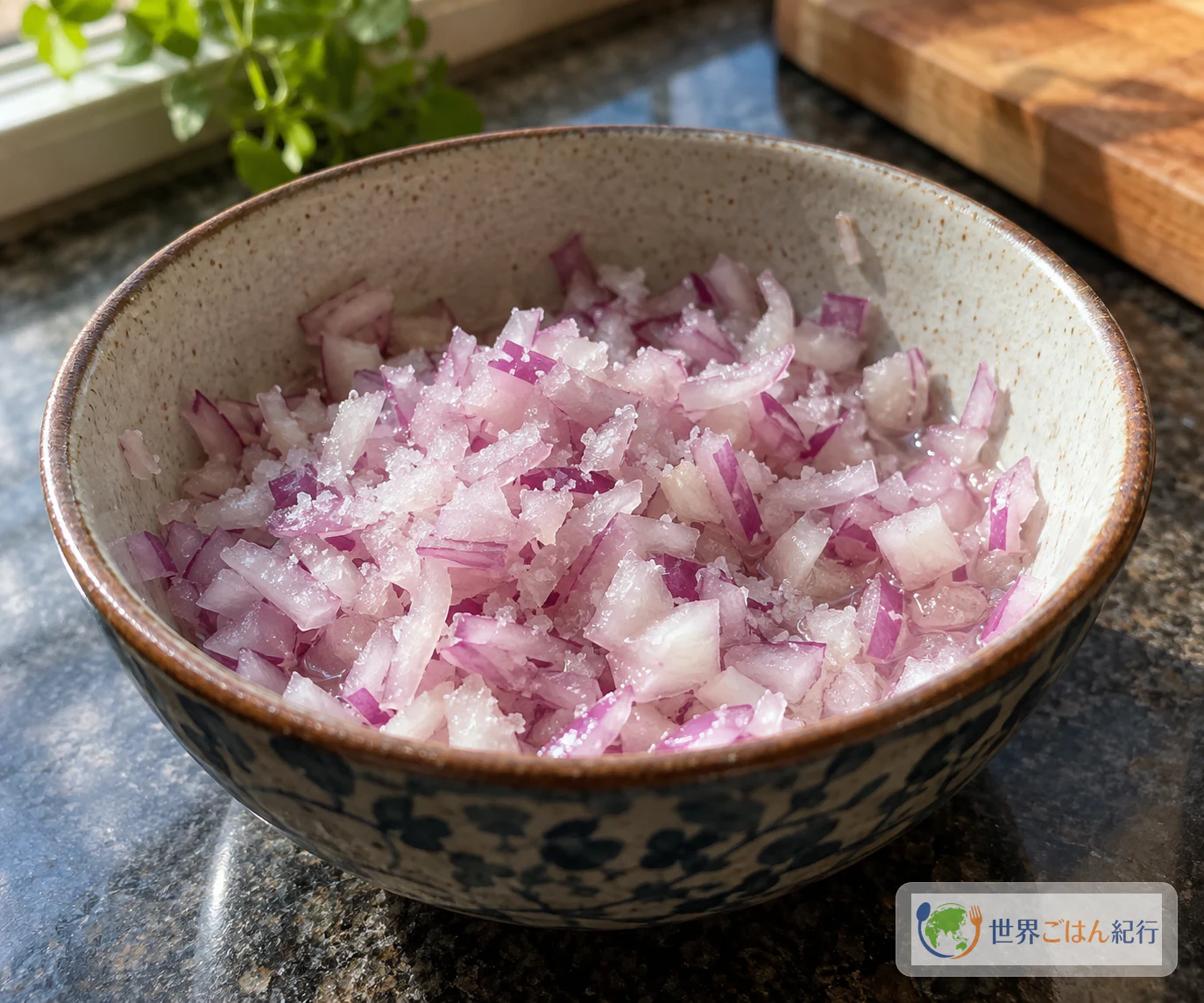
Khaana gives about 4 minutes covered and about 2 minutes on the second side, and a cooking time of 25 minutes for the recipe. Because the rotti are cooked one at a time and the pan cools between them, that 25 minutes is not a guarantee for the whole batch. Thickness and heat change the timing, so move on when you see the signs described in each step.
Cracked, Sticky, Pale Inside: Fixing Problems
| Problem | Likely cause | What to do |
|---|---|---|
| The edges crack as you spread the dough | The dough is too firm; your rice flour may absorb more water | Add hot water a little at a time, not in one go, and mix again |
| The dough sticks and won't come off the pan | Too much water, or the tawa was not cool enough when you shaped | Don't keep adding flour while shaping, which changes the recipe; use less water next time, and make sure the pan is cold |
| It browns quickly but stays damp inside | The heat is probably too high | Return to medium heat and keep the lid on until the surface loses its sheen |
| It breaks when you turn it | Moved before the underside had set | Wait for the brown spots underneath, and loosen the edge with the spatula first |
Freshly Made, with Chutney
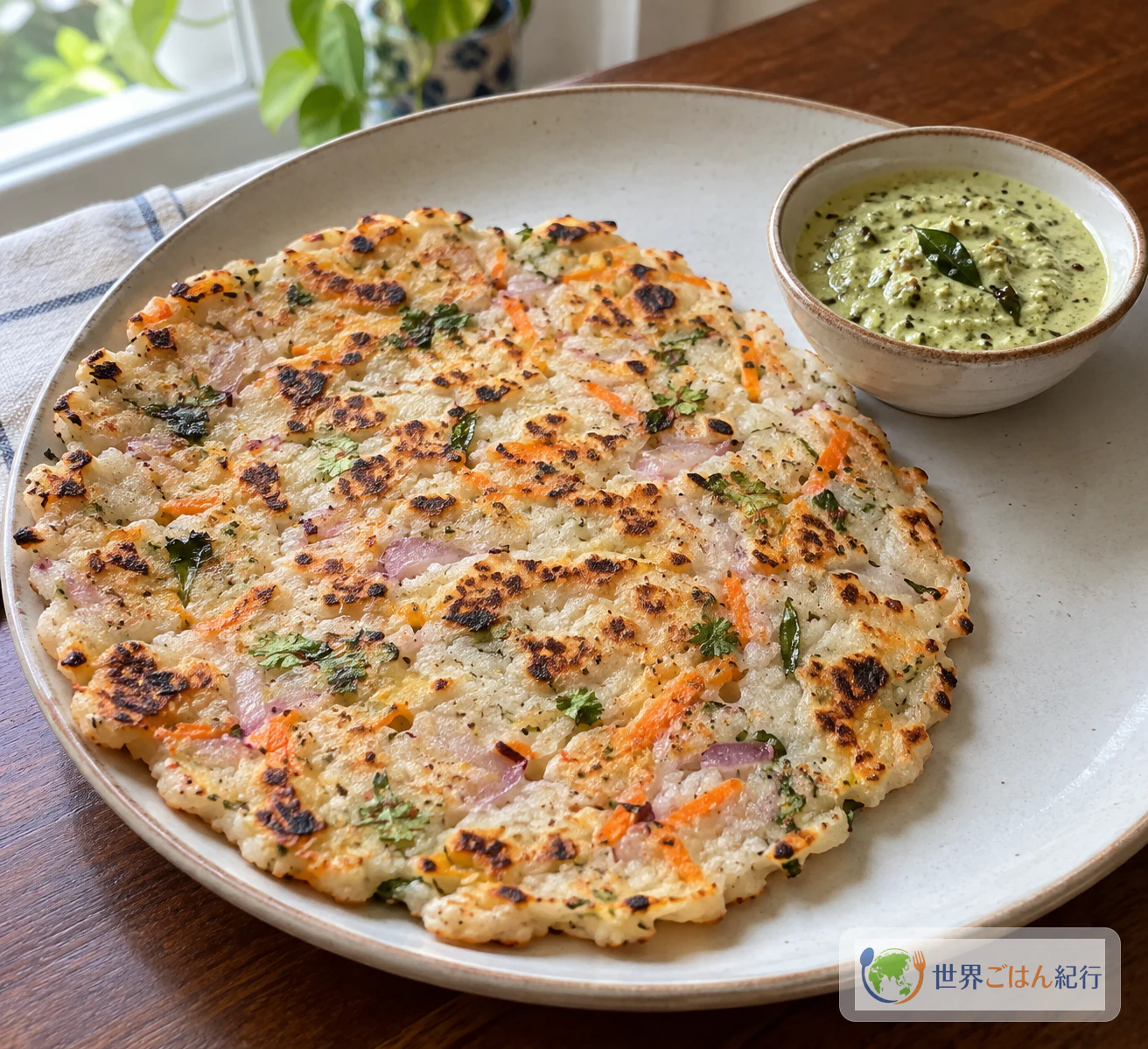
Akki rotti is best eaten freshly made. Karnataka Tourism describes it being eaten hot with chutney or pickles, and Khaana also recommends serving it fresh. Here, a ready-made chutney is all you need alongside.
If you have leftovers, follow general home food-safety guidance: divide them into shallow containers, cool them quickly, and refrigerate them covered; reheat them thoroughly, using 75°C or above as a guide. This is general household hygiene advice, not a tested storage time for this dish, and no storage period is given here.
Variations Worth Trying
- Lead with dill. Using dill brings forward the grassy aroma associated with Karnataka's version.
- Use coriander instead of dill. Easier to find, but the distinctive dill aroma will be weaker.
- Leave out the carrot. The source lists it as optional; without it, the dough has less sweetness and moisture.
- Adjust the chillies. Using fewer or more than the source's 3 is an editorial change to suit your heat tolerance.
- Compare with plain rice rotti or otti. Plain rice-flour rotti and the Kodava otti are different forms of the bread, worth knowing about but not to be mixed into this recipe's ingredients or method.
Herbs and Tables: The Range Within Karnataka
Karnataka Tourism presents akki rotti as rice-flour flatbread with vegetables and herbs, cooked on both sides on a tawa, and in its description the dough is spread on a banana leaf before going onto the tawa, with dill for aroma. Khaana's recipe, used here, spreads the dough directly on a cold tawa. Neither is the single "correct" version; they show that the same name covers different hands and kitchens.
Other home cooks write it differently again. Kannamma Cooks presents a Karnataka-style version made with a looser dough of hot water, spread in a warmed skillet and cooked under a lid. A home recipe from the Bengaluru and Mysuru area includes variations with avarekayi (field beans) or yogurt. These recipes show regional and household differences, not a fixed standard.
In Kodagu (Coorg), Karnataka Tourism's cuisine guide describes a Kodava table where rice is deeply rooted, with akki roti and otti eaten at breakfast and alongside curries. That is a wider rice-based food culture, not the same thin vegetable-studded recipe given here. For more of the country's dishes, see India.
Frequently Asked Questions
Can I use the rice flour from an ordinary supermarket?
You can, but rice flours vary in grind and absorb water differently, so add the hot water gradually and stop when the dough is soft and slightly sticky. The texture may not match the source exactly.
Why does the pan have to start cold?
So you can spread the dough with your fingers without burning them. The dough is shaped on the cold tawa, and only then does the covered pan go over medium heat.
Does the water have to be boiling?
The source calls for hot water, not necessarily water straight off the boil. Start mixing with a wooden spatula and use your hands only once the dough is cool enough to touch.
What if I can't find dill?
Use coriander leaves or leave the dill out. The bread will lose dill's grassy aroma.
How many rotti does this make?
The source states 3 servings but no number of rotti. The count depends on how large you make each ball and each round.
Can I make them ahead?
Freshly made is best, as the source recommends. If you keep leftovers, cool them quickly in shallow containers, refrigerate them covered, and reheat thoroughly; no specific storage time is given here.
Sources
- Department of Tourism, Government of Karnataka, "Akki Rotti | Karnataka Cuisine." Akki rotti as a Karnataka rice-flour flatbread, the vegetable-and-herb type, cooking on both sides on a tawa, and eating it hot with chutney or pickles. https://karnatakatourism.org/en/experiences/akki-rotti/
- Khaana, "Akki Rotti, Karnataka recipe." The ingredients and amounts, salting the onion, shaping on a cold tawa, the three holes, about 4 minutes covered over medium heat and about 2 minutes after flipping, judging by surface and brown spots, the 3-serving yield, and serving fresh. https://khaana.com/recipes/akki-rotti.html
- Suguna Vinodh, Kannamma Cooks, "Akki Roti, Rice Rotti, Arisi Rotti Recipe." The Kannada name sabbasige soppu for dill, and a different method using a looser hot-water dough spread in a warmed skillet. https://www.kannammacooks.com/akki-roti-rice-rotti-recipe/
- Shantha, itslife.in, "Akki Rotti – Rice Flour Bread." A home recipe from the Bengaluru and Mysuru area, with variations including avarekayi or yogurt. https://www.itslife.in/vegetarian-recipes/breakfast/rotti/akki-rotti
- Karnataka Tourism, "Cuisine of Karnataka." The place of rice in Kodava food, and akki roti and otti eaten at breakfast and with curries in Kodagu. https://karnatakatourism.org/wp-content/uploads/2020/05/Karnataka-Cuisine.pdf
- Ministry of Health, Labour and Welfare (Japan), "Preventing food poisoning at home" (家庭での食中毒予防). General household guidance on dividing leftovers into shallow containers, cooling them quickly, and reheating to 75°C or above as a guide. https://www.mhlw.go.jp/stf/seisakunitsuite/bunya/kenkou_iryou/shokuhin/syokuchu/01_00008.html