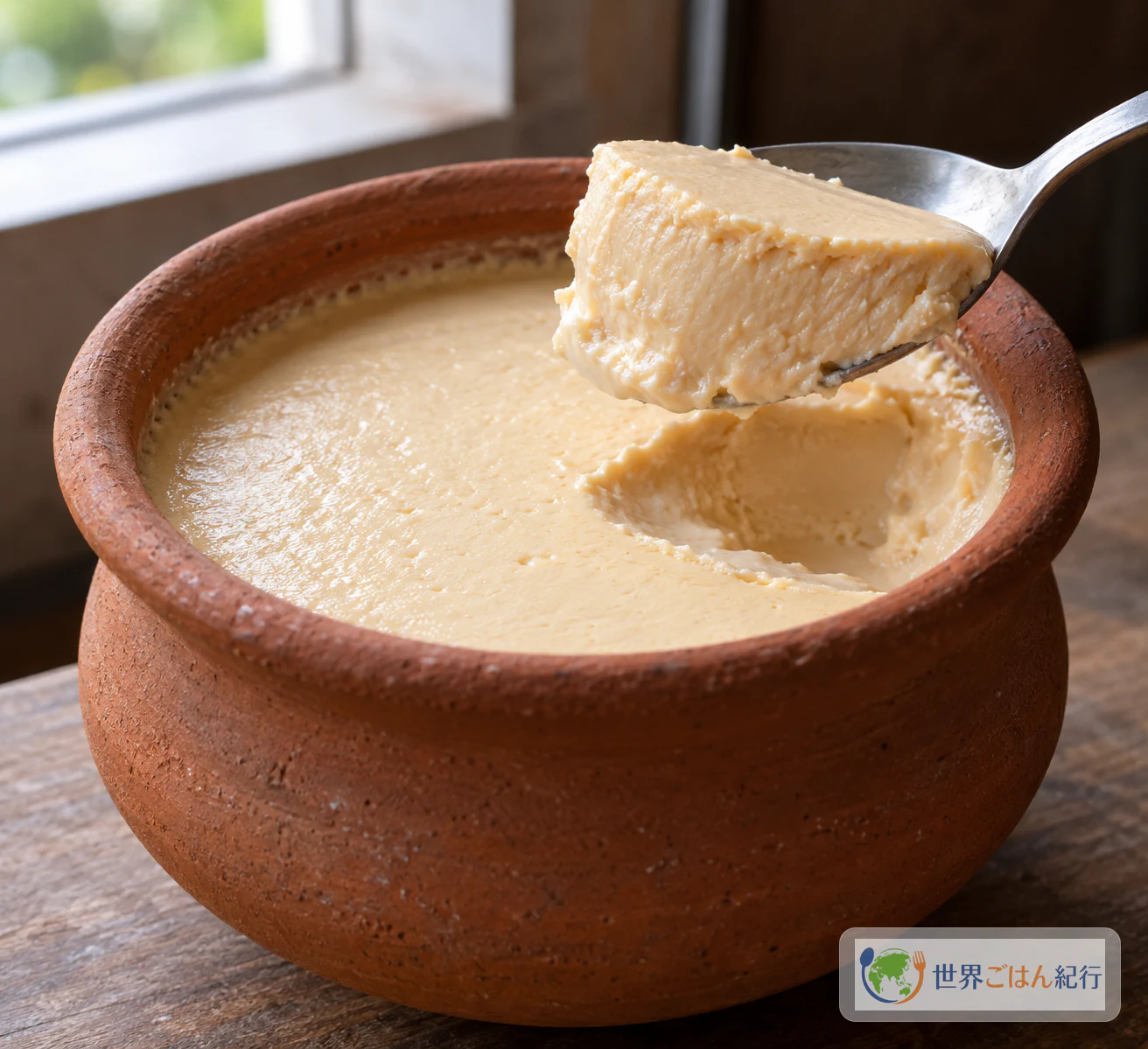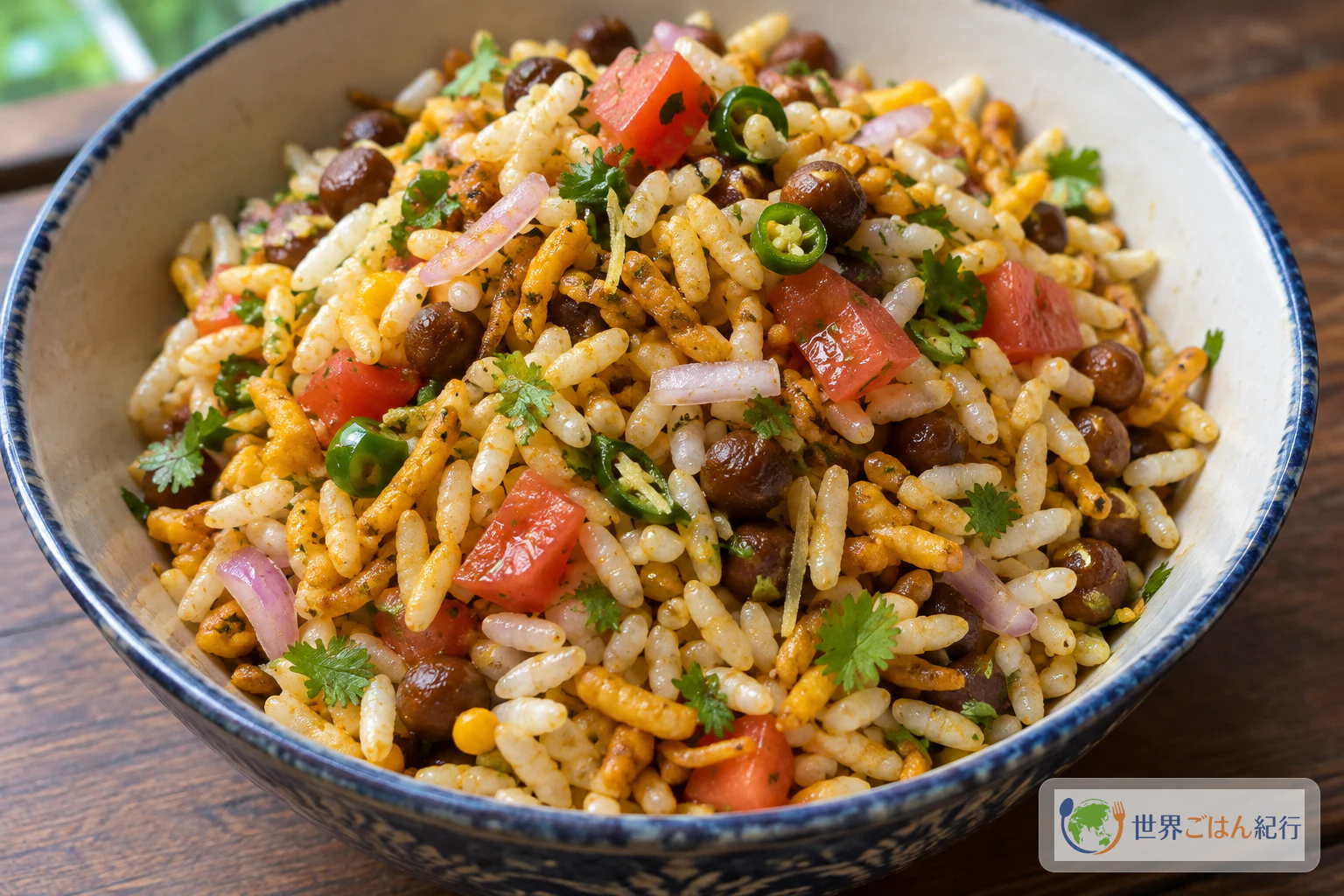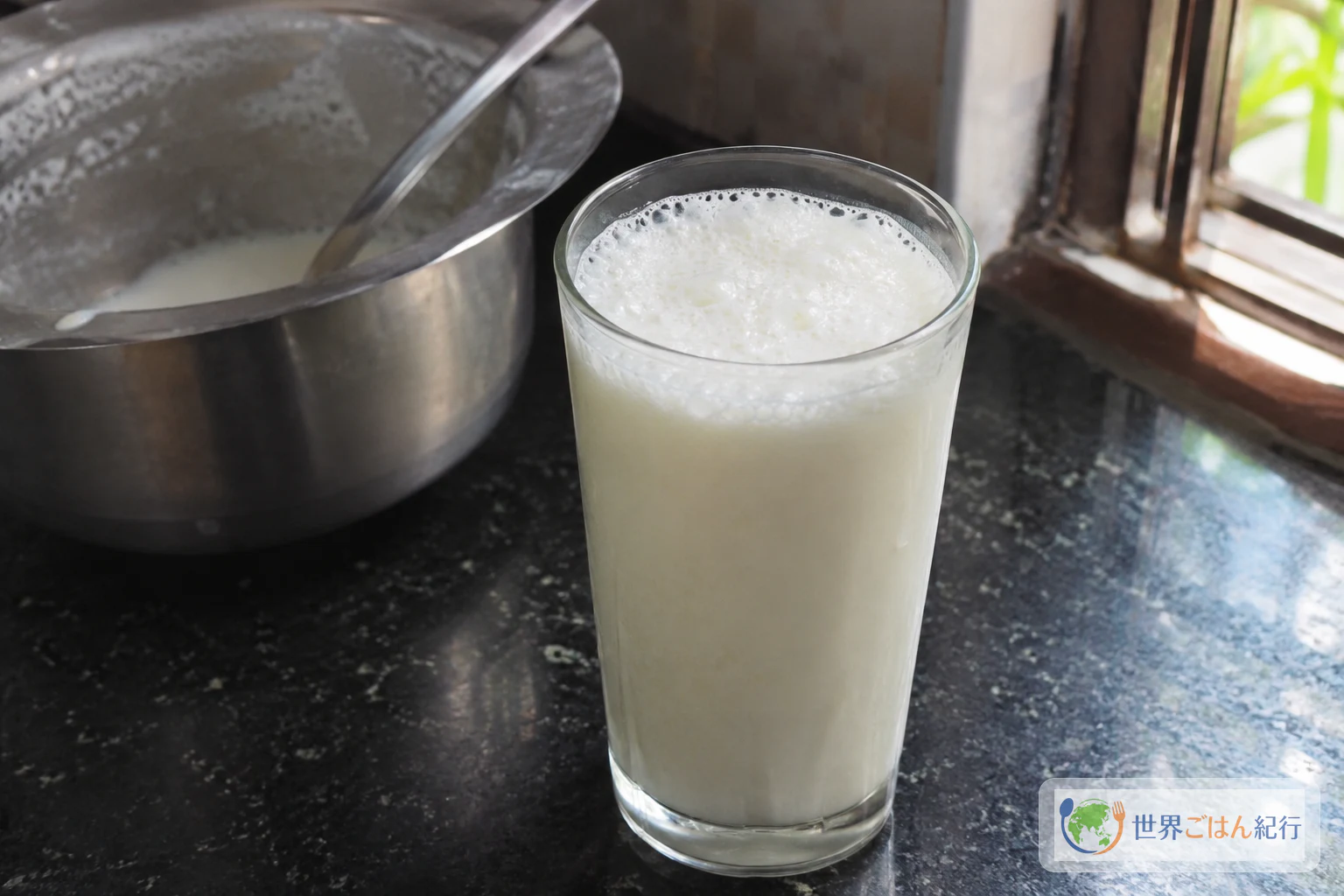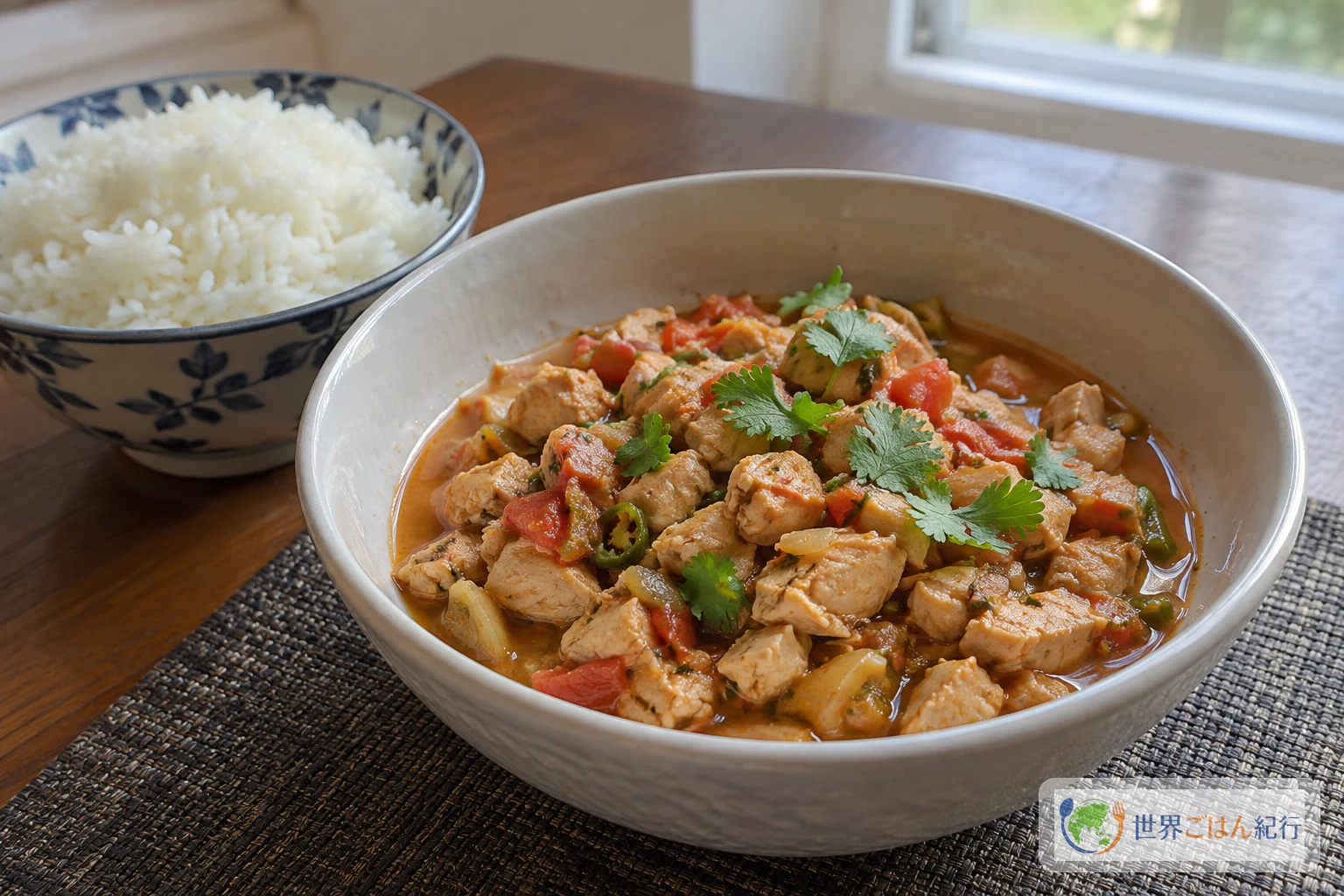
Faluda: Rose Milk, Tokma and Fine Noodles in a Cold Glass
This is Dina Begum's Bangladesh-associated personal recipe, published in The Daily Star. It is one writer's version, not a Bangladesh-wide standard. The editors of this site have not test-cooked it.
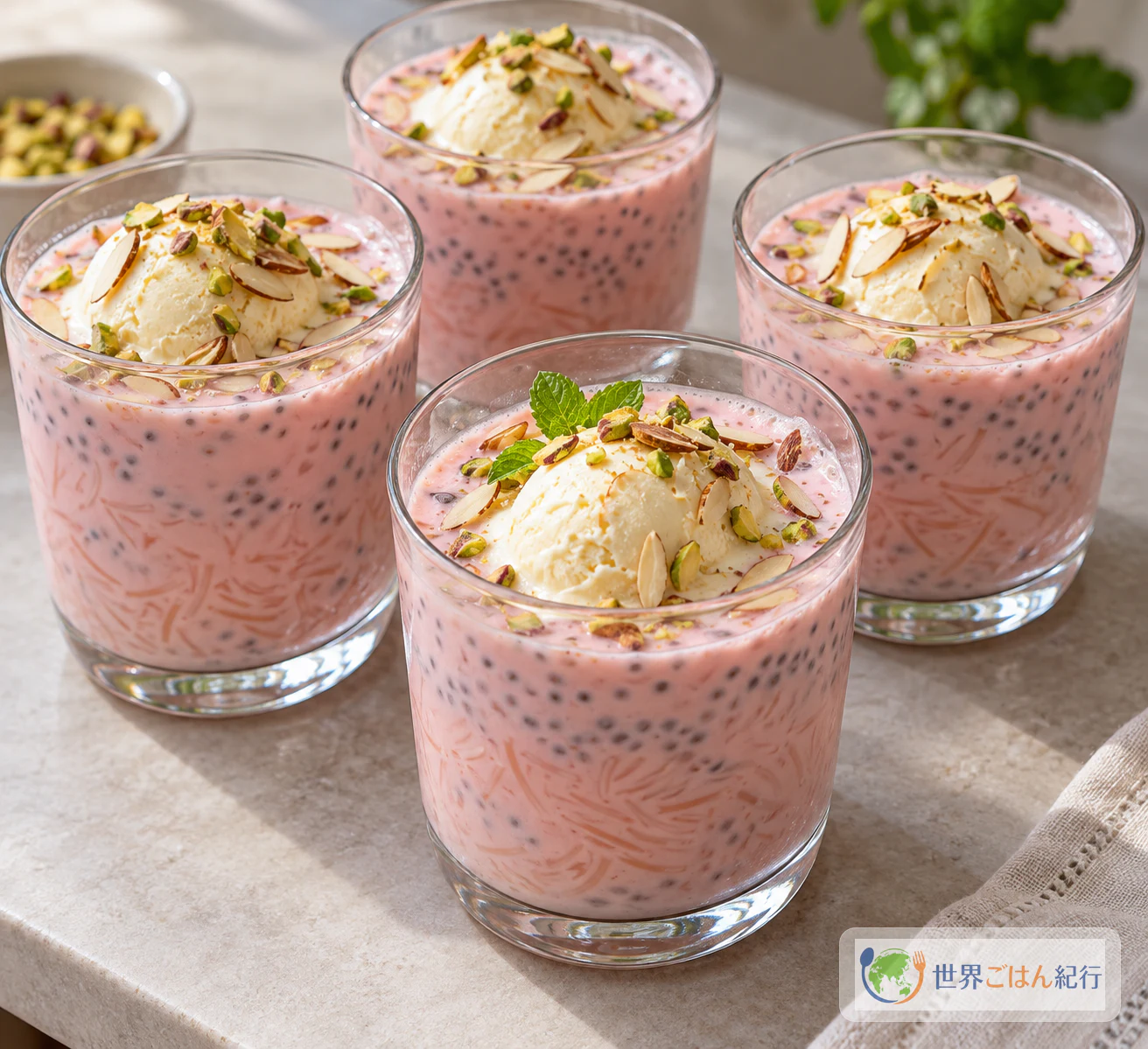
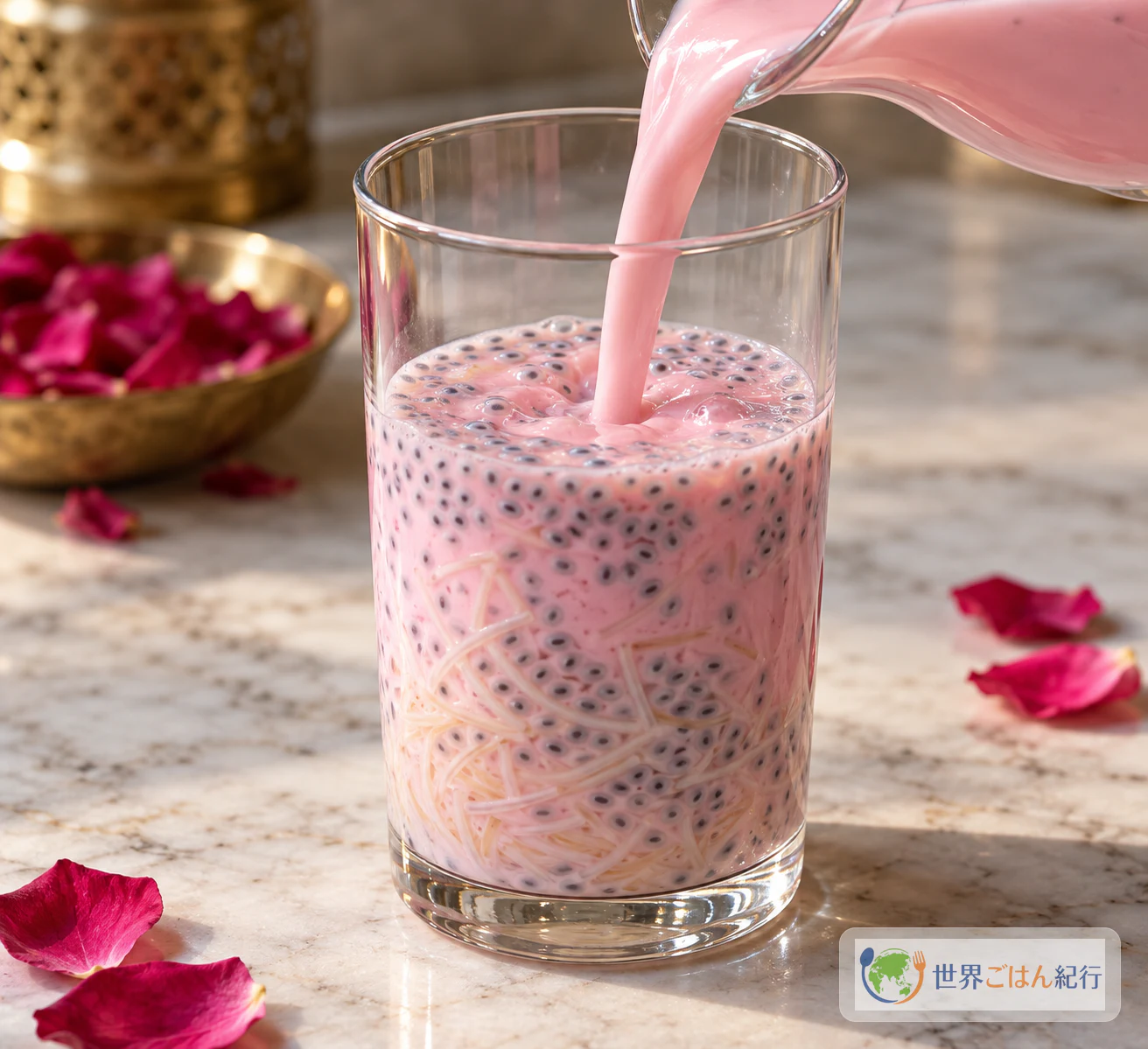
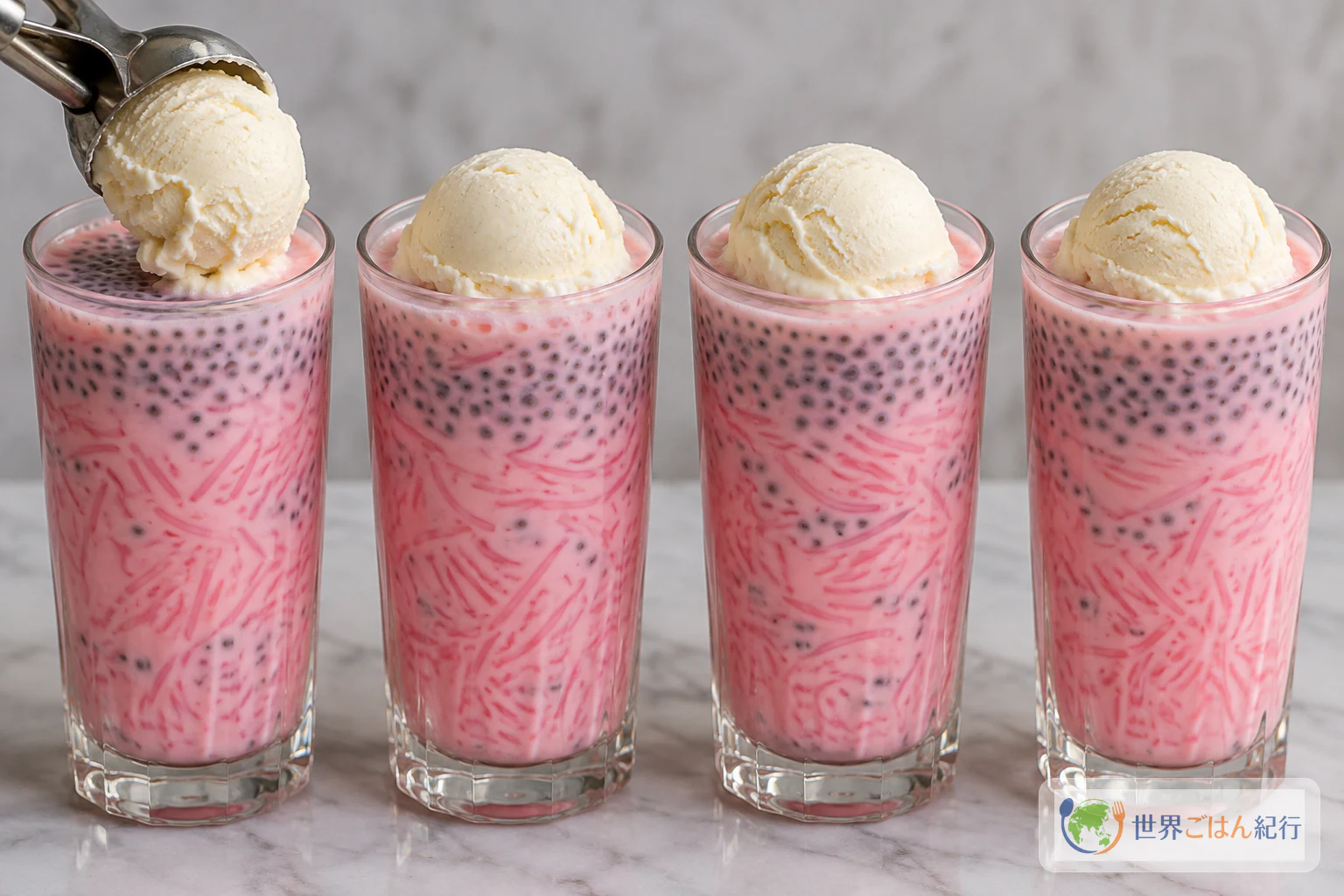
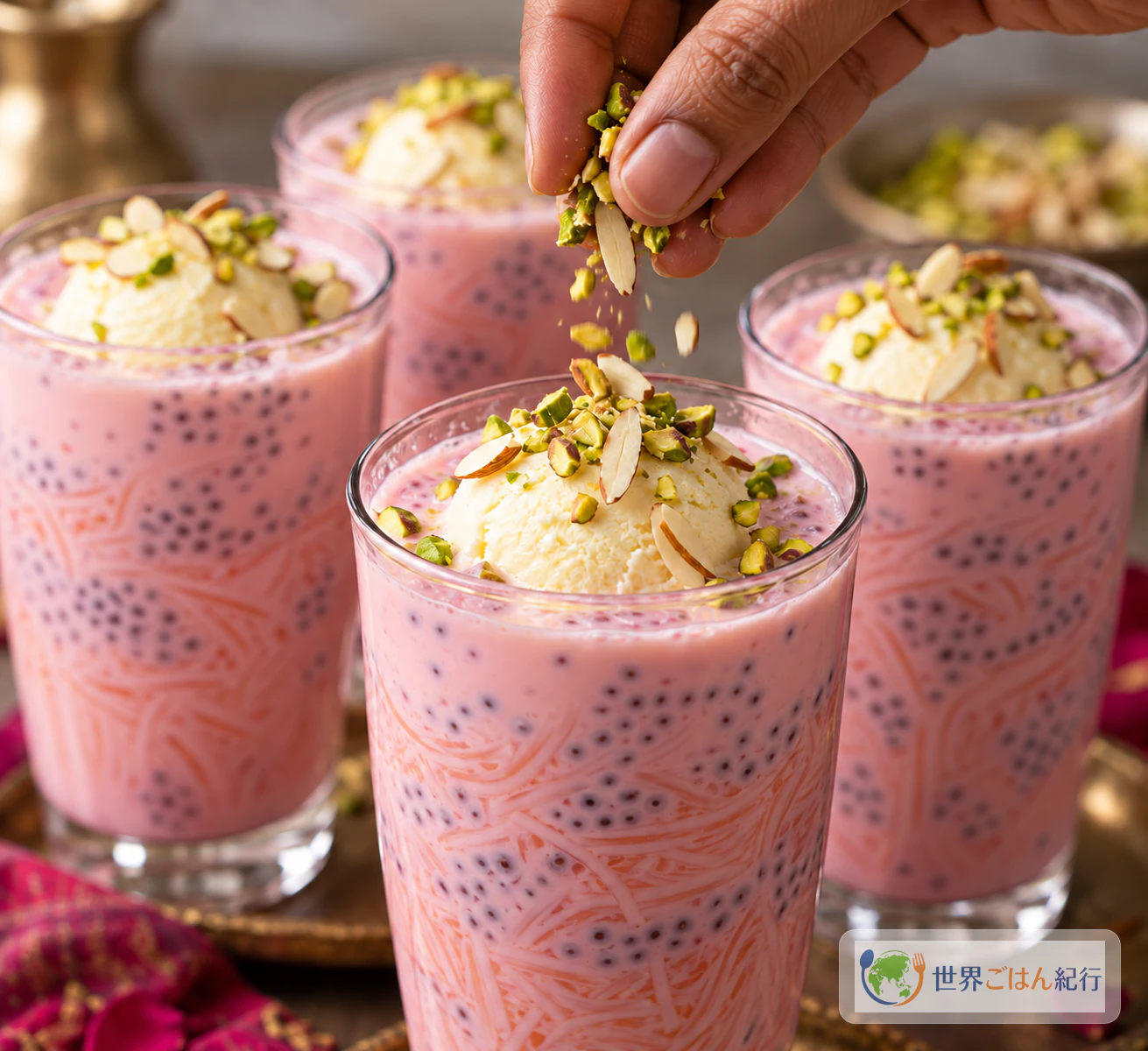
For Dina Begum, faluda calls up memories of Ramadan and Eid. That is Begum's own recollection in "Dina's Table," a 2019 piece in The Daily Star, and it doesn't tell us how widely the association is shared. The recipe that follows it is described as a quick version: basil seeds called tokma, fine vermicelli, chilled milk with rose syrup, vanilla ice cream and nuts, built up in four glasses.
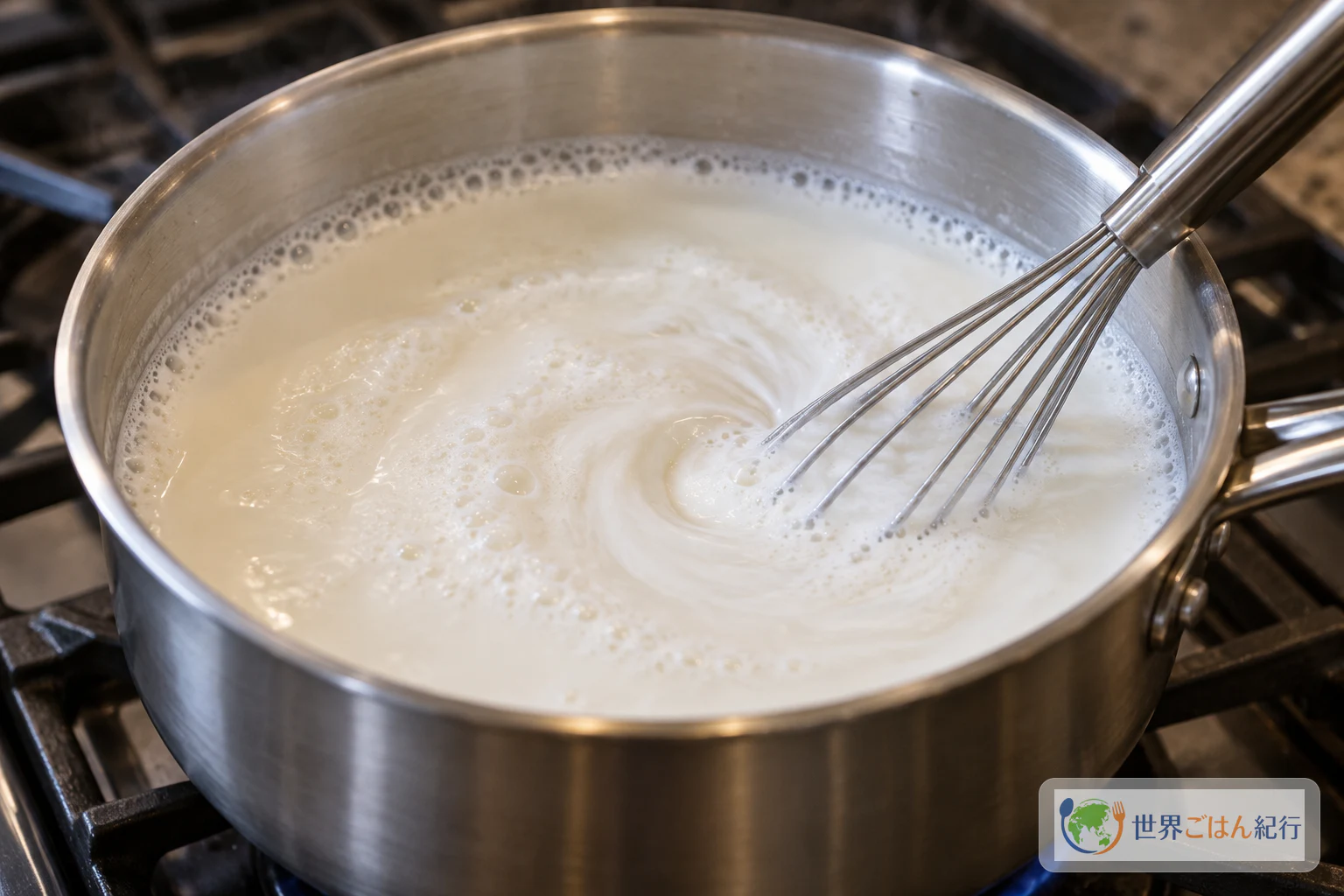
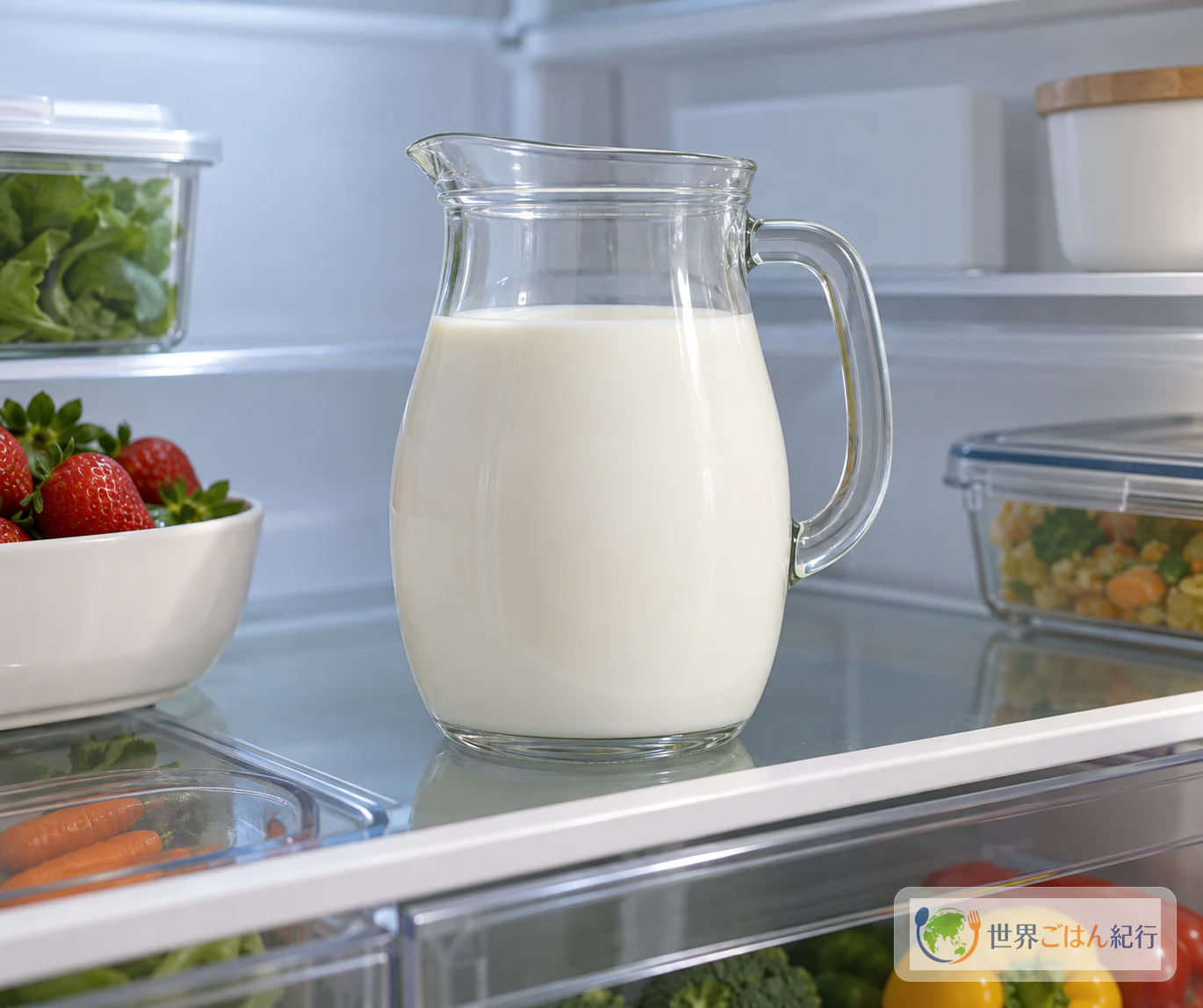
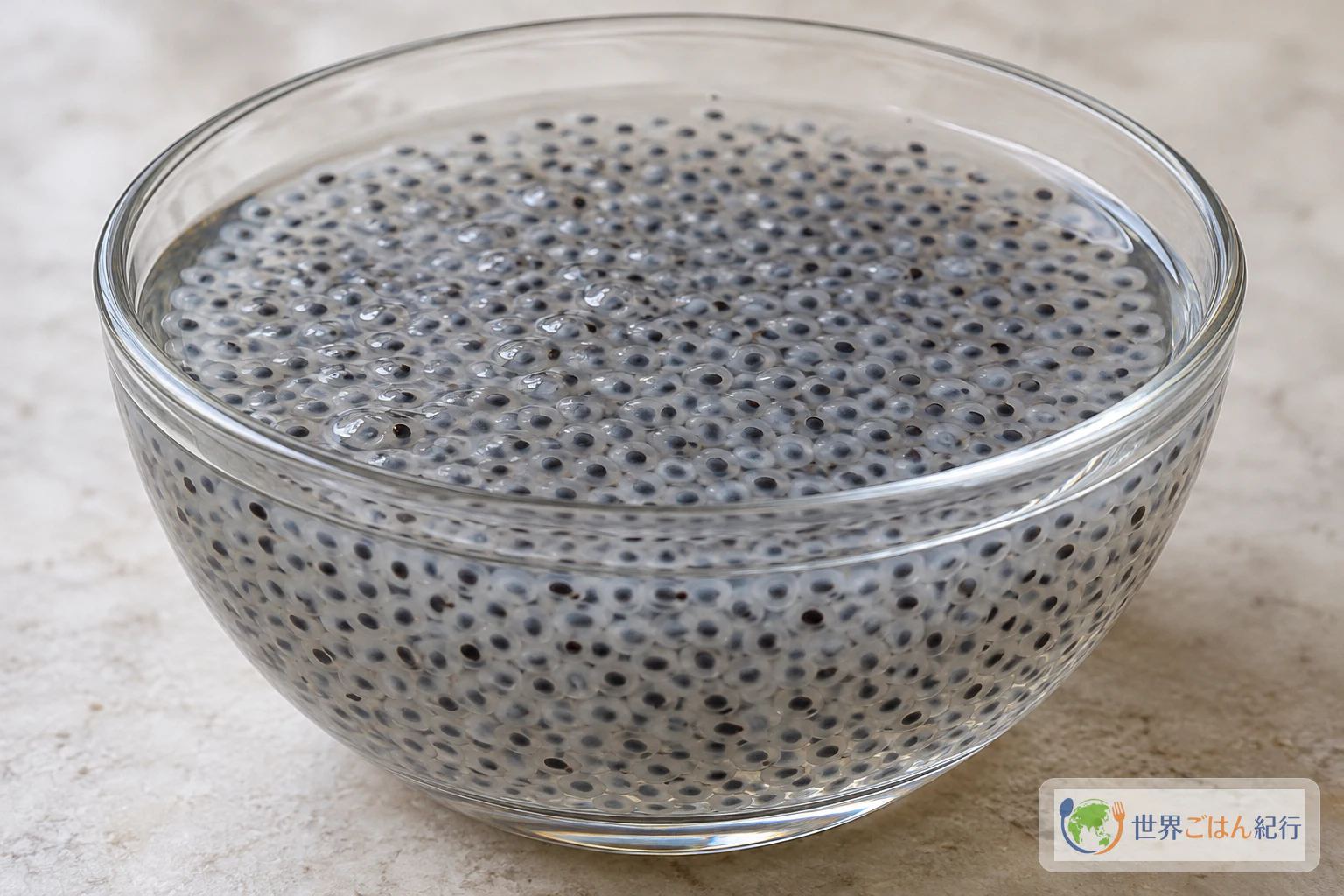
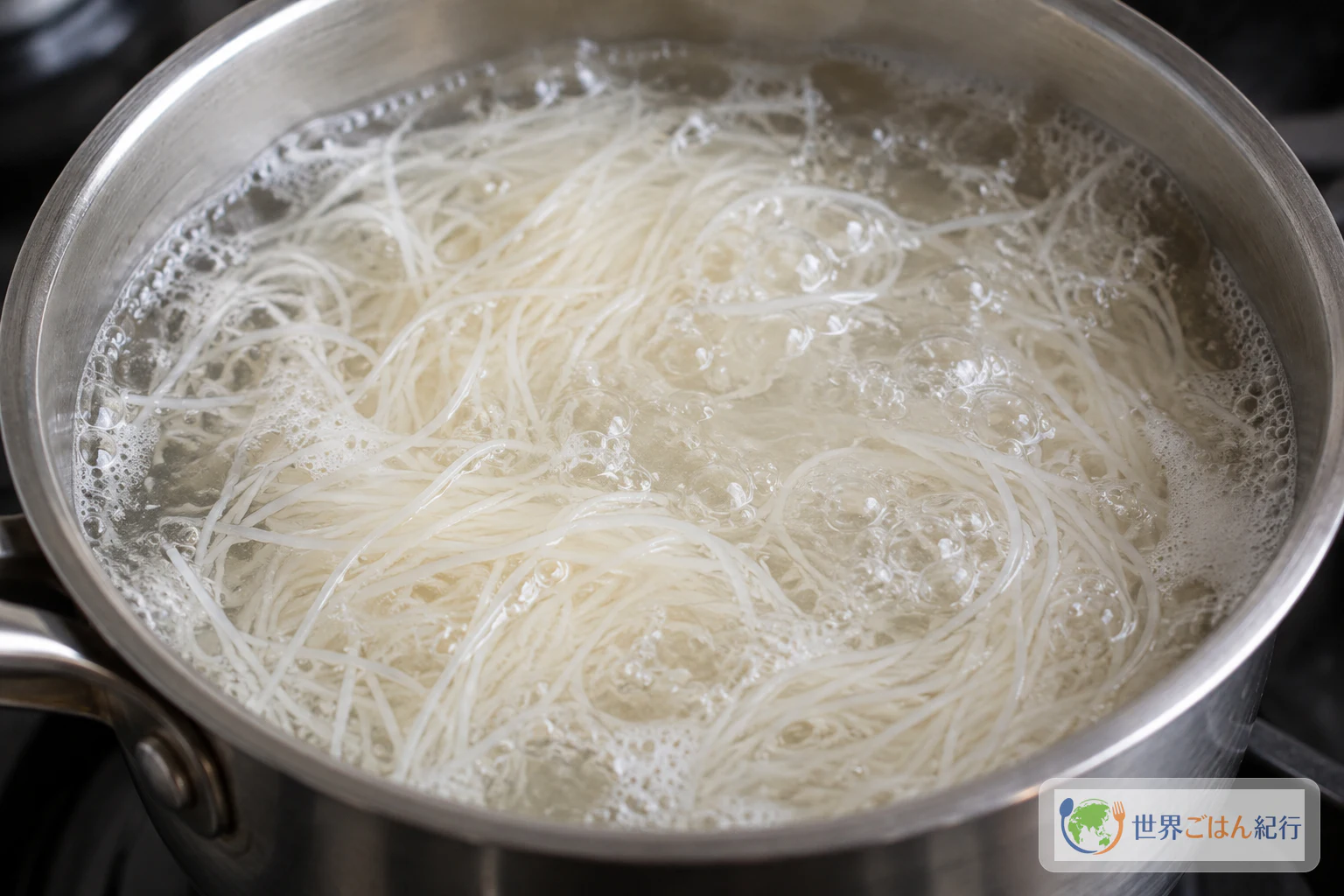
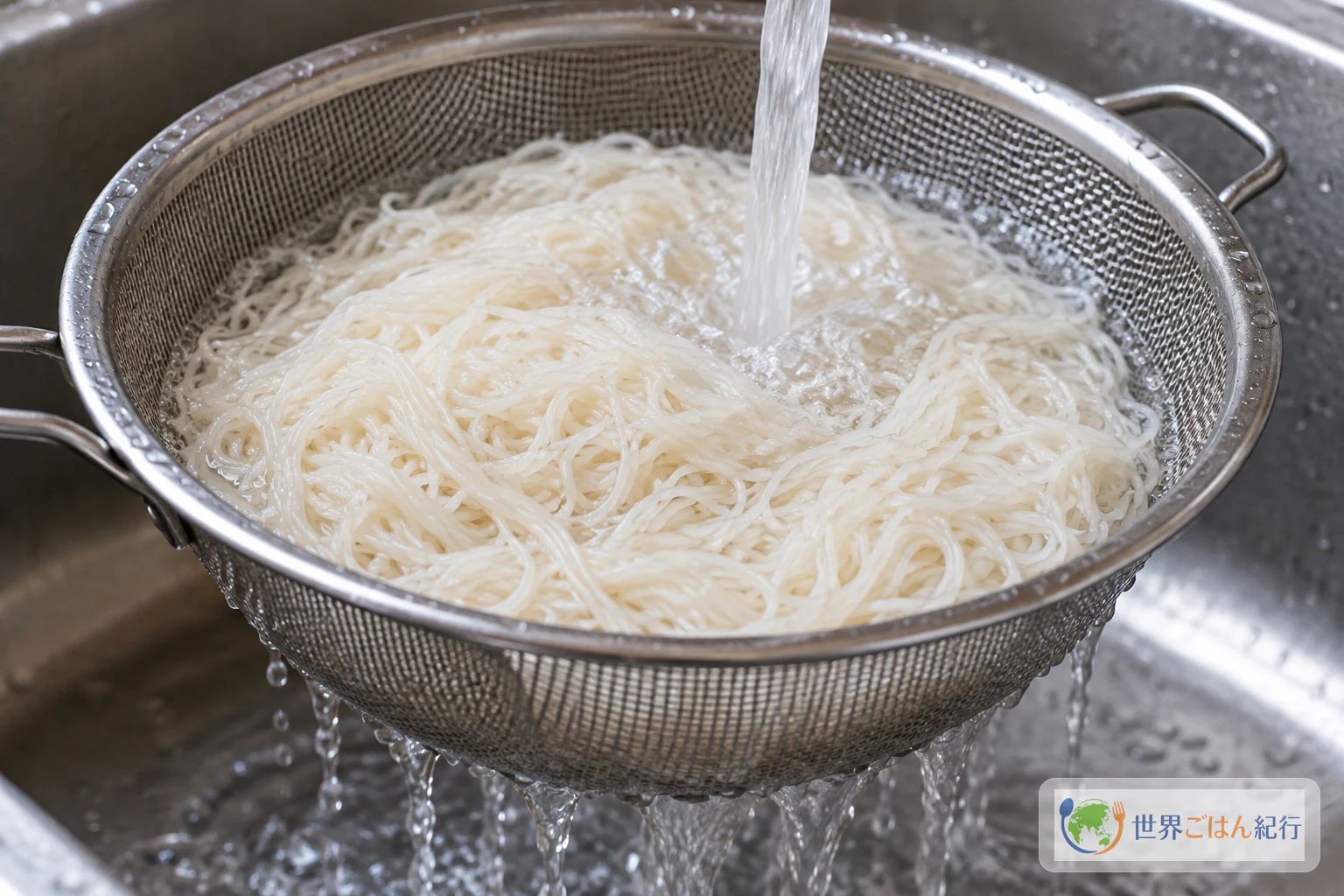
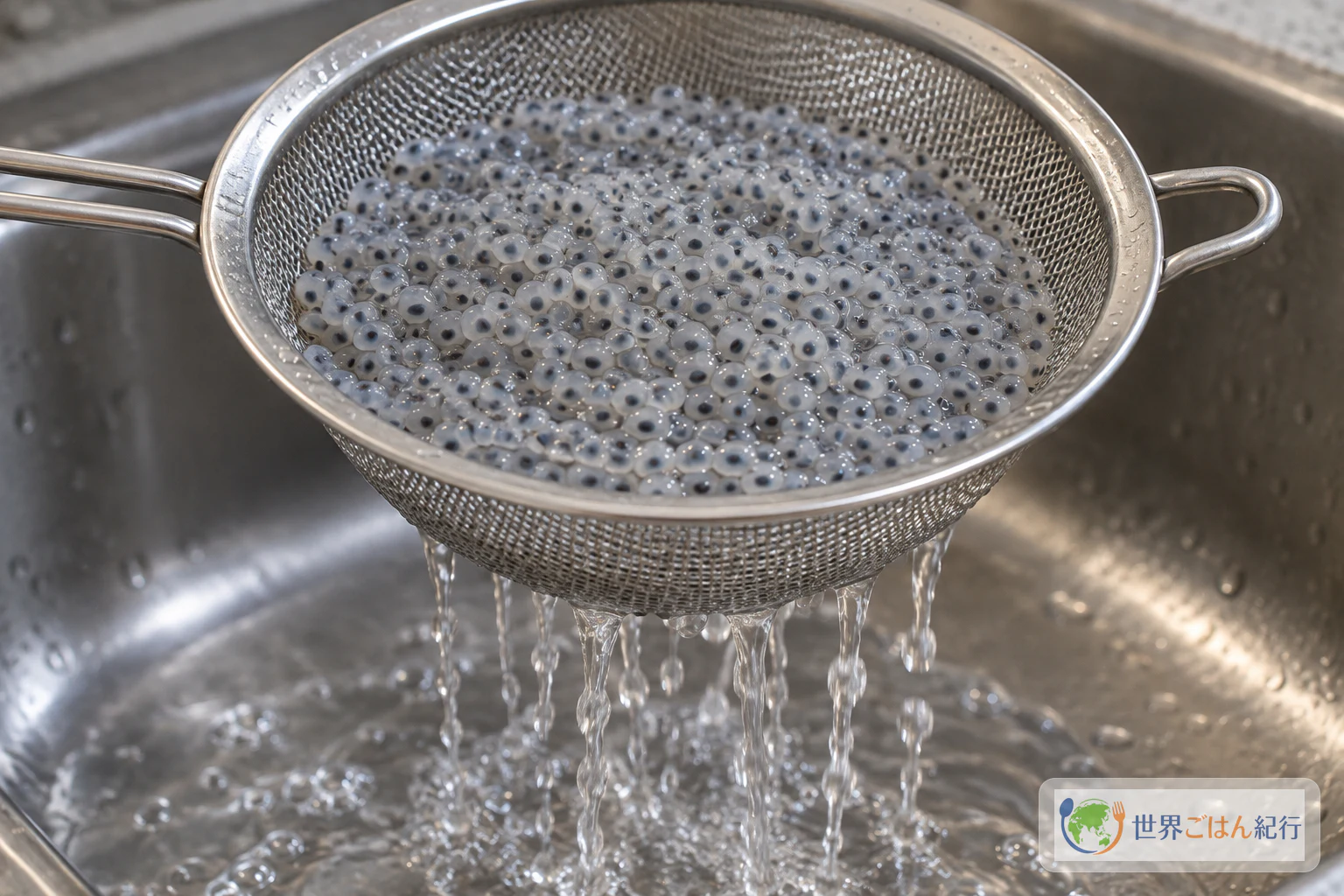
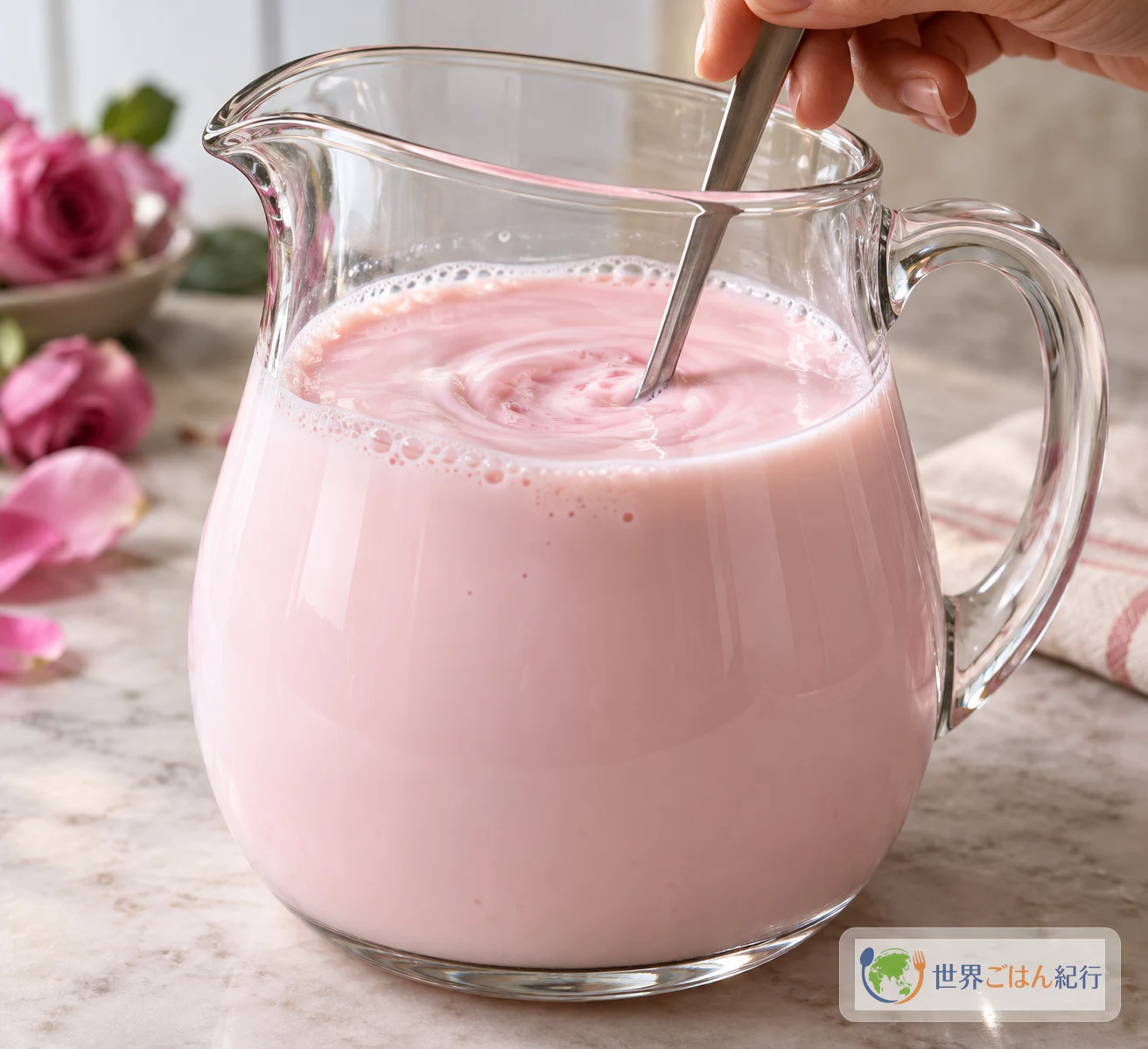
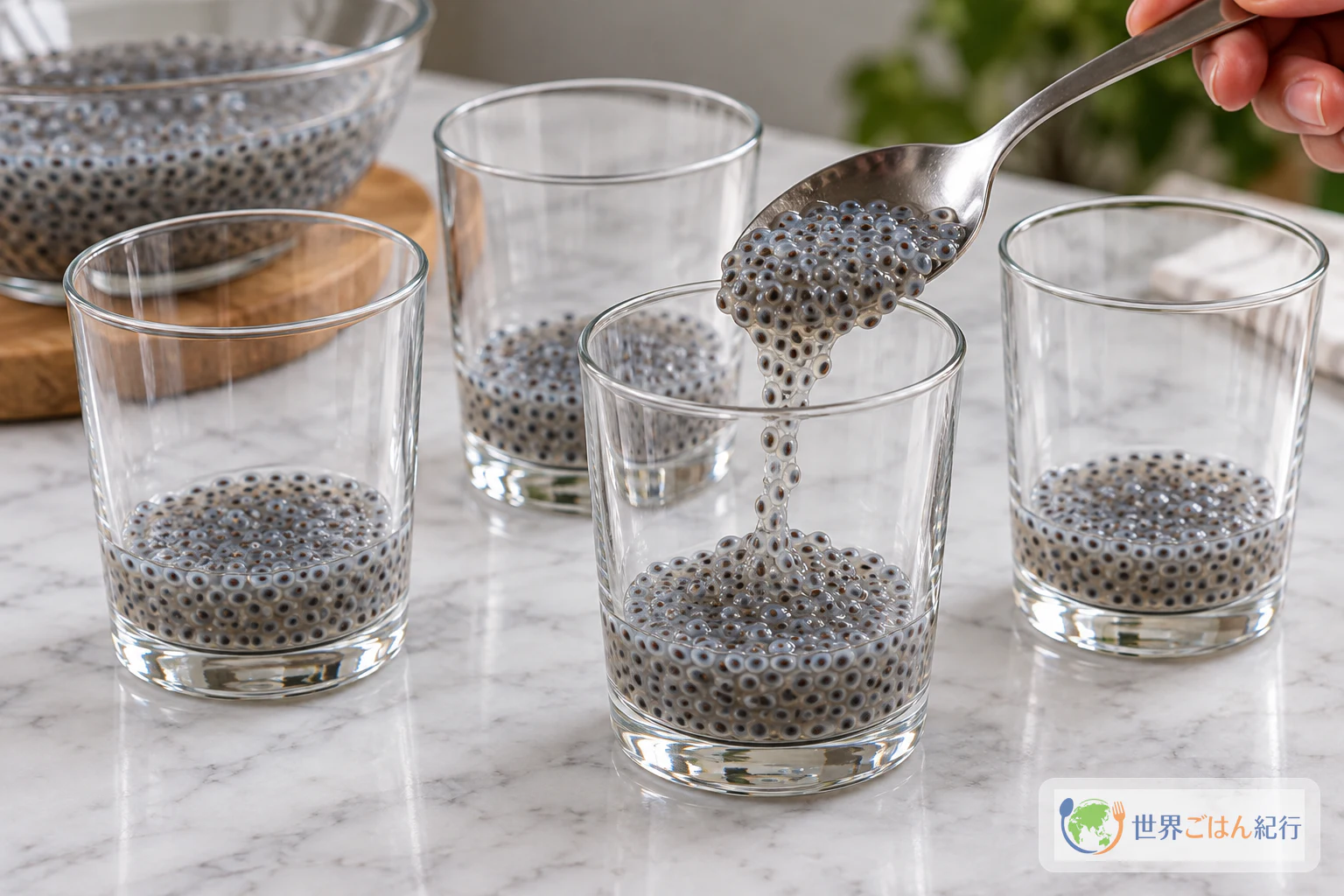
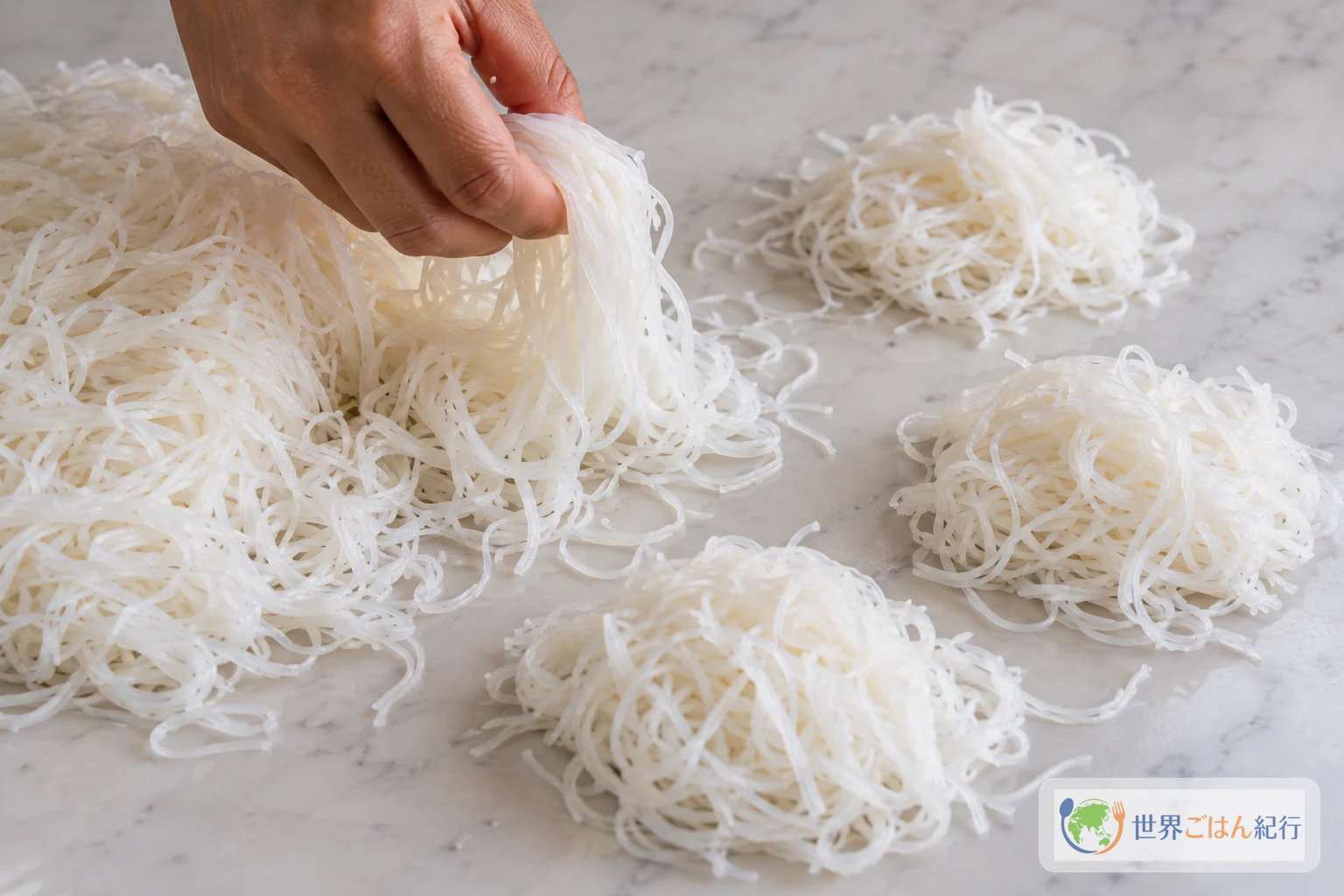
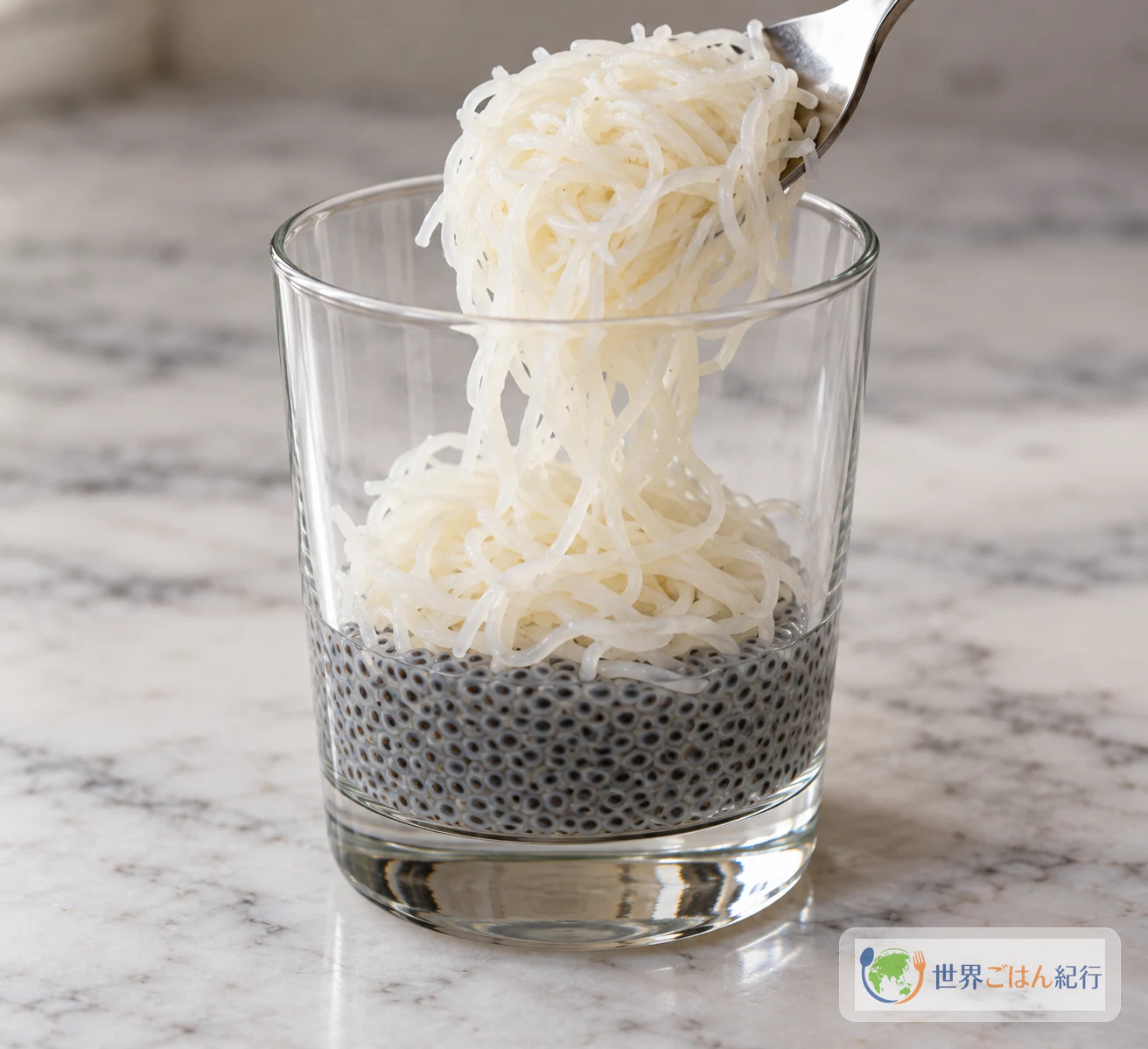
Most of the work is done ahead of time. The milk is simmered and chilled, the seeds soak in cold water, and the noodles are boiled and rinsed. Then everything comes together in the glass. You can find more dishes from the country on our Bangladesh page.
The Name, and Why This Article Follows One Recipe
Faluda and Falooda are treated here as two spellings of the same dessert. Rownak Jahan's recipe page uses Faluda, Falooda and ফালুদা together in its title, and other Bangladeshi recipe pages also use these names. We could not confirm where the name comes from, so we don't offer an explanation of it.
Dina Begum's author site gives the background to this recipe, describing Begum as a British-Bangladeshi author and food writer whose cookbooks include Made in Bangladesh. That supports a link between the writer, the newspaper and Bangladesh. It does not show that the dish began in Bangladesh, that it belongs only to Bangladesh, or that this formula is common across the country.
Published recipes also vary widely. Those opened for this article share a family of ingredients, including milk, rose, basil seeds, vermicelli and ice cream, but they differ in their components. Those differences could reflect individual authors or products as easily as fixed national styles. There is also a dissenting view: a reader essay in Prothom Alo argues that faluda was not historically part of Bangladeshi culture. Its writer says they had not previously seen, touched or tasted faluda, and it is a personal essay rather than food history. We treat it as a reason for caution, not as a settled answer either way.
The recipe specifies four glasses and four scoops of ice cream. It gives no glass size, no explicit number of servings and no total time.
Ingredients for 4 Glasses
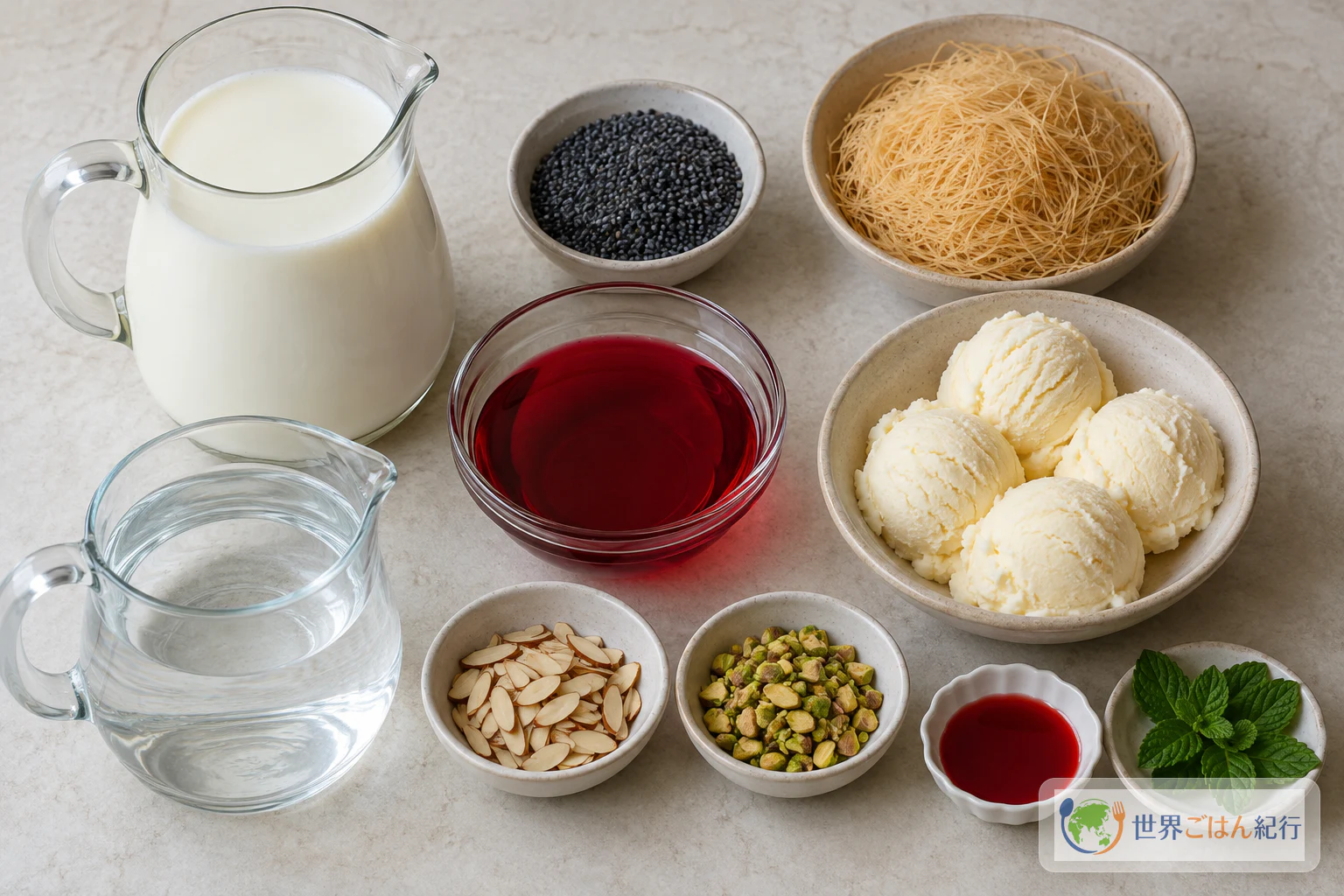
This dessert contains milk, almonds and pistachios. Check the labels on the ice cream, syrup and noodles for any other allergens.
Equipment
- Saucepan for the milk
- Pot for boiling the noodles
- Spoon for stirring
- Jug for chilling the milk
- Bowl for soaking the seeds
- Something to drain the seeds and noodles
- Measuring spoons
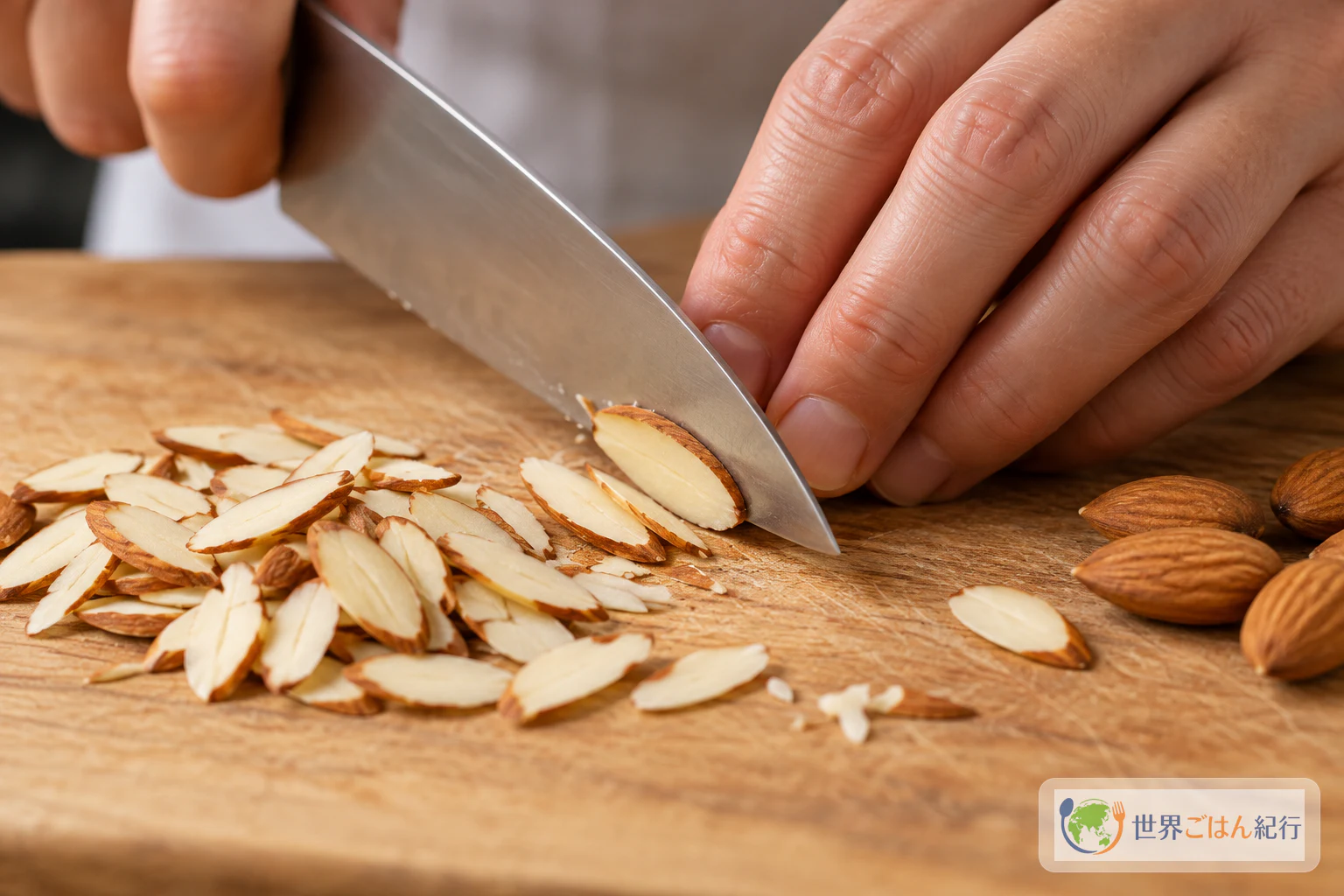
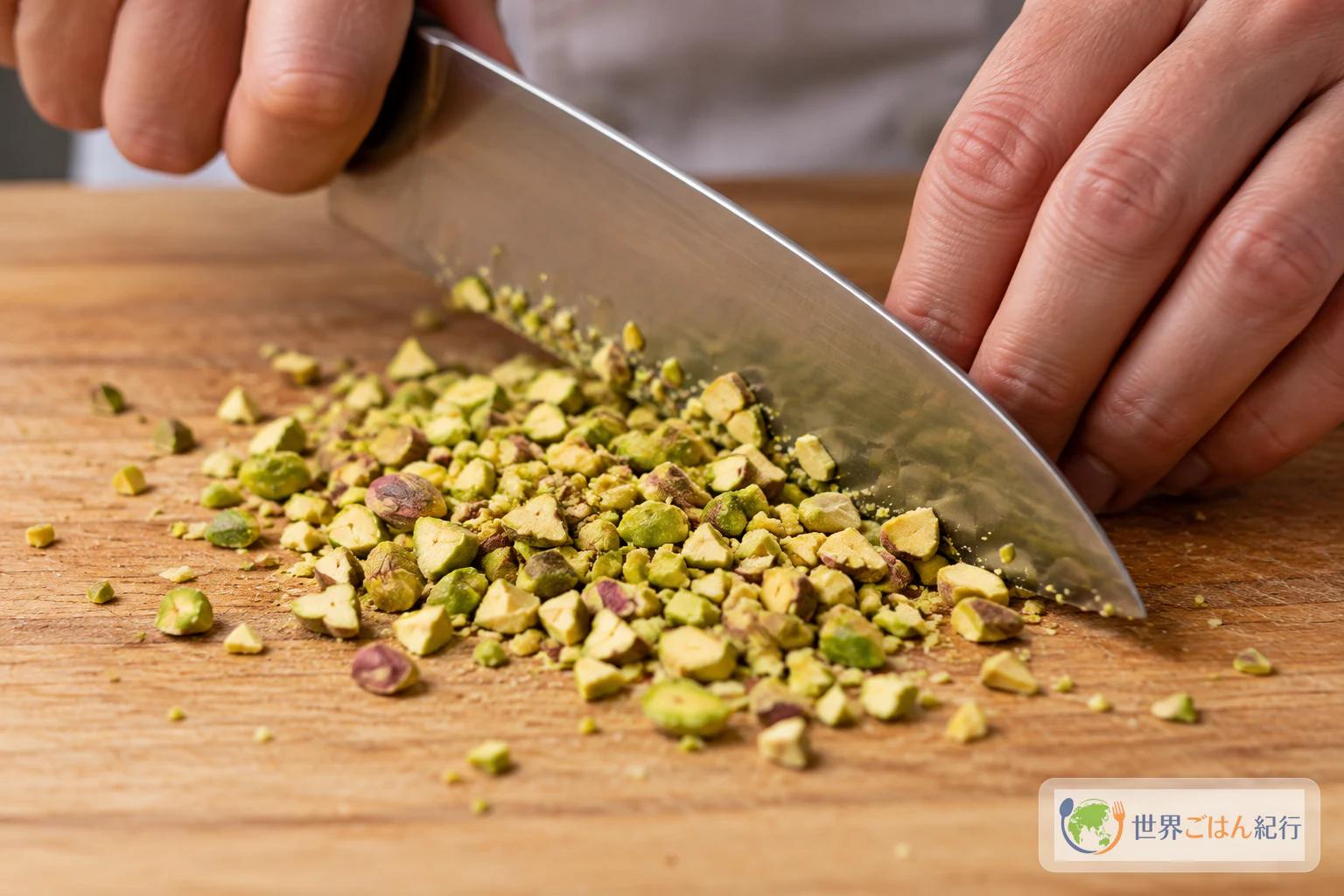
- Knife and cutting board
- Ice cream scoop
- 4 clear glasses
Shopping and Choosing Notes
- Basil seeds: look for "basil seeds" or "tokma." Don't assume chia seeds are an equivalent, as no swap has been established for this recipe.
- Fine vermicelli: use fine vermicelli noodles. We can't say whether a particular product, such as glass noodles or rice noodles, is the right match, so read the label and expect the result to change with the noodle.
- Rose syrup: use Rooh Afza. Rose essence and cardamom milk are not direct swaps here.
- Milk and ice cream: use whole milk and vanilla ice cream. Any change makes it your own variation.
- Additions: sugar, cream, sago, fruit and jelly are not part of this version.
We have not checked product availability or prices in any particular country.
Method: Chill First, Then Layer
The seeds soak while the milk chills, so the two times overlap and shouldn't be added together. The steps are listed by task, not as a strict timeline.
Keeping It Cold
Japan's Ministry of Health, Labour and Welfare gives 10°C or below as its home guide for refrigerators and for food served cold, and it advises against leaving prepared food at room temperature for a long time. Keep the chilled milk in the refrigerator until you assemble the glasses, and refrigerate any leftovers rather than leaving them out. This is general guidance, not a shelf life for faluda and not a check of the chilling time in this recipe. No storage period is available for this dish, so we don't give one.
If Something Doesn't Look Right
| What you notice | What to do |
|---|---|
| The milk isn't cold after about 1 hour | Leave it in the refrigerator until it is. The hour is a guide, and no refrigerator temperature or container is specified. |
| The noodles are still firm after 7 minutes | Keep boiling until soft, then drain and rinse with cold water. |
| You're measuring seeds for the glasses | The 1½ tbsp per glass refers to soaked seeds. Don't measure 6 tbsp of dry seeds; the recipe uses 2 tbsp dry. |
| The noodle portions look uneven | No equal portions or weights are specified, so you can divide them by eye. |
| You'd like more rose flavor in the glass | Use the extra rose syrup at the end, to taste. |
Other Faluda Recipes: Complete Versions, Not Add-Ons
The recipes below are separate formulas. They are useful for seeing the range of published versions, but their ingredients aren't meant to be mixed into Dina Begum's glass one at a time. If one appeals to you, follow it in full on its own page.
| Recipe | How it differs | Keep in mind |
|---|---|---|
| Rownak Jahan, Rownak's Kitchen website | 1 litre milk reduced to about half, plus 1 cup milk for soaking 1/2 cup tapioca; 3/4 cup sugar, 60 g noodles, 2 tbsp tokma, fruit, 4–5 scoops ice cream, optional rose essence or food color | The author presents it as a simplified home version for summer or Iftar. It is one person's recipe. |
| Rownak Jahan, eBook | 1 1/2 cups milk, 2 tbsp seed tapioca, 3 tbsp sugar, 1/8 tsp cardamom, banana, cherry, grapes, apple, 2 scoops mango ice cream, 1 tbsp honey | No vermicelli or rose syrup is listed. Basil seeds appear only as an option in the text. It comes from the same author as the website version. |
| Bangla Tribune and Dhaka Post | Milk, noodles, sugar, sago and vanilla, topped with ice cream and other additions such as fruit | Bangla Tribune presents its version in an Iftar context. The two articles closely match, so they don't count as independent recipes. |
| Milkmaid Sri Lanka (Nestlé) | Condensed milk and water, basil seeds, rose water or syrup, jelly, vermicelli, vanilla ice cream, optional cashew | This is a branded product recipe. It lists 100 ml rose syrup but uses 20 ml in the method, and that difference is unresolved. |
| Malini's Kitchen, Sri Lanka recipe archive | One serving: 1 1/2 cups milk, 1 1/2 tbsp rose-flavored syrup, 1 scoop vanilla ice cream; optional kasa-kasa, jelly and cooked vermicelli | This is an individual archive recipe, useful only as a comparison. |
Dina Begum's article also mentions types with candied fruit, jelly or kulfi, but gives no recipes for them.
Frequently Asked Questions
Are Faluda and Falooda different dishes?
We treat them as spellings of the same dessert. Bangladeshi recipe pages use both names, and Rownak Jahan's page lists them side by side with the Bengali ফালুদা.
What is tokma?
Dina Begum's recipe gives it as "basil seeds (tokma)," so look for either name. They are soaked in cold water and drained before going into the glass.
Should faluda include sago or jelly?
Not in this version. Dina Begum's ingredient list includes neither, though sago and jelly appear in other published recipes, as the comparison table shows.
How much rose syrup or rose milk goes in each glass?
The recipe doesn't make this clear. It stirs the 6 tbsp of syrup into the chilled milk, then says to pour "equal amounts of the rose syrup and milk" into the glasses. That could mean sharing out the mixed liquid, or pouring equal amounts of syrup and milk separately. No per-glass volume is given, and we don't present either reading as confirmed.
Can I make faluda ahead?
Parts of the method happen ahead of assembly, since the milk needs time to chill, but the recipe gives no storage period. Keep chilled components and any leftovers refrigerated, using the guidance in Keeping It Cold. We don't suggest a storage time, reheating or freezing.
Is this the authentic Bangladeshi recipe?
We can't make that claim. It is Dina Begum's personal recipe, published by The Daily Star, and the sources we found don't establish a single formula for Bangladesh.
Sources
- Dina Begum, "Dina's Table," The Daily Star, 2019. Recipe, amounts and method used in this article, the author's personal association with Ramadan and Eid, and the mention of other variants. https://www.thedailystar.net/lifestyle/recipe/news/dinas-table-1752979
- Dina Begum, "About." The author's description as a British-Bangladeshi author and food writer, and cookbooks. https://www.dinabegum.co.uk/about
- Rownak Jahan, "Faluda / Falooda / ফালুদা," Rownak's Kitchen. Spellings and a separate complete recipe. https://banglarecipes.com.au/faluda-falooda/
- Rownak's Kitchen, "Easy to Cook Bangladeshi Recipes by Rownak's Kitchen." Self-published background on the author and site. https://banglarecipes.com.au/
- Rownak Jahan, "Rownak's Bangladeshi Recipes eBook." A separate Falooda/Faluda recipe by the same author. https://banglarecipes.com.au/wp-content/uploads/2012/09/rownaks-bangladeshi-recipes-ebook.pdf
- Bangla Tribune, "ইফতারে মজাদার ফালুদা." A separate desk recipe presented in an Iftar context. https://www.banglatribune.com/amp/lifestyle/214767/%E0%A6%87%E0%A6%AB%E0%A6%A4%E0%A6%BE%E0%A6%B0%E0%A7%87-%E0%A6%AE%E0%A6%9C%E0%A6%BE%E0%A6%A6%E0%A6%BE%E0%A6%B0-%E0%A6%AB%E0%A6%BE%E0%A6%B2%E0%A7%81%E0%A6%A6%E0%A6%BE
- Dhaka Post, "ফালুদা তৈরির রেসিপি." A closely matching desk recipe, not counted as independent confirmation. https://www.dhakapost.com/lifestyle/106455
- Milkmaid Sri Lanka / Nestlé, "Milkmaid Faluda Recipe." A branded comparison recipe. https://www.milkmaid.lk/en/seasonal-recipe/milkmaid-faluda
- Malini's Kitchen, "Faluda: Sri Lanka Recipes." A one-glass comparison recipe. https://www.infolanka.com/recipes/mess5/2.html
- Japan Ministry of Health, Labour and Welfare, "家庭でできる食中毒予防の6つのポイント." General home guidance on refrigeration and cold food at 10°C or below, avoiding long periods at room temperature, and washing vegetables well, applied here to the mint. https://www.mhlw.go.jp/stf/seisakunitsuite/bunya/kenkou_iryou/shokuhin/syokuchu/01_00006.html
- Abu N M Wahid, "দিল্লিকা লাড্ডু," Prothom Alo Nagorik. A personal reader essay with a dissenting opinion, used only as a caution about claims of provenance. https://nagorik.prothomalo.com/durporobash/%E0%A6%B2%E0%A6%BE%E0%A6%A1%E0%A7%8D%E0%A6%A1%E0%A7%81-%E0%A7%A7