Jasha Maru: Chicken, Tomato and Green Chili in One Pot
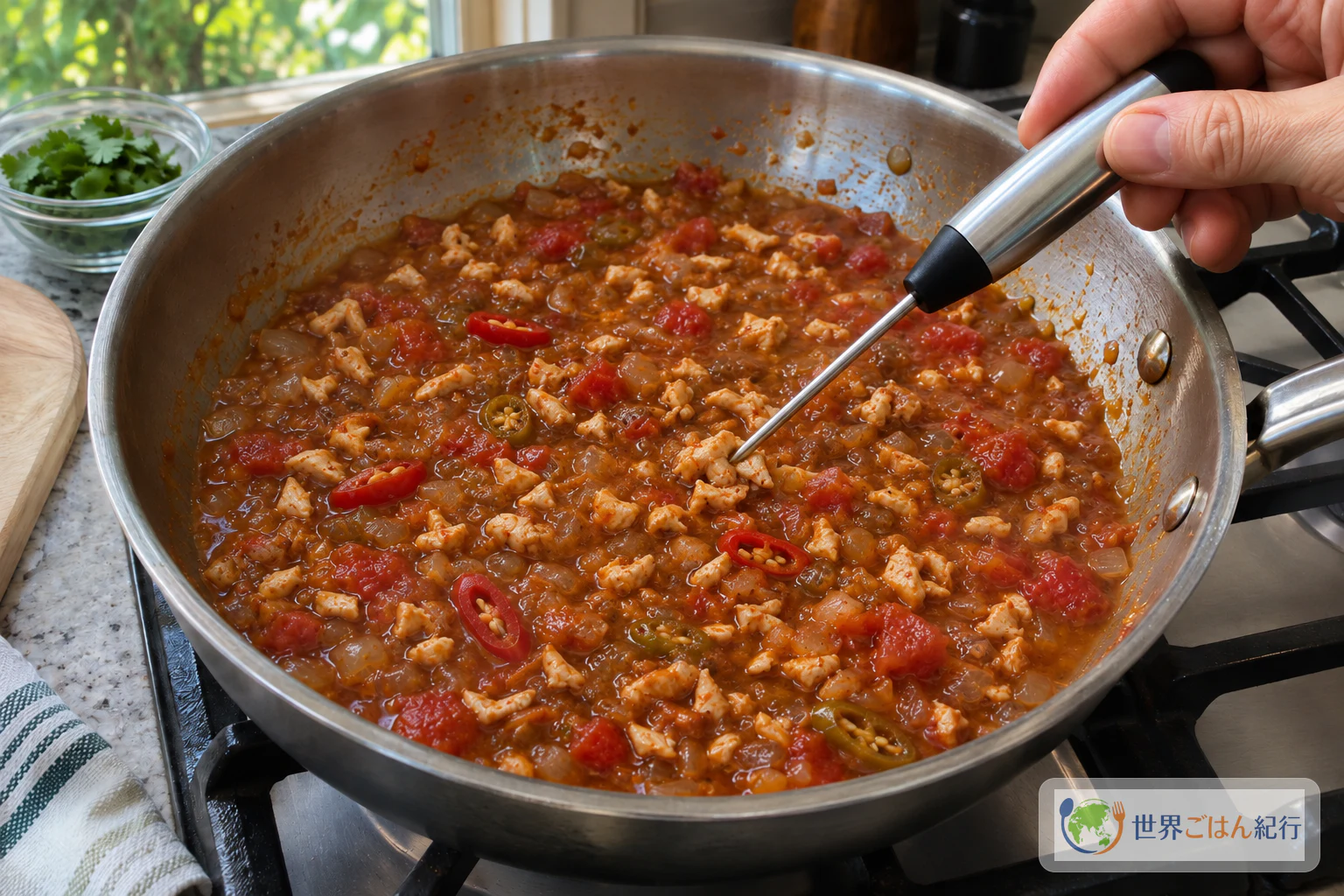
Add the ingredients in the order given and cook until the chicken is tender and the liquid has reduced, stopping while the stew is still moist. Use a food thermometer to judge when the chicken is done.
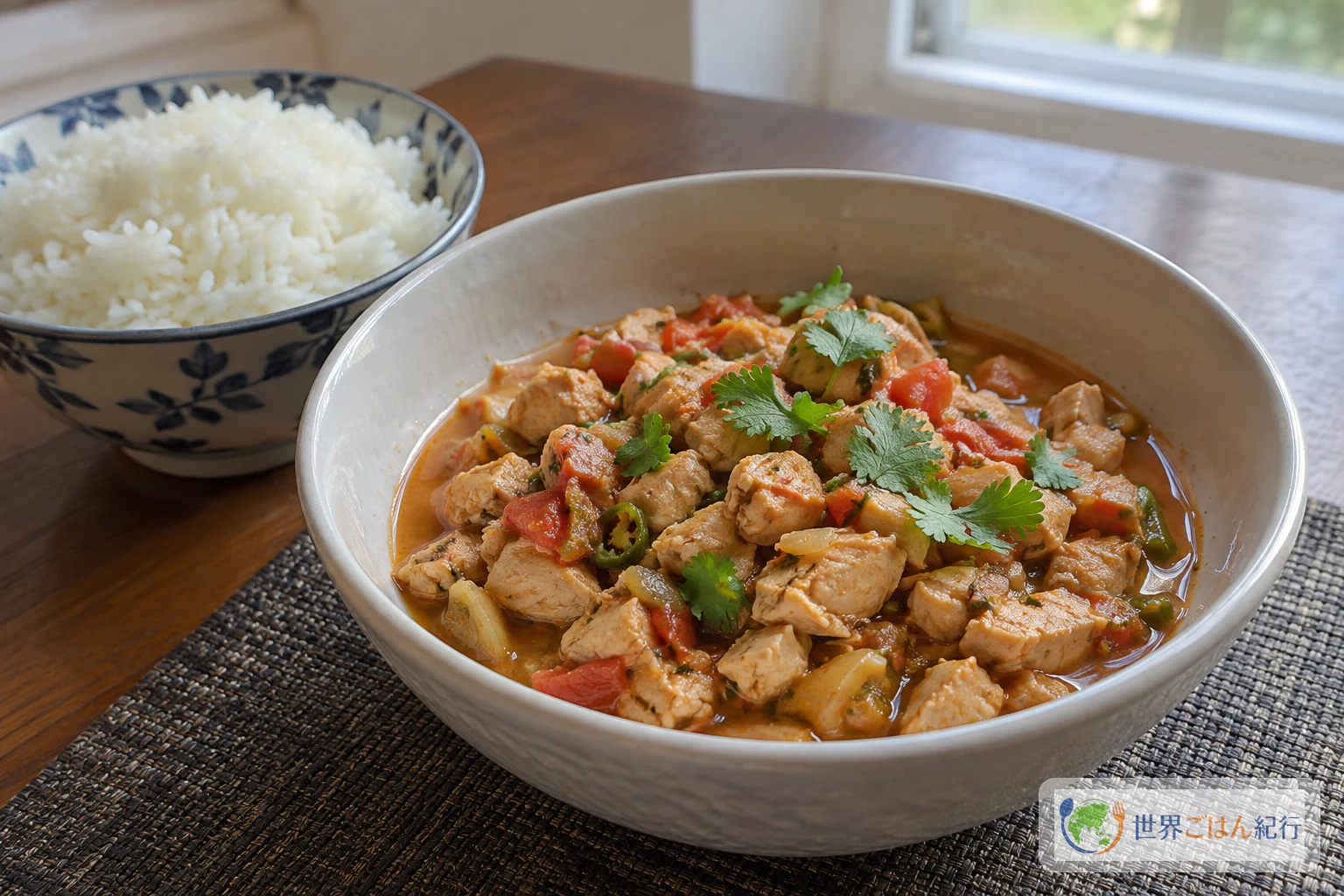
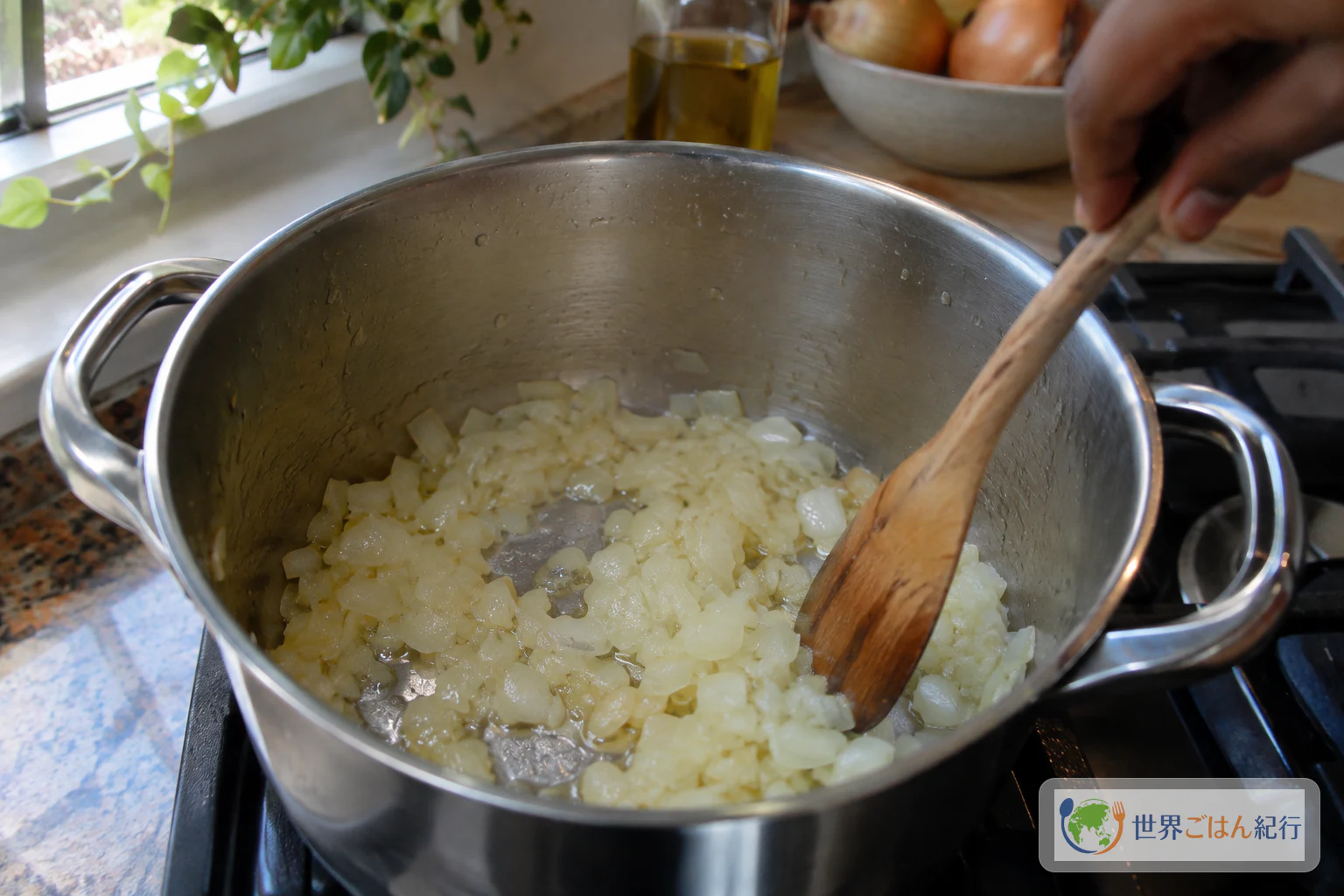
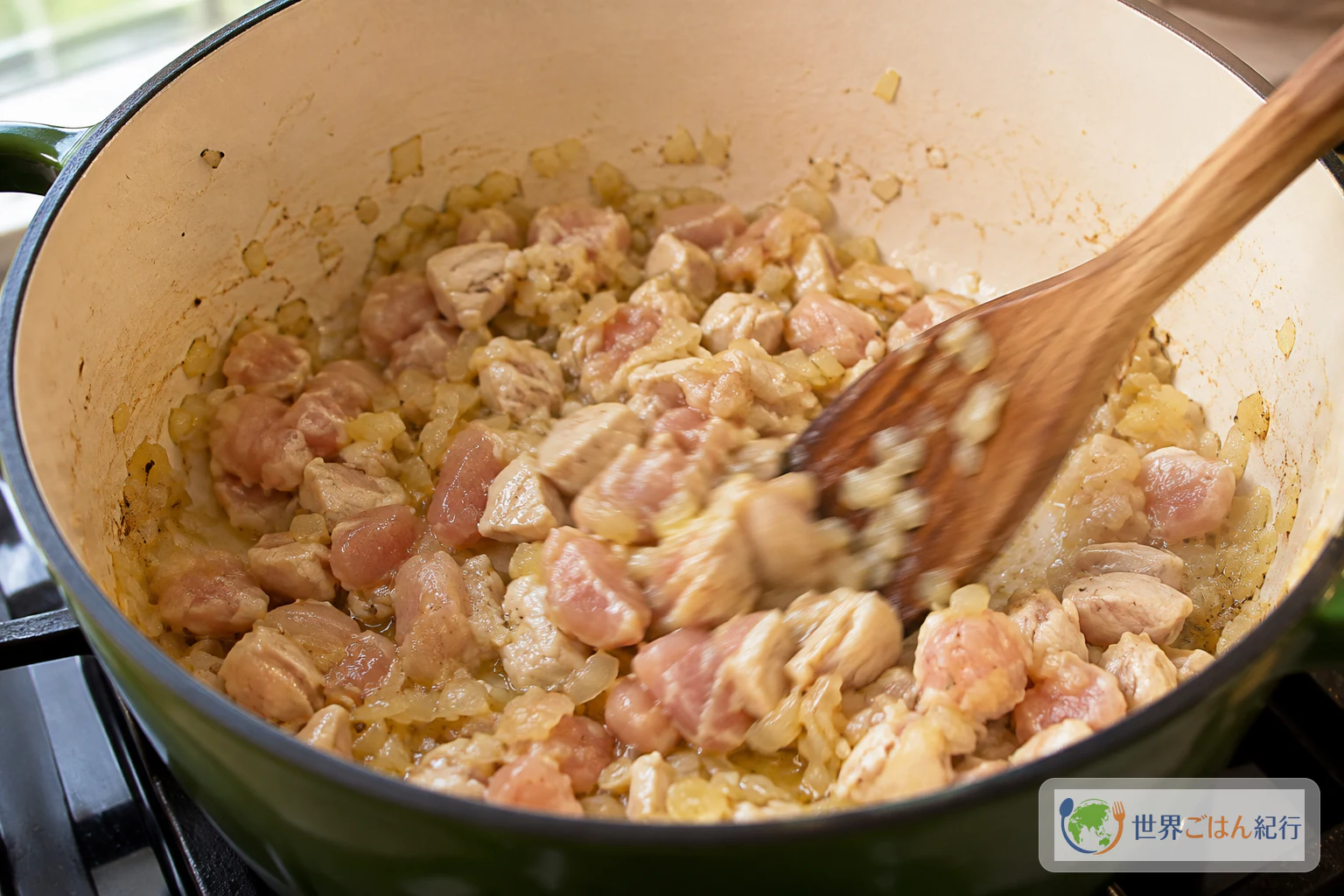
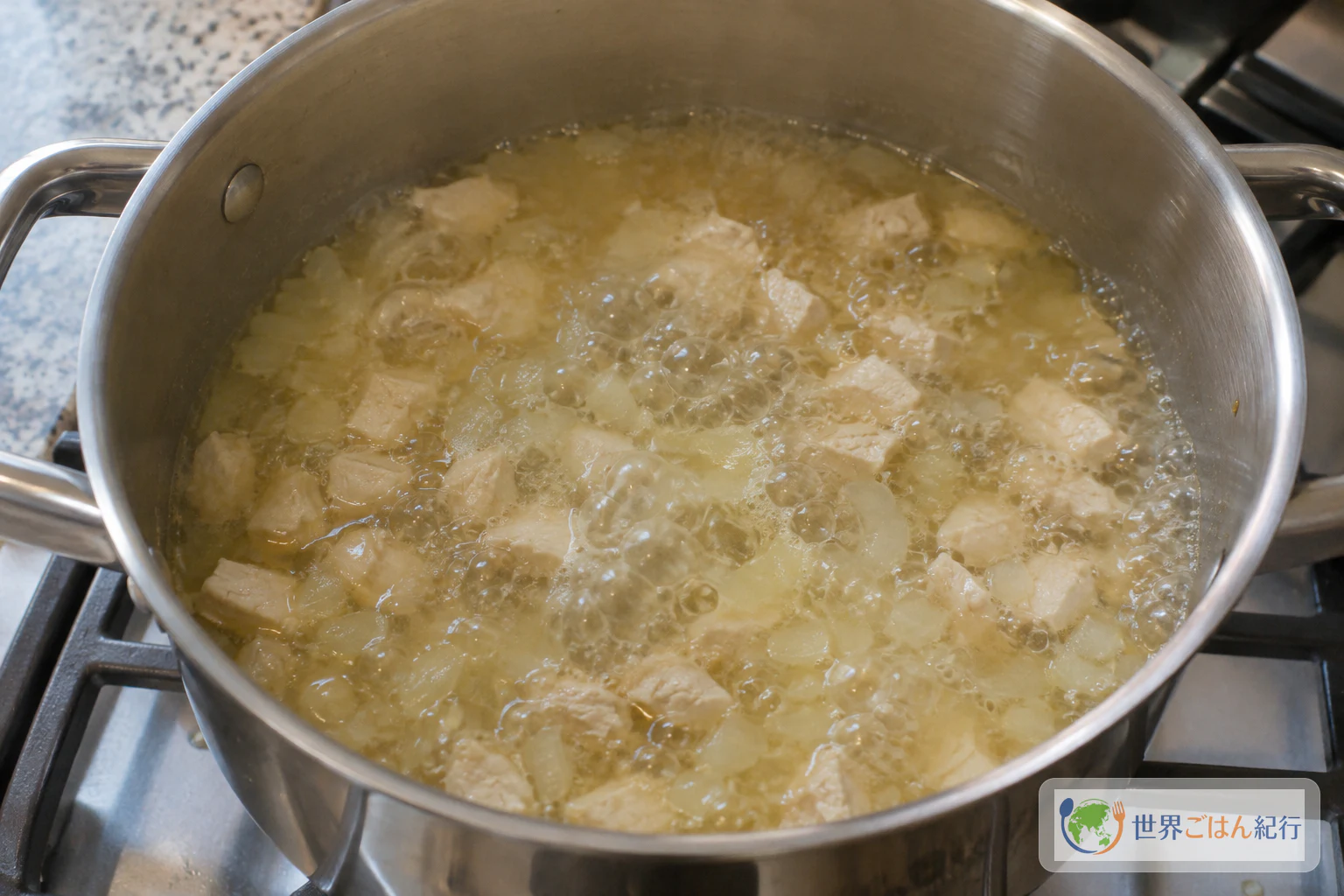
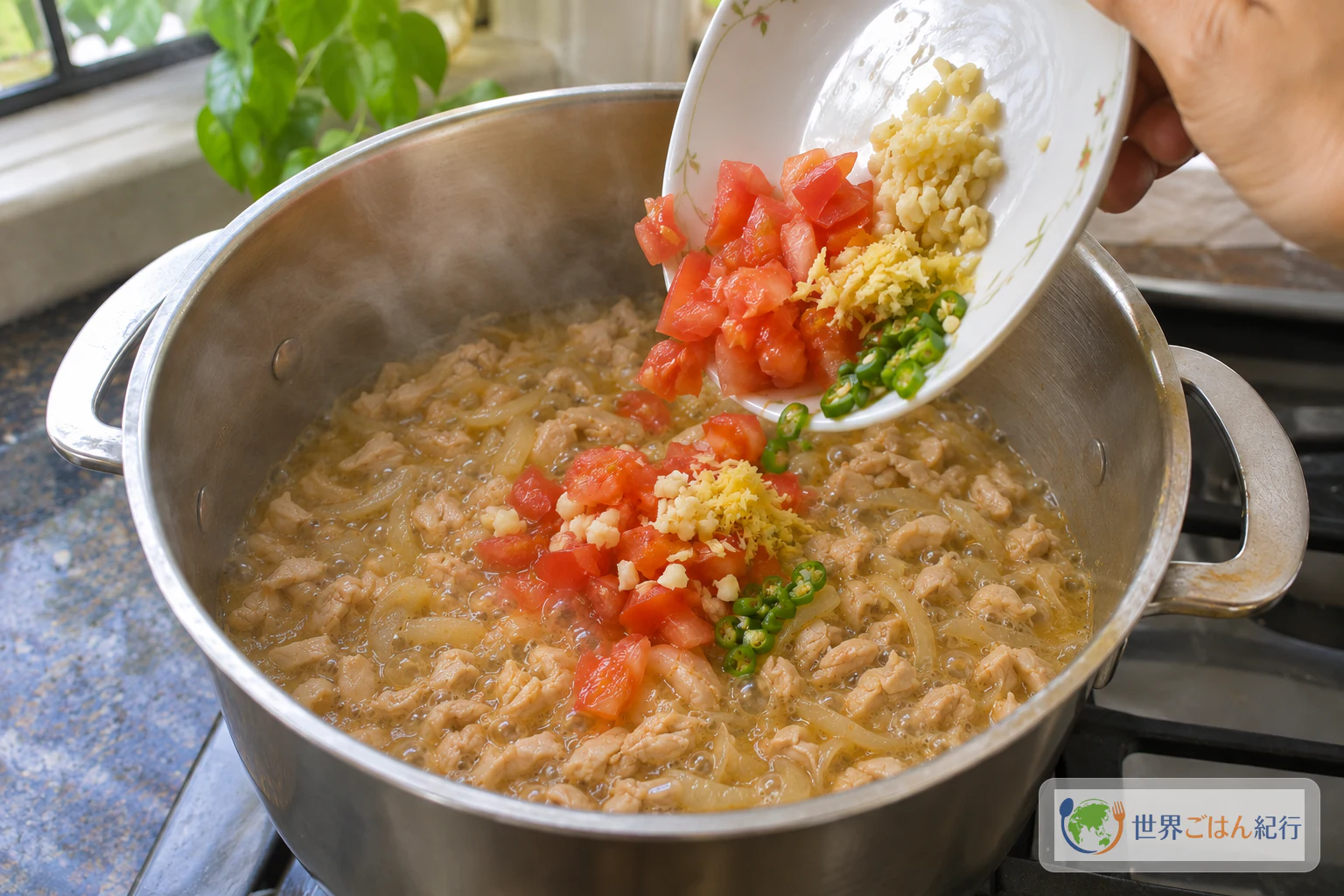
Chopped onion softens in oil until translucent. Chicken goes in and fries for about 5 minutes, then chicken stock follows and the pot comes to a boil. Garlic, ginger, tomatoes and four tablespoons of chopped green chili go in next, and everything cooks until the chicken is tender and the liquid has reduced.
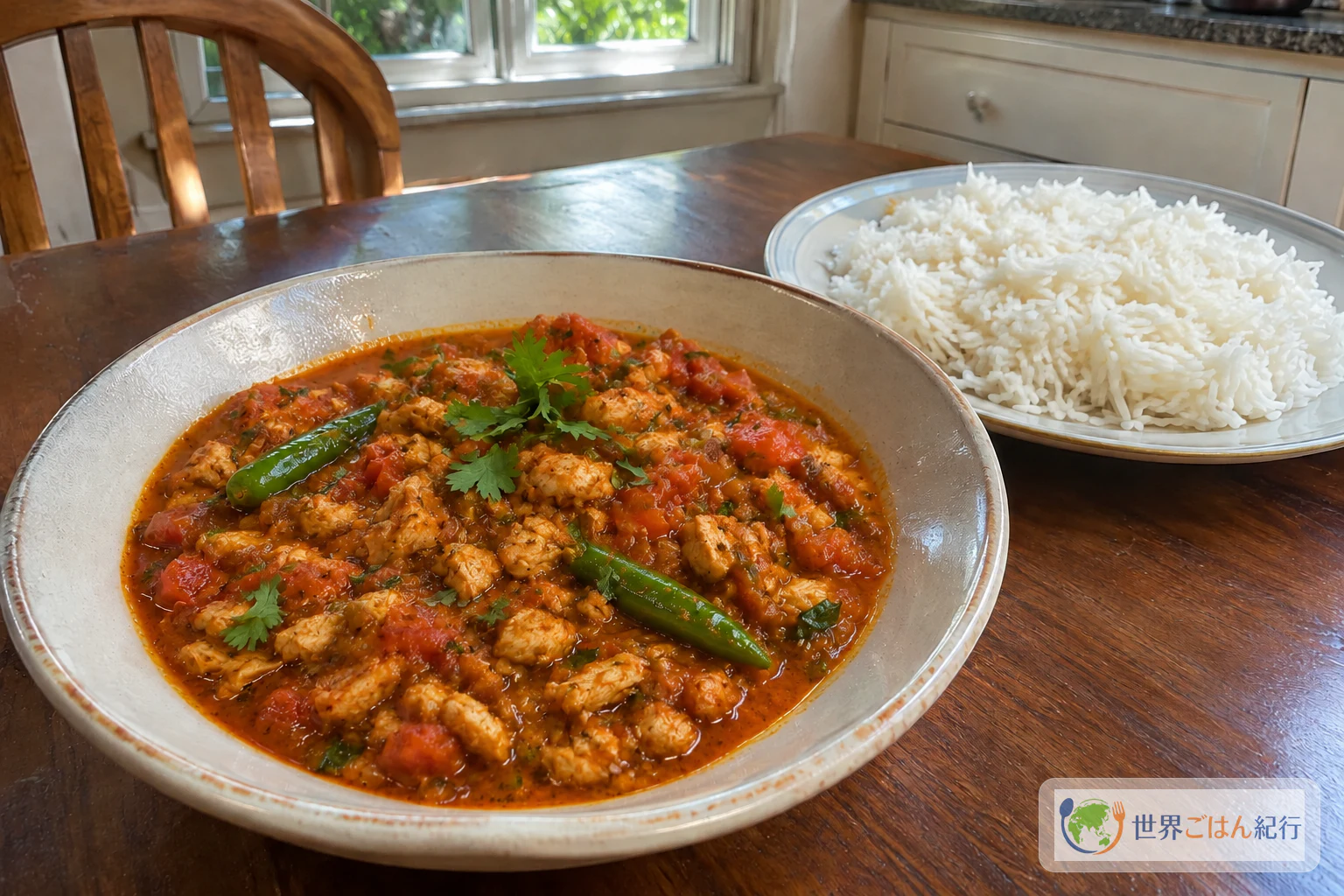
That is jasha maru, which Bhutan's official travel portal describes as a chicken stew and names among the traditional dishes that accompany rice. The same portal notes that the ingredients and preparation of Bhutanese food can vary by region, so this article doesn't present one recipe as the only true version. It follows a single published recipe from start to finish and explains what that recipe leaves open.
You'll also see the name spelled two ways: the tourism portal writes jasha maru, while the recipe used here writes Jasha Maroo. Sekai Gohan has not kitchen-tested this recipe as a whole. For more dishes from the country, see Bhutan.
Which Recipe This Is, and the Question of the Chicken
The recipe comes from the Bhutanese cuisine page of TripToBhutan, a travel website. The page names no individual author, so no cook or family tradition can be credited for it. Its formula and order of cooking are used here without mixing in amounts or methods from other recipes.
The main uncertainty is the form of the chicken. The recipe's heading reads "Bhutanese minced chicken", but its ingredient list says only "boneless chicken", with no mention of whether it should be ground or cut, or how finely. This article uses finely chopped boneless pieces, and the cooking and finished images show the same cut. That is an editorial choice. It doesn't come from the recipe, and it isn't a standard Bhutanese cut.
The recipe also leaves several other details open:
- It doesn't give a number of servings, a total cooking time, a salt amount or a chili variety, and it doesn't say which cup measure it means.
- Its method has a stray line, "Turn up the heat", after the cilantro sentence. It's unclear what that line refers to, so it is left out here.
- Other recipes with the same or a similar name differ considerably, as the comparison further down shows.
Ingredients for This Jasha Maru
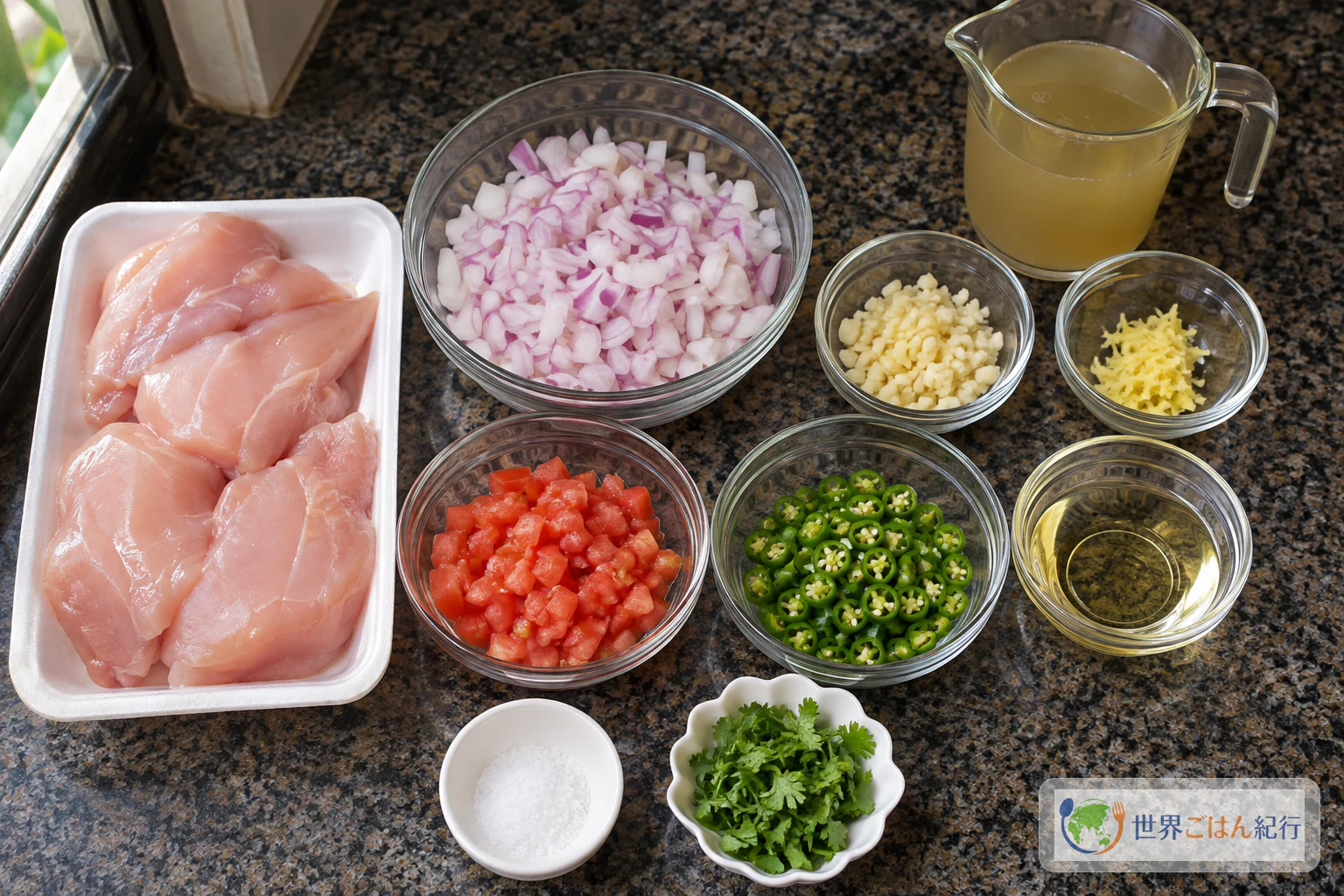
The fine chop is this article's editorial choice, not a fixed Bhutanese standard. Chop all the chicken the same way, and don't mix in ground chicken or bone-in pieces.
Do not wash raw chicken. Keep it and the tools it touches away from foods that won't be cooked further. Wash your hands, cutting board and knife properly after handling it, before they touch vegetables or herbs. Wash the vegetables under running water before cutting them on clean tools. The cilantro goes on raw, so wash it well under running water before chopping.
Choosing the Chicken, Chilies and Stock
Chicken, onion, tomatoes, garlic and ginger are everyday supermarket ingredients, so this dish doesn't call for a specialty shop.
- Green chilies: Heat varies by variety, so four tablespoons can taste quite different from one kind to another. Measure them chopped, with a spoon, and see the variations below if you want less heat.
- Chicken stock: Salt levels differ between products. Check how salty yours is before deciding how much salt to add.
- Cilantro: You can leave it out. Another herb will change the flavor rather than stand in for it exactly.
Equipment
- Cooking pot
- Separate cutting boards and knives, or a set washed between raw chicken and other foods
- Grater for the ginger
- Measuring spoons
- Cup measure for the stock
- Spoon or spatula for stirring
- Food thermometer
Method: One Pot, in Order
Each addition goes into the same pot. Apart from the chicken's frying time, the stages are judged by what you see in the pot and by the thermometer, not by the clock.
Troubleshooting
| What you notice | What it means | What to do |
|---|---|---|
| The thermometer reads below 75°C | The chicken hasn't finished cooking, whatever its color | Keep cooking, then check the thickest piece again; it needs 75°C or above for at least 1 minute |
| The chicken isn't tender yet | There is no fixed simmering time to rely on | Keep cooking and test a piece again |
| There is still a lot of liquid | The stew hasn't reduced enough | Continue cooking until the liquid has reduced |
| The pot is getting dry | The stew is moving toward a dry fry | Watch closely as the liquid falls, and aim to finish while it's still moist |
| It tastes too salty | The stock may have been salty before any salt went in | Next time, check the stock first and add salt gradually |
| It's hotter than you wanted | Chili varieties differ in heat | Next time, use fewer chilies |
Variations: Heat, Salt, Herbs and Ground Chicken
These are changes to the base recipe, so treat the results as your own version:
- Less heat: Use fewer green chilies. No fixed amount is suggested, because the right reduction depends on the variety you have.
- More heat: Add extra chilies a little at a time rather than all at once, and don't taste until the chicken is fully cooked.
- Salt: Set the final salt level by your stock, tasting at the end of step 5.
- No cilantro: Simply leave it out. The method doesn't change.
- Ground chicken: This would be a separate version. Don't combine it with chopped pieces, and still confirm the temperature with a thermometer.
Jasha Maru, Jasha Paa and Other Versions
Bhutan's official travel portal lists jasha maru as a chicken stew among the foods that accompany rice, which is why this article suggests rice on the side. That pairing comes from the portal, not from the recipe itself. The portal doesn't assign the dish a particular regional style, and nothing here should be read as a claim about its origin or history.
Similar names don't always mean the same formula. A cookbook hosted by a Bhutanese government website gives a recipe called Jasha Paa, and the Bhutan Society's newsletter prints a different Jasha Maroo. They're shown here only for comparison, and none of their ingredients or steps have been borrowed for the recipe above.
| Recipe in this article | Jasha Paa (Bhutan eCookbook) | Jasha Maroo (Bhutan Society newsletter) | |
|---|---|---|---|
| Chicken | Boneless | Bone-in | Boneless, skinless thighs |
| Chilies | Green | Fresh green | Red |
| Liquid | Chicken stock | Water | Stock |
| Method | Soften onion, fry chicken, boil with stock, add aromatics and vegetables, then reduce | Simmer chicken, onion, garlic and salt in water, add tomato, then add chili until the water dries and the chili skin partly burns | Cook onion, garlic, ginger, chili and leek in oil, add chicken and tomato, then simmer covered in stock |
These differences alone can't be mapped onto particular parts of Bhutan, so they're best read simply as separate recipes.
If you're exploring Bhutanese food further, ema datshi is a dish of chilies and cheese. Phaksha paa is made with pork, so don't confuse it with the chicken-based jasha paa.
Frequently Asked Questions
Is the chicken in jasha maru ground or chopped?
The recipe doesn't settle this. Its heading says "minced chicken", while its ingredient list says only "boneless chicken", with no cut specified. This article chooses finely chopped boneless pieces as an editorial decision, which doesn't make it the recipe's specified cut or the standard form across Bhutan.
Is this the one authentic recipe?
No. It's one published recipe from a travel website. Other recipes under the same or a similar name use different ingredients and methods, and Bhutan's tourism portal notes that Bhutanese food can vary by region.
How many people does it serve?
The recipe doesn't state a number of servings, so none is given here.
How hot is it?
The formula uses 4 tbsp chopped green chilies, but the recipe doesn't name a variety, and heat varies between varieties. Using fewer chilies is an intentional change to the recipe, and a sensible one if you're cautious about heat.
What size is the cup of stock?
The recipe says "1 cup" without saying which cup measure it means, so the amount isn't converted here.
Can I use bone-in chicken?
That moves away from this recipe. The Bhutan eCookbook's Jasha Paa uses bone-in chicken, but it's a different formula and method. Swapping bone-in pieces into this recipe won't necessarily give the same result or take the same time.
How do I know the chicken is cooked?
Use a food thermometer on the thickest piece and confirm 75°C or above at the center for at least 1 minute, following guidance from Japan's Ministry of Agriculture, Forestry and Fisheries. For comparison, the USDA Food Safety and Inspection Service lists 165°F / 73.9°C for poultry, also measured with a food thermometer. The 5 minutes of frying, the color of the meat and the images in this article can't confirm a safe temperature.
How long do leftovers keep?
The recipe gives no guidance on cooling, storage time or reheating, so this article doesn't offer a storage period.
Sources
- TripToBhutan, "Bhutanese Cuisine" (Jasha Maroo section). The recipe followed in this article: ingredients, amounts, order of cooking, the "minced chicken" heading and the boneless chicken ingredient. https://www.triptobhutan.com/bhutanese-cuisines.html
- Bhutan eCookbook, "Jasha Paa (Chicken with Chillies)," hosted on a Bhutanese government website. Used only to compare this separate bone-in chicken recipe. https://www.moenr.gov.bt/wp-content/uploads/2018/11/Bhutan-eCookbook.pdf
- Bhutan Society, Newsletter 72, Autumn 2020, "Spicy Chicken Stew – Jasha Maroo." Used only to compare this separate Jasha Maroo recipe. https://static1.squarespace.com/static/60db41d3a091cb7a1fccaf6a/t/62dd58282fbbd85a1fe26233/1658673195770/bhutan-society-newsletter-72-autumn-2020.pdf
- Bhutan Tourism, "Food and Drink in Bhutan." Jasha maru as a chicken stew among foods accompanying rice, and regional variation in Bhutanese food. https://bhutan.travel/experiences-foodanddrink
- Ministry of Agriculture, Forestry and Fisheries of Japan, "鶏料理を楽しむために~カンピロバクターによる食中毒にご注意を!!~" (on preventing Campylobacter food poisoning from chicken dishes). Heating chicken to 75°C or above at the center for at least 1 minute, handwashing, cleaning tools, separating raw meat from other foods, and not washing raw chicken. https://www.maff.go.jp/j/fs/campylobacter.html
- USDA Food Safety and Inspection Service, "What is a safe internal temperature for cooking meat and poultry?" Used for comparison: 165°F / 73.9°C for poultry, measured with a food thermometer. https://ask.fsis.usda.gov/article/What-is-a-safe-internal-temperature-for-cooking-meat-and-poultry