Jhalmuri: Puffed Rice Tossed Through a Sour, Mustard-Scented Base
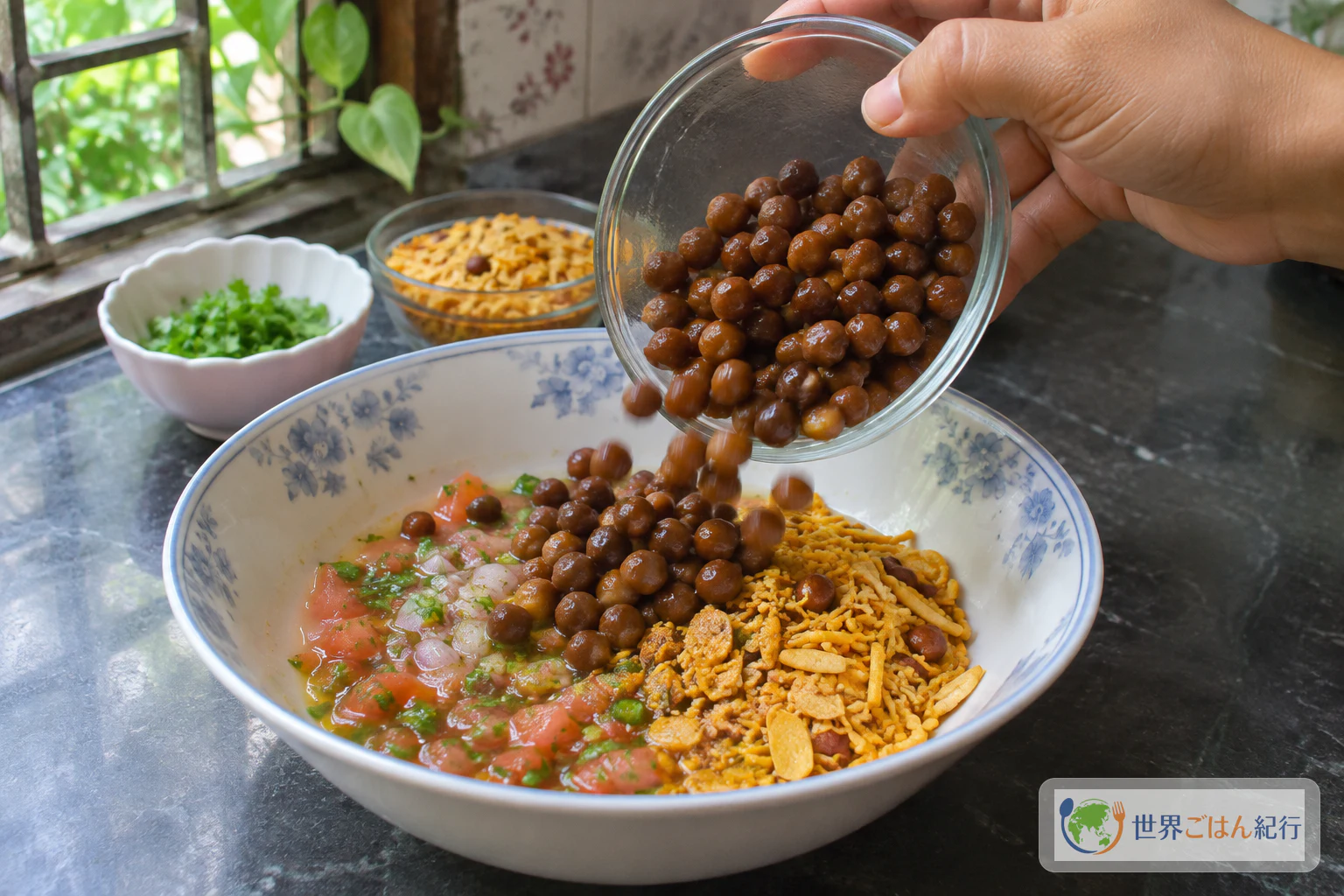
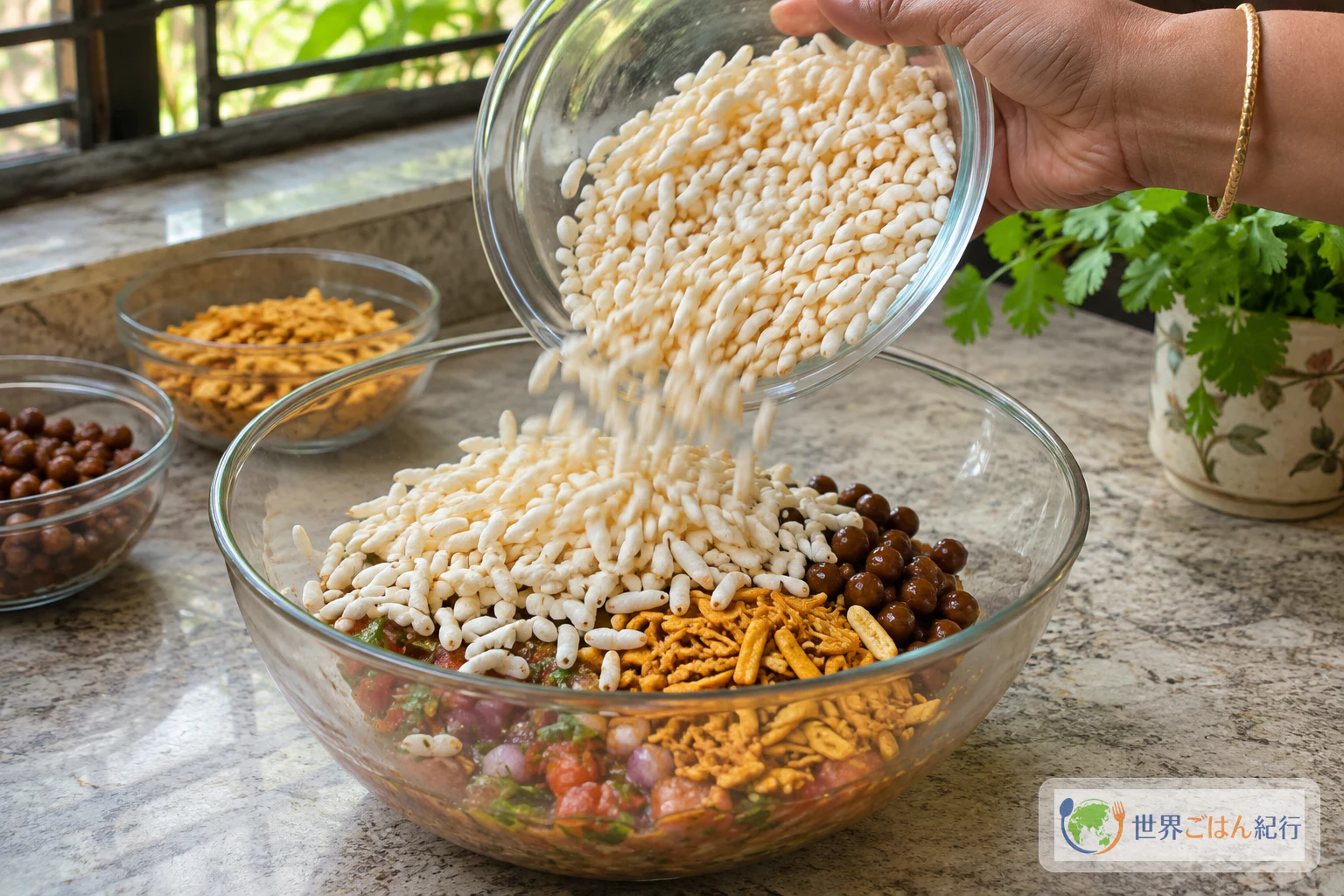
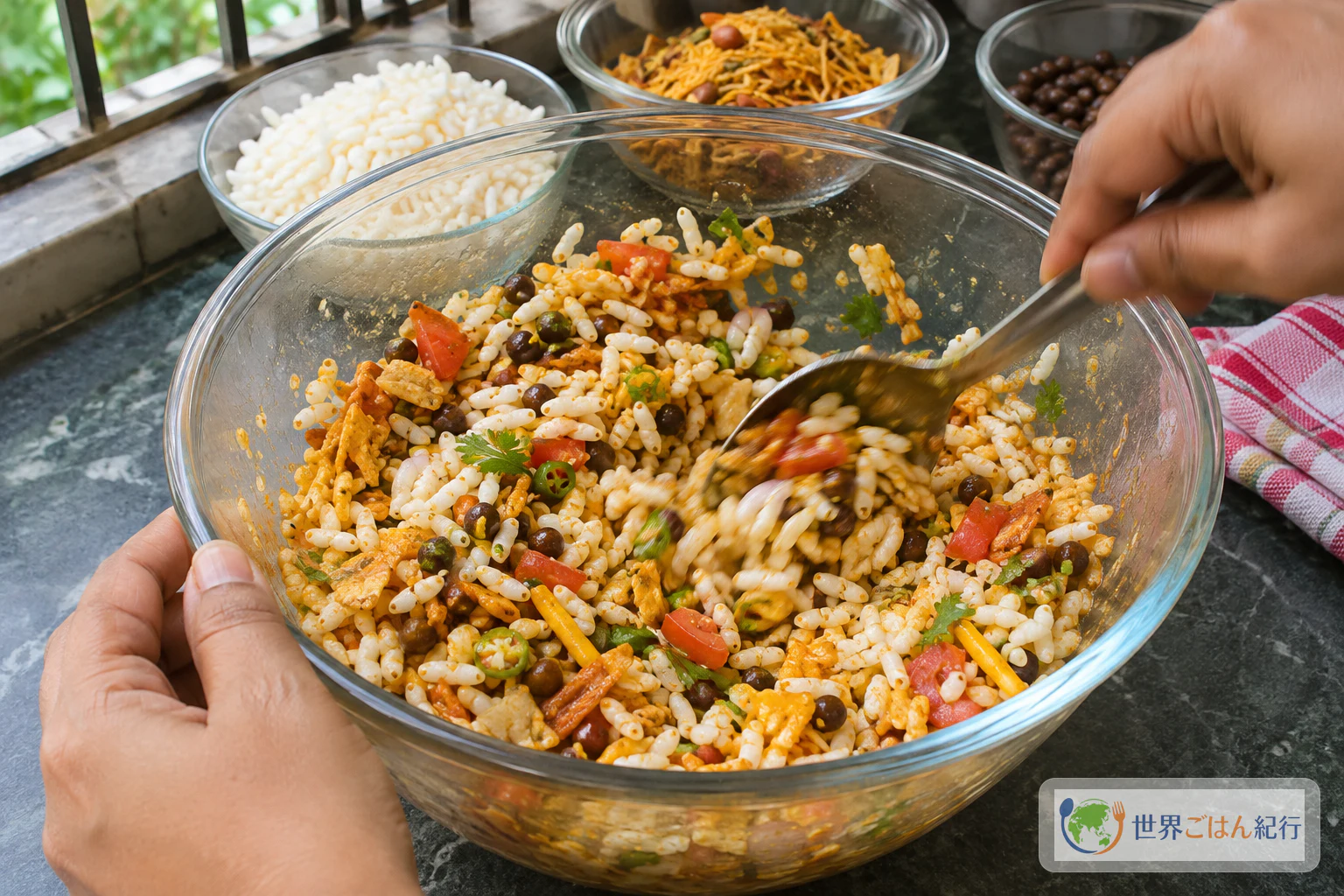
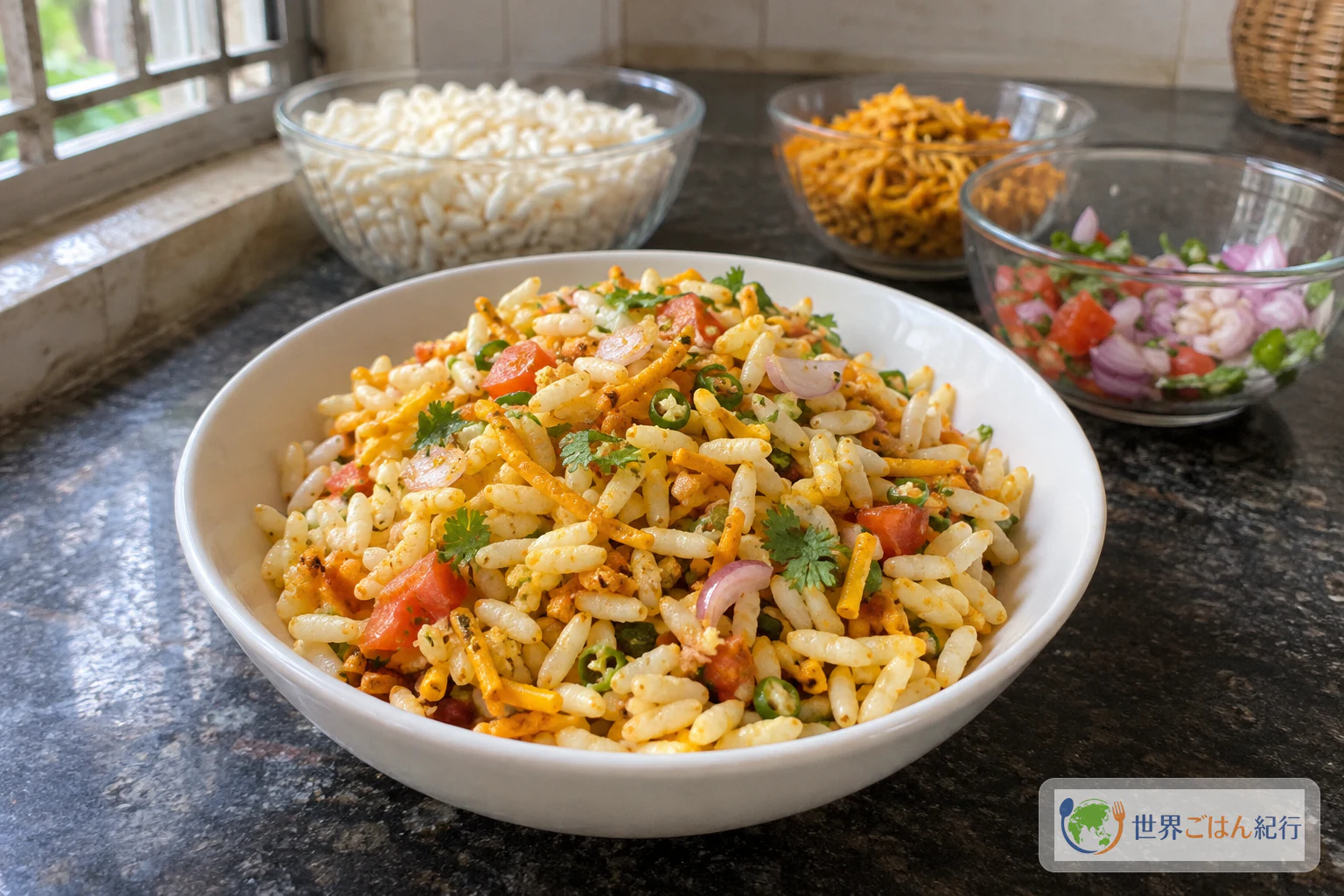
Mix the sour vegetable base first, add the chanachur, chickpeas and puffed rice after it, and serve right away. Nothing is heated at any point.
In a CultureTalk Bangladesh interview, a fruit vendor in Dhanmondi is asked about the seller next door. The neighbor sells muri, the vendor says, and the vendor eats it too. An editor's footnote to the transcript, separate from the vendor's own words, identifies jhalmuri as a popular Bangladeshi street food.
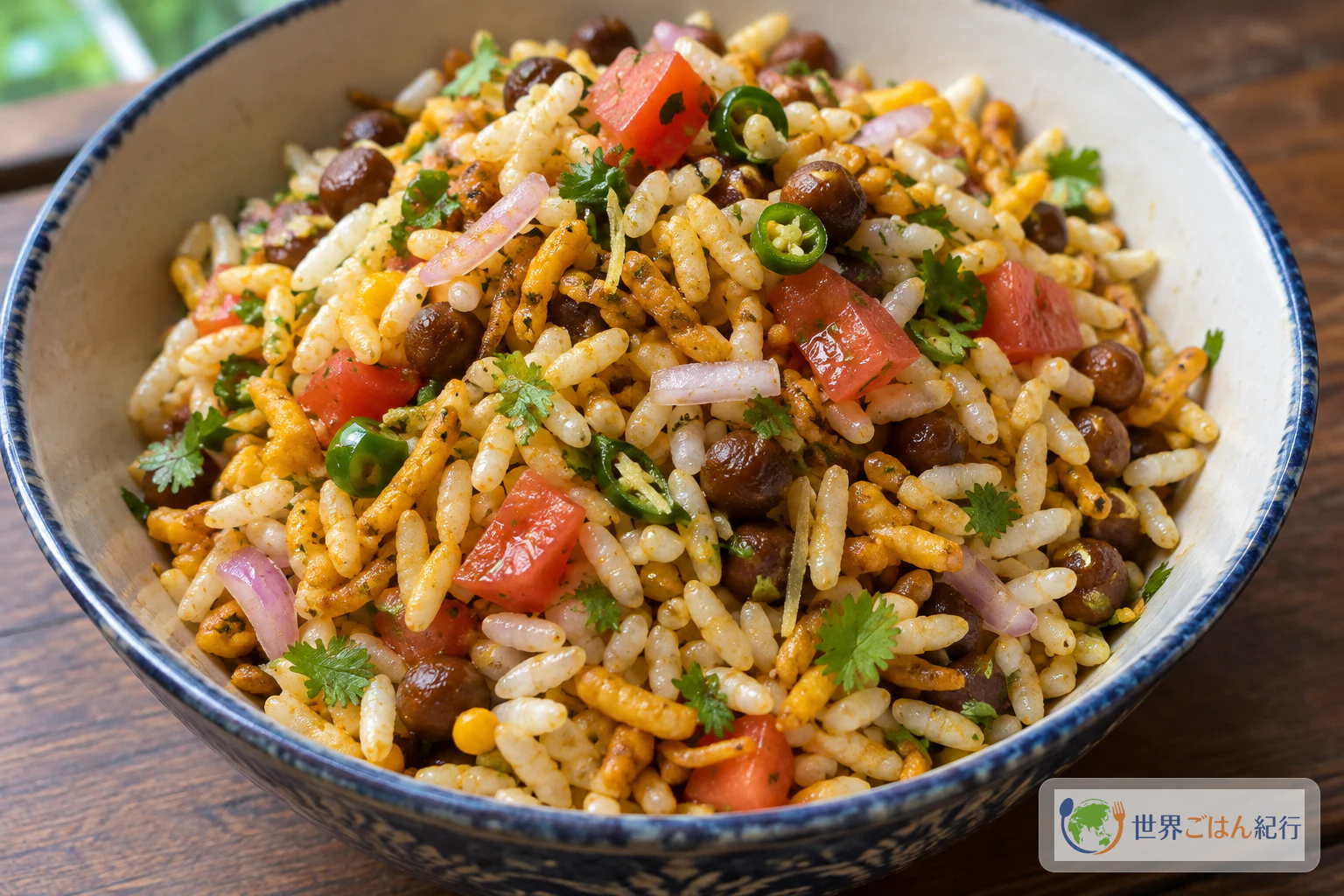
Jhalmuri is a snack built on puffed rice, and it is eaten around the wider Bengal region in more than one form. No single mixture covers all of it. This version combines lime juice, chopped tomatoes, shallots, green chilies, ginger, cilantro, salt and mustard oil, then folds in chanachur, boiled dark chickpeas and puffed rice.
The amounts and order come from the Jhal Muri entry in Bengali Cuisine, a community recipe collection published by the University of Virginia International Center. It is not a government standard, a named chef's recipe or the one authentic form of the dish. We filed it under Bangladesh, but the collection itself is labeled Bengali, so read it as one example from a broader region. We have not kitchen-tested this recipe.
We made three editorial choices. The collection does not mention washing, but we ask you to wash the produce and the lime peel because everything here is eaten raw. It calls for boiled chickpeas, and we specify a ready-to-eat cooked product. We also specify mustard oil labeled for food use.
Ingredients for 8 Servings
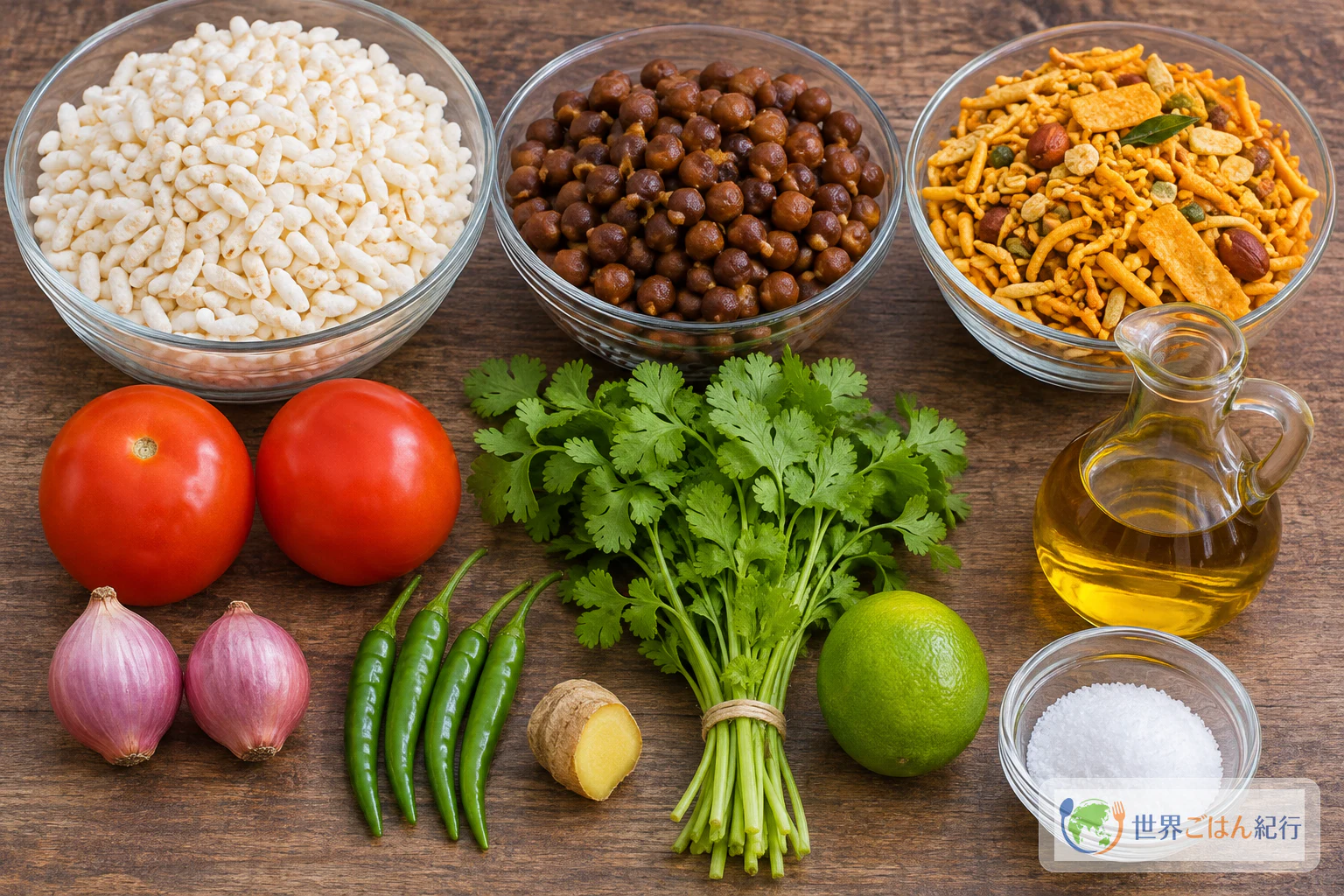
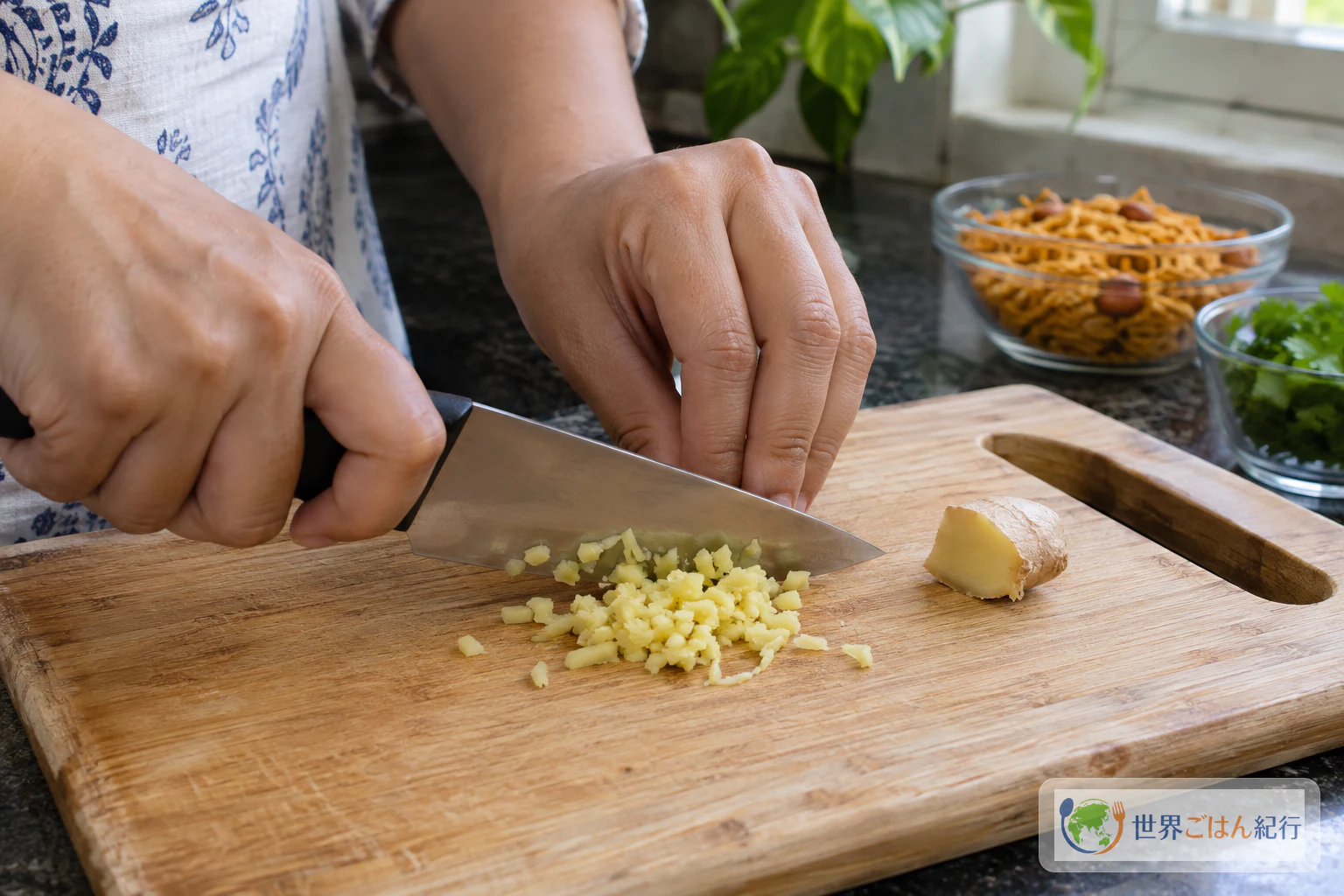
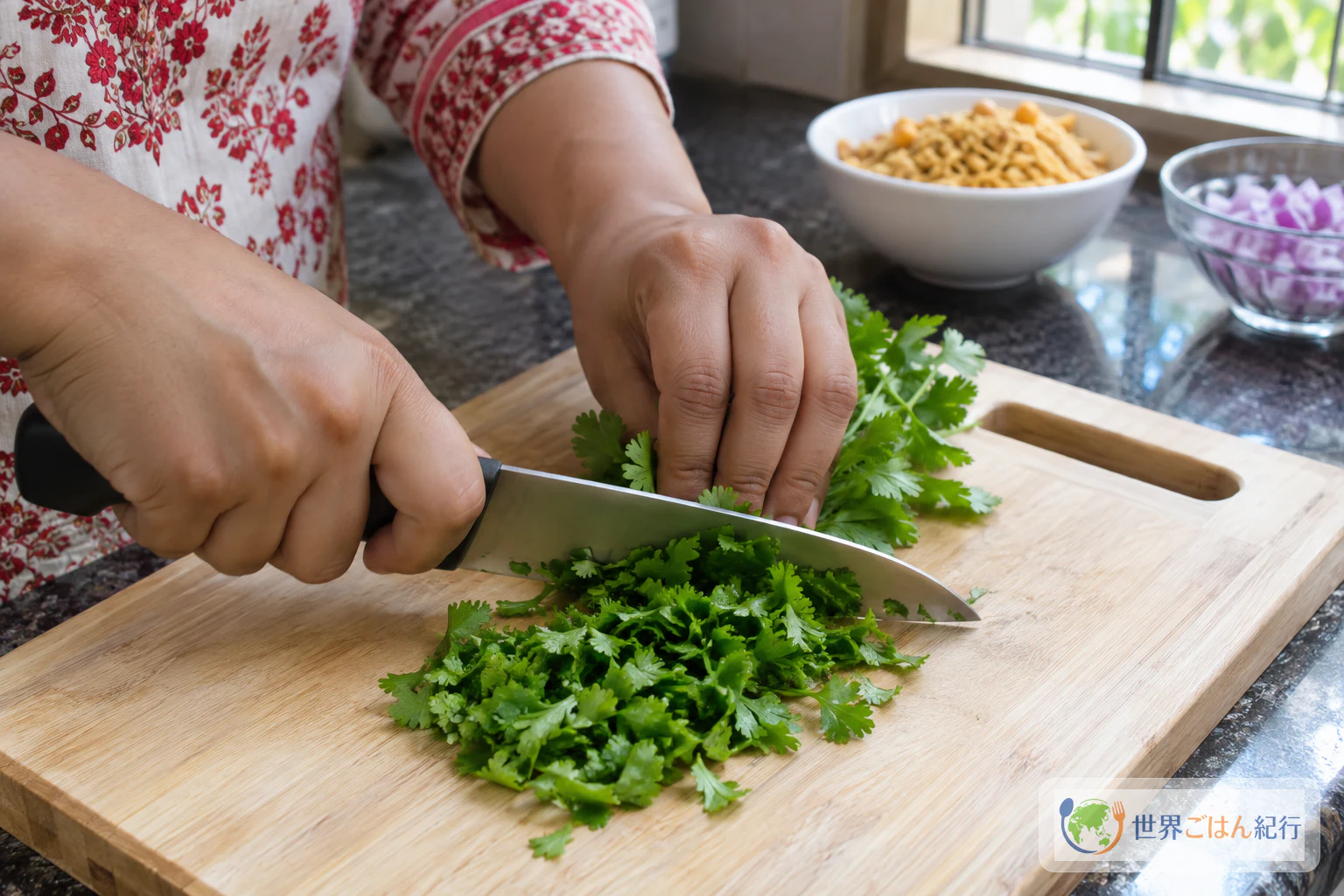
Wash the tomatoes, shallots, green chilies, cilantro and ginger well under running water before using them, and wash the lime peel well before squeezing.
This dish has no heating step and includes raw vegetables and herbs. Use puffed rice, cooked chickpeas and chanachur sold ready to eat. It contains no raw fish, meat or egg. Use only mustard oil labeled for food use, and never eat cosmetic mustard oil. Chanachur may contain thin fried gram-flour strands, beans or nuts, so check the food label and allergen information.
Equipment
- Cutting board and knife
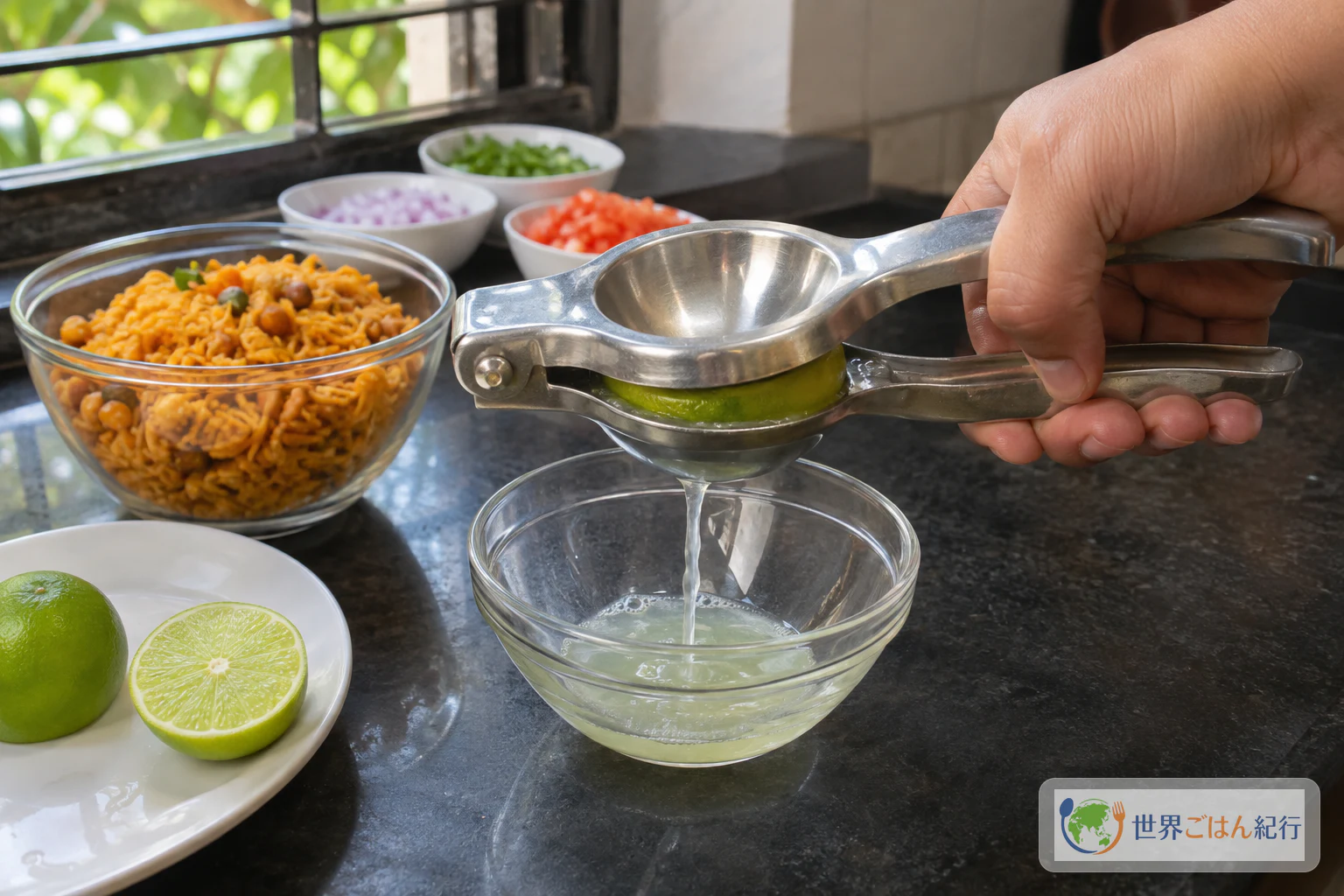
- Hand citrus squeezer
- Small bowl for the lime juice
- Separate small bowls or dishes for the chopped ingredients
- Large mixing bowl
- Mixing spoon
- Measuring cup and tablespoon
- Serving bowls
Choosing What to Buy
- Puffed rice: Choose unflavored puffed rice, so the seasoning comes from the base and the chanachur.
- Dark chickpeas: Buy a ready-to-eat cooked product. Dried beans are not a direct swap, and this recipe does not cover cooking them.
- Chanachur or Bombay mix: Use a purchased ready-to-eat mix. Any strands, beans or nuts already in the mix are part of it, so there is no need to add sev or peanuts separately.
- Shallots: Use shallots rather than automatically swapping in onion.
- Green chilies: Use fresh chilies, and don't add powdered chili.
- Mustard oil: Read the label and confirm the oil is for food use. This recipe does not name a replacement oil.
Method: Wet Base First, Puffed Rice Last
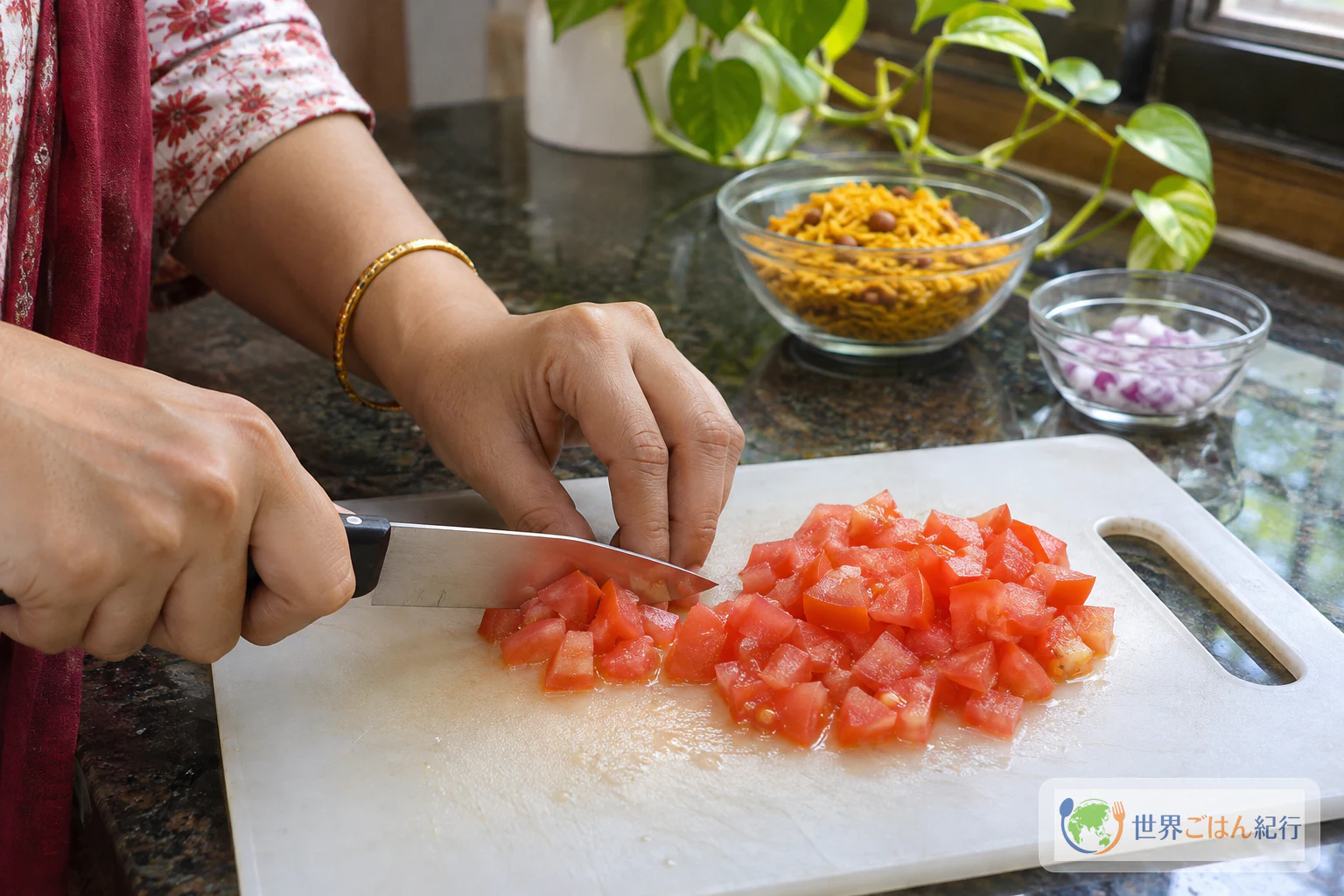
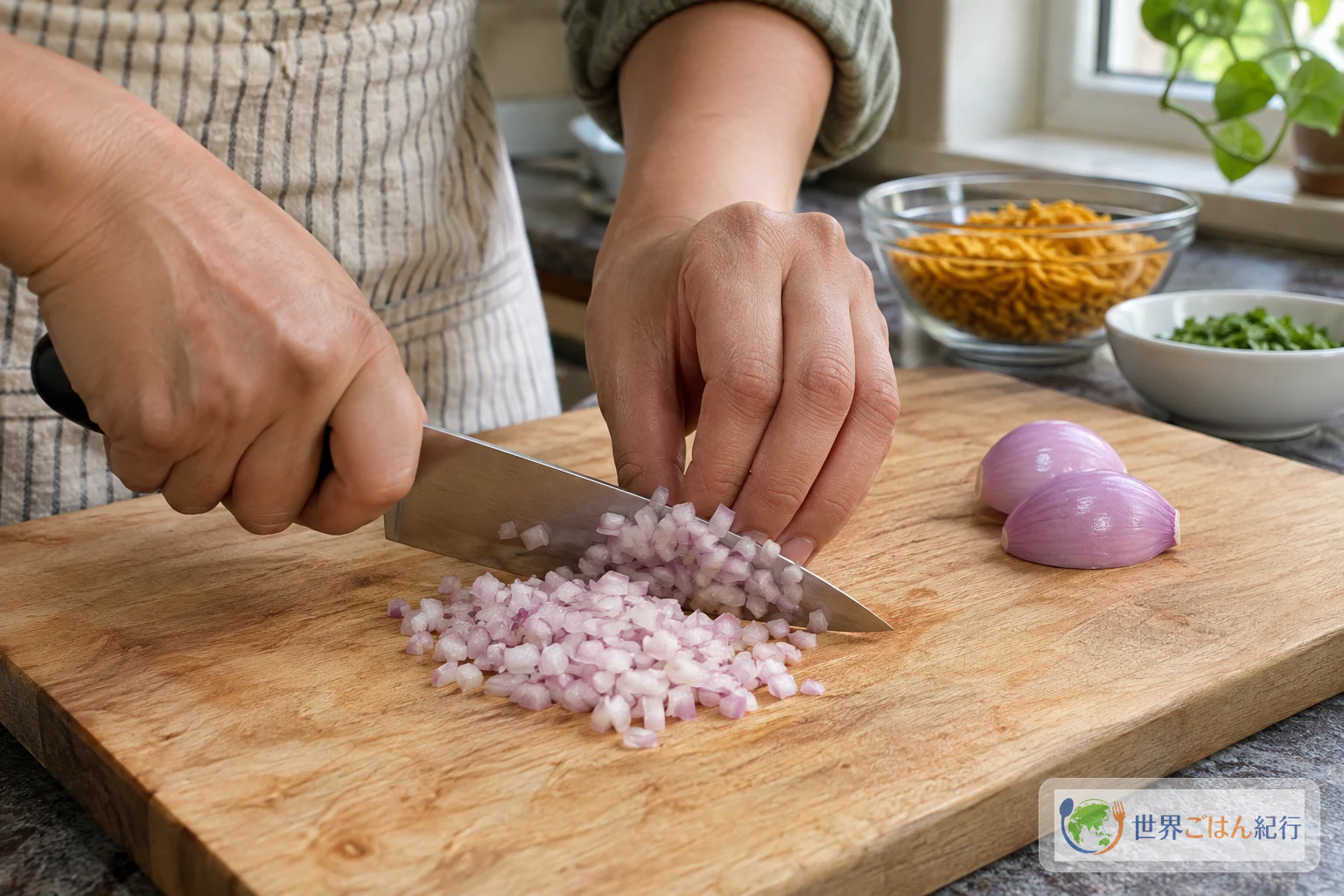
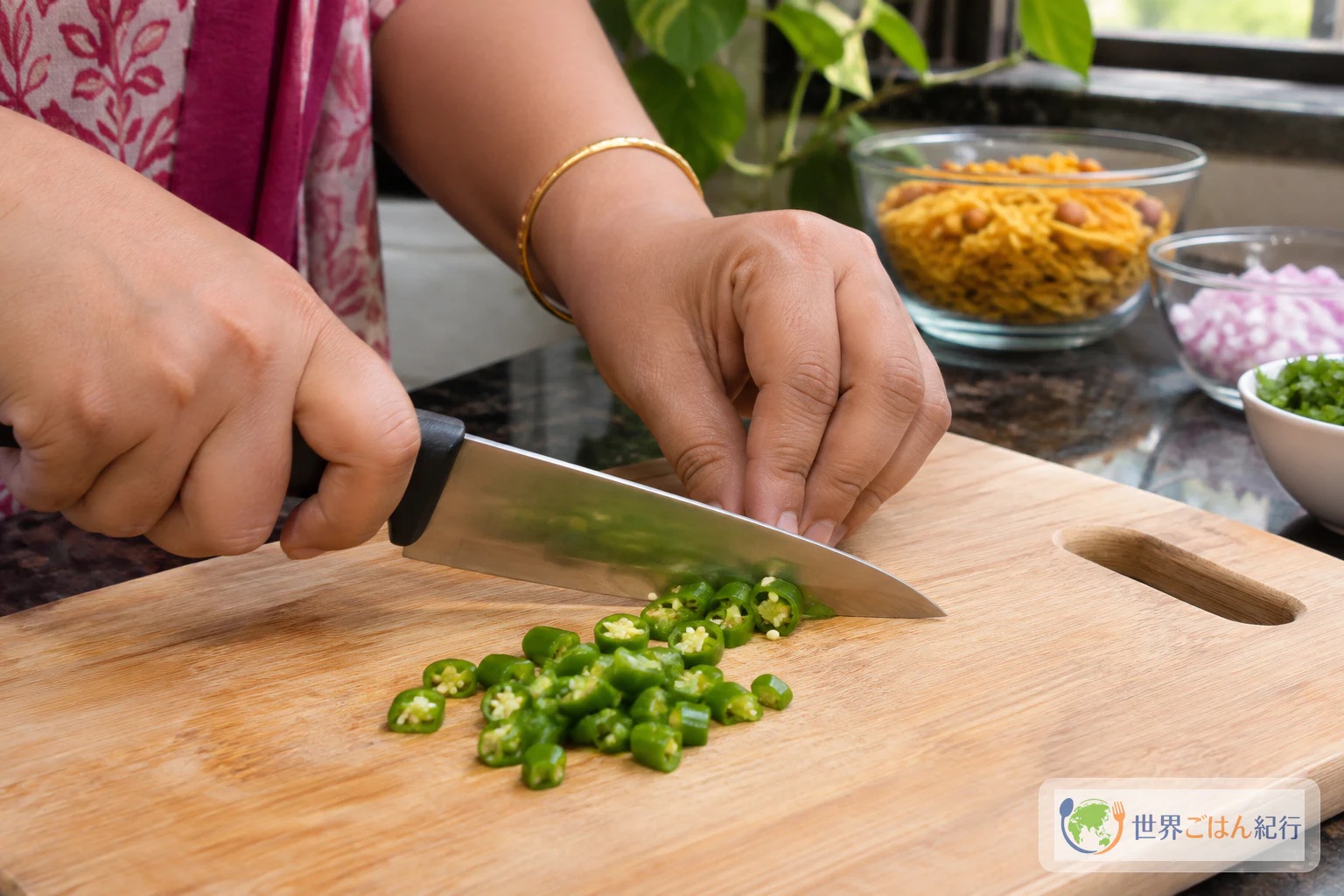
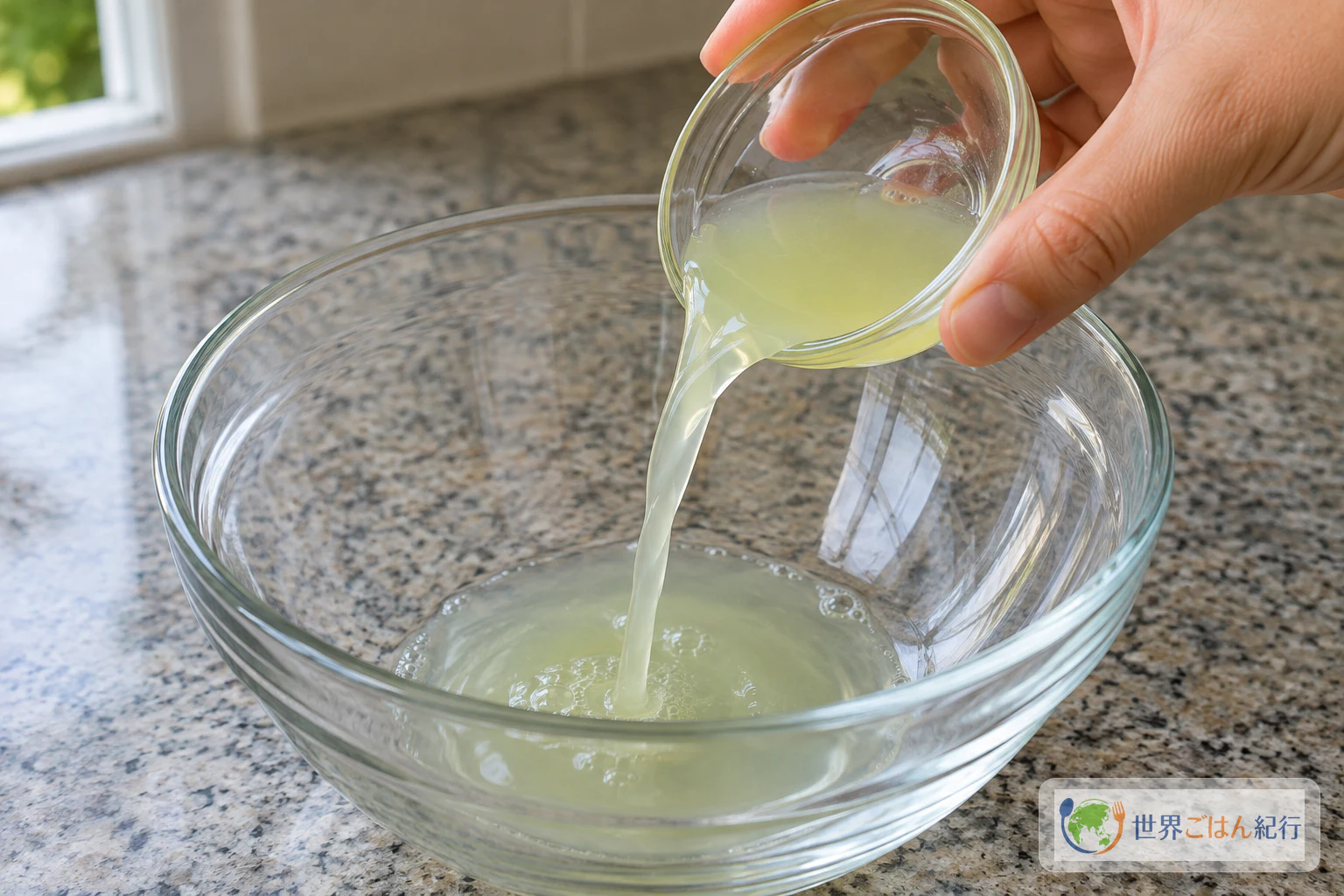
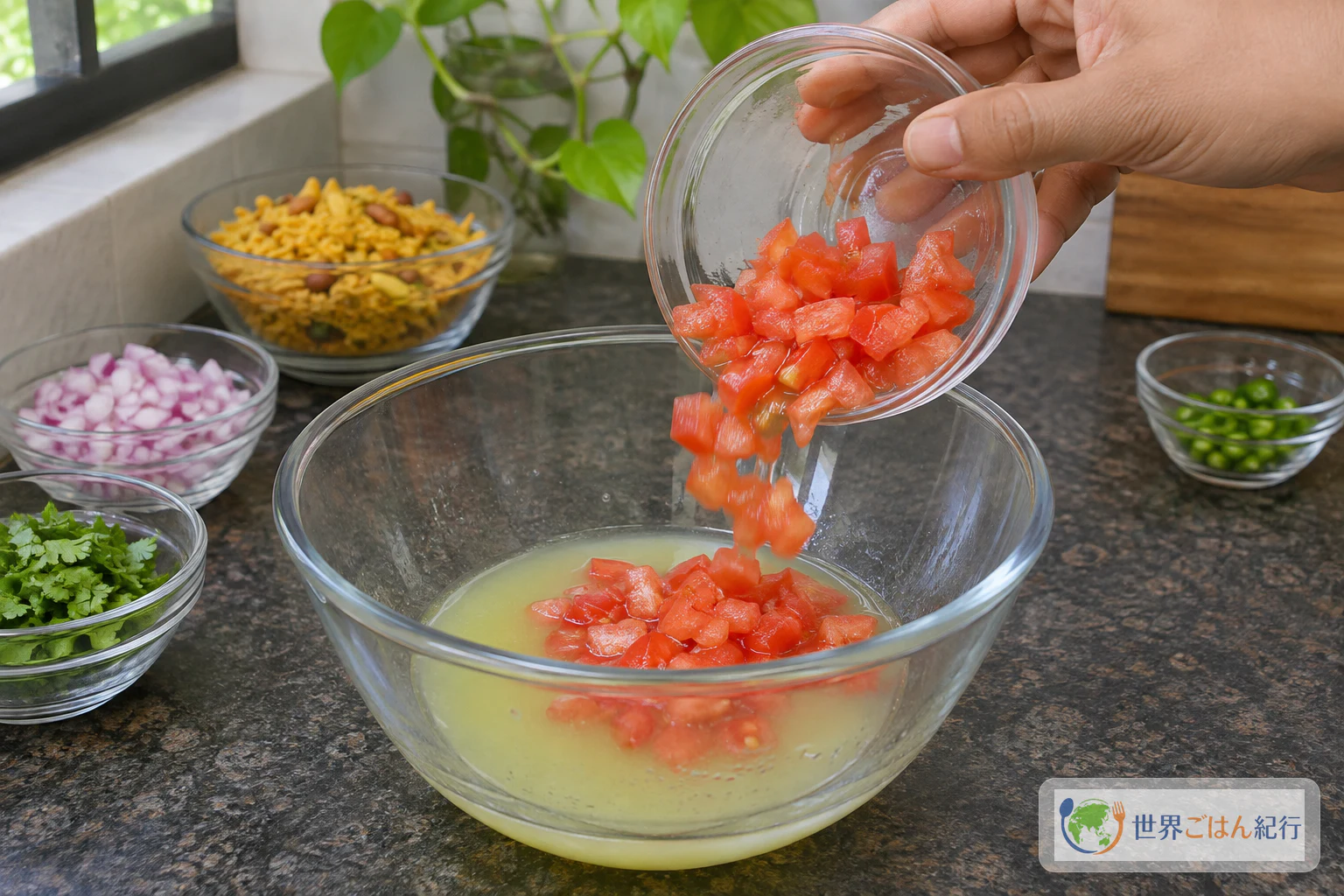
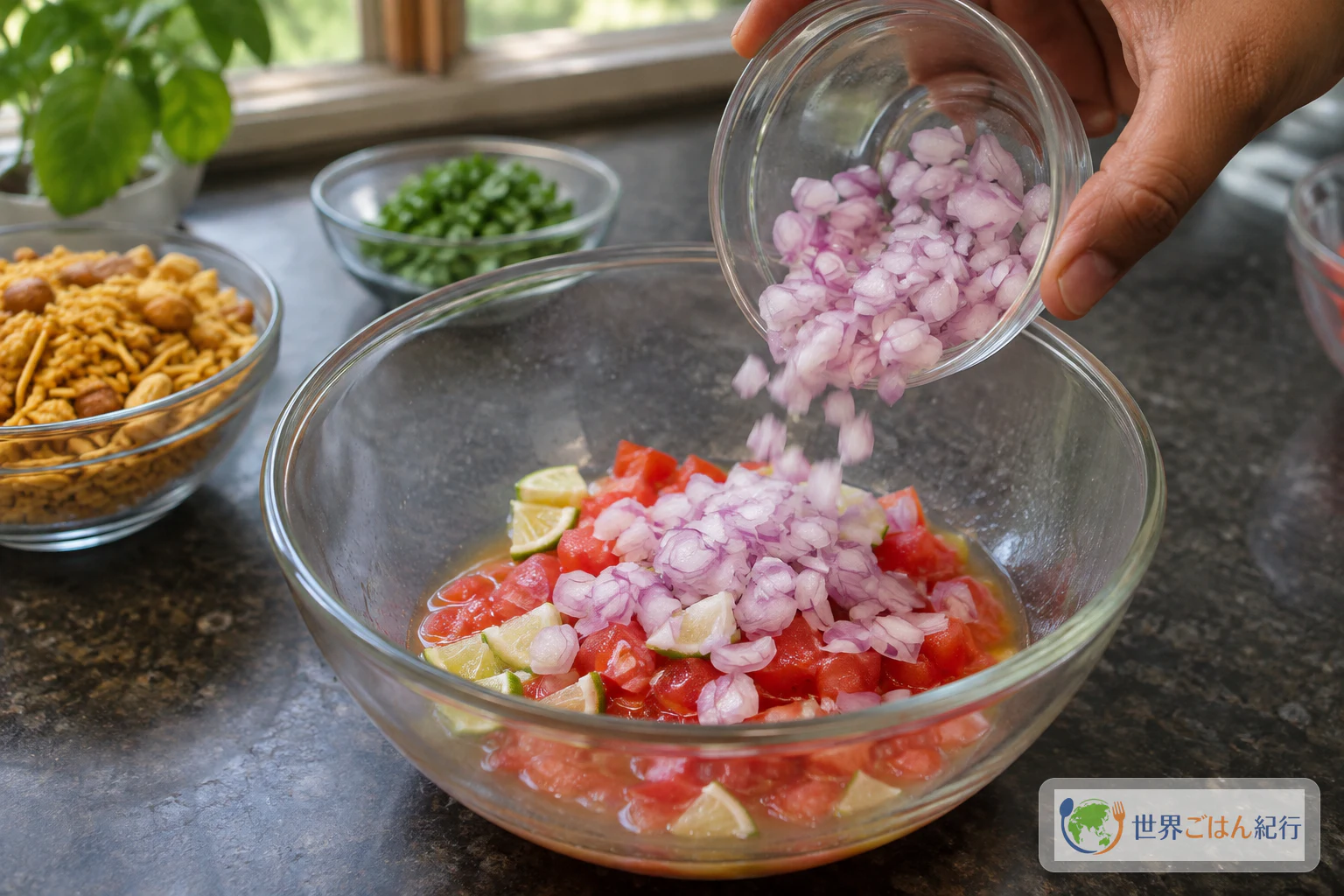
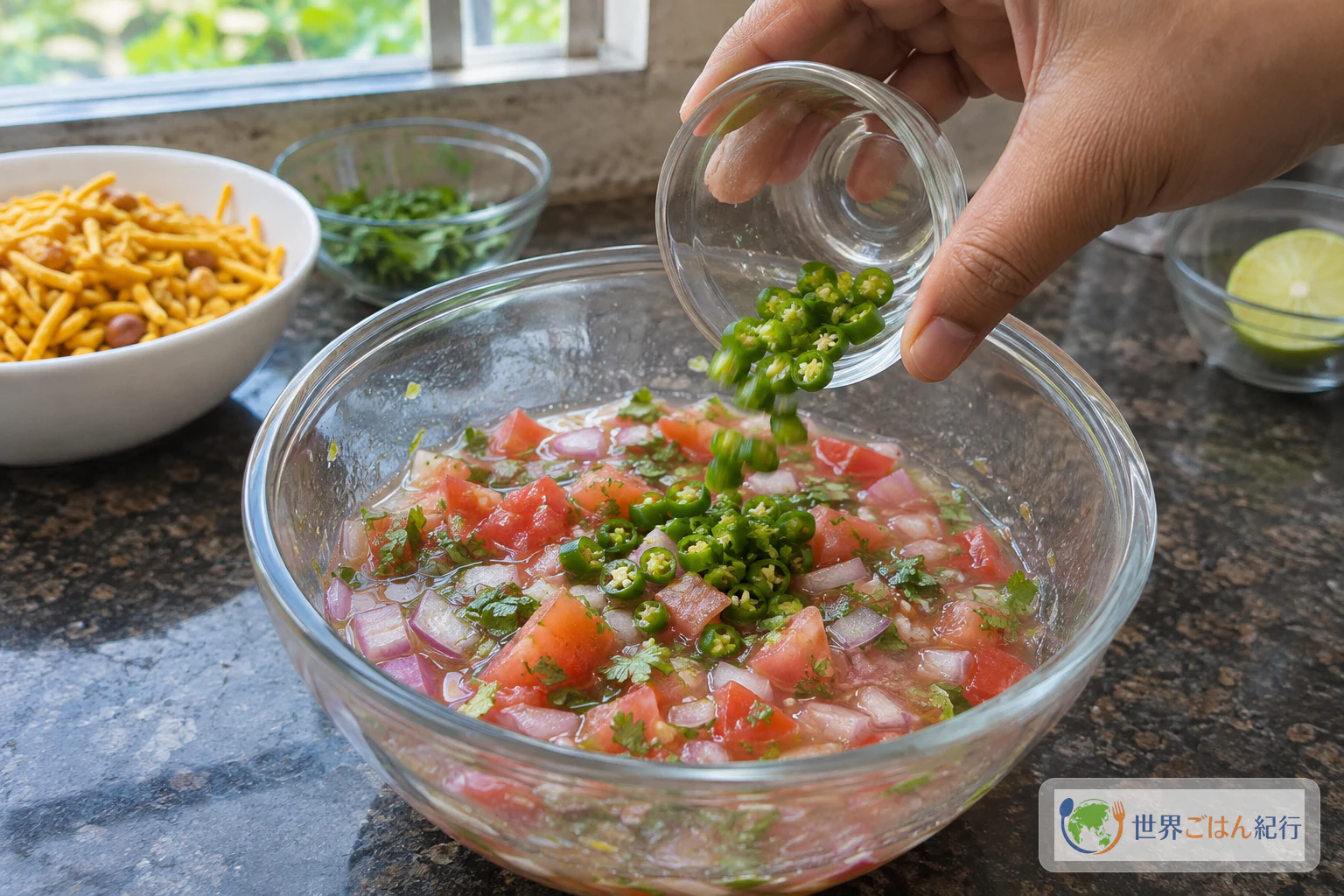
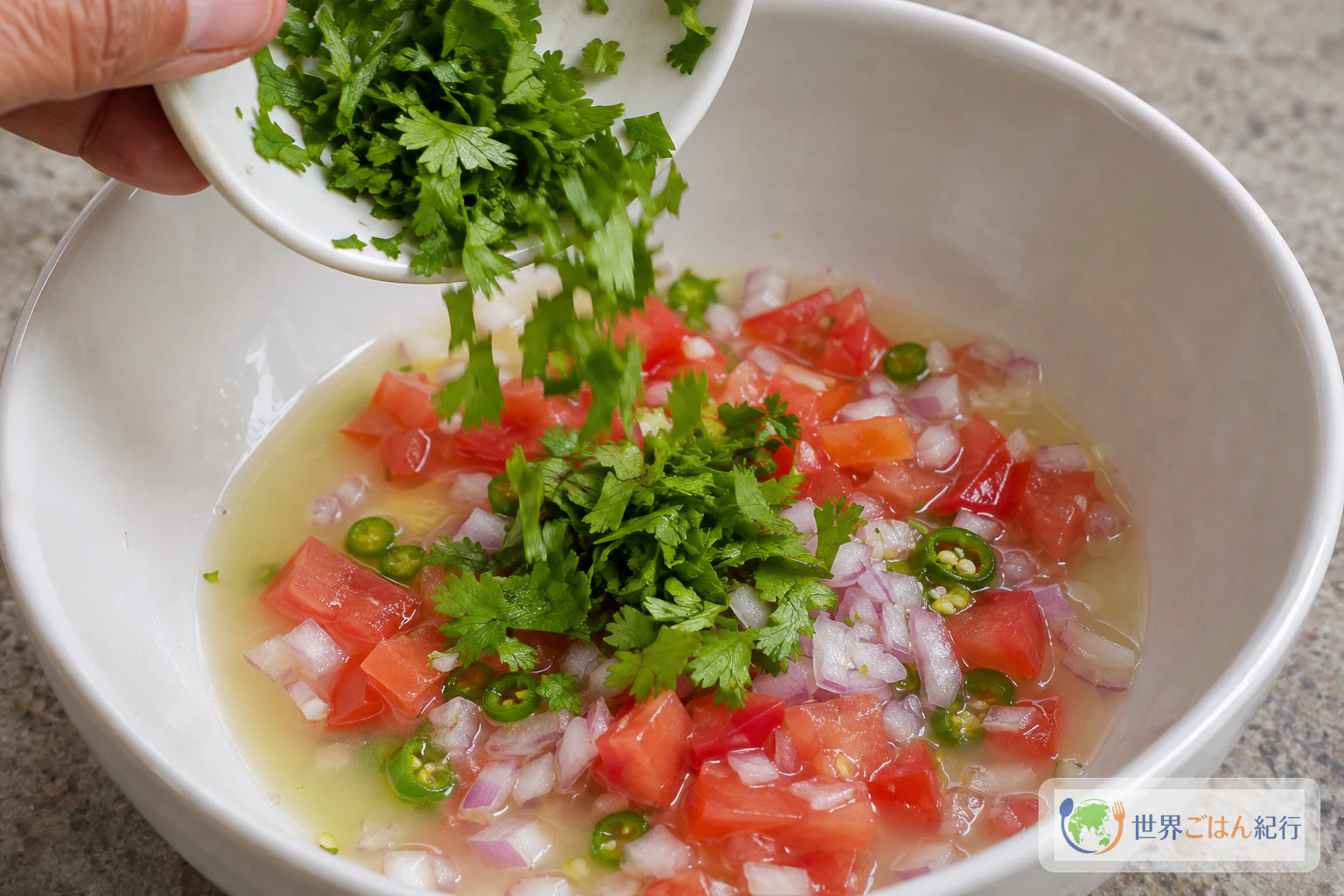
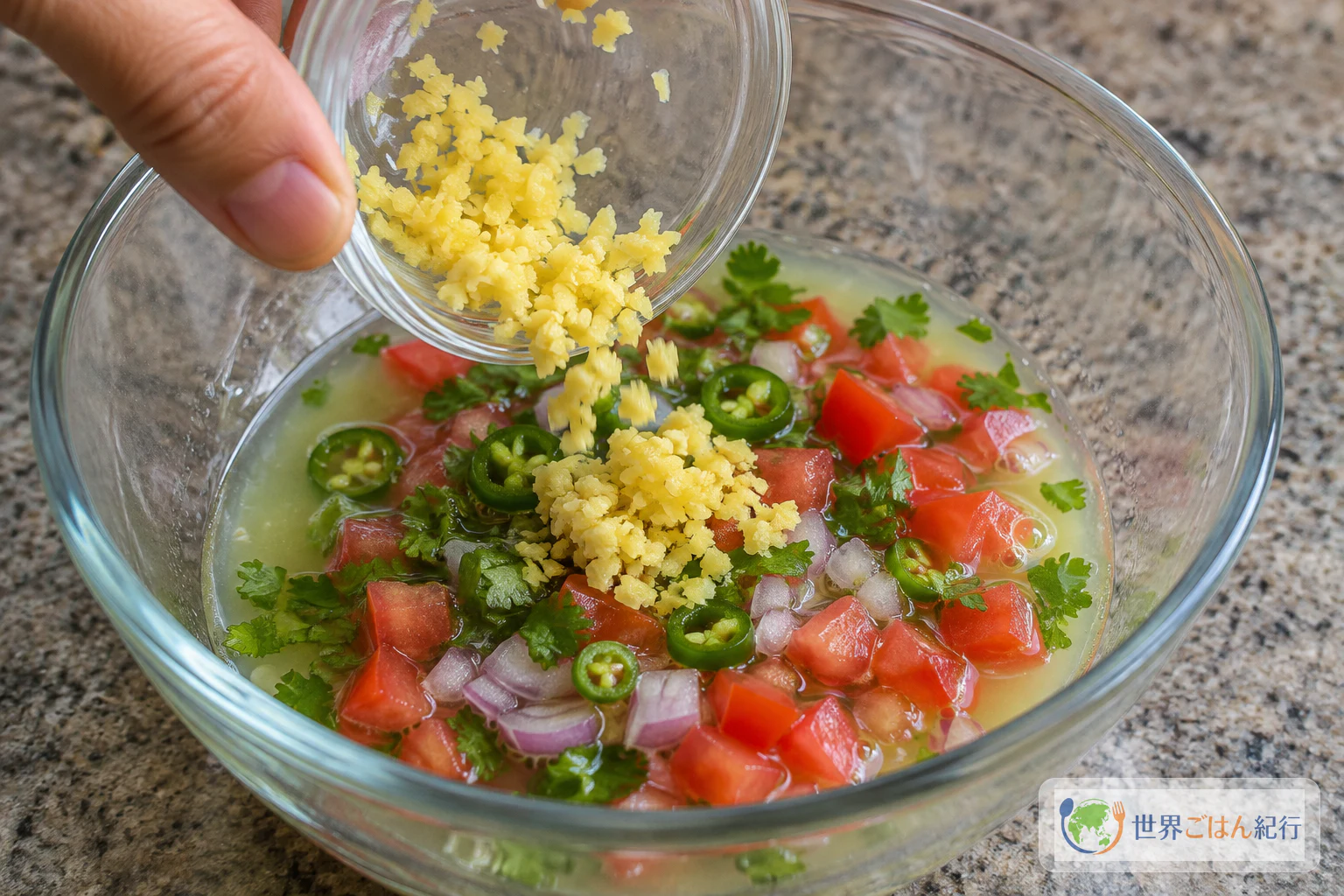
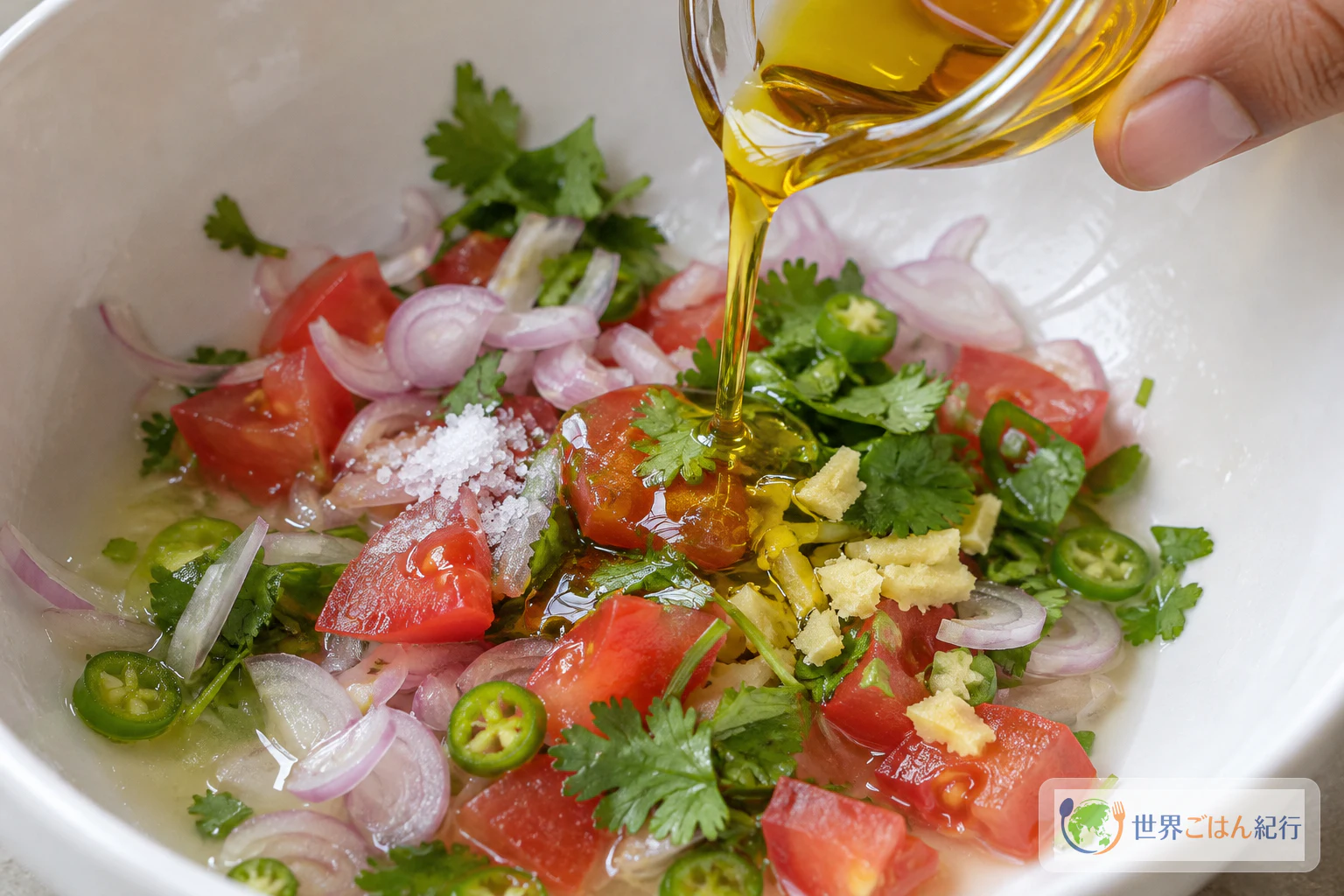
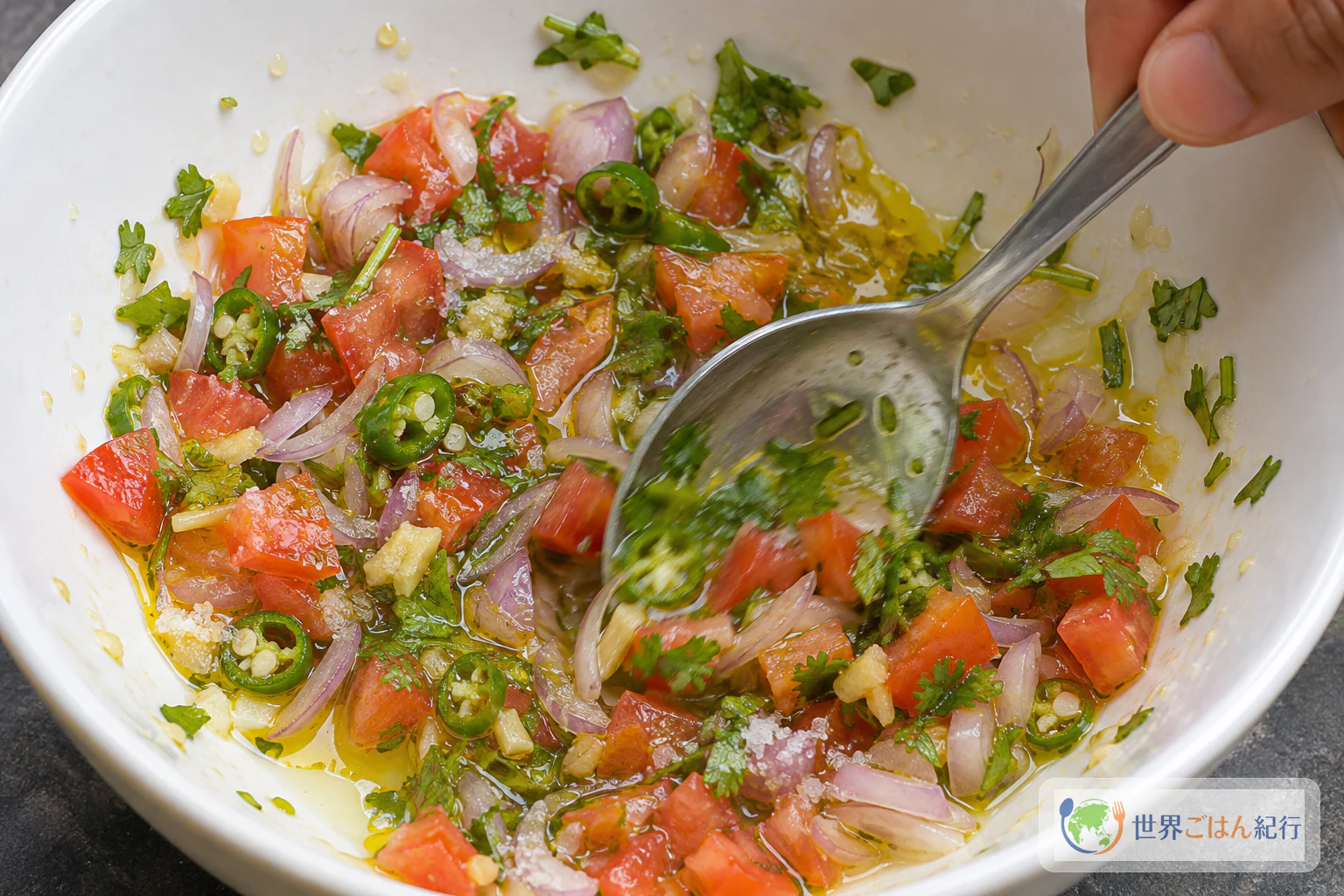
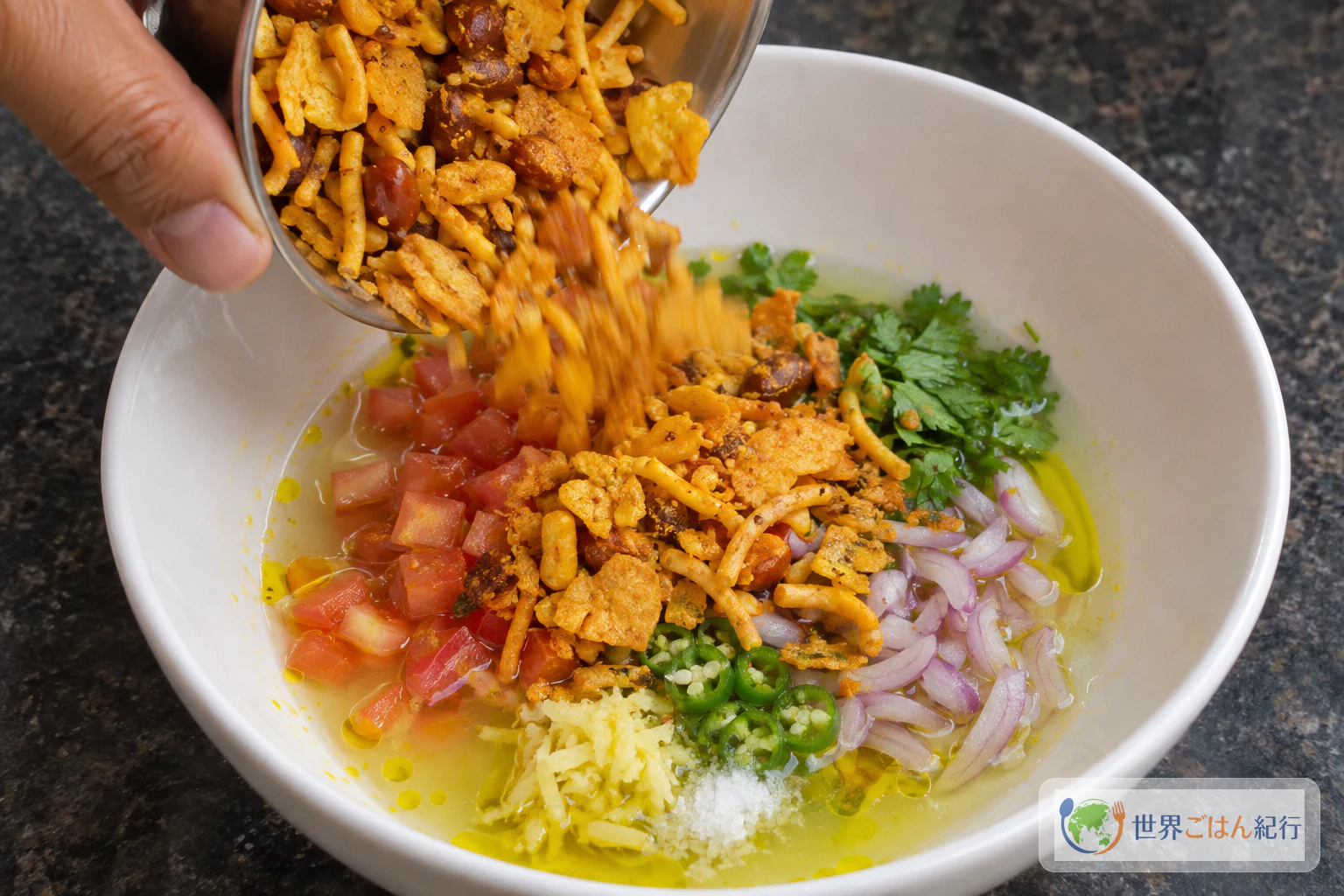
Steps 1 to 6 are preparation, and steps 7 to 14 build the wet base. Steps 15 to 19 add the chanachur, chickpeas and puffed rice, then bring the bowl to the table. There is no heating step.
Troubleshooting: Check These Before You Mix
This recipe has no cooking to correct, so most problems come down to ingredient choice and order.
| Situation | What to do |
|---|---|
| You only have dried chickpeas | Don't add them dried or undercooked. Use a ready-to-eat cooked product for this recipe |
| The mustard oil label doesn't say it is for food use, or it is sold as a cosmetic oil | Don't use it in this dish. Find an oil labeled for food use |
| The puffed rice is flavored | Look for unflavored puffed rice, which is what this recipe calls for |
| The dry ingredients are ready before the base is mixed | Hold them back and finish step 14 first, then add the chanachur, chickpeas and puffed rice in that order |
| You want to protect the texture of the puffed rice | Add it last and bring the bowl to the table as soon as it is mixed |
| The chanachur contains nuts or fried strands | These are part of the mix, so check the label for allergens. Don't add more of them separately |
Variations: Other Mixtures Have Their Own Recipes
Vendors and cooks make jhalmuri in different ways. Dassana Amit's Kolkata-style recipe at Veg Recipes of India is a good contrast. It is a separately written recipe with its own quantities and order, and the author also describes variation among vendors.
| Point of comparison | This recipe | Dassana Amit's Kolkata-style recipe |
|---|---|---|
| Substance | Boiled dark chickpeas | Boiled potato, cucumber and roasted peanuts |
| Crunch | Chanachur or Bombay mix | Sev or chanachur |
| Seasoning | Fresh green chilies, ginger, cilantro and salt | Includes spice powders |
| Sourness | Lime | Lemon |
| Shared features | Puffed rice and mustard oil, served soon after mixing | Puffed rice and mustard oil, served soon after mixing |
If you'd like potato and cucumber in the bowl, follow the Kolkata-style recipe in full instead of adding them here. The two recipes are built differently, so their amounts don't transfer.
Culture and Context: A Street Snack Across a Wider Region
The fruit-vendor interview from LangMedia's CultureTalk Bangladesh gives this article its Bangladeshi street setting, but it needs careful reading. The vendor is not shown making jhalmuri and gives no recipe. The conversation only establishes that the next-door seller sells muri and that the vendor eats it. The description of jhalmuri as a popular street food comes from the editor's footnote, which mentions ingredients only broadly and gives no quantities.
The University of Virginia collection adds a home-cook's view, with a full list of amounts under the broad label of Bengali cuisine. Dassana Amit's recipe shows a Kolkata-style mixture from the Indian side. Together they show a dish that changes with the cook and the place, so this article treats its recipe as one example.
Frequently Asked Questions
Is this the authentic Bangladeshi recipe?
It is one published example, not the sole authentic form. The recipe comes from a university-published community collection labeled Bengali cuisine, and this article sits under Bangladesh without claiming it is the country's original or standard version.
The collection lists a cook time. Should I heat anything?
No. It prints a prep time of 20 minutes and a cook time of 5 minutes, but its method only combines ingredients and contains no heating step. It doesn't explain what the 5 minutes refers to, so we don't turn it into a cooking step or offer it as a confirmed time.
How big is a cup, and how much does a bunch of cilantro weigh?
The collection doesn't define its cup size or give weights for the produce or the bunch of cilantro. We have kept its units as they are and have not added conversions.
Can I start from dried dark chickpeas?
The collection specifies boiled chickpeas, and we chose a ready-to-eat cooked product as a safety and handling decision. This article gives no dried-bean cooking time, so it can't guide you through that route.
Can I use another oil instead of mustard oil?
We haven't researched a replacement, so we don't recommend one. The recipe is written for mustard oil labeled for food use, and another oil would be your own departure from it.
Should I add peanuts, potato, cucumber or chaat masala?
Not to this recipe. Potato, cucumber, peanuts and spice powders belong to other versions of jhalmuri. Your chanachur may already contain nuts or fried strands, and those are simply part of the 1 cup of mix.
Can I make it ahead or keep leftovers?
The recipe ends with mixing and serving immediately, and it gives no make-ahead method or storage guidance. We don't offer a storage time either, so mix only when you are ready to eat.
Sources
- University of Virginia International Center, "Bengali Cuisine — Jhal Muri" (community recipe collection). The amounts, servings, mixing order and printed times, and a method with no heating step. https://internationalcenter.virginia.edu/sites/g/files/jsddwu776/files/recipe-files/2014.04.26%2520Bengali%2520Cuisine.pdf
- Five College Center for the Study of World Languages / LangMedia, "CultureTalk Bangladesh: Selling Fruit on the Street" (interview transcript). The Dhanmondi fruit vendor's remarks about the neighboring muri seller, and the editorial footnote identifying jhalmuri as a popular Bangladeshi street food. https://langmedia.s3.us-east-2.amazonaws.com/s3fs-public/documents/bd_fruit_vendor_a1e2.pdf
- Dassana Amit, Dassana's Veg Recipes, "Jhal Muri Recipe | Kolkata Style Jhalmuri Snack." Used only to compare a separately written Kolkata-style mixture and the author's note on variation among vendors. https://www.vegrecipesofindia.com/jhal-muri-recipe/