Payesh: Fragrant Rice and Milk, Stirred Until the Spoon Clears the Pan
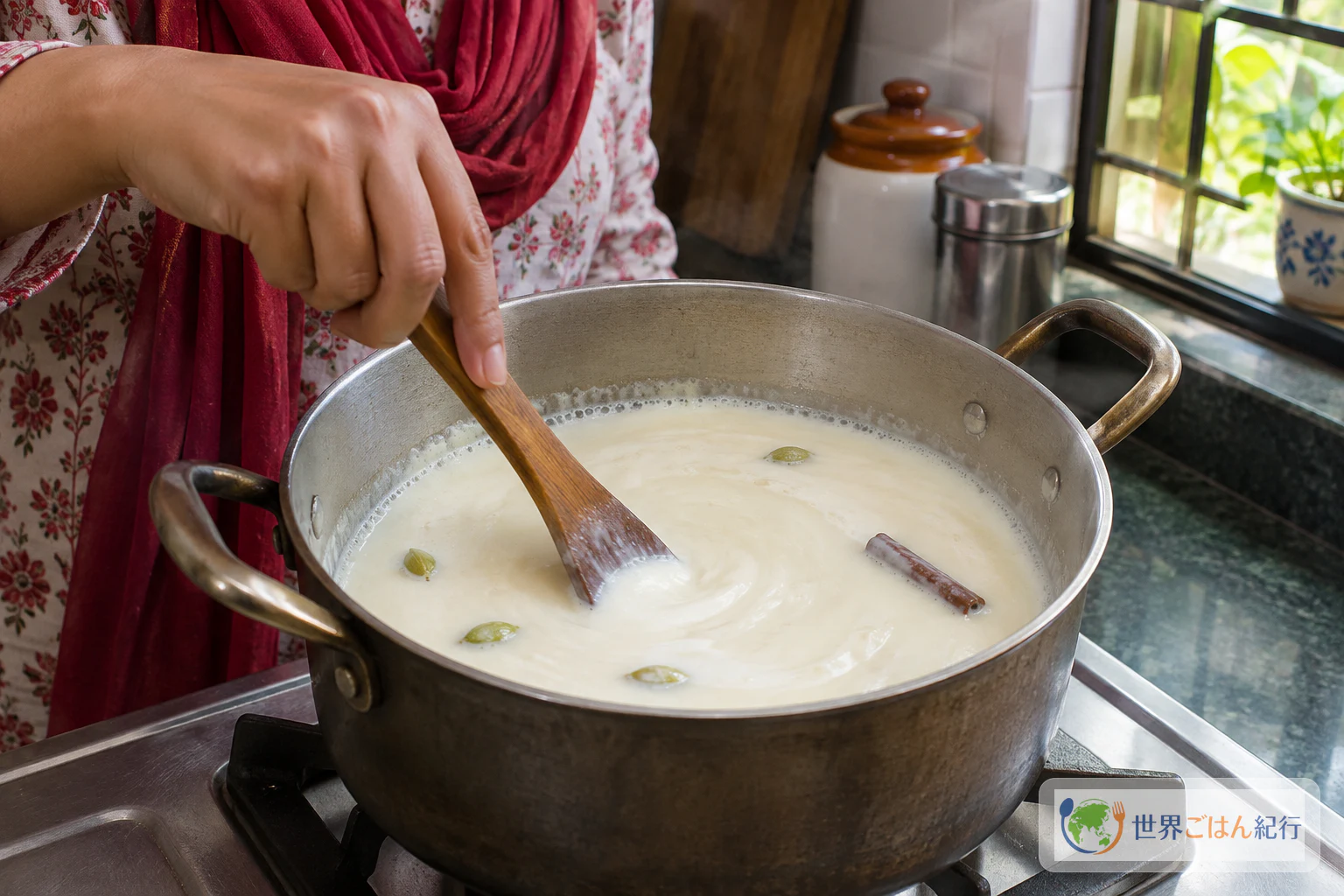
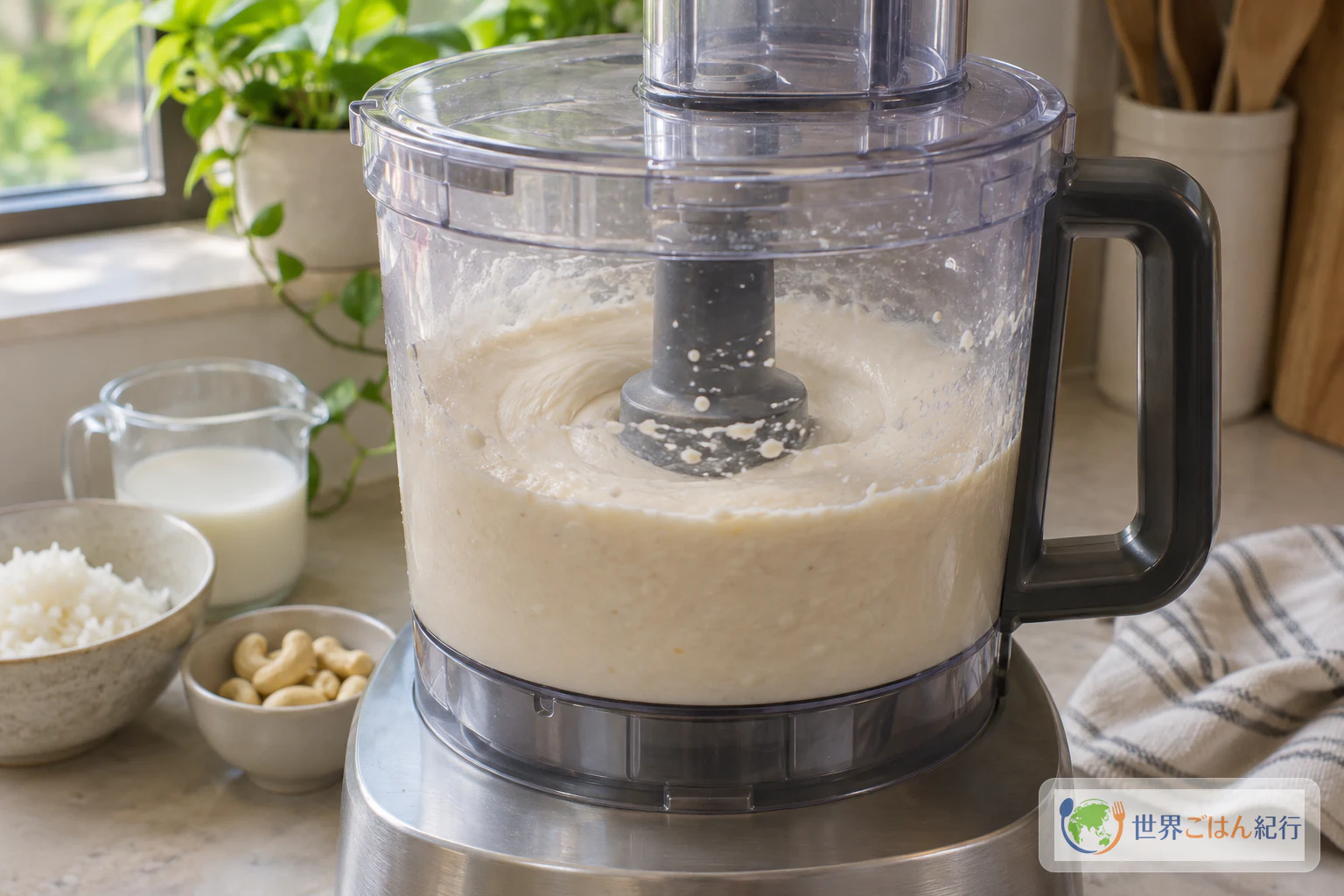
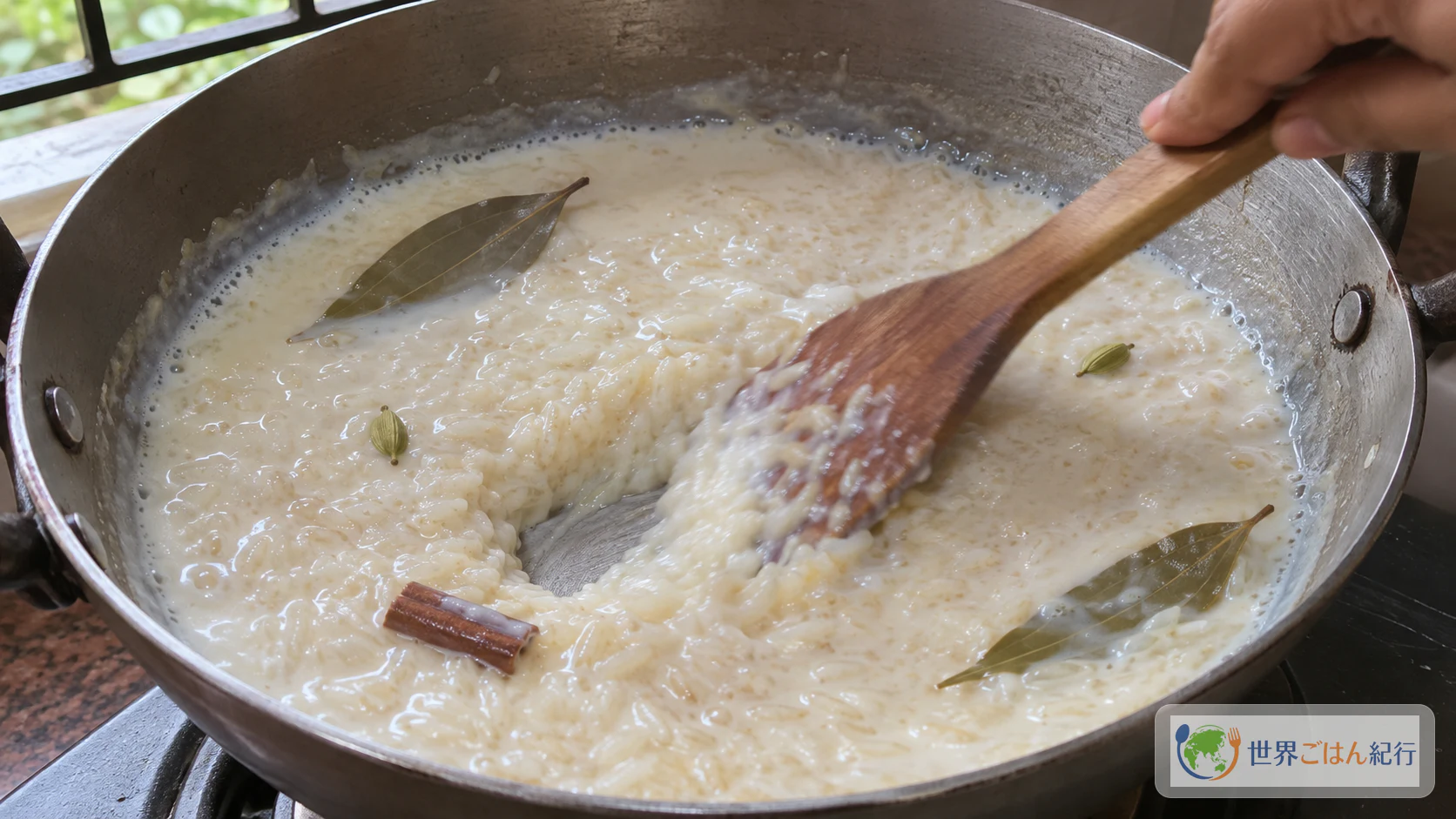
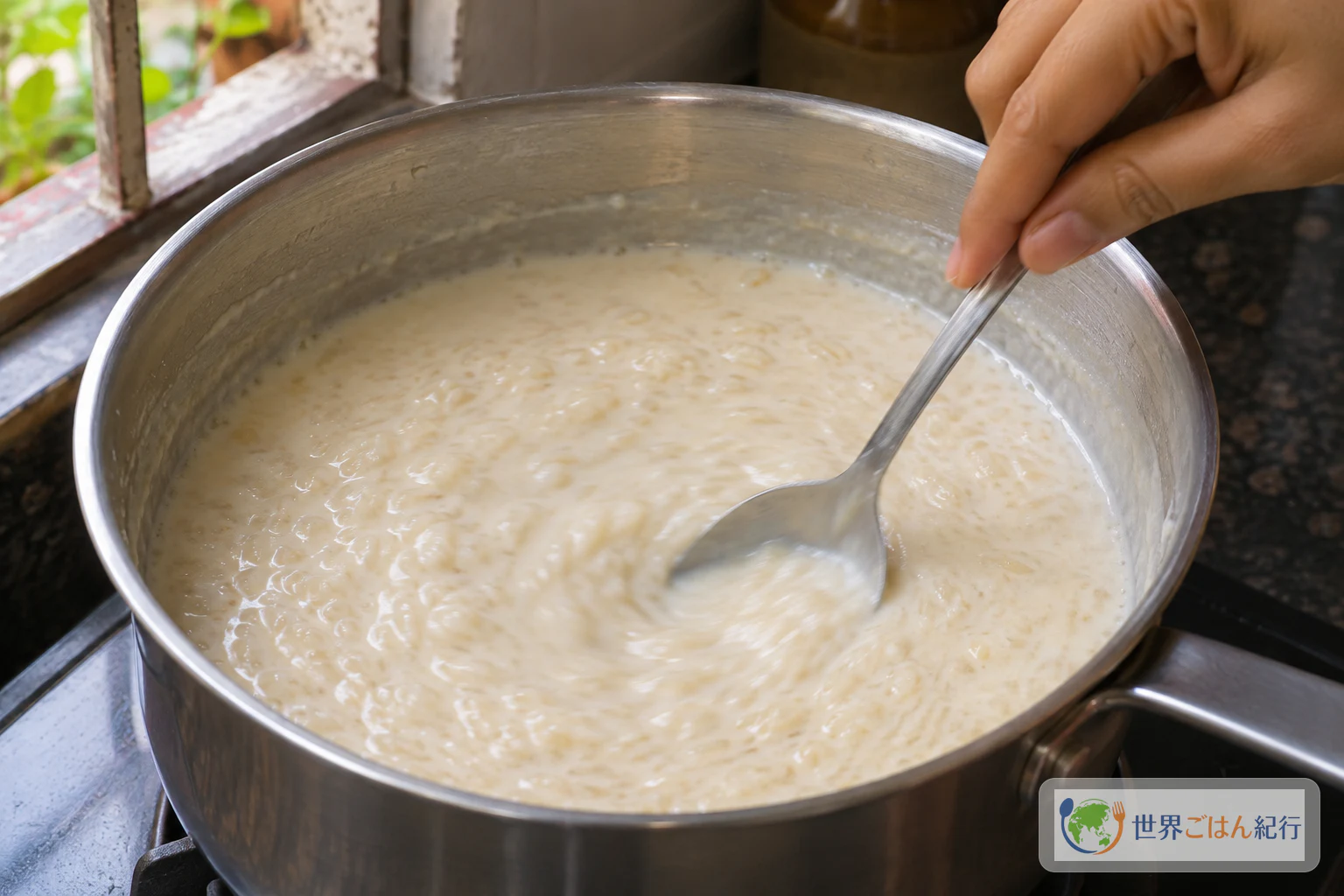
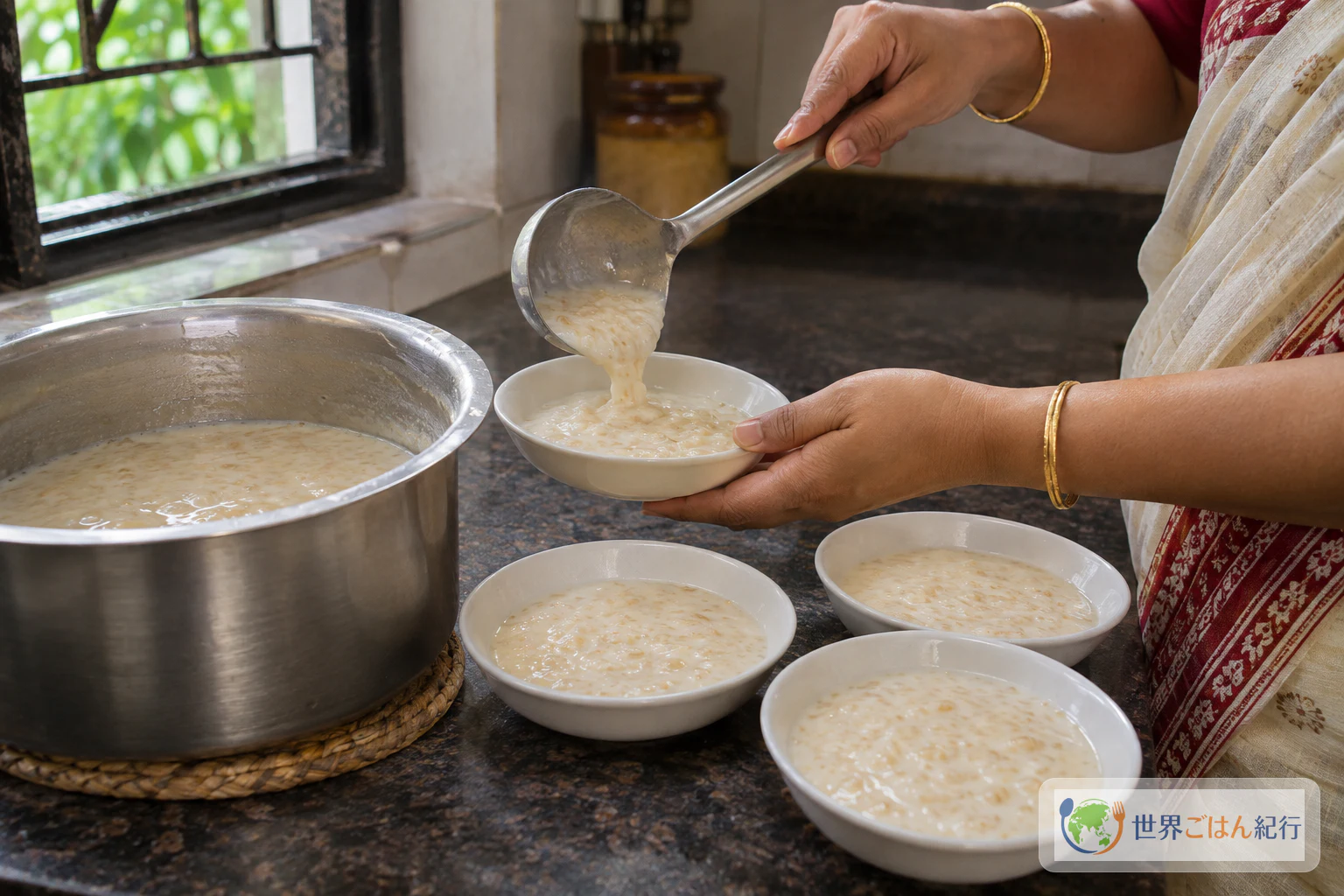
Blend the rice and cashews until mostly paste, stir over low heat until a wooden spoon clears the bottom of the pan, then get the pudding into shallow dishes and into the refrigerator without delay.
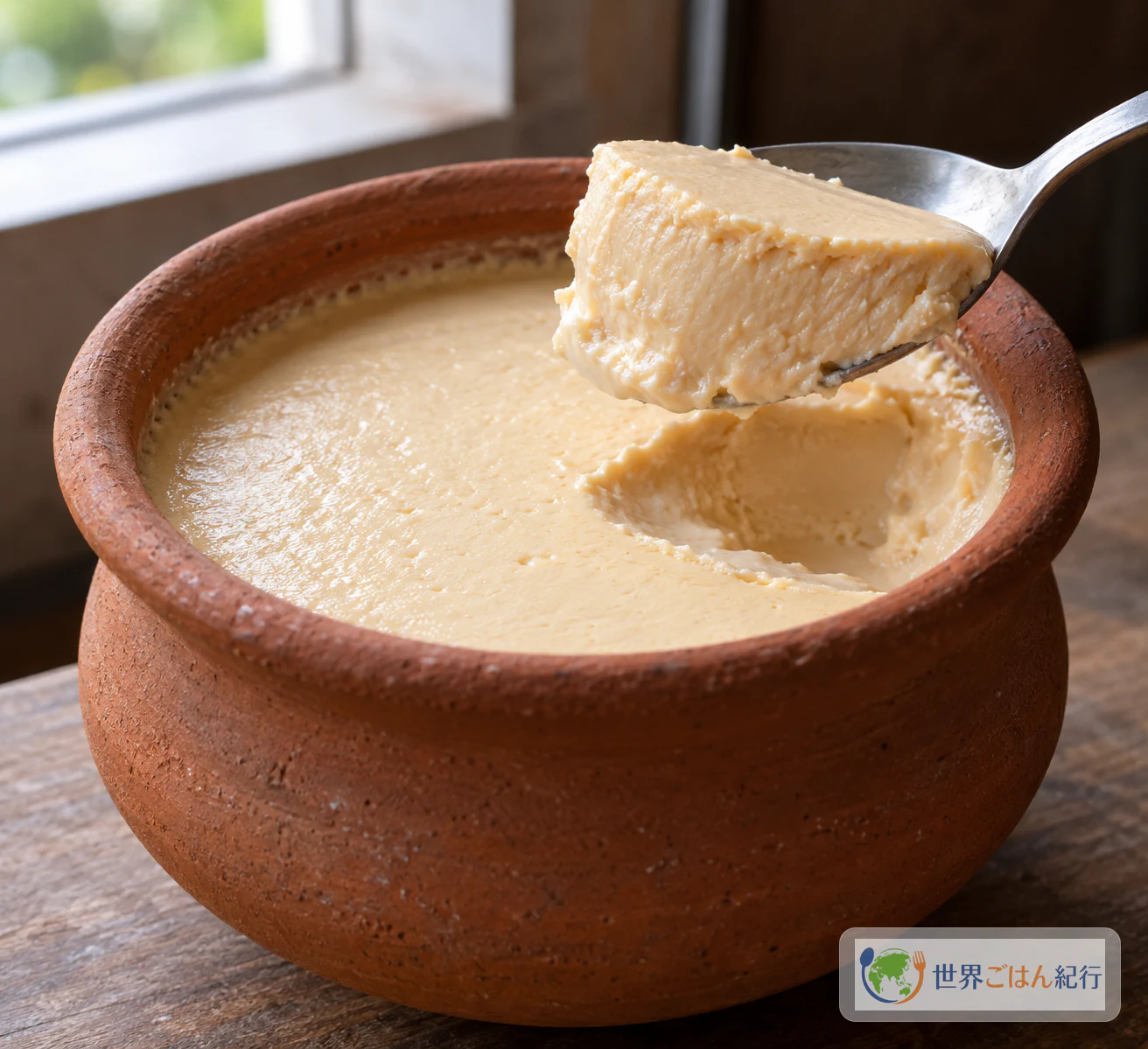
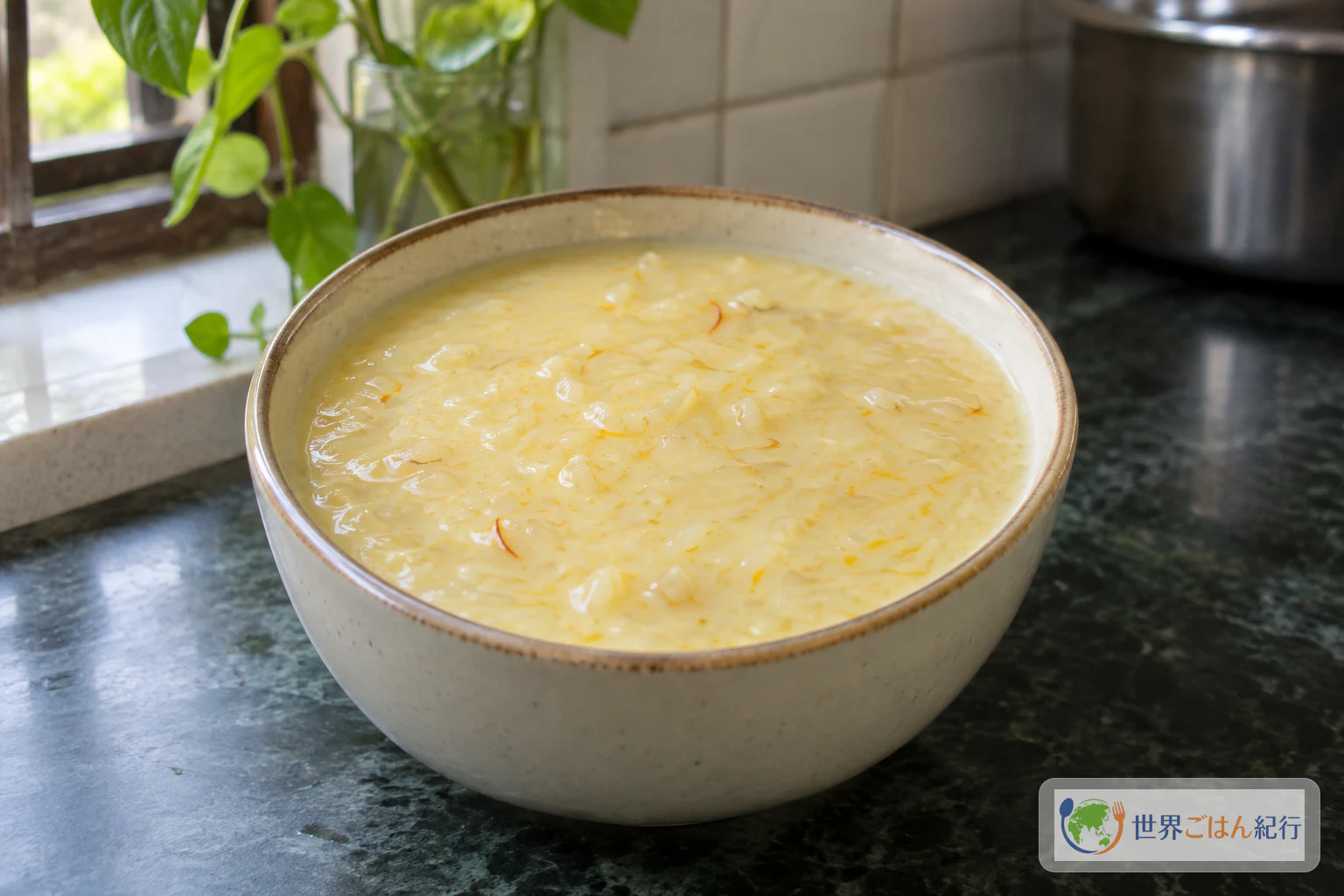
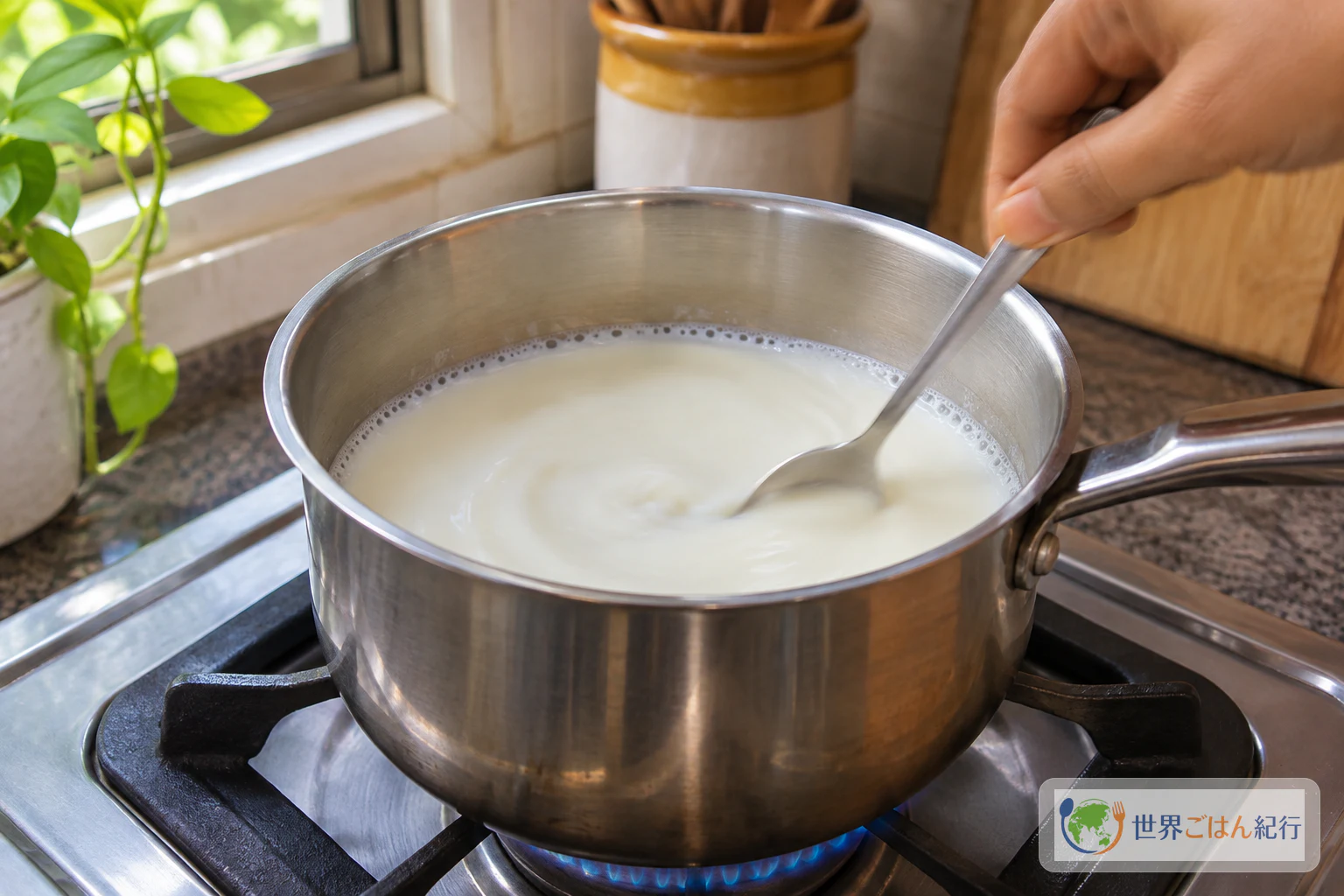
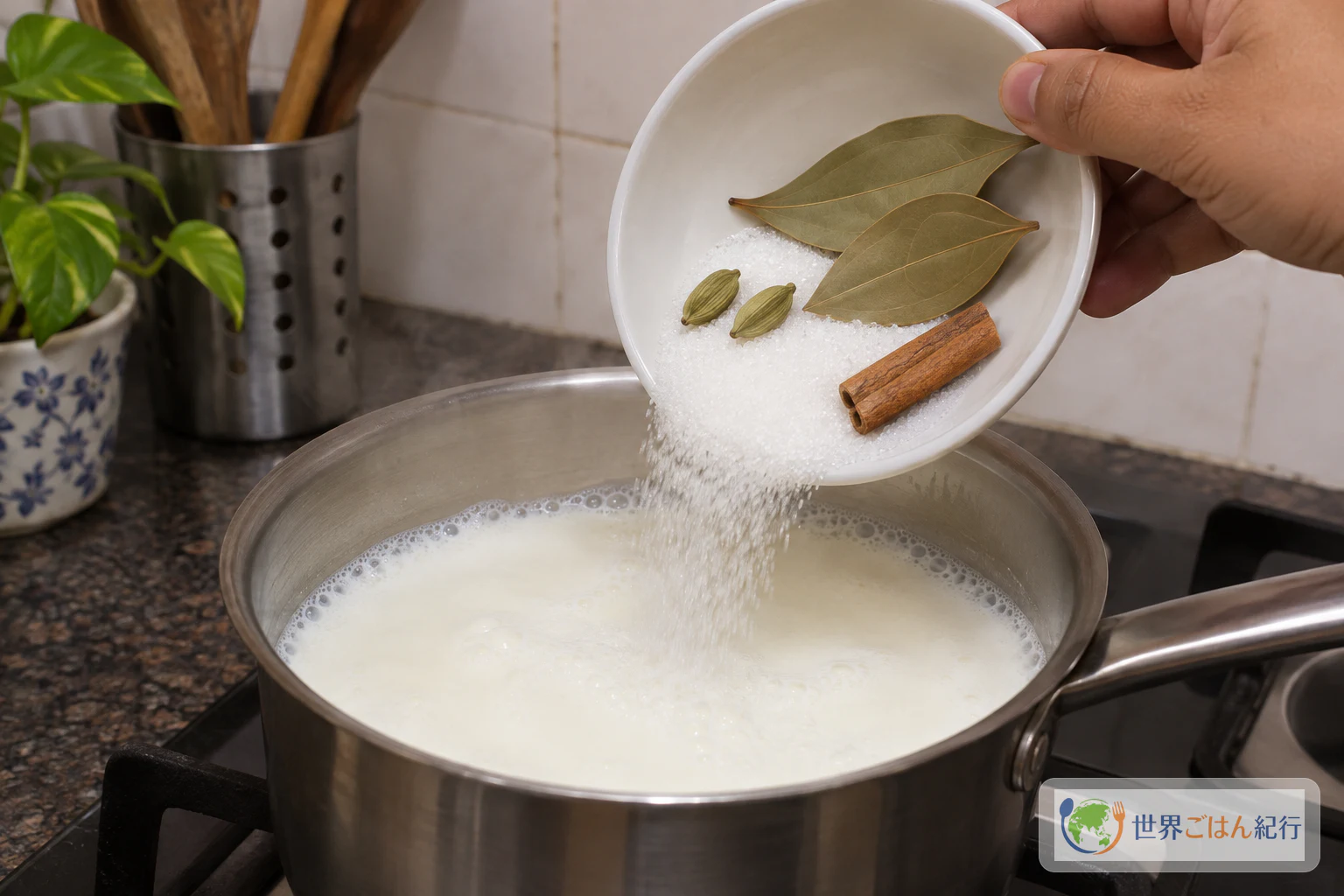
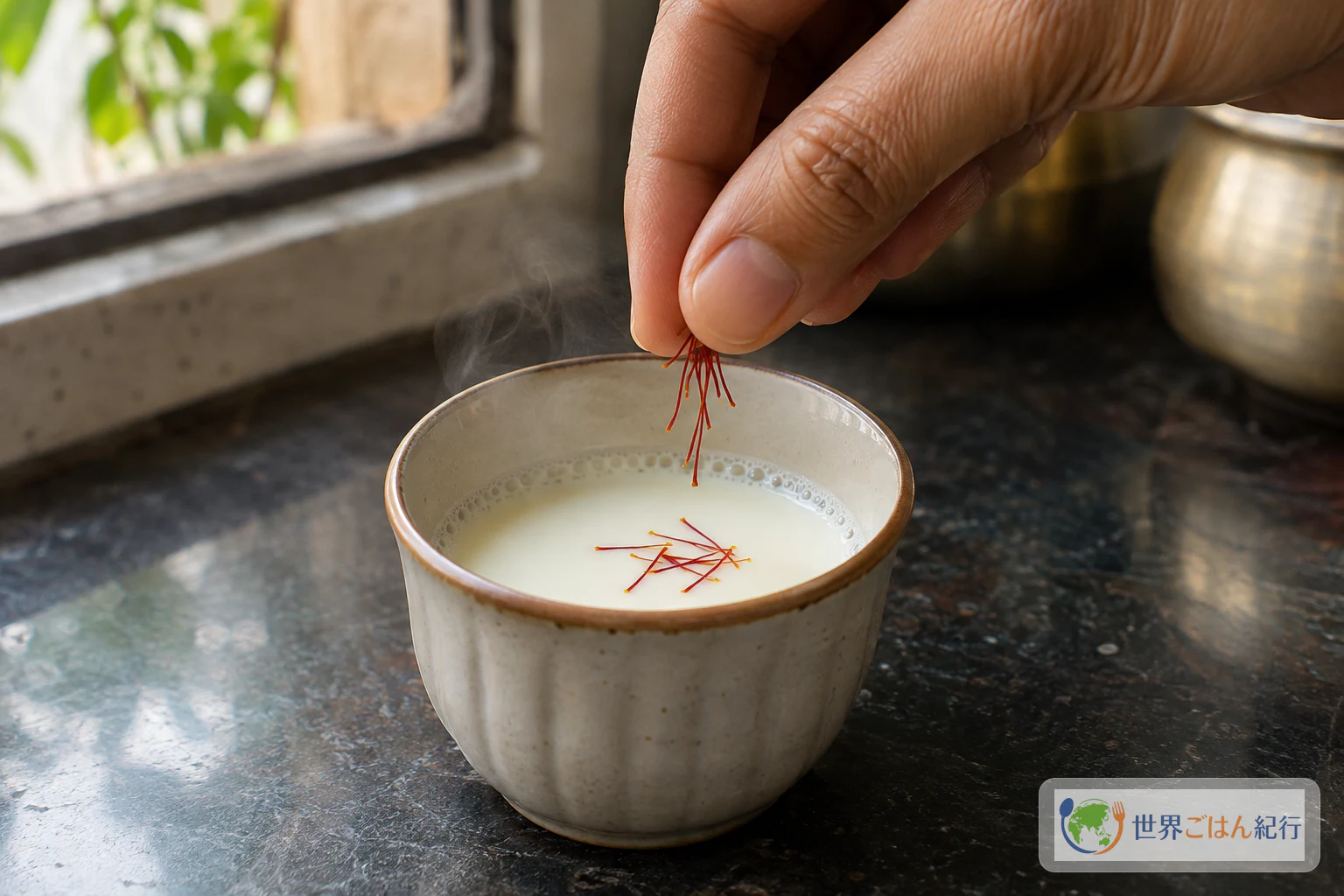
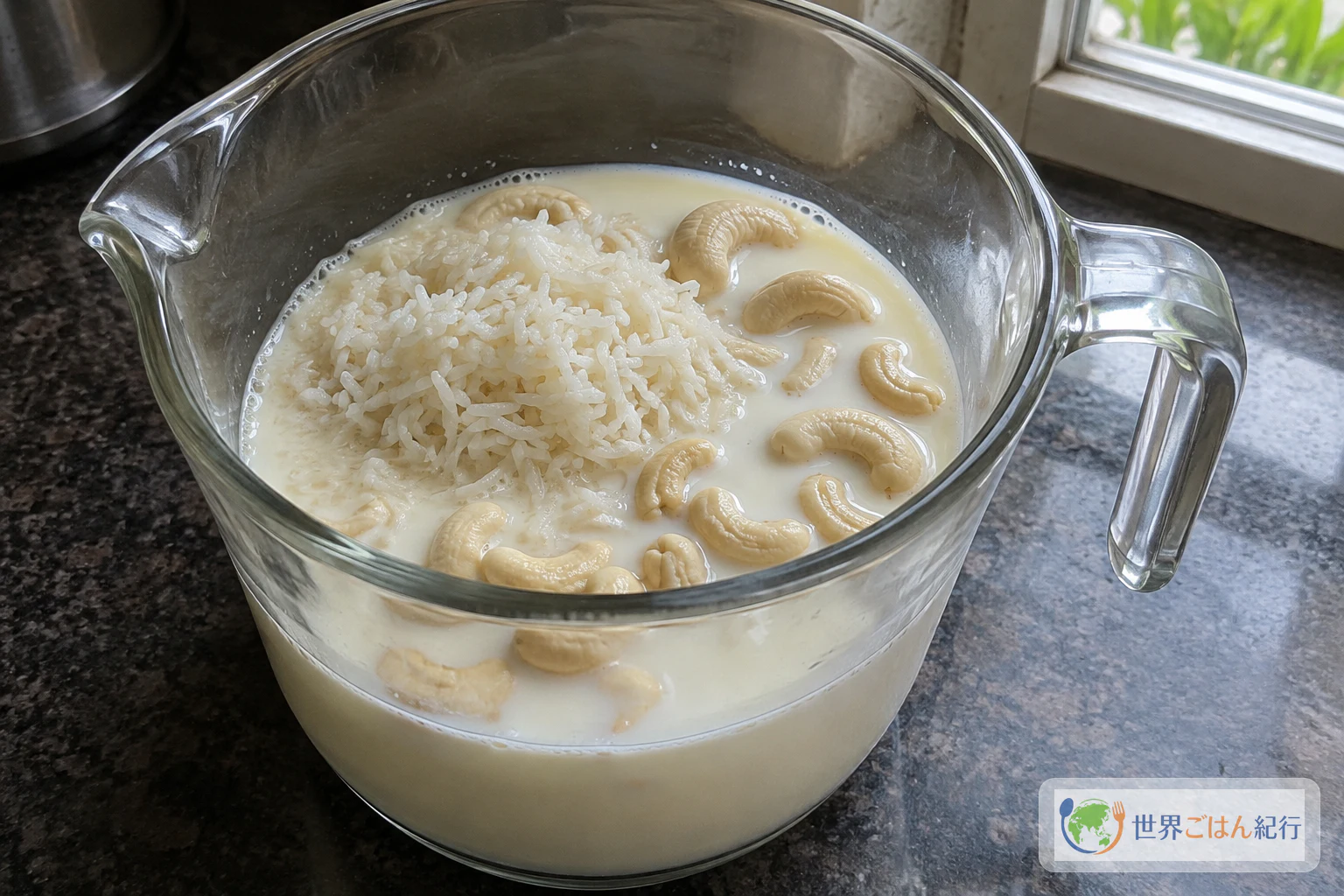
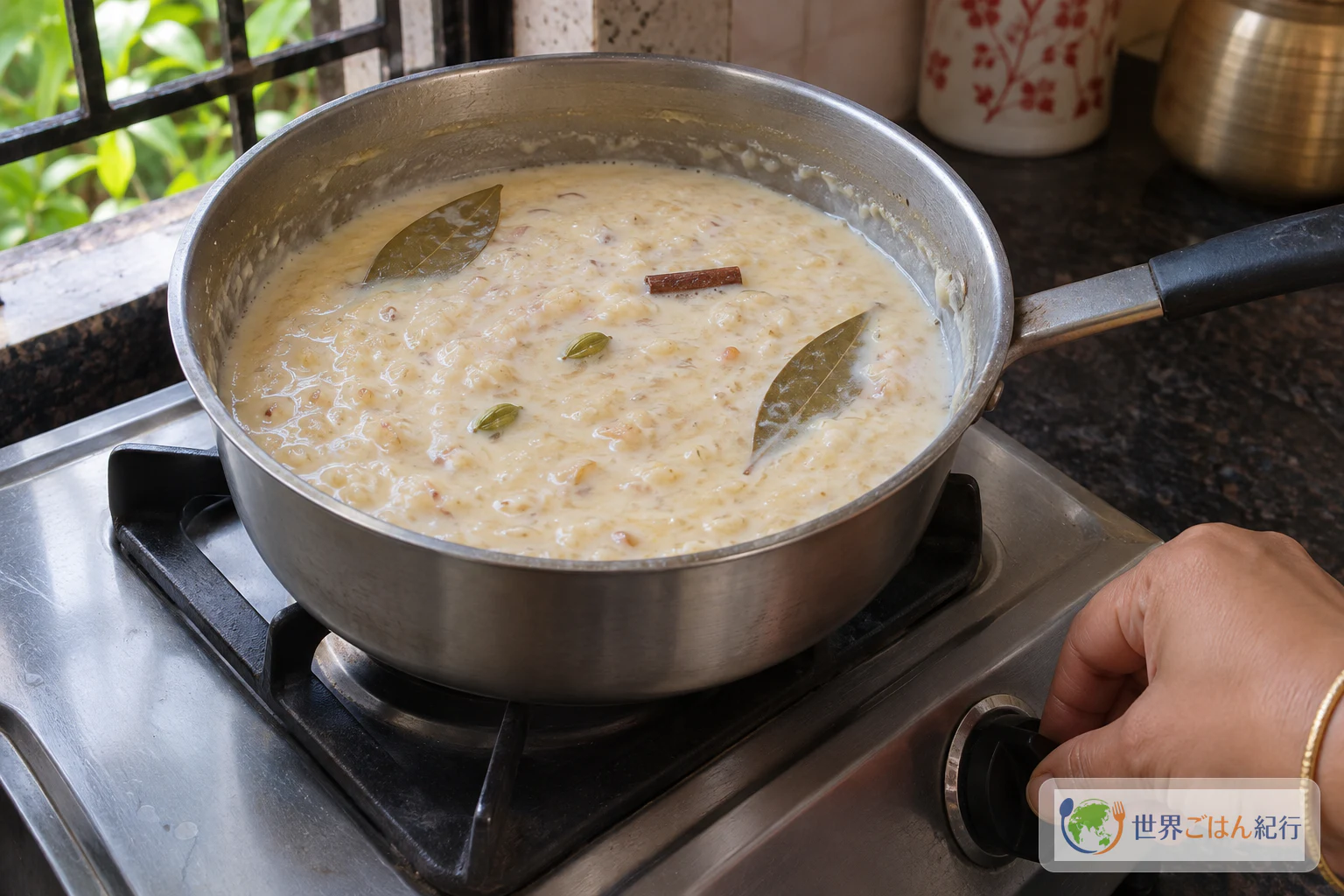
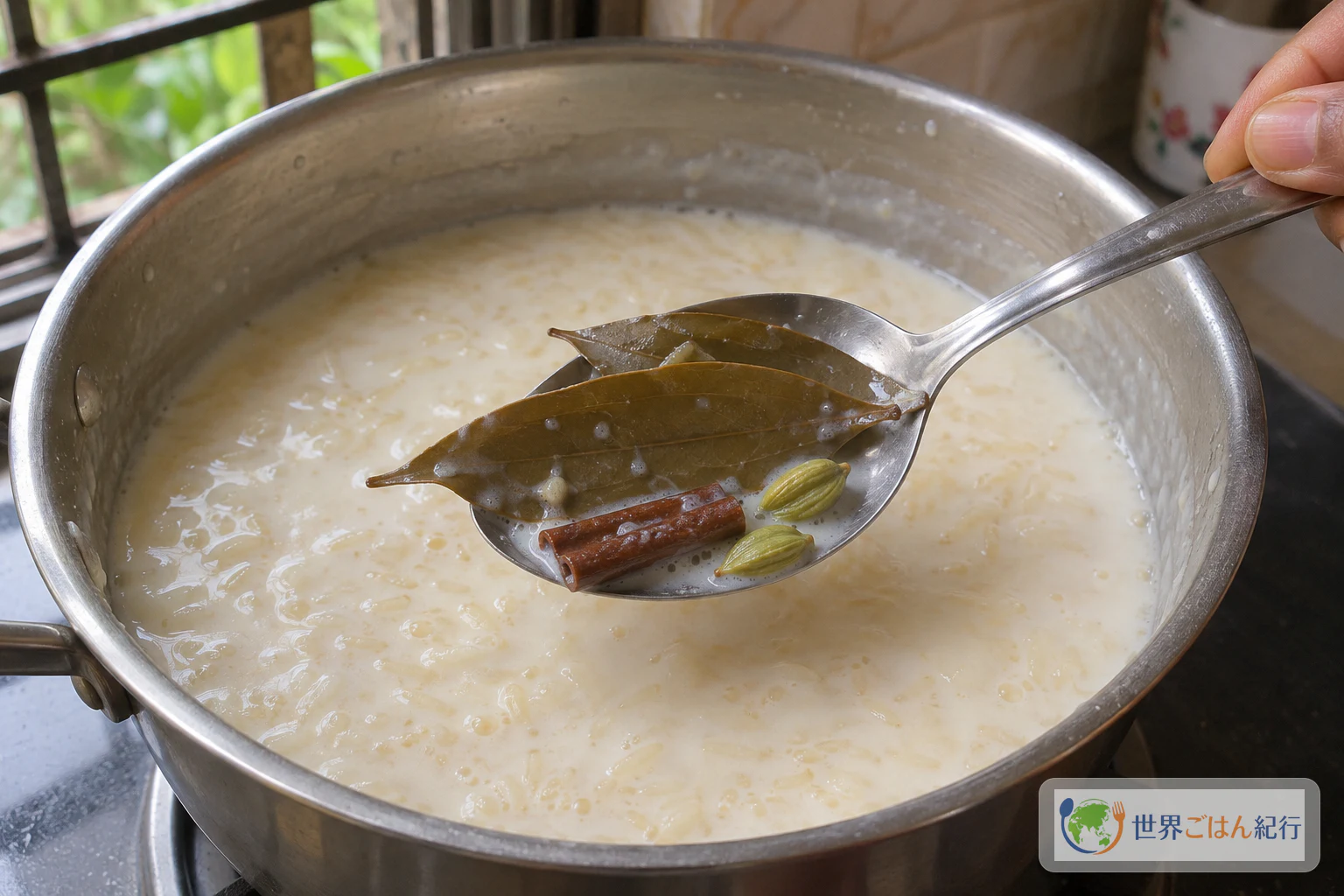
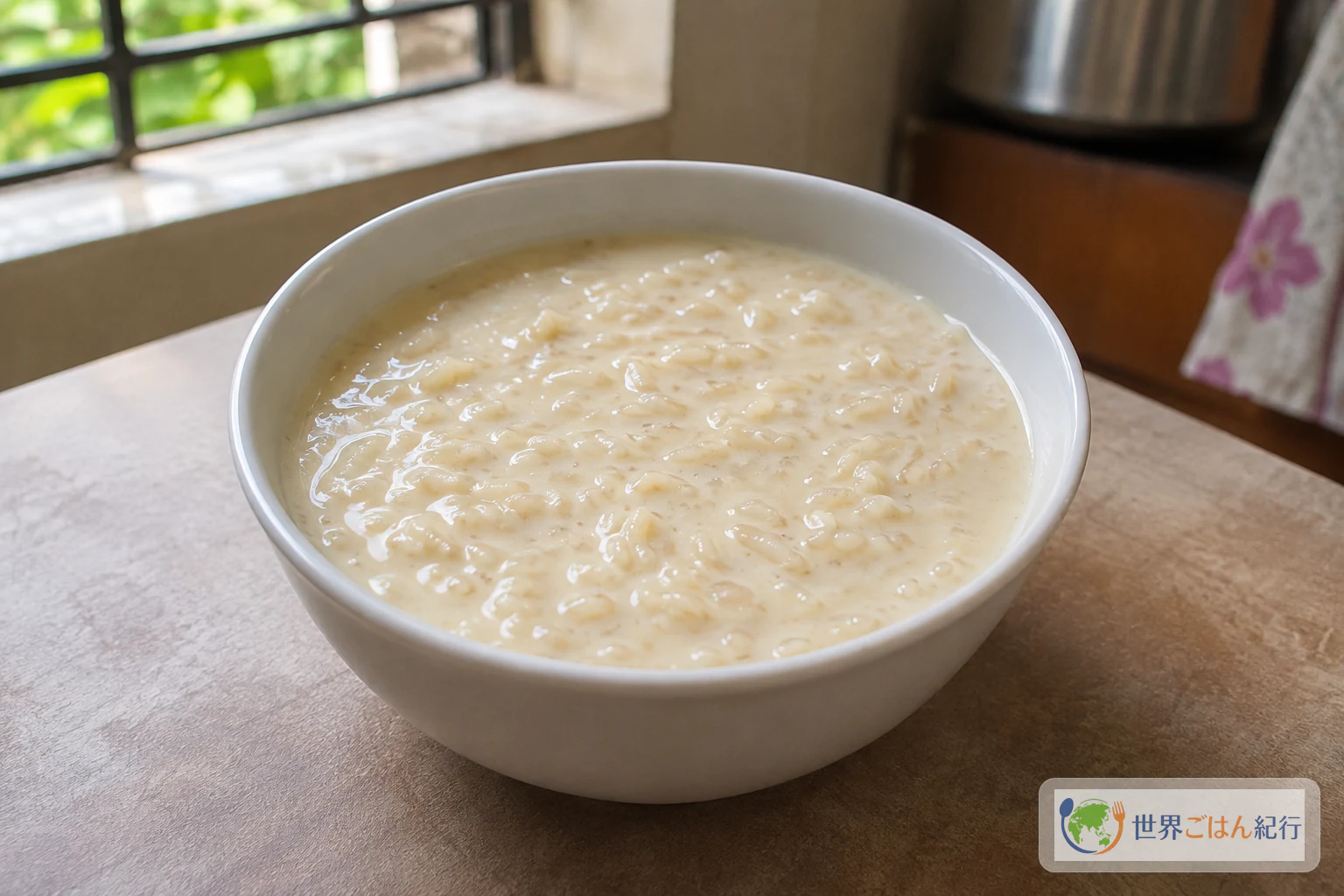
Picture a small bowl of pale cream pudding with a fine rice texture and a gentle tint of saffron. This payesh begins with small, fragrant rice and a liter of full-cream milk scented with cardamom, bay leaf and cinnamon. Rice, cashews, saffron and milk powder are each prepared in their own cup of hot milk before returning to the pot.
The recipe here is a single family version: SBS Food's "Payesh (Rice pudding)," credited to the family of restaurateur Rashedul Hasan. SBS labels it Bangladeshi and says it is often served at Eid in Bangladesh. It is one example, not a national standard, and other Bangladeshi payesh recipes differ considerably. The yield of 8 servings is the figure SBS publishes, not one measured in a test cook.
What This Version Changes from the SBS Recipe
Sekai Gohan has not kitchen-tested this recipe as a whole. The amounts and the main sequence follow SBS. A few practical choices were added or changed for this article, and they are not SBS instructions.
SBS uses Australian measures: 1 tsp = 5ml, 1 tbsp = 20ml and 1 cup = 250ml. The milk powder is 2 tablespoons in all, which comes to 40ml by volume in total.
| Point | SBS recipe | This version |
|---|---|---|
| Milk | Full-cream milk | Commercially pasteurized full-cream milk |
| Cashews | Cashews | Ready-to-eat, unsalted cashews |
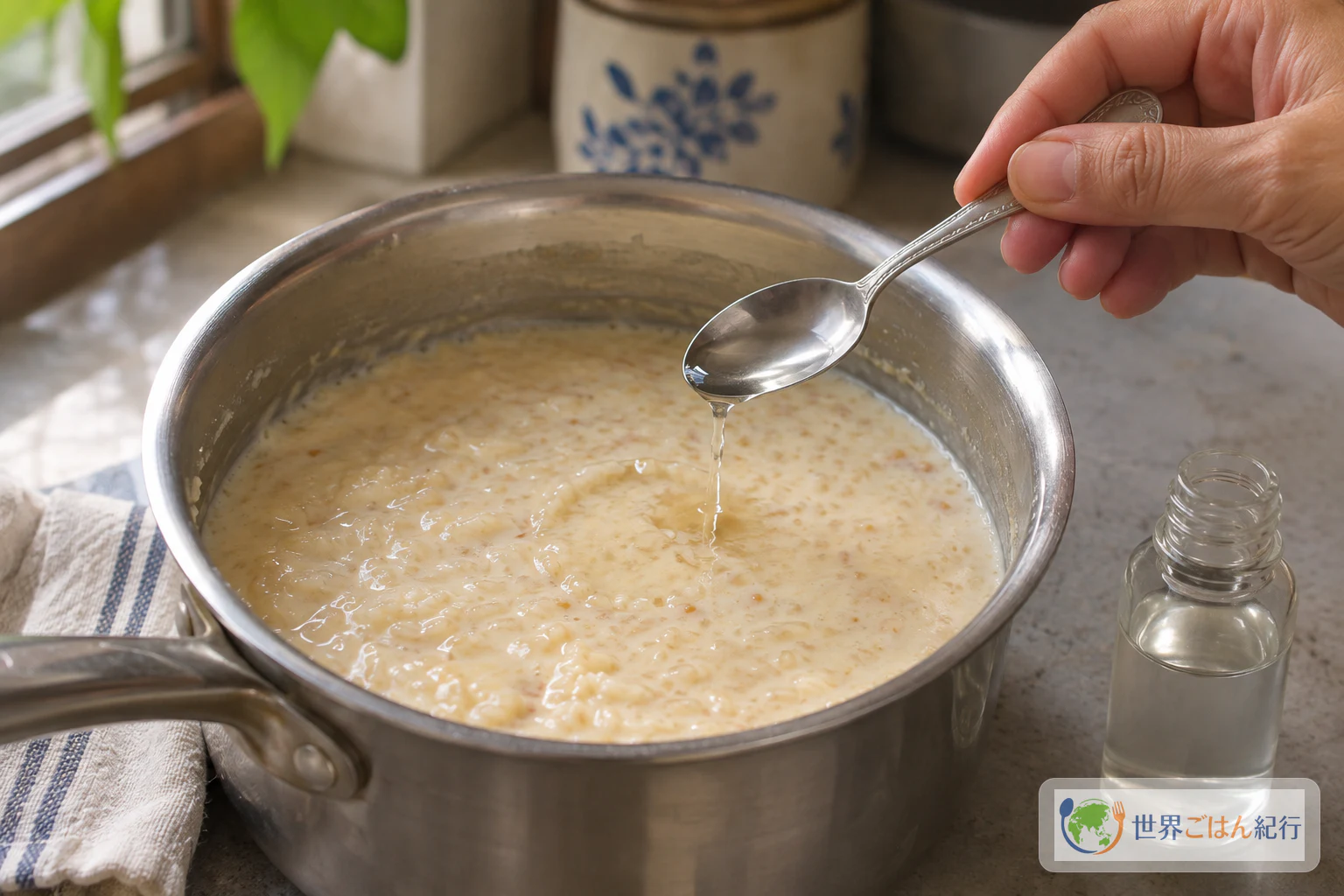
| Rosewater | 1/4 tsp in the ingredient list, with no step in the method | Food-grade culinary rosewater, stirred in after the heat is off |
| Whole spices | No instruction to remove them | Lifted out after the heat is off, before portioning, for easier eating |
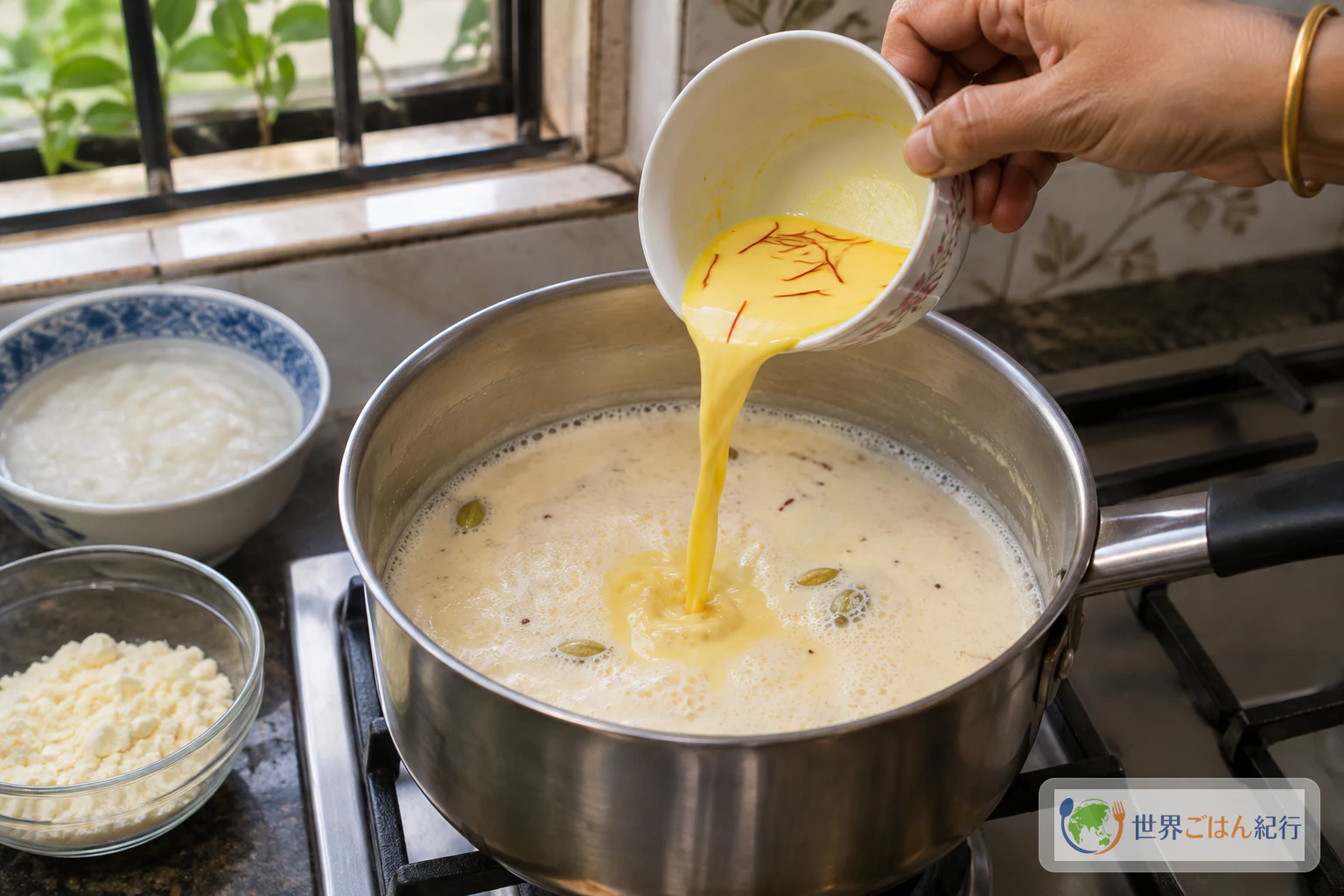
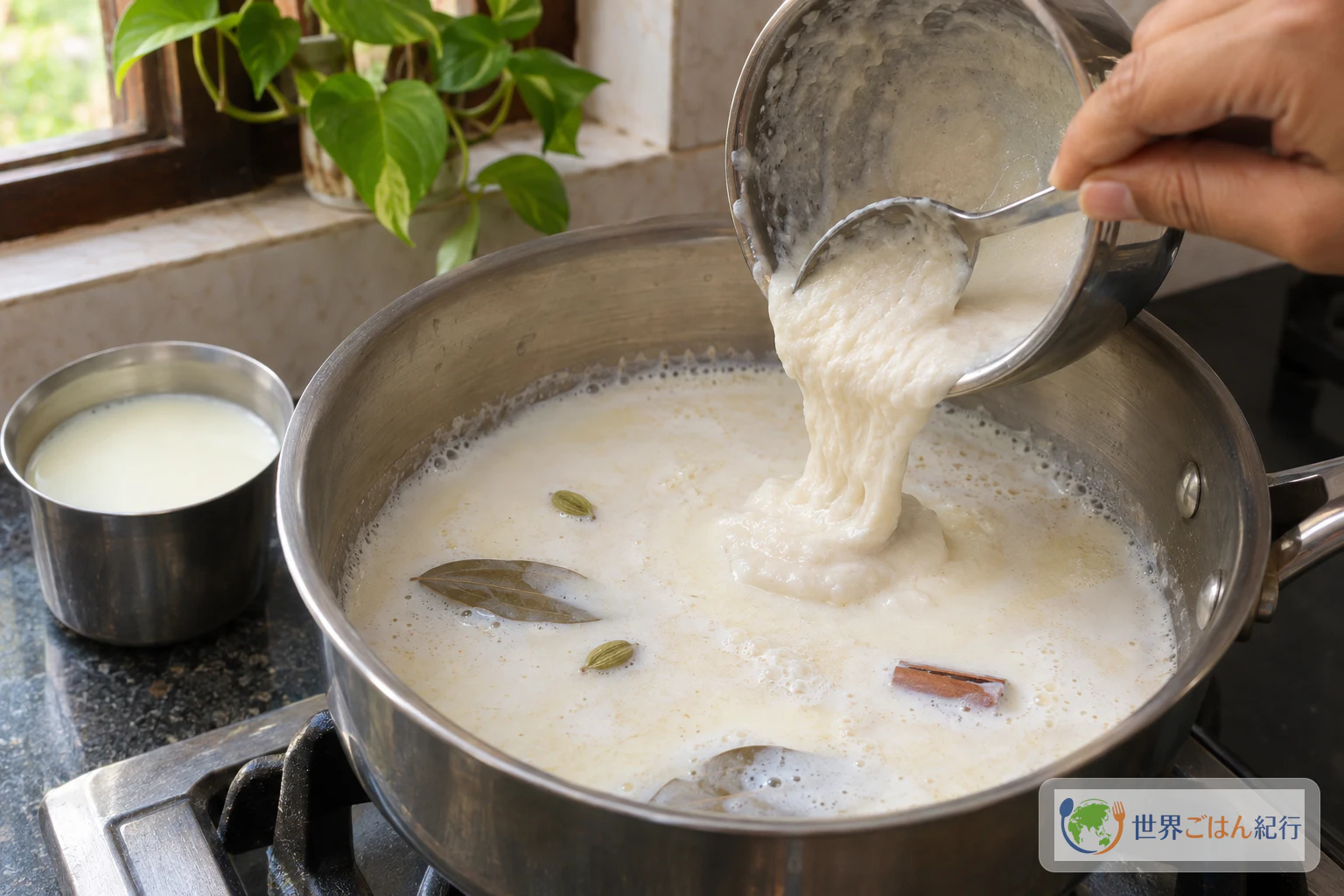
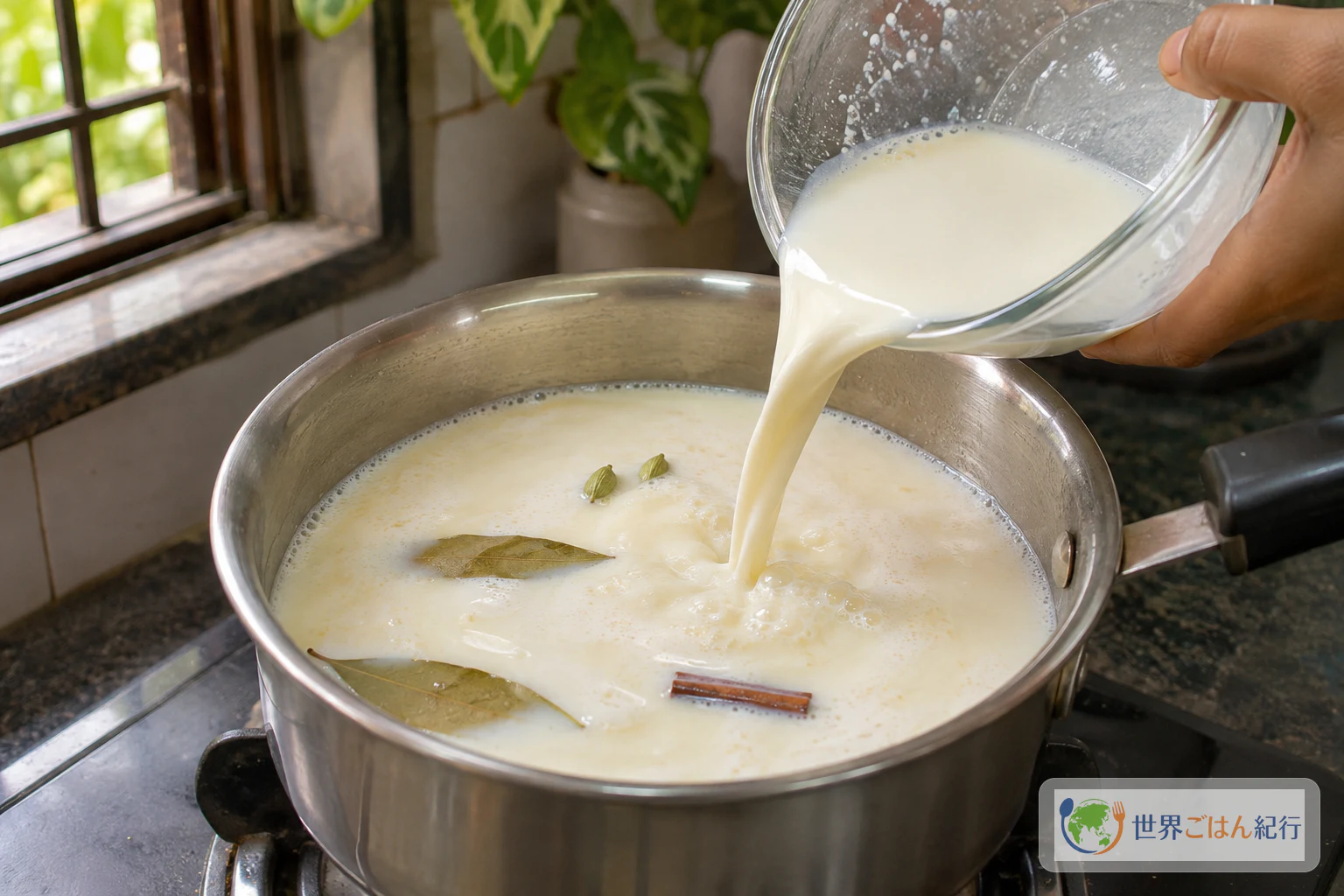
| Returning the three cups | All three go back into the pot, with no order given | Saffron milk, then rice-cashew paste, then dissolved milk powder, shown one at a time for clarity |
| Blending | Spice grinder or food processor | Only a food processor whose maker allows warm liquids, used according to its instructions |
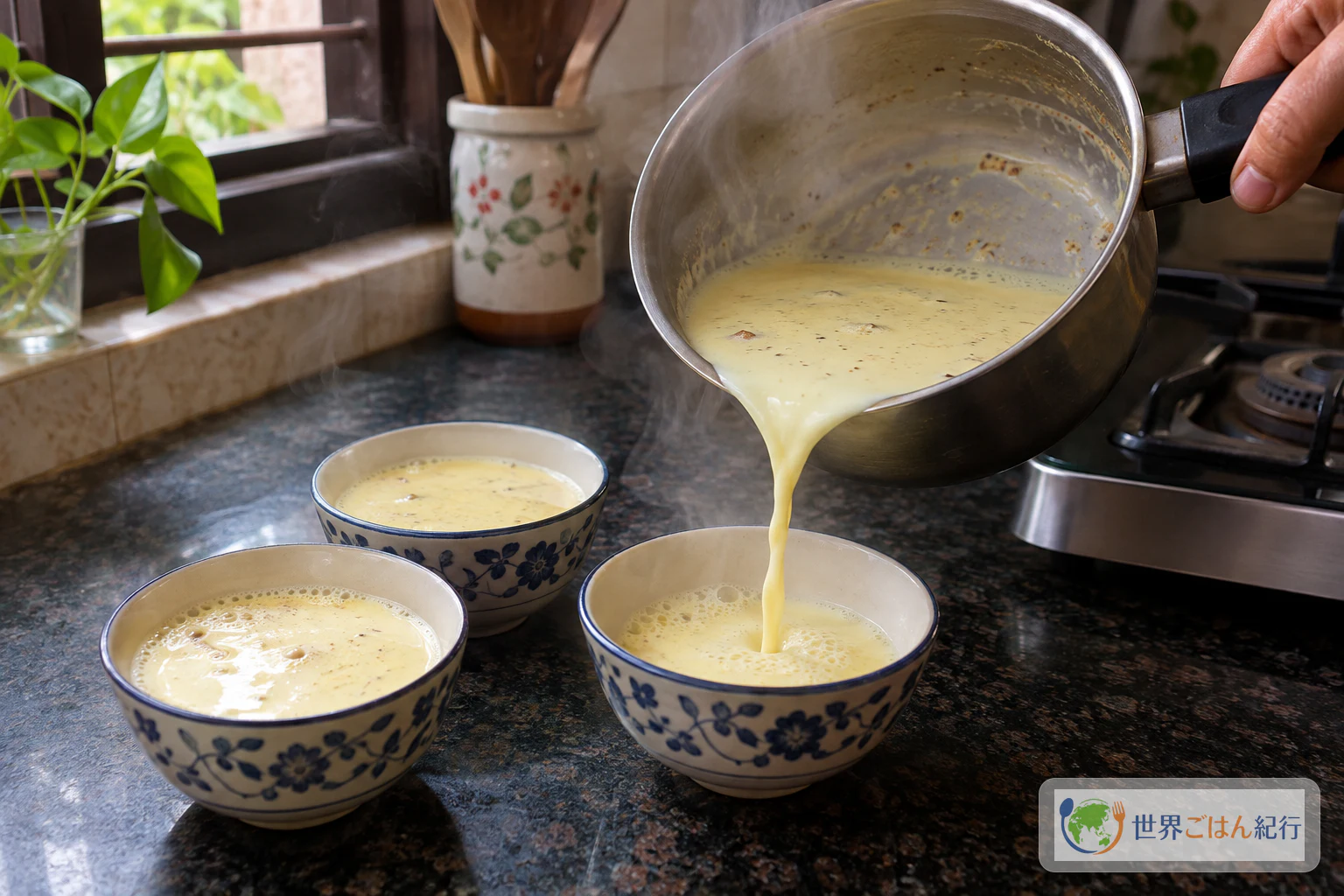
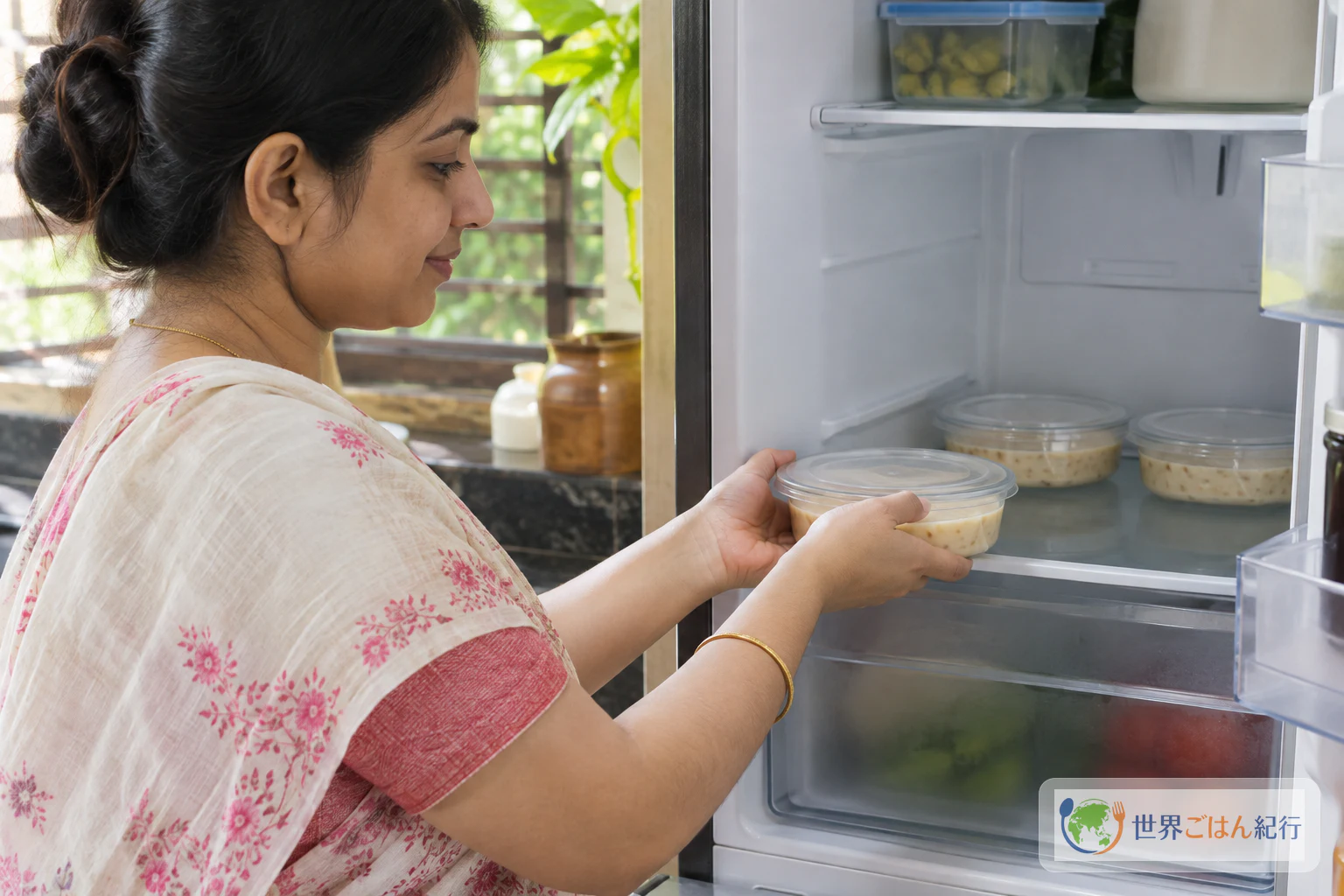
| After cooking | Transfer to a serving dish, rest at room temperature for 1 hour, then chill for at least 30 minutes | No room-temperature rest: portion into clean, shallow dishes and refrigerate without delay |
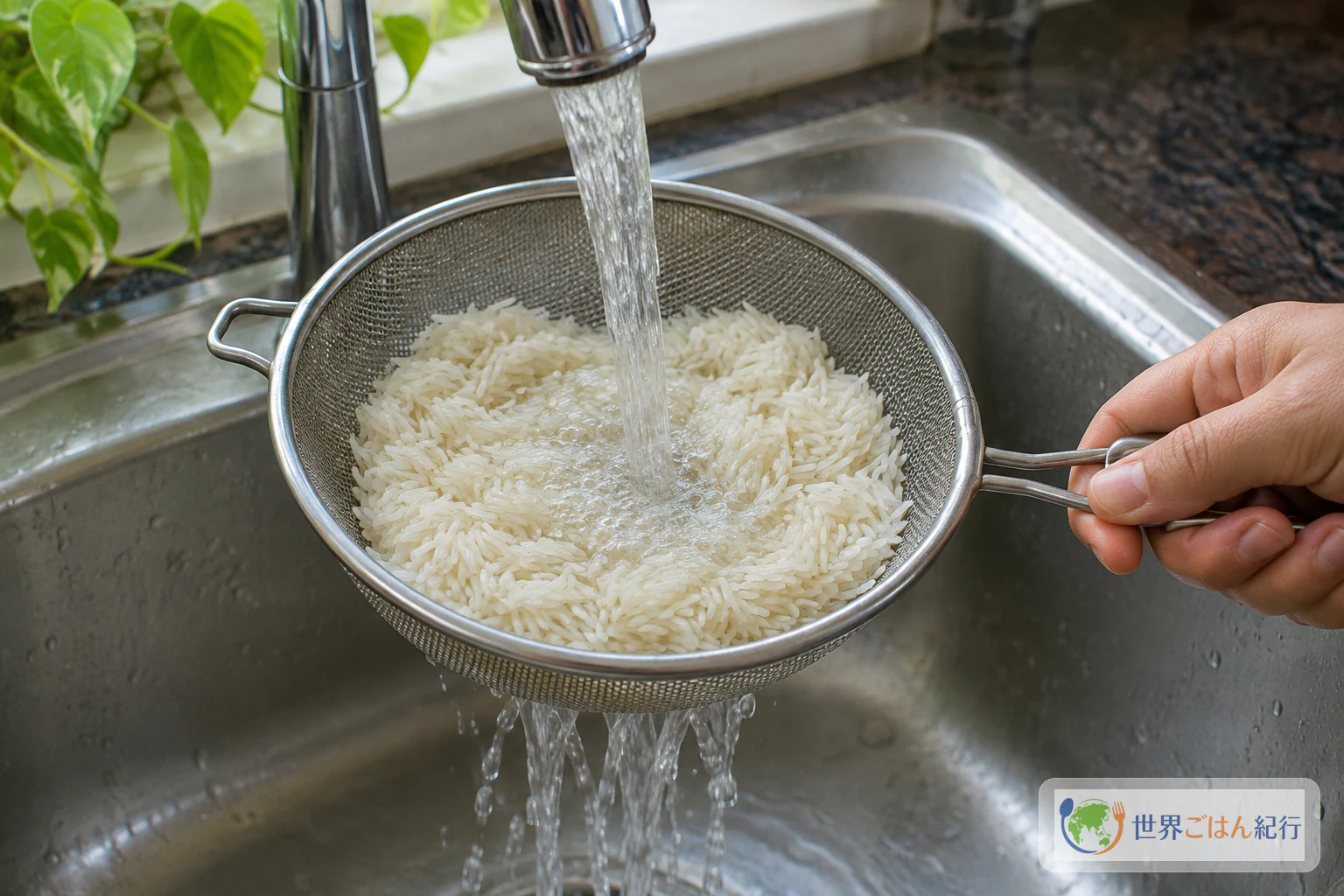
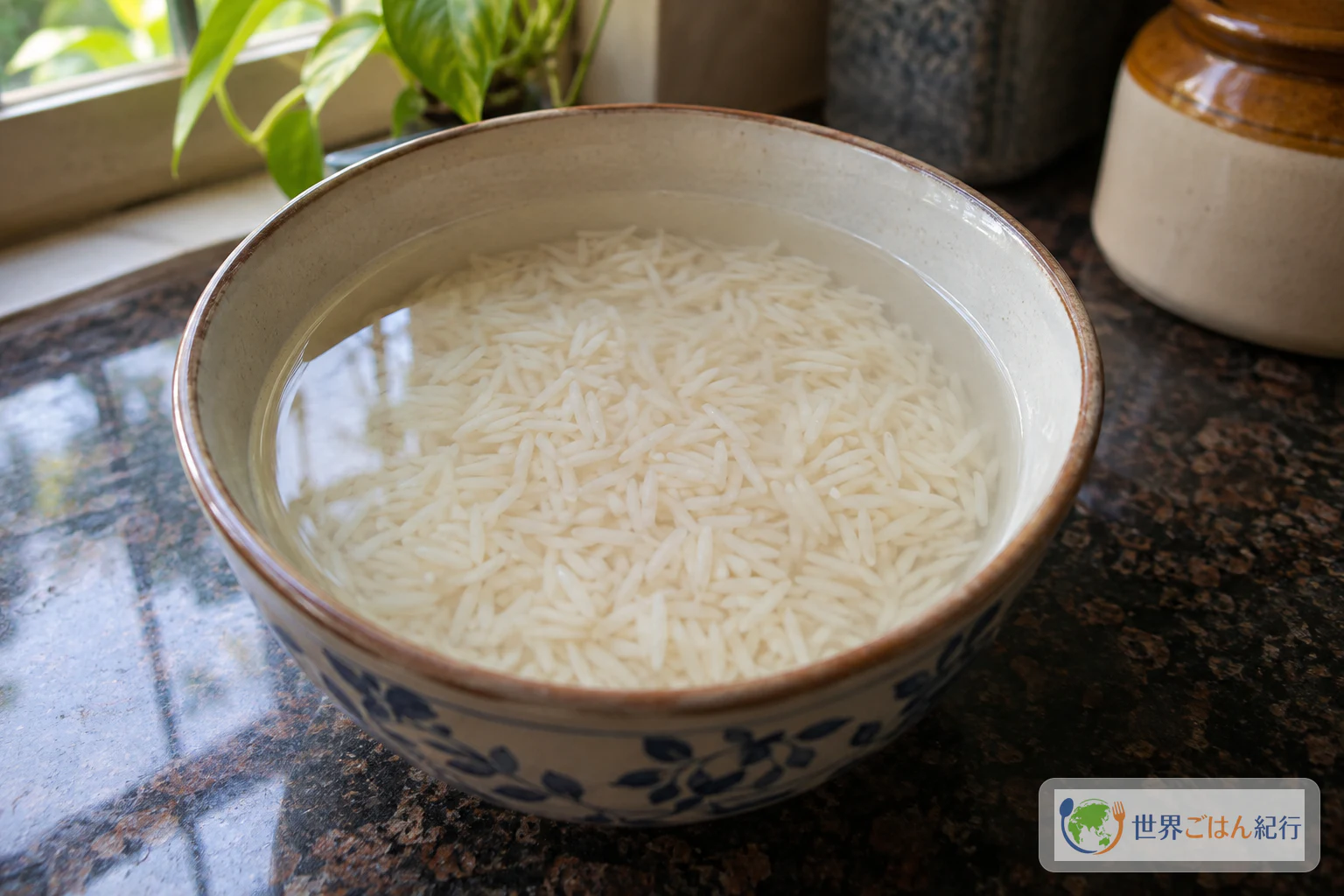
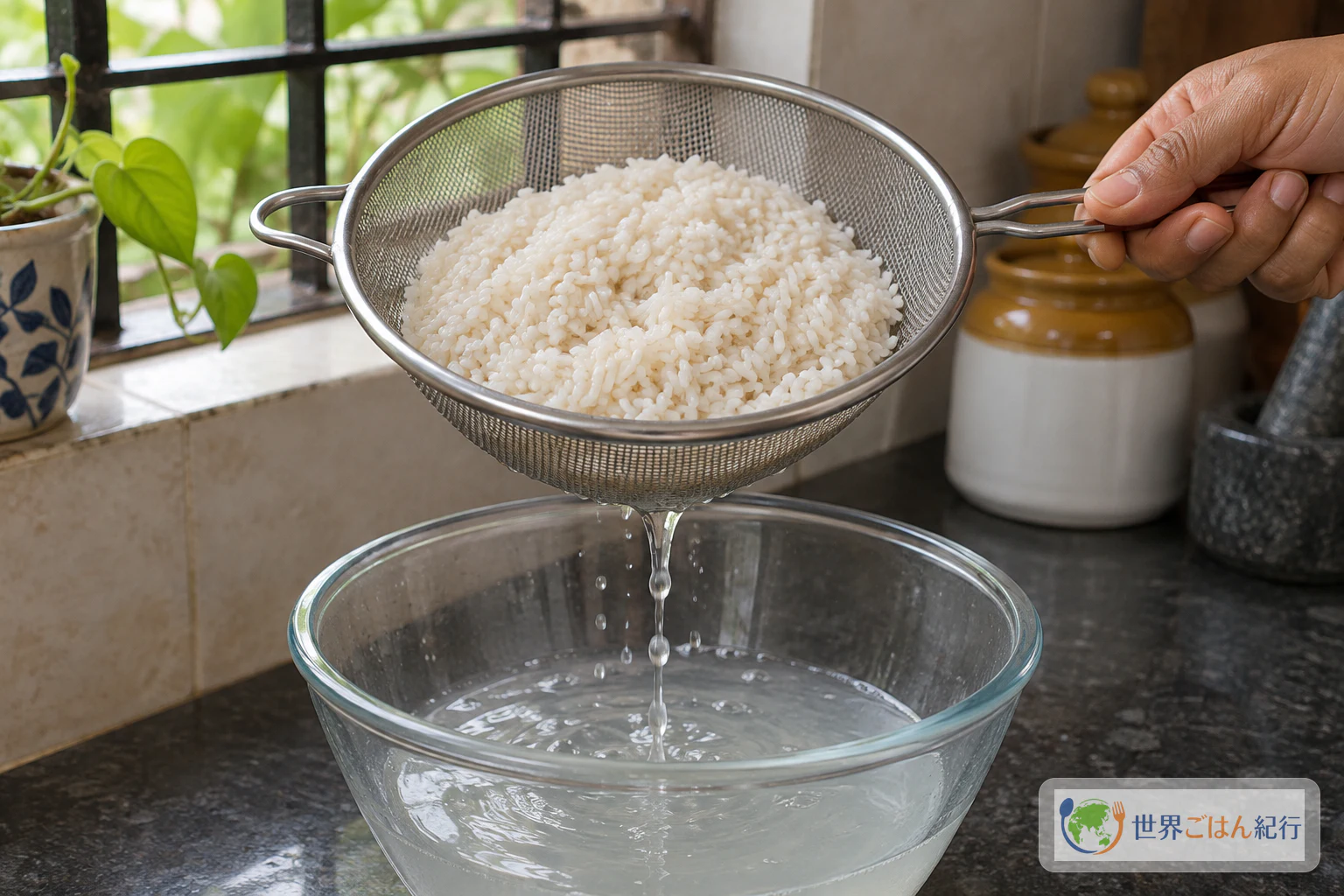
The images illustrate each action. They do not prove amounts, temperatures, product types or food safety.
Ingredients: Serves 8
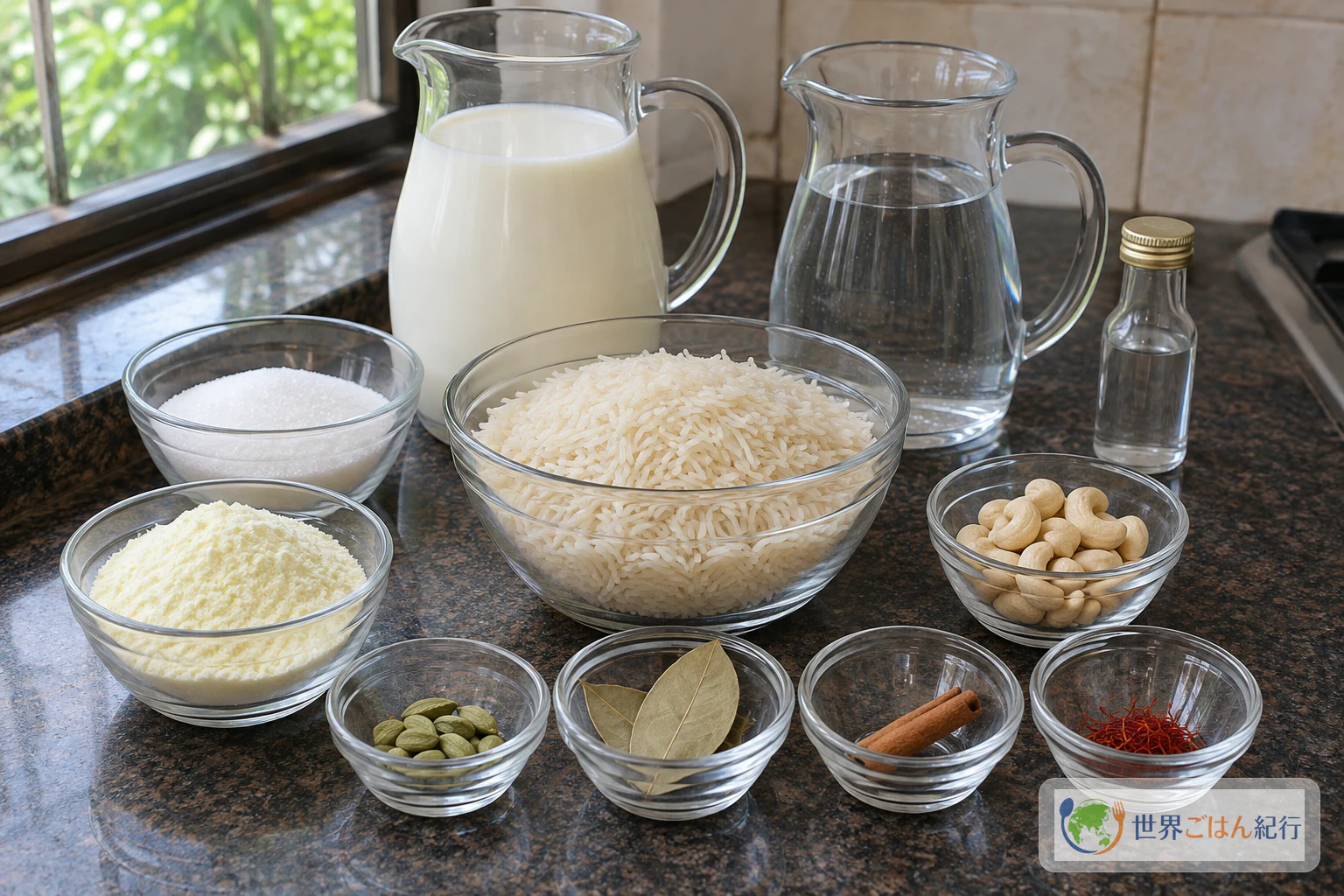
The hot milk for the three small cups comes out of the 1L in the pot, so it is not an extra ingredient. About 6 Australian tbsp is the total for all three cups, not the amount for each.
Choosing and Swapping
- Rice: If you can't find kalijeera or chinigura, use basmati or another small-grain fragrant rice.
- Milk: Use commercially pasteurized full-cream milk. Raw milk is not part of this version.
- Cashews: Choose ready-to-eat, unsalted cashews and check the package to confirm.
- Rosewater: Choose a product labeled food-grade and intended for cooking.
This pudding contains milk, milk powder and cashews. Check the labels on the products you buy for allergens and possible cross-contact.
Equipment
- Fine sieve
- Small bowl for soaking the rice
- Heavy-bottomed saucepan
- Wooden spoon
- Clean spoon for lifting out the spices and stirring in the rosewater
- Three small cups or bowls
- Food processor whose maker allows warm liquids
- Measuring spoons and a measuring cup
- Clean, shallow individual dishes with covers
Cooling and Serving
This version skips the room-temperature rest in the SBS recipe. The UK Food Standards Agency's general advice for leftover cooked rice is to chill it as quickly as possible, ideally within one hour. It adds that dividing rice into smaller portions can help and that it should not be left in the pan to cool. That advice is applied here as general guidance for a dish containing rice, and it is not a Payesh-specific test. FoodSafety.gov also advises refrigerating perishable food without delay, using shallow containers for quick cooling and keeping the refrigerator at or below 40°F/4°C. Its general maximum of 2 hours unrefrigerated, or 1 hour when the surrounding temperature is above 90°F/32°C, is a limit and not a waiting time. SBS's chill of at least 30 minutes is kept only as a serving cue for texture. It does not confirm safety, and this article does not set a keeping time.
Troubleshooting
| What you see | What to do |
|---|---|
| The milk is catching on the bottom of the pan | Stay at medium-low heat and keep stirring |
| The milk has reached a simmer | Add the sugar and whole spices now, without waiting for a boil |
| Some rice grains remain after blending | A few are fine. If most of the mixture isn't paste yet, keep blending, following your processor's instructions |
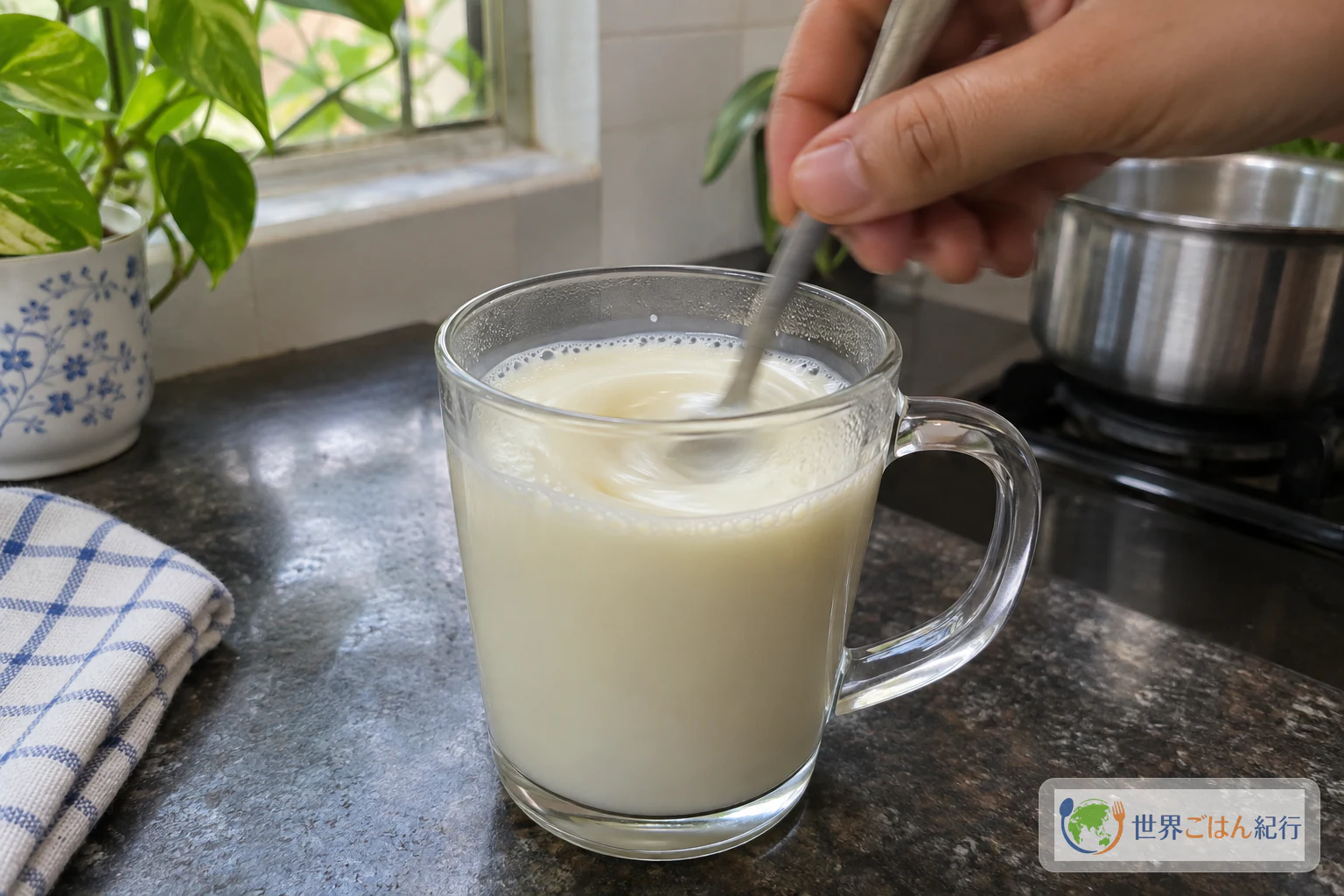
| The milk powder is still lumpy in its cup | Keep stirring until it has dissolved completely, then return it to the pan |
| The spoon doesn't clear the bottom of the pan | Keep stirring over low heat. The thickness is your cue, so there is no set time to follow |
Variations
- A different rice: SBS allows basmati or another small-grain fragrant rice when kalijeera or chinigura isn't available. The other amounts stay the same.
- A garnish: SBS lists 1 tsp of crushed nuts and edible flowers as optional. They are not part of the base recipe here.
- Other Bangladeshi versions: Compassion International's Explorer site publishes a Bangladesh-labeled payesh with basmati, saffron, bay, cardamom and mixed nuts. Nestlé Bangladesh's brand recipe cooks milk powder in water, then crushes pulao rice, fries it in ghee and cooks it in the milk. These are separate recipes with their own methods, so don't mix their amounts or steps into this one.
Payesh in Context
SBS describes this payesh as often served at Eid in Bangladesh, a description that comes from SBS's introduction to this family recipe. It does not establish a custom for every household or every Eid. The other recipes above show that "payesh" can cover quite different methods, even among those labeled Bangladeshi. For more dishes from the country, see the Bangladesh page.
Frequently Asked Questions
Can I use basmati instead of kalijeera or chinigura?
Yes. The SBS recipe permits basmati or another small-grain fragrant rice if kalijeera or chinigura isn't available.
Why divide the hot milk into three cups?
Each cup has its own job: one infuses the saffron, one holds the rice and cashews before blending, and one dissolves the milk powder. All three then return to the pot. SBS doesn't set an order for returning them, so the order in this article is an editorial choice. About 6 Australian tbsp is the total for all three cups, and SBS doesn't specify the amount for each.
How thick should the pudding be?
Stir over low heat until it is thick and the bottom of the pan is clear when scraped with a wooden spoon. That is the cue SBS gives, and this article adds no temperature or cooking time.
Why not rest it at room temperature before chilling?
SBS rests the pudding in its serving dish for 1 hour at room temperature. This version leaves that out and refrigerates shallow portions without delay, in line with the general cooling advice from the UK Food Standards Agency and FoodSafety.gov. That advice is not specific to payesh, and the minimum 30-minute chill is a texture cue rather than a safety guarantee.
Sources
- SBS Food, "Payesh (Rice pudding)," recipe credited to restaurateur Rashedul Hasan. The main recipe: its amounts, Australian measures, method, thickness cue, rice substitution, optional garnish, chilling cue and the note about Eid. https://www.sbs.com.au/food/recipe/rice-pudding-payesh/k9gd26ci3
- UK Food Standards Agency, "Home food fact checker." General advice on quickly chilling leftover cooked rice, using smaller portions and not cooling it in the pan. Not a Payesh-specific test. https://www.gov.uk/government/publications/home-food-fact-checker/home-food-fact-checker
- FoodSafety.gov, "4 Steps to Food Safety: Chill." General advice on refrigerating perishable food, shallow containers, refrigerator temperature and maximum unrefrigerated time. Not a Payesh-specific test. https://www.foodsafety.gov/keep-food-safe/4-steps-to-food-safety
- Compassion International Explorer, "Payesh." A separate Bangladesh-labeled recipe, cited for comparison only. https://explorer.compassion.com/payesh-recipe/
- Nestlé Bangladesh, "Rice And Milk Payesh Recipe With Nestlé Everyday." A separate brand recipe, cited for comparison only. https://www.nestle.com.bd/healthy-cooking/healthy-indulgence/payesh