
From a rainy riverbank to a plate of yellow sauce
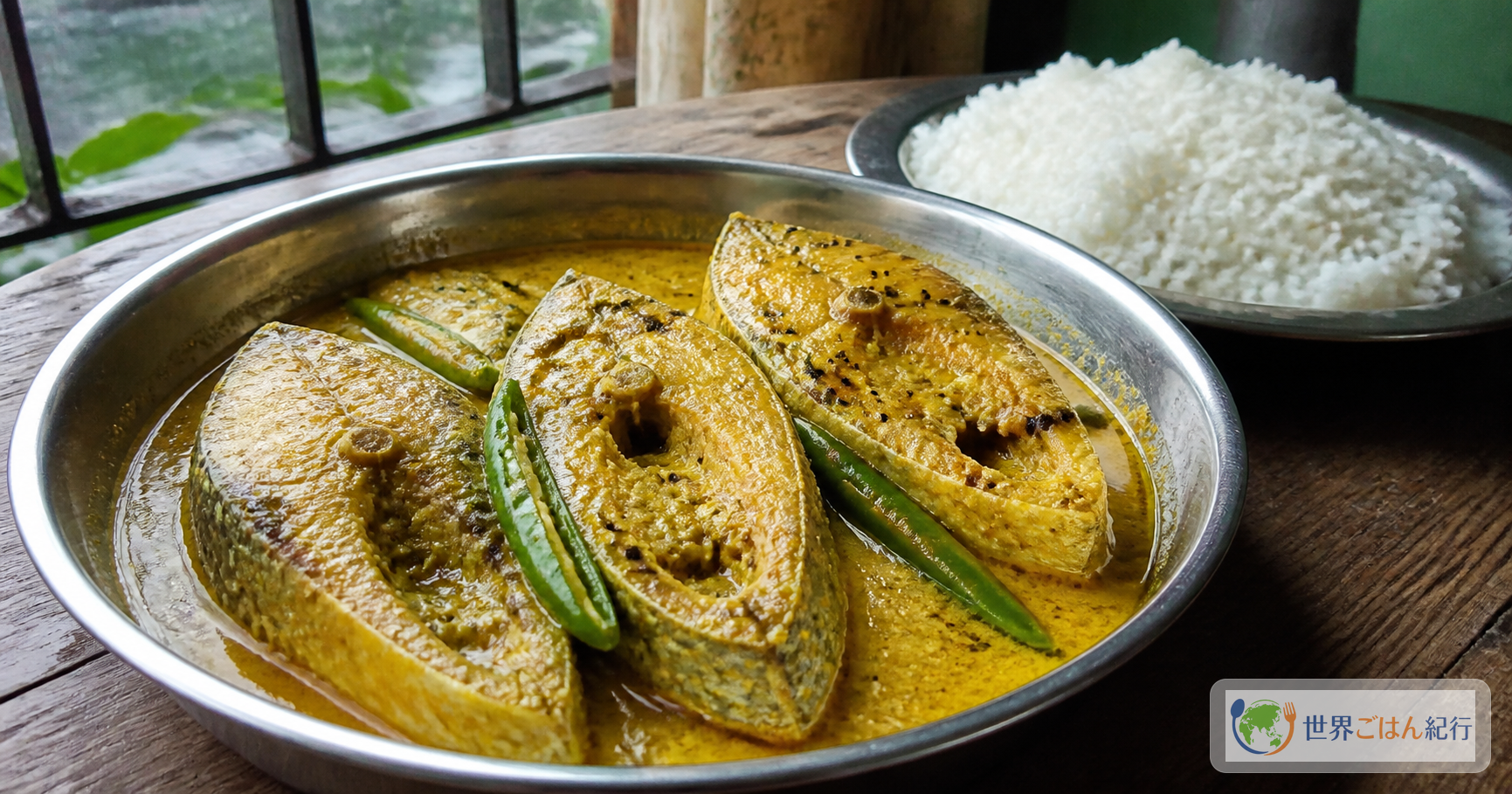
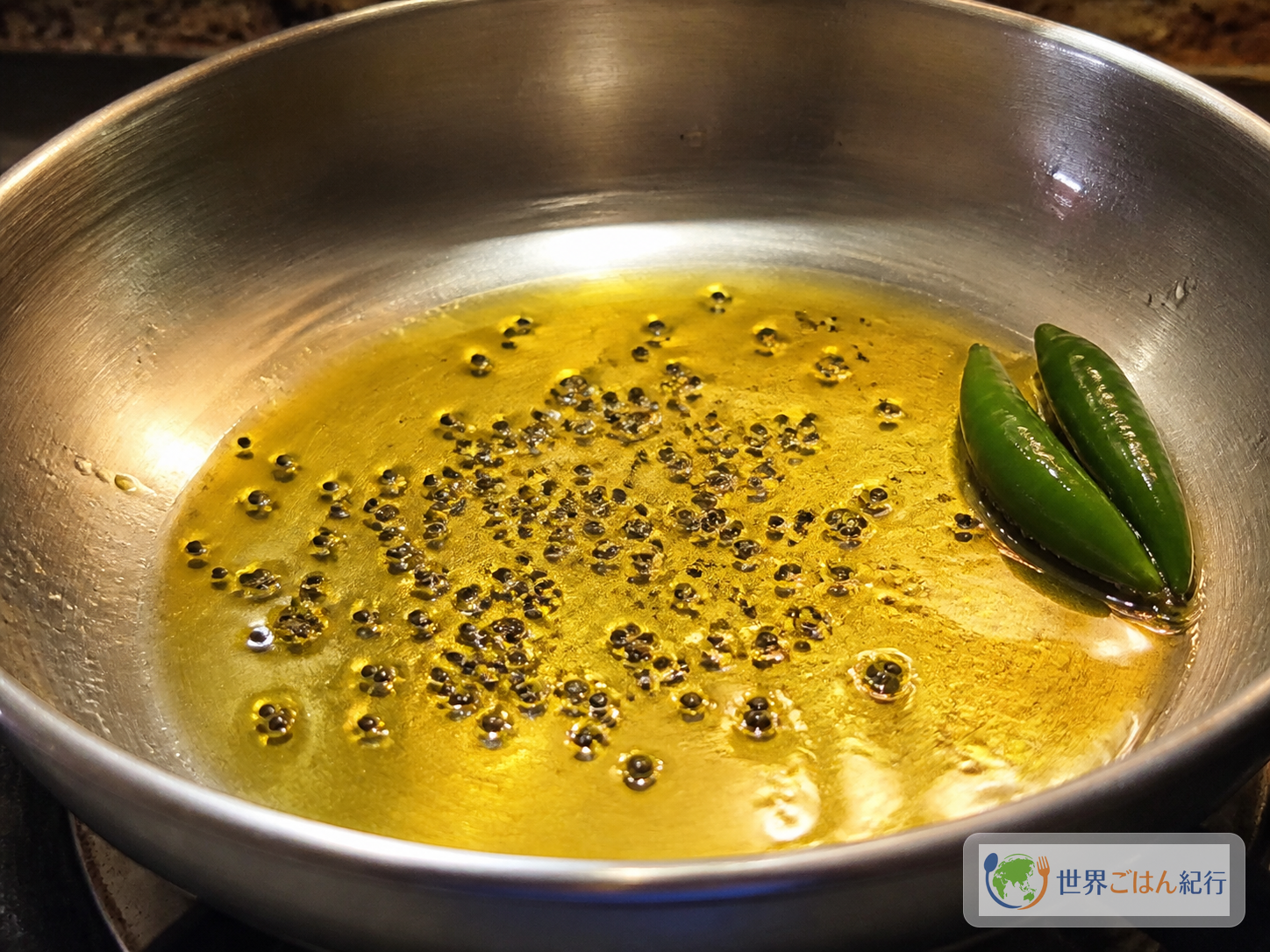
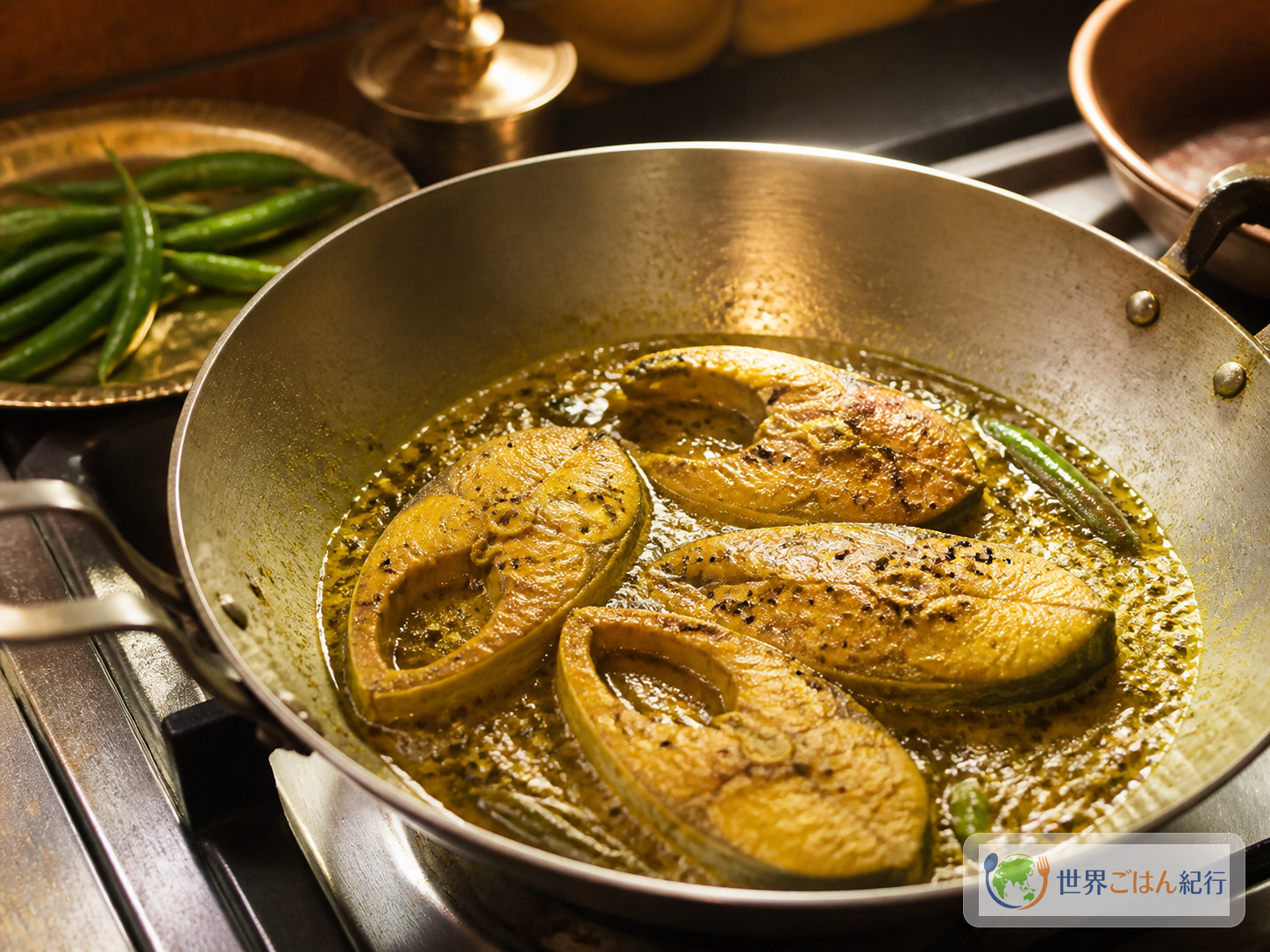
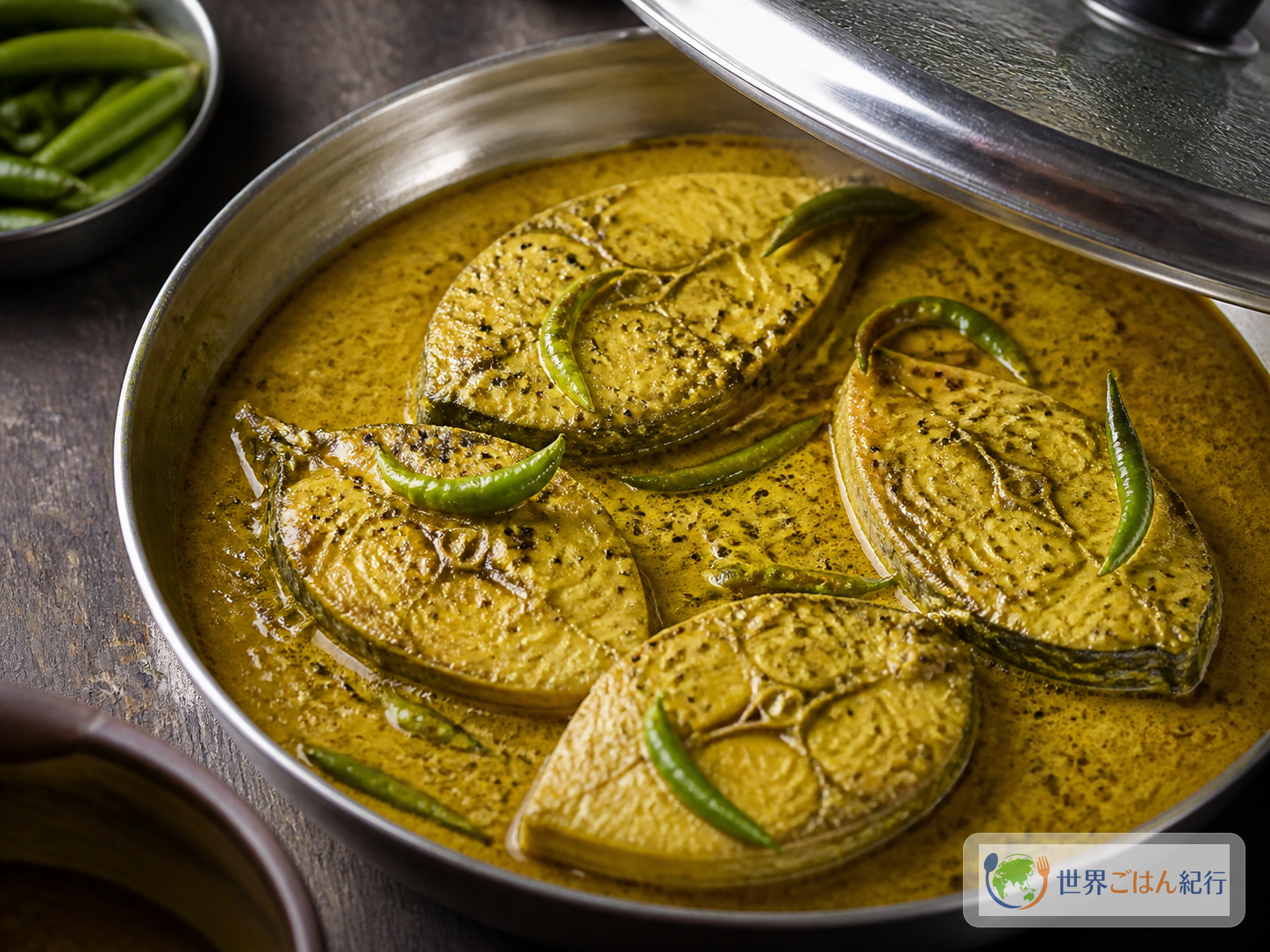
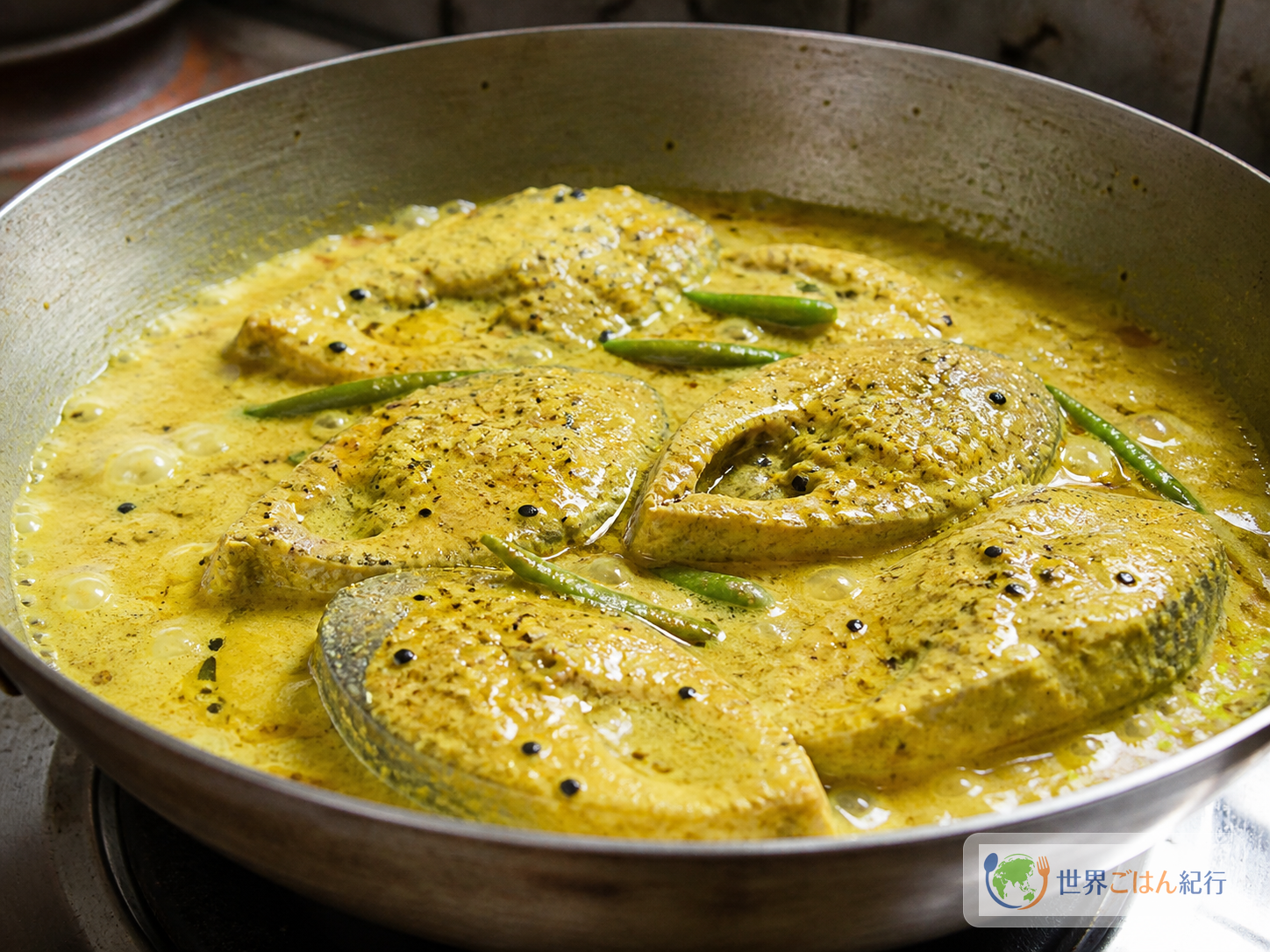
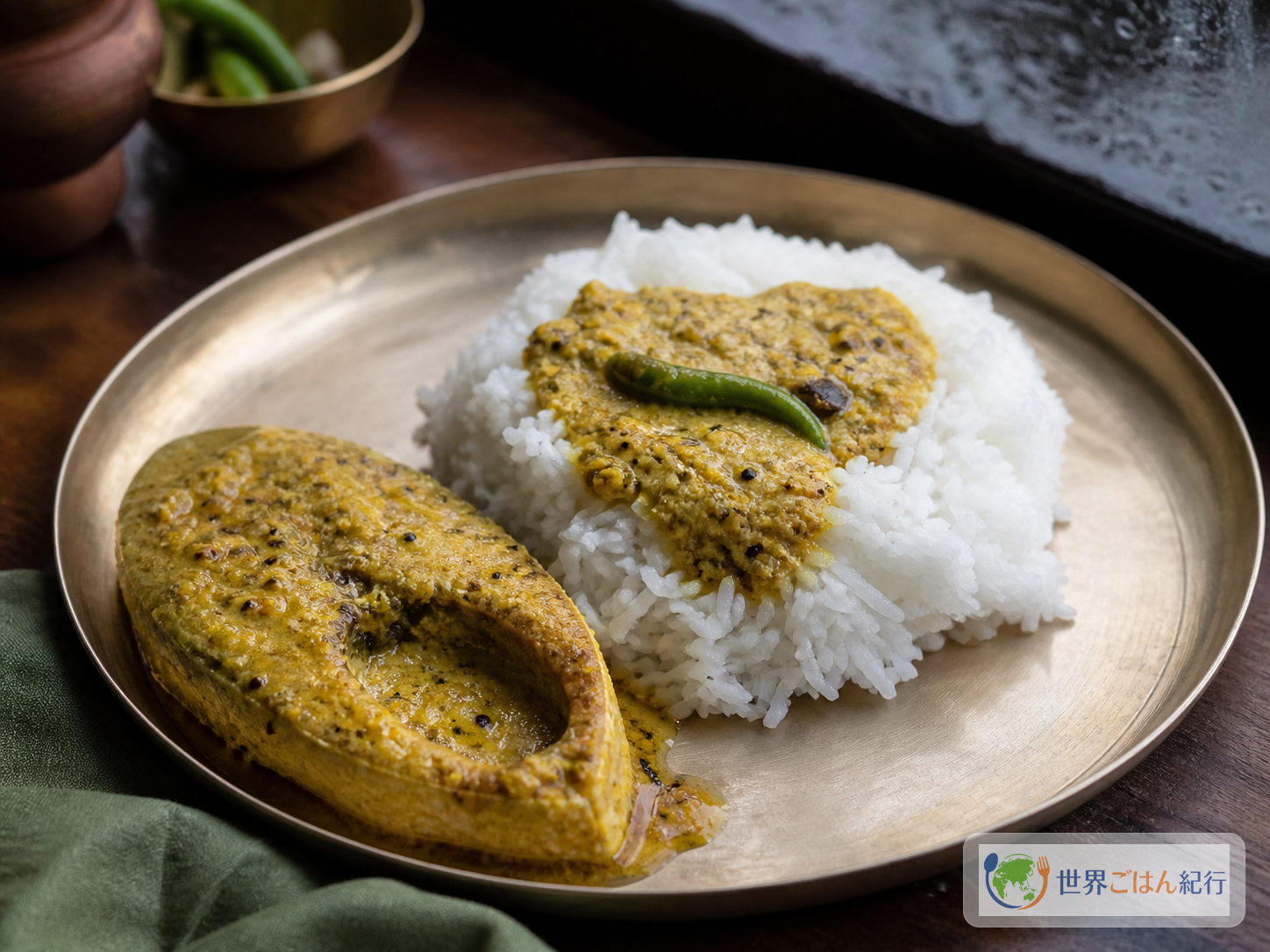
Warm mustard oil in a shallow pan and the sharp aroma that goes straight up the nose comes first. Drop in black nigella seeds and tiny pops crackle over the oil, with the green smell of fresh chilies layered on top. Last you set in the silver-skinned hilsa steaks. By the time the yellow sauce wraps the surface of the flesh and runs onto white rice, the seasoning has become the star of what is, after all, a fish dish.
Shorshe ilish (Sorshe Ilish / Shorshe Ilish) is a Bengali fish dish in which hilsa (ilish) is cooked in mustard paste and mustard oil. The fat of the hilsa meets the strong heat of black mustard, the rounder aroma of yellow mustard and green chilies. It sometimes uses ingredients similar to ilish bhapa, which is steamed, or to paturi, which is steamed wrapped in leaves, but this dish puts liquid in a shallow pan and brings the fish and sauce to the table together.
Hilsa has many fine bones, and if you flake it into big pieces the way you would a Japanese fish fillet, it becomes hard to eat. Keep three things: don't turn the fish, spoon the sauce over from above, and stop when the flesh is no longer translucent. Do that and the outline of the dish holds even with frozen hilsa.
Why hilsa became a special fish
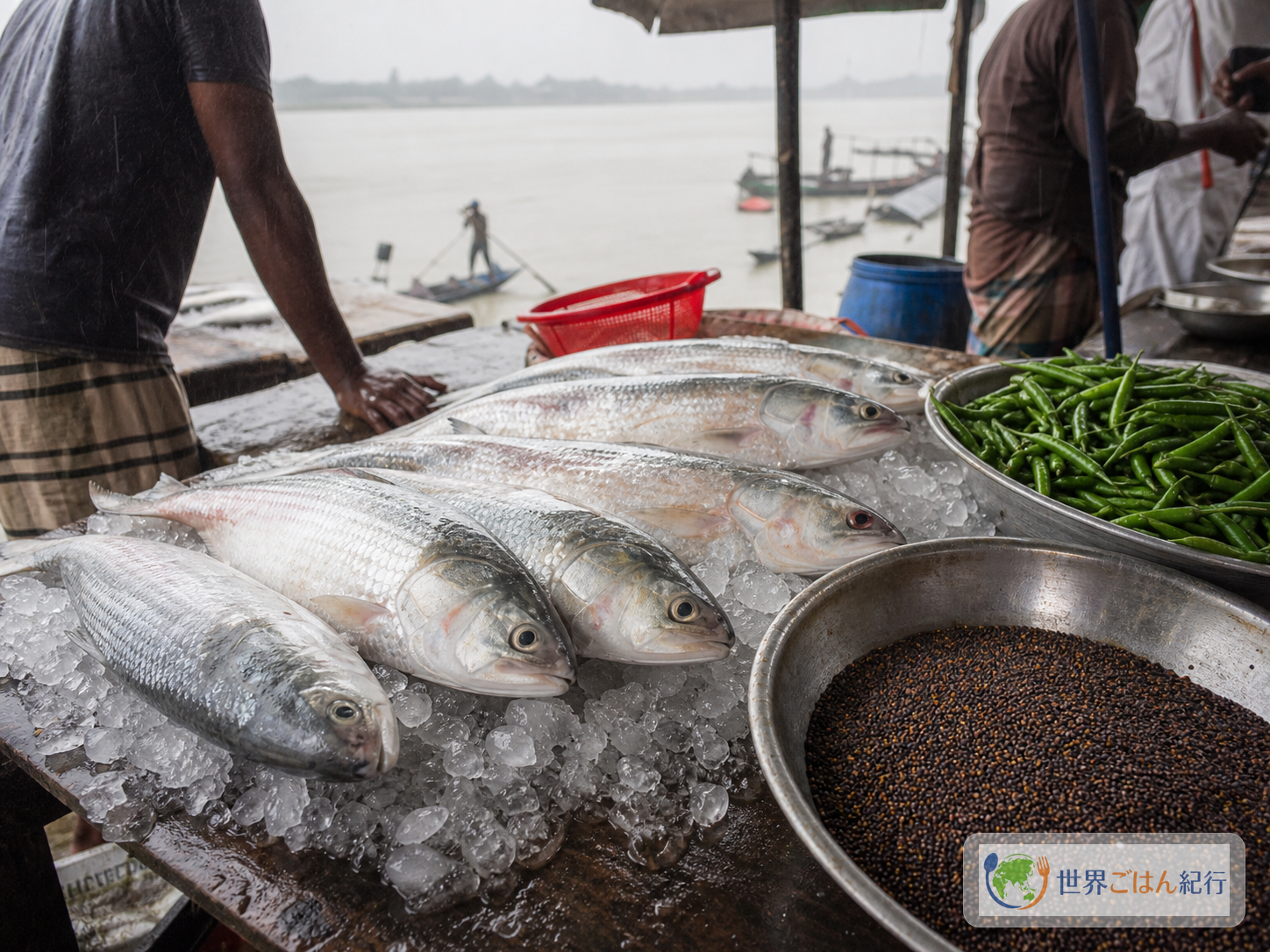
Hilsa's scientific name is Tenualosa ilisha, and in Bangladesh it is treated as the national fish. It grows at sea and swims upriver from the estuary into rivers such as the Padma, Jamuna, Meghna and Karnaphuli. Because there is a season when it runs upriver to spawn and a time when it stores fat at sea and in the estuary, talk of the fish connects to the names of rivers, seasons, market prices and family occasions.
In the Bangladesh Tourism Board's introduction too, hilsa is linked to the deltas of the Padma, Meghna and Jamuna rivers, and it explains that fish from the Padma are especially prized. There is no single way to cook it: grilled, fried, steamed, smoked. This dish, simmered in mustard sauce, can also be read as one way of savoring the fish in small portions on special days, and then the strong aroma and the many bones make sense.
At the Bengali table, the pairing of fish and rice is at the center of the meal. Hilsa is sometimes chosen for the Bengali New Year table, and between Bangladesh and India's West Bengal there is also a regional memory of preferring the Padma's hilsa or the fish of the Ganges system. Even for the same "hilsa and mustard," households differ in whether they fry the fish before simmering, steam it from the start, or make the sauce thick. It is closer to reality to see the origin of shorshe ilish not as the signature of one restaurant but as part of the stream of home cooking that combines Bengali rice-eating, river fish and mustard. The regional differences show not only in the river system the fish comes from, but in whether the steaks are seared first, whether the mustard paste is cooked by steam, and how much sauce is left at the table.
Hilsa in recent years is the subject not only of food culture but of fisheries management. WorldFish reports how, after stocks fell in the late 1990s through catches of juveniles and the decline of habitat, recovery has been pursued by combining closed seasons, protected areas and compensation for fishers. When buying, don't choose fish that are too small, and look for products that state their origin and when they were caught.
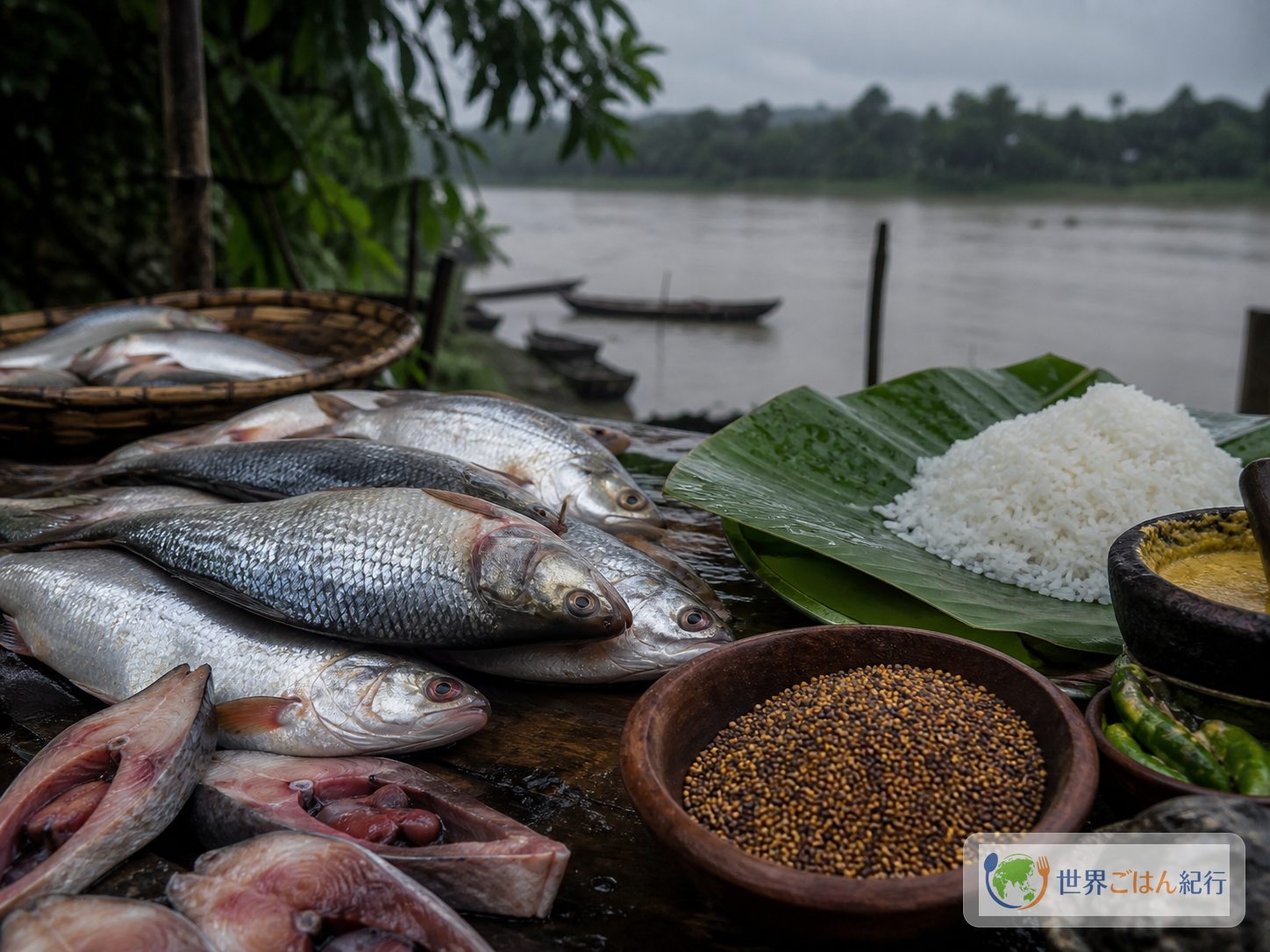
Ilish, Hilsa and Hilsha are spellings for the same fish. In Bengali it is written ইলিশ. In Japanese, ilish, ilishi and hilsa are mixed depending on the source or shop, so when searching it helps to use "Hilsa," "Ilish" and "Shorshe Ilish" together.
Ingredients (serves 4)
Use a shallow frying pan about 24 cm (9 1/2 in) across, or a heavy wide-bottomed pot. You need room to set the steaks without stacking, and a shape in which it is easy to spoon up the sauce suits better than a deep pot.
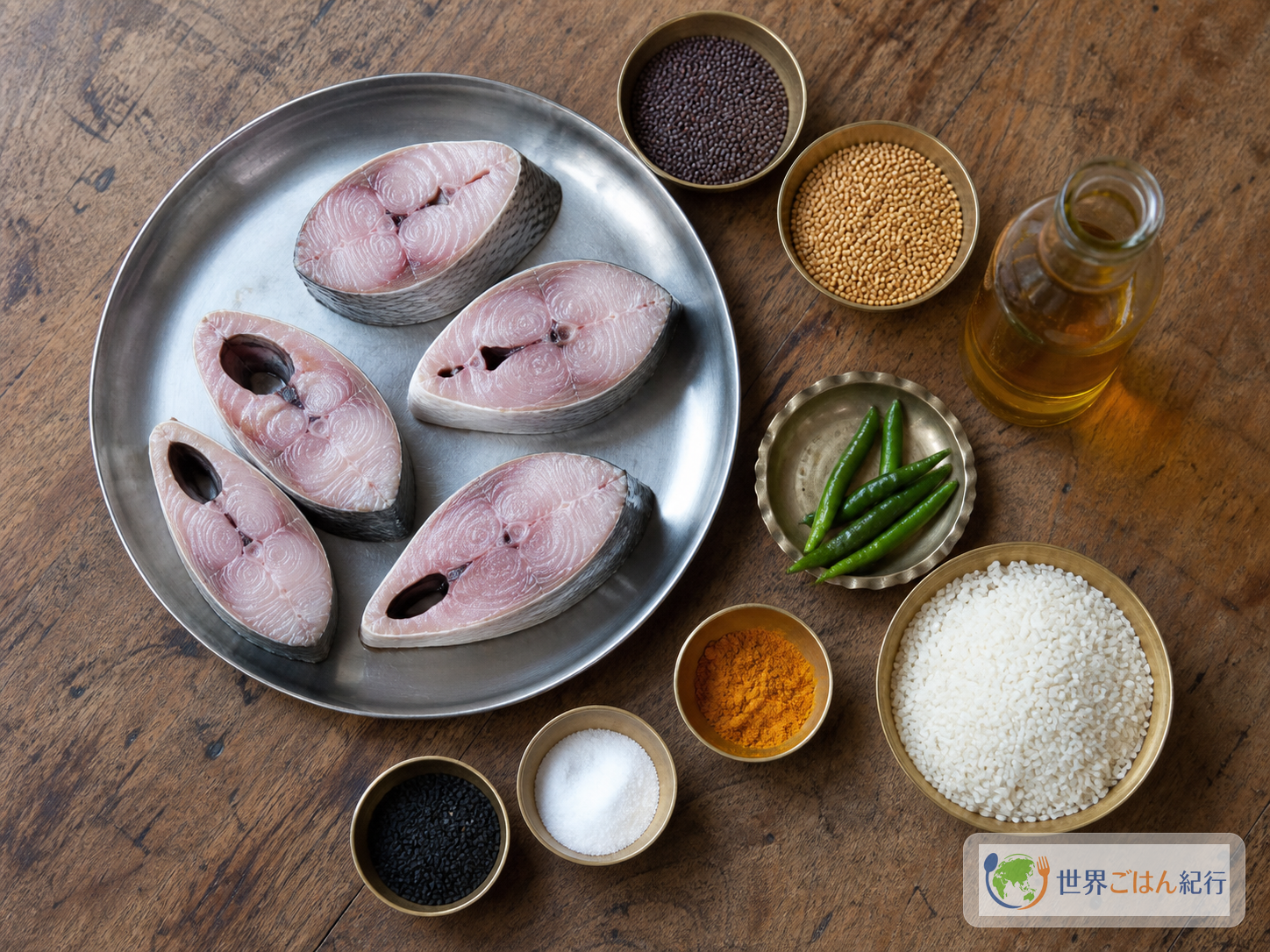
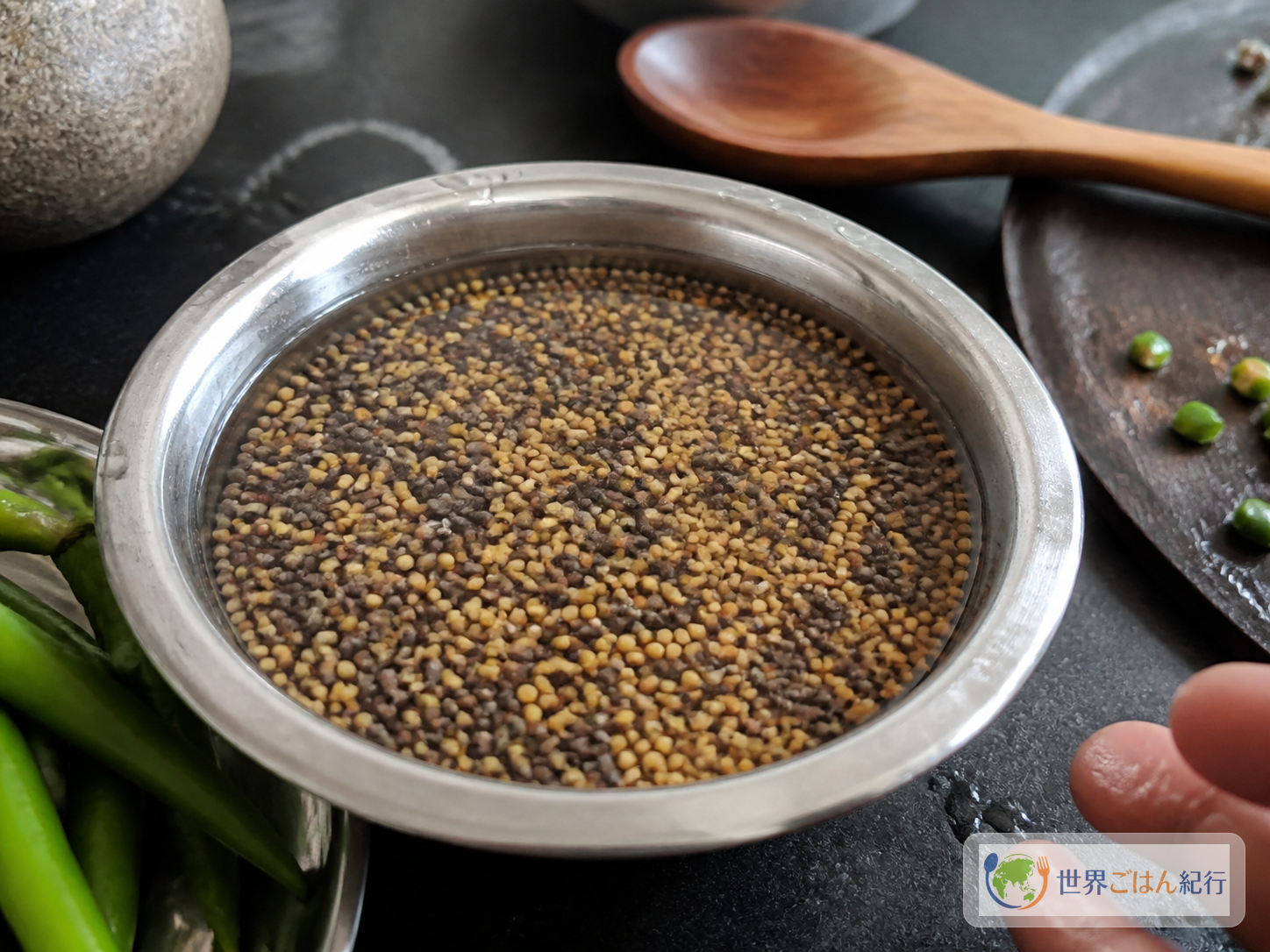
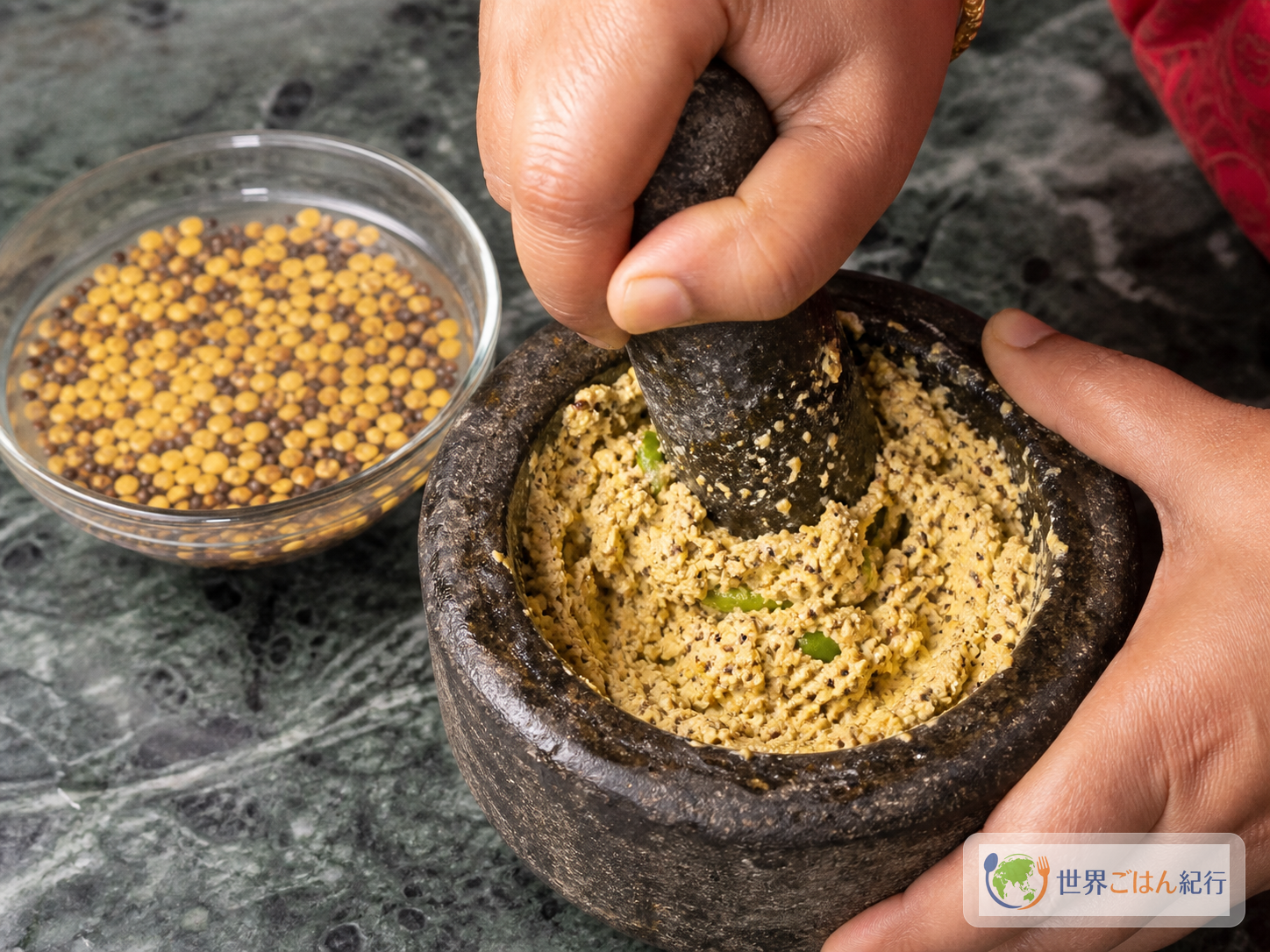
Black mustard has strong heat, and yellow mustard adds thickness to the aroma. Soaking both in water and then crushing them keeps the aroma of the seeds better than using only powdered mustard. Even if you dislike heat, reducing the black mustard and using yellow alone changes the direction of the dish, so it is easier to adjust if you first try a split of 20 g black and 20 g yellow.
For mustard oil, choose an edible product that is meant for cooking. What to check in this dish is three things: the edible-use label, the volume and the country of origin. A 1 L bottle is easy to use for those who will cook this several times, but too much for someone making it once; cooking in rice bran oil and dissolving a little prepared mustard only at the finish produces less waste.
If you are bringing the fish, mustard and oil together at once, you lose less of the strength of the aroma, but for people not used to hilsa bones and mustard heat it can feel heavy. If children or people who find it hard to avoid fish bones will be at the first table, make part of the steaks with mackerel or check the section on handling bones below first.
Method: layering mustard heat onto the fish
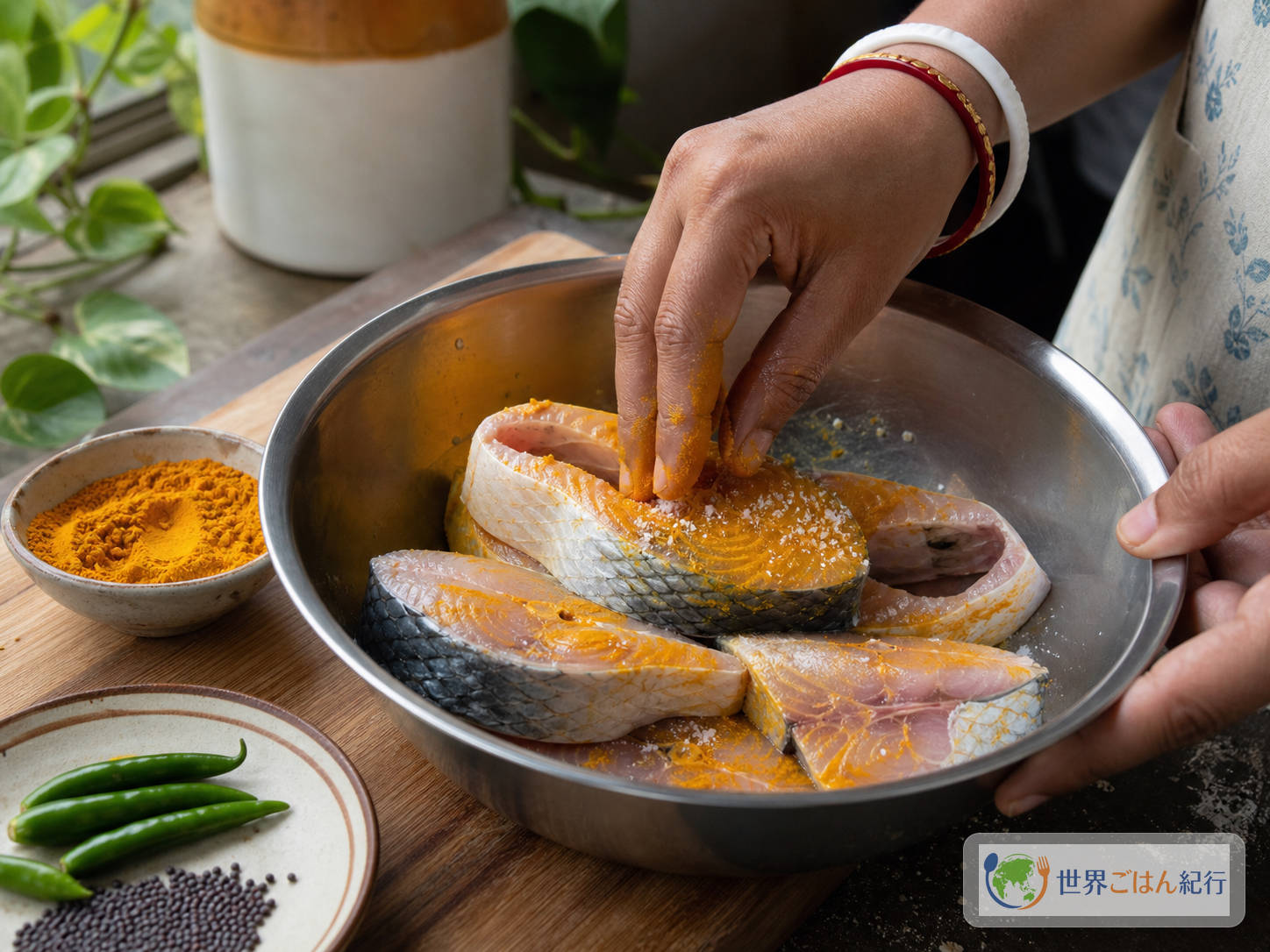
Thaw the hilsa slowly in the refrigerator and press off surface moisture with paper towels. Washing it in water makes the surface break easily and makes the oil splatter, so if it isn't dirty, use it without washing.
Do not serve this to anyone allergic to mustard or fish. For mustard oil, use a product sold for eating, not one sold for fragrance or external use. At the step of adding water to hot oil, always turn off the heat and let the pan cool a little, then pour the water in small amounts from the side of the pan.
Handling a bony fish in a home kitchen
Hilsa's fine bones don't disappear even with stronger heat. Rather than breaking the cooked steak into big pieces with chopsticks, separate the flesh along the backbone on the plate and combine it with rice while setting aside any bones you find. It is a fish where the time spent looking for bones is part of the dish, so it suits a table where you mix the sauce into the rice little by little, more than a hurried lunch.
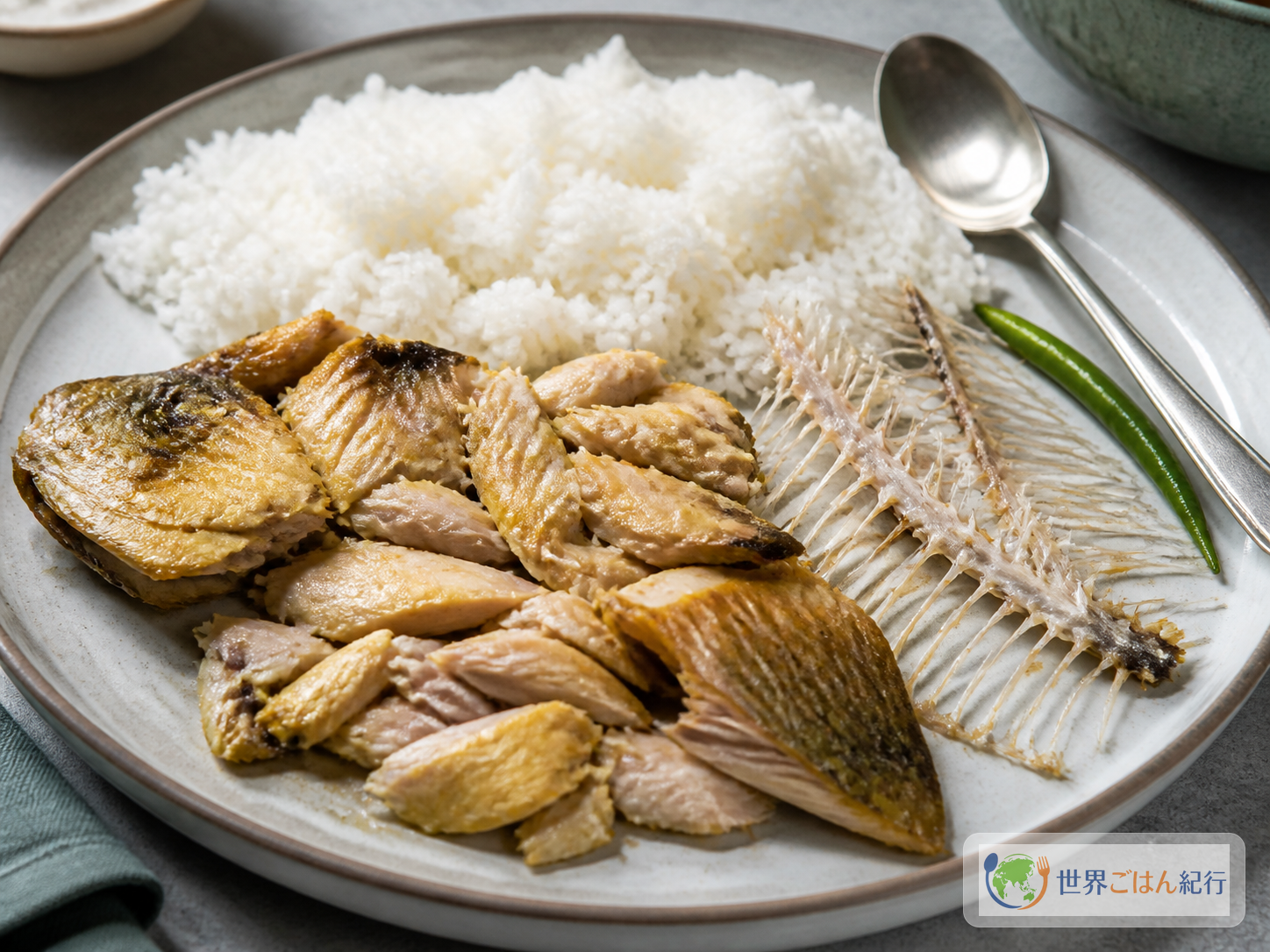
When you can't find hilsa, think of the order by fat and thickness of flesh.
| Fish | Closeness to the dish | Adjusting the cooking |
|---|---|---|
| Frozen hilsa | Closest in fat, aroma and many bones | Thaw in the refrigerator, press off moisture and follow the recipe |
| Mackerel | Oily and easy to buy in Japan | Reduce the mustard oil to 2 tbsp and shorten the low simmer to 5–6 minutes |
| Herring | Has fat and fine bones, suits rice | If the flesh is thin, check at 5 minutes of simmering |
| Spanish mackerel (sawara) | Few bones and easy to eat | The fat is lighter, so reduce the sauce longer by about 1 tbsp's worth |
Even when made with mackerel or herring, describe it as "mackerel in shorshe style" rather than keeping the name as a hilsa dish, and the difference in taste is conveyed. Switch to a white fish and only the heat of mustard comes forward easily; choosing a fatty fish keeps the relationship between sauce and rice.
Rescuing a stumble
| State | Likely cause | How to recover |
|---|---|---|
| The mustard is bitter and sharp | Crushed without soaking, or cooked the paste over high heat | Add 2 tbsp of lukewarm water and cook 2 minutes over low heat. Burnt bitterness can't be reversed, so start over |
| The sauce is watery | Not reduced before the fish went in | Lift the fish gently onto a plate and reduce only the sauce for 2–3 minutes over medium heat, then return it |
| The fish breaks | Turned during the simmer, boiling too hard | Don't turn it; spoon the sauce over from above. Lower the heat a notch next time |
| The aroma is too strong | Used a lot of finishing oil too | Serve more rice, and omit the finishing oil next time. Replacing it all with rice bran oil gives a different flavor |
If you will crush mustard seeds often, a small spice grinder is worth having, but if you are making this once, or you own a mortar, chopping the seeds lightly with a knife and moving them to the mortar is enough, so you can proceed without buying one.
With white rice, the strength of the sauce is set
Shorshe ilish is better with yellow sauce moved little by little onto white rice than tasted from a small dish by itself; that evens out the strength of flavor. Mound rice in the center of the plate, set the fish beside it, and at first spoon only 1 tbsp of sauce over the rice. If the mustard heat is strong, add more rice; if the fat is heavy, set the green chilies aside. Catching it with the amount of rice is more natural than adding water to dilute the seasoning.
For a flow typical of Bangladeshi home cooking, add a small portion of bhorta beside the fish. The smoky aroma of begun bhorta (in Japanese), roasted eggplant, and the acidity of green mango in aam-er achar (in Japanese) change the look of the plate without adding more fish. Even with the same hilsa, ilish bhuna (in Japanese), cooked down with onion and tomato, builds its sauce differently, so eating them side by side shows why mustard is made the star.
FAQ and storage guide
Q. Where can I find hilsa?
Look for the spellings Hilsa, Ilish and Hilsha at South Asian grocers and import grocers that carry frozen fish. If you can't find it at a store, make it with oily mackerel and keep the mustard oil and the step of crushing the seeds. When you buy fish, freeze it as the label says, and thaw only what you will use in the refrigerator.
Q. Can I substitute powdered mustard or tube mustard?
With unsweetened, unsalted dry mustard powder, you can try 3 tbsp in place of 20 g black mustard and 20 g yellow mustard. Add lukewarm water a little at a time and rest it 5 minutes before using. Japanese tube karashi often contains vinegar, salt and oil, which changes the saltiness and acidity of the sauce, so it isn't suited to a one-for-one swap.
Q. Can I replace all the mustard oil with rice bran oil?
You can, but the green, pungent aroma of mustard oil won't remain. If you want to see your family's reaction the first time, a realistic way is to use 2 tbsp of rice bran oil for cooking and 1 tbsp of mustard oil, leaving out the finishing oil. If it still lacks aroma, increase the proportion of mustard oil next time.
Q. How long does it keep after cooking?
After the meal, don't leave it at room temperature for a long time; move the fish and sauce to a shallow container and refrigerate. A bony fish breaks apart when reheated, so aim to finish it by the next day. To reheat, move it to a small pot, add 1 tbsp of water and warm over low heat until hot through the center. Aim for 74°C (165°F) at the center of reheated fish, and don't freeze and thaw repeatedly.
Q. Can I serve it to children or people who dislike bones?
Because it is not a dish from which fine bones are completely removed, serving hilsa steaks as they are to anyone who finds it hard to avoid bones isn't suitable. Swapping in boneless mackerel or Spanish mackerel and portioning the flesh without breaking it before serving is safer. Adults too should first separate the flesh along the backbone and check for bones before mixing it with rice.
Sources
- Hilsa - Banglapedia - Checked hilsa's scientific name, migration route, spawning season and its status as Bangladesh's national fish. Accessed and checked: 19 August 2026.
- Hilsa/Ilish Curry - Bangladesh Tourism Board - Checked the production areas such as the Padma River and the cooking method using mustard oil and mustard seeds. Accessed and checked: 19 August 2026.
- How Bangladesh revived its hilsa fishery: Community co-management and 86% income rise - WorldFish - Checked the cultural and economic standing of the hilsa fishery and stock recovery efforts. Accessed and checked: 19 August 2026.
- Ilish Bhapa - Bong Eats - Checked the mustard paste and steaming of ilish bhapa to sort out the difference from the pan-simmered dish in this article. Accessed and checked: 19 August 2026.
- Sorshe Ilish - ProperMasala - Used to cross-check the proportions and steps using black and yellow mustard, green chilies and mustard oil. Accessed and checked: 19 August 2026.
- A Bengali New Year Feast - Saveur - Checked the food culture of hilsa and rice, the Bengali New Year and table contexts such as paturi. Accessed and checked: 19 August 2026.
- Cultural icon - Down To Earth - Checked the regional differences around the Padma and Ganges systems and the background in which hilsa is tied to family and seasonal memory. Accessed and checked: 19 August 2026.
- Maacher Jhol, Bengali-Style Fish Stew - Saveur - Checked how aroma is built with mustard oil and nigella in Bengali fish dishes. Accessed and checked: 19 August 2026.
- Cook to a Safe Minimum Internal Temperature - FoodSafety.gov - Checked the standard of cooking fish to 63°C (145°F) or until the flesh is opaque and flakes easily, and the standard for reheating leftovers. Accessed and checked: 19 August 2026.


