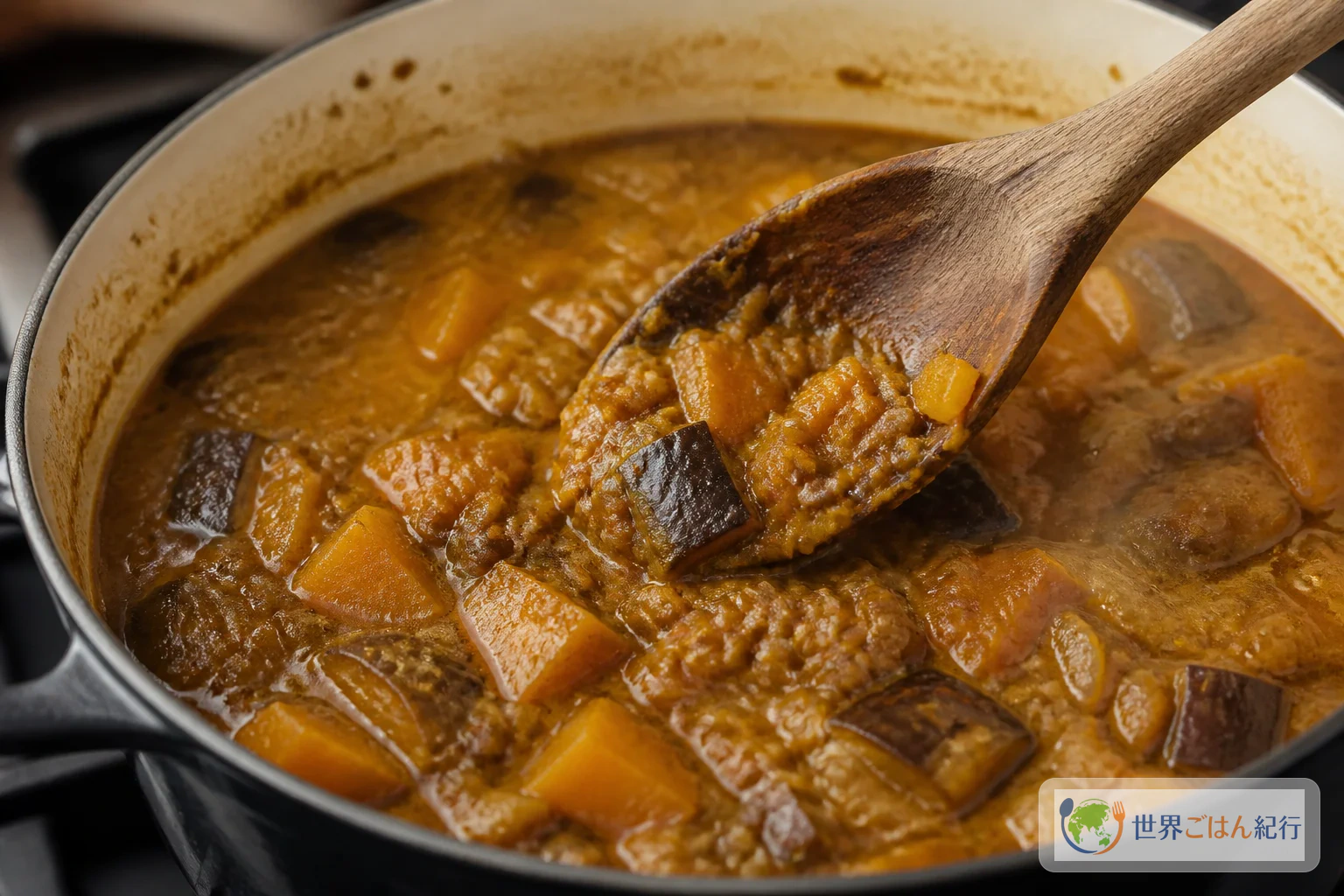
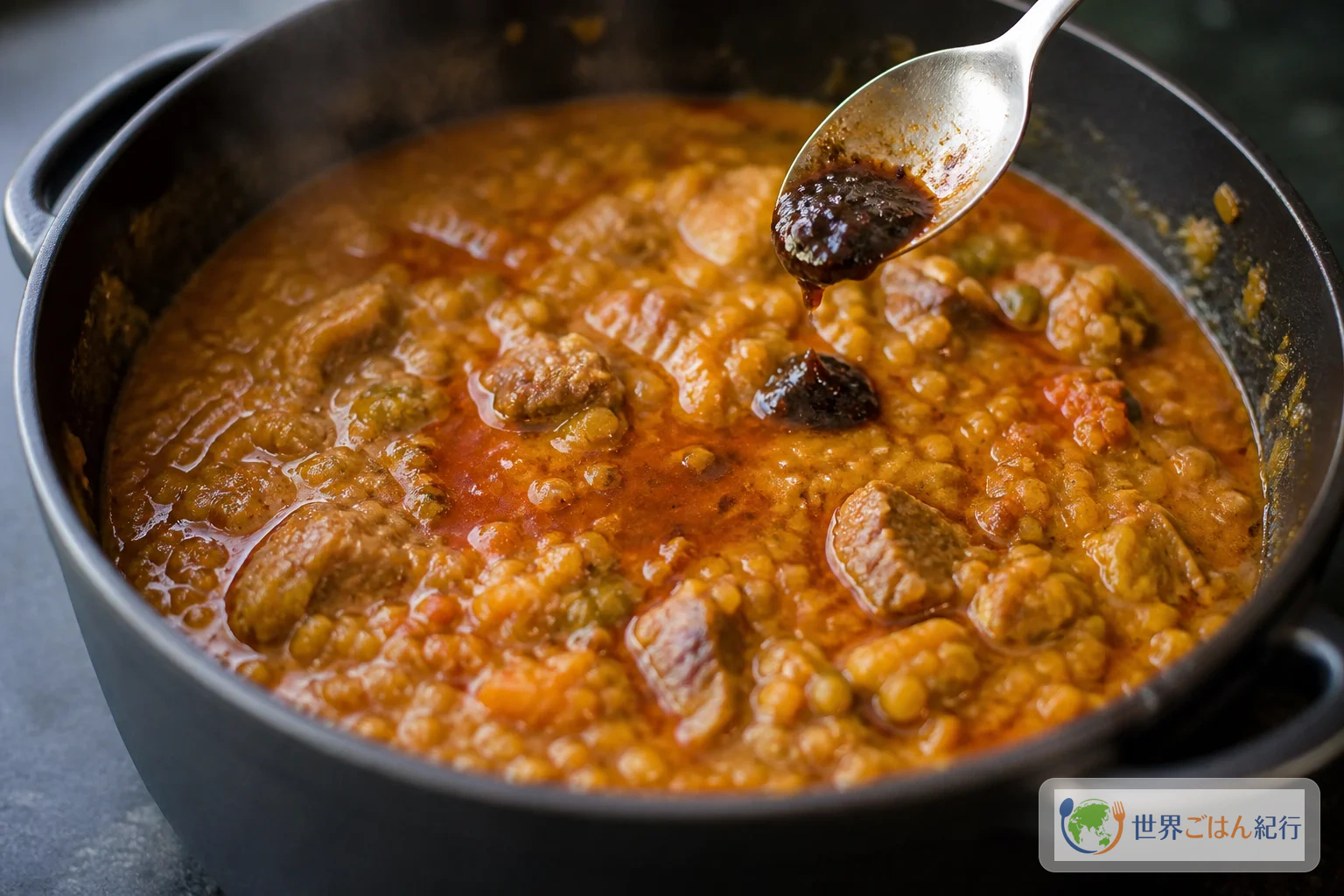
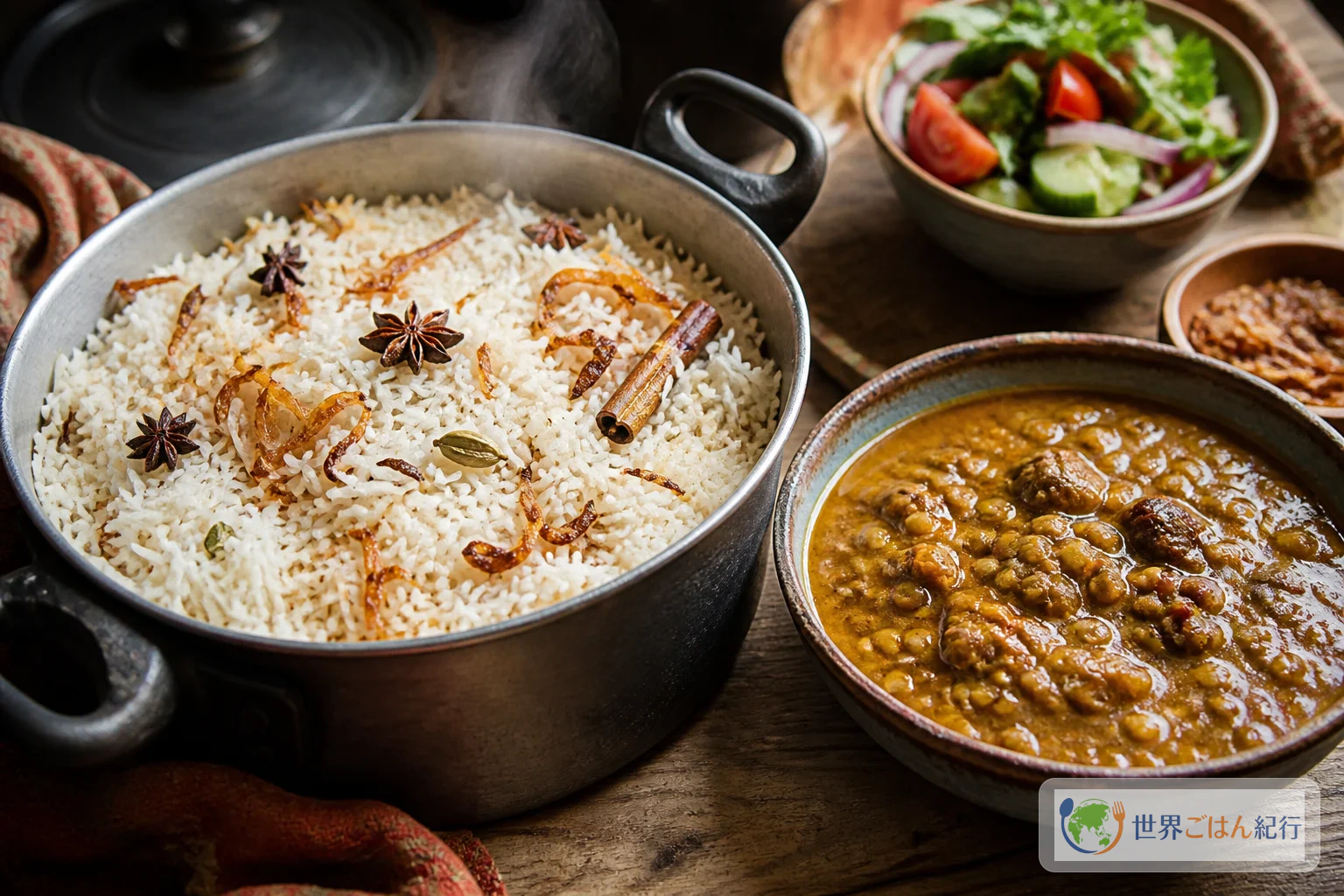
The lentils fall apart and merge with the lamb broth
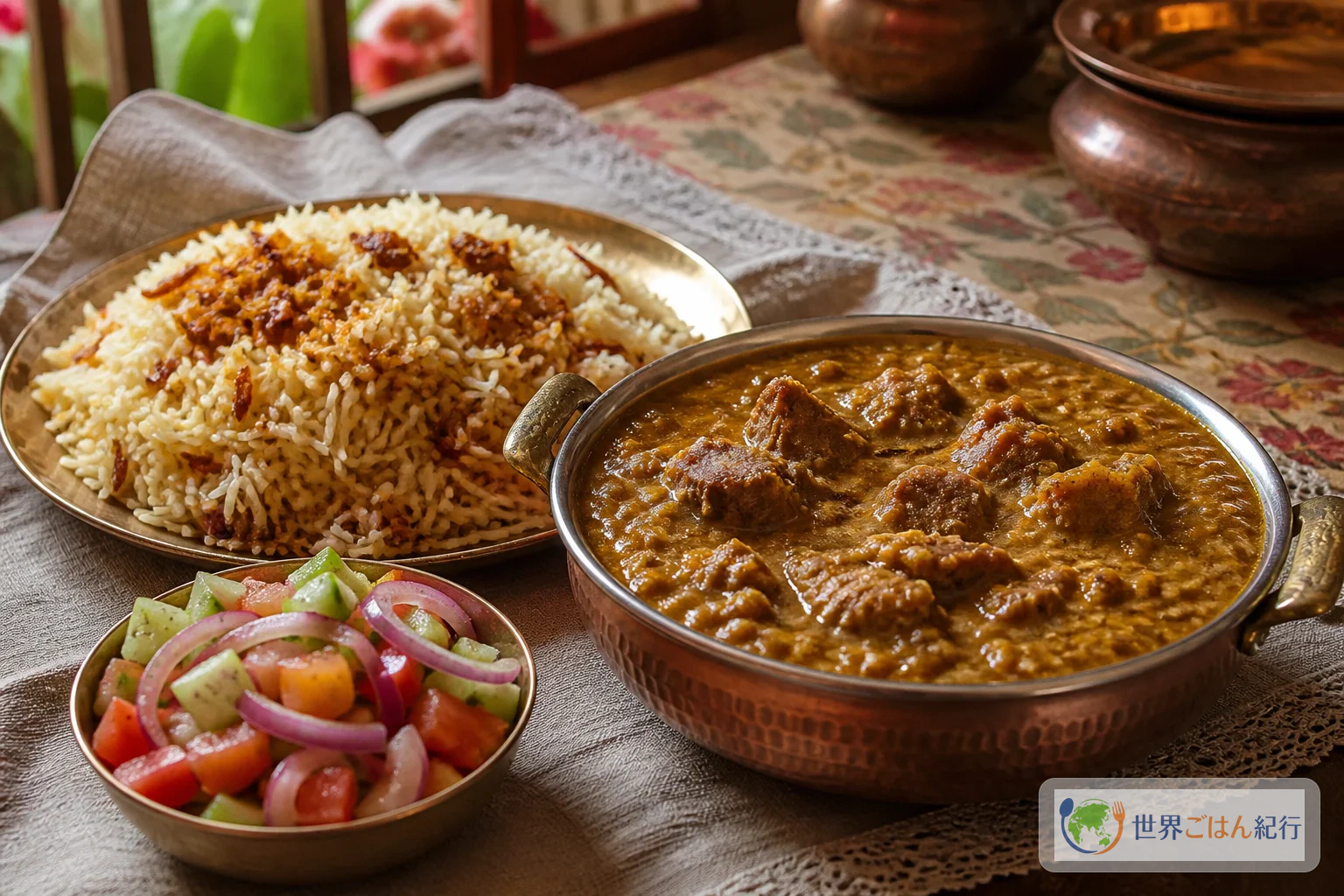
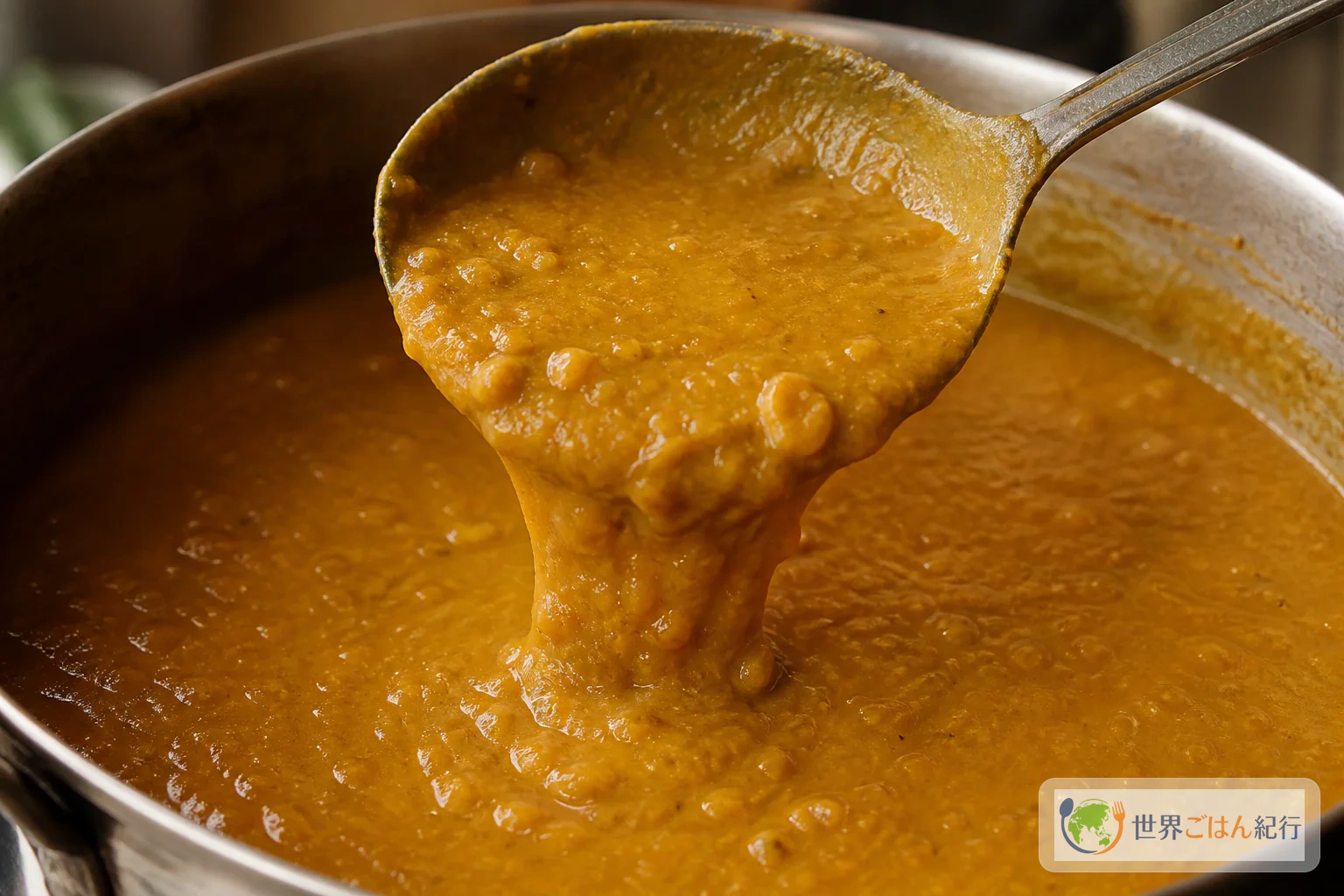
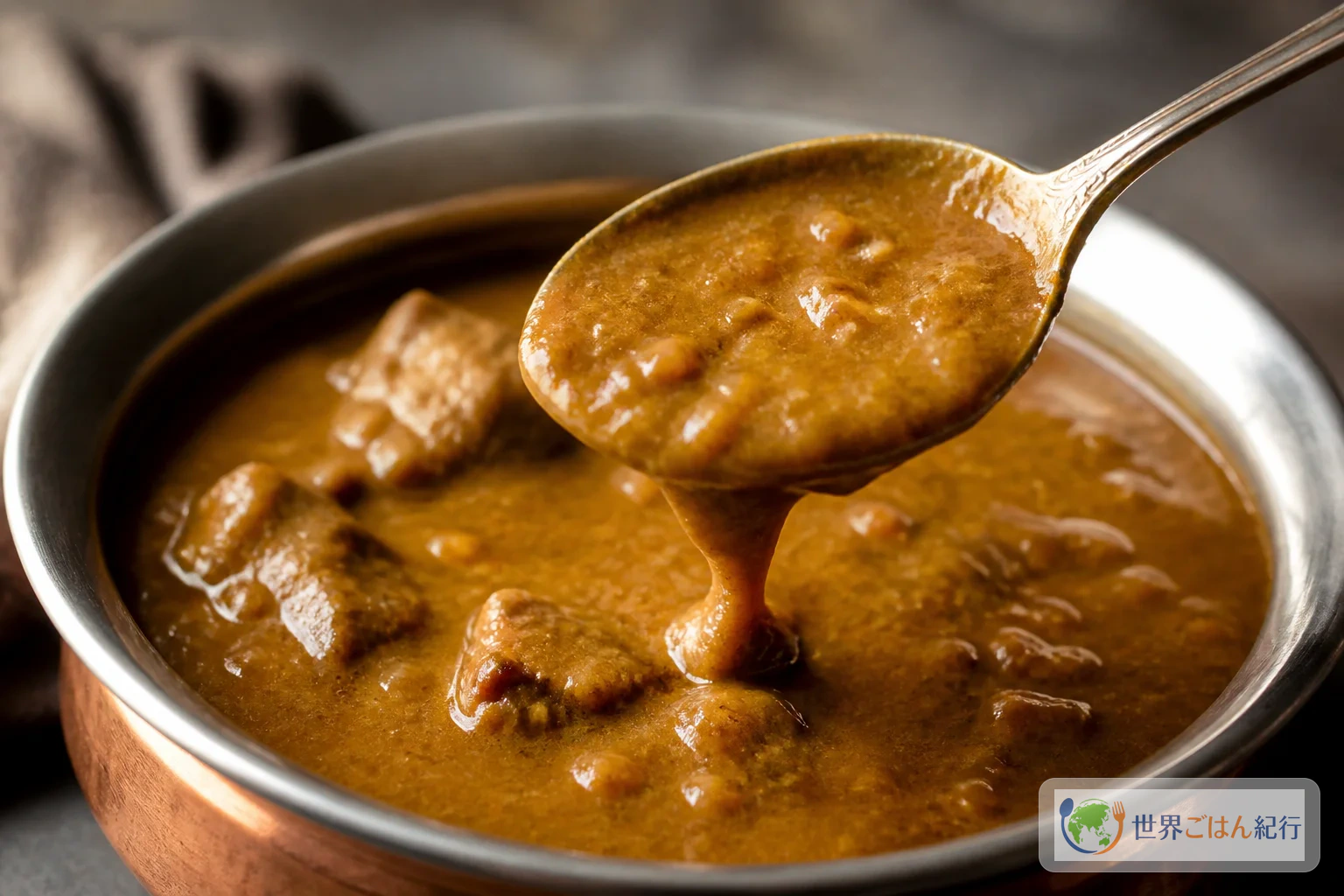
Lift the lid and you find the sweet scent of pumpkin, the earthiness of dry-roasted cumin and the lamb cooking liquid all layered together. Run a wooden spoon along the bottom and the lentils and vegetables have almost no grain left, thick enough to run in a heavy ribbon from the spoon. Beside it go basmati rice colored with sugar caramelized in fat, and a salad that keeps the sharpness of the onion.
Dhansak is a Parsi dish in which several lentils and vegetables are cooked and mashed, then joined with lamb or chicken. The Parsis are a Zoroastrian community who migrated from Iran to Gujarat in western India, and sources describe the dish as having grown within the food culture of Gujarat and Mumbai. [1][4] Unlike a Japanese curry, where each piece stays separate, the character of this dish lies in drawing lentils, pumpkin, eggplant, herbs and the meat's broth into one sauce.
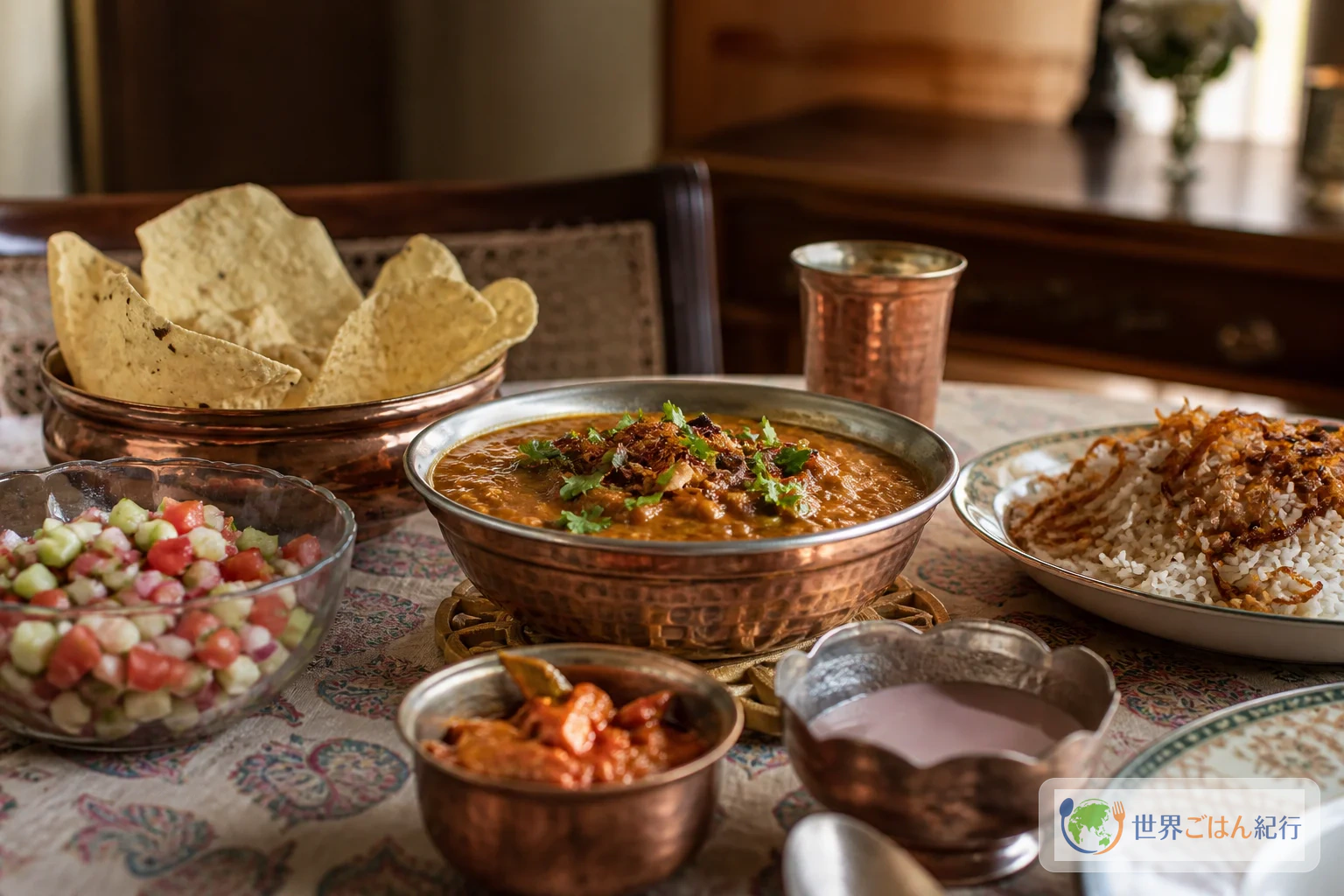
Sources on home cooking describe a Sunday lunch table with lamb dhansak, slightly sweet colored rice, and a salad of cucumber and onion. [1][2][4] But the kind of meat, the number of lentils and the mix of vegetables differ from household to household. In Parsi cooking, lamb and goat tend to be central, yet vegetable-only dhansak is also described, so it is not a dish that fails without meat. [1][2][3]
This recipe uses easy-to-find lamb shoulder, and builds body with four kinds of split lentils, pumpkin, eggplant and spinach. If you have no toor dal, yellow split peas or red lentils can replace it, but if every lentil is the same kind they break down at too even a pace. Combining lentils that collapse quickly with lentils that keep their shape is the shorter road to dhansak's richness, more than making it uniform with one lentil.
Origins left in the Sunday pot, and regional differences
The "dhan" in dhansak is sometimes explained as lentils and "sak" as vegetables, but home-cooking sources do not fix a single etymology. What is certain is the structure: lentils and vegetables are not served on separate plates but cooked down and combined with the meat's broth. Parsi cooking in western India formed where Iran-derived food culture, Gujarat's sweet-sour seasoning and Mumbai's urban tables overlapped. [1][2][4]
Dhansak tastes sweet, sour and a little bitter, not because a lot of sugar goes in. Pumpkin and onion make the sweetness, tomato and tamarind set the sourness, fenugreek leaves a slight bitterness, and coriander and mint lighten the aftertaste. It is designed not to fix the taste midway through the cooking, but to adjust sourness and sweetness a little at a time at the end.
Regional differences show in the number of ingredients and the form of the finish. Recipes presented as Mumbai home cooking include several lentils, pumpkin, eggplant, leafy vegetables, herbs and lamb. [2][4] Vegetarian versions, on the other hand, make the lentil and vegetable stew smooth and build the outline with sourness and spice in place of meat. [3][6] Served with a festive rice dish, it is sometimes introduced not as dhansak itself but as a differently named dish, a lentil and vegetable masala paired with the rice. [2]
So even if you switch lamb for chicken at home, it is more practical to decide which flavor to keep than to argue over the right name. With lamb, sourness cuts the fat and gaminess of the broth; with chicken, the sweetness of lentils and pumpkin comes forward. Without meat, the sweetness of vegetables and the bitterness of fenugreek are the center. Making the same pot, the center of gravity of the taste changes depending on the rice and salad you serve with it.
Ingredients (serves 4): four lentils, and the sweet-sour set
This serves 4 with lamb dhansak as the main. Wash the lentils and soak only 30 minutes. If you use more chana dal it cooks later, so on days you can't shorten the soaking, adjust by increasing the red lentils.
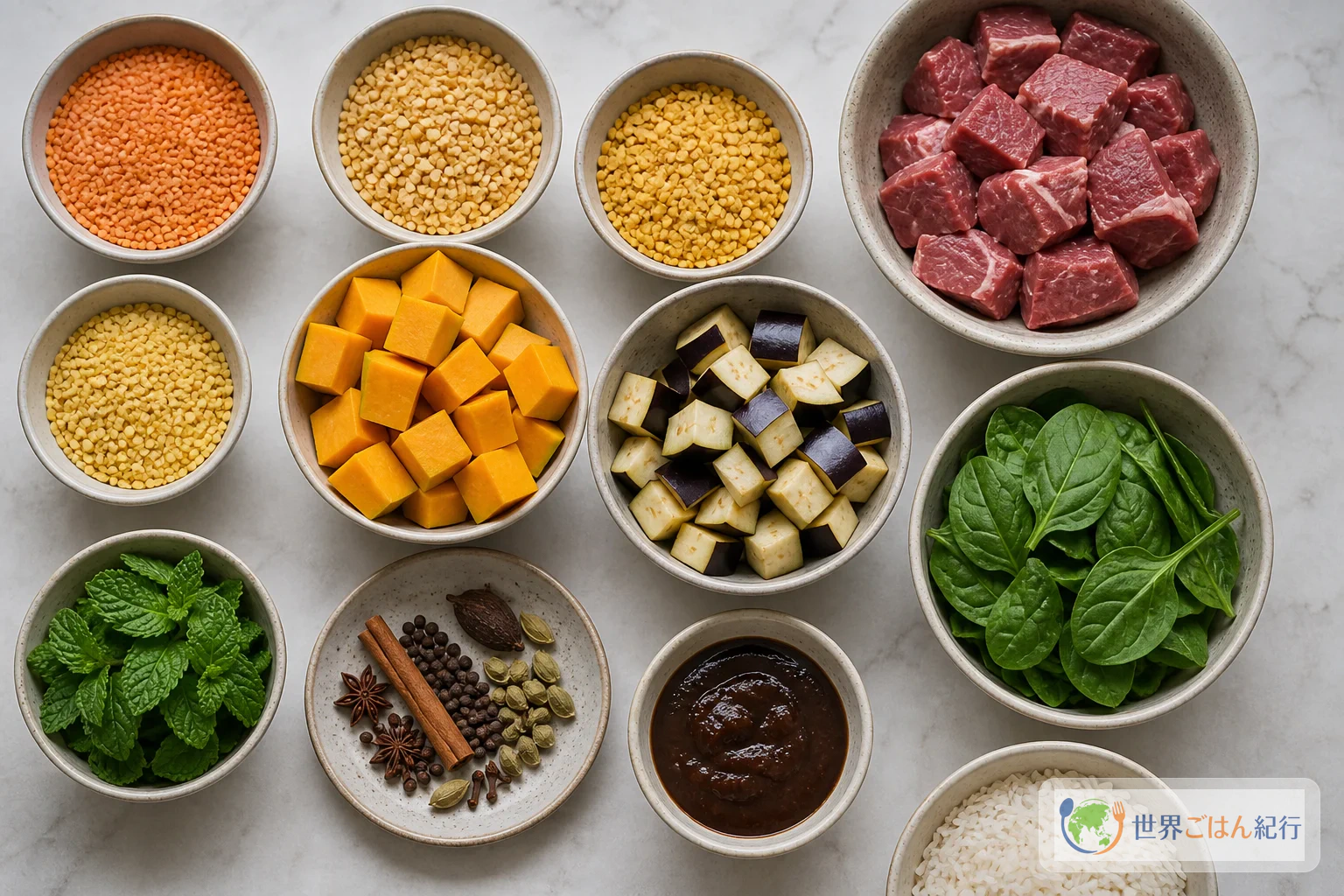
Toor dal, chana dal and mung dal are all "lentils," but differ in hardness and how they break down. If you can't find them at an import grocery, using 100 g red lentils and 80 g yellow split peas to make a total of 180 g keeps the thickness of the pot. In that case check the stew 10 minutes early and add hot water so the bottom doesn't dry.
Fenugreek seeds are only 1 g, so if it is just for this one dish, don't buy them; you can leave them out, and the finish changes a little. If you will go on to cook dhansak, sambar and pickles, choose seeds rather than powder.
The role of sourness can also be replaced with lemon juice. Lemon is bright and direct; tamarind keeps a fruit-like roundness and light astringency, so tamarind is better at holding up against lamb fat. If you are buying for the first time, check on the label whether it is "paste" or "concentrate," and the ingredients and quantity. If you will make it only once, use lemon juice; if you will go on to make dal tadka and other lentil dishes, choose with reuse in mind.
Basmati rice is a rice that separates grain by grain even under a thick lentil sauce. If you use your usual rice, reduce the water by 20–30 ml and don't mix too much. If you don't plan to cook long-grain rice every time, you can try it first with the rice you have, keeping only the step of not scorching the caramel.
Method: break down the lentils, layer the aroma afterward
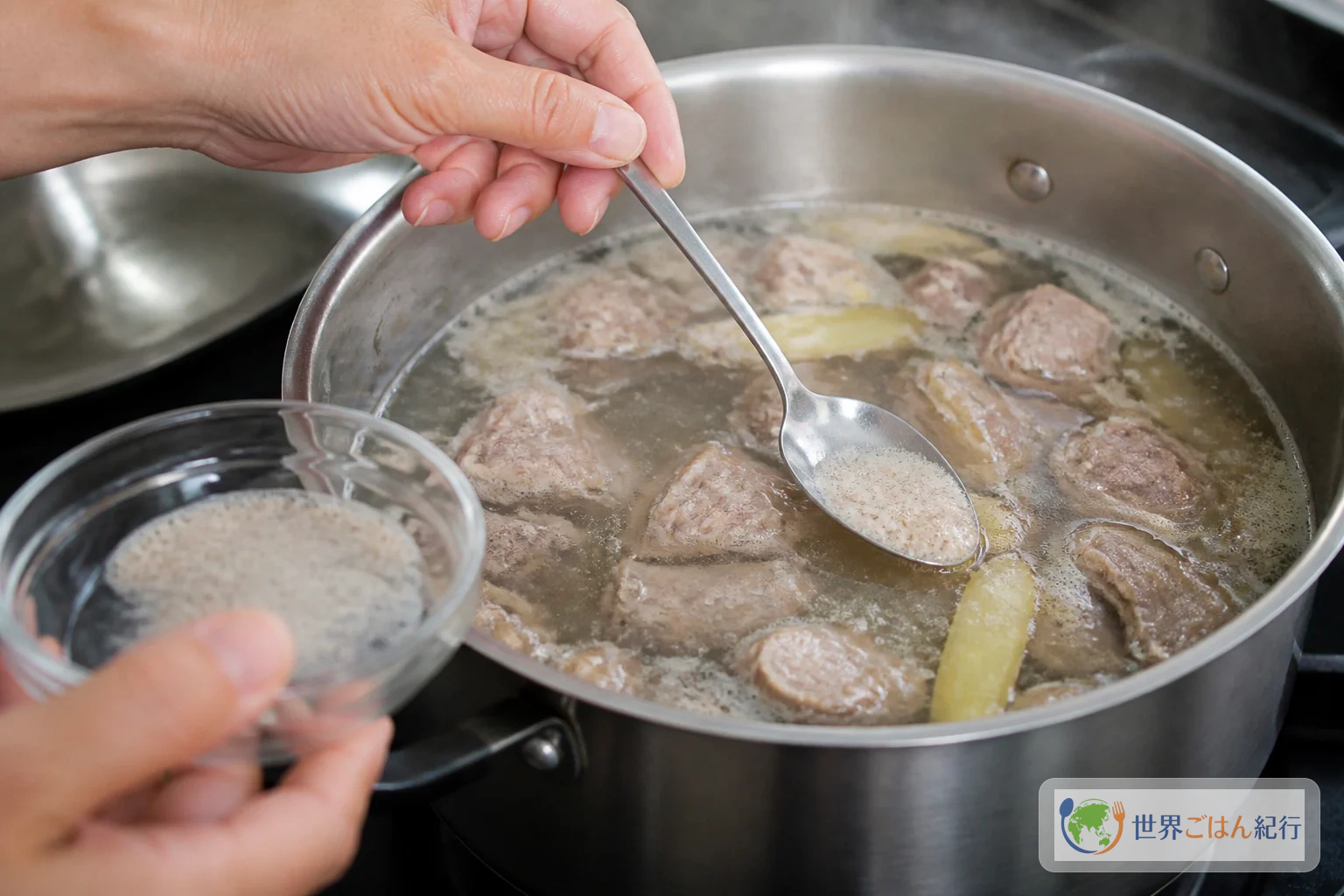
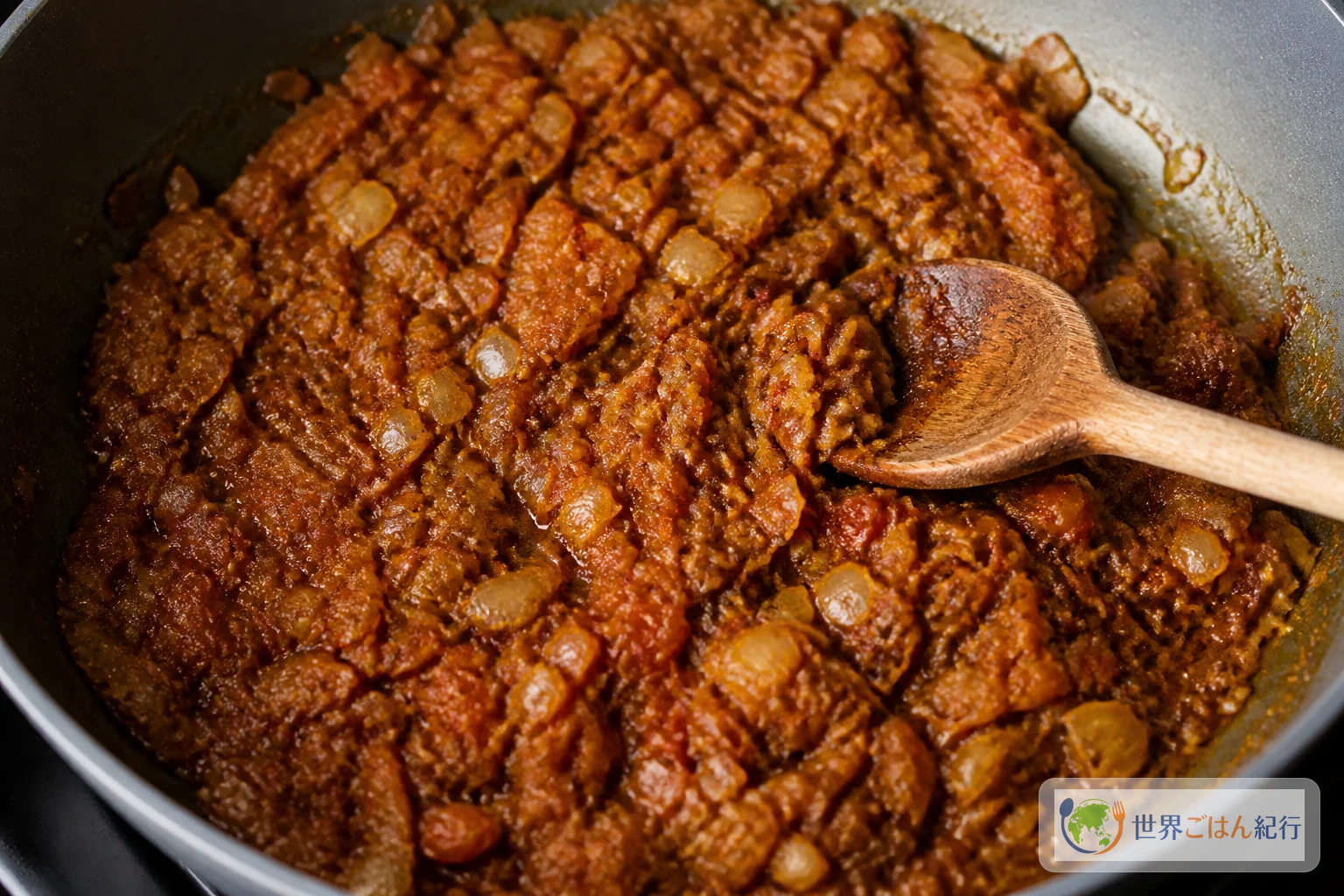
If you finish the lamb, the lentils and vegetables and the rice all at the same time, the meat is still tough while the rice goes cold. Cook the meat first, then break down the lentils and vegetables, and run the masala and rice in parallel. The finished state of dhansak is "thicker than curry, but not as firm as mashed potato."
Fixing the common problems from the state of the pot
Dhansak is a dish where ingredients are cooked down, so you needn't call it a failure because it looks a little different. Separating what can be restored from what is better remade makes it harder to waste a pot.
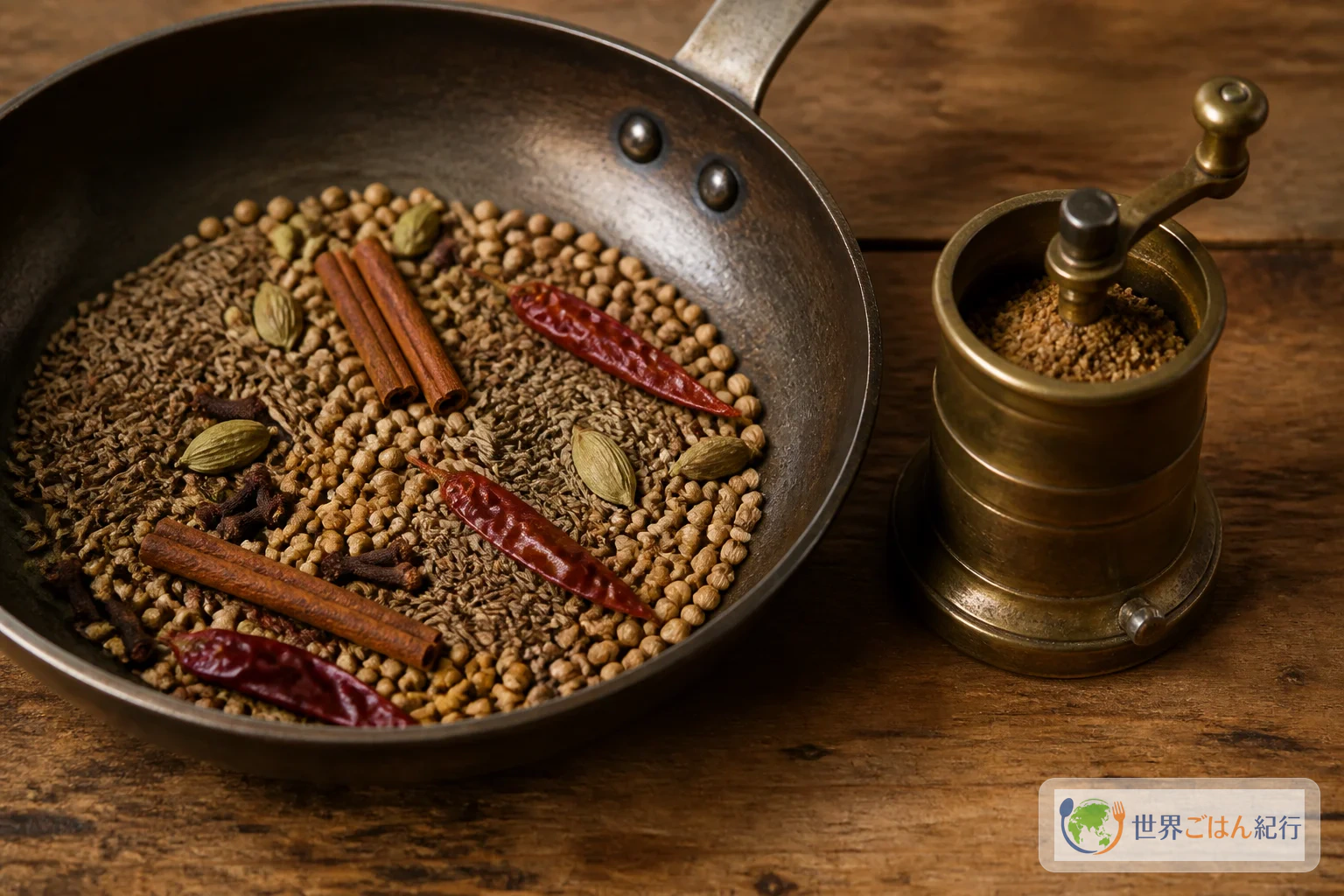
If you already have ground spices, or are making it just once, a mortar or knife can stand in, so don't buy more. If you will coarsely grind whole spices for dhansak and other lentil dishes, check capacity, coarseness adjustment, and how easy the blade and container are to wash.
| State | Cause | How to restore |
|---|---|---|
| Lentil cores remain | Chana dal under-soaked, heat too low | Add 100 ml boiling water, cover and cook 15 more minutes at a time on low. You may cook just the hard grains in a separate pot |
| Sauce is watery | Too much liquid, vegetables watery | Remove the lid and reduce 5–10 minutes over medium-low. If it may scorch, stir more often |
| Sourness sharp | Put in all the tamarind at once | Add 100 g unsalted lentil purée or mashed pumpkin and adjust sugar 2 g at a time |
| Strong bitterness | Fenugreek or caramel scorched | Thin dhansak with 100–150 g unsalted lentils and vegetables. Remake black scorched rice |
| Tough lamb | Boiled hard, not enough liquid | Add boiling water, return to low heat and simmer until a skewer goes through. Don't mix tough meat into the purée |
| Too salty | Salt from the meat's pre-simmer, the broth and the finish added up | Add unsalted lentil and vegetable purée and increase acidity to restore the outline |
If you make it with chicken, simmering it from the start for a long time as with lamb makes the meat dry. Add chicken thighs after making the lentil purée and simmer 12–15 minutes over low heat. Confirm with a thermometer that the thickest part reaches 74 °C, and reheat already-cooked leftovers to 74 °C at the center as well. [7]
What to change in a home kitchen, and what to keep
You can make the frame of dhansak without gathering all the local ingredients. But not every swap gives the same taste. The following five combinations are for choosing after knowing what will change.
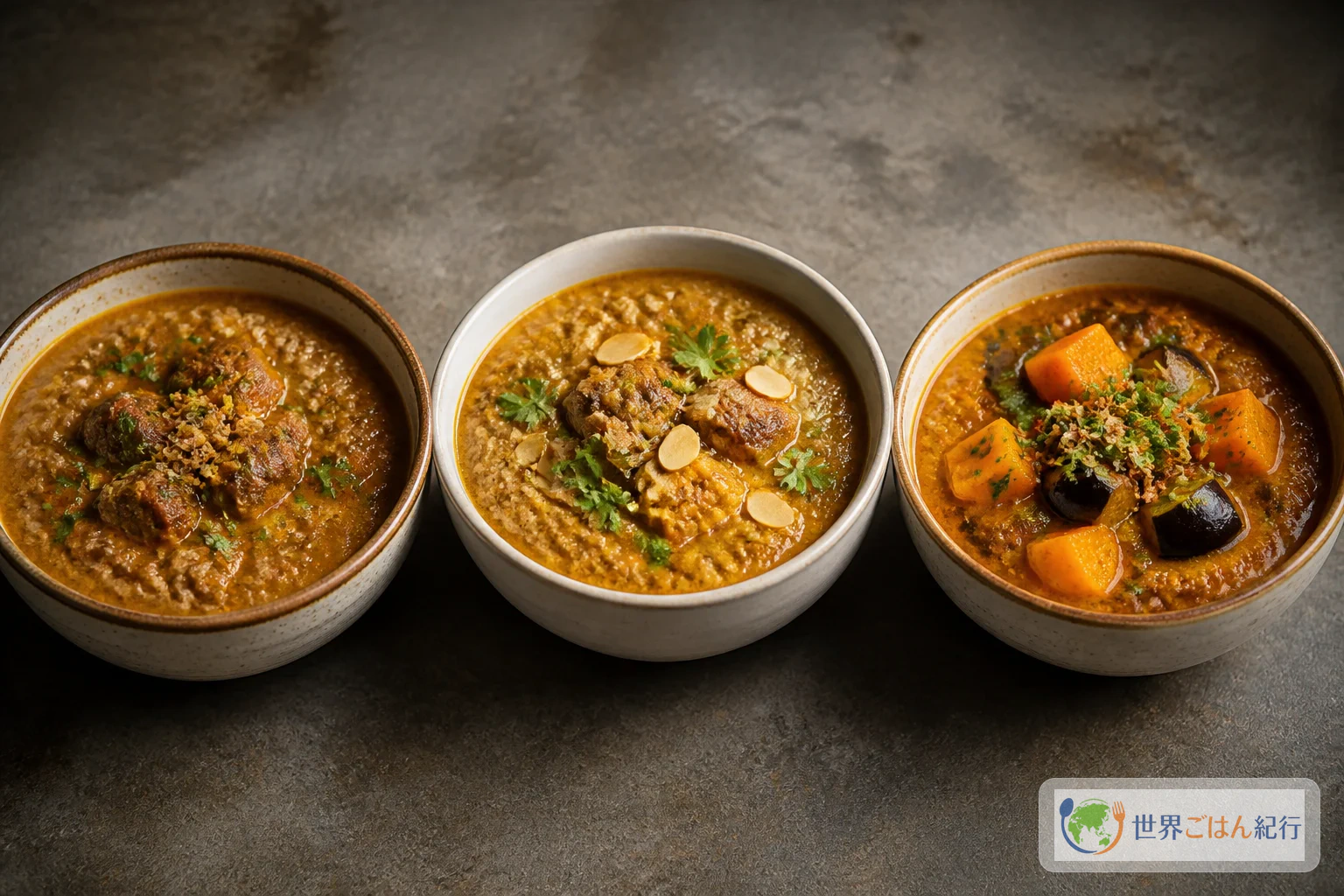
- Swap lamb for chicken thighs: Use the same 500 g, adding it after making the lentil and vegetable purée. The depth of lamb fat is weaker, but cooking time is shorter and it moves closer to a weeknight dinner.
- Leave out the meat for a vegetable version: Remove the lamb and the meat broth and use 1.2 L water. Increase pumpkin and eggplant by 100 g each, and make the final lemon a bit stronger, so the sweetness of the lentils alone doesn't get heavy. Vegetarian dhansak is in fact presented in several recipes. [3][6]
- Swap toor dal for red lentils: Increase red lentils to 100 g and check the stew 10 minutes early. It becomes smooth in less time, but the aroma and body of the lentils get lighter, so keep 50–100 ml of the lamb broth.
- Swap tamarind for lemon: Remove the 20 g tamarind and add 15 ml lemon juice after turning off the heat. Lemon's aroma is higher, and you don't get tamarind's round sourness or astringency. To soften the sourness for children, start from 10 ml.
- Swap basmati for your usual rice: Reduce the water by 30 ml and mix less when fluffing after steaming. The caramel aroma stays, but the grain-by-grain texture changes. On days you want rice as the star, long-grain; on days you want to eat the dhansak like a rice bowl, your usual rice suits.
Swap many lentils and vegetables at once and it moves toward a different lentil curry, not a regional variation. The first time, swap only one of meat, lentils or sourness and keep the roles of pumpkin, eggplant and rice; then you can judge what changed as you eat.
A table that doesn't end with one plate
With dhansak, rather than eating just the sauce with a spoon, alternating with rice and salad makes the design of the flavor easier to read. A little thick sauce over sweet rice with cucumber and onion in between cuts the lamb fat and the heaviness of the lentils once. Some households serve crisp thin flatbread or unsalted yogurt, but adding too many salty things hides the tamarind's sourness.
At a home table, it goes well with the style of gathering rice, lentils and vegetables on one plate, as in dal bhat, and differs from dishes like biryani, where the aroma is passed into the rice itself, in that the rice and sauce are kept apart. On a day you make dhansak the main, don't dress the salad with salt early; add the acid just before serving so it doesn't overlap in role with the stew's sourness.
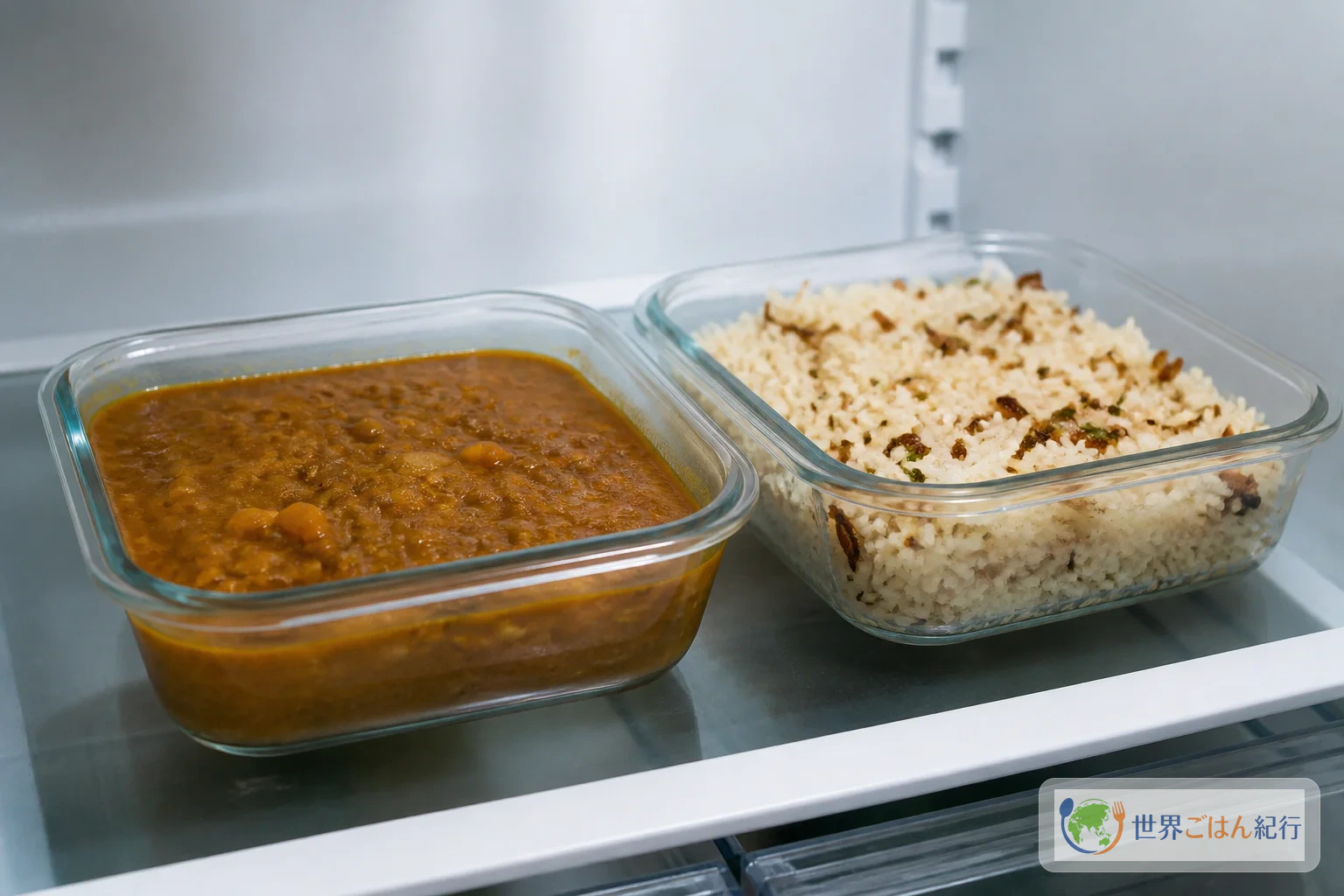
To refrigerate, move the dhansak and rice into separate shallow containers and refrigerate once the heat has gone. Make a quantity you can safely handle at home and plan to use up the refrigerated stew in 2–3 days. The next day the sauce has absorbed moisture and stiffened, so add 1–2 tbsp boiling water to the pot and warm through to the center over low heat, stirring. Rice recovers when steamed with a little water sprinkled on, but don't eat it if there is any off smell, discoloration or abnormality on the surface.
FAQ
Q1. Is dhansak a spicy dish?
The heat can be adjusted by the amount of dried chili and green chili. At first, seed the Kashmiri chilies and leave out the green chili, then add chili powder a little at a time at the end. Even if you lower the heat, you don't need to lose the aroma of cumin, fenugreek and tamarind.
Q2. Which cut of lamb suits it?
Shoulder or leg in 4 cm cubes is easy to handle. Thin slices turn tough before the broth's flavor comes out, and ground meat scatters into the sauce and gives a different texture. If the lamb smell is strong, rather than increasing the ginger in the pre-simmer, adding a little more tamarind after finishing cuts the fat better.
Q3. Can I make it without an immersion blender?
Yes. Crush the lentils with a masher and press the vegetables with a wooden spoon, and you get a home-style finish with grains left. You don't need to buy a small food processor just for smoothness. If you move the hot contents of the pot to a blender, take care about burns and splatter and handle small amounts.
Q4. Are fenugreek seeds and fenugreek leaves the same?
They are the same plant, but seeds and dried leaves differ in aroma and use. The masala here uses seeds, and dried leaves (kasuri methi) should not be substituted in the same amount. You can leave out the seeds, or add a little of the leaves at the finish, but the bitterness and aroma come out differently.
Q5. Why is the tamarind added last?
Adding the sourness early can slow the rate at which lentils and vegetables soften. Break down the ingredients and tenderize the meat first, then add the acid, and you can adjust thickness and sourness separately. The strength of concentrate varies by product, so don't fix 20 g in one go; taste a little at a time.
Q6. How thick is done?
It is done when the sauce lifted on a spoon doesn't fall in a short lump but runs in a thick line. If it spreads at once when you spoon it over rice, it is watery, so remove the lid and reduce 5–10 minutes. It stiffens further as it cools, so it is important not to turn off the heat when it is already paste-like.
Sources
The materials consulted in this article were accessed and checked on 23 August 2026.
- Rajarshi Ray (IDC, IIT Bombay), "Irani Cafes of Bombay": a source that describes dhansak as the meeting point of Parsi and Gujarati cooking, as a Sunday dish, and as a combination of lentils, vegetables and meat. https://www.dsource.in/sites/default/files/resource/irani-cafes-bombay/downloads/file/irani_cafes_bombay.pdf
- Niloufer Ichaporia King, My Bombay Kitchen: Traditional and Modern Parsi Home Cooking: recipe source on dhansak, Parsi home cooking, lentil and vegetable purée, lamb and caramelized rice. https://www.parsicuisine.com/wp-content/uploads/2025/04/My-Bombay-Kitchen-Traditional-and-Mod.pdf
- NDTV Food, "Vegetarian Dhansak Recipe": ingredients and method for a vegetarian version using toor dal, chana dal, mung dal, masoor dal and vegetables. https://food.ndtv.com/recipe-vegetarian-dhansak-468862
- Sona Bahadur, "The signature food of the Parsis: A history of dhansak, and the many ways it can be made": the Parsi home table in Mumbai, differences in ingredients by region and household, and the composition of the flavor. https://scroll.in/article/1083321/the-signature-food-of-the-parsis-a-history-of-dhansak-and-the-many-ways-it-can-be-made
- Saveur, "Dhansak Masala": the whole spices used in Parsi dhansak masala, dry-roasting, and the idea of storage. https://www.saveur.com/story/recipes/parsi-dhansak-masala/
- The Steaming Pot, "Dhansak | Parsi Cuisine": the lentils and vegetables of the vegetarian version, tamarind, masala, and the steps and substitutions for tempering. https://www.steamingpot.com/dhansak-parsi-cuisine/
- FoodSafety.gov, "Safe Minimum Internal Temperatures": the safety standard of heating poultry and leftovers to 74 °C. https://www.foodsafety.gov/food-safety-charts/safe-minimum-internal-temperatures