One pour of hot oil makes the pot of lentils the star of the table
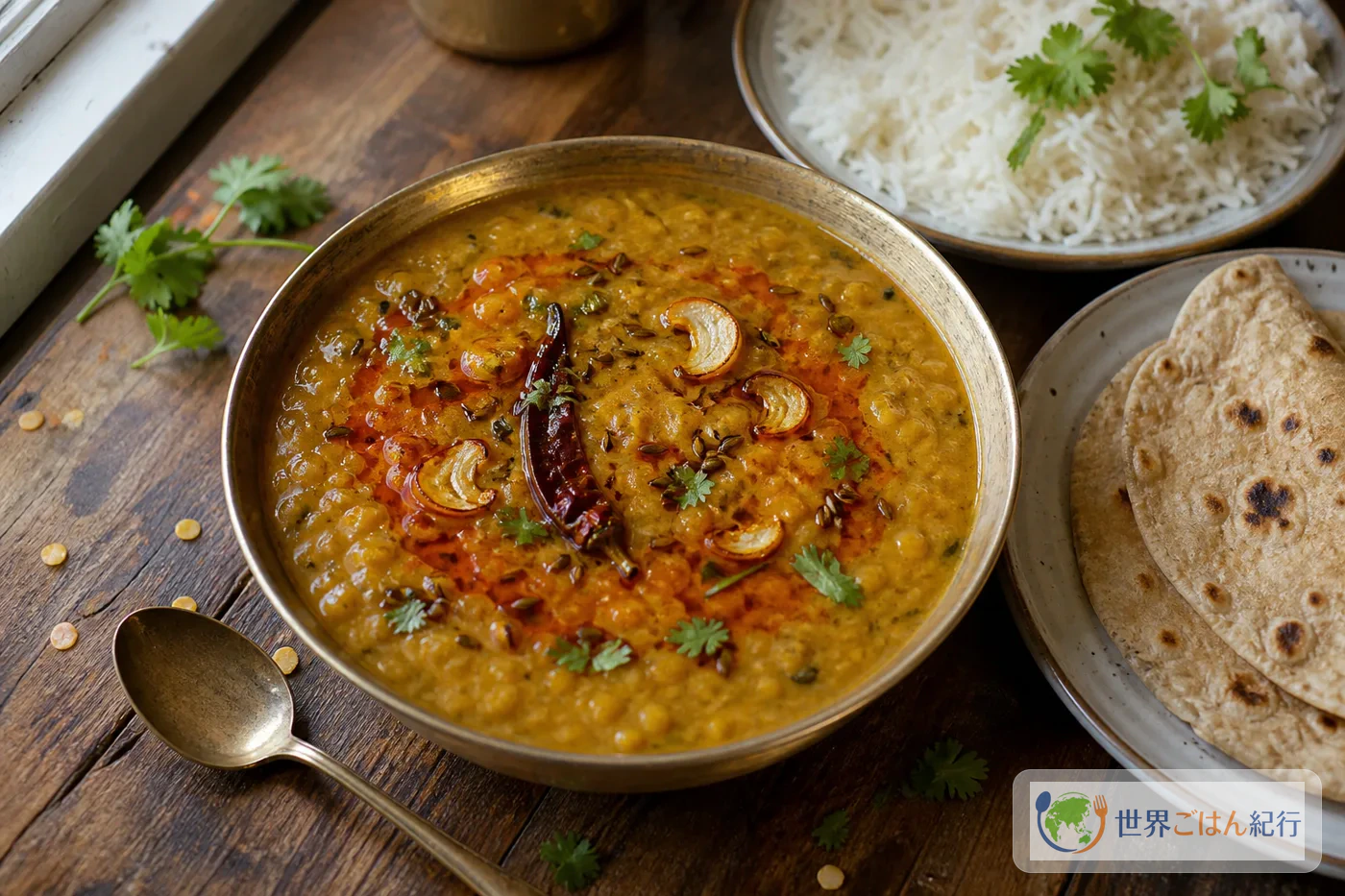
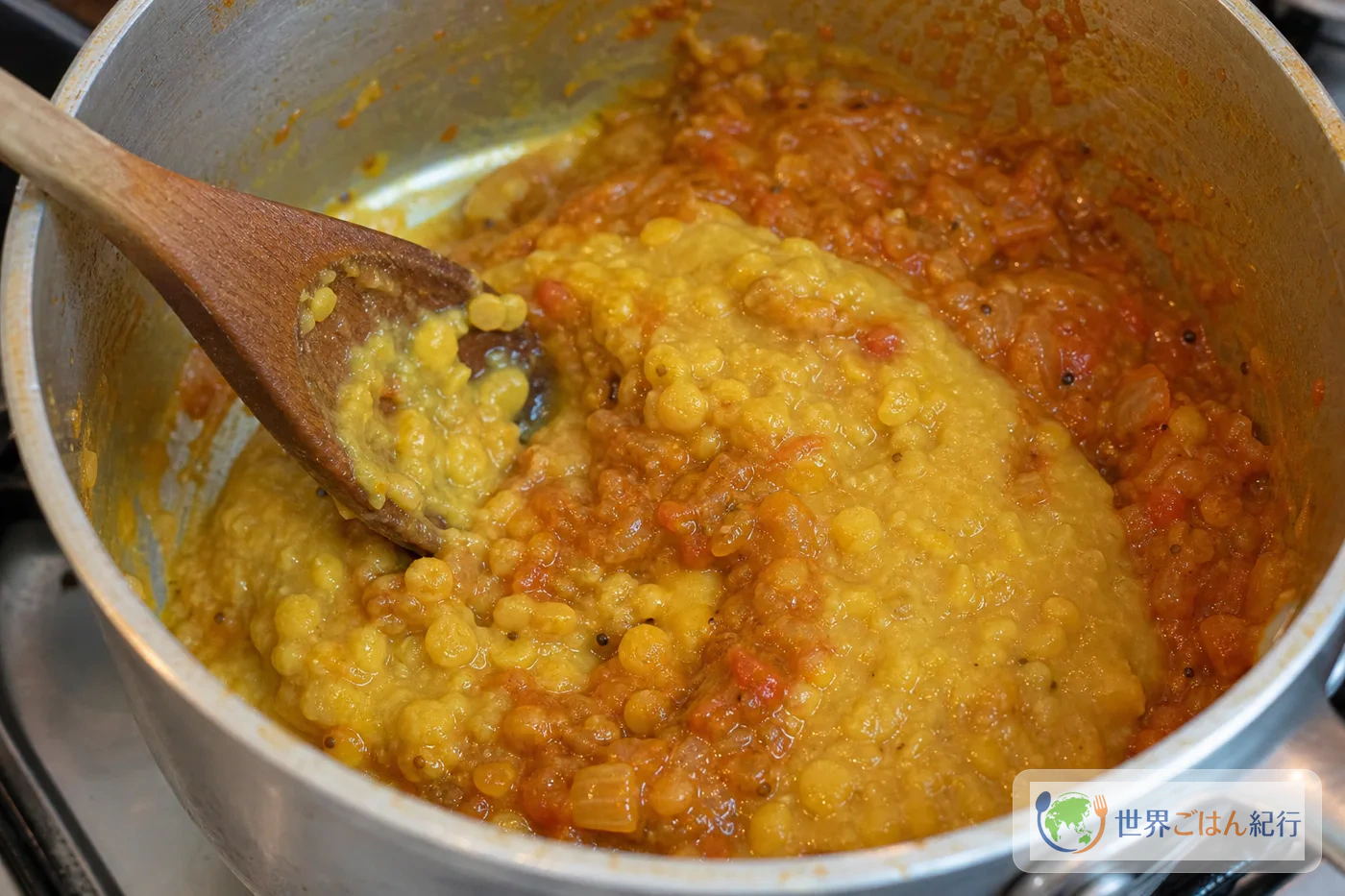
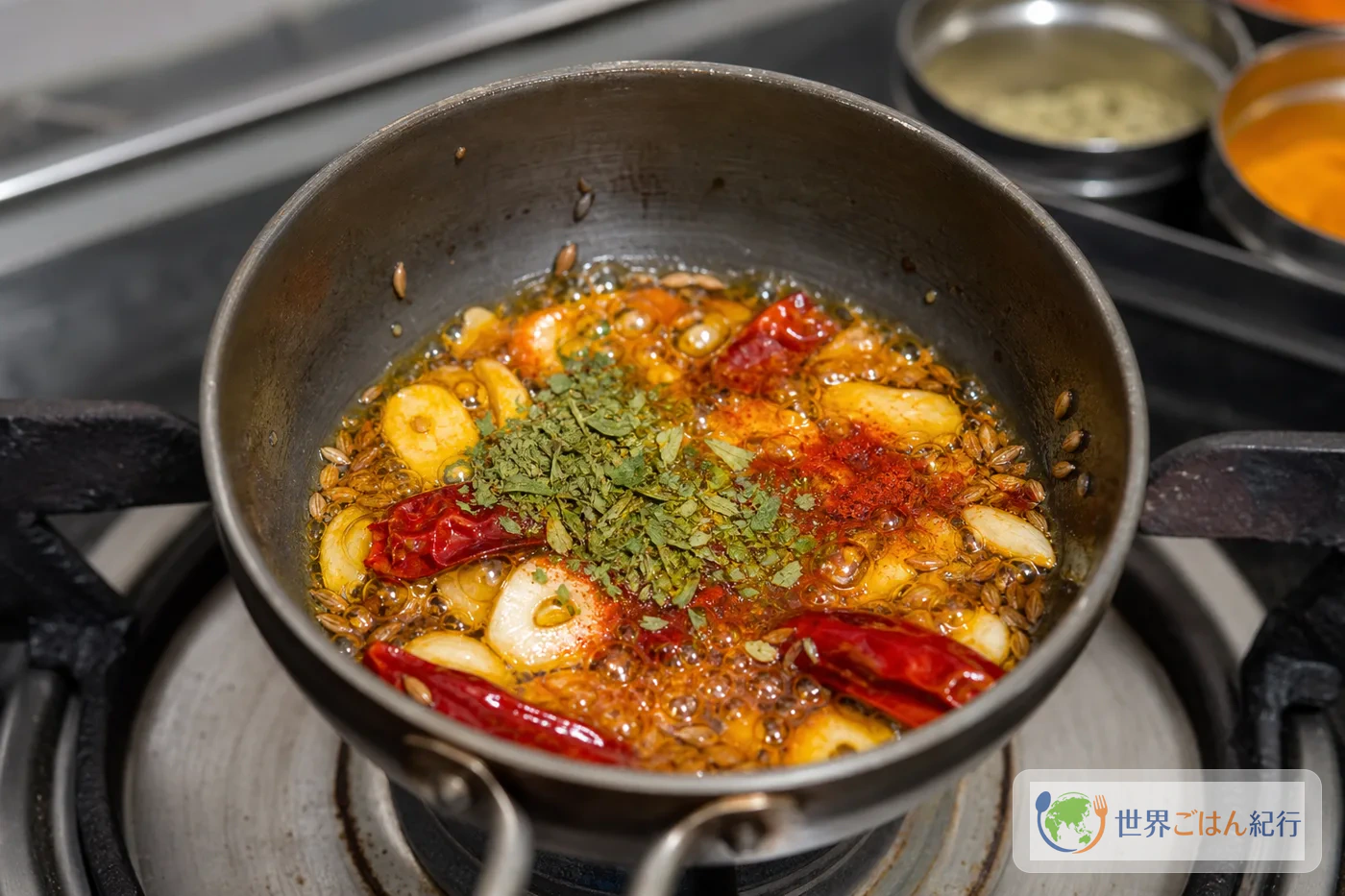
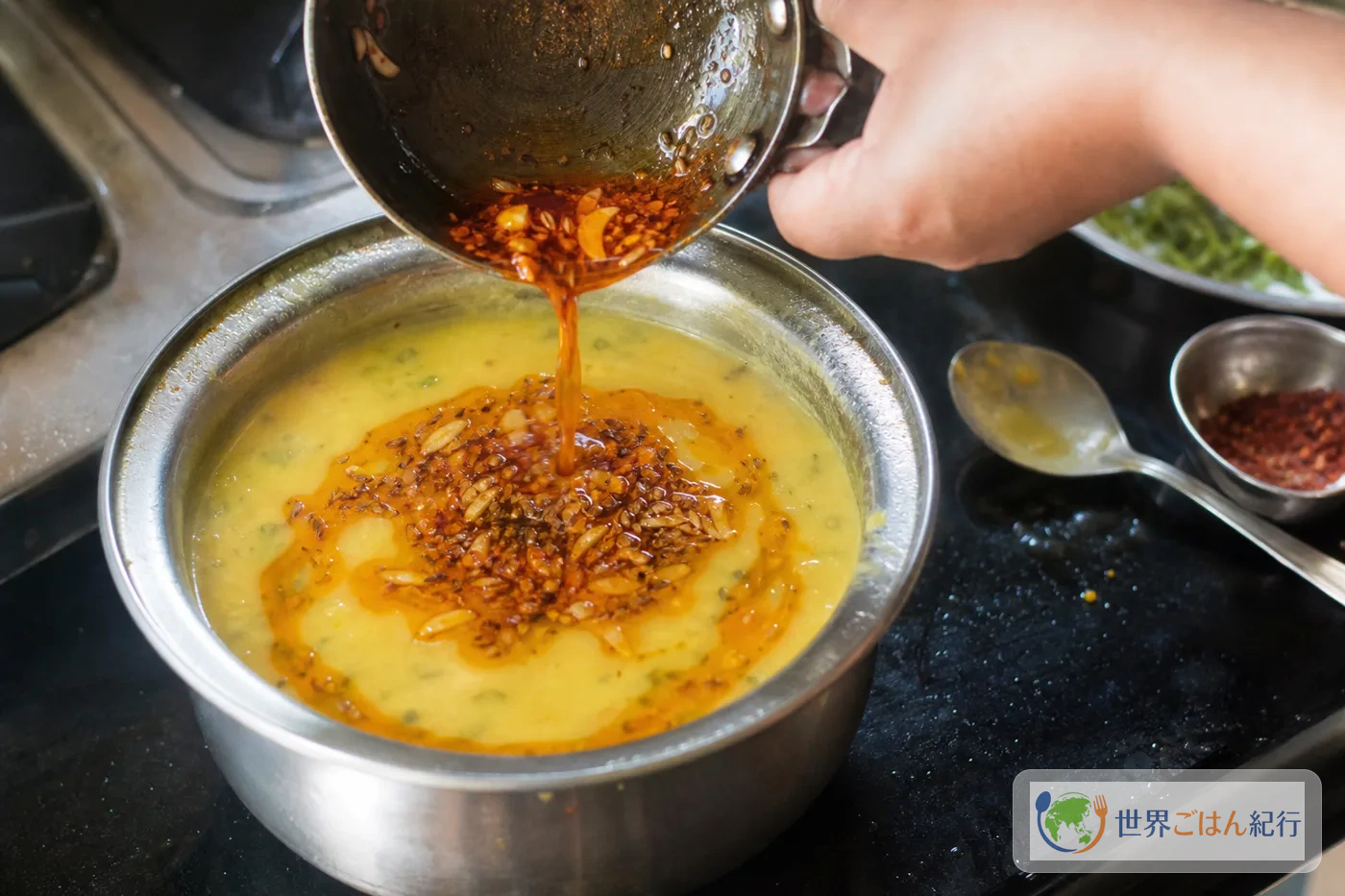
The kitchen is a little quiet while the lentils cook. Yellow dal bubbles and breaks down, and a wooden spoon leaves a soft line on the bottom of the pot. Up to that point, the smell is close to a gentle lentil soup. Then you heat ghee in a small pan, add cumin, garlic, and dried red chilies, and the air changes. Pour that red oil in at the end with a sizzle, and a plain lentil stew becomes dal tadka.
Dal tadka (Dal Tadka / दाल तड़का) is a dish in which "dal," the lentil dish loved across the Indian subcontinent, is finished with a hot spiced oil called "tadka." Dal is a broad word that can mean the lentils themselves, a dish of cooked lentils, or lentil soup, and tadka is a technique of popping spices in fat to transfer their aroma. It is the same idea as the tarka in khichdi, but in dal tadka this finishing oil is the star.
The hard parts of making it outside India are what to do about toor dal and hing, how far to let the lentils break down, and how to keep the tadka fragrant without burning it. This article takes toor dal as the base and also gives realistic blends using red lentils or moong dal. Unlike a curry such as chana masala, which builds body with onion and tomato, dal tadka is a dish that wins on the sweetness of the lentils, salt, acidity, and the aroma at the end.
In Hindi it is written दाल तड़का, and English-language recipes introduce it under close names such as dal tadka, tadka dal, and dal fry. This article uses "dal tadka" as the main name. Dal fry puts more weight on frying and stewing the lentils with aromatics and spices, while dal tadka is treated as a dish that clearly shows off the hot spiced oil at the end.
Background: the home pot and the restaurant's spiced oil
On an Indian table, dal is less a special feast than a daily foundation. Beside rice, roti, vegetable dishes, yogurt, and pickles, the liquid of lentils holds the meal together. As miso soup fills the gaps in a Japanese menu, in North Indian eateries and homes dal serves as both main and soup.
What makes dal tadka interesting is that the lentil cooking is humble, but the final oil abruptly changes the impression. The technique of heating spices in oil to transfer their aroma goes by tadka, chaunk, baghar, and other names depending on region and language. The names differ but the idea is close: in the short time when cumin pops, the edges of the garlic color, and the red of the chili moves into the oil, a toasty outline is layered onto the pot of lentils.
Home dal tadka has a lightness you can eat every day without tiring. The lentils are cooked soft, salt and acidity are balanced, and the final spiced oil is restrained. It is a dish close to the kitchen: leftovers from lunch reheated at night, with a little extra tadka, eaten with roti. If you lean toward a restaurant or roadside dhaba style, you use ghee generously, color the garlic more strongly, and leave streaks of red oil on the surface. Choosing between a home pot and the aroma of eating out changes where the same dish shines.
Indian recipe sites such as Veg Recipes of India and Swasthi's Recipes often present a form in which toor dal, moong dal, and masoor dal are cooked alone or in combination, cumin, garlic, hing, dried red chilies, and chili powder are heated in a separate pan, and the result is poured over at the end. Even in home-cooking-oriented explanations such as Cook With Manali, the points that repeat, before the type of lentil, are cooking the lentils soft enough and not burning the spiced oil.
It is also characteristic of this dish that its origin is hard to pin to one place. Dal itself is an everyday food across the Indian subcontinent, and the finishing of aroma in hot oil varies from home to home and shop to shop. In the north, the eatery style with a strong aroma of ghee and garlic stands out, and at home some days it is made lightly with moong dal or masoor dal. It is a different thing from a lentil dish like southern sambar, which brings out strong sourness with tamarind, but there is a link in the idea of placing lentils beside the staple and drawing out appetite with spiced oil.
To lean toward a local eatery style, make the final oil a bit stronger. Use ghee, heat the garlic to a pale gold, and dye the oil red with dried red chilies and chili powder. To make a lighter home style, use less oil, don't burn the garlic, and add a pinch of kasuri methi at the end. The eatery style has a big aroma on the first bite, while the home style is easier to keep eating with rice and vegetables. If you can choose here, the same quantities change their place at the table.
What is easy to miss in written recipes is how the type of lentil changes the result. Toor dal has the thickness of lentils, moong dal is light and gentle, and red lentils break down quickly and are easy to turn into a puree. You don't need to gather everything from the first time; knowing how the blend works, you won't hesitate at a supermarket or an import store. What to protect in a home kitchen is not collecting every unusual ingredient but cooking the lentils soft through the center, not burning the spiced oil, and cutting the heaviness with acidity at the end.
Ingredients (serves 4): prepare the lentils, the base, and the tadka separately
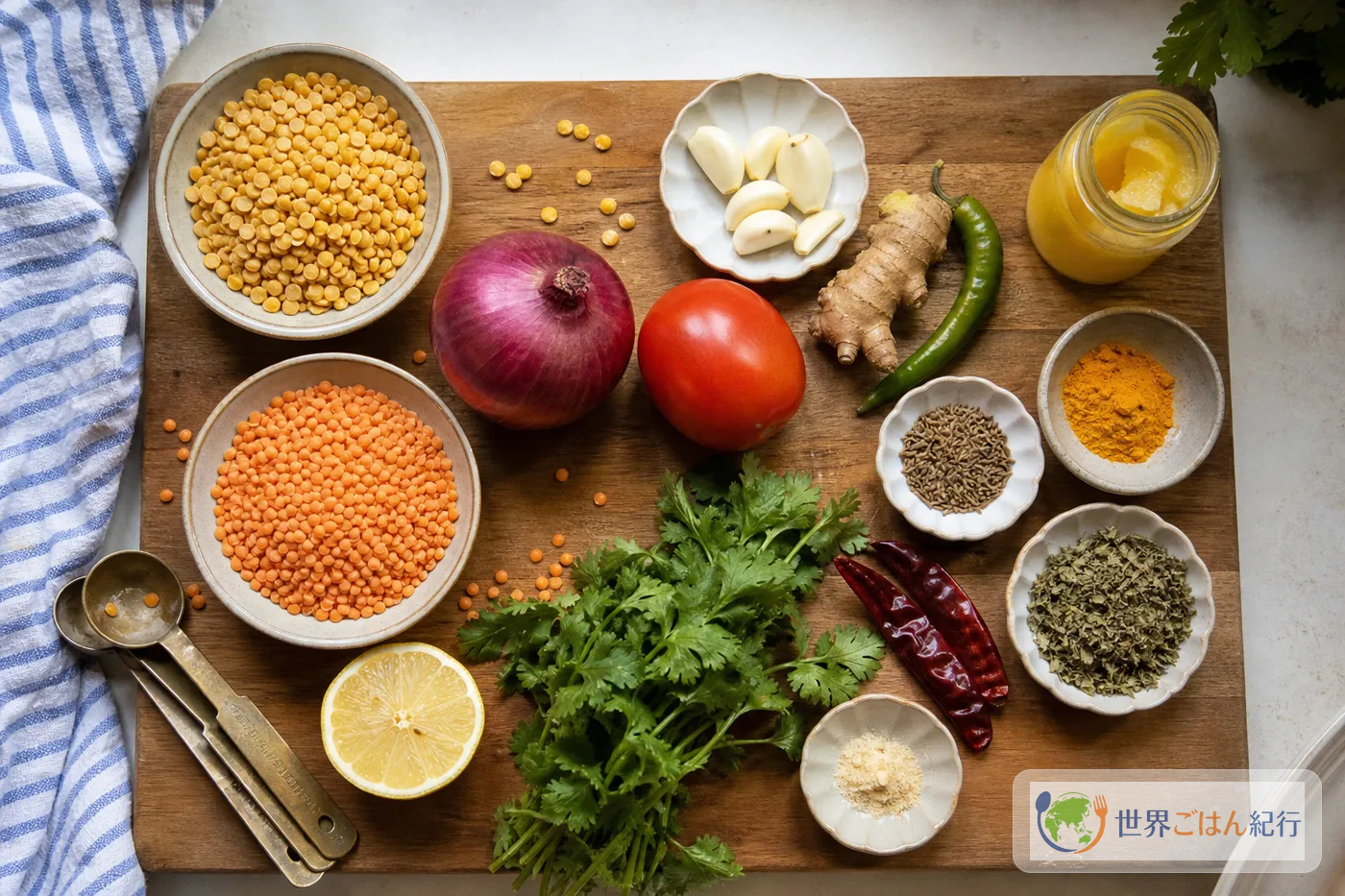
This is a portion for a main dish for four, or a dinner with rice and vegetable sides. If you can get toor dal, it is worth using. If that is hard, use more red lentils, which break down faster, and enjoy it as a home version.
Ghee and butter contain dairy. To avoid dairy, make the tadka with 2 tbsp of rice bran oil, and if the finish lacks aroma, increase the cumin by 1/2 tsp. If you have an allergy to legumes, avoid this dish and always check the constitution of the person eating.
Choosing lentils: light today, or closer to the eatery?
Toor dal brings sweetness and body, and it doesn't feel thin even ladled over rice. But it is a lentil that is hard to keep on hand, so you don't need to force a search from the beginning. For a balance between ease and local feel, a blend of 2 parts toor dal to 1 part red lentils is easy to handle.
| Blend | Good for | Cooking guide | Result |
|---|---|---|---|
| 120 g toor dal + 60 g red lentils | The baseline for this recipe | 20–25 min | Body, with some grains remaining |
| 180 g red lentils | Days you want it fast | 15–18 min | Thickens easily, light |
| 120 g moong dal + 60 g red lentils | Days you don't want it heavy on the stomach | 18–22 min | Gentle, easy to eat at breakfast or lunch |
| Mixing in chana dal | Days you want some chew | 30+ min after soaking | Closer to a lentil side dish than eatery style |
Chana dal is fragrant and keeps a little chew, but mixed into this recipe without soaking it tends to stay hard. For a weeknight dinner, build it with toor dal, red lentils, or moong dal, and mix in a little chana dal only on a weekend when you have time; that is the least likely to fail.
Ingredients that cause hesitation: start with lentils, cumin, and rice
Dal tadka is differentiated not by onion and tomato but by the lentils and the finishing oil. Ingredients you can get at an ordinary supermarket are kept to the ingredient table in the text. If you continue with Indian cooking, the ones that get reused the most are the lentils and whole cumin.
On days when you can't find toor dal, you can start with red lentils. Red lentils break down quickly, so there are fewer failures the first time, and they are the lentil that most easily gives a dal-like body. Standing at the lentil shelf of an import store, the variety is bewildering, but keeping a bag of red lentils first lets you use them in khichdi and lentil soups too.
Cumin seeds, popped whole in oil rather than used as powder, smell completely different. They also go into bhindi fry and aloo gobi (in Japanese), so they are a good first whole spice for Indian cooking.
Ghee is often not stocked at an ordinary supermarket. Unsalted butter can substitute, but if you want a stronger tadka aroma, look for a small jar at an import store or a baking supply shop.
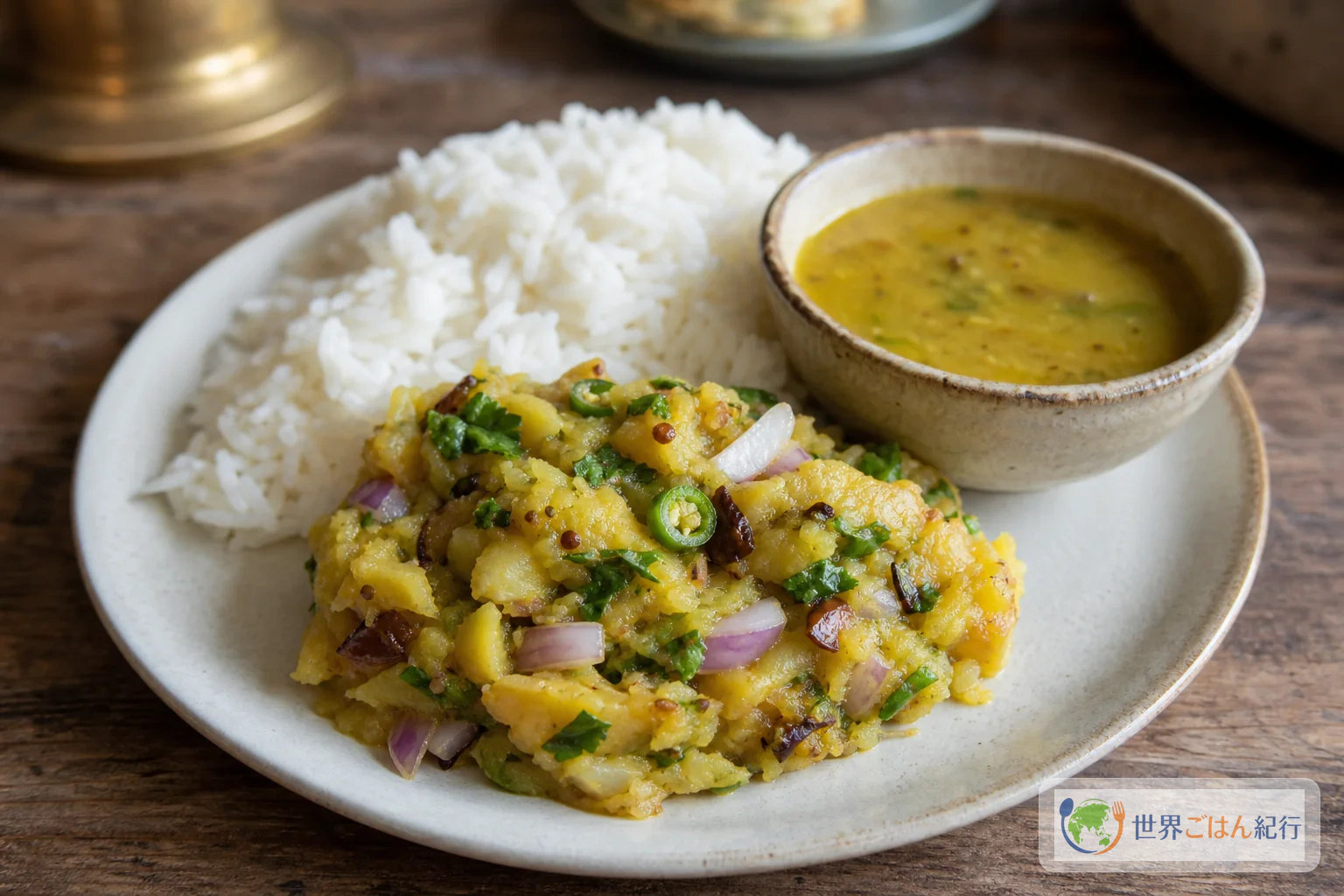
Dal tadka goes with roti or rice. To catch the thin liquid of the lentils, basmati rice is convenient.
Hing is a spice with a strong aroma in a tiny amount. If you find it at an import store it is worth trying, but the dish works without it the first time. Kasuri methi is dried fenugreek leaf; rubbed between the fingers and added at the end, it gives a lingering note like a North Indian eatery.
Method: soft lentils, unburned tadka
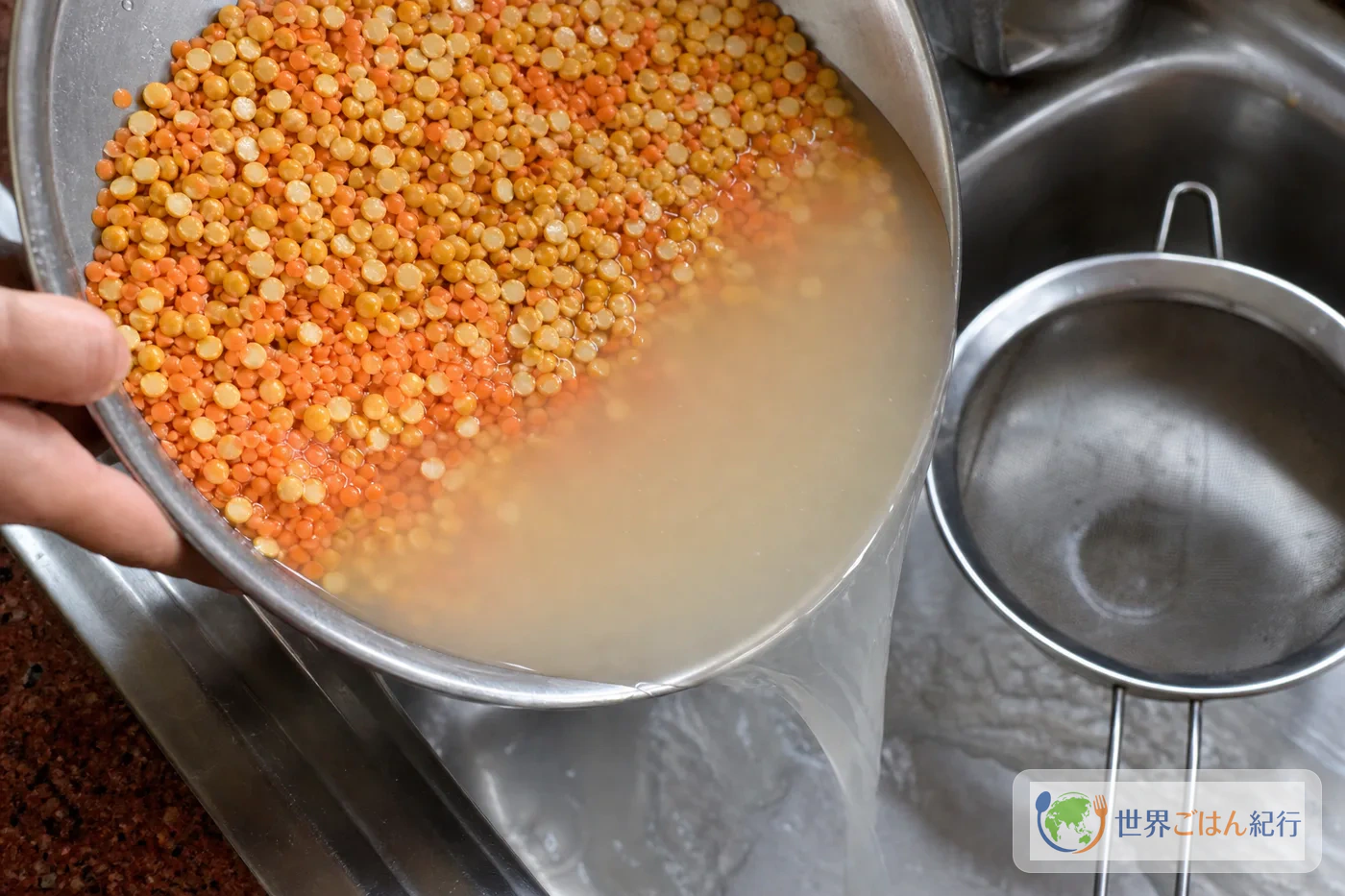
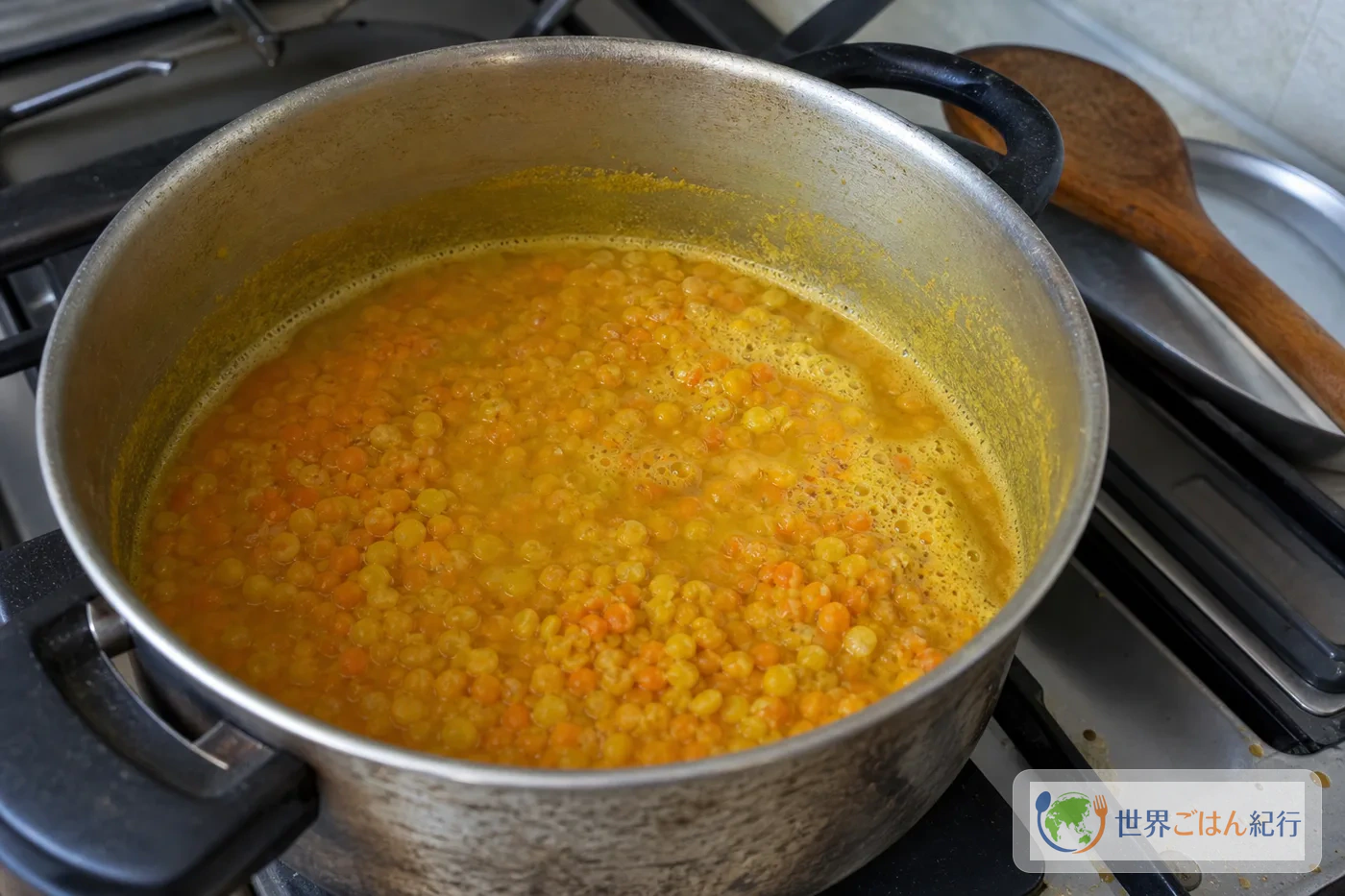
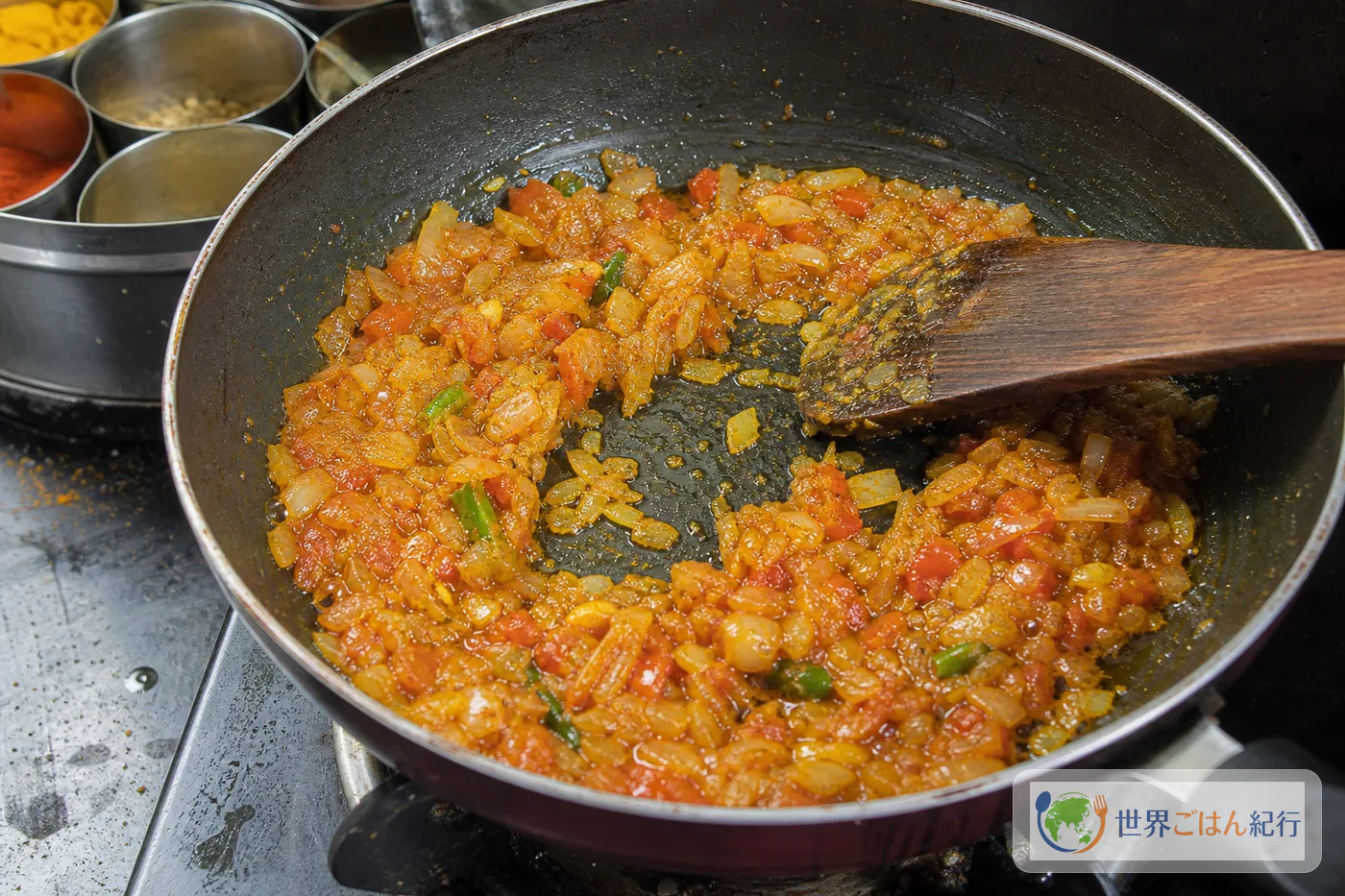
There are 6 steps. Cook the lentils gently, and make only the tadka quickly to bring out its aroma. Proceed while watching the state at each step.
When pouring hot oil into a pot of lentils, the oil can spatter in small droplets. Move the pot slightly off the heat, keep your face away, and cover right after pouring. Any water droplet left in the small pan makes it spatter badly, so use a completely dry pan.
Where to hold the line and where to let go in a home kitchen
You can make delicious dal tadka without matching every ingredient to the original. But "softness of the lentils" and "aroma of the tadka" are hard to replace. Protect these, and even a home version has an Indian outline. On the other hand, hing and kasuri methi deepen the aroma if you have them, but making them mandatory from the first time raises the shopping hurdle too much.
| Where you hesitate | Closer to the original | Realistic | Effect on the result |
|---|---|---|---|
| Lentils | Mostly toor dal | Mix red lentils and moong dal | Red lentils break down faster, lighter mouthfeel |
| Fat | Ghee | Unsalted butter, rice bran oil | Ghee has the strongest aroma |
| Aroma | Hing and kasuri methi | Omit and strengthen cumin and garlic | The aroma changes but it works as a home version |
| Heat | Dried red chilies and chili | 1 dried red chili, a little chili powder | For children, keep only the color of the oil |
| Acidity | Lemon, amchur | 2 tsp lemon juice | Without acidity the lentils feel heavy |
| Staple | Roti, chapati, rice | Basmati rice, short-grain rice, naan | With short-grain rice, cooking it a little firm suits |
If you make it with only red lentils, shorten the cooking time to 15–18 minutes. Red lentils have no skin and break down very quickly. If it looks about to turn completely into a puree in the pot, reduce the water by 100 ml and bring the thickness back with hot water at the end, which is less likely to fail.
Hing is an aroma that is hard to replace, but too much makes the whole dish medicinal. If you use it for the first time, start with about a small scoop, not a "pinch." Kasuri methi is somewhat easier to handle; just rubbed in at the end, it gives the dry aroma of an eatery dal. On days when you have neither, prioritize popping the cumin without burning it and stopping the garlic at pale gold.
For households that want to separate heat levels, it is easier not to make the pot of lentils too hot. Make it with the quantities in the text, set aside a portion for children, and pour an extra tadka mixed with a little chili powder over the adults' plates only, and you can get different heat from the same pot. If you make the whole pot hot from the start, only the heat comes forward when reheated the next day.
When serving with short-grain rice, make it a little less liquid, with a plump thickness. With basmati rice even a thin dal brings out the aroma, but short-grain rice absorbs the liquid and gets heavy, so cooking the rice firm and adjusting the dal to a thickness that falls slowly from a wooden spoon makes it easier to eat.
Failures: watery, hard lentils, bitter tadka
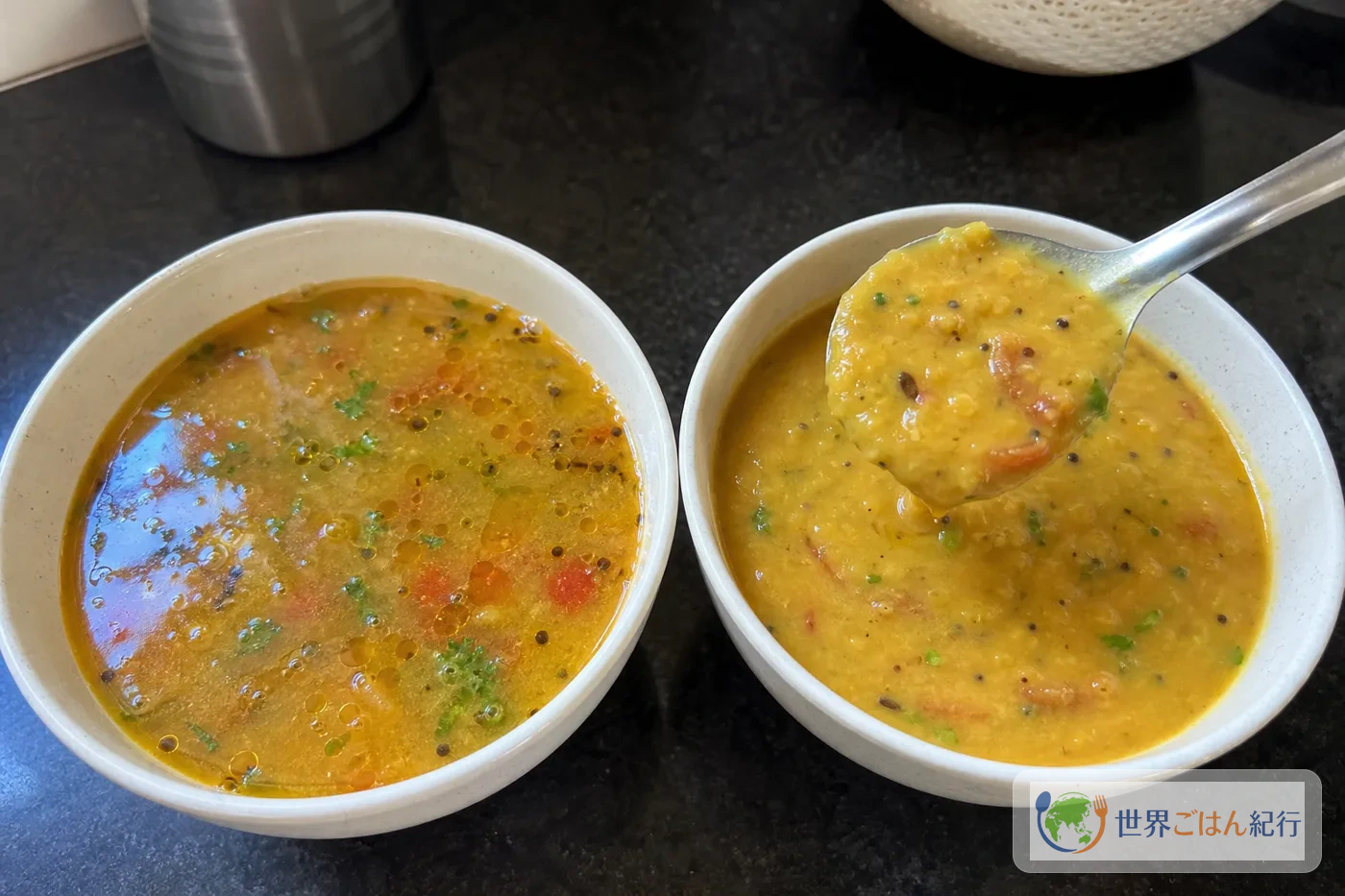
Dal tadka looks like a short recipe, but its failures show clearly. Hard lentils taste powdery, thin dal becomes soup, and a burned tadka leaves bitterness.
| Failure | Cause | Fix |
|---|---|---|
| Lentils are hard | Only rinsed and undercooked, old lentils | Add 150 ml water and simmer 10 minutes more over low heat. In a pressure cooker, 3 more minutes at pressure |
| Watery | Too much water, lentils not crushed at all | Remove the lid and cook down 8 minutes, crushing some lentils |
| Flavor is sleepy | Not enough salt and acidity | Add a pinch of salt and 1 tsp lemon juice |
| Tadka is bitter | Garlic or chili burned at high heat | Use medium-low next time. For now, round it with lemon and a little ghee |
| Oil feels heavy | Too much ghee, thin lentils | Cook down the lentils and increase lemon and cilantro |
| Weak aroma | Cumin added to the lentils before it popped | Make a small new tadka and add it on top |
| Powdery | Lentil centers still firm, cooked at too strong a heat | Add water, soften completely over low heat, then crush some |
| Aroma fades the next day | The volatile aroma of the tadka dropped | Right before eating, make a small extra tadka with cumin and garlic |
The most common problem is watery dal. If you finish with the lentils completely runny after they soften, only the tadka oil floats on the surface and the flavor doesn't come together. Crush some of the lentils and cook down until a wooden spoon dragged along the bottom shows a line for a moment.
Tadka is a step where toasty and bitter are close neighbors. If the small pan is thin, heat penetrates fast, so lifting the pan slightly once the cumin is in is fine. Chili powder scorches easily, so add it last and turn off the heat right away.
Adding flavor to lentils that are still hard leaves only the saltiness outside and does not remove the powdery feel. With old lentils or large grains, it can take longer than the package time. The more you hurry the more you want to cook it down over high heat, but softening it through the center over low heat while adding water gets it together faster in the end.
How to eat, store, and connect it to a menu
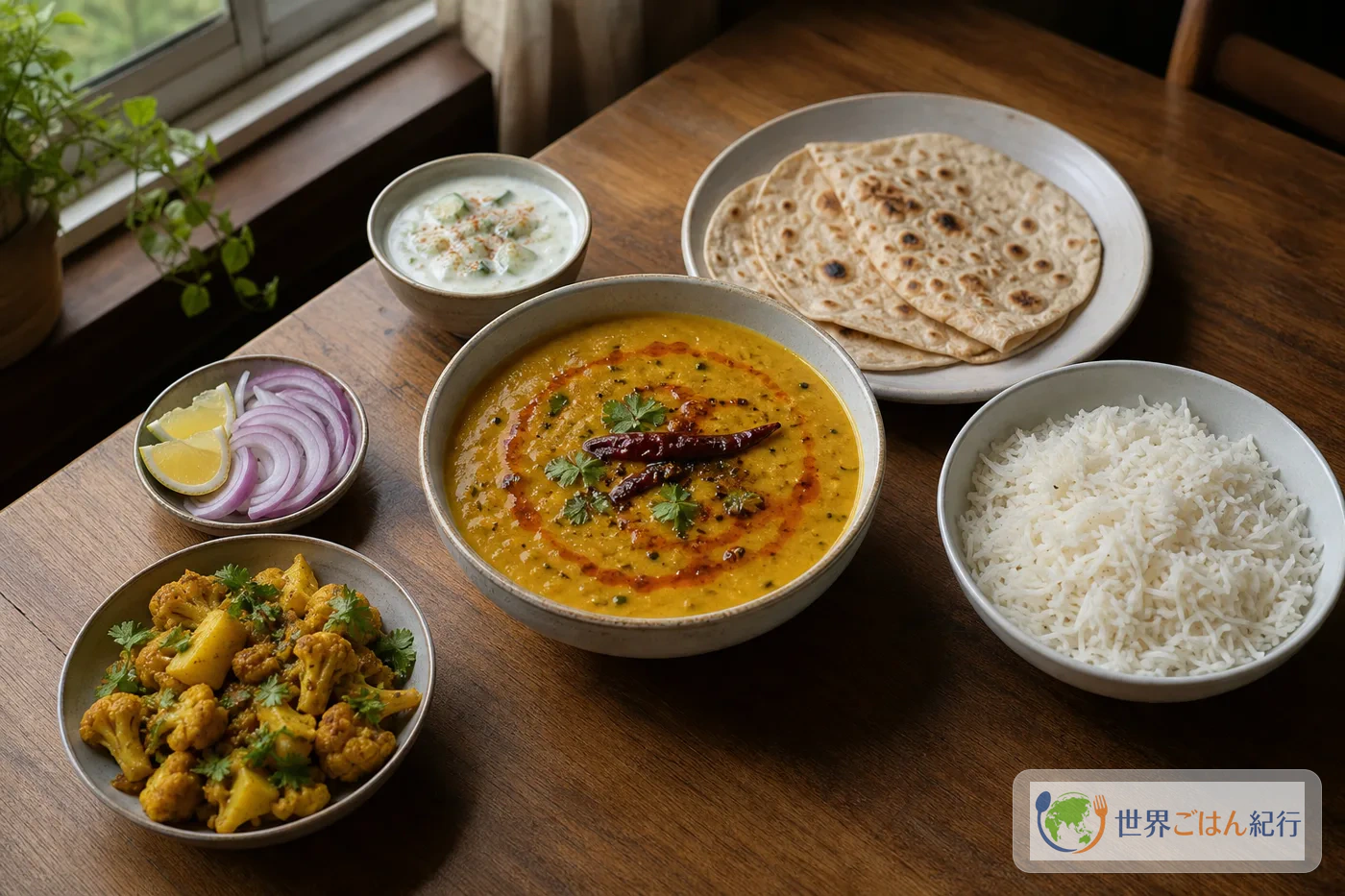
The easiest way is ladled over basmati rice. If you cook the rice a little firm, it doesn't turn heavy even after absorbing the lentil liquid. When eating with roti or chapati, cooking the dal a little thicker makes it easier to scoop.
For a menu, pair it with refreshing raita and a dry vegetable dish and the plate comes together. Aloo gobi (in Japanese) gives satisfaction with potatoes, and bhindi fry brings a light finish with the toasty okra. On a meat day, serve a small portion beside tandoori chicken, and the lentils catch the strength of the spices.
On days when you don't have time to bake roti, slightly firm short-grain rice and chopped cucumber are enough. To come a little closer to a local table, serve it with spice-kneaded thepla, and the sweetness of the lentils goes with the aroma of wheat. For a table leaning South Indian, rather than pairing with a fermented-batter staple like dosa, it comes together better to make the dal a little thinner and add more vegetable side dishes on separate plates.
For storage, keep it in the refrigerator for about 2 days. Move it to a shallow container and refrigerate once the heat has gone. When reheated, the lentils absorb liquid and stiffen, so add 2 to 4 tbsp of water or hot water and heat over low heat until bubbling. The aroma of the tadka drops a little the next day, so if you have time, make a small extra tadka with 1 tsp each of cumin and ghee to bring it back.
You can freeze it, but the texture turns a little powdery. Freeze flat in single portions, and after thawing, heat in a pot adding water, which is smoother than the microwave alone. Don't add cilantro and lemon before freezing; add them just before eating.
FAQ
Q1. Isn't it the real thing without toor dal?
The body of toor dal is appealing, but red lentils or moong dal also make a perfectly delicious home version. Red lentils alone break down quickly, so shorten the cooking time and add hot water while watching the thickness at the end. Mixing lentils makes it easier to balance aroma and mouthfeel.
Q2. Is hing required?
It is not required. It gives the deep aroma of an Indian restaurant, but it is strong, and too much makes it hard to eat. If you don't have it, omit it and build the aroma with cumin seeds, garlic, and kasuri methi.
Q3. Can I make it without ghee?
Yes. Unsalted butter gives a similar aroma, but the milk solids scorch easily so use medium-low heat. To avoid dairy completely, use rice bran oil or light sesame oil and heat the cumin and garlic a little more carefully to make up the aroma.
Q4. How do I make it mild for children?
Use 1 dried red chili and reduce the chili powder to 1/8 tsp. The aroma can be built well enough with cumin and garlic. For adults, after setting aside a portion, add a small amount of tadka made with more chili in a separate pan, and you can make different heat levels from the same pot.
Q5. Does it turn watery or stiff the next day?
Refrigerated, the lentils absorb liquid and tend to stiffen. Before reheating, add 2 to 4 tbsp of water or hot water and bring it back over low heat, stirring. If it has turned watery, remove the lid and cook down 3 to 5 minutes, and add a little lemon juice at the end to tighten the flavor.
Q6. What is the difference between dal tadka and dal fry?
They are close dishes, and the names sometimes overlap by shop or household. As a guide, dal fry puts the part where the lentils are fried and stewed with onion, tomato, and spices in front. In dal tadka the showpiece is the finish of pouring hot spiced oil over the cooked lentils. This recipe also sautés a base, but the final tadka is made in a separate pan so the aroma stays on the surface.
Q7. Do I reduce the water when making it with only red lentils?
If you make it with 180 g of red lentils only, starting with 700 ml of water is easier to handle. Red lentils break down quickly, so check the thickness once after about 15 minutes. If it is too heavy, add hot water little by little; if it is runny, remove the lid and cook down 3 to 5 minutes. The result is lighter than with toor dal, so making the cumin and garlic in the tadka a bit stronger keeps it from feeling thin.
Sources
- Veg Recipes of India - Dal Tadka (accessed 2026-05-28)
- Swasthi's Recipes - Dal Tadka Recipe (accessed 2026-05-28)
- Cook With Manali - Dal Tadka (accessed 2026-05-28)
- Wikipedia - Dal tadka (accessed 2026-05-28)