
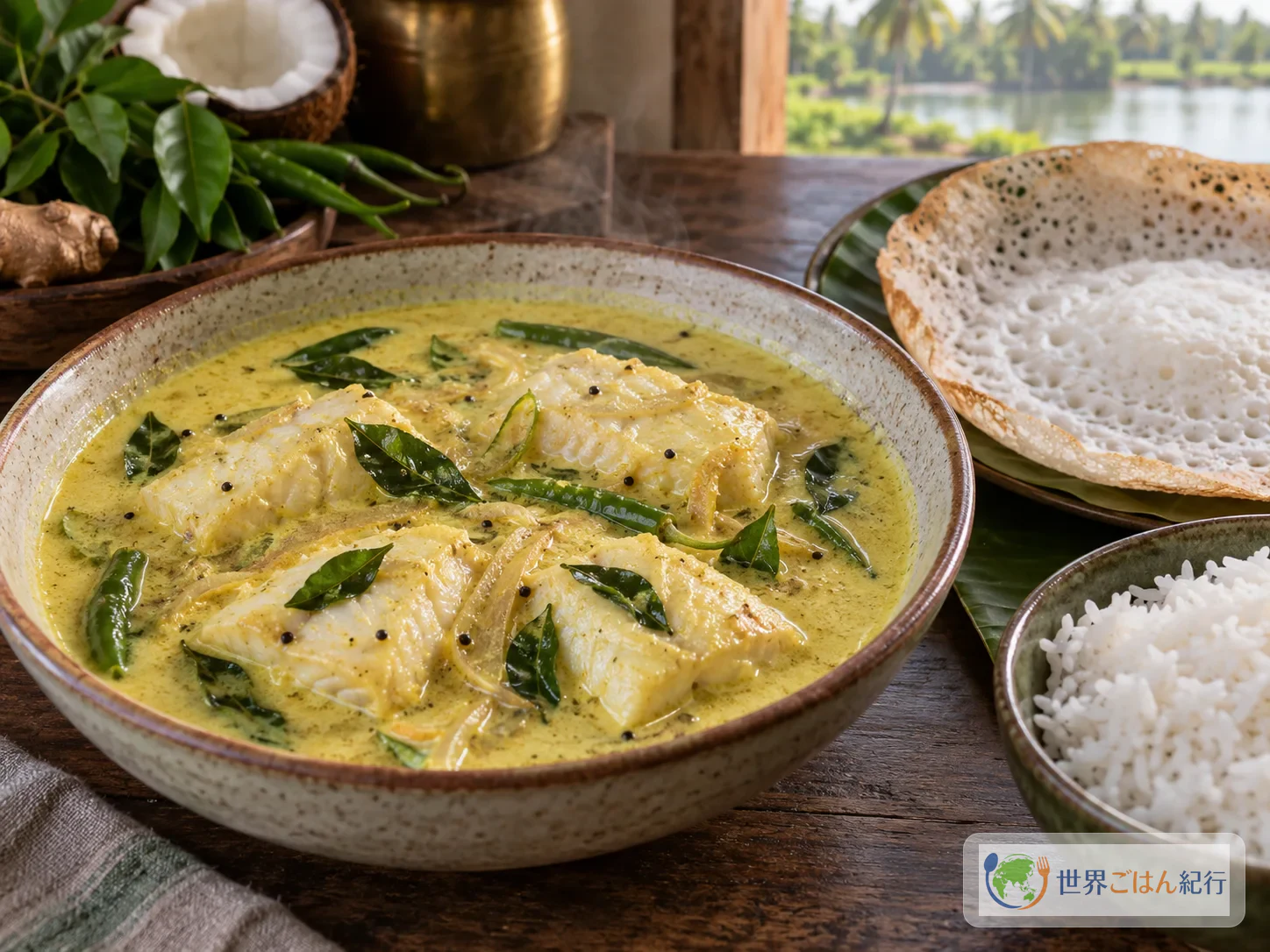
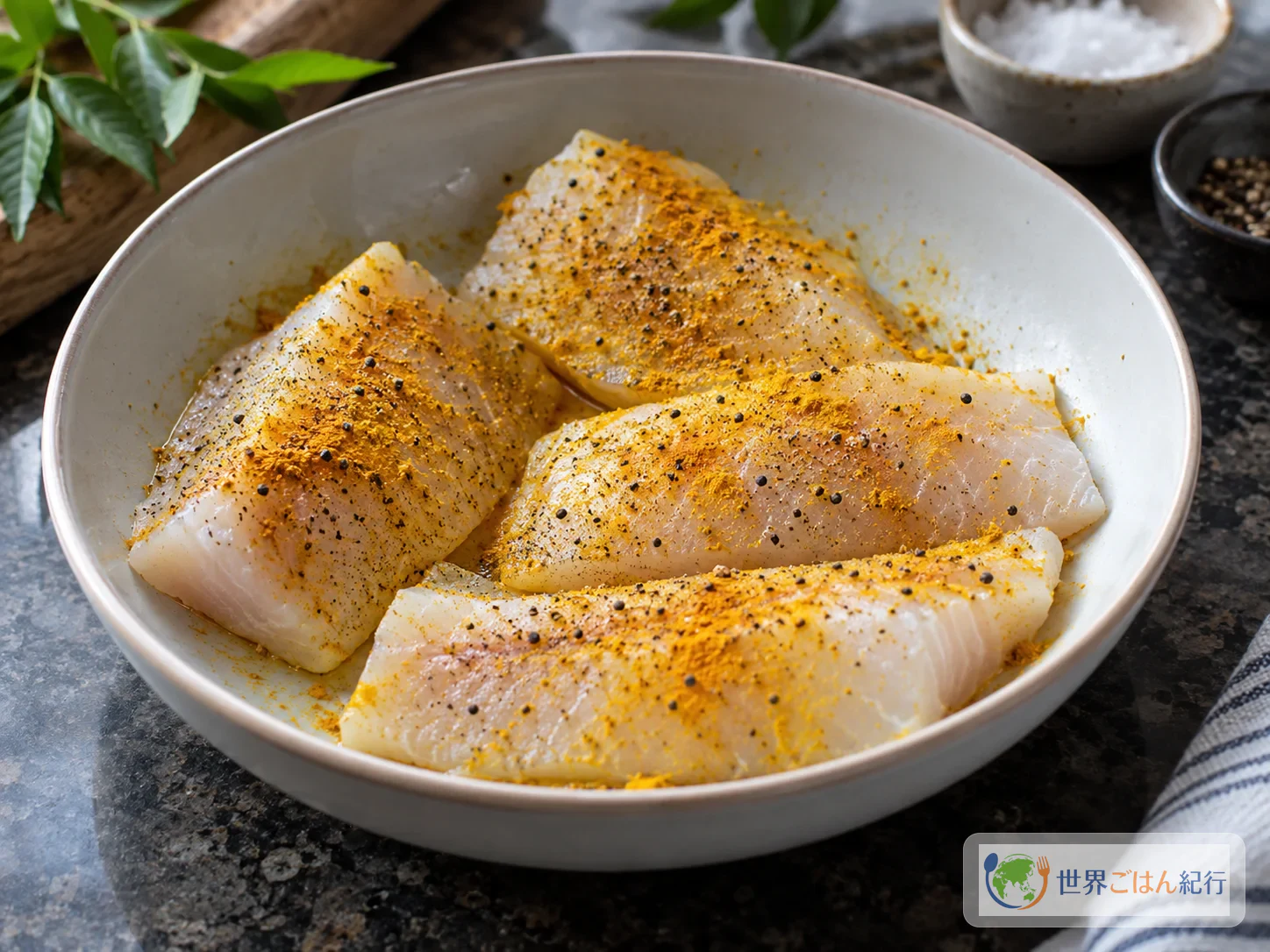
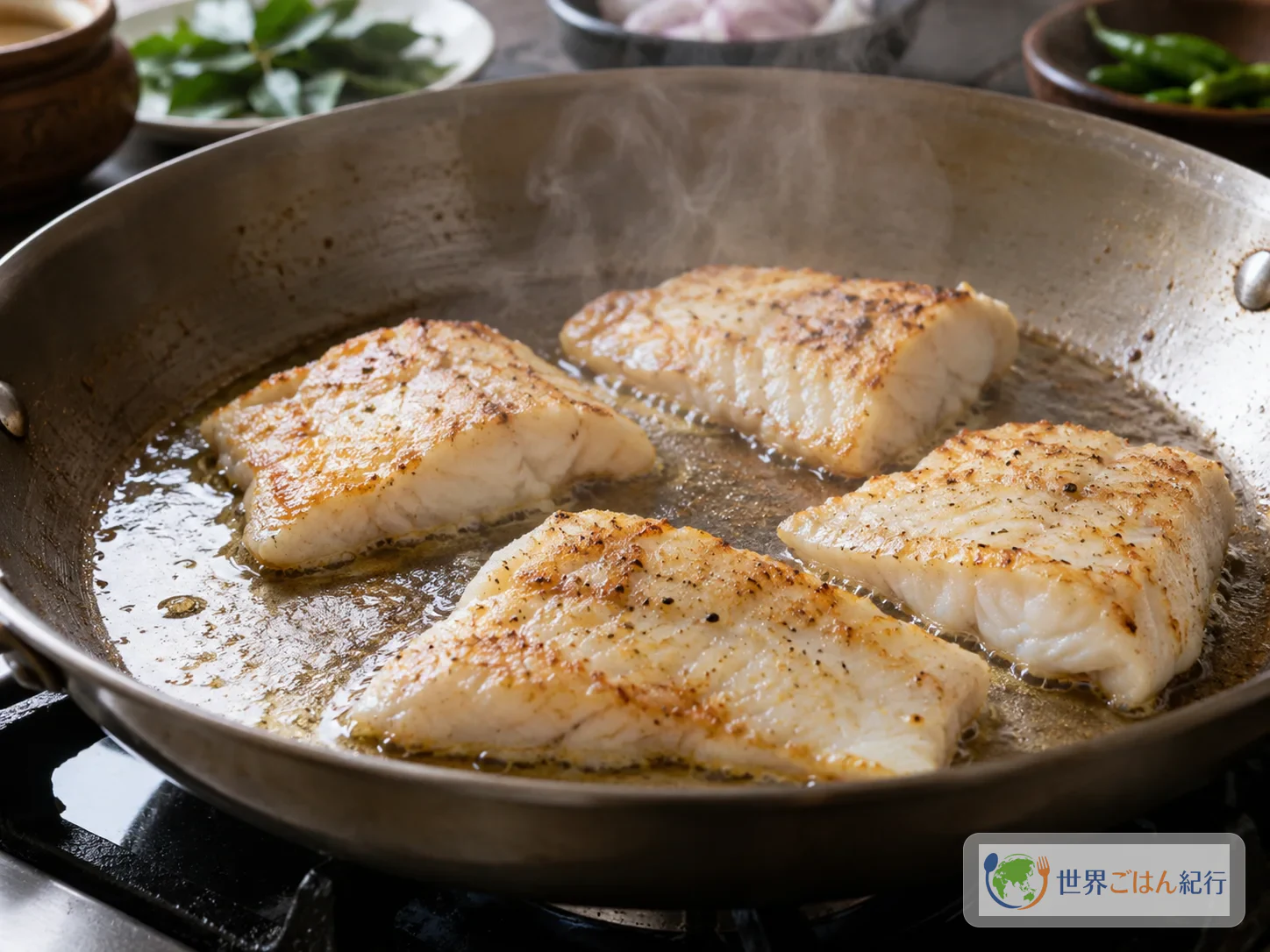
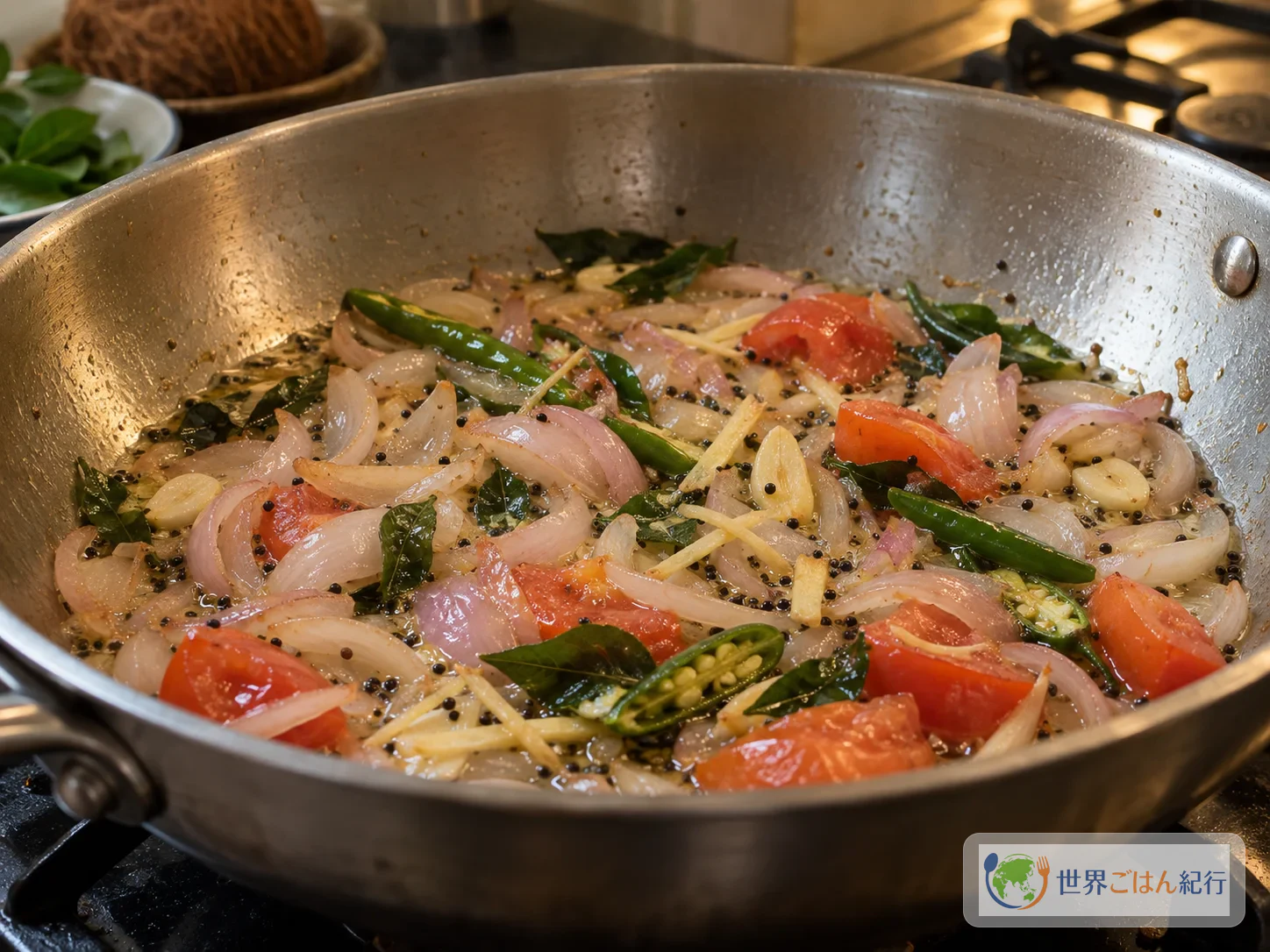
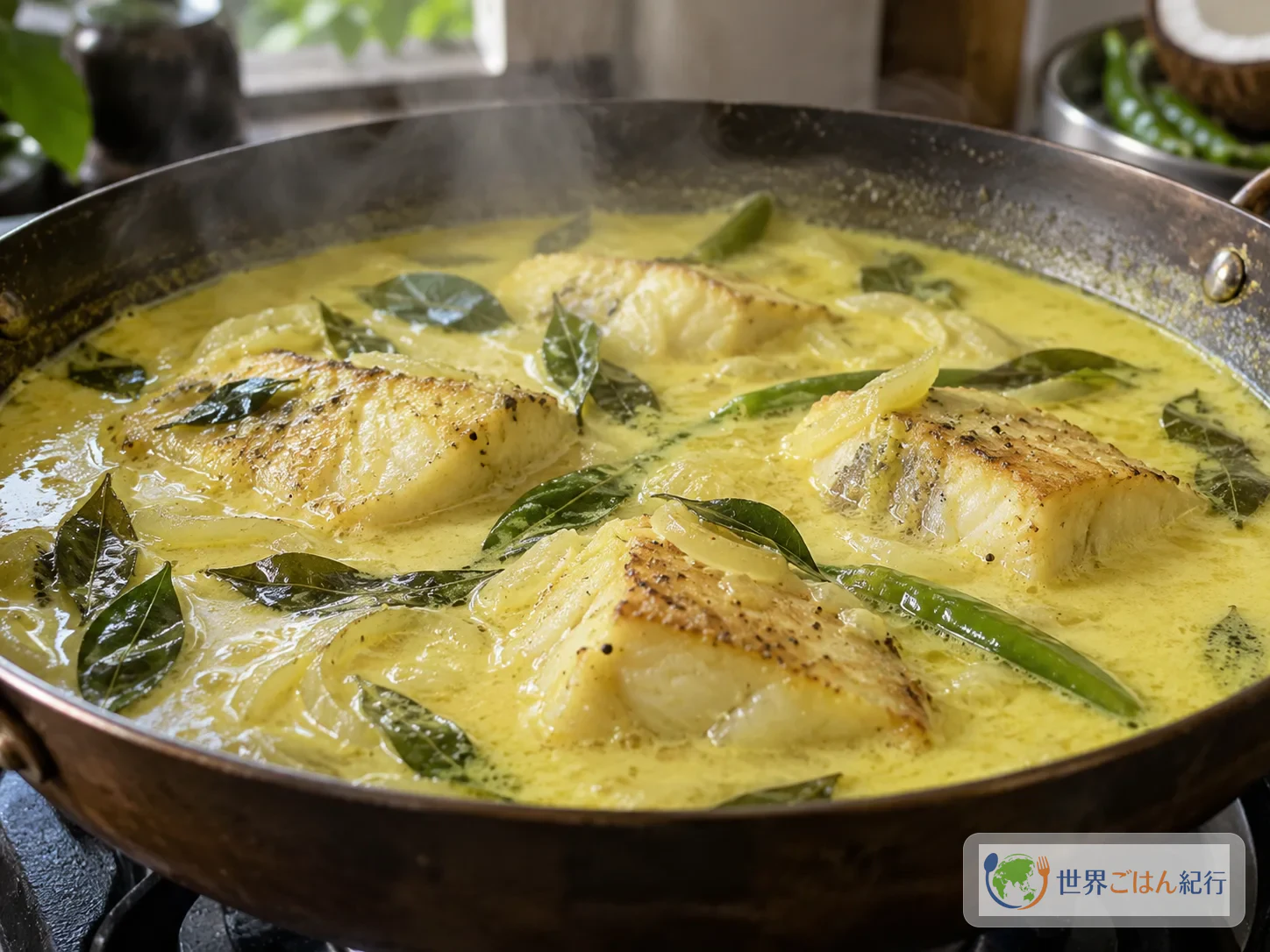
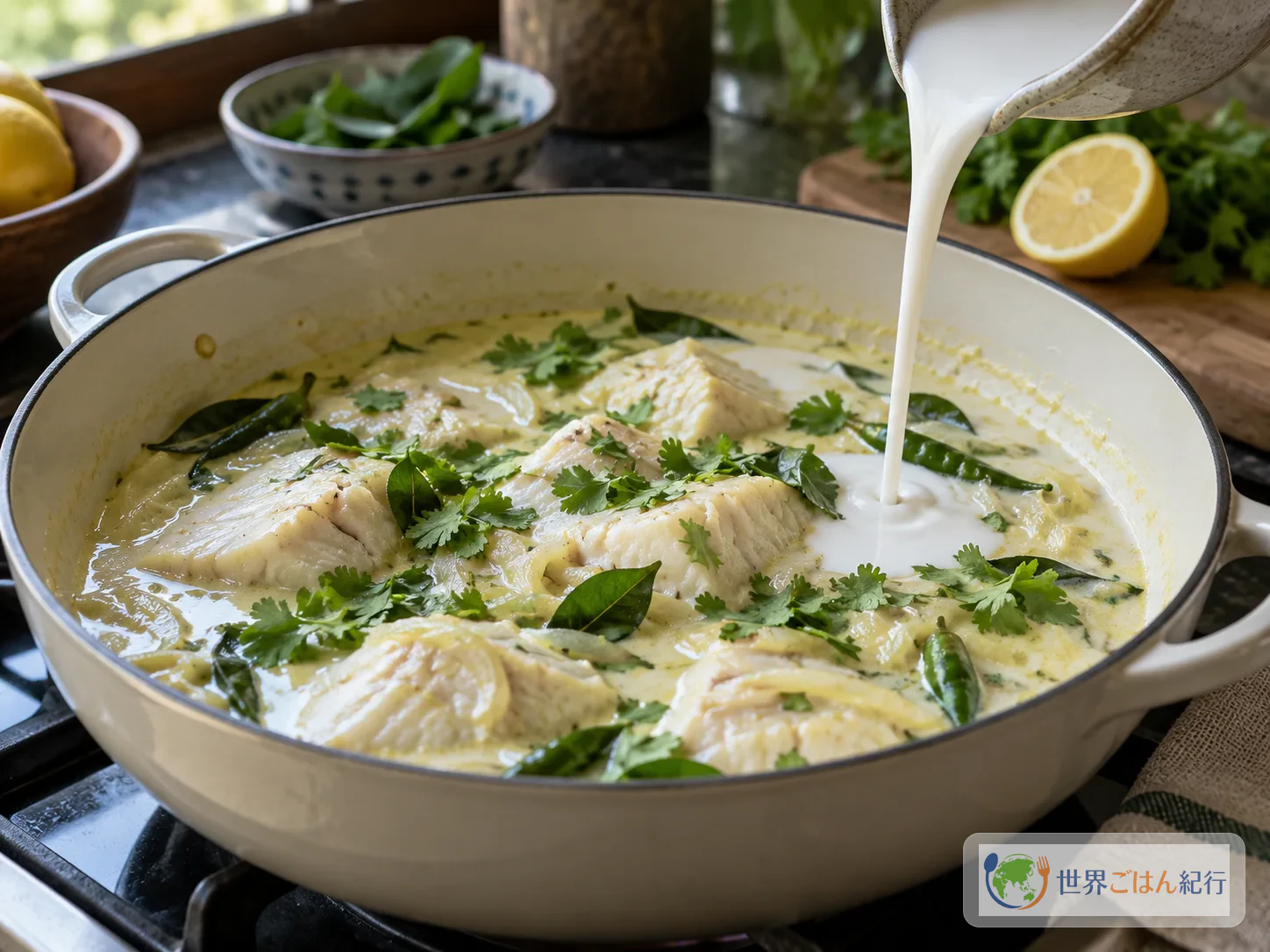
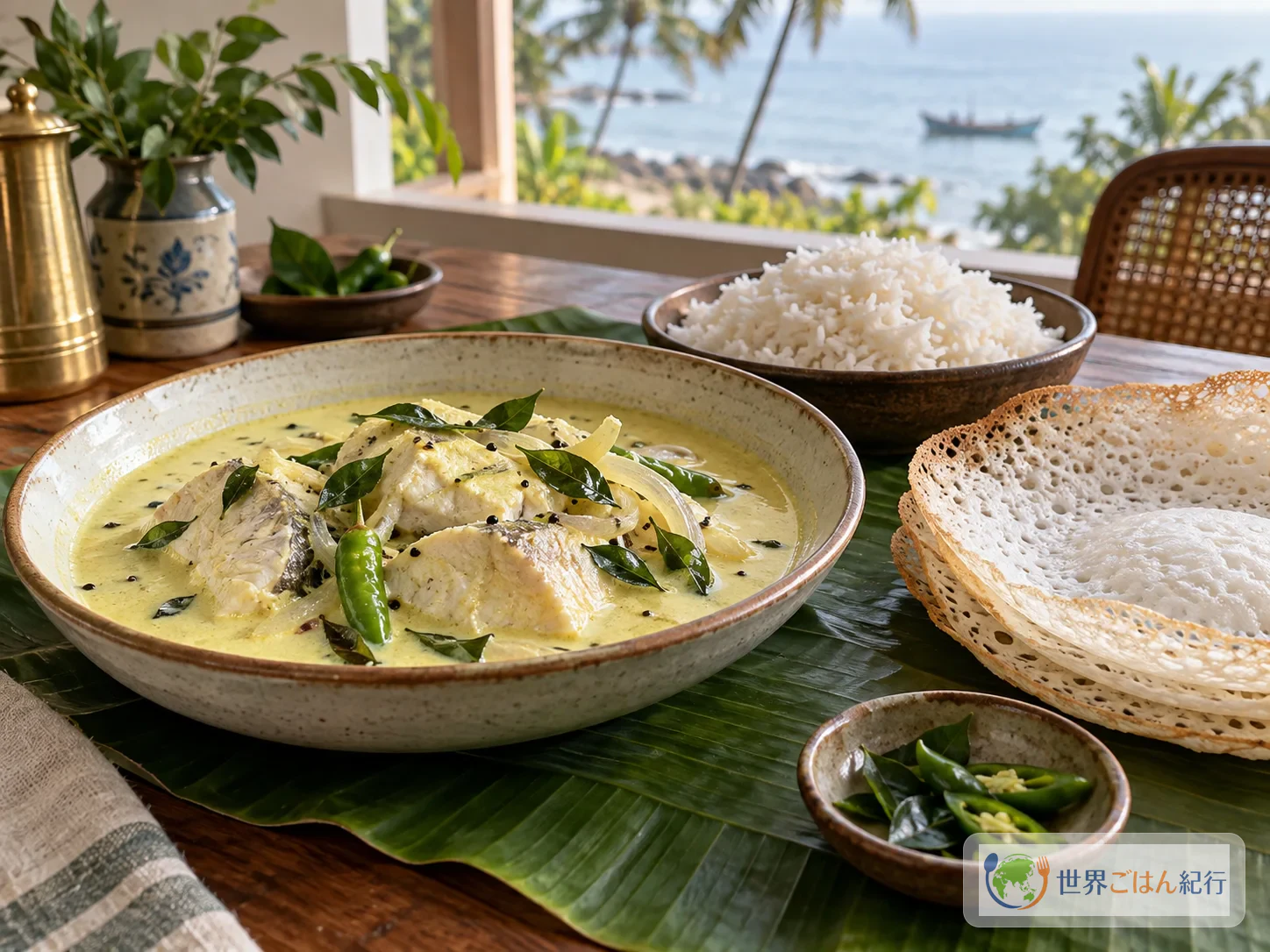
Mustard seeds begin to pop in the coconut oil. Then green chili, ginger and garlic go in, and in the steam they blend with the smell of fish. This is the opening scene of a table often seen in homes along the Kerala coast, at church feasts and in eateries. By the time the sound of mustard seeds popping in coconut oil has died down, the pot already holds a pale yellow sauce of white fish and coconut milk. This dish is made to eat that sauce generously with rice or appam (hoppers).
Meen moilee, also written Meen Moilee, Fish Moilee or Fish Molee, is a Kerala fish dish. The star is not a strong red curry but a pale sauce in which the aromas of fish, coconut milk, ginger, green chili and curry leaves overlap. In the Kerala Tourism recipe, the fish is simmered in thin coconut milk, and thick coconut milk is added at the end. This two-stage method is the skeleton for making it at home. Separate the milk the fish simmers in from the milk that finishes it. That alone changes the roundness and aroma of the sauce a great deal. Instead of pomfret or pearl spot, use firm white fish fillets such as sea bass, cod or sea bream.
The main spelling in this article is meen moilee, in English Meen Moilee. The Kerala Tourism pages use spellings such as Fish Moilee, Fish Molee and Fish Moliee. Meen is a word for fish and forms part of the dish name, but its etymology is not asserted.
There are three things to watch in a home kitchen: cooking the fish without breaking it, not boiling the thin coconut milk too hard, and not letting the thick milk separate at the end. When it goes well, the fish is cooked through to the center, the pale yellow sauce coats the fish lightly, and the aroma of curry leaves and green chili comes forward. What this article makes is a moilee that does not use tamarind as a main ingredient; the sour Malabar-style fish curry is touched on later as a regional difference. Nor will we narrow the origin down to one and call it "the only authentic one," because this is a dish whose taste changes by region, community and household.
At the Kochi table, a white fish curry was born
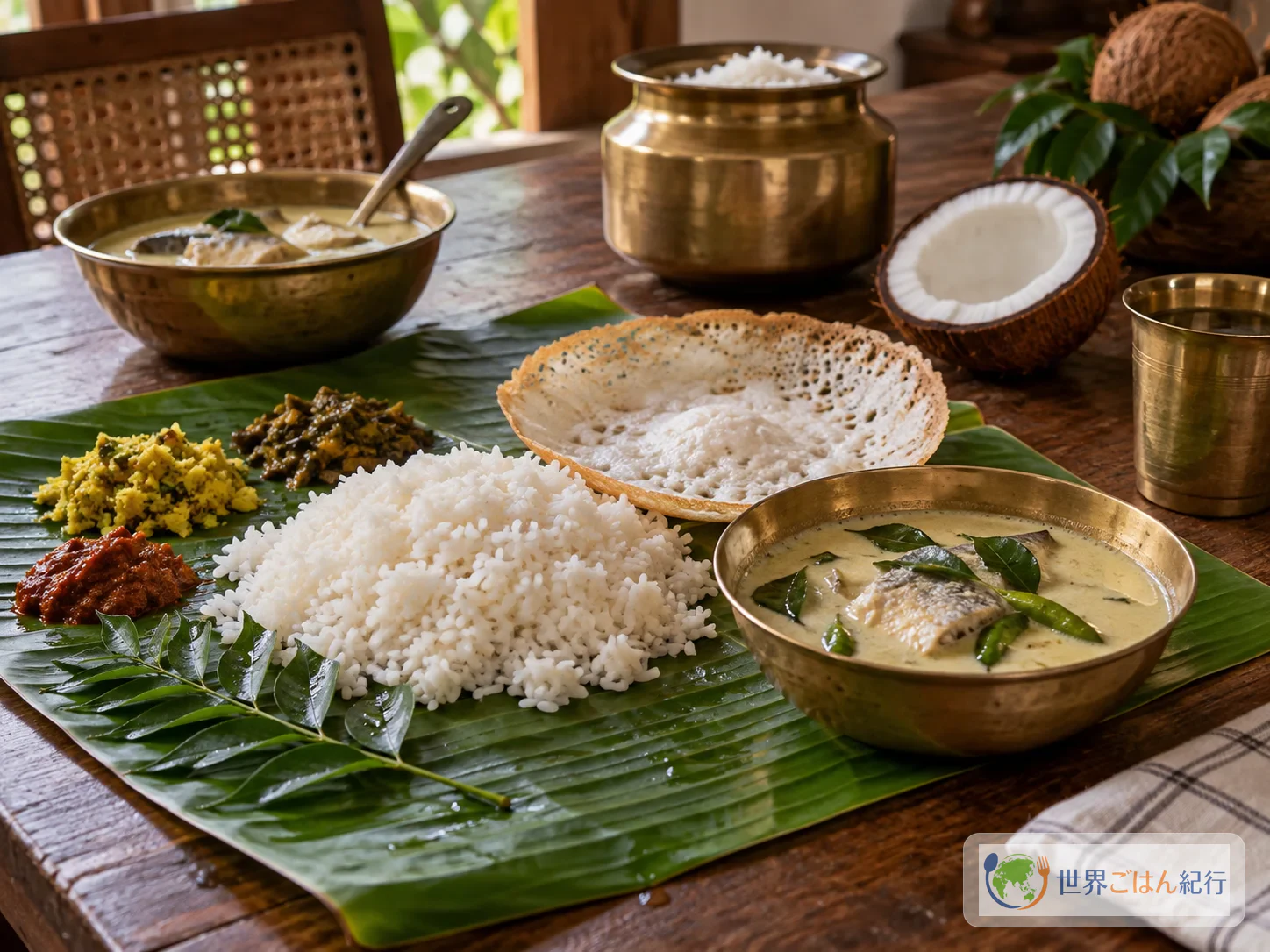
Kerala Tourism divides Kerala cooking into Hindu, Mappila and Christian cuisines, and explains that coconut milk has an important role in the Christian cooking of central Kerala. The fish dishes of coastal Kochi differ from those of northern or southern Kerala. It also says that the food differs by area, such as Varapuzha, Mulavukad, Thevara, Kumbalangi and Panangad. Fish Moliee is listed as one of Kochi's dishes, and connects to rice and curry, a special leaf-served table and Christian feasts. In the middle of rice served on a leaf, a pale fish curry placed at the center of the rice. Meen moilee suits that kind of table.
Kerala faces the Arabian Sea, and seafood arrives at the table from the sea, lagoons, backwaters and rivers. An academic paper states that fish is an ingredient hard to separate from Kerala's food culture, and that Muslim, Hindu and Christian fishing communities each have their own ways. A dish like meen moilee must have been born precisely because of a fish food culture supported by the sea and the backwaters. So when making it elsewhere, rather than making the species of fish exactly the same, we put more weight on cooking that properly takes in the fat of the fish and the aroma of coconut.
Kerala Tourism presents Fish Moilee as a dish simmered in coconut milk. In the context of Christian cooking, fish dishes served with rice and appam appear on the table. You let the rice soak up the thin sauce, or break the edge of the appam to receive the sauce in the middle. The plate is not completed by the fish curry alone; the staple takes in the aroma and heat of the sauce. That is all part of one dish.
Seeing regional pots without fixing a single origin
Kerala Tourism explains that English and Portuguese influences entered through foreign missionaries' seminaries and church kitchens, and that Fish Moliee spread into Christian kitchens through community feasts. The academic paper shows that Kerala food culture has been touched by contact with Arabs, Chinese, Portuguese, Dutch and British, but does not fix a single "authentic" meen curry. A dish in which Kerala kitchens took in contact from abroad. That is the surest way to put it. Stories such as "the Portuguese invented it" or "someone named Moilee made it" have no clear backing, so they are not written as fact.
Contact with foreign powers, including Portugal, is historical background shown by several sources. But it is not evidence that fixes the sole place or year of invention of the dish. It is more natural to think that the name, ingredients and way of eating changed amid the overlap of port-city trade, church feasts and regional home cooking.
So how do moilee and red fish curry differ? The academic paper concludes that Kerala fish curry has regional names, household differences and community differences and does not fit a single right answer. In line with Kerala Tourism's official Fish Moilee video, the recipe in this article does not use tamarind and finishes gently around coconut milk. Malabar Fish Curry, on the other hand, is a red, sour dish simmered in an earthenware pot built around tamarind, coconut and curry leaves, and is treated as distinct. Some toddy-shop fish curries also finish hot and rich with Malabar tamarind. Its role at the table and its weight of flavor differ from the pale sauce of moilee.
| Region or occasion | Direction of the sauce | Acidity and heat | Recreating it elsewhere |
|---|---|---|---|
| Christian cooking around Kochi, Fish Moliee | A pale sauce with coconut milk added in two stages | Gentle. Tamarind is not the star | This article's meen moilee. Pair with rice or appam |
| Kerala Tourism's Fish Moilee | Coconut milk based | No tamarind; aroma from black pepper and green chili | Lemon only a little at the end. Do not make it too sour |
| Malabar fish curry | A red broth with coconut and curry leaves | Tamarind sourness and chili come forward | Look for tamarind or Malabar tamarind as ingredients for a separate article |
| Home and toddy-shop fish curry | The order of frying and thickness change by cook | Some are hot and rich | Do not fix one "authentic thickness"; adjust the heat and the liquid |
Translating these regional differences to shopping, the first things to gather are easy-to-get white fish, unsweetened coconut milk, curry leaves, mustard seeds, fenugreek and turmeric. The pomfret, pearl spot, mullet and seer fish in the official recipe cannot always be bought outside Kerala, so substitute thick white fish. Curry leaves cannot be replaced by curry powder. On days you cannot get them, leave them out and keep the outline of ginger, green chili and lemon. Fenugreek turns bitter even in small amounts, so do not increase it thinking to add "authenticity." Rather than adding substitutes, keep the pillars of aroma. That makes it a more meen-moilee-like pot.
Let me also mention the traditional equipment. According to a research paper, Kerala-style fish curry was made in an unglazed earthenware pot called meen chatti, now replaced by gas or low-smoke stoves. Official Malabar fish curry material also mentions an earthenware pot. But for the meen moilee itself, a wide frying pan with the fish laid in a single layer makes the fish easier to turn. You do not need to buy an earthenware pot; a shallow heavy 24 to 26 cm frying pan and, if needed, an instant-read cooking thermometer are enough.
Ingredients (serves 4)
The official recipe's 500 to 800 g of fish, 1 tsp mustard seeds, thin milk and thick milk are organized here into a home quantity for four. The core amounts are 600 g white fish, 3 tbsp oil, 2 onions, 30 g ginger, 10 to 12 cloves garlic and 2 to 3 green chilies. The coconut milk totals 600 ml, and the key is dividing the 600 ml of coconut milk into a thin part and a thick part.
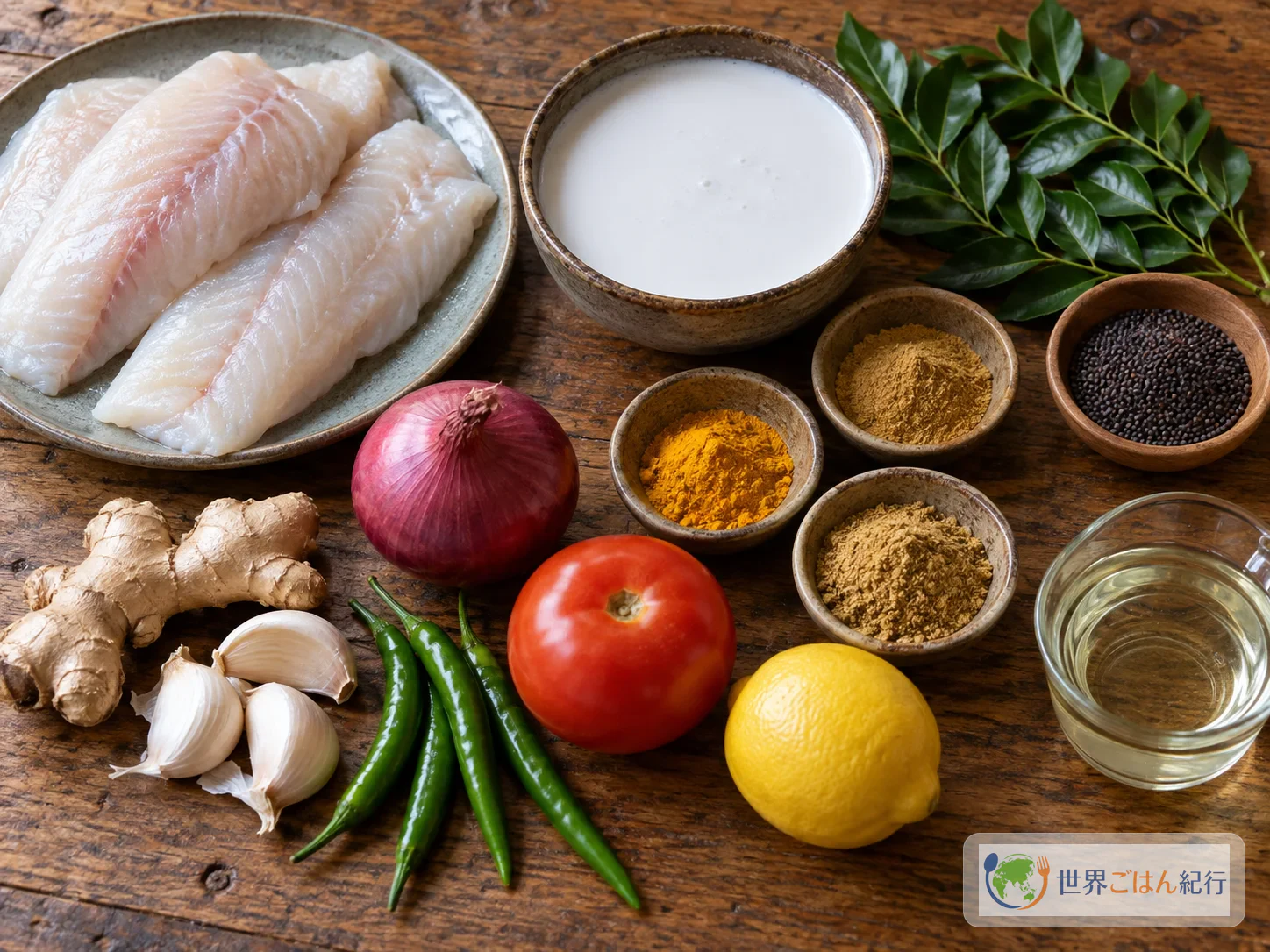
The ones with the biggest effect on getting close to the local aroma are, in order, coconut milk, curry leaves, mustard seeds and fenugreek. Fish, onion, ginger, garlic, tomato, rice and a frying pan are things you can gather on an ordinary shop. If you are going to buy, look for the pillars of aroma first, and the finished pot changes.
The thin milk is the liquid that cooks the fish, and the thick milk takes charge of the final aroma and roundness. Adding thick milk early makes it separate easily, and moving the fish too much breaks the flesh into the sauce. For the finish, do not stir; hold the handle and swirl the pan gently.
Wash knives, cutting boards and hands that touched raw fish before they touch rice, cilantro and other foods eaten as they are. The FDA recommends cooking fish to an internal temperature of 145°F (63°C), and without a thermometer, uses opaque flesh that separates with a fork as a guide. Do not leave food at room temperature for more than 2 hours, and less in a hot environment. Cool leftovers quickly in shallow containers and refrigerate.
Drawing the line when substituting ingredients
The pomfret, pearl spot, mullet and seer fish in the official recipe are not always available. The first choice is white fish fillets with a thickness of 2 to 3 cm, such as sea bass, cod or sea bream (skin on or off is fine). It can also be made with oily mackerel or salmon, but the fish's own character comes before the pale aroma of meen moilee, so go lighter on green chili and lemon. Thin fillets break up easily, so shorten the simmering time and check the center with a thermometer. Choose by the thickness of the fillet and the amount of fat rather than by species.
| Fish to look for | Result | Cooking notes |
|---|---|---|
| Sea bass | Mild, takes up the aroma of the sauce | Choose 2–3 cm thick and turn only once |
| Cod | Flesh flakes easily, a light taste | With thin fillets, shorten the simmering |
| Sea bream | Firm flesh, with an aroma from the skin | If you sear the skin, do not move the skin side first |
| Mackerel | Oily, gives a strong fish flavor | Blot the surface moisture and dark meat, and go easy on lemon |
| Salmon | Strong color and fat, a home-style variant | Remove skin and bones to keep it from breaking up |
For coconut milk, use the unsweetened cooking kind, not a sweetened drink. Thin the thin portion with water, and use the thick portion as it is for the finish. For curry leaves, prefer frozen if you have no fresh. Use dried in small amounts so the aroma does not come out too strong, and if you have none of them, you may leave them out. With fenugreek powder it matters to keep to the amount. Rather than forcing substitutes in, keep the aroma of mustard seeds and turmeric. Replacing coconut oil with rice bran oil works, but the coconut aroma weakens. Do not replace it with butter or olive oil.
In line with the ingredients and steps in Kerala Tourism's official video, the meen moilee in this article uses no tamarind and is brought together with coconut milk, black pepper, green chili and lemon. Adding tamarind or Malabar tamarind brings acidity and color forward and moves it toward Malabar-style fish curry. That is not a failure but a plate from another region. Adding sourness turns it into another region's fish curry. If you want to make a sour fish curry, there is also a dish such as southern Sri Lanka's ambul thiyal (in Japanese), which finishes by cooking off the liquid.
Spooning the white sauce over rice and appam
Pour the sauce over hot freshly cooked rice first, then put the fish on top. The rice takes in the oil of the sauce and the roundness of the coconut well. If you serve appam, break the thin edge and scoop up the sauce that has pooled in the center. Pairing with appam as well as rice brings out the gentle heat of this coconut milk fish dish. This is the combination with the staple foods on a Kerala table. The staple takes in the sauce. That is how to eat this dish.
When you next want to try a sour fish dish, there is Sri Lanka's ambul thiyal. Its acidity and the texture of cooked-off liquid are different from the coconut milk moilee. If you want to move to another region without breaking the fish, Bangladesh's ilish bhuna (in Japanese) is recommended. It is a dish in which fish is fried and then reduced with onion and spices, and both the cooking and the aroma differ from meen moilee's white sauce.
Storage and how to recover a failure
If any is left over, separate the fish and sauce into shallow containers, let the heat escape and refrigerate. Do not leave it at room temperature, and plan amounts you can finish by the next day. To reheat, warm only the sauce over low heat and return the fish last. Do not let it boil hard, and if needed add thin coconut milk or water 1 to 2 tsp at a time.
If the sauce separates, turn off the heat, add warm water or thin milk a little at a time and swirl the pan. It does not always come fully back, so put taste and safety first. If the fish breaks apart, do not stir; spoon the remaining flesh with the sauce over rice. Next time keep three things in mind: do not stack the fish, do not turn it with a spatula, and shorten the simmering time. If the sauce is thin, move the fish to a plate once, reduce only the sauce over low heat for a few minutes and return the fish. Take the fish out and fix only the sauce, and the flesh is spared.
Adding too much thick coconut milk when reheating makes it separate easily. If you add anything, add thin milk or water in small amounts. Add the lemon juice and cilantro after reheating and the aroma comes back more easily.
Frequently asked questions
No tamarind?
Not in this article's meen moilee. It follows the ingredient makeup of Kerala Tourism's official video, which is coconut milk based and contains no tamarind. Kerala Tourism's Malabar Fish Curry does include tamarind, so adding it moves toward a different, red, sour fish curry. If you look for Malabar tamarind, do not force it into this recipe's shopping list; think of it separately as a matter of regional difference.
Can I use frozen fish?
Frozen white fish can be used if thawed slowly in the refrigerator and the surface moisture is wiped off well. The FDA advises buying fresh fish sold refrigerated or on ice and avoiding fish with a sour or ammonia smell. Thin frozen fillets break up easily, so shorten the searing and check the 63°C center and the opaque flesh.
How hot is it?
With 2 green chilies and the seeds removed, you can lower the heat while keeping the aroma. With 3 and the seeds left in, the heat comes forward. For the first time, start with 2 and seedless, and serve extra green chilies at the table. Increasing red chili powder to move toward a red curry would take it off the pale branch of meen moilee.
What if I cannot find curry leaves?
Fresh or frozen curry leaves are first choice, and dried ones are used in small amounts. On days you cannot get them, you can leave them out. Filling the gap with curry powder gives a different aroma, so keep the ginger, green chili, lemon and mustard seeds. Do look for them next time. Curry leaves have a citrus-like aroma and bridge fish and coconut.
What if the coconut milk separates?
It is most often caused by cooking at high heat for a long time, so first turn off the heat, do not touch the fish, and swirl the pan. Add warm water or thin coconut milk 1 to 2 tsp at a time and let the oil and liquid blend slowly. If the mouthfeel still does not return, take out the fish and switch to eating with a small amount of sauce over rice.
Can I make it ahead?
Freshly made is the best state for both the flesh of the fish and the aroma of the curry leaves. Do not plan on making ahead; make an amount you can finish by the next day. After cooking, do not leave it at room temperature for more than 2 hours; cool it quickly in shallow containers and refrigerate. Reheat over low heat to the center, taking out only the portion you will eat. Do not eat anything about which you are unsure of the smell, look or storage.
Sources
- Kerala Tourism: How to prepare Fish Moilee — Ingredients, seasoning the fish, shallow frying, steps with thin and thick coconut milk. Accessed and checked: 2026-10-03.
- Kerala Tourism: Christian Cuisine — Kochi's coastal cooking, Christian feasts, the context in which Fish Moliee spread. Accessed and checked: 2026-10-03.
- Kerala Tourism: Malabar Fish Curry — Regional difference from Malabar fish curry using tamarind, coconut and curry leaves. Accessed and checked: 2026-10-03.
- Journal of Ethnic Foods: Savoring traditions: culinary memory, familial identity, and authenticity of meen curry in Kerala — Published 2024-12-02. Research on fish curry by region, household and community, meen chatti, and not fixing a single "authentic" form. Accessed and checked: 2026-10-03.
- FDA: Selecting and Serving Fresh and Frozen Seafood Safely — Safety standards on buying fish, refrigeration, cross-contamination, 63°C and time at room temperature. Accessed and checked: 2026-10-03.


